Home Blog Page 7669

Olympic broadcasting services hosted in the cloud for the first time

OBS International Transmission MCR Room: Remote post-production and production with content accessible from any location via an internet connection

OBS leverages Alibaba‘s cloud technologies for a value-added service delivery at Tokyo 2020, offering key services accessible from anywhere

  • Cost-efficiency and worldwide manageability for storing, managing and delivering huge quantities of content produced
  • Faster deployment with reduced set-up time and fewer onsite resources
  • Remote post-production and production with content accessible from any location via an internet connection

In collaboration with Olympic Broadcasting Services (OBS), Alibaba‘s cloud solutions will be supporting service delivery for Rights-Holding Broadcasters (RHBs) for the first time during the Olympic Games Tokyo 2020. Built upon the platform provided by Alibaba Cloud, the digital technology and intelligence backbone of Alibaba Group and Worldwide TOP Partner, OBS Cloud offers new models for content delivery that drive operational efficiency and greater agility. An innovative broadcasting solution brought together by OBS and Alibaba, and operates entirely on the cloud, OBS Cloud, is designed to help transform the media industry for the digital era.

Yiannis Exarchos, OBS Chief Executive Officer, commented “The partnership with Alibaba Cloud is transforming how we broadcast the Olympic Games to the widest possible audience – this is perhaps the biggest technological change in the broadcasting industry for more than half a century since the introduction of satellite transmission, which was introduced to Olympic broadcast coverage for the first time at Tokyo 1964.”

Leveraging Alibaba technologies, Content+, OBS’ content delivery platform is now fully migrated to the cloud for delivering short-form content, content asset management and content production.

Delivering short-form content

During Tokyo 2020, between 7,000 and 9,000 short-form content clips are expected to be produced by the OBS Content+ crew to help enhance RHB coverage. 17 RHB organisations and four news agencies have subscribed to the full service of receiving those clips through a user-friendly web-based interface. The thousands of clips can be accessible by the RHBs’ digital and social media teams from any location in the world to supplement their own Olympic coverage.

Content asset management

Through Content+, RHBs will be able to access all Olympic content produced by the OBS including live content as it is being produced. 31 RHB organisations have signed up for this full service to be able to easily browse through the low-resolution files in near real-time, and retrieve any content in any of their global facilities. The access to live coverage allows RHBs to mark part of the live content and download it for their own post-production needs, simultaneously when the games are still happening.

Content production

Used as part of post-production workflow, OBS will use the Content+ platform for remote editing and standards conversion; a feature that will be extended as a service to the RHBs for future Olympics.

In addition, two RHBs will receive live distribution of Ultra High Definition (UHD), High Dynamic Range (HDR), and Internet Protocol Video and Audio package during Tokyo 2020, allowing them to deliver 4K content to their viewers.
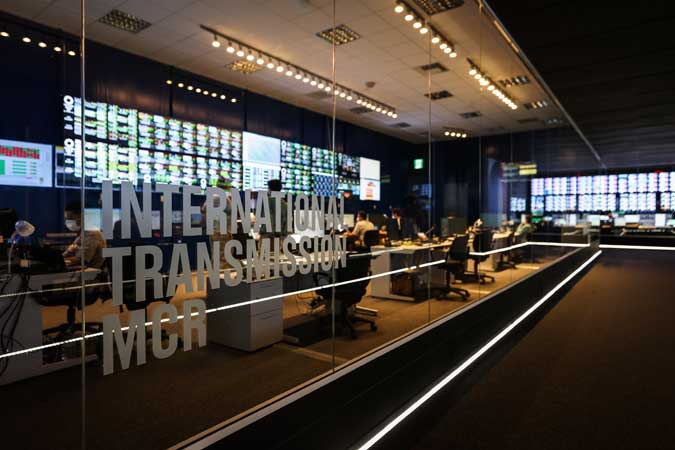
OBS International Transmission MCR Room: Remote post-production and production with content accessible from any location via an internet connection

Selina Yuan, general manager of International business, Alibaba Cloud Intelligence, said “We are confident that OBS Cloud will deliver tremendous benefits to media organizations in terms of cost-efficiency and worldwide manageability, and help digitally transform the way RHBs broadcast the Olympic Games. The agility that comes with cloud infrastructure allows faster deployment time with fewer onsite resources, while the flexibility of a cloud platform enables remote post-production and production to be done faster – and from any location with an internet connection. We look forward to seeing the future of Olympic Games broadcasting begin at Tokyo 2020.”


Gov’t cuts agriculture growth target

DA/PRRI
THE Agriculture department cut its full-year growth target for the farm sector to 2% from 2.5% previously. — DA/PRRI

By Revin Mikhael D. Ochave, Reporter

THE Department of Agriculture (DA) lowered its full-year growth target for the farm sector to 2% due to the impact of the ongoing coronavirus disease 2019 (COVID-19) pandemic and the African Swine Fever (ASF) outbreak.

Agriculture Secretary William D. Dar on Wednesday said the farm output target was trimmed from the initial 2.5% goal, as the sector faces challenges from the various lockdown restrictions. He also noted the hog industry continues to struggle with the ASF outbreak.

“We hope to achieve a comfortable growth in sync with the population growth. So, 2% (growth) would still be a good target,” he said at a virtual press conference.

“With all the indications, the pandemic is still ongoing and is getting worse, together with the lingering problem with ASF. However, our target is still at 2% since other subsectors are improving such as the rice subsector,” he added.

The 2% growth this year for the agriculture sector would be an improvement after the 1.2% contraction seen in 2020, and the 0.3% growth in 2019. Farm output contributes about a tenth to gross domestic product (GDP) and a fourth of the country’s jobs.

In 2020, the farm sector reeled from the effects of the prolonged lockdowns, the ASF outbreak, and a string of strong typhoons in the latter part of the year. The country’s GDP contracted by a record 9.6% last year.

Agricultural production continued its slump, declining by 3.3% in the first quarter this year.

Despite the lower growth target for 2021, Mr. Dar said palay (unmilled rice) production is expected to reach 20.4 million metric tons (MT), one million MT more than the previous record harvest of 19.4 million MT in 2020.

The DA chief said farm and fisheries production can still improve with the help of modern technology, a higher budget, and more investments from local governments and the private sector.

Mr. Dar previously announced that the Agriculture department is seeking a P250-billion budget for 2022, versus its P80-billion budget this year.

Calixto V. Chikiamco, Foundation for Economic Freedom (FEF) president, said the department’s adjusted growth target is a reasonable short-term objective, but will be difficult to achieve with the ongoing pandemic and ASF outbreak.

“It is more likely way below 2%. But the DA’s target is a reasonable short-term target, given the pandemic and the ASF plague on the hog industry,” Mr. Chikiamco said via mobile phone message.

However, Mr. Chikiamco said the government needs to solve the issue of land fragmentation in agriculture.

“Unless the problem of land fragmentation is fixed, sustaining annual agriculture growth at 3% to 4% for the long term is unattainable,” Mr. Chikiamco said.

“Secretary Dar is trying to solve the problem with ‘farm clustering.’ However, this is only a band-aid solution. The real solution is to free the rural land market so farm consolidation can take place via ownership and leasing,” he added.

In a mobile phone message, Samahang Industriya ng Agrikultura (SINAG) Executive Director Jayson H. Cainglet said the DA’s growth target is an “empty number.”

Instead, Mr. Cainglet said the DA should support local production and hasten the establishment of first border inspection facilities to prevent the entry of animal diseases such as ASF.

Del Monte Philippines defers IPO on virus worries

By Keren Concepcion G. Valmonte, Reporter

DEL MONTE Pacific Ltd. (DMPL) on Wednesday said it is deferring the initial public offering (IPO) of its Philippine subsidiary amid heightened market volatility arising from a surge in coronavirus disease 2019 (COVID-19) infections.

The announcement came just as the Securities and Exchange Commission (SEC) said it “considered favorably” the IPO applications of the two real estate investment trusts (REITs) sponsored by Robinsons Land Corp. (RLC) and Megaworld Corp., subject to remaining requirements.

Del Monte Philippines, Inc. (DMPI), a company known for its tomato sauces and specialty health drinks, had aimed to raise as much as P44 billion from its IPO that was scheduled to begin on Aug. 9. It had targeted to list on the Philippine Stock Exchange (PSE) on Aug. 23.

“Amid a surge of COVID-19 cases in the Philippines and in the region, the PSE has been highly volatile in recent weeks, and the board believes that it is in the best interests of the company, its shareholders, and potential investors to defer the listing until conditions improve,” DMPL said in a statement.

The parent company said it remains “committed” to listing DMPI once conditions improve. An earlier IPO plan in 2018 was also scuttled due to volatile market conditions.

Metro Manila and nearby provinces will be under an enhanced community quarantine (ECQ) from Aug. 6 to 20, as the government tries to curb a Delta-driven spike in COVID-19 infections.

The Health department reported 7,342 new COVID-19 infections on Wednesday, bringing the total of active cases to 63,171.

“It is an option for the issuer to wait for better market conditions to do the share sale or IPO in able to optimize the valuation in terms of getting the most demand or market interest and at the most favorable price possible,” Rizal Commercial Banking Corp. (RCBC) Chief Economist Michael L. Ricafort said in a text message.

Reuters said the Philippine bourse, which has recorded four consecutive negative weekly moves since the first week of July, losing nearly 5% in the ongoing quarter so far.

On Wednesday, the PSE index closed 0.38% up at 6,585.21, lifted by positive earnings reports.

“The Delta variant’s spread in the country is being closely monitored by market participants, and as such may affect the risk appetite of investors especially over the coming weeks,” Darren Blaine T. Pangan, trader at Timson Securities, Inc., said in a Viber message.

Mr. Pangan said investors will be awaiting news if the two-week ECQ will be extended in Metro Manila.

“The ghost month for most of August would also be a consideration for issuers amid the objective of getting the best possible demand/bids, price, and other terms for [their] respective fund-raising activities in the capital markets,” RCBC’s Mr. Ricafort said.

MORE REITS
Meanwhile, the corporate regulator approved the IPOs of REITs by Megaworld and RLC, which are both expected to be launched later this month.

Megaworld’s REIT unit will conduct its IPO from Aug. 23 to 27, while RLC’s REIT IPO will run from Aug. 31 to Sept. 8. 

Megaworld’s MREIT, Inc. will be offering to the public 1,078,000,000 secondary offer shares for as much as P22 apiece, with an overallotment option of up to 161,700,000 common shares. The offer can net up to P26.3 billion in proceeds.

MREIT is said to be eyeing to make its PSE debut on Sept. 6. The company has 10 properties in its initial REIT portfolio, which has an aggregate gross leasable area (GLA) of around 224,430.8 square meters (sq.m.).

On the other hand, RL Commercial REIT, Inc. (RCR) will be offering up to 3,342,864,000 secondary common shares for P7.31 each at most, with an overallotment option of up to 305,103,000 common shares.

It may net up to P25.88 billion in proceeds should the overallotment option be fully exercised. RCR features 14 commercial real estate assets in its initial REIT portfolio, with an aggregate GLA spanning 425,315 sq.m. The SEC said RCR aims to list at the stock market on Sept. 20.  with Reuters

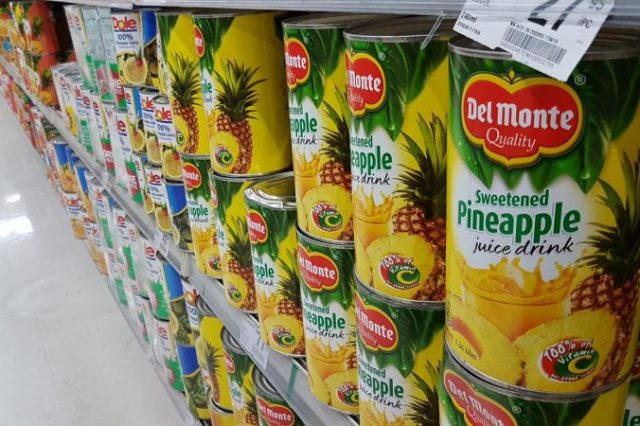
Food firms mull price hike amid import disruptions

Supermarkets have seen price increases among imported products.

By Jenina P. Ibañez, Reporter

FOOD COMPANIES are considering price hikes as global supply chain disruptions increase import costs, an industry group said.

Philippine Chamber of Food Manufacturers, Inc. (PCFMI) Legislative Committee Chair Helen Grace Baisa said that the industry has been burdened with additional costs in importing raw materials and finished food products amid delays in the supply chain.

Business groups in recent months have been flagging logistics disruptions and container shortages as industries catch up with demand from economies bouncing back from the effects of the coronavirus pandemic.

“The logistics issue has been there, but since the pandemic, shipping line and destination charges increased by four times on top of surcharges implemented locally,” Ms. Baisa said in English and Filipino in a phone interview last week.

The industry group is pressing lawmakers and the Office of the President to address exorbitant shipping charges, she said, asking that the Philippine Ports Authority or the Maritime Industry Authority regulate the fees.

Importers of raw materials, finished goods, and packaging materials have been affected by the high fees, she said. The chamber’s 107 active members include companies that manufacture and distribute dairy, coffee, canned goods, beverages, bakery products, and noodles or firms that import raw materials for food processing like probiotics and fibers.

“It adds on to our expenses, to our landed costs. Initially, we can shoulder those, but then apparently later on, we really have no choice but to pass that on to the consumers, sadly,” Ms. Baisa said.

Food companies, she said, follow price guidelines for basic goods and necessities set by the government. Trade Secretary Ramon M. Lopez last month said that requests for price hikes are being reviewed. He said that a new suggested retail price bulletin is on hold as the capital region prepares for stricter lockdown restrictions.

Raw materials and packaging prices had already risen during the pandemic, Ms. Baisa said, adding that the industry will not increase prices paid by consumers significantly.

Supermarkets have already noted price increases among imported products.

Philippine Amalgamated Supermarkets Association (Pagasa) President Steven T. Cua said that deliveries of imported goods come in fits and starts, and they are priced slightly higher when they return to the shelves. He had said that he suspects some locally produced goods could have also increased prices due to raw material import issues.

Ms. Baisa said that expanded vaccination and testing to address the coronavirus disease 2019 (COVID-19) and consistent government guidelines will help food companies recover, noting that smaller companies are affected most by the restrictions.

“PCFMI supports government initiatives to fight the challenges caused by the pandemic. We are open to dialogue and ready for collaboration in moving forward, addressing key economic issues relating to food security, food safety, affordability, and accessibility to healthier choices,” she said.

Small businesses required to file withholding tax forms online

FREEPIK

THE Bureau of Internal Revenue (BIR) is requiring even small businesses to file their withholding tax certificates online amid ongoing lockdown restrictions due to the coronavirus pandemic.

“This is to lessen face-to-face transactions with the office,” BIR Deputy Commissioner Marissa O. Cabreros said via Viber message.

Under Revenue Regulations No. 16-2021 issued on Aug. 3, the requirement to file withholding tax certificates online “shall apply to all taxpayers whether or not registered with the Large Taxpayers Service (LTS) of the BIR.”

Taxpayers are required to scan the original copies of their BIR Forms 2307 and 2316 and store such documents under the submission facilities of the BIR, with the name formats prescribed by the agency.

BIR Form 2307 is the certificate of creditable tax withheld at source, while BIR Form 2316 is the certificate of compensation payment/tax withheld.

Prior to the issuance of the regulation, only large corporations were required to file these documents online.

“RR No. 16-2021 is consistent with the BIR’s efforts to digitalize various tax filings since the additional taxpayers covered by the requirement do not have to flock to BIR offices to manually submit hard copies or DVD-R copies of said certificates. This is not only convenient for taxpayers but also safe in light of the COVID-19 pandemic,” Maria Lourdes P. Lim, a tax managing partner of Isla Lipana & Co. said in a mobile phone message on Wednesday evening.

However due to limited access to computers and internet connection for some taxpayers, Ms. Lim said the BIR should provide some leniency and not impose penalty to those who may not be able to comply immediately.

Taxpayers have increased online transactions with BIR as lockdown restrictions continued.

The Department of Finance in June said the BIR has received 1.43 million online tax returns on 2020 income from January to April 15, 2021, which accounts for 99.5% of all income tax returns. These were submitted either through the BIR Electronic Filing and Payment System and Electronic BIR Forms System.

Online submission of ITRs increased by 8.75% against the 1.315 million filed digitally last year.

Meanwhile, taxes payments settled online also remained elevated at P573 billion as of April 30. This accounted for 83% of P689 billion in collections for the year to April 15.

The agency is working on various projects to boost its digitalization, including the targeted fourth-quarter completion of its implementation of the Internal Revenue Integrated System, which is a central and repository tool to process taxpayers’ information. — Luz Wendy T. Noble

MPIC core income up 82% as industries reopen

Unprofitable warehousing operations set for ‘winding down’

By Arjay L. Balinbin, Senior Reporter

METRO Pacific Investments Corp. (MPIC) managed to increase its second-quarter core net income this year by 82% to P3.5 billion, as more industries reopened.

“This acceleration of growth reflects an improvement in performance notwithstanding the continued imposition of varying levels of quarantine across the country and was partially augmented by the impact of the Corporate Recovery and Tax Incentives (CREATE) Law, which lowered income tax rates from 30% to 25%,” the company said in a statement on Wednesday.

The company said it benefited from the gradual reopening of more industries over the past year.

It also noted that the nationwide vaccine rollout enabled more businesses to reopen.

Without providing the amounts, MPIC said Manila Electric Co.’s core net income for the second quarter increased by 29%, owing to a 19% increase in energy sold.

Maynilad Water Services, Inc. saw an 8% decrease in its core net income for the quarter due to “higher operating costs and concession amortization.”

The company also said Metro Pacific Tollways Corp. “recovered from a loss position” to P1.1 billion, as traffic on all roads improved.

For the first half, MPIC said its consolidated core net income rose 13% to P6 billion.

“Contribution from operations rose 11% to P8.5 billion and is accounted for as follows: power — P5.4 billion or 63% of the total; toll roads — P1.9 billion or 22%; water — P1.4 billion or 17%,” MPIC said.

“Other businesses, mainly Light Rail and Logistics — [saw an] overall loss of P294 million, owing to the continuing impact of the pandemic on the ridership of LRT-1 (Light Rail Transit Line 1) and the ongoing recalibration of warehousing operations; partially offset by the hospital group’s contribution of P142 million,” it added.

Consolidated reported net income attributable to owners of the parent company surged 243% to P10.4 billion because of the “gain recognized from the sale of Global Business Power and the Don Muang Tollways.”

“These asset sales underscore MPIC’s commitment to optimizing its portfolio and realizing value for its stakeholders,” the company said.

MPIC remains positive that it will be able to hit its core income guidance of at least P12 billion for 2022.

“We are confident about meeting the core guidance numbers… All our businesses are doing well, particularly the hospitals. They have already learned how to adjust to Covid,” MPIC President and Chief Executive Officer Jose Ma. K. Lim said at an online briefing.

“In the first lockdown, they were severely affected; and in fact, they lost money in most instances. But by comparison, they have recovered almost normal operations and profitability,” he added.

RESTRUCTURING
Mr. Lim said the logistics business is currently being “restructured.”

“We dropped the trucking operations and the forwarding. We found that too problematic, and now we are just winding down the unprofitable warehousing operations that we have. It is not our plan to leave logistics. Our plan is to find a stronger platform in which we can enter into the area of e-commerce where we believe the market is in great need of service,” he explained.

“We are not leaving our contracts. We are allowing the contracts to wind down,” he added.

Mr. Lim also said MPIC is already looking at some “companies” for the e-commerce plan.

MPIC also plans to hire “younger” managers in line with the company’s digitization strategy.

Meanwhile, MPIC Chairman Manuel V. Pangilinan said the group is open to increasing its support for athletes.

Kung iaakyat natin ang ating suporta sa atleta (On whether we have to increase our support for the athletes), I think we should,” Mr. Pangilinan said.

“Are we open to getting other corporates or other parties into the equation? The answer is yes. I asked some people in many of our conversations… so that we can get more resources… Other corporates have expressed interest in participating,” he added.

MPIC shares closed 1.11% higher at P3.64 apiece on Wednesday.

MPIC is one of three key Philippine units of First Pacific, the others being Philex Mining Corp. and PLDT, Inc.

Hastings Holdings, Inc., a unit of PLDT Beneficial Trust Fund subsidiary MediaQuest Holdings, Inc., has a majority stake in BusinessWorld through the Philippine Star Group, which it controls.

SMIC ‘recovering well’ as profit surges to P20B

SM Investments Corp. (SMIC) on Wednesday said its first-half net income surged to P20.1 billion, nearly three times its P7.1-billion profit booked in the same period last year as revenues grew by four percent.

The company finished with a topline of P193.5 billion in the first six months from P185.5 billion year on year. It did not provide figures specific to the second quarter.

“Our businesses continued to perform resiliently, recovering well as conditions allowed,” SMIC President and Chief Executive Officer Frederic C. DyBuncio said in a statement.

“Our banking and residential businesses performed well as we also continued to invest in long term expansion with new stores, bank branches, residential project launches, and investments in malls,” he added.

SMIC’s banking arm made up 58% of its reported net earnings from core businesses. The company also added 22 bank branches to its network during the period.

BDO Unibank, Inc. booked profits of P21.4 billion in the first half. Its total deposits grew to P2.7 trillion on the back of a 13% growth in CASA (current account/savings account) deposits.

BDO also recorded P64.4 billion in net interest income, while its customer loans “remained flat” year on year, amounting to P2.3 trillion.

“Total provisions amounted to P6.8 billion as the bank continued to build up its buffer,” SMIC said. “This was lower than the pre-emptive provisions booked in the first half of 2020 against possible pandemic-induced delinquencies.”

China Banking Corp.’s net income for the first six months went up by 39% to P7.3 billion, while net revenues grew by 18% to P24.8 billion as net interest income and its fee-based income also improved. Its “pandemic-related credit buffers” also grew by 13% year on year to P5.4 billion.

Meanwhile, SMIC’s property segment accounted for 18% of its earnings from core businesses. SM Prime Holdings, Inc.’s consolidated net income for the January-to-June period grew by 12% to P11.6 billion, while consolidated revenues declined by six percent to P41.1 billion.

“The reported improvement is due to the continued positive performance of the group’s residential business in the first half of 2021 as well as the malls business in the second quarter of the year,” SMIC said.

SM Prime’s residential business, which accounted for 60% of consolidated revenues and is led by SM Development Corp. (SMDC), generated a three percent growth in revenues to P24.5 billion. SMDC launched two new residential projects in the first semester, bringing to the market 3,900 new units via Sands Residences in Manila and Cheerful 2 Residences in Pampanga. 

Affected by quarantine restrictions, revenues for its Philippine malls business declined by nearly 26% to P10.7 billion. Other businesses including offices, hotels, and convention centers contributed P3.1 billion to consolidated revenues.

SMIC’s retail segment accounted for 14% of its net earnings from core businesses. Retail income grew by nearly six-fold to P3.6 billion from P522 million due to cost reductions.

The company said SM Retail and its affiliates added 159 stores in the first semester.

SM Retail’s revenues for the six-month period inched down to P138.2 billion from last year’s P139.2 billion. Without disclosing specific figures, the company said revenues for its non-food segment grew by 17.8% and its call to deliver segment accounted for 13.1% of total revenues.

SMIC acquired additional shares in 2GO Group, Inc., increasing its stake in the company to 52.89% by end-June.

“We are confident of 2GO capturing a leading share in high-value activities in the growing local logistics and distribution sector and are pleased to continue to support its growth,” Mr. DyBuncio said.

SMIC said in a separate disclosure on Wednesday that its board also approved to acquire majority or around 74% of the outstanding voting capital stock of Goldilocks Bakeshop, Inc., making it an SMIC subsidiary.

“We are hopeful that the recovery momentum continues as we see more Filipinos get vaccinated,” Mr. DyBuncio said.

The company ordered over half a million coronavirus disease 2019 (COVID-19) jabs for employees and for its donation to the government.

“SM provides comfortable, convenient, safe and accessible vaccination venues all over the country,” the company said, adding that almost two million COVID-19 jabs were administered in over 60 of its malls across the country.

SMIC shares at the stock market inched down by 0.05% or 50 centavos on Wednesday, closing at P964 apiece. — Keren Concepcion G. Valmonte

Triconti partners with German firm wpd for 75-MW wind farm

ECC-ENEWABLES.COM

PROJECT developer Triconti ECC Renewables Corp. said it is teaming up with wpd Philippines, Inc. to build a 75-megawatt (MW) onshore wind farm in Aklan province that will require an investment of around P5 billion.

In a statement on Wednesday, Triconti said the project with the local unit of German firm wpd will feature 18 wind turbine generators with a capacity of 4.2 MW each.

“We estimate that project cost will be just a little over P5 billion,” Triconti Vice-President Theo C. Sunico told BusinessWorld on Viber.

The wind farm is set to break ground by the end of the year, he added.

On its website, wpd said that the facility is scheduled for commissioning by the end of 2023.

“The project is… part of a large-scale grid reinforcement and expansion for the islands of Cebu, Negros and Panay, called ‘CNP Backbone Extension.’ The wind farm will be connected to the grid via a new substation, which is being built by wpd and Triconti for the grid operator NGCP (National Grid Corp. of the Philippines),” wpd said in a statement.

Triconti Chief Executive Officer and Founder Lila Rosenberger said the wind farm comes at an opportune time, just as the country has set its sights on a transition towards cleaner energy.

“With wpd’s entry into the Aklan project, we are happy to do our part and contribute to the country’s sustainable growth and development,” she said.

Niclas Fritsch, chief executive of wpd Philippines, said the addition of the pipeline project positions the company in the country’s “dynamic and exciting” renewable energy market.

He said Aklan’s inclusion in wpd’s ventures is an important part of its strategy in Asia.

wpd is a developer and operator of wind and solar farms based in Bremen, Germany, while Triconti is a German-Swiss-Filipino joint venture based in the Philippines. — Angelica Y. Yang

Sardines save the day

Sardine Miso Ball Soup — MEGAGLOBAL.COM.PH

IT’S easy for some of us to take sardines for granted, but for many, a can of sardines is the only thing keeping them away from sure hunger.

Mega Global Corp., the company behind Mega Sardines and Mega Tuna, is once again holding its give-back program, Mega Bigay Sustansya, now on its third year. They are doing this with the cooperation of the Mega Tiu Lim Foundation (bearing the name of the Mega Global family) and Reach Out Feed Philippines, which will prepare and deliver meals house to house, as well as provide a nutritional assessment of all recipes used in the program, and also analyze and evaluate the results of the program.

Dawn Cabigon, founder and director of Reach Out Feed Philippines gave a figure related to hunger and malnutrition, which should raise some alarm. “What we know is that it is up by 20% from 2019,” she said, citing data from the Social Weather Stations (SWS) collected from the end of 2020. “A 20% increase in involuntary hunger [means] people even then who have access to food now do not have access to food, even [more] so nutritious food.”

The feeding program, expanding out of Luzon, aims to support 870 children from various barangays across six areas through a 60-day nutrition program. These areas are Batangas, Navotas, Valenzuela, Samar, Surigao del Sur, and Zamboanga. Beneficiaries are children aged four to 12 years old, who will receive two nutritious meals daily for 60 days. “We want to intervene, especially since we are catering to kids ages four to 12 years old. This is a very crucial time in their development,” said Ms. Cabigon during a Zoom press conference on July 29. “Even if you say this is just a simple feeding program, this will have life-changing effects and long-term effects on the lives of these kids and their future.”

Speaking about the areas in which they will serve, Marvin Tiu Lim, Chief Growth and Development Officer for Mega Global Corp. said, “There are so many communities in need throughout the country, so we can’t help all at once. We really decided to make sure that the communities where we are present… around our plants, around where we are — are first being served.” He hopes that, “In the next few years, we’ll expand even more throughout the country.”

At the beginning and end of the program, the weight, height, and mid-arm circumference of the children will be measured to gauge their progress. To encourage parents to support the nutrition program for their children, Mega Global will provide incentives to select participants who fit the program’s criteria — biggest gainer, most improved, and other categories. To further ensure that the progress made is sustained, Mega Global will also be developing leave-behind materials containing affordable nutritious recipes made from ingredients that are easily accessible to the families. At present, Ms. Cabigon shares that the kids and parents like the lumpiang sardinas (sardine spring rolls), sardines with misua (sardines in a noodle soup), and sardines with ampalaya (sardines sauted with bitter gourd)

But how nutritious are sardines anyway? Mr. Tiu Lim was very proud to answer. “Aside from Omega-3, many of you might not know that sardines have a lot of calcium and protein in it,” he said. “There are so many nutrients, because it’s all fresh.” He reminded people that their product costs about P18-P19 a can.

“It’s a very, very nutritious product at a very, very good price.” — Joseph L. Garcia

Megaworld gets 39% profit boost from office leasing, retail, hospitality units

ANDREW L. Tan’s listed property firm Megaworld Corp. posted a 39% growth in net attributable income to P2.6 billion in the second quarter compared with last year’s P1.9 billion on the back of improved performance across its office leasing business, and its retail and hospitality arm.

“We attribute the steady recovery of our businesses to our ability to identify opportunities amidst the pandemic, as we continue to focus our efforts to create products and services that meet the evolving needs of our customers,” Kevin Andrew L. Tan, chief strategy officer of Megaworld, said in a statement on Wednesday.

The company’s core revenues for the quarter went up by 20%, amounting to P11.2 billion as all of its business units recovered. Meanwhile, its rental income went up by four percent to P3.2 billion.

Rental income for Megaworld Premier Offices inched up by four percent to P2.7 billion.

“The company has been seeing bright prospects ahead on the back of the steady growth outlook for the BPO (business process outsourcing) sector, which makes up the bulk of Megaworld’s office locators,” Megaworld said.

Megaworld Lifestyle Malls sustained its growth since the third quarter last year, logging a five percent increase in rental income to P537 million.

Meanwhile, Megaworld Hotels & Resorts went up by 16% in hotel revenues to P389 million due to the “stable performance” of its in-city hotels and after it launched its Kingsford Hotel in Westside City in March.

Megaworld’s real estate sales went up by 29% during the April-to-June period, closing with P7.6 billion as construction activities improved.

The company’s attributable net income for the first semester inched down by seven percent year on year to finish the period with P5 billion, while consolidated revenues amounted to P22.2 billion. Megaworld’s core revenues stood at P20.6 billion.

Rental revenues declined by 13% to P6.3 billion from P7.2 billion, real estate sales dipped by five percent to P13.5 billion, reservation sales for the period amounted to P37.2 billion, and hotel revenues shed 21% to P724 million from P918 million.

Shares of Megaworld at the stock market improved by 0.72% or two centavos on Wednesday, closing at P2.80 each. — Keren Concepcion G. Valmonte

UK considers blocking Nvidia takeover of Arm over security

TRUSTPAIR.COM

THE UK is considering blocking a takeover of Arm Ltd. by Nvidia Corp. due to potential risks to national security, according to people familiar with the discussions.

Nvidia, the biggest US chip company by market capitalization, announced in September a $40-billion deal to acquire Arm from Japan’s SoftBank Group Corp., as part of a push to spread its reach in the surging market for semiconductors. SoftBank has been selling assets to raise cash for buybacks and fresh investments in startups.

In April, UK Culture Secretary Oliver Dowden asked the Competition and Markets Authority (CMA) to prepare a report on whether the deal could be deemed anti-competitive, along with a summary of any national security concerns raised by third parties.

The assessment, delivered in late July, contains worrying implications for national security and the UK is currently inclined to reject the takeover, a person familiar with government discussions said. The UK is likely to conduct a deeper review into the merger due to national security issues, a separate person said.

No final decision has been taken, and the UK could still approve the deal alongside certain conditions, the people added. Mr. Dowden is set to decide on whether the merger needs further examination by the UK’s competition authorities.

“We continue to work through the regulatory process with the UK government,” said an Nvidia spokesperson in a statement. “We look forward to their questions and expect to resolve any issues they may have.”

Shares in Nvidia were little changed on Tuesday, while SoftBank fell 1.5% in Tokyo on Wednesday.

“If regulators do block the deal, it will impede Nvidia’s ability to dominate the computing-chip market, but we believe investors already had low expectations that the deal would be completed,” said Anand Srinivasan, BI senior semiconductors industry analyst.

CHIP TECHNOLOGY
A spokesperson for the CMA declined to comment. A UK official declined to comment.

Arm owns the most widely-used set of standards and designs in the $400-billion chip industry. Its technology is at the heart of most of the world’s smartphones and is finding an increasing role in computing, including in server machinery that runs corporate and government systems.

The Cambridge-based company has acted as a neutral party which sells chip blueprints and licenses its standards to a wide range of major technology companies, many of whom are fierce competitors. Ownership by Japan’s SoftBank, which acquired it in 2016 and which doesn’t overlap with Arm’s customers, has preserved that neutrality.

It is unclear how Arm’s change from Japanese to American ownership will affect UK national security. However, since SoftBank’s acquisition, the semiconductor technology has become a new focus for politicians.

The chip industry became a central part of former President Donald Trump’s trade war with China and the US has taken action to restrict that country’s access to know-how that’s primarily owned by the US companies that dominate the industry. US government restrictions on the sale of chip technology to China already govern some of Arm’s inventions, as the company has operations there.

Newport Wafer Fab Ltd., based in Wales, is currently under review from the UK government after it agreed to be sold to a Chinese manufacturer for around 63 million pounds ($87 million).

CRITICAL ASSETS
Prime Minister Boris Johnson has moved to protect critical national infrastructure including barring Chinese-owned Huawei Technologies Co. and he is also planning to press ahead with a flagship nuclear project without Chinese funding, according to a person familiar with the matter.

Arm’s position at the heart of the chipmaking industry means the deal has already raised concerns, because Nvidia directly competes with Arm’s customers like Qualcomm, Inc., Intel Corp. and Advanced Micro Devices, Inc. Others have publicly endorsed the change of ownership.

Some of Nvidia’s rivals have said they would be ready to invest in Arm to help it continue independently, if Nvidia isn’t allowed to buy it. The deal is also subject to regulatory approvals in China, the European Union and the US.

Nvidia has pledged to maintain Arm’s independence if the takeover is completed and invest heavily to increase its reach. But any takeover deal is likely to attach conditions such as maintaining the about 3,000 UK staff, and keeping the company’s headquarters in Cambridge.

Nvidia Chief Executive Officer Jensen Huang has said he remains confident that regulators will approve the company’s acquisition of Arm.

Ever since SoftBank acquired Arm for $32 billion in 2016, its founder Masayoshi Son has positioned the chip designer as the cornerstone for his strategy of investing in AI-driven startups. Arm accounted for about 10% of SoftBank’s net asset value as of the end of March, its third-largest shareholding after Alibaba Group Holding Ltd. and the Vision Fund investment unit.

Son has been stepping up startup investments through his Vision Fund 2 and the money from an Arm sale could help finance that effort. Nvidia has committed to paying SoftBank $2 billion whether the acquisition goes through or not.

If the deal is blocked by regulators, SoftBank is likely to pursue an initial public offering (IPO) of Arm, according to two people familiar with the matter. In a blog post in July, Arm CEO Simon Segars said, “The combination of Arm and NVIDIA is a better outcome than an IPO.” — Bloomberg

Sardine Recipes

Sardine SALAD

THESE sardine recipes are not the same ones that will nourish kids across the country, but they should do in a pinch if you are trying to do something more exciting with your can of  sardines. These recipes are from the Mega Global website.

SARDINES SALAD

Ingredients

2 cans of sardines, drained (the brand recommends their Spanish-style sardines)

1 cup of finely chopped vegetables (such as peppers, celery, and carrots)

1-½ tablespoon of Greek yogurt

1 tablespoon of mayonnaise

½ tablespoon of mustard

¼ teaspoon of smoked paprika

salt (to taste)

Instructions

Place sardines in a bowl. Mash with a fork (until they eventually resemble canned tuna).

Finely chop some vegetables, such as peppers, celery, and carrots.

Mix everything together, making a dressing out of the yogurt, mayonnaise, mustard, and paprika.

SARDINE MISO BALL SOUP

Ingredients

3 cans of sardines in oil, drained

1 to 2 teaspoons of grated ginger, unpeeled

1 to 2 teaspoons of red miso

3 tablespoons of flour

Chinese cabbage

1 to 2 spring onions, finely chopped

1 tablespoon of sesame oil

salt and pepper (to taste)

Instructions

Chop the cabbage into bits. Chop the onion as well.

Finely slice the sardines.

Grind the sardines using a mortar and pestle or a food processor. Combine the ginger, red miso, flour, and salt and pepper to the mix. Continue grinding until it transforms into a thick paste.

Pour around a liter of water into a pot over medium heat. Once it boils, toss in the Chinese cabbage.

Form the sardine paste into bite-size balls. Add them to the soup.

Simmer the soup briefly.

Dissolve the miso for 2 to 3 minutes. Pour a small amount of sesame oil before serving.

Sprinkle the soup with pepper and onion.

SARDINE RICE BOWL

Ingredients

1 can of sardines (in tomato sauce)

1 cup of cooked rice

1 egg, fried or poached

red pepper flakes

Instructions

Warm sardines in microwave.

Serve the sardines over rice.

Place the cooked egg on top.

Sprinkle some red pepper flakes.