Home Blog Page 7589

Robinsons Land earnings dip but ‘positive outlook’ seen ahead

Robinsons Land Corp.’s net income for the first quarter fell by 13% to P2.9 billion year on year despite a double-digit growth in revenues, the company reported in a regulatory filing on Friday.

Consolidated revenues for the period amounted to P16.67 billion, 35% higher than the P11.57 billion generated a year ago, due to increased economic activity.

“Business environment in the first quarter improved on the back of reduced quarantine restrictions and increased economic activity,” Robinsons Land President and Chief Executive Officer Mr. Frederick D. Go said in a statement.

Robsinsons Land’s EBITDA (earnings before interest, tax, depreciation, and amortization) declined by 50.5% to P4.17 billion from last year’s P6 billion, while its EBIT (earnings before interest and taxes) for the period dipped by 38.5% to P2.91 billion from P4.73 billion.

The company’s commercial centers division saw its revenues decline by almost 22% from the same period last year to P2.25 billion from P2.87 billion, while its EBITDA fell by 45% to P1.13 billion from P2.06 billion.

Robinsons Land said revenues for the segment improved by 22% from the previous quarter, while EBITDA went up by 65%.

The company did not provide comparative figures for the last quarter of 2020.

“Operational GLA (gross leasable area), number of operational tenants, and foot traffic showed signs of recovery in the first three months of the year,” the company said.

Around 20 Robinsons Malls have set up drive-thru saliva collection sites for COVID-19 (coronavirus disease 2019) testing and 17 vaccination centers, all done in collaboration with the Philippine Red Cross and local government units.

“We maintain a positive outlook for the future after the successful rollout of vaccination programs,” said Mr. Go.

Meanwhile, Robinsons Land’s hotels and resorts division recorded a 45% drop in revenues to P258 million from the P468 million in the first three months of last year.

But compared with the preceding quarter, the hotels and resorts segment’s revenues grew by 14% due to the improved performance of Go Hotels, the company said. The segment mainly catered to essential business sectors and the demand for temporary accommodation.

Realized revenues from the company’s residential segment went down by nearly 70% to P2.03 billion versus last year’s P6.7 billion due to the adoption of a new accounting treatment. Without this treatment, the company said revenues for the segment would have only declined by 19%.

Net sales take-up for the residential segment declined by around 28% to P2.82 billion from P3.9 billion.

“However, realized residential numbers continued to reel from delays in project completion caused by the COVID-19 pandemic,” the company said.

In March, Robinsons Land launched its first luxury horizontal property project Forbes Estates Lipa, which spans across a 21-hectare estate in Batangas.

Revenues from its office buildings division slid by six percent to P1.52 billion from P1.43 billion year on year. The segment ended the quarter with an EBITDA of P1.2 billion and an EBIT of P979 million.

Robinsons Land aims to complete five office projects that it describes as “ideal” for business process outsourcing firms, namely: Cybergate Iloilo 1, Cybergate Galleria Cebu, Cybergate Bacolod 2, Cyber Omega, and Bridgetowne East Campus 1.

Its industrial and integrated developments division finished the three-month period with P56 million in revenues, 42% lower than the P96.4 million seen in the first quarter of 2020.

“Developmental revenues from the partial recognition of gains and interest income on the sale of [a] prime lot to Shang Robinsons Properties, Inc. (SRPI) reached P97 million,” Robinsons Land said.

The segment generated P83 million each for its EBITDA and EBIT during the period.

Robinsons Land also realized revenues of P10.5 billion from the first phase of its China project, Chengdu Ban Bian. The overseas business also closed the quarter with an EBITDA and EBIT of P973 million each.

“The company has recovered 89% of its invested capital with the repatriation of $200 million,” Robinsons Land reported.

For the first three months, Robinsons Land spent P4.98 billion in capital expenditures covering land acquisitions, developments for malls, offices, hotels, and warehouse facilities, and for the construction of residential projects. The capital spending is 15.7% lower than the P5.91 billion spent year on year.

Shares of Robinsons Land at the stock exchange went up by eight centavos on Friday, closing at P16.50 apiece. — Keren Concepcion G. Valmonte

AyalaLand Logistics’ profit up 10% on prudent spending

AyalaLand Logistics Holdings Corp. saw 10% profit growth in the first three months to P165 million, it said in regulatory filing on Friday, citing prudent spending and cost-management initiatives.

The double-digit growth was realized despite its consolidated revenues falling by nearly 20% to P964 million from P1.2 billion in the first quarter last year.

AyalaLand Logistics, a listed subsidiary of Ayala Land, Inc., focuses on real estate logistics and industrial estate development.

The company earned P383 million from the sale of industrial lots during the January-to-March period, which is nine percent higher than last year’s P351 million on lot sales at Pampanga Technopark. It said it “[reflects] healthy demand from local locators.”

Meanwhile, commercial leasing revenues dropped by 33% to P125 million from P186 million year on year.

“Operations of South Park Corporate Center remained stable, however, this was tempered by the limited operations of South Park mall and Tutuban Center,” the company said.

Warehouse leasing revenues amounted to P123 million, posting a 13% growth from P109 million due to an improvement seen in rentals.

“We anticipate that our operations across our business lines will overcome the challenging business environment,” AyalaLand Logistics President and Chief Executive Officer Maria Rowena M. Tomeldan said.

The logistics company is aiming to expand this year by growing its warehouse gross leasable area (GLA) to 500,000 square meters (sq.m.), widening its presence to 10 key areas in the country from the current five, and by creating new business platforms by 2025.

AyalaLand Logistics broke ground for the second phase of ALogis Naic at Cavite Technopark in January, which will add 16,000 sq.m. to the company’s GLA once completed by the end of this year.

Another 6,000 sq.m. were added to the company’s GLA in March after ALogis Calamba, bringing the company’s ALogis portfolio to a total of 213,000 sq.m. in warehouse GLA.

Its recent acquisition of a cold storage facility in Laguna Technopark last April gave birth to the company’s cold storage segment, which was named “ALogis Artico.”

“Our diversified portfolio and our continuing efforts to build up our assets [put] ALLHC in a solid position to steer its course towards recovery and long-term growth,” Ms. Tomeldan said.

Shares of AyalaLand Logistics at the stock exchange declined by 1% on Friday, closing at P2.97 apiece from P3. — Keren Concepcion G. Valmonte

Atlas Mining swings to profit on higher copper prices

Atlas Consolidated Mining and Development Corp. on Friday reported a first- quarter net income of P420 million, a turnaround from its losses a year ago, on the back of higher copper prices.

The listed company, which incurred a P37-million net loss in January-March 2020, said in a regulatory filing that revenues in the first quarter this year fell 11% to P3.58 billion from P4.04 billion previously.

Its earnings before interest, tax, depreciation, and amortization (EBITDA) improved 3% to P1.68 billion from P1.62 billion.

For the period, Atlas Mining said the price of copper rose 55% to $3.93 per pound from $2.53 per pound, while gold price increased 14% to $1,797 per ounce compared to $1,574 per ounce last year.

Its wholly owned subsidiary, Carmen Copper Corp., had weaker production due to lower grades of ore milled since they were sourced from stockpiles. Copper grades fell 33% to 0.215% from 0.321%, while gold grades fell 19% to 5.77 grams per dry metric ton.

“This caused copper metal production to decrease from 27.92 million pounds in 2020 to 15.93 million pounds in 2021. Gold production decreased by 52% from 11,169 ounces to 5,346 ounces,” Atlas Mining said in the disclosure.

“Copper metal content of concentrate shipments decreased by 36% to 17.02 million pounds and gold content decreased by 46% to 5,239 ounces,” it added.

Atlas Mining President Adrian Paulino S. Ramos said the company’s first-quarter results are a reflection of the resilience and stability of its operations, which benefited from improved commodities markets.

“We are ever more confident that with our focus on operational stability, safety and efficiencies, Atlas Mining will sustain the growth it has achieved,” he said.

On Friday, shares of Atlas Mining at the stock exchange rose 1.35% or 11 centavos to close at P8.28 apiece. — Revin Mikhael D. Ochave

Roxas Holdings’ losses pile up as La Niña hits sugar output

ROXAS HOLDINGS, Inc. suffered a P333.39-million attributable net loss during its fiscal year’s January-March second quarter due to the effects of the La Niña weather phenomenon on sugar production.

The listed sugar and ethanol producer’s net loss attributable to the equity holders of the parent company is an expansion from P266.19 million a year ago, it told the stock exchange on Friday.

Revenues from contracts with customers amounted to P1.54 billion, 24.1% lower than the P2.03 billion it had the year earlier, while operating expenses fell 23% to P133.98 million from P173.94 million last year.

For the six-month period of its fiscal year ending in September, Roxas Holdings recorded P572.49 million in attributable net loss, bigger than the P300.07 million a year ago.

Its October-March revenues from contracts with customers totaled P1.89 billion, a 3.6% drop from the P1.96 billion recorded the previous year.

First-half operating expenses went down 9.9% to P305.86 million compared with P339.38 million a year earlier.

Roxas Holdings Chairman Pedro E. Roxas attributed the company’s performance to lower sugarcane yields amid an increase in the volume of milled cane, which cancelled out the operating gains and improvements.

He said the company felt the negative effects of an extended La Niña, which hampered the growth of sugar canes and affected farm productivity.

“The overall decline in cane quality (sugar content of canes) is a concern for the entire sugar industry, so much so, that the Philippine Sugar Regulatory Administration (SRA) has intervened and suspended the United States quota for exports in early April,” Mr. Roxas said in the disclosure.

Roxas Holdings President and Chief Executive Officer Celso T. Dimarucut said unpredictable weather affected the company’s business operations during the previous two quarters.

He added that heavy rains caused a delay in the harvesting of canes, thus prolonging the company’s milling cycle.

Meanwhile, the company’s ethanol plant – San Carlos Bioenergy, Inc. – posted better production during the past two quarters, Mr. Dimarucut said.

“This was the result of a strategic shift in the sourcing of the company’s primary raw material, with the increase in milling from sugarcane syrup, whilst maintaining flexibility in the use of molasses, as prices soften,” he said in the disclosure.

“We are now fully focused on implementing solutions to address the factors causing volatility and higher costs in our industry and our group. Efforts are currently underway to regain our position in the market,” he added. — Revin Mikhael D. Ochave

Grand Plaza Hotel income balloons to nearly P4M

Grand Plaza Hotel Corp. generated P3.91 million in the January-to-March period, eight times the company’s P497,7444 profit recorded year on year, the company disclosed to the exchange on Friday.

However, the company’s food and beverage business is still affected by pandemic restrictions, leading to a total revenue fall of 20.8% to P73.11 million from P92.43 million.

Grand Plaza Hotel’s food and beverage segment generated revenues worth P11.02 million during the first quarter, around 53% lower than the previous year’s P23.33 million.

The company said it mainly caters to in-house guests’ meals as it did not host big events.

“In the first quarter of this year, the hotel housed mostly returnee Filipinos and call [center] workers,” Grand Plaza Hotel said.

Room revenues declined by nearly seven percent to P61.65 million from P66.01 million.

Operating expenses, which include payroll cost, operational expenses, and utilities, amounted to P67.37 million, declining by 23.1% due to lower payroll costs as the hotel has been “operating on a lean manning.”

All non-essential expenses have also been deferred, and utility expenses declined on lower consumption.

Shares of Grand Plaza Hotel at the stock market were last traded on Thursday at P9.67 each. — Keren Concepcion G. Valmonte

SMIC’s MyTown reports 70% increase in staff housing demand

SM Investments Corp.’s (SMIC) MyTown brand reported an increase in demand for staff housing over the past year as companies adjusted operations in line with quarantine restrictions.

“We have seen a dramatic increase in staff housing by more than 70% over the last year. The number of inquiries and sector diversity more than doubled over the same period,” Jogee A. Arellano, chief leasing officer of MyTown, said in a statement on Friday.

MyTown is a dormitory chain by Philippines Urban Living Solutions, Inc., which offers furnished rooms, housekeeping, and daily meal plans for tenants.

Its dormitories are located at a walking distance from Bonifacio Global City in Taguig and Makati City’s central business district.

The company said it has since adopted comprehensive COVID-19 (coronavirus disease 2019) protocols.

“The corporate clients who utilize our staff housing have seen attrition rates decline up to fourfold, which have material direct and indirect impacts on companies’ bottom lines,” Mr. Arellano said.

Amid the country’s lockdown period, MyTown has been providing housing for its corporate partners, some of which are China Banking Corp., the Aboitiz group of companies, and KMC Solutions.

On Friday, shares of SMIC at the stock exchange went down by 0.11% or one peso to finish at P920 each. — Keren Concepcion G. Valmonte

Megawide unit obtains relief on Cebu Airport debt payment terms

BW FILE PHOTO

Megawide Construction Corp. said Friday that the lenders of its subsidiary GMR-Megawide Cebu Airport Corp. (GMCAC) have agreed to adjust the airport company’s debt servicing commitments and relax debt covenants.

The agreement covers “the end-2020 outstanding P23.9-billion project financing contracted to develop, operate, and maintain the… Mactan-Cebu International Airport (MCIA),” Megawide said in a statement to the stock exchange.

GMCAC is a consortium between Megawide and Bangalore-based GMR Infrastructure Ltd.

According to the final terms of agreement recently executed by GMCAC and its lenders, “the exercise will temporarily free up approximately P3.6 billion in cash from 2021-2023 and reinforce GMCAC’s financial position, which can be utilized to support operations while the ongoing pandemic limits air travel,” Megawide said.

“Principal payments will be postponed to 2027-2029, based on the renewed Omnibus Loan and Security Agreement, when the travel industry is expected to have fully recuperated” from the effects of the coronavirus pandemic, it added.

The airport company’s lenders are BDO Unibank, Philippine National Bank, Bank of the Philippine Islands, Development Bank of the Philippines, Land Bank of the Philippines, Metropolitan Bank and Trust Company, and Asian Development Bank.

Megawide Chairman and Chief Executive Officer Edgar B. Saavedra said the agreement is a “strong sign of support and confidence” in the company’s airport business model.

“The more relaxed debt servicing schedule will provide our airport operations a clearer runway to full recovery once the situation normalizes,” he added. — Arjay L. Balinbin

AUB net profit plunges in Q1 on heavy provisioning

BW FILE PHOTO

Asia United Bank Corp. (AUB) said net profit declined 38% year-on-year to P736 million in the first quarter after it increased provisioning levels in anticipation of a rise in non-performing loans.

In a disclosure to the bourse, AUB said: “While lockdown persists and the economy continues to reel from the impact of the global pandemic, AUB has set aside an additional P638 million in loan loss provisions in the first quarter of 2021.”

The provisions were 586% higher from a year earlier, bringing the bank’s bad loan cover to the equivalent of 3.4% of its loan portfolio.

The bank’s return on equity was 8.5% while return on assets was 1%.

Deposits grew 20% to P261 billion, it said.

Growth was driven by an increase in low-cost current account/savings account (CASA) deposits, which now account for 73% of the deposit base compared to 65% previously.

AUB President Manuel A. Gomez said the performance of its deposits reflect the bank’s sustained investment in digital channels, which “have been paying off.”

Assets rose 14% year-on-year to P313 billion.

It started adopting the QR code “QRPH” this week after the central bank allowed person-to-merchant payment transactions through the code.

AUB shares shed 20 centavos on Friday to close at P43.80. — Beatrice M. Laforga

Peso rally continues on strength of exports

PHILIPPINE STAR/ MIGUEL DE GUZMAN

The peso rally passed the one-week mark Friday following improving trade data, featuring a strong rebound in exports.

The peso closed at P47.855 against the dollar Friday, following the Thursday finish of P47.98, according to the Bankers Association of the Philippines.

The peso’s close was the high for the day, with the rally marking its seventh consecutive day.

The peso opened at P47.92 and hit a low of P47.945.

Dollar volume rose to $985.37 million from $978.05 million Thursday.

Week-on=week, the peso strengthened by 24.5 centavos from April 30.

The rebound in international trade in March, during which exports and imports surged year-on-year, supported the peso rally Friday, according to Rizal Commercial Banking Corp. Chief Economist Michael L. Ricafort.

The Philippine Statistics Authority reported Friday that merchandise exports grew 31.6% to $6.68 billion in March, the highest growth rate in more than 10 years and a strong rebound from the 1.5% slump in February.

Goods imports rose 16.6% year-on-year to $9.1 billion, picking up from the 8.9% growth the month prior. This narrowed the trade deficit to $2.41 billion in March from $2.71 billion a month earlier.

A sluggish outlook for manufacturing data due to quarantine restrictions also helped buoy the peso, with slower economic activity possibly dampening demand for the dollar.

Meanwhile, a trader said the peso appreciated after unemployment eased to 7.1% in March from 8.8% in February, its lowest level during the pandemic.

The number of unemployed fell to 3.441 million in March from 4.187 million in February, according to official estimates.

Unemployment was the lowest since the 5.3% posted in January 2020, as well as the record 17.6% in April 2020.

The underemployment rate likewise eased to 16.2% in March from 18.2% the month before. — Beatrice M. Laforga

Facebook confronts human rights dilemma on political speech

Facebook Inc. oversight board’s extension of former US President Donald J. Trump’s banishment from the social network failed to settle how it will balance political leaders’ freedom of speech and its responsibility to make sure hateful rhetoric does not incite violence.

The 20-person board, which includes legal scholars, activists, and a former prime minister, upheld Mr. Trump’s suspension from Facebook for the time being but said the company needed to do far more to prepare for volatile political situations.

The company’s policies on these issues have huge importance not just in the United States but in countries including India, Brazil, Myanmar, and the Philippines. Political leaders there have turned to the social network to stoke hate or spread misinformation, both with deadly consequences, according to critical reviews by the United Nations and other bodies.

“Facebook has become a virtually indispensable medium for political discourse,” the board said in its Wednesday ruling. “It has a responsibility both to allow political expression and to avoid serious risks to other human rights.”

The Oversight Board gave Facebook credit for evaluating Mr. Trump’s actions during the Jan. 6 attack on the US Capitol, which prompted his ban from the service, against the Rabat Plan of Action, a globally accepted test for distinguishing incitement of hatred and violence from what should be protected as free speech.

The six-point Rabat plan considers the context and intent of the speech, the speaker, the content itself, its reach and the imminence of harm. Mr. Trump, president at the time, told protesters in a Facebook video that they were “very special,” even as some were still storming into the Capitol. Mr. Trump’s account had 35 million followers.

The board concluded that Mr. Trump “used the communicative authority of the presidency in support of attackers,” and his violation of Facebook’s policies against glorifying violence was “severe in terms of its human rights harms.” It did not exercise its authority to tell Facebook it must ban Mr. Trump permanently.

But the board chastised Facebook for not having a process for re-applying that or some other test to determine when Trump’s privileges should be restored. It gave Facebook six months to decide on Mr. Trump’s status and urged the company to develop a policy to handle crises in which its existing options would not prevent imminent harm.

Facebook said it is reviewing the feedback.

INDIA TURMOIL

Mr. Trump’s suspension was the first time Facebook blocked a current president, prime minister or head of state. In March, it booted Venezuela President Nicolas Maduro for 30 days for spreading coronavirus disease 2019 (COVID-19) misinformation. His administration called the penalty “digital totalitarianism.”

As it has become a major information source, Facebook has mostly given leeway to political leaders because what they say is newsworthy and important to the functioning of governments. Still, its policing of rule-breaking politicians, and political speech more broadly, has prompted backlash from governments and new regulatory threats in India, Hungary and Mexico.

Many civil society advocates say the company is too ready to silence political dissent and has no toolkit for dealing with the many ways authoritarian governments are manipulating its services, which also include Instagram and WhatsApp.

The issue is especially fraught in India, where users since last year have criticized Facebook for being slow to police hate speech and other actions by politicians of the ruling Bharatiya Janata Party. Meanwhile, the government demanded that Facebook remove posts critical of its handling of the pandemic, including some by local lawmakers.

At the heart of the board’s order in the Trump case is the view that every Facebook user, including Trump, deserves clarity on actions that will get them banned forever and steps they can take to ensure temporary suspensions are lifted.

United Nations conventions, which establish a widely respected though voluntary framework for international human rights law, hold that freedom of expression is a bedrock right, and thus people should not be subject to arbitrary muzzling by Facebook. The company committed to upholding such human rights in a corporate policy unveiled in March that includes annual follow-up reports.

“If you believe in the international human rights law principles that guide the decision, it is hard to see how a lifetime ban could EVER be permissible for any content violation,” Nate Persily, a Stanford University law professor, tweeted on Wednesday.

But human rights law also holds that people must be protected from violence and other forms of harm.

Sarah Morris, director of New America’s Open Technology Institute, said the board’s decision indicates Mr. Trump’s repeated problematic postings in the run-up to Jan. 6 and their impact on the attack “make it a particularly egregious case that warranted deplatforming” him.

The board declined to go down the road recommended by a minority of members that Trump should not be reinstated until the company is satisfied that he has stopped making false claims about widespread fraud in the election he lost last year and disavowed support for those involved in the Capitol attack.

If Facebook adopted that requirement, Trump’s return may be far off. He has called Joseph R. Biden, Jr.’s 2020 presidential election victory “THE BIG LIE!,” repeating the claim as recently as Monday. — Paresh Dave/Reuters

Best bonding ideas for an awesome Mother’s Day celebration

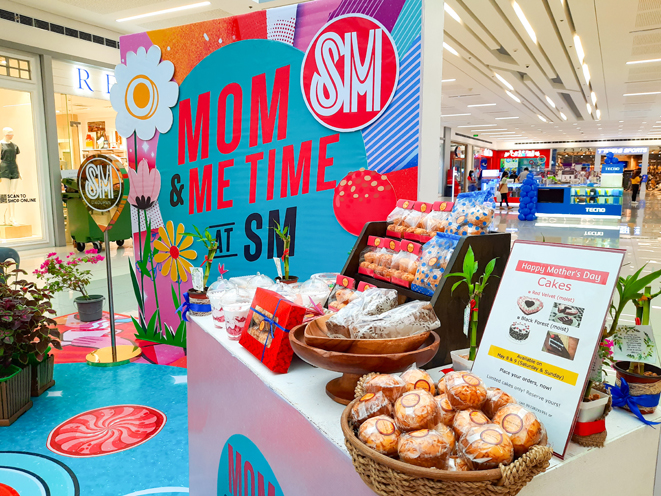
Treat your mom to a wonderful celebration at SM Supermalls.

If there’s one thing that moms want most when celebrating Mother’s Day, it’s spending time with the entire family. If you’re out of ideas on how to make bonding time with Mom extra special this coming May 9, let SM Supermalls give you a few fun and creative suggestions to make your date with the most important woman in your life one for the books.

Make it a blessed Mom’s Day. Start the day off with a special mass dedicated for mothers at participating SM malls or online through SM Supermalls’ Facebook page. It’s a great way to make Mom feel blessed and grateful for all the best things she receives in her life.

Enrich her career. It’s never too late for Mom to learn something new! Gift her with the special “SuperMOMpreneurs Power Up Webinar” presented by SM and Facebook Philippines this May 5 at 11:00 AM. In celebration of International Small Business Week, the webinar, which will be released on SM Supermalls Facebook Page and #WatchSM YouTube Channel, will surely be appreciated by Mom to help boost her business.

SM City Davao Mom’s Fair

Surprise her with all-day access to her favorite places. Moms always love some “me” time, so why not make it a whole-day tour of some of her fave stress-relieving places? On May 5, SM will be holding the 5.5 Mom’s Sale featuring awesome discounts on food, shopping, and pampering! So, gather the whole fam, head of to her favorite SM mall, and enjoy a scrumptious meal at her chosen restaurant. Check out the Instagram-worth outdoor dining areas at SM malls where the whole family can dine safely. Next, make a stop at her preferred stores for some exciting retail therapy then finish off with a relaxing session at her favorite spa or salon.

Give her a feast to remember. If she’s not too keen to go out or simply wants to enjoy a low-key celebration, opt for a Mother’s Day feast at home, featuring all her best-loved dishes. From appetizers to desserts, you can have them all conveniently delivered to your home or take out via the SM Malls Online app or through its hotline (8-8761111 for Metro Manila malls or 09178761111 and 09088761111 for provincial malls).

SM Center Dagupan Mom’s Bake Fair

Make her bloom even more. Nothing makes Mom smile more than a fresh bouquet of beautiful flowers, so a whole garden of blooms would definitely make her grin from ear to ear. At Mom’s Bloom Fair bazaar from April 29 to May 9, she can indulge in fresh and dried flowers and succulents and get a lovely shot of this flourishing paradise for Instagram.


SM City Taytay Mom’s Bake & Bloom Fair
SM City Marikina Mom’s Bloom Fair

Turn her into a TikTok star. Who says Mom can’t enjoy her 15 minutes of fame? Join her for a dance showdown and let the world know just how aweSM she is via TikTok. Just record a dance video of you and Mom and post it on TikTok anytime between April 29 to May 9, tagging @smsupermalls and including the hashtags #MOMentsWithSM and #FamTimewithSM, for a chance to be one of the 3 most viewed videos to win P3,000 SM gift certificates. Don’t forget to include SM Supermalls in your video to make it even more fun and creative!

Join #MOMentsWithSM Tiktok Dance Challenge

Arrange a special date for her and her furry friend. A certified pet parent like your mom deserves a bonding date with her fur baby, too. For SM’s Mom’s Pet Day, they can indulge in fun and exciting activities together, like photo sessions in their twinning outfits, from May 1 to 9. Plus, there will be special deals and discounts the two of them will surely enjoy. Just visit the Paw Park at participating SM malls to experience this paws-ome treat!

SM CDO Downtown Premier Mom’s Pet Fair

Cater to her sweet tooth. Baked goodies are always a nice idea to cap off a tiring but fruitful day, so before heading home, drop by Mom’s Bake Fair from April 29 to May 9 to bring home some of her favorite cakes and baked sweets. She will also be inspired by fellow empowered moms, as the bazaar features women entrepreneurs offering these sweet products.

Go the extra mile for Mom with these great bonding ideas for Mother’s Day at her favorite SM mall. Visit www.smsupermalls.com or like and follow @smsupermalls on all social media platforms for more information.


Are US firms ready to do more than voice concerns on trans rights?

Image via Ted Eytan/Flickr/CC BY-SA 2.0

NEW YORK — Leading US companies have become more vocal in criticizing proposed laws restricting transgender rights and taking a stand on LGBT+ issues but have failed so far to take concrete action against states with such legislation, advocates said.

Nearly 100 companies, including Facebook, Pfizer, and Dell, said late last month they were “deeply concerned” about a slew of trans-related legislative proposals presented recently in conservative states, calling the bills “discriminatory.”

Anne Lieberman, director of policy and programs at Athlete Ally, a US-based nonprofit LGBT+ athletic advocacy group, said the joint statement underscored the broader willingness of American corporations to step into the political arena.

“Since George Floyd’s murder over the summer, that was really a moment … where you saw businesses across the country really taking a strong stance in wading into political water in ways they haven’t done before,” Ms. Lieberman said.

Republican lawmakers have introduced a record 175 bills in at least 32 states on trans issues so far this year, according to Human Rights Campaign (HRC), the country’s largest LGBT+ advocacy group.

Most of the legislative proposals seek to stop trans girls and women from competing in school sports, and to restrict children’s access to gender transition-related medical care.

Proponents of the measures say they want to protect young people from medical procedures they could later regret and have voiced concerns that trans athletes have a physical edge that disadvantages girls and women.

It is not the first time big companies have taken a stand on LGBT+ rights issues. Last year, 36 firms signed a statement condemning a Tennessee law allowing adoption agencies to turn away LGBT+ couples on religious grounds.

“The sheer volume of businesses that engage is higher,” said Jessica Shortall, director of corporate engagement at Freedom For All Americans, an LGBT+ advocacy group that coordinated the statement with HRC.

“And honestly, practically speaking, there’s strength and safety in numbers,” Ms. Shortall added.

POLITICAL WATER’

The business community’s stance against conservative trans legislation came soon after leading companies spoke out against US state voting curbs that activist groups say unfairly target Black and other racial minorities.

Apple, Amazon.com, and Starbucks were among more than 100 companies to sign a letter in April opposing “any discriminatory legislation or measures that restrict or prevent any eligible voter from having an equal and fair opportunity to cast a ballot.”

Still, some trans rights advocates want business leaders to take a stronger line — as some companies did in North Carolina after the state passed the so-called “bathroom bill” in 2016.

The legislation banned trans citizens from using the public restrooms that correspond with their gender identity, prompting companies including PayPal, Adidas and Deutsche Bank to axe expansion plans in the state.

In an open letter in April, the HRC advocacy group urged companies to refuse new business in states where trans athletes were barred from competing and pull their support from sporting events where trans athletes cannot compete.

“Although we certainly appreciate those efforts, they are not enough,” the letter said.

More recently, Jennifer Pritzker — the world’s first trans billionaire and a Republican — has threatened to move her family’s business out of Tennessee due to a range of restrictive trans-related bills, several of which have passed.

Despite the dozens of proposals presented this year, so far only Arkansas, Tennessee, Mississippi, and South Dakota have pushed through measures banning trans women and girls from playing in female sports.

Idaho passed a similar law last year that has been blocked by federal court.

Last month, Kansas Governor Laura Kelly, a Democrat, and North Dakota Governor Doug Burgum, a Republican, vetoed bills in their states that aim to restrict trans athletes, with Kelly calling her state’s version of the bill “regressive.”

Both chambers of Arkansas’s state legislature passed a measure that would have made the state the first in the country to criminally punish doctors for providing certain types of care to trans youth.

Arkansas Governor Asa Hutchinson, a Republican, vetoed the bill shortly afterwards, saying it would be “vast government overreach,” however his veto was overturned by the legislature.

But despite the reprieve in some states, more such bills are bound to become law — particularly if lawmakers do not fear repercussions for their local economies, Ms. Lieberman said.

“Money, not morals, shifts the conversation far too often,” said Ms. Lieberman. — Matthew Lavietes/Thomson Reuters Foundation