Home Blog Page 7554

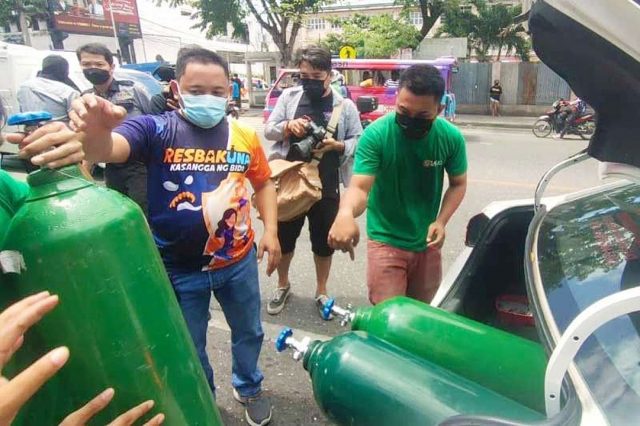
House bill exempting medical oxygen from taxes approved on 3rd reading 

PHILSTAR/THE FREEMAN

A PROPOSED law that will provide tax exemption for emergency medical supplies, including oxygen, was approved by House legislators on third and final reading Tuesday.  

House Bill 8895 or the Public Health Emergency Tax Exemption Act seeks to exempt from any government tax the manufacture, sale, importation, and donation of critical medical products during public health emergencies by private firms.   

It also exempts from taxes the procurement, sale, importation, distribution, and administration of critical medical products during public health emergencies by government units.    

The bill also requires the secretaries of Finance and Health to compile a list of supplies needed for the prevention, control, and treatment of COVID-19 (coronavirus disease 2019), which will enjoy exemptions from taxes related to their sale, manufacture, or import.   

It also permits the Finance chief, upon the recommendation of the secretaries of Health and Trade and Industry, to suspend the threshold on required export sales, to allow manufacturers to sell to the domestic market.   

The measure passed the House Committee on Ways and Means on March 4. Substitute provisions were also added by the committee on Aug. 23 after the President requested Congress on Aug. 9 to exempt manufacturers of medical-grade oxygen from government taxes.   

The revised bill was then passed by the House Aug. 25 on second reading.    

Gabriela Women’s Party-list Rep. Arlene D. Brosas said in her vote explanation speech that the measure may have a negative impact on the competitiveness of local manufacturers of medical goods who are experiencing losses due to the COVID-19 pandemic.   

“In the end, what we need to focus on is ensuring that we have our own national industries, specifically on the manufacture of goods and commodities. By doing so, we can face the pandemic head on without having to beg for importation,” she said. — Russell Louis C. Ku  

House approves tax relief bill for athlete prizes on 3rd reading  

HIDILYN DIAZ OLY FB PAGE

HOUSE LEGISLATORS approved on third and final reading Tuesday a bill that would make cash gifts and rewards for athletes and coaches participating in international competitions tax-free.  

House Bill No. 9990, also known as the Hidilyn Diaz Act after the country’s first Olympic gold medalist, would amend Section 4 of Republic Act No. 10699 or the National Athletes and Coaches Benefits and Incentives Act.  

Under the measure, prizes will also be made deductible against gross income for the donor’s income tax.   

The tax relief would be valid for one year before an athlete competes in an international sports competition and three months after the event.   

Donations made prior to the competition may only be used to fund training and competition-related expenses.   

The tax exemptions are to be retroactive to June 1, 2021 to cover incentives given to athletes and coaches who participated in the Tokyo Olympics.   

The measure was passed in the House Committee on Ways and Means on Aug. 9 and was approved Aug. 24 on second reading.   

House Speaker Lord Allan Jay Q. Velasco said the passage of the bill “represent the token of gratitude and appreciation of Congress and the entire nation to Filipino athletes who have brought joy, pride and glory to the country.”  

The House of Representatives has already adopted resolutions to confer TheCongressional Medal of Excellence for Ms. Diaz and TheCongressional Medal of Distinction to boxers Nesthy A.Petecio, Carlo Paalam, and Eumir Felix D. Marcial. — Russell Louis C. Ku  

NAMFREL proposes use of open-source software, other enhancements to 2022 automated elections  

ELECTION WATCHDOG National Citizens’ Movement for Free Elections (NAMFREL) has proposed five measures to the automated system for the 2022 national and local elections to improve efficiency and transparency.   

These proposals, submitted to the Commission on Elections (Comelec), are the use of an open-source election software, conversion of the data format to another format, reformatting of the ballot, the use of QR codes on election returns and the voting receipt, and the correct implementation of digital signatures.  

In a news briefing on Tuesday, NAMFREL Secretary General Eric Alvia said the use of an open-source election software will open the process to more bidders, instead of just the usual partner of the Comelec, which may make the election software “more competitive, less costly, and more transparent.”   

Converting the data format of the system from the election mark-up language format to the comma-separated values format will also fast-track the transmission of election data to stakeholders such as the media, political parties, and election monitoring organizations to further avoid doubts on the credibility of the data, he said.  

NAMFREL also proposed to reformat the list of candidates on ballots by arranging them based on random numbers drawn randomly before the start of the campaign period instead of the usual alphabetical arrangement by surname.  

The use of QR codes and replacing the digital signatures of the machine suppliers with that of the members of the electoral boards or of the boards of canvassers will ensure the authenticity of the electronic results, he said. It will also make the counting process faster and more transparent, he added.   

“We gave our proposals and recommendations to the Comelec last June and we were also able to submit our proposal to the Comelec advisory council,” Mr. Alvia said.   

He noted that no legislation is needed for these proposals. 

NAMFREL will deploy observers across the country to monitor the conduct of the 2022 local and national polls. — Bianca Angelica D. Añago  

House probe sought on DepEd’s use of 2020 funds  

HOUSE LAWMAKERS have called for a probe into the lapses found by state auditors on the Department of Education’s (DepEd) utilization of its 2020 budget, including additional funds allocated for the coronavirus pandemic response.   

The Makabayan bloc, led by ACT Teachers Party-list Rep. France L. Castro, filed House Resolution 2182 on Aug. 27 seeking for the House Committees on Public Accounts, and Basic Education and Culture to investigate the deficiencies found by the Commission on Audit (CoA) in its 2020 audit report on DepEd.   

CoA reported lapses in the utilization of P3.22 billion intended for DepEd’s Basic Education Learning Continuity Plan covered by the Bayanihan I and II, the two laws passed last year in line with the coronavirus crisis.   

Among these lapses were P951.90 million that was not immediately released by DepEd’s central offices to the agency’s regional offices. Further, P1.39 billion was released by regional offices to school division offices as late as 53 days after the official opening of classes.   

Other lapses included unutilized funds worth P396.29 million by seven regional offices.  

CoA also found lapses in the regular budget such as unliquidated cash advances by central and regional offices worth P697.52 million that lasted from 30 days to more than a year, and P11.07 billion in suspension, disallowances, and charges which DepEd has yet to address.  

“These observations brought to light in the 2020 (annual audit report) are additional proof that public education and its teachers and personnel are being under-supported despite being overworked,” according to the resolution.  

The Makabayan bloc also said that the findings show that DepEd appears to have a “minimal sense of urgency” in assuring millions of Filipinos to free and quality education during the pandemic. — Russell Louis C. Ku  

Bill seeks to increase benefits for barangay health workers  

DAVAO CIO

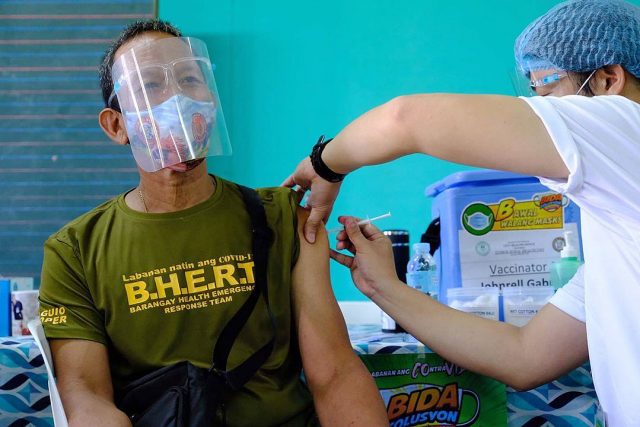
A BILL filed in the House of Representatives seeks to increase benefits for barangay health workers by mandating local governments to recognize them as employees.   

Filed by six lawmakers on Tuesday, House Bill 10112 or the Bayanihan Barangay Health Workers Act of 2021 will cover all those deployed in village-level health centers, whether under a job order arrangement, or hired as a casual or contractual worker, or regular employees.    

“As frontliners of our primary healthcare system, our barangay health workers must be given sufficient incentives, benefits, and most of all, just compensation for all the hard work they have done for us,” according to the bill.   

It also mandates the establishment of a special assistance program — to be led by the Department of Health and the Department of the Interior and Local Government — to provide additional technical and financial help to local governments that have little to no capacity to provide salaries to barangay health workers.   

Funding for the measure would come from the Internal Revenue Allotment share of local governments, which is expected to increase starting in 2022 in line with the Mandanas ruling.   

The national government allocated P1.116 trillion for local governments in the 2022 National Expenditure Program, including P959.04 trillion as national tax allotment share consistent with the implementation of the Mandanas ruling. — Russell Louis C. Ku  

NEA clarifies 2 unrecorded bank accounts with P290 million  

PHILSTAR FILE PHOTO

STATE AUDITORS found that the National Electrification Administration (NEA) had two unrecorded bank accounts that was not listed in their records with savings worth P290 million.   

In a 2020 audit report, the Commission on Audit (CoA) said that confirmation letters from state banks United Coconut Planters Bank (UCPB) and Development Bank of the Philippines (DBP) showed that NEA had around P90.67 million and P200 million in saving accounts, respectively, as of Dec. 31, 2020.  

“Both savings accounts were not reflected in the NEA’s books as at yearend, and no subsidiary ledgers were found for the two accounts,” CoA reported.  

CoA also found that NEA had a bank account with the DBP worth around P200.65 million that was not confirmed by the bank.   

CoA recommended for NEA to record the missing amounts worth P290 million and verify the recorded amount of around P200.65 million with the DBP.   

NEA Financial Services and Accounting Division Manager Ma. Chona Dela Cruz said in a press release Tuesday that they have already addressed the unrecorded accounts.   

“All funds were well accounted for. A total of P290 million were transferred into newly-opened accounts of NEA in 2020, sourced from two existing bank accounts. Book entries were all that were needed for NEA’s books to reflect the said accounts, which were already done,” she said.   

President Rodrigo R. Duterte fired NEA Chief Edgar R. Masongsong on Aug. 21 based on the recommendation of the Presidential Anti-Corruption Commission, following allegations of allowing electric cooperatives to continue financial support to the Philippine Rural Electric Cooperatives Association party-list. — Russell Louis C. Ku  

Senate approves bill simplifying adoption process on 3rd reading 

BW FILE PHOTO

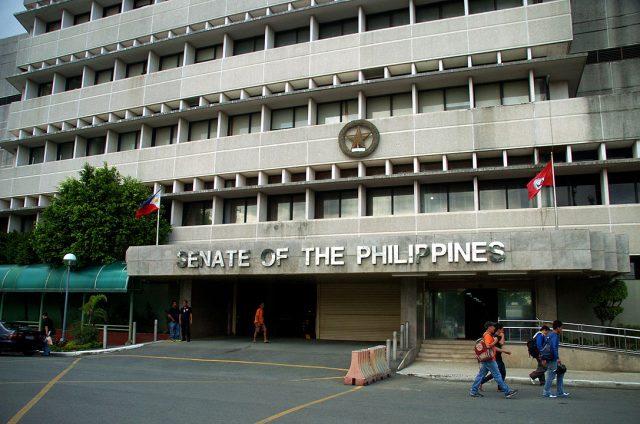
A BILL simplifying the adoption process was approved by the Senate on third and final reading on Tuesday. 

The Domestic Administrative Adoption and Alternative Child Care Act of 2021 or Senate Bill 1933 was passed unanimously with 22 affirmative votes.  

The measure is a consolidation of two bills originally authored by Senator Mary Grace S. Poe-Llamanzares and Senator Ramon B. Revilla, Jr. 

Senator Ana Theresia N. Hontiveros-Baraquel, author and sponsor of the consolidated version, said the measure seeks to dispense with the “lengthy process associated with judicial adoption by allowing domestic adoptions via an administrative process.”  

Under the bill, the waiting time of adoptive parents would be cut from years to six to nine months.   

Ms. Hontiveros-Baraquel, who chairs the Senate Committee on Women, Children, Family Relations and Gender Equality, said in a statement that previously, “only 60% of adoption cases in the country are finalized within one year to three years. Some cases take up to four years or longer. Families end up spending hundreds of thousands of pesos in these lengthy proceedings.” 

The provision also mandates a simpler, less-costly administrative process of adoption to be managed by a new government body, the National Authority for Child Care (NACC).    

“There are thousands of children who have been voluntarily or involuntarily given up by their parents due to poverty, negligence, abuse, a death in the family, or many other reasons. But thank God that there are others who wish to step up, adopt children, and provide them with a loving home,” said Ms. Poe-Llamanzares in a manifestation on Tuesday.  

“However, the adoption process has not always been easy. And just as it takes a village to raise a child, today, we have seen that it takes a village of senators to produce a bill that we can all be proud of,” she added.  

Procedural safeguards are included in the bill to protect the child’s welfare, such as the requirement of a home study and case study by a social worker for each application for adoption. The bill also penalizes abuse and exploitation of children as well as simulation of birth or the fictitious registration of the birth of a child under a person not their biological parent.  

Ms. Poe said the bill, if passed into law, may encourage adults to pursue adoption. The bill will “minimize costs, declog the courts and help the 4,943 Filipino children under the care of the Department of Social Welfare and Development who are still waiting for a permanent home,” she said. — Alyssa Nicole O. Tan 

Meralco holds off on disconnection activities in Metro Manila, nearby areas until Sept. 7 

MANILA ELECTRIC Co. (Meralco) said on Tuesday it has suspended disconnection activities in Metro Manila, Laguna, Bulacan, Cavite, Rizal, and Lucena City in Quezon until Sept. 7, after the government extended the modified enhanced community quarantine (MECQ) status in these areas.  

In a statement issued on Viber, the distribution utility said the “no disconnection” policy will continue to apply to customers who have not yet settled their obligations until next week.  

“Meralco encourages customers to reach out, so they can discuss and help clarify their concerns, and even come up with payment terms, if really needed. Meralco remains to be very considerate during this period and vowed to assist customers with their concerns,” the firm said.  

“Meralco will continue vital operations such as meter reading, bill delivery, and service crews will continue to work around the clock to serve its customers,” it added.  

Earlier this month, the Department of Energy issued an advisory urging power distributors based in Metro Manila and 13 other areas to withhold disconnection activities in their respective franchise areas under strict quarantine classifications.  

In an Aug. 6 advisory, Energy Secretary Alfonso G. Cusi advised all electricity end-users to immediately coordinate with their distribution utility on “amicable” payment settlements as soon as the strict quarantine levels are lifted. He also encouraged consumers who can pay and settle their bills to do so within their due dates to ensure the continuous operations of power utilities, among others.   

Meralco’s controlling stakeholder, Beacon Electric Asset Holdings, Inc., is partly owned by PLDT, Inc.  

Hastings Holdings, Inc., a unit of PLDT Beneficial Trust Fund subsidiary MediaQuest Holdings, Inc., which has interest in BusinessWorld through the Philippine Star Group, which it controls. — Angelica Y. Yang 

Aspiring for high-income status

PCH.VECTOR-FREEPIK

(Part 2)

In a publication of the Asian Development Bank in 2011 entitled Asian 2050: Realizing the Asian Century, the phenomenon of the “middle income trap” was first clearly defined. Middle income trap refers to countries stagnating and not growing into advanced countries of high-income level. In the last 30 years or so, many middle-income countries, a good number in Latin America, have been caught in a situation in which they are unable to compete with low-income, low-wage economies in manufacturing exports and are also unable to compete with advanced economies in high-skill innovations. Such countries cannot make a timely transition from resource-driven growth, with low-cost labor and capital to productivity-driven growth.

The classic example is the contrast between South Korea on the one hand and two middle-income countries — Brazil and South Africa — on the other, over a 30-year period (1975 to 2005). In 1975, South Korea was still a low-income country with less than $1,000 per capita while South Africa in the same year already had per capita incomes three times that of South Korea. By 2005, South Korea’s per capita income ballooned to over $20,000 while those of the two middle-income economies failed to grow above $10,000, clearly trapped in their middle-income status.

For perspective, let us cite some data from an article by Jesus Felipe entitled “Tracking the Middle-Income Trap: What Is It, Who Is In It and Why?” (March 2012). In 2010, out of 124 countries with available data, there were 52 middle-income countries, of which 35 were caught in the middle-income trap. There were four income groups of GDP per capita that were surveyed in the article. Using 1990 purchasing power parity dollars, the categories were as follows: low income ($2,000 and below); lower middle-income ($2,000 to $7,250); upper-middle income ($7,250 to $11,750); high-income (above $11,750).

In 2010, there were 40 low-income countries in the world, 38 lower-middle income, 14 upper-middle income, and 32 high-income. The paper calculated the threshold number of years for a country to be considered as being caught in the middle-income trap. A country that becomes lower-middle income (i.e., that reaches $2,000 per capita) has to attain an annual average growth rate of per capita income of at least 4.7% to avoid falling into the lower-middle income trap (i.e., to reach $7,250, the upper-middle income threshold). A country that reaches upper-middle income (attains $7,500) has to grow at an average annual rate of per capita income of at least 3.5% to avoid falling into the upper-middle income trap (i.e., to reach $11,750 which is the high-income threshold). Avoiding the middle-income trap is, therefore, a question of how to grow rapidly enough so as to cross the lower-middle income segment in at most 28 years and the upper middle-income segment in at most 14 years. We shall consider these indicative figures in assessing how long, if ever, it will take the Philippine economy to attain high-income status.

To complicate matters, these figures have been slightly modified in 2020 figures. Today, the low-income threshold is $1,036 and below; lower-middle income is $1,036 to $4,045; upper-middle income is $4,045 to $12,535. A country with a per capita income in nominal terms (not purchasing power parity) of $12,535 or more is considered today as high-income. Before the pandemic struck, the Philippines was on the road to attain upper-middle income status by 2021. Unfortunately, the big decline of GDP of -9.1% in 2020 has temporarily delayed this transition. Depending on how fast we can recover our GDP annual growth of 6% to 7% (or more), it may take us another three to four years to cross the threshold to upper-middle income category.

In 2019, our per capita GDP in nominal terms was already at the level of $3,511.94 as compared with Vietnam that registered a per capita income of $3,372.52 in the same year. Because Vietnam was able, at least in the beginning, to manage the pandemic challenge more efficiently, its economy was one of the few in the world to attain a positive growth of GDP in 2020 so that last year, its GDP per capita of $3,497.51 was already exceeding ours which dropped to $3,372.53. In addition to its more efficient response to the pandemic, I attribute Vietnam’s surpassing us to other factors: their State has been very responsive to the needs of their small farmers for the required resources to improve their productivity (Vietnam achieved the admirable feat of surpassing Brazil in coffee exports in less than a decade). Another reason why Vietnam has outperformed us and will continue to be ahead of us in per capita income growth is its being much more open to foreign direct investments than we are. In the last five years or so, the volume of FDIs entering Vietnam has been more than double ours. As our government will have to struggle to bring down the high debt-to-GDP ratio that has resulted from massive borrowings during the pandemic, it will be very difficult to continue funding the Build, Build, Build program in the coming years without our having recourse to massive amounts of foreign direct investments, especially in public utilities, infrastructure, and the digital sector. This is one reason why we have to remove the many restrictions that still exist against FDIs. Otherwise, we can be caught in the middle income trap for a long time.

Assuming that we can recover our average annual growth of 6-7% in GDP by next year, it will take us up to 2025 to become an upper-middle income economy that will be at the range of $4,046 to $12,535 per capita. If we can maintain that average for some 22 years, we shall attain the status of a high-income economy before 2050, a time horizon during which the millennials and centennials of today can reasonably expect to still be alive (life expectancy during their generations will be about 81 years for women and 79 years for men). I arrive at these figures by assuming that the average population growth rate annually will slow down to 1% annually. Given a GDP growth rate of 6% annually, that means per capita income will grow at 5% annually. At that rate, the GDP per capita of a little over $4,000 in 2025 will grow to a little over $12,000 (the threshold for a high-income economy) in 22 years.

In addition to the strong fundamentals that explained our having been able to grow at an average of 6.4% from 2010 to 2019, as celebrated by the World Bank, it is important that we add to these strengths what the Leader (Editorial) of The Economist advised all emerging markets to adopt post-pandemic. Let me quote from the closing lines of the Leader: “… the principles of how to get rich remain the same today as they ever were. Stay open to trade, compete in global markets and invest in infrastructure and education. Before the liberal reforms of recent decades, economies were diverging. There is time yet to avoid a return to the needless hardship of old.”

To be continued.


Bernardo M. Villegas has a Ph.D. in Economics from Harvard, is Professor Emeritus at the University of Asia and the Pacific, and a Visiting Professor at the IESE Business School in Barcelona, Spain. He was a member of the 1986 Constitutional Commission.

bernardo.villegas@uap.asia

Don’t let private education bite the dust

FREEPIK

By this time, it has become a cliché to say that the COVID-19 pandemic has changed a lot of things in our lives. Latest figures put the number of cases worldwide at 216 million and the deaths at 4.5 million. These rising numbers undoubtedly conjure images of a war, more so if we consider the major disruption in our so-called normal lives — from restrictions on physical mobility to a major economic decline.

Normally, at about this time of the year, there is a jovial and festive mood in our country as we usher in the so-called “-ber” months that signal the longest celebration of the Christmas season anywhere in the world. Vaccine czar Carlito Galvez, Jr. expressed confidence in having a better Christmas for Filipinos. But with the COVID-19 cases on the upswing at record-breaking numbers due to the Delta variant, many are again painting a picture of doom and gloom.

However, there is a growing voice of dissent against putting our lives further on hold. The line that “we must learn to live with COVID-19” is becoming a battle cry for survival. How many more lockdowns can we take? How many more can the government afford? How much can private businesses endure?

Take the case of private schools for instance. Latest figures from the Department of Education (DepEd) revealed a steep drop in enrollment, with only about 314,000 registering compared to the 2 million students who were enrolled in school year 2020-21 when the pandemic hit, and the 4.3 million students the year before that. This situation is a serious cause for alarm as it clearly and convincingly demonstrates the effects of the pandemic on the viability of private educational institutions.

The pandemic has indeed created the largest disruption of education systems according to a United Nations policy brief on education during COVID-19 and beyond, released in August 2020. Last year, based on the DepEd, close to 900 private schools in the country faced closures due to low enrollment and their failure to meet the requirements for distance learning. DepEd Secretary Leonor Briones attributed the lack of enrollees in private schools to the reduced income of parents due to the economic downturn. This assertion is supported by the UN policy brief that says that the direct cause of this school revenue decline is the concomitant drop in individual income brought about by the economic slowdown. When parents have lower income, they find it more difficult to bear the direct costs of education, such as tuition, miscellaneous fees, books and supplies. This situation, in turn, creates a cycle of lower student enrollment and, thus, deeper revenue shortfalls that could eventually lead to school bankruptcy. The survival of private schools hangs by a thread.

Private schools, however, seem to have adapted to online learning and are committed to continue with it, despite the prevailing pandemic. In a statement, the Coordinating Council of Private Educational Associations (COCOPEA) said that its member-schools are resolved to continue with online learning for this school year. The presidents of the associations that comprise COCOPEA agree that the safety of our students and stakeholders at this time of the pandemic is our “paramount concern.” They commit to devote their resources to online learning, including teacher-training and upgrading of their IT infrastructure.

The government’s role now is to serve as the enabler of the private schools’ viability and survival. One major stumbling block for the schools is Revenue Regulation (RR) No. 5-2021 issued by the Bureau of Internal Revenue (BIR) this year that imposes a tax rate of 25% on all private educational institutions. This has become controversial because it represents a whopping 150% increase from the previous 10%.

The BIR suspended certain provisions of RR 5-2021 relating to the controversy in consideration of the deliberations in Congress that would amend the National Internal Revenue Code (NIRC) in order to clarify the definition of proprietary educational institutions and clarify the tax treatment.

The House of Representatives has approved — with 203 affirmative and zero negative votes — a measure on third and final reading to explicitly make private schools eligible for preferential tax rates. House Bill 9913 amends Section 27 (B) of the National Internal Revenue Code of 1997 that will allow private schools to pay a tax rate of 1% between July 1, 2020 and June 30, 2023, as authorized by Republic Act No. 11534 or the Corporate Recovery and Tax Incentives for Enterprises (CREATE) law and 10% once the provision expires.

The ball is now in the hands of the Senate’s Ways and Means Committee, chaired by Senator Pia Cayetano. Let us give education the importance it deserves. The future of the country rests largely on the quality of education that we provide our children today.


Edwin Santiago is a Fellow and Member of the Editorial Board of the Stratbase ADR Institute.

Just cut the dolomite beach losses

PEOPLE gather at the artificial white sand beach along the shore of Manila Bay. — PHILIPPINE STAR / MIGUEL DE GUZMAN

FROM out of the blue, at a televised meeting of his COVID-19 Task Force, President Duterte justified the dolomite beach “nourishment” project by defending his choice of Roy Cimatu as his Secretary of Environment and Natural Resources. He, typically, cited his personal trust in Cimatu as having worked in Davao when he was mayor there. Therefore, it seems, in his opinion, Cimatu, who happens to be a retired general, can do no wrong.

Look at the facts.

We are trying to deal with a humongous pandemic crisis. There is not enough money to pay for all the vaccines that we need. Nurses and other healthcare frontliners have not been getting their hazard pay, let alone their basic salaries. Millions of people have lost their jobs or their businesses. Government revenues have been decreasing due to reduced tax collections from businesses which are closing or losing money, plus reduced consumer spending: a source of business incomes and VAT collections. Social welfare “ayuda” benefits for the needy, including the newly needy as a result of the pandemic, are not enough to prevent more and more involuntary hunger and deaths caused by inability to pay for expensive anti-COVID treatments. Besides, hospitals, which are losing their frontliners, are unable to cope with the unprecedented demand for rooms, medicines, patient care, and survival equipment.

Government certainly has to prioritize between basic needs and wants.

The Manila Bay artificial beach project at best is definitely not a need, but a want, if at all. The Department of Environment and Natural Resources (DENR) justifies it as something that the public needs. A beach in the heart of the capital city! We can’t even swim in highly polluted Manila Bay! Can’t we just enjoy the most beautiful sunset in the world? Can’t we just sit on the sea wall and watch for the awesome view like I used to when I lived there?

When the “beach” was opened to the public, the people who went there forgot the social distancing protocols in place because of the pandemic. So, surveillance and security personnel had to be mobilized to supervise the crowds which included children. These required additional operating costs that surely were not anticipated.

After the project was “completed,” when the rains came, as they always do, black sand covered the “white” dolomite fake sand. The DENR claims that the dolomite beach was not washed away by the rain, but that the black sand from the bay covered the dolomite. What difference does that make? The artificial beach was ruined. Engineering cures had to be shoveled in place to keep the dolomite beach from getting submerged. Did that mean more unplanned spending? Marine biologists say that the quick fixes will not last as they work against nature. Dolomite is not indigenous to Manila Bay’s environment. It is destructive to marine life there. The fish kill that followed the construction of the dolomite beach testifies to this. Of the hundreds of “beach nourishment” projects in the world, the Manila Bay project is the only one using dolomite, which is crushed into sand after being mined in Alcoy town in Cebu province. We haven’t even studied the impact the dolomite mining will have on the environment of Alcoy and Cebu province.

If the government persists in operating and maintaining the artificial Manila Bay beach project, are we prepared to allocate more and more funds to this ill-conceived and unnecessary project? We are a poor country and getting poorer. Government loans are already at the record highest in history.

Secretary Cimatu obviously was not asked the usual question that President PNoy would ask his Cabinet: “Is this the best use of the people’s money?” Last I checked, the initial budget for the dolomite beach was P389 million. This year, another P265 million has been allocated. More will be provided for 2022 when the beach “nourishment” project is supposed to be completed. Additional funds will have to be provided annually for the destructive heavy rains and typhoons that come to our Pacific island country. These climate disasters will continue to visit us with increasing frequency and severity with unmitigated climate change.

Mr. President, this is not personal. This is not about relationships. This is about responsibility for the people’s money.

Mr. President, let’s just cut our losses. Drop the project now. Just let it die. We cannot continue to spend money on it that we cannot afford. This is the plain and simple, sensible and practical option among several worse ones. Let’s just acknowledge it as a terrible mistake.


Teresa S. Abesamis is a former professor at the Asian Institute of Management and Fellow of the Development Academy of the Philippines.

tsabesamis0114@yahoo.com

AI, employee privacy and COVID-19

JCOMP-FREEPIK

For more than a year now, the current COVID-19 pandemic has affected “how we do things” in all aspects of our lives. Apart from “shocking” our health systems, this pandemic forced companies to adapt in order to survive, drastically changing working arrangements. Caught in a difficult exercise of balancing interests of protecting health and providing continuous employment, most companies implemented remote working or work-from-home (WFH) arrangements for their employees. Among others, companies implemented tools and processes to ensure that WFH employees remain productive and comply with the company rules and policies. The deployment of technological resources such as artificial intelligence (AI) to monitor WFH employees prove to be efficient, especially for those that deal significantly with confidential records and personal information of various clients and customers. Nonetheless, concerns have been raised whether the use of AI in WFH employee monitoring (such as use of webcams integrated in WFH PCs and devices) violate one’s right to privacy.

The National Privacy Commission’s (NPC) Advisory Opinion (AO) No. 2020-004 on “Guidelines on the Use of Closed-Circuit Television (CCTV) Systems” does not expressly prohibit the use of such work-monitoring AI tools since it applies to companies “engaged in the processing of personal data through the use of CCTV systems operating in public and semi-public areas.” A “semi-public” space refers to “a space that, even if privately owned, is accessible to the public during operating hours.” For an employee who is working remotely within the confines of one’s home and not in an “unsecure” public or semi-public area, this NPC AO does not squarely apply to the use of AI and other technological tools a company uses in connection with WFH computers or devices.

This notwithstanding, in an earlier opinion, i.e., Advisory Opinion No. 2018-084 on “Computer Monitoring,” the NPC stated that where the computer monitoring results in the collection of personal information of employees, employers are considered engaged in the “processing personal data” as defined under our privacy law, and thus, covered by the provisions of the Philippine Data Privacy Act of 2012 (DPA). As such, the monitoring of employee activities when the employee is using an office-issued computer (which clearly includes the use of A.I. software and other tools) is allowable under the DPA, provided that such “processing” falls under the criteria for lawful processing of personal data under Sections 12 (for non-sensitive personal information) and/or 13 (for sensitive personal information) of the DPA.

Under Section 12 of the DPA, the processing of non-sensitive personal information is permitted only if not otherwise prohibited by any law, and when at least one of any of the following conditions exists:

a.) Consent from data subject (in this case, the employee) is secured;

b.) Processing of personal information is necessary to the fulfillment of a contract with the data subject;

c.) Processing is necessary for compliance with a legal obligation;

d.) Processing is necessary to protect important interests of the data subject (such as life and health);

e.) Processing is necessary due to national emergency, or public order and safety; or,

f.) Processing is necessary to pursue the legitimate interests of the company.

Meanwhile, Section 13 of the DPA provides that processing of sensitive personal information shall be generally prohibited, except in any of the following cases:

a.) Consent from data subject (in this case, the employee) is secured;

b.) Processing is provided for by existing laws and regulations, and that the latter guarantees the protection of the sensitive personal information and expressly provides that consent of the data subjects is not required;

c.) Processing is necessary to protect the life and health of data subject who is legally or physically unable to express consent;

d.) Processing is necessary for lawful, noncommercial objectives of public organizations so long as it is only confined and related to their members and consent of the data subject was obtained;

e.) Processing is necessary for purposes of medical treatment; or,

f.) Processing is necessary for the protection of lawful rights and interests of persons in court proceedings, or when provided to government or public authority.

Considering that the use of AI technology as a WFH monitoring tool is within the scope of the DPA, companies employing such security measures must ensure that the “processing” complies with the privacy principles of transparency, legitimate purpose, and proportionality. The company must first inform the employee of the legitimate purpose/s of the processing of personal data and obtain the consent of the employee with respect to the use and implementation of the AI technology. Moreover, the method of data collection must also be proportional to the fulfillment of the purpose/s of the company and the use of computer monitoring is allowed only if it cannot be fulfilled by any other less privacy-intrusive means.

Further, the NPC recommends that employers conduct a Privacy Impact Assessment and prepare a policy or set of guidelines on the use of the company-issued devices and equipment containing at least the following information: 1.) purpose/s that computer monitoring seeks to fulfill; 2.) circumstances of monitoring, including the time and place it may be conducted; 3.) kinds of personal data that may be collected in the course of monitoring; 4.) criteria for accessing monitoring records; 5.) retention period of recordings or footages; 6.) security measures pertaining to storage, disclosure and disposal of recorded information; 7.) authorized personnel who have access and control over the system in place; and, 8.) procedure on how employees may lodge a complaint in case of violation of their rights, including the right to access their own personal data collected. All the foregoing information are prescribed by the DPA and its implementing rules and regulations.

The invaluable help of attorneys Maria Isabel M. Llave (mmllave@accralaw.com) and Mary Erica D. Manuel (mdmanuel@accralaw.com) for the research involved for this article is acknowledged.

This article is for general informational and educational purposes only and not offered as, and does not constitute, legal advice or legal opinion.


John Paul M. Gaba is a Partner in the Intellectual Property Department of the Angara Abello Concepcion Regala & Cruz Law Offices (ACCRALAW).

jmgaba@accralaw.com

8830-0000