Home Blog Page 7534

Q1 outputs for mango, pineapple and banana rise; calamansi down

PIXABAY

PRODUCTION of mango, pineapple, and banana rose in the first quarter while that of calamansi declined, according to the Philippine Statistics Authority (PSA).

The PSA said in its major fruit crops quarterly bulletin that mango production during the quarter rose 4.1% year on year to 97,898.58 metric tons (MT), mainly of the carabao mango variety. The Ilocos Region was the top producer with 47.8% of the total, followed by Central Luzon with 25.9% and Western Visayas with 6.3%.  

Pineapple production rose 5.7% to 662,500.29 MT, led by Northern Mindanao, which accounted for 57.7% of total production, followed by Soccsksargen (South Cotabato, Cotabato, Sultan Kudarat, Sarangani, and General Santos City) with 33%.

Banana production rose 1% to 2.08 million MT, with the Cavendish variety, the main type for export markets, accounting for 55.5%, followed by Saba, a cooking banana, at 25.6%. Davao Region was the top region with 35.6% of the harvest, followed by Northern Mindanao at 26.2%.  

Calamansi production fell 1.6% to 13,103.28 MT. Calabarzon (Cavite, Laguna, Batangas, Rizal, and Quezon) accounted for 18.4% of the harvest, followed by Central Luzon with 16.3% and Davao Region 13.2%.  

The PSA announced in May that the value of production of the overall Philippine agriculture sector declined 3.3% during the first quarter of 2021.  

The Agriculture department has said that it is targeting 2.5% growth for the agriculture sector in 2021. — Revin Mikhael D. Ochave

BARMM not required to comply with devolution rules, DBM says

PHILSTAR

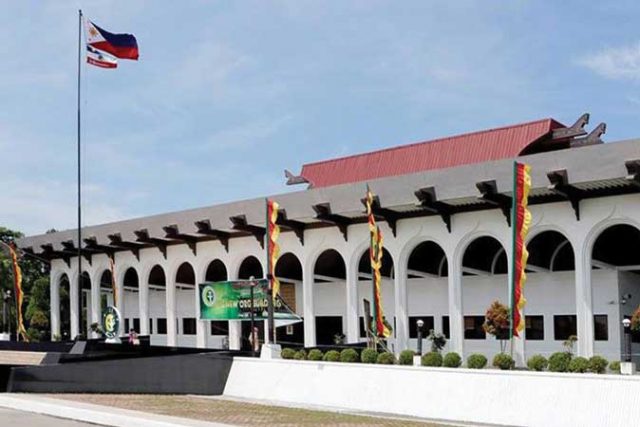
THE Bangsamoro Autonomous Region in Muslim Mindanao (BARMM) is not required to comply with the National Government’s devolution of functions to local governments to prevent disrupting the region’s transition phase, the Department of Budget and Management (DBM) said.

Local government units (LGUs) of the Bangsamoro government are not required to follow Executive Order (EO) No. 138, which will transfer some functions of the National Government to LGUs in exchange for a larger share of National Government revenue following the Supreme Court’s (SC) Mandanas ruling, according to Rowena M. Marte, supervising budget and management specialist at the DBM.

“Our stance on the application of the EO is that it is not mandatory on (BARMM’S) part to comply with EO and since the EO will not apply for the implementation of the same will not affect the BARMM government and its devolution of functions to its constituent LGUs,” Ms. Marte said at a forum organized by the Institute for Autonomy and Governance (IAG) on Thursday.

President Rodrigo R. Duterte issued EO 138 early this month to fully devolve certain functions of the National Government to LGUs by the end of 2024. Agencies and LGUs are required to prepare their own devolution transition plans within four months to clarify the division of labor between national and local entities, and set a timetable for devolution.

“We considered to not include the BARMM in the devolution efforts because of two reasons: first, the BARMM is in a period of transition, and the devolution efforts being done by the National Government might in a way disrupt its process and second, the BARMM government will be promulgating its own local government code,” Ms. Marte added.

She said the decision was also in line with the Bangsamoro government’s position that the devolution should not weaken its powers under the Bangsamoro Organic Law.

The DBM estimated that LGUs, including those in the BARMM, will receive P959 billion in Internal Revenue Allotment funds next year, with P326.1 billion going to municipalities, P220.58 billion to cities and provinces; and P191.8 billion to barangays.

LGUs are required to allot at least 20% of their national tax allotments (NTAs) for development projects.

The SC’s ruling on the petition by Batangas Governor and former Representative Hermilando I. Mandanas increased the LGU share of national taxes by including Customs collections in the pool of funds.

The government responded to the ruling by devolving more functions to LGUs starting next year, to compensate for the lost revenue.

The World Bank warned that bigger NTAs for local governments may result in greater underspending if the limited capacity of LGUs to implement projects is not improved.

Unequal fiscal allocations among LGUs will also likely persist despite the increased budgets, because the Mandanas ruling does not address the distribution formula for allocations to high- and low-income LGUs. — Beatrice M. Laforga

Philippine deaths from coronavirus top 24,000

REUTERS

By Kyle Aristophere T. Atienza, Reporter

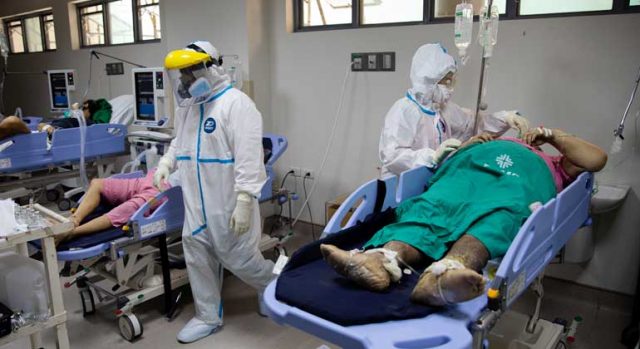
PHILIPPINE deaths from the coronavirus breached 24,000 on Thursday, as Health authorities reported 6,043 more infections to 1.38 million.

The death toll rose by 108 to 24,036, while recoveries increased by 4,486 to 1.3 million, the Department of Health (DoH) said in a bulletin.

There were 51,410 active cases, 1.4% of which were critical, 90.6% were mild, 4.5% did not show symptoms, 2% were severe and 1.44% were moderate.

Fifteen duplicates had been removed from the tally, nine of which were tagged as recoveries, the agency said.

A total of 44 recoveries were reclassified as active cases, while 61 cases previously tagged as recoveries were reclassified as deaths. One laboratory failed to submit data on June 22, it added.

About 13.7 million Filipinos have been tested for the coronavirus as of June 22, according to DoH’s tracker website.

The coronavirus has sickened about 180.4 million and killed 3.9 million people worldwide, according to the Worldometers website, citing various sources including data from the World Health Organization.

About 165.1 million people have recovered, it said.

Meanwhile, the government on Thursday took delivery of about two million more CoronaVac doses from China, according to the presidential palace.

Of the total, about 1.6 million doses were bought by the National Government, while the rest were ordered by Ip Biotech, Inc. for the local government of Manila, presidential spokesman Herminio L. Roque, Jr. told a televised news briefing

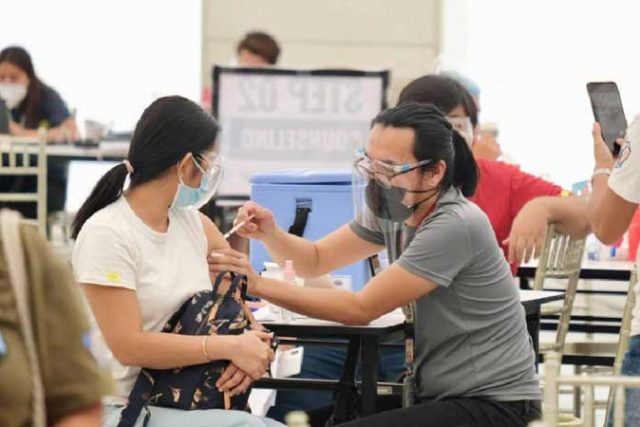
More than 8.9 million doses of coronavirus vaccines have been given out as of June 22, 6.6 million of which were first doses, he said.

More than a million health workers were already fully vaccinated, Mr. Roque said.

Mr. Roque said more than 589,000 seniors and about 565,000 seriously ill people had also been fully vaccinated. More than 8,600 essential workers have received their second dose.

Meanwhile, the cities of Bacolod, Iloilo, Cagayan de Oro, Baguio, Zamboanga, Dumaguete, Tuguegarao, General Santos, Naga and Legaspi would be prioritized for vaccines, he said.

The decision came due to rising infections there, their being highly urbanized and their contribution to economic output, he added. Mr. Roque said the government would hire more contact tracers amid the threat of a more contagious coronavirus variant first detected in India.

Mr. Roque said President Rodrigo R. Duterte might discuss the hiring at a meeting with key lawmakers regarding the country’s second stimulus law.

He earlier said contact-tracing had been the weakest point in the government’s pandemic response.

Meanwhile, the salary increase of nurses would probably be financed by the government’s second stimulus fund or by a pandemic measure that is yet to be legislated, Mr. Roque said.

A group of Filipino nurses earlier asked the government to use unspent funds under the second stimulus package for their wage increase.

Under the law the minimum base pay of nurses working in government hospitals and health institutions should start at P31,545 a month.

The government would likely heed the call of the nurses, Mr. Roque said, citing Executive Secretary Salvador C. Medialdea’s June 1 memo.

“It could be a supplemental budget under Bayanihan III or through further realignment of Bayanihan II,” he said. “It is up to Congress since they have plenary power of legislation.”

The palace official earlier said more than P18 billion from Bayanihan II had not been used, more than nine months since the second stimulus package was signed. The law expires on June 30.

Mr. Roque on June 8 said there might not be enough money to fund the salary increase of nurses.

Mr. Duterte was set to meet with key legislators on Thursday to discuss a proposal to extend the validity the second stimulus law. A proposal for a third stimulus package would also be discussed, he said.

The House of Representatives on June 1 approved the proposed P401-billion Bayanihan III law, which seeks to boost the country’s pandemic response. — with Vann Marlo M. Villegas


Fisherfolk urge navy to drive away China ships in disputed sea

PHIL COAST GUARD

A GROUP of fishers on Thursday asked the Philippine government to send its navy to drive away Chinese vessels in the South China Sea within the country’s exclusive economic zone.

“It is without a doubt that the vessels detected to be lingering in our territory are Chinese-owned,” Fernando L. Hicap, national chairman of Pambansang Lakas ng Kilusang Mamamalakaya ng Pilipinas (Pamalakaya) said in an e-mailed statement.

China has been unnecessarily occupying areas of the sea that are part of Philippine territory, the fisherfolk said. “They may be part of the 220 Chinese vessels spotted in Julian Felipe Reef last March.”

US-based geospatial intelligence firm Simularity said in a report that ships spotted within the Philippine economic zone from mid-May to June 17 had risen to 238 from 129.

It added that 236 ships had been spotted at Union Banks — a large atoll in the Spratly Islands — while 71 vessels were docked near Tizard Bank. Eleven ships were also located near Thitu Island.

Mr. Hicap said the Philippine Navy and Bureau of Fisheries and Aquatic Resources should look into reports about the growing presence of foreign vessels in Philippine waters.

He also criticized maritime authorities’ failure to prevent the entry of foreign vessels.

Mr. Hicap accused the government of kowtowing to foreign vessels that enter and exploit the country’s marine resources.

“Our maritime authorities seem to be sleeping in oblivion, while foreign vessels are rampantly entering our territorial waters for unspecified yet alarming reasons,” he said. Maritime authorities should act decisively by driving these vessels away, he added.

“We demand that these vessels be urgently expelled from our waters as they have been occupying the traditional fishing grounds of our fisherfolk,” he added.

The Department of Agriculture (DA) earlier said Filipino fishermen have continued to fish in the South China Sea due to heightened Philippine government presence.

The Fisheries bureau said 108 commercial fishing vessels from Bataan and Zambales, 20 from Pangasinan, 19 from Palawan and two from Occidental Mindoro have been fishing in the area since January.

It also said five monitoring, control and surveillance vessels and a multi-mission offshore vessel had been deployed in the Spratlys, while another surveillance vessel had been sent to the Scarborough Shoal area to protect Filipino fishermen.

The Philippines has filed several diplomatic protests against China due to its intensified presence in the disputed area.

China refuses to honor an arbitral ruling in 2016 that rejected its claim to more than 80% of the South China Sea based on a 1940s nine-dash map.

Foreign Affairs Secretary Teodoro L. Locsin, Jr. on Wednesday rejected attempts to undermine the 2016 decision by the international court

The arbitral ruling favoring the Philippines in the sea dispute is final, he said on the fifth anniversary of the ruling.

Mr. Locsin said the arbitral award “was given to a set of maritime circumstances that would be as true in our waters as in others.”

Mr. Locsin said that the arbitral award “became and continues to be a milestone in the corpus of international law.”

The jurisprudence is a Philippine gift to other countries and “benefits the world across the board.” Mr. Locsin said the country is committed to having a peaceful South China Sea. — Revin Mikhael D. Ochave

Peso rebounds ahead of BSP decision, US data

BW FILE PHOTO

THE PESO strengthened versus the greenback on Thursday on expectations that the central bank would keep rates at record lows and ahead of the release of US jobs data.

The local unit closed at P48.735 per dollar yesterday, gaining seven centavos from its P48.805 finish on Wednesday, data from the Bankers Association of the Philippines showed.

The peso started Thursday’s trading at P48.755 versus the dollar. Its weakest showing was at P48.92, while its intraday best was its closing level of P48.735.

Dollars exchanged decreased to $1.005 billion on Thursday from $1.103 billion on Wednesday.

The peso strengthened ahead of the close of the Bangko Sentral ng Pilipinas’ (BSP) policy meeting on Thursday, Rizal Commercial Banking Corp. Chief Economist Michael L. Ricafort said.

After the market’s close, BSP Governor Benjamin E. Diokno said in an online briefing that the Monetary Board kept the key policy rate at a record low of 2% at yesterday’s meeting to support an economy that continues to face uncertainties even while already showing early signs of recovery.

“On balance, the expected path of inflation and downside risks to domestic economic growth warrant keeping monetary policy settings unchanged,” Mr. Diokno said in an online briefing.

“The Monetary Board believes that sustained monetary policy support for domestic demand should help the economic recovery gain more traction, especially as risk aversion continues to temper credit activity despite ample liquidity in the financial system,” he added.

Meanwhile, a trader said the peso climbed as investors expect improvement in the US labor market. Initial jobless claims data were scheduled to be reported by the US Labor Department on Thursday.

For Friday, Mr. Ricafort gave a forecast range of P48.65 to P48.85 per dollar, while the trader expects the local unit to move within the P48.70 to P48.85 band. — L.W.T. Noble

Stock index declines in the absence of catalysts

BW FILE PHOTO

PHILIPPINE shares declined on Thursday amid a lack of catalysts and as investors continue to monitor the country’s coronavirus disease 2019 (COVID-19) situation.

The benchmark Philippine Stock Exchange index (PSEi) lost 32.41 points or 0.46% to close at 6,886 on Thursday, while the all shares index went down by 3.70 points or 0.08% to 4,199.89.

“The market traded flat for most of the session on lack of catalysts,” AB Capital Securities, Inc. Junior Equity Analyst Lance U. Soledad said in a Viber message.

“The market ended lower as traders sold shares during the last minute of trading, after two consecutive days of rallying up to the 6,900 level,” Timson Securities, Inc. Trader Darren Blaine T. Pangan said in a separate Viber message.

“Investors may be assessing the COVID-19 situation, and are waiting for signs that the currently enforced lockdown measures will be relaxed in the coming weeks,” he added.

Majority of sectoral indices closed in the red on Thursday except for industrials, which gained 25.72 points or 0.27% to 9,505.06; and financials, which rose by 3.26 points or 0.21% to end at 1,491.35. 

Meanwhile, mining and oil declined by 113.25 points or 1.21% to 9,226.95; holding firms went down by 57.11 points or 0.82% to 6,865.43; services shed 12.44 points or 0.79% to 1,561.66; and property lost 18.55 points or 0.54% to end at 3,393.63.

Value turnover inched up to P6.48 billion with 4.36 billion issues traded on Thursday, from the P6.14 billion with 4.2 billion shares switched hands on Wednesday.

Decliners narrowly beat advancers, 100 against 97, while 52 names remained unchanged.

Net foreign selling slowed to P912.22 million on Thursday from the P1.44 billion logged in the previous day.

AB Capital Securities’ Mr. Soledad said catalysts for Friday’s trading will be the results of the Bangko Sentral ng Pilipinas’ (BSP) monetary policy meeting on Thursday.

He said he expects the index to trade between 6,800 and 7,000, while Timson Securities’ Mr. Pangan forecasts the market to finish between 6,760 to 7,080.

The BSP announced after the stock market’s close that its Monetary Board decided to maintain the interest rate on the central bank’s overnight reverse repurchase facility at its record low of 2%, as expected. The interest rates on its overnight deposit and lending facilities were likewise kept at 1.5% and 2.5%, respectively.

The central bank said it kept borrowing costs steady amid lingering economic risks.

“On balance, the expected path of inflation and downside risks to domestic economic growth warrant keeping monetary policy settings unchanged. The Monetary Board believes that sustained monetary policy support for domestic demand should help the economic recovery gain more traction, especially as risk aversion continues to temper credit activity despite ample liquidity in the financial system,” it said. — K.C.G. Valmonte

TV viewing level in PHL down in Q1 — Nielsen

PIXABAY

TELEVISION VIEWING level in the Philippines dropped to 13.5% in the first three months of 2021 from 17% in the same period a year ago, mainly due to the shutdown of ABS-CBN Corp.’s broadcast operations, a global measurement and analytics company said.

At the start of the pandemic last year, “When ECQ (enhanced community quarantine or the strictest lockdown level) was enacted, TV viewing heightened, with 21.2% ratings at the end of March 2020, an over five-percentage-point increase from the month before,” Nielsen said in an e-mailed statement on Wednesday.

“This significant upswing was observed throughout all day-parts and can be attributed in large part to the need for news and ‘thoughtful programming,’” it added.

ABS-CBN, however, stopped broadcast operations in early May after the National Telecommunications Commission issued a cease-and-desist against the company. It was followed by the adoption of a resolution denying the media company’s franchise application by the House of Representatives Committee on Legislative Franchises on July 10.

“While COVID-19 (coronavirus disease 2019) led to this disruption and led to similar changes globally, the shutdown of ABS-CBN made the Philippines a unique case as the network’s main channel on its own took 33.5% of the total TV audience share in Q1 (first quarter) 2020,” Nielsen noted.

“The shutdown has led to lower total TV viewing levels overall (13.5% for Total Philippines for Q1 2021 compared to 17.0% in Q1 2020), but higher individual ratings for the remaining channels,” it also said.

With the absence of ABS-CBN’s free TV and the adoption of work-from-home setup, internet penetration had increased even more.

“The increase in internet penetration was more than four million people in urban Philippines alone (from 76% in Q1 2020 to 84% in Q1 2021),” Nielsen said. “While individual channels increased in ratings, the lower ratings for total TV point to a higher incidence of these multi screeners deciding to go purely digital,” it added.

Nielsen further explained, “All of this is to say that the disruptions have led to a new balance in the media landscape and therefore leads to a higher need for always-on cross-platform measurement. Advertisers need to know which media and channels to allocate their budget and also need to be able to optimize their campaigns with data-driven decisions. Similarly, publishers need to be able to quantify to their advertiser clients what their platforms are able to provide.” — Arjay L. Balinbin

89 State colleges, universities to get P2B from Bayanihan II for shift to smart campuses 

THE COMMISSION on Higher Education (CHED) said it has allocated a total of P2 billion to 89 state-owned universities and colleges across the country under the Bayanihan II stimulus fund, to be used for the shift into smart campuses.

As of Thursday, 19 schools out of the 89 have formally signed a memorandum of agreement with CHED, to be spent on various requirements for setting up flexible learning systems.

The remaining 70 schools are currently finalizing their proposals and expected to receive their grants “in two to three days,” CHED chairman Prospero E. de Vera said in a press conference on Thursday.

Of the P2 billion, total disbursement stood at P416.6 million as of Thursday.

Mr. De Vera said they are confident that CHED “will beat the June 30 deadline for the disbursement of the Bayanihan II funds.”

He further called on Congress to grant the commission additional funds under the proposed Bayanihan III to continue the smart campus initiative.

“We have started to build the foundations for smart campuses of our state universities and colleges. We have used the money allocated by Congress under Bayanihan II,” Mr. De Vera said.

CHED also spent P1 billion to buy laptops for faculty members while P300 million was used to cover unpaid tuition and miscellaneous fees of 50,000 students in private universities across the country.

Another P300 million were disbursed, through the Department of Labor and Employment, to part-time faculty members with no salary during the pandemic because of the “no teach no pay policy.”

Meanwhile, CHED and the Department of Health (DOH) have authorized 93 higher education institutions to conduct limited face-to-face classes as of Thursday.

The 93 schools were among the 155 that filed applications for the authority to conduct limited in-person classes, CHED director Lily Freida M. Milla said. — Bianca Angelica D. Añago

8,000 seedlings up for grabs in 4 NCR cities on Arbor Day

DENR NCR FB PAGE

THE FIELD offices of the Department of Environment and National Resources (DENR) in Metro Manila will open four community “PanTrees” to distribute free seedlings of fruit-bearing trees and vegetables in celebration of Philippine Arbor Day on June 25.

DENR National Capital Region (NCR) Executive Director Jacqueline A. Caancan told BusinessWorld in phone call on Thursday that a total of 8,000 seedlings are up for distribution across the four sites from 9 a.m. to 12 noon.

These will be located in the following covered basketball courts: Barangay Lower Bicutan, Taguig; Barangay 863, Pandacan in Manila; Barangay UP Campus, Quezon City; and Barangay Marikina Heights, Marikina.

On Arbor Day, government agencies and the public are encouraged to participate in tree planting activities.

“The roll-out of the PanTrees will be simultaneous, then we’ll take it from there on what the public’s response will be. And then we’ll line up the barangays (that the panTREES will visit),” she said.

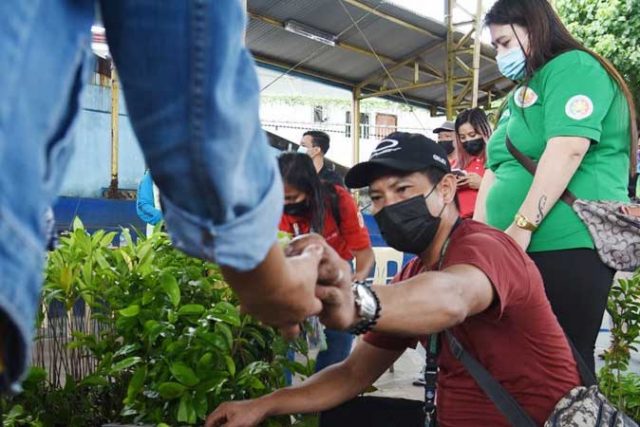
Earlier this week, the DENR brought its mobile community PanTree project to Barangay 163 in Caloocan City where residents were able to receive free seedlings of guyabano, mango, jackfruit, among other fruits and vegetables.

In April, the DENR-NCR began a community PanTree at its headquarters in Quezon City with the goal of promoting urban and backyard gardening, while helping residents cope with quarantine fatigue and other mental health issues associated with the global health emergency. — Angelica Y. Yang

Call for probe on DepEd’s laptop procurement ‘premature and unfair’ — DBM 

THE PROCUREMENT Service of the Department of Budget and Management (PS-DBM) said the call of a lawmaker to investigate the procurement of 39,000 laptops for public school teachers is “premature and grossly unfair” because the bidding process is still ongoing.   

“The bidding process is ongoing and no contract has been awarded. Thus, Rep. (Bernadette) Herrera-Dy’s call for a Congress probe is not only premature but grossly unfair. By prejudging the bidder selection process, she is in fact, trying to influence the final outcome of the PS-DBM’s procurement decision,” the agency said in a statement.   

PS-DBM said it cannot release further information about the bidding since this is prohibited under existing procurement rules.  

Ms. Dy on Wednesday called on the lower chamber to look into what she tagged as a “questionable” procurement by the Department of Education (DepEd) of the laptops.  

She claimed that the contract will likely be secured by the second-lowest bidder at P2.3 billion, higher than another party’s offer of P167 million. 

PS-DBM said existing rules provide that government projects should be awarded to bidders with the lowest calculated responsive bid (LCRB), and not necessarily to the lowest bidder. 

“The LCRB is defined by law as the lowest bid from a technically, legally, and financially capable supplier that is compliant with all the technical specifications as required and stated on the bidding documents,” it said.  

“In light of these misinformed claims and allegation, PS-DBM urges Rep. Herrera-Dy to refrain from making premature remarks and to be enlightened of the procurement process.” — Beatrice M. Laforga 

Hontiveros plans to seek reelection in 2022

SENATE.GOV.PH

SENATOR RISA N. Hontiveros-Baraquel on Thursday said she is eyeing to run for reelection in 2022.

In an online briefing, Ms. Baraquel said she will make a bid for another term as legislator when asked by reporters.

“But there will be time to share more about that with you kasi nga may iniintay tayong anunsyo ng isang kapwa pamilya natin (because we are still waiting for announcements from our fellow political family),” she said.

Ms. Baraquel, national chairperson of Akbayan party, said the party is also preparing for possible alliances.

“For now, it’s early stages also, like most, there are a lot of discussions on alliances,” she said in a mix of Filipino and English.

She added that her party supports the call to form unity among Filipinos. — Vann Marlo M. Villegas

Social, work interactions cited for COVID-19 surge in Davao City

DAVAO CIO

SOCIAL GATHERINGS and work-related interactions among those 24 to 40 years old, described as “high risk behaviors” by Davao City’s coronavirus task force, were cited as the main cause of the recent surge in local transmissions.

“We all know millennials, these are the population with high-risk behaviors. This is the age group that love to socialize, have get-together in social gatherings. Since they are also part of the working group, they go out to socialize and interact. They are likely highly to get infected,” Michelle B. Schlosser, task force spokesperson, said partly in Filipino in a statement from the city government.

As of June 19, the city recorded 21,453 coronavirus disease 2019 (COVID-19) cases, 62% of which or 13,394 belong to the 20-49 age group, according to City Health Office acting head Ashley G. Lopez.

Broken down further into specific age brackets, Mr. Lopez said the 20-29 group accounted for the highest number of COVID-19 cases at 5,721, followed by the 30-39 group with 4,584.

Ms. Schlosser said the recovery rate is high among millennials and many are asymptomatic.

The city is currently under the second strictest quarantine level and social gatherings, including home visits, are prohibited.

Earlier this week, Mayor Sara Duterte-Carpio said the city government is looking at setting up an additional 250 isolation beds as well as preparing medical care kits for asymptomatic and mild patients who can do home-isolation and guided through telemedicine.

The city currently has 2,408 beds dedicated to COVID-19 patients, with 873 still available as of June 21.

“We are working on four more (isolation facilities). The biggest one is the one at the Department of Public Works and Highways but we are not optimistic about it since it still needs a lot of work before it can be used. So, we have three (others) that we are readying and we know will be utilized soon,” Ms. Carpio said over the local government-run radio. — MSJ