Home Blog Page 7521

The pump and dump scheme

JCOMP-FREEPIK

“Of all the drugs under God’s blue heaven, there is one that is my absolute favorite — Money. Enough of this sh-t will make you invincible — able to conquer the world and eviscerate your enemies,” securities trader Jordan Belfort says in Martin Scorsese’s award-winning biopic, The Wolf of Wall Street. The 2013 movie set a new Guinness World Records record title for the most swearing in one film, with the f-word expletive used 506 times — an average of 2.81 times per minute (https://www.guinnessworldrecords.com).

Scorsese must have taken a lot of liberties to characterize the infamous Jordan Belfort (famously portrayed by Leonardo DiCaprio, who won the Golden Globe Best Actor for this) as crude, obsessed, and grossly depraved. But Belfort had given unequivocal consent for his portrayal, as the movie was based on his own 2007 memoir of the same title, where he related his career as a stockbroker in New York City and how he ran his 1980s Over-the-Counter (OTC) stock brokerage firm, Stratton Oakmont, to defraud small investors in penny stocks with his signature “pump and dump” scheme.

“Rule Number One,” Belfort says in the film, “F-ck what they think.”

The three-hour “epic” of Belfort’s how’s and why’s in his life and career opens with a troubling scene. It is a rowdy office party; half-crazed merrymakers take turns trying to catapult a live-and-kicking little clown onto a sticky bulls-eye wall set up with a huge dollar sign. Jordan Belfort, the big boss and owner of Stratton Oakmont, is rousing his securities traders: “The only thing standing between you and your goal is the bullshit story you keep telling yourself as to why you can’t achieve it.” And the seemingly hypnotized cult group chanted, “Money, money!”

That was Belfort’s trademark: he was (and still is) a motivational speaker, generically a salesman. He knew only too well how to convince people to buy into his ideas and use his products. His initial target market were his employees, who absorbed his style and philosophy in the criminal deviousness of the “pump and dump” investment schemes and inflated IPOs (Initial Public Offering in the equities market). At its peak, the firm is said to have employed about 1,000 stockbrokers overseeing investments of more than $1 billion. Small investors were pretty much like the little clown hurled like a dart at the bulls-eye at their office party.

Pump-and-dump is a manipulative scheme that attempts to boost (pump) the price of a stock or security through fake recommendations. These recommendations are based on false, misleading, or greatly exaggerated statements. The perpetrators (brokers, traders) already have an established position in the company’s stock and will sell (dump) their positions after the hype has led to a higher share price (https://www.investopedia.com). This was traditionally conducted through “cold calling,” which we see in the movie as the frenzied traders rushing to the telephone to call their quota of potential investor-clients after Belfort’s hype and hoopla about the targeted inflated security. Belfort drafted the spiel for his traders to read to clients. The usual come-on is “inside info” about an imminent development that will surely lead to a dramatic rise in the share’s price. Convinced buyers pump the stock even higher by the increased demand. The pump and dump scheme operated by Stratton Oakmont resulted in investor losses of roughly $200 million (https://www.beatingtheindex.com).

A Telegraph article cited by the same site said that Belfort was making close to $1 million a week and that he once earned over $12.5 million in three minutes. Another article in the Independent states that he was earning an estimated £600,000 a week, which is around $937,500 using 2014 exchange rates when the article was published (Ibid.). Of course, those amounts were not yet net of Belfort’s profligate spending on expensive drugs, society prostitutes, and his lavish lifestyle of parties and orgies in his mansions, jets, and yachts. He sniffed cocaine through a rolled-up $100 bill and threw thousands of dollars in the air in his stupor.

Stratton Oakmont was hounded by the National Association of Securities Dealers (NASD) until the firm was shut down in 1996. In 1999, Belfort and his associate Danny Porush were indicted for money laundering and securities fraud. After a plea bargain where Belfort ratted on his partners in crime including Danny, he was sentenced to four years and ultimately served 22 months in prison. Following his release from prison, and as part of his restitution agreement, Belfort was required to pay 50% of his income to his defrauded clients through 2009. Federal prosecutors filed a complaint in 2013, alleging that Belfort reneged on his obligations to his victims until he reached again a separate deal with federal authorities to complete the restitution payments.

Since his release from prison Belfort has re-engineered himself as, guess what — a professional motivational speaker. His speaking engagements are run through his business, Global Motivation, Inc. Perhaps Belfort has since replaced his imagery of that little clown tossed like a dart towards the bulls-eye just like the exploited victims of his glib tongue and what he espoused. Taking advantage of others by fake news or manipulated slants was criminal then, as it is now. The intricate deceit in money laundering hurts the common good, like stealing and cheating.

Yet the pump and dump scheme has thrived, with extensive online trading and transactions of almost any and all financial products, with traders, brokers, or whoever wishing to sell to even randomly selected potentially impressionable “investors.” Belfort has lost his audience to the internet. In January 2018, JT Hamrick et al. published The Economics of Cryptocurrency Pump and Dump Schemes, an expose on the scams on the manipulated and faked trading values of Bitcoin and 2,000 other cryptocurrencies, still unregulated by governments.

Scams by opportunists can thrive in recessions because of the frantic efforts of most investors to recover thinning or lost spreads in trading, downtrends in interest income, bond yields, even negative savings rates eaten up by inflation. Currency exchanges are volatile, as the whole world is in differing unstable economic conditions — all in some level of recession. In the twin calamity of the COVID-19 pandemic and world recession, many businesses closed and bankruptcies were declared. Enter the fabricators of fake or magnified “good news” to offer solutions to desperate investors.

The US Securities and Exchange Commission offers advice on pumped-up investment opportunities, which are relevant and applicable to democratic economies (https://www.sec.gov):

1. Consider the Source. When you see an offer on the internet, assume it is a scam, until you can prove through your own research that it is legitimate.

2. Find Out Where the Stock Trades. OTC transactions which are generally among the riskiest and most susceptible to manipulation.

3. Independently Verify Claims. Before you invest, make sure you’ve independently verified grandiose claims.

4. Research the Opportunity. Always ask for — and carefully read — the prospectus or current financial statements.

5. Watch Out for High-Pressure Pitches. Don’t fall for the line that you’ll lose out on a “once-in-a-lifetime” chance to make big money if you don’t act quickly.

6. Always Be Skeptical. Whenever someone you don’t know offers you a hot stock tip, ask yourself: Why me? Why is this stranger giving me this tip? How might he or she benefit if I trade?

If it sounds too good to be true, it probably is… not true.


Amelia H. C. Ylagan is a Doctor of Business Administration from the University of the Philippines.


ahcylagan@yahoo.com

Remittance prospects seen positive despite Delta variant

PHILIPPINE STAR/KRIZ JOHN ROSALES

By Luz Wendy T. Noble, Reporter

THE REMITTANCE industry’s outlook is positive as vaccination programs gain traction in major economies that are key worker destinations, despite the threat of the coronavirus Delta variant, a remittance industry executive said.

“Because of the vaccine, my view is that it lessens the danger of us as a whole going back to those early stages of the pandemic wherein everybody is closed. I don’t think that will happen. Although there are variants, we will not be in the position (we were in) in March 2020,” UniTeller Philippines President Noel C. Cristal said in an online interview.

Cash remittances increased 7% year on year to $2.638 billion in June, according to the Bangko Sentral ng Pilipinas (BSP). Inflows in the first half of the year rose 6.4% to $14.918 billion.

Cash remittances slipped 0.8% to $29.903 billion in 2020. The 2019 total of $30.133 billion had been a record.

Inflows from the US, the biggest remittance source, have been boosted by Washington’s massive stimulus support programs, Mr. Cristal said.

“The government extended support programs, and of course, Filipinos are always for family. When they get some money, their priority is really to send support to their families back home,” he said, noting that the US is Uniteller’s main market.

Remittances fuel household spending, which makes up about 70% of the Philippine economy.

The BSP estimates that inflows from the US increased 7.5% to $5.982 billion in the first half.

Singapore has displaced Saudi Arabia as the second biggest remittance source for the Philippines. In the first six months inflows from Singapore hit $1.035 billion, compared to the $832.614 million from Saudi Arabia.

This development reflects the extra weight of Filipino workers’ earnings in Singapore, Mr. Cristal said, noting that Filipinos in Singapore include a large contingent of professionals, while those in Saudi Arabia are mainly in construction and services, which took a hit from the pandemic.

“Also, Singapore has controlled the pandemic more favorably than others,” he said.

But Mr. Cristal is bullish that inflows from Saudi Arabia will gradually recover. Remittances from that country rose 1.6% from the first six months of 2020.

The BSP expects remittances to rebound this year, posting growth of 4%.

Group charter scheme eyed for East Asian tourists

STOCK PHOTO

THE DEPARTMENT of Tourism has identified South Korea, Taiwan, and Japan as potential partner countries for specialized tour groups once international travel resumes.

“(We’re) looking at possibilities for maybe specialized charters that will bring various tour groups straight into destinations that are already prepared to welcome the tourists eventually,” Tourism Assistant Secretary Verna C. Buensuceso said in a webinar last week.

While leisure international travel is at a standstill amid a surge in coronavirus disease 2019 (COVID-19) cases, Ms. Buensuceso said the department is preparing plans for fully vaccinated travelers and coming up with health protocols for the tour groups.

“Right now, there is actually a special working group in the interagency taskforce that is looking into particular green lanes that we can open up for vaccinated travelers in the future,” she said.

“We’re looking especially for those that deal with tourism stakeholders, possibly coming up with green lanes for tourism groups that will go straight from certain markets into specific destinations of the country.”

These plans and the health protocols will need approval from the interagency taskforce on the coronavirus when the time comes, she said at an event organized by the British Chamber of Commerce of the Philippines and Santos Knight Frank.

The Tourism department has so far developed 44 tourism circuits, or clusters of tourism attractions. Another 71 are in the pipeline.

International tourism revenue in 2020 plummeted 83% to P81.4 billion after the number of visitors fell. — Jenina P. Ibañez

Customs collects nearly P11.7 billion in rice tariffs

PHILSTAR FILE PHOTO

THE BUREAU of Customs (BoC) has collected P11.69 billion worth of tariffs from 1.74 million metric tons (MT) of rice imports in the eight months to August, exceeding its fund-raising target for the rice modernization fund, though collections have fallen year on year due to lower import volumes.

The Finance department said Sunday that collections in the year to date as of Aug. 29 fell 4.4%.

Customs Commissioner Rey Leonardo B. Guerrero said in a report to the Department of Finance that import volume fell 7.4% to 1.74 million MT.

The decline in tariff collections was tempered by improved valuations, with the average value of rice imports rising 4.1% from a year earlier to P20,188 per MT.

Rice tariff collections provide P10 billion each year for the Rice Competitiveness Enhancement Fund (RCEF).

Republic Act No. 11203 or the Rice Tariffication Law authorizes the use of the P10 billion to support farm mechanization and other programs that will make farmers more competitive against imports.

The law, signed in February 2019, eased restrictions on rice imports by private entities but charged a 35% tariff rate on Southeast Asian grain.

The funds exceeding P10 billion will be added to the national budget of the following year for use in financial aid to rice farmers, titling of agricultural land, expansion of crop insurance coverage and promotion of crop diversification, as Congress may determine.

In 2020, the government collected P15.47 billion in rice tariffs.

The Philippine Center for Postharvest Development and Mechanization said in May that it has distributed 10,030 units of farm machinery to cooperatives and associations entitled to the assistance packages from the RCEF.

President Rodrigo R. Duterte issued Executive Order No. 135 in May lowering temporarily the most-favored nation tariff rates for rice to 35% in a bid to augment supply of the staple grain and temper food inflation.

The BoC collected P54.05 billion in duties and taxes in August, up 22% year on year.

This brought the eight-month tally to P413 billion, which was 19% higher against the year-earlier level. — Beatrice M. Laforga

PSALM awards Isla de Provisor site in Paco, Manila to Meralco

PHILSTAR FILE PHOTO

THE POWER Sector Assets and Liabilities Management Corp. (PSALM) has concluded a negotiated sale with Manila Electric Co. (Meralco) for the Isla de Provisor site along the Pasig River in Paco, Manila for P632.16 million.

In a statement issued last week, PSALM said the Meralco offer was accepted after it exceeded the minimum bid price for the property of P527.09 million.

In the statement, PSALM said the transaction is subject to post-qualification compliance validation.

“We are very happy that after several attempts to privatize this Paco-Manila Property, we finally completed today the privatization process with a financial bid that is significantly above the minimum offer price set by the PSALM Board,” PSALM President and Chief Executive Officer Irene Joy J. Besido-Garcia said in the statement.

The other negotiating party was Toplis Solutions, a Philippine manpower services, marketing and warehousing solutions company. PSALM said that the company was unable to meet the documentary requirements.

The Paco asset is made up of eight separate vacant lots with an area of 20,975 square meters. The site is beside the Meralco Tegen substation.

Proceeds from the Paco property’s sale will be used by PSALM to recover its financial obligations and stranded contract costs.

In a separate statement issued over the weekend, PSALM that it has secured the green light from its board to conduct a public bidding for the operations and maintenance (O&M) contract of the 165-megawatt Casecnan Multi-Purpose Project (CMPP) in Sitio Pauan, Nueva Ecija.

The CMPP is a combined irrigation and power generation project.

The invitation to bid for the facility will be released on Sept. 16, while the pre-bid conference will be held on Sept. 24. Meanwhile, the deadline to submit the offers will fall on Oct. 12.

PSALM said that the O&M procurement includes a water protocol drafted by the National Irrigation Administration which guarantees that the irrigation component of the plant will continue.

“The procurement of an O&M operator will ensure the continuous operations of CMPP upon its turnover from the CE Casecnan Water and Energy Company, Inc., to the government on Dec. 11, 2021. The engagement of an O&M operator will not only ensure the generation of energy beyond Dec. 11, but will also allow the continuation of the irrigation component of CMPP,” PSALM’s Ms. Garcia said. — Angelica Y. Yang

DoE sets up anti-corruption panel

THE DEPARTMENT of Energy (DoE) has created a coordinating committee to oversee policy on curbing corruption in the energy sector.

In an order dated Sept. 7 and posted last week, Energy Secretary Alfonso G. Cusi, established the Energy Anti-Corruption Coordinating Committee (Energy-ACCC), which will suggest revisions to current anti-graft measures, and promote training, education and advocacy campaigns against corruption.

The Energy-ACCC will be led by an undersecretary as its chairperson, a vice-chairperson who has yet to be determined, and members from the Philippine National Oil Co. (PNOC), PNOC Exploration Corp., National Electrification Administration, National Power Corp., National Transmission Corp., and Power Sector Asset and Liabilities Management Corp.

The department order also established the DoE Anti-Corruption Committee (ACC) and an ACC in each attached agency.

“The DoE-ACC and the DoE Attached Agency-ACC are the anti-corruption bodies that implement and promote anti-corruption policies, measures and programs for the DoE and each of the DoE agency, respectively, and ensure compliance,” it said.

Both newly-created committees are required to prepare annual anti-corruption plans specific to the department and agency, respectively; establish a streamlined complaint action center; and investigate such cases.

The Energy department said that the two committees will shoulder the costs and expenses incurred in their respective activities.

Earlier this month, Mr. Cusi joined various agencies in signing a memorandum of agreement with the Presidential Anti-Corruption Commission detailing an anti-corruption initiative known as “Project Kasangga.” — Angelica Y. Yang

Changing the game with digital ecosystems

(Second of two parts)

To create long-term value and secure a competitive advantage, it is imperative for companies to undergo digital transformation and address rapidly-evolving consumer expectations as many economies begin preparing to reopen and start the period of recovery. Consumers today expect responsiveness and a variety of channels to access with a hyper-personalized experience. The need for digital interaction, online consumerism characterized by expectations of high responsiveness and extensive personalization, and new technology platforms were further accelerated by the pandemic. Companies forced to innovate and enhance business models through technology have blurred the boundaries between industries, leading to the emergence of what we call digital ecosystems.

Digital ecosystems are defined in a new EY study, Building successful digital ecosystems in Southeast Asia, as competitive game-changers. Formed through a combination of strategic partnerships and platforms, digital ecosystems deliver value to consumers through personalized products and services that cut across numerous channels. By presenting an interconnected set of offerings composed of businesses across various sectors, a digital ecosystem can fulfill consumer needs in one integrated experience.

To create an effective digital ecosystem roadmap and strategy, the EY study highlights three things companies must take into account before embarking on their digital ecosystem journey. In the first part of this article last week, we discussed the first two: evaluating the digital ecosystem maturity of the organization and defining the business model. In the second part of this article, we continue by discussing implementing and mobilizing the ecosystem.

IMPLEMENTING THE ECOSYSTEM
Once organizations identify a digital ecosystem opportunity, they need to follow certain steps to design an ecosystem. The first step consists of identifying the most suitable role for organizations to undertake: digital ecosystem partner, enabler, or orchestrator. Once their role is identified, organizations need to determine their business model based on digital and platform maturity and partnership ecosystem. Additional significant aspects that will need to be addressed include assessing and determining the nature of the ecosystem, product market fit for integrated solutions, and the monetization model to generate value from the ecosystem.

Moreover, to further sustain and scale the reach and capabilities of the ecosystem, organizations need to identify the key enablers of the digital ecosystem. These include organization structure and culture, talent pool, the technology stack and external resources that will need to be progressively developed to create a sustainable digital ecosystem.

Lastly, critical to building a successful digital ecosystem is understanding and creating the digital ecosystem evolution roadmap. This involves mapping maturity of the business within the ecosystem, building and growing partnerships, identifying the potential pitfalls of the digital ecosystem and designing a risk mitigation plan.

MOBILIZING THE ECOSYSTEM
The ultimate aim for organizations should be to assume the role of an ecosystem orchestrator who defines the reference architecture of the ecosystem. Of the three roles in an ecosystem — orchestrator, partner and enabler — orchestrators are pivotal players in any ecosystem, often outperforming other entities in terms of revenue and profit. With the larger control they hold over ecosystem dynamics, they are also subject to being more exposed to the gains and losses of the ecosystem.

Whether the orchestrator is an incumbent or an innovator, a business can mobilize a digital ecosystem in multiple ways: the build, buy and partner approach.

The build approach has the orchestrator begin with its own platform before organically involving and adding industry partners to expand. This includes ride-sharing apps that built the platform organically and were later joined by drivers and partners.

The buy approach is where the orchestrator strategically invests in platform-based businesses through mergers and acquisitions (M&A) and investments to add upon their existing capabilities and customers. The investment made can be for small, strategic investments to get partners on board, or a majority stake.

The partner approach leverages joint ventures, strategic contracts and alliances to develop a customized, platform-based offering that connects stakeholders and customers across different industries. These can also involve data-sharing or licensing arrangements between partners.

CREATING LONG-TERM VALUE WITH ECOSYSTEMS
Though digital ecosystems were originally believed to be relevant only to selected industries and regions, recent times have seen dominant ecosystem players accelerate their activities worldwide. This is only expected to intensify with the world continuing to prioritize digital interactions in the wake of the pandemic.

The complex structure of digital ecosystems requires enterprises to define the right approach to maximize the value they can gain. It will be essential for businesses to assess how they create value to align their digital ecosystem strategy with the overall strategic vision of the company. They will need to assess market trends and identify the specific fit for their organization within the ecosystem.

Questions that businesses must ask themselves include what opportunities to capitalize on the enterprise digital spend, how to build integrated, future-ready IT and data architecture, and how to digitally enable their workforce to drive transformation. After determining the maturity of the platform opportunity in their sector, the incumbents and disruptors in the current landscape, and whether their business model is best suited for the role of orchestrator or participant, businesses will need to assess and lock in quality partners through strong value propositions and develop one-stop solutions to commercialize the value chain end-to-end.

By identifying the key objectives they need to achieve, be it core business growth, entry into new market segments or optimization within their operations, businesses will be able to more effectively map out their roles within an ecosystem and secure long-term value.

This article is for general information only and is not a substitute for professional advice where the facts and circumstances warrant. The views and opinions expressed above are those of the author and do not necessarily represent the views of SGV & Co.


Marie Stephanie C. Tan-Hamed is a Strategy and Transactions Partner of SGV & Co.

Philippines logs 21,411 more COVID-19 infections

PHILIPPINE STAR/MICHAEL VARCAS
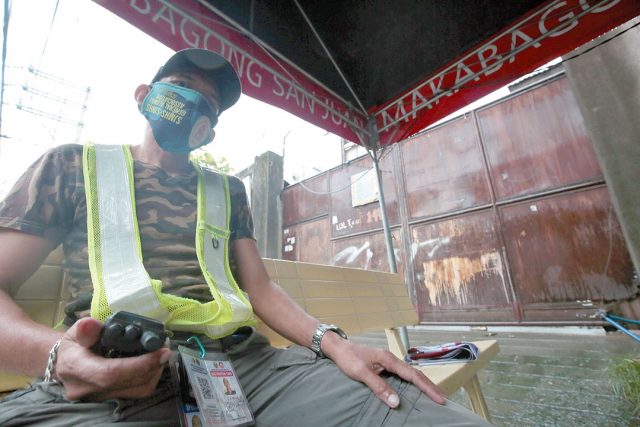
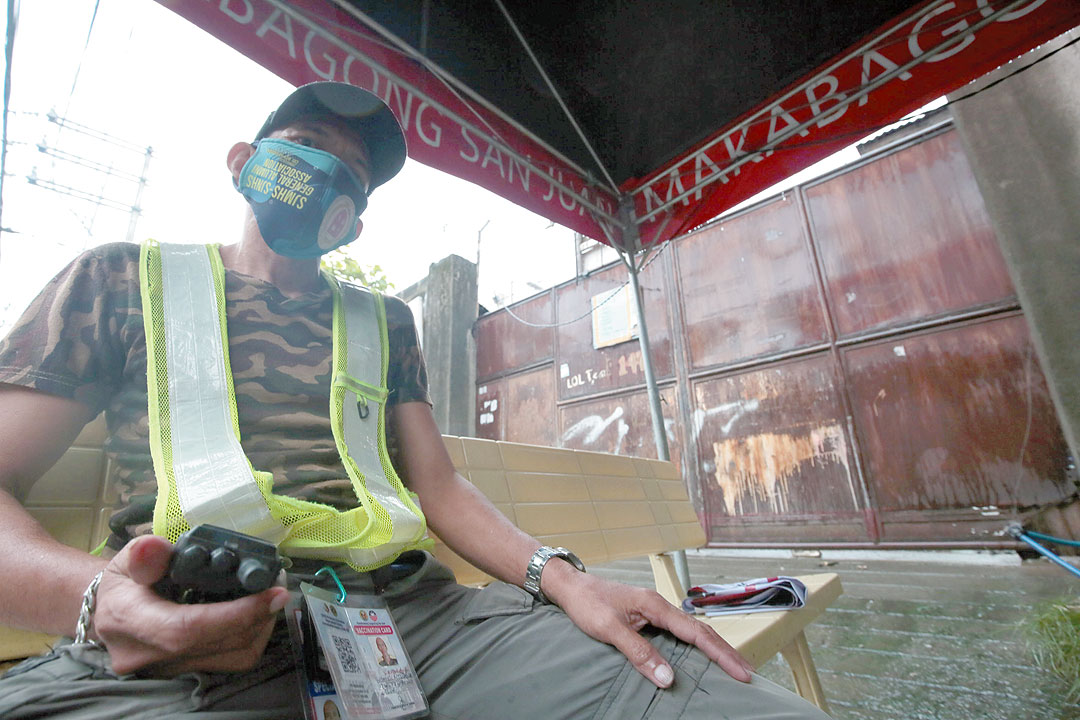
A VILLAGE law enforcer mans a compound in Tibagan, San Juan after it was locked down amid rising coronavirus infections. — PHILIPPINE STAR/MICHAEL VARCAS

PHILIPPINE health authorities reported 21,411 coronavirus infections on Sunday, bringing the total to 2.23 million.

The death toll rose to 35,145 after 168 patients died, while recoveries increased by 25,049 to more than two million, the Department of Health (DoH) said in a bulletin.

There were 181,951 active cases, 86% of which were mild, 9.5% did not show symptoms, 1.3% were severe, 2.59% were moderate and 0.6% were critical.

The agency said 65 duplicates had been removed from the tally, 57 of which were tagged as recoveries and one as a death, while 58 recoveries were reclassified as deaths. Five laboratories failed to submit data on Sept. 10.

Meanwhile, Vice President Maria Leonor “Leni” G. Robredo slammed presidential spokesman Herminio “Harry” L. Roque, Jr. for his rude behavior towards a medical group that has been criticizing the government’s pandemic plan.

A leaked video last week showed Mr. Roque lashing out at the group’s representatives during an inter-agency task force meeting. The group had opposed the government’s earlier plan to ease the lockdown in Metro Manila.

In her weekly radio program, Ms. Robredo said the task force should listen to all sectors, adding that government officials should not humiliate people who have different opinions. “Government officials like us are here to represent the people,” she said in Filipino.

Mr. Roque on Sept. 10 said the task force had provisionally approved the rules for localized lockdowns in the capital region that were to be enforced from Sept. 16 to 30.

The government on Sept. 7 reversed an earlier plan to place Metro Manila under a general community quarantine with granular lockdowns starting Sept. 8. Instead, a modified enhanced community quarantine was extended until Sept. 15.

ALERT LEVELS
Meanwhile, Manila, the capital and nearby cities will be placed under a common alert level under the government’s new coronavirus disease 2019 (COVID-19) policy to prevent people from congregating in areas with a more relaxed quarantine, Interior and Local Government Undersecretary Epimaco V. Densing III told ABS-CBN News Teleradyo.

Metro Manila mayors agreed the region should only have one alert level, he said, adding that an inter-agency task force would finalize the new policy on Monday.

The presidential palace on Friday said Metro Manila would only have two lockdown levels, with several alert levels in a policy shift that seeks to shield the economy from a coronavirus pandemic.

Metro Manila will either be under an enhanced community quarantine or general community quarantine. Restrictions in areas under a general lockdown would depend on the alert level imposed on specific areas within it, he said.

Areas in the capital will be placed under alert levels 1 to 4, with 4 being the strictest and under which dining, personal care services and mass gatherings will be barred.

The government was still finalizing the list of specific establishments under the categories and the allowed activities per alert level.

Mr. Densing earlier said houses and streets with clustered coronavirus infections might be placed under a “stronger granular lockdown.”

Only health workers, inbound and outbound overseas Filipino workers and people in “highly extraordinary circumstance” like those needing urgent medical care will be allowed to go in and out of an area under a granular lockdown.

Mr. Roque said families affected by granular lockdowns would receive aid such as food from local governments and the Social Welfare department.

Criminalizing remarks on public officials’ net worth may be illegal

AN OMBUDSMAN proposal to criminalize commentaries on the net worth of public officials is illegal and would have a “chilling effect” on media and good government advocates, according to a constitutional expert.

Ombudsman Samuel R. Martires should not go “overboard” in restricting access to the net worth statement of government officials, Antonio Gabriel M. La Viña, former dean of the Ateneo de Manila University School of Government, said by telephone.

“The statement of assets, liabilities and net worth (SALN) is not an integrity tool,” he said. “It doesn’t tell you if a person is corrupt or not, but it can be a tool to investigate whether there is hidden wealth.”

Mr. La Viña noted that while the document had been used by politicians against their opponents, the Ombudsman should try to find a balance in promoting transparency and protecting public officials from harassment by “bad and evil people.”

“The media has never been bad or evil about SALNs,” he added.

“Any measure that hinders citizens from exercising their constitutional right to hold their political leaders accountable must be rejected,” Michael Henry Ll. Yusingco, a senior research fellow at the Ateneo de Manila University Policy Center said in a Viber message.

Mr. Martires’s proposal showed he values the privacy of politicians more than transparency, said Marlon M. Villarin, a political science professor from the University of Santo Tomas.

“Although his intention is to insulate government officials from unjust treatment, this act is publicly magnified more to be a protection than promotion of transparency and accountability,” he added.

Mr. La Viña said public commentaries on officials’ SALNs are “within the scope of guaranteed freedom of the press and expression.” Libelous comments will have legal consequences, he added.

Mr. Martires on Thursday asked congressmen to amend the Code of Conduct and Ethical Standards for Public Officials and Employees by imposing a jail term of at least five years on anyone who comments on a public official’s net worth.

He also said that the media should not be allowed to “make any comments” on SALNs because they “can… destroy a government official.”

“What I’m proposing is to make stringent penalties that anyone who makes a comment on the SALN of a particular government official or employee must likewise be liable for at least an imprisonment of not less than five years,” he added. Party-list Rep. Arlene D. Brosas has said the proposal would “inhibit the people’s right to free speech.”

The Supreme Court in February rejected a lawsuit questioning the validity of an Ombudsman memo limiting public access to net worth records of public officials.

The tribunal said the Ombudsman may regulate access to official records including the SALN, noting that the right to access SALNs is not absolute.

Mr. Martires in September last year issued a memo requiring notarized consent of an official before a request for a copy of his net worth statement is approved.

The Ombudsman memo has allowed President Rodrigo R. Duterte to keep his 2018, 2019, and 2020 net worth statements secret. Some public officials including Vice-President Maria Leonor “Leni” G. Robredo release their net worth statements to journalists who request a copy.

Under the law, it is illegal to obtain or use net worth statements for any commercial purpose other than by news media that write stories for public consumption.

Mr. Martires this month denied the request of lawyer Dino S. De Leon for a copy of Mr. Duterte’s net worth statement, citing his Sept. 2020 memo. — Russell Louis C. Ku and Bianca Angelica D. Añago

Super typhoon Kiko cuts off power in northernmost islands; Agri damage from Jolina hits over P613M

SUPER TYPHOON Kiko (international name: Chanthu) left most parts of Batanes, the northernmost province in the country, without power as of Sunday morning with its strong winds and rain that reached signal #4 in a five-level warning system.

The national disaster management council, in its 8 a.m. situational report on Sunday, said there was power outage in the Batanes towns of Sabtang, Ivana, Uyugan, and Itbayat beginning Saturday morning.

As of 11 a.m. Sunday, the storm alert level in the province was already down to signal #1, according to state weather agency PAGASA’s bulletin.

Typhoon Kiko, which came on the heels of typhoon Jolina (international name: Conson), was expected to be out of the Philippine area by Sunday afternoon, according to PAGASA.

Farm losses brought by typhoon Jolina increased to P613.51 million versus the previous estimate of P324 million, the Department of Agriculture (DA) said. — Marifi S. Jara, Revin Mikhael D. Ochave, and Bianca Angelica D. Añago

Private sector employees get training to augment Davao City’s contact tracing teams

DAVAO CITY CIO

WORKERS IN Davao City’s private establishments are being trained on contact tracing to help them establish in-house crews that could augment the local government’s teams.

“The city conducts training on private establishments how to contact trace. We are teaching these establishments so that they would know better who among their contacts (need) to be traced,” said Michelle Schlosser, spokesperson of Davao City coronavirus disease 2019 (COVID-19) task force.

The first batch of trainees are mainly from business process outsourcing (BPOs) companies, where there were several outbreaks this year.

“Because there was an incident of surge of cases among the BPOs. Fortunately, cases have gone down among these establishments and they are very cooperative. Private establishments are open in helping the city government of Davao,” she said.

In April this year, Mayor Sara Duterte-Carpio issued an executive order for the mandatory swab testing of a positive patient’s contacts up to the third generation or F3 contact.

Ms. Schlosser said having tracers among the private sector makes information gathering easier as it would be among colleagues and acquaintances. — Maya M. Padillo

BFAR lifts red tide warning across several areas

THE BUREAU of Fisheries and Aquatic Resources (BFAR) removed warnings issued in the areas of San Pedro Bay in Western Samar, Matarinao Bay in Eastern Samar, and Biliran Islands after testing negative for paralytic shellfish poison or red tide.

In its 26th shellfish bulletin, BFAR said areas still affected by red tide include Milagros in Masbate, Dauis and Tagbilaran City in Bohol, Carigaya Bay in Leyte, Dumanquillas Bay in Zamboanga del Sur, Murcielagos Bay in Zamboanga del Norte, and Lianga Bay in Surigao del Sur. — Revin Mikhael D. Ochave