Home Blog Page 7515

Cagayan de Oro spearheads trash-to-cash program in Mindanao using digital tech 

CAGAYAN DE ORO CIO RFELICITAS

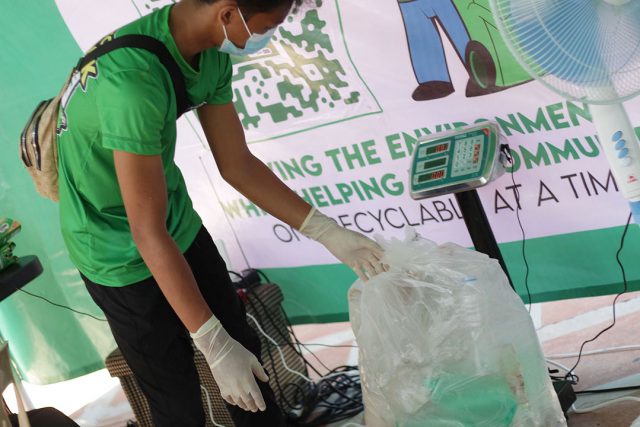
CAGAYAN de Oro City formally launched this week a trash-to-cash program that uses an e-wallet for the purchase points that can be earned from turning over recyclable materials.   

The local government, through its City Local Environment and Natural Resources Office, is the first in Mindanao in the country’s south to tap the bXTRA app of Basic Environmental Systems and Technologies, Inc. (BEST), a unit of listed firm IPM Holdings, Inc.  

In a statement, the city government said the Trash to CashBack Program is intended to encourage residents and business establishments to segregate their waste at source using an incentive scheme.   

The bXTRA points can be used to purchase items in partner shops such as supermarkets.   

The recycling program is also seen to lessen the trash being collected and dumped at the city’s sanitary landfill, according to Armen A. Cuenca, the city’s environment office head.  

Mr. Cuenca called on locals to make segregation a habit to help protect the environment.  

The city started enforcing a ‘no segregation, no collection’ policy in 2019.   

The recyclable materials — paper and cardboard; plastic; tin, aluminum, and other metal products — can be brought at the initial designated drop-off point in Gaston Park.  

The Department of Environment and Natural Resources’ capital region office has also recently partnered with BEST. — MSJ

Farm damage from Jolina climbs to P1.36B  

NDRRMC.GOV.PH

AGRICULTURAL damage caused by typhoon Jolina (international name: Conson) increased to P1.36 billion from the previous estimate of P1.26 billion, according to the Department of Agriculture (DA).    

The DA said in a bulletin on Wednesday noon that 49,803 farmers and fishers and 30,609 hectares of agricultural areas were affected by the typhoon, the 10th and one of the strongest to hit the country this year.    

Damage brought by Jolina resulted in 51,177 metric tons (MT) of production volume loss.    

“Affected commodities include rice, corn, high value crops, livestock, fisheries, irrigation & agri-facilities. These values are still subject to validation,” the DA said in the bulletin.    

Jolina was closely trailed typhoon Kiko (international name: Chanthu), which caused agricultural damage estimated at P18.20 million as of Sept. 14.  

The DA said in a bulletin on Sept. 14 afternoon that Kiko, which was stronger than Jolina but passed through less land areas, affected 880 farmers and fishers and 1,172 hectares of agricultural areas in the Cordillera Administrative Region, Cagayan Valley and Central Luzon.   

Damage from Kiko also resulted in 609 MT of production volume loss.  

“Affected commodities include rice, corn, high value crops and fisheries. These values are still subject to validation,” the DA said in the bulletin.    

The province of Batanes, the northernmost islands in the country, has declared a state of calamity due to damage in homes and other structures, including power and communication facilities.   

The Department of Energy (DoE) said power restoration efforts are ongoing in Batanes. — Revin Mikhael D. Ochave

Manila subway drilling expected to start in Q1 next year 

DOF.GOV.PH

THE TRANSPORTATION department on Wednesday said the Metro Manila Subway Project is expected to start excavation activities in the first quarter (Q1) of 2022. 

“Lowering and assembly is two to three months, starting in December,” the department said in a statement, referring to the tunnel boring machine.  

The “drilling” will start in the first quarter of next year, it also said. 

Public works ban for the May national elections will run from March 25 to May 8, 2022, according to the Commission on Elections.  

The government broke ground on the first three stations in Feb. 2019 after the Transportation department signed a P51-billion deal with the Shimizu joint venture, which consists of Shimizu Corp., Fujita Corp., Takenaka Civil Engineering Co. Ltd., and EEI Corp.  

While the public will have to wait until 2025 for full operations of the 17-station subway, the government is planning to launch partial operations, covering the first three stations by 2022. — Arjay L. Balinbin 

SMC to buy more equipment for Tullahan River cleanup  

SMC HANDOUT PHOTO

SAN MIGUEL Corp. (SMC) will increase the solid waste extraction capacity of its Tullahan River cleanup project to 5,000 metric tons (MT) through the procurement of additional equipment by December.    

SMC President Ramon S. Ang said the company will acquire six sets of new equipment for the extraction work.    

“By Dec. 1, we’re aiming to double our extraction capacity from the current 2,300 to 2,500 MT per day, to 5,000 MT per day,” he said in a statement on Wednesday.    

“In just over a year, we’ve made significant progress with our Tullahan River cleanup project. Recently, we reached an important milestone: 414,000 MT of solid wastes removed from the river, as of the Sept. 11,” he added.    

Mr. Ang said the company’s river cleanup teams continued to dredge the 27-kilometer tributary in anticipation of the typhoons that will bring heavy rains and floods.    

According to SMC, the 414,000 MT of solid waste removed to date came from the project’s sectors 4 and 5 in Malabon and Valenzuela, which is part of the initial 11.5-kilometer coverage from the mouth of Manila Bay in Navotas to Valenzuela. — Revin Mikhael D. Ochave  

PHL bond market growth slows as corporate issue activity drops

BW FILE PHOTO

THE GROWTH of the Philippine bond market slowed in the second quarter on the decline in corporate debt issues, while government borrowing ramped up to fund its pandemic expenses, the Asian Development Bank (ADB) said.

The September issue of ADB’s Asia Bond Monitor report released Monday indicated peso bond market growth of 2.5% quarter on quarter to P9.351 trillion in the three months to June. The first quarter growth rate had been 6.5%.

The ADB attributed the slowdown to the narrowing corporate bond market, even as government borrowing continued to expand.

Year on year, the bond market grew 25.1%.

The bond market in the second quarter consisted of 83.8% government securities and 16.2% company-issued bonds.

 “The government continued to ramp up borrowing from the market to fund its widening budget gap in response to COVID-19 and associated economic recovery plans,” the bank said.

“Preference for safe-haven assets like government securities remained high on the back of the uncertainties brought about by the pandemic and boosted by abundant market liquidity,” it added.

The bond market’s growth was fifth-highest in emerging East Asia. The other markets in the grouping are those of China, Hong Kong, Indonesia, Malaysia, Singapore, South Korea, Thailand and Vietnam.

The stock of government bonds grew 3.9% quarter on quarter to P7.834 trillion.

“The segment’s increase was attributed to larger outstanding treasury bonds and Bangko Sentral ng Pilipinas (BSP) securities, amid the need to protect the economy against the impact of the COVID- 19 pandemic,” the ADB said.

The stock of outstanding Treasury bonds (T-bonds) rose 3.6% quarter on quarter to P6.351 trillion. Year on year, T-bonds grew 25.3%.

Treasury bill debt fell 2.5% from a quarter earlier to P1.02 trillion with the retirement of maturing paper. The debt stock was up 28.4% from a year earlier.

BSP-issued bills outstanding rose 34.5% from a quarter earlier to P400 billion.

Outstanding corporate bonds fell 3.9% from a quarter earlier to P1.517 trillion as new issuances were outweighed by maturing debt. The decline accelerated from the first-quarter rate of minus 2%.

“The reduced debt sales from the corporate sector were due to economic prospects remaining gloomy amid a resurgence of COVID-19 cases that negatively affected business and consumer confidence,” the ADB said.

“This prompted firms to hold off on expanding or operating above pre-COVID-19 pandemic levels that would require capital mobilization,” it added.

Year on year, corporate bonds outstanding fell 3.6%.

The banking sector remained the largest issuer of corporate bonds, accounting for 41.2% of the total, followed by the property sector with 23.6%, holding firms 14.2% and utilities 14.5%. — Beatrice M. Laforga

House approves ease of paying taxes bill

PHILSTAR

HOUSE LEGISLATORS approved a measure on third reading Wednesday that would ease the process of tax filing to encourage payment.

House Bill 8942 or the proposed Ease of Paying Taxes Act seeks to remove venue restrictions for filers and introduce a medium taxpayer category.

The measure also seeks to remove the P500 annual taxpayer registration fee, create registration facilities for non-resident taxpayers, and establish a “Taxpayer’s Bill of Rights.”  

The bill will also create a Taxpayer’s Advocate Office under the supervision of the Department of Finance. It will be independent of the Bureau of Internal Revenue (BIR).

The office is tasked with ensuring the protection of the rights of taxpayers and finding solutions to solve problems in the BIR that hinder efficient tax administration.

The measure seeks to amend sections of the National Internal Revenue Code of 1997. It was approved by the House Ways and Means Committee on Jan. 25 and was passed on second reading on Sept. 6.

The bill was among the priority measures listed by Speaker Lord Allan Jay Q. Velasco when plenary deliberations resumed for the third and final session of the 18th Congress on July 26.

Albay Rep. Jose Ma. Clemente S. Salceda, chairman of the House Ways and Means Committee, said that the bill, if signed, has the potential to generate an additional P73.1 billion in government revenue in the first five years of implementation. — Russell Louis C. Ku

Agricultural imports rise 44% in Q2; minimal export growth widens deficit

PHILSTAR

AGRICULTURAL IMPORTS grew 44% year on year in the second quarter to $3.84 billion, with the 2% rise in exports resulting in a near-doubling in the deficit for farm goods trade to $2.32 billion, the Philippine Statistics Authority (PSA) said.

The PSA said in a report Wednesday that exports increased 2% year on year to $1.53 billion, bringing the overall trade in agricultural goods to $5.37 billion, up 29.2%.

Agricultural imports accounted for 14.1% of all imports for the quarter, while farm exports made up 8.4% of the total.

“In the second quarter of 2021, the total balance of trade in agricultural goods was minus $2.32 billion. This reflects a deficit with an annual increase of 99.1%,” the PSA said.

The top agricultural export during the quarter was edible fruit and nuts and peel of citrus fruit and melons, valued at $452.23 million and accounting for 29.6% of total agricultural exports.  

Other leading agricultural exports were animal or vegetable fats and oils and their cleavage products, prepared edible fats, and animal or vegetable waxes, valued at $287.92 million; preparations of vegetables, fruit, nuts, or other parts of plants $182.65 million, preparations of meat, of fish, or of crustaceans, molluscs and other aquatic invertebrates $129.70 million, and tobacco and manufactured tobacco substitutes $96.98 million.  

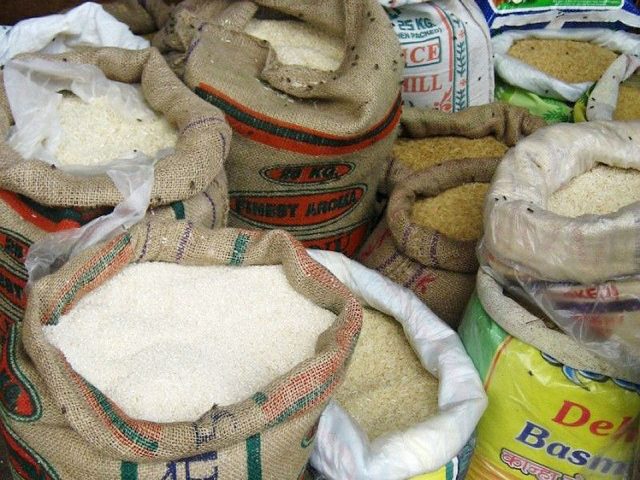
The PSA said cereals were the top agricultural import for the period, valued at $663.01 million, 17.2% of overall agricultural imports.

Other top agricultural imports included meat and edible meat offal, valued at $539.54 million; residues and waste from the food industries and prepared animal fodder $498.08 million; miscellaneous edible preparations $457.71 million, and animal or vegetable fats and oils and their cleavage products, prepared edible fats, and animal or vegetable waxes $347.87 million.  

Thailand was the top ASEAN buyer of Philippine agricultural exports with $46.08 million and accounted for 27.8% of all agricultural exports to the region, while Indonesia was the top ASEAN source of agricultural imports with $368.35 million or 29.3% of the total.  

The top agricultural exports to ASEAN were tobacco and manufactured tobacco substitutes, $60.33 million; animal or vegetable fats and oils and their cleavage products, prepared edible fats, and animal or vegetable waxes, $24.75 million; and preparations of cereals, flour, starch or milk, and pastry cooks’ products, $17.65 million.

Leading agricultural imports from ASEAN were miscellaneous edible preparations, $323.24 million; animal or vegetable fats and oils and their cleavage products, prepared edible fats, and animal or vegetable waxes, $322.45 million, and cereals $267.47 million.

Within the European Union, the Netherlands was the top destination for agricultural exports, accounting for $154.21 million, while Spain was the leading source of agricultural imports at $91.91 million. — Revin Mikhael D. Ochave

Finance, fintech associations back curbs on debtor harassment by online lenders

FINANCIAL ORGANIZATIONS said they support a National Privacy Commission (NPC) crackdown on online lenders collecting excessive information from app users for use in shaming the applicants in the event of non-payment.

The Fintech Alliance.PH and Philippine Finance Association said creditworthiness can be determined lawfully with reasonable data disclosures by applicants.

Online lenders must “refrain from exploiting borrowers by using the borrowers’ personal data to shame and coerce them into paying their loans through unauthorized and unfair use of their personal data,” the groups said in a statement Wednesday.

The NPC last month ordered the immediate takedown of four online lending apps that have been the subject of complaints for alleged unauthorized use of personal data.

Borrowers have complained that online lending apps JuanHand, Pesopop, CashJeep, and Lemon Loan have been using users’ personal data to harass them to collect debt. The companies operating the apps are being investigated for violations of the Data Privacy Act.

The financial groups said that online lenders must comply with the law, adding that using mobile app permissions to store client contact lists and photo galleries is unnecessary and unreasonable.

“We call on these non-compliant lending entities to use lawful and reasonable methods in evaluating loan applicants’ creditworthiness as well as in debt collection practices by upholding data subject rights without resorting to unfair debt collection practices and harassment of borrowers such as the use of insults or profane language, violent threats or false representation and unnecessarily exposing their borrowers’ personal data to unauthorized persons,” the groups said.

The NPC is investigating more than 200 online lending apps available for download. — Jenina P. Ibañez

New rice classification eyed to aid in price monitoring 

PHILSTAR

CHANGES are being planned in the rice classification system after the Rice Tariffication Law rendered the old categories unworkable for price monitoring bodies, the Department of Agriculture (DA) said.

The DA has formed a technical working group (TWG) that will come up with a new rice classification system, according to Special Order No. 669 issued on Sept. 15.

In the order, Agriculture Secretary William D. Dar said: “The old classification system is no longer relevant after the passage of Republic Act No. 11203 or the Rice Tariffication Law.”

He added that new classifications are needed “in order to better measure rice inflation,” noting that the Philippine Statistics Authority (PSA) has recently reported difficulties in gathering data on rice.

The TWG will review in particular the current data-gathering process for rice prices and consumption in the Family Income and Expenditure Survey.

The report by the TWG is due by Oct. 31, and will contain recommendations for the new rice classification system to the PSA board.

The TWG will chaired by Agriculture Undersecretary Fermin D. Adriano and co-chaired by National Economic and Development Authority Undersecretary Mercedita A. Sombilla. — Revin Mikhael D. Ochave

Anxiety about finances in PHL highest in Asia Pacific, survey shows

BW FILE PHOTO

THE Philippines registered the highest levels of stress regarding individual finances in the Asia Pacific, according to a survey commissioned by banking software solutions company Backbase.

In its “State of Banking and Financial Wellness in Asia Pacific” study released Wednesday, managing debt was reported to be a challenge for 70% of Philippine respondents, well above the average for nine economies of 49%.

“Compared with the rest of APAC consumers, Filipinos are the most stressed about their current financial situation. They also feel more anxious and uncertain. One source of this anxiety is debt,” according to the study.

The survey indicated that 51% of Filipino respondents were “stressed” about their current financial situation, while only 39% and 46% gave as their answers “comfortable” and “informed,” respectively.

“Surveyed consumers from countries with lower levels of financial literacy report feeling stressed and overwhelmed by their financial

situation. The research also reveals that consumers over the age of 50 are more anxious, uncertain, and pessimistic about their financial situation compared with other age groups,” it said.

Other top concerns for Filipinos concern building up savings, with 58% of those surveyed reporting struggles, while 52% expressed worries about planning for retirement.

The study found dissatisfaction with banks in terms of providing financial management tools, encouraging better financial habits, and identifying risk.

“While Filipino banks are focusing their efforts on providing financial literacy tools, less than 50% of Filipino banks are focusing on the other two needs. Banks that simplify financial wellness and provide personalized solutions will help to address debt and, in the long run, build customer loyalty,” it said.

The study found that 70% of Philippine banks reported difficulties in keeping up with customer expectations while sustaining their profitability and relevance, significantly higher than the regional average of just 63%.

“Another major challenge is increased competition and disruption from new industry entrants. In order to stay ahead, Filipino banks should follow the example of banks in other countries and learn from global experience,” it said.

The top challenges that financial institutions face in developing digital money management tools include: organizational silos, competing priorities and limited customer data.

Around 62% of banks in the country acknowledged the importance of financial literacy tools in improving their businesses, while 60% said they are planning to roll out digital money management systems over the coming year.

The central bank is hoping that 70% of adult Filipinos will have at least one bank account by 2023. – Beatrice M. Laforga

DoF batting for 32.7% budget increase in 2022 to fund digitization

DOF.GOV.PH

THE DEPARTMENT of Finance (DoF) said it is proposing a 2022 budget increase of 32.7% to P23.18 billion in order to help it carry out a digitization program.

“The increase in next year’s funding will be spent for our modernization and digitalization programs to enhance our revenue enforcement capacity,” Finance Secretary Carlos G. Dominguez III said at a Senate budget hearing Wednesday. “These programs will allow us to effectively raise more funds to finance our pandemic response and economic recovery program.”

The DoF proposal includes new general appropriations of P21.24 billion and automatic appropriations of P1.64 billion. It projects some P21 million in unprogrammed appropriations and P95 million in budgetary support for government-owned and controlled corporations.

Apart from modernization items, the budget was also swelled by pay adjustments in accordance with the the Salary Standardization Law (SSL).

The largest allocations are for the Bureau of Internal Revenue (BIR), P10.9 billion, the Bureau of Customs (BoC), P4.35 billion, and the Bureau of the Treasury (BTr), P4.23 billion.

The 21% increase in BIR spending will be due to a lease-purchase scheme financed by the Land Bank of the Philippines to provide regional BIR Offices with their own buildings.

The BoC funding, Mr. Dominguez said, will support the rollout of the Customs Modernization Project, costing P1.58 billion. It is expected to be fully operational by 2024.

Senator Juan Edgardo M. Angara, who chairs the Senate Committee on Finance, on Wednesday endorsed the finance department’s proposed budget for plenary discussion. — Alyssa Nicole O. Tan

eSPARC: Sparking up SEC registration

“It is easy at SEC” — That is the tagline of the Securities and Exchange Commission’s (SEC) crusade for its Digital Transformation and Technology Modernization Roadmap.

As part of this campaign, earlier this year, the SEC launched its newest registration system — eSPARC or the Electronic Simplified Processing of Application for Registration of Company. The platform serves to address the deficiency of the SEC’s previous Company Registration System (CRS) due to the new elements introduced by the Revised Corporation Code (RCC).

Some readers may be aware that the SEC initially kicked off an Interim Registration System (IRS) to immediately accommodate the online registration of corporations with less than five incorporators, including One Person Corporations (OPCs).  The SEC then revamped IRS, which resulted in the emergence of eSPARC.

eSPARC was introduced to the public as the transformed online registration system for any domestic corporation, apart from partnerships and foreign corporations whose applications for registration must still be filed through the CRS. However, in a recent notice issued by the SEC, any business formation requiring SEC registration may now be processed through eSPARC starting Sept. 15, 2021.

Other than its expanded applicant base, there are new notable features of eSPARC that may spark the interest of the public. eSPARC is capable of providing real-time updates on the status of registration applications through its inquiry facility. It is linked to eSPAYSEC or Electronic System for Payments to the SEC, which enables applicants to settle their transactions with the Commission through online banking or digital wallets. It is linked to the Central Business Portal of the National Government, which is the centralized platform for business registration and related transactions across government agencies.

Quite promising, but after observing its pilot period, does eSPARC really live up to expectations?

COMPLETION OF THE REGISTRATION APPLICATION AT YOUR FINGERTIPS
eSPARC offers simple steps in completing the online registration application.

1. As with the CRS, the applicant can directly verify the availability of and then reserve the proposed company name.

2. The applicant then inputs comprehensive information about the proposed corporation, which includes the details of its representative, business line, capital structure, officers, incorporators, directors, and subscribers.

3. Additional files to support the registration are uploaded.

4. The applicant reviews the details and submits the application.

5. The applicant pays the registration fees.

eSPARC is more concise with instructions and guidance in filling up the forms compared to CRS. Living up to its tagline, the SEC has definitely improved its registration process to make the experience easier and more pleasant for applicants.

REAL-TIME INQUIRY ON APPLICATION STATUS
With its inquiry facility, applicants can now access real-time status or updates of their applications.

Another beneficial feature is the one-time-passcodes (OTPs) sent directly to the e-mail registered in the application — a fast service with data security and privacy.

PAYMENT OF FEES THROUGH ONLINE BANKING OR DIGITAL WALLETS
Part of the SEC’s technology modernization roadmap campaign is the integration of a web-based payment portal. eSPAYSEC is a web-based system that allows applicants to pay registration and other fees online using debit and credit cards, digital wallets, and other cashless payment options available in the system.

As the SEC promises, payment through eSPAYSEC is easy, convenient, secure, and fast. Linked to eSPARC, applicants may opt for cashless payment without the hassle and risk of physically going out to pay the fees at the assigned SEC office.

This feature makes the end-to-end process in eSPARC seamless.

THE CENTRAL BUSINESS PORTAL (CBP)
One of the key features of eSPARC, as presented by the SEC, is its link to the National Government’s CBP.

However, the SEC advised that the system does not generate Tax Identification Numbers (TIN) for the Bureau of Internal Revenue (BIR), or Employer Registration Numbers for social agencies (Pag-IBIG, Social Security System, and Philippine Health Insurance Commission).

Thus, applicants still have to file their registration applications separately to obtain the needed TIN and ERN for the corporation.

With all the notable features that the SEC presented in the launching of eSPARC, the inter-agency linkage, which is touted as the standout feature of the system, has not been fully completed, unfortunately. The deferral is due to the needed coordination with and action from the other concerned government agencies.

With the commitment of our government to ease doing business and provide good service right in the safety and comfort of our homes or workplaces, we await the fast and full implementation of eSPARC features — there being no better time than now. The SEC’s visible initiatives and efforts to innovate and modernize its registration system during the pandemic are certainly commendable.

The views or opinions expressed in this article are solely those of the author and do not necessarily represent those of Isla Lipana & Co. The content is for general information purposes only, and should not be used as a substitute for specific advice.


Christine Joy Rivera is a Senior Consultant at the Tax Services Department of Isla Lipana & Co., the Philippine member firm of the PwC network.

christine.joy.rivera@pwc.com