Home Blog Page 7444

Carey Mulligan may star in film on Weinstein scandal

Harvey Weinstein — GEORGES BIARD EN.WIKIPEDIA.ORG

LOS ANGELES —  The first Hollywood feature film to focus directly on the Harvey Weinstein scandal is due to start production in the summer, Universal Pictures said on Monday. She Said is based on the 2019 book of the same name about the New York Times investigation into claims of sexual misconduct by Mr. Weinstein. Carey Mulligan and Zoe Kazan are in final negotiations to play the two journalists — Megan Twohey and Jodi Kantor — who wrote the book and who won Pulitzer Prizes for their reporting in Oct. 2017 on the story. Some 100 women came forward with accusations of sexual misconduct by Mr. Weinstein, then one of the most powerful figures in Hollywood, after the initial stories broke in the New York Times and the New Yorker. Mr. Weinstein, who has denied having non-consensual sex with anyone, was sentenced in New York in March 2020 to 23 years in prison for rape and sexual assault involving two women. He has appealed the conviction and is seeking a new trial, while also facing extradition to Los Angeles to face further charges of rape. The She Said book focuses on the months of behind-the-scenes investigations and legal obstacles that Ms. Twohey and Ms. Kantor faced in order to publish their reports. Although the Weinstein scandal has been the subject of several documentaries, and has inspired films and TV shows such as The Assistant and The Morning Show, She Said is the first feature film based on the claims against the producer himself. It will be directed by German filmmaker Maria Schrader. No expected release date was announced. — Reuters

International SOS introduces vaccination passes to ease travel

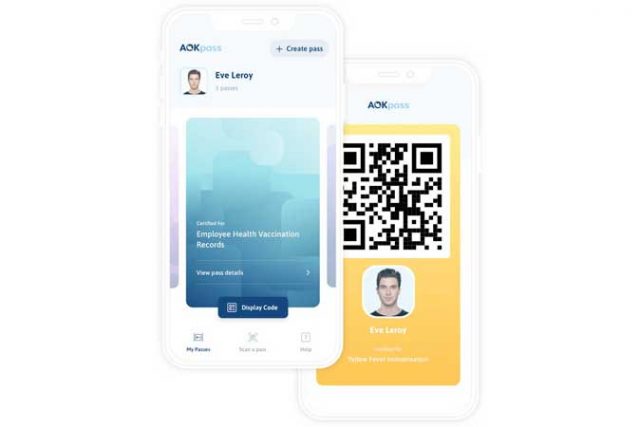
THE AOKPass — a secure, private and portable digital compliance status pass — is a health passport that enables individuals to collate and store their health and travel declarations digitally on their phones.

“Traveling has become and will remain for the time being more complicated than before the pandemic. Travel requirements and protocols will be subject to change, and will lack consistency from one region to the next, or vary depending on the mode of travel and carrier you are traveling with,” said Andrew Candelet, country manager of International SOS Philippines, a health, travel, and security solutions provider.

A vaccination pass like AOKPass lessens the tediousness of border crossings or domestic travel. Launched in partnership with the International Chamber of Commerce, SGS Group, and International SOS, the AOKpass uses blockchain and cryptographic protection and complies with General Data Protection Regulation to safeguard users’ privacy.

For more information, visit aokpass.com.

San Miguel spends P14B for pandemic relief, plans Bulacan medical facility

SANMIGUEL.COM.PH

LISTED conglomerate San Miguel Corp. (SMC) said on Tuesday that the company had spent more than P14 billion in relief efforts to help employees and communities during the pandemic.

“We have spent over P14 billion in various relief and recovery initiatives from making food available to poor communities, supporting hospitals and medical front liners, to helping boost government funds to address the social and economic impact of the pandemic,” Ramon S. Ang, president and chief executive officer of SMC, said during the company’s stockholders’ meeting.

The company added that it is spending about P1 billion on a vaccination program for around 70,000 of its employees and their families, as well as some of its business partners.

SMC said it bought AstraZeneca and Moderna vaccines for its inoculation program.

“We also have hired about 300 nurses and doctors to be able to help vaccinate all of our employees and partners,” Mr. Ang said.

SMC added that its Aerotropolis project in Bulacan will include a medical facility as the company looks to partner with educational institutions abroad.

“We are at the moment planning to also invite an international school to put up a university campus in Bulacan airport,” Mr. Ang said. “So far, it’s very positive and we will definitely [be] putting up [a medical facility], either with an American international school or [a] Singaporean [school].”

SMC’s net income in 2020 declined by 55% to P21.88 billion. However, the company has since seen signs of recovery. In the January-to-March period this year, the company’s profits grew 15 times to P17.2 billion, with nearly all of its business units finishing the period strong.

“We are committed [to] sustaining our momentum and further strengthening our recovery for the rest of the year,” SMC Chief Finance Officer Ferdinand K. Constantino said.

Shares of San Miguel at the stock exchange went down by 1.02% or P1.20 on Tuesday, closing at P116.30 each. — Keren Concepcion G. Valmonte

Central bank grants digital banking license to UNOBank

UNOBANK has secured a digital banking license from the Bangko Sentral ng Pilipinas (BSP), adding to the roster of lenders offering all-online services.

The lender, which is backed by Singapore-headquartered financial technology player DigibankASIA Pte. Ltd., is looking to “bridge the gap” in the Philippine financial inclusion story by offering products that allow Filipinos to “save, borrow, transact, invest, and protect their finances easily, with speed and ease.”

“The BSP’s vision and foresight to digitize the local banking industry is future-forward and apt, because ultimately it will help align the Philippines as a modern banking center for the region,” UNOBank Chief Executive Officer Manish Bhai said in a statement.

The lender said it is working with technology firms including Amazon Web Services, Backbase, and Mambu to deliver its services.

UNOBank aims to help “bridge the financial inclusion gap in the Philippines and eventually Southeast and South Asia,” it said.

Some 51.2 million adult Filipinos in the country were unbanked as of 2019, as only 29% had accounts with formal financial institutions. The central bank hopes to bring 70% of the adult Filipino population into the formal financial system by 2023.

The central bank defines a digital bank as a lender that mainly offers its products and services through a digital platform instead of brick-and-mortar branches. The BSP in 2019 unveiled a framework which differentiates these lenders from traditional ones such as commercial, thrift, rural, and Islamic banks.

In April, the central bank granted the first digital bank license to Overseas Filipino Bank, a unit of the state-owned Land Bank of the Philippines.

Tonik Digital Bank, Inc. (Philippines) has also secured a digital banking license from the BSP, it said on Monday. The lender was initially granted a rural bank license by the regulator in 2019.

Meanwhile, UnionBank of the Philippines, Inc. in May submitted to the BSP its own application for a digital bank license.

Other lenders such as CIMB Bank Philippines, Inc., ING Bank N.V. Manila, EastWest Banking Corp. through its Komo app, and Rizal Commercial Banking Corp. through its Diskartech app are also offering all-online banking services where users can open a bank account, deposit, or loan straight through the banks’ mobile platform, attracting clients by offering deposit rates higher than those of traditional banks. — Luz Wendy T. Noble

Equitable access to COVID-19 vaccines and herd immunity

The World Bank report “How to End the COVID-19 Pandemic by March 2022” said that the target of vaccinating 60% of the population in each country by first quarter of next year is likely sufficient to achieve global herd immunity.

“Achieving this target appears feasible given stated production capacity of vaccine manufacturers and the pace of current and historical vaccination campaigns,” the report said, while stating that this analysis assumes a baseline scenario with limited mutations.

The report noted that achieving this target requires addressing a procurement gap of 350 million vaccine courses in low- and middle-income countries. “Immediate additional donor funding of about $4 billion or in-kind donations of excess orders by high-income countries would be sufficient to close this gap.” The report also highlighted additional challenges along the path to achieving worldwide herd immunity, including supply chain issues, trade restrictions, vaccine delivery, and SARS-CoV-2 mutations.

The global research-based pharmaceutical industry, in partnership with key stakeholders, is on track to produce 11 billion doses of coronavirus disease 2019 (COVID-19) vaccines by the end of 2021.

According to the International Federation of Pharmaceutical Manufacturers & Associations (IFPMA), which cited the same World Bank report, this should be sufficient to achieve global equity in the distribution of vaccines and attain worldwide herd immunity by March 2022.

The IFPMA, the Biotechnology Innovation Organization (BIO), and Developing Countries Vaccine Manufacturers’ Network (DCVMN) are key players in the effort to scale up the manufacturing of COVID-19 vaccines. The three entities signed up as partners of Access to COVID-19 Tools (ACT) Accelerator in April 2020 and committed to fair and equitable access to COVID-19 vaccines.

ACT-Accelerator is a global collaboration which brings together governments, scientists, businesses, civil society, philanthropists, and global health organizations. Its goal is to “end the COVID-19 pandemic as quickly as possible” and “accelerate development, production, and equitable access to COVID-19 tests, treatments, and vaccines.”

Following the ACT-Accelerator launch, its vaccines pillar became known as COVAX. This vaccines facility is led by the Coalition for Epidemic Preparedness Innovations (CEPI); Gavi, the Vaccine Alliance; and the World Health Organization (WHO). Its role is to ensure that vaccines are developed as rapidly as possible and manufactured at the right volumes — without compromising on safety — and delivered to those that need them most.

Nearly 300 manufacturing partnerships or collaborations, mostly involving technology transfer, are expected to result in the forecasted production of 11 billion COVID-19 vaccine doses by the end of the year.

“There are early signs that the sharing of know-how of the processes and the technologies used to make the vaccines, as well as training specialist personnel to ensure quality standards throughout the process, are now starting to have an impact on the projected output. As these facilities get up to speed, they are able to produce more vaccines, as well as achieve increasingly better yields,” the IFPMA said.

The IFPMA disclosed that there is a global shortage of some of the over 100 components and ingredients needed for vaccine manufacturing. “While a great deal of focus has been put on ensuring there are enough vials or syringes, today we are seeing shortages in the lipids that are used in mRNA vaccines, as well as tubing and the plastic bags that are used in the production process for many vaccines,” the group said.

In ensuring vaccine equity, the research-based pharmaceutical sector supports the “Five steps to urgently advance COVID-19 vaccine equity” which is a call and commitment by the global innovative vaccine manufacturers to collaborate with governments and key stakeholders. These commitments center on the need to step up dose sharing, optimize production, eliminate trade barriers, support country readiness, and drive further innovation on COVID-19.      

Overall, however, the World Bank report concluded that its “analysis suggests multilateral action now can bring an end to the acute phase of the pandemic early next year.” Unprecedented collaboration of governments, global health organizations, the private sector and civil society will be needed to achieve this ambitious goal globally.


Teodoro B. Padilla is the executive director of the Pharmaceutical and Healthcare Association of the Philippines (PHAP). PHAP represents the biopharmaceutical medicines and vaccines industry in the country. Its Members are in the forefront of research and development efforts for COVID-19 and other diseases that affect Filipinos.   

Arts & Culture (06/09/21)

Visit Art Fair Philippines 2021 website until June 15

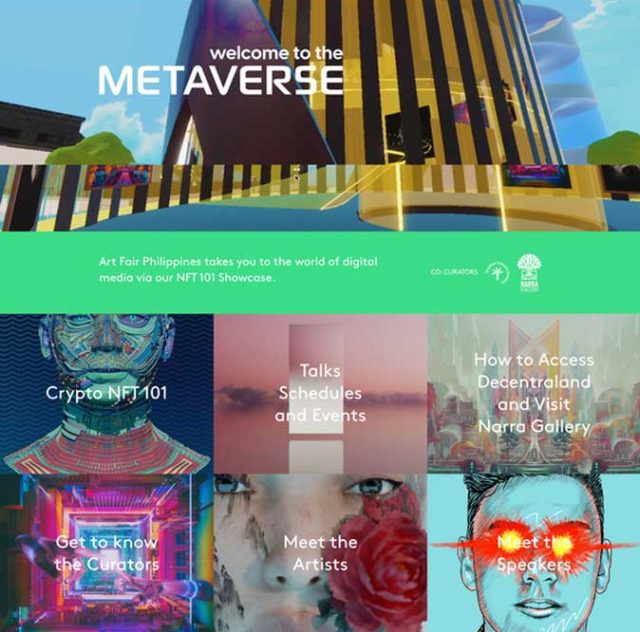
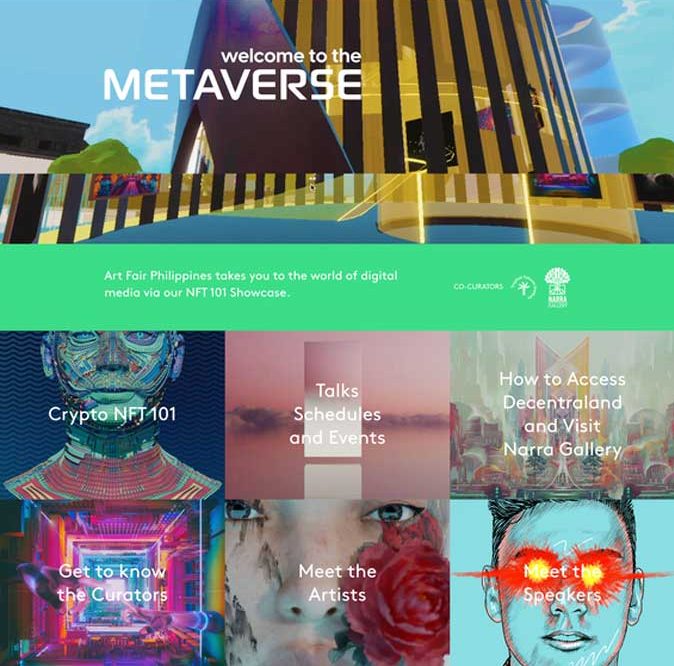
ART Fair Philippines 2021, which went online for the first time this year, welcomed 44 exhibitors, over 276,000 website views, and over 40,000 visits. The art fair’s website (www.artfairphilippines.com) is still accessible until June 15. View the artwork and videos on the gallery pages, explore the photography galleries and exhibits, co-presented by Julius Baer, and watch digital artwork commissioned for the fair through the digital platform Daata. Learn more about non-fungible tokens inWelcome to the Metaverse,” the NFT 101 Showcase which takes visitors through crypto basics, to understanding how to use a web3 wallet, to buying an NFT (non-fungible tokens), to meeting artists and gallerists that are embedded within the crypto art world. ArtFairPH/Talks, ArtFairPH/Tours, and ArtFairPH/Open Studios are still accessible for viewing.

BenCab museum hosts ‘Peace Time’ exhibit

THE BENCAB Museum will host the exhibit “Peace Time in the Country: 1930-1941,” a magazine covers exhibit from the Ortigas Foundation Library. The exhibit opens on June 12, 4 p.m., on view until Aug. 1. The illustration covers for Philippine Magazine for the period 1929-1941 reflect phases in the country’s artistic movement and historical passage. Three contributing artists and their cover works are examples: Fabian de La Rosa, the older and more seasoned, captured a dignified Filipino sensibility, asserting an identity at the end of one colonial period and into the next; Fernando Amorsolo, a generation younger, added depth to his mentor De la Rosa’s staid subjects, capturing, with exactness, the colors and atmosphere of the countryside; and, Diosdado Lorenzo, who was in his early twenties when the first of his wash drawings became magazine covers, departed from the formal artistry of the two artists and were regarded as modernist. There were several more works by Filipinos as well as by Europeans and Americans who painted local genre and added to the magazine’s allure. The magazine cover exhibit will be on view simultaneously with two solo exhibitions which are ongoing at the museum’s Gallery Indigo:An Ode to Beauty” by Bullet Dematera and “Manila Ukiyo-E: We are All Time Machines” by Marius Black. Both open on June 12 and run until Aug. 1. Mr. Dematera’s artworks are a mix of realism to hyperrealism elements intermingled with pop art that create a hint of surrealism. Meanwhile, “Manila Ukiyo-E” is inspired by the 17th century Japanese art form Ukiyo-E, also known as art from the floating world, which depicts the daily lives of the people of Japan. This is Mr. Black’s fourth “Manila Ukiyo-E” show. This one tackles not only dreams but also the past, the present and the future, using paintings, photographs and poetry. For inquiries, send an e-mail to bencabartfoundation@gmail.com.

Instituto Cervantes tribute to filmmaker Berlanga

TO CELEBRATE the birth centenary of Spanish filmmaker Luis García Berlanga (1921-2010) this June, Instituto Cervantes is presenting the online film series Berlanga Turns 100. The films will be shown through the Instituto Cervantes channel on the Vimeo platform (vimeo.com/institutocervantes) and will be freely accessible for 48 hours from their start date and time. The film cycle continues on June 12 with the comedy Calabuch (1956), which tells the story of a scientist who goes to a small town after fleeing the senselessness of the escalating atomic policies of the great powers. Calabuch will be available for free on June 12 and 13 at: https://vimeo.com/548754830.

Mo_Space shows Joebau

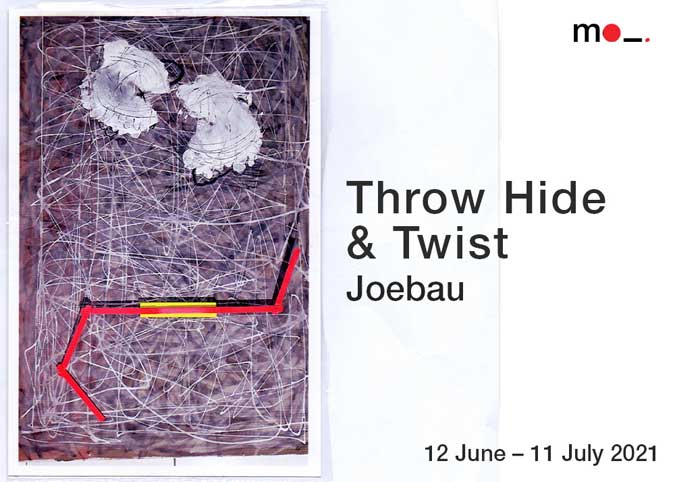
MO_Space will open an exhibit of paintings by Joebau called “Throw Hide & Twist” on June 12, 10 a.m., on view through July 11. The gallery is open daily, from 10 a.m. to 6 p.m. For any inquiries, call 8856-7915, 0917-572-7970.

Gateway Gallery presents webinar on ‘Images of Freedom’

IN CELEBRATION of the 123rd anniversary of the country’s independence, the Gateway Gallery will tackle “Images of Freedom: Ultimate Creative Expressions of the Filipino” as its latest KulturaSerye webinar on June 19, 2 p.m. This free Facebook webinar will be hosted by contemporary artist Riel Jaramillo Hilario. He will discuss his list of artworks that manifest Filipinos’ high regard for freedom, dignity, and human rights. The select artworks will be discussed in their historical context and their significance to the Filipino people. Mr. Hilario is a multifaceted artist and independent curator based in Lucban, Quezon. He is a recipient of the Cultural Center of the Philippines 13 Artists Award and winner of the Ateneo Art Awards, the Philip Morris Philippine Art Awards, and the Don Papa Art Competition. He has written numerous monographs on Philippine art history, and has published articles in art journals both here and abroad. To watch this latest KulturaSerye webinar, viewers should “like” or “follow” the official Gateway Gallery Facebook Page and click “yes” to alert notifications for the Facebook Live. An electronic certificate will be given to attendees upon submission of the online feedback form. Pre-registration is not required for the KulturaSerye webinar. To know more about KulturaSerye, contact the Gateway Gallery at 8588-4000 local 8300, gatewaygallery@aranetagroup.com, or view its social media pages: Facebook (GatewayGalleryPh), Instagram (gateway.gallery), Twitter (gateway_gallery), and YouTube (Gateway Gallery).

Three shows at Silverlens

SILVERLENS opened three shows in May which can still be seen this month and next. Leslie de Chavez’s “A Lonely Picket in the Balcony” (until June 19) is an exhibition featuring paintings, sculptures, and installations that take an unflinching look at the social and political situation in the Philippines. These works investigate the struggles and inequalities faced by the marginalized — victims of systemic injustice, brought about by political indulgences. Kitty Taniguchi’sFlower Moon” (until June 17) features the artist’s sketches and paintings. Ms. Taniguchi translates her inner life to whimsical figures and landscapes in striking colors. Based in Dumaguete, she is a widely exhibited artist, gallerist and poet both locally and overseas who manages her own art space. Jake Verzosa’s “The Last Tattooed Women of Kalinga” (until July 24) is one of the photographer’s most well-known series. These emotive images document a dying practice carved onto the bodies of elderly women. The series has been exhibited all over Asia, Europe, and North America in the last few years. Silverlens’ Online Viewing Room features the iconic photographs as well as behind-the-scenes images taken by the photographer. To view the exhibits, go to www.silverlensgalleries.com.

Salcedo Auctions’ Finer Pursuits sale

THE IDEA of juxtaposing the “old” with the “new” is the focus of Salcedo Auctions’ upcoming sale, Finer Pursuits, on June 26. It will feature a selection of 200 lots across various categories such as significant modern and contemporary Philippine art, museum-grade tribal and ethnographic art, and rare furniture, ecclesiastical objects and other valuable collectibles. Finer Pursuits will also feature a selection of rare, limited edition designer furniture pieces by Salcedo Auctions’ Modern & Contemporary Design Partner, CWC Interiors. The selection features design favorites such as the Eames La Chaise by Charles and Ray Eames, a Noguchi coffee table from the Herman Miller Collection, and a 75th Anniversary Limited Edition Eames LCW chair. View the online catalogue for Finer Pursuits at salcedoauctions.com. For inquiries, call 0917825-7449) or send an e-mail to info@salcedoauctions.com.

Webinar tackles the shape of cities after WWII

THE AYALA Foundation, Inc. — Filipinas Heritage Library (FHL) and US Embassy in the Philippines present “Shaping City Sense,” a free webinar which is part of “Liberation: War & Hope,” a series of events in commemoration of the 75th anniversary of the end of  (World War 2) WWII.  The webinar will be held on June 26, 10 a.m.  to noon (Manila time) online via Zoom and Facebook Live. In this free webinar, three historians reflect on the changing urban forms of three cities: Makati, Iloilo, and Zamboanga. Paulo Alcazaren, Meloy Mabunay, and Noelle Rodriguez connect those changes to Philippine democracy’s evolution before and after World War II. The webinar examines how the shaping of citizens occurs alongside cultivating their city sense. Showing this link are the expansions, improvements, and uses of streets, plazas, and other public spaces. Alcazaren, Mabunay, and Rodriguez use primary sources to recall the histories unique to the cities respectively in Luzon, Visayas, and Mindanao. They feature maps, letters, travelogues, postcards, and photos from their personal archives and FHL’s Roderick Hall Collection. Register here for Zoom access: bit.ly/ShapingCitySense. The event will also be streamed live on the Filipinas Heritage Library Facebook page. Viewers will receive a Certificate of Participation after answering the feedback form.

Art workshops for kids and teens

THE ANNUAL STAR Community Art Workshops is a series of free online trainings on the performing arts for aspiring kids and teen artists of local barangays around De La Salle-College of Saint Benilde. The classes will be facilitated by internationally lauded student-artist groups, to include the Coro San Benildo, Saint Benilde Romancon Dance Company and Dulaang Filipino of the Culture and Arts Unit. The Karilyo Shadowplay Collective, Production Operations Team and Cultural Promotions Team will likewise share their expertise. Aspiring performers may learn the basics of acting and theater through May Kuwento Ako, a storytelling workshop. Home Crafting guides those interested in upcycling household items into decorative yet functional pieces, while Pintahanan (Pinta + tahanan) holds a series of activities that encourage kids to have a creative outlet at the safety of their homes. The Build-a-Brand webinar is meant for budding entrepreneurs. In Creative Movement for Kids, hopeful young ballerinas may explore the proper form, coordination, movement and balance. Dancers who are into a more vibrant choreography may join the Hip Hop classes, while those who wish to try basic contemporary and improvisation techniques may opt for with Movement Exploration. There will be basic Guitar sessions and Voice Lessons for those who wish to learn the elements of chorale and theater singing. The sessions will run for approximately one hour per session and can accommodate 15 to 25 participants in a first-come first-serve basis. STAR Community Art Workshops are free and are scheduled on Saturdays, June 19 and 26 and July 3, 10 and 17. It will be conducted via Zoom. Those who wish to contribute to sustain the project and interested participants may access details at https://benildecultureandarts.com/.

Individual applications to rondalla workshop sought

THE SIXTH National Rondalla Workshop is now opening its doors to individual rondalla conductors and instrumentalists, the Artist Training Division of the Cultural Center of the Philippines (CCP) announced. While the workshop has been open only to group applications, it is now accepting individual applicants in response to popular demand. The workshop will be held on July 27-31 via Zoom. The workshop aims to reach the young musicians’ full potential as rondalla performers, especially with this online set-up. It will be led by Prof. Elaine Juliet Espejo of the Celso Espejo Rondalla and the UP Rondalla, and faculty member of the UP College of Music.  Workshop modules include sectional rehearsals per rondalla instrument, note reading sessions, and individual rondalla ensemble cliniquing sessions. The workshop will culminate in an online recorded performance that will be streamed via the CCP Facebook Page on Aug. 21. The workshop fee is P2,000 per participant slot (inclusive of online materials and newly arranged rondalla pieces). Limited slots are available.Applicants must send a duly accomplished application form which can be downloaded from http://bit.ly/CCPRondalla2021Individual, and an audio/ video recording of a recent performance of at least two pieces by the individual. Applications must be sent via e-mail to artist.training@culturalcenter.gov.ph. Deadline for submission of applications is July 9. Upon notice of acceptance, individual participants must pay the full amount (no reservation fee) on or before July 20. For more information, contact the CCP Artist Training Division by e-mail at artist.training@culturalcenter.gov.ph.

PRIDE month celebrated with artworks, discussions, comic

BENILDE celebrates Benilde Pride 2021 Sari-Saring Sarili: Pagmamasid, Pagmamahal, at Pagdiriwang ng Kanya-kanyang Katangian which includes storytelling, a video podcast, a webinar, and online art exhibitions. “Ilahad” is a virtual exhibit of sketches, mixed media and digital artworks, showcases the talent of promising LGBTQIA+ creatives. A six-part comic series entitled Kinaiya, named after the Filipino word for character or the good attributes and complexities that make a person’s identity, shares personal heartwarming stories of the diverse members of the LGBTQIA+ community. A video podcast entitled Kape Tayo! provides insightful conversations and friendly debates on the struggles of the LGBTQIA+ amid the ongoing pandemic. Those who wish to learn more about gay lingo may attend the webinar “Bekines,” an informative guide to the ins and outs of the sub-language. It likewise covers the historical context of the language from the so-called Sward speak in the 1970s to the latest Filipino gay slang. The event is hosted by BHive of the De La Salle-College of Saint Benilde, the first accredited LGBTQIA+ student-organization in the De La Salle Philippines. The artworks, discussions and comics are all available on view on the official Facebook account of the organization at https://www.facebook.com/BenildeHive/.

Penguin Random House SEA releases account of surviving medical trauma

AFTER suffering strokes, general practitioner Dr. Idayu Maarof underwent major surgery to remove a heart valve tumour believed to have caused the strokes. Unfortunately, what seemed to be the end of a journey was only the beginning of an even more arduous one that included a medically induced coma, and two brain surgeries. The book Dr. Maarof wrote with Mohd Firdaus Raih, A Consequence of Sequence: The Aftermath of a life seized by two tumors, contextually concludes how a sequence of events and decisions led to a particular consequence. This is not an account about being ill. This is story of acceptance, gratitude, and the struggle for a life worth living.


Lopez Holdings income slips as business units falter

LOPEZ Holdings Corp. generated P613 million in net attributable income to equity holders of the parent in the January-to-March period, down by 47% from the P1.16 billion earned in the same period last year due to the performance of its business units.

“Lower income generated by energy sector from FPH Group (First Philippine Holdings Corp.), higher foreign exchange losses and equity share in net losses from ABS-CBN [Corp.] through Lopez PDRs (Philippine depositary receipts) account for the decline,” the company said in a disclosure to the exchange on Tuesday.

In the first quarter, FPH saw a seven percent growth in net income attributable to P3.42 billion from P3.2 billion. However, its topline declined by five percent to P27.87 billion, with sale of electricity accounting for 83% of revenues from 84% in the same period in 2020.

Meanwhile, media giant ABS-CBN incurred a P1.95-billion loss in the first quarter, nearly twice its P763-million loss last year. Revenues fell by 55% to P3.92 billion from P8.64 billion.

The unaudited consolidated revenues of Lopez Holdings went down to P27.87 billion in the first three months, down by five percent year on year from P29.29 billion.

All of the company’s revenue items are said to be generated by FPH businesses.

Revenues from the sale of electricity were down by five percent to P23.26 billion, earnings from real estate improved by 12% to P2.31 billion, revenues from contracts and services declined by 16% to P1.85 billion, and sale of merchandise dropped by 18% to P454 million.

On Tuesday, Lopez Holdings shares at the exchange went down by one centavo to close at P3.29 each. — Keren Concepcion G. Valmonte

Philippine Labor Force Situation (Apr. 2021)

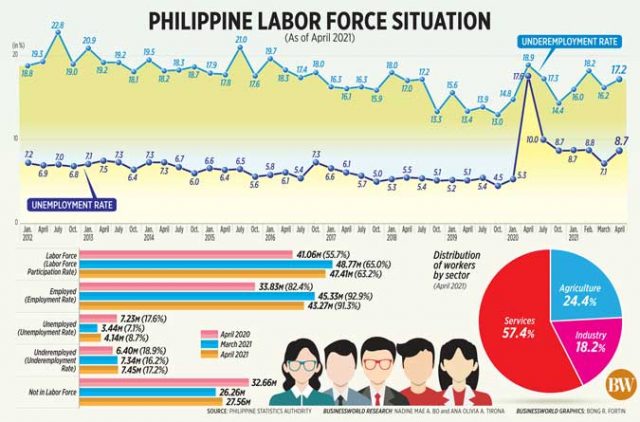
THE RANKS of unemployed Filipinos increased in April, when the government tightened lockdown restrictions in Metro Manila and nearby provinces to curb a surge in coronavirus disease 2019 (COVID-19) cases, data released by the Philippine Statistics Authority (PSA) showed. Read the full story.

Philippine Labor Force Situation (Apr. 2021)

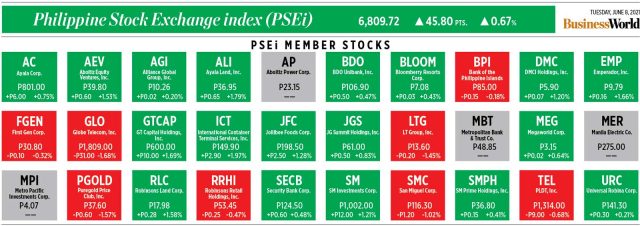
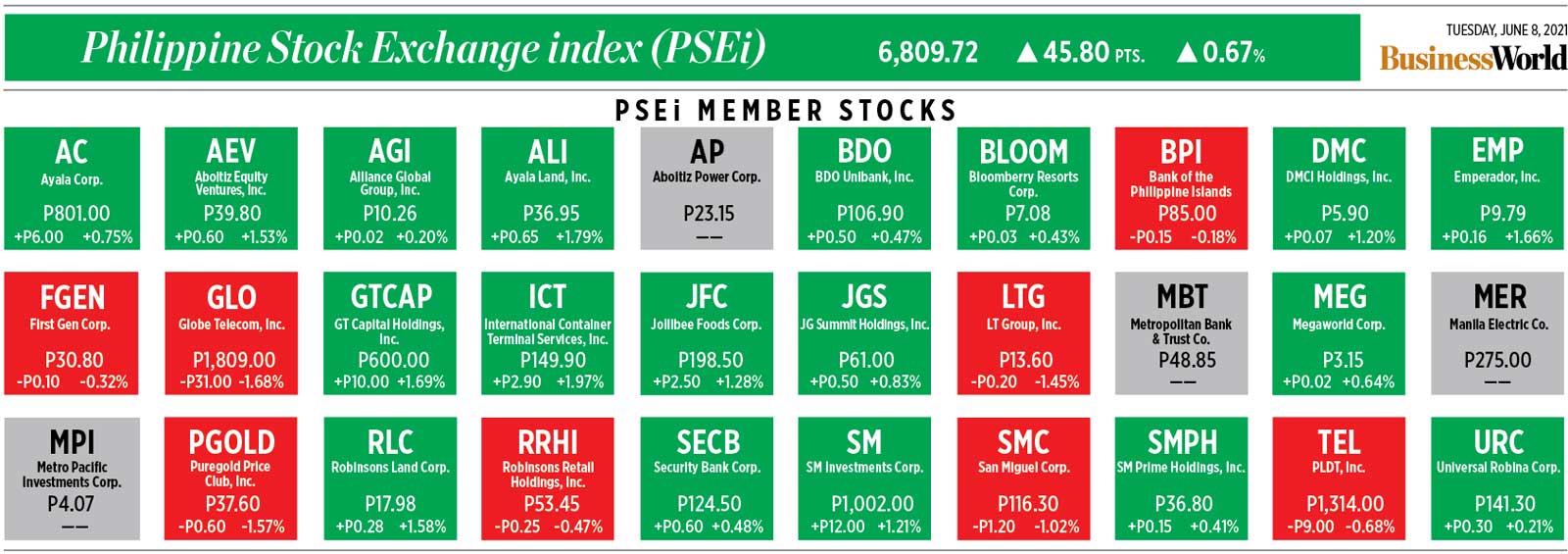
How PSEi member stocks performed — June 8, 2021

Here’s a quick glance at how PSEi stocks fared on Tuesday, June 8, 2021.


PSEi advances after positive factory output data

COURTESY OF PHILIPPINE STOCK EXCHANGE, INC.

PHILIPPINE shares climbed on Tuesday as positive April factory output data helped offset a report showing unemployment rose that same month and the World Bank’s lower economic growth forecast for the country.

The 30-member Philippine Stock Exchange index (PSEi) gained 45.80 points or 0.67% to close at 6,809.72 on Tuesday, while the all shares index went up by 17.51 points or 0.42% to end at 4,117.13.

“The PSEi inched higher despite the disappointing jobs data as well as reports that the World Bank, yet again, reduced its economic growth forecast on the Philippines,” AAA Southeast Equities, Inc. Research Head Christopher John Mangun said via e-mail.

“The increase in unemployment had almost no effect on the market as this is a temporary issue and was already expected and factored into valuations,” Mr. Mangun said, adding investors are still optimistic.

Data from the Philippine Statistics Authority (PSA) showed the country’s unemployment rate went up to 8.7% in April 2021, higher than the 7.1% recorded in the previous month.

Meanwhile, the World Bank cut its gross domestic product (GDP) growth forecast for the Philippine economy this year to 4.7% from its 5.5% estimate in March due to the reimposition of lockdowns following the renewed surge in coronavirus cases in the country.

“The local vaccination [drive] picking up speed and vaccine supply improving seem to be the focus of investors… [which] definitely raise hopes for [the] eventual reopening of the economy and greater GDP growth prospects,” First Metro Investment Corp. Head of Research Cristina S. Ulang said in a Viber message.

Diversified Securities, Inc. Equity Trader Aniceto K. Pangan added in a text message that factory output data released on Tuesday also boosted sentiment.

Preliminary results of the PSA’s latest Monthly Integrated Survey of Selected Industries showed factory output, as measured by the volume of production index, surged by 162.1% year on year in April.

Majority of sectoral indices posted gains on Tuesday except for mining and oil, which dropped by 16.51 points or 0.17% to 9,488.68.

Meanwhile, property improved by 32.69 points or 0.98% to 3,361.61; holding firms gained 61.85 points or 0.9% to 6,881.54; services increased by 4.10 points or 0.26% to 1,529.89; industrials rose by 19.57 points or 0.21% to close at 9,118.29; and financials inched up by 1.52 points or 0.1% to finish at 1,446.57.

Value turnover increased to P5.29 billion with 2.37 billion shares switching hands on Tuesday, from the P4.19 billion with 1.86 billion issues traded the previous day.

Advancers outnumbered decliners, 110 versus 93, while 49 names closed unchanged.

Foreigners turned buyers anew with P29.01 million in net purchases on Tuesday against the P96.13 million in net outflows seen on Monday.

“With… the rise in infection rates, we may see sideways movement with major support at 6,600 while major resistance at 6,900,” Mr. Pangan said. — K.C.G. Valmonte

Peso drops on labor data

BW FILE PHOTO
THE PESO dropped versus the dollar following the release of data showing unemployment climbed in April.

THE PESO retreated against the greenback on Tuesday following the higher unemployment rate in April, which was caused by the reimposition of lockdowns due to higher coronavirus cases.

The local unit closed at P47.72 a dollar on Tuesday, depreciating by six centavos from its P47.66 finish on Monday, based on data from the Bankers Association of the Philippines.

The peso opened Tuesday’s session at P47.65 a dollar and climbed to as high as P47.645 during the day. However, it succumbed to the dollar’s strength to close nearer to its intraday low of P47.73 against the greenback.

Dollars traded dropped to $650.7 million on Tuesday from $724 million on Monday.

The peso depreciated versus the dollar due to data showing a higher unemployment rate in April, a trader said in an email.

Preliminary results of the Philippine Statistics Authority’s April 2021 round of the Labor Force Survey released on Tuesday showed an unemployment rate of 8.7%. This was higher than the 7.1% reported in March but lower than the 17.6% jobless rate in April 2020.

In absolute terms, there were 4.138 million unemployed Filipinos in April versus the 3.441 million in March and the 7.228 million in April 2020.

National Statistician Claire Dennis S. Mapa attributed the higher jobless rate to the renewed restriction measures in Metro Manila and nearby provinces as cases surged from late March to April.

The underemployment rate — the proportion of those already working but still looking for more work or longer working hours — worsened to 17.2% in April from 16.2% in March. This translated to 7.453 million underemployed Filipinos, more than the 7.335 million in the previous month’s survey.

The latest figure was lower than April 2020’s 18.9% underemployment rate, although there were fewer underemployed Filipinos (6.398 million) as many left the labor force that time.

Another factor that may have caused the peso’s decline versus the dollar on Tuesday was market reaction to a planned global minimum corporate tax rate by the world’s wealthiest economies, Rizal Commercial Banking Corp. Chief Economist Michael L. Ricafort said.

In a landmark agreement, the Group of Seven (G7) advanced countries’ finance ministers agreed to pursue a global minimum tax rate of at least 15% and to allow market countries to tax up to 20% of the excess profits — above a 10% margin — of around 100 large, high-profit companies, Reuters reported.

In exchange, G7 countries agreed to end digital services taxes, but the timing for that is dependent on the new rules being implemented.

The deal could pave the way for broader buy-in by G20 countries and some 140 economies participating in international negotiations over how to tax large technology firms such as Alphabet, Inc.’s Google, Facebook, Inc., Amazon.com, Inc. and Apple, Inc. All are expected to be included in the new, broader mechanism, which is targeted for a final international agreement in October.

For Wednesday, the trader expects the local unit to move within P47.60 to P47.80 versus the dollar, while Mr. Ricafort gave a forecast range of P47.67 to P47.77. — LWTN with Reuters

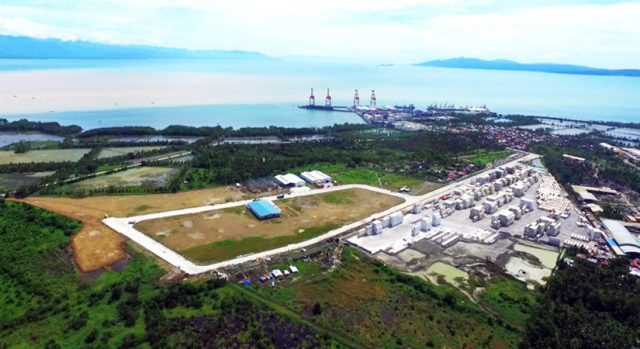
PEZA flags ‘more restrictive’ import tax rules under CREATE

ANFLOINDUSTRIALESTATE.COM

THE Philippine Economic Zone Authority (PEZA) raised possible problems its locators might encounter with new import tax rules after the implementation of a new law that cuts corporate income taxes and rationalizes incentives.

The investment promotion agency foresees “certain issues” once the law is implemented, noting that it expects rules on the duty-free import of capital equipment and raw materials to be more restrictive, PEZA Deputy Director General for Operations Harriet O. Abordo said in a statement Tuesday.

The implementing rules and regulations (IRR) of Republic Act No. 11534 or the Corporate Recovery and Tax Incentives for Enterprises (CREATE) Act have yet to be released after the lapse of the May 17 target date.

PEZA incentives for investors usually include the duty-free importation of raw materials, but the agency is expecting new limitations on the scope of exemptions.

“Certain issues in implementation are anticipated since the IRR is now more restrictive on the coverage of tax and duty-free importation of capital equipment, raw materials, supply, and VAT-zero rating,” she said, noting that the scope of items eligible for exemption has effectively narrowed.

PEZA in April also flagged the potential exit of registered investors after a provision that would have allowed them to apply for extended incentives for the same activity was vetoed. President Rodrigo R. Duterte called the provision  “fiscally irresponsible” and unfair to taxpayers and enterprises with no incentives.

PEZA has, however, welcomed the signing of CREATE.

“Now that the CREATE is here, we have to move forward, thereby, it is very imperative for us to make this work. After all, we have one overriding objective: to generate investments so we can create jobs for our countrymen,” Ms. Abordo said. — Jenina P. Ibañez