Home Blog Page 7437

Thailand starts tighter coronavirus lockdown in capital as infections surge

REUTERS

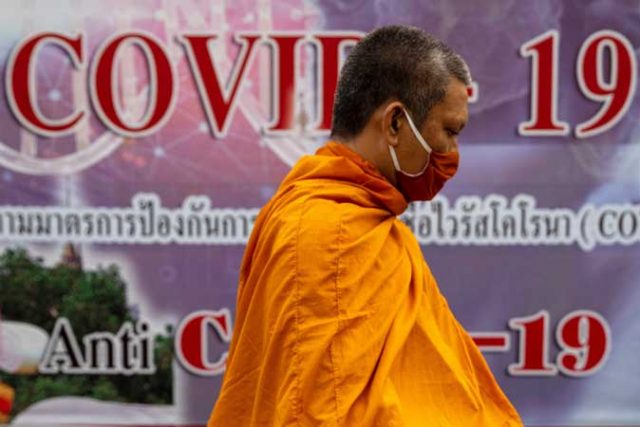
BANGKOK — Thailand implemented its toughest coronavirus restrictions in more than a year on Monday in Bangkok and surrounding provinces, with new curbs on movement and gatherings imposed and widespread suspensions by airlines and bus firms.

Authorities have urged people in and around Bangkok, the outbreak epicenter, to work from home and have set up 145 checkpoints in 10 high-risk provinces, including 88 in the capital, to try to curb non-essential regional travel.

The restrictions, initially for two weeks, aim to slow the spread of the coronavirus and include a curfew, mall closures and a five-person limit on gatherings, after a period of record or near-record deaths and cases.

Thailand recorded 8,656 infections and 80 deaths on Monday, among the 345,027 cases and 2,791 fatalities overall, the vast majority from an outbreak since early April that is being fueled by the highly transmissible Alpha and Delta COVID-19 variants.

Transport companies are adjusting services to comply with the measures and nighttime curfew hours, with reduced daytime public transport in and around Bangkok.

Thai AirAsia has suspended all domestic flights until July 31 while Bangkok Airways and Thai Airways subsidiary Thai Smile will offer reduced domestic flights. — Reuters

25 cities drive urban greenhouse gas emissions

REUTERS

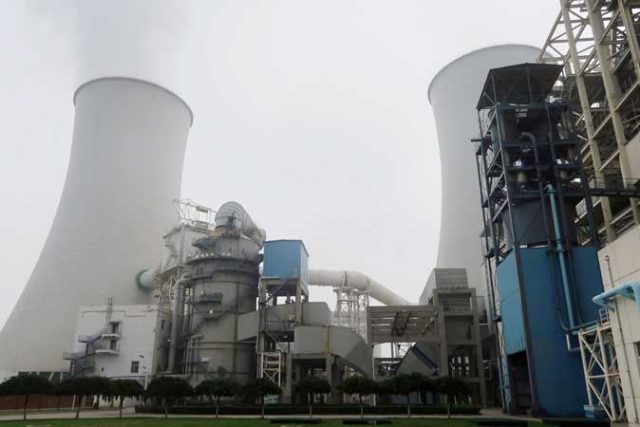
LONDON/MADRID — Just 25 big cities — almost all of them in China – accounted for more than half of the climate-warming gases pumped out by a sample of 167 urban hubs around the world, an analysis of emissions trends showed on Monday.

In per capita terms, however, emissions from cities in the richest parts of the world are still generally higher than those from urban centers in developing countries, researchers found in the study published in the Frontiers journal.

The study compared greenhouse gas emissions reported by 167 cities in 53 countries, and found that 23 Chinese cities — among them Shanghai, Beijing and Handan — along with Moscow and Tokyo accounted for 52% of the total.

It included more cities from China, India, the United States and the European Union because of their larger contribution to global emissions and significance to the climate debate.

The findings highlighted the significant role cities play in reducing emissions, said study co-author Shaoqing Chen, an environmental scientist at Sun Yat-sen University in the southern Chinese city of Guangzhou.

“It is simple, logical,” he said. “If you don’t act, eventually you will suffer from (climate change),” he said.

Average global temperatures have already risen by more than 1 degree Celsius compared to the pre-industrial baseline and are still on track to exceed the 1.5-2-degree limit set by the Paris Agreement.

Mr. Chen and other scientists cautioned, however, that some of the data available for use in their study was patchy, with some cities reporting numbers from as far back as 2005.

A lack of consistency in how cities report emissions also makes comparisons tricky, they added.

‘LAST BIG PUSH’
Research published in 2018 in the Environmental Research Letters journal analyzed a much larger sample of 13,000 cities, big and small, finding 100 cities containing 11% of the world’s population drove 18% of its carbon footprint.

Still, the new analysis “contributes to the growing literature and our understanding of urban emissions,” said Yale University Geography and Urban Science professor Karen Seto, who co-authored the 2018 paper.

“It’s really difficult to compare apples to apples on city greenhouse gas emissions but you have to try, and the paper makes a pretty good effort,” added Dan Hoornweg, a professor at Ontario Tech University and former adviser to the World Bank on sustainable cities and climate change.

Mr. Chen said the new analysis was the first to look at megacity emissions reduction targets and progress in cutting back.

Sixty-eight of the cities — mostly in developed nations — had set absolute emissions reduction targets.

But only 30 of the 42 cities where progress was tracked in the study had shown a reduction. Most of them were in the United States and Europe.

The analysis confirms scientists’ expectations that whereas in China, cities with high per capita emissions are generally major manufacturing hubs, those in developed nations with the highest per capita rates tend to have strong levels of consumption.

While more developed economies in Europe and elsewhere can now grow without increasing emissions, the world is moving at different speeds, Mr. Hoornweg said.

“They generated a ton of emissions on the way to get there and China is in that stage now. We know India is getting there at some point and the last big push in all of this will be Africa,” he said. — Reuters

For remote learning to succeed, teachers have to be retrained — edtech company

PIXABAY

By Brontë H. Lacsamana 

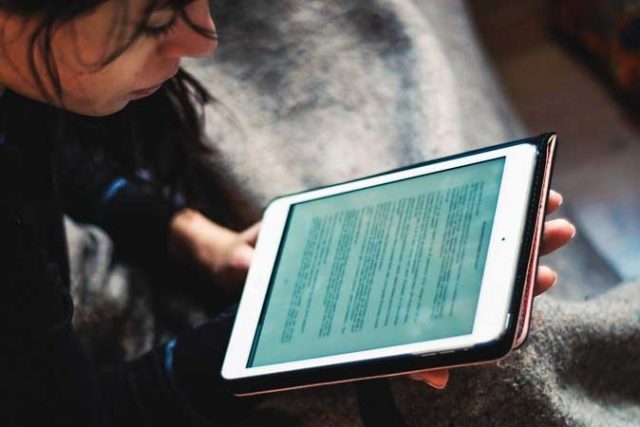
The Philippine education sector, which suffered when the coronavirus disease 2019 (COVID-19) pandemic halted face-to-face classes, will have much to gain by training teachers to fully optimize technology to deliver remote teaching and learning, according to Nick Hutton, regional director of global software company D2L (Desire2Learn). 

“If you want to be successful in delivering teaching and learning in a remote situation, you’ve got to put some time into training or retraining your teachers and your faculty to be able to really optimize the technology that you’re using to deliver it,” he told BusinessWorld in July. 

D2L is the edtech (education technology) company behind the Brightspace learning management system (LMS), an online platform that allows schools to design digital courses and educational tools to make remote learning more accessible for students.  

In the Philippines, D2L provides this LMS to more than 30 clients, a mix of public, private, basic, and higher education institutions. One of their oldest clients, De La Salle College of Saint Benilde (DLS-CSB) has been using the platform for more than six years.  

Despite already being familiar with Brightspace, DLS-CSB teachers underwent training when classes moved fully online because of the pandemic. “They [DLS-CSB] re-trained all their faculty to make sure there was 100% adoption, knowledge, and understanding because they knew that it was slightly different from when they were using the technology in more of a blended format,” said Mr. Hutton. 

FILIPINO EDUCATION IN CRISIS
On Sunday, Vice-President Maria Leonor “Leni” G. Robredo suggested in a radio show that the Philippines declare a “crisis in education.” 

Her comments echoed those of business group Philippine Business for Education (PBEd), which declared education in the Philippines “in serious crisis” citing Department of Education (DepEd) data that shows 1.1 million students did not enroll for schoolyear 20202021 while 1,179 private schools closed last year. 

“We might not feel its immediate impact now, but we stand to suffer long-term ramifications of inaction and poor learning,” said PBEd Chairman Ramon R. del Rosario, Jr., said in a July 5 press conference.

For D2L’s Mr. Hutton, students in the country struggle with staying focused and motivated to learn amidst the pandemic as well as finding a quiet and comfortable place to study — problems which technology can help ease.  

“Teaching is not necessarily learning. [Teachers] don’t know how the 50 students in their class that are sitting on the other end of the video conferencing tool are able to absorb, what their reactions are, if they are actually listening,” he said. “It’s important to understand when you simply move from face-to-face to trying to replicate that using a collaboration tool, you’re not necessarily delivering learning.” 

A good LMS, according to Mr. Hutton, is one that can enhance and develop a teacher’s teaching style through tools that can deliver personalized lessons. It should also define what’s happening at an individual student level to help the teacher determine the right path and activities for everyone in the class to be engaged. 

“Technology is just a delivery option and it shouldn’t take away the essence of teaching. The correct technology is there to enhance and support the teacher’s ability to teach,” he added. 

CONNECTIVITY ISSUES
Prior to the pandemic, online learning was perceived as a supplement to “real learning” in a traditional classroom setting, which made the transition of schools during lockdown more difficult, according to a June 30 webinar on the future of learning in higher education, held by the University of the Philippines Open University (UPOU). 

“There was clearly less confidence in the quality of online learning activities due to the lack of infrastructure support, good learning experiences, and preparedness of instructors and faculty members,” said Dr. Libing Wang, Chief of the United Nations Educational, Scientific and Cultural Organization’s (UNESCO) section for Educational Innovation. 

Similarly, Mr. Hutton of D2L zeroed in on internet connectivity as the main challenge in the Philippines when it comes to adapting to remote learning. Although Globe Telecom, Inc., as D2L’s partner, is able to provide the infrastructure needed for their affiliated schools to support the platform, Brightspace itself has had to adjust with the connectivity problem in mind. 

“The university or school can build their courses using the lowest common denominator, to allow for low bandwidth availability and sporadic internet access,” said Mr. Hutton. “You can build a fully engaged and engaging and personalized course without having to have 70% of it full of videos and animations and everything else.” 

Brightspace can also be accessed anywhere at any time on any kind of device as long as it has browser connection, with an option for offline access. This allows students or teachers to download content for offline use, then sync it to the platform once back online. 

BLENDED LEARNING FOR THE FUTURE
Aside from using an LMS to support a new format during the pandemic, many schools went beyond the knee-jerk reaction and thought about the long-term need for a technology platform, for a blended format once face-to-face classes return, according to Mr. Hutton. 

Blended learning, which is a style of education where students learn via electronic and online media as well as traditional face-to-face teaching, has been touted as the future of education. In UPOU’s webinar, UNESCO’s Dr. Wang said that both online and blended learning need to be integrated into institutional strategic planning, staffing, and budgeting processes. 

“That’s what we’d like to see, if online and blended learning has really been integrated, rather than something that’s just been added on,” he said, referring to the evident struggle that unprepared institutions have faced the past year. 

In the Philippines, interest in the blended format has increased as seen in D2L’s clients, from public schools in Taguig City and Bacoor City to private schools like DLS-CSB. “Technology enhances the learning experience in many aspects and creates efficient workflows for faculty, but there are always some in-person delivery experiences that are more effective, which is why the blended delivery model provides us with the best of both worlds,” shared Mr. Hutton. 

“Students today are digital natives. They demand and expect to use technology to support their learning, both at school, university, and of course in lifelong learning as well,” he added. 

Even after university or post-graduate studies, many work environments require upskilling as well. Mr. Hutton cited the World Economic Forum, which came out with a study showing that 65% of today’s schoolchildren worldwide will graduate into jobs that don’t yet exist, emphasizing the importance of good quality lifelong learning using the right tools.  

“Whether you’re doing it with a video conferencing tool or an LMS, the key really is training,” he said, “The key is making sure that teachers are able to adopt the platform and utilize the tools to add value to their delivery.” 

Taiwan’s Foxconn, TSMC ink $350 mln COVID-19 vaccine deal 

Image via BioNTech

TAIPEI  Taiwan’s Foxconn and Taiwan Semiconductor Manufacturing Co. (TSMC) said on Monday they had reached deals to buy 10 million doses of Germany’s BioNTech SE’s coronavirus disease 2019 (COVID-19) vaccine, putting the total cost of the highly politicized deal at around $350 million. 

Taiwan’s government has tried for months to buy the vaccine directly from BioNTech and has blamed China, which claims the self-ruled island as its own territory, for nixing an agreement the two sides were due to sign earlier this year. China denies the accusations. 

Last month, facing public pressure about the slow pace of Taiwan’s inoculation program, the government agreed to allow Foxconn’s founder Terry Gou, as well as TSMC, to negotiate on its behalf for the vaccines. 

BioNTech’s Chinese sales agent Shanghai Fosun Pharmaceutical Group Co. Ltd. said on Sunday that an agreement had been signed, but did not give details of a delivery timeframe. 

Mr. Gou wrote on his Facebook page that he was “gratified” the deal had been completed, which will see Foxconn and TSMC each buy 5 million doses, to be donated to the government for distribution. 

“But we can’t relax, because we will continue to work hard to push for the delivery time and quantity,” he said. 

“However, this batch of vaccines delivered directly from the German factory I believe will help Taiwanese society to increase confidence and offer respite in the face of the epidemic.” 

Taiwan’s Cabinet said the vaccines would be donated for free to the government. 

Cabinet spokesman Lo Ping-cheng told reporters the government was also looking to buy 15 million “next generation” Moderna Inc. shots for next year and the year after. 

TAIWAN TRANSFIXED
The BioNTech vaccine drama has transfixed Taiwan and dominated headlines. While a relatively small domestic coronavirus outbreak is largely under control, only about a tenth of its 23.5 million people have received at least one of a two-shot regime. 

TSMC and Foxconn, both major Apple Inc. suppliers, said in a joint statement the first BioNTech vaccines were not expected to arrive until late September at the earliest, shipped directly from Germany, but did not say how many would come at first. 

Mr. Gou said Beijing did not interfere in the talks. 

“During the negotiation period after my donation was proposed, there was no guidance or interference from the Beijing authorities in the mainland on the vaccine procurement process,” he said. 

BioNTech also confirmed the deal but referred to Taiwan as the “Taiwan region,” using the wording preferred by China’s government so as not to imply the island is a separate country. 

Fosun deleted an earlier statement from its WeChat account citing BioNTech Chief Executive Ugur Sahin as saying the company was glad to be able to supply the vaccine to Taiwan, though BioNTech did include that quote in its statement. 

Fosun did not immediately respond to a request for comment on why those comments were removed. 

Taiwan has millions of vaccines on order, mainly from AstraZeneca Plc and Moderna, while the United States and Japan have together donated almost five million doses to the island to help speed up vaccinations. 

A person familiar with the talks told Reuters the involvement of TSMC and the unconditional US and Japanese vaccine donations had created a global environment that was favorable to Taiwan and made it hard for China to obstruct the deal.  Ben Blanchard and Yimou Lee/Reuters 

Meralco energizes new mega COVID-19 vaccination center in Parañaque

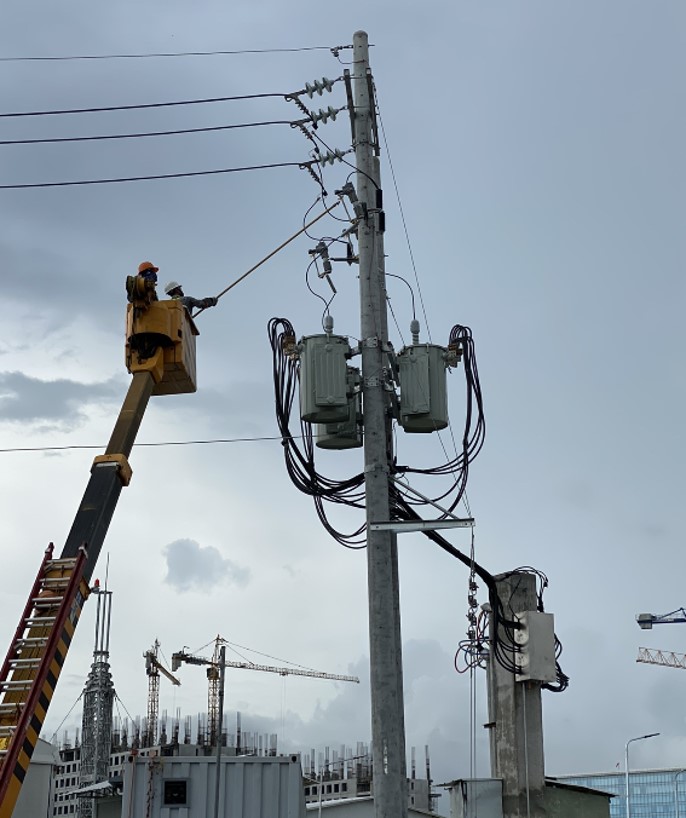
In its continuing support to the Government and Private Sector’s fight against COVID-19, Meralco energizes a new mega COVID-19 vaccination center at Nayong Pilipino located at New Seaside Road, Parañaque City. The project involves the installation of six (6) concrete poles, three (3) 333-kVA distribution transformers, four (4) spans of line conductors, and a new metering facility. This new mega vaccination center is one of the many vital COVID-19 facilities in the Meralco franchise area that are given the highest priority in terms of providing a safe, adequate, and reliable supply of electricity, in line with the company’s thrust to assist the government during the pandemic. To date, more than 130 vital COVID-19 facilities have already been energized by Meralco which include government offices, hospitals, testing laboratories, quarantine and vaccination centers, and vaccine storage facilities.


Join us on Viber to get more updates from BusinessWorld: https://bit.ly/3hv6bLA

US West scorches under heat wave, Death Valley reaches 130 degrees

PIXABAY
PIXABAY

DEATH VALLEY, Calif.  A brutal heat wave punishing the US West pushed temperatures toward all-time records for a third day on Sunday, as Death Valley in California, scorching at 54°C, was again one of the hottest spots on the planet. 

A thermometer outside Furnace Creek Visitors Center in the heart of Death Valley showed 56.67°C shortly before 4 p.m. (2000 GMT) on Sunday, although a National Park Service ranger said it typically measured higher than the official reading. 

The National Weather Service recorded the temperature on Saturday at 54.4°C, which if verified would be one of the highest ever recorded on Earth. A ranger measured the sidewalk temperature outside the visitors center at 81.1°C on Sunday afternoon. 

“I just came up here to see how hot it gets,” said Richard Rader of Scottsdale, Arizona, who said he had ridden his bike 10 miles across Death Valley on Sunday. 

Most tourists left their air-conditioned cars only long enough to pose for pictures with the thermometer. 

The National Weather Service issued excessive heat warnings across much of the region and cautioned residents that the high temperatures could be hazardous to their health, especially small children and the elderly. 

The sweltering heat, which extended across much of the Pacific Northwest, pressured power grids and fueled major wildfires, including a blaze burning in Southern Oregon that threatened 1,200 homes and other structures. 

The Bootleg Fire, which broke out on Tuesday, had blackened 144,000 acres, or 224 square miles in and around the Fremont-Winema National Forest as of Sunday afternoon with no containment. 

Conditions at the blaze were so severe that the 926 firefighters working the lines were forced in some cases to “disengage and move to predetermined safety zones,” managers said. No fatalities had been reported. 

The flames were burning along a high voltage power corridor connecting Oregon’s power grid with California’s, worrying officials in both states that electricity could be knocked out to thousands of homes and businesses. 

Residents in hundreds of homes were already under mandatory evacuation orders and the Klamath County Sheriffs Department said it would make arrests if necessary to keep people out of those areas. 

Residents in additional parts of southern Oregon were under “Go now” orders on Sunday while still more were told to “get set.” 

Governor Kate Brown declared a state of emergency on July 6. — Bridget Bennett/Reuters 

Toyota’s HEVs offer more sustainable automotive choices for Filipinos

Finely bundling efficient energy use and reliable performance, hybrid cars are starting to open the opportunity for a more sustainable future of mobility.

Toyota Motor Philippines (TMP), a pioneer of vehicle electrification in the country, is maximizing such opportunity by giving Filipinos broader and more sustainable car choices through its hybrid electric vehicles (HEVs).

“It’s the car technology for the future, readily available and perfectly functioning today,” Elijah Marcial, vice-president for marketing services at TMP, said. “No need for additional electric infrastructure or special roads. We can already make a difference for the environment and the way we look at transportation right now.”

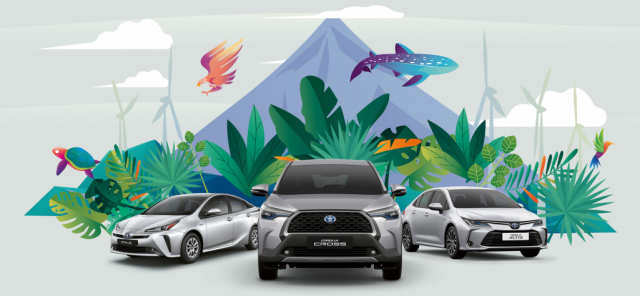
Toyota’s lineup of hybrid vehicles currently consists of the Prius, Corolla Altis, and Corolla Cross.

Launched in 2009, the Prius has become the leading symbol for energy-efficient and more environment-friendly hybrid cars. The HEV variant of the long-running and highly popular Corolla Altis, unveiled in 2019, further introduced hybrid technology to a broader audience. With its sleek and sophisticated styling that appeals to urban dwellers and professionals, it is a fitting choice for a hybrid sedan.

This was followed by the brand’s first hybrid crossover in the local market, the Corolla Cross, launched just last year. This model is the current best-seller among the HEVs due to its appeal as a bigger, more spacious car with an SUV form, design, and versatility.

As HEVs, these models combine an efficient conventional gasoline engine with a powerful electric motor. These power sources seamlessly work together to maximize driving performance while minimizing emissions and fuel consumption.

“With its conventional fuel engine complemented by a self-charging battery that stores electric power as one drives the car, fewer trips to the gas station will surely be observed,” Ms.Marcial said.

Also, the self-generating electric motors remove the need to plug into outlets to store electricity from non-renewal energy sources. They also make very little noise while running, allowing for a calmer and quieter drive.

With reduced fuel consumption in using Toyota HEVs comes less carbon emissions when the electric motor is in use. This can contribute to the improvement of air quality and so makes one’s driving better for the environment.

“Overall, there is added pleasure in driving knowing that you save money, save energy, while helping save the Earth,” Ms.Marcial said.

Beyond the HEV system, the Corolla HEVs also carry Toyota’s latest automotive technological and engineering advancements. The Toyota New Global Architecture significantly improves movement, handling, and overall driving experience; while Toyota Safety Sense ensures safety on the road with technology-driven driver and passenger safety features.

In addition, Toyota’s HEVs do not require special maintenance as they can be kept running smoothly through the regular periodic maintenance service. “Toyota’s network of dealerships all over the country are actually trained and equipped to look after our customers’ HEVs as they would their conventional engine Toyota cars,” Ms.Marcial said.

The rollout of these vehicles is driven by the brand’s environmental road map, the Toyota Environmental Challenge. Globally, Toyota is also mastering other xEV technologies like Plug-In Hybrid Electric Vehicles and hydrogen-powered Fuel Cell Vehicles.

For more information about Toyota’s HEVs, visit toyota.com.ph/hybrid.


Join us on Viber to get more updates from BusinessWorld: https://bit.ly/3hv6bLA

South Korea’s container squeeze throws exporters into costly gridlock

Image via Jean-Pierre Dalbéra/Flickr/CC BY 2.0

BUSAN — Unable to get a slot on a container vessel, Lee Sang-hoon is considering using fishing trawlers docked for repair in the South Korean port of Busan to meet surging export orders for the car engine oil he sells to Russia. 

“China is the black hole in this shipping crisis, all the carriers are headed there,” said Mr. Lee, owner of Dongkwang International Co. in Busan which makes about 20 billion won ($17.60 million) in annual revenue. 

“Those fishing boats out there could be an answer for us because we’re already one month behind schedule. That is, if we can iron out packaging issues,” Mr. Lee said, pointing out to empty fishing trawlers visible from his Busan office. 

Booking trawlers is one way businesses in the world’s seventh-largest exporting nation are trying to overcome critical bottlenecks caused by the pandemic, particularly a shortage of shipping containers. 

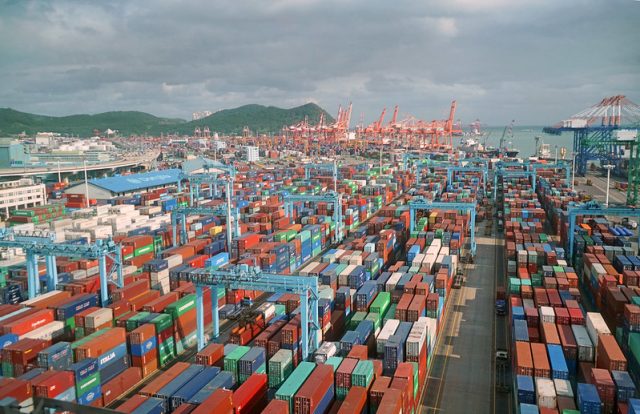
Thousands of exporters like Dongkwang are struggling to move their goods through Busan, the world’s 7th busiest container port, where terminals handle over 59,000 containers daily to process about 75% of all shipping for the country. 

As global carriers race to deliver everything from furniture to toys to US and European consumers, they prioritize much larger batches of cargo waiting to be picked up along China’s factory belt over Busan. That leaves fewer vessels in the Korean port and a glut of them in China, cargo managers at Busan’s terminals said. 

“As many (ships) depart from China where factories are mostly fully in operation, there’s little vessel space left by the time they stop in Busan,” said Lee Eung-hyuk, a marketing director at Busan Port Authority. 

Some do not stop in Busan at all. The number of incoming container ships in Busan fell almost 10% through May this year even as exports soared 23.4% from a year earlier, according to data from the port authority, resulting in a very uneven recovery for Asia’s fourth-largest economy. 

On a real-time map of the world’s major vessels at a control tower operated by HMM Co., the country’s biggest container carrier, most of the red and yellow dots show its alliance fleet concentrated around China and Singapore, not Korea. 

While the shipping squeeze caused by the pandemic is a global problem, the congestion at a transit hub like Busan has made things worse for smaller Korean exporters. 

When Yantian, one of China’s busiest ports, was partially shut down in June to control virus cases, some cargo was diverted to neighboring ports such as Busan, worsening the backlogs and periodic delays. 

“It’s a transit hub with so many in and outs. We need to ship 30 containers a month but have only been able to secure about 70% to 80% of that,” said Mr. Lee at Dongkwang International, adding that his company recently raised prices due to higher shipping costs. 

Carriers sometimes refuse to accept bookings at all, or force customers to accept much higher spot rates, according to Mr. Lee. 

The pain is most acutely felt on less-popular routes smaller firms often use, making shipping rates from Busan to Vladivostok rise faster than to the US West Coast, for example. 

Dongkwang currently pays $2,200 per twenty-foot equivalent units (TEU) for the route, up about six times from a year earlier. 

For South Korea’s larger industrials like Samsung and LG, the shipping squeeze isn’t as dire because carriers tend to prioritize orders from customers with deep pockets and a larger volume of goods to be shipped. 

To provide relief, the government has helped finance HMM orders for more containers and expanded cash handouts to support affected small-to-medium exporters. 

At Busan’s New Port, terminal congestion is clearly visible. 

At one of the five new terminals, outbound containers full of goods were stacked to their vertical limits. 

Transit vessels carrying thousands of containers were being unloaded by automated cranes, which use artificial intelligence to find space for the steel boxes. 

Every 10 seconds, a truck carrying a 20-foot or 40-foot container passes through the gate, taking them to warehouses which already seem bursting at the seams. 

“When port closures or other hiccups happen, it doesn’t just mean a detour for vessels, it leads to a huge pileup of cargo the ship was due to pick up for exports half a world away,” one field officer said, looking at “metal mountains” at the port. 

At the retail level, businesses are either cutting production volume or raising prices, or both. 

In June, South Korea’s top tire maker Hankook Tire & Technology Co. said it is suspending operations at key local factories for three days due to shipping space shortage. 

“We plan to raise prices by about 3% to 5% in Germany and other European countries in July, and something similar is in review for the U.S. market in August,” a Hankook official said. 

The bottleneck has also affected Korean consumers with fast-food chain Lotteria replacing french fries with cheese sticks due to issues bringing in potatoes. 

The squeeze has created some winners, with HMM shares jumping 12-fold from early 2020 and more growth expected. 

“Global container volume is growing. Our peak season usually is the third quarter but as exporters are squeezed, we expect the trend to last through the fourth quarter,” said an official at HMM. — Cynthia Kim/Reuters

vivo V21 enables productivity all thanks to its extended RAM feature

The vivo V21 is Maine Mendoza’s smartphone choice for the on-the-go digital lifestyle she has.

Fulfill tasks in less time so you can focus on the things that matter most

  • Smartphones have been an extension of work-from-home setups
  • vivo addresses lagging and crashing concerns in smartphones with the extended RAM feature
  • Aside from productivity, vivo V21 supports fun break times with its impressive camera

For many students and workers, smartphones have been a vital extension of their remote work setup. It enables them to have the mobility they need as they cater to their day-to-day tasks. But while it offers the benefit of flexibility, it’s pretty common that users experience lags and crashes on their smartphones — especially when they run multiple apps.

Living an on-the-go digital lifestyle means relying on a device that performs at par with one’s level of productivity. This is why people choose a smartphone that is packed with all the features that can help one power through their workday.

One of the world’s leading smartphone manufacturers, vivo, introduces the V21 series which incorporates virtual RAM. RAM or Random Access Memory serves as data storage for the apps running on your phone. The vivo V21 series has a built-in 8GB RAM, but to allow for better productivity for its users, it also integrates a virtual 3GB RAM. This allows the device to “borrow” an extra 3GB from its internal storage when the 8GB is already used up by multiple apps. Think of the 8GB RAM as your bag, and the virtual 3GB as its compartments — it gives you more space to set things in without the need for another suitcase.

This extended RAM feature in the V21 series makes the smartphone work with a total memory of 11GB. So, even if you use multiple apps for work, it paves the way for a smooth and lag-free user experience. No need to worry about your device crashing when you’re working on a live doc while also tuned in on a virtual meeting.

While the vivo V21 series backs up productivity, it also has the best features for all the fun things one can do on a smartphone. Its front camera comes with an impressive 44MP display and Optical Image Stabilization (OIS) feature, so users can have the best well-lit selfies even if they shoot at night time. The rear camera, on the other hand, supports a 64MP resolution with an Electronic Image Stabilization (EIS) feature. This technology minimizes unnecessary motion so photos and videos are captured in a steady frame. Surely, with these stunning camera features in the vivo V21, users can take fun breaks between work and shoot ‘Gram-worthy snaps every time.

New Selfie Portrait Master Maine Mendoza shows that beyond work, the vivo V21 caters to your fun break moments.

Another factor that people can take pride in this flagship series is its battery’s ability to last for a long time. With a 4000mAh battery and 33W FlashCharge properties, they can perform their work throughout the whole day with just a single full charge.

These exciting features in the vivo V21 are all within the phone’s 7.29mm ultra-slim design. Its artistic look and feather-light weight can make a user feel that they got power and grip as they tend to their work tasks.

The vivo V21 is available in all vivo kiosks and stores, as well as the brand’s official Lazada and Shopee pages. It starts at an SRP of PHP 16,999. To know more about the V21 series, follow vivo’sFacebook, Twitter, and Instagram pages.


Join us on Viber to get more updates from BusinessWorld: https://bit.ly/3hv6bLA


Sovereign asset managers raise ESG focus in wake of COVID-19 — Invesco

PIXABAY

LONDON  Around a third of central banks and sovereign wealth funds have raised their focus on environmental, social, and governance (ESG) issues over the past year as the coronavirus disease 2019 (COVID-19) pandemic highlighted issues ranging from carbon emissions to inequality, an Invesco survey found. 

A total of 63% of central banks responding to the survey felt tackling climate change fell within their mandate, with nearly half believing that mitigating the consequences of climate change should be a monetary policy objective. 

In the latest step by a major central bank to curb carbon emissions, the European Central Bank said last week it will take greater account of climate change in its core policy decisions. 

More than half of central banks and sovereign funds responding to the Invesco Global Sovereign Asset Management Study said they had specific ESG policies, up from 44% in 2019’s survey. 

The asset manager surveyed 141 chief investment officers at a mix of sovereign wealth funds and central banks, managing around $19 trillion in assets in total on topics ranging from ESG to China and liquidity. 

The pandemic had accelerated underlying ESG-related issues as disruptions to economic activity lowered carbon emissions, while the health crisis and rise in unemployment shone a light on inequality. 

“The pandemic has definitely accelerated the ESG focus,” said Rod Ringrow, Invesco’s head of official institutions. 

“What we’re seeing is a greater social conscience and the need to incorporate it now as a matter of course and the pandemic may have been the catalyst to this ‘build back better’ approach.” 

More central banks are also keen to consider the climate when investing, with 64% of respondents agreeing that green bonds were a desirable foreign reserve investment. 

The People’s Bank of China has said it increased the share of green bonds in its foreign exchange reserve investments while controlling investments in high-pollution assets. 

Sovereign funds too are pushing on in scouting out sustainable investment opportunities. 

The survey showed 52% of sovereign fund respondents said improving returns was their current motivation for adopting ESG policy, marginally more than the number who cited reducing risk as the biggest driver. 

And 57% of sovereign funds responding said the market had not fully priced in the long-term implications of climate change, offering opportunities for higher returns.  Tom Arnold/Reuters 

Billionaire Branson soars to space aboard Virgin Galactic flight

Image via Virgin Galactic

TRUTH OR CONSEQUENCES, N.M. — British billionaire Richard Branson on Sunday soared more than 50 miles above the New Mexico desert aboard his Virgin Galactic rocket plane and safely returned in the vehicle’s first fully crewed test flight to space, a symbolic milestone for a venture he started 17 years ago. 

Mr. Branson, one of six Virgin Galactic Holding Inc. employees strapped in for the ride, touted the mission as a precursor to a new era of space tourism, with the company he founded in 2004 poised to begin commercial operations next year. 

“We’re here to make space more accessible to all,” an exuberant Mr. Branson, 70, said shortly after embracing his grandchildren following the flight. “Welcome to the dawn of a new space age.” 

The success of the flight also gave the flamboyant entrepreneur bragging rights in a highly publicized rivalry with fellow billionaire Jeff Bezos, the Amazon online retail mogul who had hoped to fly into space first aboard his own space company’s rocket. 

“Congratulations on the flight,” Mr. Bezos said on Instagram. “Can’t wait to join the club!” 

Space industry executives, future customers and other well-wishers were on hand for a festive gathering to witness the launch, which was livestreamed in a presentation hosted by late-night television comedian Stephen Colbert. Joining the reception was another billionaire space industry pioneer, Elon Musk, who is also founder of electric carmaker Tesla Inc. 

Grammy-nominated R&B singer Khalid performed his forthcoming single “New Normal” after the flight. 

The gleaming white spaceplane was carried aloft attached to the underside of the dual-fuselage jet VMS Eve (named for Mr. Branson’s late mother) from Spaceport America, a state-owned facility near the aptly named town of Truth or Consequences. Virgin Galactic leases a large section of the facility. 

Reaching its high-altitude launch point at about 46,000 feet, the VSS Unity passenger rocket plane was released from the mothership and fell away as the crew ignited its rocket, sending it streaking straight upward at supersonic speed to the blackness of space some 53 miles (86 km) high. 

The spaceplane’s contrail was clearly visible from the ground as it soared through the upper atmosphere, to the cheers of the crowd below. 

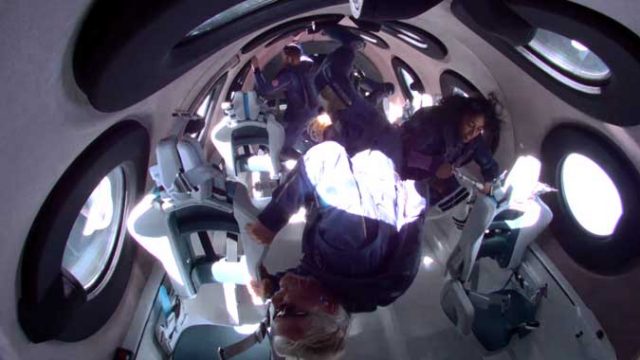
At the apex of the climb with the rocket shut down, the crew then experienced a few minutes of microgravity, before the spaceplane shifted into re-entry mode, and began a gliding descent to a runway back at the spaceport. The entire flight lasted about an hour. 

“I was once a child with a dream looking up to the stars. Now I’m an adult in a spaceship looking down to our beautiful Earth,” Mr. Branson said in a video from space. 

Back at a celebration with supporters from a stage outside Virgin Galactic’s Gateway to Space complex at the spaceport, he and crewmates doused one another with champagne. 

Retired Canadian astronaut Chris Hadfield pinned Virgin-produced astronaut wings onto the blue flight suits worn by Mr. Branson and his team. Official wing pins from the Federal Aviation Administration will be presented later, a company spokesman said. 

HIGH-COST TICKETS 

Virgin Galactic has said it plans at least two further test flights of the spaceplane in the months ahead before beginning regular commercial operation in 2022. One of those flights will carry four Italian astronauts-in-training, according to company Chief Executive Officer Michael Colglazier. 

He said 600 wealthy would-be citizen astronauts have also booked reservations, priced at around $250,000 per ticket for the exhilaration of supersonic flight, weightlessness, and the spectacle of spaceflight. 

Mr. Branson has said he aims ultimately to lower the price to around $40,000 per seat as the company ramps up service, achieving greater economies of scale. Mr. Colglazier said he envisions eventually building a large enough fleet to accommodate roughly 400 flights annually at the spaceport. 

The Swiss-based investment bank UBS has estimated the potential value of the space tourism market reaching $3 billion annually by 2030. 

Proving rocket travel safe for the public is key. 

An earlier prototype of the Virgin Galactic rocket plane crashed during a test flight over California’s Mojave Desert in 2014, killing one pilot and seriously injuring another. 

SPACE RACE 

Mr. Branson’s participation in Sunday’s flight, announced just over a week ago, typified his persona as the daredevil executive whose various Virgin brands  from airlines to music companies  have long been associated with his ocean-crossing exploits in sailboats and hot-air balloons. 

His ride-along also upstaged rival astro-tourism venture Blue Origin and its founder, Bezos, in what has been popularized as the “billionaire space race.” Mr. Bezos has been planning to fly aboard his own suborbital rocketship, the New Shepard, later this month. 

Mr. Branson has insisted he and Mr. Bezos are friendly rivals and were not racing to beat one another into space. 

“We wish Jeff the absolute best and that he will get up and enjoy his flight,” Mr. Branson said at a post-flight press conference. 

Blue Origin, however, has disparaged Virgin Galactic as falling short of a true spaceflight experience, saying that unlike Unity, Mr. Bezos’s New Shepard tops the 62-mile-high-mark (100 km), called the Kármán line, set by an international aeronautics body as defining the boundary between Earth’s atmosphere and space. 

“New Shepard was designed to fly above the Kármán line so none of our astronauts have an asterisk next to their name,” Blue Origin said in a series of Twitter posts on Friday. 

However, US space agency NASA and the US Air Force both define an astronaut as anyone who has flown higher than 50 miles (80 km). 

A third player in the space tourism sector, Mr. Musk’s SpaceX, plans to send its first all-civilian crew (without Mr. Musk) into orbit in September, after having already launched numerous cargo payloads and astronauts to the International Space Station for NASA. 

The spaceplane’s two pilots were Dave Mackay and Michael Masucci. The three other mission specialists were Beth Moses, the company’s chief astronaut instructor; Virgin Galactic’s lead operations engineer Colin Bennett; and Sirisha Bandla, a research operations and government affairs vice president. 

All recounted afterward being mesmerized by the view through Unity’s windows. Mr. Mackay described the immense blackness of space against the brightness of Earth’s surface, “separated by the beautiful blue atmosphere, which is very complex and very thin.” 

“Cameras don’t do it justice,” he told reporters. “You have to see it with your own eyes.” — Steve Gorman/Reuters 

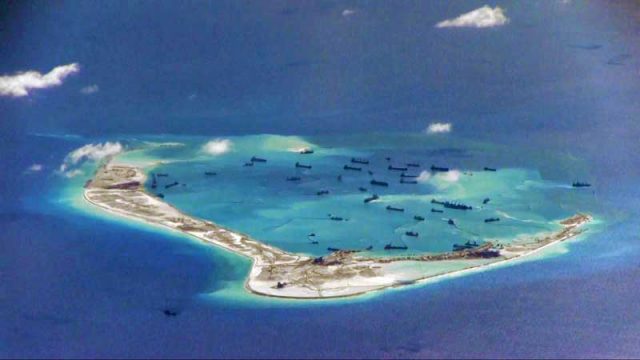
US repeats warning to China against attack on Philippine forces

US NAVY/HANDOUT VIA REUTERS/FILE PHOTO

WASHINGTON – The United States on Sunday repeated a warning to China that an attack on Philippine armed forces in the South China Sea would trigger a 1951 U.S.-Philippines mutual defense treaty.

Secretary of State Antony Blinken made the comment in a written statement marking the fifth anniversary of a ruling by an arbitration tribunal repudiating China’s vast territorial claims in the South China Sea.

China – which lays claim to most of the waters within a so-called Nine Dash Line, which is also contested by Brunei, Malaysia, the Philippines, Taiwan and Vietnam – reiterated on Friday that Beijing did not accept the ruling.

“The United States reaffirms its July 13, 2020 policy regarding maritime claims in the South China Sea,” Blinken said, referring to the rejection by former President Donald Trump’s administration of China’s claims to offshore resources in most of the South China Sea.

“We also reaffirm that an armed attack on Philippine armed forces, public vessels, or aircraft in the South China Sea would invoke U.S. mutual defense commitments under Article IV of the 1951 U.S.-Philippines Mutual Defense Treaty,” Blinken added.

That article of the treaty says in part that “each Party recognizes that an armed attack in the Pacific area on either of the Parties would be dangerous to its own peace and safety and declares that it would act to meet the common dangers in accordance with its constitutional processes.”

Blinken has made the point before, including during an April 8 conversation with the Philippine foreign minister in which the State Department said he “reaffirmed the applicability” of the treaty to the South China Sea. — Reuters