Home Blog Page 7434

Filinvest REIT sets IPO price at P7 per share

FILINVEST REIT Corp. (FILREIT) set the final offer price for its initial public offering (IPO) at P7 per share, or 15.7% lower than the P8.30 threshold it set. 

Formerly Cyberzone Properties, Inc., FILREIT is the real estate investment trust (REIT) unit sponsored by Filinvest Land, Inc. (FLI). 

“Please be advised that the final offer price for the REIT initial public offering of Filinvest REIT Corp.’s common shares is P7.00 per common share,” the company said in a notice on Monday evening, which was signed by FILREIT President and Chief Executive Officer Maricel Brion-Lirio. 

The offer is comprised of 1.63 billion common shares owned by FLI, with an overallotment option of 163.42 million common shares. FLI will receive all proceeds from the IPO. 

“Its parent will still be getting more than P11 billion from the listing. I think this is fair considering the dividend yield,” AAA Southeast Equities, Inc. Research Head Christopher John Mangun said in a text message on Tuesday. 

FLI and FILREIT officials told BusinessWorld in an interview in June that proceeds from the offer will be used according to its reinvestment plan. This includes funding for its capital expenditures (capex) for office buildings, industrial warehouses, and raw land acquisition. 

Proceeds may also be used for FLI’s capex for retail malls and the expansion of its district cooling system. 

“FILREIT’s office buildings have unique eco-friendly features that compliment it which [makes] it attractive to investors,” Mr. Mangun said. 

Its initial REIT portfolio covers 17 buildings, which includes one in Filinvest Cebu Cyberzone in Cebu IT Park. 

Meanwhile, 16 are located within Northgate Cyberzone’s Filinvest City in Alabang, which features an electric-powered public transport system called the “eco-loop” and has a district cooling system. 

Filinvest City has received the LEED (Leadership in Energy and Environmental Design) v4 Gold for Neighborhood Development certification. It is said to be the first central business district to receive the said recognition. 

The majority of tenants in the properties included in its portfolio are said to be multinational business process outsourcing (BPO) firms. 

“This may encourage more investors to subscribe to the IPO given that the dividend yield may now be more attractive, given the FILRT properties’ strategic location as well as the positive market outlook for the BPO industry,” Timson Securities, Inc. Trader Darren Blaine T. Pangan said in a Viber message on Tuesday. 

According to a July 7 statement, FILREIT said it expects its offer period to run from July 26 to Aug. 3. It also set its tentative listing date at the local bourse on Aug. 12. Shares will be listed under the ticker symbol FILRT. 

Meanwhile, FLI shares at the local bourse declined by 0.88% or one centavo on Monday, closing at P1.12 each. 

Fast vaccine rollout sought to fight Delta

To contain the variant, doctors urge people to get COVID-19 jabs

TO PREVENT further spread of the Delta coronavirus variant which, as of this writing, has already infected 35 Filipinos, the Philippines must retain limited mobility by following restrictions and practicing safety protocols while vaccination has not yet reached its targets, according to experts at a July 16 online forum held by the University of the Philippines (UP).   

“The faster the vaccination rollout, the better the chances of stopping the highly transmissible Delta variant, but [with] the problem of vaccine inequity in the world, in the meantime, we’re waiting for the vaccination level to go up and we can’t really decrease restrictions,” said Dr. Franco A. Felizarta, a California-based infectious disease and internal medicine specialist who is also a member of the UP Medical Alumni Society in America.  

Of the 35 Delta cases, 11 were local transmissions. On the evening of July 19, the Health department reported 32 recoveries and three deaths 

During the online forum, Dr. Felizarta stressed that the Philippines can’t afford to let people move around while the rate of vaccination remains low. “I know there’s a high economic cost with that, but that’s the only way to stop the variant because it’s already in the Philippines, and based on the data, it probably will become dominant in two to three months,” he said.  

WHY DELTA IS HIGHLY TRANSMISSIBLE  

Delta, the name given to the B.1.617.2 variant first found in India, has already been reported in 104 countries. It is fast catching up to the Alpha variant, which is present in 173 countries; and the Beta variant, found in 122 countries.  

One of the important parameters that makes Delta highly transmissible is its basic reproduction number (R0), which ranges from 5 to 8, said Dr. Felizarta. “The more contagious the variant, the higher the basic reproduction number,” he explained, citing a Lancet study that shows the original coronavirus from Wuhan only had an R0 of 2 to 3 compared to the Alpha variant at 4 to 5, and Delta at 5 to 8.  

This makes the Delta variant at least 50% more transmissible than Alpha, putting it at number one in terms of transmissibility, based on the World Health Organization’s weekly epidemiological updates on coronavirus disease 2019 (COVID-19). However, despite being able to spread faster, its disease severity, risk of reinfection, and impact on diagnostics have not really increased.  

“The symptoms are still the same. The only difference is, if you have a country with a high vaccination rollout, especially for the elderly, then most of the patients infected [by Delta] are younger and they have milder symptoms,” said Dr. Felizarta, referring to the cases in the United States, which has vaccinated almost 90% of its elderly.  

MORE JABS, MORE MOBILITY 

When it comes to fighting fast-spreading coronavirus variants like Delta, Dr. Felizarta emphasized that controlling mobility has to be accompanied by more jabs administered. 

“It really depends on the vaccine rollout. It’s really about the variant versus the speed of vaccine rollout,” he said.  

Based on data from the US Centers for Disease Control, the US has fully vaccinated 48.6% of its population, a majority with either Pfizer or Moderna. This has mobility to go back to baseline with almost no restrictions. Despite cases doubling due to Delta, deaths have decreased.   

Meanwhile, in the Philippines, Dr. Felizarta pointed out that the overall cases and deaths are decreasing — not because of vaccine rollout — but because of decreased mobility, which is still at about 50% of pre-pandemic mobility. “If vaccine rollout goes up to 50%, then you can increase mobility by easing the restrictions,” he said.  

Citing a Nature Medicine study published in June, he also maintained that the more people are vaccinated, the harder it will be for the virus to spread even among the unvaccinated. 

STRATEGIES MOVING FORWARD  

It’s important to strengthen prevention, detection, isolation, treatment, and reintegration (PDITR) strategies in addition to ramping up vaccination in the Philippines, according to Dr. Eva Cutiongco-de la Paz, director of the health program of the UP’s Philippine Genome Center.  

The government is already at door three of its four-door strategy in fighting the disease, she said. Door 1 involves preventing foreign entry into the Philippines; Door 2 involves screening, quarantine, and testing; Door 3 is PDITR plus vaccination; and Door 4 is strengthening health and critical capacity systems versus a surge. 

“Now that local cases of Delta variant have been detected in the country, we all need to do our part in preventing the local spread of the variant. Encourage those who have not been vaccinated to have their vaccination,” said Dr. Cutiongco-de la Paz.  

Art in the Park celebrates 15th anniversary with a second online fair

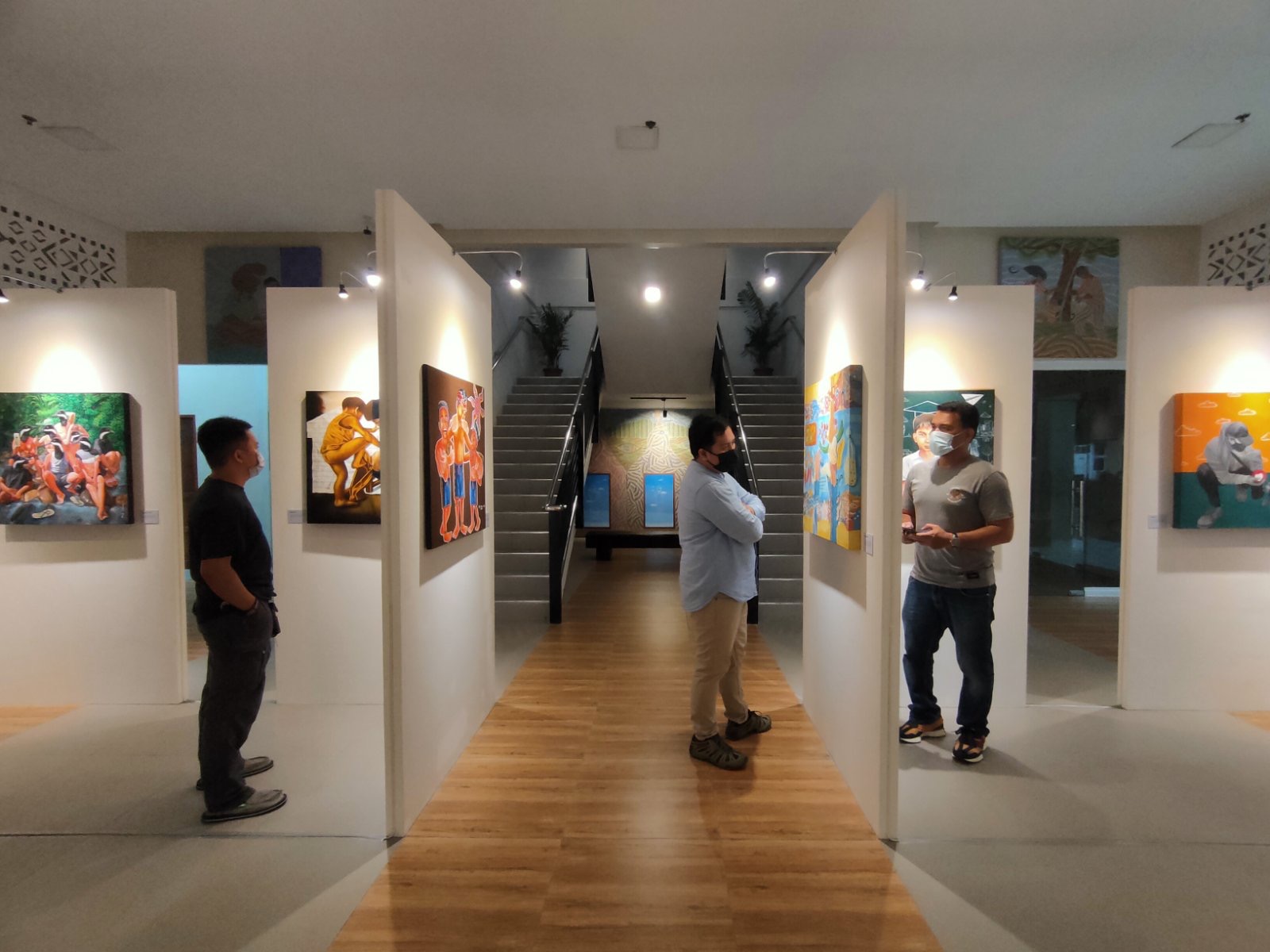
AFTER two successful online art fairs, Art in the Park Online returns for a 15th anniversary special edition on July 25 to Aug. 1 at www.artinthepark.ph.

The eight-day online fair will feature over 10,000 works of art from 62 galleries, four special exhibits, and a variety of special online activities.

All works are priced at P70,000 and below for this special edition. Art in the Park Online 2021: Special Edition will continue to benefit the Museum Foundation of the Philippines in support of its projects and programs for the National Muse-um of the Philippines and its network.

FEATURED ARTISTS

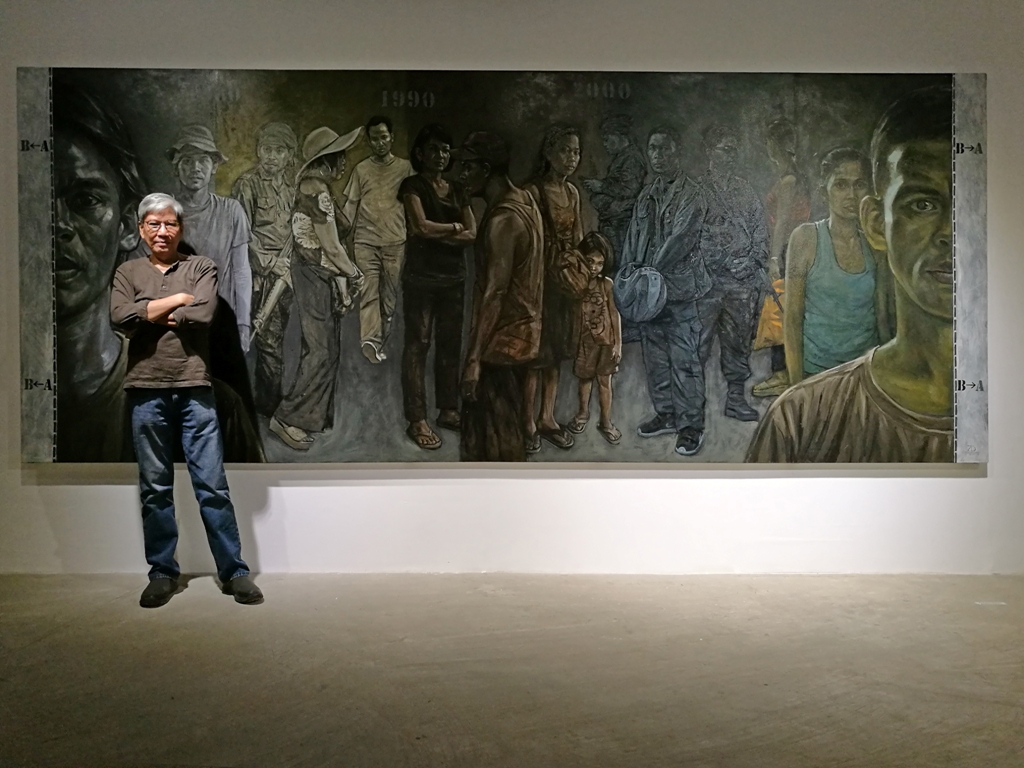
Art in the Park Online 2021: Special Edition features “Gridlock,” a special exhibit of new paintings on canvas by Antipas Delotavo. It is a collage of faces depicting nameless citizens who contribute to the nation.

“In art, grid is a series of lines commonly used in drawing that forms squares in a confined space. It seems our political, economic, social life is in a standstill. We are trapped in a grid. The pandemic just intensified it during the lockdowns,” Mr. Delotavo said of his work in an e-mail to BusinessWorld.

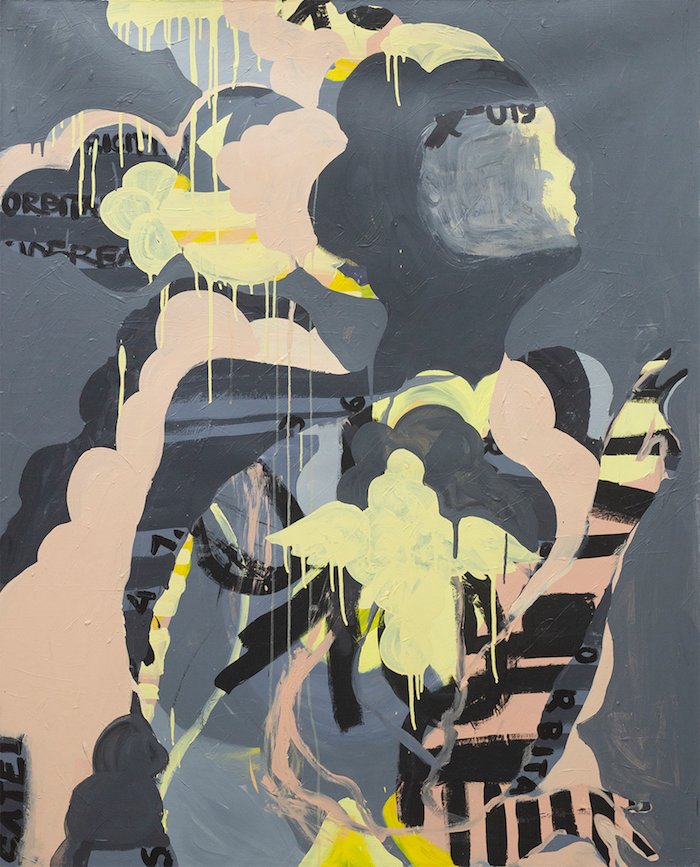
Meanwhile, the Globe Platinum Hour section will feature works from Leeroy New and Anna Bautista.

That is just one of three projects that painter, sculptor, and designer Mr. New has lined up in this edition of the online art fair.

He will install a scaled-down version of Mebuyan Vessel Polyp — that is his piece for this year’s online edition of Burning Man in August — at Art in the Park’s home at Jaime Velasquez Park in Makati City for the duration of the online fair. The public art installation is a sneak peek of a piece to be mounted in La Union this year.

“Mebuyan is the goddess from Bagobo mythology who’s described as having breasts all over her body. She’s the goddess of death but she also nourishes the spirits of children, so they can continue with their journey in the afterlife,” Mr. New said in a Zoom interview with members of the press on July 16. “It was more of a reference in terms of the concept behind the function of the installation,” he said, adding that the installation allows people to go inside spears which are connected by bridgeways.

Mr. New also dives into augmented reality (AR) as one of his headpieces from Aliens of Manila, made from colorful plastic containers, is transformed into an Instagram filter. The filter interacts depending on the user’s movement. It will be available on Instagram on July 25 at 10 a.m.

In addition, “Iris” is Mr. New’s online exhibit of mirror-pieces available at Art in the Park’s website. He described the work as “a series of magic mirror sculptures conjured while in lockdown. Mirrors as portals, as windows to the soul and other worlds. Eyes with mascara melting the way reality dissolves.”

A video of Mr. New’s artistic practice will also be featured at the website at Globe Platinum Hour at 8 p.m. daily.

Meanwhile, also on Globe Platinum Hour will be Anna Bautista’s “Time Capsules” which tackle the concept of time, culture, and philosophy. The works are done on canvas and textile, depicting images symbolic of today’s unset-tling period.

Art in the Park 2021 Online: Special Edition welcomes back Robert Alejandro who will once again host a special session for the Globe Platinum Hour for Kids on July 31, at 10 a.m.

Lastly, Eugenia Alcaide returns to Art in the Park with “Adrift,” an exhibit of threadwork created in striking black, blue, and yellow self-portraits.

“This is the only way I know to show the world how I see myself. And beyond the external image, I wanted to vivify how I feel,” Ms. Alcaide said in an e-mail.

The participating galleries and organizations in Art in the Park Online 2021 Special Edition are: Altro Mondo Gallery, Ang I.n.K., Archivo 1984, Arnold Art Collection, ArtBeat Collective, Artepintura Gallery, Artery Art Space, ART for Space Gal-lery, ART LAB: Atelier Cesare & Jean Marie Syjuco, ArtPAPER, Art Toys PH, Art Underground, Art Verite Gallery, Association of Pinoyprintmakers, Authenticity Zero Collective, Avellana Art Gallery, Boston Art Gallery, Cevio Art Haus, Cornerstone Pottery-EJ Espiritu, District Gallery, FA Gallery, Far Eastern University, Galeria de las Islas, Galerie Anna, Galerie Artes, Galerie Stephanie, Good on Paper, ILCP Art Space, Jon and Tessy Pettyjohn, J Studio, KASIBULAN-Kababaihan sa Sining at Bagong Sibol na Kamalayan, Kulay Art Group, Limbo, Los Nuevos Conquistadores, MAG, Manila Collage Collective, Modeka Art, MONO8 Gallery, Museum Foundation of the Philippines, Nineveh Artspace, Neal Oshima Photography, Orange Project, Parokyano ng Malabon, Qube Gallery, Resurrection Furniture and Found Objects Gallery, Sagada Pottery, Sheerjoy, Shelter Fund, Sierra Madre Gallery, Space Encounters, TUP-CAFA Fine Arts Department, The Mighty Bhutens, The Pho-tography Zone, The Thursday Group, Tin-Aw, UP College of Fine Arts, Village Art Gallery, Vinyl on Vinyl, vMeme Contemporary Art Gallery, Ysobel Art Gallery, and White Walls Gallery. For more information, visit www.artinthepark.ph and follow www.facebook/artinthepark and @artintheparkph on Instagram. — Michelle Anne P. Soliman

Del Monte Philippines secures PSE nod on initial listing

THE Philippine Stock Exchange (PSE) on Monday evening approved the application of Del Monte Philippines, Inc. for the initial listing of about 2.8 billion common shares under the main board of the exchange. 

This includes shares the company will be selling via an initial public offering (IPO), which consists of 699.33 million secondary common shares owned by Del Monte Pacific Ltd. subsidiaries Central American Resources, Inc. (CARI) and SEA Diner Holdings (S) Pte Ltd. 

The IPO also includes an overallotment option of as much as 104.899 million common shares to be offered by CARI.  

“CARI and its nominee directors have agreed with the joint global coordinators and bookrunners, the joint international bookrunners and the joint local lead underwriters and bookrunners to increase to 365 days from the listing date the lock-up period applicable to its shares,” the PSE said. The shares were subjected to a 180-day lockup period.  

Meanwhile, shares owned by SEA Diner at 83.92 million sold and fully paid for at less than the offer price 180 days before the commencement of the offer will also be subjected to a 365-day lockup period.  

Shares will be sold at P54.80 at most. 

Proceeds may reach up to P44 billion, which its parent Del Monte Pacific will receive. It plans to use a portion of the proceeds to repay debt, redeem some preferred shares, and for general corporate purposes. 

The offer may be the second-biggest share sale in the local bourse this year after Monde Nissin Corp., which raised P48.6 billion from its IPO in June. 

According to its latest submission to the Securities and Exchange Commission, Del Monte Philippines aims to conduct its IPO from Aug. 9 to 13, while it plans to make its PSE debut on Aug. 23.  

“The exchange’s approval of the conduct of the IPO and listing of the company’s shares is subject to its compliance with all of the post-approval conditions and requirements of the exchange,” the PSE said. 

Should the overallotment option be exercised, the company’s estimated public float after the IPO will stand at 28.75%. 

On Monday, shares of listed Del Monte Pacific at the stock market rose four percent or by 60 centavos to finish at P15.60 each. — Keren Concepcion G. Valmonte 

Streets to be made for walking

WALKING in the streets of historical sites is a more immersive experience than riding through them in a vehicle. With this in mind, the Intramuros Administration (IA) is initiating for the pedestrianization of General Luna St. As part of an over-arching plan to improve mobility in the walled district of Manila.

General Luna Street was chosen as it passes by most of the historical sites in the district such the Manila Cathedral, San Agustin Church, and the Casa Manila complex.

“General Luna is one of the busiest thoroughfares alongside Aduana St. and Muralla St.” said Vhincent Cañares from the Urban Planning & Community Development Division of Intramuros during a Zoom and Facebook live dis-cussion on July 12. “Other than [the fact that] General Luna (Street) was identified by the World Bank [study], given its length and location, the current administration has already conceptualized for its pedestrianization with as-sessment on affected shareholders, the community in the barangay,” Mr. Cañares said.

The pedestrianization project begins from General Luna St. corner Aduana St. stretching south to Muralla St. near Puerta Real (Royal Gate) at the district’s encompassing wall.

TRAFFIC MOBILITY PLAN

In 2017, the IA made strategic plans for the district including a Traffic Mobility Plan (TMP) which was made using recommendations based on assessments from the 2014 World Bank Study on Improving Mobility in Intramuros. The TMP is done in coordination with the area’s stakeholders, communities, barangays.

The TMP has four phases. The first, most of which has already been implemented, involves interventions such as designating one-way streets, removal of street parking in designated streets, and sidewalk widening. Phase 2 fo-cuses on provisions for measures in support of those in Phase One such as making General Luna one-way.

The IA is now looking into Phase 3 which focuses on measures that can be implemented in two years, while Phase 4 focuses on its long-term vision of walking as the main mode of mobility in Intramuros.

As it is, “58% of the people whose trips ends inside the walls enter on foot,” according to the World Bank study. “However, this number largely reflects that fact that most transit routes terminate outside the walls and that stu-dents are the largest user group,” it explains.

The study noted that pedestrianizing General Luna St. “provides an unobstructed route linking the important attractions inside Intramuros to the attractions in Rizal Park.”

The IA is proposing to fully pedestrianize General Luna St. as a pilot site to see how this improves mobility within Intramuros.

Mr. Cañares clarified, however, that the IA does “not want to implement a full walking city for Intramuros.” The project includes proposed alternate routes along the streets of Cabildo, Arzobispo, and Sta. Lucia for vehicles.

BINONDO-INTRAMUROS BRIDGE

“The TMP is currently being reviewed and considered for revision by IA considering that we are now looking forward to the pedestrianization of General Luna and the soon to open Binondo-Intramuros Bridge,” Mr. Cañares said.

Intramuros Administrator Guiller B. Asido said that they have communicated their concerns to the Department of Public Works and Highways (DPWH) regarding the opening of the Binondo-Intramuros Bridge which is targeted for completion by the end of 2021.

“The basis of our position is that there should be no trucks using the bridge, and we were assured that as well. And that there will also be a pedestrian and bike lane in the bridge,” Mr. Asido said, adding that the IA inspected the bridge this month.

“In the next few days, we will be completing the [IA] traffic [management] plan with full consideration of the bridge project already as well. In terms of the direction, we will ensure the mitigation of completion of the bridge project on Intramuros,” he added. “At the moment, I don’t see any problem with respect to the implementation of our pedestrianization plan with the bridge project.”

Mr. Asido also said that a discussion with the Intramuros Tourism Council has been conducted, with suggestions to adapt a sticker system and time scheduling for entry of heavy vehicles.

AN ONLINE SURVEY

In a joint project with Makati Business Club (MBC) and Konrad Adenauer Stiftung (KAS), the Intramuros Administration is asking residents and visitors their thoughts about the pedestrianization of General Luna through a Polis sur-vey (https://pol.is/2yyrtwkpxt). Their answers can provide insights that will inform the IA’s approach to the initiative. The survey is ongoing until July 28.

“I think that in the long term, the reason we are doing this is always a response to ensure we are committed to the mandate of the Intramuros Administration which is the orderly restoration and development of the district,” Mr. Asido said.

“Conservation… should be geared as well towards the quality of life of the people who are actually living, staying, and doing business in the district. And also, to ensure that the identity of the district and Filipinos will be properly respected [as well],” he said. — Michelle Anne P. Soliman

Chelsea group deploys biggest new RoPax vessel

CHELSEA Logistics and Infrastructure Holdings Corp. said it will be deploying its 12th and biggest new Japan-made roll-on/roll-off passenger (RoPax) vessel MV Trans-Asia 21 to the Cebu-Cagayan de Oro-Cebu route. 

“MV Trans-Asia 21, which will ply the Cebu-CDO-Cebu route, is part of the Chelsea Group’s program to provide Filipinos a fleet of modern, fuel efficient, clean, and superior quality ships,” Chelsea Logistics said on its official Facebook page on July 19. 

Chelsea subsidiary Trans-Asia Shipping Lines, Inc. said in a separate Facebook post that “her maiden voyage is this July 20, 2021.” 

Chelsea Group President and Chief Executive Officer Chryss Alfonsus V. Damuy said in a statement in April that “this investment will be a meaningful revenue and profit contributor to the group,” as the industry suffers from the impact of the pandemic crisis. 

“The Philippines, being an archipelagic country, composed of 7,641 islands, is largely dependent on shipping to move people, goods, and services across the globe. We are certain that the shipping and logistics industry will recover faster because it is essential and a necessity in global trade,” Mr. Damuy added. 

Chelsea said MV Trans-Asia 21 measures 123 meters in length and has a gross registered tonnage (GRT) of 8,800 tons. The vessel can carry a total of 1,085 passengers, 24 buses and 11 trucks. 

The company’s attributable net loss narrowed to P218.07 million in the first quarter compared to a net loss of P345.08 million in the same period a year ago. 

Its total revenues declined 28.6% to P1.15 billion from P1.61 billion previously. 

It said passenger revenue remained low in the first quarter at P71 million, 82.8% lower than the P413 million reported in the same period in 2020. — Arjay L. Balinbin 

Rising coronavirus cases fuel resurgence fears as Biden ramps up vaccination push

PHILIPPINE STAR/ MICHAEL VARCAS

SWIFTLY RISING coronavirus cases across the United States and abroad fueled fears of a pandemic resurgence on Monday and sent shockwaves through stock markets as the highly contagious Delta variant appeared to be taking hold.  

Many of the new outbreaks were in parts of the country where coronavirus disease 2019 (COVID-19) vaccinations have lagged, prompting political leaders to ramp up pressure on reluctant Americans to get the inoculations.  

President Joseph R. Biden, Jr., citing higher rates of COVID-19 in states with low vaccination rates, said during a speech that the nation’s economic recovery hinged on getting better at controlling the pandemic. 

“So please, please get vaccinated,” Mr. Biden pleaded. “Get vaccinated now.”  

A federal judge on Monday ruled that Indiana University could require students to be vaccinated, rejecting claims in a lawsuit the mandate violated their rights under the US Constitution.  

The ruling could set a precedent for similar vaccination orders in schools and businesses. Attorneys for the plaintiffs have said they would appeal to a higher court.  

Also on Monday, Canadian Prime Minister Justin Trudeau said fully vaccinated Americans could cross the border for the first time in 16 months from Aug. 9, easing a travel ban that many business owners complained was crippling them.  

Vaccines and especially mandatory shots are deeply controversial among conservatives.  

WALL STREET SELLOFF  

The average number of daily new COVID-19 cases in the United States has tripled in the past 30 days, according to an analysis of Reuters data, climbing to 32,136 on Sunday.  

The average number of people hospitalized with COVID-19 has also risen 21% over the past 30 days to over 19,000, according to the same Reuters analysis. Deaths, which can lag behind other indicators, rose 25% last week to an average of 250 per day.  

Wall Street saw a broad selloff of stocks as investors worried that the latest outbreaks could prompt state and local officials to impose new lockdowns and business closures.  

Millions of Americans were thrown out of work and many small businesses were forced out of business due to nationwide clampdowns during 2020.  

Already Los Angeles County has ordered residents to wear masks indoors again following a surge in cases across Southern California.  

New York City Mayor Bill de Blasio told a news conference on Monday that the city had no plans to reimpose mask mandates despite a rise in cases. The mayor said he would redouble vaccination efforts.  

Arkansas has been especially hard hit by the resurgent virus. All but two of the state’s 75 counties have substantial or high levels of transmission, according to the US Centers for Disease Control and Prevention (CDC).  

The Delta variant is responsible for 90% of current new cases in Utah’s Salt Lake County, state epidemiology manager Ilene Risk said.  

To combat the rising infections, the county has enlisted faith leaders and doctors to persuade the roughly 40% of eligible people who are not fully vaccinated to accept the shots, she said.  

The American Academy of Pediatrics on Monday released updated recommendations for schools that included mask-wearing for everyone over the age of 2, regardless of vaccination status.  

Earlier this month, the CDC updated its own guidance for schools in an effort to help reopen in the fall, recommending masks indoors for everyone not fully vaccinated, among other guidelines. — Maria Caspani and Dan Whitcomb/Reuters 

Fitch cuts rating outlook on six Philippine banks to ‘negative’

FITCH RATINGS on Monday cut its outlook on rated local lenders to reflect the revision done for the Philippines, which could mean a rating downgrade in the next 12 to 18 months.

The debt watcher revised its outlook on six Philippine banks to “negative” from “stable” while maintaining their ratings a week after it did the same for the country’s “BBB” assessment.

Fitch covers government-owned Land Bank of the Philippines (LANDBANK) and Development Bank of the Philippines (DBP) and four commercial banks: Bank of the Philippine Islands (BPI), Philippine National Bank (PNB), BDO Unibank, Inc. (BDO), and Metropolitan Bank & Trust Co. (Metrobank).

Fitch last week said while the local banking industry remains sufficiently capitalized to withstand the stress caused by the pandemic, the crisis will cause a deterioration in assets and continue to affect revenues.

“The sluggish economic recovery is likely to continue to weigh on the banking system’s asset quality and financial performance in the near term, with the industry nonperforming loan (NPL) ratio expected by Fitch to rise to nearly 6% by end-2021 before improving in 2022,” it said in a commentary about its action on the Philippines’ sovereign rating outlook.

Fitch kept LANDBANK’s rating at “BBB” but said the revised “negative” outlook reflects their assessment of the weakening ability of the government to support the lender.

It added that LANDBANK’s viability rating, which assesses its intrinsic creditworthiness, will be negatively affected as it expects the lender to ease credit underwriting in order to increase financing for vulnerable borrowers and fulfill its mandate after it received a P27.5-billion capital infusion under Bayanihan II.

“LBP’s Viability Rating is weighed down by our perception of an increased risk appetite as it fulfils its policy role of stimulating lending to afflicted sectors of the economy,” Fitch said.

This possibility of a deterioration in assets due to less stringent credit standards to boost financing for the worst-hit segments of the economy may also be experienced by another DBP, which Fitch rates at “BBB-.”

“The bank stands out among major domestic peers with aggressive loan growth of approximately 19% in 2020, and we believe that extending financial relief to priority sectors has taken precedence over prudent credit screening and risk controls,” Fitch said.

COMMERCIAL BANKS

Meanwhile, BDO, BPI, and Metrobank, which all hold a “BBB-” rating from Fitch, are armed with their resilient funding and liquidity profiles despite the crisis, the debt watcher said, but a possible reduction in the government’s ability to boost the financial system’s liquidity due to emerging pressures is a risk for these lenders.

“Should business conditions continue to deteriorate, banks’ company profile scores will likely be revised down to reflect the more challenging operating environment, and we believe management’s strategic objectives may also be adjusted accordingly,” Fitch said.

The debt watcher said BDO’s profitability will remain challenged by declining asset yields, lower market-related income, and muted business volumes this year.

For BPI, a key risk will be credit costs that are expected to remain high as the bank continues to beef up its loan loss provisions amid deteriorating asset quality, it added.

Meanwhile, Metrobank is expected to benefit from its high loan-loss coverage ratio, which stood at 166% as of March. However, this buffer “could be rapidly consumed should the economic weakness be prolonged in light of its high concentration in large borrowers,” Fitch warned.

On the other hand, for PNB, which is rated “BB,” Fitch noted that its NPL ratio of 10.7% as of end-March is the highest among rated peers and significantly above the system average of 4.3% due to related-party corporate expo-sures, its shrinking credit book and weaker portfolio due to the economic downturn.

“We expect the bank’s impaired loans ratio to remain high in the next 12 months on continued credit migration of loans under debt moratoriums, which expired in December 2020, and the sluggish economic recovery,” Fitch said. — L.W.T. Noble

Arts & Culture (07/21/21)

Philbanda marks 10th year with virtual concert

THE CULTURAL Center of the Philippines (CCP) teams up with the Philippine Band Association (Philbanda) in bringing the latter’s decade-long celebration to the virtual screen through a concert billed as PERFECT 10 on July 24, 6 p.m., on the Facebook page of the CCP Office of the President. Featuring the 60-piece Philbanda Wind Orchestra, PERFECT 10 highlights a decade of symphonic performances from the country’s sole professional wind orchestra. This special virtual con-cert will also be graced by the Philippine Baton Twirling Association, and will be hosted by OPM artist Ice Seguerra. Herminigildo Ranera of the UST Conservatory of Music is the current conductor of the Philbanda Wind Orchestra. Young talents from Metro Manila and local participants from different regions will also showcase their talents in the premiere performance of Mr. Ranera’s New Normal Concert March, a rare opportunity for local musicians to perform alongside professional groups via virtual platforms. For updates and more information, follow the CCP Office of the President on Facebook.

Online kid’s puppet show tackles self-expression

THE FREE public interactive show Ang Red Dress ni Makisig, a 30-minute theatrical children-style hand-puppetry production, aids the youth about breaking gender norms while promoting innovative reading and storytelling. Set in the fictional Catacutan Elementary School, the play follows nine-year-old transfer student Makisig who decides to wear a bright red dress on his first day in class. The puppet show was directed by John Gamboa, and written by Jack Denzel Gaza, Arjay Rosales, and Gabby Serafico, all of whom are members of Sining LABinsiyam (SiLAB), a group of Filipino student-artists and thespians. It is produced in collaboration with the Quezon City Public Library and De La Salle-College of Saint Benilde Service Learning Team. Shows — to be livestreamed via Zoom and Facebook — are scheduled on July 23, 10 a.m.; July 24, 2 p.m.; and July 25 at 10 a.m. and 2 p.m. For more information, visit the official Facebook pages of SiLAB (https://www.facebook.com/SiLAB119) or Benilde Theater Arts (https://www.facebook.com/benildetheaterarts).

Gavel&Block ‘Interiors’ auction

EXPLORE Salcedo Auctions’ virtual gallery to view the “Interiors” auction line-up which features a selection of original fine art, decor, and furniture by local and international artists and artisans. The auction is on July 24, 11 a.m. Proceeds from the sale, done in partnership with Hands on Manila, will go to supporting Advancement for Rural Kids’ (ARK) Feed Back program to secure food and provide health benefits to a community in Pililia, Rizal. For more information, visit https://salcedoauctions.com/auction/87/interiors.

Rizal hybrid art exhibit in Tagum City

Exhibit area at the lobby of Tagum City Historical and Cultural Center

VISUAL artists from Tagum City made sense of Dr. Jose Rizal through the 18 artworks currently exhibited in the “1st Rizalian Values Art Competition and Exhibition,” the first-ever art exhibit mounted at the Tagum City Historical and Cultural Center. Themes on Rizalian values dominate the art pieces of mostly-millennial Tagumenyo artists, tackling the wide spectrum of the virtues the country’s national hero that he wanted to instill in the Philippine nation. The exhibition, originally scheduled last month in time for the 160th Birth Anniversary of Dr. Jose Rizal, is a hybrid as the artworks are physically exhibited at the Center’s lobby, while also part of a virtual exhibition. The winner of the competition is Reden Paa, whose intricate details in his work entitled Tapang ng Pangarap made his piece a solid standout. Elvis Goloran’s Kuya Rizalito Jr., and Roger Gamoro’s Gawa, Gabay, Pagmamahal were declared run-ners-up. Eleven of 18 artworks in the exhibit have already been sold to local art collectors. The works can be viewed via this link: bit.ly/RizalArt. The exhibition will end on July 25.

Two exhibits at Silverlens

SILVERLENS will open two exhibits on July 31 to run until Aug. 28. These are Gary-Ross Pastrana’s “Things That Came to Light” which focuses on his collages, and Chati Coronel’s “Celestial Data for Daydreaming,” a study of cosmol-ogy with each painting titled after one of the seven classical planets of ancient Greece. The gallery is at 2263 Don Chino Roces Ave. Ext., Makati City; opens Tuesdays to Saturdays from 10 a.m. to 4 p.m. Appointments can be made through 8816-0044, 0917-587-4011, and via e-mail at info@silverlensgalleries.com.

UST students bag NY Young Performers Prize

Victor Torres

FOUR students from the University of Santo Tomas (UST) Conservatory of Music earned recognitions in the 2021 New York Young Performers Prize (NYYPP) Competition held on April 18. Michael Valenciano, a student under the Bachelor of Music in Performance, major in Piano program, bagged the first prize in the Lucy Boyan Balakian Awards category, College division. Anyah Therese De Guzman, a student under the Bachelor of Music, major in Music Theater program, received the first prize in the Olly H. Kukepuu Vocal Awards, College–Musical Theatre division. For strings, Violin major Alain de Asis won the 2nd prize in the Aaron Rosand Memorial Prizes Category, College divi-sion. Fellow Violin major Victor Jan Luigi Torres received the Honorable Mention distinction in the same category. The NYYPP is an international competition organized by the Associated Music Teachers League, founded in New York City in 1925. The winners earned cash prizes. Their performances can be viewed on NYYPP’s final round video playlist: http://bit.ly/UST_NYYPP.

RIZAL@160 TULARAWAN Digital Art Contest

THE NATIONAL Commission for Culture and the Arts (NCCA) presents the RIZAL@160 TULARAWAN Digital Art Contest 2021 for Overseas Filipino Youth. The contest — open to overseas Filipinos ages 18 to 35 — aims to encourage participants to immerse themselves in Dr. Jose Rizal’s poetry and transform his literature to original creative digital artworks. RIZAL@160 TULARAWAN runs until Oct. 15. The winning entries will be announced in December in time for the commemoration of the Month of Overseas Filipinos and the 125th anniversary of Rizal’s martyrdom. Inquiries and submission of entries may be coursed through Sentro Rizal branches which can be found here: https://ncca.gov./sentro-rizal-3/sentro-rizal-branches/.

Still musical series on Viu

THE FIRST Filipino Viu Original musical, Still, is an eight-episode musical series about a group of aspiring artists who find themselves stuck in a music camp during the first couple of months of the pandemic. The series, directed by Treb Monteras, stars singers/actors Julie Anne San Jose and Christian Bautista, Bituin Escalante and Gab Pangilinan. Also in the cast are Gabby Padilla, Lance Reblando, Abe Autea, MC Dela Cruz, Chaye Mogg, Roco Sanchez, Ian Hermogenes, and Shaira Opsimar. It features music and lyrics by Nica Del Rosario, Matthew Chang, and Mike Shimamoto, and is produced by Viu Philippines and This Side Up, in collaboration with Arkeofilms, TheaterFansMa-nila.com, Flip Music, and Black Box Collab. Still will have a limited-time release on Ticket2Me before its scheduled showing on Viu. The Exclusive PreViu tickets will not only allow viewers to watch the episodes earlier but also enjoy a six-month Premium subscription to Viu Philippines and a digital Still chord book containing the songs from the Viu Original series. For ticket, visit https://bit.ly/ViuStillSeries.

CCP donates books to Lahat ng Bata

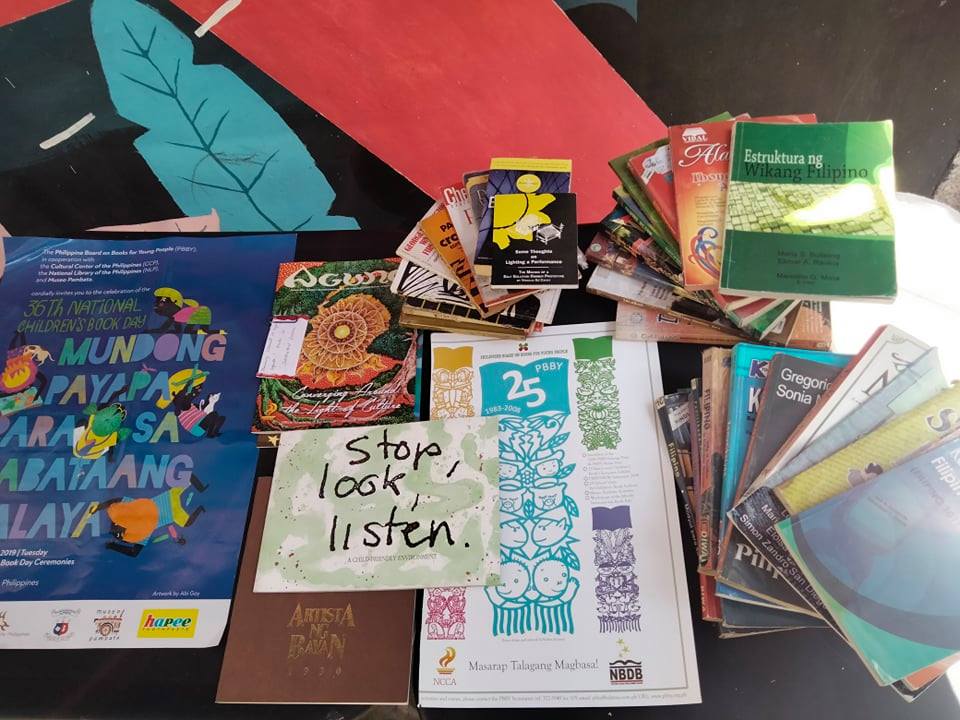
THE CULTURAL Center of the Philippines (CCP) has donated books and other publications to a youth group called Lahat ng Bata in Singalong, Manila. A variety of publications ranging from books for children from the Philippine Board on Books for Young People, publications of the National Commission for Culture and the Arts, as well as book donations collected from the Performatura Festival 2019, were turned over to Lahat ng Bata on May 27. Some of these books served as admission tickets during the three-day Performance Literature Festival in 2019 during which time one book was equivalent to a whole day admission. The youth group intends to make reading accessible to the poorest families in the neighborhood, putting up the Lahat ng Bata Community Library along Pag-asa St. in Zapanta, Singalong, Manila. Learning materials from grade school to college are also available. Lahat ng Bata is also open for hygiene kit donations such as alcohol and facemasks. For inquiries, contact 0929-377-9865, visit its Instagram and Facebook pages at instagram.com/lahatngbata.ph and facebook.com/lahatngbataph

Home Credit Philippines’ January-June in-store installment financing hits P10.6B

HOME CREDIT Philippines recorded a rise in in-store installment financing as more consumers purchased items due to work-from-home arrangements and changes in lifestyle resulting from the coronavirus pandemic.

The firm saw a year-on-year increase in loans in the first half to P10.6 billion, Home Credit Chief Executive Officer David Minol said in a statement.

Nearly one million customers tapped their facility in the period to avail of products in their partner stores, he added.

Home Credit has presence in over 9,000 physical stores while its app has over six million downloads.

“It is another encouraging sign that people are gradually recovering from what was a very challenging year for us all,” Mr. Minol said.

The top five products purchased by consumers who tapped Home Credit for financing were smartphones, televisions, refrigerators, laptops, and sporting equipment.

Home Credit also saw higher demand for financing to buy air- conditioners, with sales rising to P296 million in the April to May period against the P132 million in the first quarter. It was attributed to consumers taking advantage of their promotional offers.

“It is an interesting best-seller list as it reflects what Filipinos’ priorities and lifestyles are in the new normal. They put great value on things that allow their families to live, work and play better,” Mr. Minol said.

He noted that although malls were closed when a two-week lockdown was imposed in Metro Manila and surrounding provinces in March, Home Credit continued to see demand for financing through their mobile app.

With restriction measures gradually being lifted, Mr. Minol said consumer traffic is expected to recover in malls, which could boost loan demand.

Filipinos’ growing ease with using mobile transactions will also help them gain more customers, he said.

“We know that Filipinos have a strong mall culture, and it still shows in this new normal. But what these past months have also shown is how digital savvy Filipinos have become, especially when it comes to e-commerce and online shopping,” Mr. Minol said.

The financing company has served over seven million customers since its launch in the Philippines in 2013. — LWTN

How museums could light up and display more of the world’s precious objects for longer

Photo by Gilber Franco on Unsplash

THE two key objectives of museums — exhibition and preservation — are often in conflict.

Exhibiting an object and exposing it to elements like lighting, fluctuating temperature, humidity, and variable air quality can cause damage and degradation.

The very decision to exhibit an item may mean its future is compromised.

In fact, the majority of objects in museum collections are in storage. This is only partly to do with resources and display space. It is largely due to conservation requirements.

I am a researcher at the University of Technology Sydney and a lighting designer at Steensen Varming. With other researchers and designers, I am exploring how museums can improve displays for visitors while also addressing preservation with new advances in lighting technology and applications.

These technological advances need to be put into practice for the sake of viewers today and well into the future.

The first public museums of the 19th and the early 20th century used daylight to illuminate the collections. But, as our understanding of conservation advanced, the degrading effects of ultraviolet and visible light became a con-cern.

As electric lighting became increasingly available — and economically viable — museums and galleries were fitted with incandescent light bulbs and fluorescent discharge tubes (commonly referred to as “fluoros”), and daylight was increasingly excluded.

International guidelines — which balanced the needs of viewers and conservation — were developed with these technologies in mind. As all forms of light can cause damage to exhibition materials by fading pigments and af-fecting structural integrity, lighting must be used delicately and sparsely to protect vulnerable displays.

But this century has seen major advances in light-emitting diodes, or LED lighting. White LEDs greatly improved the quality of LED lighting, which is also recognized for economic and environmental benefits.

LEDs have very different attributes to traditional counterparts: their light spectrum is different, they render colors differently, they offer a greater degree of control and have a lower potential for damage.

But even as museums increasingly adopt LEDs, they are still using the old guidelines. A new approach to museum lighting standards is well overdue.

With LED lighting, we believe the strict exposure limits under the old guidelines can be more specifically tailored.

This means more artefacts can be displayed for longer while incurring less damage.

A key part of our proposed framework is considering the “significance” of objects as a key factor when deciding how much light exposure is adequate.

The question of significance is a complex one in its own right, but helps make more informed decisions for display conditions: how important an object is to display, for how long it can be on display, and how much compromise is acceptable.

Our new proposed standards include suggestions on: expanding the classification of the light-sensitivity of museum objects from the four categories to eight; introducing a three-tier significance scale to consider the importance and relevance of objects, not just the materials they are made of; and, a flexible framework, allowing museum professionals to adjust the duration of exposure versus light levels without compromising objects.

This will not solve all the complex questions around light, conservation and visitor experience, but it will serve as an essential adjustment.

By introducing more specificity and flexibility into lighting guidelines, we hope we can offer freedom to curators, designers and conservators, while also giving museum visitors a better experience.

Lighting technology is developing by the day. With smart controls and sensors, museums will increasingly be able to add thematic, theatrical, or dynamic lighting overlays to display objects at their best — perhaps even personal-ized lighting profiles for each visitor.

We now need to adopt the right guidelines for this to happen.


Emrah Baki Ulas is a Senior Lecturer, University of Technology Sydney.

How to work from home without killing your back

PIXABAY
PIXABAY

SITTING BEHIND a desk for hours doesn’t have to result in back pain or sore wrists. Being intentional about how you set up your work desk will prevent needless discomfort. BusinessWorld spoke with Christopher C. Torres, chief sports physical therapist of the Maharlika Pilipinas Basketball League’s Cebu Casino team, on how to get the work desk ergonomics situation right.  

POSITION  

  • Wrist — Wrists should be in a neutral position, so you can draw a straight line from the hand to the wrist. Elbows should be in a 90-degree position. Adjust your armrests so your elbows are supported and your shoulders are relaxed.  
  • Back — Maintain the natural curves of your spine by keeping your ears, shoulders, and hips aligned. Sit far back in your chair to help prevent your lower back from rounding too much. Provide support to your lower back area (or lumbar spine) with a small pillow or a small rolled up towel.  
  • Feet — The feet should touch the ground so the lower back area can create enough curving for the muscles to lessen tension. If the chair is too high, the lower back muscles will need to generate tension, thus creating mechanical low back pain. Feet that dangle is a huge liability, Mr. Torres said, because the feet significantly help support stability in your lower back.  

 EQUIPMENT  

  • Monitor — The monitor of your device should be an arm’s length away from you, or about 50-70 cm (20-22 inches) away from the screen. If your screen is too far away, you’ll end up craning your neck. The top of the screen should be at or slightly below eye level.   

Placing your monitor perpendicular to the windows — so the light source is to the side — helps avoid eye-straining glare 

Choose a chair that supports the natural curve of your spine. This is critical when working daily and for longer hours.  

Mr. Torres added that armrests are a must when choosing an ergonomic chair: “It will support your elbows and minimize the use of energy of your wrist, thus prolonging your typing hours.”   

A headrest is optional.   

For those whose budgets cannot accommodate an ergonomic chair just yet, Mr. Torres recommended the Nada Chair or solutions similar to it. “We have a lot of lumbar support devices, etc. in the market, but this is the only one that has a knee support system.”  

  • Footrest — A footrest can be used for when your chair is too high for you to rest your feet flat on the floor, according to the Mayo Clinic. If a footrest is not available, a small stool or a stack of sturdy books may be used as a substitute.  
  • Desk — Your legs should fit comfortably under your desk when sitting. Don’t store items under it. Make sure there’s clearance for your knees, thighs, and feet.   

If your desk has a hard edge, pad the edge or use a wrist rest.   

A standing desk can be a good investment for those who wish to decrease lower back pain episodes, Mr. Torres told BusinessWorld 

“A standing desk gives you more energy, improves your heart rate, and equalizes the distribution of tension in your muscles,” he added.  

  • Keyboard — According to Zapier, an automation tool company whose staff work remotely, your keyboard should be close enough to keep your upper arms close to your body. It should also be low enough so the wrists are flat and the arms are parallel to the floor.   

A fix for non-ergonomic keyboards, per the California-based firm’s July 2016 blog, is to get a keyboard stand that positions the keyboard pointing downwards. Those who use laptops, meanwhile, can get a keyboard stand paired with an ergonomic external keyboard.  

  • Necessities — Zapier also advised keeping key objects you use daily (like your mouse) within reach. Stand up to reach anything that can’t be comfortably reached while sitting.  

STRETCHES  

Prolonged sitting can give rise to health issues, so regular breaks and basic stretches are a must, no matter how ergonomic your work desk is.  

Dr. Marcelino T. Cadag, an orthopedic surgeon who practices at Makati Medical Center, said the number one cause of lower back pain is muscle strain from sitting too long.   

“Muscle strains could root from activities like lifting too much weight, developing arthritis, and even slipped discs,” Dr. Cadag said at a webinar on back pain. “The number one cause of lower back pain is muscle strain from sitting too long. We suggest that for every hour of sitting, stand up for five to ten minutes.”  

In his interview with BusinessWorld, Mr. Torres shared a few stretches that could help ease muscle tension among pencil pushers:   

  • Trunk rotations — cross your arms, slowly turn your trunk to one side, hold it in place for 15 seconds, and then return to neutral position. Do the same on the other side.  
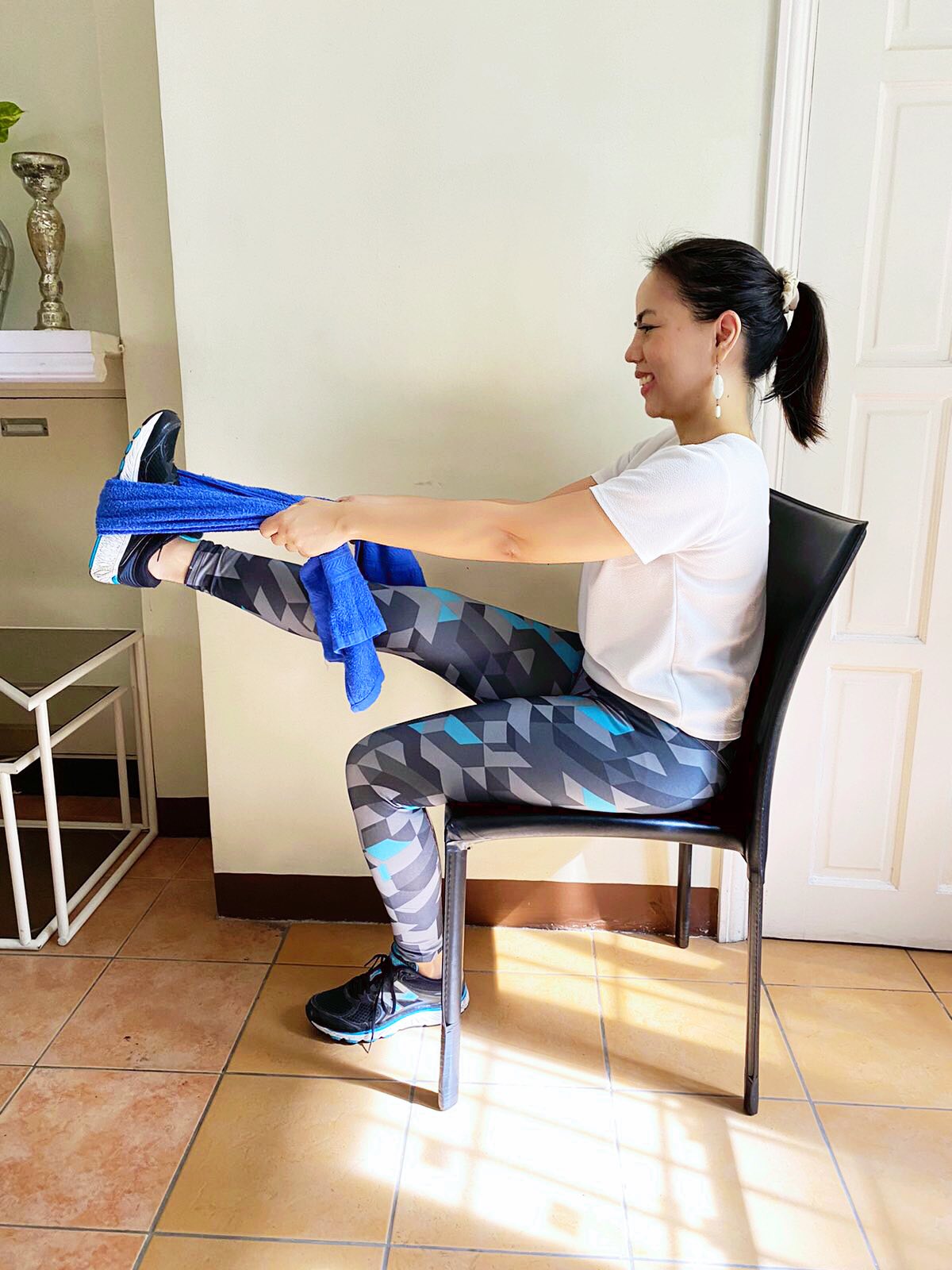
  • Hamstring stretches — use a towel, wrap it around your feet, and then gently pull your feet using the towel. Keep your legs and feet straight while doing this. You should feel a burning sensation on your calf and hamstrings.  
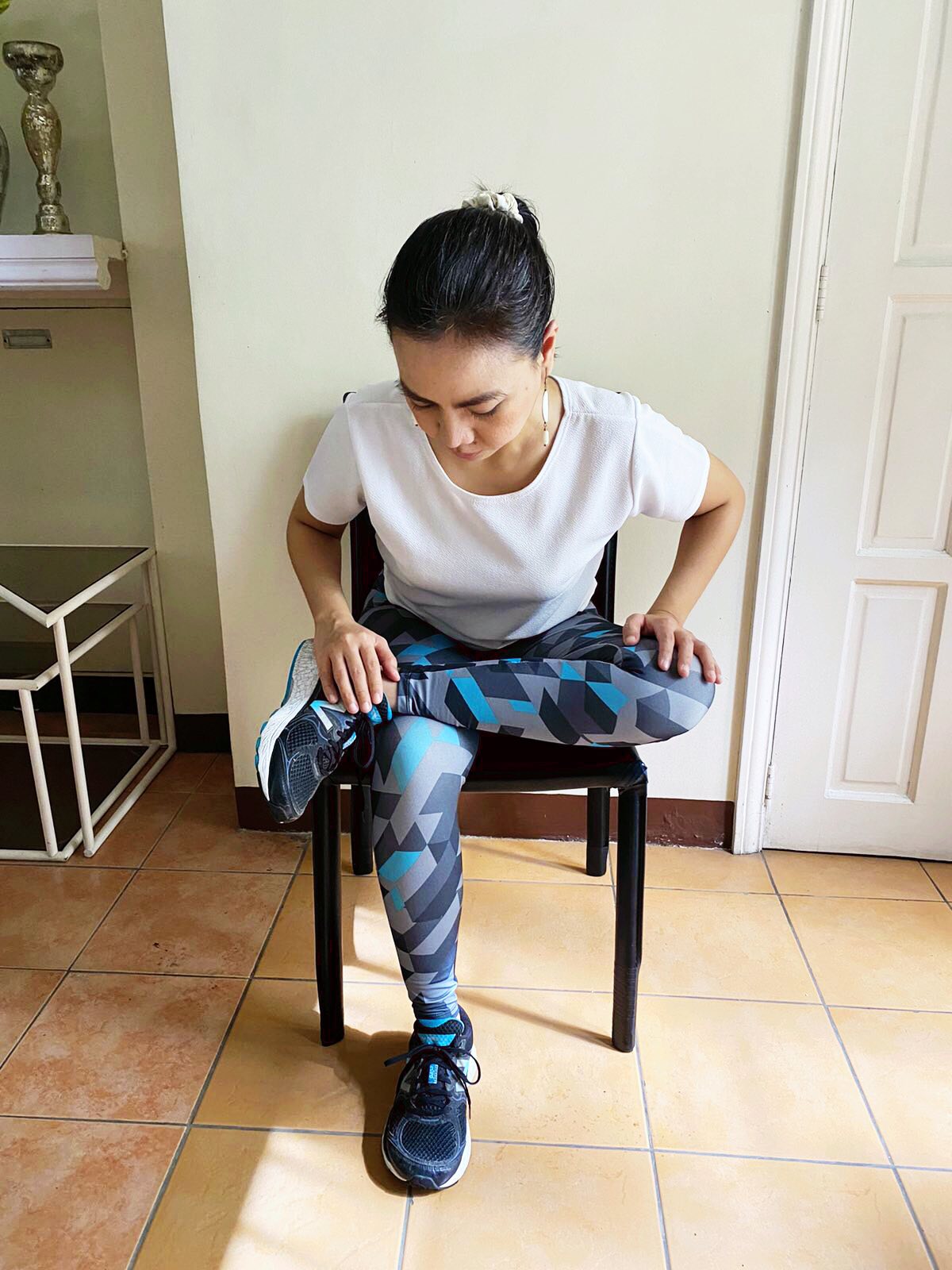
  • Glute stretches — do a figure four (or a de quatro), then slowly bend your trunk forward. You should feel a stretching sensation in your buttocks.  
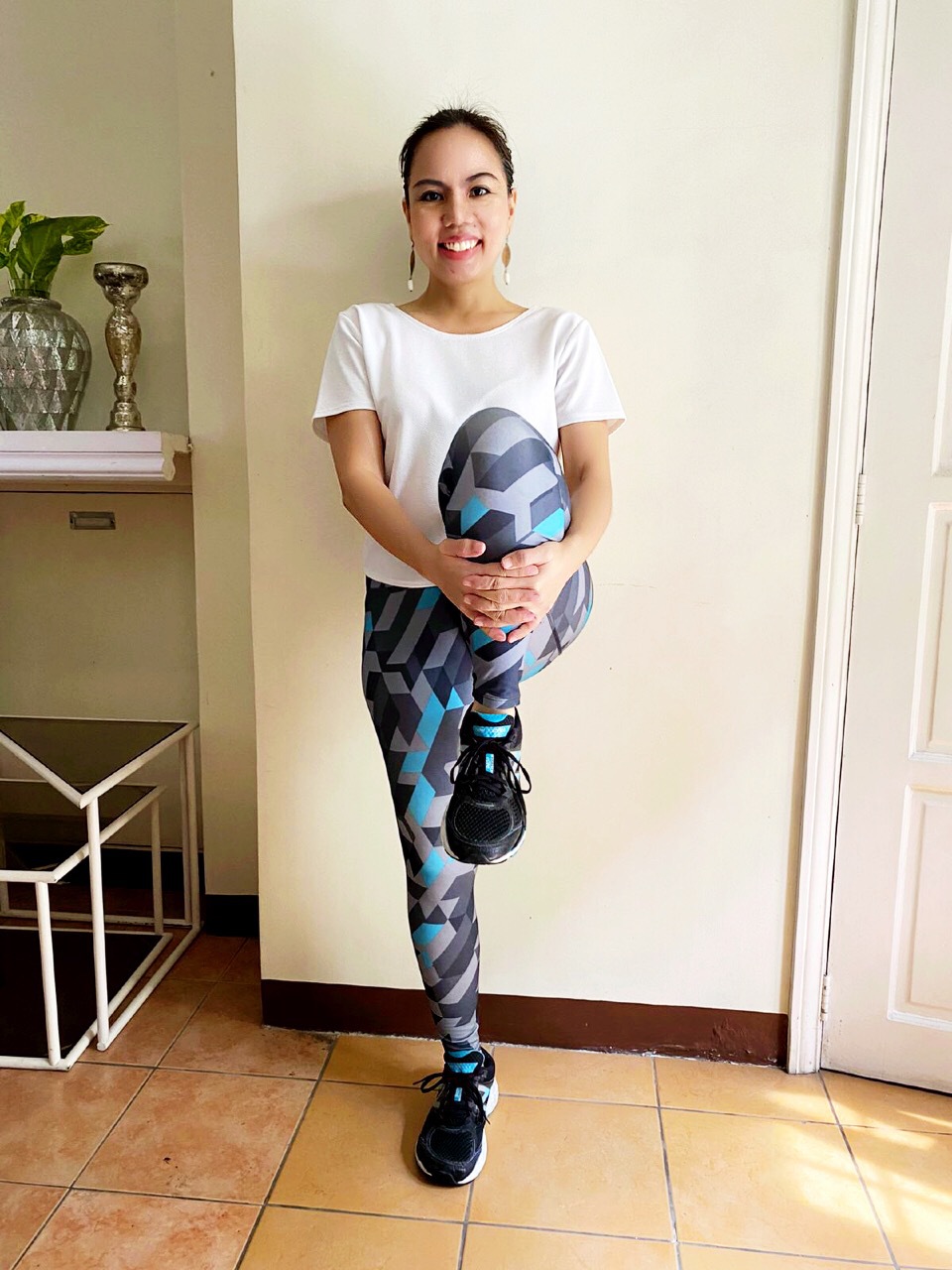
  •  Knee hugs — Lying on the floor or standing straight, bend your knees towards your chest and grab (or hug) it as much as you can. You should feel a comfortable stretch in your lower back. 

Mr. Torres said each stretch should be a 20-second hold and done 3-5 times per area. “Focus on the quality of stretch,” he added. “The normal feeling of a stretch should be a gentle burning sensation. Cease the activity if you feel some stingy or sharp pain sensation.”Patricia B. Mirasol


SIDEBAR | Finding an ergonomic keyboard 

A CONVENTIONAL computer keyboard forces people to bend their hands to the side when they are typing, according to the Cornell University Ergonomics Web. This lateral bending of the hands can lead to carpal tunnel syndrome and an increased risk of developing musculoskeletal injuries in the forearms.   

The New York-based university suggested eight alternative ergonomic keyboard designs: 

  • Modified standard layout keyboard — a keyboard design that resembles the standard one, except that the keys are angled, which results in less ulnar deviation when typing.  
  • Fixed-angle split keyboard — a keyboard design that splits the alphanumeric keys at a fixed angle, which slightly tent the keyboard.  
  • Adjustable-angle split-keyboard — a keyboard design that allows the user to change the split-angle to suit their own needs.  
  • Completely split keyboard — a keyboard design in which the left hand and right hands portions of the keyboard are completely split apart.  
  • Vertically split keyboard  a keyboard design that resembles an accordion as the user types with the hands facing each other. This design works well to reduce ulnar deviation and wrist extension, but it is important not to have the keyboard too high otherwise the chest and shoulders can fatigue.   
  • Chordic keyboard  a keyboard design that has a smaller number of keys and letters, with digits are generated by combinations of keys in chords.  
  • Specialist keyboard — a keyboard design developed to assist users who have some physical limitation or who wish to type in a different way. Some designs allow users to rest their hands on two domed surfaces and then to move these surfaces to generate the characters.  
  • One-handed keyboard — a keyboard design for users who can only type on one hand.