Home Blog Page 7419

Gilas Women routed by China in Asia Cup opener

GILAS Pilipinas Women had its hands full against China in the opener of the FIBA Women’s Asia Cup on Monday night, losing, 143-52. — FIBA

THE Philippine national women’s basketball team had it tough against top-ranked China in the opener of the International Basketball Federation (FIBA) Women’s Asia Cup on Monday night, losing, 143-52, in the game held at the Prince Hamza Hall in Amman, Jordan.

China seized the Group B game at the onset, taking full advantage of their edge in height and banking on solid shooting.

The Chinese held a 35-17 advantage by the end of the opening quarter and just continued to build on it en route to the dominant victory.

Liwei Yang led the balanced attack of China, finishing with 21 points and five assists. Centers Yueru Li and Xu Han, meanwhile, added 18 and 17 points, respectively.

As a team, China shot 66.7% from the field (50-of-75) and 54.5% from beyond the arc (12-of-22).

For the Philippines, it was Afril Bernardino who top-scored with 17 points.

Next for Gilas Women is a showdown with Australia on Sept. 29 at 12 a.m.

In the tournament, the goal for the Gilas is to stay in the top three in the grouping to advance to the next rounds and avoid risking being relegated to Division B play in FIBA Asia. — Michael Angelo S. Murillo

Dak Prescott shines in home return as Cowboys rout Eagles

DAK Prescott passed for three touchdowns in his first home game in 11-plus months and Ezekiel Elliott rushed for two scores to help the Dallas Cowboys record a 41-21 victory over the Philadelphia Eagles on Monday night in Arlington, Texas.

Trevon Diggs returned an interception for a touchdown as the Cowboys (2-1) controlled the matchup against their National Football Conference (NFC) East rival. Dalton Schultz (six catches, 80 yards) had two scoring receptions, and Cedrick Wilson added one touchdown catch for Dallas.

Prescott completed 21 of 26 passes for 238 yards in his initial game at AT&T Stadium since severely breaking his right ankle and being carted off the field against the New York Giants on Oct. 11, 2020.

Elliott had 95 yards on 17 carries and three receptions for 21 yards.

Jalen Hurts was 25-of-39 passing for 326 yards, two touchdowns and two interceptions for the Eagles (1-2). Zach Ertz and Greg Ward caught touchdown passes, and Fletcher Cox scored on a fumble recovery for his third career touchdown.

Dallas had a 27-12 edge in first downs while outgaining Philadelphia (380-367).

The Cowboys displayed they meant business as Elliott capped a game-opening six-play, 75-yard drive with a 1-yard scoring run.

The Eagles tied the score on the defensive end as Javon Hargrave’s strong pass rush forced Prescott to fumble in the end zone. The ball hit off Prescott’s back, and Cox grabbed it for a touchdown with 9:57 left in the opening quarter.

The Cowboys moved ahead to stay later in the quarter when Prescott connected with Schultz on a 19-yard scoring pass with 1:31 left.

Elliott scored from the 3 to give Dallas a 20-7 advantage with 7:10 left in the first half.

On the third play of the second half, Hurts’ short pass was intercepted by Diggs, who raced 59 yards for a touchdown.

Hurts threw a 3-yard pass to Ertz to pull the Eagles within 27-14 with 7:08 left in the third quarter. But Prescott hit Wilson on a 2-yard scoring pass early in the fourth and threw a 22-yard touchdown pass to Schultz to make it 41-14 with 6:56 left in the contest.

Hurts connected with Ward on a 15-yard scoring pass with 3:09 remaining. — Reuters

Europe faces tough task to win back Ryder Cup against ‘scary’ Americans

LONDON — Following Europe’s Ryder Cup thrashing by the United States at Whistling Straits former captain Colin Montgomerie summed up neatly the challenge facing the next incumbent in the job.

“I don’t envy whoever is in charge in Rome,” the Scot, whose team won a thriller at Celtic Manor in 2010, told Britain’s talkSPORT radio station on Monday.

Padraig Harrington’s European team were simply overwhelmed by a high-powered American dozen on the shores of Lake Michigan, sinking without trace in a 19-9 defeat that is likely to mark the end for several of Europe’s stalwarts.

Most worrying, according to Montgomerie, is that the American team, whose oldest player was 37-year-old Dustin Johnson, will most likely look pretty similar in Rome in 2023.

“Sometimes in sport it’s blissfully simple, if a stronger team, which they were, and they’re playing at home, performs to its capabilities, which they did, it’s going to win,” Montgomerie said. “And that’s what happened.

“Their world rankings averaged eight and ours was 30. It was a better team and it was frightening how good they were. It’s a little bit worrying for the next couple of Ryder Cups as well as I reckon 10 or 11 of them will be in Italy in two years time.

“It’s a worry and I don’t envy the next European captain at all.”

Harrington’s captaincy is coming under scrutiny.

Questions were rightly asked as to why he split the partnership of Jon Rahm and Sergio Garcia on Friday afternoon after they had won their opening foursomes match.

LITTLE FLEXIBILITY
His decision to use only three captain’s picks, rather than the four Thomas Bjorn had in 2018, also left him with little flexibility to select the players in the best form, although his decision not to choose reliable Ryder Cup points scorer Justin Rose was questionable.

Of Harrington’s three picks, only European points record holder Garcia justified the faith while both Shane Lowry and Ian Poulter struggled.

The points qualification system also meant that the likes of 48-year-old Lee Westwood were in the team despite lacking form.

Westwood, playing in his 11th Ryder Cup, struggled on the opening two days alongside fellow Englishman Matt Fitzpatrick who has failed to earn a point in two Ryder Cup appearances.

Austrian Bernd Wiesberger, another merit qualifier, tried his best, but ended pointless while fellow rookie Viktor Hovland played in all five sessions, earning just one point.

Aged 24, Norwegian Hovland showed enough to suggest that he will be back in a European team that is clearly in a transitional phase at just the time the Americans are flush with major champions approaching their prime.

“It’s scary how good they are,” said Montgomerie. “Dustin Johnson is their oldest player and won five points, Bryson (DeChambeau) is getting better and they have the likes of (Collin) Morikawa who was rookie, but the Open champion.”

“We are in a transition period. We were in 1999 when we lost our top guys Faldo, Langer, Seve, Woosnam, Lyle. This is another one where the old school has probably played their last one, the Poulters, Westwoods, Caseys, they may not play again.

“It’s a transition period which has coincided with them being very good so the gap has widened. The US team is probably the best team ever assembled.” — Reuters

Bucks star Giannis Antetokounmpo ‘not satisfied’ after title win

DESPITE adding “NBA champion” to his lengthy resume last season, Milwaukee Bucks star Giannis Antetokounmpo still has his sights set on greater heights as he readies to return to the court.

“I’m not satisfied. I’m not even close to being satisfied,” Antetokounmpo said during the Bucks’ media day on Monday. “That’s the tone we got to set as a team. As the leader of this team, that’s the tone I’m going to set. We understand that teams are coming for us, but we’re going to be ready.”

The two-time Most Valuable Player (MVP) won the first title of his career when the Bucks beat the Phoenix Suns in six games to claim their first National Basketball Association (NBA) championship since 1971. Antetokounmpo was named Finals MVP, averaging 35.2 points, 13.2 rebounds and five assists per game in the series.

During the regular season, he averaged 28.1 points, 11 rebounds and 5.9 assists in 61 games, finishing fourth in the league MVP vote after claiming the award the previous two campaigns.

“Right now, what I want is to get better,” the 26-year-old said. “I don’t care about trophies. I don’t care about the MVPs. I don’t care about Defensive Player of the Years. All those things, I don’t care. I care about getting better because if I do that, more things are coming.”

Antetokounmpo was also asked about his left knee, which he injured during the Eastern Conference finals. He missed the last two games of that series as the result of the ailment.

“I feel good,” he said. “Obviously, I gotta do my treatment like always, take care of my body. Just manage it, you know? I don’t think there’s no rush for me here. I’m good to go. But if I feel pain again or whatever the case might be, I listen to my body. When you feel pain, it’s your body telling you that it’s protecting you and you can’t go no more.

“I’m doing whatever I have to do to be 100 per cent. That’s pretty much it. That’s all I can do.

The Bucks begin their title defense at home against the Brooklyn Nets on Oct. 19. — Reuters

Best event in golf

There was a time when Rory McIlroy wanted to have little to do with the Ryder Cup. Twelve years ago, he called it “a great spectacle, but an exhibition at the end of the day. And it should be there to be enjoyed. In the big scheme of things, it’s not that important to me.” At the time, he was projected to be Europe’s foundation for the 2010 staging of the biennial event — a would-be rookie just two years removed from his professional debut. That said, he had already been flexing his muscles enough to underscore his potential. And by the end of the year, he had jumped 30 spots to ninth in world rankings.

Fast forward to Monday, and McIlroy could not have exhibited a more contrasting viewpoint. That he did so while on the losing end of the most lopsided result in Ryder Cup history speaks to the gravity of his sentiments. “I should have done more for them this week,” he said, lamenting his 1-3-0 slate. It was far from adequate on paper, and made even more untenable in the face of Europe’s inability to put up points on the board, let alone keep pace. And as he struggled to hold back tears during his interview, he could not help, but note that, “The more I play in this event, I realize it’s that it’s the best event in golf. I love being a part of it. I can’t wait to be part of many more.”

McIlroy added that none of his individual accomplishments — not his four major titles, not his Players Championship trophy, not his three World Golf Championship victories — had him as invested in both the experience and the outcome as the Ryder Cup. If nothing else, the premier team-based competition in the sport proves the oft-cited quote “Success is a journey, not a destination” and, just as importantly, the other extreme. Failure hits hard in any case, but hardest in the context of a shared endeavor. Pressure is amplified — and the need to perform up to par becomes more pronounced — when the contribution, or lack thereof, is counted, and counted on, by all.

Little wonder, then, that McIlroy was moved to profess his love of and for the Ryder Cup at a time when he was most down. “I don’t think there’s any greater privilege to be a part of one of these teams, European or American. It’s an absolute privilege,” he noted, enumerating the accomplishments of his teammates through the years. “I’ve gotten to do this six times. They have always been my greatest experiences of my career,” he disclosed. “It’s phenomenal and I’m so happy to be a part of it. As I said, I’m disappointed that I didn’t contribute more this week, but you know, in two years’ time, we’ll go again and try to give it another go again.” Enough said.


Anthony L. Cuaycong has been writing Courtside since BusinessWorld introduced a Sports section in 1994. He is a consultant on strategic planning, operations and Human Resources management, corporate communications, and business development.

2050 take me there

(Part 1)

The National Economic and Development Authority (NEDA) dropped a bombshell when it released the result of a six-month study estimating the economic cost of COVID-19 for the next four decades to reach P41 trillion and that the economy is expected to return to the pre-pandemic growth trend only after 10 years. The primary assumption is that consumption and investments will likely remain sluggish for some time to come. As Socioeconomic Planning Secretary Karl Kendrick T. Chua said in the presentation: “Consumption and investment will be lower in the next 10 years due to lower demand in sectors that require social distancing (e.g., amusement, tourism, restaurants, public transportation). Consequently, tax revenues will be lower.”

I appreciate this attempt of our NEDA economists to use the scientific methods of long-term forecasting and present value analysis to demonstrate the catastrophic results of the very poor judgment of the President and his Inter-Agency Task Force for the Management of Emerging Infectious Diseases (IATF) advisers to give exaggerated emphasis to the health issues during the pandemic in almost complete contempt for what was happening to the economy by imposing the longest and most frequent lockdowns in the region. It is well known that NEDA has always taken what I consider the right position, that the long lockdowns, the school closures, and other measures that hurt the economy were unwarranted. The conclusions of their study have, to my mind, a clear purpose of changing the mindset of our government decision makers, if not immediately, at least of the ones who will be elected in May 2022. Voters should make the ineffective response to the pandemic of this present Administration a major issue in the next elections.

I, however, would like to present an alternative scenario based on a more optimistic assumption of what will happen to consumption and investment starting at least the second semester of 2022.

I maintain that social distancing and the other extreme measures related to lockdowns will be things of the past by the second semester of next year. Filipinos will treat the pandemic as endemic and will learn how to live with it in the same way they have lived with the common flu for decades. They will not tolerate the misguided policies of this present Administration such as lockdowns and school closures. Because of the strong fundamentals that have not be erased by the pandemic (what I referred to in the series of articles entitled “Aspiring for High Income Status,” as demographic, geographic and temporal dividends), investors and foreign investors will quickly recover their entrepreneurial spirit and make up for the big decline in capital accumulation in 2020 and 2021.

In fact, it was a happy coincidence that as the news on the NEDA projections were appearing in the news, Megaworld was announcing that it would be investing about P40 billion to develop beachfront and inland properties spanning 462 hectares in San Vicente, Palawan into an “eco-tourism” township. This is only one example of the bullish outlook of investors as they consider the long-term potentials of the Philippine economy, despite the pandemic. The pandemic has not taken away from Palawan the potential of being one of the most visited set of islands in the world in the years to come. It was rated by an international magazine on leisure and tourism as the best island resort in the world, besting such other tourist destinations as Bali and Hawaii.

I would like to present an alternative long-term economic scenario for the Philippines. I still think that the Philippines can attain advanced economy status by 2050, despite the temporary scars that the pandemic has left on consumption, investment, health and education in particular.

In the five-part series of articles entitled “Aspiring for High Income Status,” we saw that the longest-term forecast made by economists about the Philippine economy was that of the Hongkong and Shanghai Banking Corporation (HSBC) which, in 2012, projected that by 2050, the Philippines will have the 16th largest economy in the world. We also saw that a good number of independent think tanks, financial and economic development institutions, and international agencies like the World Bank and Asian Development Bank started to think positive about the future of the Philippine economy at the beginning of the Third Millennium.

We also saw that it is one thing to reach middle income status and another thing to actually be part of the First World. It took South Korea all of 60 years (1960 to 2021) to be promoted by the United Nations Conference on Trade and Development (UNCTAD) to be part of the club of advanced countries. Despite incomes that already exceeded $25,000, the country continued to be considered as an emerging market. It must also be pointed out that despite the recent upgrading of South Korea to the status of an advanced (First World) economy, the country still faces the problem of a very inequitable distribution of income and wealth. In a recent article that appeared in the Financial Times (Sept. 8), Prime Minister Kim Boo-Kyum lamented over the plight of the country’s poverty-stricken elderly population, the very generation that rebuilt the country after the Korean war. Despite “advanced economy” status, there exist unparalleled elderly poverty, high youth unemployment, rising property prices, spiraling household debt, and soaring education costs. Poverty now affects more than 40% of over 65s, the highest percentage among OECD members, while nearly one in 10 young South Koreans is jobless. No one country today should have any illusion that if and when it transitions to a high-income status, it will run out of problems of poverty and inequity.

There are skeptics, however, who do not believe in long-term projections such as the one that was made by the HSBC in 2012. They say that so many unforeseen events and seismic shocks can affect both the domestic and global scenarios of any given economy. The case of South Korea, however, should dispel this doubt. There were many earthshaking events between 1960 and 2021 (among them, the Sept. 11, 2001 terrorist attack against the US, the Arab Spring, numerous regional wars in the Middle East, the oil shocks of the 1970s, etc.). Because South Korean leaders focused on institution building throughout these six decades, it succeeded in taking its place among the First World economies.

In fact, in an ADB Working Paper 571, written by Jong-Wha Lee, the long-term trek of South Korea towards high-income status was very well documented. The paper showed that, despite unforeseeable events that seem to militate against long-term development, the Republic of Korea showed impressive growth over the past half-century. The country attained an average annual GDP growth rate surpassing 7.1%, raising the level of real income per capita GDP in international prices almost 26 times. Average GDP growth rates accelerated to 7.5% in the 1960s, 8.8% in the 1970s, and 9.3% in the 1980s.

The road to development was not without serious obstacles. In the East Asian Financial Crisis of 1997 to 1998, South Korea suffered a 7% decline in its GDP due to the huge, sudden reversal of short-term capital flows triggered by international investor panic. Structural problems underlying the economy, including under-supervised financial systems and an overleveraged corporate sector, also led to the accumulation of vulnerabilities that set the stage for the crisis, applying the shock to the economy. This financial crisis slowed down growth in the first decade of the New Millennium to an annual 4.1%. Then, exactly a decade later, in 2008 to 2009, South Korea suffered another shock. The global financial meltdown, which resulted from the US subprime mortgage crisis, adversely affected the economy of South Korea through spillovers from global trade and financial markets. The country’s GDP growth rate slowed down to 0.3% in 2009.

These crises illustrate the fact that long-term projections for an economy can still be valid, despite unforeseen shocks and crises as long as a country has strong institutions. It can also be pointed out that South Korea had to overcome serious political shocks. President Park Chung Hee was assassinated after nearly 20 years of rule; Chun Doo-hwan was sentenced to life imprisonment for his role in the Gwangju Massacre; and Roh Tae-woo was jailed on the same count as Chun; Lee Myung-bak was sentenced to 15 years for embezzling $22 billion; Park Geun-hye was sentenced for 25 years for various charges of corruption.

As long as a country can count on strong fundamentals based on sound market-oriented institutions, an educated population, a minimum of good governance practices, and long-term political stability, its economy can transition from a low-income status to at least an upper-middle income one, if not fully an advanced economy.

In the case of South Korea, the economy avoided falling into the Middle Income trap by implementing the following strategic moves over the last 50 or so years. Its first major step was to focus on improving its rural infrastructures and agricultural productivity, especially through the Saemaul Undung movement. It emphasized export-oriented, labor-intensive industrialization at the start of its industrialization strategy. The highest priority was given to investment in quality education and scientific research. It capitalized on its demographic dividend while it lasted. Its leaders were able to minimize crony capitalism by choosing the entrepreneurs on which to lavish state subsidies and assistance on the basis of actual business acumen and proven success rather than on personal ties. The whole society capitalized on the strong patriotism and work ethics of its citizens, which characteristics also accounted for a high domestic savings rate during the crucial stage of its development process.

To be continued.


Bernardo M. Villegas has a Ph.D. in Economics from Harvard, is Professor Emeritus at the University of Asia and the Pacific, and a Visiting Professor at the IESE Business School in Barcelona, Spain. He was a member of the 1986 Constitutional Commission.

bernardo.villegas@uap.asia

Washington’s changing position on the 1951 Mutual Defense Treaty

BW FILE PHOTO

During a media briefing, Department of National Defense (DND) Secretary Delfin Lorenzana said that the time had arrived for the Mutual Defense Treaty (MDT) “to be revisited, given that its provisions were formulated in the early 1950s.”

“We believe it is time to sit down with our US counterparts and revisit the terms of our alliance. We are partners. We have deep historical ties. We must clearly define our roles and responsibilities when the need arises to be joined in arms,” he said.

Secretary Lorenzana and the defense establishment feared that the Philippines might be unnecessarily dragged into an armed confrontation between the US and China. The two major powers’ military activities in the South China Sea — for example, the Chinese construction and fortification of several artificial islands and the American Navy’s active exercise of freedom of navigation and overflights in the disputed waters — are proverbial powder kegs.

There are real anxieties within the DND and the Armed Forces of the Philippines (AFP) despite assurances by American officials that the MDT is an “iron-clad” commitment, which the US will honor, even in the contested islands in the South China Sea. The DND’s move to reassess the MDT was driven by uncertainties over what the US can bring to the table and what it expects from the AFP in case of an armed clash between the American and Chinese forces in the South China Sea.

CHANGING US’ POSITION ON THE MDT
In June 2011, Manila sought an unequivocal US commitment to its defense.

Philippine officials argued that an armed attack on its forces anywhere in the Pacific should trigger an automatic US armed response. According to the Philippine interpretation, the US security guarantee should not be confined to Philippine metropolitan territory but should also extend to its naval and air units in the South China Sea.

The 1951 MDT, unfortunately, does not specify a retaliatory armed response to external armed aggression. It only requires each signatory to consult each other and determine what armed action, if any, both would take.

US policy remains vague and ambiguous regarding the nature of its treaty commitment. It stops short of any reference to an automatic response if an armed conflict erupts in the South China Sea. Instead, it emphasizes the treaty’s diplomatic (rather than the military) deterrence. It argues that since the US is a treaty ally of the Philippines, China cannot simply assert that events in the South China Sea, including the contested islands, are not any of Washington’s business.

Interestingly, Secretary Lorenzana’s call for an MDT review coincided with the changing American position regarding the MDT. Washington maintains its neutrality over the sovereignty issue and ensures certain ambiguities on the MDT.

Recent US attitudes toward China, however, have become more critical as the Trump administration engaged this emergent power in a strategic competition. In President Donald Trump’s last full year as president, the US openly challenged China’s expansive claims in the South China Sea as it clarified that the MDT would obligate the US to honor its treaty commitments to the Philippines.

In late January this year, newly appointed Secretary of State Antony Blinken called his Philippine counterpart to reiterate the MDT’s implications for the security of the two countries, specifically in case of an armed attack against the Philippine armed forces, public vessels, or aircraft in the Pacific, which includes the South China Sea.

THE WHITSUN REEF STAND-OFF
Two events signified the changing US position regarding the MDT. First, in March 2019, during his official visit to the Philippines, then-Secretary of State Michael Pompeo directly addressed Secretary Lorenzana’s concern about the MDT: “As the South China Sea is part of the Pacific; any armed attack on Philippine forces, aircraft or public vessels in the South China Sea will trigger mutual defense obligations under Article 4 of our mutual defense treaty.”

And then, on March 20, 2021, Secretary Lorenzana informed the Filipino nation about the presence of around 220 blue-hulled Chinese fishing vessels moored in line formation at Julian Felipe Reef (international name: Whitsun Reef). He issued a statement announcing that the Philippines is ready to defend its national sovereignty and protect the country’s marine resources.

Washington promptly announced its support to Manila. National Security Adviser Jake Sullivan called his Filipino counterpart, Hermogenes Esperon, to emphasize that Washington’s backed the Philippines and that the MDT was applicable to the area.

On April 9, US Secretary of State Antony J. Blinken called Foreign Secretary Teodoro Locsin, Jr. to express Washington’s concern over the massing of Chinese maritime militia vessels in the South China Sea, and, more importantly, to reaffirm the applicability of the 1951 MDT in the South China Sea. US Department of Defense Secretary Lloyd Austin called Secretary Lorenzana to say that the USS Theodore Roosevelt, along with the amphibious assault ship the USS Makin Island, was on its way to the South China Sea.

In a statement, however, President Duterte declined Washington’s offer of assistance. Instead, he expressed doubt that the Philippines could count on its ally in case of a full-blown conflict in the West Philippine Sea.

Nevertheless, the incident revealed that top Biden administration defense and foreign affairs officials worked effectively with their Filipino counterparts against China’s coercive attempt to control Whitsun Reef. They affirmed the MDT’s applicability in the South China Sea imbroglio.


Dr. Renato De Castro is a Trustee and Convenor of the National Security and East Asian Affairs Program of the Stratbase ADR Institute.

Aluminum’s surge is really an energy crisis in disguise

THERE’S an odd exception to the list of best-performing raw materials this year.

While the 64% gain in the Bloomberg Commodities Energy index since the start of the year has comfortably outstripped the 25% improvement in industrial metals, one major element has been behaving more like natural gas, coal or oil: Aluminum, which hit $3,000 a metric ton — its highest level in 13 years — earlier this month.

That may be less surprising than it seems. Producing it involves using massive electrical currents to melt alumina, essentially the same substance that sapphires and rubies are made from. Energy typically accounts for a third or more of the cost of aluminum — so when the price of energy rises, you can expect metal prices to do the same. In that sense, the aluminum’s spike is another minor energy crisis analogous to the surging value of European gas and Australian coal.

That effect is often muted in Europe and North America, because hydroelectricity has traditionally been the cheapest way of providing aluminum producers with the low-cost power they need. With smelters hooked up directly to a dam that’s fueled for free by rainfall and gravity, power contracts are typically long-term and unaffected by the state of demand elsewhere in the grid. (Indeed, some smelters are even looking at turning electricity from a cost into a source of revenue, by offering to turn down the current during periods of high grid demand in return for payments for their role in balancing the network.)

Europe and North America aren’t where the action has been in aluminum over recent decades, though. In China, which consumes nearly two-thirds of the world’s aluminum, close to 90% of smelters are powered by coal — often as the linchpins of provincial grids developed over the past two decades to electrify the nation.

Prices for that commodity have been off the leash over the past year, as surging energy demand and still-insufficient renewable capacity has crashed into President Xi Jinping’s targets of peaking emissions by 2030 on the way to net zero three decades later. Thermal coal futures on the Zhengzhou commodity exchange hit a record of 1,237.8 yuan ($191.58) a metric ton last week, nearly double their level 12 months earlier. That’s dragged up aluminum, too.

The surging price of the light metal makes a lot more sense when put in the context of those ballooning input costs. Despite being sited close to generators, aluminum smelters typically don’t operate at full capacity all the time. When demand is strong, most are likely to have to go beyond their long-term power supply contracts to buy additional electricity, and in China’s nascent spot power market the cost of that is driven by how much generators are paying for solid fuel.

The next phase of this could be far more disruptive. Smelters in rich countries making efforts to decarbonize their power supplies don’t appreciate having to compete with a flood of Chinese metal produced using coal, much of it strikingly cheap thanks to direct or indirect subsidies. In Europe, aluminum is one of just five import sectors that will start having to pay a levy from 2026 to account for emissions in their production processes.

More important is what’s happening domestically, where more than 95% of China’s aluminum is consumed. The industry has promised that emissions will start falling from 2025 on the path toward Xi’s 2060 net zero goal, reiterated in his speech to the United Nations General Assembly this week. Smelters have been shifting toward hydropower in Yunnan province as a result — although local producers have been among the many asked to curb output due to the current power crisis. The task ahead remains vast, however: the coal burned by China’s aluminum industry provides about 427,000 gigawatt hours of electricity a year — sufficient to power all of Scandinavia, or the UK and Netherlands put together.

Providing the carbon-free electricity that China’s industrial sector will require over the coming decades will be no easy task. But current events provide further evidence of its necessity. Despite handsome profits for metal producers and thin inventories of metal, output fell by 3.3% in August as more essential electricity consumers fought for their share of generation. An aluminum sector that’s so dependent on the fluctuations of a volatile and declining commodity is one that will struggle to deliver the metal that China needs for its construction, consumer products and new-generation technologies.

Coal-fired electricity helped give China the world’s largest aluminum industry. If it wants to survive the transition to an aging, decarbonizing society, it will need to find other sources of power.

BLOOMBERG OPINION

Why food is more expensive today than for most of modern history

PRESSFOTO-FREEPIK

Global food prices shot up nearly 33% in September 2021 compared with the same period the year before. That’s according to the UN Food and Agriculture Organization (FAO)’s monthly Food Price Index, which also found that global prices have risen by more than 3% since July, reaching levels not seen since 2011.

The Food Price Index is designed to capture the combined outcome of changes in a range of food commodities, including vegetable oils, cereals, meat, and sugar, and compare them month to month. It converts actual prices to an index, relative to average price levels between 2002 and 2004. This is the standard source for tracking food prices — nominal prices, as they’re known, which means they’re not adjusted for inflation.

While nominal prices tell us the monetary cost of buying food in the market, prices adjusted for inflation (what economists call “real” prices) are much more relevant to food security — how easily people can access appropriate nutrition. The prices of all goods and services tend to rise faster than average incomes (though not always). Inflation means that not only do buyers need to pay more per unit for food (due to its nominal price increase), but they have proportionately less money to spend on it, given the parallel price increases of everything else, except their wages and other incomes.

Back in August, I analyzed the FAO’s inflation-adjusted Food Price Index and found that real global food prices were actually higher than in 2011, when food riots contributed to the overthrow of governments in Libya and Egypt.

Based on real prices, it is currently harder to buy food on the international market than in almost every other year since UN record keeping began in 1961. The only exceptions are 1974 and 1975. Those food price peaks occurred following the oil price spike of 1973, which drove rapid inflation in many parts of the global economy, including the production and distribution of food.

So, what’s now pushing food prices to historic levels?

The drivers of average international food prices are always complicated. The prices of different commodities rise and fall based on universal factors, as well as those specific to each commodity and region.

For example, the oil price rise which started in April 2020 has affected the prices of all food commodities on the FAO index, by increasing the costs of producing and transporting food. Labor shortages resulting from the COVID pandemic have reduced the availability of workers to grow, harvest, process, and distribute food, another universal cause of commodity price rises.

The real average price of food has actually been increasing since the year 2000, reversing the previous trend of a steady decline from the start of the 1960s. Despite global efforts — that have, in part, responded to targets set by both the UN Millennium Development and the subsequent Sustainable Development Goals to reduce hunger — prices have made food steadily less accessible.

No single commodity has been continually responsible for the average real price increase from 2000. But the price index of edible oil crops has grown significantly since March 2020, driven mainly by the price of vegetable oils shooting up by 16.9% between 2019 and 2020. According to FAO crop reports, this was due to the growing demand for biodiesel and unsupportive weather patterns.

The other food category adding most to the overall food price rise is sugar. Here, again, unfavorable weather, including frost damage in Brazil, has reduced supply and inflated prices.

Cereals have added less to overall price increases, but their accessibility worldwide is particularly important for food security. Wheat, barley, maize, sorghum, and rice account for at least 50% of global nutrition, and as much as 80% in the poorest countries. Global buffer stocks of these crops have been shrinking since 2017, as demand has outstripped supply. Running down stores has helped stabilize global markets, but prices have increased sharply from 2019.

Again, the reasons for individual fluctuations are complicated. But something that deserves attention is the number of times since the year 2000 “unpredictable” and “unfavorable weather” has been reported by the FAO to have caused “reduced harvest expectations,” “weather-stricken harvests,” and “production decrease.”

Europeans might worry about the price of pasta as Canadian droughts slash wheat harvests. But, as the real price index for cereals creeps towards levels that escalated riots over the price of bread into general uprisings in 2011, there is an urgent need to consider how communities in less affluent regions can weather these stresses and avoid unrest.

Our technological capacity and socioeconomic organization cannot successfully manage unpredictable and unfavorable weather. Now would be a good time to imagine food supply in a world warmer by more than 2°C — an outcome now considered increasingly likely according to the most recent Intergovernmental Panel on Climate Change report.

Without radical changes, climate breakdown will continue to reduce international access to imported food, well beyond any historical precedent. Higher prices will reduce food security, and if there is one solid law of social science, it’s that hungry people take radical steps to secure their livelihoods — especially where leaders are perceived to have failed.


Alastair Smith is a Senior Teaching Fellow in Global Sustainable Development at the University of Warwick.

Effects on the ground of expanded court jurisdiction in civil cases

MACROVECTOR-FREEPIK

On July 30, President Rodrigo Duterte signed into law Republic Act No. 11576, which expanded the jurisdiction of the Metropolitan Trial Courts, Municipal Trial Courts, and Municipal Circuit Trial Courts (first level courts). This also effectively increased the jurisdictional value under the Regional Trial Courts (second level courts) for civil actions involving title to, or possession of, real property, or any interest therein. Thus, from an assessed value of the property exceeding P20,000 (except in Metro Manila, which should exceed P50,000), the real property must now have an assessed value exceeding P400,000 before the second level courts can take jurisdiction.

Senate Bill Nos. 1359 and 1353 reveal that the intent of the law is to declog the second level courts. Senate Bill No. 1359 relied on the data of the Court Management Office of the Office of the Court Administrator (OCA), which show that the first level courts have a lower number of pending civil cases compared to the second level courts. In 2017, the pending civil cases with the first level courts and second level courts were 19,832 and 117,785 respectively; while in 2018, the figures were at 21,169 and 108,484 cases, respectively.

Senate Bill No. 1353 attributes this significant swamp of cases at the second level courts to the considerable rise of the fair market value of real property in the Philippines and the fact that it has been 17 years since Batas Pambansa Blg. No. 129 has been amended to reflect inflation and other factors causing an increase in the value of real properties.

Simply, the cause for the passage of the law, and the goal sought to be realized, is to uphold everyone’s Constitutional right to speedy disposition of cases.

Section 4 of R.A. No. 11576 provides that the law “shall apply prospectively in the second level courts and first level courts.” However, the OCA, through OCA Circular No. 115-2021 dated Aug. 20, made a clarification on cases which should be remanded to the first level courts. Based on the circular, those cases now falling within the jurisdiction of the first level courts pursuant to R.A. No. 11576, though filed in the second level courts prior to its effectivity, but for which no Pre-Trial Order has yet been issued, must be remanded to, and heard by, the first level courts.

This means that cases which were already filed prior to the effectivity of R.A. No. 11576 on Aug. 21, but for which no Pre-Trial Orders have been issued, should be remanded to the first level courts. On the ground, this has resulted in some delay in the resolution by the second level courts of incidental issues, such as provisional remedies (temporary restraining orders and/or writs of preliminary injunction to protect litigants’ real properties), motions to dismiss, and even affirmative defenses.

Another OCA Circular — Circular No. 118-2021 — was issued on Sept. 1. This Circular suspended the remand of cases pending the approval of the revisions to the Rules on Summary Procedure and Small Claims Cases. It directed the second level courts to instead, in the meantime, conduct an inventory of cases to be remanded to the first level courts and submit the same on Sept. 15.

Consequently, some second level courts have already suspended the proceedings while awaiting the direction of the OCA, allowing the remand of the cases to the first level courts.

As it stands, civil cases affected by the passage of the new law are now at a standstill. Litigants hope that some guidance to both the bar and the bench will come soon.

This article is for informational and educational purposes only. It is not offered as and does not constitute legal advice or legal opinion.


Shiela Vae A. Hoylar is an Associate of the Cebu Branch of the Angara Abello Concepcion Regala & Cruz Law Offices (ACCRALAW).

sahoylar@accralaw.com

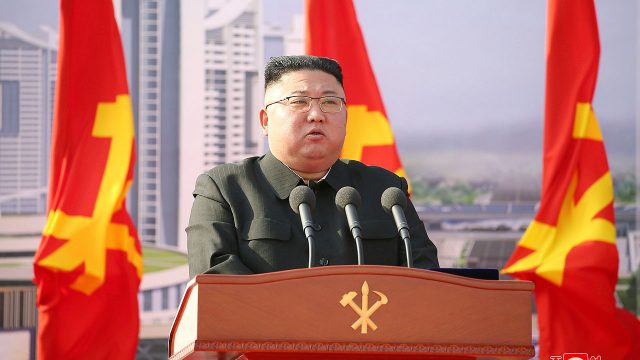
North Korea fires missile, accuses United States of ‘double standards’

KCNA VIA REUTERS

SEOUL — North Korea fired a missile towards the sea off its east coast on Tuesday, South Korea’s military said, as Pyongyang called on the United States and South Korea to scrap their “double standards” on weapons programs to restart talks.

The missile was launched from the central north province of Jagang at around 6:40 a.m. (2140 GMT), the South’s Joint Chiefs of Staff said. Japan’s defense ministry said it appeared to be a ballistic missile, without elaborating.

The latest test underscored the steady development of North Korea’s weapons systems, raising the stakes for stalled talks aimed at dismantling its nuclear and ballistic missile arsenals in return for US sanctions relief.

The launch came just before North Korea’s ambassador to the United Nations urged the United States to give up its hostile policy towards Pyongyang and said no one could deny his country’s right to self defense and to test weapons.

South Korea’s President Moon Jae-in ordered aides to conduct a detailed analysis of the North’s recent moves.

“We regret that the missile was fired at a time when it was very important to stabilize the situation of the Korean peninsula,” defense ministry spokesman Boo Seung-chan told a briefing.

The US Indo-Pacific Command said the launch highlighted “the destabilizing impact” of the North’s illicit weapons programs, while the US State Department also condemned the test.

‘DOUBLE STANDARDS’
At the U.N. General Assembly, North Korea’s U.N. envoy, Kim Song, said the country was shoring up its self-defense and if the United States dropped its hostile policy and “double standards,” it would respond “willingly at any time” to offers to talks.

“But it is our judgment that there is no prospect at the present stage for the US to really withdraw its hostile policy,” Mr. Kim said.

Referring to a call by Mr. Moon last week for a formal end to the 1950-53 Korean War, Mr. Kim said Washington needed to permanently stop joint military exercises with South Korea and remove “all kinds of strategic weapons” on and around the peninsula.

The United States stations various cutting edge military assets including nuclear bombers and fighter jets in South Korea, Guam and Japan as part of efforts to keep not only North Korea but also an increasingly assertive China in check.

Mr. Kim’s speech was in line with Pyongyang’s recent criticism that Seoul and Washington denounce its weapons development while continuing their own military activities.

Kim Yo Jong, the powerful sister of North Korean leader Kim Jong Un, has said the North is willing to improve inter-Korean ties and consider another summit if Seoul abandons its double standards and hostile policy toward Pyongyang.

“The conditions she suggested were essentially to demand that the North be accepted as a nuclear weapons state,” said Shin Beom-chul, a senior fellow at the Korea Research Institute for National Strategy in Seoul.

“Their goal is to achieve that prestige and drive a wedge between Seoul and Washington, taking advantage of Moon’s craving for diplomatic legacy as his term is running out.”

Mr. Moon, a liberal who has prioritized inter-Korean ties, sees declaring an end to the Korean War, even without a peace treaty to replace an armistice, as a way to revive denuclearization negotiations between the North and the United States.

However, Mr. Moon, who has been in office for a single term, faces sagging popularity ahead of a presidential election in March.

Hopes for ending the war were raised after a historic summit between Kim Jong Un and then US President Donald Trump in Singapore in 2018. But that possibility, and the momentum for talks came to nothing, with talks stalled since 2019. — Reuters

Pandemic pushes Chinese tech giants to roll out more courier robots

REUTERS

BEIJING — More than a thousand robots are set to join the delivery personnel ranks of Chinese behemoths Alibaba, Meituan and JD.com over the next year as the pandemic fuels demand for contactless services.

The firms expect to operate over 2,000 robots between them by 2022, up about four-fold from now, their executives said, encouraged also by falling costs of making robots.

Millions of couriers still deliver packages for as less as 3 yuan ($0.47) in China, but companies have been exploring the use of drones or box-like robots on wheels from as early as 2013 amid a labor crunch that has worsened due to the pandemic.

Beijing has also ordered firms to ensure rest periods for couriers as they scramble to meet rising demand and deadlines.

“The COVID-19 pandemic has been a big boost” for robot rollout plans, said Xia Huaxia, chief scientist at Meituan.

The food-delivery giant launched its robot service in Feb. 2020 when infections were high in Beijing, earlier than a planned end-year launch.

JD.com too brought forward its plans to launch its robot service, said Kong Qi, chief scientist of the e-commerce giant’s autonomous driving unit. It had targeted a June 2020 launch in Beijing, but started using the service in Wuhan in February as the central Chinese city was locked down.

“We want people and vehicles to work better together and not for vehicles to replace people. It is just in the most boring section of the delivery guy’s work that we will try to replace,” he said.

LIMITS VS BENEFITS
Still, human delivery personnel outnumber robots, which have limitations such as inability to climb stairs. Also, robots are only allowed on certain routes like in housing estates and school campuses because of speed limits and road conditions.

Robots also tend to be used to deliver less time-sensitive products like packages, rather than food.

“The efficiency is low for office areas where people are ordering a lot of food and parcels but the vehicle’s capacity is limited,” said 25-year-old Zhang Ji as she picked up a package delivered by an autonomous vehicle near her office in Beijing.

But proponents espouse long-term benefits of robots such as lower last-mile delivery costs. Researchers at the University of Michigan said fully and partially automated vehicles could cut delivery costs by 10−40% in cities.

Alibaba’s last-mile logistics vehicle has delivered over a million orders as of September to more than 200,000 consumers, the company said. It operates over 200 robots and plans to have 1,000 by March and 10,000 over the next three years.

COSTS ARE DOWN
Costs of making robots are down, said Wang Gang, vice president at Alibaba who is in charge of autonomous driving, mainly due to lower prices of lidar sensors that help measure distances and render images around vehicles.

Alibaba and JD.com said the cost of making their robots was below 250,000 yuan ($38,662) apiece and falling.

JD.com, which operates about 200 robots, plans to expand to some 1,000 units by the end of 2021.

Meituan sees the cost of making its robots at around 400,000 yuan this year, versus 600,000 yuan in 2020, Mr. Xia said.

Meituan’s robot will cost less than 200,000 yuan in 2025, which is when the industry will see mass-application of over 10,000 units of such robots, Xia said.

Meituan currently has around 100 delivery robots.

Delivery firms in other countries have also been testing robots. Russian’s Yandex and online food-ordering company GrubHub plan to start using driverless robots to deliver food on US college campuses.

“I hope robots can be used widely soon because it will make our life more convenient … it will also reduce face-to-face contact during the pandemic so we can be safer,” said 28-year-old Pan Hongju, a programmer in Beijing. — Reuters