Home Blog Page 7373

J&J shot raises fewer antibodies against Delta variant in study

REUTERS
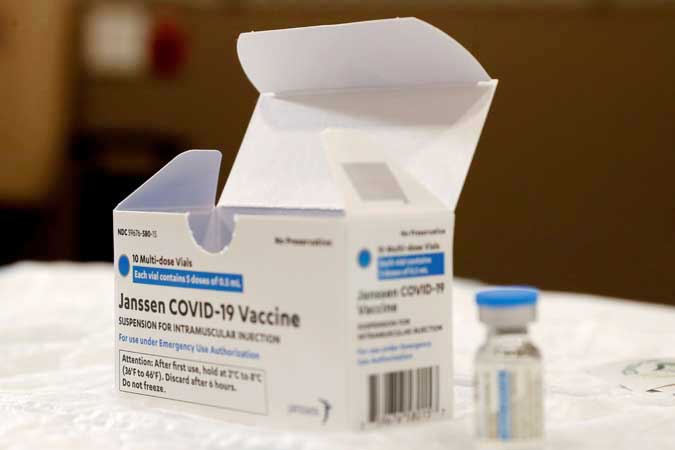
A VIAL of the Johnson & Johnson’s (J&J) coronavirus disease 2019 (COVID-19) vaccine is seen at Northwell Health’s South Shore University Hospital in Bay Shore, New York, March 3. — REUTERS

JOHNSON & JOHNSON’s single-dose COVID vaccine produced relatively low levels of antibodies against the Delta variant in a study, raising questions about how well the shot will hold up against the strain that accounts for the vast majority of US cases.

The laboratory study, released on the preprint server bioRxiv, hasn’t been published in a peer-reviewed journal and focuses on one key portion of the immune response, called neutralizing antibodies. New York University (NYU) scientists found that J&J’s vaccine produced roughly five-fold lower levels of the protective antibodies against the delta variant compared to the levels raised against an early coronavirus strain.

The delta variant accounts for 83% of genetically sequenced cases in the US, Centers for Disease Control and Prevention Director Rochelle Walensky said Tuesday in a Senate hearing. While two-dose messenger RNA vaccines from Pfizer, Inc. and Moderna, Inc. also produced fewer antibodies against the highly transmissible Delta strain, the reduction was less dramatic, the study found.

Compared to two shots of mRNA vaccines, the single-shot J&J vaccine “showed a more pronounced decrease in neutralizing titer against the variants, raising the potential for decreased protection,” the researchers from NYU researchers said in the study.

The study examined only one aspect of protection, J&J said in an email, and didn’t consider long-lasting responses among immune cells stimulated by its vaccine.

“The data do not speak to the full nature of immune protection” from the shot, spokesman Jake Sargent said. J&J’s vaccine has been shown to produce a strong immune response that lasts at least eight months after immunization, he said.

Earlier this month, J&J researchers said their own data indicated that the vaccine neutralizes the Delta variant and booster shots weren’t needed.

Study author Nathaniel Landau of NYU Grossman School of Medicine said the results of his study and J&J’s antibody analysis are not totally different. Both found a decreased level of antibodies, he said in an email.

“We just found a greater degree of decrease,” he said. — Bloomberg
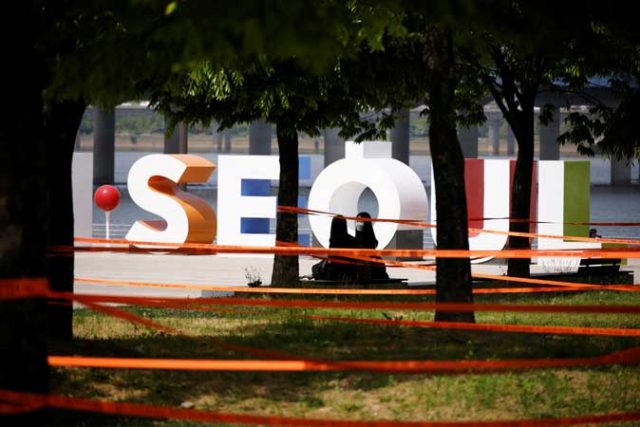
South Korea reports record daily infections as Delta variant drives surge

REUTERS

SEOUL — South Korea reported a daily record of 1,784 coronavirus cases for Tuesday, breaking a mark set last week, as the authorities struggled to get on top of a surge in outbreaks linked to the Delta variant.

Transmission rates have been kept relatively low across the country despite no lockdowns thanks in part to aggressive testing and tracing, but the fourth wave of infections is proving particularly hard to contain as the unvaccinated fall victim to the Delta strain.

Genetic analysis of 2,381 infections last week found nearly 40% were the Delta variant, the Korea Disease Control and Prevention Agency (KDCA) said on Tuesday. More than half the total 1,741 Delta variant cases since December were diagnosed last week.

Latest cases do not include at least 266 infections among sailors who were flown to Seoul on Tuesday after a navy destroyer patrolling the waters off Africa was found to be riddled with the coronavirus, Lee Ki-il, deputy minister of health care policy, told a briefing on Wednesday.

The new distancing curbs, introduced about ten days ago, haven’t been effective in containing the virus spread as the summer season has contributed to higher infections in beach vacation spot, said Lee.

The government last week put the capital Seoul and neighboring areas under a semi-lockdown, including a ban on gatherings of more than two people after 6 p.m., as more than 80% of the caseloads were found in the region.

New distancing rules are expected to be announced by Sunday.

Despite the record number of cases, South Korea has seen no significant increase in hospitalizations or deaths, with a mortality rate of 1.13% and the number of severe cases at 214 as of Tuesday.

Of the country’s 52 million people 32% have received at least one vaccine dose, with the government aiming to vaccinate 70% by September.

So far, South Korea has recorded 182,265 cases and 2,060 deaths. — Reuters

Insular Life offers VUL Health Packages for dread disease and hospitalization coverage

Healthcare spending in the Philippines could continue to rise as the country battles the pandemic. To ensure that there are funds to help shoulder health-related expenses and augment lost income due to hospitalization, Insular Life (InLife) came up with Variable Unit-Linked (VUL) Health Packages.

InLife’s VUL Health Packages are life insurance products with an investment component that should provide funds in case of sickness and hospitalization.

“Many Filipinos are trying to survive this pandemic. Many have to brave the streets and public transportation to go to work and provide for the family, even if they have yet to be vaccinated against COVID-19. Their immune systems may be compromised. For all of us, as we age and depending on our lifestyle, we become prone to health conditions such as high blood pressure, diabetes,  heart disease, stroke, among others. It is important that we prevent these from happening by taking care of our health. But in instances where sickness becomes unavoidable, it is best to be ready. This is what InLife’s Variable Unit-Linked (VUL) health packages are for,” said Gae L. Martinez, InLife’s Chief Marketing Officer said.

InLife’s VUL health packages are composed of two plans: Wealth Secure Health with premiums that start at P30,000 per year, and Wealth Assure Health with premiums that start at P80,000 per year. Both plans are life insurance products with investment component and have the dread disease, and hospitalization riders as supplementary contracts. The dread disease rider provides lump sum cash of up to a maximum of P10 million upon the diagnosis of any of the 59 covered illnesses. Meanwhile, the hospitalization rider gives daily allowance up to a maximum of P2,500 per day to replace lost income during the insured’s hospital stay.

InLife’s VUL health packages cover the insured until age 99 and give death benefits equal to the sum insured plus the fund value. They may be availed of by Filipinos aged 20 to 60 years old. As these are life insurance plans with an investment component, funds may be invested in the following: money market, fixed income, balanced, and equity-laced funds.

For inquiries on InLife’s VUL health packages, please visit http://www.insularlife.com.ph/wshealth, https://www.insularlife.com.ph/wahealth, or email e-mail inquiry@insular.com.ph to get in touch with an InLife Financial Advisor.


Central banks, wealth funds going greener and more activist — survey

UNSPLASH

LONDON — The coronavirus disease 2019 (COVID-19) pandemic is accelerating a shift by central banks and sovereign wealth and public pension funds to greener and more activist investment strategies, one of the largest annual surveys of their behaviors showed. 

The Global Public Investor survey by think-tank Official Monetary and Financial Institutions Forum (OMFIF) sampled 102 institutions overseeing a combined $7 trillion this year to track how the pandemic and other long-term trends are affecting them. 

The findings of the survey, seen by Reuters ahead of its publication on Wednesday, showed the scale and speed at which environmental, social and governance (ESG) factors were now driving investment decisions. 

“There has definitely been an acceleration due to COVID,” OMFIF’s Chief Economist Danae Kyriakopoulou said. 

“At the beginning [of the pandemic], we thought there would be a focus on the short-term, the quick boosts to recoveries. But actually there has been this realization that our financial systems are so vulnerable to things outside the financial world.” 

As well as a store of wealth for future generations, sovereign wealth funds are often used by countries during periods of upheaval. 

For the first time since OMFIF started asking about ESG, the majority in all three categories of global public investors (GPIs) said that they now implement it in some way. 

This differed widely between types of institution, with all pension funds implementing ESG criteria, compared with around two-thirds of sovereign funds and just over half of central banks. 

Central banks made up around 60% of OMFIF’s survey sample this year and while many don’t invest in equities or infrastructure projects, green bonds remain their most popular ESG option. 

Over a third of the banks asked in the survey now hold them, although some also said that liquidity and lack of supply of green bonds, especially in dollars, can be a headache. 

TIPPING POINT
The survey also showed a trend for more active ownership, especially among sovereign wealth and public pension funds. Rather than just excluding polluters, many funds are now specifically buying companies or projects that transition to more sustainable practices from dirtier or less responsible ones. 

There are still clear gaps though. The survey found that around 60% of GPIs didn’t use ESG benchmarks — a kind of shopping list of assets that they can and can’t own — and only 8% had their own bespoke benchmarks. 

An Invesco survey earlier this month found the majority of sovereign funds think financial markets are fully pricing in the long-term implications of climate change. 

Nevertheless, Ms. Kyriakopoulou pointed to one day in May when a Dutch court ordered Shell to lower its emissions faster, Exxon Mobil’s shareholders defied management to elect two new climate-conscious board members and Chevron’s shareholders went against its management to back emissions cuts. 

“Policy makers and investors should not be surprised by such rulings or decisions. Even though they are radical and mark a ‘tipping point’, it is clear that momentum for change has been building.” — Marc Jones/Reuters 

Australia, under lockdown, sees jump in COVID-19 cases 

REUTERS

SYDNEY — Australia’s two largest states reported sharp increases in new coronavirus disease 2019 (COVID-19) cases on Wednesday, a blow to hopes that lockdown restrictions would be lifted with more than half the country’s population under stay-at-home orders. 

New South Wales (NSW) state, home to the country’s most populous city Sydney, logged 110 new cases, up from 78 the day before, nearly four weeks into a lockdown of the city and surrounding areas to contain an outbreak of the virulent Delta variant. 

Victoria state clocked 22 new cases, from nine the day before, its biggest increase since the outbreak began this month, as it nears its second week of statewide lockdown. 

“Had we not gone into the lockdown a few weeks ago, the 110 number today would undoubtedly have been thousands and thousands,” said NSW Premier Gladys Berejiklian at a televised news conference. 

“But we need to work harder and, of course, all of us need to be on guard,” she added. 

Health leaders have said their greatest concern is the number of people active in the community before receiving their coronavirus diagnosis, and that the number should be near zero before lifting lockdown. 

Ms. Berejiklian said that number jumped to 43 on Wednesday, double the previous day, and that she could not say until the following week whether the city would exit lockdown by a July 30 target. 

Overnight, NSW added three regional centres some 250 km (150 miles) from Sydney to the list of areas under lockdown after a pet food delivery driver tested positive there, raising fears of local transmission. 

“We know every day who’s going to walk through the door, but even the locals that do come in, they’re buying for like four days, rather than buying for every single day,” said Cameron Cassel, a butcher in Blayney, population 3,000. 

Victorian authorities, meanwhile, said 16 of its 22 new cases were in quarantine during their infectious period, while exposure sites for the remaining six were “reasonably low.” 

“That is something that should give us all a degree of confidence and hope that this response… is working,” said Victorian Health Minister Martin Foley. 

A third state, South Australia, went into its first full day of a weeklong lockdown on Wednesday, and reported one additional case. 

‘MORE PFIZER’ 

A year and a half into the pandemic, some 13 million Australians are under hard lockdown, raising pressure on the federal government which has seen its polling at its lowest in a year due to a sluggish immunization program. Just over 11% of the population is fully vaccinated. 

The main vaccine in the government’s arsenal, developed by AstraZeneca Plc, has been recommended for use only for people aged over 60 by the country’s drug regulator due to a remote risk of blood clotting, while a vaccine made by Pfizer Inc has been restricted to over-40s due to limited supply. 

“We have done as much as is humanly possible but the issue is we need more vaccines, we need more Pfizer,” said NSW Health Minister Brad Hazzard. 

The restrictions have also hit some economic indicators which had roared back to pre-pandemic levels after the initial upheaval of early 2020. Retail sales in June dipped 1.8% from a month earlier, according to government figures, nearly four times the drop foreshadowed by economists. 

Prime Minister Scott Morrison, who has been criticized for saying last year that the vaccine rollout was “not a race,” went on local radio to defend the program, but acknowledged it was about two months behind plan. 

“I understand there is great frustration … but this latest Delta variant has thrown a completely new curveball on this issue, which every single country in the world is wrestling with,” Mr. Morrison told one radio station. 

Still, Australia has fared better than many other developed economies in keeping COVID-19 numbers relatively low, with just over 32,100 cases and 915 deaths. — Renju Jose and Byron Kaye/Reuters 

Central China’s Henan province swamped after heaviest rain in 1,000 years

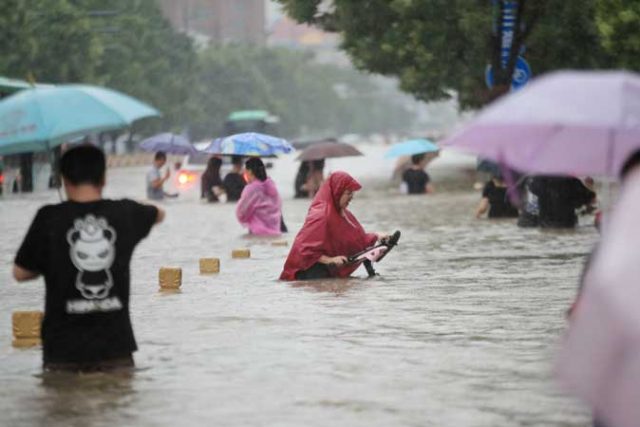
Residents wade through floodwaters amid heavy rainfall in Zhengzhou, Henan province, China July 20, 2021. — CHINA DAILY VIA REUTERS

BEIJING — Large swathes of China’s central Henan province were under water on Wednesday, with at least a dozen people dead in its capital Zhengzhou after the city was drenched by what weather watchers said was the heaviest rain in 1,000 years. 

With more rain forecast across Henan for the next three days, the government of Zhengzhou, a city of over 12 million on the banks of the Yellow River, said 12 people were reported to have died in a flooded subway line, while more than 500 were pulled to safety. 

Video on social media on Tuesday showed commuters chest-deep in murky floodwaters on a train in the dark and an underground station turned into a large, churning pool. 

“The water reached my chest,” a survivor wrote on social media. “I was really scared, but the most terrifying thing was not the water, but the diminishing air supply in the carriage.” 

Due to the rain, the authorities halted bus services, as the vehicles are powered by electricity, said a Zhengzhou resident surnamed Guo, who spent the night at his office. 

“That’s why many people took the subway, and the tragedy happened,” Guo told Reuters. 

From the evening of Saturday until late Tuesday, 617.1 millimeters (mm) of rain fell in Zhengzhou, about 650 km southwest of Beijing. That’s almost on par with Zhengzhou’s annual average of 640.8 mm. 

The amount of rainfall in Zhengzhou witnessed over the three days was one seen only “once in a thousand years,” local media cited meteorologists as saying. 

‘FLOOD PREVENTION DIFFICULT’
The lives of millions of people in Henan, a province with a population of around 100 million, have been upended in an unusually active rainy season that has led to the rapid rise of a number of rivers in the vast Yellow River basin. 

Many train services across Henan, a major logistics hub in central China, have been suspended. Many highways have also been closed and flights delayed or cancelled. 

Roads in a dozen cities have been severely flooded. 

“Flood prevention efforts have become very difficult,” President Xi Jinping said on Wednesday, addressing the situation in a statement broadcast by state television. 

Dozens of reservoirs and dams also breached warning levels. 

Local authorities said the rainfall had caused a 20-meter breach in the Yihetan dam in Luoyang city west of Zhengzhou, and that the dam “could collapse at any time.” 

In Zhengzhou, the local flood control headquarters said the city’s Guojiazui reservoir had been breached but there was no dam failure yet. 

About 100,000 people in the city have been evacuated to safe zones. 

SCHOOLS, HOSPITALS CUT OFF
Taiwanese technology giant Foxconn operates a plant on the outskirts of Zhengzhou, next to the city’s airport, that assembles iPhones for Apple. It said there was no direct impact on its facility, but had activated an emergency response plan. 

SAIC Motor, China’s largest automaker, said logistics at its Zhengzhou plant would see some short-term impact, while Japan’s Nissan said production at its Zhengzhou factory had been temporarily suspended. 

Zhengzhou’s transportation system remained paralysed, with schools and hospitals cut off by waterlogging. Some children have been trapped in their kindergartens since Tuesday. 

Residents caught in the flood had taken shelter in libraries, cinemas and even museums. 

“We’ve up to 200 people of all ages seeking temporary shelter,” said a staffer surnamed Wang at the Zhengzhou Science and Technology Museum. 

“We’ve provided them with instant noodles and hot water. They spent the night in a huge meeting room.” 

About 3 km away, the First Affiliated Hospital of Zhengzhou University — the city’s largest with over 7,000 beds — has lost all power, and even backup supplies were down. 

The hospital was racing to find transport to relocate about 600 critically ill patients. — Ryan Woo and Stella Qiu/Reuters

Britain to permanently deploy two warships in Asian waters

Dave Jenkins - InfoGibraltar/CC BY 2.0/Wikimedia Commons

TOKYO — Britain said on Tuesday it would permanently deploy two warships in Asian waters after its Queen Elizabeth aircraft carrier and escort ships sail to Japan in September through seas where China is vying for influence with the United States and Japan. 

Plans for the high-profile visit by the carrier strike group come as London deepens security ties with Tokyo, which has expressed growing alarm in recent months over China’s territorial ambitions in the region, including Taiwan. 

“Following on from the strike group’s inaugural deployment, the United Kingdom will permanently assign two ships in the region from later this year,” Britain’s defense minister, Ben Wallace, said in a joint announcement in Tokyo with his Japanese counterpart, Nobuo Kishi. 

After their arrival in Japan, Mr. Kishi said, the Queen Elizabeth and its escort ships would split up for separate port calls to US and Japanese naval bases along the Japanese archipelago. 

In a statement on the deployment, a Pentagon spokesperson congratulated Britain for its “commitment to an interconnected network of allies and partners, who mutually cooperate and support freedom of navigation and a rules-based order in the Indo-Pacific region.” 

A close US ally, Japan hosts the biggest concentration of US military forces outside the United States, including ships, aircraft and thousands of Marines. 

The British carrier, which is carrying F-35B stealth jets on its maiden voyage, will dock at Yokosuka, the home of Japan’s fleet command and the USS Ronald Reagan, the only forward deployed US aircraft carrier. 

The British ships will not have a permanent base, a spokesperson at the British Embassy in Tokyo said when asked which ports the Royal Navy ships would operate from. 

The Queen Elizabeth is being escorted by two destroyers, two frigates, two support vessels and ships from the United States and the Netherlands. 

It will come to Japan through the South China Sea, parts of which are claimed by China and Southeast Asian countries, with stops in India, Singapore and South Korea. 

In a further sign of Britain’s growing regional engagement, Wallace, who traveled to Japan with a delegation of military commanders, said the UK would also eventually deploy a Littoral Response Group, a unit of marines trained to undertake missions including evacuations and anti-terrorism operations. — Reuters

Multisectoral program aims to end PH malnutrition by 2030

PHLSTAR FILE PHOTO

Pilipinas Kontra Gutom, an anti-hunger coalition, launched a program that aims to feed children and educate mothers on proper nourishment. Called Kain Tayo Pilipinas, the multisectoral initiative hopes to end child malnutrition by 2030, in line with Sustainable Development Goals set up by the United Nations.

“Companies and non-government organizations (NGOs) have attempted to feed children, but it’s not sustainable,” said Kristine Alvarez-Go, project lead of Kain Tayo Pilipinas, at the virtual launch. “When they go home, they go home to families that can’t sustain nutrition due to lack of education and resources.” 

Educating a mother and teaching her to provide nourishment on a budget, said Ms. Alvarez-Go, automatically reaches at least three children. The initiative will focus on children in the first 1,000 days of their life (and not just schoolchildren as previous feeding programs did). 

“A child’s brain is 80% developed by age three. Between age zero to five is the important period where we can make the biggest impact,” she said. 

Cabinet Secretary and Task Force Zero Hunger Chairman Karlo Alexei B. Nograles highlighted the importance of ending involuntary hunger and malnutrition in the Philippines once and for all, citing a Social Weather Stations (SWS) survey that revealed 4.2 million Filipinos went hungry in 2020. 

He also emphasized that the multisectoral approach would be best for this initiative, with Pilipinas Kontra Gutom growing to almost 80 member companies from just six in November.  

Echoing Mr. Nograles’s call for collaboration, Ms. Alvarez-Go said: “In the past, each private, public, or government agency or foundation would operate in isolation. We each do our own program, mostly feeding, some education, some reaching kids, some reaching mothers too, but the programs we all work on separately have a high chance of duplication.” 

By tracking each organization’s programs, she reported that Kain Tayo Pilipinas had identified 49 critical areas across the Philippines, with 22 of them already serviced by member companies. The remaining 27 areas can be moved or allocated to members.

“The essence and beauty of this project is the fact we are all coming together. We have 80 members now but we can always use more,” Ms. Alvarez-Go said. “And we’re not asking you to change your existing program. We are accepting all programs already out there. We just want to make it even stronger.” — Brontë H. Lacsamana

Countries make COVID-19 vaccines mandatory

REUTERS

A sharp upturn in new coronavirus infections due to the highly contagious Delta variant and a slowdown in vaccination rates have pushed governments to make coronavirus disease 2019 (COVID-19) jabs mandatory for health workers and other high-risk groups. 

A growing number of countries also stipulate that a jab, or a negative test, will be needed for dining out, among others. 

Here are some countries’ vaccine mandates: 

AUSTRALIA 

Australia decided in late June to make COVID-19 vaccinations mandatory for high-risk aged-care workers and employees in quarantine hotels. 

It has also made vaccinations obligatory for Paralympic athletes heading to Tokyo because unvaccinated members on the team could pose a health risk. 

BRITAIN 

It will be mandatory for care home workers in England to have coronavirus vaccinations from October. 

English nightclubs and other venues with large crowds will require patrons to present proof of full vaccination from the end of September. 

CANADA 

Canadian Treasury Board Secretariat said on July 20 it was considering whether COVID-19 vaccines should be required for certain roles and positions in the federal government, according to CBC. 

FRANCE 

All health workers in France must get COVID-19 jabs and anyone wanting to get into a cinema or board a train will need to show proof of vaccination or a negative test under new rules announced by President Emmanuel Macron on July 12. 

The government said on July 19 that the planned 45,000 euro fine for businesses that do not check that clients have a health pass will be much lower, starting at up to 1,500 euros and increasing progressively for repeat offenders. Fines will not be imposed immediately. 

GREECE 

Greece on July 12 made vaccinations mandatory for nursing home staff with immediate effect and healthcare workers from September. As part of new measures, only vaccinated customers are allowed indoors in bars, cinemas, theatres and other closed spaces. 

INDONESIA 

Indonesia made COVID-19 inoculations mandatory in February, with capital Jakarta threatening fines of up to 5 million rupiah ($357) for refusing the vaccine. 

ITALY 

A decree approved by the Italian government in March mandates that health workers, including pharmacists, get vaccinated. Those who refuse could be suspended without pay for the rest of the year. 

KAZAKHSTAN 

Kazakhstan will introduce mandatory COVID-19 vaccinations or weekly testing for people working in groups of more than 20, the health ministry said on June 23. 

POLAND 

Poland could make vaccinations obligatory for some people at high risk from COVID-19 from August. 

RUSSIA 

The Russian capital has unveiled a plan requiring 60% of all service sector workers to be fully vaccinated by Aug. 15, according to the Moscow Times

Moscow residents no longer have to present a QR code demonstrating they have been vaccinated or have immunity in order to sit inside cafes, restaurants and bars from July 19. 

SAUDI ARABIA 

In May, Saudi Arabia mandated all public and private sector workers wishing to attend a workplace get vaccinated, without specifying when this would be implemented. 

Vaccination will also be required to enter any governmental, private, or educational establishments and to use public transportation as of Aug. 1. 

Saudi citizens will need two COVID-19 vaccine doses before they can travel outside the kingdom from Aug. 9, state news agency SPA reported on July 19, citing the ministry of interior. 

TURKMENISTAN 

Turkmenistan’s healthcare ministry said on July 7 it was making COVID-19 vaccination mandatory for all residents aged 18 and over. — Reuters

Paranaque City taps MultiSys to deliver more online services for Paranaque residents, businesses

Paranaque City Mayor Edwin Olivarez (left) and MultiSys CEO & Founder David Almirol (right) during the recent Memorandum of Agreement signing and courtesy call at the Paranaque City Hall.

The City of Paranaque has tapped leading software solutions company Multisys Technologies Corporation to give a boost to its online services amid the Covid-19 pandemic.

The initiative is in fulfillment of the City Ordinance Number 2020-05 or the Electronic and Online Payment Collection System, which seeks to provide Paranaque residents and businesses cashless, contactless and paperless transactions with the city local government unit (LGU).

Paranaque citizens and enterprises can now settle their business taxes online, at the comfort of their homes or offices, through the Paranaque Business Permits and Licensing System. In the coming months, the payments for Real Property Tax, Local Civil Registry, Community Tax Certificate (CEDULA), Clearances, Health Certificates, and other government pre-requisites will also be available in the system.

Further, the City has also fortified its No Contact Apprehension Site, which will soon include various online payment options for motorists with Notice of Violation (NOV). Motorists only need to type in their plate number or conduction sticker to verify or check for any possible traffic violations. The actual NOV will be delivered and once received, the violator have the option to pay online the said violation fees through the “Multipay” E-payment facility.

Paranaque City Mayor Edwin Olivarez said that the LGU is also planning to setup kiosk machines in designated areas at the city hall, various government offices such as barangay halls and private establishments.

Olivarez added that the LGU is undertaking this initiative to make payment transactions safer, more convenient and accessible.

“One of our top priorities this 2021 is to transition citizen and government transactions online, not only because of the imminent dangers out there due to the pandemic, but because we believe that we must adapt to the changing times—to do things efficiently, save money and provide convenience. We hope that our constituents will make use of these technologies that we’re now offering and we’re confident that we will receive their usual support,” Olivarez said.

In the past years, Paranaque’s newest technology partner for this initiative, MultiSys, has shown expertise in advancing the transformation of various cities and municipalities into a Smart City. Its Smart City project is a flagship program launched in 2019 to help LGUs and government agencies provide convenient and efficient online services to everyone. It is set to roll out similar technologies to over 50 LGUs nationwide.

North-South rail, subway trains to start arriving in December

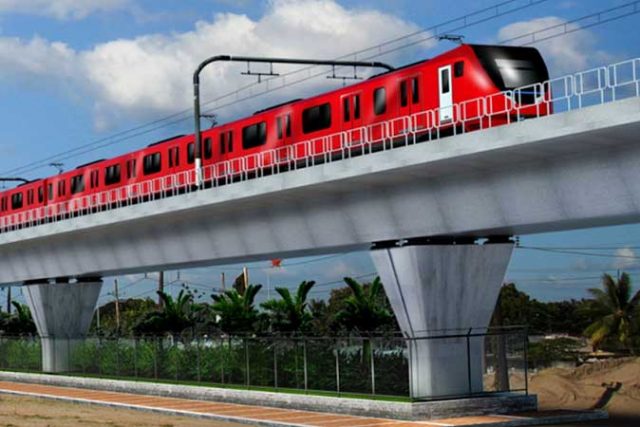
THE TRAIN sets for the North-South Commuter Railway (NSCR), which will also be used for the section of the Metro Manila Subway Project (MMSP) that will be initially operational, will start arriving in the Philippines in December. 

“NSCR trains will start arriving in December 2021, and it will be the NSCR trains that are intended to be initially used in MMSP’s partial operability section,” Transportation Undersecretary Timothy John R. Batan said in a statement to BusinessWorld on July 19. 

He said the Metro Manila Subway and the North-South Commuter Railway are designed to be “physically interoperable.” 

The Transportation department started seeking bidders for the tunneling works contract connecting the North-South Commuter Railway Project to the Metro Manila Subway Project via a station in Taguig City in April. The deadline for submission of bids was set for July 8. 

The package covers the construction of the commuter railway’s FTI Station in Taguig and tunneling works to connect the project to the Senate Station, which is also in Taguig, of the Metro Manila Subway Project. 

The 148-kilometer North-South Commuter Railway Project is financed by the Asian Development Bank. It will run from Clark in Central Luzon to Calamba, Laguna.  

The NSCR will have 37 stations and 464 train cars. It is expected to accommodate about 830,000 passengers per day once fully operational. 

The Transportation department said the NSCR “encompasses three railway projects, including the PNR (Philippine National Railways) Clark Phase 1 (Tutuban – Malolos), which is a 38-kilometer rail line that will connect Tutuban, Manila to Malolos, Bulacan, and is projected to reduce travel time from approximately one hour and 30 minutes to just 35 minutes.” 

As for the subway project, Transportation Secretary Arthur P. Tugade has said he will continue to press the government’s private partners to finish the portion of the subway due to open for partial operations by December. 

The Metro Manila Subway will have 17 stations: East Valenzuela, Quirino Highway, Tandang Sora, North Avenue, Quezon Avenue, East Avenue, Anonas, Katipunan, Ortigas, Shaw, Kalayaan Avenue, Bonifacio Global City, Lawton, Senate, FTI, NAIA Terminal 3, and Bicutan. 

The government broke ground on the first three stations in February 2019 after the Transportation department signed a P51-billion deal with the Shimizu joint venture, which consists of Shimizu Corp., Fujita Corp., Takenaka Civil Engineering Co. Ltd., and EEI Corp. 

The Philippines and Japan signed in March 2018 the first tranche of the P355.6-billion loan for the subway project.   

PSA expects to meet ID registration goal of 50-70 million this year

ROBINSONS/BW FILE PHOTO

THE PHILIPPINE Statistics Authority (PSA) said it is on track to meet its national ID registration target of 5070 million by years end. 

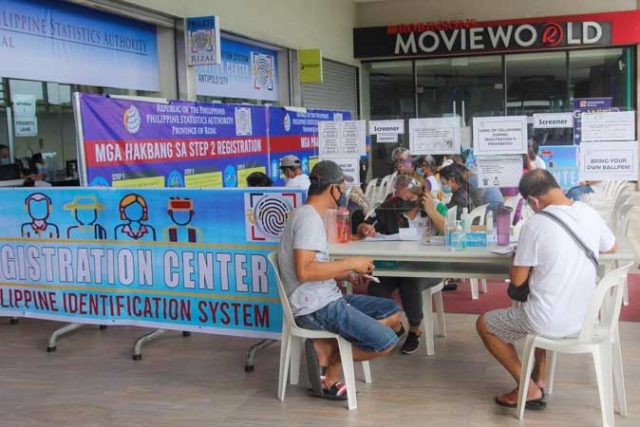
The PSA is on track to hit the 50-70 million registration for 2021. The PSA registration teams, all over the country, are registering about 250,000 registrants per day in 81 provinces and the five provincial offices of the NCR (National Capital Region), PSA Undersecretary Dennis Clare S. Mapa said in a text message Tuesday. 

He said the target is to complete both the demographic and biometric registration processes within the year for the program, which is known as the Philippine Identification System (PhilSys). 

As of July 16, the agency was able to complete 38.157 million step 1 registrations through house-to-house visits and visits online platform. 

The first step captures demographic data on registrants. They are then scheduled for the next step, which is biometrics collection at designated sites. 

The PSA has recorded the biometrics of 19.257 million registrants. 

A parallel effort to get more citizens to open bank accounts saw the opening of 4.87 million accounts with Land Bank of the Philippines, which maintains a presence at the registration centers. 

Mr. Mapa said the PSA and the central bank have completed printing 2.1 million national ID cards so far and released 1.82 million to the Philippine Postal Corp. for delivery. 

Republic Act 1105, signed in 2018, established PhilSys as the national ID, with the intent of serving as the single ID in lieu of the multiple other forms of ID deemed acceptable for transactions like opening bank accounts. 

The government also hopes to broaden financial inclusion by making opening bank accounts easier. 

The Bangko Sentral ng Pilipinas last month ordered banks to accept the national ID as a sole proof of identity for those wanting to open accounts. 

The national ID is also expected to help the government with its social programs. The lack of a centralized identification system was blamed for the slow distribution of cash aid to poor households last year. — Beatrice M. Laforga