Home Blog Page 7217

Filipino para-powerlifter Guion out of Tokyo Games

Para-powerlifter Achele Guion will not be able to compete in the World Paralympic Games in Tokyo after testing positive for COVID-19.

The Philippine Paralympic Committee (PPC) formally made the announcement on Tuesday in a statement after breaking the news on Sunday as Team Philippines departed for Japan.

“Jinky (Guion) is deeply frustrated that she will not be able to compete in her powerlifting event for her country after training for so long, and especially getting much inspiration from Hidilyn Diaz, a powerlifter like herself and the first Filipino to win an Olympic medal,’’ said PPC President Michael Barredo in the statement.

Apart from Ms. Guion, also testing positive was her coach Antonio Taguibao, team Chef de Mission Francis Diaz and para-athletics coach Joel Deriada.

Their positive results were known before the team left for Tokyo at the weekend and they were no longer allowed to join the contigent for the trip.

With the unexpected turn of events, Mr. Barredo took over as chef de mission in the absence of Mr. Diaz to implement tasks involving planning, logistics, and communications, among others, for the team’s orderly navigation in the Paralympics.

“Despite this most unfortunate development, all our para-athletes remain in high spirits and committed to giving their best possible performances to bring honor and glory for our country. Tuloy ang laban. Mabuhay ang atletang Pilipino,’’ said Mr. Barredo, who will likewise function as the head of the delegation of Team Philippines.

The Tokyo Paralympic Games kicked off on Tuesday and will take place until Sept. 5. MASM

With win streak at 10, Yankees seek sweep of Braves

THE New York Yankees will shoot for their 11th straight win, a height they haven’t reached in 36 years, when they finish a two-game series in Atlanta on Tuesday.

New York beat the Braves (5-1) on Monday, ending Atlanta’s nine-game winning streak. The Yankees now have their seventh 10-game winning streak since producing an 11-game run late in the 1985 season.

It was a positive start to the Yankees’ nine-game, 10-day road trip that will head to the West Coast for a four-game series against the Oakland A’s and three against the Los Angeles Angels.

Giancarlo Stanton continued his torrid hitting in the opener against the Braves with a double, a homer and three RBIs. He has reached base safely in 20 consecutive games and is batting .329 (23-for-70) during that streak with five home runs and 18 RBIs.

“He’s a big dude,” Atlanta manager Brian Snitker said. “If he gets a piece of it, he has a chance to hit it out.”

New York’s Aaron Judge was 2-for-4 on Monday to extend his on-base streak to 16 games. Judge is batting .321 (18-for-56) with 11 runs, five homers and 14 RBIs during that span.

“Hopefully, that’s what we can start to do more and more — the weight of the lineup, the quality of the at-bats up and down,” New York manager Aaron Boone said. “You’re not always going to break through the first time or the second time in a given game, but the more we can have those quality at-bats time and time again, you give yourself a chance to break through and have a big inning.”

The pitching matchup for Tuesday features New York left-hander Andrew Heaney (8-8, 5.51 ERA) against veteran Atlanta right-hander Charlie Morton (12-4, 3.47).

Heaney will make his 23rd start of the season and fifth with the Yankees since being acquired from the Angels. His latest outing came on Wednesday against the Boston Red Sox, when he allowed one run on two hits over a season-high-tying seven innings. He has never faced the Braves.

Morton made his most recent start on Wednesday at Miami, where he beat the Marlins after giving up two runs over six innings. He struck out nine, matching his second-highest total of the season. Morton has not allowed more than three runs in any of his past eight starts.

In 11 career starts against the Yankees, Morton is 4-2 with a 3.59 ERA. He faced New York in the Bronx on April 20, when he ended up with a no-decision after allowing one run in six innings.

Atlanta will oppose a left-handed starter for the second night in a row. They had a 10-game winning streak against lefties snapped on Monday when Jordan Montgomery beat them with five innings of one-run ball. New York then got four shutout innings from its bullpen.

The Yankees were encouraged by the perfect ninth inning thrown by Aroldis Chapman, who missed 12 games with elbow inflammation before returning on Wednesday. Chapman looked sharp in a non-save situation on Monday, throwing strikes on eight of his 11 pitches. Chapman needs one save to become the 31st pitcher to reach the 300 milestone. — Reuters

Liverpool refuses to release Salah for Egypt’s World Cup qualifiers

LIVERPOOL have refused to allow Mohamed Salah to travel to Africa for World Cup qualifiers with Egypt next month because he would be forced to quarantine on his return to England, the Egyptian Football Association (EFA) said on Monday.

It opens up the possibility of similar refusals from other European clubs ahead of next month’s World Cup qualifiers in Africa, Asia, the CONCACAF region, Europe and South America, and puts them on a potential collision course with International Federation of Association Football (FIFA).

A statement from the EFA said Liverpool had apologized for not allowing the Egypt captain to travel home for their Group F qualifier against Angola in Cairo on Sept. 2 and the trip to Gabon three days later.

“The Egyptian Football Association had received a letter from Liverpool apologizing for the inability of its player, Mohamed Salah, to join the national team for next month’s African qualifiers for the World Cup.

“The English club’s letter referred to the precautionary measures applied in England to confront the outbreak of the coronavirus, which forces returnees from some countries to compulsory health isolation for a period of 10 days upon their return to England.

“In its letter, the English club also expressed its hope that the Egyptian association would understand that it was forced to do so, in the face of the player being subjected to a quarantine,” the EFA statement added.

The club have made no comment but the Liverpool Echo newspaper on Monday said the European Club Association, of which Liverpool are members, have agreed a collective position in refusing to release players for international duty next week should they have to quarantine on their return.

It could also affect Liverpool’s Brazilian trio of Roberto Firmino, Alisson Becker and Fabinho, who have been called up for next month’s qualifiers against Chile, Argentina and Peru.

FIFA has scrapped the exemption introduced last year, amid the coronavirus disease 2019 (COVID-19) pandemic, which allowed clubs to refuse to release players for international duty should travel restrictions be imposed or there be a mandatory period of quarantine or self-isolation of at least five days on their return.

“The temporary amendment was in place until April 2021 and is no longer currently in effect nor is it intended to be applied for September,” a spokesman for FIFA, world soccer’s governing body, told Reuters.

“Since the outset of the pandemic, FIFA has continued to work in close cooperation with the confederations, member associations and respective authorities, monitoring the different restrictions and exemptions around the world.

“The regulations have reflected this process, as best as is possible at the global level. FIFA is confident that the situation will continue as it was the case in June for qualifiers and final continental tournaments and that players will be able to travel to play with their national teams and return to play with their clubs,” it added. — Reuters

US Open to offer record overall purse, winners’ payout down

THE US Open will offer total prize money of $57.5 million this year, eclipsing the record payout of $57.2 million set in 2019, tournament organizers said on Monday.

The event was held without spectators last year, with the United States Tennis Association (USTA) lowering the prize money to $53.4 million due to lost revenue.

Despite the overall increase this year, prize money for the two singles winners has come down from $3 million to $2.5 million, with the runner-up cheque also reduced to $1.25 million, a decrease of $50,000 from 2020.

“Last year was a very difficult year for all of us, and the pandemic had a profound impact on the USTA’s financial health,” said USTA CEO and Executive Director Mike Dowse.

“Yet we worked — and continue to work — extremely hard to ensure that tennis would continue to thrive for the long-term at every level, and that work led to more than four million new and returning players participating in tennis in 2020.”

First-round payouts go to $75,000, a jump of 23% from 2020, while second-round prize money rises to $115,000 from $100,000.

The USTA added that prize money has also been bumped up in the doubles, mixed doubles and wheelchair events.

The US Open, which will welcome back fans this year, starts on Aug. 30. — Reuters

Ex-El Salvador soccer chief pleads guilty in FIFA corruption probe

NEW YORK — The former president of El Salvador’s soccer federation pleaded guilty on Monday to a racketeering conspiracy charge arising from a global soccer corruption probe involving the payment of bribes to stage and broadcast matches.

Reynaldo Vasquez, 65, the former president of the Federacion Salvadorena de Futbol (FESFUT), or the Salvadoran Football Federation, entered his plea through a translator before US District Judge Pamela Chen in Brooklyn.

Vasquez acknowledged receiving a $350,000 bribe in 2012 from Miami-based Media World, which brokers rights to broadcasts targeting Spanish speakers, to induce FESFUT to arrange media and marketing rights to qualifier matches for the 2018 World Cup.

He said some of it was forwarded to a co-conspirator at Media World, describing himself as a “conduit.”

Vasquez also admitted to being part of a scheme, including an alleged $10,000 bribe, to arrange friendly matches involving El Salvador’s men’s national soccer team.

“My participation in the bribery was wrong,” Vasquez said. “I have come to understand that the way things were done for those transfers was indeed incorrect.”

Prosecutors said Vasquez could face 33 to 41 months in prison under recommended federal guidelines, though Chen said deportation “would appear a certainty at this point.”

Vasquez also agreed to forfeit $360,000 and multiple bank accounts.

He has lived under home detention since being extradited in January from El Salvador, where he had been serving an eight-year sentence for fraud.

The defendant’s sentencing is Dec. 16. His lawyer declined to comment.

Vasquez led FESFUT in 2009 and 2010.

FIFA, soccer’s world governing body, banned Vasquez for life and fined him 500,000 Swiss francs in October 2019 after an internal ethics committee found him guilty of bribery.

Since the US Department of Justice unveiled the corruption probe in 2015, more than 40 defendants have been criminally charged. Twenty-seven people and four corporate entities have pleaded guilty, and two people were convicted at trial. — Reuters

McGee views

It was a simple question, and 13-year veteran JaVale McGee gave a simple reply, as was his want and in keeping with his character. “I would probably say LeBron the first year I was on the Lakers,” he said. Seemingly nothing out of the ordinary, and innocent enough in response to an entry on the Ask Me Anything session hosted by Bleacher Report over the weekend. In an era where social media reigns and even pregnant pauses are parsed for messages, however, his punctuation-free answer showed legs due as much to the candor it reflected as to the controversy it generated.

Perhaps the query was, as McGee noted in the face of the ensuing interest, “click bate (sic) [that] skew[ed] the narrative.” After all, it asked him, “Who did you enjoy playing with more: LeBron or Steph?” Then again, the fact that he took the bait is on him, and him alone. Given his active presence on Twitter and Instagram, he should have known that his answer — any answer, really — would hog headlines. Never mind that he made a distinct qualification that ties it to the 2018-19 season, when he notably posted career-high stats.

That McGee would choose his experience as a Laker at a time when the franchise failed to even make the playoffs speaks volumes of his mind-set. He played with James anew the following year, which ended with him grasping the Larry O’Brien Trophy in the bubble. And he played with Curry the previous two years, which likewise yielded titles. Clearly, he paid significance to the extent of his contributions on the court, the outcomes notwithstanding.

For the record, McGee touched on a variety of subjects during the AMA also graced by Hall of Famer Pam McGee in recognition of their status as the first mother-son pair to bring home Olympic gold medals. At one point, he noted that the Warriors “do it right. They make it feel like family. They make sure everything is ok at home and good with you. Outside of basketball, they’re really meticulous about things like that, so I think that’s why they had so much success.” In other words, he enjoyed his time in yellow and blue, thank you very much.

In any case, McGee views neither James nor Curry as the most influential player in his career. He disclosed that he considers Andre Iguodala to be his “biggest mentor;” his Warriors teammate, he said, “taught me to be more of a professional when it comes to not just basketball, but investing and off-the-court things. He really helped me.” And just so it’s clear to all and sundry, he tweeted video of himself acknowledging that he’s “blessed. Can’t complain about a damn thing, man.” Enough said.


Anthony L. Cuaycong has been writing Courtside since BusinessWorld introduced a Sports section in 1994. He is a consultant on strategic planning, oprerations and Human Resources management, corporate communications, and business development.

Aspiring for high-income status

MACROVECTOR-FREEPIK

(Part 1)

Arecent Leader (Editorial) in the prestigious economic weekly publication The Economist (July 31) provokes some very important questions about our long-term economic future. Is the Philippines among the emerging markets who are doomed to fail in attaining high-income status in the coming decades? Have our failed responses to the pandemic sealed our fate of forever being a lower or even upper-middle income country? Are we among those developing economies to which the opening paragraph of the Leader refers: “At the start of the century, developing economies were a source of unbounded optimism and fierce ambition. Today South Africa is reeling from an insurrection, Colombia has suffered violent protests and Tunisia faces a constitutional crisis. Illiberal government is in fashion. Peru has just sworn in a Marxist as its president and independent institutions are under attack in Brazil, India and Mexico.”

The optimism about the emerging markets was especially aroused at the beginning of the Third Millennium by a thesis proposed by Jim O’Neill, global economist at Goldman Sachs. He coined the acronym BRIC (Brazil, Russia, India, and China) as he forecasted that these four large countries could be the most dominant economies by the year 2050. In 2003, these countries encompassed over 25% of the world’s land coverage and 40% of the world’s population, holding a combined GDP (in Purchasing Power Parity terms) of some $20 trillion. At the beginning of the 21st century, these four countries were among the biggest and fastest-growing emerging markets.

The acronym BRIC became a by-word among economists and business people. All four had changed their political systems to embrace market-oriented policies and global capitalism. Goldman Sachs predicted that China and India, respectively, would become the dominant global suppliers of manufactured goods and services, while Brazil and Russia would become similarly dominant as suppliers of raw materials. The euphoria about emerging markets spilled over to other smaller countries. Goldman Sachs added another 11 emerging markets (called the Next 11) to the list of highly promising economies that can possibly make the leap to at least upper-middle incomes, if not high-income, economies. These were Bangladesh, Egypt, Indonesia, Iran, Mexico, Nigeria, Pakistan, the Philippines, South Korea, Turkey, and Vietnam. All these, except South Korea that is already a high-income economy, are today still middle-income countries. The $60-question is whether or not they will ever graduate to high-income status or will they fall into the so-called middle-income trap which we shall discuss later in this series of articles.

It may be noted that among these 11, only Vietnam, Indonesia, and the Philippines (VIP) are included from among the 10 ASEAN countries. A common denominator among these three is their large populations, a distinctive advantage as incomes rise because the domestic market can be the main engine of growth in contrast with small economies that are overly dependent on exports, such as Singapore and Hong Kong. In fact, a major reason why the Philippines will be able to sustain 6-7% growth annually for many years after we recover from the pandemic is that our main engine of growth is the domestic market of 110 million (and rising) consumers whose expenditures account for more than 70% of our GDP. It may also be pointed out that China’s growth today is mainly propelled by domestic consumption rather than by exports.

In 2009, the leaders of the BRIC nations held their first summit and in 2010 BRIC became a formal institution. South Africa began efforts to join the BRIC grouping and, on Dec. 24, 2010, in a meeting in China, it was invited to join BRICS. With the addition of South Africa, BRICS evolved into a political organization as its inclusion was clearly for political correctness. Jim O’Neill, the originator of the BRIC concept, actually did not agree with the inclusion of South Africa because he rightly perceived that South Africa, at a population of under 50 million, was just too small as an economy to join the BRIC ranks. Countries like Mexico, Pakistan, or Indonesia would have been more worthy candidates.

What is happening now, as lamented by the editorial of The Economist cited above, is not the first time that the hopes about emerging markets are being dashed. The dream about BRIC did not last long. Somewhere along the way, Russia and Brazil mismanaged their finances and today are no longer touted as attractive emerging markets. The Russian financial crisis of 2014-2016 was especially severe. It was mainly the result of a sharp devaluation of the Russian ruble beginning in the second half of 2014. The crisis adversely affected the Russian economy, both consumers and business enterprises, as well as the regional financial markets. The Russian stock market, in particular, experienced large declines, with a 30% drop in the RTS index from the beginning of December through Dec. 16, 2014.

During the financial crisis, the Russian State turned once again to socialistic practices by taking over the ownership of private enterprises, with 60% of productive assets ending up in the hands of the government. Something very similar has happened in Brazil. That is why Goldman Sachs, the originator of the BRIC concept, has since quietly closed down its BRIC fund after losing 88% of its asset value since 2010. Now, the Bank is channeling the fund into other emerging markets, especially in Asia. As pointed out by the head of emerging markets for Morgan Stanley Investment Management, Ruchir Sharma, in his book Breakout Nations, it is hard to sustain rapid growth for more than a decade. Can the Philippines return to its trajectory of growing at 6-7% in GDP, a feat it was able to accomplish during close to a decade before the pandemic struck?

From 2010 to 2019, the Philippine GDP was growing at an annual average of 6-7%. Such above-average performance merited for the Philippine economy kudos from a good number of international think tanks, financial institutions, and multilateral organizations. In fact, the World Bank summarized these complimentary assessments by noting in a Report on the Philippines in June 2020 that the Philippines before the pandemic was one of the most dynamic economies of the East Asia Pacific region, having sustained an average annual growth in GDP of 6.4% for a decade before the pandemic.

Will the post-pandemic world be a repeat of the first two decades of this present century when promising emerging markets like Russia, Brazil, and South Africa went from boom to bust? Will the following assessment of The Economist apply to the Philippine economy (despite our special mention as a success story): “This golden age now looks as if it has come to a premature end. In the 2010s the share of countries catching up fell to 59% (from 82%). China has defied many doomsayers and there have been quieter Asian success stories such as Vietnam, the Philippines and Malaysia. But Brazil and Russia have let down the BRICS and, as a whole, Latin America, the Middle East and sub-Saharan Africa are falling further behind the rich world. Even emerging Asia is catching up more slowly than it was.”

As the Philippine economy recovers its 6-7% annual growth of GDP in 2022 and beyond, it will surely graduate from lower-middle income to upper-middle income category. But there is the well-known phenomenon of the “middle income trap.” Is it inevitable that because of our weaknesses, we will fall into this trap and, like all Latin American countries that attained middle-income status in the last century, be forever caught in this trap and fail to transition to a high-income economy as South Korea and the other tiger economies of East Asia did in the last century? We shall try to answer these questions in the future parts of this series.

To be continued.


Bernardo M. Villegas has a Ph.D. in Economics from Harvard, is Professor Emeritus at the University of Asia and the Pacific, and a Visiting Professor at the IESE Business School in Barcelona, Spain. He was a member of the 1986 Constitutional Commission.

bernardo.villegas@uap.asia

A legacy of far-reaching initiatives

FREEPIK

As the COVID-19 pandemic continues to ravage societies and economies, Philippine society is currently confronted by an information crisis characterized by widespread disinformation and misinformation. The political and economic predicaments borne by these conditions reinforce the democratic decline being experienced by established, developing, and fledgling democracies.

The countervailing factor a decade ago, however, points to the philosophy of “Daang Matuwid” (Straight Path), that was espoused by the Aquino Administration. As I have argued, this guiding principle was able to set the appropriate political, economic, and social environment for the promotion of information integrity and democratic values.

It is in this spirit that the Stratbase Albert del Rosario Institute, in collaboration with the Aquino Foundation, hosted the virtual town hall discussion “Looking Back to Build Forward: Lessons from Aquino’s Reforms” on Aug. 20.

Four major and notable arguments were raised in the webinar. For one, principled leadership and good governance redounds to economic success, wherein the Philippines was able to earn the status of a resurgent economy.

A good case in point is the “Good Governance Reform and Anti-Corruption Program.” According to former Secretary Rogelio “Babes” Singson of the Department of Public Works and Highways (DPWH), they adopted a management mantra that is comprised of 3Rs — Right Projects, Right Cost, Right Quality. After presenting it to President Aquino, two more Rs were added: Right on Time, and Implemented by the Right People. The whole initiative effected an organizational change in the DPWH and in the implementation of its operations.

Another exemplar of principled leadership was the philosophy of “Walang mahirap kung walang corrupt” (There are no poor when there is no corruption). Former Cabinet Secretary and Secretary of Energy Jose Rene Gregory Almendras expressed that this motto was not a mere campaign slogan. According to him, President Benigno Aquino, from the get-go, “wanted to make a dent in people’s lives and, as he said, ‘I hope to leave a better situation than what I inherited.’”

Referring to job generation, Almendras further emphasized that “The drive to address poverty was not about dreams or talks up there, very macro, no… This was all part of balancing the challenge of where you put the money… we prepared a plan that said wherever you put the money in, it always resulted in human development, poverty reduction, economic development, and national development.”

The second argument refers to the important role of infrastructure. By using key result areas, roadmaps, systems analysis, and integration of data in planning, infrastructure projects were undertaken with clear implementational standards.

As conveyed by Singson, they were able to painstakingly develop the infrastructure budget. According to him, “when we started with 2011, we’re practically scraping [the bottom of] the barrel and we just started with P146 billion for the infrastructure for the whole government which accounted only for 1.8% of GDP. But, by the time we left in 2016, we were able to ramp this up to as much as 5% of GDP and the budget for infrastructure was already at P759 billion. All told during the six years, we spent P2.4 trillion.”

Seeing as the gaps in our national roads were being caused by partisan party politics and resulted in what was described as “our national roads were broken up into political dynasties or political areas,” Singson said they had to “upgrade to higher standards and safer roads. By the time, as of Dec. 31, we already had paved almost 100% of almost all primary national roads, 90% of secondary roads, and tertiary at 80%.”

Needless to say, projects under the High Standard Highway infrastructure plan that they conceived, such as the NAIA expressway, Tarlac-Pangasinan-La Union expressway, NLEX Harbor Link, Skyway 3, and the Plaridel Bypass, have always been there, Singson added. An important addition was the Mindanao Logistics Infrastructure Network.

Still on infrastructure, Almendras also explained why the Public-Private Partnership (PPP) became an option: “Because President Aquino decided we would be better off spending our money in social services rather than building all these other infrastructure projects which clearly the private sector could do. And that was the basis for the massive push to try to get the private sector to do infrastructure, so that the money we did not need to spend on that infra, we could spend on the social services.”

With regard to budgeting, former Secretary of Budget and Management Florencio “Butch” Abad, said that President Aquino had one clear message: “do away with incremental low-priority, poorly designed projects and programs.” With transparency, accountability, and budget and anti-corruption reforms in his administration, “we created fiscal spaces that allowed the government to make huge, dramatic increases in the budget allocation of key sectors and programs.”

A third essential argument is going beyond political divisions. Rather than distributing projects nationwide based on political accommodation or concession, a much better and more effective way of delineating project implementation is to get across patronage politics. In this manner, an impartial and principled system is established.

Fourth is the stand for “the rule of law.” As contended by Ambassador Albert del Rosario, Chair of the Stratbase ADR Institute and former Secretary of Foreign Affairs, “one of the greatest legacies of President Aquino is the Award on the South China Sea Arbitration rendered on July 12, 2016, by the Tribunal constituted under the United Nations Convention on the Law of the Sea.”

President Aquino believed that those who think “might makes right” have it backwards. It is exactly the opposite, in that right makes might, he added.


Victor Andres “Dindo” C. Manhit is the President of the Stratbase ADR Institute.

Resilience in a riskier world

BEDNEYIMAGES-FREEPIK

OVER the past two decades, the Asia-Pacific region has made remarkable progress in managing disaster risk. But countries can never let down their guard. The COVID-19 pandemic, with its epicenter now in Asia, and all its tragic consequences, has exposed the frailties of human societies in the face of powerful natural forces. As of mid-August 2021, Asian and Pacific countries had reported 65 million confirmed coronavirus cases and more than 1 million deaths. This is compounded by the extreme climate events which are affecting the entire world. Despite the varying contexts across geographic zones, the climate change connection is evident as floods swept across parts of China, India, and Western Europe, while heatwaves and fires raged in parts of North America, Southern Europe, and Asia.

The human and economic impacts of disasters, including biological ones, and climate change are documented in our 2021 Asia-Pacific Disaster Report. It demonstrates that climate change is increasing the risk of extreme events like heatwaves, heavy rain and flooding, drought, tropical cyclones and wildfires. Heatwaves and related biological hazards in particular are expected to increase in East and North-East Asia while South and South-West Asia will encounter intensifying floods and related diseases. However, over recent decades, fewer people have been dying as a result of other natural hazards such as cyclones or floods. This is partly a consequence of more robust early warning systems and of responsive protection but also because governments have started to appreciate the importance of dealing with disaster risk in an integrated fashion rather than just responding on a hazard-by-hazard basis.

Nevertheless, there is still much more to be done. As the COVID-19 pandemic has demonstrated, most countries are still ill-prepared for multiple overlapping crises — which often cascade, with one triggering another. Tropical cyclones, for example, can lead to floods, which lead to disease, which exacerbates poverty. In five hotspots around the region where people are at greatest risk, the human and economic devastation as these shocks intersect and interact highlights the dangers of the poor living in several of the region’s extensive river basins.

Disasters threaten not just human lives but also livelihoods. And they are likely to be even more costly in future as their impacts are exacerbated by climate change. Annual losses from both natural and biological hazards across Asia and the Pacific are estimated at around $780 billion. In a worst-case climate change scenario, the annual economic losses arising from these cascading risks could rise to $1.3 trillion — equivalent to 4.2% of regional GDP.

Rather than regarding the human and economic costs as inevitable, countries would do far better to ensure that their populations and their infrastructure were more resilient. This would involve strengthening infrastructure such as bridges and roads, as well as schools and other buildings that provide shelter and support at times of crisis. Above all, governments should invest in more robust health infrastructure. This would need substantial resources. The annual cost of adaptation for natural and other biological hazards under the worst-case climate change scenario is estimated at $270 billion. Nevertheless, at only one-fifth of estimated annualized losses — or 0.85% of the Asia-Pacific GDP, it’s affordable.

Where can additional funds come from? Some could come from normal fiscal revenues. Governments can also look to new, innovative sources of finance, such as climate resilience bonds, debt-for-resilience swaps and debt relief initiatives.

COVID-19 has demonstrated yet again how all disaster risks interconnect — how a public health crisis can rapidly trigger an economic disaster and societal upheaval. This is what is meant by “systemic risk,” and this is the kind of risk that policymakers now need to address if they are to protect their poorest people.

This does not simply mean responding rapidly with relief packages but anticipating emergencies and creating robust systems of social protection that will make vulnerable communities safer and more resilient. Fortunately, as the Report illustrates, new technology, often exploiting the ubiquity of mobile phones, is presenting more opportunities to connect people and communities with financial and other forms of support. To better identify, understand, and interrupt the transmission mechanisms of COVID-19, countries have turned to “frontier technologies” such as artificial intelligence and the manipulation of big data. They have also used advanced modelling techniques for early detection, rapid diagnosis and containment.

Asia and the Pacific is an immense and diverse region. The disaster risks in the steppes of Central Asia are very different from those of the small island states in the Pacific. What all countries should have in common, however, are sound principles for managing disaster risks in a more coherent and systematic way — principles that are applied with political commitment and strong regional and subregional collaboration.


Armida Salsiah Alisjahbana is the United Nations Under-Secretary-General and Executive Secretary of the United Nations Economic and Social Commission for Asia and the Pacific (ESCAP).

Suspension of the imposition of VAT on local purchases of RBEs

RAWPIXEL.COM-FREEPIK

When Revenue Regulations (RR) No. 9-2021 was issued, the enterprises registered with the Philippine Economic Zone Authority (PEZA) became concerned as their once value-added tax (VAT) zero-rated local purchases would be subject to 12% VAT starting on June 27, 2021.

Due to this, PEZA sought a clarification from the Department of Finance (DoF) and asked for the deferment of RR No. 9-2021 while the conflict between RR No. 9-2021 and the Corporate Recovery and Tax Incentives for Enterprises Act (CREATE) remains unresolved.

Prior to the amendments introduced to the Tax Code by the Tax Reform for Acceleration and Inclusion Law (TRAIN Law) in 2018 and the CREATE this year, the sale of raw materials, packaging materials, and services to export-oriented enterprises and those considered as export sales under the Omnibus Investments Code and other special laws were subject to 0% VAT.

Under the TRAIN Law, these transactions, including the domestic sale to PEZA-registered entities, previously subject to 0% VAT will now be subject to the 12% VAT upon satisfaction of certain conditions: 1.) the establishment and implementation of an enhanced VAT refund system, and, 2.) that all pending VAT refund claims as of Dec. 31, 2017, shall be fully paid in cash by Dec. 31, 2019.

This year, CREATE was passed into law. Under CREATE, Section 294(E) of the Tax Code provides that registered projects or activities are entitled to zero-rated VAT local purchases. Further, Section 295(D) of the Tax Code, as amended by CREATE, states that the VAT zero-rating on local purchases shall only apply to goods and services directly and exclusively used in the registered project or activity of a registered business enterprise (RBE).

Despite the amendments introduced in Sections 294(E) and 295(D) of the Tax Code, the Bureau of Internal Revenue (BIR) still issued RR No. 9-2021 to establish that the conditions set forth under the TRAIN Law have already been satisfied; hence, 12% VAT shall already be imposed on local purchases of RBEs even if these purchases are directly related to their registered activities which, under CREATE, should still be subject to 0% VAT. Naturally, this caused outright confusion and negative reactions especially from export enterprises. Further, the implementing rules and regulations (IRR) on Title XIII — Tax Incentives of CREATE adopted Section 295(D) that the local purchases of goods and services which are directly and exclusively used in the registered project of activity of export enterprises shall be subject to 0% VAT but qualified that the transactions covered under RR No. 9-2021 shall be subject to 12% VAT. The said IRR clarified that direct and exclusive use in the registered project or activity refers to raw materials, inventories, supplies, equipment, goods, services, and other expenditures necessary for the registered project or activity without which the registered project or activity cannot be carried out.

In its Letter to the DoF, the PEZA pointed out that RR No. 9-2021 is contrary to the CREATE; it utterly disregards the separate customs territory principle under Section 8 of the PEZA Law; and violates the cross-border doctrine as recognized and established by jurisprudence. Considering, however, that there is still no resolution yet from the DoF and the BIR, the PEZA was forced to direct the imposition of the 12% VAT on the local purchases of PEZA RBEs.

PEZA, together with various export enterprises, reached out to the DoF and the BIR to have a dialogue on this matter. And on July 21 this year, the DoF and the BIR issued RR No. 15-2021 to defer the implementation of RR No. 9-2021 until the issuance of amendatory regulations. This means that the imposition of 12% VAT on the covered transactions under the TRAIN Law, which is dependent on the satisfaction of certain conditions, is suspended. Hence, until there are clear regulations on such, the covered transactions should still be subject to 0% VAT, including the local purchases of PEZA RBEs, which are directly used and related to their registered activities.

In implementing the TRAIN Law and the CREATE, regulators must keep in mind that the purpose of these laws is not only to generate much needed revenues for the government, but also to boost the economy by supporting local businesses with a more responsive and globally competitive incentives regime. It must be noted that these export enterprises may opt to purchase cheaper raw materials through importation rather than from local producers if VAT will be imposed. Hence, instead of boosting the economy and, in effect, generating more revenues for the government, the improper implementation of tax laws could lead to long-term adverse consequences. As of date, amendatory regulations are yet to be issued to clarify RR No. 9-2021.

The views and opinions expressed in this article are those of the author. This article is for general information and educational purposes, and not offered as, and does not constitute, legal advice or legal opinion.


Fatima Faye E. Cordova is a Senior Associate at the Tax Department of the Angara Abello Concepcion Regala & Cruz Law Offices.

(632) 8830-8000

fecordova@accralaw.com

Harris says China intimidates to back South China Sea claims

REUTERS/CAROLINE CHIA

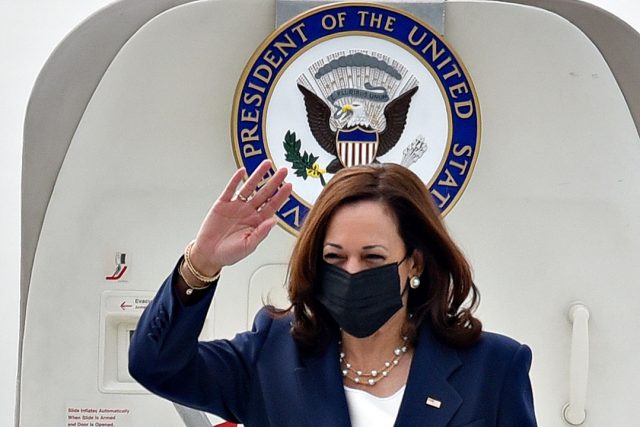
SINGAPORE — US  Vice President Kamala Harris on Tuesday accused China of coercion and intimidation to back unlawful claims in the South China Sea, in her most pointed comments on China on a visit to Southeast Asia, a region she said was critical to US  security.

Ms. Harris’s seven-day trip to Singapore and Vietnam is aimed at standing up to China’s growing security and economic influence globally and addressing concerns about China’s claims to disputed parts of the South China Sea.

Diverting attention and resources to the region has become a centerpiece of President Joseph Biden’s administration, as it turns away from old security preoccupations with the withdrawal of US  forces from Afghanistan.

The US  administration has called rivalry with China “the biggest geopolitical test” of the century and Southeast Asia has seen a series of high-profile visits by top administration officials, including Secretary of Defense Lloyd Austin.

“We know that Beijing continues to coerce, to intimidate and to make claims to the vast majority of the South China Sea,” Ms. Harris said in a speech in Singapore.

“These unlawful claims have been rejected by the 2016 arbitral tribunal decision, and Beijing’s actions continue to undermine the rules-based order and threaten the sovereignty of nations,” she said, referring to an international tribunal’s ruling over China’s claims in The Hague.

China rejected the ruling and has stood by its claim to most of the waters within a so-called Nine Dash Line on its maps, parts of which Brunei, Malaysia, the Philippines and Vietnam also claim.

China has established military outposts on artificial islands in the waters, which are crossed by vital shipping lanes and also contain gas fields and rich fishing grounds.

The US  Navy regularly conducts “freedom of navigation” operations through the disputed waters, which China objects to, saying they do not help promote peace or stability.

On board the USS Tulsa, a US  combat ship at the Changi Naval base in Singapore on Monday, Ms. Harris told US  sailors “a big part of the history of the 21st century will be written about this very region” and their work defending it was pivotal.

On Monday, Harris began her trip by meeting Singapore’s Prime Minister Lee Hsien Loong.

They discussed the importance of upholding a rules-based international order and freedom of navigation in the Indo-Pacific region, expanded cybersecurity cooperation and efforts to shore up critical supply chains between their countries. “Our partnerships in Singapore, in Southeast Asia and throughout the Indo-Pacific are a top priority for the United States,” Ms. Harris said on Tuesday, adding the region was “critically important to our nation’s security and prosperity.”

A top Chinese diplomat last month accused the United States of creating an “imaginary enemy” to divert attention from domestic problems and to suppress China.

Part of her task during the trip will be convincing leaders in the region that the US  commitment to Southeast Asia is firm and not a parallel to Afghanistan.

President Biden has faced criticism over his handling of the withdrawal of US  forces and the chaotic evacuation after the lightning takeover of Afghanistan by the Taliban.

Ms. Harris said the United States was “laser focused” on the task of “safely evacuating American citizens, international partners, Afghans who worked side by side with us, and other Afghans at risk.”

She also said that the United States had put itself forward to host a meeting of the Asia-Pacific trade group APEC in 2023, which includes the United States, China and Japan. — Reuters

Taliban rule presents aid agencies with moral dilemma

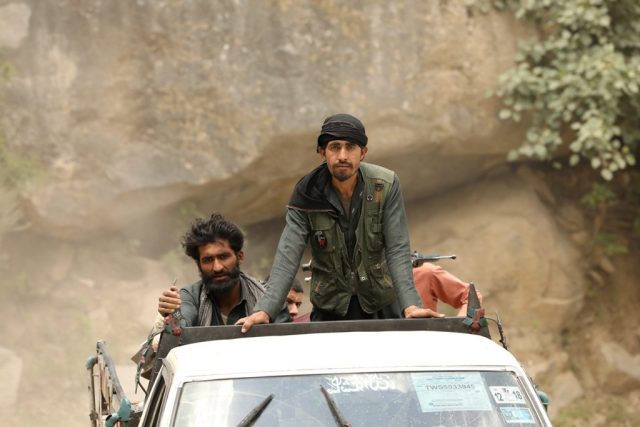
WASHINGTON — As foreign governments, aid institutions and companies scramble to evacuate staff from Afghanistan, a crucial question is emerging: should they engage with the ruling Taliban or abandon years of investment in the country and 38 million Afghans?

The Taliban in the past week has pledged peaceful relations with other countries, women’s rights and independent media but some former diplomats and academics said the Islamist militant group, while more media and internet savvy than the Taliban of the 1990s, is just as brutal.

The Taliban barred women from work, girls from school and killed or disfigured dissenters in public. It also harbored al Qaeda, which plotted the Sept. 11, 2001, hijacked plane attacks on New York and Washington that prompted a US-led invasion.

For foreign aid agencies the situation presents “a paradox,” said Robert Crews, a Stanford University history professor and author of the 2015 book Afghan Modern: The History of a Global Nation.

“If you are an aid worker at a state hospital, you are serving a regime whose legitimacy is in the balance,” he said. “But if everybody goes home, will the state collapse?”

Afghanistan’s government budget is 70% to 80% funded by international donors, including the US Agency for International Development (USAID), said Michael McKinley, who served as ambassador to Afghanistan in 2015 and 2016.

The country faces economic collapse without that aid.

“The Taliban is going to require substantial outside funding, unless they retreat to what they did from 1996 to 2001, which was essentially run the government to minimalist levels,” said Mr. McKinley, now with the Cohen Group consultancy. “Living off the narcotics trade did not provide them a path towards staying in power.”

International failure to engage with the Taliban could set up an even larger crisis, some warn. “There will be enormous temptation to just pull the plug and walk away, but we did that in 1989 and 9/11 happened 12 years later,” Daniel Runde, a development expert at the Center for Strategic and International Studies in Washington.

BILLIONS INVESTED
While foreign governments and aid groups evacuate thousands of people, they’re leaving billions of dollars in projects hanging in the balance, much of it through the Afghanistan Reconstruction Trust Fund.

The United States has allocated $145 billion towards Afghan reconstruction since 2002, a July 30 report from the Special Inspector General for Afghan Reconstruction shows.

The World Bank is contributing more than $2 billion to fund 27 active projects in Afghanistan, from horticulture to automated payment systems, part of more than $5.3 billion the development lender has spent on development and reconstruction of the country.

On Friday a flight from Kabul landed in Islamabad with 350 evacuees, including employees from the World Bank Group and other international institutions. A World Bank internal memo viewed by Reuters confirmed that its Kabul-based staff, including Afghan employees, had been evacuated with their immediate families.

“Our work in Afghanistan has been critical for development across the region. I am hopeful we will be able to have a positive impact once the situation stabilizes,” president David Malpass wrote.

The Asian Development Bank, also with extensive operations in Afghanistan, remains “committed to supporting Afghanistan’s economic and social development,” the group said in a statement.

Myanmar, upended by a military coup last year, provides some parallels. In February the World Bank and the International Monetary Fund (IMF)suspended all disbursements and projects there, a freeze that continues despite a worsening spread of COVID-19 in the country. Both organizations said they are guided by their membership when dealing with such abrupt changes of government and the United States holds dominant shares in both.

Citing a lack of clarity over its members’ recognition of the Afghan government, the IMF suspended Afghanistan’s access to Fund resources, including some $440 million in new monetary reserves that the IMF allocated on Monday.

Companies, including the US’s big social media firms and natural resources groups are split in how to deal with the Taliban, a microcosm of wider inconsistencies in how the international community classifies the group.

“We ought to take at some level of face value the statements that are coming out of Taliban leadership,” Mr. Runde, of CSIS argues. “They’re going to have to prove they’re serious about this.”

Ryan Crocker, who served as ambassador to Afghanistan in 2011-2012, and who has sharply criticized the US military exit from the country, said trusting the Taliban should not be an option.

“The Taliban are back in control, and they will bring their al-Qaeda allies with them,” Crocker said in a blog post on the Carnegie Endowment for International Peace website. “This is not a hypothetical security threat. These are the groups that brought about 9/11, and they have not become kinder and gentler in the interim.” — Reuters