Home Blog Page 7203

Fishers’ group lament P9.8-B unused agri funds 

A FISHERS’ group lamented the reported P9.8-billion unused fund under the Agriculture department’s 2020 budget, saying this could have been spent for production subsidies to farmers and fishers amid the coronavirus pandemic.  

Pambansang Lakas ng Kilusang Mamamalakaya ng Pilipinas (PAMALAKAYA) said in a statement on Monday that the Agriculture department could have aided at least 653,000 farmers and fishers with a P15,000 subsidy each.  

The Commission on Audit, in its 2020 report, said P9.8 billion of the Department of Agriculture’s (DA) P59-billion budget for 2020 was unspent and remitted back to the National Treasury.   

PAMALAKAYA National Chairperson Fernando L. Hicap said the subsidy could have boosted the output of the country’s food producers.     

“This also means that unstable food supply and prices in the market could have been avoided if only the government heeded the demand of the country’s food security front liners for livelihood subsidy and aid,” Mr. Hicap said.   

PAMALAKAYA and other rural-based progressive groups have been calling for a P15,000 subsidy for livelihood and production expenses.   

According to the group, the subsidy proposal was filed by the Makabayan bloc in the House of Representatives under House Bill 9192.   

“The agricultural production subsidy for fishers will be apportioned mostly for fuel expenses which eat up almost 80% of a regular fishing trip,” the group said.    

Meanwhile, PAMALAKAYA reiterated its call for the DA to explain to the public the cited “irregularities” in the budget spending.   

The group added that the Agriculture department should maximize its remaining budget for this year to improve production by distributing subsidies.  

“Apart from the explanation, the DA is morally and mandatorily compelled to strengthen local food production via support on farmers and fishers to ensure domestic food security amid the public health crisis,” Mr. Hicap said.    

Agriculture Secretary William D. Dar recently issued a statement saying that the DA did not commit any irregularities and do not tolerate corruption.   

“As per DA Undersecretary for Administration and Finance Roldan G. Gorgonio, we received the CoA report on July 2, 2021. Therefore, we still have until Sept. 2, 2021, to satisfy the CoA’s observations through our categorical replies. Since July, we have been consolidating the respective reports from our concerned DA offices and operating units, and we will submit them promptly to CoA, on or before Sept. 2,” Mr. Dar said.    

“We assure our clientele… that we, at the OneDA Family do not and will not tolerate corruption, as we try to comply with all government accounting and auditing procedures and requirements, and continuously pursue aboveboard our planned programs and initiatives to increase the productivity and incomes of farmers and fisherfolk, and attain a food-secure and resilient Philippines,” he added. — Revin Mikhael D. Ochave   

Lapid is 7th senator to contract COVID-19

SENATE.GOV.PH

SENATOR MANUEL “Lito” M. Lapid has tested positive for coronavirus, his chief-of-staff, Jericho Acedera, said on Monday.  

“As this happened when the Senate is not holding sessions, no member of our staff has been considerably exposed except for his personal and close-in employees,” said Mr. Acedera in a statement.   

Two of those who came in close contact with the senator tested negative.  

Mr. Lapid is classified as a “mild to moderate” case and is currently admitted at the Medical City Clark.  

He is the seventh senator to have been infected by the virus, after Senators Juan Miguel F. Zubiri, Juan Edgardo M. Angara, Aquilino Martin “Koko” L. Pimentel III, Ronald M. dela Rosa, Ramon B. Revilla Jr., and Richard J. Gordon, all of whom have recovered.  

The Senate resumed plenary sessions on Monday with limited employee attendance. — Alyssa Nicole O. Tan 

95% of workers in Metro Manila hotels vaccinated  

DOT

A TOTAL of 27,708 or 95% of the 29,066 workers in hotels within Metro Manila used as quarantine facilities or for leisure have been fully vaccinated, the Department of Tourism (DoT) reported on Monday.   

“The DoT hails this important milestone in vaccinating our tourism stakeholders. The inoculation of our tourism frontliners is a big step towards the recovery of the industry,” Tourism Secretary Bernadette Romulo-Puyat said in a statement.    

Majority of the hotel personnel covered at 19,350 are health service frontliners, the department said.   

“We shall continue our close collaboration with the National Task Force   against COVID-19 (coronavirus disease 2019), local government units, and relevant public and private agencies in securing vaccine doses to expedite the inoculation of more tourism workers, especially those in destinations that rely heavily on tourism,” Ms. Puyat said.     

Among the destinations that have received vaccine allocations particularly for tourism workers include Boracay, Bohol, and Palawan.   

Meanwhile, 2,778 of the 4,565 registered workers of DoT-accredited restaurants in 13 cities in the national capital region have received their coronavirus vaccines.  

Immigration posts to be automated starting Sept.  

BI FB PAGE

IMMIGRATION POSTS in air and sea ports will have an automated travel control system starting September, which will ease the processing of registered foreigners.  

The system will be pilot-tested at the Ninoy Aquino International Airport  terminal 3 before the nationwide rollout, Immigration Commissioner Jaime H. Morente said in a news release on Sunday.   

He explained that under the new system, data contained in alien certification of registration identity cards (ACR I-Card) will be integrated into the bureau’s border control information system.  

An ACR I-Card is issued by the Bureau of Immigration to all foreigners holding immigrant and non-immigrant visas whose stay in the country have exceeded 59 days.   

“With this project, the time our officers at the airports consume in processing foreign passengers will be shortened and these passengers will be assured of a hassle-free experience when traveling in and out of the country,” Mr. Morente said. — Bianca Angelica D. Añago  

Luxury yachts seized

BOC

Four luxury yachts found moored at the Manila International Container Terminal were seized by authorities on Aug. 22 after being found to have violated Customs and registration laws. The vessels, with an estimated total value of P120 million, were being used as transport services, residence, and offered as venues for events and for private use without permits.

Fiduciary duty of diligence of the highest level for corporations vested with public interest

VECTORJUICE-FREEPIK

(First of two parts)

Under the aegis of the old Corporation Code, the Supreme Court began to evolve a theory of “Corporate Social Responsibility” on corporations vested with public interests that imposed a fiduciary duty of diligence beyond their shareholders but primarily stakeholders who are most affected by the corporations’ business or economic enterprise.

In 1990, without formal statutory basis, the Supreme Court in Simex International (Manila), Inc. v. Court of Appeals, under the ponencia of Justice Isagani Cruz, began to lay down the corporate governance principle that “corporations vested with public interest” owe a fiduciary duty not just to the shareholders, but the public that they serve or interact with, particularly in the banking industry, thus:

The banking system is an indispensable institution in the modern world and plays a vital role in the economic life of every civilized nation. Whether as mere passive entities for the safe-keeping and saving of money or as active instruments of business and commerce, banks have become an ubiquitous presence among the people, who have come to regard them with respect and even gratitude, most of all, confidence … The point is that as a business affected with public interests and because of the nature of its functions, the bank is under obligation to treat the accounts of its depositors with meticulous care, always having in mind the fiduciary nature of their relationship.

Prior to Simex International, the doctrine pervading the relationship of a bank with its depositors, was that of simply being contractual in character — that of a loan or mutuum — under which the rights and obligations of the parties emanate from the principle of breach of contract between debtor and creditor. Simex International therefore evolved the relationship between the bank and its depositors into one that is fiduciary in character — a doctrine that has since then pervaded the decisions of the Supreme Court involving the dealings of the banks with their depositors.

Although there was resistance in some of the decisions to extend that “fiduciary nature of the relationship,” beyond those of the depositors, the formal recognition of banks being vested with public interests eventually covered all of their dealings with the public, thus:

• Over supervision of their officers and employees as the only way to ensure that banks will comply with their fiduciary duties;

• In extending loans and other credit accommodations;

• In accepting real estate mortgages, dealing with registered land and other properties given as security; and,

• In general, in handling all their transactions, or dealings with the public.

More importantly, the recognized fiduciary obligation of banking institutions to all such stakeholders, was characterized to be of the “highest degree,” and not just the diligence of a good father of a family. Thus, in PCI Bank v. Court of Appeals, the Supreme Court held:

“Time and again, we have stressed that banking business is so impressed with public interest where the trust and confidence of the public in general is of paramount importance such that the appropriate standard of diligence must be very high, if not the highest, degree of diligence. A bank’s liability as obligor is not merely vicarious but primary; the defense of exercise of due diligence in the selection and supervision of its employees is of no moment.

“Banks handle daily transactions involving millions of pesos. By the very nature of their work the degree of responsibility, care and trustworthiness expected of their employees and officials is far greater than those of ordinary clerks and employees. Banks are expected to exercise the highest degree of diligence in the selection and supervision of their employees.”

The theory that the nature of the banking industry is one that is vested with public interest and owes fiduciary duties to other stakeholders was formally incorporated into the General Banking Law of 2000, where Section 2 thereof expressly imposes a fiduciary duty on banks when it declared the “fiduciary nature of banking that requires high standards of integrity and performance,” which requires a bank to assume a degree of diligence higher than that of a good father of a family. In Philippine National Bank v. Pike, the Supreme Court held that even if the transaction with the bank occurred prior to the promulgation of the General Banking Law of 2000, nonetheless its Section 2 categorical declaration of the “fiduciary nature of banking that requires highest standards of integrity and performance” is only a statutory affirmation of the Supreme Court’s decisions in esse at the time of such transactions. In other words, the doctrine that the diligence of the highest degree, and high standards of integrity and performance are required of corporations impressed with public interest has common-law binding effect without the need of any statutory confirmation thereof.

Once that threshold had been breached in the banking industry, the Supreme Court began to apply the doctrine of fiduciary obligation of corporations, and their Boards of Directors and Management, to affected stakeholders (not just shareholders), when the underlying business enterprise is that which affects a large segment of the public.

In 2006, in its decision in Nogales v. Capitol Medical Center, the Court began to move away from the otherwise well-established doctrine that a malpractice on the part of an independent or visiting physician does not make the hospital vicariously liable therefor. The Court held:

“In general, a hospital is not liable for the negligence of an independent contractor-physician. There is, however, an exception to this principle. The hospital may be liable if the physician is the ‘ostensible’ agent of the hospital. This exception is also known as the ‘doctrine of apparent authority’.”

The doctrine of apparent authority is a species of the doctrine of estoppel. Article 1431 of the Civil Code provides that “through estoppel, an admission or representation is rendered conclusive upon the person making it, and cannot be denied or disproved as against the person relying thereon.” Estoppel rests on this rule: “Whenever a party has, by his own declaration, act, or omission, intentionally and deliberately led another to believe a particular thing true, and to act upon such belief, he cannot, in any litigation arising out of such declaration, act or omission, be permitted to falsify it.”

The gravamen of the Nogales decision is to the effect that when a hospital holds out a physician as a member of its medical staff, when in fact he is an independent contractor merely using the facilities of the hospital, then insofar as the patient is concerned, the hospital has clothed such a physician with authority to bind the hospital under the doctrine of apparent authority, which the hospital cannot later on repudiate to insulate itself from the malpractice assertions hurled against the physician. Among the circumstances that were found by the Court to have played into the application of the doctrine of apparent authority was that the hospital granted staff privileges to the attending physician; it made the patient’s husband sign a consent form printed on the hospital’s letterhead; and that the complications experienced during the operation were referred to the hospital’s head which gave the impression to the patient and her husband that the attending physician was a member of the hospital’s medical staff and was collaborating with other hospital-employed specialists in treating the patient.

Quoting from American jurisprudence, Nogales began to characterize the “public interest” nature of a corporation operating a hospital, thus: “The conception that the hospital does not undertake to treat the patient, does not undertake to act through its doctors and nurses, but undertakes instead simply to procure them to act upon their own responsibility, no longer reflects the fact. Present day hospital, as their manner of operation plainly demonstrates, do far more than furnish facilities for treatment. They regularly employ on a salary basis a large staff of physicians, nurses and [interns], as well as administratively and manual workers, and they charge patients for medical care and treatment, collecting for such services, if necessary, by legal action. Certainly, the person who avails himself of ‘hospital facilities’ expects that the hospital will attempt to cure him, not that its nurses or other employees will act on their own responsibility.”

Subsequently, the Court had the occasion to revisit and expand the Nogales doctrine in its original decision in Professional Services, Inc. v. Agana, where the decision went into a historical development of hospitals and the resulting theories concerning their liability for the negligence of physicians, thus: “Until the mid-19th century, hospitals were generally charitable institutions, providing medical services to the lowest classes of society, without regard for a patient’s ability to pay. Those who could afford medical treatment were usually treated at home by their doctors.

“However, the days of house calls and philanthropic health care are over. The modern health care industry continues to distance itself from its charitable past and has experienced a significant conversion from a not-for-profit health care to for-profit hospital businesses. Consequently, significant changes in health law have accompanied the business-related changes in the hospital industry. One important legal change is an increase in hospital liability for medical malpractice. Many courts now allow claims for hospital vicarious liability under the theories of respondeat superior, apparent authority, ostensible authority, or agency by estoppel.”

(To be continued)

This article reflects the personal opinion of the author and does not reflect the official stand of the Management Association of the Philippines or the MAP.


Attorney Cesar L. Villanueva is Chair of the MAP Corporate Governance Committee, is a Trustee of the Institute of Corporate Directors (ICD), was the first Chair of Governance Commission for GOCCs (2011 to 2016), was Dean of the Ateneo Law School (2004 to 2011), and is a Founding Partner of the Villanueva Gabionza & Dy Law Offices.

map@map.org.ph

cvillanueva@vgslaw.com

http://map.org.ph

This is how you win the lottery each time you play

UPKLYAK-FREEPIK

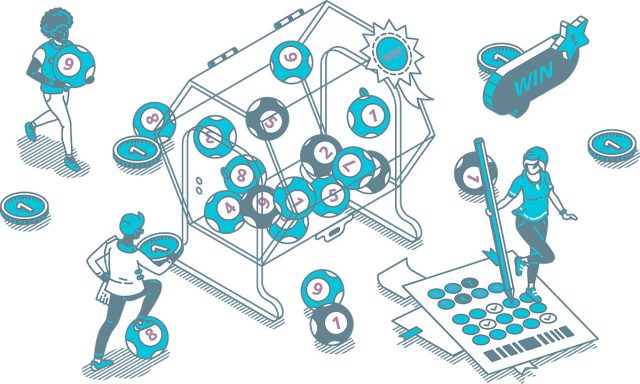
LOTTERIES are widely derided as a tax on stupidity. The odds are heavily stacked against the ticket buyers. The randomized systems that select the winning numbers eradicate any trace of skill from the competition. But none of that diminishes my enthusiasm for having a weekly flutter on an arbitrary set of digits chosen by an algorithm.

During this year’s Tokyo 2020 Olympics, British athlete after British athlete thanked the National Lottery in general and ticket buyers in particular for helping to provide the financial support that made their medal dreams come true. Team GB won 65 medals in Tokyo, including 22 golds, putting it fourth in the table after Japan. That matched the overall tally when the games were held in the UK in 2012 and was just two short of the record achieved at the 2016 competition in Rio. Britain punches above its demographic weight on the Olympic stage — and lottery funding plays a significant role in paying for coaches and allowing sportspeople to dedicate themselves to full-time training.

UK Sports, which is responsible for funding British athletes, teams, and events, was set up in 1996 after the UK won just 15 medals at the Atlanta Olympics, putting it in 36th place in the medals table. The agency had a budget of £150 million ($207 million) for the financial year ended in 2020, of which more than £80 million came from lottery ticket sales. Its annual income, topped up by central government funding, meant it was able to invest £345 million on preparing athletes for the delayed Tokyo event, up from the £275 million spent on the Rio games and £264 million for the London Olympics.

“What the funding does, it gives anyone with a bit of talent a chance to go and perform,” said Jason Kenny, a British cyclist who added two podium finishes in Tokyo to boost his lifetime Olympics winnings to seven golds and two silvers, making him the nation’s most successful Olympian ever. “It has moved us up the medal tables massively.”

The UK isn’t the only country with a lottery that grants cash for social goods. Ireland, Sweden, the Netherlands, Germany, Spain, and Denmark all have licensed lottery operators designed to benefit local organizations, according to the Association of Charity Lotteries in Europe. But with annual ticket sales worth more than £8 billion, the UK lottery is by far the biggest in the region.

Moreover, the scale of the operation means the tickets I buy pay for more than just sports and the Olympics — more than £30 million a week are disbursed to charitable causes. In Wales, for example, a project called River and Sea Sense teaches youngsters about the dangers of swimming in open water as well as skills such as resuscitation. In Somerset, 60 projects have been funded during the past four years to help preserve the wetlands and wildlife of the Avalon Marshes.

Of course, playing the lottery is not all about altruism. My weekly investment — and I do regard it as an investment — purchases a few hours of fantasy about a life of luxurious leisure, where I’m sailing a superyacht rather than driving a desk. And while the status of millionaire isn’t what it was, I’d still count myself lucky to figure as one of the six Britons per week who achieve that rank courtesy of their lottery winnings. So, by buying lottery tickets I’m simultaneously doing good and buying a cheap dream of riches — what’s so stupid about that?

BLOOMBERG OPINION

My whole family got COVID

On Aug. 10, I and our elder daughter got unwell. No fever but body pains. The next day, the symptoms continued, I began to suspect COVID symptoms and I traced back where the virus may have come from.

On Aug. 8 I went to the public market in Makati to buy food. I have been doing this for the past 17 months, so it is possible but not strong plausible reason.

On Aug. 10 and the previous days, I did my usual routine for the last 17 months — get direct sunlight for a minimum of 10 minutes, a maximum of 25 minutes, a day, the sun directly hitting my skin and head. Plus walk our dog two kilometers a day on average except when it is raining and stormy. It is possible that I got the virus while doing the usual daily round.

On Aug. 6, my wife got her first dose of the Pfizer vaccine. My doctor friend at the Concerned Doctors and Citizens of the Philippines (CDC PH) and former Department of Health Undersecretary Dr. Jade del Mundo briefly explained viral shedding to me:

“Viral shedding is the release of a virus after a viral infection, such as SARS-CoV-2. People shed the virus through the respiratory secretions when they sneeze, talk or even while socializing… The Pfizer vaccine is an mRNA vaccine which contains the genetic material to code for the spike protein. The problem is these spike proteins produced are shed or spread through the saliva or sputum or the air breathed out by a person so it causes those near the vaccinated person to be infected.”

Read: Can ‘viral shedding’ after the COVID vaccine infect others? That’s a big ‘no’

It is possible or not possible that such viral shedding happened in our house. My wife has a comorbidity, she has hypertension. Nonetheless, all of us later had symptoms, mild to moderate. The two girls have had short bouts of fever and they were gone after a day or two.

I am the most senior in the house — I am 58 years old already — and have experienced many symptoms. No fever, but I have shortness of breath every time I go down to pee and come back to the room, body pains, cough with phlegm. My appetite is not good — I have to force myself to finish my meal within one to one and half hours. It has been psychologically stressful, physically painful.

The Makati City Epidemiology and Surveillance Unit (CESU) came to our house on Aug. 15, and took swab tests from my wife and our two daughters. The results came out on Aug. 18 — all three of them were positive. Stress in the house worsened because I was not swabbed, not vaccinated, and must isolate alone in the room upstairs. What about our food? Supplements? (I was swabbed by CESU about three days ago and am waiting for the results. I just assume that I was positive as of swab day, Aug 20.)

TEARS OF HUMILITY
The answer came much sooner than my worries. First to send food was my sister Marycris who also lives in Makati. Then my kumare, Jo Ferrer-Fernandez, who also brought along her sister, pediatrician Dr. Marriel Ferrer de la Reyna, to give medical advice for the two girls.

Then the big surprise. My friends from UP Sapul — they devised among themselves who will take care of our daily meals, lunch to dinner, for at least one week. Lots of food was coming in, more than what we could finish. Super super thanks to UP Sapul friends Boye Quiambao, Kris Cabrera, Grace Mendoza, Da Alejandrino-Short, Winnie Alvarez, Mel Manalaysay, Jopay Payongayong, Percy and Abet Abesamis, Jim Asuncion, Norman Roxas, Ernie Urbano, Kiko Magno.

I have non-biological siblings here in Manila, the Millora family. My elder sister, Dr. Ma. Judea Millora, is my main physician, plus Dr. Homer Lim, new President of the CDC PH. My younger brother, Dr. Vvon Millora, co-owns some private hospitals in Cavite and was worried and offered to take me in despite the long queue of COVID patients should I really need to be confined.

Then there are support advice from other CDC PH doctors and friends like Dr. Iggy Agbayani, lots of medicines and supplements from Gigi Bautista and Eli Abela, lots of Vit. C, D, Azithromycin, zinc, aspirin, Ant Tart (antimonium tartaricum — used in homeopathy ), etc.

I have been in tears — big solid tears of humility and gratitude — as I look at all the support that I have received for my family and friends. Then I have friends, former UP Narra dormmates, waiting to help anytime I sound the alarm.

MY MEDICINES AND SUPPLEMENTS
Dr. Homer Lim gave me these prescriptions: ivermectin, 15 mg/tablet, 2x a day; doxyclycline, 100 mg/tablet, 2x a day; Vit. C with zinc; Vit. D3, 5,000 iu; melatonin, 3mg/tab, 2 tablets at bed time; Aspirin, 100 mg/tab; budesonide, 160 mcg (Symbicort Turbohaler).

Dr. Ma. Judea Millora sent me a hydrogen peroxide nebulizer that she herself mixed with guidance from Dr. Lim. I felt better after each nebulizer session. Ate Dea also sent me a sure-fire medicine vs. possible lung scarring, serrapeptase, to be taken on empty stomach once a day.

The reason why it took me long to recover is because I did not follow the treatment on the dot. Meaning, the medicines that I should take at 7 a.m. should be taken at 7 a.m., not 9 a.m. or 12 noon. Or medicines that I should take twice a day I must take twice a day and not once or thrice because I forgot to keep track.

That is why proper professional medical advice is necessary for the patients even if the medicines and supplements are available.

APPEAL TO DOH AND THE PRESIDENT
I will say that the ivermectin plus the various medicines and immune boosters did help a lot in allowing me to survive without the need for hospitalization. As of this writing, Aug. 23, the body pains have significantly eased, I have only a mild cough today, no more shortness of breathing, the oxymeter stable at 95-96, I can now finish one big plate of food at a meal. But Doc Iggy Agbayani still cautions me to avoid sweet drinks and food, even bananas.

My appeal to the Secretary of Health Francisco Duque III and President Rodrigo R. Duterte, is to really consider the use of ivermectin as an early treatment for patients trying to recover at home. The vaccines sure can help as they are also products of endless medical innovation and science. But an old, proven for 40 years, medicine like ivermectin has big potential as an early treatment and a way to avoid the hospitalization of so many patients. Think of the hundreds of new serious and critical COVID cases that are brought in hospitals that could have been treated at home instead.

Finally, more vaccination and more cases.

I make a short follow up of my previous column, https://www.bworldonline.com/more-vaccination-more-cases-why/, from July 19, and https://www.bworldonline.com/vaccination-rates-and-kkk-on-june-12/, from June 7.


Bienvenido S. Oplas, Jr. is the Director for Communication and Corporate Affairs, Alas Oplas & Co. CPAs

nonoyoplas@alasoplascpas.com

Can ‘viral shedding’ after the COVID vaccine infect others? That’s a big ‘no’

Fears of “viral shedding” and other concerns after the COVID vaccine has led some businesses to ban vaccinated customers from the premises, believing vaccination poses a health risk to others.

We’ve seen this in Australia, in the northern New South Wales town of Mullumbimby and on the Gold Coast in Queensland. We’ve also seen this internationally.

In the United States, a teacher warned her students not to hug their vaccinated parents for the same reason.

But COVID vaccines don’t contain any live virus to shed. Here’s the science to put the myth of viral shedding after the COVID vaccine to bed.

WHAT IS VIRAL SHEDDING ANYWAY?
People can shed (or release) virus after a viral infection, such as SARS-CoV-2, the virus that causes COVID-19.

If people are infected, they can shed virus via their respiratory secretions when they cough and sneeze. During the pandemic, that’s why we socially distance, wear masks and stay at home if we’re sick. We can only infect someone if the virus is live.

Some vaccines for other diseases contain live viruses that have been weakened (or attenuated). Examples are vaccines against measles, rubella, mumps, and herpes zoster (shingles).

These train your body to mount an immune response with a version of the virus that isn’t so dangerous.

For example, with the very effective vaccine against herpes zoster (shingles), there is a very small risk the weakened virus can cause infection. However, this happened in less than 1% out of more than 20,000 people vaccinated over a 10-year period. The majority of people infected this way had a weakened immune system.

COVID VACCINES DON’T CONTAIN LIVE VIRUS TO SHED
However, none of the COVID vaccines approved for use anywhere around the world so far use live virus.

Instead, they use other technologies to train our bodies to recognize SARS-CoV-2 and to mount a protective immune response should we ever be exposed to it.

For instance, the AstraZeneca vaccine is a viral vector vaccine. This uses a modified chimpanzee virus to carry into the body the genetic instructions to produce the SARS-CoV-2 spike protein. Your body then uses these instructions to make the spike protein, and to raise a protective immune response.

The Pfizer vaccine is an mRNA vaccine, which contains the genetic material to code for the spike protein. Once inside your cells, your body uses those instructions to make spike protein, again raising a protective immune response.

COVID vaccines don’t give you the disease or give you a positive COVID test. Again, they don’t contain live virus. They contain fragments of spike protein or the instructions on how to make it.

Even if you could shed spike protein after vaccination, that wouldn’t be enough to cause an infection. For that you need the entire virus, which the vaccines don’t contain.

And the mRNA in the Pfizer and Moderna vaccines is very short-lived, and is quickly degraded in our cells. Again, the mRNA wouldn’t be enough to cause an infection. It would need to be packaged inside a live virus, which our vaccines don’t contain.

VACCINATED PEOPLE ARE LIKELY ‘SAFER’
Rather than banning vaccinated people from businesses for fear of viral shedding, owners should be welcoming them with open (socially distanced) arms.

That’s because evidence is mounting vaccinated people are less likely to transmit SARS-CoV-2 to others.

In England, people who became infected despite being vaccinated with either the Pfizer or AstraZeneca vaccines (known as a breakthrough infection), were only half as likely to pass their infection on to household contacts compared to infected people who were not vaccinated.*

In Israel, people who had a breakthrough infection after the Pfizer vaccine had less virus cultured from their nose than people who had not been vaccinated.

SO, THERE’S NO CHANCE, THEN?
Zero, zip, nada. There’s no chance of viral shedding as a result of your COVID vaccine. If you do need to go to the shops in an outbreak area, follow the health advice to wear a mask and socially distance.

If you’re vaccinated, you’re likely to pose less risk to others than if you’re unvaccinated. So, businesses should be wooing you rather than turning you away.

*This column was written before the COVID Delta variant emerged to be the most common in countries with large vaccinated populations. “New data began to emerge that the Delta variant was more infectious and was leading to increased transmissibility when compared to other variants, even in vaccinated individuals,” according to a notice at www.cdc.gov/coronavirus/2019-ncov/variants/delta-variant.html. This however, does not change the fact that viral shedding from the vaccines is not an issue. — Ed.


Peter Wark is a Conjoint Professor, School of Medicine and Public Health, University of Newcastle.

Ugás had coming-out party at Pacquiao’s expense — analyst

YORDENIS Ugás celebrates with his team after defeating Manny Pacquiao in a world welterweight championship bout at T-Mobile Arena. — REUTERS

By Michael Angelo S. Murillo, Senior Reporter

CUBAN Yordenis “54 Milagros” Ugás defeated Filipino boxing legend Manny “Pacman” Pacquiao by unanimous decision in their World Boxing Association  (WBA) welterweight title clash on Sunday (Manila time) in a fight that had the former taking full advantage of the opportunity given to him, one local fight analyst said.

Mr. Ugás, 35, retained his WBA title by dominating Mr. Pacquiao, 42, in their 12-round collision at the T-Mobile Arena in Las Vegas with scores of 115-113, 116-112 and 116-112.

For analyst Nissi Icasiano, the Cuban champion was deserving of the victory and should be given props for coming out with a solid game plan despite being a replacement opponent on an 11-day notice and proving his doubters wrong.

“They say opportunity knocks only once in your life. For Yordenis Ugás, he saw that opportunity in the form of Manny Pacquiao,” said Mr. Icasiano in an online interview with BusinessWorld.

“It’s not every day you would get a chance to fight a future Hall-of-Famer, an eight-division world champion and probably one of the best — if not the best boxer to ever lace up a pair of gloves. Ugás had one shot. He grabbed it,” he added.

Mr. Ugás took the place of original Pacquiao opponent Errol Spence, Jr. (out with an eye injury) a fortnight ago and while he is the champion, not many gave him the chance against WBA welterweight champion in recess Mr. Pacquiao, including Mr. Icasiano.

“He (Ugás) surprised many and proved critics wrong, including yours truly, by beating Manny Pacquiao. What’s commendable is that he came in very prepared despite the 11-day notice,” the analyst said.

“What I can’t fully wrap my head around is the fact that he compelled Manny Pacquiao to fight at his own pace, using a simple strategy: keeping his jabs busy and targeting the body with a right straight… He could have traded fire with fire. But no, he chose to stick to his game plan,” Mr. Icasiano added.

Statistics would later show that Mr. Ugás had his way, and did not allow Mr. Pacquiao to get much headway.

As per CompuBox data, the WBA champion landed more total punches 151 to Mr. Pacquiao’s 130 and with more efficiency, 37% to 16%; connected 21% (50-of-234) of his jabs to Mr. Pacquiao’s nine percent (42-of-475); and landed power punches better 59% (101-of-171) to 26% (88-of-340).

While Mr. Pacquiao shared after that he experienced cramps for much of the contest that had his legs tightening and limiting his movement, he, however, did not use it as an excuse and said Mr. Ugás was a deserving winner.

“It may sound too cliché, but it’s true everything happens for a reason. All the stars and all the dots lined up for him (Ugás) to be in that position and experience that glorious moment,” Mr. Icasiano said.

“Yordenis Ugás arrived in style. Not all boxers can say that they had their coming-out party at the expense of a revered boxing legend like Manny Pacquiao,” he added.

As to Mr. Pacquiao, the analyst said he thinks it is not yet over for the Filipino legend, although he added if Pacman does call it quits after his last fight, it will be well and good.

“For Manny, he’s not as old as people say. He had a good first round, to be honest. He also landed a good left in the same round, wherein Ugás acknowledged it by smiling. The right hand of Ugás wasn’t able to stagger Manny. He made a great effort by at least changing the complexion of the fight, inviting Ugás to a toe-to-toe… For a 42-year-old boxer, to have that kind of work rate in the ring, it’s still impressive,” he said.

“I don’t see him walking away from the sport just like that. If he decides to fight again at least to give him a proper send-off, the two possible opponents that Manny Pacquiao could consider are Robert Guerrero and Abel Ramos. Those two boxers won’t be a nightmare for him stylistically.”

Tokyo Paralympic Games quest continues for Team Philippines

PARA-ATHLETE Jerrold Mangliwan (wheelchair racing) will be the Philippines’ flag-bearer in the opening ceremony on Tuesday of the 16th Paralympic Games in Tokyo.

COMPETING now without a full complement after one of the para-athletes tested positive for coronavirus disease 2019 (COVID-19), the quest for Team Philippines at the 16th Paralympic Games in Tokyo still continues.

The sporting event for the differently abled officially kicks off on Tuesday with the country one of the 167 participating nations.

Team Philippines was to be represented by six para-athletes — two athletes for para athletics (Jerrold Mangliwan/wheelchair racing) and Jeanette Aceveda/discus throw), two for para swimming (Ernie Gawilan and Gary Bejino), and one each for para taekwondo (Allain Ganapin) and powerlifting (Achelle Guion).

But on Sunday, the Philippine Paralympic Committee (PPC) announced that some of the members of the country’s contingent failed to make the trip to Tokyo last Sunday after they were found to be positive for COVID-19.

“It is unfortunate for us to inform the public that some officials, coaches, and a para-athlete of our Philippine delegation bound for Tokyo to participate in the 2020 Paralympic Games have tested positive for COVID-19,” the statement of PPC President Michael I. Barredo read.

The names of those who tested positive were not mentioned, but they are now in isolation as part of existing health and safety protocols.

The rest of the team are already in Tokyo and are in “high spirits.”

Despite the setback, Team Philippines said it is committed to competing at the Paralympic Games and giving their all to bring pride and honor to the country.

“We are confident that our athletes will give their best in the pursuit of their Paralympic dreams,” said Mr. Barredo.

“This is just unfortunate, but the fight continues for us,” Philippine chef de mission Francis Carlos B. Diaz, for his part, said in a short message to BusinessWorld.

Mr. Mangliwan is designated to carry the country’s colors in the opening ceremony on Tuesday while Mr. Gawilan will have the same responsibility in the closing on Sept. 5.

In the official schedule provided to the media, Mr. Bejino will be the first to see action for Team Philippines in the men’s 200m individual medley set for Thursday, Aug. 26. Also playing that day is Ms. Guion in the final of the -45kg powerlifting final.

As added motivation for Filipino para-athletes, they stand to receive cash incentives if they win a medal.

Under Republic Act 10699, or the incentives act, a Paralympic gold medalist will receive P5 million from the government while a silver medalist will get P2.5 million. The bronze medalist will be rewarded with P1 million.

The Manuel V. Pangilinan (MVP) Sports Foundation, meanwhile, has pledged to give the same amount as incentives.

In the history of the Paralympics, the Philippines has won two bronze medals courtesy of powerlifter Adeline Dumapong (Sydney 2000) and table tennis player Josephine Medina (Rio 2016). — Michael Angelo S. Murillo

Yuka Saso finishes AIG Women’s British Open tied for 39th place

FILIPINO-JAPANESE golfer Yuka Saso ended her AIG Women’s British Open campaign tied for 39th place. — facebook.com/ngapph

FILIPINO-Japanese golfer Yuka Saso ended her AIG Women’s British Open campaign late on Sunday (Manila time) with a 3-over 75 for an even 288 aggregate to finish tied for 39th place.

Twenty-year-old Ms. Saso tried to fashion out a chargeback on the final day of competition at Carnoustie, Scotland, after a considerable slide in the third round but just could not get the break she was looking for.

Her fourth round was marred by double bogeys in the front 9, including the par-4, and could not recover from there the way she wanted to.

Sweden’s Anna Nordqvist held on to win the Women’s British Open, scoring a four-round 12-under 276.

Ms. Saso started strong in the tournament, the last major in the Ladies Professional Golf Association  (LPGA) for 2021, with an opening round score of 4-under 68, good for joint fourth place. In the second round, she fired a 5-under 71 to stay within striking distance at solo fifth.

In the third round, however, she struggled, finishing with a 2-over 74 to slip to joint 27th place.

At 39th place, Ms. Saso was joined by Megan Khang and Brittany Lincicome of the United States.

For her efforts, she got $30,583, or P1.529 million.

Entering the Women’s British Open, Ms. Saso acknowledged that she would be in for a tough competition but was still looking forward to it, seeing it as an opportunity to grow as a player.

Earlier this year, the Philippine bet won the US Women’s Open. — Michael Angelo S. Murillo