Home Blog Page 7

PetroEnergy sees oil drilling in Africa finished this year

STOCK PHOTO | Image by ZACHARYTHEODORE/UNSPLASH

YUCHENGCO-LED PetroEnergy Resources Corp. (PERC) said it expects to complete its drilling campaign in offshore Gabon, West Africa, later this year, aiming to increase oil field production.

In a statement on Thursday, the listed energy company said it continues to manage its offshore oil interests in Gabon as it undertakes a Phase 3 drilling campaign, which is expected to raise production to 18,000 barrels of oil per day (bpd) from 15,000 bpd.

PERC is a publicly listed energy company with a diversified portfolio spanning upstream oil exploration and development, renewable energy development, and power generation.

The company holds a 2.53% participating interest in the exploration and production sharing contract (EPSC) covering the Etame block in Gabon, West Africa, according to its 2025 annual report.

The EPSC is a contract with the Gabonese government that grants the holder rights to conduct exploration, development, and production activities within the Etame Marin Permit area.

In 2025, total crude output from four oil fields — Etame, Avouma, Ebouri, and North Tchibala — reached 5.20 million barrels. Of this, 5.35 million barrels were exported at market prices ranging from $57.09 to $78.12 per barrel.

PERC said its profitability in 2025 was affected by higher interest expenses, which rose to P652.66 million due to increased financing costs linked to new project loans.

The company also reported a 20.24% decline in oil revenues to P415.09 million, citing lower crude oil prices and reduced production from its Gabon operations.

These factors contributed to a 39.77% drop in attributable net income to P284.18 million.

Despite this, total revenues rose 8% year on year to P3.72 billion, driven mainly by higher electricity sales following the energization of three solar power projects.

PERC said it is ramping up commercial operations of its solar assets in Bugallon and Isabela, as well as completing the Panitan solar and battery energy storage system in Capiz. — Sheldeen Joy Talavera

A PPP-driven expansion in the nation’s clean energy projects

Photo from Freepik/Creativeart

The Philippines is accelerating its transition toward clean energy, with public-private partnerships (PPP) emerging as a central mechanism for mobilizing capital, expertise, and innovation. PPPs have become instrumental in bridging financing gaps while advancing sustainable goals.

In recent years, the convergence of policy reforms, investor interest, and climate commitments has positioned renewable energy PPPs as critical pillars of the country’s development strategy.

A key indicator of this momentum is the rapid expansion of the PPP project pipeline. As of late 2025, the Philippines had 251 PPP projects worth approximately P2.81 trillion, reflecting a significant increase driven by reforms aimed at transparency and efficiency. Within this pipeline, energy and climate-related projects are gaining prominence, particularly those aligned with renewable generation and sustainable infrastructure.

The government’s broader infrastructure flagship program also incorporates PPP financing for major initiatives, signaling institutional commitment to private sector participation in energy transition efforts.

Renewable-oriented PPPs are diverse in scope, spanning solar, wind, waste-to-energy (WtE), and emerging technologies such as green hydrogen. For instance, large-scale solar developments, such as a planned 500-megawatt solar farm in Nueva Ecija, demonstrate how private firms are partnering with government frameworks to expand clean energy capacity and stabilize supply in the Luzon grid.

Similarly, wind energy projects like the Kalayaan 2 Wind Power Project are being fast-tracked under PPP-linked initiatives, reinforcing the role of private investment in diversifying the country’s energy mix.

One of the most innovative developments is the emergence of WtE PPP projects. The proposed 3,000 tons per-day Manila Waste-to-Energy Facility exemplifies how PPPs are being leveraged to address both environmental and energy challenges simultaneously, converting municipal solid waste into electricity while reducing landfill dependence.

These hybrid infrastructure models reflect a broader shift toward circular economy principles within the PPP framework.

Beyond conventional renewables, PPPs are also enabling next-generation energy systems. The Renewstable Green Hydrogen Power Plant in Marinduque, for example, integrates solar generation with hydrogen and battery storage to deliver stable, dispatchable renewable energy. This aligns with the government’s Smart and Green Grid Plan, which is expected to be largely financed through PPP arrangements and aims to modernize grid infrastructure to accommodate intermittent renewable sources.  

Policy and regulatory support have been crucial in sustaining this push. The Philippine government has introduced reforms to streamline PPP approvals, improve project preparation, and enhance investor confidence.

Additionally, the liberalization of the renewable energy sector, including allowing full foreign ownership, has significantly expanded the pool of potential investors and partners. This has been complemented by mechanisms such as the Green Energy Auction Program, which is expected to drive up to P25 trillion in renewable energy investments over the next decade.

Importantly, PPPs are not limited to national-level megaprojects. Local government units are increasingly engaging in renewable and sustainability-focused PPPs, supported by capacity-building initiatives from the PPP Center. Projects such as localized WtE facilities and small-scale renewable installations demonstrate how PPPs can be adapted to community-level needs while contributing to national energy goals.

Despite these advances, challenges remain: renewable energy PPPs often involve complex risk allocation, particularly in relation to demand uncertainty, regulatory stability, and technological integration. Moreover, grid constraints and permitting bottlenecks can delay project implementation. Addressing these issues will require continued institutional strengthening, clearer policy signals, and enhanced coordination across agencies and stakeholders.

With a robust pipeline, supportive policy environment, and growing investor interest, renewable PPPs are poised to play a definitive role in shaping a more sustainable and resilient energy future for the Philippines. — Krystal Anjela H. Gamboa

Taking care of pets at the start of their lives

A CAT at the vet consultation booth.

Royal Canin launches puppy and kitten health campaign

FRENCH pet nutrition company Royal Canin, which offers an array of cat and dog food products in the Philippines, has introduced a campaign that aims to support families during the “start of life” stage for puppies and kittens.

The Puppy & Kitten Con, held at Ayala Malls Manila Bay in Parañaque City on April 18 and 19, marked the first experiential event under the company’s Project Royal Beginnings.

“Our goal is to meet pet parents at the very start of their journey, when questions are plentiful and confidence is still forming,” said Gerard Poa, Royal Canin Philippines market head, at a press conference on April 18 as the weekend event started.

“The first months of a puppy or kitten’s life determine their long-term health, like with human babies whose first 1,000 days are crucial. It’s very much the same for pets,” he added.

Fueled by growing pet ownership among Filipinos and addressing the lack of education about early nutrition and care, Royal Canin aims to “translate complex principles into guidance that pet parents could apply in their every-day routines.”

EXPERT-LED CONVERSATIONS
The Puppy & Kitten Con welcomed pet owners and their fur babies to step into guided discussions, interactive games, and immersive learning zones. Located in the activity center of the bustling mall, there were booths with veterinary professionals and pet product specialists who could offer insights into feeding habits and routines.

One activity brought celebrities Jodi Sta. Maria and Michael Sager to the stage, where they shared stories about rescue and pet ownership, including the lessons they learned along the way.

Decisions made at the early stages influence immunity, development, digestion, and long-term resilience, according to Royal Canin Philippines health affairs manager and veterinarian Dr. Kitsie Torres. She told the press that “pets whose owners invested in their nutrition and regularly brought them to the vet tend to live longer lives.”

OVERFEEDING
Though Puppy & Kitten Con is a big activation, it is only an entry point into learning about taking care of one’s pet, she said. Royal Canin’s digital platforms and membership program, Royal Canin Club, are examples of resources that pet owners can use to break bad habits.

“One thing that Filipino owners tend to do is give too much, especially at the puppy and kitten stage. They will become picky and greedy the more they eat food that’s not theirs,” Ms. Torres said.

She pointed out that even giving treats is a way pets get overfed, which is unnecessary when many puppies and kittens view “attention or cuddles as a treat on its own.”

“Obesity is becoming a problem. In the early 2000s, you wouldn’t see a lot of obese cats and dogs, and now they’re everywhere,” she explained. “An obese pet’s lifespan decreases by two years.”

SPECIALIZING
There is also the matter of feeding all pets the same thing, when their various ages, sizes, breeds, and health concerns must be taken into account. Royal Canin offers special diets depending on the breed — examples for dogs are the shih-tzu with sensitive skin and coat and the golden retriever with a sensitive heart; for cats, the British shorthair with a stocky build requires more nutrients.

Mr. Poa told BusinessWorld that the most basic pet food that owners can get from them are based on the projected weight of the puppy or kitten, spanning extra small, mini, medium, and large breeds.

“If you want to go a level higher, then you can get the food for specific breeds designed to address their predispositions in health,” he said. “We also have products for coat care, for urinary problems, for stress and anxiety, and a lot of other concerns.”

Aside from nutrition, “Start of Life” education encompasses a slew of other routines, like vaccination and check-ups.

PARTNERSHIPS
Ms. Torres talked about how care should start from the pregnancy of the mother.

“You should always bring your pets to the vet to prepare for giving birth. Prenatal care exists for animals, too,” she explained. “Start of life starts at pregnancy. These pregnant dogs and cats have to have a good diet.”

With an estimate of there being over 26 million pet dogs and over 8 million pet cats in the Philippines, Royal Canin is partnering with various vet clinics for maternity program packages and pediatrics program packages to en-courage better care. These encompass delivery, vaccination, check-up, deworming, and proper nutrition for the first six months of life.

For Ms. Torres, it’s frustrating to see that making sure pets are fully vaccinated is a bare minimum that is often not met.

“When their vaccinations are complete, that’s when you can invite people with pets to your home or take them out in public,” she said. “I worry when I see small pets that I know are likely not yet fully vaccinated walking around. You have to wait.”

She also advised that socialization with other people and animals best starts at home. Introducing puppies and kittens to sounds, smells, and eventually other people should be gradual.

Mr. Poa noted that this is why part of Royal Canin’s thrust when it comes to responsible pet ownership is at least bringing them to the vet.

“That’s what’s driving the education, telling them to have their pets assessed by a veterinarian,” he said. “We’re trying to partner with vet clinics to make sure that people will really put the health of their pets at the forefront.”

This includes choices like spaying and neutering to avoid overpopulation and possible abandonment, as well as improving the quality of life of a pet that doesn’t need to reproduce. For more expert advice on pet care and nutrition, interested parties can join the Royal Canin Club through this link: https://bit.ly/RCCPH, or visit Royal Canin’s official website and social channels. — Brontë H. Lacsamana

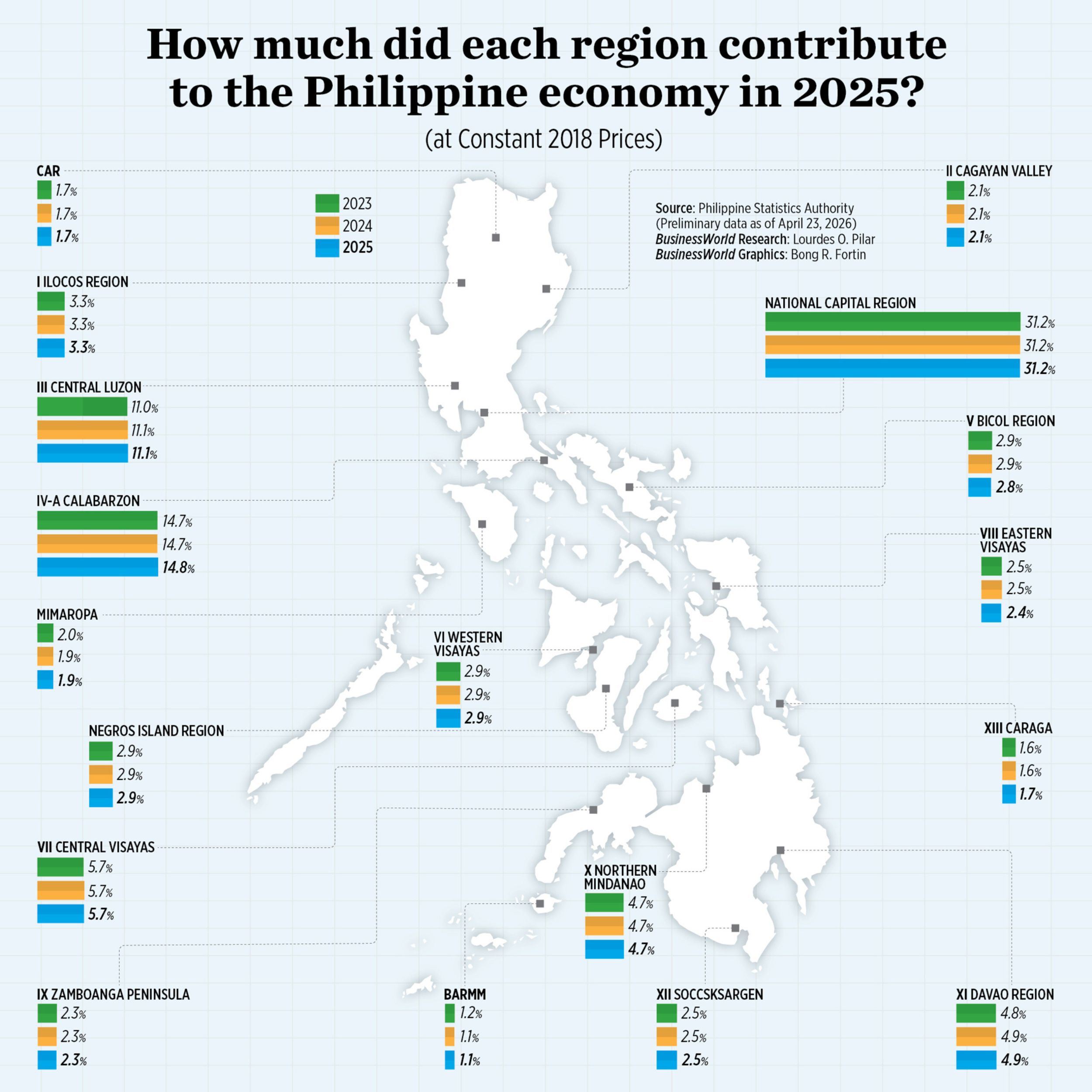
How much did each region contribute to the Philippine economy in 2025?

GROWTH in Metro Manila’s economic output slowed to a five-year low of 4.4% in 2025, dragged down by the flood control scandal and severe weather effects, the Philippine Statistics Authority (PSA) reported on Thursday.  Read the full story.

DMW, GCash support OFW reintegration through entrepreneurship

For many overseas Filipino workers (OFWs), returning home can be bittersweet. While they get to return to their families and enjoy the fruits of their labor, it can be a daunting experience due to the loss of financial stability that they have come to rely on abroad.

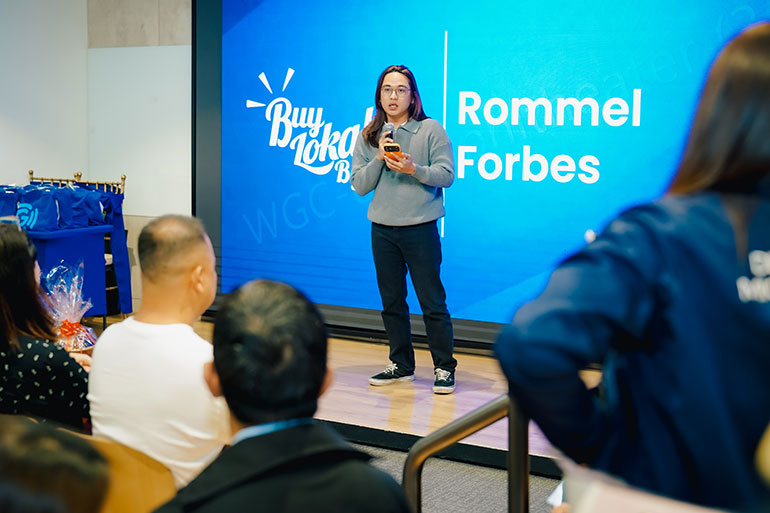
To aid in this reintegration, the Department of Migrant Workers (DMW) and GCash have launched “Buy Lokal, By OFWs”, on the GHub feature of GCash, a joint initiative aimed at helping OFWs transition back home by building sustainable livelihoods through entrepreneurship and digital support systems.

As part of this initiative, GCash opened a trade fair featuring products from the enterprises owned by OFW-turned-entrepreneurs.

Among the OFW-owned enterprises present at the fair are Deomare Consumer Goods Retailing, Desmond Farm, Cleode Health and Beauty, Lola Puring’s Food Products, Tingtano Enterprises, Sauce On Food House, EM-AR Handicrafts Trading, and Mhira Natural Soap and Cosmetics.

“This is very important because you can introduce your business more with the help of GCash and DMW. You can go anywhere, and that can really help our business. 

We’re so grateful to be one of the participants here. We were able to really enhance our business,” Marilou Sioson, a former seawoman and owner of Sauce On Food House, said in an interview.

Echoing similar sentiments from fellow OFW entrepreneurs, Caroline de Ocampo, a former OFW in Taiwan and owner of Cleode Health and Beauty, also underscored how GCash has simplified business operations under the initiative.

“In all aspects, when you’re doing business, you won’t be lost. So, thank you to DMW, and especially to GCash, because of the transaction of what’s coming in, coming out, and things like that. You won’t need cash anymore, and the whole process is just much easier,” Ms. de Ocampo said.

Sharing a similar experience on market access challenges, another OFW entrepreneur highlighted how the initiative helps address one of the biggest hurdles faced by returning workers.

“It’s good because they can be exposed to the markets. Especially when you come home, when you come here, one of the first questions that you will encounter is where you will sell. That was actually our problem at the onset,” Christian Facun, a former OFW in Italy and owner of Tingtano Enterprises.

Building on this, other OFW entrepreneurs also reflected on how their overseas experience shaped their drive to pursue business ventures beyond their life abroad.

“There are a lot, like how to handle people. Based on my experience as an assistant chef and in handling a restaurant, I also saw how the chefs there used ingredients such as basil, and with my business, Filipinos can now buy them,” Mr. Facun said.

Ms. Sioson also shared a similar perspective, emphasizing how her experience as an OFW helped shape her long-term goals beyond working abroad.

“In a way, of course, being an OFW helped us because this is where you really need a budget for the family and for your business. But for us, our life is not just about being an OFW. We wanted to have something after this journey,” she added.

For Ms. de Ocampo, she pointed out how her overseas experience contributed to specific aspects of her business operations, particularly in packaging and product preparation.

“My experience in Taiwan helped me,” Ms. De Ocampo said. “I used to do packaging and labelling in Taiwan. So, in my product now, even if I’m not well-versed in business, at least the packaging side helped me.”

Empowered abroad and at home

DMW National Reintegration Center for OFWs Director Andrea Luisa Anolin highlighted the importance of the department’s partnership with GCash in expanding opportunities for returning workers, especially amid global and geopolitical tensions that may affect OFWs.

“The partnership that we have with GCash is very important to us at DMW, because it opens up new options for our OFWs who are returning to the Philippines… It opens up the reach of our goods, products, and those manufactured by our OFWs, basically to the whole world,” Ms. Anolin said.

The DMW representative also emphasized that reintegration goes beyond employment and includes empowering OFWs to succeed in business and life back home.

“Their story of life will not end when they return to the Philippines,” the official said. “Their dream will not only be possible when they are abroad, but it’s also possible when they return.”

Meanwhile, the finance superapp said the initiative is designed to guide OFWs from overseas employment into business ownership, helping them secure long-term income upon their return.

“Buy Lokal, By OFWs is a reintegration and entrepreneurship program that helps our OFWs to start and develop their own business. Especially when they go back to the Philippines, we also support locally made products,” said Julie Anne Abalos, Head of International Transfers at GCash.

She added that the initiative focuses on enabling OFWs to build sustainable enterprises, with GCash providing digital tools such as payment systems and access to its marketplace platform, GHub, to expand operations and market reach.

“In GCash, our role is to digitally enable OFW-owned businesses, from digital payments and financial services to a larger market reach, so they can easily operate and run their own business,” Ms. Abalos explained.

The GCash executive mentioned that support for OFWs begins even before they return home, through remittance and financial services available overseas, and continues through reintegration programs in the Philippines.

“While abroad, GCash supports them through secure digital payments and remittances via GCash overseas and their everyday financial services. They also continue to support through programmes like Buy Lokal By OFWs, helping them start businesses, manage their finances, and build sustainable livelihoods,” Ms. Abalos said.

The initiative shows a growing push to empower modern-day heroes by helping them build sustainable livelihoods at home. With continued support from both government and private sector partners, programs like this aim to turn returning workers into entrepreneurs who can contribute to long-term economic growth.


Spotlight is BusinessWorld’s sponsored section that allows advertisers to amplify their brand and connect with BusinessWorld’s audience by publishing their stories on the BusinessWorld Web site. For more information, send an email to online@bworldonline.com.

Join us on Viber at https://bit.ly/3hv6bLA to get more updates and subscribe to BusinessWorld’s titles and get exclusive content through www.bworld-x.com.

EastWest Bank sees ‘muted’ loan growth as war shock hits consumer sector

EASTWESTBANKER.COM

EAST WEST Banking Corp. (EastWest Bank) expects subdued lending this year as the Middle East war’s impact on consumption is expected to hit its retail business, which is its main growth driver.

“I think it’s expected to be more muted in terms of loan growth. Provisioning will continue. You’ve seen us do that over the last few years, and we will continue. I think prudence and discipline are the way forward,” EastWest Bank Chief Executive Officer Jerry G. Ngo said in an online media briefing on Thursday.

The bank already increased its provisioning preemptively as they expected weak Philippine economic growth in 2025 in the wake of a corruption scandal involving government infrastructure projects to continue weighing on consumer sentiment this year, he said.

“Unfortunately, this time, I wouldn’t say we’re a victim of circumstance, but we’re basically recipients of secondary impact and effects. So, we are expecting consumption to be a bit more muted than what we have previously seen,” he said. “I think we’re going to start to see shifts in types of consumption, some discretionary, lavish consumption. I think it will be more focused on essentials.”

“I do expect from a macro perspective that it’ll be a bit more of a challenging year than what we were experiencing last year.”

EastWest Bank’s net loans grew by 13% year on year to P336.4 billion in 2025. Consumer loans went up 16% to P274.4 billion, driven mainly by credit cards, teachers’ loans, auto loans and personal loans, while corporate loans rose to P60 billion from P59.6 billion.

The bank plans to sustain its loan loss provisioning at about 80%.

EastWest Bank will be more prudent in its lending and focus on certain sectors to manage potential asset quality risks, Mr. Ngo said. The bank could also adjust its loan book mix, as about 80% of its portfolio is from the consumer sector.

It will also continue to build its private wealth segment and expand its small, and medium enterprise loan book despite possible risks from higher oil prices.

Mr. Ngo said in February that they are targeting broad-based growth this year and aim to increase the share of corporate borrowings in its total portfolio by two to three percentage points, with the segment expected to grow faster than its entire loan book’s expansion.

Meanwhile, the bank’s net interest margins could be pressured if the central bank turns hawkish to manage inflation risks, he said. The Bangko Sentral ng Pilipinas on Thursday hiked benchmark interest rates by 25 basis points in a preemptive move to help rein in price pressures amid the Middle East war. It also signaled further tightening ahead as it now sees inflation breaching its 2%-4% tolerance band until next year.

EastWest Bank’s net income surged by 21% to P9.1 billion last year on the back of strong core revenue and fee income growth.

Its shares went up by 50 centavos or 3.7% to end at P14 each on Thursday. — Aaron Michael C. Sy

Going energy local

THE 60-kilowatt-peak (kWp) On-Grid Hybrid Solar Photovoltaic (PV) System installed on the municipal hall rooftop of Guiuan, Eastern Samar done in partnership with the Philippine-based NGO Institute for Climate and Sustainable Cities (ICSC).

The tide is rising on all fronts in the democratization of energy. In the global stage, among states, the ongoing disruption in the global supply of petroleum products has re-ignited talks about energy sovereignty. Countries are urgently pursuing diversification of energy sources and, more importantly, accelerating the exploration and use of indigenous resources, particularly renewable energy (RE). At the level of the consumer in the Philip-pines, energy democracy is also gaining ground as more end-users are discovering and engaging in the various consumer choice programs that allow them to contract directly with suppliers and negotiate rates for generation and supply of power to their homes and offices. Cost-competitive RE technologies, such as solar PVs, empower consumers to produce their own power leading to the emergence of the category of “prosumers” — producers/consumers of electricity.

Over the last few years, however, there has also been momentum building between the levels of states and end-users. Quietly yet firmly, local governments, together with electric cooperatives (ECs), are now taking a more active role in shaping the energy destiny of their provinces and municipalities.

Founded on the principles of local autonomy under the Constitution and Republic Act No. 7160 or the Local Government Code of 1991, fueled by decades of frustration over persistent energy poverty or unaffordable power rates in their communities, various local government units (LGUs) are now drawing up local energy plans that are intended to address the specific needs in their areas and fuel the developmental aspirations of their respective regions. The plans are not just technical and economic checklists; these are roadmaps that form practically an energy liberation agenda.

EVOLVING ROLE OF ELECTRIC COOPERATIVES
Last week, I was fortunate to join the 2026 EC Summit co-organized by the National Electrification Administration (NEA) and Climate Smart Ventures (CSV). I was invited to moderate the panel on Day 1 of the two-day event on the topic “From State Assistance to Self-Reliance: Leveraging Innovative Finance for a More Resilient EC While Upholding the Non-Stock Non-Profit Spirit of Rural Electrification.” Despite the rather intimidating title for the panel, the discussions were quite down-to-earth, realistic, and encouraging, with panelists from CSV, the Department of Energy (DoE) and the Romblon Electric Cooperative (Romelco). Among our off-grid areas, the story of Romelco is quite unique and inspiring.

Rene Fajilagutan, the General Manager (GM) of Romelco, shared how the cooperative started their journey to energy security by directly investing in and developing their own RE plants. By introducing RE into their supply mix, the goal was primarily to reduce the reliance on expensive and imported diesel fuel, and to manage the risk of power interruptions caused by diesel delivery disruption.

Romelco today has wind, mini-hydro, solar hybrid, solar rooftops, and biogas facilities supplying 107 barangays in its franchise area. With the integration of RE, the cooperative is able to manage its costs and reduce the rates paid by their end-users as well as their need for subsidies under the Universal Charge-Missionary Electrification (UCME). It is also able to achieve full electrification of its franchise areas with the deployment of small-scale RE solutions to the last-mile barangays.

“While Romelco was able to manage the rates charged to consumers with RE adoption and hybridization, how did RE integration impact the reliability of your network?,” I asked Mr. Fajilagutan. His response, to my mind, should have made the headlines in the next day’s papers: “RE has made our system more reliable,” he said. He explained that the installation of small-scale RE and energy storage solutions where these were needed by the system allowed them to manage load and voltage dropping in certain areas. The use of multiple and strategically located generation facilities, instead of singular or few large-scale generators, likewise gave greater ability to the EC to contain or isolate outages, minimizing the risk of a system-wide blackout resulting from generator fault or issues.

The story of Romelco presents many valuable lessons on RE project development, financing, and EC governance, among others, but two stand out in the context of the ongoing energy crisis: 1.) ECs, particularly in the off-grid areas, can break out of their traditional role of network operation and successfully address the unique energy requirements, including steady and affordable power supply, of their localities, within the limits of law and regulation, and, 2.) the deploy-ment of RE facilities, when strategically sited for operations and appropriately structured for financing, can be a viable solution for network reliability issues and the challenge of total electrification.

FROM BUTUAN TO GUIUAN, ILOILO TO MARAWI
After the EC Summit last week, I joined the energy planning workshop in Tacloban organized for the Municipality of Guiuan by the Institute for Climate and Sustainable Cities (ICSC). Guiuan is a second-class municipality in Eastern Leyte, located in the southernmost tip of Leyte Island. The municipality occupies a special place in history as it includes the island of Homonhon where Ferdinand Magellan is said to have landed in 1521. Homonhon is one of the two off-grid islands that belong to Guiuan, both of which do not have a steady supply of electricity, the residents there enjoying only up to eight hours a day of power supply.

During the four-day workshop, what struck me was the level of engagement and preparedness exhibited by the LGU officials of Guiuan. There were no passive members of the audience — everyone paid attention to the learning ses-sions and asked insightful questions that showed their ability to connect the concepts with on-the-ground realities of their constituents. Tangible and workable outputs were produced by the working group activities, with metrics and timelines set out. For instance, there were exhaustive discussions on the adoption of a sustainable livelihood model for off-grid areas like Homonhon and Suluan that would involve the bundling of an electrification solution for the is-lands together with a catalytic livelihood project, such as an ice plant or cold storage facility which is crucial for the fishing communities. The vision for Guiuan was also clearly articulated: energy self-sufficiency, RE-literate, and RE-skilled Guiuananons; solar-powered households; dynamic tourism and industries; and, ultimately, Guiuan as a model RE-powered city.

Representatives from Butuan City were also present to share their own energy security journey. In August 2025, the city adopted the Butuan City Energy Development Plan (BEDP) for 2023-2050. Butuan City, along with the rest of the CARAGA Region, has enjoyed rapid economic growth over the last few years, with the region’s growth rate at around 7%. This growth in demand, as well as the desire to secure clean energy resources and mitigate the price vola-tility of imported fuel, compelled the LGU to craft its own energy development plan to meet its economic ambitions.

With the support of various organizations, including the World Wide Fund for Nature Philippines, the International Climate Initiatives, and the University of the Philippines, the LGU was able to develop the long-term plan that serves as the basis for development of resources located locally, siting of projects, provision for local incentives, and modernization of government facilities and properties for energy efficiency and full fleet transition to electric mobility by 2050.

Earlier in March, I also witnessed this synergy of interests among LGUs in a workshop in Marawi City, organized by the United Nations Development Program (UNDP), for the energy planning of the province of Lanao del Sur.

The power situation in the province has always been problematic and complex, characterized by unreliable power supply and the EC (Lanao Del Sur Electric Cooperative or LASURECO) burdened by billions of pesos in debt and governance issues. The LGU currently has taken a firm stance to find a permanent and long-term solution to these persistent problems. In the workshop, representatives from the province of Iloilo shared their journey that led to the adoption by the Sangguniang Panlalawigan of the Iloilo Provincial Ordinance for Renewable Energy (I-PORE). The ordinance is the first in the country that allocates a portion (1/2 of 1%) of the annual provincial budget for RE projects.

Immediately following the workshop, on March 24, the Provincial Governor of Lanao Del Sur issued Executive Order No. 009 creating the Provincial Renewable Energy (RE)/Energy Efficiency (EE) Program Management Coun-cil (PMC) to “function as the primary coordinating, planning and oversight body for all renewable energy and energy efficiency initiatives of the Provincial Government.” The PMC is also tasked to develop the Provincial Re-newable and Energy Efficiency Development Plan. The Executive Order also mandated the adoption of EE measures in all government buildings and procurement of appliances and equipment.

LOCALIZATION OF ENERGY
While the support of local governments in energy projects has always been recognized by the National Government, that role is evolving today to a more central and leading actor in shaping the energy landscape. Technology has been enabling more small-scale, tailor-fit solutions that allow for the adoption of decentralization and localization of energy projects. The active engagement of LGUs in the adoption of local energy plans, particularly those that involve local incentives and out-of-the-box solutions for distinct issues of their communities, inspires hope that solutions can be incubated and deployed at the grassroots level.

There is no doubt that local energy planning exercise increases the chances of achieving energy security from the ground up. Fundamentally, it also strengthens democracy as citizens become more active and discerning par-ticipants in decision-making with a long-term perspective.


Monalisa C. Dimalanta is a senior partner at Puyat Jacinto & Santos Law (PJS Law). She was the chairperson and CEO of the Energy Regulatory Commission from 2022 to 2025, and chairperson of the National Renewable Energy Board from 2019 to 2021.

Filinvest unit secures ERC nod for Mindanao solar project

STOCK PHOTO | Image by JCOMP/FREEPIK

FDC GREEN ENERGY Corp., a wholly owned subsidiary of Filinvest Group’s utility arm, FDC Utilities, Inc., has secured government approval to connect its solar project in Mindanao to the grid, allowing it to begin commercial operations.

In a statement on Thursday, FDC Utilities said it received a certificate of compliance from the Energy Regulatory Commission (ERC) for its 20.774-megawatt-peak ground-mounted solar facility to be built at the PHIVIDEC Industrial Estate.

The company said the certificate confirms that the facility has met technical, safety, and regulatory requirements, allowing it to operate commercially.

The solar project is expected to generate about 30.2 million kilowatt hours of electricity annually.

FDC Utilities said the project will add capacity to the Mindanao grid once operational.

“The ongoing energy crisis has underscored the need for reliable and sustainable power solutions,” said FDC Utilities President and Chief Executive Officer Juan Eugenio L. Roxas.

“In an environment where global fuel markets are increasingly unpredictable, projects like this highlight the importance of investing in indigenous and renewable energy sources,” he added.

In 2024, FDC Utilities said it plans to triple its generating capacity to 1,350 megawatts by 2033, with most of the expansion coming from renewable energy. — Sheldeen Joy Talavera

Is your cat or dog overweight? Why simply feeding less doesn’t always help

OVERWEIGHT and obesity are among the most common conditions veterinarians see in both dogs and cats. Yet weight-loss plans for pets are frequently unsuccessful, with a high drop-out rate. In one study, over half of participating dogs actually gained weight. In a new study published in the journal Animals, we argue weight management in pets often fails because we view it too narrowly — as a nutritional problem that can be solved simply by feeding the animals less.

Yet evidence suggests to manage weight in pets, we also need to attend to animal behavior, and human-animal interactions are a huge part of that. Body condition scoring is the most common method vets use to classify animals as underweight, ideal weight, or overweight. The Global Pet Obesity Initiative uses a scale of one to nine, with a body condition score of five representing ideal body weight.

Each category between one and nine represents a 10% difference in weight. For example, an animal with a body condition score of six out of nine is 10% overweight, while a score of seven out of nine means the pet is 20% overweight. Obesity is defined as having a body condition score of eight out of nine (30% overweight) or above.

HOW COMMON ARE OVERWEIGHT AND OBESITY IN PETS?
Globally, about half of the pet dog and cat population is overweight or obese, with middle-aged pets most commonly affected. The largest study (conducted in the United States), comprising almost 5 million dogs and more than 1 million cats, reported excess weight and obesity in 50% and 13% of adult dogs respectively, and in 45% and 22% of cats. High rates of overweight and obesity have been reported in Australia, New Zealand, Europe, and China. Overweight and obesity are more common in animals who are highly motivated by food, those with reduced physical activity (including indoor-housed cats) and, in some studies, those who’ve been desexed. Some breeds, such as Labra-dor retrievers, have a genetic predisposition to obesity. Owner activity levels, lifestyle, and the nature of their bond with pets also influence the pets’ risk of obesity. When it comes to animals they love, many owners have “weight blindness” — they don’t even see their pets as over-weight.

WHY SHOULD WE WORRY ABOUT OVERWEIGHT AND OBESE PETS?
Just like for humans, overweight and obesity in pets are associated with increased risk of diseases such as diabetes, heart disease, skin disease, and cancer. Excess weight exacerbates conditions like osteoarthritis, and increases the risk of heat stroke. Lifespan is reduced in obese dogs and cats. Carrying excess weight can prevent animals from engaging in behaviors like exercise, play, and interaction with other animals and people. The World Small Animal Veterinary Association describes obesity as the most important global animal welfare issue.

WHY DOES TRADITIONAL WEIGHT MANAGEMENT FAIL?
The standard approach to help your pet lose weight involves calorie restriction, increased exercise, and regular weighing. It sounds so simple. And yet this approach often fails.

Pets who are fed less show hunger and increase their food-seeking behavior, making owners feel guilty. They eat their reduced portions quickly, using the additional time to look for or demand more food. Animals accustomed to receiving treats or scraps from the family dinner table may protest their exclusion from familiar routines. Such behavior is difficult to resist — many owners succumb and provide treats.

Caloric restriction alters metabolism, which can initially increase weight gain, and the lack of progress can be demotivating. Some dogs and cats are fearful in veterinary settings, and owners find regular weigh-ins too traumatic.

All these factors can put owners (and animals) off sticking with the weight-loss plan.

HOW TO HELP YOUR PET LOSE WEIGHT SUCCESSFULLY
1. Use accurate information to formulate a weight management plan. All pets should be regularly weighed and scored on their body condition. Pet owners can use body condition scoring sheets for dogs and cats to do this at home.

Fearful pets who don’t like being weighed at the vet can be weighed on home scales. Importantly, take note of what your pet eats (including treats and scavenged foods) and share this information with your vet.

A complete dietary history helps in planning a diet compatible with your pet’s preferences. High-calorie foods could be substituted for ones with fewer calories, for example.

2. Diets should be low calorie, high satisfaction. Weight-loss diets should be nutritionally complete. The best diets are those that are reduced in calories, but still leave animals feeling satisfied after a meal.

Low-calorie treats can be factored into the daily ration so that animals don’t miss out.

3. Provide opportunities to hunt, find and forage food. Feeding the daily ration in multiple smaller meals can burn additional calories and increase time spent eating. Allowing animals to “hunt” for food by providing food in puzzle feeders, scatter feeding, or setting up “treasure hunts” allows them to express natural behaviors. Animals may use up more calories and experience more pleasure from foods they can chew. They may also spend less time “asking” owners for food.

4. Be prepared for begging. Animals used to receiving table scraps will dial up their attention-seeking behavior in an increased effort to be rewarded. It can be hard to resist such antics, but rewarding begging with a food mor-sel will only encourage pets to intensify their efforts.

Instead, try to preempt them by providing a rewarding alternative activity (such as giving a dog a toy to chew on their bed) while you eat your meal in peace. Non-food related activities, including sensory gardens and digging pits, climbing opportunities or interactive toys may also provide suitable distractions.

Weight loss in pets is about giving them more years of good-quality life. With the right tools — not just calorie counting — we can keep our pets happy and healthy. — The Conversation via Reuters Connect

ANNE QUAIN is a Senior Lecturer at the Sydney School of Veterinary Science, University of Sydney. She has been a consultant or volunteer for a range of organizations including Animal Management in Rural and Remote In-digenous Communities (AMRRIC) iCatCare, the Cat Protection Society of NSW, the Royal Agricultural Society and RSPCA Australia. She has donated to several charities including Animals Australia, AMRRIC, the Cat Protection Society of NSW, RSPCA NSW and VALE. She is a member of the Australian Veterinary Association and the Australian and New Zealand College of Veterinary Scientists, and a Diplomate and Subcommittee Chair of the European College of Animal Welfare and Behavior Medicine in Animal Welfare Science, Ethics and Law. She has been a recipient of an Australian Companion Animal Health Foundation Grant, and has undertaken two project-based resi-dencies at The Ethics Center.

RIMINI QUINN is a PhD Candidate at the School of Veterinary Science, University of Sydney. She is a member of the Australian and New Zealand College of Veterinary Scientists (Veterinary Behavior Chapter), the Pet Profession Guild and is a Fear Free certified professional. She donates to Vets against live export (VALE) and Animals Australia.

PHL jobs vulnerable to GenAI estimated at 28%

STOCK PHOTO | Image by VECTORJUICE/FREEPIK

NEARLY 28% of jobs in the Philippines are now exposed to generative artificial intelligence (GenAI), placing the country at the upper end of the exposure scale across the Association of Southeast Asian Nations (ASEAN) region.

Research by the International Labour Organization (ILO), released this week, found that the Philippine ranking was due to its service-oriented economy and its established global leadership in the information technology and business process management industry.

The findings point to a transformation of work rather than a total elimination of positions, the ILO said.

ILO employment specialists Phu Huynh and Felix Weidenkaff noted that only 3-4% of the total Philippine workforce falls into the highest exposure category, with an elevated risk of job displacement.

Clerical support roles are the most affected, with 93.7% of these jobs exposed to GenAI and 37.8% facing the highest automation risk. In the finance and insurance industries, nearly nine in 10 jobs are currently exposed, according to ILO.

“The vast majority face partial task automation, meaning work will evolve rather than disappear,” the ILO said.

The ILO noted that women face substantially higher exposure due to their concentration in clerical and administrative roles, with 5.85% of female employment in the Philippines in the highest risk category compared to 2.15% for men.

Education levels also determine exposure, as 10.4% of tertiary-educated workers face the highest automation risk, yet the risk for those with basic education is less than 1%.

The ILO added that these findings align with the national agenda set by President Ferdinand R. Marcos, Jr., who launched the Philippines’ ASEAN 2026 Chairmanship with plans to use AI ethically and responsibly to support economic integration, digital transformation, and inclusive growth.

To manage this transition, the ILO recommends human-centered policies that ensure AI governance promotes better jobs and adheres to international labor standards.

“GenAI across ASEAN will likely transform occupational roles and tasks, critical measures including upskilling and reskilling initiatives, employment facilitation services, career development support, and the provision of timely, robust labor market intelligence are needed for targeted support,” the ILO said.

“Finally, these transitions cannot be managed without tripartite cooperation. Social dialogue between governments, employers, and workers will be essential in shaping how GenAI transforms workplaces in ASEAN,” it added. — Erika Mae P. Sinaking

Chinabank Q1 net profit climbs to P6.8 billion

BW FILE PHOTO

CHINA BANKING Corp.’s (Chinabank) net profit increased by 4% to P6.8 billion in the first quarter, backed by strong growth in its core businesses and stable asset quality.

This translated to a 14.2% return on equity and a 1.5% return on assets, it said in a disclosure to the stock exchange on Thursday.

The bank’s net interest income jumped by 14% year on year to P19.5 billion as it saw higher topline revenues and lower interest expenses.

As a result, its net interest margin improved by 12 basis points to 4.61%.

Meanwhile, Chinabank’s operating expenses climbed by 5% to P8.8 billion. It attributed the increase to its ongoing investments in human capital and digital transformation.

Its cost-to-income ratio was at 49%, which it said is “healthy… despite higher spending on technology and initiatives aimed at driving revenue growth.”

The bank’s gross loans grew by 16% year on year to P1.1 trillion at end-March amid strong demand across its consumer and corporate segments.

Its nonperforming loan (NPL) ratio was at 1.6%.

“Despite steady asset quality,… Chinabank remained committed to prudence, increasing loan loss provisions to P684 million, resulting in an NPL coverage ratio of 110%,” it said.

Meanwhile, total deposits rose by 13% to P1.5 trillion, with low-cost checking and savings accounts (CASA) rising by 20%. As a result, its CASA ratio improved to 48% from 46% previously.

Chinabank’s assets expanded by 12% year on year to P1.9 trillion at end-March, “driven by the strategic buildup of high-quality earning assets.”

Total equity went up by 10% to P192.3 billion.

Chinabank shares closed unchanged at P64 apiece on Thursday. — BVR

Converging evidence for monetary policy tightening

By the time this column comes out Friday morning, the Bangko Sentral ng Pilipinas (BSP) must have acted, and acted correctly, by tightening monetary policy by at least 25 basis points (bps). At this stage, the question is no longer whether to move, but whether policy will move fast enough to stay ahead of the curve.

The evidence is not just compelling; it is converging.

What began as a supply shock from geopolitical tensions in the Middle East has now metastasized into an increasingly generalized inflation problem. Higher fuel prices have already worked their way through transport, freight, and logistics, raising the cost structure of virtually all goods and services. Utility price increases are imminent. The restoration of rice tariffs this month, given rice’s nearly 9% weight in the consumer price index, adds a direct and immediate source of upward pressure. These are not temporary disturbances. They are the channels through which supply shocks become embedded in the broader price system.

And that is precisely what is happening.

Evidence shows that indeed second-round effects are no longer a risk, they are underway. Businesses are adjusting prices not just to reflect higher input costs, but in anticipation of further increases. Workers, seeing their purchasing power erode, will soon demand wage adjustments. Once this wage-price dynamic sets in, inflation becomes more persistent and far more difficult to reverse. The window for preemptive action is rapidly closing. This is cause for serious concern.

Expectations are already shifting. Business and consumer sentiment surveys point to weakening outlooks even as prices continue to rise. For both households and business, this is the worst possible combination: slowing growth alongside rising inflation. If inflation expectations become unanchored, the BSP will be forced into a much more aggressive tightening cycle later, one that could impose far greater costs on growth and employment. This is where these recent talks about stagflation are coming from.

For those who would not act unless they see proof, an early warning signal is unmistakable: core inflation. In the first quarter of 2026, core inflation rose from 2.4% to 3%. This is not noise. It is a signal that inflation is broad-ening beyond volatile components and taking root in the underlying structure of prices. Households are spending more not because they are better off, but because everything costs more. This is the anatomy of demand de-struction — an erosion of real incomes that will eventually force consumption to contract.

The uncomfortable truth is that policy has lagged these developments.

The BSP maintained an easing bias in February and paused in March despite the announcement of a 5.1% inflation forecast for 2026 and escalating geopolitical risks. While it is true that monetary policy cannot directly offset supply shocks such as higher oil prices, it is equally true that it must prevent these shocks from spilling over into expectations, wages, and broader price-setting behavior. That spillover is now evident.

Not a few would deny this, but compounding the problem is impaired monetary transmission. In theory, lower policy rates should stimulate borrowing and spending. In practice, banks behave pro-cyclically. In periods of un-certainty like the pandemic of 2020, banks actually tightened credit standards, shortened loan maturities, and demanded stronger collaterals. The result is a paradox: policy rates fell, but effective financial conditions did not ease. Under these conditions, further easing risks fueling inflation without delivering meaningful support to economic growth.

This is not conjecture; it is textbook adverse selection and moral hazard at work. When information is imperfect and risks are elevated, lenders pull back. As a result, the central bank cannot assume that lower rates will translate into higher lending or investment. If anything, the imbalance between liquidity and risk aversion can distort markets further.

At the same time, external constraints are tightening. The interest rate differential with the US Federal Reserve has narrowed following successive BSP rate cuts, increasing pressure on the peso and raising the risk of capital outflows. With inflation forecasts for 2026 rising and remaining elevated into 2027, the room for policy accommodation has effectively been exhausted.

As expected, financial markets have already internalized this reality. Indicators such as credit default swaps suggest rising risk perceptions and a growing expectation of tighter policy. Economists and forecasters, once divided, are now tilting toward rate hikes. The signal is clear: policy credibility is on the line.

The BSP’s mandate for promoting price stability is straightforward. It has already done its part in supporting growth through earlier, successive easing. Even the reserve requirement ratios have been brought down to a single digit, delivering additional liquidity into the system. But the environment has changed, and policy must change with it. Governance issues, fiscal constraints, and global volatility may be outside the BSP’s direct control, but they amplify the consequences of delayed action. In such an environment, anchoring expectations becomes even more critical.

A 25-basis-point increase is therefore not just appropriate, it is necessary. But it must also be understood as only the beginning of a tightening cycle, not a one-off adjustment. The BSP must signal clearly that it is pre-pared to act further if inflation pressures persist.

The geopolitical backdrop reinforces this need for forward-looking policy. The range of possible outcomes, from a relatively short conflict to a prolonged disruption, differs in magnitude but not in direction. Even under a “benign” scenario, oil prices are likely to remain elevated and supply chains disrupted. A more adverse scenario of prolonged conflict, and sustained oil prices above $100, peso depreciation would intensify inflationary pressures and complicate policy choices further.

In other words, uncertainty is not an argument for caution; it is an argument for preparedness.

Monetary policy cannot wait for clarity that may never come. It must act on probabilities, not certainties.

To be sure, the current predicament also reflects deeper structural weaknesses. Overreliance on fossil fuels, the absence of a robust strategic petroleum reserve, limited diversification of trade and investment flows, and per-sistent governance challenges have all increased the economy’s vulnerability to external shocks. Fiscal space remains constrained, not least because of widespread inefficiencies and unprecedented leakages in public spending through unmitigated corruption. These are long-standing issues that require sustained reform, but they also heighten the urgency of credible monetary policy today.

Inflation targeting and central bank independence have served the country well. But they are only as effective as the willingness to act decisively when conditions demand it.

That moment is now.

The BSP must move — not cautiously, not hesitantly, but with clear intent. Tighten today, and be prepared to tighten further if needed. The cost of acting too little, too late will be far greater than the cost of acting early and decisively.

In the end, credibility is the most powerful instrument of monetary policy. It must be used.

Diwa C. Guinigundo is the former deputy governor for the Monetary and Economics Sector, the Bangko Sentral ng Pilipinas (BSP). He served the BSP for 41 years. In 2001-2003, he was alternate executive director at the International Monetary Fund in Washington, DC. He is the senior pastor of the Fullness of Christ International Ministries in Mandaluyong.

ADVERTISEMENT
ADVERTISEMENT