Home Blog Page 6968

BSP receives P41.3-M grant from French gov’t for inclusion initiatives

THE BANGKO SENTRAL ng Pilipinas (BSP) has received a €700,000 (P41.3-million) grant from the French government for programs meant to bring more Filipinos into the financial system.

The BSP said in a statement on Thursday that it signed a grant facility agreement with the Agence Française de Développement (AFD) or the French Development Agency.

This grant complements the Inclusive Finance Development Program, a program which AFD has been supporting since 2019 alongside the Asian Development Bank (ADB), through a €100-million sovereign policy-based loan to the Philippines.

“The technical assistance program aims to enhance the regulation and supervision of inclusive digital finance; promote digital financial literacy; and contribute to the public policy dialogue on agricultural insurance,” BSP Governor Benjamin E. Diokno said at an online briefing on Thursday.

Mr. Diokno said the grant has an indicative five-year timeline, which starts with the procurement process starting from the fourth quarter of this year to the second quarter of 2022. Project implementation will be from the third quarter of 2022 to the fourth quarter of 2025, and the grant’s wrap-up is expected by 2026.

Three activities were approved by the AFD for funding with the grant, with the first to focus on crafting the central bank’s supervisory technology (suptech) program to optimize data and analytics for financial supervision.

It will also fund a digital financial literacy program for rural clients, low-income women, and microentrepreneurs, while the third component is focused on assessing agricultural insurance to help mitigate climate risks.

“The BSP, as beneficiary and implementing agency, will be responsible for the overall project implementation, including management of the grant funds and the procurement of the project consultants,” Mr. Diokno said.

Central bank data showed only 29% of Filipinos had accounts with financial institutions as of 2019, leaving behind 51.2 million adults still unbanked.

Mr. Diokno said financial inclusion improved last year on the back of a rise of digital transactions due to the coronavirus pandemic.

Basic deposit accounts rose 65% in 2020 to 6.6 million from 4 million in 2019, he said. Meanwhile, e-money accounts grew 94% to 34.7 million from 17.9 a year earlier.

About 5.3 million individuals who were previously unbanked also opened accounts with the Land Bank of the Philippines as the lender was co-located in national ID registration centers.

“We use the basic deposit accounts and e-money accounts as proxy indicators, given that these types of accounts are typically opened by those who were previously unbanked,” Mr. Diokno said.

The central bank chief said he is optimistic that their target to have 70% of the adult population banked by 2023 is reachable amid the rise in digital transactions and the national ID initiative. — LWTN


TV5’s Sing Galing returns with celebrity guests

“IT’S SO nice to be happy. Everybody should be happy,” comedian Donita Nose (a.k.a. Rodello Juntos Solano) referring to the song “Happy” by Italian singer Alexia as she described the new season of TV5’s karaoke singing competition Sing Galing. After the success of its comeback in April 2021, for this edition the show will have guest celebrities sing and play and win for their chosen beneficiaries or “bida-ficiaries” in Sing Galing: Sing-lebrity Edition.

The show also has a new roster of judges or “jukebosses” — singer Dingdong Avanzado, comedians Ethel Booba and Allan K, and singer-songwriter Rey Valera.

“It’s not just a contest. It is entertainment personified, because you witness the personality of each ‘sing-lebrity.’ It adds dynamics to the show,” Mr. Avanzado said in a mix of English and Filipino during an online press conference on Sept. 13.

Current “sing masters” Randy Santiago, K Brosas, and Donita Nose will reprise their roles as hosts and will be joined by social media personalities or “singtokers” Billy King and Queenay (a.k.a. Queenee Mercado). Meanwhile, singer and TikTok personality Zendee will host the allied digital show Now Zending Zikat where the audience can participate in other Sing Galing activities online.

“We see another side of the celebrities. They not only excel in acting but also in singing,” Ms. Solano said in Filipino.

The three celebrity guests will compete through three rounds to determine the “Bida-oke Sing-lebrity of the Night.” The winner will bag a cash prize and will become part of the “Celebri-Team Galing,” the pool of “BidaOke Sing-lebrities” who will advance to the semifinals. Every Saturday, the “sing-lebrities” will compete in the following rounds: “Random-I-Sing: Kantarantahan,” “Hula-Oke Ka Lang D’yan?” and the final round, “Duelo-Oke Extreme.”   

Some of the celebrities competing in the show are Kris Bernal, Joseph, Samantha Bernardo, Paolo Pangilinan, Jayson Gainza, and Baby Boobsie.  

Sing Galing: Sing-lebrity Edition premieres on Sept. 18, 6 p.m. on TV5 with new episodes airing every Saturday. — Michelle Anne P. Soliman

Sia tells SMEs: Focus on ‘goals of progress’

MERRYMART FB PAGE
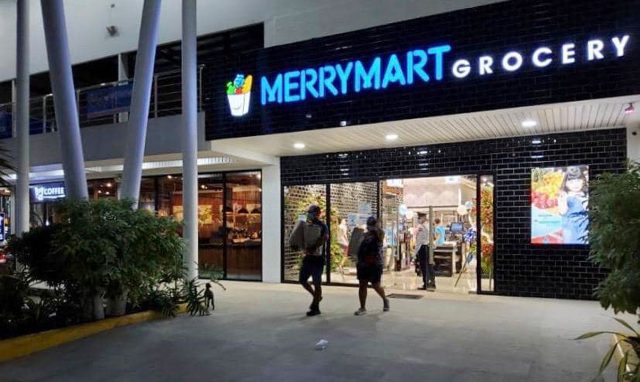
MERRYMART is working on creating a new subsidiary and expanding. — MERRYMART FB PAGE

SMALL and medium enterprises (SME) must keep their focus on attaining their business goals should they decide to tap the capital markets for greater opportunities.

This was the message of Edgar “Injap” J. Sia II, chairman of three listed companies, at the virtual Road to IPO Forum led by the Philippine Stock Exchange (PSE).

“The key is really on keeping your fundamental goals of progress no matter what,” he said.

He said as long as businesses have their fundamentals and growth plans intact, the rest will follow, even if they first list at the local bourse’s SME board.

Mr. Sia’s DoubleDragon Properties Corp. made its PSE debut at the SME board in 2014 with an equity close to P600 million. The company is now setting its eyes on reaching a P120-billion equity by 2030.

“Today, as of June 30, the total equity now stands at P60.3 billion, which already grew more than 102 times versus seven years ago,” he said.

Mr. Sia also chairs MerryMart Consumer Corp., which was the first to list at the stock exchange last year at the SME board, and the real estate investment trust (REIT) sponsored by DoubleDragon, DDMP REIT, Inc., which was the first REIT listing this year.

“IPO (initial public offering) listing is more for growth, and REIT listing is more for yield and long-term capital preservation and acquisition,” Mr. Sia said.

MerryMart is working on creating a new subsidiary and expanding through building household essential retail branches, a new wholesale channel, and the acquisition of grocery and pharmacy retailers.

On Thursday, shares of MerryMart went up by 1.24% or five centavos to close at P4.07 each.

Meanwhile, DoubleDragon shares went down by 0.2% or two centavos to finish at P10.12 apiece, while DDMPR declined by 1.64% or three centavos to P1.80 each. — Keren Concepcion G. Valmonte

The SME finance gap during the pandemic

The DTI MSME Development Plan accomplishment report has very revealing data on MSME access to credit from formal financial institutions. Recall that in 2008, Republic Act No. 9501 prescribes that banks must set aside 8% of their total loanable funds for micro and small firms while 2% should be allocated for medium-sized companies.

The law has lapsed on 16 June 2018 but BSP continues to monitor the exposure of the banking industry to MSMEs. Clearly, the allocation has been on a major downward dive, with the following data: a) 2017: 3.32% micro and small enterprises (MSEs) and 5.03% medium enterprises (MEs); b) 2018: 3.12% MSEs and 4.55% MEs; c) 2019: 2.8% MSEs and 4.3% MEs and d) Q12020:2.09% MSEs and 3.31% MEs.

Even before the 2020 pandemic, the share of MSME loans in the total banking portfolio has been on a major decline. Mandatory credit alone was already not working to push this initiative and it is even getting worse without the mandate. The pandemic with its lockdown is hitting hardest the small and medium firms which suffered from the lack of economic activity and people mobility.

Nationwide lockdowns have disrupted economic activities and slowed down overall growth. Companies, in general, are finding it difficult to repay loan dues to losses and bleak outlooks. This has translated to slower loan growth of the banking sector as the banks have to be more risk averse and discerning in the grant of credit. And when the banks slow down in credit, the first set of clients disenfranchised are those deemed small, vulnerable and with very little lifelines by way of equity capital backing.

This author has monitored the mandatory compliance history of the banking sector in his previous positions, and historically, the compliance mandate has helped MSMEs in its early implementation.

In 1991, the law required banks to set aside 5% of their net loan portfolio for small enterprises. This was revised in 1997 to 6% for small enterprises and 2% for medium enterprises. By 2002, the compliance rate was a high 30%, 17.40% for small and 12.60% for medium. While it tapered off, it was still 8.46% for MSMEs and 7.94% for MEs by 2010.

Let me digress a bit by categorically stating that in this writer’s opinion, the mandatory law worked for SMEs because there is a ready market that can be serviced. The same cannot be said, however, of the agri-agra 25% compliance law which is unrealistic and not commensurate to the number of potential clients. This is especially true of the agrarian part of the law with its untenable requirements as it is obvious that there are not enough ready borrowers in proportion to the overall demand for credit. Mandatory compliance laws must be rational, reasonable, proportionate and implementable. It cannot be based on a pipe dream.

Having made this position clear, one must do an extensive study of what happened in the past 10 years or so for the MSME clientele to have been disfavored by the banking sector in the credit allocation decision. Considering that statistically the large enterprises count of all Philippine business represents 0.49% of the total, is it asking too much to request a mandatory allocation for the rest of the 99.51%? The 2020 Philippine Statistics Authority (PSA) survey recorded a total of 957,620 business enterprises operating in the country. Of these, 952,969 are MSMEs. And the latest tally of bank loans to them is a mere total of 5.4%.

A March 2021 study by the Asian Development Bank Institute of Southeast Asian countries revealed that one-fourth to one-half of the sample MSMEs experienced temporary lockdowns and one-third to two-thirds faced cash shortage. The impact of the pandemic on the employment and the sustainability of businesses was quite severe. MSMEs are prone to using up liquid assets and to cutting employment.

From a banker’s perspective, it is understandable that such firms will be de-prioritized. Thus, the recent downtrend is not a surprise. However, note that this decline has been happening even prior to the pandemic. We cannot therefore use the present circumstances as an excuse, although it is now a major contributor.

Policy makers must study why the mandatory allocation policy worked between 1991 to 2010, and what contributed to its inefficacy over the past 10 years. Among the issues worth exploring are the following: One, what monitoring mechanism was employed? Is the identification of the MSME market correctly done? Two, was the penalty structure commensurate enough to motivate attention to the sector? Could it be that paying penalty is an easier way out? Three, what supporting regulations have been promulgated in support of the sector? Could there have been contrary policies in place? Four, were the agencies assigned to monitor compliance provided with enough power and authority to review real compliance? And finally, did the MSME sector get representation in the development of guidelines and regulations so that their interest is safeguarded?

MSMEs will be the key to the Philippine recovery once we are able to evolve into the new normal. Their financing needs must somehow be addressed in this march to reviving our economy if they are indeed the Philippine’s economic backbone.

The views expressed herein are his own and does not necessarily reflect the opinion of his office as well as FINEX.


Benel Dela Paz Lagua was previously Executive Vice-President and Chief Development Officer at the Development Bank of the Philippines.  He is an active FINEX member and an advocate of risk-based lending for SMEs.

The Bodyguard movie gets a Hollywood remake

LOS ANGELES The Bodyguard, the 1992 movie that launched the acting career of the late Whitney Houston and featured her most famous song, is getting a reboot. Hollywood movie studio Warner Bros. said on Wednesday that a reimagining of the romantic thriller is in development with a script penned by American playwright Matthew Lopez. Mr. Lopez is the playwright behind the award-winning The Inheritance, a two-part drama about gay men in New York a generation after the 1980s AIDS epidemic, that opened on Broadway in 2019. No details of casting, plot or a potential release date were given but Warner Bros. said that Lawrence Kasdan, the writer and producer of the 1992 film, will co-produce the new version. Ms. Houston made her movie debut in The Bodyguard, playing a singer who is protected from an unknown stalker by a former secret service agent played by Kevin Costner. Despite being panned by critics at the time, it went on to become the second biggest film at the worldwide box office in 1992, and Ms. Houston’s rendition of Dolly Parton’s ballad “I Will Always Love You” became a classic. The Bodyguard would join a string of Hollywood movies to get a reboot. Lady Gaga and Bradley Cooper starred in a 2018 remake of A Star is Born, and new versions of sci-fi classic Dune and musical West Side Story are due for release later this year. Reuters

AC Energy inks purchase agreement with SPC unit for two power barges 

AC Energy Corp. has signed an asset purchase agreement with SPC Power Corp. subsidiary SPC Island Power Corp. for the sale of two oil-fired diesel barges, according to a regulatory filing on Thursday.

The facilities up for sale are power barge (PB) 102 and PB 103, which have a capacity of 32 megawatts (MW) each.

“Closing of the sale is expected to be completed in the fourth quarter of 2021, subject to satisfaction of agreed conditions precedent, which include the applicable regulatory approvals,” AC Energy told the local bourse in a disclosure.

PB 102 is based in Brgy. Obrero, Iloilo City, while PB 103 is located in Brgy. Poblacion, Lapu-Lapu City. Both are not operating at this time.

No other details on the asset purchase agreement were provided.

Last month, the Ayala-led power firm announced that its executive committee had cleared the sale of three power barges. The buyers are Prime Strategic Holdings, Inc. or its designated affiliate or subsidiary, and SPC Power Corp. or its designated affiliate or subsidiary.

In a previous disclosure, it said that PB 101 is an operating power plant, while the other two are offline.

AC Energy identified Prime Strategic Holdings or its assigned affiliate or unit as a possible buyer of PB 101, following the board’s approval of the facility’s sale.

The firm hopes to become the largest listed renewable energy platform in Southeast Asia as it targets to reach a net attributable capacity of 5,000 MW by 2025. It has a presence in the Philippines, Vietnam, Indonesia, India and Australia. At home, it has around 1,200 MW of attributable capacity, with renewables accounting for more than half.

AC Energy shares at the local bourse climbed by 3.76% or 38 centavos to finish at P10.48 apiece on Thursday. — Angelica Y. Yang

Xendit Philippines looking to expand product offerings

XENDIT PHILIPPINES is looking to introduce more services, such as business-to-business loans and data products, after it raised $150 million from a new funding round.

The Indonesia-headquartered fintech startup with a local presence raised $150 million through a Series C funding round, which boosted its valuation to $1 billion.

The firm now joins the likes of Grab Holdings, Inc., Lazada Group, and J&T Express that are among Southeast Asia’s unicorns, or startups that have reached a valuation of $1 billion and above.

“This [new funding round] will empower us with the capital to realize all the dreams that we have laid out for the Philippines and across the region,” Xendit Philippines Managing Director Yang Yang Zhang said at a virtual briefing on Thursday.

Xendit provides payments infrastructure for both merchants and consumers. It has partnerships with banks, e-wallets, and credit providers.

Ms. Zhang said their unicorn status will also help the Philippine startup ecosystem.

“To me, it’s a confirmation that on the global stage, the Philippines can be that catalyst to be able to be worth $1 billion in the future,” she said.

Ms. Zhang said they have seen continued growth in their core markets as they have processed over $10 billion in total payments year to date in Indonesia and the Philippines.

“This represents 200% growth year over year, an impressive statistic given the effect of the COVID-19 (coronavirus disease 2019) pandemic on industries… That gives us the confidence that we’ll be able to maintain this explosive growth in the years to come,” she said.

Moving forward, the firm is also working to expand its services beyond payment infrastructures, Ms. Zhang said. Among the services they want to launch are business-to-business loans and data products for financial institutions for electronic Know Your Customer processes.

Xendit Philippines Chief Operating Officer Christian Reyes said they are also looking to enhance user experience, especially for micro-, small-, and medium-sized enterprises.

“We are really investing a lot of our time and resources because we believe the SMEs are the backbone of our economy,” Mr. Reyes said. — L.W.T. Noble

Tallest teen, fastest hair skipping among 2022 Guinness World Records

LONDON From the dog with the longest ears to the world’s tallest teenager, Guinness World Records reveals its latest record breakers in the 2022 edition of the popular book. The annual publication, out on Thursday, features an array of records and feats, including the fastest walking on hands and the most skips over a person’s own hair in 30 seconds. Briton Bethany Lodge, a gymnast since a young age, scored the titles of fastest 100 meter forward rolls in 42.64 seconds and the most backwards somersault burpees by a female in 30 seconds five. American Zion Clark, who was born without legs, took the record for fastest 20 meters walking on hands, achieving the feat in 4.78 seconds. Laetitia Ky from Ivory Coast set the record for most skips over a person’s own hair in 30 seconds 60. The 25-year-old model, actress and artist is known for making sculptures with her locks. The title of tallest teenager living (male) went to American Olivier Rioux, with a height of 226.9 cm (7 ft and 5.33 inches). Lou, whose owner is American Paige Olsen, took the record of longest ears on a dog (living). His ears are 34 cm (13.38 inches) long. Dog and cat duo Lollipop and Sashimi, from Canada, earned the record of fastest five meters on a scooter by a dog and cat (pair), with a time of 4.37 seconds. Reuters

PHL to sign deal with Britain on nurse deployment

REUTERS

LABOR Secretary Silvestre H. Bello III said the Department of Labor and Employment (DoLE) will sign a memorandum of understanding with the United Kingdom on the welfare and deployment of more nurses to the UK.

In an online briefing Wednesday, Mr. Bello said that the memorandum is a “labor affairs agreement” to deploy more Filipino nurses to the UK. London agrees to provide additional benefits to overseas Filipino workers there, especially healthcare workers.

Mr. Bello said the UK does not have a specific number of nurses in mind, but wants to strengthen the bilateral agreement with the Philippines on the deployment of healthcare workers.

The National Government decided to keep the country’s current deployment cap on nurses at 6,500 but the policy does not apply to the UK and Germany due to their government-to-government agreements with the Philippines.

However, Mr. Bello said the policy is “always subject to the amendment of the IATF (Inter-Agency Task Force for the Management of Emerging Infectious Diseases),” and the signing of the memorandum with the UK will institutionalize the policy.

The memorandum will be signed this month, possibly next week, according to Mr. Bello.

His plan to travel to the UK Wednesday to sign the agreement was put aside after he was exposed to DoLE personnel who tested positive for coronavirus disease 2019 (COVID-19) and had to undergo mandatory quarantine.

Mr. Bello said he proposed a virtual signing of the memorandum instead, but the UK’s welfare minister proposed to travel to the Philippines instead.

“They want a face-to-face signing of this memorandum of understanding,” Mr. Bello said. — Bianca Angelica D. Añago

Maynilad, DoT partner for wastewater drive

MAYNILAD Water Services, Inc. partnered with the Department of Tourism (DoT) on a wastewater management campaign to increase public awareness on environmental protection and sustainable tourism.

The west zone water concessionaire signed an agreement with DoT on Thursday to launch the “Maynilad Kubeta PH X It’s More Fun in the Philippines” partnership.

Under the partnership, the DoT and Maynilad will award the “seal of good toilet-keeping” to 24 tourist destination such as parks, historical sites, and restaurants within the water provider’s service area.

“For establishments to be conferred the seal, their restrooms must be consistently clean and well-maintained, and equipped with basic fixtures and amenities, including a working faucet and flush, soap, and toilet paper,” Maynilad said in a statement.

“They also have to be compliant with government regulations on wastewater management via regular desludging of septic tanks, connection to Maynilad’s sewer network, or operation of law-compliant sewage treatment facilities,” it added. 

The DoT will identify the nominees which will undergo document and physical audits led by Maynilad’s wastewater management team. The nominees who will pass the audit process will be awarded the seal that can renewed yearly.

“The seal affirms the importance of keeping toilets clean and comfortable for tourists and the general public and the need to comply with relevant laws and regulations regarding wastewater management. It also serves as a reminder to tourists and the public about responsible toilet use as part of promoting sustainable tourism,” Maynilad said.

Tourism Secretary Bernadette Romulo-Puyat said the campaign is very timely as the pandemic highlights the importance of sanitation and hygiene.

“For tourism, public toilets are crucial. These should not be only clean, but also safe and comfortable for tourists to use. Simple as it may seem, but toilets could make or break a tourist’s travel experience,” she said.

Further, Ms. Romulo-Puyat highlighted the ASEAN Public Toilet Standard, which aims to guarantee that public toilets at tourist destinations in the region are clean, safe, and observes proper waste management.

“When Maynilad launched Kubeta PH back in 2016, we had one goal in mind — to bring conversations about proper wastewater management to the mainstream. We continue to raise wastewater awareness through this campaign, and this partnership with DoT will help us reach more people,” Maynilad President and Chief Executive Officer Ramoncito S. Fernandez said.

Maynilad provides water to Caloocan, Pasay, Parañaque, Las Piñas, Muntinlupa, Valenzuela, Navotas, Malabon, Manila, Makati, and Quezon City, as well as parts of Cavite province including Bacoor, Imus, Kawit, Noveleta, and Rosario.

Metro Pacific Investments Corp., which has a majority stake in Maynilad, is one of three Philippine units of Hong Kong-based First Pacific Co. Ltd., the others being Philex Mining Corp. and PLDT, Inc.

Hastings Holdings, Inc., a unit of PLDT Beneficial Trust Fund subsidiary MediaQuest Holdings, Inc., has an interest in BusinessWorld through the Philippine Star Group, which it controls. — Revin Mikhael D. Ochave

World Bank names new vice-president for East Asia and the Pacific 

REUTERS

THE WORLD BANK has appointed economist Manuela V. Ferro as its vice president for East Asia and the Pacific to oversee the lender’s operations as it looks to help the region rebound from the coronavirus pandemic. 

The multilateral lender said in a statement on Thursday that Ms. Ferro will handle bank relations across 26 countries in East Asia and the Pacific and its $40-billion lending portfolio in the region. 

She will also oversee the bank’s operations across East Asia and the Pacific as they help countries recover from the impact of the pandemic and address rising unemployment and inequality. 

“The World Bank has been a long‐time partner in East Asia and Pacific and is committed to supporting the region’s recovery at this critical time. As Vice President for East Asia and Pacific, I look forward to forging strong partnerships with countries and development partners,” Ms. Ferro was quoted as saying in the statement. 

The World Bank said the newly-appointed senior official “is known for her strategic leadership, a track record of impactful country programs and a history of forging productive partnerships with client countries and development partners.” 

Prior to her new assignment, Ms. Ferro was previously the vice president for operation policies and country programs of the World Bank, leading its pandemic crisis response. 

She also held a number of leadership positions in the World Bank, with more than three decades of experience across Europe, Latin America and the Caribbean, Africa and the Middle East and South Asia. 

Ms. Ferro secured her doctorate in development economics from Stanford University and an engineering degree from the Technical University of Lisbon, Portugal. 

Since the coronavirus pandemic struck in March 2020, the World Bank has released $157 billion to help countries respond to the health, economic and social impact of the crisis. — BML 

Lady Gaga dubbed ‘The Icon’ on People’s best dressed list

LOS ANGELES Lady Gaga on Wednesday led a list of People magazine’s best-dressed celebrities that included Euphoria star Zendaya and Oscar-winning actress Viola Davis. Gaga was dubbed “The Icon” in People’s best dressed of the year issue, despite never having set foot on a red carpet. Instead, the magazine praised her high fashion street looks that ranged from “a sculptural seersucker number to a black lace corseted gown.” Zendaya, Davis, Leslie Odom, Jr., Anya Taylor-Joy, Mindy Kaling, Cynthia Erivo, Dan Levy, Regina Hall, and musician H.E.R. also made the Top 10 list for swapping “cozy sweats for chic couture” this year. “No one delivered more wow factor this year than Zendaya,” People said of the 25-year-old actress, referring to her cut-out gowns on red carpets. Odom, Jr., who starred in One Night in Miami, was chosen for bringing color to menswear on the red carpet, Davis was heralded for showcasing designers of color, and Schitt’s Creek actor Dan Levy was dubbed “Fan Favorite” for his playful vibe. The magazine’s best-dressed issue hits newsstands on Friday. Reuters