Home Blog Page 6959

Special justice?

SAM HOJATI-UNSPLASH

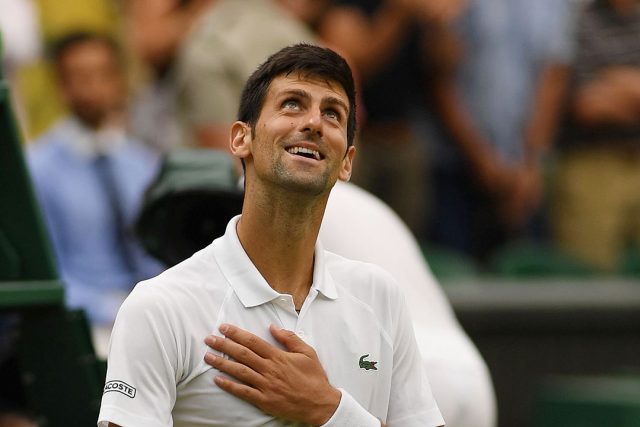
Over the weekend in Melbourne, Australia, the world’s most dominant tennis player, Serbian player Novak Djokovic, won his appeal to overturn the Australian government’s cancellation of his visa. With this victory, Djokovic can compete in the Australian Open which starts on Jan. 17, and aim for a record-breaking 21st tennis grand slam title. Reports say that “at the heart of the decision was a procedural error of the Australian Border Force and they conceded he was not given enough time to consult legal professionals.”

Others say that the ego of some people at the border may have been bruised when Djokovic loudly proclaimed and bragged on social media before leaving for Melbourne that he had obtained a medical exemption. Djokovic is unvaccinated and had tested positive for COVID on Dec. 16 last year. Despite that finding, he was captured on video in Serbia attending — unmasked — a children’s function and press conference arranged by his family. It was a classic example of flaunting the rules and getting a medical exemption.

Border Force officials probably felt, according to scuttlebutt, that “here’s another one of those super stars who feels entitled to special treatment.” Records show that over 93% of Australian adults are fully vaccinated. One can therefore understand if there is a backlash against Djokovic, who entered the country unvaccinated.

While Djokovic has been allowed to compete and is in fact practicing, his eventual participation in the Open is still uncertain as the immigration minister says there’s a possibility that the government can still cancel Djokovic’s visa. And it could eventually lead to that, given the government’s desire to send tough signals on travel to Australia and the mood of the public which does not hesitate to demonize him. A CNN report added that everyone fell silent when Djokovic entered the gym, as if everyone was wondering what he was doing there but knowing, too, that Djokovic was an exception.

It is to be noted that Australia has had, to date, more than a million COVID cases. The elderly have called Djokovic a selfish person. The implication seems to be that, like most mega stars or those who think they have achieved that status and belong to that exclusive club, they deserve to be exempted because they are special. What’s strange however is the silence of Tennis Australia, the federation governing the sport of tennis in Australia.

The Aussies are probably asking why an exemption is being given and, eventually, a visa, to Djokovic who was publicly seen in the company of children in Serbia after having tested positive. And all these events, which strangely did not appear to be factored into the decision to give or deny Djokovic a medical exemption, are now front and center. These events are probably entering the calculations of government officials who are most likely coming up with an airtight case and ultimately cancel Djokovic’s visa and risk criticism for its handling of the issue. The controversy has caused some international embarrassment for Australia because of the personalities involved. Already, another world-renowned player and Djokovic’s rival for the record-breaking 21st Grand Slam title, Spain’s Rafael Nadal, has weighed in. He has declared the whole matter a “circus,” perhaps unfairly to Djokovic since the Serbian thought that he had complied with all the requirements and there were no more issues. But then the Border Force had other ideas. Nadal has however said that “justice has spoken” and that Djokovic should be allowed to play and good luck to him. The Spaniard however added that all “these could have been avoided if Djokovic had been vaccinated.”

Another prospective Australian Open competitor, Czech female tennis player Renata Voracova, left Melbourne after her visa was cancelled and did not contest the cancellation. In an interview with CNN, Voracova said she “did not know what was going on.” The incident further highlights the need for closer coordination among federal and state authorities, tournament organizers, and the tennis federation.

In a sense Djokovic has become an integral part of what is now called “pandemic politics.” Prime Ministers of both Australia and Serbia have to discuss how to move forward with respect to the top-rated player walking onto center court.

The Association of Tennis Players (ATP) had urged its members to get their vaccines, 97% of whom have done so. The ATP says that vaccination is a requirement in international tournaments and for international travel. It added that the whole chain of events is “damaging all around.” The ATP obviously is referring to the effect on the physical preparations and mental strength of Djokovic. It is understandable that ATP would issue such a statement, even if there is general awareness that the Serbian is used to adversity throughout his life.

The talk around the circuit, and among people who have known Djokovic for some time, say that the Serbian is aware these types of controversies form part of a superstar’s life and he does enjoy every minute of being a superstar. Some fanatics add that he was born for superstardom.

Like all superstars, he will be subject to higher standards, fairly or unfairly. And at this time with all countries especially sensitive to enforcement of vaccination rules and procedures, there is a great tendency among governments to apply rules and laws coldly and evenly. Cultures tend to rebel against blatant displays of special treatment, particularly involving visiting celebrities or big shots.

I would not be surprised if Australian Immigration chose to make an example of Djokovic and deport him to send some kind of message to anti-vaxxers, and against the whole idea of preferential treatment or justice for certain groups of people or celebrities.


Philip Ella Juico’s areas of interest include the protection and promotion of democracy, free markets, sustainable development, social responsibility and sports as a tool for social development. He obtained his doctorate in business at De La Salle University. Dr. Juico served as secretary of Agrarian Reform during the Corazon C. Aquino administration.

Merlin

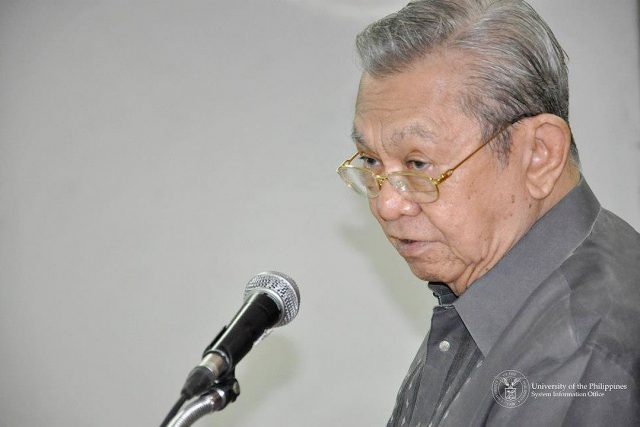
UP MEDIA AND PUBLIC RELATIONS OFFICE FILE PHOTO

On the morning of Jan. 1, 2022, as the country greeted the new year, it also lost one of its notable luminaries in international law — Merlin M. Magallona. He was 87 years old. Most people knew him as lawyer, a law professor, and Dean of the UP College of Law. He was also a diplomat and public servant, having served not only at UP but also at the Department of Foreign Affairs with Vice-President Teofisto Guingona, Jr.

Dean Magallona was never my teacher at UP Diliman. But I was fortunate to have known him on a more personal level. Two of his sons — Bonifacio and Crisanto — were my friends at the state university. Also, Dean Magallona and I shared something more personal: we traveled together abroad one time, and together had an experience that I can honestly claim as uniquely ours.

Sometime in the mid-1990s, I was invited to attend a legal conference in Bangkok where Dean Magallona and a few other Filipino legal luminaries were also invited to lecture. In the Philippines group were Dean Magallona, the late Jesuit priest and constitutionalist Joaquin Bernas, then Supreme Court Associate Justice Vicente Mendoza, and myself. I was the only non-lawyer in the group; I was invited there as a reporter for BusinessWorld to cover the event.

Dean Magallona, Fr. Bernas, and I were all together on the flight to Bangkok from Manila, and then shared a cab from the airport to the hotel. When the cab had a flat tire while we were on the Bangkok Skyway, not one of us went down as the driver changed the tire since we were engaged in humorous conversation at the time. I was in my 20s and it was my first time in Bangkok, a trip made more memorable by these legal giants.

During our stay, one evening Fr. Bernas excused himself to have dinner with his sister, who at the time, I believe, was a Bangkok resident. Justice Mendoza was likewise busy. That left Dean Magallona and myself with not much to do. He thus broached the idea of visiting Patpong, the entertainment district in Bangkok’s Bang Rak district, which was popular among foreign visitors. A night market ran there every evening. Patpong is also world famous as Bangkok’s red-light district.

Being a young man, single at the time, and on my first trip to Bangkok, I readily said yes to the Dean’s invitation. I had heard a lot about Patpong from media colleagues, and he was just as curious as I was to see the place. We had never visited Patpong in the past; we were a pair of “virgins,” so to speak. But I cautioned him about being haphazard about the “adventure,” having heard many horror stories from friends who had been victimized by unscrupulous merchants and establishments while on a Patpong ocular.

I thus suggested hiring a hotel car, rather than taking a cab to Patpong, and making the hotel car park in the area and wait for us while we went around. That way, in the event of an emergency, the car would just be waiting, and the driver could help translate for us, when necessary. To our delight, the hotel car available that night was a Mercedes Benz limousine — and at a cost only slightly higher than that of a cab.

Being the family man that he was, our first trip that night was to a reputable jewelry store. Dean Magallona wanted to get something for his wife. The limousine driver brought us to a store just outside the King’s Palace, which was still open despite the relatively late hour. I don’t recall now if Dean Magallona did find a fitting gift for the mother of his children. I, on the other hand, managed to get a small piece for my girlfriend back then.

From the store, we were then driven to one end of Patpong and dropped off. The hotel car looked for suitable parking in the area and waited. Patpong can be intimidating for the uninitiated, and, unsurprising for first-timers like us, we were generally hesitant to go into any of the establishments there.

So, we agreed to just peek rather than patronize, and to look more at the night market instead. And so that was how it went. Uneventful really, as we simply walked up and down the long street and checked out the market, while taking prolonged peeks at goings on inside the bars. We opted to “observe” activities at a safe distance. It turned out we were not as adventurous as we thought we could be. But it was an inexpensive way of experiencing Patpong, using first-class transportation.

Decades passed and of that group in Bangkok, Fr. Bernas was the first to go, in March 2021. I recall a funny incident with him in late 2002, when my fiancée and myself went to see him at the Jesuit residence to ask if he would be available to officiate at our wedding. My wife was his student in Ateneo Law, while my late mother-in-law was his contemporary on the faculty of the Ateneo. He declined to marry us, offering the explanation that his busy schedule could not allow him that opportunity. But he also consoled us by jesting that most couples he married eventually separated, anyway. So, we would be better off asking someone else.

And now, its Dean Magallona’s turn to make the trip to the Great Beyond. Even after that Bangkok trip, on few occasions that I would chance upon him as I passed his house in UP Campus, he would invite me in for drinks. I always declined, feeling awkward about invading his personal space. I regret that decision now, realizing that I wasted the opportunity to learn more from a learned man. If only I can go back in time.

A number of legal luminaries are known to enjoy a drink or two in the company of journalists. The late Sandiganbayan Justice Francis Garchitorena used to invite us to his chambers after work for drinks and banter. He didn’t usually talk shop, and would just shoot the breeze during those nights. Except that one time that he took that unguarded moment to scold me for quoting him on a story that was supposed to be off-the-record.

The late Supreme Court Chief Justice Andres Narvasa was a man of tennis, and also of good whisky. In the summers, en banc sessions are usually held in Baguio City. For more important en banc hearings, journalists go up to the City of Pines to attend. On occasions when journalists would stay for a night or two, the late magistrate would actually invite some of us to his cottage for drinks. As I recall it, Royal Salute was among the drinks of choice.

As I look back, I cannot help but smile when I recall those few unguarded moments in the past with these legal luminaries. Yes, they were legal eagles. But they were also people with a sense of community and camaraderie. And I consider myself more fortunate than most to have enjoyed their company in situations more personal than professional.

On this note, please allow me to raise a glass to toast my two Bangkok traveling companions, Dean Magallona and Fr. Bernas, as well as Justice Narvasa and Justice Garchitorena. I bid you all farewell. And thank you all for the pleasure of your company. Enjoy your well-deserved rest. Until we all meet up again. But not soon, I pray.


Marvin Tort is a former managing editor of BusinessWorld, and a former chairman of the Philippine Press Council

matort@yahoo.com

Changes of scenery

SHUBHAM DHAGE-UNSPLASH

IT’S A NEW YEAR and time to anticipate new challenges, strategies, and possible outcomes. Different plot lines can involve varying sets of players and settings. In movies, shifting approaches are tried out.

The “scenario” (sometimes called a storyboard) is a device that directors use to shoot a movie with different scenes, characters, endings, script, costumes, and props. The various approaches allow the director to re-imagine the story and how much the budget will cost. Scenarios are now also applied to business planning, economy projections and political events.

Scenario-building is a planning tool to explore various actions and reactions and come up with strategies to suit different developments. Real life is more complicated than moviemaking though. A set scenario for the coming year can be derailed by unexpected events like a pandemic, a super typhoon, or periodic surveys of leading candidates for the coming elections.

Political scenario-building is a pastime for Viber groups and pundits, as well as political operators. About this time, scenarios revolve around survey results. Why is the frontrunner consistently garnering over half of the preferences of respondents? What messages are working for him? Does keeping quiet and letting the messaging seep in without any interviews and speeches work?

Game plans in this current scenario are tested in focus groups. The survey results should also provide more information and data beyond just the ranking of preferences. There may be insights to be gathered from respondents on why they are “voting” the way they are. Do opposition attacks work, or are these only strengthening the lead of the frontrunner by making him “the man to beat…up”?

Scenario building presumes an appreciation of how different variables support or oppose one another. It is important to see the links between cause and effect, actions and reactions to events. News items, like survey results, can cause shifting of support. Smart money, from tycoons and big business, may go to the frontrunner as a hedged bet, even if emotional support is for another candidate.

Sometimes, surveys can turn into self-fulfilling prophecies, or mind-conditioning. As the lead of the frontrunner looks insurmountable, support for the second placer may weaken — what’s the use? This only feeds the likelihood of the forecast turning into a reality. The survey that truly counts, after all, isn’t till May of this new year.

Scenarists have similarities with conspiracy theorists. Imagination is their strong suit. No improbability is dismissed. Even missteps and early withdrawals from the contest are seen as cunning moves.

Planners talk of “best case” and “worst case” scenarios as convenient labels for the conclusion of a string of events whether beneficial or harmful to a particular group. Clearly, one side’s best case may be the opposing side’s worst one. Scenarios differ according to the desired outcome of the principals involved.

Think tanks use history and culture to construct realistic scenarios. What can we learn from the past? Thus, a proponent of an authoritarian scenario tries to understand the military mindset and the effect that power has on subordinates — How high should I jump, Sir?

The rise and fall of the Roman empire may be able to teach a few lessons (Do not over-reach), but without the benefit of how information spreads much faster in a digital world, some major tweaks need to be applied to history, including events that happened 50 years ago.

Will fascists used to giving orders and not being questioned allow media to be independent? Countries like Myanmar, show that military rule does not easily graduate to a democratic process, even when free elections are allowed. When won by an opponent in a landslide, the fascist response is predictable. Martial law is declared and the winner thrown back in jail where she came from.

Because they deal with the uncharted future, scenarios cannot fully anticipate sudden twists in the plot, much like a soap opera. As in movies, the main characters don’t always determine the ending. There is the supporting cast and the mob of extras that can change the ending of the story.

Scenarios need to keep up with the twists in the plot. But meticulous planning can only go so far. Sometimes, even the worst-case scenarios being planned for can turn out not pessimistic enough. By the same token, the best-case scenario may have left out the effects of hope… and the power of the people.


Tony Samson is chairman and CEO of TOUCH xda

ar.samson@yahoo.com

Coal vessels await clearance to leave as Indonesia mulls ease of export ban

REUTERS

JAKARTA — Indonesian authorities have yet to issue papers to allow 14 coal vessels to depart, a senior official said on Wednesday, as the government prepared to assess whether to further ease an export ban in the world’s biggest shipper of thermal coal.

The suspension was implemented on Jan. 1 to avoid widespread domestic power outages, after state utility Perusahaan Listrik Negara (PLN) reported critically low coal stockpiles, amid complaints that miners were not fulfilling commitments to supply fuel to the firm.

The ban has concerned major coal importers, like Japan, South Korea and the Philippines, which fear economic disruption at home.

There are currently about 120 vessels either loading or waiting to load off Indonesian’s coal ports in Kalimantan on the island of Borneo, according to Refinitiv Eikon data.

All 14 loaded coal vessels that were given the go ahead on Monday to depart once verified by authorities were still awaiting formal approval early on Wednesday, Transportation Ministry official Mugen Suprihatin Sartoto told Reuters.

The government will conduct a review of the ban on Wednesday and has said any resumption would be gradual, so it can assess how restarting exports might affect miners’ compliance with the so-called Domestic Market Obligation (DMO) rules.

Under DMO rules, miners must sell 25% of their output to the local market, capped at $70 per ton for domestic power plants.

During a panel discussion on MetroTV late on Tuesday, energy ministry senior official Ridwan Djamaludin said the ban remains in effect until Jan. 31, unless lifted earlier.

“What we are waiting for now is the delivery of coal to the power plants,” Mr. Ridwan said.

In the same discussion, PLN chief executive Darmawan Prasodjo said the company has secured 16.2 million tons of coal commitments.

PLN in a statement on Wednesday said it was working to ensure commitments secured during the export ban were delivered on time. — Reuters

Toxic workplace culture is a major driver of the ‘Great Resignation’

DAMIR-KOPEZHANOV--UNSPLASH

EMPLOYERS scrambling to hold onto workers during the Great Resignation should take a hard look inward. The biggest predictor of employee attrition isn’t pay, a new analysis finds, but toxic workplace culture.

Higher wages are certainly an important factor driving millions of people around the world to quit their jobs. But an analysis of more than 1.4 million Glassdoor reviews for companies across 38 industries found that company culture is 12.4 times more likely than compensation to predict whether an employee leaves. This held true for workers in both front-line and so-called knowledge worker jobs.

“Compensation is at best a moderate predictor of attrition,” said Donald Sull, a co-founder of CultureX, an analytics company that performed the survey released on Tuesday. To compile the data, CultureX looked at Glassdoor reviews by former employees using a human resources database system at Revelio Labs. Among things that kept people around: Predictable job schedules, job growth and recognition.

Toxic workplace culture was defined by abusive leadership, a cutthroat environment, or discrimination and harassment, Mr. Sull said.

Low-wage industries, such as leisure and hospitality, are seeing some of the highest turnover rates, as are high-burnout sectors, like health care and education. The lowest earners have also seen the biggest wage gains in the last 12 months, leading economists to believe that many people are leaving their jobs for better paying ones.

Job insecurity, failure to recognize employee performance, and a poor response to Covid-19 were also predictors of high quit rates, the CultureX survey found.

Tesla, Inc. and Netflix, Inc. showed higher attrition rates than other companies within their industries, which may be due in part to the competitive nature of those workplaces. “The goals are very ambitious, [and there are] long hours, a lot of pressure,” Mr. Sull said. “That pace may be harder for people to sustain over the long term.” — Bloomberg

No vax, pay tax, says Canada’s Quebec as health system struggles

REUTERS

QUEBEC, Canada’s second most populous province, is planning to force adults refusing to get COVID-19 vaccinated pay a “health contribution” in a move likely to spur a debate about individual rights and social responsibility.

Premier Francois Legault told reporters at a briefing on Tuesday that the proposal, details of which were still being finalized, would not apply to those who cannot get vaccinated for medical reasons.

Unvaccinated people put a financial burden on others and the provincial finance ministry is determining a “significant” amount that unvaccinated residents would be required to pay, Mr. Legault said, adding that such an amount would not be less than C$100 ($79.50).

Governments globally have imposed movement restrictions on the unvaccinated and few have levied fines on the elderly, but a sweeping tax on all unvaccinated adults could be a rare and controversial move.

While such a tax could be justified in the context of a health emergency, McGill University medicine and health sciences professor Carolyn Ells said, whether it survives a court challenge would depend on the details.

But Ms. Ells expressed surprise that the government was taking such a “dramatic” step now, when options such as further expanding vaccine mandates remain.

Provinces across Canada are tackling an exponential rise in COVID-19 cases that has forced tens of thousands of people into isolation and burdened the healthcare sector.

The highly transmissible Omicron variant has made it difficult for restrictive measures to curb the spread and health experts have stressed the importance of getting double and tripled vaccinated.

Quebec has been one of the worst-hit, regularly recording the highest daily count of coronavirus cases of all provinces and having several thousand healthcare workers off their jobs.

“The vaccine is the key to fight the virus. This is why we’re looking for a health contribution for adults who refuse to be vaccinated for non-medical reasons,” Mr. Legault said.

Mr. Legault said that even though the province has about 10% unvaccinated people, they account for about 50% of those in intensive care units.

Mr. Legault and his CAQ party face a provincial election in October.

On Monday, Canadian Prime Minister Justin Trudeau said that the federal government had secured enough COVID-19 vaccine doses for all eligible Canadians to receive a booster as well as a fourth dose.

Last month, Quebec said it had “no choice” but to allow some essential workers to continue working even after testing positive for COVID-19 to prevent staff shortages from impeding its healthcare services. It has also imposed curbs on gathering. — Reuters

Cambodia’s landmine-sniffing ‘hero’ rat Magawa dies in retirement

WWW.APOPO.ORG

PHNOM PENH — Cambodia’s landmine-sniffing rat Magawa, who found more than 100 landmines and explosives during a five-year career, has died at the age of eight, leaving a lasting legacy of saved lives in the Southeast Asian nation.

Magawa, who died over the weekend, was the most successful “HeroRAT” deployed by international charity APOPO, which uses African giant pouched rats to detect landmines and tuberculosis.

“Magawa was in good health and spent most of last week playing with his usual enthusiasm, but towards the weekend he started to slow down, napping more and showing less interest in food in his last days,” the non-profit organization said in a statement.

Scarred by decades of civil war, Cambodia is one of the world’s most heavily landmined countries, with more than 1,000 sq km (386 sq miles) of land still contaminated.

It has among the highest number of amputees per capita, with more than 40,000 people having lost limbs to explosives.

Illustrating the extreme risks involved, three Cambodians working to clear mines died on Monday in Preah Vihear province, bordering Thailand.

The three from the Cambodia Self-Help Demining group were killed by blasts from anti-tank mines, which also wounded two others, said Heng Ratana, director-general of the Cambodian Mine Action Centre.

APOPO said Magawa’s contribution allowed communities in Cambodia to live, work, and play more safely.

“Every discovery he made reduced the risk of injury or death for the people of Cambodia,” APOPO said.

The African giant pouched rat even received a gold medal in 2020 from Britain’s People’s Dispensary for Sick Animals for “lifesaving bravery and devotion to duty”.

Magawa, who retired in June 2021, was born in Tanzania and moved to Siem Reap in Cambodia in 2016 to begin clearing mines.

“A hero is laid to rest,” APOPO said. — Reuters

Djokovic confirms error made on Australian travel entry form

NOVAK DJOKOVIC — REUTERS

MELBOURNE — Novak Djokovic said on Wednesday an incorrect answer was made on his Australian entry documents, breaching the country’s strict laws on reporting recent travel, as the government said it was still considering whether to deport the player.

Djokovic was held in immigration detention in Melbourne for several days after his visa was canceled by border force officials, who questioned his medical exemption for a requirement to be vaccinated for coronavirus disease 2019 (COVID-19).

He was released on Monday after a judge quashed that decision, saying the cancelation of the visa was “unreasonable” because the player was not given time to consult with lawyers and tennis officials when he arrived in the country.

Djokovic said his travel declaration was filled in by his support team, who made an “administrative mistake” when they ticked the “no” box in response to whether he had traveled elsewhere in the 14 days before arriving in Australia.

“This was human error and certainly not deliberate,” Djokovic said. “We are living in challenging times in a global pandemic and sometimes this mistake can occur.”

The statement came as Australia’s Immigration Minister Alex Hawke considered whether to cancel the world no. 1 tennis player’s visa ahead of the Australian Open, which starts on Jan. 17.

Giving false or misleading information in the form is an offense, carrying a maximum penalty of 12 months in prison, and a fine of up to A$6,600 ($4,730) and can lead to cancelation of the offender’s visa.

Djokovic, who is seeking to win a record 21st tennis major at the Open, said his lawyers had provided additional information to the Australian government on Wednesday to clarify the matter.

A spokesman for Hawke, who has the discretionary power to again cancel Djokovic’s visa, said the minister was still considering taking action, a process that would be extended to assess the new information.

STRICT RULES
Australia has a policy barring non-citizens or non-residents from entry unless they are fully vaccinated against COVID-19 but offers a medical exemption. Djokovic’s visa was canceled on the grounds he has not been vaccinated and his medical exemption was not satisfactory.

Monday’s court ruling did not address whether that exemption — based on Djokovic contracting COVID-19 last month — was valid.

Djokovic’s case provoked a row between Canberra and Belgrade and fueled heated debate over mandatory COVID-19 vaccination policies.

Questions arose about Djokovic’s movements before coming to Australia when social media posts appeared to show him in Belgrade less than two weeks before he headed to Spain and then on to Australia. — Reuters

Eight Chicago Bulls score double figures in rout of Detroit Pistons

CHICAGO Bulls forward DeMar DeRozan (11) drives past Detroit Pistons forward Trey Lyles (8) during the second half at the United Center. — REUTERS

NIKOLA Vučević scored 22 points and DeMar DeRozan contributed 20 points and 12 rebounds to boost the host Chicago Bulls to a 133-87 rout of the Detroit Pistons on Tuesday night.

The Bulls shot 54.3% and led by as many as 47 points, seizing control with a 17-0 run to start the third quarter. Lonzo Ball, one of eight Bulls who scored in double figures, opened the surge with a three-point play, and Vučević closed it with a trey.

Vučević amassed 16 points in the third quarter, outscoring the Pistons by two.

Chicago has won 10 straight against Detroit and 10 of 11 overall.

Ball scored 18 points for the Bulls, who matched a season high in points and 3-pointers (18). Coby White had 13 and Zach LaVine, Ayo Dosunmu, Alfonzo McKinnie and Matt Thomas chipped in 10 apiece.

Josh Jackson paced the Pistons with 16 points. Saddiq Bey followed with 14 points and Isaiah Stewart had 11. Killian Hayes produced team bests of five assists and four steals to go with eight points.

DeRozan finished three assists shy of a triple-double, while LaVine was one rebound and three assists short. Troy Brown, Jr. collected a career-best six steals for the Bulls.

Coming off a career-high, 29-point effort in Monday’s home win against Utah, Detroit rookie Cade Cunningham was limited to eight points on Tuesday. Cunningham battled first-half foul trouble, retreating to the bench with his third foul with 6:07 remaining before half time.

Chicago took a 61-52 lead into the break, recovering from a sluggish start to shoot 53.7% in the first 24 minutes. The Bulls finished the first quarter on a 14-5 run before outscoring the Pistons 33-25 in the second quarter.

Pistons coach Dwane Casey returned to the bench on Tuesday after missing Monday’s game due to the NBA’s health and safety protocol for coronavirus disease 2019 (COVID-19). Casey said he had successive negative tests on Sunday night and Monday.

The Bulls clinched the season series against the Pistons by beating their Central Division rival for the third time in as many games. The teams are set to play in Detroit on March 9. — Reuters

Southampton leapfrogs Brentford with 4-1 victory

SOUTHAMPTON — Southampton marked their first Premier League game since last week’s takeover in fine style by hammering Brentford 4-1 on Tuesday, their biggest league win of the season.

With new Serbian owner Dragan Solak watching on at a rain-sodden St. Mary’s, Southampton looked eager to impress and made a flying start as Jan Bednarek headed home in the fifth minute.

Brentford hit back quickly through Vitaly Janelt’s superb volley but an unfortunate own goal by visiting keeper Alvaro Fernandez gave Southampton a half time lead.

Southampton pulled away in the second half with Armando Broja and Che Adams both on target as Ralph Hasenhuettl’s side won by more than a one-goal margin for the first time in the league this season.

It was only Southampton’s third home win of the season and it lifted them above Brentford into 11th place with 24 points.

Brentford slipped to 13th with 23 points.

“It was the first time we’ve scored four goals at home since November 2017,” said Hasenhuettl, whose side is unbeaten in four league games.

“It’s not very often that injury time plays out and we feel comfortable because sometimes it’s tight here. Today we had a fantastic performance.”

The fixture was supposed to have taken place on Dec. 18 but fell victim to the surge in coronavirus disease 2019 (COVID-19) infections.

Since then, the club has been bought by Sport Republic, a London-based investment firm backed by billionaire Solak, and the mood was buoyant on the south coast on Tuesday.

Bednarek just had to get his head to a typically pinpoint delivery by James Ward-Prowse in the fifth minute to give the hosts the launchpad for a vibrant display.

Brentford was not deterred, however, and equalized in stunning fashion as Janelt volleyed in left-footed from a superb cross by Bryan Mbeumo.

Southampton got their noses in front again after 37 minutes in unusual fashion.

As a corner was cleared out to Ibrahimo Diallo on the edge of the penalty area, he was given far too much time to deliver a bouncing shot that hit the post but rebounded in off the back of keeper Fernandez’s hand.

Albanian forward Broja, on loan from Chelsea, made it 3-1 in the 49th minute when he was played through by Oriol Romeu’s through ball and managed to squeeze his shot past Fernandez for his fifth Premier League goal of the season.

Brentford’s defense was then caught ball-watching as a long punt forward was well-controlled by Adams who poked past Fernandez with 20 minutes remaining.

It was a disappointing night for Brentford who has impressed during their inaugural Premier League season and the first time they have leaked four goals this season.

“Fair play to Southampton, but my job is to look at my team’s performance. If we are not playing every second of every Premier League match 100%, then we are not getting anything out of it,” manager Thomas Frank said.

“We needed to do better at 2-1. We can’t give three of the goals away, especially the last two.” — Reuters

Only Bayern profitable among European champion clubs in 2020-2021

BAYERN Munich was the only title winner in Europe’s eight major soccer leagues to turn a profit in the coronavirus-disrupted 2020-2021 season, a study from auditing firm KPMG showed on Wednesday.

The Bundesliga champions just scraped into the black with an after tax profit of €1.8 million ($2.0 million), also recording the lowest ratio of staff costs to operating revenue at 58%.

“While the reopening of stadia and some major commercial deals signed recently may provide some optimism… the pandemic only magnified the financial sustainability issues and fragility of the football ecosystem,” KPMG’s global head of sports Andrea Sartori said.

Exemplifying those problems, Serie A winner Inter Milan posted an annual loss of €245.6 million on operating revenues of €347.5 million, with La Liga champion Atletico Madrid losing €111.7 million on revenues of €349.6 million.

Topping the revenue table were Premier League champion Manchester City, generating €644.2 million, a rise of 17% from the previous season, the study showed.

City, who reached the final of the Champions League, also leapfrogged local rival Manchester United (€557 million) for the first time.

Bayern were second behind City with revenues of €597.5 million, while Turkish Super Lig winner Besiktas had the lowest revenue among the eight champion clubs with €59 million.

Six of the clubs increased broadcasting revenues, benefiting from deferred income related to matches postponed from the 2019-20 season and played after June 2020. — Reuters

MLB, union to renew talks on Thursday

MAJOR League Baseball (MLB)and the MLB Players Association reportedly will conduct their first bargaining session of the new year on Thursday.

ESPN reported Tuesday that MLB will make a “core-economics proposal” at the session, the first sit-down since the league locked out the players on Dec. 2.

This is the first baseball work stoppage since a strike that began on Aug. 12, 1994. It led to the cancelation of the 1994 World Series and didn’t end until April 2, 1995.

Since then, the sides had hammered out five collective bargaining agreements without any shutdowns.

Among the reported sticking points for a new CBA is the MLBPA’s desire for free agency after five major league seasons for players 29-1/2 years old or older. The longstanding policy has been for players to need six years of service time to reach free agency.

The players also want to reach arbitration eligibility sooner than the current three-year standard. Another push from the union is to increase the salary threshold at which teams must pay a luxury tax.

Opening Day is scheduled for March 31. Spring training report dates typically fall in mid-February. — Reuters

ADVERTISEMENT
ADVERTISEMENT