Home Blog Page 6952

Facebook, Instagram, WhatsApp down in global outage

Facebook Inc’s main social media site, popular photo-sharing platform Instagram and messaging app WhatsApp, were down for tens of thousands of users, according to outage tracking website Downdetector.com.

Reuters could not immediately confirm the issue affecting the services. However, the error message on Facebook‘s webpage suggested a Domain Name System (DNS) error.

DNS allows web addresses to take users to their destinations. A similar outage at cloud company Akamai Technologies Inc took down multiple websites in July.

“We’re aware that some people are having trouble accessing our apps and products,” the social media giant’s official Twitter handle said on Monday.

“We’re working to get things back to normal as quickly as possible, and we apologize for any inconvenience.” The official handles of WhatsApp and Instagram also took to Twitter to confirm the outage.

Facebook shares fell 5.5% in afternoon trading on Monday, inching towards its worst day in nearly a year.

Downdetector, which only tracks outages by collating status reports from a series of sources, including user-submitted errors on its platform, showed there were more than 50,000 incidents of people reporting issues with Facebook and Instagram. The outage might be affecting a larger number of users.

Meanwhile, the social-media giant’s instant messaging platform WhatsApp was also down for over 35,000 users, while Messenger was down for nearly 9,800 users.

Facebook has experienced similar widespread outages with its suite of apps this year in March and July.

Several users using their Facebook credentials to log in to third-party apps such as Pokemon Go and Match Masters were also facing issues.

“If your game isn’t running as usual please note that there’s been an issue with Facebook login servers and the moment this gets fixed all will be back to normal,” puzzle game app Match Masters said on its Twitter account. – Reuters

BSP caps digital bank licenses at six

BW FILE PHOTO

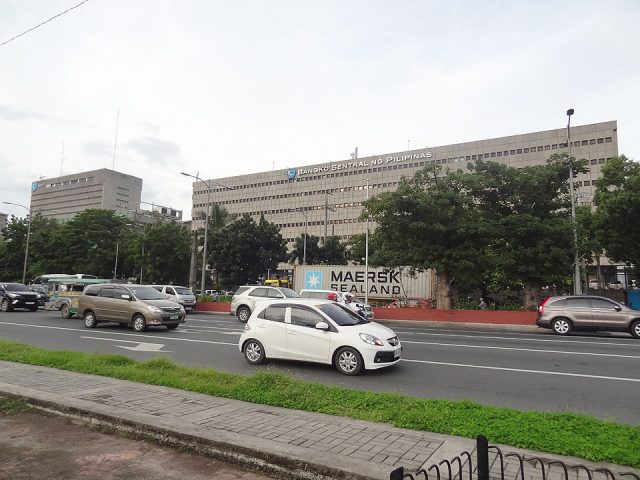
THE BANGKO SENTRAL ng Pilipinas (BSP) has capped the number of digital banking licenses to six after the remaining applicants failed to meet the requirements, BSP Governor Benjamin E. Diokno said on Monday.

“We have approved six digital banks and it will remain at six,” Mr. Diokno told an annual conference event of the Financial Executives Institute of the Philippines (FINEX).

The BSP decided not to increase the number of licenses to seven as previously announced after the nine entities with pending applications failed to submit documentary requirements, he said.

Mr. Diokno said keeping the number of licensed digital banks at six for the meantime should allow regulators to closely monitor developments, and ensure there is healthy competition among digital banks and traditional lenders.

The application period for digital banking licenses ended on Aug. 31.

In a separate Viber message, the central bank chief said the Monetary Board (MB) could still reopen the window for applications if needed.

“The MB reserves the right to reopen the application subject to the need for more and the impact of the six digital banks on competition in the banking sector. Remember there are more than 500 universal and commercial, thrift, rural and cooperative banks already,” Mr. Diokno said.

He said one or two banks that secured their licenses are ready to operate, while others need more time to establish their operations.

Digital banks have a three-year window to operate after they get the license.

The first bank to obtain the new license was Overseas Filipino Bank, a subsidiary of state-owned Land Bank of the Philippines.

Also granted digital banking licenses were Tonik Digital Bank, Inc. (Philippines), UNObank, Aboitiz-led Union Digital Bank, and GOtyme, which is owned by the Gokongwei Group and Singapore financial technology (fintech) firm Tyme.

The BSP gave the sixth license to Maya Bank, the fintech arm of Voyager Innovations, Inc.

Mr. Diokno said lenders that gor their licenses are not required to set up branches or even branch-lite units, but are expected to maintain one headquarter office to minimize operating costs and focus their investments on new technology instead.

However, he said digital banks are also subject to “prudential requirements” that are imposed on traditional lenders.

Lenders with digital banking licenses are expected to help the BSP reach its goal of bringing 70% of Filipinos into the formal banking system and have 50% of transactions done online by 2023.

Mr. Diokno said the Philippines could still achieve a digital payments-driven and cashless society in 10 years.

“I see the day when you can now ride the tricycle and jeepney using your QR code, buy meat from the market through QR code. We are strongly pushing for this,” he said.

“It is really consistent with our desire to make the country a cash-lite economy from a cash-heavy society. In fact, it may even be a coinless society in five years,” he added.

DIGITAL CURRENCY
Meanwhile, Mr. Diokno said the BSP is not likely to adopt its own central bank digital currency anytime soon, but a task force is studying the matter.

“As new technology, items and cryptocurrency are becoming more popular among central banks, we exchange notes and we want to make sure that we do this safely,” he said. “So we have created a task force within BSP to study this so we’ll make the necessary arrangements as needed. But right now, we are not into digital currency yet but we will probably be there in a few years,” he added.

The central bank chief said 6.6 million basic deposit accounts were opened in 133 banks last year, with a combined amount of P4.7 billion as the pandemic prompted a general shift toward digital platforms.

The volume of electronic fund transfer through PESONet also surged by 164% year on year to 31.6 million in the first half of the year, while InstaPay transactions more than tripled to 201 million.

The country has 87 banks and electronic money issuers that have coursed transactions through PESONet and 52 via InstaPay so far, he said. — Beatrice M. Laforga with a report from Luz Wendy T. Noble

Philippine freelancers discover new income during pandemic

GLENN CARSTENS PETERS-UNSPLASH

By Jenina P. Ibañez, Reporter

KENNETH L. AMBOS, 25, quit his video editing job at a local company a few months into the coronavirus pandemic last year.

His salary was too small to cover the devices, electricity and internet connectivity he needed to do his work from home amid lockdowns meant to contain the virus. He started doing freelance work full time.

The cash coming in is now “orders of magnitude higher,” Mr. Ambos said via Facebook Messenger video, adding that he used his connections at his old job to find projects. He used his earnings not just to pay just his bills but also to renovate his home.

When the global coronavirus pandemic sent markets into a tailspin and disrupted most aspects of daily life, freelancers were hit hard.

It forced many of them to find new ways of working. But not all workers in the creative industry can find new opportunities during the global health crisis.

There’s a dearth of data on freelancers in the Philippines. PayPal in a 2018 survey found that freelancers accounted for about 2% of the country’s population.

Gil Zaire “Butch” Carungay, a board member of Matic Hub — a so-called enabling space for Cebu’s creative community — said the number had probably grown during the pandemic.

Many creative specialists had lost their income, leading them to shift from formal creative work to either freelance digital content creation or noncreative fields, he said, citing the results of a United Nations report on the creative industry in Cebu, for which he worked as a consultant.

Crowd-sourcing platform Ilostmygig.ph said workers from the creative sector lost more than P268 million in potential income from March 27 — days after the main island of Luzon was locked down to contain the pandemic — to June 10 last year.

“Some people I know didn’t want to freelance before,” Mark Ace A. Gatdula, a 38-year-old freelance digital director and editor, said in a Messenger video call. “They have to do it now because they got laid off.”

Some big companies, he added, closed down after running out of projects.

The Creative Economy Council of the Philippines found that those that got hit hard during the pandemic were cinema-based films, performing arts and heritage sites and museums. Television and radio also suffered, along with traditional advertising.

NO WORK, NO PAY
More Filipinos could be turning to freelance work as they lose salaried jobs in the creative industry, but freelancers have a lot of vulnerabilities.

“It’s like a no-work, no-pay type of situation,” Pangasinan Rep. Christopher P. de Venecia, who heads a special House of Representatives Committee on the Creative Industry, said via the Zoom Meetings app. “So if there’s no work, there’s no possible source of income.”

“The fact that they’re not formalized into the economy means that the state experiences difficulty in extending support to them during times of national crisis,” he added.

While the state had set aside funding to help freelancers during the pandemic, the creative associations that the government tapped to identify the beneficiaries had limited reach, said Mr. De Venecia, who is a former child actor.

Freelancers also have problems carried over from before the pandemic, made worse by the health crisis, such as clients delaying payments for months.

“You don’t know when you’ll get paid,” Mr. Gatdula said. He started doing more motion graphics freelance work that became more in demand as the pandemic limited live video shoots. “I hope that there can be a law about it.”

Senate Bill 1810 or the Freelance Protection Act seeks to require clients to pay freelancers within 30 days after a task is completed. It also lists freelancers’ rights, such as safe working conditions and protection from discrimination.

Senator Emmanuel Joel J. Villanueva has said the bill was being expedited. The House version was approved on final reading in March.

“Hopefully, it will institutionalize entering into contracts between the hiring party and the freelancer,” Mr. De Venecia said. The measure also provides penalties for violations, such as late payment.

Mr. Carungay said government registration would bring more creative workers into the formal economy.

“Their needs would be better met. They’ll have access to government aid, whether in terms of capacity building or financing, or grants,” he said. “They’ll have more access to formal networks around.”

The lack of data makes pandemic-related experiences of freelancers and creatives as a whole difficult to assess. Mr. Carungay said they could not be lumped into one box.

“There are freelancers who are doing very well, freelancing on the side because they enjoy it. Others are really doing it to survive and are holding multiple jobs,” he added.

He cited the disparities among different types of creative work. The ability to have paying work during the pandemic could be attributed to the subsector, as live performers lose out and digital content creators get projects.

Some creatives benefit more from freelance work. The animation outsourcing industry reported that it was seeking more talent in the countryside as they lose employees drawn to freelance gigs as they work from home.

Mr. De Venecia said rapport between creatives and clients, including foreign companies, could lead to direct contracts with the client and bypassing the intermediary. But focus should not so much be placed on the removal of the middleman, but on moving the industry from outsourcing to the creation of original work.

Experience and connections also set one freelancer apart from the others. “I’ve been working for a while, so I know my rates. Young fresh graduates get abused. A company will ask them to make a logo for P1,000, and they don’t know any better,” Mr. Gatdula said.

Freelance work does not always translate to more money, he said. Clients are more aware that devices and programs used by independent workers have become cheaper, leading them to temper payments.

He cited the need for an association that represents the many types of creative workers in the country, and a law that protects them.

Mr. Ambos, mentioned at the outset, said he misses the rapport one develops with colleagues in an office, but he prefers doing his freelance work from home. He likes the fact that he no longer has to travel, and most of all, the flexible hours.

“You can take care of yourself,” he said. “All jobs lead to burnout, but if you’re in charge of your time, you can rest and recharge.”


Faster vaccine rollout to spur economic rebound

PHILIPPINE STAR/ MICHAEL VARCAS

THE ECONOMY could exceed the government’s downgraded growth target for this year, with a quicker vaccination rollout and improved weather in the remaining months.

In a joint report released on Monday, First Metro Investment Corp. (FMIC) and University of Asia and the Pacific (UA&P) noted that economic data were muted in August as stricter lockdowns dampened business activity.

This had prompted the government to lower its gross domestic product (GDP) growth projections for this year to 4-5% from 6-7%. Economists from FMIC and UA&P in July said they expected GDP to grow by 5-6% this year.

“The rosy outlook supported by economic data in the past months now has paled a bit,” FMIC and UA&P said in its September Market Call report.

“We remain confident that the economy will overcome the current obstacles — especially with faster vaccination rollouts and better weather conditions.”

The Philippines aims to inoculate 50-60% of its population by yearend. As of Sept. 30, the Philippines had fully vaccinated 21.83% of its population, according to Our World in Data.

The government plans to start vaccinating the general population and minors this month, although it will continue to prioritize health workers, senior citizens, seriously ill people, essential workers and the poor.

Inflation reached 4.9% year on year in August due to higher food prices as typhoons and heavy rains disrupted supply chains, FMIC and UA&P said.

Better weather could also back stable food supply chains, they added.

“Local inflation may stay close to 5% until September, given elevated crude oil prices and some supply chain issues related to food items and low base until October. However, we still expect a deceleration starting in the latter months and going below 4% by December at the latest,” according to the report.

Exports could grow for the rest of the year, although a double-digit pace is unlikely.

The trade-in-goods deficit widened in July to $3.29 billion from $2.13 billion in the same month last year, data from the Philippine Statistics Authority showed. The country’s merchandise imports rose by 24% to $9.71 billion while exports went up by 12.7% year on year to $6.42 billion.

Government spending could also “go full throttle” as the economy needs stimulus from infrastructure spending.

“We expect spending to significantly pick up pace in the coming months with the Presidential elections in May 2022 only some months away,” according to the report.

The government kept its 7-9% growth target for 2022 as it expects a faster vaccine rollout and further easing of quarantine measures. — J.P.Ibañez

AC Energy starts commercial run of wind farm in Vietnam

RAWFILM-UNSPLASH

AYALA-LED AC Energy Corp. said on Monday that its 88-megawatt (MW) Ninh Thuan wind farm in South Central Vietnam has begun commercial operations.

This marks the listed power company’s first operating wind plant in Vietnam, bringing its renewable energy (RE) capacity of ongoing and completed projects in the foreign country to around 1,000 MW.

The wind farm is a $155-million joint venture of AC Energy and Vietnam-based private conglomerate BIM Group.

“We laud the Vietnam government’s strong commitment to RE and for creating an enabling environment for industry players such as ourselves to participate in the country’s thriving power sector,” said AC Energy President and Chief Executive Officer Eric T. Francia said in a regulatory filing.

He said the company, which he describes to be at the forefront of the energy transition, has recognized Vietnam as one of its priority markets. Vietnam is AC Energy’s second-largest market to date after the Philippines.

The wind farm features 22 units of GE Renewable Energy’s Cypress turbines, the company said. It is expected to produce 327 gigawatt hours per year once fully operational, enough to power around 50,000 homes per year with renewable energy that can help avoid 298,551 tons of carbon dioxide (CO2) annually.

“We are very excited to bring this new project into commercial operations ahead of the Feed-In Tariff deadline, notwithstanding the many challenges brought about by the COVID-19 (coronavirus disease 2019) pandemic,” said Patrice R. Clausse, chief operating officer of AC Energy International.

The wind farm project is the second time the power firm has partnered up with the BIM Group, with their first joint project being the 405-MW Ninh Thuan solar farm, one of the largest in Southeast Asia, which was inaugurated in 2019.

The 405-MW solar facility and 88-MW wind farm are expected to generate a combined 900 million-kilowatt hours of clean power every year.

AC Energy is in the process of building three other RE facilities in Vietnam. They are the 80-MW Mui Ne wind farm; the Lac Hoa & Hoa Dong wind farms with an aggregate capacity of 60 MW; and the 252-MW Quang Binh wind farm, according to the firm’s website.

AC Energy is the listed energy platform of the Ayala group. It has an attributable capacity of around 2,600 MW in Vietnam, Philippines, Indonesia, India, and Australia.

The company aspires to be the largest listed renewables platform in the region as it targets to hit 5,000 MW of RE capacity by 2025.

AC Energy shares at the local bourse improved 2.58% or 30 centavos to finish at P11.92 apiece on Monday. — Angelica Y. Yang

PSE warns of fake blockchain investment solicitation agent

BW FILE PHOTO
PSE reiterates that it does not sell or promote cryptocurrencies. — BW FILE PHOTO

THE Philippine Stock Exchange, Inc. (PSE) is warning investors of a fake blockchain investment solicitation program offered by an individual posing as a member of a team created by the local bourse.

“The PSE reiterates that it does not sell cryptocurrencies and that its employees or agents do not promote, for purposes of investment, any specific stock, investment instrument or cryptocurrency,” PSE President and Chief Executive Officer Ramon S. Monzon said in an advisory published on Monday.

The PSE received reports of an individual luring investors to create an account through a different website, promising profits of 20% up to 30% or daily returns worth $1,000 to $2,000.

According to the screenshots on the PSE’s advisory, the individual would introduce herself as a member of “the newly established trading project team of [the] PSE” on “blockchain digital currency.”

Her spiel includes mentioning that the team has “cooperated with many banks around the world for many years.”

The person posing as a PSE team member would offer to “arrange” a professional tutor to potential investors for them “to consult how to earn” through the program. She said these “professional mentors lead everyone to freedom of wealth.”

“The PSE reminds the investing public to exercise prudence and due diligence in dealing with social media accounts that purportedly offer investments and represent themselves as employees or agents of the exchange,” Mr. Monzon said. — Keren Concepcion G. Valmonte

SEC calls on financing firms to submit ‘dirty money’ report

THE Securities and Exchange Commission (SEC) is calling on investment houses, financing and lending companies, among others, to accomplish an anti-money laundering and combating the financing of terrorism (AML/CFT) inherent risk assessment data form (AIRDF).

“A risk-based approach to Anti-Money Laundering or Combating the Financing of Terrorism would ensure that the appropriate measures commensurate to those risks are taken in order to mitigate them effectively,” the SEC said.

The regulator said this is so it can “assess the [money laundering or terrorist financing] risks to which covered persons are exposed and understand their AML/CFT risk profile.”

Securities brokers, dealers, and underwriters, investment houses or mutual fund distributors, eligible dealers for government securities, REIT (real estate investment fund) managers, financing firms, and lending companies are required to accomplish the form.

The AIRDF should be accomplished by Oct. 15 and the report will cover the period ending 2020. A link to the AIRDF may be accessed through a link on the SEC’s website.

The report will check on an entity’s products and services, customer profile, its delivery and financial channels, as well as the geographical location of its customers and other parties related to its transactions.

“Failure to comply shall constitute a violation of an order of the Commission implementing a risk-based approach to supervision as provided for in SEC Memorandum Circular No. 26, Series of 2020,” the commission said.

According to the memorandum circular, violations may lead to monetary fines, the issuance of a permanent cease-and-desist order, the suspension or revocation of a firm’s certificate of incorporation. The SEC may also dissolve the corporation or forfeit assets, among others. — Keren Concepcion G. Valmonte

GT Capital unit offers warranty services for used cars

GT Capital Holdings, Inc. said in a statement on Monday that its subsidiary, GT Capital Auto Dealership Holdings, Inc. (GTCAD), inked a joint venture to launch a Japanese automotive warranty provider in the country.

Premium Warranty Services Philippines, Inc. (PWSPI) will be catering to the said growing market in the Philippines, where users of pre-owned cars are left “fending for themselves.”

“Our goal at PWSPI is to help create a more transparent secondary car market that elevates Filipino car owners’ experience when buying and selling pre-owned cars,” said Vince S. Socco, who is the chairman of both PWSPI and GTCAD.

PWSPI is a joint venture between Premium Group Co. Ltd. (PGC) and GT Mobility Ventures, Inc., which is also a partnership between GTCAD and Mitsui & Co., Japan.

Tokyo-based PGC is said to be one of the biggest automotive warranty providers in Japan, holding over a million warranty contracts and 23,500 dealers. The company said it saw an opportunity for growth in the Philippines’ automotive market as more consumers consider secondhand cars.

Mr. Socco is optimistic about the growth of the business as the scale of the secondhand car market in the country “is estimated at more than half a million units annually.”

“This volume is far larger than the market for new vehicles and represents a very significant demand for our services,” he said.

PWSPI will be working with a range of car brands to elevate the experience of buyers, offering a “188-point inspection” on cars as well as a detailed report of the inspection. It will be using “Premium Inspection” to identify eligible vehicles for its warranty services.

“We intend to deliver a much more value-driven experience for both buyers and sellers. We are very pleased to be working with Premium and Mitsui, both leading Japanese companies in delivering world-class service solutions,” Mr. Socco said.

PWSPI will offer services such as checking the state of a vehicle’s engine, body and frame, undercarriage, interior and exterior conditions, and even details on its registration.

It will be collaborating with a network of local service shops and services may be availed of via a proprietary app.

“Initially, PWSPI will work through select online auto portals, used car dealers and financial institutions. It plans to eventually handle direct customer-to-customer transactions and expand its footprint throughout the Philippines,” the company said.

On Monday, shares of parent GT Capital at the stock exchange went up by 1.16% or six pesos to close at P525 apiece. — Keren Concepcion G. Valmonte

More firms seen launching REITs

PHILIPPINE STAR/ MICHAEL VARCAS

By Keren Concepcion G. Valmonte, Reporter

THE SUCCESS of recent initial public offerings (IPOs) of real estate investment trusts (REITs) may encourage more companies to consider offering the investment vehicle, analysts said.

Despite the pandemic, four REIT companies have listed at the Philippine Stock Exchange this year, the latest of which was the Megaworld Corp.-sponsored MREIT, Inc.

“So far, REITs are performing well in the market, except DDMP REIT, Inc. (DDMPR), all of which are posting gains versus their offer price,” Claire T. Alviar, senior research and engagement officer at Philstocks Financial, Inc., said in a Viber message on Saturday.

“This success of REITs entices more firms to tap the REIT market,” she added.

MREIT on Friday debuted at the stock market, with shares closing at P16.70 each from its P16.10 listing price. MREIT raised over P15 billion from its IPO, the second biggest from a REIT so far.

The country’s largest REIT, RL Commercial REIT, Inc. (RCR), raised P23.5 billion last month, while Filinvest REIT Corp.’s IPO generated P12.6 billion in August.

DDMPR made its market debut in March, raising P14.7 billion from its IPO.

Shares in AREIT, Inc., sponsored by Ayala Land, is up nearly 50% from its P27 offer price last year. 

“Philippine REITs are likely to soar and reach new heights with the global economic recovery benefitting the BPO (business process outsourcing) sector growth, enabling high cash yield and capital value appreciation potential for investors that eventually will include long term money holders such as pension funds and insurance companies,” First Metro Investment Corp. Head of Research Cristina S. Ulang said in a separate Viber message on Saturday. 

The Philippine Stock Exchange has also encouraged small and medium property developers to consider tapping the REIT market in order to generate capital for their projects.

“This is another way for the sponsors to raise capital that could help for their recovery from the pandemic,” Ms. Alviar said.

However, the track record of sponsor firms would be important for REIT investors.

“REITs are recommended for the long term and for those who want a consistent dividend so having sound fundamentals and a strong portfolio are important for REITs that investors would consider,” said Ms. Alviar.

DDMPR’s sponsor, DoubleDragon Properties Corp. is partnering with Jollibee Foods Corp. for the country’s first industrial REIT via DoubleDragon’s industrial leasing subsidiary, CentralHub Industrial Centers, Inc. The two plan to register CentralHub as a REIT firm in 2022.

“The rise of REIT listings in the local scene may entice more foreign investors to participate in the local markets, which in effect helps in the growth of the country’s real estate industry,” Timson Securities, Inc. Trader Darren Blaine T. Pangan said in another Viber message on Saturday.

Aside from property firms, renewable energy company Citicore Power, Inc. is planning to tap the REIT market with eight solar farms in its initial portfolio. Citicore aims to raise P8 billion to P10 billion to fund the development of 15 solar farms.

Securities and Exchange Commission (SEC) Chairman Emilio B. Aquino has welcomed the rise of the REITs, calling it a “viable alternative to pulling away investible money from scams and all sorts of risky investment products” that are being propagated online.

“This is what the SEC wants to see — investible funds being allocated into more productive and income-producing ventures such as the real estate and infrastructure projects of the REIT sponsors, rather than being wasted in scams,” said Mr. Aquino during the listing ceremony of RCR on Sept. 14.

Manila Water defers Q4 rate hike – MWSS chief regulator

EAST ZONE water concessionaire Manila Water Co., Inc. deferred its rate adjustment for the fourth quarter (Q4), according to the Metropolitan Waterworks and Sewerage System (MWSS) Regulatory Office.

“Manila Water has voluntarily deferred its Foreign Currency Differential Adjustment (FCDA) implementation upon recommendation of the MWSS Regulatory Office, as it will result in an upward tariff adjustment for its customers,” MWSS Chief Regulator Patrick Lester N. Ty said in a statement on Monday.

Sought for additional comment, Mr. Ty told BusinessWorld via mobile phone that Manila Water did not submit a petition anymore concerning the fourth-quarter rate adjustments.

“We told Manila Water of our policy, that we will not allow any increase, and they agreed to it. Only Maynilad Water Services, Inc. submitted a petition,” Mr. Ty said.

Mr. Ty also confirmed that the recently announced FCDA will be the last one before the revised concession agreements (CA) of Manila Water and west zone water concessionaire Maynilad take effect.

“Yes, there will be no more FCDA unless they extend the effective date of the revised CA. If it is still a downward adjustment, we will study it again,” Mr. Ty said.

The revised agreements of Manila Water and Maynilad are set to take effect no later than Nov. 18, 2021. Some of the highlights include the removal of the FCDA and the imposition of a tariff freeze until Dec. 31, 2022.

Maynilad customers will have lower water bills for the fourth quarter after the MWSS Board of Trustees granted the water provider with an FCDA of -0.55% of its average basic charge of P36.24 per cubic meter (/cu.m.) or an average refund of 20 centavos/cu.m.

Maynilad residential customers using 10 cu.m. or less will see a reduction of 18 centavos in their monthly water bills for the quarter.

Customers consuming 20 cu.m. and 30 cu.m. will see a decrease of 69 centavos and P1.40 respectively in their bills.

“The implementation of the FCDA this quarter has been approved for Maynilad, as the proposed downward tariff adjustment has been deemed greatly beneficial to the public,” Mr. Ty said.

To recall, the FCDA is a tariff mechanism reviewed quarterly that lets water concessionaire to regain losses or return gains caused by the movement of foreign exchange rates. The water providers pay foreign currency-denominated loans used to fund the development and expansion of water and sewerage services.

Metro Pacific Investments Corp., which has a majority stake in Maynilad, is one of three Philippine units of Hong Kong-based First Pacific Co. Ltd., the others being Philex Mining Corp. and PLDT, Inc.

Hastings Holdings, Inc., a unit of PLDT Beneficial Trust Fund subsidiary MediaQuest Holdings, Inc., has an interest in BusinessWorld through the Philippine Star Group, which it controls. — Revin Mikhael D. Ochave

No more glass ceiling: How Filipinas are leading the way in green construction

PHILIPPINE STAR/ MICHAEL VARCAS

CONSTRUCTION is typically perceived as a male-dominated industry, especially in the Philippines. But this perception is being proven wrong by several women who are now heading construction companies.

“The glass ceiling has a [gap] that you can gracefully climb up on,” said Cathy Saldaña-Siegel, managing director and CEO of PDP Architects, Inc., at a Sept. 30 webinar organized by the Philippine Green Building Council.

“Women before us have put together a path,” she said, citing Alice G. Eduardo, president and CEO of Sta. Elena Construction and Development Corp., as well as Isabelita Paredes Mercado, chairman of IPM Holdings, Inc. “It’s now up to us to put a red carpet on it.”

Ramona Margarita H. Cruz, manager of projects and renewable energy at Global Business Power Corp., said there were only a handful of women in construction sites in 2005.

“Women then tended to be in the back office, doing work like quality assurance and reviews. Now, it’s usual to see girls side-by-side with the boys. They give as good as the rest of the men,” Ms. Cruz said.

Daphne Odra-Sanchez, first vice-president of Filinvest Alabang, Inc., said a woman’s ability to view things holistically can be an asset in the construction industry.

“We look at the relationship of the space, the amenities that are put in the floor plan, and see how these details affect a resident’s lifestyle,” Ms. Odra-Sanchez said. “We are customers ourselves, so we understand what is needed.”

Sixty-four percent of all women worldwide who are in construction are found in Asia, as reported in a March 2020 post by Building Radar, an artificial intelligence-enabled company that informs customers about construction projects around the world.

In the Philippines, construction workers make up 52% of all workers employed by the industry sector, based on August 2021 data from the Philippine Statistics Authority. — P.B.Mirasol

Chelsea buys out shares of ES Consultancy in KGLI-NM Holdings

CHELSEA Logistics and Infrastructure Holdings Corp. announced on Monday that it bought out the minority interest in KGLI-NM Holdings, Inc. being held by ES Consultancy Group, Inc., as part of the former’s full divestment from 2GO Group, Inc.

Chelsea purchased from ES Consultancy Group 43,081 redeemable preferred B shares and 200 common shares, or the subject shares, of KGLI-NM Holdings, the listed company said in a disclosure to the stock exchange.

The company said the total purchase price for the subject shares is P874.95 million or a purchase price of P20,309.30 per preferred B share and P10 per common share.

“That is just a procedure to complete the post processes of our 2GO divestment,” Chelsea Logistics President and Chief Executive Officer Chryss Alfonsus V. Damuy told BusinessWorld in a phone message.

“Valuation is the proportional share of ES Consultancy Group in the 2GO Group shareholdings of KGLI-NM Holdings,” Chelsea noted.

ES Consultancy Group, the seller, is a minority shareholder in KGLI-NM Holdings, where both Udenna Investments B.V. and Chelsea are also stockholders.

“KGLI-NM Holdings is a corporation duly organized and existing under Philippine laws. 50.37% of KGLI-NM shares are owned by Udenna Investments B.V., and 39.70% is owned by Chelsea,” the listed company said.

As a result of the transaction, KGLI-NM Holdings will be wholly owned by Chelsea as the other shareholder of KGLI-NM, Udenna Investments B.V., is wholly owned by Chelsea Logistics.

Chelsea announced in March that it would sell its entire stake in 2GO Group to SM Investments Corp. (SMIC). — Arjay L. Balinbin