Home Blog Page 6858

Economic waste bill’s author says approval set once session resumes

A bill that seeks to address plastic pollution by making businesses responsible for recycling will be approved on third reading by next week, one of its principal authors said on Friday.

Deputy Speaker and Las Piñas Rep. Camille A. Villar said House Bill (HB) 10696 or the Extended Producer Responsibility (EPR) Act of 2022 is set for approval on final reading once the House of Representatives resumes session on Monday.

“The [EPR] Bill is scheduled for Third Reading approval on Monday, January 31, before session adjourns,” she told BusinessWorld in a mobile phone message.

The measure, which Ms. Villar authored, aims to prevent plastic waste from leaking into the environment and create a system where companies will be held more accountable for their plastic products.

Under the bill, the Department of Natural Resources would create a national framework for all kinds of product waste to reduce wastes that are harmful to the environment.

Companies will also need to make programs to reduce their production, use and importation of plastic products.

Violators could be charged from P1 million to P20 million and could lose their business permits.

Ms. Villar said that for small and medium-sized businesses to follow environment-friendly policies, they should be educated about the effects of using plastic.

in a Viber statement released on Thursday, Ms. Villar said: “There are ways to recycle and reuse that do not require a lot of capital. We need to educate our entrepreneurs about the negative effects of not recycling and teaching them about the technology that is not expensive and easy to execute.”

HB 10696 was approved on second reading on Tuesday and a committee report was submitted by the House Committee on Ecology on the same day. — Jaspearl Emerald G. Tan

Globe says 14 facilities in Luzon now using renewable energy

Globe Telecom, Inc. announced on Friday that it had converted 14 facilities in Luzon into “green sites” as part of its commitment to climate action.

The company recently shifted another key facility in Quezon City to renewable energy, raising its green sites to 14, it said in an e-mailed statement.

Globe said its efforts are in line with the “Race to Zero Campaign” of the United Nations Framework Convention on Climate Change and other organizations to cut carbon emissions by half by 2030 and achieve the net-zero target by 2050.

Renewable energy, according to Globe, has also been used in its high-energy-consuming facilities in Makati, Mandaluyong, San Juan, Cavite, Tarlac, Cebu, and Taguig.

“Our vision to go beyond business is demonstrated by the addition of more sites that are proactive in addressing climate change threats,” Globe Chief Finance Officer Rizza Maniego-Eala said.

At the 26th United Nations Climate Change Conference in Glasgow last year, Finance Secretary Carlos G. Dominguez III said financing from multilateral institutions is crucial to encourage private sector capital in clean energy transition projects in the country.

Mr. Dominguez has been pushing for more climate financing from wealthy economies that have not offered enough to help developing nations reduce their carbon footprint.

Such countries bear the most responsibility for their historic emissions, he said.

The Philippines has committed to reduce greenhouse gas emissions by 75% from 2020 to 2030.

Of the 75% target, just 2.71% can be achieved with internal resources, while the remaining 72.29% rests on international assistance. — Arjay L. Balinbin

Vivant names new chief executive, president

Vivant Corp. has named Arlo Angelo G. Sarmiento as its chief executive officer starting Feb. 7 to take over the post of Ramontito E. Garcia who is set to retire after years of rendering service to the Cebu-based energy and infrastructure holding firm.

In a disclosure to the stock exchange on Friday, Vivant also announced that Emil Andre M. Garcia, who is senior vice president for power, will take over the post of Mr. Sarmiento as president beginning Feb. 7.

Mr. Sarmiento said it is challenging to head a business in a landscape that went through drastic changes due to the coronavirus disease 2019 (COVID-19) pandemic and the onslaught of Typhoon Odette.

The senior Mr. Garcia, who will be turning 65 years old in February, said in a statement on Friday: “I’m proud of being part of the team that made this small holding company of five employees to a conglomerate of several companies with interests in different industries.”

In 2020, Vivant Corp. was named one of Forbes Asia’s 200 Best Under A Billion list.

“My retirement offers the next generation the opportunity to take the helm, to bring new ideas and to implement new styles of leadership while maintaining the same core values that have brought Vivant to where it is now,” said Mr. Garcia, who will remain chairman of the board.

As of the third quarter of 2021, Vivant posted an attributable net income of P1.25 billion, up 6.8% from P1.17 billion in the same period in 2020. — M. C. Lucenio

DBM releases P2.893 trillion from 2022 budget for health, education, and transport projects

BW FILE PHOTO

The Department of Budget and Management (DBM) said it has released P2.893 trillion of the P5 trillion 2022 budget for government programs on healthcare, transport, and education.

The total represents 82.78% of the allocation for government agencies under this year’s national budget, the DBM said in a statement.

“The immediate release of allotments through the General Appropriations Act as an Allotment Order is paramount in the timely execution of government programs, activities and projects, especially for those related to healthcare, transport, and education, as this will allow agencies to immediately engage with bidders, enter into contracts and agreements, complete procurement and begin implementation,” the DBM said.

The remaining 17.22% or P498.21 billion worth of allocations for government agencies will later be released via a Special Allotment Release Order. These agencies need to submit documentary requirements which will be evaluated by the DBM according to current budgeting rules.

Under the 2022 budget, allocations for special-purpose funds and automatic appropriations are at P457.32 billion and P1.673 trillion, respectively.

Release, obligation and disbursement of agency-specific budgets this year will be available until the end of 2023, except for Personnel Services, which can only be done until the end of 2022, the DBM said.

This year’s national budget is equivalent to 21.8% of gross domestic product. It is also 10% bigger than the P4.506 billion budget of 2021.

Economic managers are hoping the economy will grow by 7-9% this year. In 2021, the economy rebounded with growth of 5.6% after the record 9.6% contraction in 2020 due to the pandemic. – Luz Wendy T. Noble

NGCP invites electricity generators to supply power reserves

FREEPIK

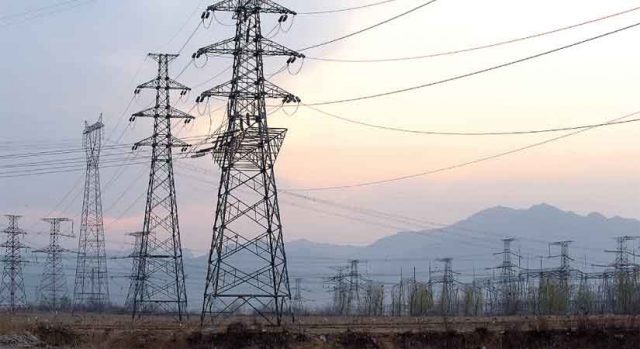
The National Grid Corp. of the Philippines (NGCP) invited power plants to participate in a competitive bid for Ancillary Services (AS), or reserve power that the grid can tap when the volume of baseload power runs low.

“The NGCP needs qualified Ancillary Services providers which can supply the grid requirements for Regulating Reserve, Contingency Reserve, Dispatchable Reserve, Reactive Power Support and Black Start Service, to commence in 2022 subject to the approval of the Energy Regulatory Commission (ERC) of Ancillary Services Procurement Agreements (ASPA),” the system and grid operator said in its bid invitation notice published on Jan. 25.

Five-year firm contracts are on offer subject to annual performance evaluation for power plants directly connected to the Luzon, Visayas, and Mindanao grids.

The grid operator has two contracts for its power suppliers: non-firm, which is on standby basis and contingent on availability, and firm, in which a supplier must commit to keep a certain volume of power capacity on call for the NGCP.

The Department of Energy (DoE) has been directing the NGCP to convert all its contracts to firm, in order to offer regulators a clearer picture of the available power reserves. The NGCP maintains that 100% firm contracting will ultimately raise power prices because generators command higher prices for fully committing their capacity for standby reserves.

According to the bid invitation, contract rates are as follows: P2.25 per kilowatt hour (kWh) per scheduled hour for Regulating Reserve; P1.50 per kWh per scheduled hour for Contingency Reserve; P0.85 per kWh per scheduled hour for Dispatchable Reserve; P4.00 per kiloVolt-Ampere-Reactive (kVAR) per occurrence for Reactive Power Support; and an incidental payment for Black Start Service paid per occurrence.

The NGCP set Feb. 2 as the deadline for companies to submit Expressions of Interest. A pre-bid conference is scheduled for Feb. 10.

Submission of bids for Luzon, the Visayas, and Mindanao was scheduled for Feb. 16, Feb. 18, and Feb. 19, respectively. – Marielle C. Lucenio

Power market operator sees no significant capacity coming online after June

THE independent market operator that runs the spot market for electricity said no major power plants will become operational beyond June, when a unit of a Bataan generating facility goes live.

“Power demand will continuously grow, whether accelerated or tempered, and the supply should increase with it,” Independent Electricity Market Operator of the Philippines (IEMOP) Chief Operating Officer Robinson P. Descanzo said at a virtual briefing Friday.

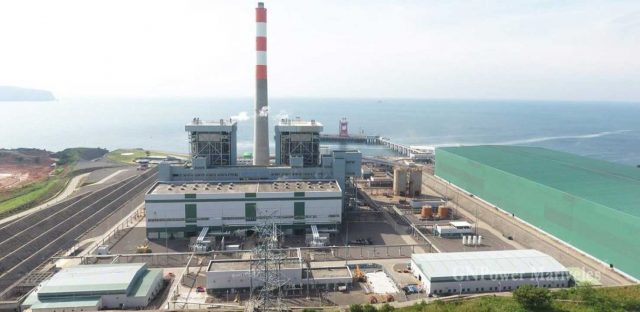
He was referring to GN Power Dinginin Ltd. Co’s 668-megawatt (MW) Coal-Fired Power Plant Unit 2 in Mariveles, which is set to operate in June.

IEMOP is projecting 929.5 MW of additional capacity in Luzon, 34.67MW in the Visayas, and 143.60 MW in Mindanao. Currently, Luzon’s registered capacity is 17,448 MW, Visayas 3,651, and Mindanao 4,231, according to the power plants’ data submissions to the Philippine Electricity Market Corp.

Dinginin Unit 2 is the largest plant coming into service, followed by the coal-fired 150MW Unit 1 of SMC Global Power Holdings Corp., also in Mariveles and also operational in June.

“This is a bit problematic. We are caught in the middle as coal-fired power plants are being stopped. In fact, these coal developers, our big players… are already rethinking their options and removing coal from their portfolios,” Mr. Decanzo said.

The Department of Energy (DoE) has frozen approvals for new coal-fired projects in order to help the Philippines meet its emissions targets, but allowed pending projects to proceed.

Mr. Descanzo added that many projects powered by solar, biomass, wind, and battery energy storage systems (BESS) energies are still awaiting commissioning.

“That’s why we are really banking on the availability of our existing power plants during summer,” he added.

The market operator expects Luzon demand to peak in the last week of May, increasing by 786 MW from last year’s high. The Visayas peak is expected to jump by 342 MW; and the Mindanao peak to rise by 127MW. It was citing the Energy department’s Philippine Energy Plan projections and last year’s load data.

The DoE projects Luzon peak demand of 12,387 MW, Visayas at 2,528 MW, and Mindanao 2,223 MW this year. – Marielle C. Lucenio

DTI says SRP adjustments cover about half of higher production costs 

BW FILE PHOTO

ADJUSTMENTS to the suggested retail prices (SRPs) of some basic commodities are equivalent of about half of the higher production costs currently being absorbed by producers, the Department of Trade and Industry (DTI) said.

Trade Undersecretary Ruth B. Castelo said in a statement Friday that the recently announced price hikes help address a global surge in raw material and packaging costs.

“All requests for adjustments were carefully reviewed to ensure that prices were reasonable. The DTI made sure that the price adjustments are justified,” Ms. Castelo said.

“Not allowing reasonable price adjustments despite cost increases will affect the investment climate, business viability and ability to keep the jobs in their companies,” she added.

On Jan. 27, the DTI released the latest SRP list for basic and prime commodities. Under the new list, prices for 66% or 143 of the 216 stock keeping units (SKUs) were maintained, while 34% or 73 SKUs saw their prices raised.

DTI said the price increases of around 86% of the 73 SKUs range from 1% to 9%, which it claimed was lower than the rate of cost movement of some raw materials.

Some of the products whose SRPs were raised include bottled water, processed canned meat and canned beef, instant noodles, salt, and canned sardines.

According to the DTI, the cost of raw materials such as mechanically-deboned meat used in processed meat products rose 25% to 100%, that of tin cans rose 133%, buttermilk powder, which is used in processed milk, up 46%, and flour up 40%.

“(We) ensured that price adjustments for the 73 SKUs were kept to a minimum to ensure that consumers continue to have access to reasonably-priced goods in the market,” the DTI said.

“The last price increase of some of the products such as bread, bottled water, candles, and salt were implemented four to eight years ago, and that the DTI delayed the adjustment of goods prices for two years before releasing the SRP in August 2021,” it added. – Revin Mikhael D. Ochave  

NCR retail construction materials retail price growth surges in December

THE PHILIPPINE Army’s 8th Infantry Division has mobilized more than 30 carpentry teams to help residents in different parts of the Visayas rebuild their houses damaged by typhoon Odette (international name: Rai), which swept through southern and central parts of the country in mid-December. — PHILIPPINE ARMY 8TH ID

Retail price growth of construction materials in the National Capital Region (NCR) rose by the highest rate in more than three years in December, the Philippine Statistics Authority reported Friday, with analysts citing supply chain issues,

The Construction Materials Retail Price Index (CMRPI) in the NCR rose 2.7% year-on-year in December, from the 2.3% recorded in November and the year-earlier rise of 1.4%.

The December reading was the highest growth since the 2.8% posted in October 2018.

Retail construction prices reflect demand from small-scale building projects, such as those carried out by the do-it-yourself segment or small contractors. A separate wholesale indicator tracks the price movement in commodities likely purchased in bulk for major projects.

In 2021, construction retail price growth averaged 1.6% in 2021, against 1.2% in 2020. It was the highest since the 2.9% expansion in 2018.

Prices increased across the basket of goods, with prices of tinsmithry materials rising 3.8% in December, against November’s 2.4%.

Other commodity posting rises were carpentry materials (1.6% in December from 1.4% in November); electrical materials (2.5% from 2.2%); masonry materials (1.6% from 1.4%); painting materials and related compounds (2% from 1.9%); plumbing materials (3% from 2.9%); and miscellaneous construction materials (3.6% from 3.4%).

In an e-mail, UnionBank of the Philippines, Inc. Chief Economist Ruben Carlo O. Asuncion said that supply chain issues particularly involving products from China pushed prices to surge in December.

“I have known of price increases due to higher prices of inputs because of the supply chain bottlenecks even before the pandemic (only to be further aggravated by [coronavirus disease 2019]),” he said.

For 2021, Mr. Asuncion noted that price movements were mainly driven by the pandemic and the lockdowns imposed throughout the year.

In the first half of 2021, the NCR started relaxing its movement restrictions, as case counts started falling and vaccination rates rose. However, the discovery of other variants prompted the government to tighten restrictions once again to minimize the impact of the pandemic on the economy.

“As (COVID-19) cases decline from the Omicron surge, I think that ‘sabik‘ (revenge) spending may resume, particularly discretionary spending,” he said.

Mr. Asuncion sees a “normalization” of construction prices this year as demand returns to pre-pandemic levels.

“Barring any new variants, global oil price risks due to geo-political and supply issues, further aggravation of supply chain challenges, and any political uncertainties from the transition of power to the new administration, 2022 construction prices should start to stabilize,” he said. — Bernadette Therese M. Gadon

DA, Customs agree to share info amid import surge

REUTERS

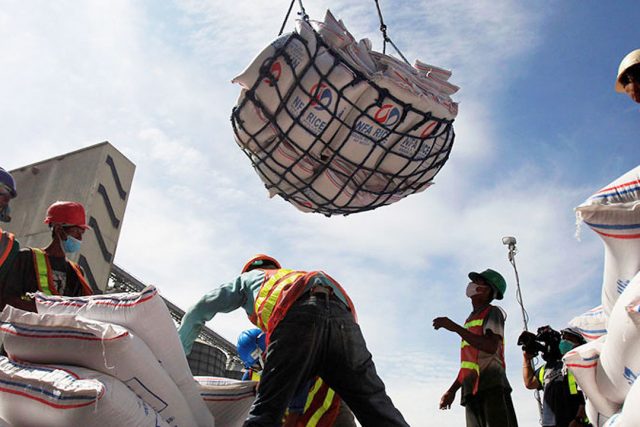
The Department of Agriculture (DA) said it has signed a Data Sharing Agreement (DSA) with the Bureau of Customs (BoC) on the movements of agricultural commodities, citing the need to protect farmers in the face of surging imports.

Signed on Jan. 27, the DA said the arrangement ultimately hopes to ensure that domestic farm produce remains competitive amid claims by farmers that smuggled goods are making their way into the market.

“It is our moral duty to safeguard the welfare of our agricultural frontliners, our farmers and fisherfolk,” Agriculture Secretary William D. Dar said in a statement.

The agreement calls for information sharing in the interest of ensuring food safety, strengthening Customs enforcement, and improve inspection and control procedures.

“The BoC will be a reliable partner in ensuring that the implementation of trade remedy measures on agricultural goods is backed by solid and timely data,” Customs Commissioner Rey Leonardo B. Guerrero said in the statement.

“Credible and timely information is crucial in crafting policies, especially in this digital age,” Mr. Dar added.

The DA said the agreement will be compliant with Republic Act No. 10173, or the Data Privacy Act. – Luisa Maria Jacinta C. Jocson

DTI says RCEP safety nets sufficient for farmers 

THE agriculture industry has been provided adequate safety nets to protect it from any disruption that may result from the Regional Comprehensive Economic Partnership (RCEP) trade deal, the Department of Trade and Industry (DTI) said.

Trade Secretary Ramon M. Lopez said in a statement Friday that RCEP, which the Senate is currently in the process of ratifying, has enough safety nets and is sufficiently flexibles to respond to any threats to industry that may suffer from liberalization.

“Under RCEP, tariff protection remains for highly sensitive products, including swine meat, poultry meat, potatoes, onions, garlic, cabbages, sugar, carrots, rice, cement, and flat-rolled products of iron or non-alloy steel,” Mr. Lopez said.

“These products, while excluded from RCEP, would still enjoy the other benefits that the agreement offers. In addition, appropriate trade remedies remain in place including World Trade Organization (WTO) global safeguards and an RCEP transitional safeguard,” he added.

RCEP came into force on Jan. 1 and has been ratified by Brunei, Cambodia, Laos, Singapore, Thailand, Vietnam, Australia, China, Japan, and New Zealand. On Feb. 1, South Korea is also set to implement the trade agreement.

The Senators debating accession to the treaty have been hearing objections from farmers who say that many of them are unprepared for open competition.

According to Mr. Lopez, the trade agreement provides that WTO safeguards can still be availed of if there is an increase in imports that threaten a domestic industry.

He added that RCEP has a transitional safeguard that can address the surge in imports, which will allow participating parties to suspend further reduction of customs duties or increase customs duties.

“Anti-dumping and countervailing measures are also available which reaffirm parties’ rights and obligations under relevant WTO agreements. In other words, issues and concerns of some groups of farmers are fully addressed,” Mr. Lopez said.

Mr. Lopez said the Philippines cannot afford to stay out of RCEP as it would be “catastrophic” for trade and investment.

“The signal to the country’s trading partners and would-be investors is negative as it conveys that the Philippines is embracing an inward policy, not to say a protectionist stance. This is aligned with our current economic reforms and policy direction,” Mr. Lopez said.

Trade Assistant Secretary Allan B. Gepty said foreign competition by virtue of the Philippines’ participation in the WTO and other free trade agreements (FTAs),

Mr. Gepty said some of the FTAs include those with Association of Southeast Asian Nations (ASEAN) member-states and other countries participating in RCEP.

“In other words, competition… is not totally new. If there is something new in RCEP it is more of coverage of the free trade area and the rules and disciplines,” Mr. Gepty said.

Mr. Gepty added that RCEP allows adjustments to commitments made under the trade deal for exceptional circumstances that affect a country’s economy and industries.

“The RCEP negotiators acknowledged this possibility and therefore incorporated various mechanisms in the FTA that act as safety nets so that RCEP countries are able to address these circumstances. These are on top of the available measures to the Philippines under the WTO agreements,” Mr. Gepty said.

“Given this, our local industries including the agricultural sector should look at RCEP as a platform for more and bigger opportunities ranging from improved market access in the RCEP region, cheaper access to raw materials, wider cumulation area, trade facilitative measures, and even investment in smart agriculture and research and development,” he added.

According to the DTI, the trade deal also has sufficient flexibility to address emergency, security, and health and safety concerns.

It added that there are carve-outs for taxation measures as well as measures to safeguard the balance of payments for parties facing external financial difficulties.

“Under the (general exceptions) provision, RCEP countries such as the Philippines are not prevented from implementing measures that are necessary to protect public morals, human, animal or plant life or health, among others,” the DTI said.

“There is also an article on Security Exceptions which states that RCEP countries are also not prevented from taking any action or measures considered necessary to protect essential security interests,” it added.  – Revin Mikhael D. Ochave 

BDO raises P52.7 billion from sustainability bonds

BW FILE PHOTO

BDO Unibank, Inc. issued P52.7 billion worth of ASEAN sustainability bonds, which it said will serve to diversify its funding sources and finance environmental and social projects that meet the sustainability program’s eligibility criteria.

The ASEAN sustainability bonds were heavily oversubscribed after a P5 billion original offer, with strong demand from both retail and institutional investors, BDO said in a statement Friday.

“The net proceeds of the issue are intended to diversify the bank’s funding sources, and finance/refinance eligible assets under the bank’s Sustainable Finance Framework,” BDO said.

Proceeds of sustainability bond issues must go towards financing projects with environmental and social benefits.

The two-year debt comes with a fixed rate of 2.9%, with interest payable quarterly on a 30/360 basis. The bond issue is the third tranche of the BDO’s P365-billion bond program.

The offer launched on Jan. 11 and closed Jan. 19, two days ahead of schedule, because of strong demand. Settlement and listing took place Friday.

The bonds were issued in minimum amounts of P500,000 and at increments of P100,000 beyond the minimum.

Standard Chartered Bank was the sole arranger and was also among the selling agents for the issue, alongside BDO and BDO Private Bank. BDO Capital and Investment Corp. advised on the transaction.

BDO’s net profit in the third quarter of 2021 declined 10.6% year-on-year to P11.033 billion. Net profit in the first nine months amounted to P32.484 billion, up 95.7%.

BDO shares closed at P134 Friday, up 5.51%. — Luz Wendy T. Noble 

Banks eased credit rules for households, tightened standards for businesses in Q4 – BSP

BW FILE PHOTO

Banks generally maintained their credit standards in the last three months of 2021, but adjusted them to ease the rules for households while implementing a slight tightening for businesses, according to a survey carried out by the Bangko Sentral ng Pilipinas (BSP).

The fourth quarter Senior Bank Loan Officers’ Survey released late Thursday indicated that most banks’ credit standards were maintained, apart from those adjustments. The extent to which standards were tightened for enterprises was milder than seen in previous quarters, the BSP said.

“Respondent banks specified that the observed tightening of overall credit standards (for enterprises) was largely driven by the deterioration in the profitability of bank’s portfolio and borrowers’ profile as well as a reduced tolerance for risk, among other factors,” the BSP said.

Banks imposed stricter collateral requirements on businesses and adjusted other terms on their loan agreements. They also made increased use of interest rate floors. Some easing was also noted via narrower loan margins and longer maturities.

The net easing for consumer borrowings applied to housing, credit card, and personal loans.

“Respondents linked the general easing of credit standards for household loans with a more favorable economic outlook and an improvement in borrower profiles,” the BSP said.

This easing was implemented via longer loan maturities and reduced use of interest rate floors. However, some tightening was seen via expanded loan margins, reduced credit lines as well as stricter collateral requirements and loan terms.

Compared to previous quarters, fewer banks expect a net tightening of credit standards for businesses in the first quarter of 2022. These banks cited the less favorable economic outlook and a deterioration in borrower profiles, the BSP said.

On the other hand, banks expect more relaxed credit standards for retail borrowers in the first three months on optimism over the economy’s prospects and an expected improvement household borrowing profiles.

Banks are anticipating higher loan demand from both businesses and households, citing positive views on the economy as vaccination efforts make further progress.

Higher loan demand from businesses is expected amid increased inventory and accounts receivable financing needs, while households are expected to borrow more due to increased consumption and more attractive financing terms.

Fifty banks participated in the survey out of the 64 that received the questions, representing a response rate of 78.1%. The study was conducted between Nov. 29 and Jan. 11.

The BSP estimates that bank lending rose for the fourth consecutive month in November, rising 4% year-on-year. The industry’s non-performing loan ratio eased to 4.35% during the month, the indicator’s lowest level since the 4.21% logged in March. — Luz Wendy T. Noble