Home Blog Page 6824

Infrastructure spending jumps in November

By Jenina P. Ibañez, Senior Reporter  

Infrastructure spending increased 49% in November, driven by road construction and repair projects, data from the Department of Budget and Management (DBM) showed. 

Spending on infrastructure and other capital outlays rose by 49% to P60 billion in November, but slipped by 1.5% from a month earlier. 

The year-on-year increase can be attributed to works on roads, bridges, flood mitigation structures and drainage systems, along with the construction of multi-purpose buildings, DBM said. 

“The settlement of accounts payable of the Department of Health for various capital outlay projects under its Health Facilities Enhancement Program” also drove up spending, it added.  

Road network and rail transport projects done with foreign aid contributed to higher spending, DBM added. 

In the 11 months to November, infrastructure and capital outlays spending reached P762.4 billion, or 38.9% higher than the P548.8 billion spent in the same period in 2020. 

Economic managers previously said infrastructure spending for 2021 could hit P1.095 trillion, higher than the P1.019 trillion it had programmed and accounting for 5.6% of economic output 

“The latest year-on-year increase in infrastructure spending would reflect the rush to complete various government projects, including those under the Build, Build, Build program, in preparation for the election season,” said Michael L. Ricafort, chief economist at Rizal Commercial Banking Corp. 

He added in a Viber message that the shift to the alert level system for lockdowns, instead of widespread restrictions, reopened the economy and sped up infrastructure spending. 

The ban on public works starts 45 days before general elections, or from March 25 to May 8, 2022. The law, which also prohibits social welfare dole-outs during the period, seeks to prevent politicians from using state resources for their election campaign. 

The alert level system was first piloted in Metro Manila in September 2021, under the strictest restrictions. The lockdown in the region was eased to the more relaxed alert level 2 by November as the number of coronavirus disease 2019 infections declined. 

BSP doesn’t have to ‘move in step’ with Fed adjustments — Diokno

BW FILE PHOTO

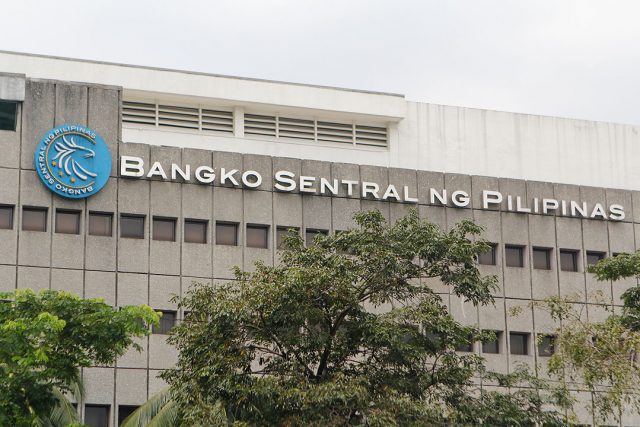
The Bangko Sentral ng Pilipinas (BSP) chief does not expect to react to the expected rate hikes from the US Federal Reserve in the near-term as monetary policy decisions will be based on domestic developments. 

“For the Philippines, we do not necessarily have to move in step with the monetary policy adjustments of the US Fed,” BSP Governor Benjamin E. Diokno told Global Source Partners in a Thursday report. 

“The BSP calibrates its monetary policy settings in response to external developments only to the extent that they influence the outlook on growth and inflation.” 

He said the central bank uses its flexible exchange rate system and external buffers to deal with short term volatility. 

US Federal Reserve Chairman Jerome H. Powell has said the central bank may raise interest rates starting in March, although the pace of later rate hikes is yet to be decided. 

Last month, the International Monetary Fund said emerging economies should prepare for a US Fed policy tightening that could rattle financial markets. 

The Philippine external position and the peso could weaken as investors price in this Fed rate hike, analysts said. 

Meanwhile, Mr. Diokno had previously said that a BSP rate hike is unlikely within the first half of this year. 

“Future monetary policy decisions will continue to be data-driven and anchored on evolving domestic developments to avoid unintended consequences associated with protracted easy monetary policies,” Mr. Diokno told Global Source Partners. 

He said the BSP will avoid unwinding policy measures either too early or too late so that it could sustain economic recovery and avoid price and financial stability threats. 

Risks to the country’s outlook still include pandemic-related uncertainties, including the emergence of new coronavirus disease 2019 (COVID-19) variants that could delay the reopening of the economy. A more aggressive vaccination rollout could prove to be a positive factor. 

“Nevertheless, the BSP remains committed to its primary mandate of maintaining price stability conducive to balanced and sustainable growth and employment,” Mr. Diokno said. 

While the BSP expects supply-side pressures to subside, Mr. Diokno said it will continue to watch “for any signs of inflation becoming broader based while continuing to support the various non-monetary interventions of the National Government.” 

Inflation slowed to 3% in January, the fifth straight month of deceleration, as housing and utilities prices eased, preliminary data showed. — Jenina P. Ibañez
 

Five presidential candidates lay down specifics of their plans

FIVE PRESIDENTIAL aspirants attended a widely broadcast presidential forum to lay down the specifics of their six-year plan if they are elected as executive chief in May.

During the Kapisanan ng mga Brodkaster ng Pilipinas (KBP) Presidential Forum, which stretched out over three-and-a-half hours on Friday, the five presidential aspirants who attended discussed a wide range of topics, from unemployment insurance to housing, from corruption to the situation in the South China Sea.

LENI ROBREDO

Vice-President Maria Leonor “Leni” G. Robredo said she plans to focus on providing assistance to small businesses and strengthen local industries.

Public employment programs and unemployment insurance programs will also be enforced to provide for those who lost their source of livelihood, especially during the pandemic, she said.

She vowed that under her leadership, discrimination in jobs will be removed as the age of an individual and their educational degree will no longer affect their right to work.

The country will also assert its sovereignty over its portion of the South China Sea, she said.

Tertiary hospitals will be built in every region and province, while proper support and benefits will be given to front liners. Barangay health units will be provided with adequate supplies.

Ms. Robredo also plans to raise the education budget to at least 6% of the gross domestic product (GDP) to implement better learning programs and provide higher pay for teachers.

MANNY PACQUIAO

On the other hand, Senator Emmanuel “Manny” D. Pacquiao reiterated his 22-point agenda, noting his top five priorities: stop corruption, improve employment, focus on healthcare, improve internet signal, and develop renewable energy.

Under his administration, he said that students will have free education until graduation. To cope with online learning, he will ensure teachers are given laptops and students provided tablets.

The boxer-turned-politician will also focus on providing support for farmers and fisherfolk. Importation, he added, must be stopped as the country should be exporting instead.

ISKO MORENO

In his 10-point-agenda, Manila Mayor Francisco “Isko Moreno” M. Domagoso seeks to allocate 1.3% of the country’s GDP for housing, translating to 1 million units for 4.5 million Filipinos in six years, he said. He also said that he will push to increase spending on education to 4.3% of GDP.

The aspirant also seeks to create more jobs and support micro, small, and medium enterprises (MSMEs) by increasing the loan pool to P30 billion from P1.5 billion.

Better financial experts will be tapped to manage government agency spending, Mr. Domagoso said, noting that he is also looking to employ a more creative economic strategy.

Government spending on research and development will also be raised to 2% from 1% of GDP, while technology start-ups will be prioritized.

The Manila mayor made a pledge to fishermen that under his presidency, they will be able to fish in the South China Sea unhampered, unharmed, and safe.

He also pushed for a diverse and inclusive government that ensures social harmony, self-confidence, and self-identity.

PANFILO LACSON

Senator Panfilo M. Lacson reiterated his strong determination to fight corruption in the country while prioritizing solutions for the pandemic, poverty, job loss, government debt, and education.

If elected, he said he will begin his administration with an internal cleansing to throw out undisciplined government agencies and officials.

His platform, he added, will be science-based, data-driven, and future-proof. He said that P260 billion will be invested in the Universal Healthcare Act, while fiscal stimulus packages will be given to MSMEs.

Mr. Lacson also seeks to end the country’s import dependence. He plans to ensure a thorough reform of the budget to provide adequate funds to the sectors that need it.

LEODY DE GUZMAN

Under the leadership of labor leader Leodegario “Ka Leody” de Guzman, MSMEs will be allotted P125 billion to create more jobs and help those who have lost their source of livelihood, he said.

He maintained his proposal to impose a wealth tax on 500 of the richest individuals in the country as it will help fund the health sector, agricultural sector, among others, he noted.

Mr. De Guzman also plans to take back the nation’s money allegedly stolen by the Marcoses and use this to fund the nation and his platform.

The country should also have more discussions with nations recognizing the Philippines’ sovereignty and territorial integrity, he added, as he pushed for an independent foreign policy.

If elected, climate change and the environment will also be given more priority as Mr. De Guzman plans to cut the use of fossil fuels and support renewable energy sources.

ONLINE GAMBLING

Ms. Robredo said the issue of establishing online gambling in the country should be discussed thoroughly with not only those who applied for the franchise, but also the affected community. In the same way, Mr. Lacson said the social costs of online gambling should be studied before approval for a franchise is given.

Mr. Domagoso and Mr. Pacquiao said that they accept that online gambling will continue in the country, whether or not it is deemed legal. So the best way to deal with it is to ensure that it is under the government’s authority so that it may be observed and properly regulated.

On the other hand, Mr. De Guzman was strongly against online gambling, noting that many lives have been ruined due to it. The focus, he added, should be on more productive programs.

LAND RECLAMATION

All candidates, except the labor leader, were for land reclamation as it is a new source of income for the country, though they all gave the caveat that environmental effects should be considered. Mr. Domagoso noted that reclamation will help provide funds and jobs without adding a burden to taxpayers.

Mr. Lacson said that so long as the decision to reclaim land is science-based and data-driven, it should be done. The implementation should be based on need. Ms. Robredo said the same, noting that experts and the community involved should be consulted.

As for Mr. De Guzman, he said only big capitalists will benefit from reclamation. The people and the environment will receive nothing and may be gravely harmed, he said.

All candidates were also agreeable to continuing projects under the current administration’s Build Build Build program while expanding it further to improve the country’s infrastructure.

ILLEGAL DRUGS

To solve the issue of illegal drugs, Ms. Robredo suggested amending the country’s laws to specify penalties on specific violations made. In the same way, Mr. De Guzman said the provisions under the law should be tightened to properly arrest financers and drug lords, as well as rehabilitate victims.

Mr. Domagoso, meanwhile, said he would focus on the root of the problem – the supply chain. There must be an issue with the port of entry, he pointed out, as most of the illegal drugs come from outside the state.

As for Mr. Lacson, he said his plan was both comprehensive and holistic. It will not be limited to law enforcement but will prioritize prevention and rehabilitation together with market constriction and demand reduction.

All candidates say they plan to improve the country’s agricultural production by developing the sector and halting the country’s heavy reliance on imports.

At the end of the forum, the presidential aspirants all took an oath stating that they would support a clean, honest, and fair election elections, and, if elected, that they would work with integrity and preside over a government without corruption and misdeeds, working to assure a dignified life to Filipino families, and work in the interests of the nation and its citizens, especially the poor.

The forum was moderated by Karen Davila of ABS-CBN News and Rico Hizon of CNN Philippines.

Presidential aspirant Ferdinand “Bongbong” R. Marcos, Jr. had been invited to attend the forum, but declined due to a “conflict in schedule.” He instead had a one-on-one interview with Korina Sanchez-Roxas which included a cooking session.

The official election campaign period will begin on Feb. 8, and election day itself is May 9. — Alyssa Nicole O. Tan


COVID cases continue to drop; 8,564 new COVID cases reported on Friday

SM Supermalls partnered with local government units to host vaccination sites in its 71 malls. -- Courtesy of SM Supermalls

The number of coronavirus-2019 (COVID-19) cases in the country is continuing to drop but this does not mean people can let their guard down, a health official said.

“Based on our latest data, the cases of COVID-19 in the country continue to go down,” Health Undersecretary Maria Rosario S. Vergeire said in Filipino in an online news briefing on Friday.

The national average daily cases this week is 45% lower than the previous week’s figures, she added. This is the reason the risk case classification was lowered from critical to moderate.

The Department of Health (DoH) posted 8,564 coronavirus infections in its health bulletin on Friday, bringing the total number of cases since the pandemic was declared in early 2020 to 3.59 million.

The death toll hit 54,214 after 46 more patients died, while recoveries rose by 10,474 to 3.39 million, the health department said.

Despite the downturn in the number of cases, Ms. Vergeire urged the public to continue getting vaccinated, especially their booster doses and pediatric vaccinations.

“We are committed to protecting our children through pediatric vaccination, so we are encouraging parents to register their children aged five to 11 years old with their local governments or vaccination centers in their area,” she said.

JABS FOR CHILDREN

Citing global data, Ms. Vergeire said that out of the 8.7 million vaccinated children vaccinated worldwide, 97.6% did not experience adverse effects following immunization. Most of the aftereffects were mild — pain in the injected area or a headache that would subside within two to three days. There have been no deaths.

The health undersecretary also gave an update on the country’s pediatric vaccination roll-out. She said the delivery of Pfizer BioNTec vaccines has been delayed due to logistical concerns. They are expected to arrive this evening.

Children whose jabs were scheduled on Feb. 4 will have their vaccinations rescheduled on Feb. 5, those scheduled on Feb. 5 will be moved to Feb. 8, and those scheduled to get their shots on Feb. 7 and 8 have been rescheduled to Feb. 9.

“Despite delays, we encourage parents and the LGUs (local government units) to continue facilitation of registration in their respective local governments to ensure continuous roll-out once it begins,” Ms. Vergeire said.

Vaccination for the young is not mandatory, she clarified. “This is based on what you and your children want. Informed consent is required for all.”

Policies for the unvaccinated, she added, are implemented to protect the vulnerable population – the old, the sick, and the children, against COVID-19.

BY THE NUMBERS

The health department said 24.3% of the 37,932 COVID-19 test samples taken on Feb. 4 were found positive for COVID-19, still far above the 5% threshold set by the World Health Organization.

Of the 151,389 active cases, 6,522 did not show symptoms, 139,940 were mild, 3,107 were moderate, 1,500 were severe and 320 were critical.

The DoH said 77% of the latest cases occurred from Jan. 22 to Feb. 4. The top regions with new cases in the past two weeks were the National Capital Region with 907, Western Visayas with 782, and the Davao region with 753.

It added that 57% of new deaths occurred in February, 39% in January, and 4% in October.

It said 23 duplicates had been removed from the tally, 14 of which were recoveries, while 19 recoveries were relisted as deaths. Six laboratories failed to submit data on Feb. 2.

The agency said 44% of intensive care unit beds in the country were being used, while the rate for Metro Manila was 38%. — Alyssa Nicole O. Tan

IATF approves COVID-19 vax certificates of 5 other states

REUTERS

The Inter-Agency Task Force for the Management of Emerging Infectious Diseases (IATF) will now be accepting the national COVID-19 vaccination certificates of Slovenia, Bahrain, Qatar, Switzerland, and Hong Kong SAR, said the Presidential Palace on Friday.

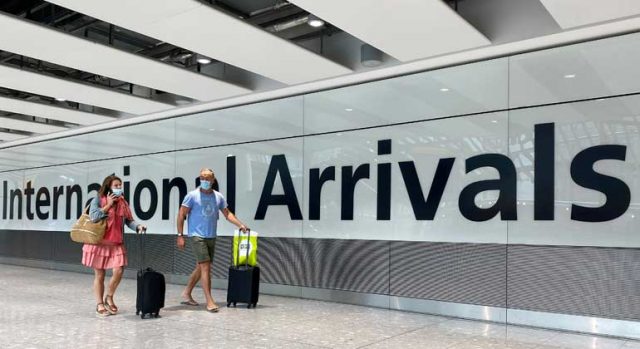
New entry, testing, and quarantine protocols were also provided for those flying into the country, said Acting Presidential Spokesman and Cabinet Secretary Karlo Alexei B. Nograles in an online news briefing, noting that these will take effect on Feb. 10.

Beginning next Thursday, fully vaccinated Filipino nationals may enter the Philippines without undergoing mandatory facility-based quarantine upon their arrival. They only need to self-monitor for any signs of symptoms for seven days.

For those who are not fully vaccinated, facility-based quarantine is still needed until the release of the results of an RT-PCR test taken on the fifth day after their arrival. They must also undergo home quarantine until their 14th day in the country.

Arriving minors below 12 years of age will follow the quarantine protocols of their guardian. Those ages 12 to 18 will follow classification and procedures based on their vaccination status with either parent or guardian accompanying them during their facility-based quarantine.

Filipino nationals who have recovered from coronavirus 2019 (COVID-19) but test positive in the 48-hour pre-departure RT-PCR test may enter the country but must present the necessary documents.

All inbound Filipinos must register with the One Health Pass prior to arrival in the Philippines, said Mr. Nogales.

Only fully vaccinated foreign nationals, except children under 12 years old, are allowed to enter the country. Those not fully vaccinated will be denied admission and will be subject to appropriate exclusion proceedings. They are no longer required to have facility-based quarantine

However, all those arriving in the country must still present a negative COVID-19 RT-PCR test result taken within 48 hours prior to departure from the country of origin.

The Philippines had temporarily suspended its “green,” “yellow,” and “red” COVID-19 risk classifications for countries, territories, and jurisdiction due to the Omicron variant of the coronavirus. — Alyssa Nicole O. Tan

Comelec ready to implement new in-person campaigning guidelines

The campaigning panel of the Commission on Elections (Comelec) is ready to enforce new in-person guidelines next week, it said in a statement released on Friday.

The National Comelec Campaign Committee (NCCC), led by Comelec Commissioner Rey E. Bulay, held a virtual meeting on Thursday with representatives of various government agencies who will be helping the poll body implement the guidelines.

Mr. Bulay said that as the campaign period begins next Tuesday, the “campaign committees nationwide stand ready to implement the guidelines institutionalizing the new normal in the conduct of in-person campaigns, rallies, caucuses, meeting de avance, motorcades and caravans for the 2022 National and Local Elections.”

The campaigning period for national positions runs from Feb. 8 to May 7.

Last year, the Comelec launched a Facebook page to serve as an online campaigning platform for national candidates during the coronavirus 2019 (COVID-19) pandemic.

The agencies who attended the online meeting included the Department of Health, the Philippine National Police, the Armed Forces of the Philippines, and the Department of the Interior and Local Government.

According to Comelec Resolution 10723, the NCCC can classify the category level of every national and local government unit according to the alert level classification issued by the Inter-Agency Task Force for the Management of Emerging and Infectious Diseases (IATF-MEID).

Under the Philippine COVID-19 alert level system, Level 5 is the strictest community quarantine level where the whole country would be placed under lockdown, while Level 1 is the most relaxed and only minimal safety health protocols need to be followed.

The new campaign guidelines provide details on the process of holding rallies in an area if the alert level changes and the campaigning documents that would then be needed.

During the meeting, the agencies vowed to do their roles in holding the first automated elections to follow COVID-19 health and safety protocols.

“In the enforcement of these guidelines and prosecution thereof, we are likewise assured by the commitment of the deputized agencies who have been our valued partners through the years in ensuring not just a free, honest and credible electoral exercise but also a safe one,” Mr. Bulay said. — Jaspearl Emerald G. Tan

Acosta appointed as new Civil Service commissioner

Alvin R. Acosta has been appointed commissioner of the Civil Service Commission (CSC) according to a statement released on Friday.

Mr. Acosta, who was a Deputy Executive Secretary for Legal Affairs of the Office of the President, replaces former Commissioner Leopoldo Roberto W. Valderosa, Jr. who ended his term in February 2020.

The CSC is one of three constitutional commissions in the country which is tasked to review the integrity of government actions and processes.

The Commission on Appointments said that he was nominated for the role on Wednesday.

Mr. Acosta began working as a Foreign Affairs Specialist at the Foreign Affairs Service Institute. He then became a private lawyer for nine years before returning to government, working as a technical assistant for the Office of the President in 2015.

In 2016, he was appointed acting Deputy Executive Secretary for Legal Affairs, formally assuming the post in December 2017.

Meanwhile, Mr. Valderosa will join Commissioner Aileen Lourdes A. Lizada at the Commission en banc.

There is still no replacement for former CSC Chairperson Alicia dela Rosa-Bala, who finished her term on Wednesday. — Jaspearl Emerald G. Tan

Emperador, Monde Nissin join 30-member PSEi

REUTERS

By Keren Concepcion G. Valmonte, Reporter  

Emperador, Inc. and Monde Nissin Corp. will be part of the 30-member Philippine Stock Exchange index (PSEi) beginning Feb. 14, replacing Bloomberry Resorts Corp. and Robinsons Retail Holdings, Inc. (RRHI).  

This is the result of the Philippine Stock Exchange’s (PSE) regular review of the benchmark index and sectoral indices, which covered trading activity from Jan. to Dec. 2021.  

“The index review allows us to maintain a roster of companies that best represents the entire market. The last two reviews saw the entry of newly listed companies in the PSEi as large issuances readily meet our criteria and are deemed qualified for inclusion by other index providers,” PSE President and CEO Ramon S. Monzon said in a statement.  

To qualify for inclusion in the PSEi, listed firms should be among the top companies in terms of liquidity and market capitalization. Companies also need to have a public float of at least 15%. The PSE also provides rules on the early inclusion of newly listed companies.  

Monde Nissin, which made its debut on the stock market in June last year after a record P48.6-billion public offering, qualified for early inclusion.   

Meanwhile, Emperador is rejoining the PSEi after it was removed in August last year.  

“Many analysts were expecting this already if you look at the metrics. There was speculation on other issues, but it has been [in] discussion for a month at least,” Regina Capital Development Corp. Head of Sales Luis A. Limlingan said in a Viber message.  

COL Financial Group, Inc. Chief Technical Analyst Juanis G. Barredo said the PSEi’s rebalancing “may cause some turbulence from the beginning of next week to its end.”  

Emperador and Monde Nissin’s inclusion in the bellwether index is seen as beneficial. However, it’s a different story for Bloomberry and RRHI as they exit from the PSEi. 

“We have seen some early exit motions into BLOOM (Bloomberry’s ticker symbol) and RRHI already recently, as many have been speculating on their removal already — so perhaps a good chunk of selling may have been factored in already,” Mr. Barredo said in a separate Viber message.  

All sectoral indices will have changes in their composition except for the Financials index.  

Monde Nissin joins EEI Corp. in the industrial index, taking the place of Alsons Consolidated Resources, Inc., SFA Semicon Philippines Corp.  

AREIT, Inc., Philippine Estates Corp., and Primex Corp. will be part of the Property index, while A Brown Co., Inc. will be removed.  

Meanwhile, the A and B shares of ATN Holdings, Inc. will be removed from the Holding firms index. The A and B shares of Metro Alliance Holdings & Equities Corp. will also be bumped off the Services index.   

Oriental Peninsula Resources Group, Inc. will no longer be part of the Mining and Oil index beginning Feb. 14.  

“The index review allows us to maintain a roster of companies that best represents the entire market,” Mr. Monzon said. 

8990 Holdings files for P27-billion follow-on offering

8990 Holdings Inc. on Friday said it filed documents for its P26.59 billion follow-on offering (FOO), which it described as a “re-IPO (initial public offering)” to introduce the company to more investors.  

In a disclosure, the company said the FOO consists of 1.25 billion common shares owned by its existing shareholders, along with an overallotment option of up to 150 million shares. 

The shares, which are owned by TPG Rafter Holdings, Ltd., Pasir Salak Investments Ltd, and iHoldings, Inc., will be sold for as much as P18.99 each.   

“The Company views the follow-on offering as a re-IPO to re-introduce 8990 and share its story to international and local investors, increasing the public float and trading liquidity of the stock in the process,” 8990 Holdings President & CEO Anthony Vincent S. Sotto said in a separate statement.   

According to its preliminary prospectus filed Jan. 28, “the company will not directly receive any proceeds from the offer.”    

TPG Rafter Holdings, Pasir Salak Investments, and iHoldings will receive proceeds from the FOO. However, 8990 Holdings will still receive proceeds through a top-up placement with iHoldings.   

“The offering includes a top-up component which is expected to generate fresh capital to contribute to the company’s growth,” Mr. Sotto said.   

Assuming the overallotment option is exercised, the company will issue iHoldings as much as 450 million new common shares from its unissued capital stock to match the number of shares iHoldings sold from the FOO for the same price. These shares will also be listed on the Philippine Stock Exchange.   

8990 Holdings mandated Merrill Lynch (Singapore) Pte. Ltd. or BofA Securities and J.P. Morgan Securities plc as the joint global coordinators and bookrunners of the offer. China Bank Capital Corp., and PNB Capital and Investment Corp. were tapped to be the joint domestic lead underwriters and bookrunners of the transaction.   

On Friday, 8990 Holdings shares at the stock exchange went up 2.59% or 30 centavos to close at P11.88 apiece. — Keren Concepcion G. Valmonte  

Figaro launches keto-friendly products, plans more pizza stores

BW FILE PHOTO

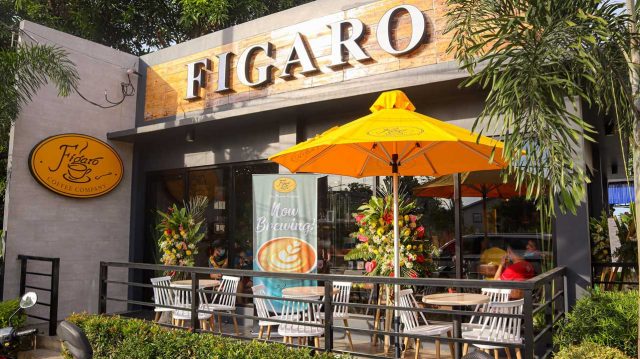
Figaro Coffee Group, Inc. (FCG) launched two new keto-friendly products and is planning to rollout five new pizza stores in the first quarter this year.  

FCG is a food holding company that owns and operates Figaro Coffee, Angel’s Pizza, Tien Ma’s Taiwanese cuisine, The Figaro Group Express, and Café Portofino.  

“In line with our focus on providing high-quality products at value-for-money prices, we also want to ensure our selection of pastries have something for everyone, even people who want to minimize carbohydrates or those who are diabetic,” Figaro Chairman and Director Justin T. Liu said in a statement on Friday.  

FCG’s Figaro Coffee launched Sugar-free Keto Brownies and Keto Coconut Tiramisu to cater to customers on a Keto (Ketogenic) diet, or those who prefer getting calories from protein and healthy fats instead of carbohydrates.  

“In creating these products, we ensured that we strictly followed the three main tenets of a keto diet,” Figaro Coffee’s Research and Development Chief Loren Salinas Lazar said.  

Mr. Lazar explained that the brownies and coconut tiramisu were made using ingredients with healthy fats and enough protein. The keto-friendly pastries were also made with monk fruit, stevia, and erythritol.  

Both products were already launched in Metro Manila Figaro Coffee stores earlier this year. FCG said these were met with positive responses from consumers.  

MORE PIZZA STORES 

Meanwhile, FCG is planning to open five Angel’s Pizza outlets in the first quarter this year. Mr. Liu earlier told BusinessWorld that Angel’s Pizza has been the company’s “growth driver.”  

The new Angel’s Pizza branches will be launched in Lipa, Batangas, Ortigas Center’s Hanston Building, Cebu City, Calamba in Laguna, and in Bonifacio Global City’s (BGC) Avida Towers Cityflex.   

“The opening of outlets in BGC and Ortigas Business District is part of our optimism that offices and the economy will come back,” Mr. Liu said in a separate statement on Friday.  

“We see continued growth and strength outside Metro Manila, hence our new stores in Lipa, Cebu, and Laguna. We will continue to grow our outlets to reach our beloved customers and meet them where they are,” he added.  

The company made its debut on the Philippine Stock Exchange (PSE) last week, raising P767 million after selling 1.023 billion common shares for 75 centavos per share.  

FCG plans to use a portion of the proceeds to launch 29 Angel’s Pizza stores, six The Figaro Group (TFG) Express multi-brand outlets, five Figaro Coffee shops, and one Tien Ma’s Taiwanese cuisine restaurant.   

As of Jan. 21, 2022, the company operates 109 stores through its different food brands. Figaro Coffee shops account for 56 of these, 39 are Angel’s Pizza stores, seven TFG Express outlets, six Tien Ma’s Taiwanese cuisine restaurants, and one Café Portofino outlet.  

FCG wants to have a total of 150 system-wide stores by the end of this year and is eyeing to have over 300 system-wide stores across the country by end-2029.  

Figaro shares at the stock exchange declined 6.59% or six centavos on Friday to close at 85 centavos apiece. — Keren Concepcion G. Valmonte 

Converge plans underground cable network for stable connections

CONVERGE

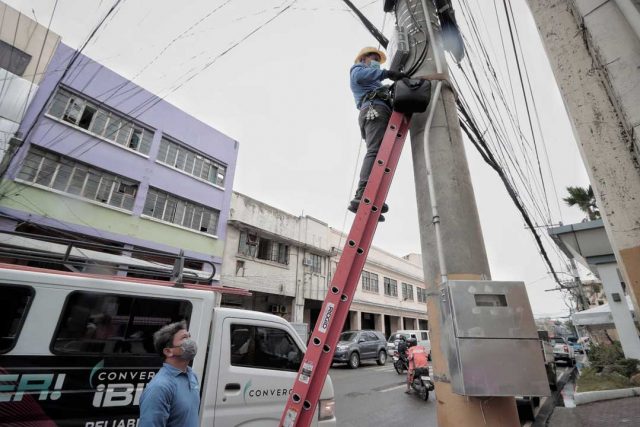
Converge ICT Solutions Inc. plans to expand the use of its micro-trenching technology, which puts its “key connectivity elements” underground, to avoid network interruptions during typhoon calamities.   

“In the face of increasing risks brought about by climate change, we will ensure that we establish resilient connectivity by using the latest technology to put our fiber infrastructure underground where it will not be exposed to various elements that can damage the network,” Converge Chief Executive Officer Dennis Anthony H. Uy said in a statement on Friday.  

The company is moving to “disaster-proofing” its network after seeing the aftermath of typhoon Odette. According to the national disaster management council, the typhoon damaged infrastructure worth P17.38 billion as of Feb. 3.  

Converge said it is still working to service its typhoon-affected clients in Cebu, encountering trouble with impassable streets. The company said its equipment is prepared to serve its clients, however, the infrastructure needed is still undergoing repairs.  

Converge aims to start work on its underground cable projects soon.  

“We look forward to working with local and national government agencies to ensure that we can roll out more underground cables at the soonest possible time,” Mr. Uy said.  

Converge shares at the stock market declined 5.41% or P1.60 on Friday to close at P28 per share.  — Keren Concepcion G. Valmonte  

Roxas Holdings cuts Q1 net loss

Roxas Holdings, Inc. (RHI) reduced its net loss to P195 million in its first quarter ending December, as revenues increased.   

The sugar and ethanol producer’s first quarter net loss attributable to equity holders of the parent was 18% lower than the P240 million loss in the October-December period in 2020. 

RHI Chairman Pedro O. Roxas said the company usually shows a loss in the first quarter due to the “very limited transactions” during this period. 

“While San Carlos Bioenergy, Inc.’s (SCBI) distillery operations started operating in the middle of October 2021, Central Azucarera Don Pedro, Inc. (CADPI) undertook its off-season repairs and maintenance activities in the first quarter. CADPI’s mill and refinery started operating in January 2022, aligned with the availability of sugarcanes in the region,” Mr. Roxas said. 

RHI revenues doubled to P715.6 million in the October to December period, from P352 million in the previous year. However, the cost of sales also surged to P705 million from P340 million in the prior year. 

RHI President and Chief Executive Officer Celso T. Dimarucut attributed the higher revenue to the sale of ethanol from the early start of SCBI’s operations, and remaining refined sugar inventory. 

“Despite the inherent challenges in the industry with the significant decrease in cane supply in Batangas and increased fuel costs over the years, the group managed to trim its first quarter net loss as a result of decreases in operating expenses brought about by the implementation of right sizing initiatives and completing the term-out of the group’s short-term debts after paying off the previous long-term debts,” Mr. Dimarucut said. 

Operating expenses dropped 28% to P125.46 million in the October to December period in 2021, from P173.822 million in the same period in 2020. 

RHI said operations are expected to improve in the next quarters as “cane deliveries increase and the boiler conversion project for CADPI’s refinery operations is fully implemented.” 

At the stock exchange Friday, RHI shares rose 8% or P0.08 to close at P1.08 apiece.