Home Blog Page 680

Philippine debt payments down 1.42% in June

BW FILE PHOTO

THE National Government’s (NG) debt service bill fell in June as amortization on domestic debt declined, the Bureau of the Treasury (BTr) reported.

The BTr said the debt service bill was P65.14 billion in June, down 1.42%.

Month-on-month, the debt service bill fell 18.62%.

Debt service refers to the payments made by the government on domestic and foreign borrowing.

In June, amortization payments stood at P7.72 billion, down 25.99% year on year.

Principal payments on domestic debt were down 97.91% at P54 billion in June.

Amortization paid on foreign debt fell 2.39% to P7.67 billion in June.

Interest payments rose 3.19% to P57.42 billion.

Domestic interest payments increased 4.96% to P38.48 billion in June.

This consisted of P19.18 billion in retail Treasury bonds, P14.74 billion in fixed-rate Treasury bonds, P3.15 billion in Treasury bills (T-bills) and others (P1.41 billion). 

Interest payments on foreign borrowing fell 0.23% to P18.94 billion in June.

In the first six months, the NG debt service bill fell 40.12% to P768.11 billion.

Amortization payments stood at P353.29 billion in the period, down 60.99%.

Principal payments on domestic debt slumped 77.5% to P170.46 billion, while external payments dropped 23.43%to P182.83 billion.

Meanwhile, interest payments rose 9.97% to P414.82 billion in the first six months. This accounted for 54.01% of the six-month tally.

Interest payments on domestic debt stood at P299.83 billion, up 11.86%.

This consisted of P193.68 billion in fixed-rate Treasury bonds, P79.26 in retail Treasury bonds, P21.85 billion in T-bills and others (P5.04 billion).

Interest payments on external debt grew 5.32% to P114.99 billion in the first six months.

Rizal Commercial Banking Corp. Chief Economist Michael L. Ricafort attributed the decline in debt repayments in June to lower NG debt maturities that “need to be serviced” relative to a year earlier.

“However, there are a large volume of maturing RTBs and other Treasury bonds worth around P800 billion from August 2025 (P516 billion) and September 2025 (P288 billion) that will increase NG debt servicing of principal payments for those months,” Mr. Ricafort said via Viber.

This year, the government’s debt service is budgeted for P2.051 trillion, consisting of P1.203 trillion in principal payments and P848.031 billion in interest payments, according to the 2025 Budget of Expenditures and Sources of Financing.

The NG debt stock hit a record P17.27 trillion at the end of June. It is projected to hit P17.35 trillion by year’s end. — Aubrey Rose A. Inosante

Metro Manila, Mindanao top list of official dev’t assistance commitments

PHILIPPINE INFORMATION AGENCY

THE NATIONAL Capital Region (NCR) and Mindanao hosted the most official development assistance (ODA) projects in 2024, the Department of Economy, Planning, and Development (DEPDev) said.

“ODA support was geographically distributed, with Mindanao and NCR receiving larger allocations,” DEPDev said in its ODA Portfolio Review Report issued on Thursday.

ODA refers to the a form of aid, typically loans and grants, provided by governments or international organizations to developing countries to support their social and economic development.

Overall, $11.88 billion supports 123 loans or grants to Philippine regions. Overall ODA commitments amounted to $39.61 billion in 2024.

Some 30.1% of ODA commitments are region-specific, 38.53% nationwide, and 31.47% multi-regional.

The DEPDev said the NCR received the largest region-specific allocation at $5.35 billion across 28 projects, accounting for 45% of the total region-specific portfolio.

“As the country’s primary economic center, NCR received ODA directed towards urban development, transport infrastructure, and public service improvements, including efforts to reduce congestion and enhance productivity,” it said.

If the NCR is excluded from Luzon, Mindanao received the largest share among the three island groups, accounting for $2.68 billion across 62 loans and grants, or 23% of region-specific ODA.

“This reflects continued support for peacebuilding, post-conflict development, and inclusive infrastructure in the island group. Major interventions were concentrated in the Davao Region (Region XI), which received $1.93 billion for 12 projects — making it the highest among all regions,” DEPDev said.

Among the regions excluding the NCR, Davao Region received $1.93 billion, Central Luzon $1.55 billion, Central Visayas $1.46 billion and Bangsamoro Autonomous Region in Muslim Mindanao $585.89 million.

Some 43 projects were identified as “at-risk,” most of them being implemented by the Department of Public Works and Highways and the Department of Transportation. — Aubrey Rose A. Inosante

Common station contractor picked this year

DEPARTMENT OF TRANSPORTATION

THE DEPARTMENT of Transportation (DoTr) is hoping to award the contract for the commuter rail common station this year, following the termination of the previous contract.

The DoTr has not yet decided on a preferred procurement mode for the project, Transportation Secretary Vivencio B. Dizon told reporters last week.

“We are still reviewing the available modes. What we really want is to explore PPP (Public-Private Partnership)… We are carefully studying the options,” he said, noting that it hopes to start the bidding process this year. 

Mr. Dizon said the DoTr is leaning towards a solicited mode of PPP, which he said was faster and less risky.

“We’re open to any of the modes, but for us, PPP is the safest — so we can avoid issues. I can’t stop anyone from submitting an unsolicited proposal, but our default preference is solicited,” he said.

The DoTr has issued a notice  of termination to the contractors of the Unified Grand Central Station at North Avenue-EDSA, Quezon City, also known as the common station for the Metro Rail Transit (MRT) and Light Rail Transit (LRT) lines and the Metro Manila Subway.

The contractors — BF Corp. and Foresight Development and Surveying Co. (BFC-FDSC) were dropped due to excessive delays, the DoTr said.

“The target to complete (the project) is by 2027 in time for the (MRT-7) operations. That is the goal. We need to get things in order this year,” Mr. Dizon said.

The consortium signed a P2.8-billion agreement with the government in 2019 for the construction of Area A of the Unified Grand Central Station project.

The project aims to link Metro Manila’s main commuter rail lines, including LRT-1, MRT-3, MRT-7, and eventually the Metro Manila Subway.

The project was initially targeted for completion in the first quarter of 2021. It was designed to have three sections, each built separately: Area A by BFC-FDSC, Area B by Ayala Corp., and Area C by San Miguel Corp., the concessionaire for the MRT-7 project.

Under the agreement, the common station is set to be built at a compromise location near the original 2009 site in front of SM Annex (North EDSA) and the 2014 location near Ayala-owned TriNoma Mall.

The common station features a 13,700-square-meter concourse designed to ensure seamless transfers for rail passengers. It will have an intermodal integrated system to facilitate smooth commuter transfers. — Ashley Erika O. Jose

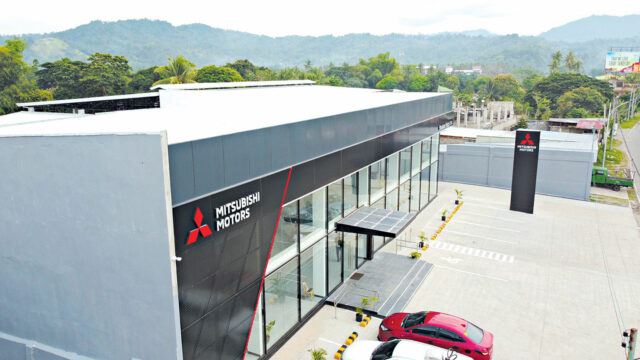
Commercial segment expected to drive Mitsubishi Motors sales

PHOTO FROM MITSUBISHI MOTORS PHILIPPINES CORP.

By Justine Irish D. Tabile, Reporter

COMMERCIAL vehicle models are expected to drive Mitsubishi Motors Philippines Corp.’s (MMPC) sales and help the company achieve its target of 20% market share this year.

“In terms of sales volume, our top model right now is the Xpander. It is a light commercial vehicle because everything more than the sedan is classified as a commercial vehicle,” MMPC President and Chief Executive Officer (CEO) Ritsu Imaeda said Friday.

He said the Xpander, a multipurpose vehicle (MPV), accounted for over 20% of the company’s sales in the first half.

He said he expects the Xpander to remain MMPC’s top-selling model until the end of the year.

“We think Xpander is a great match to the market’s needs, especially for first-time car buyers who want to have a seven-seater car for the family that is pretty affordable and with good quality,” he said that is going to support our brand,” he added.

MMPC’s other top-selling models include the Mirage subcompact car, the L300 light commercial vehicle, the Montero Sport SUV (sport utility vehicle), the Triton pickup, and the Xforce SUV.

In the first half, MMPC ranked second in terms of market share, accounting for 19.06% of total industry sales, according to a joint report by the Chamber of Automotive Manufacturers of the Philippines, Inc. (CAMPI) and the Truck Manufacturers Association (TMA).

The company posted 3.3% year-on-year growth in sales to 44,021 units in the first six months.

This year, Mitsubishi Motors Corp. President and CEO Takao Kato said that he would like MMPC market share to top 20%. 

He also expects to increase this to 25% in five years with the help of the recently-launched Mitsubishi Motor Finance Philippines, Inc. (MMFP).

“We remain committed to the country as one of our most important markets. Through collaboration with MMFP in financing services and MMPC in local production and sales, we will continue to grow and serve our customers with excellence,” Mr. Kato said.

On Friday, Mitsubishi Motors and Security Bank Corp. launched their MMFP joint venture (JV), which will offer financing solutions across 67 dealerships nationwide.

“By establishing MMFP, Mitsubishi Motors deepens its long-standing commitment to grow in the Philippine market, and through MMFP we will make sure that more and more Filipinos get life-changing opportunities that mobility can offer,” MMFP President and CEO Satoshi Nakano said.

Security Bank President and CEO Sanjiv Vohra said the partnership will help expand the bank’s footprint in auto finance.

“We have had very strong growth in auto financing in the last couple of years. I think our loan growth last year, 2024, was over 50% in terms of auto loans alone. However, through this JV, we expect the partnership to help us become a preferred financier for Mitsubishi Motors vehicles,” he said.

“Our objective is to enable Mitsubishi Motors to achieve their goals through providing innovative financing options and flexible payment options to get the kind of market share that Mitsubishi Motors is aiming for,” he added.

“Now that you have a joint venture, which is going to finance Mitsubishi Motors, it will allow both partners to be able to counter the impacts of tariffs, if any, through the financing options,” he said, referring to the expected entry of more US car models.

He said that customers in the Philippines look at the monthly amortization rather than the price when buying cars.

“I think this gives the two partners an opportunity to provide the right financing mix if we need to counter some impact of the tariffs. The joint venture will assist manufacturers like Mitsubishi Motors in their attempt to counter the tariffs in the market,” he added.

According to Mr. Imaeda, it is still too early to comment on how the agreement will impact the auto industry, but noted that the Philippines currently imports limited volumes of vehicles from the US.

“For instance, the most famous US brand is Ford, right? Their cars are basically coming from Thailand. So would there be any benefit for them?,” he said.

“I think it’s not going to impact in the short time that much or significantly. This is our thinking right now. But we are trying to investigate all the possibilities of how it could impact the market itself,” he added.

Golden Forage targets small farmers with innovations in feed storability

GOLDEN FORAGE FB PAGE

AN AGRICULTURE startup said it sees an opportunity in offering small dairy farmers quality silage that can be stored, simplifying animal feed logistics.

Golden Forage said it offers compact silage balers and wrap technology which s make it “possible for smallholder farmers to store and transport forage more efficiently across rural and island communities.”

Founder Pat Erick Buna said in an e-mail that the expected transformation of feed logistics will stem from “the overlooked but critical aspect of forage production and preservation.”

“In the Philippines, where access to quality feed is inconsistent and post-harvest losses are high, our silage baling model offers a scalable solution tailored for smallholder settings,” he added.

Golden Forage’s baling process helps farmers “preserve surplus feed and reduce seasonal shortages,” Mr. Buna said.

Storability makes surplus silage a high-value product as a result of the mechanization  of part of the feed process, he said.

“There’s a clear opportunity to modernize local supply chains, create decentralized baling centers, and build a national forage ecosystem that’s resilient, efficient, and farmer-led,” he said.

The challenges, according to Mr. Buna, include infrastructure gaps, limited access to financing, and low awareness of forage technology.

He noted that agriculture is fragmented, under-mechanized, and often resistant to change.

“Building trust and aligning with cooperatives, local governments, and national agencies takes time — but it’s essential to long-term adoption,” he said.

On the other hand, he said the need for “consistent, storable, and affordable feed is urgent—especially with growing demand for livestock and dairy,” Mr. Bune said.

“Our silage baling model addresses this gap in a way that’s scalable, localized, and suitable for smallholder conditions.”

Golden Forage sees the potential for its technology to become  “a key enabler of a decentralized, farmer-driven forage supply chain in the Philippines,” Mr. Buna said.

Retailers cautiously optimistic growth will continue this year

People walk inside a shopping mall in Quezon City. — BW FILE PHOTO

By Justine Irish D. Tabile, Reporter

RETAILERS said they remain hopeful of posting growth this year despite the expected impact of US tariffs and weather-related issues.

Philippine Retailers Association Chairman Roberto S. Claudio said the retail industry started to pick up last year.

“There is just cautious optimism, as these tariff issues with the US are developing. And we need to see how it will affect our economy and the retail industry,” he said on the sidelines of the National Retail Conference and Expo 2025.

“But Philippine consumers are coming out. The malls are full again. The average purchasing amount may be lower, but people are coming out. So, we see a retail industry that will continue to grow, especially over the next two years,” he added.

According to Mr. Claudio, retailers are still expecting to see at least 10% growth.

“We should be able to hit that. Everybody’s trying to push individual growth per company, and that is a reasonable percentage of growth,” he said.

PRA President Alice T. Liu said that the US tariffs are expected to affect the retail industry indirectly.

“For countries where tariffs are high, they will look for other countries to flood with their products. So that in this way is an indirect effect on us,” she added.

She said the first half was good for retailers due to the midterm elections.

“When there’s an election, there’s a little bit of money circulating. That’s why I think for most retailers, the first half was good. But we are a little bit cautious but optimistic for the second half,” she said.

She said retailers are hopeful for a pickup in the second half due to the yearend holidays and the President Ferdinand R. Marcos, Jr.’s State of the Nation Address promise to address flooding.

“We’re hoping when that’s fixed… more disposable money (will flow to) customers to really spend on other nonessential things,” she said.

“Filipinos are always resilient and will really find a way to make ends meet. So, we keep our fingers crossed and stocks ready so that we can really have the right goods at the right time when the peak season comes,” she added.

She said flood remediation measures are particularly important as the more typhoons are expected to traverse Philippine territory.

“Flood control is very important because that will determine our ability to really react fast. We cannot control the weather, but we can prepare well enough to really make sure that there is not too much disruption,” she added.

According to Mr. Claudio, some retailers lost revenue over the nearly almost two weeks in July when rain fell continuously.

“That really brought down the revenue. But I don’t think those are lost sales because since people were not able to go out; maybe they didn’t spend. Maybe now that the sun is out, consumers will also go back to the malls,” he added.

Mr. Claudio said that the industry continues to faces a playing field that is stacked in favor of e-commerce platforms.

He said that because of the de minimis rule, which allows shipments to enter untaxed if their value falls below P10,000, customers would rather buy through online marketplaces.

“Wwhat happens is that we, the traditional retailers, are losing revenue. It is okay with us if it’s a matter of being competitive, but this is an issue of an unlevel playing field,” he added.

The retailers are pushing to amend the Internet Transactions Act or abolish the de minimis rule.

Placing humans at center during AI transition

Second of two parts

IN BRIEF:

• Key government bodies and academic institutions are collaborating to promote AI research and workforce development, while the private sector is seeing growth in AI-focused startups and partnerships with global tech companies.

• Bridging the adoption gap requires organizations to empower individuals to explore AI safely, fostering a culture of collaboration and creativity, while leaders must prioritize ethical practices and human oversight in AI decision-making.

Artificial intelligence (AI) has become an essential part of modern life and work. According to the AI Sentiment Index Study by EY Sweeney, a global survey of over 15,000 participants revealed that 82% had engaged with AI in the past six months, reflecting a significant shift in human capability and moving beyond mere technological advancement.

However, a gap in AI adoption persists, highlighting the difference between individuals’ willingness to use AI and their actual engagement with it. Factors such as trust, privacy, and control, along with the availability of AI tools, contribute to this divide, presenting organizations with a substantial opportunity to bridge it. Leadership must help their organizations foster trust in AI, demonstrate its benefits, and empower individuals to engage with AI on their own terms to be better positioned to implement it effectively. By aligning AI with human needs and aspirations, organizations can enhance human potential and shape the future role of AI in business and society.

In the first part of this article, we discussed the impact of AI on everyday life and how organizations can demonstrate the vision and value of AI to get employees on board. In this second part, we discuss the local AI landscape, how organizations can support human agency through AI, and the leadership imperative in keeping humans at the center for AI.

PHILIPPINE AI LANDSCAPE
AI sentiment varies globally, influenced by factors such as age, education, and geography. This variation underscores the importance of addressing concerns while fostering familiarity and confidence in AI.

In the Philippines, a vibrant landscape of initiatives is emerging in both the private and public sectors to promote the use of AI. At the center of the country’s public AI strategy is the National AI Roadmap, first launched in 2021 and updated in 2024 as the National AI Strategy Roadmap 2.0. This framework outlines the government’s vision for using AI to boost competitiveness in key sectors such as healthcare, agriculture, and education, emphasizing ethics, infrastructure, and skills development to meet the growing demand for AI and data science professionals. Supporting this vision, the Center for AI Research (CAIR) was established as a dedicated hub to promote AI research, partnerships, and innovation across the country.

Key government bodies are playing pivotal roles in executing the strategy. The Department of Trade and Industry (DTI) leads national AI planning and development, while the Department of Science and Technology (DoST), through the Philippine Council for Industry, Energy and Emerging Technology Research and Development (PCIEERD), funds R&D projects focused on AI. In 2021, the PCIEERD launched nine AI-driven initiatives across universities and sectors, ranging from autonomous robotics to big-data systems for agriculture and urban management. The DoST is also developing the National AI Strategy (NAIS Ph), which aims to build a collaborative AI ecosystem anchored on infrastructure, training, and academic-industry partnerships, aligned with the 2023–2028 Philippine Development Plan.

Academic institutions are vital to this ecosystem, with a local university taking a leading role. This university offers the country’s first PhD program in AI and hosts major research initiatives through its Center for Intelligent Systems, simultaneously promoting ethical AI via its Principles for Responsible Artificial Intelligence. It also hosts national AI conferences that bring together experts to explore AI’s potential across sectors.

On the private side, the Philippine startup scene is gaining momentum with AI-focused companies developing tools for healthcare, finance, and customer service. One public–private initiative, in partnership with a global tech company, launched a startup accelerator to help Filipino ventures scale with AI-driven solutions. Such partnerships reflect a broader trend, with local firms collaborating with global tech leaders to enhance operational capabilities through AI.

Efforts to build a skilled AI workforce are underway through both government-led and private training programs. As noted by technology consulting firm Searce, a young and skilled workforce is poised to drive AI adoption; the country produces over 700,000 STEM graduates each year and has a strong outsourcing industry, giving it a competitive edge compared to regional counterparts. The DoST promotes continuing education and micro-credentials through partnerships with platforms like Coursera and SPARTA. Meanwhile, industry groups such as the Philippine Software Industry Association (PSIA) offer AI education and advocacy to their members to further accelerate AI adoption. In addition, a property developer and university established an information technology hub to explore AI applications internally and externally, co-developing solutions that improve efficiency and foster new business models.

Together, these efforts reflect a coordinated and growing commitment to harness AI for national progress. From public infrastructure to academic research, startup support, and workforce development, the Philippines is positioning itself as a rising hub for AI innovation and implementation in Southeast Asia.

SUPPORTING HUMAN AGENCY THROUGH AI
The openness to AI surpasses current engagement levels, revealing an adoption gap. AI is primarily utilized in customer experience and personal applications, yet many individuals use AI-driven services without realizing it. Comfort with AI often relies on the desire for human oversight in decision-making.

Bridging the adoption gap requires organizations to create opportunities for individuals to explore AI safely, fostering confidence through experience. Empowerment is essential; organizations must provide spaces for individuals to experiment and learn about AI on their own terms. Leaders will need to foster a culture that prioritizes collaboration and creativity, encouraging new ways of digital working in order to promote engagement and meaningful work.

The design of AI systems will determine whether they enhance or undermine human decision-making. While individuals are open to AI’s greater roles, boundaries exist around decision-making. Many desire human oversight, particularly in high-stakes interactions.

AI can facilitate complex decisions, and its integration into daily life is becoming more accepted. Organizations must ensure AI supports human connection and fosters creativity while enhancing individual capabilities. In line with this, NAIS Ph invested P2.6 billion in AI projects to empower citizens and stimulate innovation.

THE LEADERSHIP IMPERATIVE
The future of AI will be shaped by leaders who cultivate confidence and empower individuals. Although enthusiasm for AI exists, concerns about misinformation and data privacy remain. Addressing these issues is essential for building trust.

According to the Philippine Institute for Development Studies (PIDS), successful organizations must balance innovation with responsibility by proactively addressing concerns and committing to ethical AI practices. The true potential of AI is to enhance human capabilities rather than replace them. Additionally, PIDS encourages the Philippine government to establish clear guidelines on AI ethics, data privacy, and algorithmic transparency to foster public trust and support innovation.

A transformative vision for AI’s impact on human potential is essential, but it is still humans that have to remain at the center of the journey. Those in leadership roles who build trust and encourage authentic participation will influence the trajectory of AI.

This article is for general information only and is not a substitute for professional advice where the facts and circumstances warrant. The views and opinions expressed above are those of the author and do not necessarily represent the views of SGV & Co.


Rossana A. Fajardo is the Country Managing Partner of SGV & Co.

Chinese research vessel spotted near Batanes, says Philippine Coast Guard

BW FILE PHOTO

By Kenneth Christiane L. Basilio and Chloe Mari A. Hufana, Reporters

THE PHILIPPINE Coast Guard (PCG) has reported the presence of a Chinese research vessel operating within the country’s exclusive economic zone (EEZ), sighted during a routine aerial patrol on Saturday near the Babuyan Islands in northern Luzon.

The Chinese ship Xiang Yang Hong 05 was detected about 14.9 nautical miles (27 kilometers) off the coast of the islands in Batanes province, it said in a statement. The vessel did not respond to radio calls from Philippine authorities and was last tracked 86 nautical miles (159 kilometers) off Calayan Island in Cagayan province on Sunday.

The PCG said this was not the first time the vessel had entered Philippine waters. It was observed within the country’s EEZ on June 7 and again on July 31.

“Based on its historical track, the Xiang Yang Hong 05 conducted substantial marine scientific research for almost 22 days after departing the Philippine EEZ and before re-entering,” the PCG said.

The recurring presence of Chinese research vessels in Philippine waters has raised concerns among maritime authorities, particularly over the potential military use of scientific data gathered during unauthorized surveys.

The Xiang Yang Hong 05 is part of a newer class of Chinese research vessels, reportedly converted from a cargo ship. Its design and activities have drawn scrutiny from regional maritime observers, especially due to operations in areas considered sensitive.

The PCG also noted that the broader Xiang Yang Hong vessel series has been linked to research activities associated with China’s military, including past projects tied to the People’s Liberation Army Navy, such as ballistic missile development trials in the 1970s and 1980s.

China asserts sweeping claims over nearly the entire South China Sea through its so-called nine-dash line — a demarcation that overlaps with the EEZs of several Southeast Asian nations, including the Philippines, Vietnam and Malaysia. These claims have been widely challenged under international law, including by a 2016 ruling from the Permanent Court of Arbitration in favor of the Philippines.

The presence of Chinese vessels has led to repeated maritime incidents between the Philippines and China, particularly in contested areas of the South China Sea. Confrontations have involved aggressive maneuvers such as sideswiping, blocking, and the use of water cannons against Philippine vessels.

CODE OF CONDUCT
Manila has denounced such actions as violations of international law and Philippine sovereignty, while Beijing maintains that its operations are legitimate acts to defend Chinese sovereignty.

Meanwhile, The Association of Southeast Asian Nations (ASEAN) should take a more unified and proactive approach in dealing with tensions in the South China Sea, Italian academic Enrico Letta said, warning that continued divisions within the bloc risk undermining regional security and sovereignty.

Mr. Letta, a former Italian prime minister and dean of the IE School of Politics, Economics, and Global Affairs at IE University in Madrid, said ASEAN should not let the lack of unanimity prevent action, particularly in addressing Beijing’s increasing assertiveness in the contested waterway.

“Our European experience tells us that we have to make decisions even when there is a majority, not unanimity, and this is, I think… the limit of ASEAN,” he told BusinessWorld in an interview. “If one country doesn’t agree, everything will stop, and that limits enormously the possibility to intervene.”

Mr. Letta also urged ASEAN to pursue a legally binding Code of Conduct with China, underscoring the need to resist being divided by external powers. Manila, which will head the bloc in 2026, is advocating for such a code amid repeated incursions by China in the West Philippine Sea, an area in the South China Sea within the Philippines’ exclusive economic zone.

The South China Sea is a critical global trade route, with about a third of maritime commerce — or roughly $3.4 trillion in goods — passing through annually. Disputes in the area have strained ASEAN discussions, with some members hesitant to challenge China due to economic dependencies linked to Beijing’s Belt and Road Initiative.

Alongside the Philippines, Vietnam and Malaysia also assert claims in the South China Sea, though efforts to present a unified front have often faltered.

Mr. Letta compared ASEAN’s position to the European Union’s (EU) collective response to Russia’s invasion of Ukraine in 2022. “We decided all together to take the same attitude… It’s a problem for all, and we have to show solidarity,” he said, adding that ASEAN should recognize that maritime tensions are not just a Philippine concern but a broader regional issue.

He also sees potential for ASEAN to evolve into a more integrated regional bloc, citing the EU’s experience. But deeper economic and political integration requires trust, mobility and commitment to solidarity.

Failure to achieve unity, he said, could expose ASEAN’s medium-sized economies to the influence of larger powers such as China, the US and India.

Josue Raphael J. Cortez, a lecturer in ASEAN Studies at De La Salle–College of Saint Benilde, said ASEAN’s 2002 declaration lacks enforcement power. He said this weakness partly explains China’s rejection of the 2016 arbitral ruling that voided its expansive claims under the so-called nine-dash line.

“Despite the principle of noninterference, the bloc may adopt such collective measures to respond to the call of the times,” Cortez said, adding that doing so would affirm ASEAN’s central role in regional stability and set a precedent for handling similar disputes.

The South China Sea dispute revolves around overlapping claims, with China asserting sweeping rights over nearly the entire area.

In 2016, the Philippines won a case before the Permanent Court of Arbitration in The Hague, which ruled China’s claims had no basis under international law. China has refused to recognize the ruling and continues to develop artificial islands and deploy military assets to these sea features.

PHL urged to deepen defense, trade ties with India during Marcos visit

PRESIDENT FERDINAND R. MARCOS, JR. FACEBOOK PAGE

By Adrian H. Halili, Reporter

THE PHILIPPINES should use its upcoming bilateral meeting with India to expand defense cooperation and secure more military equipment, amid ongoing tensions in the South China Sea, political analysts said.

“This meeting can undoubtedly serve as an avenue for the Philippines and India to propel their defense ties, particularly in the maritime facet,” Josue Raphael J. Cortez, a diplomacy lecturer at De La Salle–College of St. Benilde, said in a Facebook Messenger chat.

President Ferdinand R. Marcos Jr. is set to undertake a five-day official visit to India, where he is expected to meet with Indian government officials and business leaders. The visit coincides with planned joint maritime exercises near Scarborough Shoal, a disputed feature in the South China Sea.

Chester B. Cabalza, founding president of the Manila-based think tank International Development and Security Cooperation, said the bilateral meeting marks a significant milestone in defense cooperation between the two countries.

“The India–Philippines meeting will be the largest set of cooperation between the two Asian democracies,” he said. “Manila will benefit from New Delhi’s rising economy and global status as a major power in the Indo-Pacific.”

He added that stronger collaboration with India signals Manila’s intention to exercise greater independence in foreign policy.

“This is also a manifestation that the Philippines is ready to work with nations, regardless of differences in memberships in minilaterals and diverse backgrounds,” he said.

The Philippines has increasingly engaged in multilateral naval activities to bolster maritime defense, including frequent joint patrols in the South China Sea with the US and other regional partners.

Mr. Cabalza noted that the Philippines already holds a strategic defense connection with India, having bought three batteries of the Indian-made BrahMos cruise missile system in 2022 for $375 million (P21.7 billion).

“The Philippines has established an acceptable leverage with India as the first buyer of BrahMos missiles in ASEAN,” he said. “This special bond… will further widen given their give-and-take relationship.”

Mr. Cortez said the bilateral meeting could facilitate discussions on military procurement, training exchanges and joint research. “The commonality that our two countries share — confronting territorial disputes with a greater power — can also be the norm-setter to shape our defense cooperation discussions,” he added.

He said Manila could propose updates to the nearly two-decade-old 2006 Philippines–India Agreement Concerning Defense Cooperation, which has enabled exchanges in training, military expertise, aircraft and naval vessels.

Mr. Cortez also said the meeting presents an opportunity to boost trade.

“We already have an existing partnership for defense, including joint patrolling,” he said. “What we can offer to India in exchange for this is an agreement where we utilize our electronic production as a leverage,” he said, referring to the Philippines’ electronics sector, one of its top exports to India.

Bilateral trade between the two countries reached $3.53 billion in 2024, according to the Indian Embassy in Manila. Philippine exports to India include electrical machinery, semiconductors, copper and precious stones, while imports from India consist of engineering goods, electronics, petroleum, steel, medicine, rice and meat.

PHL told to hasten planned Batanes port to strengthen security in north — analysts

SABTANG ISLAND, BATANES — SAMARIA-UNSPLASH

By Kenneth Christiane L. Basilio, Reporter

THE PHILIPPINES should fast-track the construction of a planned port in Batanes province to bolster its security stance north of the country, security experts said at the weekend.

The Batanes provincial government last year said that plans to construct a US-funded civilian port in the country’s northernmost island province were under discussion. Analysts have said the project could help in establishing a stronger presence in the Luzon strait, the waterway that separates the Philippines from Taiwan.

“Its tactical importance will be its impact on logistics and overall deployment of forces in the area,” Sherwin E. Ona, a security analyst and associate professor at the De La Salle University, said in a Viber message.

The Philippines lies between two major geopolitical flashpoints, with the South China Sea to its west, which China claims almost entirely, and Taiwan to its north, which Beijing considers a breakaway province.

China has threatened to annex the self-ruled island, by force if necessary, endangering Taiwan’s population of 23 million and threatening the world’s most advanced semiconductor factories.

Taiwan’s ex-Defense Minister Chiu Kuo-cheng in 2021 said China could be ready to mount a full-scale invasion of the island state by this year, while former US Indo-Pacific Commander John C. Aquilino said all indications point to the possibility of a Taiwan invasion by 2027.

In April, Philippine military chief General Romeo S. Brawner, Jr. instructed forces to prepare for a Taiwan contingency, emphasizing readiness while clarifying that the country is not seeking armed conflict.

“In the case of a Taiwan contingency, an expanded port means increased ability to conduct military operations, especially for logistics,” said Mr. Ona. “This is, of course, for both offensive and defensive purposes.”

Going ahead with the planned port would improve access to the island in case of conflict, Chester B. Cabalza, founding president of Manila-based think tank International Development and Security Cooperation, said in a Facebook Messenger chat.

“This is the best time to accomplish it given the geostrategic location of Batanes between the Philippines and Taiwan. The port will hasten the demanding logistical need for interoperability in the flashpoint area,” he said.

NAIA passenger volume up in 1st half

BW FILE PHOTO

PASSENGER VOLUME at the Ninoy Aquino International Airport (NAIA) surged by 4.73% for the first semester of the year to 26.74 million, thanks to the sustained growth of domestic travel.

According to the report released by the Manila International Airport Authority (MIAA) on Sunday, domestic passengers climbed by 6.25% to 14.27 million in the six months ending in June, from the 13.43 million seen in the same period last year.

International passenger traffic rose by 6.76% to 12.47 million from 11.68 million in the same period in 2024.

For the six-month period, MIAA logged a total of 147,813 flights. For this year, MIAA has said it is expecting passenger volume at the main gateway to grow by up to 30% this year due to booming travel demand.

For the second quarter, NAIA’s total passenger traffic increased to 13.69 million, up by 5.55% from the 12.97 million in the second quarter of 2024.

In 2024, NAIA logged a passenger volume of 50.26 million, up 10.9% and 4.9% higher than the total booked in the last full pre-pandemic year.

A private operator took over operations at NAIA in September, and announced plans for road expansion and curbside enhancements, terminal upgrades, and terminal reassignments.

The NAIA upgrades are expected to boost its capacity to about 62 million passengers per annum from the current 35 million. — Ashley Erika O. Jose

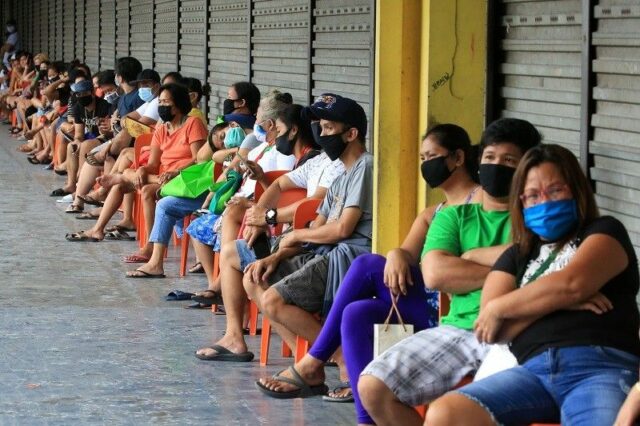
Livelihood capital under 4Ps eyed

PHILIPPINE STAR/EDD GUMBAN

A PHILIPPINE Senator on Sunday said that he is pushing for beneficiaries of the Pantawid Pamilyang Pilipino Program (4Ps) to receive livelihood capital instead of monthly stipends.

“Even some 4Ps members themselves, they would rather have livelihood capital instead of monthly cash transfer,” Senator Erwin T. Tulfo said in a statement.

Mr. Tulfo, who also heads the Senate Committee on Social Justice, Welfare, and Rural Development, said that his recommendation can lessen the alleged abuse seen in the government program.

“If we give them capital, they can use it to start businesses and contribute to the economy. We can provide them enough funds to start a sari-sari store, an eatery, or even engage in online selling,” he added.

Mr. Tulfo said that low wage earners like security guards, janitors, or house helpers should also receive government subsidies.

The 4Ps program is the government’s national poverty reduction strategy and human capital investment program that provides conditional cash transfer to poor households. — Adrian H. Halili