Home Blog Page 6785

Peso drops further on geopolitical tensions

BW FILE PHOTO

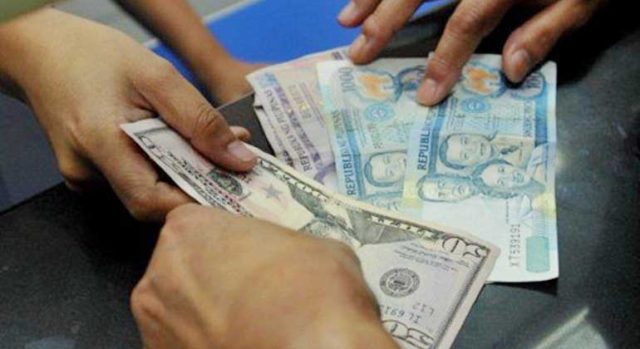
THE PESO weakened against the dollar on Friday due to the likelihood of Russian invasion of Ukraine amid worsening tensions. 

The local currency closed at P51.35 per dollar on Friday, slightly weaker than its P51.33 finish on Thursday, data from the Bankers Association of the Philippines’ website showed. 

The peso opened at P51.34 versus the dollar. Its weakest showing was at P51.36, while its intraday best was at P51.28 against the greenback. 

Dollars exchanged fell to $546.2 million on Friday from $824.4 million a day earlier. 

Michael L. Ricafort, chief economist at Rizal Commercial Banking Corp., said in a Viber message that the peso was weaker after US President Joe Biden said there is a high probability of a Russian invasion of Ukraine. 

“Fitch maintaining the negative outlook on the Philippines despite affirming the country’s credit ratings since the pandemic also partly weighed on the peso,” he added. 

UnionBank of the Philippines, Inc. Chief Economist Ruben Carlo O. Asuncion said there was a rush to safe haven currencies due to the tensions surrounding the United States, Russia, and Ukraine. 

“Biden did mention that the likelihood of an invasion is still high and the market has taken this statement into account aside from news from Russian media of a Ukraine-led mortar fire the other day,” he said in a Viber message. 

US Secretary of State Antony Blinken on Thursday said Russia could invade Ukraine in the “coming days,” Reuters reported. Mr. Biden said the likelihood of Russian invasion is “very high,” but noted that diplomatic solutions are still possible. 

Meanwhile, Fitch Ratings retained the country’s BBB credit rating with a negative outlook amid uncertainties in the medium-term growth trajectory and hurdles to bringing down debt. — J.P. Ibañez 

Stocks drop as BSP raises inflation outlook, Russia-Ukraine tensions escalate

COURTESY OF PHILIPPINE STOCK EXCHANGE, INC.

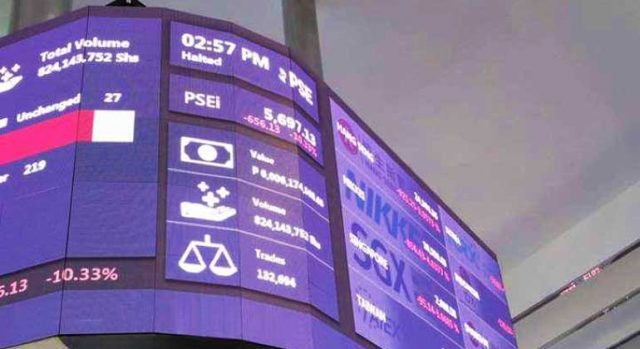
STOCKS dropped on Friday after the Bangko Sentral ng Pilipinas (BSP) raised its inflation forecasts for this year and next and due to renewed tensions between Russia and the Ukraine. 

The bellwether Philippine Stock Exchange index (PSEi) on Friday went down 20.14 points or 0.27% to end 7,418.79, while the broader all shares index declined 10.62 points or 0.27% to 3,923.69. 

“Market sentiment [was dampened] by the upwardly revised higher inflation expectations and messaging of an ongoing pandemic exit plan by the monetary authorities,” First Metro Investment Corp. Head of Research Cristina S. Ulang said in a Viber message. 

The BSP kept benchmark interest rates steady at its meeting on Thursday to continue supporting the economy’s recovery, but signaled it is preparing an exit strategy to respond to inflation risks. 

The BSP now expects a faster inflation rate of 3.7% for 2022 from its previous 3.4% estimate, still within the 2-4% target and slower than the 4.5% in 2021. The forecast for 2023 was likewise raised to 3.3% from 3.2% in the previous review.  

“Philippine shares got caught in the crossfire, sliding this session as tensions between Washington and Russia over Ukraine flared,” Regina Capital Development Corp. Head of Sales Luis A. Limlingan said in a Viber message, noting this also caused US shares to drop. 

Pro-Russia rebels in Ukraine accused government forces of shelling a village on Friday while Russian media reported more infantry and tank units were returning to their bases in contrast to Western fears of an imminent Russian invasion, Reuters reported. 

For a second consecutive day, pro-Russian separatists who have been at war with Ukraine for years said they had come under mortar and artillery fire from Ukrainian forces, according to the Interfax news agency. 

Kyiv and the rebels blamed each other for escalating tension after artillery and mortar attacks on Thursday, prompting fears that Russia, which has massed more than 100,000 troops near Ukraine’s borders, could get involved. 

Kyiv and the pro-Russian separatists have been facing off for eight years, and a ceasefire between them is routinely violated, but the intensity of fighting increased notably this week. 

The Dow Jones Industrial Average fell 622.24 points or 1.78% to 34,312.03; the S&P 500 lost 94.75 points or 2.12% to 4,380.26; and the Nasdaq Composite dropped 407.38 points or 2.88% to 13,716.72. 

Back home, most sectoral indices ended in the red except for property, which went up 40.13 points or 1.15% to 3,503.45 and mining and oil, which climbed 129.42 points or 1.13% to 11,512.85. 

On the other hand, industrials fell 89.96 points or 0.84% to 10,525.20; holding firms dropped 40.41 points or 0.57% to 7,050.43; services went down 9.84 points or 0.5% to 1,946.51; and financials decreased 5.15 points or 0.29% to 1,731.90. 

Value turnover rose to P7.42 billion with 1.18 billion shares switching hands on Friday from the P6.82 billion with 911.04 million issues traded the previous day. 

Advancers beat decliners, 94 versus 86, while 53 names closed unchanged. 

Foreigners turned net buyers anew with P88.57 million in net purchases on Friday versus the P279.27 million in net selling recorded the previous day. 

“The market will keep its eyes glued on updates from Ukraine as the US has not been painting a very encouraging picture of what could happen in Europe. This will continue to be a thorn on the market’s side,” COL Financial Group, Inc. Chief Technical Analyst Juanis G. Barredo said in a Viber message. 

Mr. Barredo said the PSEi could move within 7,270 and 7,552 in the coming days. — MCL with Reuters 

Recruitday hosts IT courses, job fair in the metaverse

FREEPIK

As part of its rebranding initiative, job platform Recruitday is offering online courses and workshops on information technology (IT)  to assist Filipino professionals who want to shift to more lucrative careers.

“As we focus on empowering Filipinos to be equipped for the demands of the 21st-century tech industry, we’re prioritizing offering tech-related tracks — e.g., data science, cybersecurity, robotic processing automation, among others,” said Recruitday founder and Chief Executive Officer Joel A. Garcia in an e-mail to BusinessWorld.

Both self-paced and instructor-led courses are available on the platform, which operates on a “freemium” model to make upskilling accessible.

“The ones you need to pay for really depend on the topic and provider’s fees,” he said. “There are courses that you can complete in just days. Later on, full degrees will also be offered, which could take months or even years to complete.”

Recruitday’s pocket events are free. Its webinars and workshops, meanwhile, require an account.

“Accessing our metaverse spaces, where we will start hosting [events] will require a Recruitday account, which is free to create,” said Monic Gosingtian, Recruitday senior marketing manager, in the same e-mail.

Recruitday will also host a career fair in the metaverse this April.

“Tools like MS Teams and Zoom have already shaped the way we work now, and we believe the metaverse will have a much larger impact,” said Mr. Garcia in a statement.

There is an increased demand for tech-related roles worldwide. A 2021 global survey by Claroty, an industrial cybersecurity firm, found that almost 90% of enterprises are looking to hire cybersecurity experts, with 40% saying the need was “urgent.” A little over half of respondents (54%), however, said it is hard to find qualified candidates. — Patricia B. Mirasol

To keep employees, allow flexible schedules — Sprout Solutions

UNSPLASH

Since hybrid work is here to stay, leaders must be flexible when it comes to employees’ schedules and locations, according to Sprout Solutions, a Filipino Software as a Service (SaaS) company that provides human resources (HR) technology to medium and large enterprises.

“Hybrid allows better work-life integration. Regardless of whatever people are doing, we let them do their work and let them do their work well,” said Lester N. Ople, Sprout Solutions head of business development, at a roundtable discussion on Feb. 17.

Aside from using people management software, there’s a need to change mindset, Mr. Ople added. This requires not just work-life balance, but work-life integration.

“If the workplace has seamless tech tools to manage performance, it goes a long way in shifting the paradigm from a ‘clock in at 8, log out at 5’ mindset to letting people integrate work and life more seamlessly,” he said.

A recent study by Sprout Solutions found that the Philippines in 2021 experienced a 176% increase in the average voluntary attrition across all industries — a local reflection of the global phenomenon called “The Great Resignation.”

The industries with the biggest rise in attrition rate were the professional, scientific, and technical services industry (274%); the arts, entertainment, and recreation industry (207%); and the water supply, waste management, and remediation industry (185%).

Kislay Chandra, Sprout Solutions chief product officer, said engagement is vital in addressing employees’ needs. He shared that the study found abrupt changes in work setup and uncertainty over the pandemic as reasons behind voluntary attrition.

“If you are in an organization where you don’t feel engaged, more often than not you will leave … We need to focus on our employees,” he said.

Sprout Solutions has HR platforms that help with the transition to a more people-centric hybrid workplace. These include mental health app Sprout Wellness and real-time employee engagement and feedback tool called Sprout Pulse.

In January, a survey conducted by Sprout Solutions titled “Going Hybrid: The Future of Work” discovered that 91% of over 8,000 Filipino employees want a hybrid or remote workplace, though only 43% feel engaged in this setup.

To transition to the best hybrid workplace possible, there should be solid, sustainable support, said Arlene De Castro, Sprout Solutions chief people and customer officer.

“[Hybrid] is built on flexibility and support and of course it also has to be sustainable. It empowers employees by giving freedom of when and where to work,” she shared.

A mental health app, for example, is timelessly relevant with or without a pandemic or remote setup, since stress and burnout will always be there. An engagement and feedback tool, on the other hand, keeps leaders aware of all workplace concerns.

Ms. De Castro said: “If you can measure employees’ performance on a daily, weekly, even quarterly basis, and your productivity is higher, then you know it’s a success.” — Brontë H. Lacsamana

US adds e-commerce sites operated by Tencent, Alibaba to ‘notorious markets’ list

FLICKR

E-commerce sites operated by China’s Tencent Holdings Ltd. and Alibaba Group Holding Ltd. were included on the US government’s latest “notorious markets” list, the US Trade Representative’s (USTR) office said on Thursday.

The list identifies 42 online markets and 35 physical markets that are reported to engage in or facilitate substantial trademark counterfeiting or copyright piracy.

“This includes identifying for the first time AliExpress and the WeChat e-commerce ecosystem, two significant China-based online markets that reportedly facilitate substantial trademark counterfeiting,” the USTR office said in a statement.

China-based online markets Baidu Wangpan, DHGate, Pinduoduo, and Taobao also continue to be part of the list, along with nine physical markets located within China “that are known for the manufacture, distribution, and sale of counterfeit goods,” the USTR office said.

Alibaba said it will continue working with government agencies to address concerns in intellectual property protection across its platforms.

Tencent said it strongly disagreed with the decision and was “committed to working collaboratively to resolve this matter.” It added it actively monitored, deterred and acted upon violations across its platforms and had invested significant resources into intellectual property rights protection.

Inclusion on the list is a blow to the reputation of companies but carries no direct penalties.

Industry bodies including the American Apparel and Footwear Association (AAFA) and the Motion Picture Association welcomed the release of the report by the USTR.

The USTR office said in a separate report released on Wednesday the United States needs to pursue new strategies and update its domestic trade tools to deal with China’s “state-led, non-market policies and practices.”

The United States and China have been engaged in trade tensions for years over issues like tariffs, technology and intellectual property, among others.

The United States has said China had failed to make good on some commitments under a so-called “Phase 1” trade agreement signed by the administration of former President Donald Trump. — Kanishka Singh/Reuters 

UN aviation experts contemplate tougher emissions standards for aircraft

STOCK PHOTO | Image from Pixabay

MONTREAL — UN aviation experts are again discussing toughening emissions standards for commercial aircraft, less than six years before a previously agreed clampdown takes effect.

Support for a new emissions standard could put pressure on planemakers, which need years to adapt to rule changes due to long production cycles, to cease producing their least efficient models, two sources familiar with the talks said.

Experts from the United States and some European countries backed tougher emissions standards during a virtual gathering of the International Civil Aviation Organization (ICAO) group this week, according to working papers and sources.

One of the sources said ICAO’s Committee on Aviation Environmental Protection (CAEP) agreed on Thursday to draft new standards for civil aircraft, as part of broader efforts through 2025 to update rules for aircraft noise and emissions.

But it remains unclear when the proposed standards for commercial aircraft, such as those made by planemakers Boeing Co. and Airbus SE, would be drafted and take effect, and how stringent they would be, the source said.

“It’s a real struggle to see it all getting done by 2025,” the source said.

The meeting comes as ICAO is seeking broad agreement this fall on a long-term climate goal amid differences between Europe and China and growing pressure for aviation to curb emissions.

While any standard would take years to draft, win support from countries and wind its way through ICAO, the prospect of tougher emissions rules could potentially become one more headache for pandemic-weary planemakers.

“Any new standard creates pressure for planemakers,” said the second source. “What we don’t know is how much pressure.”

Montreal-based ICAO sets standards on everything from runway markings to crash investigations, which its 193 member states typically translate into regulatory requirements.

ICAO declined comment ahead of an official announcement.

ICAO’s governing council has already backed emissions rules that would be phased in for existing aircraft built from 2023, with a cut-off date of 2028 for planes that do not comply with the standard, unless exempted.

Boeing Co. has already said it is weighing an exemption for its 767-300F, a popular freighter model that would otherwise have to cease production in 2028. ICAO experts also supported the drafting of new standards for supersonic jets, the first source said. Aircraft makers wanted new noise and engine emissions standards for supersonic jets, to help the fledgling industry. — Allison Lampert/Reuters

G20 finance chiefs say inflation, geopolitical risks threaten recovery — draft communique

EUROPA.EU

Finance leaders from the Group of 20 (G20) major economies view inflation and geopolitical risks as threats to a global recovery from the coronavirus disease 2019 (COVID-19) pandemic that already is “asynchronous” due to uneven access to vaccines, a draft communique obtained by Reuters showed on Thursday. 

The G20 finance ministers and central bank governors, meeting both virtually and in Jakarta, pledged in the draft to use “all available policy tools to address the impacts of the pandemic,” but warned that future policy space was likely to be “narrower and uneven.” 

“We will continue to strengthen the resilience of global supply chains. We remain vigilant of the impacts of these challenges on our economies,” the G20 finance ministers and central bank governors said in the draft statement, which will be finalized on Friday, when their meeting concludes. 

“We will also continue to monitor major global risks, including those arising from (current) geopolitical tensions and macroeconomic and financial vulnerabilities,” the ministers said. 

The statement contained no direct reference to the crisis on the Ukraine-Russia border, and the word “current” in brackets indicates that it may be deleted. Russia is a member of the G20. 

Fears that Russia might invade Ukraine overshadowed the start of a meeting that was expected to focus heavily on growing risks from inflation and monetary tightening to control it. Indonesian President Joko Widodo issued a direct warning that tensions over Ukraine could disrupt the recovery, adding “now is not the time for rivalry.” Moscow has denied it is planning an invasion of its neighbor. 

The finance leaders said in the draft communique that inflation is currently elevated in many countries, prompted in part by “supply disruptions, supply demand mismatches and increased commodity prices, including energy prices.” 

“Central banks will act where necessary to ensure price stability in line with their respective mandates, while remaining committed to clear communication of their policy stances,” the ministers and governors said, adding that central bank independence was crucial for credibility. 

They confirmed a commitment to “well-calibrated, well-planned and well-communicated exit strategies to support recovery, with due consideration for individual country circumstances.” 

PANDEMIC FUND, TAX DEADLINE 

The G20 finance leaders voiced support for ensuring timely and affordable access to COVID-19 vaccines, therapeutics, diagnostics and other medical supplies for low- and middle-income countries, according to the draft. 

They asked the G20 Joint Finance-Health Task Force to report by April on options to establish a fund for pandemic preparedness, for further work in July and in October with G20 health ministers. 

US Treasury Secretary Janet Yellen earlier on Thursday urged her G20 counterparts to back the proposed fund, with needed health system investments estimated at $75 billion. 

The G20 finance leaders affirmed their commitment to developing the rules and other instruments to implement a global tax agreement reached last year to put the new rules into effect in 2023. 

They also pledged to “do more to secure [the] long-term success” of a G20 common debt restructuring framework for poor countries, although that language also was in brackets, making it subject to change. 

On climate change, the G20 ministers said reaching carbon emissions “net zero” goals should include a full range of tools, including “if appropriate, the use of carbon pricing mechanisms and incentives and phase out and rationalize, over the medium term, inefficient fossil fuel subsidies that encourage wasteful consumption.” 

The G20 finance leaders also said they would continue to study central bank digital currencies to better understand their financial system implications “including for spillovers and capital flows.” 

They also called for considering G20 principles for high quality infrastructure investment, by July 2021, but the language on the timing also was contained in brackets, meaning it may change. 

The work is being conducted by the International Finance Corporation, a division of the World Bank, whose President, David Malpass, has been critical of China’s Belt and Road infrastructure lending. Christian Kraemer and David Lawder/Reuters

Age before apps revolt galvanizes Europe’s elderly savers

PIXABAY

MADRID — Aggravated by fiddly financial apps, retired urologist Carlos San Juan got more than he bargained for when he began a campaign for a more user-friendly service from Spain’s banks. 

The 78-year-old kicked off a revolt dubbed “I’m old, not an idiot” online at the end of December and by mid-February had more than 640,000 signatures, forcing a change of tack. 

Now Madrid has given Spanish banks until the end of the month to address the needs of the elderly, with services such as withdrawing money from ATMs or being able to operate remotely. 

“I’m asking that they treat their customers from whom they make money with humanity and courtesy, no matter how old they are,” Mr. San Juan told Reuters. 

Among Spain’s more than 9 million over-65s, who represent almost 20% of the total population, many have struggled to manage their finances since bank branches started vanishing from the high street. 

The problems lay bare the disconnect between pursuing profits through massive layoffs and servicing the needs of a section of the population struggling with cheaper channels. 

Mr. San Juan says urgent measures such as a face-to-face customer service throughout office hours were among the priorities, before embarking on financial education. 

Despite more than halving the number of branches since the financial crisis in 2008, Spain still has one of the densest banking networks in the world, with slightly more than 45.5 outlets per 100,000 adults. 

“It’s not a problem about a lack of branches, it’s about banks not assisting [the] elderly properly,” Patricia Suarez, head of Spanish consumer association Asufin said. 

Mr. San Juan’s campaign has now spread to Germany, where close to 30% of the 83 million people are 60 or older. 

Nicola Roehricht of the German National Association of Senior Citizens’ Organisations is on a similar mission. 

Ms. Roehricht travels the country, speaking to policymakers at conferences and senior citizens in their homes about the importance of making cyberspace more inclusive. 

“We tell seniors, ‘Ask the banks to help you with banking.’ We mustn’t be ashamed that we have a smartphone and we don’t know how it works. You must show up and say, ‘I don’t understand your strange English expressions. So help me,’” she said. 

EXCLUSION 

While traditional banks in Spain, such as Caixabank, have cut thousands of jobs to cope with ultra low interest rates, those with a pure digital approach have been able to better cope with the impact of the COVID-19 pandemic. 

The Spanish and Portuguese unit of Dutch bank ING, this week said it had increased its return on equity (ROE) to 12% at the end of 2021 compared to 7.4% a year ago. That compares to an average ratio of 6.9% in Spanish banking. 

The ING unit said that its cost of managing deposits, loans and investment products was roughly a third lower than the Spanish average as it has just 1,400 employees in Iberia. 

In digital-laggard Italy, the elderly can still find all the help they need in a branch but as banks close outlets, problems are looming FABI union leader Lando Maria Sileoni said. 

Italy’s biggest bank Intesa Sanpaolo, which plans to cut 22% of its branches in the next four years, has struck a partnership to provide basic services such as bill payments through 45,000 cafes and tobacconist kiosks. 

And in Britain, the government plans legislation to ensure that the digital banking drive does not cut older people adrift. 

COMPLEX 

In Spain, AEB banking association head Jose Maria Roldan recently thanked Mr. San Juan for highlighting a “problem that was much more complex and more permanent than we thought”. 

Jose Ignacio Goirigolzarri, chairman of Spain’s biggest bank by domestic assets, said that a quarter of Caixabank clients over 70 used remote channels compared to 85% in their thirties. 

A draft document seen by Reuters from joint voluntary proposals shows Spanish banks plans to extend over-the-counter services, dedicate staff to engage with the elderly and make apps more user-friendly. 

Other senior Spanish bankers, including BBVA chairman Carlos Torres, say that technological exclusion does not only affect older people but is an issue of “digital skills.” 

Santander, BBVA, Sabadell and smaller lender Abanca have recently announced they will extend or have already extended cashier services in their networks. 

But none plan to hire any extra staff, something that Asufin and Comisiones Obreras, Spain’s biggest union in the sector, say may increase the workload of overstretched employees. 

Antonio Luque Delgado, a banking employee for more than 25 years, said that hiring would be key to address this, especially after banks have cut 100,000 jobs since the financial crisis. 

“When you force a 70-year-old person to download an app, you know that it is not going to work. You know that the customer will be back in the office the next day because he has forgotten the password, because he has entered it wrongly,” Mr. Luque said. 

For Mr. San Juan, the battle for inclusion is just beginning. 

“This is not the end. Good causes fail because of fatigue, we will go on,” he said. — Jesús Aguado/Reuters

How a Saudi woman’s iPhone revealed hacking around the world

UNSPLASH

WASHINGTON — A single activist helped turn the tide against NSO Group, one of the world’s most sophisticated spyware companies now facing a cascade of legal action and scrutiny in Washington over damaging new allegations that its software was used to hack government officials and dissidents around the world. 

It all started with a software glitch on her iPhone. 

An unusual error in NSO’s spyware allowed Saudi women’s rights activist Loujain al-Hathloul and privacy researchers to discover a trove of evidence suggesting the Israeli spyware maker had helped hack her iPhone, according to six people involved in the incident. A mysterious fake image file within her phone, mistakenly left behind by the spyware, tipped off security researchers. 

The discovery on Ms. al-Hathloul’s phone last year ignited a storm of legal and government action that has put NSO on the defensive. How the hack was initially uncovered is reported here for the first time. 

Ms. al-Hathloul, one of Saudi Arabia’s most prominent activists, is known for helping lead a campaign to end the ban on women drivers in Saudi Arabia. She was released from jail in February 2021 on charges of harming national security. 

Soon after her release from jail, the activist received an email from Google warning her that state-backed hackers had tried to penetrate her Gmail account. Fearful that her iPhone had been hacked as well, Ms. al-Hathloul contacted the Canadian privacy rights group Citizen Lab and asked them to probe her device for evidence, three people close to al-Hathloul told Reuters. 

After six months of digging through her iPhone records, Citizen Lab researcher Bill Marczak made what he described as an unprecedented discovery: a malfunction in the surveillance software implanted on her phone had left a copy of the malicious image file, rather than deleting itself, after stealing the messages of its target. 

He said the finding, computer code left by the attack, provided direct evidence NSO built the espionage tool. 

“It was a game changer,” said Mr. Marczak “We caught something that the company thought was uncatchable.” 

The discovery amounted to a hacking blueprint and led Apple Inc. to notify thousands of other state-backed hacking victims around the world, according to four people with direct knowledge of the incident. 

Citizen Lab and al-Hathloul’s find provided the basis for Apple’s November 2021 lawsuit against NSO and it also reverberated in Washington, where US officials learned that NSO’s cyberweapon was used to spy on American diplomats. 

In recent years, the spyware industry has enjoyed explosive growth as governments around the world buy phone hacking software that allows the kind of digital surveillance once the purview of just a few elite intelligence agencies. 

Over the past year, a series of revelations from journalists and activists, including the international journalism collaboration Pegasus Project, has tied the spyware industry to human rights violations, fueling greater scrutiny of NSO and its peers. 

But security researchers say the Ms. al-Hathloul discovery was the first to provide a blueprint of a powerful new form of cyberespionage, a hacking tool that penetrates devices without any interaction from the user, providing the most concrete evidence to date of the scope of the weapon. 

In a statement, an NSO spokesperson said the company does not operate the hacking tools it sells — “government, law enforcement and intelligence agencies do.” The spokesperson did not answer questions on whether its software was used to target Ms. al-Hathloul or other activists. 

But the spokesperson said the organizations making those claims were “political opponents of cyber intelligence,” and suggested some of the allegations were “contractually and technologically impossible.” The spokesperson declined to provide specifics, citing client confidentiality agreements. 

Without elaborating on specifics, the company said it had an established procedure to investigate alleged misuse of its products and had cut off clients over human rights issues. 

DISCOVERING THE BLUEPRINT 

Ms. al-Hathloul had good reason to be suspicious — it was not the first time she was being watched. 

A 2019 Reuters investigation revealed that she was targeted in 2017 by a team of US mercenaries who surveilled dissidents on behalf of the United Arab Emirates under a secret program called Project Raven, which categorized her as a “national security threat” and hacked into her iPhone. 

She was arrested and jailed in Saudi Arabia for almost three years, where her family says she was tortured and interrogated utilizing information stolen from her device. Ms. al-Hathloul was released in February 2021 and is currently banned from leaving the country. 

Reuters has no evidence NSO was involved in that earlier hack. 

Ms. al-Hathloul’s experience of surveillance and imprisonment made her determined to gather evidence that could be used against those who wield these tools, said her sister Lina al-Hathloul. “She feels she has a responsibility to continue this fight because she knows she can change things.” 

The type of spyware Citizen Lab discovered on Ms. al-Hathloul’s iPhone is known as a “zero click,” meaning the user can be infected without ever clicking on a malicious link. 

Zero-click malware usually deletes itself upon infecting a user, leaving researchers and tech companies without a sample of the weapon to study. That can make gathering hard evidence of iPhone hacks almost impossible, security researchers say. 

But this time was different. 

The software glitch left a copy of the spyware hidden on Ms. al-Hathloul’s iPhone, allowing Mr. Marczak and his team to obtain a virtual blueprint of the attack and evidence of who had built it. 

“Here we had the shell casing from the crime scene,” he said. 

Mr. Marczak and his team found that the spyware worked in part by sending picture files to al-Hathloul through an invisible text message. 

The image files tricked the iPhone into giving access to its entire memory, bypassing security and allowing the installation of spyware that would steal a user’s messages. 

The Citizen Lab discovery provided solid evidence the cyberweapon was built by NSO, said Marczak, whose analysis was confirmed by researchers from Amnesty International and Apple, according to three people with direct knowledge of the situation. 

The spyware found on Ms. al-Hathloul’s device contained code that showed it was communicating with servers Citizen Lab previously identified as controlled by NSO, Marczak said. Citizen Lab named this new iPhone hacking method “ForcedEntry.” The researchers then provided the sample to Apple last September. 

Having a blueprint of the attack in hand allowed Apple to fix the critical vulnerability and led them to notify thousands of other iPhone users who were targeted by NSO software, warning them they had been targeted by “state-sponsored attackers.” 

It was the first time Apple had taken this step. 

While Apple determined the vast majority were targeted through NSO’s tool, security researchers also discovered spy software from a second Israeli vendor QuaDream leveraged the same iPhone vulnerability, Reuters reported earlier this month. QuaDream has not responded to repeated requests for comment. 

The victims ranged from dissidents critical of Thailand’s government to human rights activists in El Salvador. 

Citing the findings obtained from Ms. al-Hathloul’s phone, Apple sued NSO in November in federal court alleging the spyware maker had violated US laws by building products designed “to target, attack, and harm Apple users, Apple products, and Apple.” Apple credited Citizen Lab with providing “technical information” used as evidence for the lawsuit, but did not reveal that it was originally obtained from Ms. al-Hathloul’s iPhone. 

NSO said its tools have assisted law enforcement and have saved “thousands of lives.” The company said some of the allegations attributed to NSO software were not credible, but declined to elaborate on specific claims citing confidentiality agreements with its clients. 

Among those Apple warned were at least nine US State Department employees in Uganda who were targeted with NSO software, according to people familiar with the matter, igniting a fresh wave of criticism against the company in Washington. 

In November, the US Commerce Department placed NSO on a trade blacklist, restricting American companies from selling the Israeli firm software products, threatening its supply chain. 

The Commerce Department said the action was based on evidence that NSO’s spyware was used to target “journalists, businesspeople, activists, academics, and embassy workers.” 

In December, Democratic Senator Ron Wyden and 17 other lawmakers called for the Treasury Department to sanction NSO Group and three other foreign surveillance companies they say helped authoritarian governments commit human rights abuses. 

“When the public saw you had US government figures getting hacked, that quite clearly moved the needle,” Mr. Wyden told Reuters in an interview, referring to the targeting of US officials in Uganda. 

Lina al-Hathloul, Loujain’s sister, said the financial blows to NSO might be the only thing that can deter the spyware industry. “It hit them where it hurts,” she said. — Joel Schectman and Christopher Bing/Reuters

Promoting better health this 2022

BusinessWorld ties up with Nova Wellness Store for a wellness campaign

Living in a global health crisis has been concerning a lot of us over our well-being. When the pandemic began two years ago, many of us saw or experienced, having to adapt to a life far from the normalcy we knew had caused difficulties and worries. With the threats of the pandemic looming, investing in one’s health and wellness could not be more vital for many people.

A study conducted by McKinsey in 2020, in fact, showed that consumers care deeply about wellness — and that such interest continued to grow — with 79% believing that wellness is important and 42% considering it as a top priority. Furthermore, on wellness spending, the survey saw that products accounted for 70%, while 30% for services. Consumers also expected to increase their wellness products and services purchases over the next year then. McKinsey hence noted that wellness is here to stay, as consumers were thinking of increasing their spending on personal health, fitness, and more.

As we have entered another year under a pandemic, we must continue to seek practices for better wellness in 2022.

BusinessWorld and Nova Wellness Store are here to remind everyone to “Be Well and Better this 2022” through a campaign that promotes different ways to achieve a healthy mind and body this year and the retail store’s array of offerings for Filipinos’ wellness and lifestyle needs.

BusinessWorld is the Philippines’ most trusted business newspaper and multimedia content provider. It is the go-to knowledge source of the country’s business and government leaders as well as entrepreneurs.

Nova Wellness Store is known for the distribution and sale of a variety of organic, vegan, non-GMO, cruelty-free, and other better-for-you products. Its products range from pantry essentials such as Ancient Ocean Himalayan Pink Salt and several Eden Organic products; snacks and sweets like the different Take Root Kale Chips and organic dried fruits from Eden Foods; and drinks including organic teas from Jones Tea. It also offers products for home and personal care such as cutleries and toothbrushes.

The “Be Well and Better this 2022” promo of Nova Wellness Store and BusinessWorld is open to new and renewal subscribers of BusinessWorld. They must like and follow the social media pages of Nova Wellness Store and BusinessWorld.

The first 10 to subscribe to BusinessWorld will receive a special gift pack from Nova Wellness Store. Promo runs from Feb. 21 to April 11, 2022.

For more details about this subscription promo, contact 8527-7777 local 2583, 2650 and 2654 and/or send an e-mail to circ@bworldonline.com.

Know more about Nova Wellness Store by visiting their website, Instagram, and Lazada.


Spotlight is BusinessWorld’s sponsored section that allows advertisers to amplify their brand and connect with BusinessWorld’s audience by enabling them to publish their stories directly on the BusinessWorld Web site. For more information, send an email to online@bworldonline.com.

Join us on Viber to get more updates from BusinessWorld: https://bit.ly/3hv6bLA.

Roxas Holdings, Inc. to conduct annual stockholders’ meeting on March 16

NOTICE OF ANNUAL MEETING OF STOCKHOLDERS 

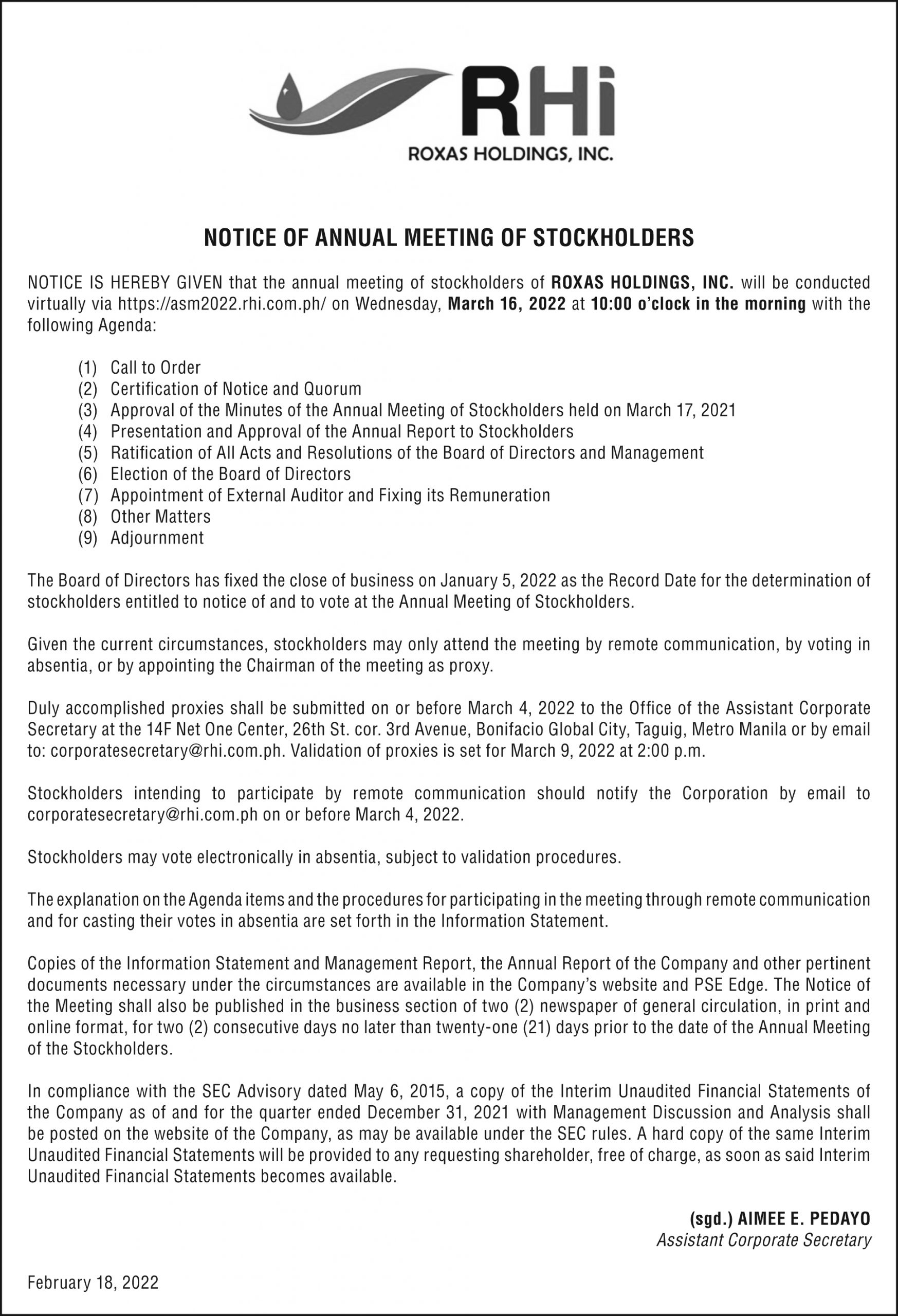
Please be advised that the Annual Meeting of the Stockholders of ROXAS HOLDINGS, INC. for the year 2022 will be conducted by remote communication on Wednesday, 16th day of March 2022 at 10:00 a.m. (URL: https://asm2022.rhi.com.ph/).  

Stockholders who are interested to participate in the proceedings may visit the above website, RHI’s website at https://www.roxasholdings.com.ph/ or check the Company’s disclosures via PSE Edge, for the requirements to register.  

Should you have queries, kindly send an email to: corporatesecretary@rhi.com.ph.


Spotlight is BusinessWorld’s sponsored section that allows advertisers to amplify their brand and connect with BusinessWorld’s audience by enabling them to publish their stories directly on the BusinessWorld Web site. For more information, send an email to online@bworldonline.com.

Join us on Viber to get more updates from BusinessWorld: https://bit.ly/3hv6bLA.

Rates on hold amid recovery risks

PHILIPPINE STAR/ MICHAEL VARCAS
The central bank said inflation expectations have risen slightly, amid soaring global oil prices. — PHILIPPINE STAR/ MICHAEL VARCAS

By Luz Wendy T. Noble, Reporter

THE BANGKO SENTRAL ng Pilipinas (BSP) on Thursday kept its key rate unchanged for a 10th straight meeting, but hinted at an “eventual normalization” of policy once recovery is sustained or inflation risks rise. 

The BSP maintained its overnight reverse repurchase rate at a historic low of 2%, as expected by all 16 analysts polled by BusinessWorld last week. The overnight deposit and lending rates were likewise left at all-time lows of 1.5% and 2.5%, respectively.

“The Monetary Board deems it prudent to maintain the BSP’s accommodative policy stance given a manageable inflation environment and emerging uncertainty surrounding domestic and global growth prospects,” BSP Governor Benjamin E. Diokno said at an online briefing on Thursday.

“Looking ahead, given the stronger signs of recovery in output growth and labor market conditions and improvements in domestic financial markets, the BSP will continue to carefully develop its plans for the eventual normalization of its extraordinary liquidity measures when conditions warrant, in keeping with our price and financial stability mandates,” he added. 

In 2020, the BSP slashed rates by 200 basis points to support the economy during the pandemic. The last rate cut was in November 2020.

Economic recovery is gaining traction, Mr. Diokno said.

Gross domestic product (GDP) grew by 7.7% in the October to December period, the third straight quarter of expansion. In 2021, GDP expanded by 5.6%, a reversal of the 9.6% contraction in 2020.

“The economy is seen to reach pre-pandemic GDP levels by the third quarter of 2022. At the same time, given the sustained recovery, the output gap is projected to close and turn positive by the second half of this year,” BSP Department of Economic Research Managing Director Zeno Ronald R. Abenoja said.

However, Mr. Diokno said elevated commodity prices, geopolitical tensions and uneven pace of vaccination across economies still cloud the outlook for recovery.

The BSP noted inflation expectations have risen slightly, but still within the target this year and 2023.

“The risks to the inflation outlook continue to lean slightly towards the upside for 2022 but remain broadly balanced for 2023. Upside risks are linked mainly to the continued shortage in domestic pork and fish supply and the possible impact of higher oil prices on transport fares,” Mr. Diokno said.

He said the “increased volatility” in global oil prices would need close monitoring and “appropriate interventions when necessary in order to arrest potential second-round effects.”

The BSP raised its average inflation forecast for this year to 3.7% from its previous 3.4% estimate, still within the 2-4% target but slower than the 4.5% in 2021. It also hiked the 2023 inflation outlook to 3.3% from 3.2%.

“The higher inflation path in 2022 is attributed primarily to higher world nonoil prices, as well as global crude oil prices, that could affect domestic inflation,” Mr. Abenoja said.

“The assumed average Dubai crude oil price is at $83 per barrel this year, which is over $10 per barrel more than the assumption that we had during the December 2021 policy meeting,” he added.

However, Mr. Abenoja said global oil prices are likely to ease with the anticipated increase in supply.   

“Inflation is seen to decelerate in early 2022, but to accelerate towards the upper end of the [target] band in the second quarter, before moving back to within the target range in the second half of 2022 until 2023,” Mr. Abenoja said. 

He said inflation may initially slow in the early part of the year, mainly due to base effect. Inflation could accelerate slightly above the target in the second quarter due to elevated oil and nonoil prices, he added.

Under the rebased 2018 consumer price index, inflation slowed to 3% in January from 3.2% in December.

Last year, inflation went beyond target due to the elevated oil and food prices. Despite this, the BSP kept interest rates steady, saying monetary policy could not do much to quell supply-side pressures.

“The implementation of non-monetary measures to ensure adequate supply of key food commodities must be sustained in order to mitigate supply-side pressures on inflation,” Mr. Diokno said.

Thursday’s policy review was the first time that Mr. Diokno mentioned an exit strategy, which indicates that an interest rate hike is already being considered within the next few months, ING Bank N.V. Manila Senior Economist Nicholas Antonio T. Mapa said.

“We believe that the trigger point for a potential rate reversal would have to be linked to a solid economic recovery coupled with depreciation pressure on the peso. We retain our expectation for a late second-quarter policy rate hike given a likely strong first-quarter GDP report,” Mr. Mapa said.

The first-quarter GDP data will be released on May 12. The Monetary Board will have its policy review meetings on May 19 and June 23.

On the other hand, Gareth Leather, senior Asia economist at Capital Economics, expects the BSP to keep rates steady for the rest of the year amid a “slow economic recovery.”

He said slowing inflation will buy time for the BSP to keep rates at record lows.

“We estimate that output is still 14% below its pre-crisis trend. Given the weakness of the recovery, we think the central bank will want to keep policy supportive,” Mr. Diokno said.

The Monetary Board will have its next policy review on Mar. 24.