Home Blog Page 6766

Bucks storm back from 18-point deficit to defeat Hornets

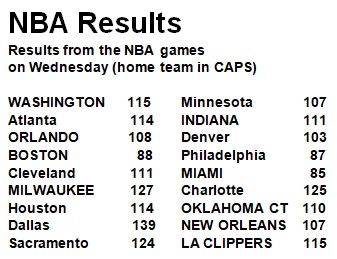
The Milwaukee Bucks battled back from an 18-point deficit and Giannis Antetokounmpo scored a go-ahead layup with two seconds left in regulation to beat the visiting Charlotte Hornets (127-125) on Monday night to earn their eighth straight win.

Milwaukee outscored the Hornets (67-57) in the second half to complete the comeback after not holding a lead through nearly 34 minutes of action. Miles Bridges threw up a heave at the buzzer, but it did not fall, handing the Bucks their sixth consecutive victory at home.

Antetokounmpo racked up 40 points, 12 rebounds and nine assists on 15-of-24 shooting to post his 13th double-double of the season. Khris Middleton added 21 points, Grayson Allen had 16 and reserves Pat Connaughton and George Hill each had 11. All five starters scored in double figures.

LaMelo Ball tallied a career-high 36 points to go along with nine assists and five rebounds. Reserve Kelly Oubre, Jr. finished with 25 points on 9-of-14 shooting and cashed in on five of nine shots from behind the arc. Bridges notched 22 points and nine rebounds, and Gordon Hayward recorded 18 points and five assists.

Although they shot 49.4% from the field and 41.2% from deep, Charlotte allowed over 114 points for the fourth straight game as the Hornets dropped their third consecutive contest.

Milwaukee heated up from long range following half time, going 8-for-16 (50.0%) from distance to erase Charlotte’s lead.

The Bucks chipped away before half time, thanks in part to a 10-0 run early in the second quarter that was headlined by a pair of threes from Allen. Oubre’s 20 first-half points prevented Milwaukee from taking a lead, and the Hornets went into the break with an eight-point edge.

Charlotte got off to a blistering start, opening the game on an 11-1 run and hitting 10 of its first 17 (58.8%) 3-point attempts. Despite 12 first-quarter points from Antetokounmpo, the Hornets were still able to build a 41-25 lead by the end of the frame. — Reuters

Ziyech winner at Watford keeps Chelsea top

WATFORD, England — Chelsea underlined the old adage that title contenders can win when playing poorly as Hakim Ziyech came off the bench to secure a 2-1 victory at Watford to keep them top of the Premier League on Wednesday.

Thomas Tuchel’s side were far from their efficient best at Vicarage Road but had enough attacking quality to emerge with three points and stay ahead of Manchester City and Liverpool.

Not that Tuchel took a great deal of satisfaction from the result — the German not holding back in his assessment.

“We were lucky. We should admit it,” Tuchel said. “Sometimes, you need it. Today, we could not reach this level. We were not ready for this game. We are to blame.

“We never found the right attitude. It was a big exception from the rule. We conceded a lot of chances in the first half and did not create much. We were very lucky to escape with a win.”

After a 32-minute suspension while a fan who had suffered a cardiac arrest was treated by emergency services, Chelsea took the lead when Mason Mount coolly converted after a well-worked move in the 29th minute.

But Watford deservedly leveled before the break through Nigerian Emmanuel Dennis.

Ziyech came on for injured defender Trevoh Chalobah on the hour and struck the winner 12 minutes later with the outstanding Mount turning provider.

Chelsea lead the standings with 33 points from 14 games, with City on 32 and Liverpool on 31.

Claudio Ranieri’s side will take heart from the way they pushed the league leaders but are just one place and three points above the relegation zone.

“We deserved at least a point but that’s football,” former Chelsea boss Ranieri said. “I’m very satisfied with our performance. Sooner or later, the points will arrive.”

Tuchel made six changes from the side that drew with Manchester United at the weekend and Chelsea looked disjointed for much of the evening.

Watford was the better team either side of the suspension but fell behind to Chelsea’s first move of real quality.

The ball was played to Marcos Alonso down the left and he slipped it into Kai Havertz who shifted it across to the unmarked Mount who had time to pick his spot.

Watford responded well with Danny Rose testing Edouard Mendy with a powerful shot. Chelsea continued to stutter and when Ruben Loftus-Cheek lost possession in midfield, Moussa Sissoko powered forward and picked out Dennis whose shot took a deflection on its way past Edouard Mendy.

The hosts could have been ahead with Mendy making a fine save and Sissoko scuffing a decent opportunity.

Watford continued to look a threat in the second half but Chelsea gradually began to assert some control and the quality they have on their bench eventually told as Ziyech came on to secure the points with his first league goal of the season.

Mount, Chelsea’s best player, was played into space down the left and his precise low cross was met by Ziyech whose powerful first-time shot beat Watford keeper Daniel Bachmann for pace. — Reuters

On uncertainty and control once again

Philippine Star/Michael Varcas

The world has suffered enough from the various strains of coronavirus for nearly two years. As of Dec. 1, some 263.15 million people have been infected with the virus, causing 5.24 million deaths. It is also in its economic impact that the pandemic proved vicious because the global economy retreated in the deepest recession, putting millions out of jobs and worsening inequality and poverty.

Marking the timelines of global efforts to mitigate this global pandemic is useful in assessing future roadblocks. The Delta variant is about to be reinforced by the Omicron variant.

The Philippines cannot plead innocence as a bystander.

The situation in 2020 was expected to turn for the worse with serious global implications. The World Bank Group (WBG) and the International Monetary Fund (IMF) joined forces as early as April 2020 to consider the call for possible suspension of debt repayments in order to provide critical support to the poorest countries in Africa. The G20 economies decided to temporarily suspend debt payments starting May 1, 2020. There was consensus that the pandemic represented a big setback for the progress that has been achieved by Africa in eradicating poverty, inequality, and underdevelopment.

It was difficult to imagine that debt suspension is at all possible. A few decades ago, it was anathema to the Washington-based institutions, with or without a health crisis. Their idea of economic adjustment excluded debt suspension, debt forgiveness, or anything to that effect until the developed economies themselves were hit by the economic conflagration in Europe during the Global Financial Crisis and the European debt crisis. In addition, as globalization lost some traction, conducting global trade and investments on a flexible exchange rate platform did not always work. The Fund began to look kindly on macroprudential measures and capital controls, or to be politically correct, capital flow management measures.

These are sea changes in the Washington Consensus. The pandemic contributed more.

Official creditors gathered $57 billion for Africa in 2020 alone, plus $18 billion each from the IMF and the WBG to help mitigate the effects of the pandemic on economic performance. The private sector provided assistance even as the amount put together paled in comparison to more than $100 billion that Africa needed to fight the virus.

In 2021, these efforts have to continue because the pandemic did not let up. Thus, the sister institutions sustained their call, this time focusing on developing countries’ access to COVID-19 vaccines, arguing that the “coronavirus pandemic will not end until everyone has access to vaccine… Worldwide access to vaccines offers the best hope for stopping the coronavirus pandemic, saving lives, and securing a broad-based economic recovery.”

Both institutions decided to also develop and keep their separate programs to handle the requirements of their member countries in their pandemic response and other financing needs. Additional tools have been considered to offer short-term liquidity line especially for those considered to be strong economic performers as incentive.

Recently, the World Health Organization (WHO) Director-General Tedros Adhanom Ghebreyesus proposed a pandemic preparedness treaty in view of the forthcoming Omicron variant. The treaty is proposed to be legally binding on issues like equitable vaccine distribution, knowledge-sharing, financing and oversight structures. Another key issue is whether WHO should be authorized to investigate the dynamics of viral outbreaks as well as monitor and assess the health situation in any of the 194 member countries.

The underlying philosophy behind all these efforts is the great uncertainty of how the virus would behave, as did Delta then and as will Omicron now. While some factors may be quantified and assigned some probability of happening, the latest concern about the Omicron is its 50 mutations so far and as such, anything could happen when it comes to the Philippines. Omicron could be vaccine resistant.

Given the uncertainty surrounding Omicron and the magnitude of global efforts to mitigate its impact, it would be too cavalier for any medical practitioner to dismiss the general concern about it. After sequencing the variant, South Africa for instance, found that it accounts for three-quarters of the nearly 250 samples from positive coronavirus tests. Caseloads are rising rapidly, doubling in a matter of days. Some African and European countries have reported Omicron incidents, with recent cases of infection in Latin America. The New York Times on Dec. 1 reported that a new simulation indicates the virus could survive inside tiny airborne water particles. In response, the US is now planning to require international plane travelers to show negative test result within 24 hours. In the case of Japan, new bookings were cancelled for incoming flights until the end of this year.

So far, the Philippines has demonstrated some quick response. Aside from the mandatory research and monitoring of the dynamics of the new variant, our health authorities have sought to mobilize hospitals and other health facilities to adjust their capacities and administer booster shots to our healthcare workers. Unlike in the way we dealt with the Wuhan virus, it is good we decided to immediately escalate the travel restrictions. Inbound flights from identified sources of Omicron have been suspended. Arriving passengers from both yellow and green zone countries are to be subjected to the same testing and quarantine protocols. No one knows for sure where passengers came from, and the connecting hubs taken on their way in.

But looking ahead, there are road blocks.

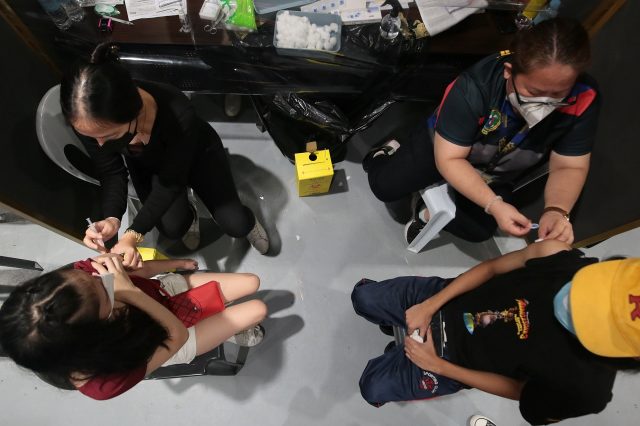
The National Task Force Against COVID-19 Chief Implementor Carlito Galvez, Jr. himself warned us last week of the possible fourth wave. Yes, the public’s discipline and observance of health protocols are pivotal in our new battle against the incoming variant. But a more basic issue is what to do with the current and forthcoming supplies of vaccines. In the last few days, the Government has accelerated its vaccination rollout. Anyone is to be accommodated including walk-ins. But Galvez himself admitted that “70 million Filipinos… haven’t had their first dose of vaccines yet.”

Let Galvez explain that indeed we are facing a dilemma:

“Because when the surge comes, they (over 70 million unvaccinated Filipinos) will be the one that will be given the burden of deaths, and also the disease and hospitalization in our different hospital facilities. For example, if we will be giving the booster for 29 million, you are depriving 29 million of first shots.”

The suggested response is for us to continue wearing face masks.

The other roadblock is the implementation of health measures, testing, tracing, and treating those who are infected with the current and forthcoming viruses. Who will handle our pandemic mitigation activities?

Until now, based on the claim of the Alliance of Health Workers, three months have passed but the Government has yet to release their COVID-19 benefits. These benefits include Special Risk Allowance, Active Hazard Duty Pay and Meal, Accommodation and Transportation benefits. If our frontliners decided to symbolically padlock the main gate of the office of the Department of Health in Manila last week, would the Government’s response be equally symbolic?

If the Government fouls up on this latest test of competence and resolve, it’s anybody’s guess whether we could deliver on the 4-5% target for 2021. While Finance Undersecretary Gil Beltran was correct when he scored private analysts whose economic growth forecasts were generally some distance away from the actual third quarter performance, he might not have another opportunity to rebuff. Under the emerging circumstances, forecasters worth their salt ought to be more circumspect about our capacity to mitigate the pandemic.

Last Wednesday’s stock market plunge by nearly 254 points on account of Omicron demonstrates that so much is outside the control of our health and economic authorities.


Diwa C. Guinigundo is the former deputy governor for the Monetary and Economics Sector, the Bangko Sentral ng Pilipinas (BSP). He served the BSP for 41 years. In 2001-2003, he was alternate executive director at the International Monetary Fund in Washington, DC. He is the senior pastor of the Fullness of Christ International Ministries in Mandaluyong.

Skepticism pays

KING RODRIGUEZ/ PRESIDENTIAL PHOTO

Skepticism — doubting whether someone’s statements or acts are what they seem or sound like, and considering the possibility that they’re meant to deceive — has never been as useful a guide in navigating the confusion and chaos of Philippine governance and politics than during the current election season.

No one should make any mistake about it: it is because of the 2022 elections that Rodrigo Duterte found the courage to say something other than acquiescent, defeatist, and incoherent ramblings about China’s continuing assaults on the people of the country of which he is the outgoing President.

Mr. Duterte told a China-ASEAN Summit meeting on Nov. 22 that the Philippines “abhors” the Nov. 16 blocking and water-cannoning of the Philippine supply ships that were on their way to the Marine detachment at Ayungin Shoal in the West Philippine Sea (WPS).

He also said, and reiterated it during the Asia-Europe Summit on Nov. 27, that only the observance of the rule of law could ease tensions in the West Philippine Sea — as indeed it could. But he did not explicitly address China. Indifferent to and contemptuous of international law, it is that country that totally ignored the United Nations Arbitral Tribunal’s ruling that huge parts of what it is arbitrarily claiming as its territory are in the Philippines’ Exclusive Economic Zone (EEZ).

Mr. Duterte is running for senator while his daughter Sara is a candidate for Vice-President. So are a number of his cohorts, cronies, allies, and surrogates vying for this or that elective post, in addition to those of his enablers who are among the six candidates for President. That glaring fact is the inescapable context in which his saying all the right things last week must be understood.

Every survey ever conducted by the country’s more reliable polling firms (some are no more than the hired hacks of certain candidates) shows that nearly 70% of Filipinos favor alliances with “other countries” — meaning mostly the United States and its Western allies — to protect Philippine rights in the WPS. Nearly 50% of them also say that his regime is not doing enough, or is actually failing, to defend those rights.

Mr. Duterte very likely departed from his usual “we can’t do anything about it” posture in the hope that the voters will forget how Chinese aggression in, and militarization of the WPS have been emboldened by his past indifference to that country’s bullying and abuse of Filipino fisherfolk and other citizens in their own fishing grounds and national waters.

To deflect attention from China’s repeated assaults on Philippine sovereignty, he has gone out of his way to thank President Xi Jinping for that country’s donations of Sinovac vaccines (the later shipments of which the taxpayers paid for); its promise of grants and loans and other assistance that have yet to materialize; and, most specially, for Xi’s pledge to help keep him in power.

Last week, however, Mr. Duterte suggested that such incidents as Nov. 16’s could have an adverse impact on the patron-client relationship between China and the Philippines his policies have created, which he insists on calling a “partnership.”

Secretary of Foreign Affairs Teodoro Locsin, Jr., who has been filing one protest after another over China’s harassment of Filipino fisherfolk and intrusion into the EEZ, and who filed another protest over its blocking the two Philippine supply ships, echoed Mr. Duterte’s statements in his tweets.

Defense Secretary Delfin Lorenzana meanwhile told the media that dozens of Chinese civilian and military sea craft are still in the area, and that despite assuring the government that they will not stop Philippine vessels from supplying the Ayungin Shoal Marine detachment, a Chinese coast guard team on rubber boats nevertheless followed, photographed, and videoed them in another instance of harassment.

Diplomatic protests can be ignored, and China has done exactly that over the last five years, while complaints about harassment can be even more pointedly dismissed. The Chinese government also knows that in the end it is what Mr. Duterte will do that matters and not his words, nor those of his officials. But those words could be part of a charade about which Mr. Duterte’s patron, President Xi Jinping, is likely to have assumed were merely uttered as part of his vote-getting tactics.

Only those born yesterday would dismiss that likely possibility. If there is anything Mr. Duterte and company are good at, it is, after all, at play-acting and mass deception. He pretended not to be interested in the Presidency from mid-2015 until the approach of the 2016 elections when he did run for the post. During the campaign he pledged to take a jet ski and to plant the Philippine flag in the Spratlys. Some thought he was being literal, while others interpreted that remark to mean that once elected he would defend Philippines rights and interests in the WPS. But he later called those who believed him in either sense “stupid.”

In numerous other instances Mr. Duterte has said one thing but done another, while his spokespersons and other officials either denied, modified, or “clarified” what he said. All this makes anything he says at the very least subject to a huge dose of skepticism.

The same doubts are encouraged by the regime’s protests over former Foreign Affairs Secretary Albert del Rosario’s claim that China intervened in the 2016 elections in behalf of Mr. Duterte. Its less than reliable record of forthrightness and the Duterte China policy of looking the other way that seems to be the price for that support invite legitimate fears that not only could that have happened, but that it can also happen again.

Candidate for President Panfilo Lacson and Senator Ralph Recto have in fact warned that foreign interference, which is not new in Philippine electoral politics, could influence the outcome of the 2022 elections.

While they seemed to be referring to China alone, the United States also comes to mind. The US is the record holder in the clandestine enterprise of making sure that whoever is elected to the country’s top posts would protect and help advance, or at least not oppose through their policies, its strategic and economic interests. The US in fact intervened in Philippine elections almost immediately after 1946, and over the decades since the 1950s has continued to do so.

But it is nevertheless possible for China, with its drive to be the next global hegemon, not only to have done so but also to continue to do so, given its strategic and economic interests in the WPS, in the Philippines, and in Asia as a whole.

To Filipino skepticism over Mr. Duterte’s seeming turn-around over China’s latest act of intimidation in Philippine territorial waters must thus be added the need to be especially alert over the distinct possibility that the 2022 elections will not solely be a contest among Filipinos but also another arena of contention between two of the most powerful countries on the planet.

It also demands that citizens closely monitor and evaluate the policies of whoever wins the Presidency next year so they can determine whether those policies will be to the benefit of the Philippines and its people or to that of any foreign power. The Duterte episode should be enough of a learning experience for everyone to realize that skepticism pays dividends in monitoring governance in this country of multiple, conflicting allegiances to self, family, class, and foreign patrons, and with a sorry history of betrayal by its so-called leaders.


LUIS V. TEODORO is on Facebook and Twitter (@luisteodoro).
www.luisteodoro.com

Now is not the time for RCEP

RAWPIXEL.COM-FREEPIK

Not yet. Not now. Not when too many things are going on for the country to handle. And not when a new administration is coming in by the middle of next year.

The RCEP — or Regional Comprehensive Economic Partnership, a proposed free trade agreement (FTA) between the ASEAN members (the Philippines, Indonesia, Malaysia, Singapore, Thailand, Brunei, Burma, Cambodia, Laos, Vietnam) and Australia, China, Japan, South Korea, and New Zealand — needs to go through Senate concurrence (not ratification, that is done by the President) if it is to be effective vis-a-vis the Philippines.

Already, Singapore, Thailand, Brunei, Cambodia, Laos, Vietnam, Australia, China, Japan, and New Zealand (or 10 of the 15 signatories) are executing the RCEP in accordance with their own constitutional processes.

On paper, the RCEP does seem significant, covering (at least according to the press releases) “a market of 2.2 billion people, or almost 30% of the world’s population, with a combined GDP of 26.2 trillion US dollars or about 30% of global GDP.” And yet, this again needs to be asked repeatedly: what does RCEP really do for the Philippines?

Even assuming the RCEP does bring benefits, the more important question is: at what cost? This is not even considering RCEP’s unforeseen consequences on a Philippine economy under pandemic conditions.

And for all of RCEP’s vaunted GDP coverage, a free trade agreement however is about trade. And the RCEP on that score admittedly merely accounts for “28% of global trade (based on 2019 figures)” of countries at varying degrees of development.

It’s a fairly intricate, complicated document, covering 20 chapters (not counting the opening and signing section), plus four Annexes of country “Schedules.” It covers the usual (e.g., trade in goods, rules of origin, services, etc.), as well as some relatively new areas (e-commerce and SMEs).

That alone should also raise concerns on what the “noodle bowl” of trade agreements will have on our overworked bureaucracy. The depth and complexity of RCEP leads to further questions on Philippine companies’ capacity for utilization of benefits. After all, we’re still trying to attain the rewards promised by AFTA, JPEPA, and others.

Set aside the fact that our closest security ally, the US, is excluded from the agreement, the Philippines already has free trade agreements with all of the RCEP countries: Indonesia, Malaysia, Singapore, Thailand, Brunei, Burma, Cambodia, Laos, Vietnam, Australia, China, Japan, South Korea, and New Zealand. What the RCEP brings that the other FTA’s don’t needs further elucidation.

Because the RCEP is more than just a trade agreement. It is also a strategic geopolitical tool that could have repercussions on sovereignty and security. The most troublesome aspect of the RCEP in this regard is its close identification with China.

As the National University of Singapore East Asian Institute’s Yu Hong puts it (“RCEP: The benefits, the regret and the limitations,” 2020): “With the signing of the RCEP agreement, China is the biggest winner in terms of economic development and geopolitics. Being part of the RCEP is advantageous to China in the face of the triple threat of the China-US trade war, geopolitical changes and global recession due to COVID-19. It also offers China more room to maneuver in the China-US trade war and as China’s diplomatic relations with the world deteriorate.”

So, while indeed 13 other countries may have agreed to sign on to a deal with China, nevertheless, those countries have not had 150,000 of their workers (others estimate 200,000) enter the Philippines these past few years, plus an additional 3.3 million of their tourists or those otherwise “visiting.”

Add to that the logical increased access that China will have to our domestic market, with the possibility of our current pandemic measures-hampered local industries being overwhelmed by a deluge of competing cheaper Chinese products, either by simple surge in imports or through outright dumping.

Add to that loans that a former Supreme Court justice felt the need to call out. Plus, the reported P1.365 billion in unpaid taxes and other fees by Chinese-run POGO firms.

Add the $1.1-billion trade deficit that we endure against that country.

And let us not forget their continued intrusion and poaching of our territory in the West Philippine Sea, with damages (according to some estimates) amounting to P200 billion.

This is within the context of 4.25 million Filipinos currently unemployed, with around 6.18 million underemployed. And an outstanding national debt currently at P11.97 trillion.

Even the supposed benefits RCEP touts is open to question. Due to its coverage, it is not the most open of free trade agreements. Add to that significant looseness as far as labor standards, intellectual property, competition, and environmental protection are concerned.

Finally, in these pandemic times, the problem of “adverse selection” comes in. Now is simply not the time to increase foreign entanglements when the Filipino people are struggling to make a living, while having to decide who its next president will be in the next several months.


Jemy Gatdula is a senior fellow of the Philippine Council for Foreign Relations and a Philippine Judicial Academy law lecturer for constitutional philosophy and jurisprudence https://www.facebook.com/jigatdula/
Twitter @jemygatdula


Investors are punishing the polluters. Here’s proof

VECTORJUICE-FREEPIK

The corporate sector has a leading role to play in the world’s response to climate change. The data accumulated so far make it clear that the more greenhouse gases a company emits, the lower its stock price relative to its earnings.

This effect — in a sense a climate discount — is influenced by climate risk, by emissions regulations and carbon pricing, and by attention from investors and the public. Those factors lead to larger discounts in some sectors and market-cap sizes than in others. So, it’s clear the stock market is already rewarding companies that reduce emissions with higher valuations. And because this investor response will probably grow over time, the market incentive to lower emissions will, too.

Working with leading academics such as Joseph Aldy of the Harvard Kennedy School, Patrick Bolton of Columbia Business School, Marcin Kacperczyk of Imperial College London, and Andrew Lo of the Massachusetts Institute of Technology, analysts at Lazard looked at data on more than 16,000 global companies and examined the relationship between each one’s equity value and the amount of greenhouse gases it emitted from 2016 to 2020.

This analysis reveals that, on average, a 10% increase in carbon dioxide emissions is associated with a 0.4% decline in a company’s price-earnings ratio (controlling for a wide array of other factors). But that climate discount average masks wide variations across sectors. The market currently punishes emissions in energy (0.8%) three times as much as those in consumer staples (0.3%), highlighting the role that climate risk and emissions regulations play in driving the discount.

The effect is also much larger for big companies than for small ones — perhaps because investors may pay more attention to bigger corporations and because regulations are more likely to apply to them. Consider industrials, for example. For European industrial companies with a market cap above $50 billion, the price-earnings multiple falls by a whopping 18% for every 10% increase in carbon emissions. For European industrial companies with market caps below $1 billion, which are less affected by regulation and investor pressure, the drop is less than 0.5%.

Climate discounts exist in both Europe and the US, but they’re more pronounced in Europe, presumably because of the carbon trading scheme there and other regulatory influences. In the energy sector, the stock values of smaller companies in both Europe and the US are less influenced by emissions than those of larger ones. In the US, the effect is four times greater for big companies. That’s a notable difference, but it pales in comparison with the eight-times differential from small to large energy companies in Europe. Here again, it seems that the size of the market incentive to reduce emissions is influenced by climate risks as well as government regulation and investor pressure.

Debt markets are also paying attention to company emissions, the data show, but here the size effects are reversed. For small companies, especially in Europe, credit default swap spreads (a measure of the riskiness of a company’s debt) are higher for those with higher emissions. But for large companies, emissions don’t matter. Investors seem to believe, not unreasonably, that carbon emissions are an indicator of default risk for smaller companies, but not larger ones.

The data also suggest that all these stock-value effects may grow larger over time. A good illustration is the experience in Europe, where the climate discount for large companies has risen since 2016 as the carbon price on the European Union Emissions Trading System has increased. (The trend in the US has, if anything, moved in the opposite direction, as many climate regulations were loosened over that period.)

With carbon prices rising and other climate-protection measures strengthening, it’s reasonable to speculate that company valuations will become increasingly tied to emissions control. In the meantime, the message to companies is that the market is already paying attention. — Bloomberg Opinion

Why the long Christmas celebration?

Photo courtesy of the author

Filipinos take pride in having the longest celebration of Christmas this side of Christendom. Now that we are weeks away from Christmas, what benefits has this months-long long celebration given us?

A quick crowd sourcing from family members and friends in social media, yielded the following benefits:

ECONOMIC GAINS

The first set of benefits point to the apparent economic gains, now enjoyed by both traditional and online retail outlets. My daughter is quick to point out how the pandemic has prompted consumers to resort to e-commerce for purchasing food and other essential items for their household. This has become part of the “new normal” — a major vehicle for the Filipinos’ Christmas shopping.

A former colleague writes, “The long celebration provides more opportunities for these businesses, in the process stimulating economic activity and boosting the local economy to go back to pre-pandemic levels.” Certainly, many of us joined the bandwagon in the 9/9, 10/10, 11/11, and the forthcoming 12/12 sales promos!

The amount of spending is expected to spike during the Christmas season, especially now that restrictions in some urban centers have been relaxed by government.

EMOTIONAL BOOST

Another workmate says, “The four-month celebration gets people into the jolly and generous Christmas mood earlier. If you have kids, it would provide a good incentive to get them to behave themselves before Christmas time.” I am reminded of how my grandson perseveres to do good in school so he could get the Christmas gift he has been praying for.

Meanwhile, a co-teacher describes how “It sort of primes us up that Christmas is coming (as) we need to prepare financially, emotionally, even physically for the long parties and reunions come December.” A photographer friend adds that “it stretches the yearning for a good family holiday and puts one in the mood.”

Meanwhile, a friend mentions that “the long Christmas celebration (also) gives us time to plan and think about the gifts we could give to our loved ones or the charitable acts we would like to do.” This is reinforced by a friend who observes that “Pinoys tend to be more generous during Christmas.”

Another thing to plan for are the “get-togethers, reunions and extended vacations.” These are driven by Pinoys’ love for celebrations, my wife adds, admitting that she is one of those who really get excited the moment the “’ber” months begin.

JOYFUL ANTICIPATION

As a Christian nation, we are afforded “greater opportunity to enjoy the birth of our Saviour Jesus Christ,” even if the Misa De Gallos, Noche Buenas, and Kris Kringles now have their virtual options because of safety concerns. A team leader says the long-celebration engenders hope as we anticipate the series of joyful events from September to January to see us through these uncertain times.

All these are good for our mental health, a friend states. “An extra opiate for the public (in a good way),” a nephew adds.

But there were also those who question the practice, suggesting that it should be cut short to two months, worried perhaps about the seeming impracticality of the overdrawn celebration. One couldn’t help but be cynical, “are there benefits, to begin with?”

These opposing views notwithstanding, I think the long celebration of Christmas in the Philippines will persist. As long as there are kids who are excited to open their presents under the Christmas tree and as long as there are adults who find joy in putting a smile on their loved ones’ faces when affirmations of love accompany the hearty food that they serve and partake at the Noche Buena table.


Edgar Timbungco is the public relations manager of Mang Inasal and is also teaching corporate communication and organizational planning and development at the School of Management and Information Technology of De La Salle-College of Saint Benilde. He is an accredited public relations practitioner by the Public Relations Society of the Philippines and certified professional marketing educator by the Philippine Marketing Association. He was likewise granted with the crisis communication planner title by the International Consortium for Organizational Resilience.

OECD says it would cost $50 billion to vaccinate the world

PHILIPPINE STAR/ MICHAEL VARCAS

IT COULD COST as little as $50 billion to save the global economy.

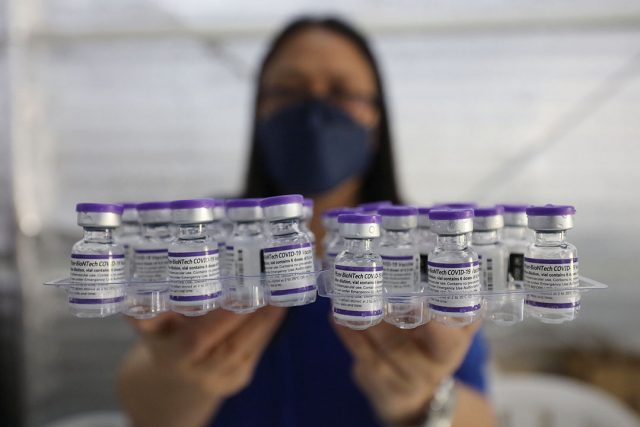
That’s the amount needed to vaccinate the world, a measure that’s key to ending the pandemic and tackling the imbalances “plaguing the recovery,” according to OECD Chief Economist Laurence Boone.

“When you balance things out, $10 trillion for supporting the economy going through the pandemic compared with a tiny $50 billion to bring the vaccine to the entire world population, that looks completely disproportionate,” she told Bloomberg Television in an interview Wednesday. The first number is the amount spent by Group of 20 countries to mitigating the economic impact of coronavirus disease 2019 (COVID-19).

The emergence of Omicron increases the uncertainty already weighing on the global economic outlook and highlights vaccination shortcomings, she said. While the Paris-based organization didn’t directly account for that strain in its new forecasts, it emphasized continued pandemic risks and urged governments to address low inoculation rates in some regions so as not to create “breeding grounds for deadlier strains.”

On top of tighter virus restrictions including renewed lockdowns in some parts, OECD members are battling soaring inflation and hold-ups in global supply chains that are starving factories of components. — Bloomberg

Consultancy firm helps PHL businesses set up shop in Dubai

REUTERS

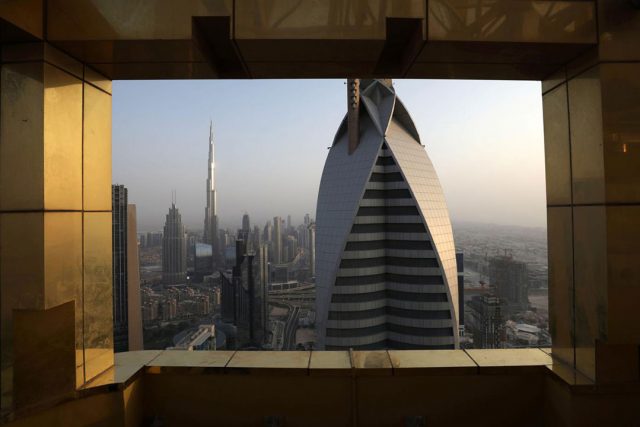
Enter PH, a local consultancy firm that helps foreign companies expand to the Philippines, has partnered with Dubai-based business setup firm Creative Zone to help Filipino businesses enter Dubai and other Gulf Cooperation Council markets (Saudi Arabia, the United Arab Emirates or UAE, Kuwait, Bahrain, Qatar, and Oman).  

The partnership provides coaching and business support services to small and medium enterprises (SMEs) and investor-seeking startups from the Philippines.   

“The Filipino community is the third-largest expatriate community in the UAE and is an important demographic,” said Lorenzo Jooris, Creative Zone chief executive officer, to BusinessWorld.   

“Filipinos in the UAE have a thriving business community, with a diverse range of businesses, including food and beverage, fashion, and various types of professional services,” he said. “Aligning with this is Dubai’s vibrant consumer base that constitutes tech-savvy, high-income, and young professionals.”  

Mr. Jooris cited the Philippines’ young and English-speaking workforce, its strategic location in the Southeast Asian market, and its strong industrial sector as among the factors for the company’s decision to extend its services to the country.  

“The Philippines has introduced various incentives to create an investor-friendly climate and attract foreign business ventures,” he added. “The creation of Special Economic Zones (SEZs), tax benefits, and entrepreneur-friendly commercial laws make it relatively easy for foreign companies to set up in the Philippines”  

In a press statement, Rene “RJ” A. Ledesma, Jr., founding partner of Enter PH, said that his firm’s partnership with Creative Zone encourages the spirit of entrepreneurship.  

“Dubai has always been close to my heart, and educating my fellow entrepreneurs on the overlying opportunities and business potential that can be leveraged whilst within the country is a novel approach,” Mr. Ledesma said.   

The economy of the UAE, of which Dubai is a part, is rebounding faster than expected, according to a chief economist for Oxford Economics Middle East in Dubai. The economy has been open for months, and is buoyed by a well-equipped health system as well as a population that is about 90% fully vaccinated. Bloomberg reported in September that Dubai’s job market was at its strongest in two years 

The UAE’s latest foreign direct investment laws, which took effect on June 1, allow foreign investors and entrepreneurs full ownership of onshore companies. — Patricia B. Mirasol  

Inside a luxury unit at the heart of the city

Here’s how you can experience the ultimate comfort and convenience only a Westin home can provide.

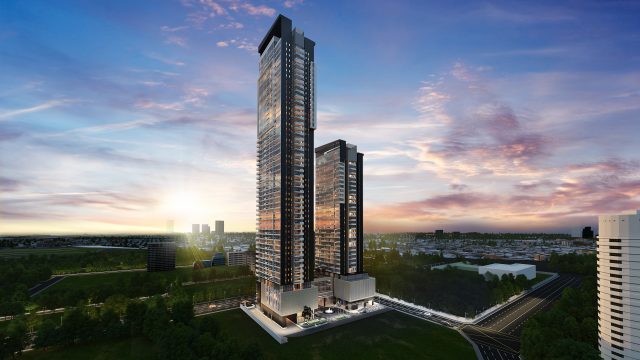
If you’re on the lookout for a home that houses all the best things in life – and we mean best in the form of high-end home features, accessibility, convenience, and wellness-centered amenities, we got you! You can find all these in one place at The Residences at The Westin Manila Sonata Place.

There are two ways on how you can see and experience what this upscale development has in store for you. If you wish to view this luxurious home that you can soon live in while at the comforts of your home, a virtual showroom is made available for you. But if you want to see for yourself the Westin brand of living and find out the world-renowned luxurious lifestyle services it offers, an actual show unit is the perfect route to go.

A Tour Inside a Westin Home

The Show Floor of The Residences at The Westin Manila Sonata Place features a one-bedroom show suite. This houses all the premium deliverables that future residents will get to enjoy once they move into their new home. 

One of the signature home features you’ll find inside this deluxe unit is the Westin Heavenly® Bed, complete with a soft mattress and pillows for a comfortable and restful sleep every single night. 

In the kitchen area, you’ll get to see the branded home appliances that will help you craft delicious meals for yourself and your loved ones. A cooktop, ref, and range hood from world-famous luxury brand Gaggenau are what you can find inside every Westin unit, complemented by equally-classy kitchen cabinets made by premium global brand Leicht to complete the modern and high-class kitchen that you deserve.

Going to the toilet and bath area, you can be assured of a refreshing bath every day with Westin’s Heavenly Bath™ experience, made possible by Hansgrohe’s premier shower fittings plus the signature Heavenly Bath™ Set in the form of plush robes and soft towels. It also comes with a toilet and sink from another luxury name in the toilet and bath industry – Duravit, all to complete the branded way of living inside your Westin unit. 


Your Luxurious City Home

Apart from all these exclusive home deliverables, The Residences at The Westin Manila Sonata Place offers ultimate convenience with close proximity to essential establishments such as commercial centers, corporate headquarters, hospitals, medical centers, schools, hotels, and government offices. So there’s no need to worry about traveling too far to get to where you need to be!

The property also offers top-notch leisure and wellness amenities that residents can exclusively use when they need to. Housed inside The Haven, a four-floor amenity zone where you can find the fitness center, move studio, and indoor lap pool, among others. Also found here is the Golf Simulation Room, where residents can enjoy a round or two. In addition, kids, both by age and heart, can spend time having fun at the Playhouse, Game Room, and the Private Theater, where they can safely enjoy and bond without leaving the development or traveling too far.

With all these and more, you can be assured of only the best when you choose to live in a Westin home. To set a private tour of this show suite, simply connect with an RLC Residences Property Specialist through this link. Learn more about the luxurious life that awaits you by visiting www.rlcresidences.com or by following RLC Residences on Facebook and Instagram.


Spotlight is BusinessWorld’s sponsored section that allows advertisers to amplify their brand and connect with BusinessWorld’s audience by enabling them to publish their stories directly on the BusinessWorld Web site. For more information, send an email to online@bworldonline.com.

Join us on Viber to get more updates from BusinessWorld: https://bit.ly/3hv6bLA.

PHL tops NFT ownership out of 20 countries — Finder

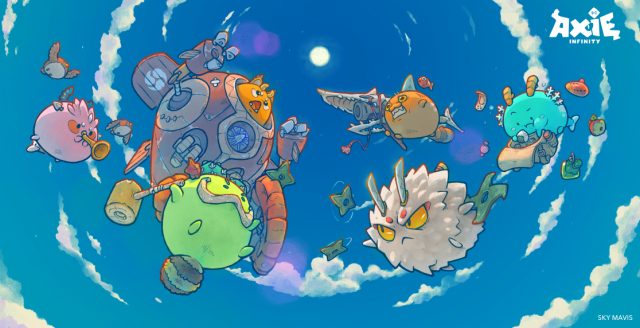
Image via Axie Infinity

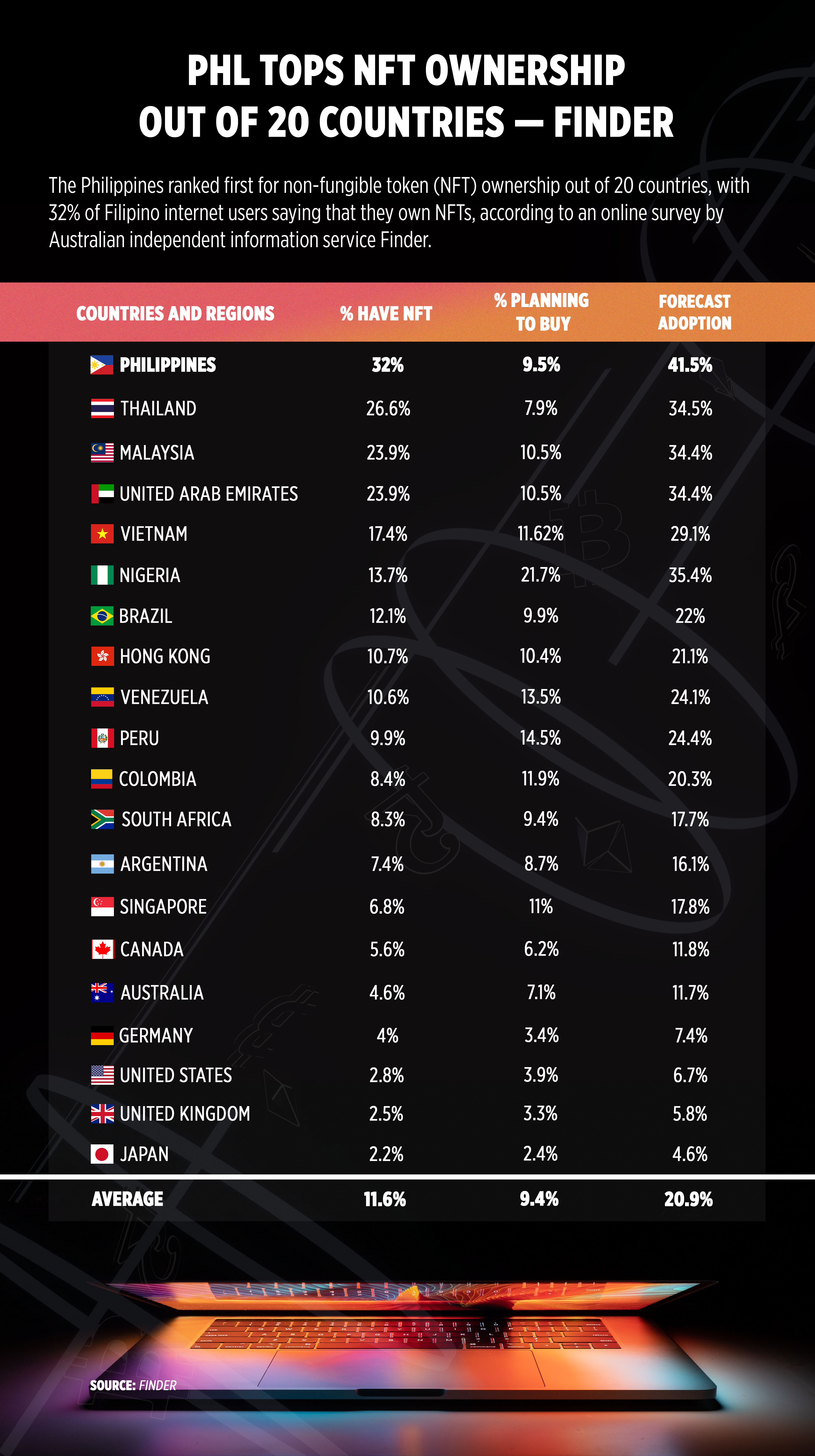
The Philippines ranked first for non-fungible token (NFT) ownership out of 20 countries, with 32% of Filipino internet users saying that they own NFTs, according to an online survey released this November by Australian independent information service Finder.  

Globally, just 1.7% of internet users owned NFTs. Meanwhile, of the 1,507 Filipinos surveyed, nearly three times of the global average were NFT owners, the platform said, adding that NFT adoption in the Philippines could soon hit 41.5%. 

NFTs are non-interchangeable digital tokens that contain data proving ownership of items, mostly related to art, audio, video, and the like.  

The popularity of NFTs in the country is mainly from in-game assets gained in play-to-earn games like Axie Infinity 

“It’s still very early days for NFTs in the Philippines,” Finder said in an official statement. “Fifty-one percent of Filipino internet users currently know what NFTs are and we expect adoption to grow with awareness.”  

Jeffrey Zirlin, co-founder of Vietnam-based company Sky Mavis, which operates the crypto game Axie Infinity, said in the a16z podcast in November that Filipinos’ love for mobile games and their knowledge of cryptocurrency is what keeps the country ahead.  

“There’s relatively high crypto literacy. It’s a very communal culture where information and trends can spread very quickly,” he explained. “Filipinos have traditionally been early adopters to many social networks and platforms like Facebook.”  

The Philippines has the highest number of Axie players in the world. Groups like Yield Guild Games (YGG) cultivate this by onboarding Filipinos to their scholarship programs, where the play-to-earn lifestyle can be sponsored to generate income.  

Finder said they expect further NFT adoption in the Philippines, with 9.5% of Filipinos surveyed saying they plan to own NFTs in the future.  

Gabriel “Gabby” Dizon, founder of YGG, shared in the same podcast that the growth of play-to-earn and NFT ownership was due to unemployed Filipinos’ need to escape economic hardship during lockdowns.  

“These were people who weren’t crypto enthusiasts. These were regular people that were stuck at home that had no jobs,” he said.  

Finder also spoke of the potential for play-to-earn gamers to dive into other types of NFTs as well, saying they can be “a great gateway to cryptocurrency ownership.”  

After the Philippines, Thailand came in second place with 27% of users owning NFTs, followed by Malaysia at 24%, United Arab Emirates at 23%, and Vietnam at 17%.   

Countries like Nigeria and Peru are projected to see an increase of NFT adoption by 22% and 15% respectively, but Finder said that they will likely not come close to the Philippines’ rate. — Brontë H. Lacsamana 

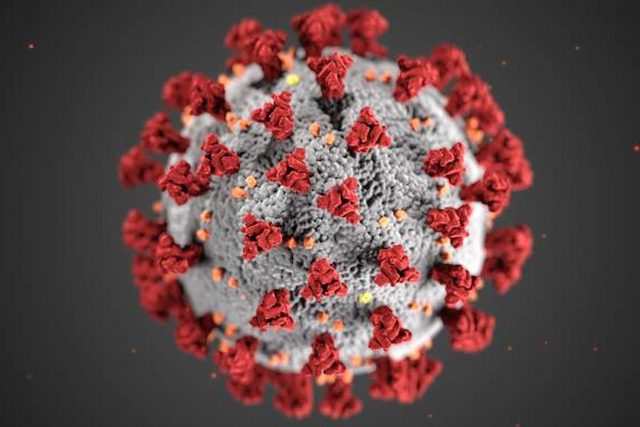
Omicron rapidly dominating in South Africa; US reports first case

JOHANNESBURG/WASHINGTON — Heavily mutated Omicron is rapidly becoming the dominant variant of the coronavirus in South Africa less than four weeks after it was first detected there, and the United States on Wednesday became the latest country to identify an Omicron case within its borders.  

The first known US case was a fully vaccinated person in California who returned to the United States from South Africa on Nov. 22 and tested positive seven days later.  

The person had mild symptoms and was in self-quarantine, Dr. Anthony Fauci, the top US infectious disease official, told reporters at the White House.  

Late on Tuesday, airlines in the United States were told to hand over the names of passengers arriving from parts of southern Africa hit by Omicron, according to a US Centers for Disease Control and Prevention letter seen by Reuters.  

Key questions remain about the new variant, which has been found in two dozen countries, including Spain, Canada, Britain, Austria and Portugal. The UAE reported its first case on Wednesday, the second Gulf country after Saudi Arabia.  

Early indications suggesting Omicron may be markedly more contagious than previous variants have rattled financial markets, fearful that new restrictions could choke off a tentative recovery from the economic ravages of the pandemic.  

South Africa’s National Institute for Communicable Diseases (NICD) said early epidemiological data suggested Omicron was able to evade some immunity, but existing vaccines should still protect against severe disease and death.  

It said 74% of all the virus genomes it had sequenced last month had been of the new variant, which was first found in a sample taken on Nov. 8 in Gauteng, South Africa’s most populous province.  

The number of new cases reported in South Africa doubled from Tuesday to Wednesday.  

World Health Organization (WHO) epidemiologist Maria van Kerkhove told a briefing that data on how contagious Omicron was should be available “within days.”  

BioNTech’s CEO said the vaccine it makes in a partnership with Pfizer was likely to offer strong protection against severe disease from Omicron.  

‘PREPARE FOR THE WORST’  

The president of the European Union’s executive body said there was a “race against time” to stave off the new variant while scientists establish how dangerous it is. The EU brought forward the start of its vaccine rollout for 5-to-11-year-olds by a week to Dec. 13.  

“Prepare for the worst, hope for the best,” Ursula von der Leyen, president of the European Commission, told a news conference.  

She said that full vaccination and a booster shot provided the strongest possible protection, according to scientists — a view echoed by Dr. Fauci.  

But WHO emergencies director Mike Ryan criticized developed countries pushing booster shots for large parts of their fully vaccinated populations when vulnerable people in many poorer regions have had no vaccination at all.  

“There is no evidence that I’m aware of that will suggest that boosting the entire population is going to necessarily provide any greater protection for otherwise healthy individuals against hospitalization or death,” he said.  

Britain and the United States have both expanded their booster programs in response to the new variant.  

The WHO has noted many times that the coronavirus will keep producing new variants for as long as it is allowed to circulate freely in large unvaccinated populations.  

TRAVEL RESTRICTIONS  

Some 56 countries were reportedly implementing travel measures to guard against Omicron as of Nov. 28, the WHO said.  

UN Secretary-General Antonio Guterres slammed what he called “travel apartheid.”  

“Blanket travel bans will not prevent the international spread and they place a heavy burden on lives and livelihoods,” the WHO said, while advising those who were unwell, at risk, or 60 years and over and unvaccinated to postpone travel.  

The United States has barred nearly all foreigners who have been in one of eight southern African countries.  

Hong Kong added Japan, Portugal and Sweden to its travel restrictions. Malaysia temporarily barred travelers from eight African countries and said Britain and the Netherlands could join the list.  

Fitch Ratings said it lowered its global air passenger traffic forecasts for 2021 and 2022.  

“It feels a little bit like we are back to where we were a year ago,” said Deidre Fulton, a partner at consultancy MIDAS Aviation, at an industry webinar. “And that’s not a great prospect for the industry and beyond.”  

Wall Street’s major averages fell more than 1% on Wednesday, erasing morning gains, on investor angst over the first US case, along with concerns about inflation. Crude oil prices also fell.  

Dr. Fauci said it could take two weeks or more to gain insight into how easily the variant spreads from person to person, how severe the disease is that it causes, and whether it can bypass the protections provided by the vaccines currently available.  

“We don’t have enough information right now,” said Dr. Fauci, adding that the variant’s molecular profile “suggests that it might be more transmissible, and that it might elude some of the protection of vaccines. … We have to be prepared that there’s going to be a diminution in protection.” — Promit Mukherjee and Trevor Hunnicutt/Reuters