Home Blog Page 6763

Over 100 global leaders pledge to end deforestation by 2030

STOCK PHOTO - Pixabay.com

GLASGOW – More than 100 global leaders late on Monday pledged to halt and reverse deforestation and land degradation by the end of the decade, underpinned by $19 billion in public and private funds to invest in protecting and restoring forests.

The joint statement at the COP26 climate talks https://www.reuters.com/business/cop in Glasgow was backed by the leaders of countries including Brazil, Indonesia and the Democratic Republic of Congo, which collectively account for 85% of the world’s forests.

The Glasgow Leaders‘ Declaration on Forest and Land Use will cover forests totaling more than 13 million square miles, according to a statement from the UK prime minister’s office on behalf of the leaders.

“We will have a chance to end humanity’s long history as nature’s conqueror, and instead become its custodian,” said British leader Boris Johnson, calling it an unprecedented agreement.

A slew of additional government and private initiatives were launched on Tuesday to help reach that goal, including billions in pledges for indigenous guardians of the forest and sustainable agriculture.

Forests absorb roughly 30% of carbon dioxide emissions, according to the nonprofit World Resources Institute. The forests take the emissions out of the atmosphere and prevent them from warming the climate.

Yet this natural climate buffer is rapidly disappearing. The world lost 258,000 square kilometers of forest in 2020, according to WRI’s deforestation tracking initiative Global Forest Watch. That is an area larger than the United Kingdom.

Monday’s agreement vastly expands a similar commitment made by 40 countries as part of the 2014 New York Declaration of Forests and goes further than ever before in laying out the resources to reach that goal.

Under the agreement, 12 countries including Britain have pledged to provide 8.75 billion pounds ($12 billion) of public funding between 2021 and 2025 to help developing countries, including in efforts to restore degraded land and tackle wildfires.

At least a further 5.3 billion pounds would be provided by more than 30 private sector investors including Aviva, Schroders and AXA.

The investors, representing $8.7 trillion in assets under management, also pledged to stop investing in activities linked to deforestation by 2025.

Five countries, including the Britain and United States, and a group of global charities on Tuesday also pledged to provide $1.7 billion in financing to support indigenous people’s conservation of forests and to strengthen their land rights.

Environmentalists say that indigenous communities are the best protectors of the forest, often against violent encroachment of loggers and land grabbers.

More than 30 financial institutions with more than $8.7 trillion in assets under management also said they would make “best efforts” to eliminate deforestation related to cattle, palm oil, soy and pulp production by 2025.

COP26 aims to keep alive a target of capping global warming at 1.5 degrees Celsius (2.7 Fahrenheit) above pre-industrial levels. Scientists say forests and so-called nature-based solutions will be vital to reaching that goal.

Woodlands have removed about 760 million tonnes of carbon every year since 2011, offsetting about 8% of carbon dioxide emissions from fossil fuels and cement, according to the Biomass Carbon Monitor project backed by data analytics firm Kayrros and French research institutions.

“Our biosphere is really helping bail us out for the time being, but there is no guarantee those processes will continue,” said Oliver Phillips, an ecologist at the United Kingdom’s University of Leeds. – Reuters


Facebook whistleblower Haugen urges Zuckerberg to step down

REUTERS

LISBON – In her first public address since she leaked a trove of damaging documents about Facebook‘s inner workings, whistleblower Frances Haugen urged her former boss, Mark Zuckerberg, to step down and allow change rather than devoting resources to a rebrand.

“I think it is unlikely the company will change if [Mark Zuckerberg] remains the CEO,” Haugen told a packed arena on Monday at the opening night of the Web Summit, a tech fest drawing dozens of thousands to the Portuguese capital, Lisbon.

The former Facebook product manager replied in the positive to the question of whether Zuckerberg should resign, and added: “Maybe it’s a chance for someone else to take the reins… Facebook would be stronger with someone who was willing to focus on safety.”

The social network, with nearly 3 billion users, changed its name to Meta last week, in a rebrand that focuses on building the “metaverse,” a shared virtual environment that it bets will be the successor to the mobile internet.

But early adopters of the virtual worlds known as the metaverse blasted Facebook‘s rebranding as an attempt to capitalise on growing buzz over a concept it did not create to deflect from recent negative attention.

Commenting on the rebranding, Haugen said it made no sense given the security issues that have yet to be tackled.

“Over and over Facebook chooses expansion and new areas instead of sticking the landing on what they’ve already done,” Haugen told an animated crowd which frequently burst into applause as she spoke.

Facebook‘s announcement came amid strong criticism from lawmakers and regulators over the corporation’s business practices – particularly its enormous market power, algorithmic decisions and the policing of abuses on its services.

The social media network, which operates a dual class share structure through which Zuckerberg and a small group of investors control the company, has hit back saying the documents leaked by Haugen were being used to paint a “false picture.”

Haugen told British and American lawmakers last month that Facebook would fuel more violent unrest worldwide unless it curbed its algorithms which push extreme, divisive content and prey on vulnerable demographics to keep them scrolling.

“A key problem is that the foundation of the platform’s security is based on monitoring content language by language, which does not scale to all the countries where Facebook operates,” Haugen noted. – Reuters

‘Time for action’, Queen Elizabeth tells climate change summit

STOCK IMAGE - Pixabay.com

GLASGOW – Britain’s Queen Elizabeth told the United Nations climate change summit on Monday that “the time for words has now moved to the time for action”, as she urged world leaders to think of future generations when negotiating a deal to limit global warming.

In a video message on the first day of the conference in Scotland, the queen urged leaders to rise above “the politics of the moment” and said the legacy of a successful summit would help “our children’s children”.

The 95-year-old, the world’s oldest and longest-reigning monarch, was due to attend the event in person in Glasgow but pulled out after doctors advised her to rest.

“It is the hope of many that the legacy of this summit – written in history books yet to be printed – will describe you as the leaders who did not pass up the opportunity; and that you answered the call of those future generations,” the queen said.

“The benefits of such actions will not be there to enjoy for all of us here today: we, none of us will live forever. But we are doing this not for ourselves but for our children and our children’s children.”

She paid tribute to her late husband, Prince Philip, who died earlier this year aged 99. She remembered how he had warned an academic gathering in 1969 about the need to tackle the threats from pollution.

“If the world pollution situation is not critical at the moment, it is as certain as anything can be that the situation will become increasingly intolerable within a very short time,” she quoted him as saying.

The queen said she “could not be more proud” that his work had been continued by her two closest heirs, her son Prince Charles and grandson Prince William, who are both attending the summit.

On Monday, the queen was pictured driving by herself around her Windsor Castle estate after she last month cancelled some engagements and spent a night in hospital for an unspecified ailment, her first such overnight stay for years.  – Reuters

Netflix removes spy drama episodes after Philippines’ complaint over China map

MANILA – Netflix Inc has removed two episodes of spy drama “Pine Gap” from its streaming service in the Philippines, after the Southeast Asian country rejected scenes involving a map used by China to assert its claims to the South China Sea.The Philippines on Monday asked Netflix to remove certain episodes of the six-part Australian series, saying the map depicted on the show was a violation of its sovereignty.The second and third episodes of the show were no longer available in the Philippines by late Monday, with Netflix announcing on its platform that those episodes had been “removed by government demand”. It did not elaborate.Netflix did not immediately respond to Reuters’ request for comment.China lays claim to most of the South China Sea waters within the so-called nine-dash line, a U-shaped feature used on Chinese maps. Parts of the resource-rich waters are also contested by the Philippines, Brunei, Malaysia, Taiwan and Vietnam.After a thorough review, the Philippines’ movie classification board has ruled that certain episodes of Pine Gap were “unfit for public exhibition”, the Department of Foreign Affairs (DFA) said in a statement.Earlier this year Netflix removed “Pine Gap” from its services in Vietnam following a similar complaint from the country’s broadcast authorities.The Philippine films board, acting on the DFA’s complaint, handed down its ruling on Sept. 28. It was not clear why the decision was only made public now.The board, according to the DFA, noted that the appearance of the map was “no accident as it was consciously designed and calculated to specifically convey a message that China’s nine-dash line legitimately exists”.The board believes that “such portrayal is a crafty attempt to perpetuate and memorialize in the consciousness of the present generation of viewers and the generations to come the illegal nine-dash line”, the DFA said. — Reuters

[B-SIDE Podcast] Barya lang po sa umaga: coins in a cash-lite society

Coins — they lurk in the nooks and crannies of pockets and bags, refusing to be found when you need them the most.  

But do we really need coins  which can hardly buy anything  in the first place, when experts say that digitalization is pushing us toward a cash-lite society? 

Bangko Sentral ng Pilipinas (BSP) Governor Benjamin E. Diokno said the Philippines could be “coinless” by 2025.  

In this B-Side episode, Eloisa T. Glindro, Director at the Currency Policy and Integrity Department of the BSP, explains to BusinessWorld reporter Luz Wendy T. Noble the role of small change in our financial system and why we should stop hoarding coins. 

TAKEAWAYS

Coin hoarding can either be illicit or unintentional. 

This October, the BSP urged legislators to pass a measure against coin hoarding after conducting a warehouse raid, together with law enforcement agencies, wherein  P50 million worth of coins were seized in Quezon City. 

“We have of course uncovered some of those who tried to melt them for the metallic composition,” Ms. Glindro said of coin hoarders. 

Meanwhile, there are also people who inadvertently accumulate coins. Multiply these people by several factors, add the illicit hoarders, and the BSP could have an artificial shortage on its hands. The BSP, as the primary caretaker of currency, will need to spend more to produce coins. 

Keeping a piggy bank is not coin hoarding, but your money is better kept at a bank. 

It’s not illegal to keep a piggy bank at home. But the BSP is urging the public to instead deposit the money they have in their piggy banks to financial institutions to ensure better circulation of the currency and prevent damage on the bills and coins.  

Ms. Glindro noted banks offer a basic deposit account which does not have maintaining balance or a dormancy fee. To open an account, one needs an initial deposit of P100 and government IDs (or just the national ID). 

Even though digital transactions gain traction, coins will remain relevant. 

The central bank hopes that 50% of all payments in the country will be done digitally by 2023.  

Consequently, Ms. Glindro expects cash usage to decrease as digital transactions continue to gain traction. However, financial inclusion also means having bills and coins available for those who need them. 

“The journey towards a cash-lite society will be governed by broadening the payment choices available to Filipinos and that is by maintaining a healthy mix of safe … digital payment options alongside consistently good quality, physical currency,” she said.  


Recorded remotely on Oct. 18. Produced by Brontë H. LacsamanaPaolo L. Lopez and Sam L. Marcelo.

Gov’t keeps lowered GDP growth goal

THE GOVERNMENT is retaining its lowered gross domestic product (GDP) target for 2021 as it aims for economic growth to breach 5% for the second half as lockdown restrictions are further loosened.

“Definitely, the DBCC (Development Budget Coordination Committee) is holding on to its target as we announced in the last meeting,” Finance Secretary Carlos G. Dominguez III said at a press briefing.

The government in August cut its economic growth target to 4-5% from 6-7% previously to reflect the effect of stricter mobility restrictions declared to curb the Delta-driven surge in coronavirus disease 2019 (COVID-19) cases in Metro Manila.

Since then, the government shifted to a new alert level system to allow more businesses to reopen in areas with low infection rates.

Finance Undersecretary and Chief Economist Gil S. Beltran said at the same briefing that the economy would have to grow by 5% to 5.5% in the second half of the year to reach the full-year target.

“We are now at 3.8% (as of first half), so it should be a little above 5% to be able to meet the higher end of the target,” he said.

The economy grew by 11.8% in the second quarter after falling 3.9% in the first three months of the year. It had exited recession in the second quarter after five straight quarters of decline.

Third-quarter GDP data will be announced on Nov. 9.

International organizations slashed their economic growth projections for the country as the Delta variant outbreak dampened consumer and business confidence.

The International Monetary Fund lowered its 2021 Philippine GDP forecast to 3.2%, from the 5.4% projection set in June. Fitch Ratings downgraded its projection to 4.4% from 5%, while the ASEAN+3 Macroeconomic Research Office cut its forecast to 4.3% from 6.4%.

The National Economic and Development Authority (NEDA) last week said that downgrading Metro Manila’s lockdown restrictions to the less strict Alert Level 2 could add P3.6 billion to the economy and 16,000 jobs each week. Lower alert levels allow for more mobility and business activity.

If moved further to Alert Level 1, another P10.3 billion would be added to the economy, along with 43,000 jobs each week, NEDA said.

“More and more people are living with the virus from the pandemic to endemic mode. And we think this is a very good opportunity to further open the economy, accept the virus as a part and parcel of our lives, and treat it like a flu that will come once in a while,” Socioeconomic Planning Secretary Karl Kendrick T. Chua said last week.

“The far majority have proven that they can live with the virus and stay safe, and contribute to the economy.”

Metro Manila will remain under the stricter Alert Level 3 until Nov. 14 to avoid a surge in COVID-19 cases.

The government is targeting to fully vaccinate 70 million by end-2021.

Around 26.8 million or 25% of the Philippine population has been fully vaccinated against the virus, the Johns Hopkins University tracker showed. — Jenina P. Ibañez

PEZA renews appeal for revenue-based remote work rules

PHILSTAR FILE PHOTO

By Jenina P. Ibañez, Senior Reporter

THE PHILIPPINE Economic Zone Authority (PEZA) will renew its appeal for an outsourcing remote work scheme based on company revenues after the Fiscal Incentives Review Board (FIRB) stood by its new work-from-home (WFH) rules, the investment promotion agency’s top official said.

PEZA Director-General Charito B. Plaza in a mobile message on Friday said the agency is guiding outsourcing firms to implement the new WFH scheme retained by the FIRB “while we send still our appeal to be based on revenues to prevent exposure of workers (to COVID-19).”

“There will be more workers to report physical if based on number of workers than based on revenues,” she said.

The FIRB stood by its decision to continue to allow outsourcing firms operating within economic zones to keep work-from-home arrangements until March next year, but companies must have 10% of employees on site.

The board snubbed the PEZA’s request to retain old rules allowing remote work “up to 90% of their total revenues” instead of a set percentage of the workforce.

PEZA had previously said that new rules requiring part of the workforce report to ecozones would cause problems because many employees are still wary about working at the office amid a surge in COVID-19 cases.

Meanwhile, an outsourcing industry group plans to keep working with government agencies to come up with public policies on long-term mixed remote and office-based work.

The Information Technology and Business Process Association of the Philippines (IBPAP) in an e-mail on Wednesday said it will make sure member companies comply with FIRB requirements.

“IBPAP will sustain our collaborative efforts with the government in formulating enabling public policies that will help create a safe and supportive business environment in the Philippines. This includes dialogues with the different implementing agencies on how the hybrid work model can be executed for the long term,” IBPAP Executive Director Ricky E. Salvador said.

“We are also working closely with stakeholders to make certain that employees stay healthy and safe no matter where they are working.”

Finance Assistant Secretary Juvy C. Danofrata had said that FIRB members think the new resolution issued on WFH rules is “a reasonable one considering that activities registered with PEZA or any other economic zones should actually be conducted within their ecozones.”

Illicit cigarettes take up 10% of market

COURTESY OF BUREAU OF CUSTOMS
The Bureau of Customs Port of Cagayan de Oro destroyed illicit cigarettes worth P30 million on Sept. 8. — COURTESY OF BUREAU OF CUSTOMS

THE DEPARTMENT of Finance (DoF) estimates that illicit cigarettes may account for up to 10% of the market amid an increase in smuggling and illegal manufacturing as excise taxes rose.

“As the tax on cigarettes increases, there is more incentive to smuggle. So we’ve seen increases not only in illicit cigarettes coming in but small factories being set up,” Finance Secretary Carlos G. Dominguez III said at a virtual press briefing.

“The manufacturer of cigarette-making machines has been able to miniaturize this. As I’ve mentioned before, you can be in business if you have a hundred square meters of warehouse.”

He said most illicit cigarette sellers are caught by the Bureau of Customs and Bureau of Internal Revenue, reducing the number of illicit cigarettes sold in the country.

“The last figure I saw was between 7% and 10% (of the cigarette market) are illicit. Prior to our cracking down on this illicit cigarette business, I understand it was around 35%,” he said, quoting industry figures.

Excise taxes on cigarettes and other tobacco products have been raised three times since 2016 as the government seeks funds for the Universal Health Care (UHC) program.

Excise tax collections on cigarettes rose 31% to P83 billion in the first seven months of 2021 as tax rates increase and sales figures rebound.

President Rodrigo R. Duterte in 2019 signed Republic Act No. 11346, which gradually raises cigarette excise tax to P60 per pack by 2023, and then by 5% every year thereafter.

The DoF is also keeping an eye on the shipment of smuggled cigarettes in the Port of Subic.

The relevant government bureaus have been conducting raids in Subic that have resulted in seized cigarette-making machines and products, Finance Assistant Secretary Dakila E. Napao said. — Jenina P. Ibañez

Asian factories shake off lockdown blues, now face supply headaches

REUTERS

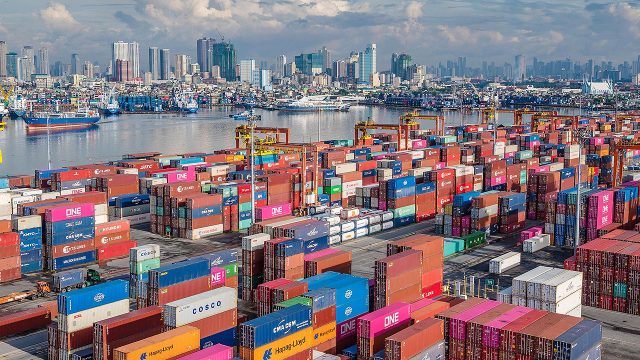
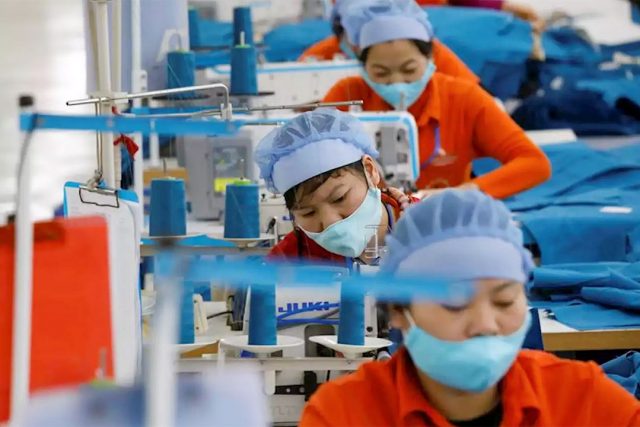
TOKYO — Asia’s factory activity stepped up a gear in October as emerging economies saw coronavirus disease 2019 (COVID-19) infections subside, but rising input costs, material shortages and slowing Chinese growth cloud the outlook, business surveys showed on Monday.

Policy makers in the region face pressures on multiple fronts as they steer their economies out of the pandemic-induced doldrums while also trying to keep prices under control amid rising commodity costs and parts shortages.

China’s factory activity expanded at its fastest pace in four months in October, the private sector Caixin/Markit Manufacturing Purchasing Managers’ Index (PMI) showed on Monday, as dwindling COVID-19 cases drove up domestic demand.

But a sub-index for output showed production shrank for the third straight month due to power shortages and rising costs, falling in line with Sunday’s official PMI that showed factory activity in October shrinking.

“Shortages of raw materials and soaring commodity prices, combined with electricity supply problems, created strong constraints for manufacturers and disrupted supply chains,” said Wang Zhe, senior economist at Caixin Insight Group.

Factory activity in October expanded in Vietnam, Indonesia and Malaysia as operations gradually normalized after being hit by shutdowns caused by a spike in COVID-19 infections.

Taiwan saw manufacturing activity growth accelerate on robust chip demand, while Japan’s factory activity expanded at the fastest pace in six months in October in an encouraging sign for the world’s third-largest economy.

India’s factory activity expanded at its quickest pace in eight months in October, pointing to an extended business recovery in Asia’s third-largest economy.

In a sign of the patchy nature of the region’s recovery, however, South Korea’s factory activity rose at the slowest pace in 13 months in October on shrinking output and softer demand.

Material shortages and delivery disruptions drove up Japan’s input prices by the most in over 13 years.

“While October Manufacturing PMIs point to a strong rise in manufacturing output, industry is likely to be working through huge backlogs of orders for many months to come and resulting supply shortages further afield are set to persist,” said Alex Holmes, emerging Asia economist at Capital Economics.

The final au Jibun Bank Japan PMI in October rose to 53.2 from 51.5 in the previous month, expanding for the ninth consecutive month.

South Korea’s PMI, by contrast, fell to 50.2 in October from 52.4 in September, though it managed to stand above the 50-mark threshold that indicates expansion in activity, for a 13th straight month.

Vietnam’s PMI rose to 52.1 from 40.2 in September, while that of Indonesia increased to 57.2 from 52.2, the surveys showed. Malaysia’s index stood at 52.2, up from 48.1.

Asia’s emerging economies have lagged advanced economies in recovering from the pandemic’s pain as delays in vaccine rollouts and a spike in Delta variant cases hurt consumption and factory production. — Reuters

ESG funds to encourage shift to sustainability

INVESTMENT funds focused on the environmental, social, and governance (ESG) metrics of businesses can help promote sustainability and climate change action.

“With the large growth in funds focused on sustainability and ESG metrics, we think companies are increasingly incentivized financially to invest in sustainability-related or climate change opportunities,” Craig Cameron, portfolio manager at the Templeton Global Equity Group, said in an e-mail on Oct. 22.

ESG-focused funds can help promote sustainability through investing in companies with long-term plans on addressing environmental and social challenges, he said.

ESG-compliant Philippine firms also stand to benefit from focusing on sustainability as more foreign investors “require compliance with ESG standards as already integrated in their decision making process.”

“More investors worldwide have become [keener and more particular] about firms’ compliance with ESG standards as a pre-requisite as part of the decision on investments,” Rizal Commercial Banking Corp. (RCBC) Chief Economist Michael L. Ricafort said in a Viber message on Sunday.

“Firms or companies have no other choice but to comply with ESG from a regulatory and investment or business perspective, lest they will be left behind by ESG-complaint competitors in terms of attracting more investors and customers or business,” Mr. Ricafort said.

By going the sustainable route, companies can also lower their capital costs to allow them to use funds to grow their businesses instead, he said.

“Advocating ESG ensures the firm and stakeholders win over the long term by ensuring sustainability, equity, and being more responsible citizens for the present and future generations, thereby a winning proposition for attracting more investors as well,” Mr. Ricafort said.

Firms are now also looking at their own supply chain to ensure they are working with suppliers and other companies that are likewise working towards reducing their environmental footprint and providing better employee compensation, among other ESG standards, Templeton’s Mr. Cameron noted.

“In our view, regulators can help to provide a framework for investing, such as a taxonomy for green activities, but it is the investors and the companies themselves that will create and find the investment opportunities,” Mr. Cameron said.

“It can improve management of sustainability issues, attract talented employees, improve and develop new customer and shareholder relationships, thereby, improving the long-term viability of the business,” Mr. Cameron said, adding that this may also help investors better compare firms.

However, sustainability reporting should also consider how companies respond in times of crisis.

“The global pandemic has taught us a lot about how our companies value their employees, and we have been impressed particularly with the way some companies have taken the long-term view, putting their employee health and safety first, helping to build long-term employee loyalty,” Mr. Cameron said.

The “consideration of ESG factors is just good business analysis,” as it can help provide a holistic view of the company and its opportunities as well as risks aside from the industry review.

“Regarding the returns profile of different funds, obviously one cannot predict performance, but we think that a fund that does not consider ESG is more likely to underperform the market, because it is simply not performing proper business analysis,” Mr. Cameron said.

The Philippines’ Securities and Exchange Commission is planning to make sustainability reporting for publicly listed companies mandatory beginning 2023. It currently follows a comply-or-explain approach. — K.C.G. Valmonte

Coca-Cola Philippines plans to phase out sachets by 2022

COCA-COLA Philippines plans to ramp up the use of recycled plastic in its products and exit the sachet industry by next year, according to an executive.

“We will be accelerating the use of more recycled plastic in our bottles – also known as rPET bottles – for some of our brands by 2022,” Coca-Cola Philippines President Antonio “Tony” V. Del Rosario, Jr. recently told BusinessWorld through a public relations firm via e-mail.

“Ultimately, our vision is to help reduce the amount of used plastics that end up where it does not belong, whilst offering different packaging options for our consumers. We aspire to ensure that the packaging options we provide are sustainable, reusable, and/or recyclable,” he added.

He said the company began using 100% recycled plastic for its Sprite and Viva! Eco-bottle brands in 2019.

Mr. Del Rosario said Coca-Cola Philippines also plans to “no longer produce” next year the Eight O’Clock powdered juice drink, the firm’s only product that still uses sachets.

“We target to completely phase out and sunset the Eight O’Clock by next year, 2022, which means we will no longer use sachets anywhere in our packaging portfolio in the Philippines,” Mr. Del Rosario said.

Coca-Cola Beverages Philippines, Inc., the local bottling partner of The Coca-Cola Co. (TCCC), earlier announced that it will be exiting the sachet business next year and introduce paper straws in its juice and dairy products in line with environmental efforts.

Last year, Break Free From Plastic, a global network of civil society groups, named TCCC as the world’s “top plastic polluter” in its brand audit, after volunteers found over 13,800 of the firm’s plastics across 51 countries.

“None of us want to see beverage packaging — or any packaging for that matter — end up where it shouldn’t be. As a business, we’re taking holistic actions to tackle plastic waste and be a part of the solution,” Coca-Cola Philippines’ Mr. Del Rosario said.

“We’ve committed to ensuring all of the material we use in our packaging is collected and circular so that none of it ends up as waste, in our rivers or in our oceans,” he added.

TCCC aims to make 100% of its packaging recyclable by 2025, and use at least 50% of recycled material by 2030. — Angelica Y. Yang

Lending growth seen subdued this year

BW FILE PHOTO

LENDING is expected to see subdued growth this year as banks remain risk averse amid the coronavirus disease 2019 (COVID-19) crisis, according to S&P Global Ratings.

“We see some early signs of revival in credit growth in the last few months supported by gradual economic recovery. For 2021, the banking sector’s loan portfolio is likely to grow by a minor 0.5%-1% over end-December 2020 level,” Nikita Anand, Associate Director at S&P Global Ratings, said in an e-mail.

Ms. Anand said the pandemic has made banks cautious, as reflected in the decline in the sector’s loan book in the past 12 to 18 months in comparison to what was seen before the crisis.

Latest data released by the central bank showed bank lending rose for the second straight month by 2.7% year on year in September. This was its fastest growth in 11 months or since the 1.8% in October 2020.

Prior to August, lending had contracted year on year from December 2020 to July 2021. This was the case even as the central bank kept interest rates at record lows since November 2020.

A central bank survey released last month showed banks mostly kept their strict lending standards in the third quarter as was seen during the crisis, although fewer lenders tightened credit rules.

For the fourth quarter, bank respondents in the study said they expect to relax their lending standards for retail borrowers, although they anticipate stricter credit rules for businesses.

Ms. Anand said improvement in the Philippines’ coronavirus situation could help make banks and borrowers less cautious, which could, in turn, fuel loan growth.

“This early trend in credit growth revival can [be sustained] if COVID-19 cases remain under control, vaccination rate improves and credit conditions stabilize. Banks can focus on growth opportunities as economic recovery picks up pace,” Ms. Anand said.

By 2022, bank lending could expand by 5-6%, under the assumption that the economy will continue to recover, she said.

“We expect improvement in macroeconomic conditions and mobility will be the driver of credit growth rather than any material relaxation of lending standards,” Ms. Anand said.

S&P expects Philippine gross domestic product to grow by 4.3% and 7.7% in 2021 and 2022, respectively.

Meanwhile, the debt watcher expects the banking industry’s nonperforming loan (NPL) and restructured loan ratio to hit 6% and 2.5% by end-December, respectively. As of August, the sector’s NPL ratio stood at 4.51%, while restructured loans made up 3.07% of lenders’ credit portfolio, based on central bank data.

“Consumers and small businesses will be the major contributors to new NPL formation reflecting tough employment conditions and loss of revenues from lockdowns,” Ms. Anand said.

On the other hand, she said banks’ exposure to severely hit sectors like tourism, transportation, trade, hotels, and restaurants, could also affect asset quality, even when general corporate borrowers’ profile has been sturdy so far. — Luz Wendy T. Noble