Home Blog Page 66

China sanctions aide of Japan PM Takaichi for Taiwan trips
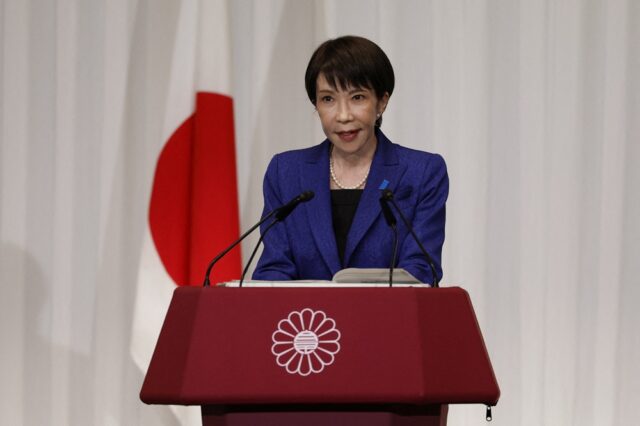
Japan's Prime Minister Sanae Takaichi, leader of the ruling Liberal Democratic Party (LDP), speaks during a press conference at the LDP headquarters in Tokyo, Japan, Feb. 9, 2026. — REUTERS/FRANK ROBICHON

BEIJING/TOKYO — China imposed sanctions on Monday on Japanese lawmaker Keiji Furuya, a close aide to Prime Minister Sanae Takaichi, for what it called his “collusion with Taiwan independence” forces, in its latest move in a diplomatic row over Taiwan.

Japan said Beijing’s action on Mr. Furuya was “absolutely unacceptable”, and called for its swift retraction.

Mr. Furuya, as the head of a cross-party Japan-Taiwan lawmakers group, has visited Taiwan many times accompanying Japanese political leaders, most recently earlier this month to meet its President Lai Ching-te in Taipei.

The Chinese ministry accused Mr. Furuya of colluding with “separatist forces” in Taiwan, as he made trips to the island “in defiance of China’s strong opposition”.

China, which views democratically governed Taiwan as part of its territory, objects to official visits by foreign politicians to the island as they are seen to be undermining the “One China” principle and Beijing’s claim over the island.

Taiwan’s government rejects Beijing’s sovereignty claims.

The Chinese ministry said Mr. Furuya’s actions “constitute gross interference in China’s internal affairs, and seriously undermine China’s sovereignty and territorial integrity”.

In response, Japan’s deputy chief cabinet secretary Masanao Ozaki said China’s “unilateral action, using (Furuya’s) conduct as a pretext to intimidate those with differing views, is absolutely unacceptable”.

Mr. Furuya, a member of the lower house of parliament, told reporters that Beijing’s move would have no impact, as he had not visited mainland China in decades and had no assets there.

“Our parliamentary group is simply doing what comes naturally, to foster exchanges between countries that share common values,” Mr. Furuya said.

Mr. Furuya has been close to Ms. Takaichi, supporting her election as the ruling Liberal Democratic Party leader last year.

China imposed the sanctions in response to Mr. Furuya’s “abominable acts”, said Mao Ning, spokesperson at the Chinese foreign ministry, at a regular news conference on Monday.

“The Taiwan issue is the core of China’s core interests, and is a red line that must absolutely not be crossed,” Ms. Mao said.

Ties between Tokyo and Beijing have deteriorated since Ms. Takaichi suggested last November that a hypothetical Chinese attack on Taiwan could trigger a Japanese military response.

Last year, Beijing also sanctioned China-born Japanese lawmaker Seki Hei and former Japanese military chief of staff Shigeru Iwasaki for their remarks on issues including Taiwan. — Reuters

Iran war forces Asian economies to confront sliding currencies and surging oil

A passenger sits at the back of an overcrowded jeepney as many jeepney drivers join the 2-day strike to protest over rising fuel prices, amid the US-Israeli conflict with Iran, in Quezon City, Philippines, March 26, 2026. — REUTERS/ELOISA LOPEZ

SINGAPORE — Policymakers in the Asia-Pacific region are facing their toughest test since the COVID-19 pandemic, with few easy options, as they race to cushion their economies from an energy shock that is hitting harder and sooner than elsewhere.

Asia buys about 80% of the oil that is shipped through the Strait of Hormuz and, according to J.P. Morgan commodity analysts, it faces shortages that will worsen through April and May – meaning authorities will need to respond swiftly.

In Manila, drivers of jeepneys – colorful, souped-up minibuses – are already facing diesel prices that have tripled. A jet-fuel squeeze looms in Vietnam and South Korea’s major cosmetics firms are searching far and wide for plastic resin to make the pots that hold their famous skincare products.

Like in the rest of the world, the effect of the US-Israeli war on Iran in Asia is the prospect of rising inflation and damaged growth.

Asian currencies – some already struggling – have come under heavy selling, putting them among the largest losers globally. This has brought back memories of the Asian financial crisis and leaves policymakers with some unpleasant choices: Raising rates, spending reserves, or seeing their currencies sink further.

India’s rupee, Indonesia’s rupiah, and the Philippine peso have been pulled to record lows against the dollar this month, along with major troughs for the yen and South Korean won.

“The key problem is Asian currencies were too weak before,” said Alicia Garcia Herrero, Asia-Pacific chief economist for Natixis in Hong Kong.

“The central banks … have no instrument,” she said.

“Economies are going to plummet and … they cannot cut anymore, not only because of the inflationary pressure, but because they had already cut too many times.”

The dollar, one of the few havens in March, has made some of its sharpest gains in Asia – and to historic levels – rising more than 4% against the won, peso, and Thai bahtagainst a gain of around 1.5% on the euro.

NO EASY OPTIONS
There is no simple solution – not least because options short of importing more oil don’t actually fix the squeeze, which is already spilling into prices for plastics and fertilizers.

Responding with higher rates risks slowing an economy when it most needs support. Subsidizing fuel is expensive and in emerging markets or countries with budget pressures, such moves could be received badly by bond investors. Direct currency intervention can also be costly and risky in fickle foreign exchange markets.

“I think the crux of the matter is that there are no easy policy options at this stage,” said Sonal Varma, Nomura’s chief economist for Asia outside Japan.

“Whether it’s the role of currency, monetary policy (or) fiscal policy,” Ms. Varma said. “There will be some macro variables that will take an impact.”

“Each country will essentially need to choose what is the right trade-off that is palatable in their local circumstances.”

So far, Australia has raised interest rates since the war began in late February, with authorities elsewhere in the Asia-Pacific region relying on guidance, currency intervention and unorthodox tools to try to cushion soaring petrol prices and steady financial markets.

South Korea has turned to its massive national pension fund – the world’s third largest – to raise its hedging ratio and protect the won, Reuters reported last week. India and Indonesia have been defending their currencies and making changes to how their markets function, with India capping banks’ currency positions and Indonesia opening a repo market for short-term dollars.

Japan has renewed its intervention threats, with the yen not far from nearly four-decade lows, while the Philippines has declared a state of emergency, let its currency slump to a record low by stepping back from intervention and held a surprise policy meeting last week to warn it was ready to act.

“I don’t think there is a clear blueprint on how to respond to a crisis like this,” said Fred Neumann, chief Asia economist at HSBC in Hong Kong.

“I think there is a recognition in Asia that you can’t really change fundamentally the course of exchange rates. All you can do is lean a little bit against the wind.”

To be sure, most of Asia has healthy foreign-exchange reserves and there are no parallels for the pegged currencies and dollar debts that sent capital rushing for the exits nearly thirty years ago.

India had roughly $698 billion in reserves as of March 20, according to the latest available data, which would cover more than 11 months of imports, while Indonesia and the Philippines each have more than six months of import cover in foreign currencies.

But with direct intervention in the currency markets likely to be futile in the face of strong dollar buying due to haven demand, central bankers will need to be creative in their efforts, analysts say.

“Nimbleness is something that is needed from policymakers … Having unscheduled meetings, having more frequent communication with the market is probably helpful,” HSBC’s Mr. Neumann said.

“You don’t want to be overly dogmatic in an environment like this. You need to be clear. You need to be honest in your assessment.” — Reuters

[B-SIDE Podcast] The Evolving Meaning of Leadership Across Ages

Follow us on Spotify BusinessWorld B-Side

Does leadership come from position, or from the ability to earn trust?

In this B-Side episode, BusinessWorld talks together with President & Chief Executive Officer, Pauline Fermin, and Program Director & Senior Strategist, Jocelyn Labrador of Acumen Strategy Consultants, examines how Filipino leaders from different generations view leadership, and how these perspectives build today’s workplaces.

Interview by Beatriz Cruz
Audio editing by Jayson John Marinas

Follow us on Spotify BusinessWorld B-Side

South Korea considers nationwide driving curbs as oil prices soar

REUTERS

SEOUL — South Korea is considering extending driving curbs to the general public if global oil prices climb further, senior officials said, as authorities seek to rein in energy demand amid supply strains due to the US-Israeli war with Iran.

Finance Minister Koo Yun-cheol said on Sunday the government could expand restrictions on passenger car use beyond public institutions if crude prices rise to around $120–$130 a barrel, up from the current $100–$110 range.

If expanded to the entire public, the policy would mark the country’s first nationwide driving curbs since the 1991 Gulf War, when the government imposed a 10-day vehicle rotation system to conserve energy.

“If the Middle East situation worsens, the crisis alert would have to move up to the ‘warning’ stage, and around that point we would need to curb consumption,” Mr. Koo said on a local broadcast, referring to a move up to the third-highest level in the country’s four-stage resource security crisis alert system.

He added the government may also consider further fuel tax cuts to ease the burden on households.

The finance ministry said in a separate media release on Monday that mandatory driving curbs for the private sector remain undecided, adding that authorities would weigh energy supply conditions and broader economic factors before taking any action.

South Korea imports about 70% of its crude oil from the Middle East, leaving the country highly exposed to supply disruptions and sharp price swings stemming from tensions in the region.

The government last week enforced a mandatory five-day vehicle rotation system for the public sector, restricting vehicle use based on license plate numbers.

Energy Minister Kim Sung-whan said last Thursday authorities were reviewing tighter demand-management measures should the alert level rise further, including widening enforcement of driving curbs, while encouraging voluntary participation by companies and the financial sector.

Major conglomerates such as Samsung Electronics and SK Group have joined the effort, urging employees to cut back on private car use and adopt fuel-saving measures.

Lawmakers and senior politicians have also taken to social media, posting about using public transport and bicycles to set an example and calling on the public to join energy-saving efforts. — Reuters

Pag-IBIG Fund to maintain 3% socialized housing rate under Expanded 4PH amid Middle East conflict

Pag-IBIG Fund said it shall maintain its 3% annual interest rate for qualified socialized housing loans under the Expanded Pambansang Pabahay para sa Pilipino Program, keeping homeownership affordable at a time when the conflict in the Middle East continues to unsettle global oil markets and drive volatility in oil prices.

The move supports President Ferdinand R. Marcos, Jr.’s direction to keep decent and affordable housing within reach of Filipino workers, especially those from the low and moderate income sectors seeking to achieve homeownership.

“In keeping with the directive of President Ferdinand R. Marcos, Jr., Pag-IBIG Fund shall maintain the 3% interest rate for qualified socialized housing loans under the Expanded 4PH so that more Filipino workers can continue to pursue homeownership even during a time of global uncertainty,” said Department of Human Settlements and Urban Development Secretary Jose Ramon P. Aliling, who chairs the Pag-IBIG Fund Board of Trustees. “By keeping monthly amortizations low, we are helping more working families secure a home of their own while supporting sustained housing production and the jobs it generates, in step with broader national efforts to keep the economy stable.”

Under the program, first-time homebuyers, particularly those earning less than P47,856 per month in the National Capital Region and less than P34,686 outside NCR, may qualify for the subsidized 3% rate for the first five years of the loan term. All overseas Filipino workers, regardless of income, may also qualify. Separately, under Pag-IBIG Fund’s Early Bird Promo, the first 30,000 qualified borrowers may enjoy the same 3% rate for the first 10 years of their housing loan, allowing them to save more and benefit from affordable and predictable monthly amortizations for a longer period.

The loan may be used to purchase socialized house-and-lot and condominium units priced at up to P950,000 and P1.8 million, respectively. It also provides up to P100,000 in additional financing for home improvements, such as utility connections and home fixtures, and carries a 100% loan-to-value ratio, meaning no cash equity is required. At these terms, monthly amortization is about P4,005 for a house-and-lot unit worth up to P950,000 and about P7,589 for a condominium unit worth up to P1.8 million, amounts that are lower than the cost of monthly rent. In addition, eligible borrowers may further benefit from additional subsidy provided by the national government, which may bring down the annual interest rate to as low as 1% and make monthly payments even lower.

Meanwhile, Pag-IBIG Fund Chief Executive Officer Marilene C. Acosta said maintaining the 3% rate reflects Pag-IBIG Fund’s strong fiscal standing and its continuing commitment to carry out President Marcos’ housing agenda in a way that keeps homeownership within reach of working Filipino families.

“We continue to heed the direction of President Marcos in helping uplift the lives of Filipino workers by keeping homeownership affordable for those who need it most,” Ms. Acosta said. “Our strong fiscal standing allows Pag-IBIG Fund to keep the subsidized 3% rate in place so more working Filipinos can continue pursuing homeownership under the Expanded 4PH.”

Ms. Acosta added that, beyond keeping loan rates low, Pag-IBIG Fund is also making it easier and less costly for members to look for a home through regional housing fairs that bring together quality housing units available for sale, partner developers, and Pag-IBIG Fund financing support in one venue. Earlier this year, Pag-IBIG Fund launched its series of regional housing fairs through the Central Luzon Housing Fair. It is set to hold similar fairs in South Luzon, the Visayas, Mindanao, and the National Capital Region in the coming weeks. The Central Luzon fair gathered over 40 developers, financing institutions, and government agencies in one venue and provided on-site assistance for loan applications.

“Through these regional housing fairs, we are making it easier and less costly for members to find a home by bringing quality housing units available for sale, partner developers, and Pag-IBIG Fund financing together in one place,” Ms. Acosta said. “That is how Pag-IBIG Fund will continue providing more Filipino families with practical pathways to homeownership, turning affordable financing into real opportunities to own a home.”

Pag-IBIG Fund’s capacity to sustain this support is backed by its record housing loan performance in 2025, when it released P140.54 billion in housing loans benefiting 90,727 Filipino workers and their families, reflecting both the strength of its finances and its continued ability to help more members achieve homeownership.


Spotlight is BusinessWorld’s sponsored section that allows advertisers to amplify their brand and connect with BusinessWorld’s audience by publishing their stories on the BusinessWorld Web site. For more information, send an email to online@bworldonline.com.

Join us on Viber at https://bit.ly/3hv6bLA to get more updates and subscribe to BusinessWorld’s titles and get exclusive content through www.bworld-x.com.

Approved building permits rise 0.5% in January

PHILSTAR FILE PHOTO

Approved building permits inched up by 0.5% year on year in January, the Philippine Statistics Authority (PSA) reported on Friday.

Preliminary data showed the number of building projects covered by the permits rose to 13,577 in January from 13,504 a year earlier.

This was a turnaround from the 11.5% drop in January 2025 and the revised 2.6% contraction in December.

Construction projects covered 2.80 million square meters (sq.m.) of floor area, down 29.4% year on year from 3.96 million sq.m.

Approved building projects were valued at P37.05 billion in January, lower than the P51.63 billion in the same month in 2025.

“The uptick in January construction permits may be attributed to smaller construction projects being done early in the year,” Marco Antonio C. Agonia, an economist at the University of Asia and the Pacific, said in an email.

“While the headline permit reading looks encouraging, the actual increases were for improvements to existing structures and smaller projects such as streets and billboards,” he added.

Mr. Agonia noted that this contrasts with the year-on-year decline in the total floor area of approved permits for residential and nonresidential projects.

“The pickup in permits reflects deferred projects moving forward as confidence improves, particularly in commercial and infrastructure-related build,” Jonathan L. Ravelas, a senior adviser at Reyes Tacandong & Co., said in a Viber message.

Residential buildings, which made up 60.1% of the total number of constructions, inched down by 0.6% in January to 8,156 from 8,204 a year ago.

This type of construction amounted to P16.97 billion, down from P21.83 billion in the same month in 2025.

According to Mr. Agonia, the annual decline in residential constructions can be attributed to developers being “reluctant to commit to large construction projects early on, instead choosing to defer them.”

For Mr. Ravelas, “residential construction remains cautious as affordability and financing costs still weigh on households.”

Single-type houses, which accounted for 82.5% of the residential constructions, fell 8.7% year on year to 6,727 in January from 7,367.

Meanwhile, nonresidential constructions also dropped 3.8% annually to 3,292 from 3,423. This made up 24.2% of the total number of constructions during the month.

Permits for nonresidential buildings were valued at P16.25 billion, lower than P25.94 billion registered in January 2025.

Commercial building permits contracted 7.2% year on year to 2,315 from 2,495. These made up 70.3% of all nonresidential constructions.

Approved building permits for addition, or any new construction that increases the height or area of an existing building, climbed 4.9% annually to 495 from 472 in the previous year.

On the other hand, alteration and repair totaled 1,111, down 0.4% from 1,115, and were valued at P2.68 billion.

By region, Calabarzon had the greatest number of approved building permits at 3,177, accounting for 23.4% of all permits.

This was followed by Central Luzon (11.7% share with 1,585 permits) and Ilocos Region (8.9% share with 1,204 permits).

Mr. Ravelas sees steady retail price growth looking ahead.

Mr. Agonia expects construction project approvals to remain “the same” in the coming months, citing pressure due to the Middle East war.

“While rate cuts will help, elevated interest rates from the Middle East war, cost pass-throughs for construction materials, and consumer pessimism will likely hamper developer appetite,” he added. — Isa Jane D. Acabal

Philippine refiner Petron buys Russian crude, eyes more if Iran war persists

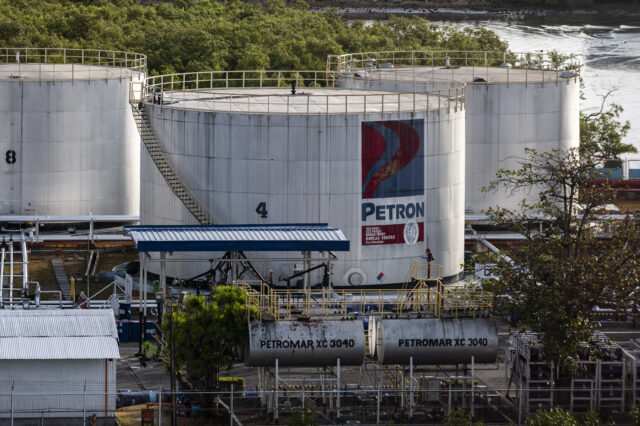
Storage tanks at the Petron Corp. Mandaue Terminal, in Mandaue City in Cebu, the Philippines, April 23, 2024. BLOOMBERG

Petron Corp., the Philippines’ only refiner, has procured 2.48 million barrels of crude oil from Russia as the Southeast Asian nation scours the world for alternative suppliers to support domestic energy needs with the war in Iran raging.

“If the current crisis persists and alternative crude sources remain unavailable or insufficient, Petron may again be compelled to consider purchases of Russian crude oil to augment the national fuel supply,” parent San Miguel Corp. said in a statement to market regulators late on Friday.

The crude will augment Petron’s inventory of petroleum products until June, San Miguel said, adding that the purchases were made “strictly out of extreme necessity.”

On Feb. 28, the same day that the US and Israel launched a military campaign against Iran, Petron was advised that one shipment of 2 million barrels of crude did not gain safe passage at the Strait of Hormuz as Iran announced its closure. A second shipment of 2 million barrels of crude was also cancelled on March 7 due to the heightened risk in the Red Sea and Strait of Hormuz, San Miguel said.

The Philippines, which sources nearly all of its oil requirements from the Middle East, is trying to find alternative sources to ease the supply crunch that has triggered an energy emergency declaration by the government. It’s also negotiating for fuel supply from Japan, China, South Korea and India.

Manila has said it had 45 days worth of oil supplies as of March 20.

The country is set to receive this week the first batch of diesel from its order of over 1 million barrels, Executive Secretary Ralph Recto said on Sunday, citing “oil diplomacy” efforts by officials led by Energy Secretary Sharon Garin.

“From Indonesia also comes the ironclad guarantee of a steady supply of coal,” Recto added. Indonesia is the Philippines’ main supplier of coal which fuels more than half of its power grid.

Budget carrier Cebu Air Inc. said it has enough jet fuel supply to last until June. In a post on X on Sunday, the airline said it’s “working closely with suppliers and industry partners to ensure continued fuel availability in the months ahead” to sustain operations.

Its comments followed a similar assurance by rival Philippine Airlines Inc. days earlier, whose chief said people need “to work together to make sure that everybody has access to fuel.” — Bloomberg

Empowering women entrepreneurs through grassroots financial literacy

Across the Philippines, women entrepreneurs play a crucial role in sustaining local economies. From sari-sari stores and karinderyas to neighborhood retail businesses, women-led enterprises form a large part of the country’s micro, small, and medium enterprise (MSME) sector.

Yet, despite their economic contribution, many women business owners continue to face barriers when it comes to formal financing, financial knowledge, and digital tools.

This is what the Wais Tindera Caravan seeks to address. As the flagship financial literacy program of GCash, it is designed to equip small business owners and women entrepreneurs with knowledge on digital finance, responsible borrowing, and sustainable business growth.

In celebration of the International Women’s Day, GCash and its lending arm Fuse Financing, Inc., kicked off its Women’s Month run at the Commonwealth District 2 Gymnasium, Quezon City last March 8. The event gathered over 400 women-led MSMEs, local government representatives, and financial experts for a morning dedicated to financial learning and business empowerment.

Participants attended interactive workshops covering essential topics for small business owners such as budgeting, saving strategies, and responsible borrowing.

The program also introduced digital financial tools that entrepreneurs can use to access formal lending services and manage their businesses more effectively.

“It is very important that they are informed,” said Quezon City District 2 Councilor Aly Medalla. She then noted that hesitation among women entrepreneurs often stems from lack of information about available financial resources.

“They’re already doing it daily, but ensuring that it is incorporated responsibly — that is our responsibility [as government officials].” Ms. Medalla added.

For Fuse Financing, Inc. Chief Product Officer and Strategy Head Baby Aquino, financial education plays a critical role in enabling entrepreneurs to maximize opportunities.

“With financial literacy, it’s not just giving them access to funds,” Ms. Aquino said. “It’s also teaching them how to manage them better.”

She added that many women entrepreneurs still face challenges in accessing financial tools.

“[Women] are lagging behind in terms of gaining knowledge [in] running businesses. That’s why we go to grass roots,” she said.

Throughout the event, participants engaged in a variety of activities, including workshops, discussions, interactive games, and raffle draws.

Among the participants was Robelia Dell, a kakanin vendor. Ms. Dell shared that the program provided valuable insights.

Malaki ang naitutulong nito sa mga kababaihan dahil may karagdagang kaalaman. Nakakatulong din para sa mga gustong magsimula ng negosyo kung paano sila makakakuha ng pangpuhunan,” she shared.

The Wais Tindera Caravan highlights the growing importance of financial inclusion in supporting small businesses, particularly those led by women. By combining financial education with digital financial tools, the initiative aims to help entrepreneurs gain confidence and resources they need to grow.

As the Wais Tindera Caravan continues to roll out in different communities, GCash affirms that empowering women entrepreneurs with knowledge, access, and opportunity is not only good for business but essential as well for building more inclusive and resilient local economies.


Spotlight is BusinessWorld’s sponsored section that allows advertisers to amplify their brand and connect with BusinessWorld’s audience by publishing their stories on the BusinessWorld Web site. For more information, send an email to online@bworldonline.com.

Join us on Viber at https://bit.ly/3hv6bLA to get more updates and subscribe to BusinessWorld’s titles and get exclusive content through www.bworld-x.com.

NTC activates nationwide communications support for Holy Week 2026

The National Telecommunications Commission (NTC) has mobilized nationwide public assistance operations to ensure reliable and uninterrupted communications during the Holy Week observance.

All NTC Regional Offices are directed to coordinate closely with the National Disaster Risk Reduction and Management Council (NDRRMC), Civic Action Groups (CAGs), Amateur Radio Groups (ARGs), and Local Government Units (LGUs), including their Local Disaster Risk Reduction and Management Offices (LDRRMOs), to strengthen on-the-ground communication support and emergency response.

To further enhance readiness, the NTC will facilitate the swift issuance of temporary permits and licenses to ensure the seamless operation of communication support teams, especially as millions of Filipinos are expected to travel nationwide.

Telecommunications and broadcast entities are likewise enjoined to actively assist in the timely and accurate dissemination of public advisories.
Through these coordinated efforts, the NTC reaffirms its commitment.


Spotlight is BusinessWorld’s sponsored section that allows advertisers to amplify their brand and connect with BusinessWorld’s audience by publishing their stories on the BusinessWorld Web site. For more information, send an email to online@bworldonline.com.

Join us on Viber at https://bit.ly/3hv6bLA to get more updates and subscribe to BusinessWorld’s titles and get exclusive content through www.bworld-x.com.

China conducts patrol around disputed South China Sea shoal

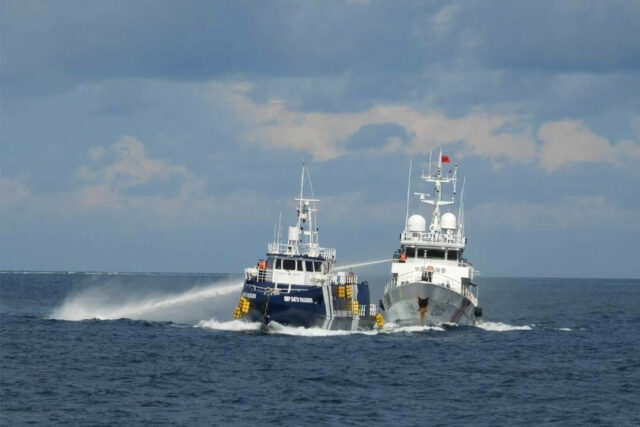
FILE PHOTO of a China Coast Guard vessel fires a water cannon at the BRP Datu Pagbuaya near Thitu Island, in the latest flare-up between Manila and Beijing in the disputed South China Sea. — PCG

BEIJING — China conducted naval, air, and coast guard patrols around the Scarborough Shoal in the South China Sea on Sunday, its military and Coast Guard said.

The shoal is in the Philippines’ exclusive economic zone but China also claims it as part of its territory.

The patrols came after Beijing and Manila restarted high-level talks last week over the disputed waters and discussed oil and gas cooperation in the area.

The talks were also the first broader discussion on bilateral relations since March 2023, aimed at confidence building among others, the Philippine foreign ministry said on Saturday.

Recent maritime confrontations have heightened tensions, with Manila accusing Beijing of “dangerous maneuvers” and deploying water cannon to interfere with its resupply missions in contested areas.

“Such patrols serve as an effective countermeasure to cope with all sorts of rights-violation and provocative acts,” the Chinese military’s Southern Theater Command said in a statement on Sunday.

The Philippine embassy in Beijing did not immediately respond to a request for comment.— Reuters

China protests US alert over security rules change in Hong Kong

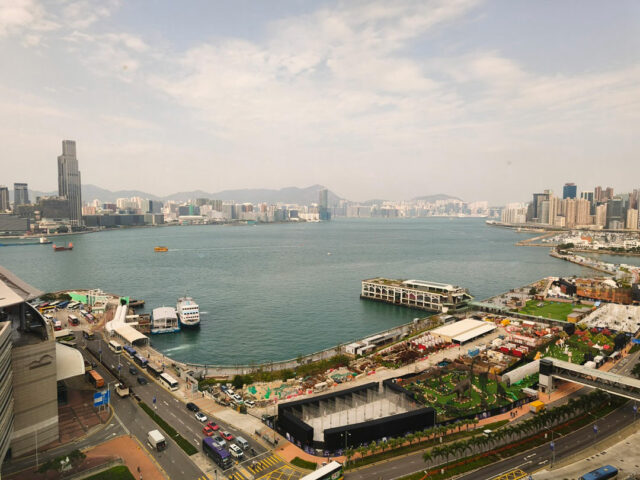
A view Hong Kong's city skyline from the Wan Chai District. — ED GERONIA

BEIJING — China’s top diplomat in Hong Kong has met the senior US diplomat in the city to protest against a US public alert over new security rules in Hong Kong, the Chinese Foreign Ministry said.

In a statement released late on Saturday, the Chinese foreign ministry’s Hong Kong office said Commissioner Cui Jianchun met US Consul General Julie Eadeh on March 27 and expressed “strong dissatisfaction and firm opposition”, urging Washington to stop interfering in Hong Kong’s affairs and China’s internal affairs “in any form”.

Hong Kong this month amended its enforcement rules for the national security regime, making it an offense in national security cases to refuse to provide passwords or other decryption assistance to access an electronic device.

In response to the rule changes, the US Consulate General in Hong Kong issued a security alert on March 26, calling for contact with the Consulate in case US citizens are arrested or detained in connection with the new security enforcement rules.

“We do not discuss the details of diplomatic engagements,” a US Consulate spokesperson said in response to a request for comment. — Reuters

Israel blocks Cardinal from Jerusalem’s Holy Sepulchre on Palm Sunday, sparking outcry

A general view shows part of Jerusalem and Al-Aqsa compound, also known to Jews as the Temple Mount in Jerusalem's Old City in the early hours of June 13, 2025. — REUTERS

JERUSALEM — Israel blocked Jerusalem’s Catholic cardinal from marking Palm Sunday at the Church of the Holy Sepulchre, sparking an international outcry that led Prime Minister Benjamin Netanyahu to reverse the ban for the remainder of Holy Week.

The Latin Patriarchate of Jerusalem said Israeli police prevented Cardinal Pierbattista Pizzaballa and Friar Francesco Ielpo from entering the Holy Sepulchre, built on the site where Christians believe Jesus was crucified and rose from the dead.

The police cited security concerns related to the war in Iran for the ban.

“As a result, and for the first time in centuries, the Heads of the Church were prevented from celebrating the Palm Sunday Mass at the Church of the Holy Sepulchre,” it said in a statement.

Mr. Netanyahu posted on social media just after midnight that he instructed relevant authorities to grant full and immediate access to the cardinal.

“Today, out of special concern for his safety, Cardinal Pizzaballa was asked to refrain from holding Mass at the Church of the Holy Sepulchre,” he said.

“Even though I understand this concern, as soon as I learned about the incident with Cardinal Pizzaballa, I instructed the authorities to enable the Patriarch to hold services as he wishes.”

Israeli police said all holy sites in Jerusalem’s Old City – including those sacred to Christians, Muslims, and Jews – had been closed to worshippers since the start of the US-Israeli war on Iran, particularly locations without bomb shelters.

Police said they had rejected a request from the Patriarchate for a Palm Sunday exemption.

“The Old City and the holy sites constitute a complex area that does not allow access for large emergency and rescue vehicles, which significantly challenges response capabilities and poses a real risk to human life in the event of a mass casualty incident,” police said.

RESTRICTIONS AFFECT EASTER, RAMADAN, PASSOVER

Palm Sunday marks the beginning of Holy Week, the most important week in the Christian calendar, leading to Easter. The Old City would typically be busy, with Roman Catholics passing through the massive wooden doors of the Holy Sepulchre.

This year, Christians, Muslims, and Jews have been unable to observe Easter, Ramadan or Passover as usual due to police restrictions. Jerusalem’s Al-Aqsa Mosque was largely empty during Ramadan, and few worshippers have come to Judaism’s Western Wall as Passover approaches on Wednesday.

Italy’s Prime Minister Giorgia Meloni criticized the police action and Foreign Minister Antonio Tajani said on social media that he would summon Israel’s ambassador over the incident.

France’s President Emmanuel Macron condemned the Israeli police’s decision, which he said “adds to the worrying increase in violations of the status of the Holy Places in Jerusalem”.

US Ambassador to Israel Mike Huckabee said denying the Patriarch’s entry to the church on Palm Sunday was “difficult to understand or justify”.

The Vatican did not respond to a request for comment. On Sunday, Pope Leo said that God rejects the prayers of leaders who start wars and have “hands full of blood”, in unusually forceful remarks as the Iran war entered its second month.

INCONSISTENT ENFORCEMENT, RESIDENTS SAY

On March 16, shrapnel from ballistic missiles fired by Iran and debris from Israeli interceptors ​that shot them down fell by the church and the nearby hilltop plateau​ known to Muslims as Al-Aqsa compound and to Jews ​as Temple Mount.

Residents of the Old City and religious officials said police restrictions on worship had not been implemented consistently.

They noted that Muslim Waqf preachers were able to access Al-Aqsa Mosque during Ramadan and Eid al-Fitr, and that cleaners were permitted ahead of Passover to remove prayer notes from the Western Wall, an annual ritual.

On Sunday, Franciscan friars and worshippers were also allowed into another Old City shrine, a short walk through the Old City’s narrow alleyways from the Holy Sepulchre, to mark Palm Sunday. A Reuters photograph showed around a dozen people bowing their heads in prayer and carrying palm fronds. — Reuters