Home Blog Page 6589

There’s a four-year wait list for Toyota Land Cruisers in Japan

REUTERS

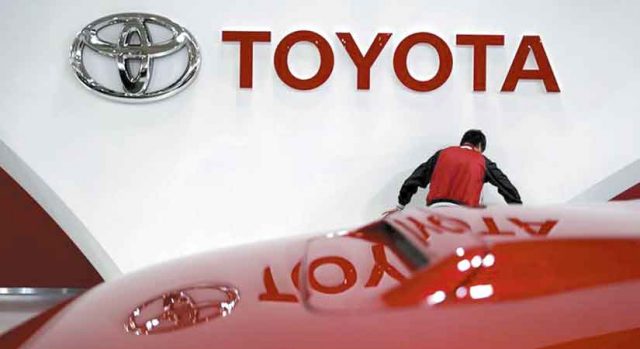
Would-be buyers of Toyota Motor Corp.’s new Land Cruiser model in Japan may have to wait around four years before taking delivery, as the automaker struggles to keep up with demand for the iconic sports utility vehicle amid supply-chain disruptions.

Waiting times were already stretching out to two years after the vehicle was revamped in 2021 for the first time in 14 years. The company is seeking to give customers a more specific time frame, said Shiori Hashimoto, a spokeswoman for Toyota.

Global automakers are facing supply-chain disruptions, including a shortage of semiconductors, with the omicron variant now hitting suppliers and assembly lines in China, Japan and other parts of Asia. Even Toyota, long considered resilient to parts-related production issues, has been forced to idle operations at some plants. The carmaker said this week it was unlikely to reach its goal of making 9 million vehicles for the fiscal year ending March.

“Delivery time of four to five years is odd, and would normally prompt increased production, but currently without the parts, it can’t be helped,” said Bloomberg Intelligence analyst Tatsuo Yoshida.

The rugged Land Cruiser, already popular in the U.S. and Middle East for its off-road capabilities, is also benefiting from an outdoor camping boom in Japan amid the pandemic.

Car dealerships are asking buyers to sign pledges saying they aren’t purchasing the SUV for resale purposes, according to Hashimoto. Japanese used-car website Carsensor.net had previously shown the new Land Cruiser model being sold for around 15 million yen ($132,000), compared with the manufacturer’s suggested retail price of around 5 million to 8 million yen, including tax. — Bloomberg

Groups urge Senate to ratify PHL RCEP membership

THE Financial Executives Institute of the Philippines (FINEX), Makati Business Club (MBC), Management Association of the Philippines (MAP) and the Philippine Council for Foreign Relations (PCFR) urged the Senate to ratify the country’s membership in the Regional Comprehensive Economic Partnership (RCEP) in a joint statement on Friday. 

“Like any free trade agreement, RCEP provides wide economic opportunities for our country, along with certain threats to uncompetitive industries, and individual producers and their workers. And like in the other free trade agreements the country has joined (of which our country has the least, compared to Indonesia, Malaysia, Thailand and Vietnam), the overall economic gains in terms of net job creation, economic growth and price stabilization will well outweigh the costs,” the industry groups said. 

The RCEP currently has 15 members, consisting of ten ASEAN member economies along with Australia, New Zealand, China, Japan and South Korea. It is considered to be the largest trade bloc in the world, representing 30% of global gross domestic product. 

The trade agreement took effect on Jan. 1, although the Senate was unable to ratify the RCEP before 2021 ended. 

“RCEP will help MSMEs expand market access, especially with more liberal rules of origin on traded products to qualify for trade concessions. It will also provide broader and cheaper alternative sources for inputs and reduce costs of doing business through improved trade facilitation, especially customs and trade clearance procedures,” they said in the joint statement. 

They said exclusion from the RCEP would be “immensely costly to our economy and our people. 

“We can anticipate a significant decline in our exports to RCEP countries, which now account for nearly two-thirds (64%) of our total exports, as trade with us will logically be diverted to fellow members. It would also make us even more unattractive to job-creating investments than we already are, as these would best locate in RCEP member countries to take advantage of free access to its vast market,” they added. 

“For the same reason, our membership could attract more foreign investments into the country from firms wishing to produce and sell to the large RCEP market,” they said. 

The groups noted tariff elimination will take up to 20 years, giving enough time to enhance production and improve competitiveness. 

“RCEP skeptics should find comfort in the fact that little will immediately change in the country’s trade relations, since RCEP only reaffirms existing trade concessions we already have with all RCEP members via the ASEAN Trade in Goods Agreement (ATIGA) among ASEAN members and the ASEAN-Plus Free Trade Agreements with the rest,” they added. — L.M.J.C. Jocson 

BoC collects P29M additional duties from smuggled farm products

PHILSTAR FILE PHOTO

THE Bureau of Customs (BoC) collected P29 million in additional duties from smuggled farm produce in 2021 after scanning shipments entering the country’s ports, it said on Friday. 

“The seized shipments with issued warrants of seizure and detention were found to contain misdeclared and undeclared goods,” the BoC said in a press release. 

The bureau had issued 50 warrants after scanning over 66,000 shipments containing agricultural goods last year. 

The misdeclared or undeclared goods were found to have violated an administrative order of the Department of Agriculture, or the guidelines on for importing farm goods. 

The Senate has been conducting an inquiry into the smuggling of farm produce, with Senate President Vicente C. Sotto III alleging corrupt practices by Customs personnel. 

The bureau last year transferred over 700 employees and dismissed three due to “irregular and unlawful activities,” including corruption and violations of customs rules. 

Meanwhile, the bureau plans to donate over 6,000 liters of unmarked diesel fuel it seized to the Philippine Coast Guard, the Department of Finance (DoF) said in a press release Friday. 

The bureau signed an agreement with the Coast Guard to use the diesel fuel seized in September for anti-smuggling operations. 

“The Port of Clark ordered the confiscation of the diesel fuel, which was found at a retail gas station in Arayat, Pampanga after a composite team of the BoC and the Bureau of Internal Revenue had conducted field tests and detected the absence of the fuel marker supposed to be injected into tax-paid oil products,” the DoF said. 

The Customs district collector in the Clark port forfeited the fuel in favor of the government after the management of the gas station — the Luzon Petromobil Integrated Service Stations, Inc. — officially abandoned its claim on the seized products. 

The government aims to deter fuel smuggling by injecting a special dye into fuel products to signify tax compliance. Absence of the dye is deemed evidence that the fuel was smuggled. 

Fuel products that are unmarked, have diluted markers or have counterfeit markers are subject to duties and taxes. 

Duties and taxes collected from marked fuel products since the launch of the program in 2019 have totaled P324.46 billion as of Nov. 25, 2021. — J.P. Ibañez 

Solane confiscates illegal LPG tanks worth P2.66M in 2021

LIQUIFIED petroleum gas (LPG) supplier Solane confiscated 1,024 illegal LPG tanks worth almost P2.66 million in 2021 from several raids nationwide, it said on Friday. 

The company said it seized 585 tanks worth almost P1 million in the second half of 2021, bringing the total confiscated unauthorized fuel tanks to 1,024 worth P2,661,890.00 for the year, it said in a statement.  

During its last leg of buy bust operations in Ilocos Norte, Ilocos Sur, Abra, Rizal, Quirino, and Camarines Sur in mid-October to December, Solane confiscated 145 illegally-refilled LPG tanks worth nearly P300,000 together with marked money and transaction receipts. 

“While the passage of the LPG Law in October reinforces the government’s campaign against illegal sources of LPGs, Solane’s busts throughout the year helped put suspects behind bars and immediately halt unauthorized trades in communities they busted,” the company said in a statement. 

Republic Act 11592 or the LPG Law was signed on Oct. 14, 2021 to regulate the industry and ensure all unsafe gas cylinders are properly disposed and that new ones are safe. 

Solane also reminded the public that fake, dilapidated, and substandard LPG cylinders may lead to leaks and cause explosion or fire in their households. — MCL 

BSP fully awards 28-day bills

BW FILE PHOTO

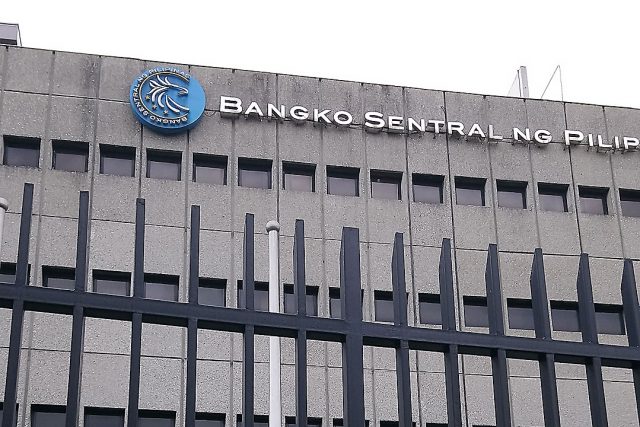
THE BANGKO SENTRAL ng Pilipinas (BSP) fully awarded the short-term securities it auctioned off on Friday as the average rate fell on expectations of monetary policy tightening in the United States. 

The central bank raised P100 billion as planned from its offer of 28-day bills that drew P174.22 billion in tenders, lower than the P194.7 billion in bids last week. 

Accepted rates for the one-month securities ranged from 1.65% to 1.716%, wider than the 1.7% to 1.749% margin last week. The average rate of the one-month bills was at 1.7053%, lower than 1.7298% previously. 

The central bank uses its short-term securities and term deposit facility to mop up excess liquidity in the financial system and guide market rates. 

The BSP bills’ average rate eased week-on-week as fears of an earlier-than-expected US Federal Reserve rate hike caused funds to shift to short-term tenors, Michael L. Ricafort, chief economist at Rizal Commercial Banking Corp., said in a Viber message. 

“Auction yield was also again lower amid recent concerns over the sharp increase in COVID cases locally and worldwide recently amid lingering concerns over the Omicron variant,” he said. 

Stricter lockdowns in Metro Manila and nearby areas could slow down economic recovery prospects and ease inflation, he added. 

US Federal Reserve Governor Lael Brainard said interest rate hikes could start as soon as the US central bank ends its bond purchases, which is set for March. 

The Fed is widely expected to raise rates thrice this year, starting in March, median forecasts from a Reuters poll showed. Almost half expect the central bank to hike at least four times. — Jenina P. Ibañez with Reuters 

Peso inches lower against the dollar

BW FILE PHOTO

THE PESO slightly weakened against the dollar on Friday after more provinces were placed under tighter restrictions due to a surge in coronavirus cases. 

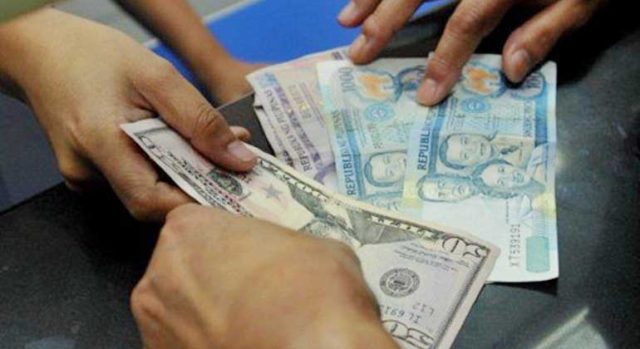
The local unit closed at P51.37 per dollar on Friday, dropping by three centavos from its P51.34 finish on Thursday, data from the Bankers Association of the Philippines showed. 

The peso opened Friday’s session at P51.42 against the dollar. Its intraday high was at P51.33, while its worst showing was at P51.47 versus the greenback. 

Dollars traded grew to $993.2 million on Friday from $858.95 million a day earlier. 

Rizal Commercial Banking Corp. Chief Economist Michael L. Ricafort said the peso weakened after some areas of the country were placed under strict lockdown. 

The government placed Kalinga, Ifugao, Mountain Province, and Northern Samar under Alert Level 4 until the end of the month as coronavirus disease 2019 (COVID-19) cases increase. 

Meanwhile, 15 areas were placed under alert level 3. 

“Peso also weaker after softer US economic data, with US initial jobless claims among the worst in three months partly due to lingering Omicron variant concerns and softer US existing home sales data,” Mr. Ricafort said. 

US jobless claims last week increased by 55,000 to 286,000, the highest since mid-October. 

Meanwhile, a trader said the local currency weakened on expectations of hawkish signals from the US Federal Reserve. 

The Federal Open Market Committee will hold its first meeting of the year next week as investors anticipate rate hikes. — J.P. Ibañez 

Shares rebound as COVID-19 cases in NCR decline

COURTESY OF PHILIPPINE STOCK EXCHANGE, INC.

STOCKS went up on Friday as investors went bargain hunting amid decreasing coronavirus disease 2019 (COVID-19) cases in Metro Manila.

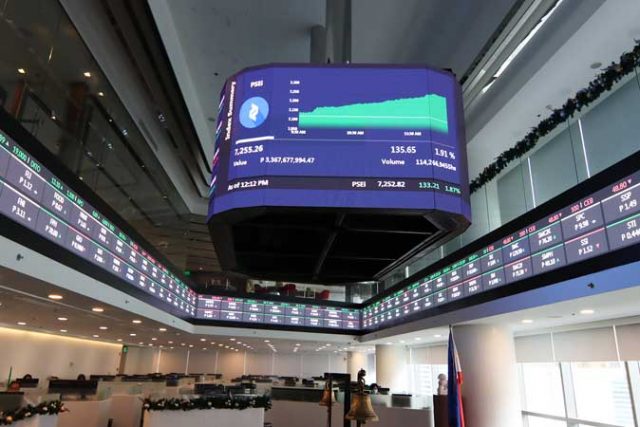
The 30-member Philippine Stock Exchange index (PSEi) advanced by 54.24 points or 0.74% to close at 7,293.53, while the broader all shares index gained 13.56 points or 0.35% to end at 3,869.40.

“Investors may be weighing carefully the reports that COVID-19 cases in the capital region are on a downward trajectory over the past few days, against the observations that cases seem to be increasing outside the Metro,” Timson Securities, Inc. Trader Darren Blaine T. Pangan said in a Viber message.

OCTA Research Group on Thursday said in a social media post that COVID-19 cases in the National Capital Region are decreasing.

“The NCR has 8,376 new COVID-19 cases on Jan. 19, 2022 per Department of Health case bulletin. The last time the NCR had less than 10,000 cases in one day was exactly two weeks ago on Jan. 5, when the surge was still accelerating,” OCTA Research fellow and University of the Philippines Professor Fredegusto Guido P. David said in a tweet.

“The market was trading lower in the first half trading session as Wall Street continued to struggle amid the rising interest rate environment, thus affecting sentiment,” Regina Capital Development Corp. Head of Sales Luis A. Limlingan said in a Viber message.

The Dow Jones Industrial Average fell 313.26 points or 0.89% to 34,715.39; the S&P 500 lost 50.03 points or 1.10% to 4,482.73; and the Nasdaq Composite dropped 186.24 points or 1.3% to 14,154.02, Reuters reported.

Back home, most sectoral indices closed in the red except for holding firms, which gained 100.29 points or 1.41% to 7,190.14, and property, which added 54.39 points or 1.74% to 3,178.45.

On the other hand, mining and oil dropped 74.26 points or 0.70% to 10,530.88; services lost 8.89 points or 0.44% to 1,973.11; financials fell 6.24 points or 0.37% to 1,658.94; and industrials decreased 18.07 points or 0.17% to end at 10,416.15.

Value turnover dropped to P5.52 billion with 2.15 billion shares switching hands, from the P6.15 billion with 2.57 billion issues traded on Thursday.

Advancers narrowly outnumbered decliners, 94 against 93, while 53 names closed unchanged.

Net foreign selling dropped to P210.76 million from the P538.95 million seen the previous trading day. — MCL

WWF-Philippines proposes three-year roadmap to reduce plastic waste

Environmental group World Wide Fund for Nature (WWF) Philippines shared on Wednesday a plan requiring policymakers and stakeholders to hold plastic producers accountable for the plastics they put out in the market. 

Titled the Extended Producer Responsibility (EPR) Scheme Assessment for Plastic Packaging Waste in the Philippines, the WWF report proposed a three-year roadmap to set up an industry-led, non-profit Producer Responsibility Organization (PRO) which will operate a recycling system monitored and controlled by the government. 

“EPR schemes incentivize and require the redesign of packaging of products and overall reduction of waste to remove unnecessary plastics from the supply chain,” said Francesca “Ina” C. Guingona, policy officer of WWF’s No Plastics in Nature initiative, at the report’s virtual launch. 

WWF recommended doing away with excess packaging and using recyclables instead of virgin materials. 

The updated roadmap incorporates the country’s existing solid waste management infrastructure. This includes Materials Recovery Facilities (MRF), junk shops, recycling facilities, the informal waste sector, and initiatives from civil society organizations. 

“Obliged businesses pay EPR fees to the PRO, which then contracts and pays waste management operators, who then dispose products from consumers that are bought from the businesses,” said Ms. Guingona. 

“MRFs, through partnerships with social enterprises and cooperatives, support the informal sector,” she added.  

In 2020, an annual report from the DENR Environmental Management Bureau (EMB) projected waste generation in the country to hit 23.6 million tons in 2025, from 21.4 million tons in 2020. 

The first EPR study WWF released in 2020 also found that 35% of the plastic items consumed by Filipinos leak into the open environment while 33% are disposed of in sanitary landfills and open dumpsites, with only 9% recycled. 

LEGISLATION AND MINDSET 

A lack of MRFs exacerbates the problem, according to Maria Antonia N. Tanchuling, founding partner of engineering consulting firm AMH Philippines, Inc. 

She added that the pandemic has worsened the situation in the last two years: “Aside from healthcare waste like the masks and shields which were mismanaged, we have increased online purchases, the food deliveries which rely a lot on plastic packaging.”  

The WWF report highlighted the Philippines’ lack of capacity to recycle both high-value plastics like polyethylene terephthalate (PET), polypropylene (PP), and high-density polyethylene (HDPE), and low-value plastics, such as sachets. 

Czarina Constantino-Panopio, WWF’s national lead for the No Plastics in Nature initiative, said that the EPR scheme hinges on the full force of legislators as well as the public who must take on a greener mindset. 

“The public is really important in terms of pushing legislators to pass the bill and also pushing businesses,” she said, “because they are already doing something and we want to continue these milestones that we’re getting.” 

In the past few years, EPR has gained traction in the Philippines, with the House of Representatives recently passing House Bill 9147, known as the Single-Use Plastic Products Regulation Act, which contains an introductory provision for EPR. 

Meanwhile, Senate Bill 2425 or the EPR Act is now on its second reading. Senator Cynthia A. Villar, the bill’s sponsor, said at the launch: “I have faith that this important bill is comprehensive enough to address plastic and solid waste management in the country.” 

The Philippines’ effort to control its plastic problem will contribute to WWF’s global initiative to stop plastics from entering nature by 2030. — Brontë H. Lacsamana

Fintech company secures $15 million debt facility for student loan business

ErudiFi, a technology startup that expands access to education in Southeast Asia, announced on Jan. 17 that it secured a debt facility of $15 million from Helicap, a fellow Singapore-based fintech company.

ErudiFi offers student loans and operates as Bukas in the Philippines and Danacita in Indonesia.

Bukas saw a near-ninefold increase in applications since it was founded in 2019. It assists students enrolled in its partner institutions, the most recent additions being Riverside College in Bacolod (January 2022) and the University of the East Caloocan and Manila (December 2021).

“Our partnership with Helicap enables us to further our mission of expanding access to education in Southeast Asia,” said Naga Tan, chief executive officer (CEO) and co-founder of ErudiFi, in a press statement. “The need for an affordable financing solution is greater than ever, with the ongoing pandemic leading to an increasing number of Filipino and Indonesian youths deferring further studies due to financial constraints.”

The latest funding round will help support ErudiFi as it offers tuition installment plans to students from the aforementioned countries. As of December 2021, ErudiFi has assisted more than 12,000 students and partnered with over a hundred educational institutions in Indonesia and the Philippines.

Helicap connects global investors to private investment opportunities in Southeast Asia (SEA). It has a proprietary Credit Analytics Platform that it uses for investment evaluation, due diligence, and portfolio management processes.

“[The platform] enables Helicap Investments to make data-driven investment decisions and provide scalable lending capital to top-performing alternative lending institutions,” a spokesperson for the company added.

Since January 2018, Helicap has facilitated more than $100 million in investments that improve financing access for SEA’s underbanked populations.

More than 70% of adults in SEA remain either underbanked or unbanked.

“Helicap, since its founding, has always aimed to break down traditional barriers for those who need capital and those who can provide it,” said David Z. Wang, co-founder and CEO of parent firm Helicap Pte. Ltd., in the same press statement. “Education financing is a huge opportunity in SEA, and ErudiFi continues to shape and expand its trusted relationships with universities and partner institutions.” — Patricia B. Mirasol

A divided nation: Western Australia stays shut as COVID deaths mount in east

STOCK PHOTO | Image from Pixabay

SYDNEY — Australia will remain a divided nation with the vast mining state of Western Australia canceling plans to reopen its borders on Feb. 5 citing health risks from a surge in the Omicron coronavirus disease 2019 (COVID-19) variant in eastern states.

Australia’s most populous state New South Wales (NSW) on Friday reported its deadliest day of the pandemic

NSW reported 46 deaths of patients with COVID-19 including one infant, while Victoria state saw 20 lives lost. Yet, a drop in hospitalizations in both states did offer hope the latest outbreak might have peaked.

All states and territories, except Western Australia (WA), have reopened their internal borders under a policy of living with COVID-19, despite a record surge in cases. Western Australia was to follow suit next month.

However, Western Australia state Premier Mark McGowan made a shock announcement late on Thursday saying it would be “reckless and irresponsible” to open up given the rapid spread of Omicron.

Instead, reopening would be delayed indefinitely or at least until the percentage of triple dose vaccinations reached 80%. It is currently around 26%.

“If we proceeded with the original plan, we would be deliberately seeding thousands upon thousands of COVID cases into WA and at this point in time that is not what I am going to do,” Mr. McGowan told reporters.

Mr. McGowan said the original reopening plan was based on the less transmissible Delta strain, not Omicron.

The state, which is the size of Western Europe with a population of only 2.7 million, has for months been closed off to the rest of the country and the outside world, taking advantage of its natural isolation to keep cases low.

Presently there are only 83 active cases in the state, compared with 550,000 in the country as a whole, and just a handful of those are Omicron.

The decision will likely anger Prime Munster Scott Morrison who has long urged all the states to open up and learn to live with the virus.

“I know that many West Australians will this morning be very disappointed and they will be asking the question ‘if not now, when?’” Federal Treasurer Josh Frydenberg told Sky News.

Some WA travel conditions are still set to change on Feb. 5 including allowing more people in for compassionate reasons, though they would still have to isolate for 14 days.

The original plan would have allowed in double-vaccinated interstate and international travellers without completing quarantine. Now visitors will need to be triple vaccinated.

“What we are going to do is review the situation over February and watch what is occurring over east and work out what the best approach is for Western Australia,” Mr. McGowan said.

Cases have ballooned in the rest of the country in recent weeks, overloading hospitals and causing major disruptions to supply chains through illness and absenteeism. — Wayne Cole/Reuters

West stresses unified stance on Ukraine after Biden’s ‘minor incursion’ remark

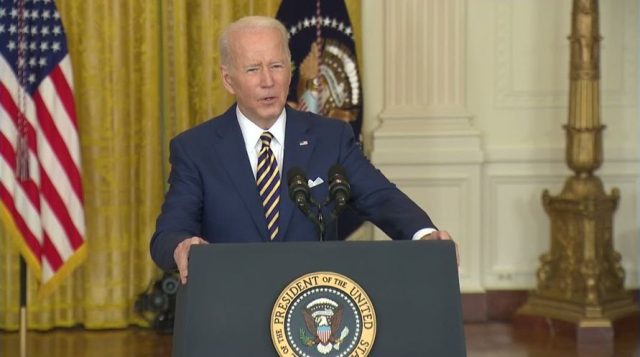
Screenshot of US President Joseph R. Biden, Jr., via The White House/YouTube

BERLIN/KYIV — The United States and Western countries sought to project unity and a tough stance over Ukraine on Thursday, after US President Joseph R. Biden, Jr., suggested allies were split over how to react to any potential “minor incursion” from Russia.

Mr. Biden rowed back on his comments, made during a Wednesday news conference, saying on Thursday that “I have been absolutely clear with President [Vladimir] Putin, he has no misunderstanding. If any, any assembled Russian units move across the Ukrainian border that is an invasion”.

Such an invasion would be met by a “severe and coordinated response, economic response as discussed in details with our allies, as laid out very clearly with President Putin,” Mr. Biden told reporters.

His remarks echoed efforts from other members of the administration earlier on Thursday and late on Wednesday, as the White House sought to scotch any suggestion that a smaller-scale Russian military incursion would meet a weaker US response.

Russia has massed tens of thousands of troops on its borders with Ukraine, and Western states fear Moscow is planning a new assault on a country it invaded in 2014. Russia denies it is planning an attack, but says it could take unspecified military action if a list of demands are not met, including a promise from NATO never to admit Ukraine as a member.

At his Wednesday news conference, Mr. Biden said he expected Mr. Putin to launch some kind of action, and appeared to suggest Washington and its allies might disagree over the response if Moscow stopped short of a major invasion.

“It’s one thing if it’s a minor incursion and we end up having to fight about what to do and what to not do, et cetera,” the president said, adding that an invasion would be a “disaster” for Russia.

Ukrainian President Volodymyr Zelenskiy responded sharply to that on Thursday, tweeting in English and Ukrainian:

“We want to remind the great powers that there are no minor incursions and small nations. Just as there are no minor casualties and little grief from the loss of loved ones.”

Mr. Biden’s remarks on Wednesday sent his administration and allies quickly into damage control mode, with a stress on unity.

“No matter which path Russia chooses, it will find the United States, Germany, and our allies, united,” said Secretary of State Antony Blinken, speaking at a press conference with German Foreign Minister Annalena Baerbock during a visit to Berlin to meet ministers from Britain, France, and Germany.

“We urgently demand that Russia takes steps towards deescalation. Any further aggressive behaviour or aggression would result in serious consequences,” Ms. Baerbock told the news conference.

NO GREEN LIGHT FOR INVASION

NATO Secretary General Jens Stoltenberg said Mr. Biden’s “minor incursion” comment was not a green light to a potential Russian invasion of Ukraine.

British Prime Minister Boris Johnson said: “Be in no doubt that if Russia were to make any kind of incursion into Ukraine, or on any scale, whatever, I think that that would be a disaster, not just for Ukraine, but for Russia.”

Moscow, for its part, said US threats of sanctions were not calming the situation.

With Western countries having long emphasised their united position in public, some officials privately expressed frustration at Mr. Biden’s remarks on Wednesday, although they described them as a gaffe, unlikely to alter Moscow’s calculations.

“It was not helpful, in fact it was a gift to Putin, but we should not read too much into it. Biden has not given Moscow the green light for an attack on Ukraine. It was a slip of his tongue, and the official Western position will prevail,” said one Western security source.

Moscow presented the West with a list of security demands at talks last week that produced no breakthrough.

Western countries have imposed repeated rounds of economic sanctions since Russian troops seized and annexed Ukraine’s Crimea peninsula in 2014.

But such moves have had scant impact on Russian policy, with Moscow, Europe’s main energy supplier, calculating that the West would stop short of steps serious enough to interfere with gas exports.

US and European officials say there are still strong financial measures that have not been tried. Germany has signalled that it could halt Nord Stream 2, a new gas pipeline from Russia that skirts Ukraine, if Moscow invades.

But Germany could find itself in a no-win situation if Russia invades Ukraine, pitting Berlin’s main gas supplier against its most important security allies.

Meanwhile, Turkish diplomatic sources said on Thursday that both Russia and Ukraine are open to the idea of Turkey playing a role to ease tensions between the two countries, as proposed by Ankara in November. — Sabine Siebold and Pavel Polityuk/Reuters

US seeks way to speed delivery of new fighter jets to Taiwan

F-16 fighter jets

WASHINGTON — The United States is looking for ways to potentially accelerate delivery of Taiwan’s next generation of new-build F-16 fighter jets, US officials said, bolstering the Taiwanese air force’s ability to respond to what Washington and Taipei see as increasing intimidation by China’s military. 

The officials, speaking on condition of anonymity, said they have not yet come up with a solution on how to speed delivery of Block 70 F-16s, manufactured by Lockheed Martin and equipped with new capabilities. The aircraft are currently slated to be delivered by the end of 2026. 

Taiwan’s government has privately expressed its wish for a faster delivery to US President Joseph R. Biden, Jr.’s administration, a senior Taiwanese official said, as the self-ruled island’s air force scrambles jets to intercept increasingly aggressive Chinese military flights. 

More missions mean more wear-and-tear on Taiwan’s aircraft. 

“It’s all about risk assessment … and it’s clear where the risks are,” the Taiwanese official said, referring to tensions across the sensitive Taiwan Strait separating the island from mainland China. The F-16 is considered a highly maneuverable aircraft proven in air-to-air combat and air-to-surface attack. 

Taiwan is on track to field one of the largest F-16 fleets in Asia once it takes delivery of 66 new-build F-16 C/D Block 70 aircraft under an $8 billion deal approved in 2019. It would bring the island’s total number of F-16s, including older versions, to more than 200 by 2026. 

Any move to accelerate deliveries of new aircraft could ultimately come down to a determination by Biden’s administration that Taiwan’s defense needs are more urgent than those of other US allies and partners, according to experts. 

“That’s a Biden administration decision,” said Rupert Hammond-Chambers, the president of the US-Taiwan Business Council, an organization that encourages trade and business ties between the two. “They would have to decide that the threat from China was more important than the threat from Iran or the threat from the Russians.” 

The Block 70 aircraft are the newest F-16 configuration, with new avionics, a modernized cockpit, and an improved engine, according to Lockheed Martin. 

A move to accelerate the aircraft delivery would be seen in Beijing in part through a political lens, according to Abraham Denmark, a former senior Pentagon official. 

“It is yet another clear signal of US determination to support Taiwan’s ability to defend itself,” added Mr. Denmark, now an analyst at the Washington-based Wilson Center think tank. 

DWARFED BY CHINA 

Despite lacking formal diplomatic ties with Taiwan, the United States is the island’s main international backer and arms supplier. That defense relationship angers China, which has ramped up military and diplomatic pressure against the island that it claims as “sacred” Chinese territory. 

In the face of Chinese pressure, Taiwan President Tsai Ing-wen has prioritized modernizing the armed forces, which are well-armed but dwarfed by China’s military. 

Lockheed Martin declined to comment on any potential future requests to change the production schedule, referring queries to the US government and Taiwan’s defense ministry. 

The US State Department, which oversees foreign military sales, declined to comment on any internal discussions about potential changes to the delivery timeline. 

Lockheed Martin’s new F-16 production line in Greenville, South Carolina has several customers in the production queue ahead of Taiwan, including Bahrain, Slovakia, and Bulgaria. 

The US government has not asked Lockheed Martin for delivery timeline changes for the Taiwanese F-16 jets, a person familiar with the situation said. 

The source declined to speculate about how much sooner Taiwan could get new-build F-16s even if a decision were made to accelerate deliveries. Any such effort would be complicated by production constraints, which include long lead times to source materials for Taiwan’s specific configuration of fighter aircraft. 

Taiwan’s Air Force did not respond to questions on potential accelerated deliveries but told Reuters in a statement that the Taiwanese military’s major weapon purchases are “rigorously planned in accordance with actual combat needs and planning schedules.” 

The US sale of F-16s to Taiwan was guided by US law and “based on an assessment of Taiwan’s defense needs and the threat posed by (China), as has been the case for more than 40 years,” a Pentagon spokesperson said in a statement. 

‘WEARING OUT THEIR OPPONENT’ 

The missions to intercept Chinese aircraft are putting stress on Taiwan’s air force, which last year had several mishaps, including three fatal crashes. Over time, fuel costs, pilot fatigue and wear and tear on Taiwanese aircraft will threaten the readiness of the island’s air force if this pressure continues, Taiwanese and US military analysts said. 

Last March, a senior Taiwanese official said Taiwan’s military had stopped intercepting every Chinese aircraft. 

Taiwan’s air force last week suspended combat training for its entire F-16 fleet after a recently upgraded model of the fighter jet crashed into the sea in the latest of a series of accidents. 

“They [the Chinese] are wearing out their opponent without firing a shot,” said Derek Grossman, a senior defense analyst at the RAND Corporation. 

Taiwan’s air force in 2020 scrambled 2,972 times against Chinese aircraft at a cost of T$25.5 billion ($905 million). — Phil Stewart, Idrees Ali and Yimou Lee/Reuters