
Nesting season

AUTHORITIES called on communities and visitors along the Sarangani Bay protected seascape to be conscious about not disturbing marine sea turtles as they come onshore for the nesting season, which peaks between March to May.
AUTHORITIES called on communities and visitors along the Sarangani Bay protected seascape to be conscious about not disturbing marine sea turtles as they come onshore for the nesting season, which peaks between March to May.

SEOUL — North Korea opposes war but would use nuclear weapons if South Korea attacked, Kim Yo Jong, the powerful sister of leader Kim Jong Un, said on Tuesday, in a warning that analysts said is probably aimed at the South’s incoming conservative president.
Kim Yo Jong, a senior official in the government and ruling party, said it was a “very big mistake” for South Korea’s minister of defense to make recent remarks discussing attacks on the North, state news agency KCNA reported.
South Korean Defense Minister Suh Wook had said on Friday that his country’s military has a variety of missiles with significantly improved range, accuracy and power, with “the ability to accurately and quickly hit any target in North Korea.”
Both Koreas have increased displays of military strength after North Korea test-fired a range of increasingly powerful missiles this year. Officials in Seoul and Washington also fear it may be preparing to resume testing nuclear weapons for the first time since 2017 amid stalled negotiations.
Kim and another North Korean official issued earlier statements on Sunday condemning Suh’s remarks, and warned that Pyongyang would destroy major targets in Seoul if the South takes any “dangerous military action” such as a preemptive strike.
Kim’s criticisms are most likely aimed at South Korean President-elect Yoon Suk-yeol, who has called for a more muscular defense against North Korean threats, said Rachel Minyoung Lee, an analyst with the US-based 38 North project, which monitors North Korea.
“Yoon’s ‘preemptive strike’ comment made the headlines a few months ago, and Pyongyang is seizing Suh’s remarks to make a point to the incoming South Korean administration,” she said. “North Korea has thus far refrained from criticizing Yoon at any authoritative level, but it certainly seems to be laying the groundwork for it.”
The statements suggest Pyongyang is preparing the North Korean public for a possible shift in inter-Korean relations once Yoon takes office in May, Lee added.
A delegation from Yoon’s team was in Washington this week to meet with US officials, who reiterated their commitment to defending South Korea, according to a statement by the US State Department on Tuesday.
In her statement on Tuesday, Kim said Pyongyang opposes war, which would leave the peninsula in ruins, and does not view South Korea as its principal enemy.
“But if south Korea, for any reason — whether or not it is blinded by misjudgement – opts for such military action as ‘preemptive strike’ touted by (Suh Wook), the situation will change,” Kim added. “In that case, south Korea itself will become a target.”
If the South Korean military violates North Korea territory, it will face an “unimaginably terrible disaster” and the North’s nuclear combat force will have to inevitably carry out its duty, she said, noting that the South can avoid this fate by dropping any “fantastic daydream” of launching a preemptive attack on a nuclear-armed state. — Reuters
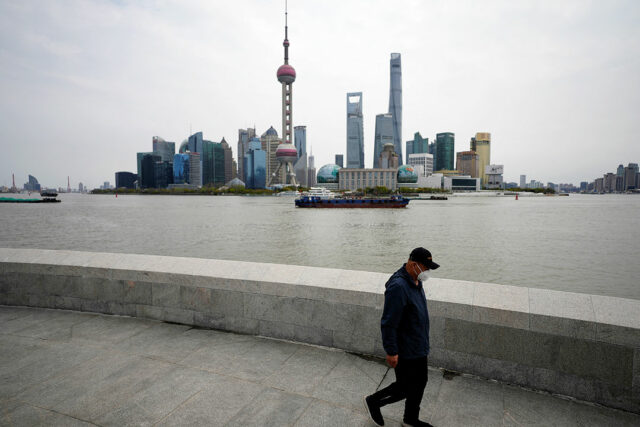
SHANGHAI — Chinese authorities extended the lockdown of Shanghai to cover all of the financial center’s 26 million people on Tuesday, after city-wide testing saw new coronavirus disease 2019 (COVID-19) cases surge to more than 13,000 amid growing public anger over quarantine rules.
The lockdown now covers the entire city after restrictions in the city’s western districts were extended until further notice, in what has become a major test for China’s zero-tolerance strategy to eliminate the novel coronavirus.
At least 38,000 personnel have been deployed to Shanghai from other regions in what state media has described as the biggest nationwide medical operation since the shutdown of Wuhan in early 2020 after the first known coronavirus outbreak.
The city’s quarantine policy has been criticized for separating children from parents and putting asymptomatic cases among those with symptoms. Some public health experts say it is no longer an effective strategy.
“I do not think this is a good idea as more than 24 months into the pandemic we know so much more,” said Jaya Dantas, professor of international health at Curtin University in Australia, adding that China’s “resource intensive” strategies to combat COVID-19 needed to be revised.
Members of the public shared videos across social media expressing concern about the lockdown.
Sun Chunlan, China’s vice-premier in charge of COVID prevention, urged grassroots Party organizations to “do everything possible” to help residents solve their problems, such as ensuring access to medicine, food and water.
Thousands of Shanghai residents have been locked up in rudimentary “central quarantine” facilities after testing positive, whether they are symptomatic or not.
Jane Polubotko, a Ukrainian marketing manager now held in the city’s biggest quarantine center, told Reuters it was unclear when they would be released.
“Nobody knows how many tests we need to get out,” she said.
In an interview with Communist Party newspaper People’s Daily on Saturday, Chen Erzhen, a doctor in charge of one Shanghai quarantine facility, said it was possible that China would revise guidelines and allow asymptomatic patients to stay home, especially if the number of cases continued to mount.
“The most important thing is the problem of personal compliance,” he said.
CASES SURGE
Shanghai imposed tough restrictions last week as authorities struggled to contain what has become the city’s biggest COVID-19 outbreak, after originally taking a more piecemeal approach.
“Currently, Shanghai’s epidemic prevention and control is at the most difficult and most critical stage,” said Wu Qianyu, an official with the municipal health commission, at a Tuesday briefing. “We must adhere to the general policy of dynamic clearance without hesitation, without wavering.”
Shanghai reported a record 13,086 new asymptomatic coronavirus cases on April 4, authorities said on their WeChat channel, up from 8,581 the previous day, after a city-wide testing program swabbed more than 25 million people in 24 hours.
The government said it had collected 25.7 million samples in 2.4 million test tubes on Monday, and almost 80% of the total had been tested by Tuesday morning. Any positive results are followed up at the individual level.
The proportion of asymptomatic cases is far higher in Shanghai than the rest of the world, which has been attributed to a screening process that catches infected people before they become ill. However, experts said it did not explain why symptomatic cases fell on Monday to 268, from 425 a day earlier.
Analysts outside China warn about the economic costs of the campaign to curb infections.
“What is most striking in Shanghai is the difficulty that the authorities are having in managing logistics, particularly conditions in centralized quarantine facilities,” said Michael Hirson, China analyst with the Eurasia Group consultancy.
“Given that Shanghai has a highly capable government, current problems pose a warning for local governments across China where capacity is not as high and major outbreaks could stretch resources further to the limits.” — Reuters

CITIES are driving the human-caused climate change that threatens the global environment, but also offer hope.
That is the overriding message of a chapter devoted to cities in a major U.N. report on climate change released on Monday, providing city planners around the world guideposts aimed at avoiding climate catastrophe.
“The fact that cities are responsible for more than two-thirds of global greenhouse gas emissions means that if cities do something, they can solve two-thirds of the problem. So that’s pretty exciting,” said Karen Seto, a professor at Yale University’s School of the Environment and one of two coordinating lead authors of the report’s chapter on cities.
Many cities around the globe have taken action already. Mexico City has banned plastic bags. Minneapolis, Minnesota, eliminated zoning for single-family homes to promote density. Paris has outlawed diesel cars.
“Every city can do something, and not every city’s going to do the exact same thing,” Ms. Seto said. “Not every city needs to look the same. Not every building needs to be a high rise.”
Cities, particularly the small and medium-sized cities of Asia and Africa that will see the most growth this century, offer the opportunity reduce reliance on automobiles, employ environmentally friendly building materials, and capture stormwater runoff, according to the report’s experts.
Cities can become havens of urban forests, street trees and green roofs, which will not only sequester and store carbon but also induce a cooling effect that reduces energy demand and energy use for water treatment, said the report, the latest from the Intergovernmental Panel on Climate Change.
Urban density also avoids rural and suburban sprawl, which is less energy efficient and destroys natural habitats.
“The 21st century will be the urban century, defined by a massive increase in global urban populations,” the report said, noting that 55% of the world’s population lived in urban areas as of 2018, a figure expected to jump to 68% by 2050.
At the same time, however, “the global trend of urbanization also offers a critical opportunity in the near term, to advance climate resilient development.”
The report focuses on mitigation, noting that alleviating climate change in cities will have an outsized effect on surrounding areas and help improve the mental and physical health of urban dwellers.
As with the global thrust of the overall report, the authors call on governments and industry to act with extreme urgency and make significant new commitments toward financing.
Urban areas generated 67% to 72% of carbon dioxide and methane emissions in 2020, up from 62% in 2015. Without any mitigation efforts, the raw amount of urban emissions could double from 2020 to 2050, the report said.
But with aggressive and immediate mitigation policies, urban greenhouse gas emissions could approach net zero by 2050.
As home to generally more prosperous people, urban cities emit more greenhouse gases.
Of the additional 2.5 billion people expected to live in cities by midcentury, 90% of the increase will take place in Africa and Asia, requiring more advanced economies and multinational companies to finance green development.
Capital will be needed to promote carbon sequestration, avoid emissions and reduced energy use.
Ms. Seto said she was optimistic because consumers and investors in the “global north” are demanding sustainability, and because the cost of new technologies such as photovoltaics and batteries for electric vehicles is going down.
“The cost of the status quo is worse than doing nothing,” Ms. Seto said. — Reuters

DOHA — November’s World Cup in Qatar will be unlike any other finals that have previously taken place and the logistical challenges facing organizers, from providing enough accommodation to dealing with unruly fans, will only intensify.
The Gulf state will host the first World Cup in the Middle East, the first in a Muslim state, and no other tournament has ever been held in the northern hemisphere winter.
Qatar, which is roughly the size of Jamaica, is also the smallest state to have held soccer’s biggest event, with fans from the 32 competing nations set to watch games at eight stadiums clustered around the only major city — Doha.
On the plus side, that means supporters will be able to easily reach all the venues, raising the possibility of watching more than one match in a day — in contrast to recent tournaments in Russia and Brazil where flights were often needed to travel to each venue city.
But it is also means there will be a real squeeze on Qatar’s limited accommodation market, with organizers estimating 1.2 million fans to visit the country over the 28 days of the tournament.
FIFA president Gianni Infantino, who inherited the decision to allow Qatar to host the tournament after taking over from his scandal-hit predecessor Sepp Blatter, initially looked at the possibility of other countries in the region sharing hosting duties.
But while that option was eventually ruled out, Infantino is still keen to portray the tournament as a chance for fans to experience the broader Arab world.
“There will be accommodation for everyone who wants to stay in Qatar, but maybe somebody then wants to make a day in Dubai or Abu Dubai or Muscat or Riyadh or Jeddah or whatever in the region and they will have the opportunity to go and visit other countries throughout their stay in this region,” he told Reuters in an interview.
“That is certainly what we also recommend, because I think one of the biggest experiences in this particular World Cup… is an opportunity for people to come to a country and a part of the world that they maybe do not know,” he added.
It is a worthy suggestion but is one which is arguably only really an option for those with large pockets, and it contrasts with Qatari organizers’ efforts to make the World Cup accessible for fans with more modest budgets.
CAPPED ROOM RATE
Organizers have put caps on the room rates hotels can charge supporters, with three star rates capped at around $120.
Qatar’s Supreme Committee for Delivery and Legacy has promised 130,000 rooms, including hotels and 60,000 rooms in apartments and villas, plus around 4000 rooms on two cruise ships and the remainder in fan villages.
Officials are also trying to make sure that fans, used to enjoying plenty of beer with their football, have alternatives to the pricey expat hotel bars where a pint of beer can cost around $18.
Although alcohol is normally only available in such settings, special ‘fan zones’ will be set up across the country during the tournament so that supporters can watch games and drink for more familiar prices.
“Alcohol prices will be capped in the fan zones, similar to what was seen at the FIFA Club World Cup in 2019 where a pint was around five pounds ($6.55),” said a source close to the discussions.
The fan zones — and other venues — will have to cope with fans from all 32 countries, in contrast to most tournaments where cities host just two nations at a time before games.
“I believe that having so many nationalities and people coming together and mingling together will be really beneficial, and will also move and elevate the World Cup into a big, big social gathering,” said Infantino.
That gathering might, however, require some skilled security and policing, given football tournaments have had a history of rival supporters clashing. — Reuters

AUGUSTA, GA — Tigermania returned to Augusta National in full force on Monday as a cagey Tiger Woods kept the golf world guessing on whether he will be in the Masters field.
The Woods watch moved into overdrive as hordes of spectators flooded into Augusta National to catch a glimpse of the 15-time major winner who has kept fans in suspense, saying on Sunday his Masters participation will be a “game-time decision.”
While Woods gave nothing away on Monday, fans will not have to wait much longer to know his decision with the 46-year-old scheduled to hold a news conference on Tuesday along with the publishing of Thursday’s first round tee times.
After two years of coronavirus disease 2019 (COVID-19) restrictions that limited the number of spectators allowed onto the grounds, the galleries were back and so was the unmistakable Augusta National buzz amplified by the sight of Woods working the fairways.
The car crash that 14 months ago had threatened to take Woods’ right leg and left him in hospital for three weeks and then confined to a hospital-type bed at home for three months seemed a distant misfortune on a picture perfect Monday.
Playing nine holes during an afternoon practice alongside good friends Fred Couples and Justin Thomas, a relaxed Woods did not have the look of a man struggling to make a decision.
Rather, he had the self-assured air of someone who had made up his mind to be on the first tee come onThursday.
While Woods was tight-lipped, one of his playing partners is certain of what will happen on Thursday.
“I hope everything keeps going Tuesday and Wednesday and I’m sure he’s going to tee it up on Thursday,” said Couples. “It’s not shocking because he’s the greatest player to ever play.”
“If he can walk around here in 72 holes, he’ll contend. He’s too good.”
Woods has always maintained that he enters every event with the mindset to win it and his fellow golfers say not even coming back from a career threatening injury has changed that approach.
“What’s impressive is Tiger won’t play here unless he thinks he can win,” said three-time major winner Padraig Harrington. “He’s not coming to wave at the crowds.”
“He’s coming to try and win the tournament.”
“It looks like he’ll tee it up, and if he does, he feels like he can win, and that’s impressive.”
FIRST TOURNAMENT
If Woods, who was noticeably limping at the end of nine holes, does commit to play it would be his first official tournament since defending his title at the 2020 Masters, played in November due to COVID-19.
As delighted as Woods clearly is to be back playing, the excitement on Monday was surpassed by the fans.
Woods won the last of his five Green Jackets in 2019.
On Monday, they lined the entire length of the fairways and were packed 10 to 15 deep around the greens, a smiling Woods soaking up the attention as the cheers echoed through the Georgia pines.
“It’s history,” one fan screamed to another, as calls of “Go Tiger, Go Tiger” followed him.
His rivals are also not writing off Woods’ participation or even him winning a sixth Green Jacket.
“I’ve learned long ago never doubt the guy,” said Australian Adam Scott, the 2013 Masters champion. “It’s exciting that there’s the possibility he’s going to play this week.”
“I really hope he does. I think no matter what, it would just be epic.” — Reuters

MUMBAI — Tennis officials will dish out stricter punishments for on-court misconduct, the Association of Tennis Professionals (ATP) warned players in an internal note on Monday as the men’s governing body also simultaneously reviews its guidelines to clamp down on repeat offenders.
Australian maverick Nick Kyrgios was fined $60,000 for a series of angry outbursts at the Indian Wells and Miami Open events, with many observers saying he should have been disqualified.
German Alexander Zverev was thrown out of a tournament in Acapulco in February after smashing his racket repeatedly against the umpire’s chair following a doubles defeat.
“Effective immediately and as we head into the clay court swing, the ATP officiating team has been directed to take a stricter stance in judging violations of the Code of Conduct,” ATP chairman Andrea Gaudenzi said in the note, seen by Reuters.
“Additionally, we are also undertaking a review of the Code, as well as the disciplinary processes, to ensure that it provides appropriate and up-to-date penalties for serious violations and repeat offenders.”
Kyrgios was fined $35,000 after his fourth-round loss to Jannik Sinner at the Miami Open during which he criticized the umpire and smashed his racket.
The incident followed an outburst at Indian Wells where Kyrgios lost his temper after losing to Rafa Nadal, smashing his racket to the ground, which then bounced up and almost hit a ball boy. He was fined $25,000 for it.
The Australian earned over $350,000 in prize-money from the two tournaments after competing in both singles and doubles.
Olympic singles champion Zverev was handed a suspended eight-week ban for his expletive-filled Acapulco tantrum.
The ATP came under fire for what many pundits and fans perceived to be soft punishments from the governing body and in the note Gaudenzi told players “we all have a role to play to uphold the reputation and integrity of our sport.”
“The first three months of the season have seen an unusual frequency of high-profile incidents involving unsportsmanlike conduct,” added Gaudenzi, a former Italian professional player.
“These incidents shine a bad light on our sport. This conduct affects everyone, and sends the wrong message to our fans, especially young fans.” — Reuters

Kevin Durant didn’t mince words when asked about the Nets’ fortunes — or, rather, misfortunes — after practice yesterday. “To be honest, I feel like our season was derailed by my injury,” he said in relation to the need for the black and white to go through the play-in tournament as opposed to living up to preseason expectations as title favorites. “So I’m not looking at it like we’re just not a good basketball team. It’s like there wasn’t a lot of continuity with me and Kyrie [Irving] out of the lineup. That’s just what it is. When we’re all on the floor together, I like what we got.”
Durant’s right, of course. There’s a reason he’s a National Basketball Association Most Valuable Player awardee, and it’s why the Nets went a heady 27 and 15 before he injured his left medial collateral ligament in a mid-January match against the Pelicans. That said, his absence over the next 22 outings wasn’t the only cause of their five and 17 swoon. There was Irving’s inability to suit up in games at the Barclays Center because of city protocols. There was likewise the problem of James Harden being James Harden, pouting and then heading out the door.
If there’s any consolation, Durant’s fit anew, and Irving’s unvaccinated status has become immaterial in the face of looser safety guidelines. And for as long as they’re both in uniform, the Nets cannot but be deemed a threat. How and when they will be at their best remains to be seen, however. Projected Big Three stalwart Ben Simmons remains sidelined and a big question mark for the rest of their 2021-22 campaign, while starter Seth Curry has been compelled to play with an ailing left ankle. Chemistry and conditioning issues have also cropped up, what with erstwhile rotation regulars going in and out of the roster.
The Nets still have four regular season matches to negotiate beginning with today’s homestand against the Rockets. Should they run the table, they may yet overtake the Hawks for the eighth spot in the Eastern Conference. They would need no small measure of luck, though, and with Irving still trying to get his sea legs after having been a part-time player for four-fifths of the season, they may find the going tough. Then again, they have Durant, and as head coach Steve Nash noted, “we have the belief and we’ll give it a shot.” And then the real work begins.
Anthony L. Cuaycong has been writing Courtside since BusinessWorld introduced a Sports section in 1994. He is a consultant on strategic planning, operations and Human Resources management, corporate communications, and business development.

Reducing inequality and achieving inclusive growth are inseparable. When we narrow inequality, we reinforce the capacity of sectors and individuals to overcome structural factors that limit their mobility in society.
When we promote growth that is beneficial to all classes and encourage people’s productive participation in the economy, we not only neutralize equality barriers. We also make people capable of being upwardly mobile.
In the past two years, the COVID-19 pandemic has exacerbated inequality gaps around the globe. In 2020, the UN World Social Report examined four megatrends on inequality — technological innovation, climate change, urbanization, and international migration — and the challenge to “encourage a more equitable and sustainable world.”
For 2021, the UN report focused on rural development, which involves nearly half of the global population, and raised the goal of not leaving the sector behind amid growing efforts toward economic recovery, reducing inequalities, and tackling the climate crisis.
In the Philippine context, grappling with inequality woes is exemplified by the efforts and initiatives of a wide range of social actors. These activities were discussed during the virtual town hall discussion “Bridging the Gap: Reducing Inequality in the Philippines for Inclusive Growth,” hosted by the Stratbase ADR Institute.
During this pandemic, our society experienced record highs in unemployment, hunger, poverty, business closures, and inflation rates. Much of these could be attributed to the administration’s less-than-desirable management of the pandemic.
But as inequality persists in the Philippines, we have to respond to it through a multi-stakeholder strategy. We need public-private partnerships, investments by the private sector, and a better environment for investment by the incoming administration, with the hope that it can provide jobs, livelihood, and income, and a comfortable life for many Filipinos in the long run.
Dr. Ronald U. Mendoza, Dean of the Ateneo School of Government, commenced the public exchange by discussing the essence of his special study “Reducing Inequality in the Philippines: Rationale and Reforms.”
According to Mr. Mendoza, we should work on three reform areas to establish a more inclusive democracy in our country: social mobility, disaster readiness, and political reforms.
Mr. Mendoza highlighted the need to “liberalize our politics” after we had liberalized the economy. If politics is not liberalized, “eventually, even if you liberalize your economy, you will still hit a ceiling because of bad governance.”
Inasmuch as economics and politics are directly intertwined, Dr. Charlotte Justine Diokno-Sicat, Research Fellow of the Philippine Institute for Development Studies (PIDS) and Vice-President of the Philippine Economic Society (PES), expounded on her study, “Promoting an Investment-Driven Economy Through Good Governance.”
She argued that public sector governance should be improved and be made innovative. Accordingly, two things should be done: fiscal consolidation of the national government, and emphasis on the importance of “strategic investments in both physical and human capital of both national and local governments.”
“This will all encourage private sector participation at all levels and in bridging the gap and reducing inequality in the Philippines for inclusive growth. Every single Filipino has a role to play,” she added.
Ms. Diokno-Sikat’s view is contextualized under a whole-of-society approach to effectively foster equality improvements.
Akin to the focus of the 2021 UN World Social Report I cited earlier, Dr. Carlos Primo “CP” David, Professor at the National Institute of Geological Sciences, University of Philippines Diliman, Trustee and Program Convenor of the Stratbase ADR Institute, and Convenor of Philippine Business for Environmental Stewardship (PBEST), provided an agricultural perspective in addressing food security in his study, “Improving the Philippine Agriculture Sector by Establishing Food Production Areas.”
Specifically, he recommends “a self-contained food production area that consists of industrial farms, coupled with small older farms surrounding it, those one-to-two-hectare farms that actually operate together with industrial farms, but not independent of it.”
“I espouse the idea of pockets of innovation and development,” he concluded.
Using an educational perspective, Christopher Tan, Chief Operating Officer of PHINMA Education, and a Board Member, of the Philippine Association of Colleges and Universities, talked about improving Filipinos’ quality of life through education reforms.
Highlighting three issues to address inequality — access, completion, and employment — he emphasized the need for a responsive, nimble, and continuous learning system. He also stressed the importance of skills development.
“We need to have the ability to channel the power of business as a force for good, banking on the complementarity between the private sector and the public sector,” he added.
Similar with Ms. Diokno-Sicat’s focal point, Francisco del Rosario, Jr., Chairman of the Institute for Solidarity in Asia (ISA), in discussing his topic, “Transforming the Public Sector for Inclusive Growth,” talked about the empowerment of the public sector so it becomes more efficient and less corrupt.
To reverse the worsening cycle of poverty, the country’s next administration would need to exert a holistic effort for these inequality challenges to be significantly addressed.
The next government must uphold the rule of law, strengthen efforts in transparency and accountability, and spearhead political and economic reforms in order to attract more investments that will develop industries that will be long-term prosperity generators.
Indeed, the twin goals of reducing inequality and achieving inclusive growth are only possible through good governance. Let this thought guide us as we choose our next leaders in the coming elections.
Victor Andres “Dindo” C. Manhit is the president of the Stratbase ADR Institute.

(Part 2)
Straddling two sunrise sectors of the Philippine economy — the Information Technology and Business Process Management (IT-BPM) and the Creative Industries — are the animation and game development subsectors. As part of the Frost & Sullivan Study commissioned by the IT & Business Process Association of the Philippines (IBPAP) in 2015, a detailed Roadmap 2022 for these two sectors benefiting from the abundant creative talents of Filipinos was formulated. It would be very instructive to review the SWOT (Strengths, Weaknesses, Opportunities, and Threats) analysis contained in this document even if there will be a need to update some of the data because of the discontinuity occasioned by the COVID-19 pandemic that wreaked havoc on the global economy. In the overall IT-BPM industry, the animation industry was one of the first to be outsourced. Major US and European studios started outsourcing their work from the 1970s because of the availability of talented animators, including Filipinos, in other locations for a fraction of the cost. Sometime later, the Japanese anime industry followed suit. The Philippines got a significant part of the business.
In 2015, the market generated revenue of $19.5 billion. It was expected to register a healthy compound annual growth rate (CAGR) of 7.1% to reach $31.5 billion in 2022. The movie and TV animation market contributes more than 60% whereas digitally distributed animation accounted for the fastest growth. The increasing adoption of smartphones and tablets, especially pronounced in the Philippines, is leading the growth of digitized animation. Animation outsourcing is widespread among major animation studios. In the overall animation creation process, most of the less creative work is outsourced to low-cost outsourcing hubs while the rest of the work is done in the United States, Europe, and Japan. The Indo-Pacific region is the fastest growing market where a significant amount of work is outsourced, not only to India, China, and the Philippines but also to other emerging destinations, such as Malaysia and Indonesia. Other non-Asian countries in the outsourcing pool are Poland and Brazil.
According to Frost and Sullivan, the following five major trends will increasingly affect the overall animation outsourcing industry:
1. Asia will continue to be the global hub for animation outsourcing work. Some 75-80% of all US-based animation programs are outsourced to Asia mainly for reasons of cost. Industry sources estimate that the cost of developing a full-length animated film is about five to eight times lower in India or the Philippines than in the United States.
2. 3D is the future; 2D, however, still has a large market. Many studios are building capabilities in 3D animation as they invest in human resource development and technology to capitalize on current and future opportunities. When the study was prepared, 2D still accounted for more than 70% of the total animation revenue.
3. The coming of age of digital animation. The Internet, through video sharing or streaming digital sites such as YouTube, Dailymotion, and Vimeo, has long been a platform to deliver animation content. This includes either old re-runs from TV and cable companies or independent studios showcasing their works, typically for free. The advent of video on demand (VOD), however, especially through subscription model-based VODs, such as Netflix, Hulu Plus, Amazon video, and iflix, has opened a new frontier for the animation industry.
4. Moving from purely outsourcing to hybrid business models. Animation outsourcing is a low-risk business but also a low-return business model. Some larger outsourcing studios are delving into a mix of collaborative animation services where they form partnerships with other animation studios, locally or abroad, by leveraging each other’s expertise to create original content where they share their intellectual property, or enter a more ambitious business model where they perform all development work from scratch inhouse.
5. New emerging animation destinations will disrupt traditional outsourcing destinations like the Philippines. With the backing of their governments, countries such as Poland, Malaysia, Singapore, Brazil, and Chile are beginning to build their capabilities in new-generation animation segments, such as 3D and visual effects (VFX). With competitively priced services, these new animation outsourcing destinations are expected to impact the businesses of traditional animation markets, such as India, China, and the Philippines. This a major reason why the next Administration must be very proactive in supporting the various players of the Philippine animation sector with both subsidies and tax credits. TESDA (the Technical Education and Skills Development Authority) can also play a significant role in addressing the human resource requirements in the animation industry, coming out in partnership with business and the academe with all types of short courses for reskilling, upskilling, and retooling our young who have inherent artistic and digital talents.
In 2015 when the Frost & Sullivan study was conducted, there were certain perceived trends that were unique to the animation sector, independent of the general IT-BPM sector. These trends are expected to have intensified during the pandemic, with the acceleration of digitalization in all aspects of the economy as well as the increased importance of home entertainment during the long lockdowns necessitated by safety measures occasioned by the pandemic. As regards the suppliers, studios perform various types of animation work, including traditional hand-drawn animation, 2D, 3D, special effects, modeling, caricatures, medical animation, and the CG format. The extended boom that lasted until 2019 spawned hundreds of animation companies, employing thousands of artists, animators, and technicians using state-of-the art equipment and techniques such as SGI, sound effects (SFX), and motion-capture software and facilities. This trend will be favorable to the local animation industry especially after President Duterte signed into law a measure introducing amendments to the Foreign Investment Act of 1991, opening the SME sector of the country to foreigners who can now own 100% of any business with a minimum paid-up capital of $100,000. Many startups from all over the world in the field of animation can invest in the Philippines, thereby transferring the most advanced technology in this sector as well as contributing to the upskilling, reskilling, and retooling of Filipino workers in the most developed fields of animation.
This greater freedom for small-scale foreign startups to invest in our animation sector is especially significant because many small and medium outsourcing participants are actually located outside of North America and execute outsourced animation projects, more and more of which outsourced jobs are shifting to the Indo-Pacific region. A major factor behind this shift of computer animation production to the Indo-Pacific region is the availability of low-cost computer animation platforms especially in the ASEAN countries. The European region, especially France, has witnessed an upswing of animation producers, e.g., Xilam and Superprod, relocating back due to the incentives offered for locally produced content. Given this trend, our animation industry should make a special effort to market our outsourcing services to countries in Europe, going beyond our traditional US and Japanese markets.
The trend of major animation studios outsourcing animation is irreversible. As developed countries in North America, Europe, and Northeast Asia (including China that is already suffering from the rapid ageing of its population) suffer from the demographic crisis, labor shortages in these countries will widen the difference in manpower costs, giving a distinct advantage to countries like India and the Philippines that are still enjoying their respective demographic dividends. Even before the pandemic, we already were witnessing many entertainment companies like Disney and IMAX outsourcing an increasing amount of their animation production to the Indo-Pacific region. The mass appeal of movies relying on computer graphics has been driving studios to expand their output while keeping their costs down. From traditional (celluloid-based) animation to VFX and computer animation (CGI), the global outsourcing animation industry is growing as an increasing number of studios around the world look for cost-effective production options and as the number of viable overseas studios increase.
Our local animation industry should be aware of the fact that most animation outsourcing contracts are focused on artwork, rather than technology-oriented outsourcing, with 70% artwork and the remaining 30% technology focused. The major animation outsourcing segments are as follows:
a.) Custom content development (enlisting content created for corporate, higher education, aviation, medical sectors); the exponential increase in online instruction during the pandemic will surely lead to more demand for animation services in the educational sector as hybrid learning will be part of the new normal, especially in higher education;
b.) VFX (visual effects for television or motion pictures); and,
c.) Animation entertainment (animation for motion picture, television, advertising stakeholders).
(To be continued.)
Bernardo M. Villegas has a Ph.D. in Economics from Harvard, is professor emeritus at the University of Asia and the Pacific, and a visiting professor at the IESE Business School in Barcelona, Spain. He was a member of the 1986 Constitutional Commission.

What used to be a slow trend towards digitalization rapidly accelerated as a result of the coronavirus outbreak. Based on recent company disclosures, Converge ICT reported a 75% increase in new subscribers while GlobeAtHome’s subscriber base rose from 3.5 million to 3.7 million. PLDT, Inc. also reported that it connected a record 1.13 million new fiber customers, exceeding its original targets.
Filipinos had to find ways to adapt and continue being productive despite being restricted to their homes. For this reason, access to the internet is essential for Filipinos to continue their work, business, studies, and connect with their loved ones. However, there have been reports wherein some Property Developers have entered into arrangements wherein only a singular internet service provider (ISP) of the developer’s choice can operate within their respective areas. These anti-competitive arrangements prejudice the rights of consumers by depriving them of their right to choose an ISP of their own preference. In choosing their ISPs, considerations such as speed, reliability, and price play an important role in a subscriber’s decision-making.
As more Filipinos shift towards digitalization under the “new normal,” it is timely to remind consumers and businesses alike of the policy of the State to penalize anticompetitive agreements such as exclusivity arrangements between property developers and ISPs, and update them of the actions taken by government.
Section 15 of Republic Act 10667 or the Philippine Competition Act (PCA) of 2015 prohibits an entity’s abuse of its dominant position by engaging in conduct that would substantially prevent, restrict, or lessen competition. Abuse of dominant position refers to the conduct of an entity with a dominant position that substantially prevents, restricts, or lessens competition in the market. An example of conduct constituting abuse of dominant position is when “a dominant firm restricts output or refuses to supply, or restricts access to/use of/ development of a new technology, to the detriment of consumers.”
In March 27, 2019, the Competition Enforcement Office of the Philippine Competition Commission (PCC) filed a Statement of Objections against two property developers for entering into an arrangement wherein internet services in their condominium projects were solely provided by one ISP chosen as their in-house provider. According to the Competition Enforcement Office, the property developers “abused its dominant position in the provision of property management services by preventing other ISPs other than the in-house provider from providing fixed-line internet services to their residents … with which they have complaints regarding its quality and prices.”
In response, the property developers admitted their anticompetitive conduct and committed to implement measures which would “1.) cease the anticompetitive conduct and prevent its recurrence; 2.) restore competition, and, 3.) effect deterrence.” The property developers undertook to post notices stating that the in-house provider was no longer the exclusive fixed-line ISP and that residents were free to avail of services of other ISPs, invite other ISPs to offer or market their services in their condominium projects and, allow customers of the in-house provider to opt-out of their subscription contracts at no cost, among others.
In a decision dated Sept. 30, 2019, the PCC found the foregoing commitments sufficient to address the harm to the condominium’s tenants and that they would restore competition. The property developers were directed to cease and desist from their admitted conduct of abuse of dominant position and to pay an administrative fine of P27 million. In a press release dated Oct. 2, 2019, PCC Chairman Arsenio M. Balisacan called this decision a landmark case for the PCC which “successfully resolved to stop an anticompetitive practice, restore competition in the affected market, and set an example to deter other businesses from employing similar exclusive dealings.” He also warned other businesses from abusing their market power. He added: “[T]his case shows that the PCC is serious about addressing anticompetitive practices that have long been considered par for the course in different industries. Unscrupulous businessmen can only expect the PCC to pursue more cases of a similar nature in the future.”
Staying true to its commitment, the PCC announced on March 3 that it “has taken several property developers to task for their exclusive dealings with internet operators through the issuance of Enforcement Advisory Letters (EALs).” To date, eight developers voluntarily complied with the PCC EALs and opened their properties to other ISPs.
Mr. Balisacan highlighted the importance of a consumer’s freedom to choose their own ISPs and asked the public to report similar cases of developers having exclusive dealings with internet operators. He says: “[A]s remote work, distance learning, and e-commerce have become part of the new normal, PCC understands the value of consumer choice for fast, stable, and affordable internet connection. The lack of competition in this space forced by exclusivity dealings by property developers is an issue that we are determined to solve. We encourage the public to continue reporting to us similar cases and for developers to open their doors to different ISPs.”
In the same press release, the PCC announced that it is working on issuing a joint circular “with various relevant housing and ICT regulators for all property developers to prohibit exclusivity arrangements in internet, telecommunications, and cable TV services.”
Healthy market competition benefits consumers through lower prices, more product choices, and better-quality goods and services. It motivates companies to provide better services to consumers and innovate products. The entry of new market players also causes excitement among consumers, such as the announcement of Trade and Industry Secretary Ramon Lopez that Elon Musk’s SpaceX is already processing Starlink’s application to provide low orbit satellite internet service in the Philippines, the first in Southeast Asia.
With the entry of additional ISPs and the recent amendments to the Public Service Act allowing 100% foreign ownership of public services such as telecommunications, the proactive stance by the PCC in the issuance of a joint circular expressly prohibiting anticompetitive exclusivity arrangements by property developers and internet service providers is a welcome development.
The views and opinions expressed in this article are those of the author. This article is for general informational and educational purposes only and not offered as and does not constitute legal advice or legal opinion.
Luke Morgan B. Codilla is an associate of the Angara Abello Concepcion Regala & Cruz Law Offices (ACCRALAW), Davao Branch.
(6382) 224-0996

SM Supermalls teamed up with the Girl Scouts of the Philippines (GSP) to boost the Department of Health’s ‘Resbakuna Kids’ nationwide vaccination campaign.
SM Supermalls’ ongoing vaccination efforts will now also welcome over 700,000 members of the GSP to get inoculated against COVID-19 starting April 2.
“We remain devoted to supporting the ‘Resbakuna Kids’ campaign of the Department of Health, and I think what’s more important is being able to administer the vaccinations particularly to the Girl Scouts of the Philippines who have not been vaccinated yet,” said Joaquin San Agustin, Senior Vice President of Marketing at SM Supermalls.
San Agustin also urged those who are still hesitant to get jabbed to safeguard the public’s health and safety.
“We encourage everyone to get vaccinated and for those who were vaccinated to get their boosters. It is not only for the safety of the person [but it is also] for the safety of their families and we, at SM Supermalls, will always welcome everyone for vaccinations here in our malls nationwide,” San Agustin said.

GSP National President Nina Lim-Yuson also echoed the need for children to get vaccinated so they can fulfill their duty of serving their communities.
“We know the Girl Scouts [of the Philippines] made their promise to serve God and our country and to help people at all times. You cannot help others if you are sick. We want everybody to be healthy and well, and that is why we hope they will all get vaccinated at SM Supermalls,” Yuson said.

This initiative led by SM Supermalls is encouraging members of the GSP who have not been vaccinated yet, especially children aged 5 to 11, 12 to 17 and senior citizens to get jabbed at their nearest SM mall vaccination site.


Prior to the vaccination day, GSP members must register in their respective local councils. Parents and guardians must also secure copies of any of the following documents: birth certificate, health records, school registration or ID, or baptismal certificate.
The collaboration between SM Supermalls and the GSP aims to speed up the vaccination rollout in the Philippines in order to achieve herd immunity in the country as soon as possible.

As the single biggest entity to vaccinate Filipinos in the country, SM Supermalls has already administered over 9.4 million doses of COVID-19 vaccines nationwide in its 78 mall vaccination sites. The mall chain remains dedicated in its commitment to ensuring a safe malling experience for the public through its staunch support of the government’s nationwide vaccination campaign.
Spotlight is BusinessWorld’s sponsored section that allows advertisers to amplify their brand and connect with BusinessWorld’s audience by enabling them to publish their stories directly on the BusinessWorld Web site. For more information, send an email to online@bworldonline.com.
Join us on Viber to get more updates from BusinessWorld: https://bit.ly/3hv6bLA.
