Digital infrastructure may not be a campaign talking point but it will be important for the next administration and the Philippines’ post-pandemic future.
“Whether you’re talking about agriculture or housing, all these will ultimately be driven by a broadband connection,” said Mario R. Domingo, founder of deep learning solutions company Neural Mechanics, Inc. and director of the Ateneo Institute for the Digital Enterprise. “In no uncertain terms, I want to make it clear that a national broadband network is the project of the national government because the moment you privatize it, it becomes a profitability play.”
In this B-Side episode, Mr. Domingo tells BusinessWorld reporter Patricia B. Mirasol about the relationship between the internet and nation-building.
TAKEAWAYS
The Philippines can take a page or two from its neighbors.
These goals, if reached, will benefit individuals, Mr. Domingo said. “You need to provide entrepreneurs the infrastructure. A guy from a sitio in Albay may have a mobile app idea, but not the connectivity to [test] it. If they have to rent an office in Bonifacio Global City to get good connectivity, you’re killing them already, because of how expensive it is there.”
A policy has no teeth without implementation.
The Innovative Startup Act (RA 11337), which aims to strengthen, promote, and develop the Philippine startup ecosystem, is “best in class,” said Mr. Domingo.
However, policies — no matter how excellent — atrophy when not executed in a timely manner. “What’s the point of giving an entrepreneur a grant if… the procurement process to buy a P1 million server takes eight to ten months?” Mr. Domingo asked. “By the time you install your high-tech equipment, it’s already obsolete.”
Virtual connections can follow the physical.
If a high-speed northern Luzon to southern Mindanao railway network is built, it can act as the spine of a national broadband network.
“The reason why it’s missing is because it’s daunting,” he said, adding that several administrations will have to commit to connecting the Philippine archipelago. “Infrastructure-building is a core scalable and sustainable activity for the Philippines as a sovereign nation.”
As one of the oldest government agencies in the Philippines, dating back to shortly after the foundation of the very country when it was established under the Malolos Constitution on January 21, 1899, the Department of Transportation’s (DoTr) history of public service is among the most storied.
From the American Colonization period, when the management of public property and revenue and the use of all public means of transportation were to be conducted by the US Army, to the Japanese Occupation when the exiled Commonwealth government of President Manuel Quezon reorganized and the Department of Public Works and Communication became the Department of National Defense, Public Works, Communications and Labor, the DoTr stood proud to be part of Philippine history.
Undoubtedly, the past two years add quite a lot more to the challenges the agency has faced.
“If we are to look back at 2020, we can say that it was indeed an epic disruptive year. We cannot talk about 2020 without the global crisis subject brought by what is probably the greatest challenge of our time — the coronavirus disease 2019 (COVID-19) pandemic,” Secretary Arthur Tugade said in the Department of Transportation 2020 annual report.
The DoTr is the primary policy, planning, programming, coordinating, implementing and administrative entity of the executive branch of the government on the promotion, development and regulation of a dependable and coordinated network of transportation systems, as well as in the fast, safe, efficient and reliable transportation services.
Mr. Tugade reiterated that the agency plays a crucial role in accelerating the country’s economic development, providing the backbone for growth and enhancing the country’s competitive edge by creating effective and efficient transportation infrastructure systems that narrow the geographical and physical divide, connecting the country, its islands, and its people to the rest of the world. A role made all the more difficult by the restrictions COVID-19 has brought with it.
DoTr Secretary Arthur P. Tugade
“With the emergence of the deadly disease, lockdowns and border closures were enforced in many countries resulting in the decline in passenger transport demand. The transportation sector has been one of the primary victims of COVID-19. From air, road, railways, to sea travels, all have been suffering from the outbreak’s disproportionate economic impacts. Consequently, the Philippine transportation sector was not spared,” Mr. Tugade said.
“With our mandate to develop efficient and reliable transport services and networks, the Department of Transportation (DoTr) is further challenged to up the ante by striking a balance between implementing an appropriate response plan for contingencies and upholding public welfare. We need to keep a core of the public transportation system operational while keeping the Filipino people safe. Thus, various initiatives have been implemented to surmount present challenges and help the country’s economy recover,” he added.
To address the country’s mobility needs amid the threat of COVID-19, the DoTr has taken initiatives to tap digitalization efforts that will help boost various transport infrastructure projects and programs in all sectors (Roads, Railways, Maritime. Airports and Aviation), across the country.
Under Secretary Tugade’s vision to digitally transform transportation, the DoTr has committed itself to promote and develop smart solutions that will help address mobility and connectivity.
In a recent Smart Mobility Forum, the DoTr reinforced its position, expressing that the current situation has made it even more imperative for the department to re-calibrate and re-strategize its ways of doing things to address the country’s mobility needs.
Secretary Tugade said that the department is gearing to a future wherein technological advancements will be highly optimized, where there is a gradual shift to the ‘new normal’. By promoting smart mobility through digitalization, the DoTr continues to support initiatives in the present as a long-term solution for the future, and in the process, allow commuters to regain confidence in commuting.
“It is in this premise that the DoTr is on a mission to revolutionize mobility to keep up with the changing times and shape the country’s transport system into one that is resilient and adaptable to the future,” Mr. Tugade said.
“And so, we have embraced digitalization and continue to harness best practices in technology in all of our four sectors, namely, the Aviation and Airports, Railways, Road, and Maritime sectors to deliver swift agency processes and limit human intervention for the safety of the people,” he added.
For its continuity plan for the future, the DoTr aims to keep developing mobility systems by engaging an asset build-up strategy through building much-needed infrastructures. Despite health and community restrictions, the “BUILD, BUILD, BUILD” program continues.
“Further, we will strive to demonstrate resilience in the face of COVID-19 by implementing stringent health and safety protocols in all public transport systems. Your DoTr also remains alert and active in response efforts on whatever challenges, calamities, and uncertainties we are facing and will be facing as a nation,” Mr. Tugade said.
“Respond. Recover. Thrive. These words will be our guiding principle moving forward. And we look ahead to a future that sees the Filipino people enjoying the comfortable life they deserve,” he shared. — Bjorn Biel M. Beltran
A new company is now actively serving the huge wants and needs of a widening base of customers inside and outside its network of tollways in Luzon and soon the Visayas, principally enabled by digital solutions and innovations.
MPT Mobility is a subsidiary firm of the Metro Pacific Tollways Corp. (MPTC), the latest addition to the growing list of firms under the umbrella of the MVP Group of Companies.
MPT Mobility is expected to “play a key role in the sustainability of businesses associated with transport and travel infrastructure and digitalization,” declared Rodrigo Franco, MPTC president and CEO, adding that this digitally-enabled firm will respond to the growing needs of motorists.
“Digitalization is inevitable,” said Raul Ignacio, MPT Mobility president and general manager, adding: “We want to be at the forefront of leveraging its adoption and transcend our core tollways business, using the latest digital technology.
MPT Mobility is MPTC’s vigorous response to two game-changers in the market: one, the quick formation of new customer habits built around greater and more convenient mobility, and, two, the quick rise of technology-driven innovations that are flooding the market with new products and services, as well as creating new buying habits, Mr. Franco said.
In an earlier management summit of the MPTC Group, top executives took note of the irreversible trend toward product and service innovations prompted by a fast-changing digital world. “We have identified new products and services outside our core expressway business,” Mr. Franco disclosed.
MPT Mobility is a conglomeration of business units that offer digitally driven solutions. It includes the MPT OneHub as the centralized customer response organization, Easytrip Services Corp to handle RFID account management, MPT Drive & Dine to develop, operate and maintain motorist rest stops, DibzTech for tech-enabled parking solutions, SpotOn Advertising for highway advertising, and Southbend Express for roadside and general services.
MPT Mobility will soon launch MPT DriveHub to become the digital face of the MPTC Group and the enabler of online mobility-related services. There are other mobility services currently being developed including Smart City solutions.
“The digital solutions our business units will offer are all about improving mobility for our people,” Mr. Ignacio said, adding, “addressing a variety of customer needs and providing life conveniences via a digital interface.”
MPTC is the country’s largest tollway builder and operator, presiding over the North Luzon Expressway (NLEX), Subic Clark Tarlac Expressway (SCTEX), Subic Freeport Expressway (SFEX), Cavite Expressway (CAVITEX), Calamba Laguna Expressway (CALAX), Cebu Cordova Link Expressway (CCLEX) — and soon the NLEX Connector.
Abroad, MPTC operates expressway networks in Indonesia and Thailand.
Spotlight is BusinessWorld’s sponsored section that allows advertisers to amplify their brand and connect with BusinessWorld’s audience by enabling them to publish their stories directly on the BusinessWorld Web site. For more information, send an email to online@bworldonline.com.
As it celebrates its 123rd anniversary on Jan. 23, the Department of Transportation (DoTr) has shown in the past few years its steadfast commitment to its mission of providing the Philippines with “efficient, effective, and secure transportation system.” Driven by the “Build, Build, Build” program of the current administration, the DoTr has been seen enhancing airports, railways, road terminals, and ports across the country so that each can serve Filipinos better.
Airports
Within aviation, the DoTr has pushed for several improvements of the country’s airports — from installing new Passenger Terminal Buildings (PTB), rehabilitating certain areas, to night ratings of domestic airports.
Clark International Airport’s new PTB, with the capacity of eight million passengers per year, was completed in September 2020. An inspection was observed last July, and its first departure trial flight was successfully held the following December.
With a new terminal that expands its capacity to 13 million passengers per year, the Mactan-Cebu International Airport has a second runway in progress, which is expected to be operational by end of April this year.
At the Ninoy Aquino International Airport (NAIA), the country’s main international gateway, the rehabilitation and expansion of NAIA Terminal 2 was completed last year. This expanded terminal and an upgraded runway were inaugurated in February 2021.
Further south, the Bicol International Airport, with a PTB that can accommodate two million passengers annually, was officially opened last October. An upgraded Calbayog Airport in Samar, with a new PTB and an expanded runway and apron, was inaugurated last May.
Cebu’s Bantayan Airport, meanwhile, is being rehabilitated with the renovation of its existing terminal building, lengthening of its runway, and constructing a perimeter fence around the complex. Operations are targeted to start before the end of April 2022. At the Tacloban Airport, its new PTB is ongoing and is being fast-tracked for completion by this year.
Still in the pipeline is the Bulacan International Airport, which is expected to help decongest NAIA and serve the rapidly growing demand in aviation traffic.
Railways
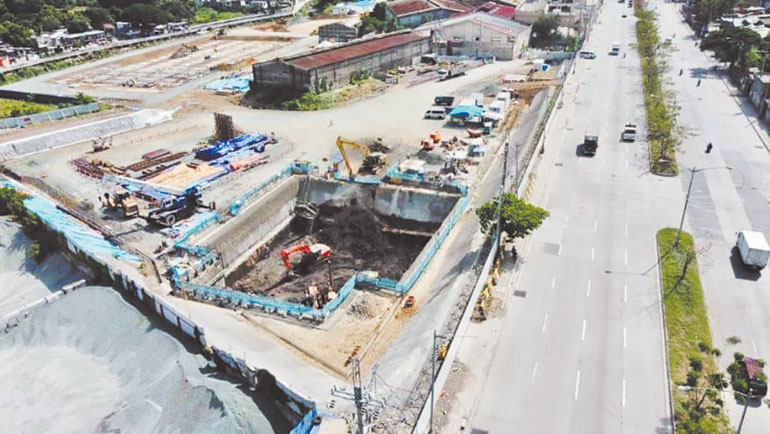
The department has also been at the forefront of improving networks of railways. This is very much highlighted by the Metro Manila Subway (MMS) Project, the country’s first underground railway system, with constructions heralded by the unveiling of the first of six Tunnel Boring Machines to be used for the construction on September 2020. The 34-kilometer subway project, set to run from Quezon City to NAIA Terminal 3 in Pasay and FTI in Taguig once fully operational by 2025, has reached 25.09% as of November 2021.
North-South Commuter Railway project
As a result of the rehabilitation of the Metro Rail Transit-3 (MRT-3), as DoTr shared in its 2020 report, the average time between trains reduced to only 3.5-4 minutes from the previous 8-9.5 minutes, thus shortening the travel in the entire line from 75 minutes to 50 minutes. Also, 22 train sets have been fielded on MRT-3’s mainline.
At the east of Manila, Light Rail Transit-2 (LRT-2) now has two new additional stations in Marikina and Antipolo, aiding commuters from Recto, Manila going to Masinag, Antipolo and back with a reduced travel time of 40 minutes. LRT-2 is also planned to be extended on the other side, from Recto to Pier 4.
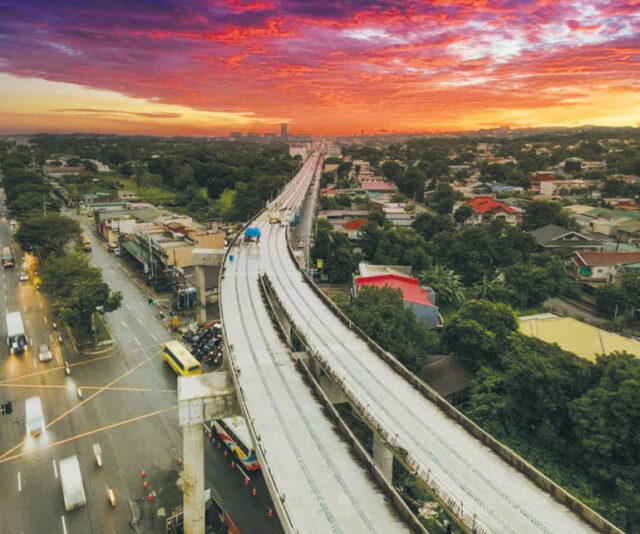
Progress is seen as well at the constructions of MRT-7, connecting Quezon City and Bulacan (62.1% complete as of this month); LRT-1 Cavite Extension, connecting Baclaran, Pasay and Bacoor, Cavite (60% complete as of August 2021); and the Unified Grand Central Station, designed to interconnect LRT-1, MRT-3, MRT-7, and the MMS.
The massive North-South Commuter Railway Project pushes through with the first leg, the PNR Clark Phase 1 (Tutuban, Manila-Malolos, Bulacan), under a 24/7 construction work schedule. Other legs of the project include PNR Clark Phase 2 (Malolos, Bulacan-Clark, Pampanga), and PNR Calamba (Solis, Manila-Calamba, Laguna).
In addition, design and procurement are ongoing for PNR Bicol, a 639-kilometer railway line that will connect Manila to Legazpi, Albay and Matnog, Sorsogon, with a spur line to Batangas City.
The 71.13-kilometer cargo-oriented Subic-Clark Railway, connecting Subic Bay Freeport Zone and Clark Freeport and Special Economic Zone, is targeted to operate by this year.
In Mindanao, pre-construction activities are currently ongoing for the island’s first railway system, the Mindanao Railway Project, which targets to reduce travel time between Tagum City to Digos City from 3.5 hours to 1.3 hours.
Road transport
In road transport, DoTr has started meeting “a pivotal need” for a more appropriate and resilient road transport system.
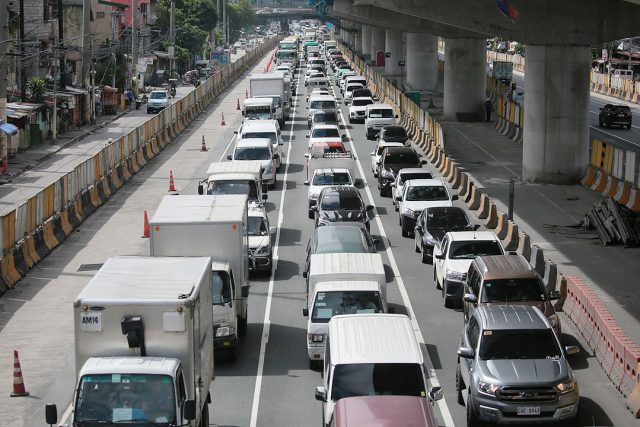
This is much evidenced by the construction of integrated terminal exchanges. While the Parañaque Integrated Terminal Exchange (PITX) has started serving commuters going to and from various provinces and cities, more land ports are planned to be built. These are the Taguig City Integrated Terminal Exchange, which aims to provide an intermodal terminal in the southern area of Metro Manila, and the North Integrated Terminal Exchange (NITX) in Bocaue, Bulacan, which aims to serve commuters coming from provinces in the north of Manila.
1 of 2
Metro Manila Subway project
LRT-1 Cavite Extension project
Other systems are also being put in place, such as the Quezon Avenue Bus Rapid Transit line (Manila City Hall-PhilCOA in Quezon City), planned to be operational in 2023; the Davao High Priority Bus System; and the Cebu Integrated and Intermodal Transport System, both targeted to be completed next year.
Elevated walkways are also in DoTr’s lineup of projects, which include the EDSA Greenways Project, with greenway nodes strategically located along with certain stations in LRT-1, LRT-2, and MRT-3; and Makati-BGC Greenways Project, which will connect MRT-3 Buendia Station (Northbound) to BGC Bus Depot.
Another highlight in DoTr’s projects for road transport is its Public Utility Vehicle Modernization Program (PUVMP), which envisions a transport sector “wherein drivers and operators have stable, sufficient, and dignified livelihood while commuters get to their destinations quickly, safely, and comfortably.” As of 2020, DoTr tallied 446 operational new/developmental routes with 2,756 operational PUVs as a result of the initial implementation of PUVMP. 1,222 of such PUVs are considered already compliant with the Philippine National Standards for PUVs.
Maritime
DoTr, together with the Philippine Ports Authority, has witnessed as well developments in maritime transport, with 379 seaport projects completed and 124 in progress as of 2020.
A highlight of such achievements is the inauguration of the new PTB of the Port of Cagayan de Oro. Noteworthy as well as the ongoing construction of a PTB at the Port of Zamboanga, which is set to be the largest PTB in the country with a capacity of 4,500.
Amid the pandemic, DoTr reported, 14 port projects were completed and virtually inaugurated in 2020. These include, among others, the Port of Borac in Coron, Palawan; Port of Ozamiz in Misamis Occidental; Port of Mansalay in Oriental Mindoro; and the Iloilo Commercial Port Complex. — Adrian Paul B. Conoza
People take photos at a park in Bayombong, Nueva Vizcaya as the country was under a more relaxed Alert Level 2 in December. — PHILIPPINE STAR/ VICTOR MARTIN
THE PHILIPPINES’ gross domestic product (GDP) growth is expected to have moderated in the fourth quarter of 2021, even as the more relaxed quarantine restrictions spurred economic activity.
A BusinessWorld poll of 18 economists yielded a GDP growth median estimate of 6.5% for the fourth quarter, and 5.3% for full-year 2021.
The fourth-quarter growth forecast is a tad slower than the 7.1% uptick in the third quarter and the 12% growth in the second quarter. However, it is a turnaround from the 8.3% decline seen during the October to December period in 2020.
Should the full-year estimate be realized, this would be a turnaround from the record 9.6% contraction in 2020, but lower than the 6.1% growth in 2019.
It would also fall within the government’s forecast range of 5-5.5%.
The poll’s 5.3% growth median estimate for 2021 compares with the International Monetary Fund’s 3.2% forecast, Asian Development Bank’s 5.1%, and matches the World Bank’s 5.3%.
Fitch Solutions and Moody’s Investors Service gave growth estimates of 4.5% and 4.8%, respectively, while ASEAN+3 Macroeconomic Research Office penciled in a 4.3% growth.
The Philippine Statistics Authority will release the GDP and December trade data on Jan. 27, a day after the agency is set to report agriculture performance on Jan. 26.
Economists attributed the GDP growth in the last three months of 2021 to the further easing of movement restrictions amid the decline in new coronavirus disease 2019 (COVID-19) cases, allowing more businesses to increase operational capacity.
Most parts of the Philippines were under the more relaxed Alert Level 2 from Nov. 5, 2021 to Jan. 2, 2022.
“Gradual easing in restrictions in Q4 likely resulted in more economic activities domestically, buoying business and consumer sentiment,” said Makoto Tsuchiya, an economist from Oxford Economics, in an e-mail. “Indeed, manufacturing PMI (purchasing managers’ index) continuously breached 50 throughout Q4, reflecting greater domestic demand.”
Manufacturing PMI jumped to a nine-month high of 51.8 in December from 51.7 in November and 51 in October as new orders increased.
A reading above 50 indicates improving conditions in the manufacturing sector from the month before.
“Consumer spending was boosted by the sharp decline in COVID-19 daily new cases as well as seasonal Christmas sales, helping to underpin GDP growth in Q4 2021,” IHS Markit Asia and the Pacific Chief Economist Rajiv Biswas said in an e-mail.
“Positive growth in personal remittance inflows from workers abroad have also helped to support consumption spending in 2021,” he added.
Personal remittances increased by 4.8% annually to $2.77 billion in November, preliminary data from the Bangko Sentral ng Pilipinas showed. Year to date, it reached $31.59 billion, higher by 5.3% year on year.
Cash remittances coursed through banks rose by 5.1% year on year in November to $2.50 billion. This brought the remittances during the 11-month period to $28.43 billion, up by 5.2%.
Emilio S. Neri, Jr., lead economist of Bank of the Philippine Islands (BPI), said Typhoon Odette may have hampered demand and business activities in the Visayas and Mindanao, “but our estimates show this was not enough to offset the meaningful rebound during the quarter.”
Typhoon Odette (international name: Rai) ravaged many areas in the Visayas and Mindanao in mid-December. It left damage to infrastructure and agriculture worth P17.19 billion and P13.3 billion, respectively.
Economists are hoping to see the Philippine economy rebound this year but the outlook is clouded by the emergence of new COVID-19 variants.
“As for 2022, the Omicron wave has by now probably put the brakes on the recovery again,” Alex Holmes, Asia economist at Capital Economics, said in an e-mail. “On the plus side, restrictions being brought in are much less stringent than previously and we don’t expect a significant further tightening.”
“Overall, the recovery is more likely to stall, than slip into reverse, and should get back on track in Q2. Nonetheless, the more drawn out the recovery the worse the long-term scaring from the pandemic will be,” he added.
BPI’s Mr. Neri penciled in a growth estimate of 7.3% for 2022, “assuming that COVID-19 cases will drop sharply by March 2022, herd immunity will be achieved by the second quarter of 2022 and schools will gradually return to face-to-face interaction.”
“Downside risks to this will, of course, be the possibility of more severe COVID variants, poor conduct of the elections, an energy crisis, surge in global inflation, faster-than-expected US central bank rate hikes,” he said.
The government is targeting a 7-9% GDP growth for 2022. — Mariedel Irish U. Catilogo
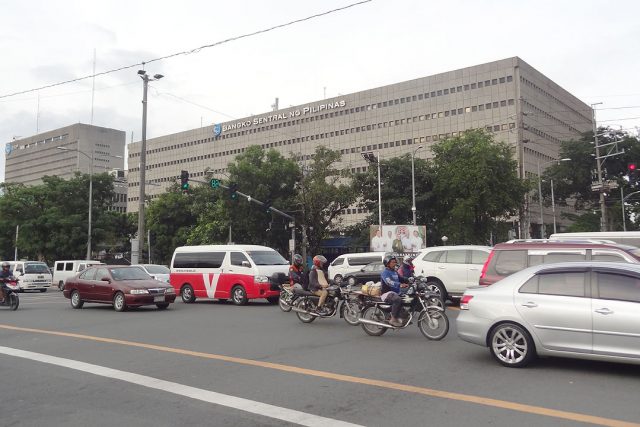
THE BANGKO SENTRAL ng Pilipinas (BSP) is likely to remain accommodative this year, but it should be prepared to act against “more entrenched” inflation or a possible capital outflow in case of faster tightening by the US Federal Reserve, according to the International Monetary Fund (IMF).
The manageable inflation outlook and continued “slack” in the economy makes an accommodative monetary stance appropriate for 2022, said IMF Representative to the Philippines Ragnar Gudmundsson.
While the December inflation print is an “encouraging” sign, he warned the BSP to look for signs that may warrant the need for monetary policy tightening.
Inflation in December eased to 3.6%, its lowest in 12 months but the full-year inflation of 4.5% still exceeded the central bank’s 2-4% target band.
The central bank expects inflation to ease to within the target at 3.4% and 3.2% for 2022 and 2023, respectively.
“The BSP should stand ready to tighten monetary policy if the rise in inflation observed last year becomes more entrenched as a result of higher commodity prices and supply-chain disruptions, or if the faster-than-expected US Fed tightening leads to capital outflows and a depreciation of the currency,” Mr. Gudmundsson said in an e-mail.
Investors are now expecting the Fed to hike interest rates three times this year, starting as early as March, according to a Reuters poll last week.
The BSP kept rates steady at its Dec. 17 meeting, vowing to maintain monetary policy support amid the threat from the Omicron variant.
BSP Governor Benjamin E. Diokno has said they would want to see four to six quarters of steady economic growth before making any policy adjustments. He said they may consider a reduction in reserve requirements of banks if there is still need to provide more support to the economy.
“It’s worth emphasizing that maintaining a flexible exchange rate provides an effective first line of defense against external shocks. Another important consideration will be to monitor surveys of private sector inflation expectations to ensure that they don’t de-anchor,” Mr. Gudmundsson said.
Asked whether the peso could hit P52 per dollar, Mr. Diokno last week said the peso will continue to be market driven and supported by a prudent fiscal position and ample exchange buffers.
The country’s gross international reserves (GIR) as of end-2021 stood at $108.891 billion, down from the record $110.117 billion a year earlier as well as the $111-billion end-2021 projection by the central bank.
Still, the GIR is enough to cover 10.3 months’ worth of imports of goods and payments of services and primary income. It is also equivalent to about 8.8 times the country’s short-term external debt based on original maturity and 5.9 times based on residual maturity.
Meanwhile, Mr. Gudmundsson noted how the central bank has started to reduce its purchase of government securities as well as its loan to the National Government.
“While the exit strategy should be gradual and consistent with the economic recovery taking hold, phasing out direct budgetary financing as conditions in the financial markets normalize will help preserve the BSP’s operational capacity and independence,” Mr. Gudmundsson said.
“This should ultimately contribute to the effectiveness of monetary policy and the smooth functioning of markets,” he added.
Mr. Diokno earlier said the BSP bought an average of P282 million of government securities in the secondary market from Dec. 1 to 23, significantly lower from the peak when it averaged P14.7 billion every day in June 2020.
Last month, the BSP approved a P300-billion zero-interest loan to the National Government, lower than previous advances.
The central bank will have its first policy review for the year on Feb. 17.
A worker puts boxes of tikoy at a store in Binondo, Jan. 22. — PHILIPPINE STAR/ MICHAEL VARCAS
By Revin Mikhael D. Ochave, Reporter
LOCAL RETAILERS remain optimistic for the industry’s recovery this year despite new variants of the coronavirus disease 2019 (COVID-19) posing a threat to the economy.
Roberto S. Claudio, Philippine Retailers Association (PRA) vice-chairman, said the group expects sales projections to remain positive as long as the strictest form of lockdown is not implemented to curb the COVID-19 infections.
“So long as there will no longer be major lockdowns that will be imposed by the government and the fact that people are seeing less consequences on the Omicron variant, fed up with the quarantine and are now going out to shop, eat and travel, our projections will remain positive in 2022 starting in the second quarter,” Mr. Claudio said in an e-mail interview last week.
Metro Manila is under Alert Level 3 until Jan. 31 due to a spike in COVID-19 cases, believed to be caused by the more infectious Omicron variant.
“Early 2022 with the Alert Level 3 and Omicron variant, (the retail) industry sales in January have dropped almost 50% from average 2021 levels. We expect this to linger for the rest of the first quarter of 2022. We are expecting a rebound (for) the rest of the year. No setback is anticipated. Retail industry is re-engineering and innovating to address the changing consumer environment,” Mr. Claudio said.
Steven T. Cua, Philippine Amalgamated Supermarkets Association (Pagasa) president, said in a mobile phone message that supermarket operators remain optimistic about the sales outlook.
“Barring continuous mutations and prudent entries of travelers by the different nations, societal acceptance of vaccination in general, by now, and governmental pressure for the unvaccinated to get inoculated, Pagasa would choose to see the light at the end of the tunnel sometime this year,” he said.
Mr. Cua said it bodes well for the industry that vaccinated individuals are more confident as they learn to live with COVID-19.
“People (are) beginning to live with it and find it bearable,” he added.
In an interview with ABS-CBN News Channel last Thursday, Rustan Commercial Corp. President Bienvenido “Donnie” V. Tantoco III said the trajectory of the retail industry’s recovery is still intact despite the Omicron-driven surge.
He said the company had seen a recovery in sales in the last four months of 2021, with some categories reporting better figures compared with pre-pandemic levels.
“(Omicron) was not completely unexpected because it started in other countries. Our attitude right now is that the momentum or the shift from pandemic to endemic that we felt was already happening, in spite of Omicron — that trajectory is still intact,” Mr. Tantoco said.
“What we’ll see when we get to the endemic mode is maybe a little bit more revenge shopping, but that is just very short term,” he added.
Mr. Tantoco said retailers need to adapt to the changing consumer preferences.
“What we need to do is to understand that (change) deeply and we need to adapt what we do, so that it aligns with how the customer has changed. Because that alignment will require a different kind of organization than what we were pre-pandemic, then the organizational change is probably the biggest challenge,” he added.
VARIOUS business groups and foreign chambers are pressing the Bicameral Conference Committee to adopt the “most liberal provisions” of a measure amending the Public Service Act (PSA), which they said would help the Philippines attract much-needed foreign investments as it recovers from the pandemic.
At the same time, foreign chambers and other local groups ramped up the pressure on the Senate to immediately give its concurrence to the ratification of the Regional Comprehensive Economic Partnership (RCEP).
This as Congress only has two weeks to go before it goes on a break on Feb. 4 for the election campaign.
In a statement, 22 business groups and foreign chambers said the amendment to the PSA is one of the “most important” reforms for the Philippine economy and is “essential to restoring and eventually exceeding pre-pandemic rates of economic growth.”
“This will improve the reputation of the Philippines as an economy that welcomes foreign investment, and annual FDI (foreign direct investment) inflow levels should increase to levels well above Malaysia and Thailand and may even begin to approach Vietnam,” they said.
Business groups that signed the statement include the American Chamber of Commerce of the Philippines, British Chamber of Commerce of the Philippines, European Chamber of Commerce of the Philippines, Financial Executives Institute of the Philippines, Management Association of the Philippines, and the Makati Business Club.
The Bicameral Conference Committee is currently consolidating the House and Senate versions of the bill amending the PSA. The measure seeks to allow 100% foreign ownership in telecommunications, air carriers, domestic shipping, railways and subways, and canals and irrigation. The Constitution currently limits foreign ownership in sectors defined as public utilities to 40%.
The business groups said the bicameral committee members should adopt the most liberal provisions, such as allowing fully foreign-owned companies to hold operations and maintenance concessions of airports and seaports. Tollways and expressways should also be liberalized for foreign investments, they added.
Foreign ownership restrictions on air carriers should also be lifted to give them the option to access foreign capital, they said.
Telecommunications should also be excluded from the definition of public utility.
“Likewise, the exclusion of passive infrastructure and value-added services from the definition of ‘telecommunications’ to avoid erecting a new and substantial barrier to the entry of competition in the market for internet services which would stifle the growth of community internet,” they said.
Public utility vehicles should be excluded from the meaning of public utilities. “This reform will be advantageous to the Philippine economy as it will increase competition in vital domestic land transportation services and result in increased foreign investment helping to modernize the industry,” they said.
Senator Mary Grace Natividad S. Poe-Llamanzares, chair of the Senate Public Services Committee, said in a Viber message there will be no hurdles to the ratification of the measure before the break.
“The bill strikes a fair balance between today’s economic imperatives and national security with adequate safeguards but not constraining growth and development. At the end of the day, what we aim is to give our people better services at lower costs that will improve their quality of life,” Ms. Poe-Llamanzares said.
SENATE PRESSED ON RCEP Meanwhile, the Joint Foreign Chambers (JFC), Confederation of Wearable Exports of the Philippines (CONWEP) and its affiliate, the Coalition of Philippine Manufacturers of Personal Protective Equipment (CPMP), called on the Senate to immediately give its concurrence to the RCEP.
“As business associations representing major industrialized economies, we are concerned the Philippines export industry that has been severely hit by the pandemic, will miss out unless this free trade agreement is approved by the Senate,” Julian Payne, Canadian Chamber of Commerce of the Philippines president, said in a statement.
Lars Wittig, European Chamber of Commerce of the Philippines president, said the ratification of RCEP will be a complement to other economic reforms to show the Philippines is an “increasingly attractive location for new and expanding foreign investment.”
The RCEP is a free trade agreement among the 10 members of the Association of Southeast Asian Nations and five of its largest trading partners China, Japan, South Korea, Australia and New Zealand. It took effect on Jan. 1, with 11 economies having ratified it.
In a letter sent to the Trade department, CONWEP Executive Director Marites Jocson-Agoncillo and CPMP Executive Director Rosette Carrillo said global brands have changed their orders to the Philippines from Vietnam as a result of the hesitation of the latter’s workforce to return to factories due to the COVID-19 pandemic.
“We need RCEP to sustain such opportunities. Otherwise, we again lose these orders, as well as significant planned investments on apparel and textile from countries such as China, Taiwan, and others, to Vietnam which is expected to resume its operations in the next couple of months,” they said.
Meanwhile, representatives from the agriculture sector and civil society organizations urged the Senate to reject or defer any decision on the RCEP.
In a separate statement, the groups said many of the claimed gains from RCEP are “insignificant.”
“RCEP proponents have conveniently downplayed, if not deliberately concealed, one crucial caveat about the agreement — that any tariff concession from our trading partners under RCEP will not be exclusive to the Philippines, and will actually be available to all other member countries,” they said.
“Moreover, while RCEP may provide more incentives for foreign investors to come to the Philippines, they can just as easily decide to place their money in other countries where the environment for doing business is more attractive,” they added.
The statement was signed by representatives of Agricultural Sector Alliance of the Philippines, Inc.; Samahang Industriya ng Agrikultura; Pork Producers Federation of the Philippines, Inc.; Federation of Free Farmers; and United Broiler Raisers Association, among others. — Revin Mikhael D. Ochave
with embellished men’s looks at Paris Fashion Week
PARIS — Dior Homme took to the catwalk with a lineup of embellished men’s looks, offering a romantic take on tailoring for one of the major shows of Paris fashion week.
Fashion industry events have remained subdued due to the recent surge in coronavirus cases, which kept many international visitors from attending, but the Dior show drew crowds of onlookers to the Place de la Concorde angling for a view of the celebrity arrivals, who included Naomi Campbell.
Inside the temporary venue, models strode down a replica of the ornate Pont Alexandre bridge in grey Birkenstocks and sequined derbies, showcasing the designs drawn up by Dior men’s artistic director Kim Jones.
“I wanted to look at the archive, at the purity of the beginnings of the house, at its original impulse,” said Mr. Jones, who dedicated the show to fashion journalist Andre Leon Talley, who died on Tuesday last week.
Drawing on silhouettes from early collections of the 75-year-old label, which belongs to LVMH, the designer tweaked the house’s famously feminine bar jacket, offering a version for men.
He brightened the lineup’s muted palette of grey, beige, and ivory tones with embroidered lily-of-the-valley flower patterns and shimmery patches of sequins, applying them to sweaters and sleek puffer jackets.
Finishing the looks, models wore trim berets that matched their outfits. The house’s hat designer, Stephen Jones, accompanied the designer for his post-show bow, when a burst of sunlight was projected onto the backdrop of a grey, Paris skyline. — Reuters
AMAZON.COM, Inc.’s upcoming physical fashion store and app are seen in this handout image obtained Jan. 19. — AMAZON.COM INC/HANDOUT VIA REUTERS
AMAZON.COM, Inc.’s recipe for the department store of the future includes algorithmic recommendations and what one corporate director called “a magic closet” in the fitting room.
The online retailer is making another push to grow its fashion business, announcing on Thursday it will open its first-ever apparel store this year, with a tech twist. “We wouldn’t do anything in physical retail unless we felt we could significantly improve the customer experience,” said Simoina Vasen, a managing director.
At 30,000 square feet (2,787 sq meters), the planned Amazon Style shop near Los Angeles is smaller than the typical department store. Model items are on the racks, and customers scan a code using Amazon’s mobile app to select the color and size they would like. To try on the clothes, which are stored in the back, shoppers enter a virtual queue for a fitting room that they unlock with their smartphone when it is ready.
Inside, the dressing room is “a personal space for you to continue shopping without ever having to leave,” Ms. Vasen said. Each has a touchscreen letting shoppers request more items that staff deliver to a secure, two-sided closet “within minutes,” she said.
“It’s like a magic closet with seemingly endless selection,” Ms. Vasen said.
The touchscreens suggest items to shoppers too. Amazon keeps a record of every good a customer scans so its algorithms personalize clothing recommendations. Shoppers can fill out a style survey as well. By the time they arrive in a fitting room, employees have already deposited customers’ requested items and others that Amazon has picked.
Shoppers can opt out with a concierge’s help, Amazon said.
Amazon has unveiled tech to help customers choose outfits before. The company has surpassed Walmart, Inc. as the most-shopped clothing retailer in the United States, according to analyst research.
But it still has room to expand and compete with the likes of Macy’s, Inc. and Nordstrom, Inc., which have opened smaller-format stores. Amazon’s lineup of physical grocery and convenience shops have yet to upend brick-and-mortar retail.
The company’s new store aims to attract a broad range of shoppers with hundreds of brands, Ms. Vasen said, declining to name examples.
It has hundreds of associates, and no cashier-less checkout like some Amazon stores, Ms. Vasen said. Still, using a biometric system known as Amazon One, customers can pay with a swipe of their palm. —Reuters
ARE we really what we wear, when what we wear frequently isn’t Filipino?
As part of its month-long celebration of Philippine Tropical Fabrics Month this January, the Philippine Textile Research Institute (PTRI) held a talk titled “Mainstreaming Philippine Textiles,” which gave an overview of the state of Philippine textiles and what we can do to use more of it, thereby boosting local economy.
There are gaps in all areas of production, from producing enough fibers for local needs, to having to import finished fabrics for local production, to using local textile for local products for local use.
Take abaca, also known in international markets as Manila hemp. According to Carissa Cruz-Evangelista, Chair of the Philippine Fashion Coalition, a whopping 97% of our abaca is exported, and the country supplies 87% of the world’s abaca. Its applications include commercial textiles, used for fabric for fashion, and industrial purposes — for example, we export 94% of our pulp, and 5% cordage, and 43% of the abaca exported to the US is used for twine and cordage.
However, she also emphasized that the world’s first-class abaca comes from Ecuador. “Where we are now is that there’s actually not enough abaca to supply the world demand,” she said. “We only utilize 70-80,000 hectares, and it’s not enough.”
Aside from not growing enough abaca for the world’s needs, there is a lack for locally grown fibers for local needs.
There are gaps in production, she said, particularly at the agricultural level, such as not producing enough cotton. “We tend to import yarns, like our cotton has been imported since there’s not enough [grown locally],” she said. “The challenge is to be able to process these indigenous fibers for the Philippines — for Philippine consumption.”
So, the Philippines has to import textiles. “The issue that we have is that we import a big percent of our textile requirement for the garments and footwear industry,” Ms. Cruz-Evangelista pointed out. She referred to a Board of Investments (BoI) report from 2016, which saw $180 million in Philippine textile exports, but $1.2 billion in textile imports.
She points to a decline in cotton planting, garment manufacturing, exportation, and an added wound from the pandemic, a decline in employment in all these fields. “The government and the private sector have created a plan to be able to work with different exporters to be strengthened through trade agreements,” she said though.
SOFT POWER On a cultural level, there’s also the prevalence of Western wear. “There’s nothing wrong with Western wear, but what we hope to promote with our coalition is to wear Filipino traditional clothing as a form of cultural soft power,” she said, using Joseph Nye’s definition of soft power as “shaping preference of others through appeal and attraction, not through coercion or payments.”
She cites as an example the Korean hallyu phenomenon, which saw the export of Korean culture — through food, music, and media — resulting in economic gain. “All of these have a direct impact on the economy of (South) Korea,” she said. “The challenge is for us to be able to follow the Korean model, but then improve it as Filipinos.”
She pointed to 2022 television show The Broken Marriage Vow (which is a remake of a popular British TV show, Doctor Foster, which has been adapted by five other countries). The production design of Broken Marriage Vow uses local designers and fabrics extensively. She hopes that local shows could be exported, giving international exposure to the products used in the programs, much like what Korea does in K-drama.
While this seems like a far-off goal, she points out that in the 1950s, under the influence of the Americans, there had been deliberate efforts to grow the local textile industry. In 1959, the country had reached its production requirement for the national level, extending this strength to the end of the 1960s. The decline in production involved the advent of the importation of cheap textiles, as promoted by the government.
“What we hope would happen would that there would be more domestic preference again at this time, and support for both the artisan weavers and also the commercial textile mills.”
Solutions she finds include developing the manufacturing industry, since we export so much of our raw materials. “We had exported a great deal of our pulp, of our abaca. The semi-processing should at least be done here. We should be doing our teabags and doing other products made of abaca.”
She also cited RA 9242 (the Philippine Tropical Fabric Law) which prescribes the use of local fabrics for uniforms of public officials and employees, as helping the cause. “We have to do our part. That would include doing legislation, regulation for sustainability, and also for domestic preference.”
Of course, it’s easy to say “#buylocal” and all the other hashtags promoting the same idea, but the change should also be institutional: she calls for the development of not only natural fibers, which we already export, but the development of chemical fiber, and smart fibers.
“It’s the love of the textile and the love of our culture, but it is also the economic support for all the groups within the (fashion) ecosystem,” she said, counting the farmers who plant the fibers to the retailers who sell the clothes made from those fibers, and everyone else in between. “Even if we are inside now because of the pandemic, we still have a choice to not just purchase, not just advocate: but then, dream, and create a new kind of ecosystem.” — J.L. Garcia
PARIS — In a sign of the French luxury sector’s booming fortunes, Chanel will on Thursday inaugurate a huge complex of ateliers where artisans from around a dozen accessory suppliers create shoes, embroidery and other handmade crafts.
Pent-up demand from international buyers eager after months of lockdown to splash out on fine clothes and accessories from the birthplace of haute couture — or at least stamped with the logo of one of France’s famous fashion houses — has turned the sector into one of the country’s leading exporters.
With an eye towards harnessing this growth spurt by fostering collaborative work, Chanel has grouped around 600 craftsmen together over seven floors, including two below ground, at the site in a working-class Paris suburb.
The craft houses represented, each with its own specialization, include lingerie label Eres, interior decoration Lesage Interieurs, and jewelry maker Goossens.
“When we need to work with, say the jeweler Goossens, we won’t have to cross all of Paris for that, we knock on the door next door and we’re set,” said Hubert Barrere, artistic director of lacework specialist Maison Lesage.
“Same for feathers … This is an extraordinary gain for creativity and synergies.”
President Emmanuel Macron praised the fashion industry as France’s top export sector on Friday, as he inaugurated the complex of ateliers on the edge of the capital’s 19th arrondissement, known as 19M and also including an exhibition space open to the public.
“Today, when I look at figures from 2021, it (fashion) is the leading export sector of our country,” Mr. Macron told an audience of apprentices gathered at the new Chanel-sponsored site.
“Your crafts are artistic crafts … Your crafts are important for the economy,” he said, adding that the sector accounted for 600,000 direct jobs in France.
The president and his wife Brigitte, who wore a Chanel haute couture jacket, spent two hours visiting the ateliers, examining elaborate embroideries work and speaking with craftspeople.
Mr. Macron, gearing up for a presidential election in April though yet to officially declare his candidacy, showed support for the fashion industry early on in his presidency, inviting designers to the presidential palace for dinner before the pandemic hit.
Out of 600,000 workers in the industry, 130,000 are employed in crafts-related jobs, according to estimates from the presidential office. — Reuters




 “Further, we will strive to demonstrate resilience in the face of COVID-19 by implementing stringent health and safety protocols in all public transport systems. Your DoTr also remains alert and active in response efforts on whatever challenges, calamities, and uncertainties we are facing and will be facing as a nation,” Mr. Tugade said.