Home Blog Page 6501

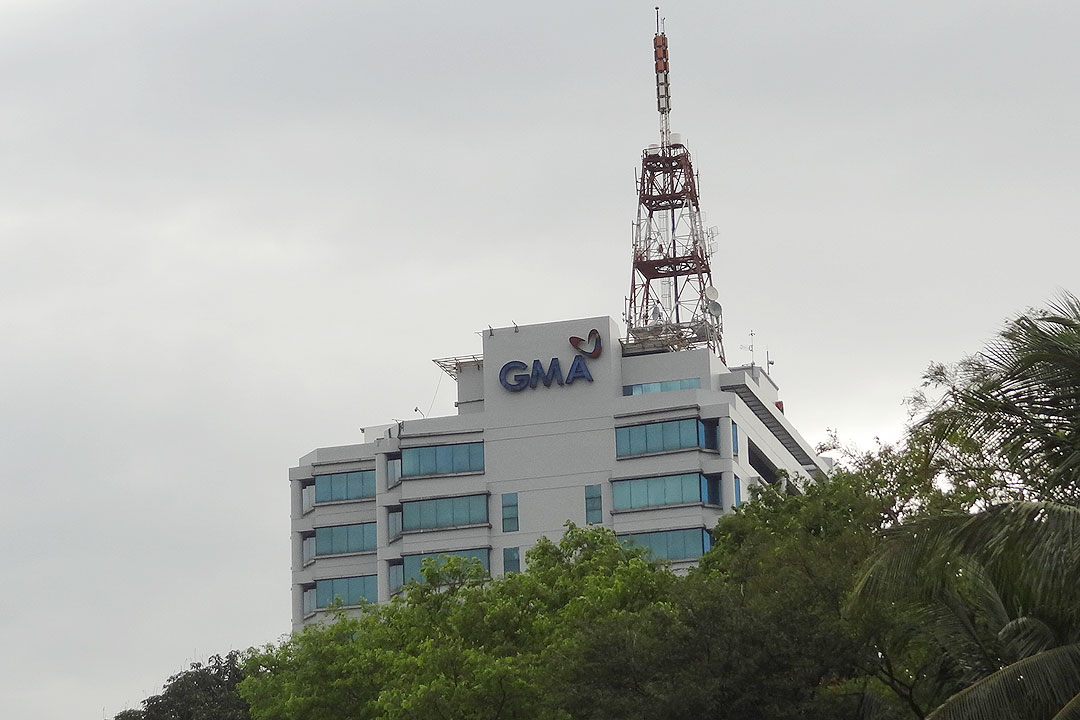
GMA allots P1.98B for capex to boost digital transmission, regional network

BW FILE PHOTO
GMA NETWORK, Inc. is allotting P1.98 billion for its capital expenditures this year. — BW FILE PHOTO

LISTED MEDIA company GMA Network, Inc. said it has budgeted P1.98 billion for capital expenditures (capex) this year, which will cover the expansion of its digital transmission network and regional television network.

“For 2022, the parent company has allotted P1.978 million for capital expenditures,” the company said in its annual report.

“This will be financed by internally-generated funds,” it added.

GMA Network Chairman and Chief Executive Officer Felipe L. Gozon has said the capex for 2022 would cover “the expansion of our digital transmission network, upgrading of our post-production capabilities and of our content playout facilities, and expansion of our regional TV network, etc.”

The media company announced in January last year that it had set aside more than P20 billion for capex and content costs for 2021 until 2023.

The network saw its attributable net income rise by 26% to P7.53 billion in 2021 from P5.98 billion a year earlier.

Its consolidated revenues reached P22.45 billion, an increase of 16% from P19.34 billion in 2020. This was largely attributable to an increase of 19% in advertising revenue to P21.02 billion from P17.73 billion previously.

“It can be recalled that it was in early May of last year when closest rival ABS-CBN’s free-to-air Channel 2 went off air, following the issuance of a ​cease-and-desist order to operate by the National Telecommunications Commission (NTC) upon the expiration of ABS CBN’s 25-year franchise,” the company noted.

“From then on, the network’s revenues were buoyed by the shift in advertising placements from the defunct channel,” it added.

GMA Network shares closed 8.69% lower at P14.50 apiece on Wednesday. — Arjay L. Balinbin

Philippine Racing Club to spin off horseracing business to subsidiary

PHILIPPINE RACING Club, Inc. (PRC) announced on Wednesday that it will focus on real estate development, with its horseracing business to be spun off to a wholly-owned subsidiary.

“PRC will no longer pursue the renewal of its horseracing franchise under its own name,” the company said in a disclosure.

Santa Ana Park Racing Club, Inc. (SAPRC), its wholly-owned subsidiary, will apply for a new horseracing franchise with the government as the company’s current permit is due to expire in October.

Starting November 2022, PRC said it will concentrate on its real estate development business, while the horseracing business will be run and managed by SAPRC.

The company said this new setup will “immediately bring economic benefits to both businesses.”

PRC said it will undergo a few changes in the coming months due to the business shift, including the retrenchment of employees assigned to horseracing operations.

“PRC has about 175 regular employees but we have not identified at this time who may be affected by this event. This retrenchment will not impact the results of operation of PRC for 2022 because the retirement fund has enough resources to cover the expected separation benefits of affected work force,” it said.

“As to the employees and workers who will be affected by the expected retrenchment, they will have a better chance of similar employment with SAPRC. Upon approval of a new franchise, SAPRC will basically take over the horseracing business of parent company PRC, SAPRC will require same operation and similar number of labor complement as that of PRC during its horseracing operation until October 2022,” it added.

The company added that the net impact of the change on its revenues and expenses will not be significant.

“We do not expect any major deviation in the monthly revenues and expenses for 2022 compared with 2021. Under this expectation and with no horseracing operation in November and December 2022, the net financial impact on results of operation for the year is not expected to be material,” PRC said.

“PRC remains the owner of the horseracing related assets even after the expiration of the horseracing franchise. As to the future arrangement on the use of the racetrack facility and the betting system, we do not know yet at this time. But any business arrangements that may be agreed will definitely be beneficial to both PRC and SAPRC,” it added.

At the stock exchange on Wednesday, PRC shares remained unchanged at P5 apiece. — Luisa Maria Jacinta C. Jocson

Why chef Sau is in love with Pampanga

PHOTO FROM FACEBOOK.COM/25SEEDS/
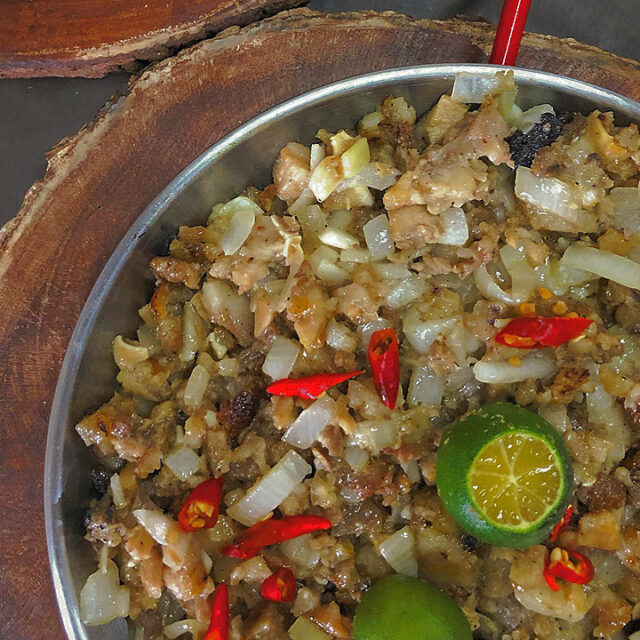
SISIG PAELLA — PHOTO FROM FACEBOOK.COM/25SEEDS/

CELEBRITY chef Sau del Rosario, who had spoken at the prestigious San Sebastian Gastronomika culinary conference in Spain before the pandemic, shared his love for Pampanga during a luncheon at his Angeles restaurant, 25 Seeds by Café Fleur.

The restaurant is located at the Dycaico ancestral house, an impressive pile in that city, with wooden floors, marble-topped tables, and wrought-iron banisters. BusinessWorld was there on the sidelines of a trip with Mama Sita earlier this month (story here: https://www.bworldonline.com/arts-and-leisure/2022/04/13/442326/all-in-the-family-5/). It seems appropriate that Mr. Del Rosario’s restaurant is located in such a storied house when his favorite thing about Pampanga is its history.

Pampanga is sometimes pegged as one of the country’s culinary capitals. Asked if its reputation has merit, he says, “I agree 100%.”

“We’re in the middle of Luzon. When the Spaniards came to the Philippines, most of them stayed in Pampanga,” he said as he explained why Pampanga then has such a rich culinary heritage. Owing to its location, he says, it was easy for them to defend this space. “I think it’s a melting pot.”

Furthermore, its coordinates give the province another advantage. Since it is located in Central Luzon, where no large bodies of water are present (save for its rivers), “walang fish (there aren’t any fish),” the chef pointed out. “Our specialty is really meat… it’s very unique in the Philippines, because a lot of Philippine regions rely so much on seafood. And because we learned from the Spaniards, it’s so meticulously done,” he said.

Ang taas ng kalibre ng panglasa nila (their standards for taste are so high),” he says about Capampangans.

His restaurant 25 Seeds is named so for the 25 years he had spent in the culinary industry sq.m. at least when it opened in 2017. With an additional five years of staying power under his belt, Mr. Del Rosario discussed what he has learned thus far.

“It’s not easy. I was away for quite some time,” he said, citing stints in Paris, Singapore, Thailand, and China. “I’ve always wanted to put up something like this, in honor of my mom. It’s not easy because there are so many factors. For example, marami nang chefs dito (there are already a lot of chefs here),” he pointed out.

“I’ve learned that I have to do what I need to do. I have to have good food, and that’s what I did.”

On one hand, while he’s devoted to the land, he does cite one problem while also warning that “I’m generalizing Filipino food.” The problem is “it’s so hard to sell it abroad.”

“My mission is how to refine it,” he says, but then he speaks about the efforts of other chefs: “When they refine, redo Filipino food, it’s very extreme… they make it so degustacion that you can hardly see the food.”

His idea of refining Filipino food is not so extreme. “I will stay in the middle. I will not change the recipes… but [I will] make it more presentable, make it look nice.”

There are a number of differences between running a restaurant in a big metropolis like Metro Manila and one is a smaller provincial city. He should know, since he opened Cafe Fleur in Makati’s Poblacion, and plans to open another venture in about three weeks.

“In Manila, it’s very challenging, because it’s very competitive,” he said.

“Here, hindi eh (it is not). You could excel here if you want. But then, wala pang market dito (there isn’t a market here). The spending power is not that great as in the city,” of the food scene in Angeles.

In jest he says, “Kuripot ang mga Capampangan (Capampangans are stingy). They have their dinners at home sq.m. because they’re all good cooks,” he said sq.m. that, and according to him, they can’t resist the chance of showing off their antiques and china.

“I always come back. I will never give up on Pampanga. I love this place so much.” sq.m. — Joseph L. Garcia

The Wine Similes for Presidentiables

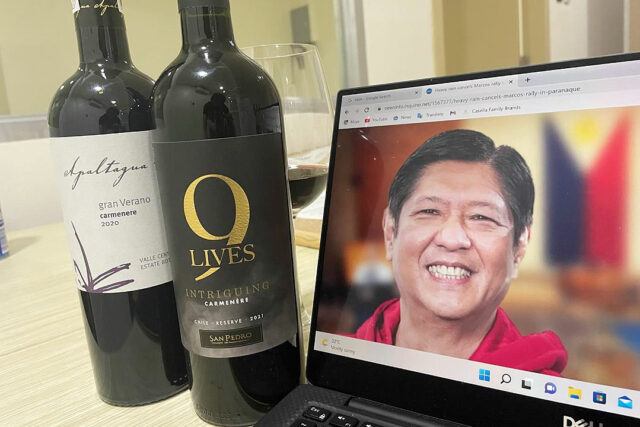
Presidentiable Senator Bongbong Marcos as Carmenere wine

WE are now just weeks away from our extremely crucial presidential election, and the poll frenzy is close to peaking as seen in the intensifying propaganda hurled at each other by the candidates’ camps.

While I am not a political journalist and do not intend to be one, I thought it would be entertaining to compare the current top five presidentiables to grape varietals that make up commercial wines.

I did similar articles for the past two presidential elections, where Noynoy Aquino and Rodrigo Duterte ended victorious in 2010 and 2016 respectively, but back then I compared the presidentiables to specific wine brands. In those articles, written when I was still contributing to another newspaper, I had former President Aquino as Bordeaux’s Chateau ClercMilon, a 5th growth from the Rothschild wine royalty (obviously referring to Noynoy’s parents Ninoy and Cory, both political powerhouses), and present President Digong Duterte to Screaming Eagle, Napa Valley’s iconic, robust, and out of nowhere wine that changed the Napa luxury wine landscape in the mid-1990s — it also helped too that the eagle is also symbolic of Davao where our president was mayor for decades.

This time, I feel the wine varietals make for a better comparison. In order of most recent survey standings:

BONGBONG MARCOS — CARMENERE
Ferdinand “Bongbong” Marcos, Jr. is a former governor, congressman, and senator, but better or even notoriously known, depending on ones’ political leaning, as the son of former Philippine president and dictator, the original Ferdinand Marcos, Sr. I liken Senator Bongbong Marcos to the Carmenere grape varietal.

Carmenere, like the Marcoses, has been around for ages it seems. Yet it took cuttings from Bordeaux, mistakenly taken by Chilean oenologists in the mid 19th-century who thought at first it was Merlot, to give this varietal its second lease on life. Carmenere would eventually flourish under Chilean vineyard conditions.

Carmenere was one of the six original red varietal grapes used in the blend to produce the world-famous claret of Medoc Bordeaux before the phylloxera plague.

Phylloxera is an insect pest that destroys vineyards by feeding on the roots and leaves of grape vines. Phylloxera was first sighted in 1863 and by 1870 it had become a plague that was devastating the majority of the vineyards in Europe, especially in France and in Bordeaux. Carmenere was the most affected varietal in this region during phylloxera devastation and is close to extinct in post-phylloxera Bordeaux.

However, in Chile, Carmenere has risen to superstar status and is now taking the wine world by storm.

Concha y Toro’s Carmin de Peumo and Montes Purple Angel, both made with Carmenere, are just two examples of very sought after Carmenere wines — both are critically acclaimed and selling at $100/bottle each.

Like Carmenere, the Marcos family’s political status was thought to have been dead or dying after the EDSA Revolution of 1986, where Marcos Sr., his family including Bongbong, and cronies were among the 80 or so individuals sent to exile in Hawaii. Bongbong Marcos’ political career is therefore like a rebirth of the Carmenere varietal in Chile — but it did take much less time.

Just five years after their exile, Bongbong Marcos returned to the Philippines as Marcos Sr. passed away in Hawaii, when then President Cory Aquino agreed to let the Marcos family come back to the country to face trial. In 1992, just a year after his return, Bongbong Marcos returned to politics as the elected congressman of the 2nd district of Ilocos Norte, the known bailiwick of the Marcoses.

Another parallel between Bongbong Marcos and Carmenere is that Bongbong ran for his first national post as senator in 1995 and failed to make it to the available 12 slots. Carmenere, on the other hand, had been mistaken for Merlot for close to a century and a half, and it was only in 1994 that Carmenere was recognized by Chile as its own varietal, and since this acknowledgment, Carmenere has become Chile’s proudest signature varietal.

Carmenere’s star started shining more brightly only in the 21st century but there were a lot of hiccups along the way in competing with far more popular varietals like Cabernet Sauvignon and Merlot. Bongbong Marcos ran a second time as senator in 2010 and this time won his first national post. He lost in the vice-presidential run in 2016, albeit a very close race, but is now going for the top position of presidency.

Could Bongbong Marcos pull off a “Carmenere” act?

LENI ROBREDO — GRENACHE
Maria Leonor “Leni” Gerona Robredo is a Filipino lawyer, social activist, and former congresswoman who is the incumbent vice-president of the Philippines. She was the wife of the late Department of Interior and Local Government secretary Jesse Robredo. I liken VP Leni Robredo to the Grenache grape varietal.

Grenache — or Garnacha as it is called in Spain —  is not big as a mono-varietal wine but is the major varietal in top wine regions like Spain’s Priorat and French Northern Rhone wines of Gigondas, Chateau neuf-du-Pape, and Cotes du Rhone. Like Grenache, VP Leni is largely recognized as unassuming and down-to-earth, yet she has undeniably played an important role in the ongoing fight against the COVID pandemic despite being at odds often with the present Duterte administration — just as Grenache provides the flavor backbone of several of these top-notch regional wines without getting its due recognition as a great varietal like a Cabernet Sauvignon or a Pinot Noir.

In Australia, Grenache is doing well as a single varietal wine, with their Old Bush Vine Grenache being extremely popular now because of its aromatics, lovely acid backbone, and berry-laden flavors.

The other similarity between VP Leni and Grenache is that Grenache also makes arguably the best quality dry rosé wines in the world. The best-known rosé wine regions, like Provence France and Navarra Spain, make their wines with Grenache.

Turning from the color “Yellow” to “Pink” during this presidential campaign was a smart strategic move, and, with the sweet Pink Moscato and a slew of dry-style rosé wines becoming more and more popular and mainstream with wine lovers, could VP Leni make that run too and be our next president?

ISKO MORENO — TEMPRANILLO
Francisco “Isko Moreno” Domogoso is the present mayor of Manila and a former movie star who grew up in the slums of Manila. Mayor Isko is known for his candid stories of his past, including collecting junk as a livelihood, and for scavenging for leftover food in restaurants to be able to eat. I liken Mayor Isko Moreno to the Tempranillo grape varietal.

Tempranillo is Spain’s number one go-to red varietal and is key in Spain’s most renowned wine regions, including in Rioja, Ribera del Duero, and Toro. Tempranillo comes from the Spanish word “temprano” which means “early” and is a reference to this varietal ripening earlier than most Spanish red grapes. This can easily be said of Mayor Isko who also had an earlier career in local politics than most of the presidentiables.

He started when he won his first elective post as a city councilor in the first district of Manila when he was only 23 years old. Isko Moreno was a three-time councilor and then a three-time vice mayor with consecutive terms from 1998 to 2016 — all serving his constituents in Manila.

After a failed senatorial bid in 2016, Isko Moreno was back in Manila, running for mayor this time in 2019 and he easily bested his two powerful predecessors — Erap Estrada and Alfredo Lim.

Mayor Isko is exactly like Tempranillo, as outside of Spain, Tempranillo hardly gets as much recognition as it should be given considering how amazing and complex this varietal is —  same as Mayor Isko’s Manila transformation in just one term as mayor.

Mayor Isko is a Manila phenomenon that may not translate to the national level as experienced by his senatorial loss in 2016. Could this 2022 presidential election prove Mayor Isko is more than a Manila hit the same way Tempranillo needs to transcend Spain?

MANNY PACQUIAO — TANNAT
Emmanuel Dapidran Pacquiao — better known as Manny Pacquiao —  is a current Filipino senator and a renowned recently retired professional boxer nicknamed the “Pac-Man.” Senator Manny “Pac-Man” Pacquiao is regarded as one of the greatest professional boxers of all time, having been the only eight-division world champion in the history of boxing, with an unprecedented 12 major world titles. Senator Pacquiao is also the only boxer to hold world championships across four decades — from the 1990s through the 2000s, 2010s, and the 2020s. I liken Senator Pacquiao to the Tannat grape varietal.

While Tannat is the least known among my wine varietal references, it is big in south-west France in the region of Madiran and is known for its firm, rustic, and powerful tannins — same as Senator Pacquaio who as a boxer was gifted with brute force and a one-punch knockout power.

Tannat also ages better over time, and Senator Pacquiao, over the course of his close to three-decade boxing career, also improved with time as he was able to move up in weight classes and remained successful as he reached his 30s and 40s.

Tannat is a mystery grape varietal to most wine consumers who rarely get a chance to try it. Only in Uruguay, South America does this varietal flourish. This is similar to Senator Pacquiao as a politician. While his boxing excellence would never be questioned, his political contributions remain a huge mystery given that he only recently retired from boxing to become a full-time public servant. Prior to retirement he was juggling being a champion fighter and an elected official (as a senator, and previously as a congressman) at the same time.

Tannat varietal grapes make good complex and delectable wines, but unless wine drinkers know of it, it will remain an enigma. This is what I feel Senator Pacquiao is going up against as a politician and a potential next president of our country.

PING LACSON — GAMAY
Panfilo “Ping” Morena Lacson is a long-tenured senator and a former director general of the Philippine National Police (PNP) from 1999 to 2001 during the shortened Joseph “Erap” Estrada presidential term. Senator Lacson was one of the highest-profile PNP personnel in the country and his heroic exploits rescuing rich “Chinoys” from big-time kidnap for ransom syndicates in the 1980s and1990s are well-documented. I liken Senator Panfilo “Ping” Lacson to the Gamay grape varietal.

Gamay is best known as the little brother to the illustrious Pinot Noir of the famous French Burgundy region. Just like Gamay, that is known as a high-yielding and prolific grape to grow for wine production, Senator Ping is super productive and highly decorated both in his PNP career and as a legislator.

I also feel that Senator Ping is also just like Gamay’s position in Burgundy, where it excelled in the southern-most sub-region of Beaujolais but is never seriously looked at as part of Burgundy. Gamay is the only allowed red varietal in Beaujolais, while the rest of Burgundy uses Pinot Noir. There are amazing Gamay wines that are found in the 10 Cru villages within Beaujolais, foremost of which are two of my favorites: Moulin-a-Vent and Fleurie. Some of these Gamay wines are at par, or even better than, but always not as expensive as their overpriced Cote de Nuits burgundy counterparts. This seems to be the case too with Senator Ping where Filipinos in general know how good of a leader he is, but to be viewed as the president of this country, there always seems to be someone the majority would prefer over him (as surveys suggest).

In 2004, Senator Ping ran for president and lost. But in the 2016 senatorial election, he still ended up in the top four. This is the case with Gamay too, which sadly could never replace Pinot Noir in terms of grape varietal ranking, preference, and even higher price appraisal.

With all due respect to the Commission on Election on their liquor ban on May 8 and 9, I am still proposing a toast before or after the election to a peaceful, honest and credible election. Any wine or sparkling wine of any varietal would do — this one is for the future of our country!

The author is the only Filipino member of the UK-based Circle of Wine Writers (CWW). For comments, inquiries, wine event coverage, wine consultancy and other wine related concerns, e-mail the author at wineprotege@gmail.com, or check his wine training website https://thewinetrainingcamp.wordpress.com/services/.


Platinum Group Metals targets 5.5M WMT nickel ore output

GLOBAL Ferronickel Holdings, Inc. said on Wednesday that its wholly-owned subsidiary, Platinum Group Metals Corp. is targeting to produce 5.5 million wet metric tons (WMT) of nickel ore this year.

“We are upbeat that our mining operations at Platinum Group Metals have been running seamlessly from the get-go. Weather permitting, we might be able to exceed this year’s target of 5.5M WMT consisting of 60% low-grade ore and 40% medium-grade ore,” Global Ferronickel President Dante R. Bravo said in a statement.

The mining company said it began its shipment to customers in China, with 53,700 WMT of low-grade nickel ore bound for Guangdong Century Tsingshan Nickel Industry Co., Ltd. (GCTNICL).

Platinum Group Metals has a general nickel ore supply contract with GCTNICL and Baosteel Resources International Co. Ltd. for 20 and 30 shipments, respectively.

Prevailing market prices for all customers will be determined at the time of their individual order confirmation, the mining firm said.

“We remain bullish as demand from China continues to be strong, and nickel prices have been rising in recent years. And with current global events adversely affecting oil prices, there is a greater appreciation for electric vehicles, which use nickel for their rechargeable batteries,” Mr. Bravo added.

In 2021, Global Ferronickel reported that its income went up 5.9% to P1.98 billion from P1.87 billion a year earlier on the back of higher nickel prices.

At the stock exchange on Wednesday, Global Ferronickel shares went down by two centavos or 0.7% to close at P2.82 each. — Luisa Maria Jacinta C. Jocson

San Beda beats Perpetual Help to advance to the play-in phase

SAN BEDA’S James Kwekuteye had a usual day in the office as he paced his team with 18 points. — SYNERGY/GMA NETWORK, INC.

By Joey Villar

SAN Beda became the first team to advance to the play-in phase after it turned back University of Perpetual Help, 78-71, on Wednesday in the 97th National Collegiate Athletic Association (NCAA) basketball tournament at the La Salle Greenhills Gym.

James Kwekuteye had a usual day in the office as he paced his team with 18 points while rookie Yukien Andrada gave himself an advance birthday gift by firing a career-high 15 points.

The pair of solid efforts ensured the Lions a berth to the play-in where the top six teams get a chance to make it to the Final Four instead of the traditional four making it to the next round outright.

In that novel format, the top two automatically barge into the Final Four with each earning a twice-to-beat edge while the last four play a minimum of one and a maximum of two knockout games to claim the last two sets there.

And the Lions got the distinction of being the first to claim that slot.

“I’m just happy to make the most out of my limited minutes and do my best on the court,” said Mr. Andrada, who turned 21 on Thursday, after playing just a little over 16 minutes.

“We were repeatedly told by coach (Boyet Fernandez) that if the starters don’t play good, we really have to contribute and help especially in defense,” he added.

It will be an uphill battle though for the Lions from here as they face the league’s three of the top four teams — the No. 3 Mapua Cardinals (5-2) on Saturday, the No. 4 College of St. Benilde (CSB) Blazers (4-3) on Tuesday, and the defending champions the Letran Knights on April 29 — in their last three games.

The Altas slipped to 2-5.

The scores:

First Game

San Beda 78 — Kwekuteye 18, Andrada 15, Amsali 9, Alfaro 9, Cuntapay 6, Ynot 5, Penuela 4, Bahio 4, Jopia 4, Gallego 2, Cometa 2, Villejo 0, Visser 0, Sanchez 0, Abuda 0.

UPHSD 71 — Aurin 16, Razon 15, Pagaran 13, Martel 12, Ferreras 3, Boral 3, Egan 2, Sevilla 2, Abis 2, Omega 2, Cuevas 1, Barcuma 0, Nunez 0, Kawamura 0.

Quarterscores: 16-16; 48-34; 64-50; 78-71.

Japan researchers develop electric chopsticks to enhance salty taste

DMITRY I /UNSPLASH

TOKYO —  Japanese researchers have developed computerized chopsticks that enhance salty tastes, potentially helping those who need to reduce sodium in their diets.

Co-developed by Meiji University professor Homei Miyashita and beverage maker Kirin Holdings Co., the chopsticks enhance tastes using electrical stimulation and a mini-computer worn on a wristband.

The device uses a weak electrical current to transmit sodium ions from food, through the chopsticks, to the mouth where they create a sense of saltiness, said Mr. Miyashita.

“As a result, the salty taste enhances 1.5 times,” he said.

Mr. Miyashita and his lab have explored various ways that technology can interact with and stimulate human sensory experiences. He’s also developed a lickable TV screen that can imitate various food flavors.

The taste-enhancing chopsticks may have particular relevance in Japan, where the traditional diet favors salty tastes. The average Japanese adult consumes about 10 grams of salt per day, double the amount recommended by the World Health Organization.

Excess sodium intake is related to increased incidence of high blood pressure, strokes, and other ailments.

“To prevent these diseases, we need to reduce the amount of salt we take,” said Kirin researcher Ai Sato.

“If we try to avoid taking less salt in a conventional way, we would need to endure the pain of cutting our favorite food from our diet, or endure eating bland food.”

Mr. Miyashita and Kirin are refining their chopsticks prototype and hope to commercialize them as early as next year. — Reuters

BCDA, Pilipinas Shell renew Taguig lease deal

THE BASES Conversion and Development Authority (BCDA) has renewed its partnership with energy firm Pilipinas Shell Petroleum Corp. (PSPC) for the latter’s use of a property in Taguig City as a full-service mobility station.

In a statement on Wednesday, the BCDA said a ceremonial contract signing was held on March 31 that extended PSPC’s lease for another 20 years. The lease covers a 7,497 square-meter (sqm) land along Circumferential Road 5 (C5) Road, LogCom, Aranai, which includes structures that have a gross floor area of 750 sqm. 

“Achieving this again through the contract renewal is imperative. It will enable the government to beef up its coffers, no matter how modest, at a time when Filipinos are still reeling from the impact of the coronavirus disease 2019 (COVID-19) pandemic, as well as the conflict in Ukraine,” BCDA Chief Executive Officer Aristotle B. Batuhan said.

“More than 20 years have passed since BCDA and Pilipinas Shell first entered into a public-private partnership for the lease of this property. We consider this as a successful partnership, allowing BCDA and the government to generate additional revenues for the Filipino people year after year,” he added.

Aside from the renewed lease, PSPC also committed to investing P80-100 million, which will be used to redevelop and improve the existing mobility station and for the establishment of value-added services.

Additional facilities planned for the station are a Shell Select convenience store, Shell Car Wash, Shell Helix Oil Change facility, Shell Advance MotoCare Express, a lounge, parking spaces, and space for co-locators such as restaurants and cafes.

The station will also incorporate solar panels to cut power consumption, a green wall to offset vehicle emissions, grasscrete, ecoslab, and furniture made with upcycled single-use plastic, and space for electric vehicle charging.

“C5 is a very important thoroughfare that connects people from the north and south, and we want to make the journey better and hassle-free for everyone. Our mobility stations are strategically located to make sure that we cater to every community. This C5 location is ideal because we can serve the various surrounding communities not only with fuels, but with other relevant products and services,” PSPC General Manager Mobility Philippines Randolph T. Del Valle said.

Meanwhile, BCDA Chief Operating Officer Aileen R. Zosa urged PSPC to explore partnership opportunities in New Clark City, which received a positive response from the energy firm.   

“With the expertise of BCDA from a location and development perspective, and the expertise of Shell in terms of supporting mobility, we can co-create and co-develop future-proof locations in New Clark City,” Mr. Del Valle said.

“Shell already has a wealth of experience working with various smart cities in other parts of the globe,” he added. — Revin Mikhael D. Ochave

Twitter says steps in place to protect integrity of PHL election conversations

JOSHUA HOEHNE/UNSPLASH

By Arjay L. Balinbin, Senior Reporter

MICROBLOGGING and social networking service Twitter said on Monday that it has measures in place to protect the integrity of public conversations on the platform during the Philippine elections this year.

The previous presidential and vice-presidential debates hosted by the Commission on Elections generated around 3.5 million tweets, according to Twitter. This illustrates that Filipinos use the platform to get information about elections, learn about candidates and their agendas, and engage in civic discourse.

Monrawee Ampolpittayanant, head of public policy, government and philanthropy for Twitter in Southeast Asia, said during a webinar on Monday that the platform is “committed to facilitating meaningful political debate, driving civic participation and protecting the integrity of the election conversation from interference and manipulation.”

Among the steps adopted by Twitter is labeling misleading tweets. The objective, according to the company, is to provide additional context and help in reducing the visibility of misleading information.

Three policies are critical to ensuring the integrity of election-related conversations on the platform, Twitter noted. These are its policies on civic integrity, platform manipulation and spam, and synthetic and manipulated media.

Twitter said it suspended in January over 300 accounts reportedly promoting presidential candidate Ferdinand “Bongbong” R. Marcos, Jr. for violating the platform manipulation and spam policy.

The company noted that its team examines and responds to violation reports 24/7 in multiple languages, including Filipino.

Twitter also said that it has other features in place to make sure that conversations on its platform are based on credible information. These include election-focused search prompts that make it easier to find credible sources of information, customized emojis for election-related discussions, and the blue verified badge that lets users know if a source is trustworthy.

Whisky that is a little bit Scottish, a little bit American

Ballantine’s Bourbon 7

BALLANTINE’S latest product is a whisky that crosses continents and styles.

On the last day of March, right before April Fool’s Day, Scotch brand Ballantine’s launched Ballantine’s 7, a scotch whisky finished in American bourbon casks, via an online tasting session.

While both are technically whiskies, scotch is made in, well, Scotland, while bourbon is made in the United States. Also, while scotch is usually made with malted barley, US regulations (under the Standards of Identity for Distilled Spirits) stipulate that bourbon has to be made with a grain mixture of 51% corn.

The Standards of Identity for Distilled Spirits says, “‘Bourbon whisky,’ ‘rye whisky,’ ‘wheat whisky,’ ‘malt whisky,’ or ‘rye malt whisky’ is whisky produced at not exceeding 160° proof from a fermented mash of not less than 51% corn, rye, wheat, malted barley, or malted rye grain, respectively, and stored at not more than 125° proof in charred new oak containers; and also includes mixtures of such whiskies of the same type.”

Ballantine’s 7 Bourbon Finish is crafted from a selection of Scotch whiskies that are aged in oak casks for at least seven years before being finished in American bourbon barrels. The seven-year-old blend is a tribute to founder George Ballantine, who, as early as 1872, was ageing and selling seven-year-old whisky, long before the laws on ageing Scotch for a minimum of three years came into effect.

BusinessWorld got a taste of it during the online tasting hosted by the brand. Ballantine’s 7 definitely had that slightly charred scent of bourbon, albeit a little more gentle and creamy. The taste follows its scent, having the signature heat of bourbon, a nostril-clearing smoky hit (somewhat like mesquite and black pepper). A box containing the Ballantine’s 7 describes it as having tasting notes of red apples, ripe pears, and caramel; while scent notes are given as toffee apple, honey, and vanilla.

It feels like a rich boy dressing down to go to the seedier parts of downtown, but it’s still the same preppy underneath. It’s still a creamy Scotch at the end; just aggressively bourbon and American at the beginning. It makes sense for the brand to go in this direction: former US President, and Texan, Lyndon Johnson’s biography, The Passage of Power, recalls his predecessor, John F. Kennedy, enjoying Ballantine’s at Johnson’s Texas ranch. Perhaps this whisky distilled the taste of those days.

Ethan Miln, Ballatine’s Global Brand Ambassador, said, “You’ve got a sweet spot here — a marriage of Scottish and American flavors.”

Ballantine’s 7 Bourbon Finish will be available in Landers and at other leading stores like Landmark, Pioneer, and online sites like Boozy.ph. —  Joseph L. Garcia

UP Maroons want quick UAAP Final Four entry

UNBEATEN Ateneo Blue Eagles advance to Final Four early. — THE UAAP

By John Bryan Ulanday

WITH unbeaten Ateneo already in the Final Four, University of the Philippines (UP) wants a quick entry of its own while five more teams clogging in the middle of the standings scramble for positions in the pivotal University Athletic Association of the Philippines (UAAP) Season 84 playdate at the Mall of Asia Arena in Pasay City.

The Blue Eagles (9-0) on Tuesday already clinched a spot in the postseason with a 76-63 win over University of the East, making it a tightrope race for the remaining three seats in the last five games of the elimination round.

UP, riding on an eight-game win streak at solo second with an 8-1 card after a 73-70 win over FEU, has an inside track for one of those spots when it troops into battle at 4:30 p.m. against streaking Adamson (3-6) that has joined a three-way logjam at No. 5.

Before that, fourth-running National University (NU) (4-5) seeks to firm up place inside the magic four against Far Eastern University (FEU) (3-6) at 12:30 p.m. while La Salle (6-3) eyes separation at third against winless University of the East (UE) (0-9) in the main game at 7 p.m.

In the curtain-raiser at 10 a.m., Final Four-bound Ateneo still wants no let-up against Santo Tomas (3-6) to extend its 35-game win streak and boost its chance for a potential automatic finals ticket should it complete a 14-0 campaign anew like in Season 82.

“Each game is crucial, especially with still five games to go. For us, we just have to continue improving each game. Whatever lessons we can get every game moving forward, we’ll get it,” said UP mentor Goldwin Monteverde, bracing for an Adamson fightback.

The Fighting Maroons escaped with a 73-71 in the first round against the Soaring Falcons but this time, they will be up against a whole different squad on a two-game streak to join a Final Four chase.

“Our players learn through experience. Without a pre-season tournament, the first round served like one. We just want to have a better performance in the next games moving forward. Hopefully by doing our part, we get good results whatever that means,“ noted Adamson coach Nash Racela.

Save for a 78-47 loss against Ateneo, Adamson lost five heartbreakers in the first round by an average gap of only three points before starting to take care of business in the second stage with two straight wins against FEU, 64-63, and NU, 62-55.

DTI seeks more US investments in hyperscale data centers, minerals

THE DEPARTMENT of Trade and Industry (DTI) is seeking more investments and partnerships from the United States involving hyperscale data centers and minerals. 

In a statement on Wednesday, the DTI said Trade Secretary Ramon M. Lopez met with US Department of Commerce Secretary Gina Raimondo in Washington, DC on April 19 to discuss potential investments and partnerships between the two countries.

Mr. Lopez said during the meeting that the US should consider the Philippines as a partner in the supply of critical minerals.

“The Philippines has vast resources of green metals such as nickel and cobalt, which are key inputs for battery manufacturing. The country is also abundant in copper, which is likewise an important input for the production and manufacture of technology products,” Mr. Lopez said.

He said that US companies can benefit from a partnership with the Philippines to develop the midstream value chain, adding there can be agreements for defense and commercial applications.

“The US can consider the Philippines as a viable and reliable partner for critical minerals for defense and commercial applications. Further, the Philippines also has a strong regime for strategic trade management, intellectual property protection, and labor and environmental protection, which, apart from strong competencies in electronics, could be leveraged to support electric vehicle and battery manufacturing,” Mr. Lopez added. 

The Trade chief noted that more American hyperscale data center developers are expanding in and moving to the Philippines.

“The growth in data centers will also lead to more renewable energy (RE) demand since RE is the required source of energy for these facilities. The government reforms put in place by the Duterte administration will support building stronger trade and investment ties with the US,” Mr. Lopez said.

In a separate statement, the DTI said it met with executives from ENDECGROUP, Inc. and Black and Veatch (B&V) on April 18 to pursue investors seeking to build hyperscale data centers with the corresponding RE generation projects to provide for the centers’ power needs.

“Building more data centers supports our strategy to build the country’s digital infrastructure needed for the hyperscalers in this age of growing e-commerce and internet and social media use,” Mr. Lopez said.

“The setting-up of RE projects would also benefit from the recent policy move to allow greater foreign equity participation in RE projects. DTI-Board of Investments team has also been pushing for more green metals processing activities or the further processing of nickel, copper and cobalt as new efficient minerals for batteries and battery energy storage for clean energy systems,” he added.

The US was the Philippines’ third-largest trading partner, top export market, and fifth largest import supplier in 2021. The country’s total bilateral trade with the US amounted to $19.6 billion, with the Philippines enjoying a modest trade surplus.

The country was also the Philippines’ fifth-largest investor in the same year, with approved investments totalling $77.64 million. — R.M.D. Ochave