Home Blog Page 6418

Xiaomi announces new phones, air purifiers

REDMI NOTE 11 SERIES

XIAOMI last week announced the Redmi Note 11 series’ availability in international markets with four new devices.

The four devices are the Redmi Note 11 Pro 5G, Redmi Note 11 Pro, Redmi Note 11S and Redmi Note 11, Xiaomi said in a press release.

“Rising to the challenge to bring even stronger specs and features, Redmi Note 11 series again brings powerful upgrades to its camera system, charging speed, display, and SoC — making flagship-level smartphone performance more accessible than before,” it said.

The Redmi Note 11 Pro 5G, Redmi Note 11 Pro and Redmi Note 11S feature 108MP primary sensors. The main camera has a Samsung HM2 sensor with a large 1/1.52” size with 9-in-1 pixel binning technology as well as dual native ISO. They likewise feature a 8MP ultra-wide angle camera and a 2MP macro camera.

“Additionally, the 2MP depth camera on Redmi Note 11 Pro, Redmi Note 11S and Redmi Note 11 allows you to create a natural bokeh effect for your portrait shots. The front of Redmi Note 11 Pro 5G, Redmi Note 11 Pro and Redmi Note 11S feature a 16MP front camera that can capture clear, natural-looking selfies,” Xiaomi added.

The Redmi Note 11 series have a refresh rate up to 120Hz and a touch sampling rate up to 360Hz and screen sizes of 6.67-inch and 6.43-inch.

The Redmi Note 11 Pro 5G has the octa-core processor Snapdragon 695, while the Redmi Note 11 Pro and Redmi Note 11S have an octa-core MediaTek Helio G96 processor and up to 8GB of RAM. Redmi Note 11 is equipped with a Snapdragon 680 processor.

All four Redmi Note 11 series devices have a 5,000mAh large-capacity battery and allow fast charging.

The Redmi Note 11 Pro 5G, Redmi Note 11 Pro and Redmi Note 11S come in three variants: 6GB+64GB, 6GB+128GB and 8GB+128GB, while Redmi Note 11 comes in three variants: 4GB+64GB, 4GB+128GB and 6GB+128GB.

The phones will be available in the country by Feb. 11.

AIR PURIFIERS
Meanwhile, Xiaomi also introduced upgrades to its Xiaomi Smart Air Purifier Series — the Xiaomi Smart Air Purifier 4 Pro, 4, and 4 Lite.

“The brand-new series promises Xiaomi Fans a healthier, cleaner, and reduced-allergen indoor air environment year-round, with options for different home spaces and family needs,” Xiaomi said.

Xiaomi Smart Air Purifier 4 Pro has a 3-in-1 filtration system that combines electrostatic charge and mechanical technologies to trap 99.97% of air pollutants as small as 0.3 microns. It has both PM2.5 and PM10 sensors and an ionizer. It also offers 500m3/h PCADR and 185m3/h FCADR, which means it can filter the air of a 40m2 living room entirely every 15 minutes.

The model also has a low-noise running mode as well as an OLED touch display. The device can be controlled remotely via the Xiaomi Home app.

The Xiaomi Smart Air Purifier 4 Pro is priced at P11,999, while the 4 and 4 Lite cost P8,999 and P6,999 respectively.

They will be available via Xiaomi’s Lazada flagship store starting Feb. 11. — BVR

Nike/Louis Vuitton sneakers by Abloh beating auction estimates

THE LOUIS VUITTON AND NIKE ‘AIR FORCE 1’ BY VIRGIL ABLOH — SOTHEBYS.COM/

NEW YORK — Bids for 200 pairs of Nike/Louis Vuitton “Air Force 1” sneakers designed by Virgil Abloh are running well beyond Sotheby’s initial estimates in an auction with a week to go. The sale, which the Louis Vuitton creative designer helped to plan before his death from cancer at age 41 in November, will benefit The Virgil Abloh “Post-Modern” Scholarship Fund for Black, African-American and students of African descent in the fashion industry.

“We’re currently at around $6.1 million in hammer price,” said Sotheby’s head of streetwear and modern collectibles, Brahm Wachter, on Tuesday, when bids ran as high as $80,000.

The original total estimate was $1 million to $3 million for the Jan. 26 to Feb. 8 auction. On opening day, the number of bids broke Sotheby’s record for online sales.

The leather sneaker features Mr. Abloh’s signature quotation marks and Louis Vuitton’s emblematic patterns. Each comes with a limited-edition orange pilot case.

“On a size 5, there’s just one pair and a size 18, again, there’s just one pair. When you get to a size 10 or a size 8, there are more,” Mr. Wachter said.

The sneakers were the first official collaboration between Nike and Louis Vuitton.

“It’s really bringing together two of the great Goliaths of industry. And of course, the genius of Virgil Abloh, who so many people love and respect and miss,” Mr. Wachter said.

“Bringing all three of these worlds together is really an incredible thing, which I think is driving global interest.”

Mr. Abloh, one of the highest profile Black designers, had been the creative mind behind Louis Vuitton’s menswear collection since 2018. In July 2021, LVMH mandated him to launch new brands and partner with existing ones in non-fashion sectors such as furniture and luggage. — Reuters

Google shakes off Omicron with shopping ads, cloud revenue

REUTERS

GOOGLE parent Alphabet, Inc. posted fourth-quarter sales and profit that topped analysts’ projections, showing the resilience of its advertising business in the face of major economic upheaval as the pandemic persists. The shares soared in late trading.

Sales, excluding partner payouts, rose 33% to $61.9 billion, compared with the $59.4-billion average analyst estimate. Google’s advertising revenue also grew by 33% during the holiday quarter, despite the disruptions to its biggest categories, travel and retail, from the spread of the Omicron coronavirus disease 2019 (COVID-19) variant and supply chain crunches. The company also declared a 20-for-1 stock split.

Alphabet has continued to profit from the major trends that emerged during the pandemic, as people increasingly turned to online shopping and as marketing and business software budgets shifted to the internet. Google posted robust gains for two critical divisions, cloud and YouTube. But the company’s main contributor was its flagship search business, which is seeing gains from a deep investment in e-commerce.

“The scale of its combined advertising businesses cannot be overstated,” Sophie Lund-Yates, equity analyst at Hargreaves Lansdown, wrote in a note after earnings. “If you own a business in today’s world, chances are you will need to pay to get that marketing material in front of Google or YouTube’s users.”

Shares surged 8.7% in extended trading, after closing at $2,752.88. The stock has declined about 5% so far this year.

Since the start of the pandemic, Google has made up for declining in-person retail by luring more merchants to sell items on its shopping service and run product ads on search. Even during the holiday quarter, when Omicron cases spiked, consumers continued to rely on online shopping and travel services, clicking on those ads.

“More budgets are now coming back,” Andrew Boone, an analyst at JMP Securities, said after the release. “Google is benefiting from that trend.” Competing digital advertising businesses, including Meta Platforms, Inc. and Snap, Inc., rose after the results.

Retail ads were the biggest contributor to Google’s growth, chief business officer Philipp Schindler told investors on the call. During the fourth quarter, YouTube launched a new shopping initiative with some of its young star creators.

“We continue to make inroads in unlocking TV brand budgets,” Schindler said on the call.

Net income climbed to $20.6 billion, or $30.69 a share, compared to the $27.35 per-share estimate, Alphabet said Tuesday in a statement.

Google managed to beat analyst estimates in nearly every business unit, including search ads, cloud computing and its grab-bag “other” line that includes hardware and app store sales. Google’s Network business, which runs ads on other websites, grew 26% to $9.31 billion, despite increased regulatory pressure on the display ads operations.

The YouTube video site is also benefiting from people staying home and scrolling as opposed to going out. Its newer Shorts feature, the competitor to TikTok, now has 15 billion daily views.

YouTube raked in $8.63 billion during the holiday quarter, a gain of 25% but just shy of the $8.76 billion analysts were expecting on average. Of all Google’s divisions, YouTube is the most exposed to changes Apple Inc. has made to limit targeting on iPhones.

In their third-quarter report, Google executives said YouTube had seen a “modest impact” on revenue from Apple’s move to limit ad targeting on iPhones. Compared with rivals like Meta Platforms Inc.’s Facebook and Snapchat parent Snap Inc., Google is less reliant on third-party trackers Apple has banned. In a research note before earnings, analyst Mark Mahaney of Evercore ISI wrote that “Google has likely been a beneficiary” of Apple’s restrictions.

In recent years, Google has directed a hefty portion of its investment and new personnel to its cloud division, which lags behind Amazon.com Inc. and Microsoft Corp. in selling computing power and storage to corporations. Google’s cloud unit generated $5.54 billion in sales in the fourth quarter, when it picked up some key customers such as CME Group. Analysts were anticipating $5.42 billion.

Alphabet also continued to invest heavily in nascent businesses, including Waymo, the self-driving car unit, and Verily, which aims to solve various health issues with technology. Those units, known as Other Bets, collectively lost $1.45 billion for the recent quarter.

Traffic acquisition costs — the funds Google pays out to publishers and device makers like Apple Inc., a figure investors monitor closely — rose 28% in the quarter.

Google still has money to spend, with cash and equivalents of $139.6 billion as of year’s end. But the company is the target of a mounting number of lawsuits and regulatory threats, sparking some concern about how that scrutiny may limit its ability to expand.

A trio of states have brought recent privacy cases against the company, adding to antitrust suits in Texas and its home state of California, and a federal antitrust suit brought by the US Justice Department. Congress has also introduced a suite of bills that could force Google to curb some of the data-collection practices that power its ads business.

“There are areas where we are genuinely concerned that they could break a wide range of popular services we offer to our users,” Google Chief Executive Officer Sundar Pichai told investors on a conference call. “We’ve urged Congress to take time to consider the unintended consequences.”

The stock split will take the form of a one-time special stock dividend, the Mountain View, California-based company said Tuesday in a regulatory filing. Alphabet said it will give $0.001 for each share of the company’s Class A stock, Class B stock and Class C stock.

“The reason for the split is it makes our shares more accessible,” Ruth Porat, Alphabet’s chief financial officer, said on a conference call with television anchors.

The split could be a move on Alphabet’s path toward inclusion in the Dow Jones Industrial Average, one of the most commonly quoted indexes that holds 30 blue-chip companies. It might also ease the path to a $2 trillion market value. Alphabet is close, at $1.82 trillion. — Bloomberg


TDF yields mixed on inflation bets

BW FILE PHOTO

YIELDS on the central bank’s term deposits ended mixed on Wednesday after the US Federal Reserve hinted on a rate hike next month and amid expectations of a slower headline inflation print in January.

Demand for the term deposit facility (TDF) of the central bank reached P620.911 billion, surpassing the P550-billion offer but lower than the P651.558 billion in bids a week earlier.

Broken down, tenders for the seven-day term deposits amounted to P225.761 billion, higher than the P220 billion auctioned off by the BSP but failing to beat the P240.097 billion in bids logged last week.

Banks asked for rates ranging from 1.61% to 2.19%, lower but slightly narrower than the 1.665% to 2.25% band recorded the previous Wednesday. This caused the average rate of the papers to increase by 1.86 basis points (bps) to 1.7413% from 1.7227% last week.

Meanwhile, the 14-day papers fetched bids worth P395.15 billion, higher than the P330-billion offering but lower than the P411.461 billion in tenders a week ago.

Accepted rates for the tenor were from 1.605% to 1.71%, slimmer than the 1.5% to 1.7175% margin seen last week. With this, the average rate of the two-week term deposits slipped by 0.73 bp to 1.6899% from 1.6972%

The BSP has not offered 28-day term deposits for more than a year to give way to its weekly auctions of short-term bills with the same tenor.

The term deposit facility and the one-month securities are used by the BSP to gather excess liquidity in the financial system and to better guide market rates.

TDF yields were mixed as the market priced in the Fed’s signal of a rate hike soon, Rizal Commercial Banking Corp. Chief Economist Michael L. Ricafort said in a Viber message.

After their policy review last week where rates were kept, Fed Chairman Jerome H. Powell said the US central bank was likely to begin hiking interest rates in March to tame runaway inflation, Reuters reported.

Mr. Ricafort said the market also considered expectations of slower inflation last month.

A BusinessWorld poll of 16 analysts held last week yielded a median estimate of 3% for January inflation, citing favorable base effects which may have offset the rise in oil prices and the impact of Typhoon Odette on food supply.

If realized, inflation will be within the 2-4% target of the BSP for the second straight month and will be easing from the 3.6% print in December.

The Philippine Statistics Authority will report the January consumer price index on Friday. It will be the first time that 2018 will be used as the base year from 2012 previously. — L.W.T. Noble

Two Adelaide games postponed due to safety protocols

ADELAIDE 36ERS — ADELAIDE 36ERS FB PAGE

KAI SOTTO and the Adelaide 36ers will be on the sidelines once again after the postponement of its next two games due to the coronavirus disease 2019 (COVID-19) protocols, the Australia National Basketball League (NBL) announced on Wednesday.

Shelved were the 36ers’ scheduled matches against the Brisbane Bullets today at the Adelaide Entertainment Center and the Sidney Kings this Sunday at the Qudos Bank Arena.

Both matches will be moved to later dates, keeping Adelaide at bay for a second stretch after being placed under the health and safety protocols last month.

“The health and safety of the players, coaches, clubs, staff and fans is the league’s number one priority when considering these matters,” the NBL said.

It’s an unfortunate halt to Adelaide’s momentum coming off a mammoth 88-83 upset win over reigning champion Melbourne United last weekend.

Mr. Sotto, the 7-foot-3 Filipino sensation, made his biggest NBL impression in that match with 12 points including the game-clinching jumper in the last 34 seconds.

Adelaide previously had its five games postponed spanning for almost a month also due to health and safety protocols before being cleared to return two weeks ago.

The 36ers embarked on a loaded five-game schedule since then, going 2-3 for a 4-6 overall record entering another unexpected break.

Adelaide has Brisbane anew on its next schedule next Friday though its status is still uncertain pending NBL’s further announcement. — John Bryan Ulanday

Nearly half of Quezon province now on 5G, PLDT group says

THE PLDT group on  Wednesday said it had fired up 5G (fifth-generation) base stations in nearly half of the Quezon province’s cities and municipalities.

The areas include its capital Lucena City, Tayabas City, Sariaya, Pagbilao, Tagkawayan, San Antonio, Dolores, Candelaria, Gumaca, Infanta, Lopez, Tiaong, Unisan, Calauag, Catanauan, General Nakar, Lucban, Mauban, Polillo, and Real.

The enhanced network is enabling PayMaya loading and remittance services in the province, the group said in an e-mailed statement.

“Smart LTE (long-term evolution) is also available across Quezon, enabling high-speed mobile data service for customers with LTE handsets,” it added.

The group noted that mobile traffic has been increasing. To support this, Smart increased its base stations nationwide to 75,400 as of the end of December.

“Among the services enabled by PLDT and Smart’s enhanced network is Smart Padala by PayMaya,” the group said.

PayMaya is an end-to-end digital payments ecosystem enabler. It provides platforms and services to consumers, merchants, communities, and the government.

“This enhanced network also enables customers in Quezon to engage in digital transactions and keep safe amid the pandemic,” the PLDT group added.

Hastings Holdings, Inc., a unit of PLDT Beneficial Trust Fund subsidiary MediaQuest Holdings, Inc., has a majority stake in BusinessWorld through the Philippine Star Group, which it controls. — Arjay L. Balinbin

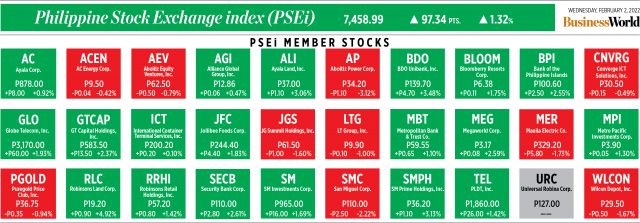
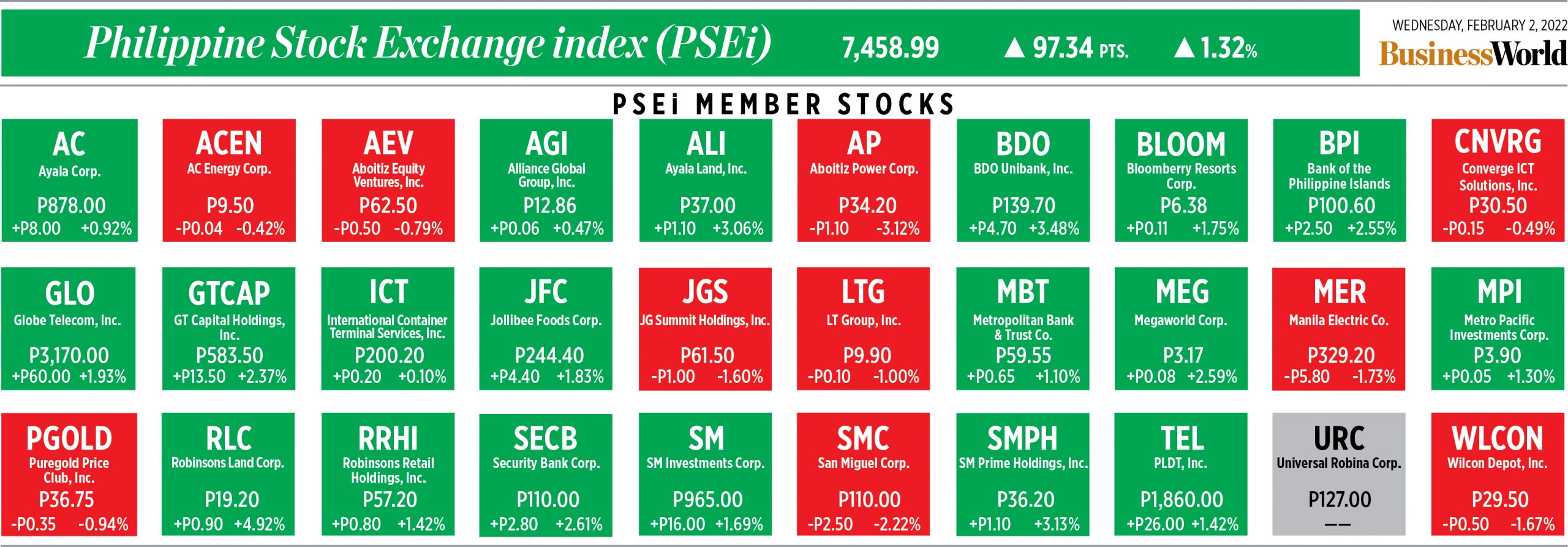
How PSEi member stocks performed — February 2, 2022

Here’s a quick glance at how PSEi stocks fared on Wednesday, February 2, 2022.


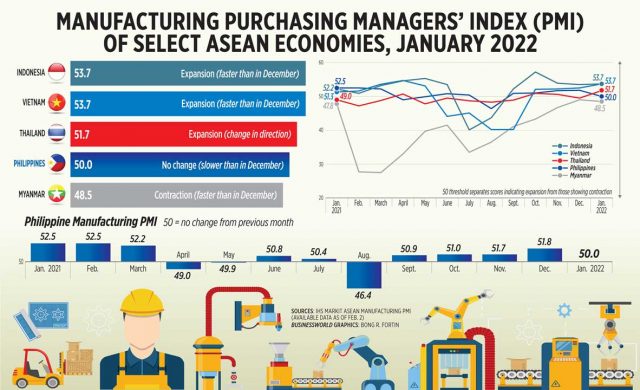
Manufacturing Purchasing Managers’ Index (PMI) of select ASEAN Economies, January 2022

PHILIPPINE MANUFACTURING GROWTH lost steam in January, as the impact of Typhoon Odette and the surge in coronavirus disease 2019 (COVID-19) infections hampered demand and production, IHS Markit said on Wednesday. Read the full story.

Manufacturing Purchasing Managers’ Index (PMI) of select ASEAN Economies, January 2022

Frequency allocation process seen improving with PCC review

PHILSTAR

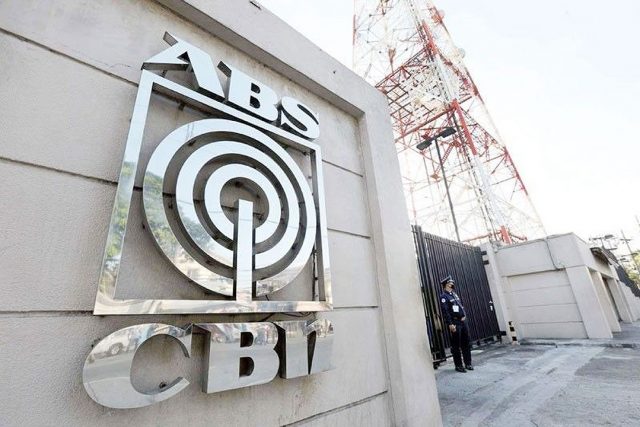
THE Philippine Competition Commission (PCC) said it would prefer to participate in the process of allocating broadcast frequencies in order to advise regulators on the implications for competition, following the recent award of frequencies previously held by ABS-CBN.

“Even without an amendment of the law, regulations, good governance practice, of the sectoral regulators, for instance in this case, the National Telecommunications Commission (NTC), could already accommodate such practice of involving the PCC in the allocation of frequencies,” PCC Commissioner Johannes Benjamin R. Bernabe said in a television interview on Wednesday. 

However, he said it might be good for the law to explicitly provide for PCC’s participation in the allocation of frequencies.

“That has been done in other countries. For instance, our counterparts in Australia are involved in how frequencies are allocated. The same in other jurisdictions as well,” Mr. Bernabe said.

Asked to comment further, Mr. Bernabe said in a Viber message that the specific law is Republic Act (RA) No. 3846 or the Radio Control Law.

“It’s primarily the Radio Control Law. Though Republic Act No. 7925 (Public Telecommunications Policy Act) also provides general principles, the more specific mandate on frequency allocation is provided for by RA 3846, albeit to the Secretary of Commerce and Communications since there was no NTC yet back then,” Mr. Bernabe said.

According to Mr. Bernabe, the commission wishes to be involved in allocating frequencies, which he described as “scarce resources,” to provide a competition perspective.

“Because it impacts competition and consumer welfare, we believe that the PCC should have a say in how these frequencies or scarce resources as inputs to communication services are allocated,” Mr. Bernabe said.  

Mr. Bernabe said the allocation of frequencies should be done as a collaborative effort to avoid adding burdens and expenses to applicants.

“We don’t want a situation where (a company is) sitting on (more) frequencies than necessary for (it) to be able to deliver the service,” Mr. Bernabe said.

“Insofar as the competition perspective is concerned, insofar as how the allocation of frequencies might influence future competition, it would be good to have a competition authority that provides inputs to that allocation process,” he added.

The PCC has said that the reallocation of frequencies formerly assigned to ABS-CBN is not covered by the merger review provisions stipulated in RA 10667, or the Philippine Competition Act.

Recently, NTC announced that digital Channel 16 and analog Channel 2 were awarded to the Villar-controlled Advanced Media Broadcasting System, Inc. while Channel 23 was assigned to Aliw Broadcasting Corp., and Channel 43 was granted to Swara Sug Media Corp. — Revin Mikhael D. Ochave

Bid deadline for P74-B Davao bus system extended to Feb. 10

DAVAO CITY GOVT.

PROSPECTIVE BIDDERS for the P73.93-billion bus system project in Davao City have been given more time to submit bids — until Feb. 10 — the Transportation department’s procuring agent said.

The Department of Transportation (DoTr) started inviting bidders in November last year, through the Procurement Service of the Department of Budget and Management (PS-DBM), for the design, construction, and completion of the Davao Public Transport Modernization Project, also known as the Davao High Priority Bus System Project.

The deadline for bid submission was originally set for Jan. 6, but the PS-DBM announced in its most recent general bid bulletin that it has been moved to Feb. 10 at 10 a.m.

This is “to provide prospective bidders sufficient time to evaluate the bid documents and attachments and be able to prepare better bids,” the PS-DBM added.

The pre-bid conference took place on Nov. 26. In its presentation, the Bids and Awards Committee said that the project is part of the transport roadmap of the City Government of Davao, and is intended to replace jeepneys.

It is the first public bus system in Davao City aimed at providing efficient and affordable transport, it added.

The bus system will have 29 routes with a total route network of 672 kilometers, operating on over 580 kilometers of roads, and traversing the entirety of Davao City.

It will be delivered via a combination of diesel and electric bus fleets.

The project is “expected to commence construction in February 2022 and will commence operations in August 2023,” the committee also said.

In its invitation to bid last year, the DoTr said the government had applied for financing from the Asian Development Bank (ADB).

The DoTr sought bidders for three contract packages, including a contract that covers the construction of Buhangin Depot, Calinan Depot, and Calinan Driving School.

The second contract is for the Toril Depot and Terminal, Bunawan Terminal, and Calinan Terminal, while the third contract covers the civil works along bus routes, including bus stops, bus lanes, and other pedestrian improvement works.

It will be an open competitive bidding, and will follow ADB’s Single-Stage, One-Envelope procedure. This means that bidders will submit bids in one envelope containing both the price proposal and the technical proposal. The envelopes will be opened in public at the date and time advised.

After evaluation and approval, the contract will be awarded to the bidder whose bid has been determined to be “the lowest evaluated substantially responsive bid,” the ADB says on its website.

Transportation Assistant Secretary Goddes Hope O. Libiran has said the civil works component will cost P19.71 billion, while the bus fleet, both diesel and electric, will cost P21.17 billion. — Arjay L. Balinbin

PCIC in risk-sharing deal with microinsurance firm CARD Pioneer

THE Philippine Crop Insurance Corp. (PCIC) and CARD Pioneer Microinsurance, Inc. (CPMI) have tied up for a co-insurance agreement to address a gap in the market for agriculture coverage, the Insurance Commission said.

The two organizations will share risks underwritten for each insurance policy at a 70:30 ratio, with CPMI as the lead insurer.

“During the past years, the PCIC has solely provided multi-peril crop insurance for various types of agricultural commodities and the government has subsidized insurance premiums for the benefit of small farmers,” Insurance Commissioner Dennis B. Funa said in a statement on Wednesday.

“Despite this, insurance coverage among farmers in the Philippines is still low. Clearly, there is a need to address the protection gap in the agricultural sector, considering its exposure to severe and frequent disasters.”

The PCIC will offer capacity-building to CPMI in underwriting, policy administration, actuarial matters, and claims management.

Meanwhile, the company will offer PCIC’s agriculture insurance products to farmers via its distribution channels.

“CPMI will attempt to increase agricultural insurance penetration by focusing on high-value crops in selected regions where PCIC has limited coverage,” the commission said.

“By addressing the need for more affordable and effective products through this coinsurance agreement, this innovative public-private partnership between PCIC and CPMI will greatly contribute to the sustainable development of agricultural insurance in the Philippines, which, in turn, enables us to move closer to our collective vision of bridging the country’s insurance protection gap,” Mr. Funa said.

The two organizations will have a virtual signing ceremony on Thursday. — Jenina P. Ibañez

Fuel marking program generates over P358 billion as of end-Jan.

PHILSTAR

TAXES collected from marked fuel products amounted to P358.6 billion at the end of January, counting back to 2019 when the program started, according to the Department of Finance.

The volume of marked fuel was nearly 36 billion liters since Sept. 4, 2019, according to data provided by Finance Secretary Carlos G. Dominguez III via Viber on Wednesday.

Revenue included P328.79 billion in Customs duties and P29.81 billion in excise tax.

Almost three-quarters of the fuel was marked in Luzon, with more than a fifth in Mindanao and 5.49% in the Visayas.

Diesel accounted for more than 60%, while gasoline had a 38.82% share, with kerosene taking up the remainder.

The program seeks to deter fuel smuggling by injecting a special dye into the products to signify tax compliance. The absence of the dye is an indication the fuel was smuggled.

In 2021, the Bureau of Customs (BoC) collected P166 billion in duties from the fuel marking program, the bureau said last week.

The BoC last year marked over 17 billion liters of gasoline, diesel, and kerosene.

It intercepted nearly 87,000 liters of smuggled diesel and kerosene worth P5.16 million last year, along with two tanker trucks containing unmarked fuel valued at P7.4 million. — Jenina P. Ibañez