Home Blog Page 6366

Senate approves bill strengthening OGCC  

A BILL seeking to strengthen the Office of the Government Corporate Counsel (OGCC) was passed on third and final reading at the Senate on Monday.  

With 21 affirmative votes, the upper chamber unanimously approved Senate Bill 2490, which upgrades the rank and benefits of the agencys officials and personnel as well as expands the human resource pool.   

The OGCC serves as the principal law office of all government-owned or controlled corporations, their subsidiaries, and government-acquired asset corporations.  

Under the proposed law, the government corporate counsel, who heads the office, will have the same rank, benefits, prerogatives and privileges as the presiding justice of the Court of Appeals.  

The deputy government corporate counsel and 12 assistant government corporate counsels responsible for assisting the chief counsel will receive the same rank, benefits, prerogatives and privileges as an associate justice of the appellate court.   

An official with a rank of government corporate attorney IV will have a team of 14 from 10, a GCA III with 19 from 14, GCA II with 20 from 17, and GCA I with 10 from 4. 

Personnel benefits and privileges, meanwhile, will include health care services, accident insurance, scholarships, provident fund, reimbursement of registration fees, training and seminar expenses, and retirement benefits, among others.   

Funding for benefits will be sourced from 5% of attorneys fees given by the courts to client government corporations, 50% from special assessments collected from government corporations, and from all other income or revenues earned by the OGCC.  

The amount needed for upgrades provided by the act will be taken from the budget of the OGCC under the annual national budget.   

The House of Representatives passed their version of the bill in June last year. The bill will now be sent to the appropriate bicameral committee for consolidation. Alyssa Nicole O. Tan 

Fastcraft fire that killed 7 passengers and injured 24 started at engine, says coast guard 

PHOTO FROM PHILIPPINE COAST GUARD
PHILIPPINE COAST GUARD

THE FIRE on a fast ferry that killed seven passengers and injured 24 others on Wednesday started at the vessel’s engine room, according to the Philippine Coast Guard.   

After the search and rescue operations that was concluded by around noon, the coast guard reported that five women and two men were confirmed to have died while 127 were rescued, including 24 who were injured.   

The high-speed vessel marked MV MERCRAFT 2 had 126 passengers and eight crew members on board. 

Two roll-on, roll-off vessels and four motorized bancas that were in the vicinity of the incident assisted in the rescue operations, the coast guard said.   

The passenger ferry left Polillo Island at around 5 a.m. bound for Real, Quezon on mainland Luzon, about 100 kilometers east of the capital Manila.   

The coast guard said they received a distress signal from the vessel at around 6:30 a.m., citing a fire onboard.  

Photos posted by the Philippine Coast Guard on its social media pages showed the fastcraft engulfed in fire.  

The fire was put under control at around 9:33 a.m. and the vessel had been towed to Baluti Island in Real, Quezon.  

In December 2017, records from the Philippine Coast Guard show that an MV MERCRAFT 3 vessel sunk in the same water channel, killing four while 166 were rescued and seven remained missing.— MSJ

Aboitiz-led DLPC starts phase 2 of Davao underground cabling project 

BW FILE PHOTO/ MMPADILLO

ELECTRICITY distributor Davao Light and Power Company (DLPC) has started pre-construction work for the second phase of the underground cabling project in Davao City, an official of the Aboitiz-led company said.  

Currently, we are in final coordination with telecommunication companies and the LGU (local government unit) for the work to commence this June 2022,Fermin P. Edillon, DLPC Reputation Enhancement Department head, told BusinessWorld in an email interview. 

Phase 2 of the project expands coverage within the downtown area, fanning out further from the cluster of city government buildings and commercial establishments that were part of the initial phase.    

Mr. Edillon said several road markings for the excavation are also in place and actual construction work along Ramon Magsaysay Avenue is targeted to start by mid-June.  

He noted that project implementation is continuing despite numerous challenges such as mobility restrictions due to the coronavirus disease 2019 (COVID-19) pandemic, road right of way, weather conditions, work schedule limitations in consideration of road congestion, and delayed delivery of overseas procured materials.  

The transfer of utility cables underground is mandated under a Davao City ordinance passed in 2017, but DLPC rolled out pilot work earlier in partnership with the local government and other utility firms. Maya M. Padillo 

US, Japan give more aid to victims of Typhoon Odette 

PHILIPPINE NAVY

THE UNITED States has donated an additional P400 million to help victims of Typhoon Odette, with international name Rai, bringing the total aid amount to P1.4 billion, its embassy in Manila said on Monday.  

The United States is pleased to provide this additional assistance to meet the recovery needs of individuals and families in the areas hardest hit by Typhoon Odette, and we will continue to work with our partners in the Philippines and across the region to help communities prepare for such disasters and build greater resilience,United States Agency for International Development (USAID) Assistant to the Administrator Sarah Charles said in a statement.   

At the weekend, she led the distribution of shelter supplies in Barangay Caridad, Surigao del Norte.  

She also met with local officials and USAID partners on the ground to receive updates on the situation more than five months after the typhoon struck northern and central parts of the Philippines.   

The fresh funds will be used to provide emergency maternal and child health services, repair damaged health centers, extend protection services, support livelihood recovery for farmers and fisherfolk, and assist in the rebuilding of houses.  

Since December, USAID and its partners have provided food and water, emergency cash, hygiene supplies, among other relief items to typhoon-hit areas across the southern Philippines, helping over 8,000 families.  

Meanwhile, Japan Minister Nakata Masahiro on Tuesday handed 3,333 bags of rice to families in Bohol province who were also affected by the typhoon.   

During the ceremony at Balilihan, Bohol, Mr. Masahiro said he hopes that the donation under the ASEAN Plus Three Emergency Rice Reserve (APTERR)would be a source of revitalization for affected families.  

Together, we will overcome any challenges and rise above each storm to attain regional food security,he said. 

Japan remains the biggest contributor of APTERR rice in the Philippines, distributing several thousand tons of stockpiled rice during various calamities.  

APTERR is a regional cooperation that was started in 2012 to strengthen food security, alleviate poverty, and eradicate malnourishment among its member countries. Alyssa Nicole O. Tan 


The new administration’s biggest challenge

MATHIEU STERN-UNSPLASH

Benjamin Diokno, Bangko Sentral ng Pilipinas governor, told ANC three weeks ago that the next administration will be inheriting a much better economy than what the Duterte administration inherited. It will also be a recipient of a sound tax system and many structural reforms in the areas of retail trade, foreign investment, and public service.

While a healthy economy and a host of structural reforms in various systems give the new administration a good head start, it will still have to address tremendous challenges. The incoming administration will have to navigate the economy out of the pandemic.

Ramon del Rosario, Jr. trustee of the Makati Business Club and Secretary of Finance (1992-1993) of President Fidel Ramos, wrote in the Inquirer three months ago that due to the inflated national debt the Duterte administration is leaving behind, the new government’s ability to support the economy will be severely constrained. Resources will have to be put to the best use, with no tolerance for corruption. Private sector investments will have to be mobilized.

According to him, the most urgent demand is to get our people back to work, and for this, the new government has to generate jobs. And jobs are generated through investments. In turn, investors seek compelling economic opportunities backed by a trustworthy government. The wish list of investors is well-known: sound policies and programs, a competent and efficient administration, credible efforts to curb corruption based on transparency and accountability, a level playing field, respect for contracts and the rule of law, and consistent and reasonable regulations. The incoming president must gain the trust and respect of investors by appointing to his Cabinet people who are well-known for their competence and integrity in their respective fields.

Philip Bowring, editor of the Far Eastern Economic Review and a correspondent and columnist for international publications, sees a much bigger problem confronting the country than what Del Rosario had determined. Looking at the Philippines from outside and not linked to any Philippine political party or politician, he has an across-the-board and objective view of the Philippine situation. His frequent visits to the country since 1973 and his substantive dialogues with high-ranking officials of past administrations and with notable journalists of the country have given him an insight into the issues besetting past and present administrations.

In his book The Making of the Modern Philippines: Pieces of a Jigsaw State, completed just four months ago, Bowring says the government system which is run by and for an elite of families and interests, provincial and central, with provincial politicians beholden to whoever is on top at the time, lies at the heart of the nation’s underperformance. He cites the abysmal educational standards as a deterrent to the formulation of sound policies. While President Duterte placed competent people in economy-related posts, his appointment of people, particularly his Davao associates whose main talent is loyalty to him, engendered corruption.

Other reforms Bowring considers necessary to de-politicize decision-making would address the Supreme Court, particularly the tenure of justices. Dynastic politics is another issue which could be addressed if the incumbents did not have a vested interest in not enacting the legislation demanded by the constitution. Likewise, the capture of most of the Party-List seats in the House of Representatives by elites, and the power of the executive over budget allocation, make the House a rubber stamp of the incumbent.

He posits that governance issues rather than the strength of the Communist ideology explain the continuation for decades of NPA (New People’s Army) activity in some rural areas where poverty and wealth gaps are extreme or where traditional land rights are threatened. These problems emanate more from the structure of government than from policies per se.

He thinks Duterte was interested in power for its own sake, not because he had a radical reform agenda to force through. The drug war and an entirely rhetorical attack on corruption were just showmanship.

Bowring advances that by some measure, the Philippines needs a revolution to throw off the old elites, end monopolies, open up to foreign completion, prioritize education, eliminate large-scale smuggling, and enforce taxes. He does not believe that the continued growth of OFW remittances and BPOs which provide foreign exchange and jobs is assured as demand from traditional labor importers in the Middle East stagnates and lack of skills limits upgrading needed in the BPO world.

To him, the country’s biggest challenge is not to export more people but to make better use at home of the tens of millions in informal jobs in cities and low productivity in agriculture. He says that rebellion is simmering in the margin of society and could yet grow much bigger again as in the latter days of the reign of Ferdinand Marcos, Sr.

As regards the longer-term threat of a political and economic domination by a China seeking regional hegemony, Bowring believes the Philippines can be part of a non-military pact with significant neighbors, notably Indonesia and Vietnam, in limiting China’s ambitions.


Oscar P. Lagman, Jr. is a retired corporate executive, business consultant, and management professor. He has been a politicized citizen since his college days in the late 1950s.

Reclaiming our future

CALEB LUMINGKIT-UNSPLASH

THE ASIA-PACIFIC REGION is at a crossroads today — to further breakdown or breakthrough to a greener, better, safer future.

Since the Economic and Social Commission for Asia and the Pacific (ESCAP) was established in 1947, the region has made extraordinary progress, emerging as a pacesetter of global economic growth that has lifted millions out of poverty.

Yet, as ESCAP celebrates its 75th anniversary this year, we find ourselves facing our biggest shared test on the back of cascading and overlapping impacts from the COVID-19 pandemic, raging conflicts, and the climate crisis.

Few have escaped the effects of the pandemic, with 85 million people pushed back into extreme poverty, millions more losing their jobs or livelihoods, and a generation of children and young people missing precious time for education and training.

As the pandemic surges and ebbs across countries, the world continues to face the grim implications of failing to keep the temperature increase below 1.5°C — and of continuing to degrade the natural environment. Throughout 2021 and 2022, countries across Asia and the Pacific were again battered by a relentless sequence of natural disasters, with climate change increasing their frequency and intensity.

More recently, the rapidly evolving crisis in Ukraine will have wide-ranging socioeconomic impacts, with higher prices for fuel and food increasing food insecurity and hunger across the region.

Rapid economic growth in Asia and the Pacific has come at a heavy price, and the convergence of these three crises has exposed the fault lines in a very short time. Unfortunately, those hardest hit are those with the fewest resources to endure the hardship. This disproportionate pressure on the poor and most vulnerable is deepening and widening inequalities in both income and opportunities.

The situation is critical. Many communities are close to tipping points beyond which it will be impossible to recover. But it is not too late.

The region is dynamic and adaptable.

In this richer yet riskier world, we need more crisis-prepared policies to protect our most vulnerable populations and shift the Asia-Pacific region back on course to achieve the Sustainable Development Goals as the target year of 2030 comes closer — our analysis shows that we are already 35 years behind and will only attain the Goals in 2065.

To do so, we must protect people and the planet, exploit digital opportunities, trade and invest together, raise financial resources and manage our debt.

The first task for governments must be to defend the most vulnerable groups — by strengthening health and universal social protection systems. At the same time, governments, civil society, and the private sector should be acting to conserve our precious planet and mitigate and adapt to climate change while defending people from the devastation of natural disasters.

For many measures, governments can exploit technological innovations. Human activities are steadily becoming “digital by default.” To turn the digital divide into a digital dividend, governments should encourage more robust and extensive digital infrastructure and improve access along with the necessary education and training to enhance knowledge-intensive internet use.

Much of the investment for services will rely on sustainable economic growth, fueled by equitable international trade and foreign direct investment (FDI). The region is now the largest source and recipient of global FDI flows, which is especially important in a pandemic recovery environment of fiscal tightness.

While trade links have evolved into a complex noodle bowl of bilateral and regional agreements, there is ample scope to further lower trade and investment transaction costs through simplified procedures, digitalization, and climate-smart strategies. Such changes are proving to be profitable business strategies. For example, full digital facilitation could cut average trade costs by more than 13%.

Governments can create sufficient fiscal space to allow for greater investment in sustainable development. Additional financial resources can be raised through progressive tax reforms, innovative financing instruments, and more effective debt management. Instruments such as green bonds or sustainability bonds, and arranging debt swaps for development, could have the highest impacts on inclusivity and sustainability.

Significant efforts need to be made to anticipate what lies ahead. In everything we do, we must listen to and work with both young and old, fostering intergenerational solidarity. And women must be at the center of crisis-prepared policy action.

This week the Commission is expected to agree on a common agenda for sustainable development in Asia and the Pacific, pinning the aspirations of the region on moving forward together by learning from and working with each other.

In the past seven-and-a-half decades, ESCAP has been a vital source of know-how and support for the governments and peoples of Asia and the Pacific. We remain ready to serve in the implementation of this common agenda.

To quote United Nations Secretary-General Antonio Guterres, “the choices we make, or fail to make today, will shape our future. We will not have this chance again.”


Armida Salsiah Alisjahbana is the United Nations under-secretary-general and executive secretary of the Economic and Social Commission for Asia and the Pacific.

Inflation, mining and WHO pandemic treaty

This piece will cover three different topics so we will discuss them directly.

HIGH INFLATION AND ANEMIC GROWTH
Stagflation — a combination of economic stagnation plus high inflation — is becoming more real than fictional for many countries. There should be a strong recovery after the global lockdowns and mobility restrictions of 2020-2021, but the Ukraine war and economic sanctions against Russia caused a global adverse impact on commodities, especially in energy supply and prices.

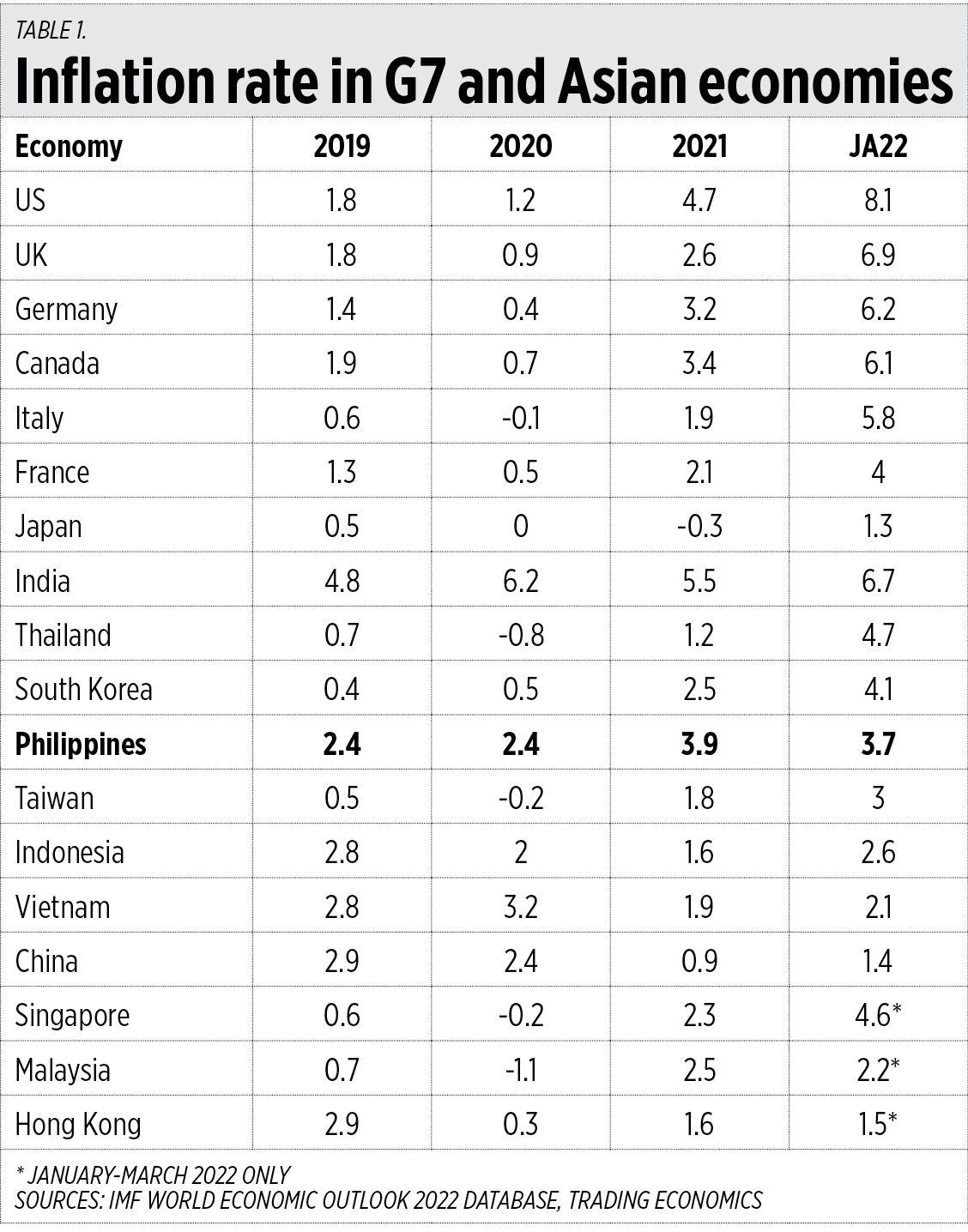
The US inflation rate was only 1.4% when Trump left the White House in January 2021. It jumped to 7.5% in January 2022 even before the Ukraine war. Then it further rose to 7.9% in February, 8.5% in March, and 8.3% in April, the highest rates since 1982 or 40 years ago. The UK’s 9% inflation rate in April was the highest in 40 years too. And Germany’s 7.4% in April was the highest since the 1970s.

Among the G7 industrialized countries, only Japan had an inflation rate below 2% for January-April 2022 (JA22). East Asian economies now have more price stability than industrialized Europe and North America (Table 1).

High inflation discourages more household spending, which cuts corporate and manufacturing revenues, which leads to low if not stagnant growth. When trade is politicized via economic sanctions, the world gets more politics and less trade. And less growth with high inflation. Bad.

MORE OPEN-PIT MINING
A good development recently was that the South Cotabato provincial council has lifted the ban on open-pit mining for the Tampakan gold-copper project that was imposed in 2010. See these recent reports in BusinessWorld:

1. “Philippines removes last hurdle for stalled Tampakan copper-gold project” (May 17)

2. “End to open-pit ban triggers showdown over Tampakan” (May 17)

3. “DENR to watch Tampakan closely after province lifts open-pit ban” (May 18)

4. “South Cotabato lifting of open-pit ban still at risk of governor’s veto” (May 22).

The Tampakan project should be the Philippines’ single biggest foreign direct investment (FDI) at $5.9 billion. It is a shame that the country has not optimized revenues and job creation with the recent high global prices of gold, copper, nickel and other mining products as the project has estimated reserves of 15 million tons of copper and 17.6 million ounces of gold.

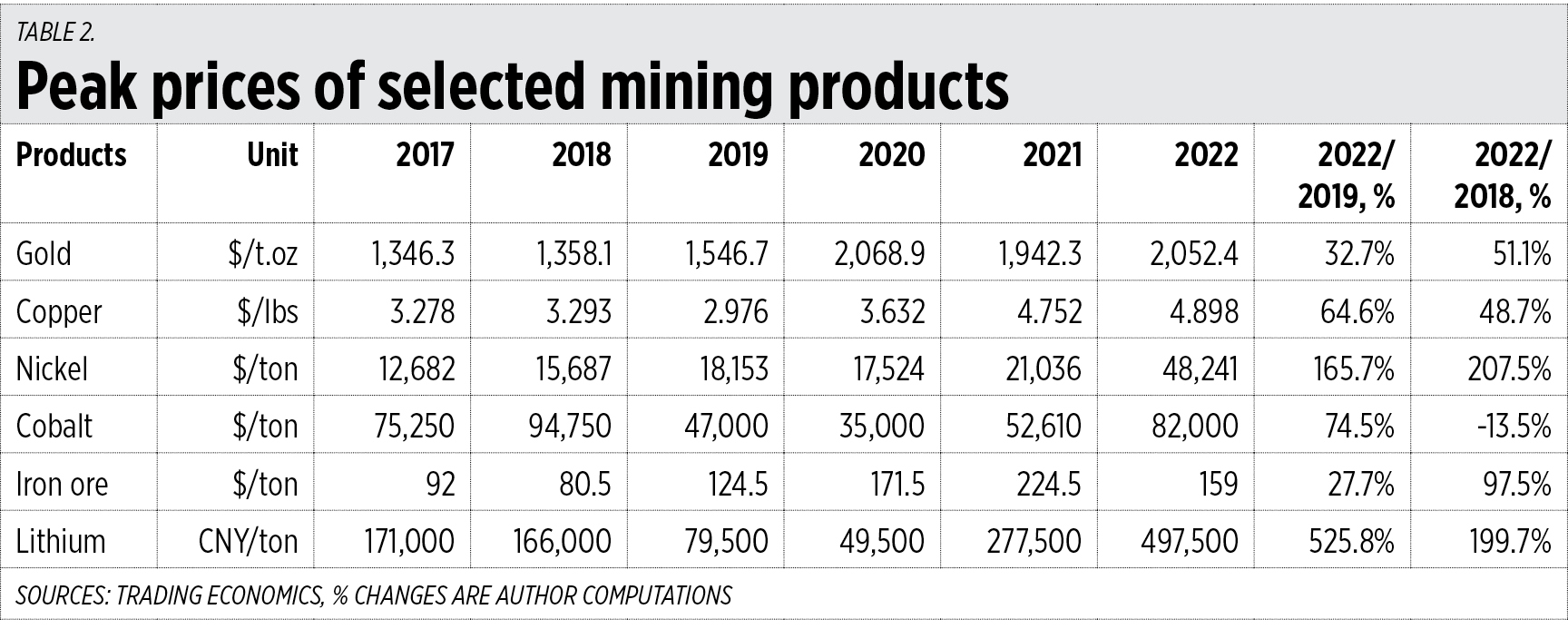
The peak prices of gold this year are 33% higher than in 2019 and 51% higher than 2018 prices. Peak prices of copper this year are 65% and 49% higher than their peak prices in 2019 and 2018. And nickel — Wow! — peak prices this year are 166% and 208% higher than 2019 and 2018 prices, respectively.

At such prices, the Philippines could have earned several billion dollars more in exports, the national and provincial governments could have earned several billion pesos more in taxes, and the mining communities could have received hundreds of million pesos more for mandatory community spending like the social development and management program (SDMP).

ENDLESS CRISIS, THE UN AND WHO PANDEMIC TREATY
Population crisis, food/hunger crisis, oil/energy crisis, HIV/AIDS crisis, NCDs/smoking crisis, HIV/AIDS crisis, refugee crisis, gender/racial crisis, education/housing crisis, plastic/garbage crisis, climate crisis, COVID crisis, now an emerging monkeypox crisis.

We have heard or read these and many other alarming stories since the 1960s until today. And always the “solution” to these endless crisis narratives is more government, more UN, and more multilaterals. The anti-mining groups also have their scare-mongering that open-pit mining will “expose residents to pollution… exacerbate climate vulnerabilities…”

This week, May 22-28, the World Health Assembly of the World Health Organization (WHO) plans to amend the International Health Regulations, an agreement in 2005 that was adopted by 194 member states that recognizes the sovereignty of nations and the need for localized action in cases of epidemics and other disease outbreaks.

The planned amendments are giving more authority to WHO Regional Directors to declare a Public Health Emergency of Regional Concern (PHERC), and more authority to the WHO Director-General to issue an “Immediate Public Health Alert” (IPHA). The goal is more global health central planning, generally one-size-fits-all action by the WHO, like the global lockdowns in 2020, and, in the process, trumping country-specific and decentralized health actions.

Central planning is lousy and inefficient. That is why the old USSR, the communist states of eastern Europe, collapsed in 1989-1991.

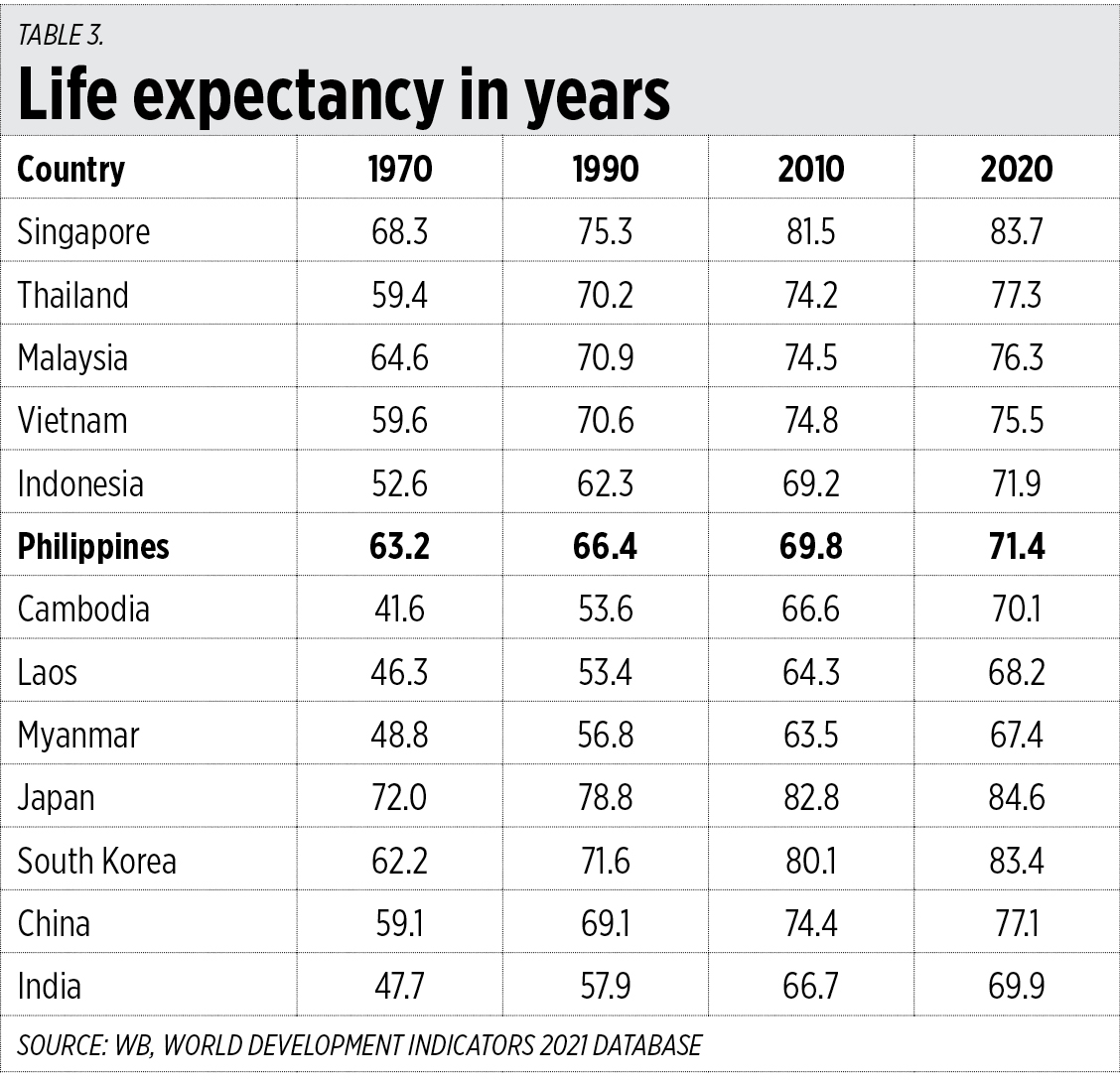
Going back to the endless crisis narratives of the past six decades, even if only one of them was true, people should have shorter lives, the human population should plateau and decline, and this is not the case. Practically anywhere in the world, humans live healthier and longer lives (Table 3).

My three recommendations for these three issues are as follows.

One, free trade of commodities and energy products from Russia and elsewhere should proceed and not be politicized. Overall price stability is premised on supply stability of important commodities. Then growth can resume and not stagnate.

Two, more big mining projects please. In particular, the Tampakan gold-copper open-pit project should proceed subject to existing environmental regulations, taxes, and mandatory community spending.

Three, “no” to more health central planning by the WHO. It has wielded huge powers in the recent COVID-19 lockdowns and mass vaccination already, it should not be institutionalized. Pandemic response should be decentralized among countries.


Bienvenido S. Oplas, Jr. is the president of Minimal Government Thinkers.

minimalgovernment@gmail.com

When does a corporation conduct its business through fraud?

LUIS VILLASMIL-UNSPLASH

We posit that the offense sought to be punished under Section 165 of the Revised Corporation Code (RCC), i.e., “conducting its business through fraud,” does not provide a definition or the requisites by which to determine whether a crime has been committed. For example, it is not clear whether Section 165 covers only the general manner by which the corporate business enterprise is conducted (e.g., conducts a banking business without a Bangko Sentral ng Pilipinas license), or it covers every particular transaction that is committed with fraud.

Without providing for the requisites of what would constitute “conduct of business through fraud” it would be difficult to convict a corporate offender under Section 165 since the quantum of evidence required in a criminal case is “guilt beyond reasonable doubt.” Under the norms of criminal due process which must also be accorded to an accused juridical entity, the lack of the proper definition of what constitutes “conduct of its business through fraud,” would not allow a conviction of the accused, especially a corporate offender, which essentially is incapable of committing fraud for lack of ability to act with “malice.” The element of malice that would make the corporation accused liable for the offense mala in se under Section 165 must necessarily pertain to the malicious intent of the acting director, trustee, officer or employee in conducting the corporate business enterprise with fraud.

ISSUE OF ‘PREJUDICIAL QUESTION’ UNDER SECTION 165
Since the criminal offense that a corporation can commit under Section 165 of the RCC by “conduct of business through fraud” is mala in se that can only be effected through its Board of Directors or duly authorized officers and employees, there is no way to obtain a conviction against the corporation unless and until the acting directors or trustees, or the officers and/or employees committing the offense on behalf of the corporation are first shown to have themselves been guilty of conducting the business of the corporation through fraud.

Section 165 of the RCC cannot be the basis for finding that the conduct of the acting directors or trustees, or the officers and/or employees are fraudulent since it defines an offense committed by the corporation, and Section 171 provides the specific criminal penalty for such acting directors or trustees, officers and/or employees “if the offender is a corporation.”

We posit therefore that if Section 165 of the RCC will be construed by the courts to allow criminal punishment of the corporation as the medium through which the acting directors, trustees or officers committed a fraudulent act, it can only cover specific acts which under existing criminal statutes are already defined as criminally fraudulent. For example, there are many criminal offenses defined by the Securities Regulation Code and the General Banking Law where the penalty is imposed upon the acting director, trustee, or officer.

It is only in such criminally defined fraudulent crimes that the corporation itself, used as the medium to commit such crimes, that the offense under Section 165 can be invoked to hold the corporation itself punishable.

CHILLING EFFECT OF INVESTING PUBLIC IN THE CORPORATE MEDIUM
Prior to the enactment of the RCC, the prevailing principle in Philippine Corporate Law in cases where the corporation has been employed as a means to commit fraud was to make the culprit directors, trustees, and/or officers criminally liable for the crime of fraud (as defined by law) so committed, and not the corporation itself. Aside from the policy that offending directors, trustees, or officers should not be allowed to hide behind the corporate veil to insulate themselves from their dastardly acts, it was also the policy back then to protect the investments of passive shareholders who had no participation, much less knowledge, of the fraudulent act of the offending directors, trustees, or officers.

The imposition under Section 165 of the penalty of fine on the corporation for the fraudulent acts of directors, trustees, or officers actually bears directly upon the equity interests of the many innocent shareholders. Instead of promoting the ease of doing business through the corporation medium, Section 165 induces an “unease” on both the actual and future investors, both local and foreign, in the Philippine corporate sector.

CORPORATIONS ACTING AS INTERMEDIARIES FOR FRAUD, GRAFT AND CORRUPT PRACTICES
Under Section 166 of the RCC, a “corporation used for fraud, or for committing or concealing graft and corrupt practices as defined under pertinent statutes,” shall be liable for a fine ranging from P100,000 to P5 million.

In addition, Section 166 provides that when there is a finding that any of the corporation’s directors, officers, employees agents, or representatives are engaged in graft and corrupt practices, the corporation’s failure to install: a.) safeguards for the transparent and lawful delivery of services; and, b.) policies, code of ethics, and procedures against grant and corruption shall be prima facie evidence of corporate criminal liability under Section 166.

WHEN A CORPORATION IS USED FOR FRAUD
It seems that there was an error in including in defining the offenses covered by Section 166 the crime of “a corporation used for fraud,” based on the following grounds: a.) It is not within the title of the section which only covers “Acting as Intermediaries for Graft and Corrupt Practices”; and, b.) Using the corporation to commit fraud is already defined as a separate crime of the corporation under Section 165.

Keeping in mind that every corporation is a medium of conducting business, there would be no difference in coverage between Section 165 when it refers to “a corporation that conducts its business through fraud” from that of Section 166 that refers to “a corporation used for fraud.”

Again, to obtain a conviction under Section 166 against “a corporation used for fraud,” would seem difficult because of the lack of definition or the requisites that would constitute the use of the corporation for fraud.

WHEN A CORPORATION IS USED TO COMMIT GRAFT AND CORRUPT PRACTICES
Section 166 of the RCC defines the criminal act of “A corporation used… for committing or concealing graft and corrupt practices as defined under pertinent statutes.” That can only mean that the criminal offense committed by a corporation is well-defined only when proper reference can be made to statutory provisions that define particular acts of the directors, trustees, or officers as constituting graft or corrupt practices, like the Anti-Graft and Corrupt Practices Act.

THE ‘PREJUDICIAL QUESTIONS’ ISSUE UNDER SECTION 166
An important issue that arises under Section 166 of the RCC is whether the accused corporation can be held liable without a prior conviction of the acting directors, trustees, or officers for a statutorily defined graft and corrupt practice using the corporation as a means to commit or effect the same.

The last paragraph of Section 166 addresses partially that issue when it provides that “When there is a finding that any of its directors, officers, employees, agents or representatives are engaged in graft and corrupt practices, the corporation’s failure to install: a.) safeguards for the transparent and lawful delivery of services; and, b.) policies, code of ethics, and procedures against graft and corruption shall be prima facie evidence of corporate liability under this section.” In other words, the prior conviction of the directors or trustees, and/or officers or other agents is not required when the prima facie rule is present. Nevertheless, prima facie evidence is not enough to convict a corporation for a criminal offense since it is still required from the prosecution to prove that the acting directors or trustees and/or officers have engaged in graft and corrupt practices “as defined under pertinent statutes.”

When the requisite safeguards, policies, codes, and procedures against graft and corrupt practices have been installed such that the prima facie rule against the corporation does not come into effect, we are of the position that the conviction of the acting directors or trustees and/or officers would constitute a prejudicial question in determining whether the corporation itself can be held guilty under Section 166 of the RCC.

On a related issue, since Section 166 itself cannot be used as the basis to punish the directors, trustees, or officers who used the corporation as a means to commit the offense defined therein, the basis for the punishment of the guilty directors, trustees, or officers, would have to be Section 171 which provides that “if the offender is a corporation, the penalty may, at the discretion of the court, be imposed upon such corporation and/or upon its directors, trustees, stockholders, members, officers or employees responsible for the violation or indispensable to its commission.” There is no doubt that every officer acting in the transaction whereby the corporation becomes liable for an offense as “indispensable to its commission,” for a corporation being a juridical person, it can only act through its directors, trustees, or officers.

Consequently, we do not see how culprit directors, trustees, or officers can be held liable under Section 171, if the corporation itself cannot be held liable under Section 167 which can only be based on showing that the culprit directors, trustees, or officers have committed graft and corrupt practices act as defined in existing statutes other than Section 171 of the RCC.

CHILLING EFFECT ON INVESTING PUBLIC IN THE CORPORATE MEDIUM
The imposition under Section 166 of the RCC of the penalty of a fine on the corporation for the graft and corrupt practices of its directors, trustees, or officers actually bears directly upon the equity interests of the many innocent shareholders, especially in publicly held corporations.

In addition, the imposition of a criminal punishment on the corporation may undermine the share values of publicly listed corporations which may render valueless the equity holdings of many innocent public investors. At the very least, Section 166 as it provides the criminal penalty of a fine (aside from the administrative sanctions that Securities and Exchange Commission may impose under Section 170) induces a “chilling effect” on both the actual and future investors, both local and foreign, in the Philippine corporate sector. In that sense, the introduction of Section 166 into the RCC actually works against the principle of promoting the ease of doing business in our country through the corporate medium, and actually removes the protection of many innocent shareholders. n

This article reflects the personal opinion of the author and does not reflect the official stand of the Management Association of the Philippines or MAP.


Attorney Cesar L. Villanueva is co-chair for Governance of the MAP ESG Committee, the chair of the Institute of Corporate Directors, the first chair of the Governance Commission for GOCCs, is a former dean of the Ateneo Law School, and a founding partner of Villanueva Gabionza & Dy Law Offices.

map@map.org.ph

cvillanueva@vgslaw.com

http://map.org.ph

Biden says would be willing to use force to defend Taiwan

XANDREASWORK-UNSPLASH

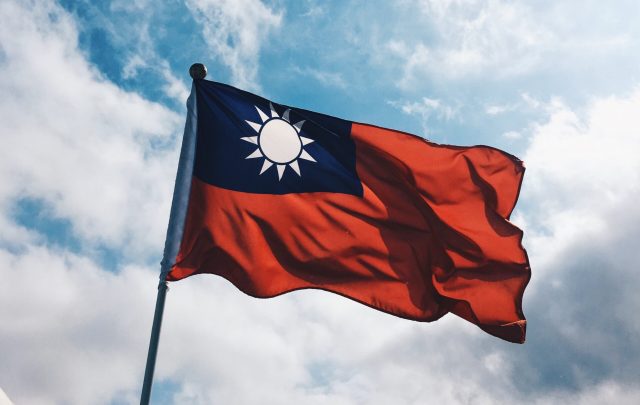
TOKYO — US President Joseph R. Biden said on Monday he would be willing to use force to defend Taiwan, rallying support on his first trip to Asia since taking office for US opposition to China’s growing assertiveness across the region.

Mr. Biden’s comments appeared to be a departure from existing US policy of so-called strategic ambiguity on its position on the self-governed island that China considers its territory and says is the most sensitive and important issue in its ties with the United States.

When asked by a reporter in Tokyo if the United States would defend Taiwan if it were attacked by China, the president answered: “Yes.”

“That’s the commitment we made … We agree with a one-China policy. We’ve signed on to it and all the intended agreements made from there. But the idea that, that it can be taken by force, just taken by force, is just not, is just not appropriate.”

He added that it was his expectation that such an event would not happen or be attempted.

While Washington is required by law to provide Taiwan with the means to defend itself, it has long followed a policy of “strategic ambiguity” on whether it would intervene militarily to protect Taiwan in the event of a Chinese attack.

Mr. Biden made a similar comment about defending Taiwan in October. At that time, a White House spokesperson said Mr. Biden was not announcing any change in US policy.

The comments about Taiwan are likely to overshadow the centerpiece of Mr. Biden’s visit, the launch of an Indo-Pacific Economic Framework, a broad plan providing an economic pillar for US engagement with Asia.

His visit also includes meetings with the leaders of Japan, India and Australia, in the “Quad” group of countries.

Worries about China’s growing might and the possibility that it could invade Taiwan have emboldened Japanese Prime Minister Fumio Kishida and his ruling Liberal Democratic Party on defense, eroding some of the traditional wariness among many Japanese about taking a more robust defense posture.

  Mr. Kishida said that he told Mr. Biden that Japan would consider various options to boost its defense capabilities, including the ability to retaliate, signalling a potential shift in Japan’s defense policy.

“A strong Japan, and a strong US-Japan alliance, is a force for good in the region,” Biden said in a news conference following their discussions.

Mr. Kishida said that he had gained support from Mr. Biden on Japan’s becoming a permanent member of the U.N. Security Council amid growing calls for reform of the council. China and Russia are permanent members.

“President Biden expressed the necessity of reforming and strengthening the United Nations, including the Security Council, which bears a major responsibility for the peace and security of the international community,” Mr. Kishida said.

“President Biden expressed his support for Japan to become a permanent member of the reformed Security Council.”

Worries are growing in Asia about an increasingly assertive China, particularly in light of its close ties to Russia, and tension has risen over self-ruled Taiwan, which China considers a renegade province. — Reuters

IMF warns against global economic fragmentation from Russia-Ukraine war

Army soldier figurines are displayed in front of the Ukrainian and Russian flag colors background in this illustration taken, Feb. 13, 2022. — REUTERS/DADO RUVIC/ILLUSTRATION

THE INTERNATIONAL Monetary Fund (IMF) warned against global economic fragmentation as a consequence of Russia’s invasion of Ukraine, saying that undoing decades of integration will make the world poorer and more dangerous.

Nations should lower trade barriers to alleviate shortages and lower prices, after more than 30 countries restricted trade in food, energy and other key commodities, IMF Managing Director Kristalina Georgieva said.

Ms. Georgieva made the comments in a blog post with Gita Gopinath, the fund’s first deputy managing director, and Ceyla Pazarbasioglu, the head of the strategy, policy and review department, ahead of the World Economic Forum in Davos, Switzerland this week.

Countries should diversify imports to secure supply chains and reduce output losses from interruptions, they said. The Group of 20 (G20) biggest economies also should improve its common framework for dealing with debt restructuring to help deal with vulnerabilities, the officials wrote.

“The costs of further disintegration would be enormous across countries,” they said. “And people at every income level would be hurt — from highly paid professionals and middle-income factory workers who export, to low-paid workers who depend on food imports to survive. More people will embark on perilous journeys to seek opportunity elsewhere.”

Bloomberg Economics last week released the results of a simulation of what an accelerated reversal of globalization might look like in the longer term. It points to a significantly poorer and less productive planet, with trade back at levels before China joined the World Trade Organization. An additional blow: inflation would likely be higher and more volatile.

Cross-border payment systems should be modernized, with countries working together to create a public digital platform for handling remittances to reduce cost and improve safety, the IMF officials wrote. And nations must collaborate to confront climate change, they said. — Bloomberg

Sri Lankan medicine shortage a death sentence for some, doctors say

TOWFIQU BARBHUIYA-UNSPLASH

COLOMBO — A shortage of medicine caused by an economic crisis in Sri Lanka could soon cause deaths, doctors said, as hospitals are forced to postpone life-saving procedures for their patients because they do not have the necessary drugs.

Sri Lanka imports more than 80% of its medical supplies but with foreign currency reserves running out because of the crisis, essential medications are disappearing from shelves and the healthcare system is close to collapse.

At the 950-bed Apeksha cancer hospital on the outskirts of the commercial capital, Colombo, patients, their loved ones and doctors feel increasingly helpless in the face of the shortages which are forcing the suspension of tests and postponement of procedures including critical surgery.

“It is very bad for cancer patients,” said Dr. Roshan Amaratunga.

“Sometimes, in the morning we plan for some surgeries (but) we may not be able to do on that particular day … as (supplies) are not there.”

If the situation does not improve quickly, several patients would be facing a virtual death sentence, he said.

Sri Lanka is grappling with its most devastating economic crisis since independence in 1948, brought about by COVID-19 battering the tourism-reliant economy, rising oil prices, populist tax cuts and a ban on the import of chemical fertilizers, which devastated agriculture.

A government official working on procuring medical supplies, said about 180 items were running out, including injections for dialysis patients, medicine for patients who have undergone transplants and certain cancer drugs.

The official, Saman Rathnayake, told Reuters that India, Japan and multilateral donors were helping to provide supplies, but it could take up to four months for items to arrive.

In the meantime, Sri Lanka has called on private donors, both at home and abroad, for help, he said.

‘TREMENDOUS FEAR’
Doctors say they are more worried than the patients or their relatives, as they are aware of the gravity of the situation and the consequences.

Referring to the ubiquitous queues for petrol and cooking gas, Dr. Vasan Ratnasingam, a spokesman for the Government Medical Officers’ Association, said the consequences for people awaiting treatment were so much more dire.

“If patients are in a queue for drugs, they will lose their lives,” said Ratnasingam.

The mother of Binuli Bimsara, a four-year-old girl being treated for leukemia, said she and her husband were terrified.

“Earlier, we had at least some hope because we had the medication but now we are living under tremendous fear,” the mother said.

“We are really helpless; our future is really dark when we hear about a shortage of medicines. We don’t have money to take our child abroad for treatment.”

Indian authorities delivered 25 tons of medical supplies, along with other aid, on Sunday, officials said.

“At no time has India assisted any other country to this extent … This is something for which we are deeply grateful,” Sri Lanka’s foreign minister, G.L. Peiris, said at Colombo’s port as he stood by a vessel bringing in thousands of sacks of supplies.

“This is probably the most difficult period that Sri Lanka has had to face since independence.” — Reuters

Beijing urges millions to keep working from home amid COVID outbreak menace

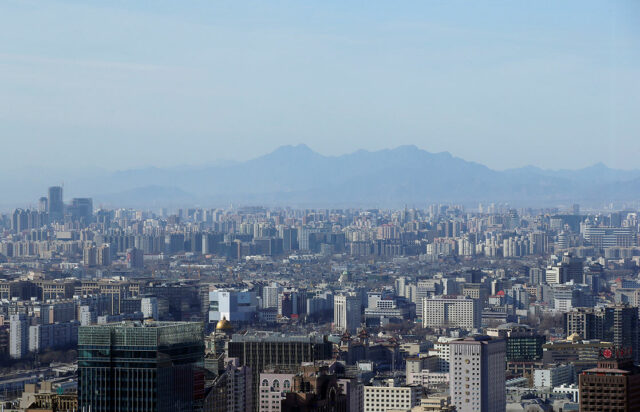
A GENERAL VIEW shows Beijing’s skyline on a sunny day in this file photo. — REUTERS

BEIJING/SHANGHAI — Beijing authorities extended work-from-home guidance for many of its 22 million residents to stem a persistent coronavirus disease 2019 (COVID-19) outbreak, while Shanghai deployed more testing and curbs to hold on to its hard-won ‘zero COVID’ status after two months of lockdown.

On Monday, the Chinese capital reported 99 new cases were detected on May 22, up from 61 the previous day — the largest daily tally so far during a month-old outbreak that has consistently seen dozens of new infections every day.

In Shanghai fewer than 600 daily cases were reported for May 22, with none outside quarantined areas, as there has been the case for much of the past week.

Analysts at Gavekal Dragonomics estimated last week that fewer than 5% of Chinese cities were reporting infections, down from a quarter in late March, in a COVID outbreak that has cast a pall over growth in the world’s no. 2 economy. But vigilance, and concern, remains acute in Shanghai and the capital.

While there were no new announcements of areas being closed in Beijing, five of the city’s 16 districts advised residents to work from home and avoid gatherings. Those who have to go to work should have a negative result on a PCR test taken within 48 hours, and must not deviate from their home-to-work commute.

“The city’s epidemic prevention and control is at a critical moment,” Beijing’s Tongzhou district posted on its WeChat account late on Sunday, asking residents who work in five other districts to do their jobs from home this week.

“One step forward and victory is in sight. One step back, and previous efforts would be wasted.”

‘MASSIVELY HIT’
Beijing had already curtailed public transport, asked some shopping malls and other stores and venues to close and sealed buildings where new cases were detected.

In one large residential compound not under isolation orders, shelves have been set up for deliveries at the entrance, according to residents, fueling concern that preparation was in place for tougher controls on movement.

The curbs in Beijing, Shanghai and elsewhere in China are leaving behind significant economic damage and disruption to global supply chains and international trade.

The highly-transmissible Omicron variant of the virus first discovered in the city of Wuhan in late 2019 has proven hard to defeat even with strict measures that starkly contrast the resumption of normal life elsewhere in the world.

“We’ve been massively hit,” said a convenience store owner surnamed Sun, whose shop in Beijing has only been allowed to operate during daytime rather than its usual 24/7 hours.

“Even during the Wuhan outbreak we could stay open the whole time.”

In Shanghai, which reopened more than 250 bus routes and a small part of its sprawling subway system on Sunday, many towns and districts announced more mass testing for the coming days and asked residents not to leave their compounds.

The commercial hub of 25 million has allowed more people to leave their homes for brief periods over the past week, but it generally plans to keep most restrictions in place this month, before a lifting its two-month-old lockdown from June 1.

However, while more people are being allowed outside, several residents in various areas of Shanghai said they had been told of new infections in their vicinity that required new curbs on movement.

One resident in Hongkou district, which has not reported any new community-level cases since May 7, said he was told last week not to leave his flat, having been allowed to move within his compound previously.

Hongkou was among six districts which have announced some tightening of curbs in recent days to “consolidate” the results of their efforts so far.

But such moves made some people fear the virus was making a comeback.

The top comment on a post by state agency Xinhua on China’s Twitter-like Weibo post on Shanghai’s latest numbers read: “This can’t be accurate, zero COVID cases at community level? Our compound had one new case yesterday.”

Asked to comment, the Shanghai government said that all cases found in recent days were in “sealed” high-risk areas or quarantine centers, and that any community transmission cases would be announced on official channels. — Reuters