Home Blog Page 634

UnionDigital offers unlimited, free InstaPay transfers

UNIONDIGITAL Bank, Inc. (UD), the digital banking arm of listed Union Bank of the Philippines, Inc., is offering unlimited and free fund transfers via InstaPay.

Registered UnionDigital users may transfer funds using InstaPay without transaction fees through the UD mobile application.

InstaPay is a real-time, low-value electronic fund transfer service that allows transactions up to P50,000 and is mostly used for remittances and e-commerce.

“As padala season peaks during the holidays, multiple money transfers and expenses can lead to overlooked transaction fees, chipping away at the hard-earned money Filipinos send to their families,” UnionDigital President and Chief Executive Officer Danilo “Bong” J. Mojica II said in a statement on Monday.

“With our unlimited and free InstaPay transfers, UD hopes to empower Filipinos to give generously, ensuring every peso goes directly to their loved ones with no deductions. This way, they can make every bit of it count this Christmas.”

UnionDigital said this is also in support of the central bank’s push for digital payments adoption as part of its financial inclusion efforts.

“UD champions financial inclusion by making payments and transfers simple, mobile-first, and free,” Mr. Mojica added.

In 2024, online payments accounted for 57.4% of retail transactions by volume and 59% by value, up from 52.8% and 55.3%, respectively, in 2023, according to the Bangko Sentral ng Pilipinas’ (BSP) 2024 Status of Digital Payments in the Philippines report.

The BSP wants digital payments to make up 60-70% of retail transaction volume by 2028, in line with the Philippine Development Plan. — Katherine K. Chan

Klook, GCash team up on travel card amid upbeat travel outlook

KLOOK.COM
KLOOK.COM

TRAVEL AND LEISURE booking platform Klook said it expects continued momentum in the Philippine travel market, fueled by Filipinos’ rising appetite for domestic and overseas trips as well as growing inbound tourism.

“The numbers are great; we are very optimistic about the trajectory of travel despite the macroeconomic conditions,” Klook Philippines General Manager Michelle Ho told reporters on the sidelines of the GCash-Klook partnership launch on Monday.

Klook has partnered with electronic wallet provider GCash for the rollout of the GCash Klook Travel Card. Set to launch this month, the card will offer users exclusive perks, vouchers, and discounts.

The new product is expected to bring in more than 10,000 users, Ms. Ho said, noting that the company remains confident Filipinos will find value in the travel card. Powered by Visa, the card also upgrades users to the Gold Tier of Klook’s travel rewards program and provides low foreign exchange rates with zero service fees.

“With GCash, we’re taking that commitment a step further. By combining Klook’s expertise in curating top travel experiences with GCash’s trusted financial ecosystem, we’re bringing greater value and ease to every journey, making extraordinary adventures even more possible for more Filipinos,” Ms. Ho said.

Klook noted that the Philippines has become one of its strongest markets, both as a source of outbound travelers and as a destination for foreign tourists.

“For the Philippines, we are seeing high double-digit growth and just to give a few destinations we are seeing that Vietnam would be one of those destinations picking up (traffic) along with Thailand, and Taiwan,” she said, adding that Hong Kong and Japan remain top choices among Filipino travelers.

“At GCash, we’re committed to empowering Filipinos to explore the world with confidence and convenience,” said G-Xchange, Inc. General Manager for Business-to-Consumer and Chief Operating Officer Barbara Rodriguez-Dapul.

In May, Klook reported that 89% of Filipinos choose travel destinations based on social media popularity, exceeding the regional average of 79%.

Its 2025 Travel Pulse study, which surveyed 7,000 respondents, found that Filipinos use Facebook (84%) as their primary source of travel inspiration, followed by YouTube (73%), TikTok (69%), and Instagram (63%).

Philippine air passenger volume reached 46.84 million in the nine months ending September, up 6.247% from a year earlier, driven by domestic passenger traffic, according to the Civil Aeronautics Board.

Domestic passenger volume rose 5.36% to 24.95 million, while international passengers increased 7.25% to 21.89 million. — Ashley Erika O. Jose

Entertainment News (12/02/25)


SB19 releases versions of ‘DAM,’ ‘Time’

SONY Music Entertainment has announced the release of The First Take versions of “DAM” and “Time,” two of SB19’s most celebrated hits. Both were originally showcased in exclusive one-take performances on The First Take, a Japanese YouTube channel that invites artists to perform a song in only one take, posted simultaneously in November. The releases mark SB19’s return to the platform, where they hold the distinction as the first and only Filipino and Southeast Asian act to perform and the first ever to do so twice.


Ben&Ben releases e-book, plush collectibles

TO CELEBRATE the first anniversary of the release of their album The Traveller Across Dimensions, folk-pop band Ben&Ben has released various album tie-in materials and merchandise. One of these is an e-book companion to the album, which fleshes out the character Liwanag’s story in greater detail. They also launched the Traveller plush series, featuring four characters: Liwanag, Mahiwaga, Puhon, and Dilim. For more details, visit thetravelleracrossdimensions.com/story.


Five Nights at Freddy’s 2 arrives in PHL cinemas

THE horror character Freddy Fazbear is back with more friends in Five Nights at Freddy’s 2, the sequel to the 2023 box-office hit based on the popular game series by Scott Cawthon. Animatronic horror returns in the sequel with former night shift security guard Mike (played by Josh Hutcherson) and his sister Abby (Piper Rubio) still reeling from the nightmare unleashed at Freddy Fazbear’s Pizza and once again set to face haunted animatronics Freddy, Bonnie, Chica, and Foxy. Five Nights at Freddy’s 2 arrives in Philippine cinemas on Dec. 3.


Travel agents mount fundraising concert for Cebu

THE Philippine IATA Agents Travel Association (PIATA) and the Pacific Asia Travel Association (PATA) Philippines chapter will be putting up a fundraising concert titled ERA: Healing Hearts. The initiative will support survivors of recent calamities in Cebu. The concert takes place on Dec. 10, 7 p.m., at the RJ Dusit Thani, featuring Lou Bonnevie alongside a lineup of celebrated artists. Proceeds will support a mental health and humanitarian mission for survivors of the earthquake in Bogo and typhoon-affected communities in Cotcot, Liloan, and Talisay, Cebu. Tickets are available at the venue, priced at P1,800, inclusive of one drink.


Royal Canin to host Community Weekend 2025

ROYAL CANIN’S Community Weekend 2025, happening Dec. 13 to 14 at Eastwood Open Park, Quezon City, is set to bring together pet lovers and families for activities, expert insights, and science-based guidance on responsible pet ownership. The two-day event is open to the public. Day 1 spotlights puppies and kittens with a community pet walk, classes on nutrition and training, free vet consultations, and opportunities to rehome pets. Day 2 celebrates adult and senior pets, featuring sessions on lifelong health, caring for aging companions, and more interactive activities. Attendees can enjoy exclusive discounts, raffles, and creative contests, while learning how everyday choices impact pet health.


Korean crime drama to premiere on HBO Max

ON Dec. 18, the Korean crime drama series Villains, starring Yoo Ji-tae and Lee Min-jeong, will make its streaming debut on HBO Max. The eight-episode show from TVING follows criminal mastermind J and master forger Han Soo-hyun as they navigate the world of crime and attempt to survive the violent power struggle between villains over the elusive, ultra-precision counterfeit bill, known as the Supernote. It is directed by Jin Hyuk and Park Jin-young and written by Kim Hyung-joon.


LEGO brings back Christmas Play Village

THE LEGO GROUP is bringing back its Christmas Play Village at SM Mall of Asia from Dec. 22 to Jan. 6. It aims to offer families easy, screen-free things to do with the children. There will be hands-on build zones offering quick activities for parents and their children to bond over and explore. Admission is free.


Bridgetowne to hold New Year countdown celebration

THE event “Where We Shine As One,” Bridgetowne Estate’s celebration to welcome 2026, is set to take place on Dec. 31. Hosted by Macoy Dubs and MJ Lastimosa, the event will feature performances from musical acts who have triumphed this year, including Hey June, Angela Ken, Imago, Rob Deniel, and Bamboo. DJ Jimmy Nocon will be providing the beats. It will be held at the open grounds near The Victor statue. Guests can share their winning moments from 2025 and their hopes for the coming year at the Walk of Wins, an interactive holiday installation that creates a trail of light leading to The Victor. Fireworks and drone displays will also take place, syncing with The Victor’s projection mapping. Raffle prizes await attendees of the Bridgetowne New Year Countdown.

DM Wenceslao to break ground on Aseana City co-living project by Q1

DMWAI.COM

LISTED DEVELOPER D.M. Wenceslao and Associates, Inc. (DMW) is set to break ground on a 224-room co-living development within its 107.5-hectare Aseana City estate by the first quarter (Q1) of next year, buoyed by rising foot traffic across the mixed-use district, its top official said.

“We’re breaking ground on a co-living site here called Modaio Flats. That’s slated for first quarter of next year,” DMW Chief Executive Officer Delfin Angelo “Buds” C. Wenceslao told BusinessWorld on the sidelines of an event on Friday.

The eight-storey Modaio Flats — a name derived from the words modern and dayo — will rise on a 1,193-square-meter (sq.m.) lot within Aseana City in Parañaque. The project will offer an estimated 896 beds.

The development targets young professionals, students, and urban workers, Mr. Wenceslao said.

“As you know, there’s a big logistics anchor in this area, there’s a lot of shipping and manning companies. So, that’s more or less the people we’re targeting to further concretize the ‘live-work-play’ concept,” he added.

Aseana City, DMW’s flagship mixed-use estate, follows the company’s 15-minute city model with integrated residential, retail, and office components.

Notable developments in the estate include Pixel Residences, the Parqal mall, its flexible workspace hub AXS Aseana Plaza, and the upcoming De La Salle–College of Saint Benilde campus.

Earlier this year, the company also broke ground on Aseana Plaza, its largest office project to date, with a total planned gross leasable area (GLA) of 130,000 sq.m. The first phase of the two-tower complex will cover about 70,000 sq.m. Once completed, DMW’s commercial portfolio will exceed 300,000 sq.m. of GLA.

At present, the company has 250,000 sq.m. of gross floor area across its Metro Manila properties and maintains around 80% occupancy across its office portfolio, Mr. Wenceslao said.

“We’re still busy leasing out our remaining spaces in our buildings… So, we have about a year left of supply for office,” he noted.

“We’re projecting to finish our office buildings within the next two and a half, three years, which will be right in time when we reach a stable occupancy for our rental properties,” he added.

DMW’s nine-month net income stood at P1.4 billion, supported by stable leasing activity and a recovery in its residential business.

On Monday, shares of DMW closed at P5.12 each, down 16 centavos or 3.03%. — Beatriz Marie D. Cruz

Moving from conspicuous consumption to conscious living this Christmas

STOCK PHOTO | Image from Freepik

Ask a Filipino millennial or Gen Z-er what “Black Friday” is, and they will probably say that it is practically synonymous with shopping. Black Friday is indeed tied to shopping. It falls on the day after Thanksgiving and is the biggest shopping day of the year in the United States. Interestingly, Filipino social media feeds also become rife with Black Friday deals as soon as November rolls in. We don’t celebrate Thanksgiving, but that’s no reason not to embrace yet another reason (or excuse) to shop. Moreover, shopping isn’t just about acquiring things that we need. It is also about being seen buying. How many times have we been guilty of using #budol on our social media posts?

This is conspicuous consumption, a term coined by economist Thorstein Veblen in 1899 in his work, The Theory of the Leisure Class, which describes how people use their purchase behavior to signal wealth and prestige, even when it is impractical. It’s when people buy a 700+ horsepower luxury car, even when they cannot fully experience its speed given the EDSA traffic, or when two people order every entrée from the menu of a fine dining restaurant, knowing that they wouldn’t be able to finish it. Apparently, flexing has been around for more than 100 years, and it has just been made easier with social media.

Today, however, it’s not just the leisure class (the barons and billionaires) that participate in conspicuous consumption. Even ordinary people like us know what it is like to spend our hard-earned 13th month pay on trendy knick-knacks, only to realize mid-unboxing that it’s not quite what we had in mind. In the end, we are left with a mountain of things we will probably never use, the boxes and bubble wrap they came in, and a feeling of disappointment.

Research has shown that conspicuous consumption does have a positive effect on one’s social status and self-esteem. One such study, which was presented at the International Conference on Information Systems 2010, indicated that a “conspicuous consumer” gains an average of 13.2 friends compared to his counterpart, who only wins 5.1 over the same period. Another study, which was published in the Journal of Retailing in 2022, confirmed that conspicuous consumption leads to subjective well-being, i.e., happiness, satisfaction with life, and empowerment. But at what cost? More recent studies published in the last five years showed how conspicuous consumption leads to negative consequences, such as anxiety from the pressure of keeping up with appearances, chronic dissatisfaction, or that persistent feeling of not having or not being enough, increased debt, especially for lower-income households, and wastefulness. When consumption becomes performance, waste becomes inevitable. Yes, conspicuous consumption fuels even our country’s ever-growing waste problem.

Conspicuous consumption is the Ghost of Christmas Yet to Come that haunts us all, telling us that grim things are on the horizon if we continue down this purchasing path. But just as the Ghost made Scrooge realize that he can still change the future, I hope we recognize that there is an alternative: conscious consumption, an attitude of intentional and responsible buying.

And since Christmas is a time for contemplation (not just consumption), I would like to invite you to reflect on two questions before you hit the checkout button: 1.) What do I need this for? 2.) What waste will this create? The first question clarifies your intention and turns a vague desire into a deliberate decision. The second question highlights the hidden environmental cost of every purchase, forcing us to evaluate if it is worth paying. Pausing before we pay and taking time to answer these questions helps us ensure that each one of our purchases aligns with our personal ethics.

Holiday season sales will come and go, but the consequences of our consumption will stay with us. The challenge for us today is to reconsider what it means to live a good life. It is not to be seen partaking of the good things that life has to offer, but to be mindful stewards of the things and the people in our care.


Liza Mae L. Fumar is a PhD in Business candidate of De La Salle University, where she also teaches Management courses, including Corporate Social Responsibility and Governance. Her research interests include consumer behavior and green consumption. She is a recovering shopaholic.

liza.fumar@dlsu.edu.ph

Prices of Noche Buena items climb in 2025

The general increase of the Noche Buena items, as measured by the basket’s price index, rose by 1.8% annually this year, a turnaround from the 0.2% decline last year. This brought the average price hike of the basket to 2.3% from 2012 to the present. Since 2011, the Noche Buena price index has climbed by 27.3%. BusinessWorld has been monitoring the annual price changes of the Noche Buena items through a price index that gauges how fast (or slow) the price of this representative basket of goods has risen (or fallen) over the years. The prices of goods are based on the Department of Trade and Industry’s (DTI) list of suggested retail prices, where the earliest available data date back to 2011.

Prices of Noche Buena items climb in 2025

How PSEi member stocks performed — December 1, 2025

Here’s a quick glance at how PSEi stocks fared on Monday, December 1, 2025.


DOST opens Central Luzon’s first Internet of Things lab in Bulacan 

A robotic arm in use at the IoT lab in Bulacan State University. — EDG ADRIAN A. EVA

The Department of Science and Technology (DOST) on Monday unveiled Central Luzon’s first Internet of Things (IoT) laboratory, which aims to help students and the academe develop IoT solutions that could help address the region’s pressing challenges. 

The facility, called the Internet of Things Research and Innovation Laboratory for Smart Cities (IoTRILS), is located at the main campus of Bulacan State University (BulSU) in Malolos City. 

Its total project cost is nearly P5 million, funded by the DOST-Philippine Council for Industry, Energy and Emerging Technology Research and Development (DOST-PCIEERD) and implemented by BulSU. 

“(The facility) will help our youth build the skills and knowledge to develop their capabilities,” Enrico C. Paringit, executive director of DOST-PCIEERD, told reporters during the launch event in Filipino. 

“This is in line with our so-called Industry 4.0 vision, where our industries, communities, and even households can use IoT to become more productive, safe, and efficient,” he added. 

Mr. Paringit told BusinessWorld that IoTRILS aims to prepare students in the region for the demands of global and local industries that are increasingly adopting IoT. The facility could also inspire them to become technology-based entrepreneurs, he said. 

Members of the press had a first look at IoTRILS, which houses equipment such as 3D printers, IoT processors, pick-and-place machines, and computer-controlled machines purchased under DOST’s Institution Development Program (IDP). 

Paul Ryan A. Santiago, project leader of DOST-funded projects at BulSU, told BusinessWorld that the facility is “fault-proof,” allowing researchers to make mistakes without posing dangerous risks. 

One of the IoT solutions developed by BulSU students is a solar-powered early flood-warning system designed to help residents of Hagonoy, a municipality that experiences perennial flooding. 

“This is very useful, especially during storms or high tide, when water begins to rise—something that is critical in measuring water levels,” Mr. Santiago said on the sidelines of the launch event in Filipino, noting that data from the device could help the local government issue earlier advisories to residents. 

The device uses sensors to collect data, which can then be transmitted to the local government’s database through a Long Range (LoRa) connection and the internet, while operating sustainably. 

Mr. Santiago said they are currently coordinating with the municipality of Hagonoy to deploy two units. 

Through IoTRILS, BulSU also aims to develop other IoT-driven solutions, such as health monitoring systems for hospital quarantine patients, smart agriculture, and other disaster management measures. 

The university has also partnered with PacketWorkx, the country’s first Long Range Wider Area Network (LoRaWAN) provider, for research and development. 

As of this writing, DOST-PCIEERD has funded at least 60 IDP projects totaling P312 million, with 30 laboratories nationwide, four of which are in Central Luzon. — Edg Adrian A. Eva

Greater openness in budget bicam talks sought; livestream ‘not enough’

PHILIPPINE STAR/PAOLO ROMERO

By Kenneth Christiane L. Basilio and Adrian H. Halili, Reporters

LAWMAKERS should pursue deeper transparency reforms beyond livestreaming as Congress finalizes the proposed P6.793-trillion national budget for next year, analysts said.

They urged the House of Representatives and the Senate to disclose their proposed changes to the budget bill ahead of bicameral conference committee (bicam) meetings — the stage where both chambers iron out differences in the spending plan and where major insertions often occur.

“There is always a risk that reforms become tokenistic,” Ederson DT. Tapia, a public administration professor at the University of Makati, said in a Facebook Messenger chat. “To avoid this, Congress must adopt concrete safeguards.”

Lawmakers are entering the final stretch of budget work amid heightened corruption worries, following the fallout from a growing kickback scheme tied to public works projects that has pulled in senior politicians, government officials and contractors. The controversy has placed unusual public attention on this year’s budgeting process.

Congress has taken initial steps to make the process more open. The House created a subcommittee to consolidate proposed amendments to the Executive branch’s budget. The Senate, meanwhile, approved a resolution allowing bicam deliberations to be made public through livestreaming.

House Appropriations Committee Chairperson Mikaela Angela B. Suansing said last week that both chambers have begun coordinating rules for opening the traditionally closed-door bicam discussions to the public.

But analysts said these measures fall short. “Livestreaming helps, but it is not enough,” Mr. Tapia said.

He said lawmakers should publish all proposed amendments before the bicam convenes, including a matrix showing changes, the proponents behind them, how members voted and the overall impact on the budget.

These documents should also be released in machine-readable formats so civil society groups, researchers and journalists can analyze them thoroughly, he added. Records must be posted within clear deadlines.

Civil society groups should also be allowed inside bicam meetings, said Anthony Lawrence A. Borja, a political science associate professor at De La Salle University. Simply airing the sessions online, he said, does not automatically lead to more informed citizen participation.

Livestreaming can turn political exclusion into a spectacle, he said. “Concrete steps require the entry and effective participation of civil society into the process, and the explicit condemnation of any attempt to either reduce the power of civil society representatives or slip back into backdoor negotiations,” he said via Messenger chat.

“One cannot expect the ruling elite to hold itself accountable under current oligarchic conditions,” he added.

Joy G. Aceron, convenor-director of governance watchdog G-Watch, said transparency should begin far earlier — at the planning phase — not only at the bicam.

“Bicam transparency is a first step, but it is insufficient,” she said. “There should be transparency, participation and accountability throughout planning, legislation and implementation.”

Limiting openness to the bicam stage, she warned, risks allowing an “already flawed” budget to move forward. “If transparency applies only during legislation, the budget could be lost to corruption during the implementation.”

Meanwhile, the Senate’s decision to cut unprogrammed funds in the 2026 budget is likely to reduce opportunities for misuse, analysts said.

“Unprogrammed allocations in the budget should be scrapped because they are prone to abuse,” Ms. Aceron said.

She warned that even assistance programs removed from the unprogrammed portion could still be used for political patronage if they lack clear development goals.

Unprogrammed funds serve as standby financing for pre-identified projects or emergency needs. The 2026 National Expenditure Program set aside P250 billion for these allocations, including P80.86 billion for infrastructure and social programs, P97.3 billion for foreign-assisted projects, P50 billion for the Armed Forces’ modernization, and P6.7 billion for health emergency allowances.

Last month, the Senate cut the House-approved P243-billion unprogrammed budget by P68.5 billion to P174.5 billion, as senators pledged to eliminate questionable insertions.

Adolfo Jose A. Montesa, adviser to the People’s Budget Coalition, said the reduction is unlikely to disrupt government programs.

“These are standby funds in the first place. I don’t anticipate a large impact,” he said via Messenger.

He added that priority projects should already be fully funded within the programmed budget, not reliant on supplemental standby financing.

Mr. Tapia said unprogrammed funds are not automatically released, so the cut “will not stop ongoing projects.” “It simply reduces flexibility for expansions and emergencies.”

But he noted that lowering unprogrammed funds does not eliminate corruption. The real risks lie in procurement and implementation, not only in the size of unprogrammed funds, he added.

Public scrutiny of the budget process has intensified after questionable insertions were uncovered in the 2025 spending plan, along with concerns over misuse of flood control funding.

Analysts said Congress must do more to improve transparency. Ms. Aceron urged stronger oversight and closer collaboration with civil society groups to deter misuse. “This way, Senate oversight can be preventive, not only after-the-fact investigations that rarely lead to real accountability,” she said.

The Senate earlier required all 2026 budget documents — including transcripts, hearings and briefings — to be posted online. Malacañang also announced that the bicameral conference committee meetings will be livestreamed.

Mr. Montesa said civil society should have a formal role in budget monitoring. “Civil society scrutiny helps ensure budgeted programs are needed by the people, especially the most marginalized, and that they achieve their desired outcomes,” he added.

Next year’s spending plan is 7.4% higher than this year’s budget and equal to 22% of economic output, which grew 4% in the third quarter.

The Senate wrapped up 11 days of plenary debates last week and aims to pass the budget on second reading by Dec. 3 and on third reading by Dec. 9, Senate Finance Chairman Sherwin T. Gatchalian said.

The bicameral conference committee will convene once the Senate approves its version.

PHL boosts Bantay Dagat patrols in South China Sea

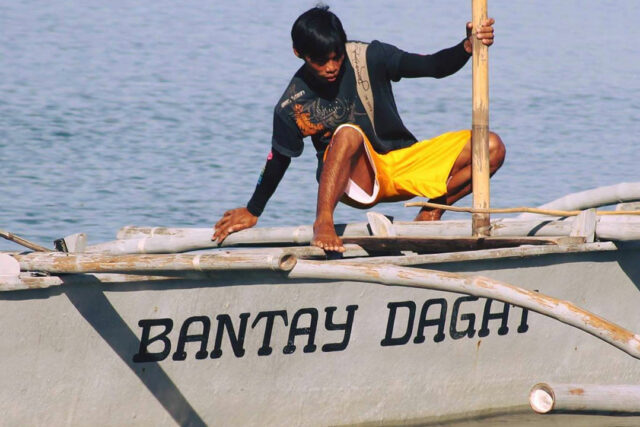
A VOLUNTEER fisherman for the Bantay Dagat civilian patrol. — FACEBOOK.COM/DAGATBANTAY

By Kenneth Christiane L. Basilio, Reporter

THE Philippines is beefing up its civilian fishery patrol force to boost maritime monitoring as Chinese activity intensifies in the South China Sea, officials said on Monday.

Manila’s fishery bureau is reviewing the state of its civilian patrol vessels and preparing guidelines to formalize the fleet’s operations, Presidential Assistant for Maritime Concerns Andres C. Centino said.

“Efforts are under way to complete a comprehensive inventory of Bantay Dagat (sea guards) units, where they will be issuing informed guidelines governing their creation, their adaptation and setting the standards of operations,” he told a security forum in Manila, referring to the civilian patrol fleet in Filipino.

The sea patrol is managed by the Bureau of Fisheries and Aquatic Resources and is composed of volunteer teams, mostly fishermen, tasked with a round-the-clock watch of the Philippines’ coastal waters.

More frequent civilian patrols could help authorities improve awareness of Philippine waters as the Southeast Asian nation grapples with lingering tensions in the strategic waters, said Rear Admiral Roy Vincent T. Trinidad, navy spokesman for the South China Sea.

“Our maritime domain awareness is an all-source effort,” he told reporters on the sidelines of the forum. “This will add up to the 360-monitoring that we are doing.”

China claims nearly all of the strategic waterway via a U-shaped, 1940s nine-dash line map that overlaps with the exclusive waters of the Philippines and neighbors like Vietnam and Malaysia, irking Manila as Beijing continues to claim sovereignty by deploying an armada of coast guard and navy ships.

Tyler Pavlowich, a maritime research associate at the University of Rhode Island, said some Filipino fishers have extended their volunteer work by helping spot Chinese vessels operating within the country’s 200-nautical-mile (370-kilometer) exclusive economic zone (EEZ).

“We brought in commercial fishers as an important partner… so we used that to paint a more complete maritime domain awareness picture,” he told the forum.

Fishermen play a key role in boosting maritime awareness by sharing maritime information since the government can’t maintain extensive awareness of Philippine waters on its own, Mr. Centino said.

“Maritime domain awareness, as recognized in both national and international practice, requires not only technological investment and interagency coordination, but also timely information from those who frequent these areas,” he said.

Civilian fishers also help identify threats at sea, including Chinese vessels acting aggressively within the country’s EEZ, he added.

“The National Maritime Center, together with the Fish Rights Program, provided radio equipment to the fishermen so that they can have the means to report what’s happening,” Mr. Centino said.

The Chinese Embassy in Manila did not immediately reply to a Viber message seeking comment.

The Philippines and China have been at loggerheads near disputed features in the South China, with Manila accusing China’s coast guard of aggression and Beijing furious over what it calls repeated provocations and territorial incursions.

Manila has also accused China of maintaining a maritime militia to bolster its presence in the South China Sea. Beijing has maintained that they are civilian ships.

Marcos urges new officers to uphold integrity amid South China Sea tensions

PRESIDENT Ferdinand R. Marcos, Jr. Is flanked by AFP Chief of Staff General Romeo S. Brawner, Jr. And Defense Secretary Gilberto C. Teodoro, Jr. at the graduate rites of army, navy and air force officers. — PHILIPPINE STAR/NOEL B. PABALATE

PRESIDENT Ferdinand R. Marcos, Jr. urged newly commissioned military officers to uphold integrity and professionalism as the Philippines faces escalating security challenges, particularly in the South China Sea.

Speaking at the graduation rites of the Major Services Officer Candidate Course at Villamor Air Base in Pasay City on Monday, Mr. Marcos said global developments were creating new risks for the country. He stressed the need for a modern, disciplined and politically neutral Armed Forces of the Philippines (AFP).

He said the Philippines “must continue to defend our rights in the West Philippine Sea,” where tensions with China remain high.

Manila and Beijing are locked in a diplomatic stalemate as talks on a bilateral framework have stalled, with both sides failing to agree on key security and economic terms. Authorities have said Chinese vessels continue to harass Philippine ships and fishermen despite a 2016 United Nations-backed arbitral ruling in Manila’s favor.

Addressing the 2025 graduating classes of the Army’s Bumannawag, the Navy’s Sagmaraya and the Air Force’s Kahimdaliyan, Mr. Marcos said their training places them at the forefront of national defense, disaster response and civic service.

He reminded them that their loyalty “must not be to any individual or faction, but only to the republic.”

The President reaffirmed his administration’s defense agenda, citing investments in radar systems, ships, aircraft and upgraded military facilities. He also highlighted deepening security cooperation with allies such as the US, Japan and Australia.

Mr. Marcos said the AFP’s mandate extends beyond defending the country’s borders. The new officers, he said, would be tasked to rescue families during natural calamities, help secure elections and help government programs in underserved areas.

He warned the graduates to guard against corruption, saying their integrity would be tested as they advance in their careers.

The ceremony, attended by Defense Secretary Gilberto C. Teodoro, Jr. and AFP Chief of Staff General Romeo S. Brawner, Jr., served as one of the military’s major commissioning events this year as the government accelerates defense modernization amid rising geopolitical tensions in the region. — Chloe Mari A. Hufana

CoA flags OVP entrepreneurial program

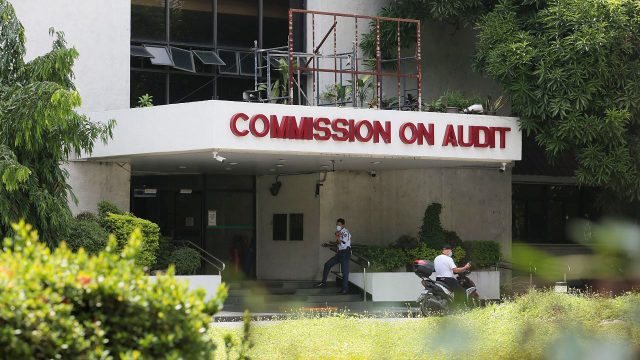
PHILIPPINE STAR/MICHAEL VARCAS

THE Commission on Audit (CoA) has flagged the Office of the Vice-President (OVP) for failing to assess the viability of projects backed with seed money under its flagship entrepreneurial program.

State auditors gave an unmodified opinion on the OVP’s financial report, but said the agency did not check the feasibility of some of the project proposals by the 138 beneficiaries of its Mag-negosyo Ta ‘Day — Cebuano for “let’s do business” — program.

“The OVP has only visited 11 beneficiaries for monitoring after three months upon the release of funds, while the remaining 72 beneficiaries were visited either before or after the required period for monitoring or none at all,” CoA said in its 2024 audit report.

The OVP did not immediately reply to an e-mail and Viber message seeking comment.

The Mag-negosyo Ta ‘Day program aims to address the needs of people and groups suffering from “poverty, injustice and calamities” by helping them become self‑reliant through seed funding, according to the OVP’s website.

State auditors said home visits to 17 beneficiaries were delayed by 20 to 142 days, raising concerns that observations and issues on project implementation might not have been promptly communicated to the OVP.

“In order to evaluate and ensure that the seed capital fund is used for microenterprise development, monitoring and evaluation activities should be regularly conducted and properly documented,” according to the report.

“Thus, the OVP may not be able to determine whether the beneficiaries were provided with a sustainable income source and had improved their socioeconomic status,” it added.

Auditors added that 14 beneficiaries did not receive home visits, despite program rules requiring inspections a year after fund liquidation to check on livelihood activities and improvements.

“Verbal inquiry with the focal person for the program revealed that home visits were not regularly conducted due to lack of manpower,” CoA said. 

It added that home visits to 27 beneficiaries were conducted before the scheduled monitoring period, preventing the agency from properly assessing the status of project implementation.

Auditors said early visits were conducted to 14 other beneficiaries whose seed funds were fully used. “Even though the funds were fully utilized… It is premature to assess the progress or status of the project implementation within a short period of time.” — Kenneth Christiane L. Basilio