Home Blog Page 6337

VistaMalls, Inc. announces schedule of annual meeting of stockholders on June 27


Spotlight is BusinessWorld’s sponsored section that allows advertisers to amplify their brand and connect with BusinessWorld’s audience by enabling them to publish their stories directly on the BusinessWorld Web site. For more information, send an email to online@bworldonline.com.

Join us on Viber to get more updates from BusinessWorld: https://bit.ly/3hv6bLA.

Beneficial Life Insurance Company, Inc. to conduct annual stockholders’ meeting through remote communication on June 30

To register, please click the link:

https://form.jotform.com/benlifemis.com.ph/2022-ASM-registration

or send us an email to:

corpsec@benlife.com.ph


Spotlight is BusinessWorld’s sponsored section that allows advertisers to amplify their brand and connect with BusinessWorld’s audience by enabling them to publish their stories directly on the BusinessWorld Web site. For more information, send an email to online@bworldonline.com.

Join us on Viber to get more updates from BusinessWorld: https://bit.ly/3hv6bLA.

Diokno sees no need for spending cuts

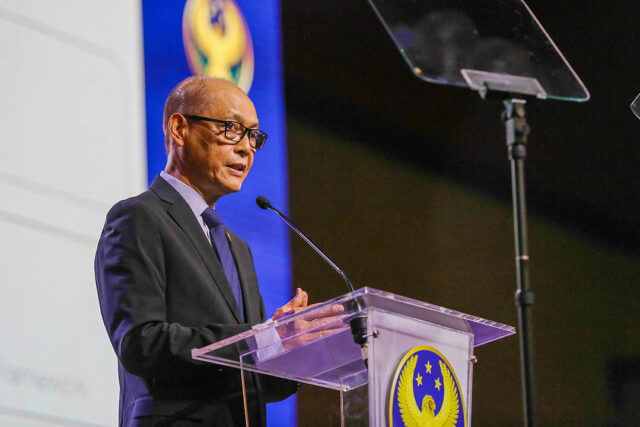
BANGKO SENTRAL NG PILIPINAS GOVERNOR BENJAMIN E. DIOKNO — PHILIPPINE STAR/ GEREMY PINTOLO

THE INCOMING Marcos administration will not reduce government spending to address the ballooning budget deficit, Finance chief-designate and Bangko Sentral ng Pilipinas (BSP) Governor Benjamin E. Diokno said.

“There should be no cut in our expenditure plan. I think we should really focus on raising enough taxes. I’m confident that because of the tax system that the Duterte administration will leave… we will be able to raise enough taxes to ensure we will meet our deficit targets,” he told ABS-CBN News Channel on Monday.

Mr. Diokno, who was picked by President-elect Ferdinand R. Marcos, Jr. to head the Finance department, said they will stick to the plan to bring down the government’s budget deficit to 3% of gross domestic product (GDP) by 2028.

For this year, the budget deficit ceiling is set at P1.65 trillion, which is equivalent to 7.7% of GDP. Economic managers set the budget gap ceiling at 6% of GDP for 2023, 5.1% for 2024 and 4.1% for 2025.

Asked if he will support proposals to impose new taxes, Mr. Diokno said the recent tax reforms would provide the next administration with enough room to generate enough revenues.

The Bureau of the Treasury earlier estimated the government needs to raise P249 billion every year in incremental revenues to avoid new borrowings to pay the P3.2-trillion additional debt incurred during the coronavirus disease 2019 (COVID-19) pandemic.

Finance Secretary Carlos G. Dominiguez III has proposed a fiscal consolidation plan that involves imposing new tax measures, repealing some tax exemptions, and deferring the personal income tax reductions.

Mr. Dominguez has said the government cannot cover the existing debt by borrowing more or reducing spending every year.

The National Government’s outstanding debt stood at a record-high P12.76 trillion at the end of April.

Meanwhile, Department of Finance (DoF) Chief Economist Gil S. Beltran said the country’s outstanding debt would have ballooned to over P15 trillion this year, if not for the government exercising fiscal prudence.

“We spent what we had to, but not more than what we could afford. In fact, had we acquiesced to pressure for us to spend more, our debt would have increased by P2.2 trillion more and reached P15.4 trillion,” Mr. Beltran said in a statement.

During the pandemic, Congress passed Republic Act (RA) No. 11469 or the Bayanihan to Heal as One Act and RA 11494 or the Bayanihan to Recover as One Act.

“Aware of the effects of additional spending on our borrowings, the DoF worked closely with legislators to limit the interventions under Bayanihan II to P140 billion, despite the objections of many other stakeholders,” Mr. Beltran said.

The DoF cited a report by its Domestic Finance Group (DFG) showing that proposed COVID-19 stimulus bills and other revenue eroding measures would have led to additional spending amounting to at least P2.2 trillion if they were passed by Congress.

Economists, however, said the government should have ramped up spending to boost the Philippines’ recovery from the pandemic.

“I personally thought that the government should have come out and have done a little more,” UnionBank of the Philippines, Inc. Chief Economist Ruben Carlo O. Asuncion said. “But, credit to the government because they did what has to be done considering the lack of resources.”

ING Bank N.V. Manila Senior Economist Nicholas Antonio T. Mapa said in an e-mail that increased spending during the pandemic could have helped jumpstart economic activity.

“Additional stimulus during the height of COVID may have indeed bloated the overall debt levels of the country… However, such deployment may have jumpstarted economic activity, assured a more effective and early response to the crisis that could have ultimately [saved] the economy from falling into a deep recession,” he said.

“The improved health of the country could have in turn generated revenue streams that could have offset deficits and debt levels.”

Mr. Mapa stressed that the importance of measuring debt not solely on its overall level, but also against the economy’s gross domestic product (GDP).

“A substantial outlay early on in the pandemic may have pushed the debt levels to elevated levels, but it could have also helped revive the economy sooner, restore revenue streams and lead to narrower deficits and a more vibrant economy that would eventually translate to lower debt-to-GDP ratios.”

The Philippine economy contracted by 9.6% in 2020, but rebounded with a 5.7% growth in 2021.

Economic managers are targeting 7-8% GDP growth this year. — Keisha B. Ta-asan and Tobias Jared Tomas

Bakers scramble to cope amid spike in flour prices

A baker prepares to put bread in an oven in a bakery in Dapitan, Manila, June 5. — PHILIPPINE STAR/EDD GUMBAN

By Revin Mikhael D. Ochave, Reporter

BAKERS are struggling to keep prices of bread and pastries low amid the spike in flour prices caused by the Russia-Ukraine war and disruptions in the global supply of wheat.

Several bakery owners interviewed by BusinessWorld said that prices of flour, depending on the quality, have gone up by around 20% to nearly 50% in recent months.

“Flour and wheat supplies seem sufficient in the Philippines. We have no problem buying, but the flour prices are increasing continuously since March due to volatility of world supply, I think, because of the Ukraine-Russia war. It was P810 per 25-kilogram (kg) sack of flour in January, now it’s at P955 per sack,” Wilson Lee Flores, owner of Kamuning Bakery Café, said in a mobile phone interview.

The Philippines is a major importer of milling-quality wheat, as it has no commercial production of wheat. It mainly imports wheat from the United States, Australia and Canada, according to Luisito Chavez, former vice-president of the Philippine Federation of Bakers’ Association, Inc.   

“We import 100% of wheat for our flour mills to process into flour. We use flour for pandesal, breads, cakes, biscuits, cookies, instant noodles and pasta. The Ukraine-Russia conflict, plus economic or trade sanctions of the West on Russia have destabilized global wheat prices and supplies,” Mr. Flores said.

Russia and Ukraine account for around a third of global wheat supply.

Jundio C. Salvador, owner of Pan de Amerikana bakery and restaurant, said in a mobile phone interview that the flour they use for making bread and other pastries have increased to P1,070 per 25 kg, from P870 per 25 kg previously.

“(Flour) supply-wise, we are not encountering any problems as of the moment. We are concerned only with the rising prices at an average of 22% for the past previous month,” Mr. Salvador said.   

PRICE HIKE
Kamuning Bakery Café has already raised the price of pandesal to P4 a piece, from P3 previously, Mr. Flores said.

“We have no choice but to adjust a little some of our bread prices, but not too high because we do not want customers to suffer and we don’t want customers to buy and eat less pandesal. Some bakeries and fastfood restaurants reduce size, density, and quality of their breads and foods, but we continue to uphold our standard, classic sizes and taste of the bread here,” he said.

To address the spike in prices, Mr. Flores suggested bakeries and restaurants should consider local substitutes such as cassava flour, or shift to local ingredients.

At Pan de Amerikana, Mr. Salvador said the price of pandesal has not been adjusted as of now.

“Increasing our price will definitely affect our sales. Our customers are very familiar with the size and weight of our pandesal and request us not to reduce them but rather increase the price instead. We expect this move will only translate to less sales,” he said.

A March 24 report by the US Department of Agriculture – Foreign Agriculture Service in Manila said the share of milling wheat to the total cost of bread production is 71%.

Ram M. Morales II, co-founder of Pomodoro Pizza, said in a mobile phone interview that they raised the price of their pizzas by P5 to P20 per order.

“Before, we were getting flour for P540 per 25-kg sack. Now, the flour we use is priced at over P1,000 per sack… It is hard on our end because the flour that we use is very specific. We cannot just substitute our raw material with locally available flour,” Mr. Morales said.   

The recent spike in flour prices has prompted Mr. Morales and his investors to consider shifting from pizza to coffee or all-day breakfast offerings.

“We are looking at other concepts that do not depend on pizza so that the business will continue,” Mr. Morales said.   

Philippine Baking Industry Group (PhilBaking) President Johnlu Koa earlier said that the group is seeking to raise the price of the 450-gram Pinoy Tasty bread to P42.50 from the current price of P38.50, and the price of the Pinoy Pandesal to P27.50 from the current price of P23.50.

Trade Undersecretary Ruth B. Castelo said in a mobile phone message to BusinessWorld that the Department of Trade and Industry is still validating PhilBaking’s proposed price adjustment. 

“We are still validating (the proposal),” Ms. Castelo said.

Shippers urge Palace to stop planned 949% hike in tariffs

REUTERS

A GROUP of shippers is urging Malacañang to stop the Philippine Ports Authority (PPA) from implementing an “unjustifiable” 949% hike in tariffs once the new operator takes over the Port of Pasig.

“We… urgently and humbly seek your intervention in the PPA’s attempt to unjustifiably and unconscionably increase arrastre, mooring and other tariffs at the Port of Pasig by as much as 949% for dry bulk cargo…, 615% for general cargoes…, and 71% for prime commodities,” the Pasig Port Users Against PPA Tariff Increases said in a full-page newspaper ad on Monday.

Signed by representatives of 54 companies, the appeal was addressed to President Rodrigo R. Duterte, President-elect Ferdinand R. Marcos, Jr., National Economic and Development Authority (NEDA) Secretary Karl Kendrick T. Chua, and incoming NEDA Secretary Arsenio M. Balisacan.

The 54 companies, which include Movers and Managers Corp., J-Tram Integrated and Marketing Corp., CQ Heirs Shipping Lines, San Nicholas Lines, Inc., JCAP Shipping Lines, JVS Journey Sea Trans., Inc., and Masuda Marine Corp., said the new tariffs are “exorbitant (and) without justification.”

The companies argued that raising tariffs amid rising fuel prices and a looming food crisis is “against the interest of the people.”

The tariff hike, which is applicable to all “tier 3” ports including the Pasig Port, is expected to affect the prices of grains used for flour and bread, animal feeds, construction materials, sugar, rice, and cooking oil, among others. 

The port tariffs are “without consideration for the minimum wage of the locality of the affected port users,” they said.

“If tariffs are increased at the Port of Pasig, which ships to and from Palawan, the increase in tariff rates at Palawan will be added on to the increase in rates at the Port of Pasig for products shipped to the Port of Pasig, and vice-versa,” the group said.

The statement was published a week after the PPA awarded the terminal management contract for the Port of Pasig to the Manila-based Mega Lifters Cargo Handling Corp.

The Port of Pasig, which is situated near the M. Roxas Jr. Bridge (Delpan Bridge) spanning the Pasig River, covers 43,247.07 square meters on both banks of the river. It handled 848,960 metric tons of domestic cargo last year, according to the PPA.

“In other words, for dry bulk cargo imported at both Pasig and Palawan, the Palawan increase of 215% will be added to the 949% increase of Pasig, for a punishing 1,164% increase to the end consumer,” the Pasig Port users also said.

The group said they issued a similar appeal to the PPA Board of Directors on April 11, but did not receive a reply.

In their petition in April, port users Movers and Managers Corp., J-Tram Integrated and Marketing Corp., CQ Heirs Shipping Lines, TBB Enterprises, San Nicholas Lines, Inc., and JVS Journey Sea Trans., Inc. proposed that the “tariff increase be similar to that granted to MNHPI (Manila North Harbour Port, Inc.) in 2017, i.e. 24% increase implemented in three tranches of 8% each over three years.”

Two communications officers of the PPA received and acknowledged receipt of BusinessWorld’s request for comment on Monday, but the agency has yet to issue a statement on the matter as of press time. — Arjay L. Balinbin

PHL ranks 37th among top destinations for Muslims

A tourist enjoys the view of Mayon Volcano from Sumlang Lake in Camalig, Albay. — PHILIPPINE STAR/EDD GUMBAN

THE PHILIPPINES ranked 37th out of 138 destinations in the latest report that measures a country’s preparedness in tapping the Muslim travel market.

The Mastercard-CrescentRating Global Muslim Travel Index (GMTI) 2022 report showed the Philippines had an overall score of 43.

The score is based on four key areas — ease of access to the destination, internal and external communication, environment, and services.
Philippines places 37<sup>th</sup> in Muslim travelers’ top destinations

“As the travel industry gears up for quarantine-free international travel, we believe the Muslim travel sector could contribute immensely to accelerating the recovery,” Fazal Bahardeen, founder and CEO of CrescentRating, said in the report.

In the previous year’s report, the Philippines ranked 36th out of 140 destinations with an overall score of 46.

Malaysia topped this year’s travel index, followed by Turkey, Saudi Arabia, and Indonesia. A total of 138 countries were ranked in 2022, down from 140 countries included last year, after Russia and Ukraine were excluded due to the war.

Under the access criteria for 2022, the Philippines scored 83 for visa requirements, 21 for connectivity, and 57 for transport infrastructure. In terms of communications, the country scored 54 for destination marketing, 41 for communication proficiency, and 30 for stakeholder awareness.

Under environment, the Philippines had 61 for safety, 100 for faith restrictions, 3 for visitor arrivals, 38 for enabling climate, and 30 for sustainability.

For services, the Philippines scored 47 for core needs such as halal food, 50 for prayer facilities, 40 for core services such as airports, 32 for hotels, and 10 for unique experiences.

This year’s index also showed that the Philippines remained on 8th place among the top 20 non-Organization of Islamic Countries (OIC).

Mr. Bahardeen said Muslim traveler arrivals are projected to reach 140 million in 2023 and 260 million in 2024.

“The pre-pandemic projection of 230 million arrivals by 2026 will now be reached in 2028 with an estimated expenditure of $225 billion. This recovery process is fragile and could be disrupted by the continuing war in Ukraine, fuel price increases, and other health threats such as the emerging monkeypox or coronavirus disease 2019 (COVID-19) variants,” Mr. Bahardeen said.

In a separate report, the United Nations World Tourism Organization (UNWTO) said that the recovery of global tourism is now gaining momentum after the easing of restrictions and increase in tourist arrivals.

Based on the UNWTO’s latest World Tourism Barometer, international tourism rose by 182% year on year in the first quarter of 2022, after recording 117 million international arrivals from 41 million in the same period last year.

“Of the extra 76 million international arrivals for the first three months, about 47 million were recorded in March, showing that the recovery is gathering pace,” the UNWTO said.

“Although international tourism remains 61% below 2019 levels, the gradual recovery is expected to continue throughout 2022, as more destinations ease or lift travel restrictions and pent-up demand is unleashed,” it added.

However, the UNWTO noted that the Ukraine-Russia conflict poses a risk to the recovery of international tourism.

“The Russian offensive on Ukraine seems to have had a limited direct impact on overall results so far, although it is disrupting travel in Eastern Europe. However, the conflict is having major economic repercussions globally, exacerbating already high oil prices and overall inflation and disrupting international supply chains, which results in higher transport and accommodation costs for the tourism sector,” the UNTWO said.

International tourist arrivals are expected to hit up to 70% of 2019 level this year, it added. — Revin Mikhael D. Ochave

Old board sues Okada camp after resort takeover

By Revin Mikhael D. Ochave, Reporter

BOARD members of Tiger Resort Leisure and Entertainment, Inc. (TRLEI) who were recently removed by the camp of Japanese businessman Kazuo Okada have filed a complaint against him, citing the alleged “forceful takeover” of casino resort Okada Manila.

In a press conference on Monday, TRLEI Legal Counsel Estrella C. Elamparo said that the board directors had filed complaints before the Department of Justice (DoJ) in relation to the alleged “brutal, forceful, and anomalous takeover of Okada Manila” on May 31.

The directors who filed complaints on Monday include James G. Lorenzana, Michiaki Satate, who is co-vice-chairman, and Hajime Tokuda, a board member. They cited various offenses such as grave coercion, unjust vexation, slight physical injuries, kidnapping and serious illegal detention.

The complaints were filed against several respondents, including Mr. Okada, Antonio O. Cojuangco, and Dindo A. Espeleta.

“There wasn’t just an illegal takeover. There wasn’t just a violation, or disrespect, if not perversion of the status quo ante order (SQAO) which misled everybody, including perhaps our government authorities. They’ve committed serious acts and that’s why this morning, we went to the DoJ and filed three separate criminal complaints,” Ms. Elamparo said.

According to the TRLEI side, the camp led by Mr. Okada allegedly stormed the establishment on May 31, utilizing brute force and intimidation to “compel legitimate TRLEI officers to yield control over Okada Manila.”

On June 1, the camp of Mr. Okada issued a statement saying that Okada Manila’s operations remain “business as usual” and that his group is “once again managing Okada Manila.” They said that the country’s Supreme Court in April released the SQAO identifying Mr. Okada as the lone representative of Tiger Resort Asia Ltd. (TRAL), which is the parent firm of TRLEI that operates Okada Manila.

Mr. Okada was removed from TRLEI as shareholder, director, and company chairman in 2017 by Universal Entertainment Corp. (UEC) and TRAL “due to mismanagement.”

However, TRLEI counsel Ms. Elamparo said that it cannot be considered business as usual for Okada Manila.

“We can’t call it business as usual. But I think they’re receiving everybody and they’re still operating the hotel. But I wouldn’t call it business as usual because with their source of funds, the owner of the bank accounts is TRLEI. The banks will not just allow them to source funds from these accounts,” Ms. Elamparo said.

Further, Mr. Satate said that banks that have transactions with Okada Manila are carefully monitoring the issue.

“Of course, the banks are concerned about the current situation. From our side, we are in continuous discussions with the banks from the legal side and also from the business side. The banks are monitoring carefully the issue. Of course, they also have their legal opinions, their business stance, so we’re waiting for their final judgment also on how they will handle the situation from their end,” Mr. Satate said.

“Today, we would also like to give emphasis to the legality of the board recognized by TRLEI’s parent companies. We are recognized by our parent companies, UEC and TRAL, as the true and legitimate board members of TRLEI,” he added.

In a statement, Mr. Tokuda said that he was taken against his will during the takeover of Okada Manila, and was eventually brought home.

Aside from being a part of the TRLEI board, Mr. Tokuda is also a director at UEC, which is the parent company of TRAL and owner of TRLEI. UEC is owned by Okada Holdings Ltd., which is registered in Hong Kong.

“I have never seen such violence, brutality, and force in any intra-corporate dispute. But on May 31, I have not only witnessed it, I experienced it,” Mr. Tokuda said.

Ms. Elamparo said that they will be filing a manifestation with urgent motion for clarification regarding the Supreme Court’s SQAO.

In a separate statement, Mr. Okada said he addressed Okada Manila’s senior management and senior managers on Monday, where he explained the issue of the SQAO.

“Chairman Okada, in his speech, also reassured senior management and managers that he wants nothing more than for Okada Manila’s senior management to have greater interaction and an at arm’s length accessibility with his Board of Directors,” the statement said.

“Chairman Okada also emphasized that it is his fervent desire for all stakeholders to know that his Board of Directors is sincere in its pursuit to better serve the needs of its employees while at the same time elevating Okada Manila to greater heights of success,” it added.

In a separate statement on Monday, the Philippine Amusement and Gaming Corp. (PAGCOR) said that it is neutral with the dispute involving Okada Manila.

PAGCOR Chief Legal Counsel Roderick R. Consolacion said that it is up to the Supreme Court to resolve the pending case, citing a letter dated May 4 addressed to the lawyers of the contending groups.

“All that PAGCOR did was to follow the law and court processes. In the meantime, the SQAO is effective immediately by express directive of the Supreme Court and thus must be respected by PAGCOR and the parties, until lifted or otherwise the status quo is changed by the court,” PAGCOR said.

“PAGCOR emphasized its neutrality in the intra-corporate dispute in TRLEI in light of news reports accusing the regulator that it is biased in favor of the group of Mr. Kazuo Okada. PAGCOR has only recognized and will only recognize, the orders of the Supreme Court and will exercise its authority as regulator without violating or disrupting the SQAO and other orders issued by the Supreme Court,” it added.

PAGCOR opted not to give further comment on the ongoing issue surrounding Okada Manila.

“Since the issues between the parties are sub-judice, we fear that the court will find us in contempt if we do so,” PAGCOR said.


Raslag shares rise on market debut

RENEWABLE energy firm Raslag Corp. saw its share price jump by 2.5% or by five centavos to finish at P2.05 on its listing at the Philippine Stock Exchange (PSE) on Monday.

“The listing of Raslag will grow the portfolio of companies in the Renewable Energy space in our stock market. As an advocate of sustainability, being a member of the Sustainable Stock Exchanges Initiative, the PSE understands the crucial need for renewables in the fight against climate change,” PSE President and Chief Executive Ramon S. Monzon said in a statement.

The firm listed 1.5 billion shares and raised P700 million from its initial public offering (IPO). It will trade under the ticker ASLAG.

Proceeds from the offering will be used to fund the equity portion of a 35.1-megawatt (MW) RASLAG-4 solar photovoltaic plant’s development and construction, and the pre-development work for RASLAG-5’s nearly 60-MW, as well as other upcoming solar projects.

According to Mr. Monzon, the firm received a “warm reception” from the local small investors (LSI).

“The LSI tranche of Raslag was oversubscribed by 1.5 times, making it the fourth IPO to record an LSI oversubscription since the launch of the PSE Electronic Allocation System (PSE EASy),” he added.

Regina Capital Development Corp. Head of Sales Luis A. Limlingan said that value turnover on the local market was concentrated on Raslag closing above IPO price.

“Investors were receptive to the company’s expansion plans given the increased demand for reliable sources of energy in the medium and long term,” he said in a Viber message.

“In general, the global pressures to take a hard shift to renewables to ease the effects of climate change are shifting the limelight to alternative sources of energy, boding well for Raslag and its business model,” he added.

Raslag is a domestic renewable energy developer founded in Angeles City, Pampanga, by Peter G. Nepomuceno and Conrado D. Pecjo, the business development manager of Angeles Power, Inc. — Luisa Maria Jacinta C. Jocson

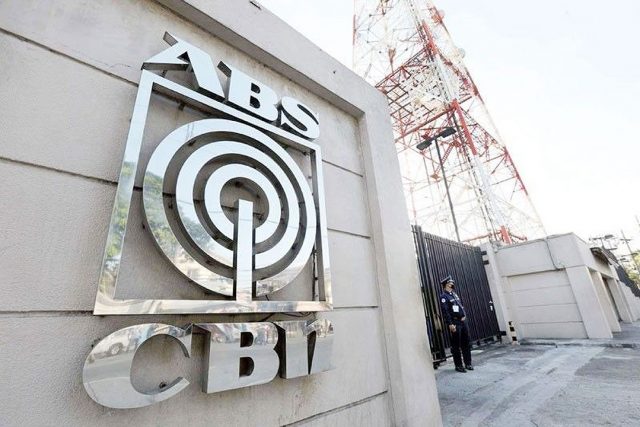
ABS-CBN ‘exploring’ various partnership opportunities

PHILSTAR

ABS-CBN Corp. said on Monday that it is exploring various partnership opportunities that will enable it to share its content both locally and globally.

“Our goal as storytellers and content creators is to bring Filipino stories to audiences here and all over the world. This is the reason we are exploring content distribution opportunities that allow us to reach wider audiences and pursue our mission of service,” ABS-CBN said in a statement, responding to reports over the weekend that it was in an evolving discussion with free-to-air television network TV5.

“Over the recent past, we have announced various local and international partnerships, including our content agreement with TV5. We continue to explore various partnership opportunities as they become available to us,” it added.

The company produces content and distributes programs through its partnerships with A2Z Channel 11 and TV5, Kapamilya Online Live on Facebook and YouTube, and streaming service iWantTFC, among others.

Under President Rodrigo R. Duterte’s government, lawmakers who supported him rejected the franchise application of ABS-CBN, the former rival of GMA Network, Inc. in the broadcasting space. The House of Representatives committee on legislative franchises deemed the broadcast network critical of Mr. Duterte and “undeserving” of the privilege.

The media company saw its attributable net loss for the first quarter of 2022 narrow to P1.38 billion from a loss of P1.95 billion the previous year.

The company’s total revenues for the quarter climbed 18.6% to P4.65 billion from P3.92 billion in the same period in 2021. Its total expenses remained at P5.77 billion.

Advertising revenues increased 59.8% to P1.49 billion from P929 million previously, while consumer sales grew 5.8% to P3.17 billion from P2.99 billion.

The company said the increase in advertising revenues is attributable to both political placements and growth in regular advertising as it continues to expand its coverage through partnerships.

On Monday, its shares jumped 2.21% or 22 centavos to close at P10.16 apiece at the stock exchange. — Arjay L. Balinbin

DMW, St. Luke’s sign Aseana lease contract

D.M. WENCESLAO & Associates, Inc. (DMW) announced in a disclosure on Monday that it signed a contract of lease with St. Luke’s Medical Center, Inc. (SLMC) for a 13,896 square meter (sq.m.) land in Aseana City, Parañaque.

“An integral part of holistic estate development is anticipating the needs of our locators. Immediate access to world-class healthcare institutions is a fundamental need that we have identified at the onset,” DMW Chief Executive Delfin Angelo C. Wenceslao said in a statement.

“SLMC Aseana City solidifies Aseana’s status as a top mixed-use central business district (CBD) destination of major brands and best-in-class institutions in the country,” he added.

The lease period is 50 years commencing in June 2022, bringing DMW’s total leased out land to 164,895 sq.m.

“The rapidly growing Aseana City provides a compelling platform for SLMC to expand and scale operations to capture the robust healthcare growth in the country and in Southeast Asia,” SLMC President and Chief Executive Arturo S. De La Peña said.

“With proximate critical infrastructure connecting Aseana City to other Metro Manila CBDs, growing population centers south of Metro Manila, and to the Ninoy Aquino International Airport, SLMC Aseana City will be at the forefront of delivering high-quality patient-centered care and improving health outcomes through advanced technology,” he added.

SLMC’s two facilities in Quezon City and Taguig have a combined total of 1,146 rooms, with over 60,000 average in-patient admissions and 2.7 million outpatient consultations annually.

DMW is an integrated property developer focused on land reclamation, construction, and real estate development. It owns and develops Aseana City, a development project with a total land area of 107.5 hectares.

Since 1965, DMW has reclaimed more than 2.4 million sq.m. of land; leased or developed 250,000 sq.m. of land and buildings; and completed over 140 construction and infrastructure projects including large, complex government developments throughout the country.

At the stock exchange on Monday, DMW shares dropped by 0.29% or two centavos to close at P6.78. — Luisa Maria Jacinta C. Jocson

CREIT inks deal to buy Surallah site of solar farm

CITICORE Energy REIT Corp. has forged a deed of absolute sale on Monday to acquire a property in South Cotabato from an affiliate for around P753.8 million.

In a disclosure, the listed real estate investment trust said that the acquisition would allow it “to generate leasing income over a long-term period of 25 years, adding 20% to its total leased area.”

The parcel of land it acquired is in the province’s Surallah town and has an area of 79,997 square meters (sq.m.). It was bought from Citicore Solar South Cotabato, Inc.

The property is the site of a 6.23-megawatt-peak (MWp) solar power plant, which was commissioned on Dec. 9, 2015. It was paid in cash upon the execution of the deed of absolute sale.

Citicore Solar South Cotabato is wholly owned by Sikat Solar Holdco, Inc., which is a unit of Citicore Renewable Energy Corp. (CREC). CREC owns 47.63% of CREIT.

CREIT said that together with the acquisition in a 253,880-sq.m. property in Bulacan, the South Cotabato property will allow the company to generate leasing income for 25 years.

The two properties will contribute 21% to CREIT’s total lease revenue and bring total operating capacity of all its tenants to 145 MW of direct current (dc) from the company’s pre-initial public offering capacity of 124 MWdc. 

In the first quarter, CREIT recorded a net income of P300.3 million, more than 12 times higher than the P23.52 million posted a year ago, as it began to realize rental income from its assets leased out to solar plant operators.

The profit jump comes as the company’s gross revenues surged by nearly 470% to P331.79 million, which largely came from lease income from various solar plant companies.

“With an established list of tenants operating in a cycle-resilient industry, CREIT is optimistic in generating recurring green sources of lease revenues, translating to increasing distributable income and attractive dividend yields to our shareholders,” said CREIT President and Chief Executive Officer Oliver Y. Tan.

The company’s board of directors approved the declaration of cash dividends P0.044 per share, which is payable on June 24.

CREIT has a five-year road map that targets 1.5 gigawatts (GW) of installed capacity by 2025. It said solar farm assets that meet its investment criteria “are scheduled to be acquired and infused” into the company once completed and operational.

On Monday, shares in the company slipped by 1.57% or four centavos to close at P2.51 apiece. — VVS

Top Gun: Maverick scores $86M in massive second weekend

TOM CRUISE in a scene from 2022’s blockbuster Top Gun: Maverick — IMDB.COM

LOS ANGELES — Top Gun: Maverick has the box office sizzling… again.

In its second weekend of release, Tom Cruise’s all-American action film collected a sensational $86 million from 4,751 North American theaters. Those returns rank among the top 10 highest-grossing second weekends in domestic box office history.

Pandemic times or not, the Paramount and Skydance release is eclipsing significant box office milestones at record speed. After only 10 days on the big screen, Top Gun: Maverick has generated $291 million in North America and $548.6 million globally.

Thanks to positive word of mouth, rapturous reviews, and premium screens, ticket sales for Top Gun: Maverick dropped only 32% from its $160 million debut over the long Memorial Day holiday weekend. It’s the smallest second-weekend decline for a movie that opened to $100 million or more, according to Comscore. That’s an especially impressive benchmark — even for a well-reviewed movie — because blockbusters, like Maverick, tend to be front-loaded and drop at least 50% after opening weekend. By comparison, Spider-Man: No Way Home and Marvel’s Doctor Strange in the Multiverse of Madness each declined 67% in its sophomore outing, while Robert Pattinson’s The Batman fell 50% in its second weekend and Eternals plunged 62%.

Surprisingly, Top Gun: Maverick has already become Cruise’s highest-grossing film ever at the North American box office, overtaking the record previously held by 2005’s War of the Worlds ($243 million).

“It has never been more appropriate to say ‘the sky’s the limit’ for Top Gun: Maverick,” Paramount’s president of domestic distribution Chris Aronson wrote in a note to press.

Few films wanted to compete with Maverick for eyeballs, though director David Cronenberg’s body horror film Crimes of the Future opened in limited release. From Neon, the movie launched to $1.1 million from 773 theaters, translating to a decent $1,423 per location. Viggo Mortensen, Lea Seydoux, and Kristen Stewart star in the gruesome Crimes of the Future, which premiered at this year’s Cannes Film Festival.

Without any new releases from major studios, Top Gun: Maverick enjoyed free rein over North American box office charts. Holdovers titles Doctor Strange sequel, The Bob’s Burgers Movie, The Bad Guys, and Downton Abby: A New Era took spots two through five. — Reuters