Home Blog Page 6293

Fed rolls out biggest rate hike since 1994, flags slowing economy
REUTERS

WASHINGTON – The Federal Reserve on Wednesday approved its largest interest rate increase in more than a quarter of a century to stem a surge in inflation that U.S. central bank officials acknowledged may be eroding public trust in their power, and being driven by events seen increasingly out of their hands.

The widely expected move raised the target federal funds rate by three-quarters of a percentage point to a range of between 1.5% and 1.75%, still comparatively low by historic standards.

But the Fed’s hawkish commitment to controlling inflation has already touched off a broad tightening of credit conditions being felt in U.S. housing and stock markets, and likely to slow demand throughout the economy – the Fed’s intent.

Officials also envision steady rate increases through the rest of this year, perhaps including additional 75-basis-point hikes, with a federal funds rate at 3.4% at year’s end. That would be the highest level since January 2008 and enough, Fed projections show, to slow the economy markedly in coming months and lead to a rise in unemployment.

“We don’t seek to put people out of work,” Fed Chair Jerome Powell said at a news conference after the end of the Fed’s latest two-day policy meeting, adding that the central bank was “not trying to induce a recession.”

Yet the Fed chief’s remarks were among his most sobering yet about the challenge he and his fellow policymakers face in lowering inflation from its current 40-year high, to a level closer to its 2% target, without a sharp slowdown in economic growth or a steep rise in unemployment.

“Our objective really is to bring inflation down to 2% while the labor market remains strong … What’s becoming more clear is that many factors that we don’t control are going to play a very significant role in deciding whether that’s possible or not” Powell said, citing the war in Ukraine and global supply concerns.

“There is a path for us to get there … It is not getting easier. It is getting more challenging,” he told reporters, noting that the rate hikes announced last month and in March so far had not only failed to slow inflation, but allowed it to continue accelerating to a level that recent data indicates have begun to influence public attitudes in a way that could make the Fed’s job even harder.

‘EYE-CATCHING’

A survey released on Friday showed consumer inflation expectations jumped sharply in June, a result Powell called “quite eye-catching,” and enough to tilt policymakers towards a larger 75-basis-point hike in hopes of making faster progress on the inflation front and retaining public trust that price increases will slow.

“This is something we need to take seriously,” Powell said of the change in consumer inflation expectations. “We’re absolutely determined to keep them anchored.”

The faster pace of rate hikes outlined by officials on Wednesday more closely aligns monetary policy with the rapid shift that took place this week in financial market views of what it will take to bring price pressures under control.

Bond yields fell after the release of Fed projections on Wednesday that showed economic growth slowing to a below-trend rate of 1.7%, and policymakers expecting to cut interest rates in 2024. Stocks on Wall Street ended the day higher.

Interest rate futures markets also reflected about an 85% probability that the Fed will raise rates by 75 basis points at its next policy meeting in July. For September’s meeting, however, the greater probability – at more than 50% – was for a 50-basis-point increase.

Powell, departing from the firmer guidance he has previously given about future rate increases, made no promises on Wednesday.

Given an unexpected jump in a monthly inflation report on Friday and the jump as well in expectations, “75 basis points seemed like the right thing to do at this meeting, and that’s what we did,” he said.

But he said rate hikes of that size were not likely to “be common,” and that when Fed policymakers gather in July an increase of either half a percentage point or three-quarters of a point would be “most likely.”

NOT A ‘VOLCKER MOMENT’

The tightening of monetary policy was accompanied by a downgrade to the Fed’s economic outlook, with the economy now seen slowing to a below-trend 1.7% rate of growth this year, unemployment rising to 3.7% by the end of this year, and continuing to rise to 4.1% through 2024.

While no Fed policymaker projected an outright recession, the range of economic growth forecasts edged toward zero in 2023 – with an index of Fed opinion showing officials almost unanimous in thinking risks were for growth to be slower, and inflation and unemployment higher, than expected.

Analysts, many of them critical of Fed projections in March that saw inflation easing with modest rate hikes and no increase in the unemployment rate, said the new outlook was more realistic.

“The Fed is willing to let the unemployment rate rise and risk a recession as collateral damage to get inflation back down. This isn’t a Volcker moment for Powell given the magnitude of the hike, but he is like a Mini-Me version of Volcker with this move,” said Brian Jacobsen, senior investment strategist at Allspring Global Investments, referring to former Fed Chair Paul Volcker, whose battle with inflation in the early 1980s involved sharp and unexpected rate increases of as much as four percentage points at a time.

Even with the more aggressive interest rate measures taken on Wednesday, policymakers nevertheless see inflation as measured by the personal consumption expenditures price index at 5.2% through this year and slowing only gradually to 2.2% in 2024.

Inflation has become the most pressing economic issue for the Fed and begun to shape the political landscape as well, with household sentiment worsening amid rising food and gasoline prices.

Kansas City Fed President Esther George was the only policymaker to dissent in Wednesday’s decision, preferring a half-percentage-point rate hike. — Reuters

Medalla signals gradual tightening

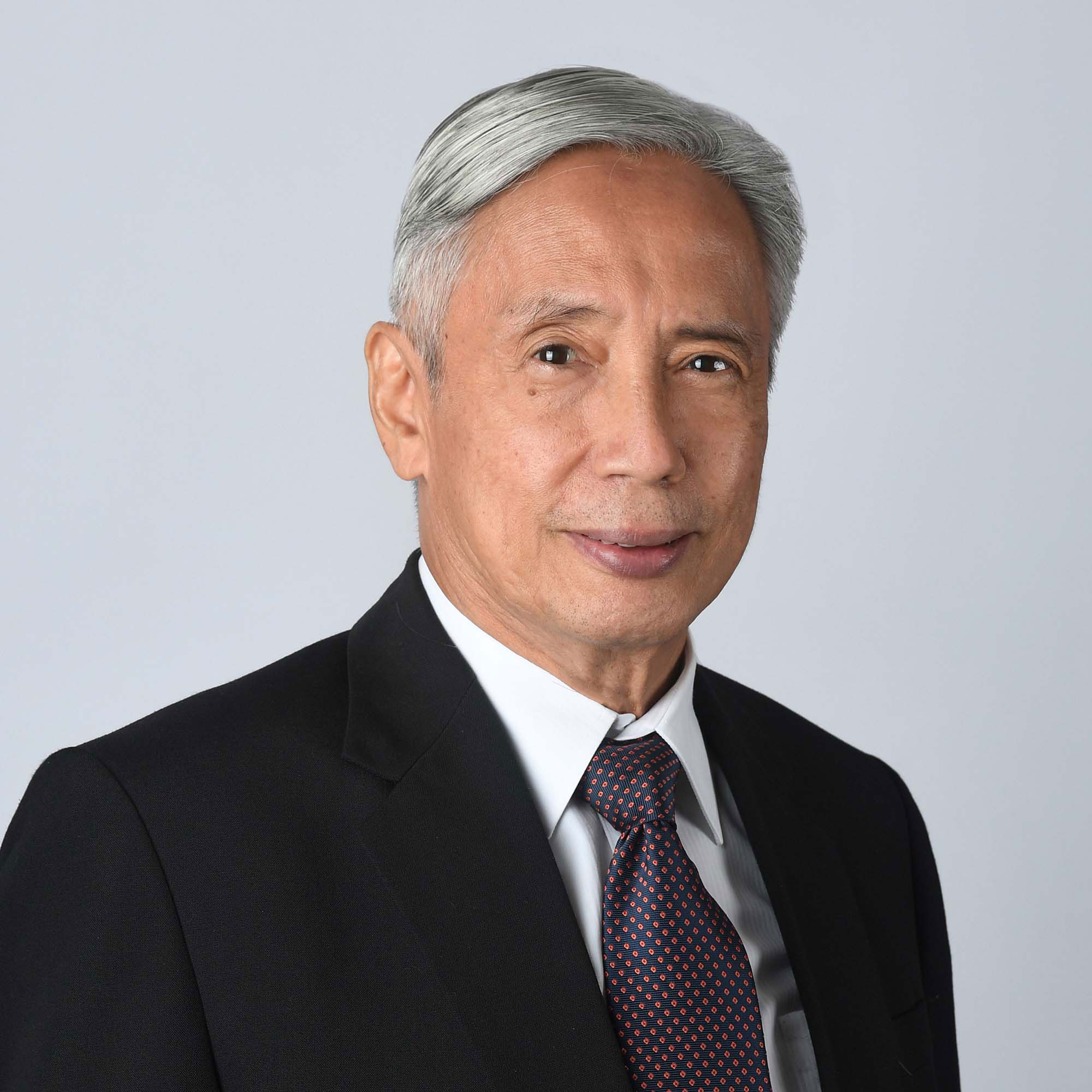
FELIPE M. MEDALLA / COURTESY OF BANGKO SENTRAL NG PILIPINAS

THE PHILIPPINE central bank is likely to raise its key interest rate at its next two meetings to curb inflation, but the pace of subsequent tightening will be gradual as its incoming chief ruled out hikes bigger than 25 basis points (bps).

“We have already signaled that it’s a sure thing that we will raise policy rates next week (June 23) and that we’ll likely to follow that up with a policy rate increase by August,” incoming Bangko Sentral ng Pilipinas (BSP) Governor Felipe M. Medalla said during a virtual roundtable discussion with BusinessWorld editors on Tuesday.

Mr. Medalla, who is currently a member of the Monetary Board and will serve the remaining term of BSP Governor Benjamin E. Diokno starting July 1, said any rate hikes after the Aug. 18 meeting will be data dependent.

“Depending on the data, it can be four or five more. Depending on the data, some more in 2023,” he added.

There are five more Monetary Board meetings scheduled this year — June 23, Aug. 18, Sept. 22, Nov. 11, and Dec. 15.

Asked if the BSP will consider rate hikes above 25 bps, he said: “Personally, I do not like 50 basis points. It signifies that we know something bad that you don’t know. It could be misread, as ‘wow, what does the central bank know that we don’t know?’”

Mr. Medalla said the BSP still has the “luxury of time and large reserves.”

“If the markets think we’re behind the curve, they will attack the peso,” he said. “Fortunately, the need to look more hawkish than we should be is not there. Right now, we’re trying to balance to ensure that we don’t miss our inflation targets next year, given the supply shocks.”

The Monetary Board kicked off its tightening cycle by raising the policy rate, the yield on the BSP’s overnight reverse repurchase facility, by 25 bps to 2.25% during its May 19 meeting to temper rising inflation. Interest rates on the overnight deposit and lending facilities were also hiked to 1.75% and 2.75%, respectively.

This was the first increase in borrowing costs since 2018 and followed cuts worth 200 bps in 2020 as the BSP moved to support the economy amid the coronavirus pandemic.

Inflation accelerated by 5.4% in May, the highest in three and a half years and above the BSP’s 2-4% target range.

The BSP last month raised its average inflation estimate to 4.6% this year, higher than the previous estimate of 4.3%. In 2023, inflation is projected at 3.9%, also higher than the previous estimate of 3.3%.

“(Based on) our calculation the probability it will exceed target of 2-4% next year is 47%, then that’s unacceptable. We are an inflation-targeting central bank. We cannot cure what has already happened, the price shocks… (But) we will do our best (to ensure) that demand is not excessive and inflationary expectations are not disanchored,” Mr. Medalla said.

Mr. Medalla also downplayed concerns that policy tightening will dampen the Philippine economy’s recovery from the pandemic.

“Now the question is will it kill growth? My answer is no. Because when your expected inflation is higher than 3% and policy rate is below 3%, in real terms that’s still very low interest rates,” he said.

Economic managers are targeting a 7-8% gross domestic product (GDP) growth this year.

“2022 will be a high-growth year, simply because of the huge pent-up demand. What’s going on in the Philippines is the relaxation of all those restrictions in people’s movements is more powerful than any stimulus you could think of,” Mr. Medalla said.

Most regions in the Philippines have been under the most relaxed coronavirus alert level since March.

However, health experts have warned daily coronavirus infections in Metro Manila and nearby areas can hit as much as 500 by the end of June.

The full video of the roundtable with Mr. Medalla will be shown on BusinessWorld’s Facebook page at 11 a.m. on June 20. Keisha B. Ta-asan

Remittances rise in April

ALEXANDER MIL-UNSPLASH

By Keisha B. Ta-asan

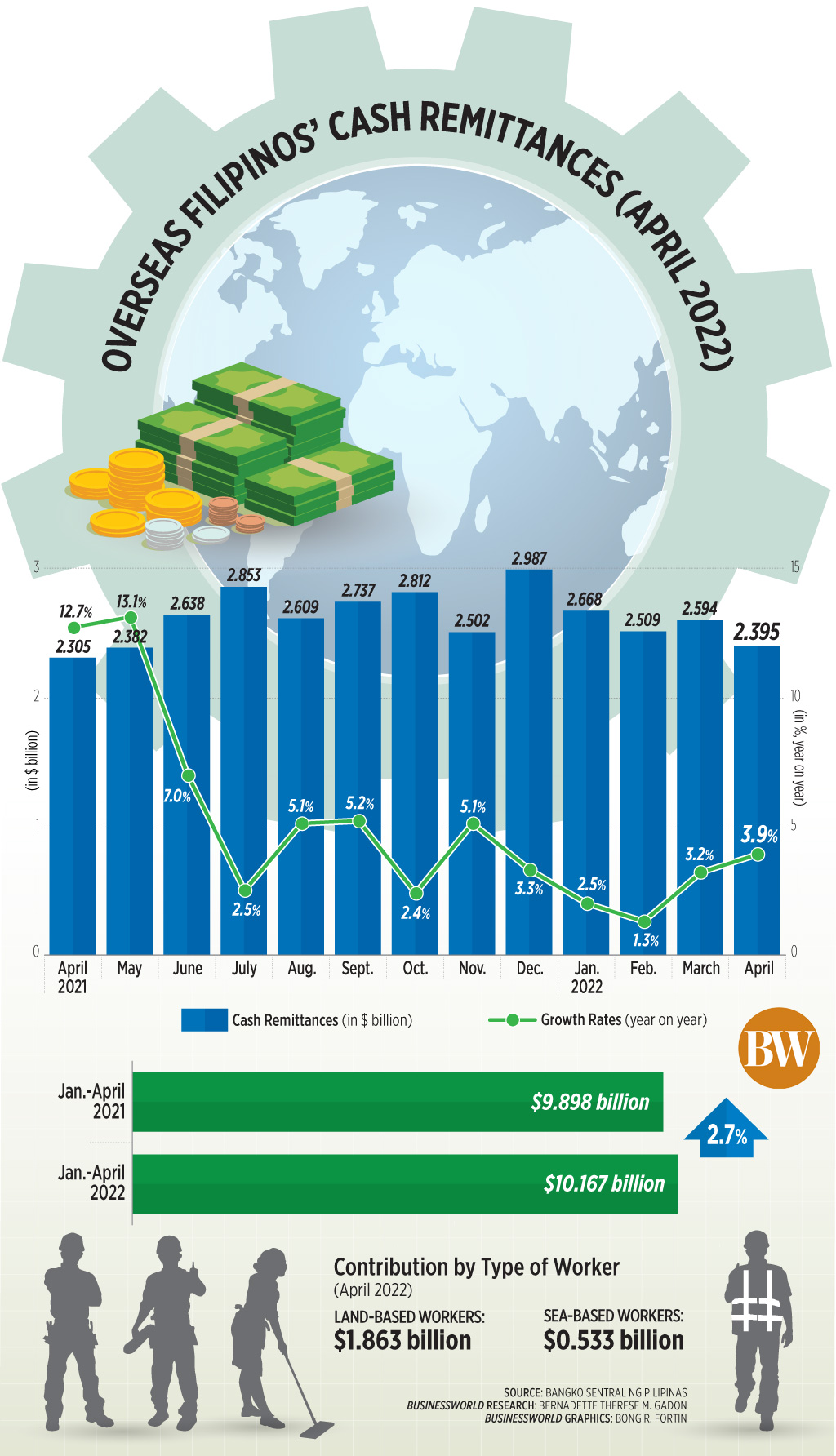
CASH REMITTANCES sent home by overseas Filipino workers (OFWs) jumped by 3.9% in April as many countries further reopened their economies and eased travel restrictions amid the ongoing pandemic.

Data from the Bangko Sentral ng Pilipinas (BSP) showed cash remittances through banks stood at $2.395 billion in April, higher than the $2.305 billion in the same month in 2021.

The growth in remittances was the fastest since 5.1% in November last year.

Overseas Filipinos’ cash remittances (April 2022)However, the amount of cash sent home by migrant Filipinos was the lowest in 11 months or since the $2.382 billion in May 2021.

“The expansion in cash remittances was due to the growth in receipts from land-based and sea-based workers,” the BSP said.

More Filipino workers have been deployed overseas as many countries relaxed travel restrictions and increased economic activity amid the pandemic.

Land-based OFWs sent $1.863 billion in April, up by 4.7% from $1.779 billion in the same month last year. Remittances from sea-based workers, on the other hand, rose by 1.4% to $533 million in April from $526 million a year ago.

“Growth was expected as (the Philippine peso) continues to depreciate. OFWs see higher nominal exchange rate number as more attractive,” UnionBank of the Philippines, Inc. Chief Economist Ruben Carlo O. Asuncion said in a Viber message.

Filipino migrants may have been encouraged to send home more money as the peso further weakened against the US dollar.

The peso fell to an over three-year low on Monday after it closed at P53.30 against the dollar.

This was the peso’s weakest close in over three years or since its finish of P53.59 against the greenback on Oct. 30, 2018.

For the first four months of the year, cash remittances increased by 2.7% year on year to $10.167 billion.

The expansion in cash remittances during the January to April period was driven mainly by inflows from the United States, Saudi Arabia, Japan, Taiwan, and Singapore.

Nearly half or 41% of the overall remittances came from workers in the United States, followed by Singapore, Saudi Arabia, Japan, the United Kingdom, the United Arab Emirates, Canada, Qatar, South Korea, and Taiwan.

Remittances from the top 10 countries accounted for 79% of the total during the four-month period.

Meanwhile, personal remittances, which include inflows in kind, went up by 3.8% year on year to $2.671 billion in April.

This brought personal remittances 2.6% higher to $11.317 billion in the first four months of the year.

“We continue to expect remittance inflows growth in the coming months even amidst the backdrop of protracted geopolitical risks and threat of a global economic slowdown,” Mr. Asuncion said.

The BSP expects remittances to grow by 4% this year.

Historians step up fight as Marcos returns to Palace

A woman reads a book on martial law under the late dictator Ferdinand Marcos, at the Bantayog ng mga Bayani, in Quezon City, Philippines, May 21, 2022. — REUTERS/LISA MARIE DAVID

By Kyle Aristophere T. Atienza, Reporter

MARLON TOBIAS, 33, rushed to buy a book about the late dictator Ferdinand E. Marcos and his martial rule after his son and namesake won the presidential election by a landslide on May 9.

“Three days after the election, I rushed to buy the book The Conjugal Dictatorship of Ferdinand and Imelda Marcos because I was afraid that it might get banned by the incoming government,” the construction worker said in a Facebook Messenger chat.

Academics and historians said civil society and media will play key roles in preserving the country’s history on Martial Law under the presidency of Ferdinand “Bongbong” R. Marcos, Jr.

“The collaboration between the academe, civil society organizations and the media is very important in these times,” said Ian Jason Hecita, who teaches political science at De La Salle University.


He said civic organizations should lead the fight against disinformation, while strengthening partnership with the academe and media “in upholding knowledge and protecting facts.”

“They should amplify and popularize through social media the works of historians, sociologists and social scientists to counter the revisionist narrative,” Mr. Hecita said.

The younger Mr. Marcos in 2020 sought a revision of textbooks on his father’s martial rule, citing their propensity to paint his family as bad people.

His father on Sept. 23, 1972 announced on national television that he had placed the country under Martial Law, citing an alleged communist threat.

Proclamation 1081, which was dated two days earlier, abolished Congress and allowed him to consolidate power by extending his tenure beyond the two presidential terms allowed by the 1935 Constitution.

More than 70,000 people were jailed, about 34,000 were tortured and more than 3,000 people died under martial rule, according to Amnesty International.

Mr. Marcos ended Martial Law in January 1981, but it wasn’t until five years later that he was toppled by a popular street uprising that sent him and his family into exile in the United States.

Civic groups have said the truth about Martial Law is at risk of being further buried after Mr. Marcos chose incoming Vice-President Sara Duterte-Carpio, daughter of outgoing populist leader Rodrigo R. Duterte, as Education chief.

An official Presidential Palace website that stores historical records of Mr. Marcos’ Martial Law regime remained inaccessible as of June 12, or almost a month after the incident was first flagged on May 16. Books sanitizing the late dictator’s martial rule are also now being sold on Facebook.

“Our minds were poisoned for a long time by textbooks about the history of the Marcoses,” Jay-ar Castillo Dinglasan, one of the book’s sellers, said in a Facebook post. “Let’s not let this happen for the next generation.”

“While many Filipinos may have succumbed to this authoritarian nostalgia, there are many others who are pushing back,” said Jayeel S. Cornelio, director of the Development Studies Program at the Ateneo de Manila University.

“They are in the academe, media, religious sector, urban poor communities, we can go on and on,” he said in a Messenger chat. “Marcos Jr.’s victory will not erase our collective memory. Our history has shown us time and again that Filipinos have ingenious ways of subverting oppression.”

More than 1,000 Filipino scholars recently signed a manifesto expressing their commitment to fight what they see as efforts to distort history and sanitize the Marcos narrative, and oppose censorship of Martial Law truths.

This came after authorities tagged as communist a children’s book publishing house that sells five titles about Martial Law under a bundle called “#NeverAgain!” — the battle cry of thousands of Filipinos who joined a popular uprising that sent the Marcos into self-exile.

Carlos Quijon, Jr., an art historian and critic, expects more artists to join their cause to educate people about Martial Law and preserve memories of the dictatorship. He added that a number of collective endeavors against martial law disinformation were being planned.

“The strength of these collective endeavors is that these are composed of not just artists but also curators, writers and historians,” he said in a Messenger chat.

“The hope is for the histories surrounding Marcos’ dictatorship and Martial Law not only to be used as themes in artworks but also as material for more engaging public programs and historical research writing.”

“We must not forget that the task of rehabilitating the Marcos brand entailed the mobilization of a huge amount of capital to fund social media propaganda,” said Michael D. Pante, who teaches history at De La Salle University.

“It needed funding to pay multinational consultancy firms and hire an array of influencers to carry out a complex public relations project that stretched for years,” he said in a Messenger chat.

‘MESSIAH’
The analysts noted that among the things being used by some quarters to rebrand the former first family and discredit serious allegations against them is the government’s failure to collect their unpaid estate tax that has ballooned to more than P200 billion due to interests and other penalties.

“The Marcos camp has used precisely that failure to cast doubt on their accountability,” Mr. Cornelio said. “Marcos Jr. has mastered the art of evading his family’s accountability by simply questioning these claims and leaving it to the lawyers.”

“His supporters are then convinced that this is just another attempt to malign and discredit him,” he added.

Nestor T. Castro, who teaches anthropology at the University of the Philippines, said there’s a popular mindset among Filipinos that if someone’s not arrested or jailed for any wrongdoing, “then probably he or she is not guilty after all.”

“The same is true when someone gets imprisoned while on trial. “People believe that the person must be guilty,” he said in a Messenger chat.

Mr. Castro, 62, was among the thousands of activists and ordinary people imprisoned during Martial Law.

“I was imprisoned by Marcos in 1983 but a year later, the court cleared me,” he said. “I shared my experience on TikTok but many pro-Marcos apologists, or probably trolls, still judged me as guilty.”

Mr. Castro said the country’s weak justice system had allowed attempts to sanitize the Marcos family’s records.

“Many Filipinos will be influenced by the government’s actions and take it as what is legally accepted,” he said. “This is because many Filipinos are unfamiliar with the laws of the land.”

Mr. Cornelo, who has extensively published on religion in the Philippines, said the messianic theme in local politics and culture had allowed the return of the Marcoses to power.

“Marcos Jr. has always been presented as a messiah,” he said. “The discourses about him being the Tiger of the North and the one who will reclaim our greatness are all messianic.”

He said ordinary people might have likened Mr. Marcos’ election victory to the resurrection of Jesus Christ, who conquered death after being persecuted by the Jews.

“The Marcoses died, metaphorically speaking, and now they are coming back to life and many Filipinos are pinning their hopes on the son,” he said.

Mr. Cornelio noted that under a Marcos presidency, the future of Philippine politics and history would heavily depend on civil society.

“It all boils down to how brave and creative we can be,” he said. “My only hope is that we will learn to navigate the next six years to raise a new generation of Filipinos who will not only honor our history but also demand accountability.”

Liza L. Maza, a Martial Law survivor, said the fight against historical revisionism heavily relies on the young generation.

“The youth should be at the forefront of the struggle against historical revisionism,” she said in a Messenger chat. “They have much energy and mobility, as well as skills in information technology to fight disinformation.”

The fight for the truth continues, she said. “It’s not enough that we change the leaders. We should change the system.”

Mr. Tobias, the building worker, said he would share his Martial Law book with others. “Just to prevent the distortion of history and other disinformation attempts, I am willing to lend my book for free.”

Vehicle sales jumped 19.5% in May — CAMPI

PHILIPPINE STAR/ MIGUEL DE GUZMAN
HEAVY TRAFFIC is seen along the southbound lane of EDSA in Quezon City. — PHILIPPINE STAR/ MIGUEL DE GUZMAN

THE PHILIPPINE automotive industry is confident that recovery is underway after vehicle sales rose by 19.5% in May.

Vehicle sales stood at 26,370 units in May, compared with 22,062 units sold in the same period in 2021, a joint report by the Chamber of Automotive Manufacturers of the Philippines, Inc. (CAMPI) and Truck Manufacturers Association (TMA) showed.

Month on month, car sales increased by 4.9% from April’s 25,149.

“Based on our data, the industry has already recorded double-digit percentage growths for three consecutive months on a year-over-year basis, indicating that recovery is underway,” CAMPI President Rommel R. Gutierrez said in a statement.

Year-to-date sales figures showed that the industry sold 126,273 units, 14.6% higher than the 110,217 units sold in the similar period last year.

The auto industry’s growth reflected the pickup in economic activity after the further loosening of mobility restrictions. Most parts of the country have been under the most relaxed coronavirus alert level since March.

“The economic recovery from the ripple effects of the pandemic and the overall robust domestic demand are major contributing factors to the continued improvement of the automotive sales performance recorded in May,” Mr. Gutierrez said.

Commercial vehicle sales surged by 34% to 19,406 units in May, bringing total sales 26% higher to 94,727 units in the first five months of 2022.

However, passenger car sales dropped by 8.4% to 6,964 units in May. Year to date, passenger car sales slid by 9.9% to 31,546 units.

“The industry is optimistic for a sustained economic growth anchored on domestic demand amid the continued containment of the pandemic — all-important to the full recovery of the industry,” Mr. Gutierrez said.

Toyota Motor Philippines Corp. has the highest market share for the month at 55.83% or 14,723 units sold, followed by Mitsubishi Motors Philippines Corp. at 11.15% or 2,939 units sold.

Nissan Philippines, Inc. had a 7.53% market share after selling 1,985 units, followed by Suzuki Phils., Inc with a 7.08% market share after selling 1,868 units. — Arjay L. Balinbin

PSE may allow more shares for local small investors

BW FILE PHOTO

THE Philippine Stock Exchange (PSE) has been authorized to increase the maximum subscription amount for each local small investor to more than P100,000 on a case-to-case basis to correspond with the size of the share offering.

In a circular, the exchange announced that the Securities and Exchange Commission had approved the amendments to the rules for local small investors (LSIs), or those who are willing to subscribe to a minimum board lot and whose subscription does not exceed P100,000.

The authority given to the PSE to increase the maximum subscription amount is aimed at “facilitating and achieving maximum participation and subscription to the LSI allocation.”

The PSE said the allocation to LSIs will be at least 10% of the entire initial public offering (IPO), which will be offered only after the effectivity of the registration statement and during the formal offering period.

“In the event of an over or under subscription in the 10% offer, a ‘clawback’ or a ‘clawforward’ mechanism shall be implemented,” the PSE said, referring to a provision relating to the reallocation of the offer shares.

In a separate circular, the exchange also released amendments to listing rules for real estate investment trusts (REITs) relating to lock-up exemptions for REIT sponsors, as well as regarding the shareholder equity requirement.

“To enable a secondary offering of REIT shares during the IPO, even in cases where the actual issuance of REIT shares to the sponsors or promoters in exchange for their contributed properties at a price lower than the IPO price may take place within the 180-day period before the IPO due to pending regulatory approvals, such shares issued to sponsors or promoters shall be exempted from the application of the lock-up rule,” the PSE said.

An amendment was also introduced that states that a newly formed REIT is not prohibited from undertaking a secondary offering of shares during an IPO, among others.

In another circular, the PSE also announced amendments to the lock-up rule section for the main board and the small and medium enterprises (SME) board.

“The amended lock-up rule allows alternative investment funds (AIFs) or their investment vehicle with demonstrated track record in private equity investments to sell during the IPO the shares that they acquired within 180 days prior to the IPO at a price lower than the IPO price, subject to the conditions set out in the rules,” the exchange said.

An alternative investment fund is an investment vehicle established for the purpose of raising capital from different investors and investing the pooled funds in alternative investments such as private equity, venture capital, and real estate.

The circular also detailed specific guidelines for listings on the main board and the SME board, among other amendments. — Luisa Maria Jacinta C. Jocson

VistaREIT shares remain unchanged on market debut

(FROM LEFT) VREIT President and CEO Manuel Paolo A. Villar and PSE President and CEO Ramon S. Monzon; VREIT Chairperson Jerylle Luz C. Quismundo, Vista Land and Lifescapes, Inc. Chairman, Former Senate President Manuel B. Villar, Jr., PSE Chairman Jose T. Pardo and PSE COO Atty. Roel A. Refran; China Bank Capital Corporation President Ryan Martin L. Tapia, VREIT CFO Melissa Camille Z. Domingo, Securities Clearing Corporation of the Philippines COO Renee D. Rubio and PSE Issuer Regulation Division Head Atty. Marigel B. Garcia

By Luisa Maria Jacinta C. Jocson, Reporter

VISTAREIT, Inc. (VREIT), the commercial real estate investment trust of integrated property developer Vista Land & Lifescapes, Inc., saw its share price finish unchanged on its debut on the Philippine Stock Exchange (PSE) on Wednesday.

The REIT shares closed at their initial public offering (IPO) price of P1.75 apiece. The stock will trade under the ticker VREIT.

“We are truly excited to bring VistaREIT to the public. What we offer is an elevated mall experience coming from our high-quality and world-class tenants. We believe that Filipinos deserve an experience that is at par with the best of the world and this IPO helps us to do just that,” Vista Land Chairman Manuel B. Villar, Jr. said in a statement.

The firm said it is anchoring its solid expansion program on the “robust, geographically-diverse pipeline of the profitable assets of Vista Land.”

VistaREIT President and Chief Executive Manuel Paolo A. Villar said the company is aiming to be among the leading diversified commercial REITs in the Philippines in terms of portfolio, profitability, growth, sustainability and dividend yield.

“We are optimistic about the prospect of a reinvigorated economy due to the easing of the restrictions, VistaREIT sees a robust foundation, its synergies with Villar-group retail ecosystem,” he added.

Analysts said that VistaREIT’s performance was mainly affected by dampened investor sentiment amid rising inflation and the ongoing Russia-Ukraine crisis, among other catalysts.

“VistaREIT had a lukewarm reception during its listing and would have finished much higher if not weighed by market sentiment as a whole, with the PSE index already drifting towards oversold territory,” Regina Capital Development Corp. Head of Sales Luis A. Limlingan said in a Viber message.

Diversified Securities, Inc. Equity Trader Aniceto K. Pangan said that rising inflation rates might trigger further interest rate hikes that could affect demand for REITs as the yield’s attractiveness goes down when lending rates move up.

“Aside from this, economic activity slows down when [a] rate hike is implemented to contain inflation but as long as yields are higher than [the] inflation rate, the demand remains attractive,” Mr. Pangan added in a text message.

Rizal Commercial Banking Corp. Chief Economist Michael L. Ricafort also noted that while the VistaREIT stock closed unchanged, it defied its intraday low of P1.59.

VistaREIT is the flagship mall and office REIT of Vista Land. The company has a portfolio of 10 community malls and two PEZA-registered office buildings with an aggregate gross leasable area of 256,404 square meters.

The malls are located in the cities of Las Piñas, Bacoor, General Trias, Imus, Antipolo, San Jose Del Monte, San Fernando, and Talisay as well as the municipality of Tanza in Cavite. The office buildings are located in Taguig City and Bacoor City.

Discovery World unit plans P7-B project in Davao City

ONE Davao Townships Corp., a wholly owned subsidiary of Discovery World Corp., announced it is developing an 11-hectare modern community project in Davao City as part of its township expansion plans.

The development is expected to generate up to P7 billion in real estate sales in various phases.

“The planned township will be the first luxury real estate project of its kind as One Davao pushes the region’s potential by integrating residential lots and mixed-use spaces,” Discovery World said in a disclosure on Wednesday.

The project will feature two areas: the West Village and the East Village.

“The West Village boasts of generous land cuts in a spacious yet private area. About 42% of the village will be dedicated to open spaces and amenities for upscale living. Nature-friendly features with a lush, green environment will reward residents with the benefits of outdoor living,” the firm said.

Meanwhile, the East Village will have mixed-use and commercial spaces and will serve as a “leisure hub with all desirable necessities within arms’ reach.”

“Discovery World is coming in strong in Mindanao and will explore more townships and regional developments in the years ahead,” the firm added.

Discovery World is engaged in the hotel and resort business through brands Discovery Shores Boracay, Club Paradise Palawan, and the cruise business through Discovery Fleet. It is a subsidiary of JTKC Equities, Inc., a holding company investing in real estate companies, predominantly in the leisure and hospitality sector.

Apart from One Davao Townships, Discovery World’s subsidiaries include Euro-Pacific Resorts, Inc., Palawan Cove Corp., Discovery Fleet Corp., Cay Islands Corp., Sonoran Corp., Long Beach Property Holdings, Inc., Lucky Cloud 9 Resort, Inc., Balay Holdings, Inc., and Discovery Hospitality Corp.

Discovery World shares dropped by 4.22% or seven centavos to close at P1.59 on Wednesday. — Luisa Maria Jacinta C. Jocson

Celebrating the local

A PLATE of seafood kare-kare, piyanggang pork belly, and adlai on the side at “Flavors of the Philippines” at Brasserie on 3. — PHOTO BY JOSEPH L. GARCIA

Conrad’s Brasserie on 3 gives even international dishes a Filipino touch

ALLERGIES and other health issues aside, it’s hard to repel the spell of a paella-filled lechon and a seafood kare-kare. These and more are exactly what Conrad Manila is serving for the whole month of June at the “Flavors of the Philippines” food festival at its restaurant, Brasserie on 3.

Brasserie on 3 went all out during a launch last week, serving a Sinuglaw — grilled meats and kinilaw (raw fish in citrus and other acids) —  as an appetizer. This was a little bit different, made with crispy chicken skin, pork belly, a seafood ceviche, and tuna inasal (barbecue) skewers. Due to health protocols, guests at the launch were served their food plated, though under normal circumstances, one can get up and get food at the buffet.

Next came a nourishing Balbacua (a slow-cooked beef stew rich in collagen, from it being made with skin and other parts). Finally, the main course arrived: a luxurious spread of Pork Belly Lechon (this one stuffed with paella; the pig itself is double-fried, according to Executive Sous Chef Patricia Mesina), Piyanggang Manok (a chicken dish from Mindanao that uses blackened coconut), and Seafood Kare-Kare. This seafood kare-kare (a peanut-based stew) was very indulgent: no expense was spared, so this one had scallops, lobster, and crab.

“We focused on all the regions of the Philippines, so that’s Luzon, Visayas, and Mindanao,” said Ms. Mesina during a group interview. “Our thrust is local and sustainable. A majority of our ingredients are local.”

The thrust for the local goes beyond the food festival, designed to celebrate Independence Day on June 12. “It’s an international buffet, but we have sections for the Filipino (food),” said Ms. Mesina. She points out that some sushi selections, available year-round for example, have Filipino elements in them, such as in an adobo inari. “As much as possible, we try to infuse local flavors to even international dishes.”

Conrad Manila’s General Manager, Linda Pecoraro agrees, saying “Where possible, we go local.” This goes beyond the food itself, with Ms. Pecoraro citing the exhibits of local artists at the hotel’s galleries. “It’s about being inspiring… during these times, it’s about celebrating the culture, and celebrating the food, and the produce that the Philippines supplies.”

Ms. Pecoraro also talked about how the hotel is doing, after two years of the waning COVID-19 pandemic. “With the MICE (meetings, incentives, conferences and exhibitions) business slowly coming back, and our social business also coming back; [things are] very positive.” Last year, Conrad Manila bagged the award for Philippines’ Best MICE Hotel for 2021 at the World MICE Awards.

Ms. Pecoraro said, “We’re getting there, and business is coming back; I’m pleased to say.”

“Flavors of the Philippines” is available daily for buffet lunch and dinner until June 30, with prices starting at P2,450 net per person. For reservations, call 8833-9999. —  Joseph L. Garcia

PLDT tapped for rollout of 220 public WiFi sites

PHOTO FROM JGSUMMIT.COM.PH

THE PLDT group announced on Wednesday that it was tapped by the United Nations Development Programme (UNDP) and the Department of Information and Communications Technology (DICT) for the rollout of public WiFi in 220 state universities and colleges in the country.

The flagship project aims to “further boost the online and blended learning programs of the education sector,” PLDT said in an e-mailed statement.

The project was launched at the Bulacan Polytechnic College in San Jose del Monte, Bulacan with a simultaneous online screening at Nueva Vizcaya State University on June 7.

The free WiFi project is DICT’s digital empowerment initiative aimed at connecting Filipinos nationwide in accordance with Republic Act No. 10929 or the Free Internet Access in Public Places Act.

Under the law, the project should cover all government hospitals and health centers; national and local government offices; public libraries; public parks, plazas, and other open areas; public schools; state universities and colleges along with TESDA (Technical Education and Skills Development Authority) institutions; and transport terminals.

“Among the key objectives of the Free WiFi project is to contribute to the progress of several SDGs (sustainable development goals). It’s strategic that we partnered with UNDP because it’s clear to them, which of the goals we are targeting,” DICT Acting Secretary Emmanuel Rey R. Caintic said.

UNDP Resident Representative Selva Ramachandra said that part of the organization’s mission is to promote inclusive quality education and to bridge the digital divide, especially in the academic sector.

“This initiative strives to enable public higher education institutions and their students to access and participate in opportunities for economic development.”

Hastings Holdings, Inc., a unit of PLDT Beneficial Trust Fund subsidiary MediaQuest Holdings, Inc., has a majority stake in BusinessWorld through the Philippine Star Group, which it controls. — Arjay L. Balinbin

High-flying Blue Eagles out to sustain flight vs Lady Spikers

NO. 4 SEED Ateneo Blue Eagles celebrate their victory over the Golden Tigresses. — THE UAAP

By John Bryan Ulanday

AMIDST another anticipated turbulence, high-flying Ateneo is out to sustain its flight against no less than its fierce rival La Salle to keep its title retention bid alive in the second phase of the University Athletic Association of the Philippines (UAAP) women’s volleyball tournament stepladder playoffs at the Mall of Asia Arena.

Dragged into an unchartered territory as the lower-ranked squad, the reigning champion but fourth-seeded Blue Eagles defied odds in three straight elimination matches with hopes of extending it anew against the Lady Spikers.

La Salle, as the No. 2 seed, sports a twice-to-beat advantage in the 5 p.m. duel, making it a tougher adversity to overcome for Ateneo.

But the Blue Eagles are ready in a bid to stay afloat with unbeaten National University (NU) that is already in the finals as their ultimate target.

“We will live for another day. We will just do it one game at a time, one day at a time. Hopefully, we will win at the right time and we will win when it matters,” said coach Oliver Almadro after a stunning sweep of No. 3 Santo Tomas.

Buoyed by massive wins against University of the Philippines to gain a tie at fourth and against Adamson in a playoff match to qualify in the stepladder, the streaking Ateneo rolled past Santo Tomas with 25-23, 25-23, 25-20 victory the other night to climb the ladder.

Back in 2014, the Alyssa Valdez-led Blue Eagles also took on a similar path by scaling the stepladder semifinals — against Adamson, twice-to-beat NU and unbeaten La Salle in the finals — as the No. 3 seed for their first-ever UAAP volleyball championship.

It’s far from being replicated as of now, but Mr. Almadro is hoping for his wards to get motivation from that dream run.

“It’s an honor for our team kung maikukumpara sa kanila. What is important is if we can duplicate what they did, we will be thankful to the Lord, and of course, we will be thankful for them for being our inspiration. Sana ma-manifest,” he added.

Banking on a week-long break, La Salle for its part is keen on stopping its rival’s run for good in just one match to arrange a best-of-three titular showdown with NU.

Attaboy tops list of North America’s 50 best bars

PHOTO FROM INSTAGRAM.COM/ATTABOY134/

NEW YORK’s Attaboy takes the top spot at the inaugural list of North America’s 50 Best Bars.

Attaboy has already earned its place among other lists by William Reed Business Media: last year, it was No. 34 on the World’s 50 Best Bars list. It has been around for about 10 years, a sort of a spinoff of Milk & Honey in New York. That bar, which opened in 1999, was credited with making speakeasies fashionable again. That bar has since closed; its founder, mixology pioneer Sasha Petraske passed away in 2015. Attaboy’s founders, Mr. Petraske, Sam Ross, and Michael McIlroy, themselves proteges of Mr. Petraske, opened Attaboy in 2012 at Milk & Honey’s former location at 143 Eldridge St., in the city’s Lower East Side.

The list’s notes about Attaboy describes its selection as “perfectly balanced variations of Prohibition-era cocktails.” While the list gives suggestions of various drinks on offer — there’s Ross’ Penicillin (scotch, lemon juice, ginger-honey syrup) and the Greenpoint (rye, green herbal liqueur, vermouth) —  its entry on North America’s 50 Best says, “Of course, none of these drinks can be found on the menu. In fact, there is no menu. Rather, each drink is custom tailored for the guest after a brief conversation.”

During a press conference streamed on the YouTube channel of 50 Best Bars last week, Attaboy General Manager Haley Traub said, “I still don’t believe it.”

“I think what’s most exciting about this is that we can show up and we can do the day-to-day and we can provide the best possible experiences to our guests, and then we can still clock out at the end of the night and you know, be silly bartenders, and have a wonderful time,” she said. “At the end of the day, we know that we’re providing the best possible experiences to our guests and to the people that come through our doors, is honestly all


North America’s 50 Best Bars

1. Attaboy, New York
2. Handshake Speakeasy, Mexico City
3. Licorería Limantour, Mexico City
4. Katana Kitten, New York
5. Kumiko, Chicago
6. Café La Trova, Miami
7. Baltra Bar, Mexico City
8. Dante, New York
9. Thunderbolt, Los Angeles
10. Civil Liberties, Toronto
11. Zapote Bar, Playa del Carmen
12. La Factoría, San Juan
13. Kaito del Valle, Mexico City
14. Sweet Liberty, Miami
15. Café de Nadie, Mexico City
16. Hanky Panky, Mexico City
17. Double Chicken Please, New York
18. Service Bar, Washington, DC
19. Raised by Wolves, San Diego
20. Sabina Sabe, Oaxaca
21. El Gallo Altanero, Guadalajara
22. Selva, Oaxaca
23. Amor y Amargo, New York
24. Jewel of the South, New Orleans
25. The Keefer Bar, Vancouver
26. Dear Irving, New York
27. Overstory, New York
28. Herbs & Rye, Las Vegas
29. El Pequeño Bar, Montreal
30. Employees Only, New York
31. The Dead Rabbit, New York
32. Broken Shaker, Miami
33. Friends and Family, Oakland
34. Death & Co (Los Angeles), Los Angeles
35. Mace, New York
36. Death & Co (Denver), Denver
37. Arca, Tulum
38. Mother, Toronto
39. ABV, San Francisco
40. El Floridita, Havana
41. Bar Raval, Toronto
42. Bar Leather Apron, Honolulu
43. Clover Club, New York
44. Bitter & Twisted, Phoenix
45. Cloakroom Bar, Montreal
46. Julep, Houston
47. Bar Mordecai, Toronto
48. Teardrop Lounge, Portland
49. Bar Kismet, Halifax
50. Genever, Los Angeles