Home Blog Page 6266

Malacañang reasserts human rights compliance after EU Parliament resolution

WWW.EEAS.EUROPA.EU

PRESIDENT RODRIGO R. Duterte’s office on Monday reasserted the Philippine government’s compliance to human rights concerns raised by the European Union (EU) Parliament, saying reports on alleged violations are nothing but “fake news.” 

The statement from Malacañang Palace follows comments released separately on Sunday by the Trade secretary and the Department of Foreign Affairs (DFA) after the EU Parliament passed a resolution warning of a possible withdrawal of trade perks for the Philippines due to the human rights situation in the country.

“It bears stressing that an existing dialogue mechanism with the EU is already in place, and we have expressed on numerous occasions our willingness to work and cooperate with the EU in order to shed light on the concerns they have raised,” Cabinet Secretary Karlo Alexei B. Nograles said in a statement.

“The actions taken by the government in this regard are a clear demonstration of our compliance with conventions on human rights, labor, and good governance, among others,” he added. 

The Palace official cited the Trade department’s statement that “allegations on human rights and lack of press freedom are fake news, and those only give false impressions on the real situation in the Philippines.”

“It is unfortunate that the politicians of a huge economic block are the one destroying the image of a small democratic country of peace-loving Filipinos, and it is like bullying a small country,” Trade Secretary Ramon M. Lopez said.

Mr. Lopez said his office has facilitated regular monitoring missions relating to the Generalised System of Preferences (GSP+), an EU trade policy instrument that gives reduced tariff to products from developing countries. 

“This process is more systematic and organized in obtaining accurate information regarding the real situation in the country,” he said. 

The next EU GSP+ monitoring mission is scheduled on Feb. 28 to March 4.

The Foreign Affairs department, meanwhile, cited those allegations “are already addressed by the landmark UN (United Nations) Joint Program for Human Rights, which was framed precisely to address these baseless allegations.”

“We therefore strongly advise EU Parliament Vice President Heidi Hautala to prove her information, specifically with the EU Delegation to the Philippines before she demands anything from the Philippines,” the DFA said in its statement on Sunday.

“Her disrespectful language disregards these ongoing efforts of the Philippines and the United Nations, and the mechanisms and processes that inform their joint efforts to advance human rights.” — Kyle Aristophere T. Atienza

Robredo gets endorsement from more former gov’t execs; Ka Leody to discuss tax matters with Finance chief

FORMER SENATORS, high-ranking government officials, and local chief executives have endorsed the presidential candidacy of Vice President Maria Leonor “Leni” G. Robredo. 

“We want a president who respects our democratic processes, and will uphold our country’s sovereignty and territorial integrity at all times,” they said in a statement.

The signatories include former Sen. Rodolfo “Pong” G. Biazon, Ramon “Jun” B. Magsaysay Jr., Sergio Osmeña III and Wigberto “Bobby” Tañada. 

They said Ms. Robredo has become “fearless, action-oriented, inclusive and decisive” in the last six years “despite the limited resources of her public office and undeserved open hostility from the present administration.”

The opposition leader’s presidential run earlier secured endorsements from former Cabinet officials, former workers of the United Nations, former socio-economic planning secretaries, economists, and sectoral organizations.

Ms. Robredo’s main rival, the late dictator’s son Ferdinand “Bongbong” R. Marcos, Jr., is currently leading in pre-election surveys. 

WARNING VS SURVEYS
The University of the Philippines School of Statistics on Monday called out institutions, online influencers and media organizations for the “pervasive abuse” of survey methodologies by using social media and man-on-the-street interviews, saying some interviewers purposely manipulate the answers of respondents. 

“We have been observing these practices, including surveys not based on random sampling. Such as videos of ‘kalye surveys’ being done by some vloggers and suspicious online surveys especially on Twitter and Facebook,” the academic institution said in a statement.

“We also witness PR (public relations) companies, private individuals, and even some media organizations publishing results of surveys with unclear methodologies,” it added.

The UP School of Statistics said surveys are intended to “reveal facts, beliefs, sentiments, and opinions based on a representation of the population.”

“However, the quality of any inference cannot rise above the quality of the methodology it is based upon… Biased methodologies will only give biased results.”

The institution called on the public to be critical of surveys. “Do not immediately accept survey results as they are.” 

Ka Leody
On another presidential candidate, labor leader Leodegario “Ka Leody” De Guzman said he intends to have a dialogue on economic issues, particularly taxes, with Finance Secretary Carlos G. Dominguez III.

Mr. de Guzman, in a statement on Sunday, said he will discuss his platform of imposing a wealth tax on the 500 richest individuals in the country and his party’s strategy of resolving the country’s debt. 

“I accept the offer of Dominguez as I want to ask why has the government decreased estate tax in TRAIN law, corporate tax in CREATE, yet still increases the tax on ordinary Filipinos,” he said in Filipino.

The current administration’s Finance chief earlier said his department is ready to brief all presidential aspirants and their respective economic advisors on the country’s current debt.

Mr. de Guzman said the labor sector should be consulted on tax policies because they bear a higher burden relative to their income.   

“We should make this discussion public, as a challenge to Dominguez to present these tax issues directly to the workers,” Mr. de Guzman said. 

Mr. de Guzman earlier said his planned wealth tax aims to close the inequality gap between economic classes in the country and to channel these collections to improve other industries. 

Mr. Dominguez, on the other hand, said last year that while a proposed wealth tax could initially realize gains in collections, it could simultaneously discourage long-term growth and investments. 

Mr. Dominguez noted that only Belgium, Norway, Spain, and Switzerland continue to implement a wealth tax, as many other countries repealed the policy because of increased capital mobility and the availability of tax havens in other countries. 

“Wealth taxes fail to significantly promote economic equality or create additional fiscal space,” he said. “Moreover, net wealth taxes often failed to meet their redistributive goals as a result of their narrow tax bases, tax avoidance, and tax evasion.”

Meanwhile, volunteers and supporters of Mr. de Guzman have launched a campaign website on Sunday that features the labor leader’s biography, policy plans, and stances on relevant issues of the country. — Kyle Aristophere T. Atienza and John Victor D. Ordoñez

Virus-hit OFWs in HK get Philippine gov’t assistance

THE PHILIPPINE government is now extending assistance to Filipino workers in Hong Kong who tested positive for coronavirus disease 2019 (COVID-19), according to the presidential palace.

In a statement, Cabinet Secretary Karlo Alexei B. Nograles said the Philippine Overseas Labor Office (POLO) in Hong Kong provided 28 overseas Filipino workers (OFWs) with food, hygiene kits, and power banks “to allow them to communicate while waiting for calls from the Center for Health Protection” and HK labor department.

The Palace official said POLO coordinated with a non-government organization to provide an isolation facility to accommodate several of the OFWs.

“It also coordinated with the HK Labour Department, which set up an isolation facility for our kababayans (fellow Filipinos), pending admission to the quarantine facility, apart from providing transportation arrangements,” he added. 

Mr. Nograles said POLO has also provided US$200 for after-care financial assistance to those who recovered from coronavirus.

He added that the Overseas Workers Welfare Administration will also provide US$200 for each COVID-positive OFW. 

Of the 28 infected HK-based OFWs, five have already recovered.

In a separate statement, Sen. Richard J. Gordon said combatting COVID-19 and its variants is a matter that requires a synchronized government and community effort “more so when the pandemic affects the OFWs in a place as crowded as Hong Kong where living space is limited.”

“We have to anticipate that many of our fellowmen will get sick. Hong Kong should allocate rooms for our OFWs to serve as quarantine facilities,” he said. “But if they can’t, OWWA should provide.” — Kyle Aristophere T. Atienza

Bayan Muna party-list holds rally vs SIM card registration bill

BAYAN MUNA PHOTO RELEASE

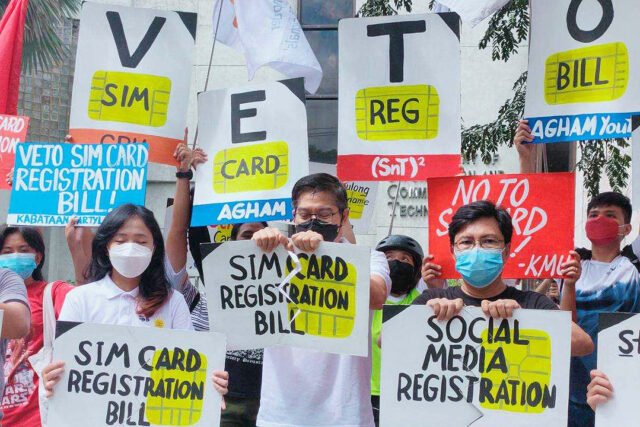
THE PROPOSED SIM Card Registration Act should not become law because it could violate people’s privacy and human rights, Bayan Muna Rep. Ferdinand R. Gaite warned at a rally on Monday in front of the Department of Information and Communications office. 

“It looks simple, the SIM (Subscriber Identity Module) card registration. But in today’s situation where the anti-terror law is enforced, where laws can be used to suppress the rights of people, this law can also be used, like in other countries, to monitor and surveil people who are against the rotten policies of their own governments,” he said in Filipino.

“They will use this in the context of the anti-terror campaign.”

The SIM Card Registration Act, which was ratified by Congress on Feb. 2 and is now awaiting the President’s signature, seeks to help law enforcement agencies track down cybercriminals who use mobile phones to commit fraud and other illegal activities. 

Under the bill, new and existing SIM card holders must register through their service provider or direct seller. Issued SIM cards that remain unregistered within a specified period will be deactivated.

Once the law is enacted, social media providers and telecommunication companies will be required to release information in response to a court order or to search for a specific mobile number that was used in a crime. 

The Anti-terrorism Act or Republic Act 11479 allows a person who is suspected to be involved in terrorist acts to be arrested without a warrant and held for up to 24 days. — Jaspearl Emerald G. Tan

Shipping firm eyes regular Davao-General Santos-Bitung route

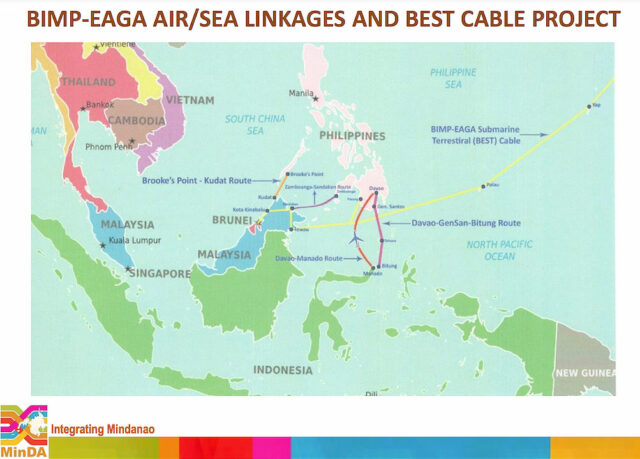
A SHIPPING firm is preparing to launch a regular roll-on, roll-off service for the Davao-General Santos-Bitung route, according to a Mindanao Development Authority (MinDA) official. 

“There is also another player, which is hoping to a make a public announcement soon to serve the Davao-GenSan-Bitung connectivity as well. They are just finalizing the details,” MinDA Deputy Executive Director Romeo M. Montenegro said in a virtual presser last week.

Filipino-owned Reefer Express Lines has been providing cargo services for that route on chartered basis.

Mr. Montenegro said the shipping company has also been covering other routes within the Brunei Darussalam–Indonesia–Malaysia–Philippines East ASEAN Growth Area on demand basis.

“Davao to Bitung and sometimes it also serves other areas, particularly Malaysia’s Labuan and en route to Vietnam. And in return from Vietnam, it carries either rice or cement bound for Mindanao,” he said.

With the new shipping player, Mr. Montenegro said they are hoping to finally have a right-sized vessel that will regularly ply the Davao-GenSan-Bitung route, which has enough commodities and market demand to sustain. 

The route had a grand relaunch in April 2017 with President Rodrigo R. Duterte and Indonesian President Joko Widodo leading the event to boost trade between the two countries. 

However, the 500-TEU (20-foot Equivalent Unit) container ship deployed by Asian Marine Transport Corp. proved too big for the market demand of about 100-TEU and the service was eventually dropped after. — Maya M. Padillo 

LRMC aims to open more vaccination sites at stations

@OFFICIALLRT1

LIGHT RAIL Manila Corp. (LRMC), the private operator of Light Rail Transit Line 1 (LRT-1), announced on Monday that it opened another vaccination site, as part of its efforts to protect more passengers from coronavirus disease 2019 (COVID-19).

LRMC said in a statement that it recently partnered with the Pasay City Health Office for a jab site at the LRT-1 Baclaran Station where “almost 400 individuals” have been inoculated, while another was opened at the Central Station on Monday.

The Central Station vaccination site is open from Monday to Friday, 8 a.m. to 5 p.m. The Baclaran vaccination site will reopen on Feb. 23, from 8 a.m. to 2 p.m. 

The company said it is hoping to partner with other local government units for setting up additional LRT-1 vaccination sites.

“We share the same goal of protecting our people better and making COVID-19 vaccines more accessible, so we can finally put an end to this COVID-19 pandemic,” said Louernie F. De Sales, LRMC head of Health, Safety, Environment, and Quality Department.

LRMC recently reported a 20% year-on-year decline in January-to-September revenue last year to P799 million due to capacity reductions and lower demand. LRT-1’s average daily ridership decreased 48% year on year to 116,021 due to the capacity limit. 

LRMC is the consortium composed of Ayala Corp.; Metro Pacific Light Rail Corp., a unit of Metro Pacific Investments Corp. (MPIC); and Macquarie Infrastructure Holdings (Philippines) Pte. Ltd. 

MPIC is one of three Philippine subsidiaries of Hong Kong’s First Pacific Co. Ltd., the others being PLDT, Inc. and Philex Mining Corp. Hastings Holdings, Inc., a unit of PLDT Beneficial Trust Fund subsidiary MediaQuest Holdings, Inc., maintains an interest in BusinessWorld through the Philippine Star Group. — Arjay L. Balinbin

Batangas lawyer is 70th killed since 2016

THE PHILIPPINE’S official organization of lawyers condemned the murder of a lawyer in Batangas last Feb. 17, the 70th member of the judicial sector killed since 2016.

“We are one with the bereaved family and friends in their grief,” the Integrated Bar of the Philippines (IBP) said in a statement in Filipino issued by its Board of Governors on Feb. 21.

“It is not the fault of a lawyer to defend the rights of those oppressed, especially those who do not have the means to seek a lawyer,” it added.

Michael C. Manito, a member of the IBP Batangas Chapter and was running for a council seat in Sto. Tomas City, was shot dead by two unidentified assailants inside his office. He is survived by his wife who is three months pregnant and three other children.

“This merciless killing is not unlike other violent killings on other lawyers, the number of these killings has grown to 70 since 2016,” IBP said in Filipino.

The group called on the National Bureau of Investigation and Philippine National Police to investigate and apprehend the perpetrators.

“The Filipino people have lost a lawyer who fought for the rights of those neglected by society, it is only right that his family gets the justice they deserve,” IBP said. — John Victor D. Ordoñez

Join a board: The B-Suite is for girls and youth, too

LINKEDIN SALES SOLUTIONS-UNSPLASH

Many managers think of the C-Suite as the ultimate goal before finally ending a corporate career. “I want to be a CIO or a CMO,” may be running in an executive’s mind before he or she finally says goodbye to the executive office and prepares for the next career — which is farming or “apostolate” for others (taking care of grandchildren).

But very few think of the B-Suite and very few even think they are qualified to eye a seat on the Board. Especially women. They disregard even looking at the Board seats, especially of Publicly Listed Corporations (PLCs), because we often find the same 70- and 80-year-olds on the boards of most PLCs. Not many think of serving a board, using their many years as managers to effectively run companies, whether for profit or a nonprofit.

This is why we formed yet another group of women called NextGen Organization of Women Corporate Directors (NOWCD). We realized many career women drop out of the whole corporate scene upon retirement. These career women become invisible to those who seek their invaluable experience to be able to mentor others and consult with companies. Instead, they finally trade their office gear, pumps and all, for farming boots or a rocking chair (Oh my gosh!).

After having asked 25 plus women in various sectors to join the initial list, we are off to find a pipeline of career women who can definitely help steer public and private companies as members of the elusive B-Suite, or Board of Directors. It is the next career for those who do not like the daily grind anymore but who can definitely contribute to worthy projects, new companies, start-ups and even be chosen for a PLC looking for their specialty.

When do you start preparing for the B-Suite? It starts today if you are a corporate executive looking at your own path after a long stint with this or that company. It is a next career for those who also want more time at home but still want to jog their memory, practice their time-earned management skills, read management reports, and contribute to nation-building.

What must career women and men do for this stage in their careers?

1. Enroll in a Professional Directors Program. I took mine back in 2006 at the Institute of Corporate Directors (www.icd.ph) upon the suggestion of a friend who thought I could find it useful.

2. Consider joining a nonprofit first if you still are not ready for the big leagues. I was fortunately invited to join a huge nonprofit where my ideas were found to be innovative, shocking to some, but generally a different view for an NGO.

3. Read about PLCs, REITS, and the Corporation Code. We need to be abreast of the new laws, especially those that involve the sector we belong to.

4. Volunteer for small groups or corporations to hone you in parliamentary rules of conduct and how to behave at Board meetings. I have been serving in a nonprofit NGO that has a member from a Local Government Unit (LGU), a church group, and NGO officers.

5. Family corporations are the best training ground. My father made me sit at our Board meetings when I was just 18, and he conducted meetings professionally. I really felt like a grown-up having sat through long meetings and looked forward to the prize — a per diem — that my same-age friends still could not understand.

6. Independent Directorships. Accept an invitation to be one, even in a private company. I remember my brother asking two professionals to join our Board so we could hear independent opinions from non-family members. Soon after my ICD course, I was invited to join a private company, a stakeholder relations firm. The company had four to six independent directors to add to the three owner-directors. That probably spelled their continued success in their field.

7. LinkedIn. Check your LinkedIn profile. Are people aware about your past experience and your present roles? Make sure your profile is updated. The search companies and other talent hounds always refer to LinkedIn.

8. Expand your network. Have you joined an organization or been invited to the likes of Filipina CEO Circle, MAP, MBC, FINEX (Management Association of the Philippines, Makati Business Club, Financial Executives Institute of the Philippines)? The top professionals belong to one or a few of these organizations.

And the best advice is to be real. There is nothing like being the best version of yourself and news travels fast. If you are known in a certain field, you become top-of-mind for many who refer others as people expand their search for talent.

So, if you are already in the C-Suite, do prepare for the next level and that is the Board room level. This is where you need not be hired as a professional manager but be hired for a totality of your skills and years of experience, hopefully in various and diverse roles.

And we call upon the ladies and the younger managers — there is a post for you at the B-Suite. It could be because they need diversity in their boards with respect to age, gender, and area of interest or specialization. Diversity is the key to sustainability. Think ESG -— Environment, Sustainability and Governance.

Start your journey to the B-Suite now.

This article reflects the personal opinion of the author and does not reflect the official stand of the Management Association of the Philippines.


Chit U. Juan is member of the MAP Diversity and Inclusion Committee, president of NOWCD, chair of the Philippine Coffee Board, councilor of Slow Food (www.slowfood.com) for Southeast Asia, and is an advocate for organic agriculture.

map@map.org.ph

pujuan29@gmail.com

map.org.ph

Leveraging nontraditional data for COVID-19 recovery

LUKAS BLAZEK-UNSPLASH

DATA is now recognized as “the new oil” for the digital economy. While development actors have relied on traditional data sources, such as public surveys and government administrative data, there is great potential to harness the value of unconventional or nontraditional data from the private sector, which can help fuel a more nimble, agile, and inclusive governance.

Private companies routinely collect, analyze, and use large volumes of data to derive actionable insights and inform business strategies. The ability and pace at which this data is harnessed with the aid of data science, analytics, and artificial intelligence tools has allowed businesses to successfully navigate through several forms of crisis, including the COVID-19 pandemic. In this dynamic and uncertain environment, the importance of high-frequency, timely, and granular data to inform decision-making has become invaluable.

Can we harness the power of data for the public good? Can we bridge the data gap to give governments access to data, insights, and tools that can inform their response and recovery strategies?

There is increasing recognition that traditional and nontraditional data should be seen as complementary. Nontraditional data can bring significant benefits in bridging existing data gaps but must be calibrated against benchmarks based on established traditional data. These traditional datasets are widely seen as reliable, being subject to established stringent international and national standards. However, they are often limited in frequency and granularity, especially in low- and middle-income countries.

Meanwhile, nontraditional data such as market research routinely collected monthly from nationwide household surveys may only be specific to certain products and brands, but can provide more frequent and granular information, with disaggregation by geographical area, socio-economic group of households, gender, and other attributes. Data collected from mobile devices, internet platforms, and satellite images are available in real-time and offer high granularity in location.

UNDP, with support from The Rockefeller Foundation and the Government of Japan, set up the Pintig Lab: a multidisciplinary network of data scientists, economists, epidemiologists, mathematicians, and political scientists, tasked with supporting data-driven crisis response and development strategies. In 2021, the Lab conducted a study on how data on household spending on consumer-packaged goods can been used to assess the socioeconomic impact of COVID-19 and identify heterogeneities in the pace of recovery across Philippine households. The National Economic and Development Authority is incorporating this data for GDP forecasting, as additional input to their predictive models for consumption. Further, this data can be combined with credit card or mobile wallet transactions, and machine learning techniques for higher-frequency GDP nowcasting, to allow for nimble and responsive economic policies that can absorb and anticipate the shocks of crisis.

Nontraditional data has the potential to provide insights on the status of vulnerable groups, including the informal sector, which are not fully captured by official statistics. As such, the Department of Information and Communications Technology and UNDP are exploring the use of satellite imagery to identify “last mile” communities and understand their level of connectivity in terms of WiFi, electricity, roads, education, healthcare, and markets. UNDP has utilized chatbots on social media platforms to rapidly collate information from disadvantaged sectors and small enterprises, to understand how the pandemic has impacted them, and the extent to which the social amelioration programs have worked.

These are powerful examples of how nontraditional data can and has shed light on disadvantaged groups previously invisible, allowing for more inclusive programming so that no one gets left behind.

We have only begun to open the door to a parallel world of nontraditional data that has existed alongside us for decades now. Data is inherently political and maximizing its positive impacts for society will require a concerted effort from all stakeholders to shape the ways in which data is accessed, analyzed, and used beyond the confines of their “for-profit” origins. Doing so could unlock the potential for more rapid and inclusive evidence-based interventions for those who need it the most.


Dr. Selva Ramachandran is the UNDP Philippines resident representative.

Dredge Laguna de Bay for potable water use

Recently, the words “water crisis” in Metro Manila and surrounding provinces have resurfaced, as they did in April-June 2019.

See for instance these recent reports in BusinessWorld:

• “Indigenous peoples seek to overturn Kaliwa Dam deal” (Feb. 3),

• “Metro Manila water shortage projected for April or May” (Feb. 8),

• “Local governments urged to step up in averting water crisis” (Feb. 9),

• “Manila Water, MWSS delay start of new concession deal to March 18” (Feb. 17),

• “MWSS, NIA preparing mitigation programs for potential water shortage” (Feb. 18).

SOLUTIONS TO A ‘WATER CRISIS’
There are short- and medium-term solutions to expand potable water supply as the population in the metropolis expands.

One is the development of dams in the Sierra Madre mountains and diverting some of the water that freely drains into the Pacific Ocean, to Metro Manila and surrounding areas. The Kaliwa Dam is meant for this purpose. But instead of doing the usual Public Private Partnership (PPP), the Duterte administration decided to go back to old-style taxpayers-funded projects via foreign loans, in this case a China loan with China construction companies. See this column’s previous piece, https://www.bworldonline.com/integrated-ppp-vs-hybrid-ppp-the-case-of-kaliwa-dam/ (Nov. 7, 2018).

The second is to respect the water concession agreements and urge the two concessionaires — Maynilad Water Services, Inc. (MWSI) and Manila Water Co., Inc. (MWCI) — to develop other water sources. But President Duterte attacked the two companies and forced a revised concession agreement (RCA) on them.

Third is to further develop Laguna Lake, or Laguna de Bay, as a potable water source. There are other sources but Laguna Lake is the biggest as it is the natural drain of 100 rivers and creeks and 21 major tributaries.

PROBLEMS IN TAPPING POTABLE WATER FROM LAGUNA LAKE
Among the challenges of tapping the lake are: One, the water is murky, heavily silted, and in certain areas is of bad quality — with high levels of biochemical oxygen demand (BOD), dissolved oxygen, and fecal coliform. So, the cost of treatment goes up, which means water prices can go up.

Two is entry of salt water during the dry months when the lake water level is lower than sea level due to evaporation, and dirty water from Manila Bay enters into the lake during high tide. This raises the salinity level and, again, results in a higher cost of treatment.

Three is the huge number of fish pens and fish cages — covering tens of thousands of hectares — which trap some solid waste from flowing out and contribute to siltation and a shallower lake.

DREDGING THE LAKE
One important solution to these three problems is large-scale dredging of the lake. Make it deeper, from the current 2.5 meters average depth to three meters or so, to allow the lake to hold a bigger volume of fresh water. But this will require the demolition of many fish pens and those pens are owned by individuals and businesses with wide political connections.

I want to quantify the potential benefits to households and businesses when there is a big volume of new water supply from the lake.

In a paper “How Much Water Do Households Require?” (by Inocencio, Padilla, and Javier, Philippine Institute for Development Studies, October 1999), they computed that the average requirement in Metro Manila and Pangasinan in 1998 was 54 liters per capita per day (l/c/d) — 23 for bathing, handwashing, teeth brushing; 20 for house cleaning, toilet flushing; five for laundry; four for cooking and dishwashing; and two for drinking.

Today, more households have vehicles that need cleaning too, plus pets, and many residential condos and subdivision clubhouses have swimming pools. It is safe to assume a 20% increase in water demand compared to 1998 or 24 years ago, so the new demand would be 65 l/c/d.

The average household size was five persons per household in 2000, 4.6 in 2010, 4.4 in 2015, and 4.2 in 2020. So (65 l/c/d) x (4.2 capita/household) is 273 liters/household/day (l/h/d), or 0.273 cubic meters/household/day.

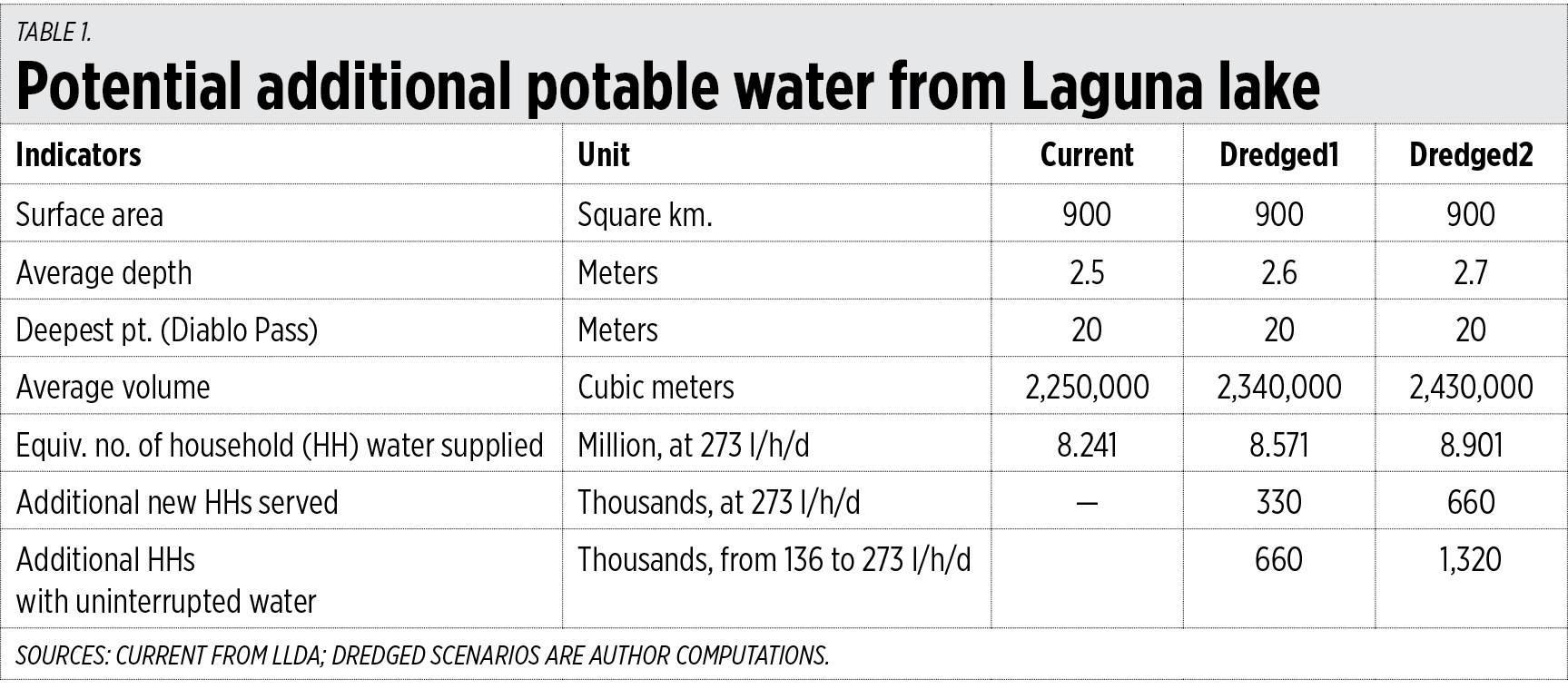
From this average daily water need of one household, I computed that if the lake’s average depth of 2.5 meters is made deeper by 100 centimeters or 0.1 meter, there will be 333,000 additional families that can be served with 273 liters/day. If the lake is made even deeper by 0.2 meters, 666,000 additional families will be served.

Another way of looking at this is that many households cut their demand by half due to limited hours of water supply per day — they consume only 136 l/h/d. The new supply from the lake will enable them to reach the 273 l/h/d. Then dredging the lake to make it deeper by 0.1 meter will benefit 660,000 households; make it deeper by 0.2 meter will benefit 1.32 million households (Table 1).
WHICH IS MORE IMPORTANT, FISHERY OR POTABLE WATER?
This seems to be a no-brainer question because potable water is life. But individual and corporate fishermen in Laguna Lake will insist on the importance of fishing to people’s lives and livelihood.

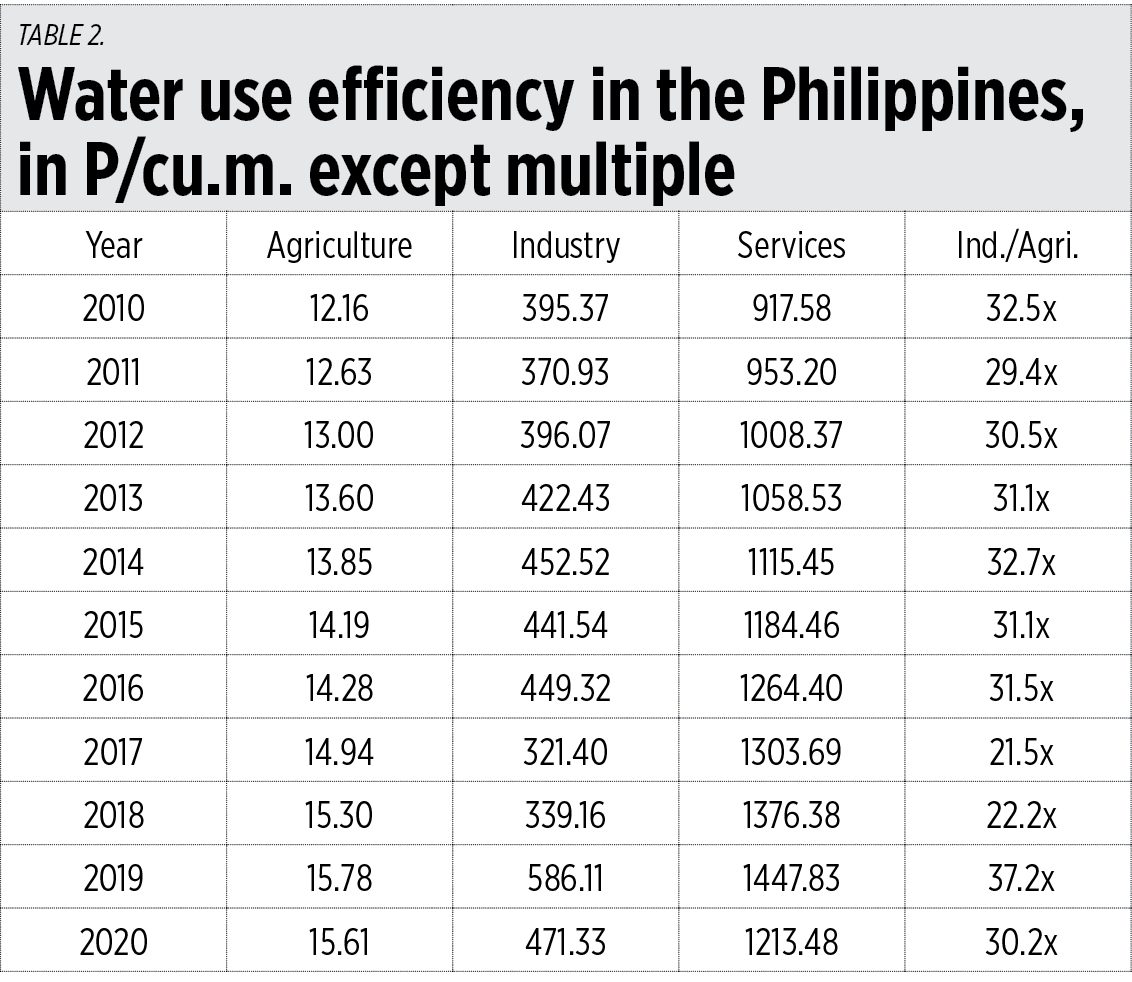
The Philippine Statistics Authority (PSA) has “Water Accounts of the Philippines” data and among the key concepts is water use efficiency (WUE) computed as gross value added (GVA, in P Billion) over water use (in billion cubic meters). Agriculture includes fishery, Industry includes water, electricity, manufacturing. The WUE of industry including water is 30x that of WUE of agriculture and fishery (Table 2).
CURRENT POTABLE WATER FROM LAGUNA LAKE
Currently, MWSI (Maynilad) has two operating water treatment plants in Muntinlupa and harvests 300 million liters per day (mlpd) from the lake, serving around 1.2 million customers in the southern part of its concession area. In 2021 it started the construction of another treatment plan, designed to produce 150 mlpd of potable water to serve more customers in Cavite.

MWCI started tapping water from the lake in 2019 from its Cardona Water Treatment Plant in Rizal, harvesting 100 mlpd.

Potable piped water is very important yet it is very cheap. One cubic meter (cu.m.) is 1,000 liters. One drum of water is 208 liters, so one cu.m. is nearly five drums. At the time when the President was lambasting the two water concessionaires, the water rate was only P6.13/cu.m. and P9.63/cu.m. basic charges per month in Manila Water and Maynilad areas respectively. For consumption of 11 to 20 cu.m. per month, customers pay only P11.13/cu.m. and P16.42/cu.m. for Manila and Maynilad areas, respectively. See this column’s piece at https://www.bworldonline.com/thank-you-maynilad-manila-water/ (Dec. 23, 2019).

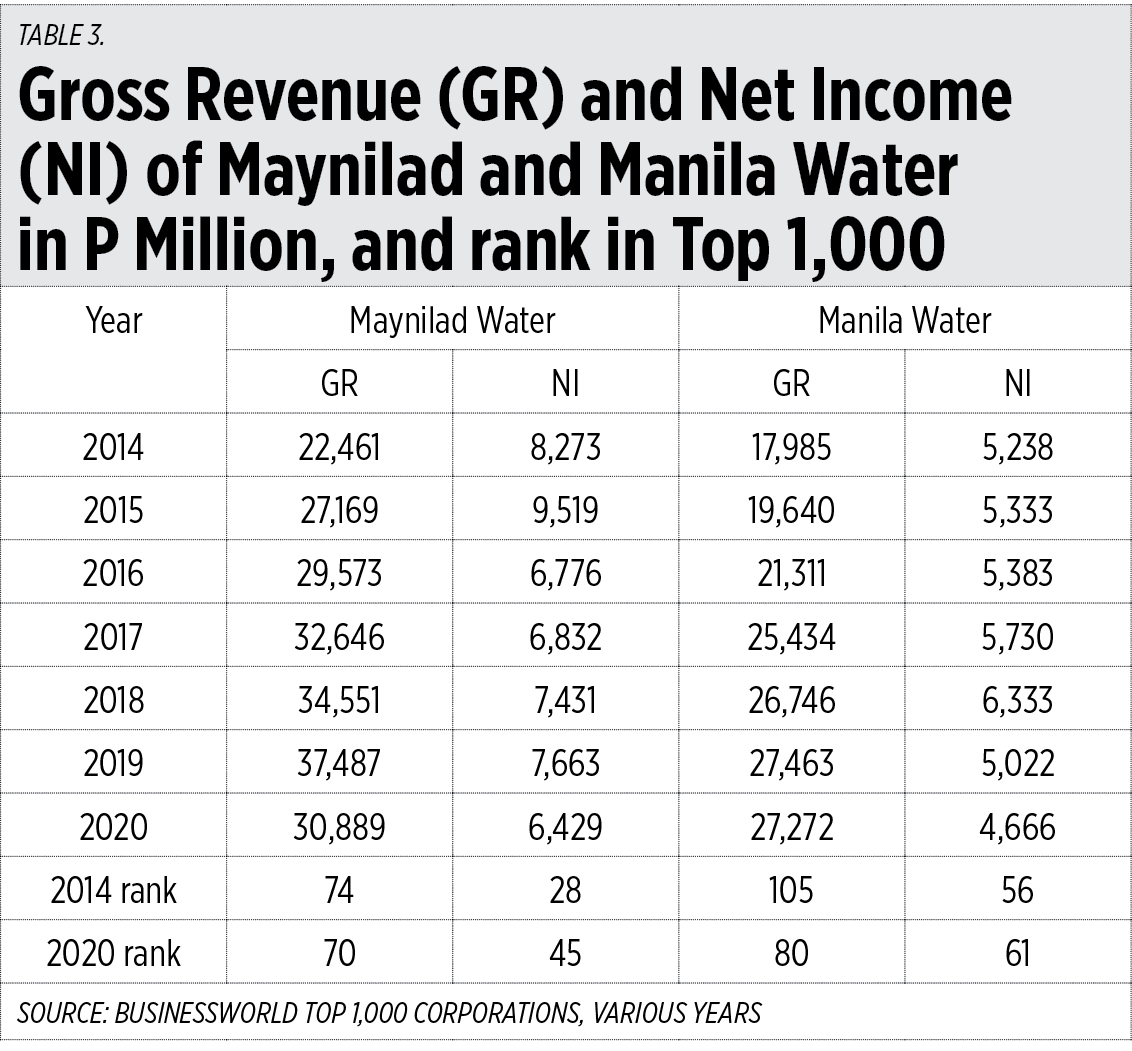
The two firms have become so efficient in delivering water that despite the low rates charged for household consumers, they were still able to generate huge revenues and net income, reinvested to further improve water delivery efficiency (Table 3).
There. The potential benefits of dredging the lake — which will require demolition of many fish pens and fish cages — have been quantified. The higher efficiency of potable water use than fishery use has been established.

Dredging the lake to increase its fresh water holding capacity, and removing structures that trap solid waste from flowing out, are necessary so that we avoid the seemingly annual threat of a “water crisis.”


Bienvenido S. Oplas, Jr. is the president of Minimal Government Thinkers.

minimalgovernment@gmail.com

Addressing stranded cost risks on the road to Net Zero

The energy transition is changing the rules of capital markets and capital planning for energy companies.

UNTIL fairly recently, energy companies and their investors could assume that their fossil-fuel assets — such as power plants, refineries, oil wells, and pipelines — would operate for as long as possible, serving steadily rising demand.

No more. The energy transition is bringing broad changes in the amounts and types of energy that homes and businesses use. As energy companies make commitments to reach net zero in the years ahead, power generation will shift from fossil fuels to more electrification and energy from renewables, some existing energy infrastructure may have to shut down sooner than expected, leaving companies and investors to manage the risks and costs of stranded assets.

This is no small change, but rather a major disruption in the way that energy companies have allocated capital. It comes in the midst of a larger conversation about the role of fossil fuels: whether they’re vital to prosperity or unacceptable given climate change.

While that debate continues, energy executives need to keep making decisions about when and how to invest in the energy assets that are keeping economies running. And while the uncertainty around the long-term future of fossil fuels is only likely to increase, there are things that energy executives can begin to do today to make investment decisions more confidently.

Build shorter-term projects that are more convertible and modular. Deploy capital in chunks rather than everything up front, and adopt shorter depreciation schedules. Where possible, companies should design assets in ways that anticipate their conversion to lower carbon use, such as gas-powered generating stations that can be converted to run on hydrogen. Companies should also look for ways to accelerate returns on investments — for example, selling electricity or natural gas in a mix of long-term guaranteed contracts and some spot sales based on market movements.

Quantify the “uninvestable” moment. Determine how much value the asset will create, how long it needs to operate to deliver the required returns, and what its real option value might be in stranding scenarios. This helps executives decide when it makes sense to continue investing. For example, a natural gas power plant designed to run for 30 years would probably not be worth building if it seemed likely to strand after only 15 years. The owners would have to write off too much of its value. However, it could be a promising investment if the plant can be converted to a low-carbon use and the life could be extended to 25 years, since it would be more likely to deliver the return on equity that investors expected.

Consider the project as a part of an evolving portfolio. For most companies, managing the risk of any individual asset is part of a broader strategy to evolve the business through the energy transition, while maintaining a compelling proposition for investors. Executives will need a clear strategy for navigating their transformation, and will need to allocate capital in ways that support the strategy, including consideration of carbon and environmental, social, and corporate governance (ESG) project risks, shorter payback periods, lower cost-of-capital assumptions, and ongoing reviews of performance. 

In addition, energy companies will need to pay particular attention to two groups of investors: “green capital” and “gray capital.”

Green capital investors look to management for signals that the company is serious about the energy transition, even if as they continue to make some investments in fossil-fuel assets that may become stranded.

Gray capital investors are more comfortable taking risks on fossil-fuel assets. Gray capital could become an important source of potential value when considering the value of fossil-fuel infrastructure, since they’re purchasing some fossil-fuel assets that public companies want to shed.

All investors, whether gray, green, or somewhere in between, will pay more attention to ESG metrics and rely on data to identify companies that are best situated to generate returns from the energy transition. Scrutiny on management teams is sure to increase, particularly on their decisions about investing in assets with a risk of stranding.

This is a relatively new issue, but one that management teams at energy companies will have to contend with for the rest of their careers. Developing the skills to make these assessments and the flexibility to adapt based on shifts in policy, investor sentiment, or other conditions will be critical for success.


Dale Hardcastle is an expert partner at Bain & Company based in Singapore. Emily Wu is an associate partner based in Jakarta and Grant Dougans is a partner based in Washington, DC.

Zuckerberg still has too much control of Facebook

FACEBOOK has always been good at telling a story. After a whistle-blower revealed astonishing harm caused by the company’s products to the mental health of teens and others across the world, the company changed its name and got everyone talking about the metaverse instead. Now Mark Zuckerberg has announced that his top policy executive, Nick Clegg, is being promoted and taking over the tough job of navigating an upcoming legal and regulatory minefield. The new story: Zuckerberg is relinquishing control and allowing Meta Platforms, Inc. (Facebook) to be steered by a sophisticated public-policy savant.

But this announcement is actually doing two things. Yes, it is handing off much of Zuckerberg’s responsibility around policy, relieving him of uncomfortable duties like answering to lawmakers and allowing him to focus on building and monetizing the immersive world he wants us all to one day inhabit. Zuckerberg has grown noticeably tired of apologizing for Facebook’s noxious side effects and has spent much of the past year in his Hawaii compound. He publicly ignored the whistle-blower’s disclosures for weeks, permitting Clegg to take those slings and arrows.   

It also creates an illusion that someone else might take a different line on policy. Why else give them more sway? “We need a senior leader at the level of myself,” Zuckerberg wrote of Clegg in a Facebook post on Wednesday night.

But Clegg was already the most senior policy official at Facebook. He will go from reporting to Sheryl Sandberg, Facebook’s chief operating officer, to reporting to both Sandberg and Zuckerberg — and he was already in the room with both. This isn’t so much a step up as shifting an inch closer to the person who is really in the driver’s seat.

While the founders of other successful technology companies like Microsoft Corp., Alphabet, Inc., and Uber Technologies, Inc. have stepped aside, the person who founded Facebook 18 years ago still controls 58% of voting shares and remains chairman. Shareholder attempts to curb that tight grip have failed, thanks to a loyal board of directors. Zuckerberg’s top lieutenants, including Clegg, display that same kind of loyalty.   

Although Clegg did play a key part in setting up Facebook’s Oversight Board, whose effectiveness is still being proven out, it’s hard to see him using his newfound position to take the company in a healthier direction with regulators by hashing it out with Zuckerberg. That is certainly not how many political historians remember Clegg’s relationship with Prime Minister David Cameron, for whom he arguably acted more like a sidekick than a coalition partner.

What’s really troubling for Meta is that in order to make a success of the metaverse, Zuckerberg will need to roll up his sleeves and dive deeply into the public policy work that he loathes. Already one of the most pressing, new issues he’s facing revolves around policy and human behavior: There have been several incidents of harassment of women on Meta’s social metaverse platform Horizon Venues, including an incident of virtual groping and one of virtual gang rape.

Microsoft Corp. has already given a masterclass on how to respond: on Wednesday it announced a series of measures to address harassment on its own metaverse platforms, completely shutting down three of its main social VR apps, including a polished, popular zone for meeting up and playing games with strangers called Campfire. It’s also turning on safety bubbles for all its virtual reality visitors by default, boosting moderators and automatically muting anyone who attends an event.

Facebook’s efforts to address metaverse safety look tepid in comparison. Following the reports of harassment, it introduced an option to block avatars from coming within a two-foot radius of a user’s own avatar. Blocking tools certainly have some promise, but they have been trialed in gaming and can be misused as a blockade against others. A more serious attempt at establishing safety as a norm would be to shut down Meta’s social VR platforms — as Microsoft did — and re-design them with safety in mind.

But there is a scant possibility that Nick Clegg will push for big reforms like that. So long as Zuckerberg maintains his current level of control, expect the status quo to continue.

BLOOMBERG OPINION