Home Blog Page 6112

TikTok is propagandists’ new tool to win elections in Southeast Asia
REUTERS

By Nuurrianti Jalli

Scholars and political observers have raised concerns over public opinion maneuvering on social media in Southeast Asia as three countries in the region — the Philippines, Malaysia, and Indonesia — are gearing up for elections.

Propagandists’ strategic maneuvering of public opinion on social media remains a dangerous threat to democracy in Southeast Asia. Over the years, strategic use of cybertroopers in Southeast Asian countries has been prominent, especially during the election periods.

Political actors have attempted to sway public opinion via Facebook, Twitter, and YouTube to push for a political narrative to garner more supporters in the region.

Now, TikTok, as the most downloaded app in Southeast Asia, would serve as a new strategic tool for propagandists to push for political narrative during the electoral period.

TikTok provides unique features enabling propaganda to reach a greater public, as its content-sharing model is novel compared to its predecessors, where it does not rely on the number of followers but instead focuses on the content itself.

This means anybody who could create “interesting-enough” content can land on the “for you page,” opening doors of opportunities for political opportunists to push for political narrative by creating engaging audio-visual content.

With its recommended system, radical propaganda could result in extremism among fanatical followers as TikTok would push for similar content to users. This model could create an information bubble that would feed users with certain narratives and influence their worldview.

Unlike its predecessors, TikTok is relatively new in the global-fame-game after a sudden burst of new downloads worldwide at the beginning of the COVID-19 pandemic.

While tech companies like Facebook, Twitter, and Google have taken serious steps to combat the misuse of their platforms by propagandists, TikTok does not have as rigorous policies.

TikTok has been heavily criticized by scholars and media for allowing extremism to be on its platform, which led the tech company to rebut with improved policies through their community guidelines.

Relying mostly on in-house and AI monitoring framework and community flagging system, as an audio-visual platform, TikTok seems to struggle to oversee content its users produce on its platform.

TikTok has established its latest community guidelines to avoid individuals’ misuse of the platform.

However, political propaganda is still rampant on the platform, for example on the “live” section of the platform.

The “live” feature on TikTok has been misused to spread political narrative in several countries, including the US and Russia.

Unlike the uploaded audio-visual content, the live feature posed a distinctive challenge due to its synchronous real time-streaming nature, which makes AI monitoring less effective compared to humans in content moderation.

But, relying on 24/7 human monitoring of live videos is unrealistic as it is impossible and economically impractical to hire enough workforce to monitor millions of content uploaded on TikTok daily.

Therefore the next best way is to harness community engagement by developing a community flagging system to help identify content in violation of its policy.

As general elections in the Philippines, Malaysia, and Indonesia are looming, we should not disregard TikTok as a space for political information warfare amid elections in the region.

Seeing how Russian influencers were paid to disseminate pro-Kremlin propaganda on TikTok, my prediction, similar trends highly likely will happen in the Southeast Asian countries.

Digital propaganda strategies for disinformation campaigns that we have seen on other social media platforms include coordinated use of paid influencers, cybertroopers, bots, deepfakes.

These could be replicated on TikTok during the Southeast Asian elections considering the platform gained popularity in the region in the past three years.

As information disorders ahead of the election are to be expected, one of the ways to mitigate information disorders is through media and information literacy efforts.

While fact-checkers can only do so much, citizens should also be well equipped with the right skills to check information for themselves.

In Southeast Asia, media and information literacy education are still behind compared to other parts of the world, despite the current climate of information pollution. While information disorders will never go away, equipping citizens with the right skills would help in mitigating its spread. — The Conversation via Reuters

Nuurrianti Jalli is assistant professor of Communication Studies at the College of Arts and Sciences Department of Languages, Literature, and Communication Studies at Northern State University in South Dakota, USA.


PHL remains ‘favored destination’ for outsourcing

PIXABAY

By Patricia B. Mirasol, Reporter

Heads of global outsourcing firms agreed that the Philippines remains a “favored destination” as they outlined the pandemic’s positive outcomes at the 2022 Asia CEO Forum.

“There’s plenty of growth opportunity,” said Nick Sinclair, founder of TOA Global, an Australia-headquartered company that supplies offshore professionals, including from the Philippines, to over 600 accounting firms worldwide.

“I think for everyone in this industry — particularly if you’re an accountant — the future is very bright,” he said at the March 24 event, noting that a lot of accounting firms are not run as effectively as they could be. “Technology is going to allow us a more human connection and have a bigger impact to small businesses globally.”

TOA Global, which has more than 2,000 team members in the Philippines, has a 10-year vision of increasing that number to 20,000. It plans to launch a foundation this year to educate and upskill the underprivileged.

“We’ve seen how brilliant accountants are in the Philippines,” added Mr. Sinclair. “We want to amplify that in the global stage.”

The country’s reputation as a tried-and-tested customer experience delivery point has been strengthened these past two years, according to Rommel M. Regino, head of global operations and sales of Inspiro, a Philippine-headquartered company offering business process outsourcing and call center services worldwide.

“The Philippines is consistently among the top three most favored offshore destinations, making us an integral part of any customer experience outsourcing delivery portfolio,” he said. “We should work together for the Philippines to remain as a favored destination.”

Like all industries, he added, global outsourcing had to undergo massive changes in technology adoption, business processes, and people management as a result of coronavirus disease 2019 (COVID-19).

According to a 2021 forecast by the International Data Corporation, the digital transformation of business practices, products, and organizations is expected to reach $2.8 trillion in 2025, more than double the amount allocated in 2020.

Customer experience is expected to get a large chunk of these investments, said Mr. Regino. “We believe that a positive agent experience translates to an exceptional customer experience. We’ve seen clients invest in technology for customer experience. Shouldn’t we do the same for our agents?”

Inspiro invested in learning simulators for new hires, which resulted in a 45% skills improvement and a 95% increase in sales conversion. The company also equipped its workforce with cybersecurity protection — such as two-factor authentication and data encryption — when they had to work from home during the various lockdowns.

Mr. Regino said that, although a majority of its staff is “quite excited” to now be back on-site, remote work has been proven to be a boon from a talent availability standpoint.

The COVID-19 pandemic accelerated the ability to employ someone not in one’s town or country, Mr. Sinclair acknowledged at the Asia CEO Forum. That said, TOA Global’s founder noted the company is still “a big believer in offices” because of their potential for collaboration and growth.

“They will not die…but we want to build offices and extend to a hub-and-spoke network, so [our staff only need to] travel 15–20 minutes to work,” he added.

Cow power: Indian coal state seeks greener energy from dung

Athul Iyju Jacob/CC BY-SA 4.0/Wikimedia Commons

RAIPUR — One of India’s biggest coal mining hubs, also home to dense forests and a large indigenous population, will soon start using piles of cow dung to power rural industries and homes in line with global efforts to phase down fossil fuels.

Bhupesh Baghel, chief minister of the eastern state of Chhattisgarh, told the Thomson Reuters Foundation the government plans to teach local women to produce and sell clean energy, as the mineral-rich state looks to transition away from coal.

“Globally there is a shift towards green energy,” Mr. Baghel said, adding that coal remains key to meeting the energy needs of his state but the goal is to find alternative sources.

“In deciding to move away slowly (from coal), we have kept the future of our people in mind, particularly the indigenous population. We want to create a framework to protect them, our forests and biodiversity,” he said in an interview.

India is the world’s second-biggest importer, consumer and producer of coal, and has its fourth largest reserves, with a large share of them in Chhattisgarh.

At the COP26 climate summit last year, India announced plans to reach net-zero carbon emissions in 2070 and to boost the share of renewables in its energy mix from about 38% last year to 50% by 2030.

In keeping with that, and to improve the lives of the more than 40% of Chhattisgarh residents living below the poverty line, Mr. Baghel’s government put in place a circular economy plan in 2020.

It aims to generate more jobs, boost incomes and create a sustainable rural economy by setting up industrial parks and helping women’s groups to produce and sell natural products. Last month, energy from cow dung was added to the list.

Under Mr. Baghel’s flagship program, villagers are paid 2 rupees ($0.03) for every kilogramme of dung they collect, which is then processed into products like organic compost, fuel for fires and herbal colors used in local festivals.

“It (is) about many things — from reducing stray cattle on the streets to livelihoods and going green,” Mr. Baghel said, during a break in proceedings at the legislative assembly in Raipur, the state capital.

“We have set up 8,000 gouthans (community spaces) in villages, where cow dung is collected and processed into products — and the next thing will be generating power.”

DOORSTEP POWER

While India pushes to expand coal mining to meet its energy needs, at least until 2024, Mr. Baghel — who took office in late 2018 — has resisted pressure to open new mines in the Hasdeo Arand region, one of central India’s largest intact forests.

He admits coal dependency will not end overnight, but the 61-year-old feels the need for a master-plan for the future.

The state has signed an agreement with the Bhabha Atomic Research Centre to install 500 biogas plants in the gouthan spaces, with each producing enough power to light up more than 2,500 homes every day.

Depending on how much cow dung is collected, the plants will either be permanent or small mobile units.

“We will literally generate (power) at their doorstep,” said Mr. Baghel.

While the state is awaiting approval for proposed solar power projects, Mr. Baghel said energy from cow dung would be produced round-the-clock, with women being trained to run and maintain the digesters that make biogas from the animal waste.

The gas will be used for cooking and also to produce electricity, distributed through a micro-grid to the local area.

The power will be supplied to rural industries and households, and used for street lighting, with any surplus fed into the state electricity grid.

Decentralizing the generation and distribution of power will enable easy access for everyone, including indigenous people who normally struggle to get electricity, while at the same time creating green jobs and improving lives, Mr. Baghel added.

“Cash from cow dung is the goal,” he said.

Drawing on sacred Hindu scriptures and his childhood memories of growing up in a village, Mr. Baghel said “self-reliance” and “giving back to nature” were central to his plan.

G V Ramanjaneyulu, executive director of the Centre for Sustainable Agriculture, said the approach would both extend energy access to all and deal with agricultural waste.

“Decentralized energy is always a good idea,” he said, adding that using dung as a source “is both practical and profitable.”

In line with the Indian government’s first plan for a fair shift away from coal in areas where mines have been shut, Baghel’s administration also wants to help workers acquire new skills so they can run eco-tourism or fish-farming businesses.

“We are showing people how profitable alternate jobs can be. We give them incentives and they are adapting. Changes will follow,” said Mr. Baghel. — Anuradha Nagaraj/Thomson Reuters Foundation 

US tech giants face tough new rules as EU countries, lawmakers clinch deal

Image via Huzaifa Abedeen/CC BY-SA 4.0/Wikimedia Commons

BRUSSELS —  Alphabet’s Google, Amazon, Apple, Meta, and Microsoft may have to change their core business practices in Europe as EU countries and EU lawmakers on Thursday clinched a deal on landmark rules to curb their powers.

France, which currently holds the rotating EU presidency, said in a tweet that there was a provisional agreement after eight hours of talks.

EU industry chief Thierry Breton said in a tweet that the deal would ensure fair and open digital markets.

“What we want is simple: fair markets also in digital. Large gatekeeper platforms have prevented businesses and consumers from the benefit of competitive digital markets,” EU antitrust chief Margrethe Vestager, who proposed the rules just over a year ago, said in a statement.

“This means that the time of long antitrust cases, during which the authorities were lagging behind the big tech companies, is over,” said EU lawmaker Andreas Schwab, who had steered the debate in the European Parliament.

The Digital Markets Act (DMA) sets out rules for online gatekeepers — companies that control data and platform access.

It will cover gatekeepers in online intermediation services, social networks, search engines, operating systems, online advertising services, cloud computing, video-sharing services, web browsers and virtual assistants.

Under the DMA, the tech giants will have to make their messaging services interoperable and provide business users access to their data. Business users would be able to promote competing products and services on a platform and reach deals with customers off the platforms.

The rules prohibit the companies from favoring their own services over rivals’ or preventing users from removing pre-installed software or apps.

The DMA will apply to companies with a market capitalization of 75 billion euros, 7.5 billion euros in annual turnover and at least 45 million monthly users.

Companies face hefty fines up to 10% of their annual global turnover for breaching the rules and as much as 20% for repeat offenses.

Apple, which has lobbied intensively against the DMA, reiterated its worries.

“We remain concerned that some provisions of the DMA will create unnecessary privacy and security vulnerabilities for our users while others will prohibit us from charging for intellectual property in which we invest a great deal,” it said in a statement.

Google, which also cranked up its lobbying in the last year, echoed the same sentiments.

“While we support many of the DMA’s ambitions around consumer choice and interoperability, we’re worried that some of these rules could reduce innovation and the choice available to Europeans. We’ll now take some time to study the final text, talk with the regulator and work out what we need to do to comply,” it said in a statement. — Foo Yun Chee/Reuters

N. Korea tests massive new ICBM for ‘long’ confrontation with US

KCNA VIA REUTERS

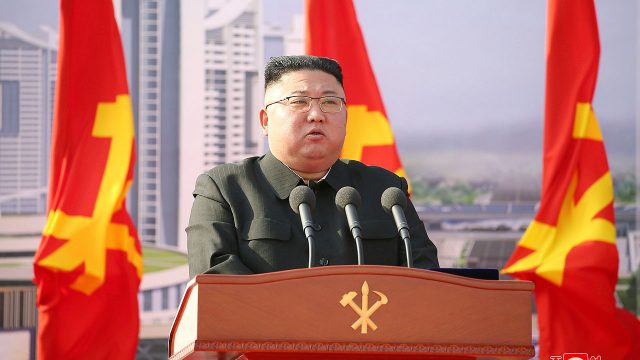
SEOUL — North Korea’s latest launch was a huge, new intercontinental ballistic missile (ICBM), state media reported on Friday, in a test leader Kim Jong Un said was designed to demonstrate the might of its nuclear force and deter any US military moves.

It was the first full ICBM test by nuclear-armed North Korea since 2017, and flight data indicated the missile flew higher and longer than any of North Korea’s previous tests, before crashing into the sea west of Japan.

Dubbed the Hwasong-17, the ICBM is the largest liquid-fueled missile ever launched by any country from a road-mobile launcher, analysts said.

Mr. Kim ordered the test because of the “daily-escalating military tension in and around the Korean peninsula” and the “inevitability of the long-standing confrontation with the US imperialists accompanied by the danger of a nuclear war,” state news agency KCNA reported.

“The strategic forces of the DPRK are fully ready to thoroughly curb and contain any dangerous military attempts of the US imperialists,” Mr. Kim said while personally overseeing the launch, according to KCNA. DPRK are the initials of North Korea’s official name.

North Korea’s return to major weapons tests capable of potentially striking the United States poses a direct challenge to US President Joseph R. Biden, Jr., as he responds to Russia’s invasion of Ukraine. And it raises the prospect of a new crisis following the election of a new, conservative South Korean administration that has pledged a more muscular military strategy to counter Pyongyang.

South Korea’s President-elect Yoon Suk-yeol, who will speak to Chinese President Xi Jinping later on Friday, said North Korea had nothing to gain from provocation. China is North Korea’s sole major ally and neighbor.

The launch drew condemnation from leaders in the United States, Japan, and South Korea.

Mr. Kim said the test would help convince the world of the modern features of the country’s strategic forces.

“Any forces should be made to be well aware of the fact that they will have to pay a very dear price before daring to attempt to infringe upon the security of our country,” he said, according to KCNA.

There was no immediate comment from the White House or State Department on Mr. Kim’s remarks.

NEW SANCTIONS

Responding to North Korea’s banned ICBM launch through the United Nations Security Council (UNSC) will be far more difficult now than after the last test in 2017.

World powers on the council are currently at odds over the Ukraine war, making the kind of sanctions that were imposed on North Korea by the UNSC after the 2017 test a far more complicated process.

The UN Security Council will meet publicly at 3 p.m. (1900 GMT) on Friday to discuss the launch. On Thursday, UN Secretary-General Antonio Guterres urged Pyongyang “to desist from taking any further counter-productive actions.”

On Thursday, the US State Department announced sanctions on two Russian companies, a Russian and a North Korean individual, and North Korea’s Second Academy of Natural Science Foreign Affairs Bureau for transferring sensitive items to North Korea’s missile program.

It named the Russian entities as the Ardis Group of Companies LLC (Ardis Group) and PFK Profpodshipnik LLC, and the Russian individual as Igor Aleksandrovich Michurin. It named the North Korean as Ri Sung Chol.

“These measures are part of our ongoing efforts to impede the DPRK’s ability to advance its missile program and they highlight the negative role Russia plays on the world stage as a proliferator to programs of concern,” State Department spokesman Ned Price said in a statement.

NEW MISSILE

Photos released by state media showed a massive missile, painted black with a white nose cone, rising on a column of flame from a launch vehicle.

The Hwasong-17 flew for 1,090 km (681 miles) to a maximum altitude of 6,248.5 km (3,905 miles) and precisely hit a target in the sea, KCNA reported. Those numbers are similar to data reported by Japan and South Korea.

KCNA called the successful test a “striking demonstration of great military muscle,” while Mr. Kim said it was a “miraculous” and “priceless” victory by the Korean people.

North Korea first unveiled the previously unseen ICBM at an unprecedented pre-dawn military parade in October 2020, with analysts noting it appeared “considerably larger” than North Korea’s last new ICBM, the Hwasong-15, which was test fired in November 2017.

It was displayed a second time at a defense exhibition in Pyongyang in October 2021.

Officials in Seoul and Washington have previously said launches on Feb. 27 and March 5 involved parts of the Hwasong-17 ICBM system, likely in preparation for eventually conducting a full test like the one on Thursday. — Josh Smith/Reuters

UN General Assembly again overwhelmingly isolates Russia over Ukraine

REUTERS

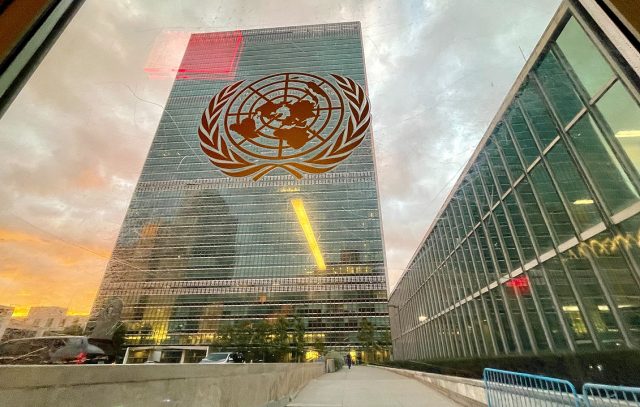
UNITED NATIONS — Almost three-quarters of the UN General Assembly demanded aid access and civilian protection in Ukraine on Thursday, and criticized Russia for creating a “dire” humanitarian situation after Moscow invaded its neighbor one month ago.

It is the second time the 193-member General Assembly has overwhelmingly isolated Russia over what Moscow calls a “special military operation” that it says aims to destroy Ukraine’s military infrastructure.

UN Secretary-General Antonio Guterres has blasted Russia’s “absurd war.” Thousands of people have been killed in Ukraine, millions made refugees, and cities pulverized in the past month.

The resolution adopted on Thursday, which was drafted by Ukraine and allies, received 140 votes in favor and five votes against — Russia, Syria, North Korean, Eritrea and Belarus — while 38 countries, including China, abstained.

General Assembly resolutions are nonbinding, but they carry political weight. There was a round of applause in the hall after the adoption on Thursday.

Russia’s UN Ambassador Vassily Nebenzia described the resolution adopted on Thursday as a “pseudo humanitarian draft” that took a “one-sided view of the situation.” He again accused Western countries of a campaign of “unprecedented pressure” to win votes, a claim that the United States has rejected.

Ukraine and its allies had been looking to match or improve on support received for a March 2 General Assembly resolution that deplored Russia’s “aggression” and demanded it withdraw its troops. That received 141 yes votes, the same five no votes, while 35 states — including China — abstained.

‘ASTOUNDING SUCCESS’ 

US Ambassador to the United Nations Linda Thomas-Greenfield described the vote on Thursday as an “astounding success,” telling reporters: “There’s really no difference between 141 and 140.”

The resolution adopted on Thursday demands the protection of civilians, medical personnel, aid workers, journalists, hospitals and other civilian infrastructure. It also demands an end to the siege of cities, in particular Mariupol.

Ukraine and Western allies have accused Moscow of attacking civilians indiscriminately. Moscow denies attacking civilians.

The resolution echoes the March 2 General Assembly text by again demanding that Moscow stop fighting and withdraw its troops from Ukraine.

South Africa had proposed a rival draft resolution that focused on the humanitarian situation and did not mention Russia. Russia appealed for countries to support that text.

The General Assembly decided not to act on the South African draft after Ukraine called a vote under a rule covering draft resolutions on the same issue.

The General Assembly vote came one day after a Russian-drafted resolution calling for aid access and civilian protection in Ukraine — and not mentioning Moscow’s role — failed at the UN Security Council, with only Russia and China voting yes and the remaining 13 members abstaining.

The Russian Security Council draft was very similar to the text put forward in the General Assembly by South Africa. — Michelle Nichols/Reuters 

Singapore extends quarantine-free entry as Asia shifts to ‘living’ with COVID

REUTERS

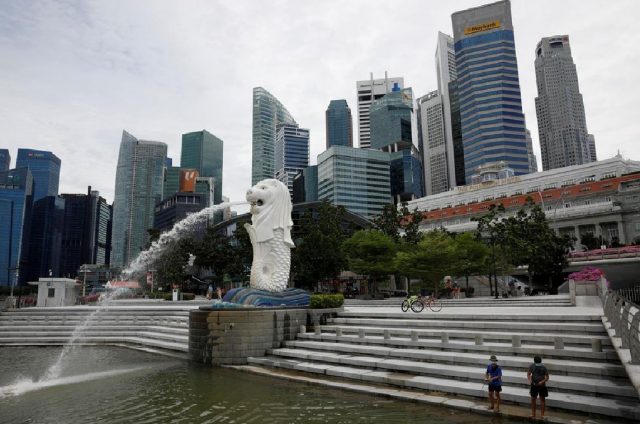
SINGAPORE — Singapore said on Thursday it will lift quarantine requirements for all vaccinated travelers from next month, joining a string of countries in Asia moving more firmly toward a “living with the virus” approach.

Prime Minister Lee Hsien Loong said the financial hub will also drop requirements to wear masks outdoors and allow larger groups to gather.

“Our fight against COVID-19 [coronavirus disease 2019] has reached a major turning point,” Mr. Lee said in a televised speech that was also streamed on Facebook. “We will be making a decisive move towards living with COVID-19.”

Singapore was one of the first countries to shift from a containment strategy to new COVID normal for its 5.5 million population, but had to slow some of its easing plans due to subsequent outbreaks.

Now, as infection surges caused by the Omicron variant begin to subside in most countries in the region and vaccination rates improve, Singapore and other nations are removing a host of social distancing measures designed to stop the spread of the virus.

Singapore began lifting quarantine restrictions for vaccinated travelers from certain countries in September, with 32 countries on the list before Thursday’s extension to vaccinated visitors from any nation.

Japan lifted this week restrictions imposed on Tokyo and 17 other prefectures that had limited hours of eateries and other businesses. South Korea, where COVID infections this week topped 10 million but appear to be stabilizing, pushed back a curfew on eateries to 11 p.m., stopped enforcing vaccine passes and dropped quarantine for vaccinated travelers arriving from overseas.

Indonesia dropped quarantine requirements for all arrivals from overseas this week, and its Southeast Asian neighbors of Thailand, the Philippines, Vietnam, Cambodia and Malaysia took similar measures, as they seek to rebuild tourism sectors.

Indonesia is also lifting a ban on travel for a Muslim holiday in early May that traditionally sees millions of people head to villages and towns to celebrate Eid al-Fitr at the end of the holy month of Ramadan.

Australia will lift its entry ban for international cruise ships next month, effectively ending all major COVID-related travel bans after two years.

New Zealand this week ended mandatory vaccine passes to visit restaurants, coffee shops and other public spaces. It will also lift vaccine mandates for a number of sectors from April 4 and open the borders for those on visa-waiver programs from May.

Hong Kong, which has registered the most deaths per million people globally in recent weeks, plans to relax some measures next month, lifting a ban on flights from nine countries, reducing quarantine and reopening schools after a backlash from business and residents.

TRAVEL HOPES

Singapore travel and movement related stocks surged on Thursday, with a gain of nearly 5% for airport ground-handling firm SATS and 4% for Singapore Airlines. Shares in public transport and taxi operator Comfortdelgro Corp. rose 4.2%, their sharpest one-day gain in 16 months. The Straits Times index was up 0.8%.

Mr. Lee said Singapore officials would continue to remove restrictions at a measured pace.

“After this major step, we will wait a while to let the situation stabilize,” he said. “If all goes well, we will ease up further.”

As well as allowing up to 10 people to gather, Singapore will remove a 10:30 p.m. curfew on dining and alcohol sales, and allow more employees to return to their workplace.

Still, mask wearing mandates remain in place in several places including South Korea and Taiwan, while facial covering is almost ubiquitous in Japan.

China remains a major holdout, sticking to a “dynamic clearance” policy to stamp out flare-ups as quickly as possible. It reported around 2,000 new confirmed cases for Wednesday. The latest outbreak is tiny by global standards but the country conducts rigorous testing, seals off hotspots and isolates infected people in quarantine facilities to prevent a surge that could strain its healthcare system. — Aradhana Aravindan and Chen Lin/Reuters

Expanding and evolving living concepts

Properties have often been classified from low-rise to high-rise and from economic to luxury. Another way of classifying is whether they are horizontal or vertical developments, which have also defined the way of living of residents.

Horizontal is often associated with individual spaces like houses and apartments sprawled outside metropolitan areas, while vertical often refers to condominiums and shared spaces that usually fill urban spots.

Such descriptions have been reflected in the recent “Hotspots Unwrapped” reports of online real estate marketplace Lamudi. Back in 2020, the figures — based on the website’s pageviews — show that demand for houses was higher than that of condominiums and even apartments.

With houses earning the most number of pageviews and leads in provincial cities, Lamudi hinted that “the market has gained greater appreciation for living spaces that offer bigger rooms, which will accommodate work-from-home and distance learning arrangements, or outdoor areas that provide safe recreational opportunities.”

In the metro, meanwhile, houses and condos remain the most popular choices. “In Quezon City, units in horizontal developments represent 29.25% of the leads. In Makati, condos dominate with 34.90% of the leads,” Lamudi’s report further detailed.

A more recent edition of its “Hotspots Unwrapped,” which listed the cities around the country to watch this year, observed a sustained trend in demand for horizontal developments.

“Residential properties such as houses flexed a large share of leads out of all property types, a trend common to most of the aforementioned cities. This is consistent with 2020 trends, which saw an increase in demand for horizontal developments,” the report stressed.

Among the cities, San Juan City was recognized for its “blend of both horizontal and vertical residential developments as well as its varied retail offerings,” which Lamudi noted “have made the city an attractive residential destination for families.”

Lamudi also observed that in Pasay City, new vertical developments such as condominiums and office towers are continuing to crop up. “The city continues to be an attractive investment destination especially for employees of firms and government offices in the area as well as those who frequently fly for work,” the report read.

Recently, however, the concepts of horizontal and vertical development have apparently evolved as the perks and advantages of both types have been bundled into new offerings.

Take horizontal multifamily, for example. A popular trend in the United States, horizontal multifamily can be described as a type of property that brings to residents the privacy of single-family homes (often a horizontal development attribute), while still reaping the benefits of multifamily amenities and on-site property management (something likely picked up from vertical developments like condos).

“Horizontal multifamily lets renters have the best of both worlds: an apartment where maintenance is taken care of as well as privacy and potentially a backyard,” real estate writer Deidre Woollard wrote in The Motley Fool-owned Millionacres website.

There has also been an emerging preference for “horizontal condominiums.” This type of condominium, according to Architect John Ian Lee Fulgar in an online article, brings the lifestyles that mark high-rise condominiums into typical Filipino houses similar to regular house-and-lots, rowhouses, or even townhouses. In terms of location, this type is often found near beaches or vacation spots. Kasa Luntian in Tagaytay City and Vista de Loro in Batangas are cited as examples of horizontal condominiums.

The concept of “vertical village” has also been on arising, as shown in the launch of a Camella Manors project in Davao. As BusinessWorld reported last year, Camella Manors Operations Head Marlon B. Escalicas said the development is positioned as “vertical villages” as “as these combine the conveniences of condominium living within a community in a prime location with commercial establishments, public transport access, and medical facilities, among others.”

From ‘pancakes’ to ‘pyramids’

No matter how horizontal and vertical developments have evolved, both are seen to be taking the shape of cities in the future.

A World Bank (WB) report published last year, based on satellite data analysis for almost 10,000 cities, analyzed the link between a city’s economic growth and the floor space available to residents and businesses.

“It finds that a city is most likely to be its best version when its shape is driven by economic fundamentals and a conducive policy environment — namely, a robust job market, flexible building regulations, dependable public transit and access to essential services, public spaces, and cultural amenities,” WB said in a statement.

The report noted three margins along which cities are projected to grow, depending on the aforementioned fundamentals. These three are horizontal spread, where cities extend beyond their previously built-up area; vertical layering, where cities raise the skyline of the existing built-up area; and infill development, where cities close gaps between existing structures.

Low-income cities tend to spread horizontally, looking like what the report termed as “pancakes,” as newcomers crowd into low-built quarters or settle on the outskirts where land is cheaper. Cities with higher incomes and productivity, meanwhile, are found to be taking the shape of “pyramids,” as they experience horizontal spread, infill development, and vertical layering altogether.

“A rising demand for floor space in economically productive cities… combined with a related rise in housing investment and consumption, leads developers to fill vacant or underused land at and within the city edge with new structures,” the report explained. “These pockets of close-in land become dense with office and residential space… Structures are built taller on average, and at the urban core, they are built much taller, forming sharply peaked skylines.” — Adrian Paul B. Conoza

Dell Technologies provides enterprise cybersecurity and recovery solutions

Leveling up data protection is integral to organizations in achieving business growth. In this new normal, digitalization means business continuity. Need to support hybrid workforces? Go digital. Need to secure critical data and ensure accessibility, anytime, at the same time? Go to the cloud. As digitalization becomes more widespread and necessary than ever, cyber threats become just as, or even more, widespread and sophisticated.

Dell Technologies and Integrated Computer Systems, Inc. (ICS), a leading IT solutions provider in the country and a Dell Technologies Titanium Partner, offer cybersecurity and recovery solutions and services to organizations. The Managed Detection and Response, PowerProtect DD Series and APEX Backup Services deliver superior cyberthreat detection power at the onset.

Managed Detection and Response

IT teams can find support in strengthening their organization’s security through Dell Technologies Managed Detection and Response (MDR), a fully managed, end-to-end, 24×7 service that observes, detects, investigates, and responds to threats across the IT environment. The Managed Detection and Response merges Dell’s security expertise and the Secureworks Taegis XDR security analytics software.

Dell Technologies and ICS’ security analysts assist organizations in the initial setup, monitoring, detection, remediation, and response. They work with the IT team to get an understanding of the environment, as well as give advice on security posture improvements and help deploy the XDR software agent to endpoints.

MDR leverages on the attacker data collected by Secureworks from over 1,400 incident response engagements in the previous year for threat detection and investigation. In the event of a security incident, Dell Technologies assures to help organizations get back and running.

Ultimate protection storage appliance

For cost-effective yet superior data protection, Dell Technologies brings the next generation of its EMC Data Domain appliances — the Dell EMC PowerProtect DD Series.

The DD Series helps organizations in data security, management, and recovery at scale. Powering the DD series is the DD Operating System (DDOS). This gives it the agility, security, and reliability to deliver high-speed, scalable, and industry-leading multi-cloud protection storage for backup, archive, and disaster recovery.

With the DD Series, organizations can enjoy fast, secure, and efficient data protection. This solution can now scale up to 1.5PB capacity in a single rack and provide up to 3PB capacity for long-term retention with the Dell EMC Cloud Tier. It can also integrate seamlessly with existing infrastructures, enabling ease-of-use with leading backup and archiving applications, and deliver superior performance with PowerProtect Data Manager and Data Protection Suite.

DD series supports an extensive cloud ecosystem, including AWS, Azure, VMware Cloud, Google Cloud, Alibaba Cloud, and Dell EMC ECS.

SaaS-based APEX Backup Service

Dell Technologies also has a 100% Software-as-a-Service (SaaS) data protection solution in APEX Backup Services. Built on AWS, it offers high-performance and secure backup, long-term retention, and automated compliance.

For SaaS apps, the APEX Backup Services delivers unified data protection, management, and information governance, including automated compliance and legal hold. Through a single dashboard, it provides complete visibility across Microsoft 365, Google Workspace, and Salesforce.

The APEX Backup Services for Endpoint ensures the protection of one’s devices, whether in the office or on the road. Through a centralized cloud portal, IT admins can remotely supervise the cloud backup and restore operations. Self-service restores are also possible via a web interface and from mobile apps, including iOS and Android. Desktop/laptop support covers Windows, Linux, and CentOS.

Meanwhile, the APEX Backup Services for Hybrid Workloads offers advanced functionality, including long-term retention, reporting, and insight into cloud storage utilization.

With Dell Technologies security solutions, organizations can rest assured that their critical assets are protected 24/7. As a trusted Dell Technologies partner, ICS can help you get a headstart in adopting these solutions and services to reinforce your company’s data security. Interested parties can contact ICS at info@ics.com.ph or visit ics.com.ph to inquire.


Spotlight is BusinessWorld’s sponsored section that allows advertisers to amplify their brand and connect with BusinessWorld’s audience by enabling them to publish their stories directly on the BusinessWorld Web site. For more information, send an email to online@bworldonline.com.

Join us on Viber to get more updates from BusinessWorld: https://bit.ly/3hv6bLA.

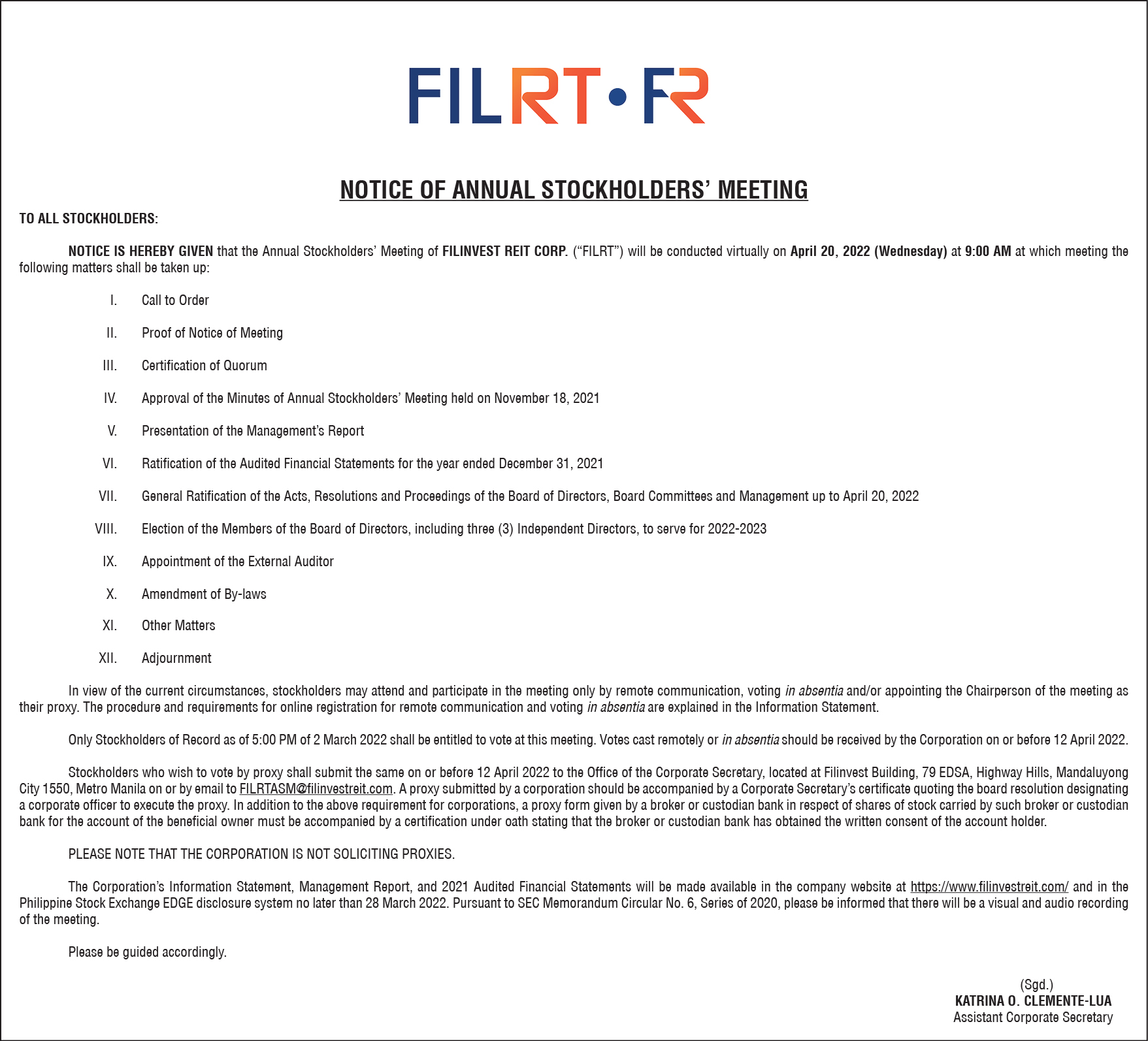
Filinvest REIT Corp. to conduct annual stockholders’ meeting on April 20

Click to enlarge.
Click to enlarge.

Spotlight is BusinessWorld’s sponsored section that allows advertisers to amplify their brand and connect with BusinessWorld’s audience by enabling them to publish their stories directly on the BusinessWorld Web site. For more information, send an email to online@bworldonline.com.

Join us on Viber to get more updates from BusinessWorld: https://bit.ly/3hv6bLA.

Central bank extends key rate pause

BW FILE PHOTO

By Luz Wendy T. Noble, Reporter

THE Philippine central bank kept its key interest rate steady for an 11th straight meeting on Thursday, even as it warned that its inflation target might be breached this year amid surging global oil prices due to Russia’s continued invasion of Ukraine. 

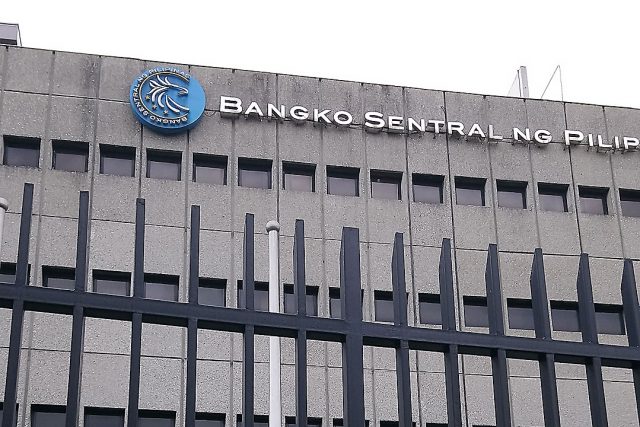
The Bangko Sentral ng Pilipinas (BSP) left the benchmark rate at a record low of 2%, as predicted by 15 of 17 economists in a BusinessWorld poll last week. Deposit and lending rates were also kept at 1.5% and 2.5%. Its last rate move was a 25-basis-point (bp) cut in November 2020. 

“The Monetary Board sees scope to maintain the BSP’s policy settings in order to safeguard the momentum of economic recovery amid increased uncertainty,” central bank Governor Benjamin E. Diokno told an online news briefing, even as it plans to normalize extraordinary liquidity measures started during a coronavirus pandemic. 

“Given the potential broadening of price pressures over the near term, the BSP stands ready to respond to the buildup in inflation pressures that can dis-anchor inflation expectations,” he added. 

The Philippines and other Asian economies including Indonesia and Japan have abstained from the global rate hike cycle led by the Federal Reserve as it awaits signs of significant price increases. 

Mr. Diokno said domestic economic activity has gained stronger traction with easing coronavirus lockdowns. But heightened geopolitical tensions and a resurgence in COVID-19 infections in some countries have clouded the outlook for global economic growth. 

“Supply-chain disruptions could also contribute to inflationary pressures, and thus warrant closer monitoring to enable timely intervention in order to arrest potential second-round effects,” he said. 

Manila, the capital and nearby cities and provinces have been placed under the most relaxed lockdown since March 1, allowing businesses to boost their operations. 

Global oil prices have been spiraling in the past weeks amid Russia’s continued invasion of Ukraine. Russia, the world’s second-biggest crude exporter, and Ukraine are major exporters of wheat. 

Back home, the steep increase in oil prices has fueled calls for higher minimum fares and wages. The government has given out P2.5 billion in fuel subsidies to the transport and agriculture sectors, and was preparing another P2.5 billion in dole-outs. 

The World Health Organization this month warned about the Deltacron coronavirus variant that had started to spread in Europe. China, Hong Kong and Korea are still experiencing an Omicron wave that peaked in the Philippines earlier this year. 


INFLATION VIEW 

Mr. Diokno earlier said they were keen to remain patient and would assess a rate increase in the second half, when recovery will have become sustainable. 

BSP Deputy Governor Francisco G. Dakila, Jr. said they expect inflation to average 4.3% this year, above the 2-4% target and faster than the previous 3.7% estimate. Inflation in February was 3%. The central bank also raised its inflation forecast for next year to 3.6% from 3.3%. 

He said their Dubai crude price projection was $102.23 per barrel, higher than $83.33 at the previous meeting after factoring the worsening war. The price is expected at $88.21 per barrel next year from $75.69. 

The Philippines has limited trade with Russia and Ukraine but is a net oil importer. Prices of gasoline, diesel and kerosene have increased by P14.90, P19.20 and P16.35 a liter this year. 

“Higher domestic oil prices are expected to dampen domestic growth prospects,” Mr. Diokno said. “A sustained increase in domestic oil prices may result in the dis-anchoring of inflation expectations, which could lead to second-round effects and further dampen domestic demand.” 

Meanwhile, the governor said the central bank was considering a cut in the reserve requirement ratio for banks. “We might do so in the second half of the year.” 

The BSP might raise the key rate by 75 bps by the end of the year, said Emilio S. Neri, Jr., lead economist at Bank of the Philippine Islands. The possibility of an unscheduled BSP rate hike had also increased amid the weaker peso and volatile oil prices, he added. 

“A more significant risk to the country’s economic prospects is the depreciation of the peso, which will increase the cost of oil that the country imports from abroad on top of the increase brought by the conflict in Ukraine,” he said in a note. 

The Fed’s upcoming rate increases would be crucial in managing local inflation expectations and interest rate differentials, Michael L. Ricafort, chief economist at Rizal Commercial Banking Corp., said in a separate note. 

The Monetary Board will hold its next policy review on May 19. 

Philippine external position to support credit rating — S&P

A STRONG external position would anchor the Philippines’ “BBB+” investment grade credit rating amid the threat of rising prices and slower growth due to Russia’s continued invasion of Ukraine, S&P Global Ratings said on Thursday. 

However, the debt watcher warned that this could widen the country’s budget deficit. 

“As a net external creditor, the Philippines’ external settings remain supportive of the ratings,” S&P said in a note. “On a net basis, lower real gross domestic product (GDP) growth and a modest current account deficit may increase the government’s fiscal deficit.” 

S&P in May 2021 affirmed the country’s “BBB+” investment grade rating, with a stable outlook, meaning it was likely to stay in the next 12 to 18 months. The government had targeted to get a rating upgrade to A- before the world was hit by a coronavirus pandemic. 

Earlier this month, S&P lowered its growth forecast for the Philippines this year to 6.5% from 7%, citing the impact of the war in Ukraine on global oil prices. This is below the government’s 7-9% goal. 

S&P said oil subsidies given to affected sectors such as the transport and agriculture sectors have been “modest and unlikely to dent its fiscal performance.” 

S&P warned that monetary policy tightening by the US Federal Reserve could affect sovereign borrowers in Southeast Asia. 

“With US interest rates on the rise, dollar-funding costs will be a key watchpoint for borrowers such as Indonesia and the Philippines, which actively issue in dollars,” it said.  

“However, the immediate effect of rising interest costs will likely remain manageable. Both governments over the past two years have made more use of domestic debt markets to fund higher fiscal deficits,” it added. 

The credit rating company said members of the Association of Southeast Asian Nations might experience higher interest burden amid a sustained increase in both foreign and local currency rates. The Philippines, Indonesia and Malaysia are among countries that have increased debt levels during the pandemic. 

Outstanding Philippine government debt has risen by a fifth to P11.73 trillion, pushing the debt-to-GDP ratio to a 16-year high of 60.5%. This is higher than the 60% threshold considered manageable by multilateral lenders for developing economies. — Luz Wendy T. Noble