Home Blog Page 6052

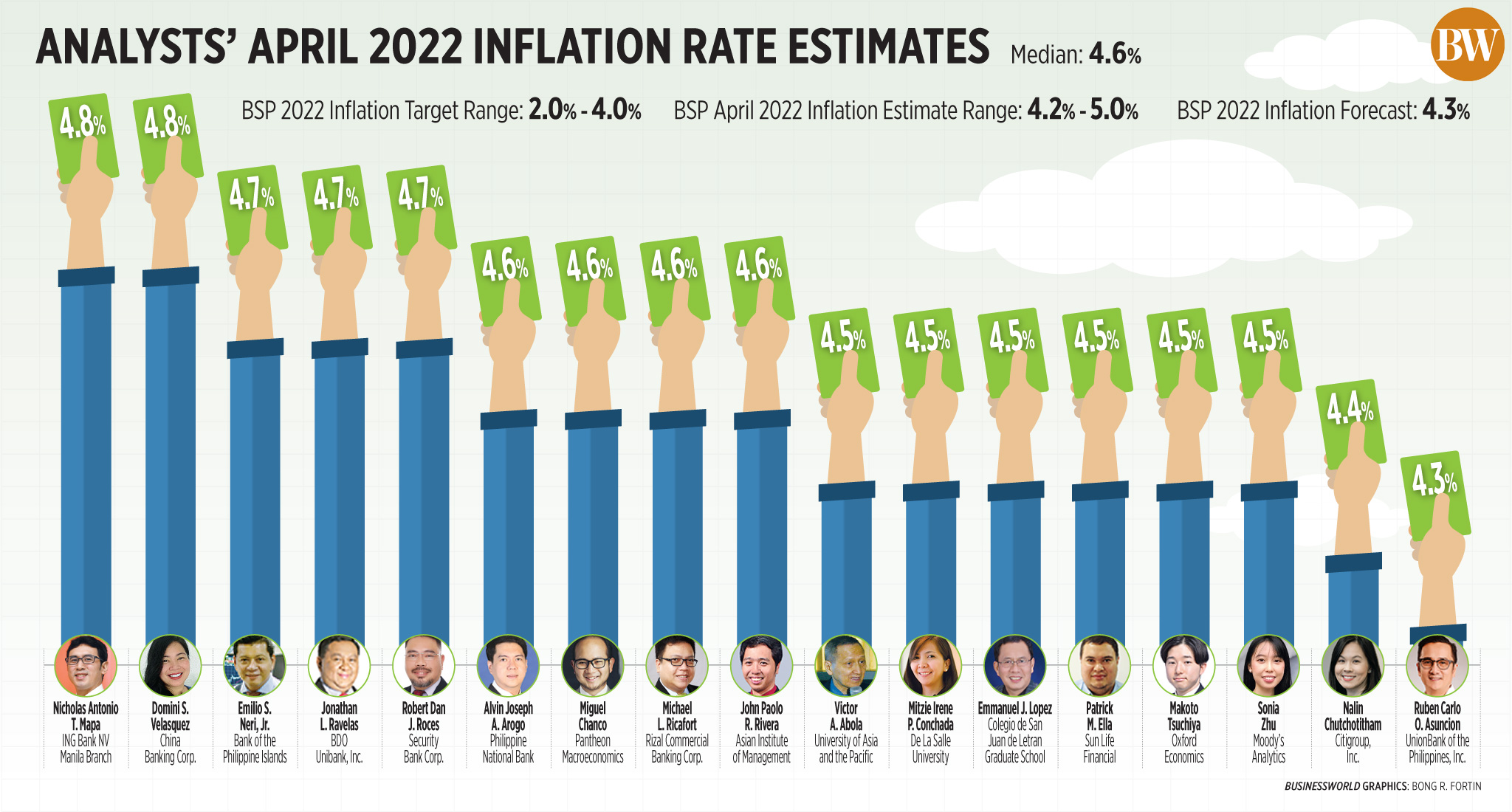
Analysts’ April 2022 inflation rate estimates

INFLATION likely accelerated beyond the central bank’s target in April, as food and oil prices continue to climb amid the ongoing Russia-Ukraine war and agricultural damage caused by Tropical Storm Agaton. Read the full story.

Analysts’ April 2022 inflation rate estimates

How PSEi member stocks performed — April 29, 2022

Here’s a quick glance at how PSEi stocks fared on Friday, April 29, 2022.


7,870 ride-share slots declared available for applicants — LTFRB

PHILSTAR FILE PHOTO

THE Land Transportation Franchising and Regulatory Board (LTFRB) has opened up the application process for 7,870 transport network vehicle services slots, citing the need to expand public transportation capacity.

In a statement over the weekend, the LTFRB said it released Board Resolution No. 065 Series of 2022, which set the quota at 7,870 units for accredited transport network companies (TNCs) seeking to expand their fleets.

Some 7,000 slots are up for grabs in the National Capital Region (NCR), 500 units in Region V (Bicol Region), 220 units in Region III (Central Luzon), and 150 units in Region VI (Western Visayas).

According to the LTFRB, the slots will be filled on a first-come, first-served basis.

Applicants will need to register to an online system before personally filing the application at the LTFRB. Application filing for slots outside of Metro Manila will be scheduled by the Regional Franchising and Regulatory Office.  

Required documentation includes four copies of the verified application form to be accessed at www.ltfrb.gov.ph; a photocopy of the official receipt and certificate of registration (if the vehicle is mortgage, only applicants with certificates of conformity will be considered); and proof of Filipino citizenship, such as a passport or birth certificate.

The formal offer of evidence is to be submitted five days before the scheduled hearing. Other documentary requirements include proof of existence of a garage; proof of financial capability; 5R photograph of each unit to be applied for; Department of Trade and Industry business name registration; Bureau of Internal Revenue Certificate of Registration to offer transport services or proof of filing; Certificate of accreditation with the accredited TNC; National Bureau of Investigation and police clearance of authorized driver; proof of publication; affidavit of publication; copies of publication; and affidavit of attestation. — Revin Mikhael D. Ochave

US healthcare outsourcer seen expanding PHL footprint

BW FILE PHOTO

THE Department of Trade and Industry (DTI) said it is currently facilitating the Philippine expansion of US healthcare information technology outsourcer Anthem, Inc.

In a statement on Sunday, the DTI said Trade Secretary Ramon M. Lopez met with Anthem Executives led by Rajat Puri, chief operating officer of the firm’s Diversified Business Group, and Stella Aquino, strategic operations head, to discuss the company’s expansion. 

According to the DTI, Anthem seeks to continue growing its operations and is also exploring opportunities in the pharmaceutical technology sector, adding that the company is narrowing its search down to Iloilo, which it considers to have a strong nursing talent base.  

“Infrastructure development in the countryside will mean better economic activities and more opportunities in other areas of the country,” Mr. Lopez said.

Anthem is one of the biggest health benefits firms in the US. Its operations in the Philippines began in November 2018 with its Global In-House Center project, which trades as Legato Health Technologies Philippines, Inc. The project took in investment of P950 million and employed 1,000 staff initially.

“Anthem has established offices in Bonifacio Global City and Iloilo and currently has grown its workforce to over 8,000 in just four years,” the DTI said.

Mr. Lopez said US investments in the Philippines are growing, particularly in green metals mineral processing, renewable energy storage systems, and digital infrastructure.

He added that the Philippines is seeking to attract foreign investors in light of the recent economic reforms, such as the amendments to the Public Service Act, Foreign Investment Act, and Retail Trade Liberalization Act.

“With the Duterte administration’s continued push for major economic reforms, supplemented by the country’s sound policies and systems in place, we are beginning to see increasing interest in many new sectors such as those related to telecommunications, broadband, interconnectivity, satellite services, and other digital infrastructure such as data centers for hyperscalers and the corresponding renewable energy projects that are expected to serve as the source of power for these projects,” Mr. Lopez said. — Revin Mikhael D. Ochave

GOCC subsidies in March rise 180% year on year

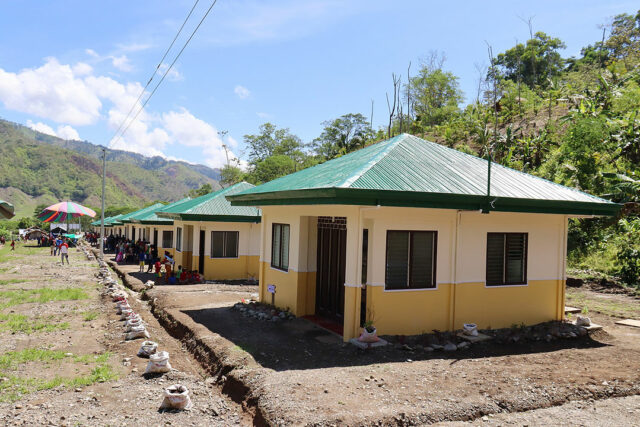
NHA

SUBSIDIES extended to government-owned and -controlled corporations (GOCCs) expanded by 180% year on year to P10.747 billion in March, the Bureau of the Treasury (BTr) said.

Data from the BTr showed that budgetary support to GOCCs also increased by nearly 89% from February, while the year-to-date total hit P19.304 billion.

Subsidies are granted to GOCCs to cover operational expenses not supported by their revenue.

The top beneficiaries were the National Housing Authority (NHA) and the National Irrigation Authority (NIA), receiving P2.979 billion and P2.566 billion respectively, both accounting for over half of the total subsidies. The NIA subsidy was nearly unchanged from the preceding month, when it received P2.570 billion.

Other top recipients were the Bases Conversion and Development Authority (BCDA) and the Philippine Fisheries Development Authority, receiving P2.170 billion and P828 million respectively.

The Small Business Corp. received P500 million, while the Philippine Crop Insurance Corp. received P299 million.

GOCCs that received more than P50 million were the Cultural Center of the Philippines, the National Dairy Authority, the National Kidney Transplant Institute, the Philippine Coconut Authority, the Philippine Children’s Medical Center, the Philippine Heart Center, the Sugar Regulatory Administration, and the Tourism Infrastructure and Enterprise Zone Authority. 

The Subic Bay Metropolitan Authority was the lone GOCC to not receive subsidies in March. It received P3 million in February.

Meanwhile, the year-to-date total subsidies from the government to GOCCs amounted to P19.304 billion, up 72% from a year earlier.

In the three months to March, the NIA received P7.698 billion, the most of any GOCC, followed by the NHA and BCDA at P3.194 billion and P2.170 billion respectively.

Government subsidies to GOCCs totaled P184.8 billion in 2021, with the Philippine Health Insurance Corp. receiving P80.9 billion, nearly 44% of the total. — Tobias Jared Tomas

Trade dep’t claims to hit recovery blueprint jobs target of 1 million

THE Department of Trade and Industry (DTI) said the 1-million-job target set by the National Employment Recovery Strategy (NERS) has been achieved.

“Based on the last report that I got, I know that we have reached already the 1-million-job (goal) that was set as the NERS target. Because in the last meeting, we were close to that. My recollection is about 980,000 jobs already created,” Trade Secretary Ramon M. Lopez said during the 2022 Task Group on Economic Recovery-NERS Labor Day Job Summit on Sunday.

“The bulk of which (was generated by) the construction and IT-BPM sectors and now the recovering tourism and the restaurant sectors as we reopening those particular industries,” he added.

According to Employers Confederation of the Philippines (ECOP) President Sergio Ortiz-Luis, Jr., the goal of one million jobs under the “Reform, Rebound, Recover: One Million Jobs for 2021” program was reached by the first quarter of this year.

“I am proud to report that through this program, over 600,000 jobs were provided by the end of 2021, and the goal of the 1 million jobs was reached by the 1st quarter of this year,” Mr. Ortiz-Luis said.

Labor Secretary Silvestre H. Bello III said the NERS task force has assisted many individuals and establishments since the NERS’s employment agenda was issued in June last year. 

“A year since we unveiled our eight-point employment agenda, we are very happy to report that our combined efforts in the NERS task force yielded assistance to more than 6.5 million individual beneficiaries, and more than 270,000 establishments in the form of employment facilitation, training, and livelihood, among others,” Mr. Bello said. 

Meanwhile, Mr. Ortiz-Luis said that ECOP, along with other private sector groups and member government agencies of the NERS task force, renewed their commitment to create more quality employment. 

He added that the project will now be called “Beyond One Million Jobs: Create. Sustain. Transform.”

The private sector groups involved in the project include the Philippine Chamber of Commerce and Industry, the Philippine Exporters Confederation, Inc., the Hotel and Restaurant Association of the Philippines, Philippine Constructors Association, Inc., Philippine Hotel Owners Association, Semiconductor and Electronics Industries in the Philippines Foundation, Inc., IT & Business Process Association of the Philippines, and the Philippine Association of Legitimate Service Contractors. Their government partners are the DTI, the Department of Labor and Employment, and Technical Education and Skills Development Authority.

NERS was created during the pandemic to help the labor market recover. — Revin Mikhael D. Ochave

Broader definition of economic sabotage seen deterring smuggling of farm goods

PHILSTAR

By Alyssa Nicole O. Tan

THE GOVERNMENT needs to lower the threshold for violations that constitute economic sabotage in order to more effectively deter the smuggling of agricultural produce, a party-list organization said.

“Reducing the (volume threshold) of smuggled agriculture products that constitute economic sabotage is one concrete remedy to address smuggling,” according to Anakpawis Party-list National President Ariel B. Casilao in a text message to BusinessWorld.

Republic Act 10845, which classifies large-scale smuggling of agricultural products as economic sabotage, allows no bail for the smuggling of produce in its their raw state as well as the smuggling of items that have undergone simple processing or preservation. The no-bail rule applies to shipments valued at P1 million for most farm items. For rice the threshold is P10 million.

“The threshold is too high,” Anakpawis Representative Rafael V. Mariano, the first Agrarian Reform Secretary of the Duterte administration, told BusinessWorld by phone.

He also called for penalties on any shipper that fails to show the appropriate documentation.

Mr. Casilao proposed that instead of P1 million worth of agricultural products, the threshold should be lowered to P100,000.

Instead of just possession, as stated in the law, warehousing or stockpiling of smuggled agricultural products should also be considered grounds for economic sabotage, he added.

“But more importantly, enforcing is a separate field to address in order to be effective in combating smuggling,” said the Anakpawis president, calling out the Department of Agriculture (DA) for failing to impose “stringent measures against big-time smugglers.”

The group cited the Senate’s investigation, which found that more than 20 major smuggling operations are currently active, allegedly backed by high-ranking government officials and politicians.

The DA, Mr. Mariano said, should be held accountable for “criminal neglect” in allegedly failing to curb the smuggling of agricultural products.

“Highland vegetable farmers are on the losing end courtesy of the entry of cheap smuggled vegetables from China into the wholesale local markets. These cheap and unsafe vegetables are both detrimental to our growers and consumers,” he said in an earlier statement.

Both smuggled and legally imported vegetables, he added, lower farmgate prices of domestic vegetables. For instance, carrots and cabbages being sold in Metro Manila at P85 and P115 per kilo have to compete with imports sold at P70 and P60 per kilo, respectively.

“When retail prices are depressed, so is the farmgate. Consequently, farmers are forced to dispose (of) their produce due to lack of post-harvest facilities that can store their products for long,” Mr. Mariano said. “Compared to imports, domestic vegetables have a limited and shorter shelf life.”

“The long shelf life of imported and smuggled carrots indicate that these have been treated with preservatives like formalin which can jeopardize the health of consumers,” he added.

Mr. Mariano said the proposed measure will require increased inter-agency cooperation.

The party-list also called for the government to withdraw from the Agreement on Agriculture under the World Trade Organization, as well as for Congress to repeal laws that allow full liberalization of the sector, including the Rice Tariffication Law and the Agriculture and Fisheries Modernization Act.

Managing the hybrid workforce

(Second of two parts)

A look into worker sentiment points to a general preference for an arrangement that involves flexibility in when and where employees perform their duties.

For one, the recent EY Future Consumer Index shows employees “losing interest in pre-pandemic work patterns,” a finding that reinforces those made in the EY 2021 Work Reimagined Employee Survey that showed the majority of surveyed employees in Southeast Asia preferred not to return to pre-COVID ways of working.

In the first part of this article, we looked at the rise of the hybrid workforce and tackled the challenges in managing the workplace. Now we will look at the challenges of keeping employee well-being at the forefront in the hybrid work environment.

Two years of remote work have given employees more choice over how they spend their time and how to be productive outside of the office. It has given them a better appreciation of how important the quality of their time is in comparison to how much they earn. They have found renewed enthusiasm for staying in and buying experiences rather than new material goods.

It’s a cultural shift that can have profound implications for corporate leaders. One area that will demand greater attention is managing the workforce and the company culture as organizations institutionalize hybrid work strategies. We look at a few key items critical to success in embracing the flexibility that most employees crave for after years of remote work.

THE RIGHT WORKFORCE STRATEGY
The level of uncertainty on how an organization’s “return-to-office” position unfolds post-pandemic can be as high as that felt in the first couple of weeks when the pandemic catapulted much of the country into lockdown in 2020. How organizations have remained productive throughout the last two years can fuel speculation among employees who favor continuing with telecommuting.

They certainly will look to the leadership team for a clear message on the workforce strategy that will be in force in our post-pandemic world. It may not suffice to simply confirm that an organization will embrace a hybrid workforce strategy. Corporate leaders will have to answer such questions as whether the organization is leaning towards a remote-first strategy or is it gravitating back to the traditional set-up with a little flexibility.

But how does the organization arrive at such a decision? Do we bring the employee along for the journey and listen to what they have to say? All this will depend on company culture. Once a strategy is chosen, the workforce approach can be documented properly so that the entire organization is prepared to support this decision.

Communicating this to the entire organization can help various teams decide on how they can best support and enforce the strategy. Will a playbook be necessary to manage the change over the next six to 12 months?

A clear workforce strategy and a communication plan can work favorably for employees. It tells them what the company wants and gives teams the chance to contribute to achieving goals with the end-view of maintaining the hybrid workplace.

SETTING MILESTONES
The last thing corporate leaders would want to be in is a situation that requires closer monitoring of employee activity. Will putting in place measures that allow management to do real-time tracking of employee activity run counter to the workforce strategy? Workers may look at closer monitoring as a sign of a lack of trust, and this may eventually adversely affect company culture and employee engagement and retention.

To choose a hybrid team as a workforce strategy moving forward may be taken to mean as accepting that productivity has not been compromised over the past two years, when the pandemic forced us into remote work. This is the message that workers will read from a workforce decision to go hybrid. It can reinforce their own argument that it is possible to keep productivity up even in the confines of their homes or other alternative work sites.

It pays to set milestones on productivity to help teams work in unison to continue to deserve the flexibility that they desire from hybrid work arrangements. Clear milestones make it easier for teams to figure out on their own how to achieve team goals even as they remain in the comfort of their homes for most of the work week.

It is advisable though for teams to have a set day of the week when they are compelled to be in the office for various reasons. It can create what many have referred to as moments of spontaneous exchange of ideas that lead to innovation, heightened productivity, or better ways of doing things in the organization. It can also provide an “anchor” for your people to feel connected to the organization and to each other. This is especially meaningful to possible new hires who were onboarded during the pandemic and who may not have yet had in-person interactions with other team members.

PROMOTING INCLUSIVE LEADERSHIP
Choosing which set of workers can be allowed to work from home and who remains on-site may not be as simple as identifying who faces clients and who works at a plant. Hybrid work models can be vulnerable to instances of resentment when disgruntled staff can feel left out of the perceived benefits of remote work, or conversely, remote employees may feel that those physically present in the office are more “favored” by the managers. It’s friction that, if left unresolved, may eventually create trouble within and among teams and stand in the way of productivity. However, building a company culture that fosters inclusion and a sense of belonging will help prevent this from happening.

With a remote workforce, an inclusive workplace culture becomes all the more important in keeping employees engaged. It all begins with a sense of belonging that can translate to employee satisfaction with work and productivity. In the traditional work arrangements, it is easier to cultivate that much-needed sense of community among team members. Remote work, however, can hinder interaction that is a building block to building belonging.

Leadership can play a vital role in this department to ensure that employee welfare programs adapt to these realities. The hybrid workplace also presents an opportunity to revisit programs on diversity, equity, and inclusion (DE&I), as this can contribute to successful recruitment and employee retention.

There can be many more challenges to learn along the way as most organizations take this route. Leaders’ responses can vary from one organization to another, but what matters is keeping morale and productivity high. In designing remote and hybrid work strategies, it is best for leaders to place employee well-being at the forefront and optimize available resources to support employees.

This article is for general information only and is not a substitute for professional advice where the facts and circumstances warrant. The views and opinions expressed above are those of the author and do not necessarily represent the views of SGV & Co.


Czarina R. Miranda is the People Advisory Services Leader of SGV & Co.

Luzon faces blackouts as exploration suspended

THE MAIN Philippine island of Luzon is at risk of experiencing massive blackouts in the near future after the government suspended oil exploration activities in the South China Sea on Chinese intimidation, a congressman said at the weekend.

With the Malampaya natural gas field, which supplies 20% of the country’s energy needs, expected to run dry and without fresh reserves from potential gas fields including the Sampaguita project in Reed Bank, Luzon’s power supply is threatened, Surigao del Sur Rep. Johnny T. Pimentel said in a statement.

“The rest of the country is also worried about the prospect of a Luzon power shortage” the chairman of the House of Representatives Strategic Intelligence Committee said. “We are anxious that if Luzon sneezes, Mindanao and the Visayas might catch a cold.”

Mr. Pimentel noted that the Sampaguita gas field has been dubbed as the next Malampaya because the undeveloped hydrocarbon field below the seabed is located 250 kilometers southwest of Malampaya.

“Sampaguita is estimated to contain anywhere from 3.5 to 4.6 trillion cubic feet (tcf) of gas. This is comparable to if not bigger than Malampaya’s 3.4 tcf of gas upon discovery,” he said.

The country may have to import liquefied natural gas if no alternative is found for Malampaya’s dwindling reserves, he added.

The Department of Energy (DoE) last month suspended oil exploration activities in the South China Sea, a month after President Rodrigo R. Duterte said he had received a warning from China after word spread that some companies had plans in the Reed Bank, locally known as Recto Bank.

Service Contracts (SC) 72 and 75 were put on hold. The Sampaguita gas field is within SC 72 or the Recto Bank basin concession.

The Security, Justice and Peace Coordinating Cluster has taking into account the political, diplomatic and national security implications of any activity in the South China Sea, DoE said.

The tough-talking leader said he was reminded by someone from China to honor their joint exploration agreement if the Philippines did not want to suffer the consequences.

“There’s no other way to put it,” Mr. Pimentel said. “Our energy security is being held hostage by China, even though the two petroleum service contracts cover areas well within our exclusive economic zone.”

The Chinese Embassy did not immediately reply to a Viber message seeking comment.

Under a 2016 United Nations-backed arbitral ruling, which China refuses to recognize, the Reed Bank is part of the Philippines’s exclusive economic zone and continental shelf.

PXP Energy Corp., the operator under SC 75, and its subsidiary Forum Energy Ltd., the operator under SC 72, has invoked a force majeure, canceling drilling activities in Sampaguita scheduled this year.

Before the latest force majeure, the DoE had given Forum until Oct. 16 to drill its two commitment wells in Sampaguita at a cost of $100 million (P5.2 billion).

Economic and maritime experts have warned that halting oil exploration activities in parts of the South China Sea claimed by the Philippines would push companies to rethink their investments in the area.

They issued the warning after the DoE ordered listed PXP Energy Corp. to put on hold its exploration activities in its service contracts until it gets a clearance from a Cabinet cluster overseeing diplomatic and national security concerns.

“Other service contractors have seen what happened to PXP, which already has a long-standing contract and the best prospects for development,” said Jay L. Batongbacal, a maritime expert from the University of the Philippines. “If despite that, the Philippines remains unwilling to commit to the contract, I expect those other contractors to start thinking twice.”

Mr. Batongbacal said potential investors in the country’s energy sector would probably reconsider offshore petroleum exploration and other related investments in the  South China Sea.

He said the Philippine government’s flip-flopping on the exploration project is a sign that it was highly favoring China’s demands.    

In 2020, the DoE, with Mr. Duterte’s approval, issued a resume-to-work notice to the service contractors conducting oil exploration in the areas of service contracts 59, 72 and 75.

Current and potential investors would look to the next administration for policy clarity on these questions because they can’t rely on tentative, shifting decisions on these concerns, said Terry L. Ridon, convenor of infrastructure and investment think tank InfraWatchPH. — Alyssa Nicole O. Tan

OCTA cites uptick in Metro Manila’s coronavirus cases

PHILIPPINE STAR/ VICTOR MARTIN

METRO Manila remains at low risk from the coronavirus despite an uptick in infections, according to the OCTA Research Group.

Coronavirus infections in Metro Manila increased by 7% from a week earlier, OCTA fellow Fredegusto P. David tweeted on Sunday.

“The National Capital Region (NCR) (experienced) an uptick in COVID-19 (coronavirus disease 2019) cases as new cases increased by 7%,” he said. 

Mr. David said the positivity rate in the region was 1.4%, while 21% of its healthcare system was used. “NCR was still at low risk as of April 30.”

Most areas in the Philippines will remain under Alert Level 1 on election day, May 9, as the government’s pandemic task force extended the alert until May 15. — Kyle Aristophere T. Atienza

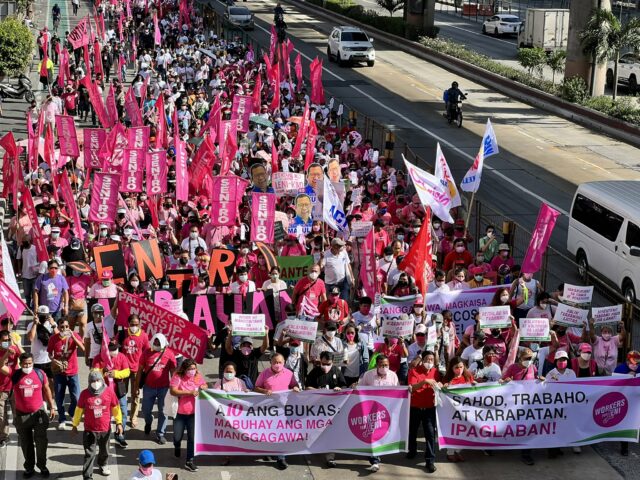
Workers march on Labor Day to back Leni’s presidency

Renato Reyes, Bagong Alyansa Makabayan

By Kyle Aristophere T. Atienza, Reporter

MEMBERS of Kilusang Mayo Uno (KMU), one of the largest and oldest militant labor groups in the Philippines, marched on major streets in the capital region on Sunday to protest President Rodrigo R. Duterte’s failed promise to end short-term employment contracts.

This was the first time KMU held a pink-themed march on Labor Day, which has been traditionally commemorated with large protests in front of the Philippine presidential palace.

KMU and other labor groups later gathered at an indoor arena near the capital Manila to express their support for the presidential run of Vice- President Maria Leonor “Leni”G. Robredo.

“Duterte promised to end contractualization but nothing happened,” said Jan Robert R. Go, an assistant political science professor at the University of the Philippines (UP), adding that politicians have exploited labor reform promises.

“This is something we should look out for,” he said in a Facebook Messenger chat. “Politicians are still trapped within the donor-centered campaign. They need to ensure they balance their support for labor with their support for large industries and big corporations.”

KMU earlier lauded Ms. Robredo’s commitment to review minimum wages nationwide and end labor contractualization.

“Labor leaders and groups, especially the progressive ones, tend to support or work with candidates who are sympathetic to their cause,” said Arjan P. Aguirre, a political science instructor at the Ateneo De Manila University.

“They know how to spot a candidate who is merely campaigning, and a candidate who is willing to work with them.”

Mr. Go said some politicians have been giving generic promises such as higher wages and livelihood for all without saying how they plan to do these.

“Experience is important in dealing with labor,” he said. “How can a person detached from the realities of the working class consider their welfare?”

Maria Ela L. Atienza, who also teaches political science at UP, said the next government should include concerns about short-term employment, labor rights and welfare, and pandemic recovery in the government’s agenda for workers.

She added that among presidential candidates, only Ms. Robredo and labor leader Leodegario “Ka Leody” de Guzman have laid out clear programs for the labor sector, which has been severely affected by the coronavirus pandemic.

Ms. Robredo has vowed to pursue a P192-billion plan to strengthen local industries, generate jobs for Filipinos, and support businesses if elected on May 9.

Her job recovery plan involves strengthening local industries, ending discrimination at work, supporting small businesses and providing safety nets for those who lose their jobs.

Ms. Atienza said Mr. de Guzman, who has a rich experience in labor organizing, and Ms. Robredo are the only candidates who “have a better grasp of workers’ issues and needs.”

She cited Ms. Robredo’s immersion with various sectors before becoming an elected official and poverty alleviation program during her vice-presidency, which allowed her to work with more sectors, including workers.

The pandemic wiped out 1.7 million wage and salary jobs in the 12 months to Jan. 2021, according to a report by the Asian Development Bank (ADB).

“The pandemic could create long-lasting effects on employment,” ADB said, noting that there would be more jobseekers, including people who lost their jobs, school dropouts and new labor market entrants. “This temporary large shock to the economy might produce a persistently lower employment rate even after the economy has started to grow again.”

Sonny A. Africa, executive director of think tank Ibon Foundation, said Mr. Duterte had “given the least wage hikes” among presidents after the ouster of the late dictator Ferdinand E. Marcos.

“Without a large wage hike in his twilight weeks, his administration will be the only one in the post-Marcos era which will see the value of the real wage decline — for instance, by nearly 10% in the case of Metro Manila,” he said in a Messenger chat.

Mr. Africa noted that Senator and boxing champ Emmanuel “Manny” D. Pacquiao, another presidential candidate, had consulted with labor groups to improve his labor agenda. “But he’s still developing the ideological framework to put this in a coherent platform.”

The analysts said the late dictator’s son Ferdinand “Bongbong”R. Marcos, Jr. might not inspire confidence in the pandemic-hit sector.

“If he wins, he’s unlikely to consider labor rights, welfare and issues as important,” Ms. Atienza said. “Labor will not be a priority.”

Mr. Marcos’s spokesman, Victor D. Rodriguez, did not immediately reply to a text message seeking comment.

“Marcos, Jr.’s lack of experience and familiarity toward labor might spell trouble to the kind of response and attention that his likely presidency would give to the labor sector,” Mr. Aguirre said.

“In fact, his current labor agenda that promises security of tenure lacks depth and details,” he said. “These promises seem to embody the same messaging and framing that has been used in the past.”

Anthony Lawrence A. Borja, a member of De La Salle University’s Department of Political Science and Development Studies, said the former senator’s lack of on-the-ground experience “would make him less sensitive to the everyday struggles of workers.”

“However, his ties to labor unions might compensate for this if he is capable of listening and responding to the representatives of these unions,” he said.

The Trade Union Congress of the Philippines is backing the candidacy of Mr. Marcos.

Mr. Africa said that Mr. Marcos’ political career is “remarkably devoid of any concern for labor.”

“Only Robredo and de Guzman have taken real efforts to consult organized constituencies for labor and social reforms,” he said. “This is reflected in their platforms which are the only ones that give more than token mention and lip service.”


Hontiveros pushes for speedy review of minimum wage hike petitions 

A cyclist passes by at street level as workers install a drainage system in Marikina in this June 2021 photo. — PHILSTAR/ MICHAEL VARCAS 

A SENATOR on Sunday, the observance of Labor Day, pushed for the speedy review of petitions to raise regional minimum wage rates amid the rising cost of living in the past three years due mainly to fuel price surges and disruptions in food supply movement.   

The Department of Labor and Employment (DoLE) had announced in March that it will consider the petitions filed yet nothing has changed since then, said Senator Ana Theresia RisaN. Hontiveros-Baraquel, who is running for reelection on May 9. 

Currently, the minimum wage in the capital region is P537 per day, already the highest among 17 regions in the country.   

Whats taking so long? Any delay in issuing the decision on minimum wage can cause hunger or loss of hope for workers seeking to rise above their numerous dues,she said in a mix of English and Filipino in a statement.  

The take-home pay of minimum wage earners has long been overtaken by the rising cost of food, transportation, public utilities, among other basic essentials, she added.  

The Trade Union Congress of the Philippines (TUCP), the countrys largest group of labor federations, had filed wage hike petitions in the National Capital Region and several other regions.   

They noted that in Metro Manila, the current monthly minimum wage of P13,962 is far belowthe P16,625.00 a month poverty threshold for a family of five.  

Citing a study from the Ateneo Policy Center, the group said that daily food requirement amounts to P734 for a family of four.  

Ms. Hontiveros also called out the labor department for its inability to enforce minimum wage mandates efficiently, citing the 2018 Labor Force survey which showed that one of four employed workers received less than the minimum wage.  

DOLE should report on the process of enforcing the implementation of past minimum wages,she said.  

Meanwhile, Senator Sherwin T. Gatchalian, who is also seeking reelection, vowed to pursue measures that will institutionalize tax cuts for work-from-home employees, additional benefits to construction workers, and condoning penalties for unpaid Social Security System (SSS) contributions of household employers.  

These will help alleviate the financial concerns of workers, he said, especially for daily wage earners.   

Mr. Gatchalian cited three bills currently pending in the Senate committee which he aims to refile and push for if he wins another term.  

These are: Senate Bill (SB) 1706 or the Tax Incentives for Individuals on a Work-from-home or Telecommuting Program, which he co-authored, proposes a reduction of P25 from the taxable income for every hour of work of telecommuting employees; SB 741 or the Construction Workers Insurance Act; and SB 744 or the Domestic Workers Act that includes a provision on the condonation of penalties for unpaid SSS contributions of household employers.   

“The fundamental precept of social justice is that ‘those who have less in life must have more in law,Mr. Gatchalian said.  

If we can extend the benefits of workers, we can raise their standard of living,he added. Alyssa Nicole O. Tan