DAVOS, Switzerland — Financial firms already struggling with climate-compliance due to unclear measurement metrics will soon face new disclosure requirements for biodiversity, or nature-related, investments.
“Nature is a financial risk for business,” Elizabeth Mrema, co-chair of the Taskforce on Nature-related Financial Disclosures (TNFD), told the Reuters Global Markets Forum, adding that $10 trillion is accrued every year from nature.
The TNFD working group is putting together metrics to measure biodiversity targets in consultation with industry and financial institutions. Its post-2020 Biodiversity Framework is expected to be adopted later this year.
“It’s about accountability. You cannot improve what you cannot measure. What gets measured gets done. We need that robust measurement system,” said Daniel Stander, deputy chair of the Resilient Cities Network.
The framework will ask financial institutions and corporate bodies to shift their financial flows from nature-negative to nature-positive outcomes.
Another metric will ask the private sector to repurpose and redirect harmful subsidies, worth over $500 billion a year.
“Biodiversity is getting higher on the agenda,” said David Knibbe, CEO of Dutch insurer NN Group NV, which has 200 billion euros ($214 billion) in assets under management and is active in sustainable finance.
“If we get biodiversity problems, let’s say the ecosystem is being disturbed, that could lead to food shortages and instability,” Mr. Knibbe said, adding that NN plans to engage with companies so that the insurer can track their progress.
“The good news is quite a few of the biodiversity projects go hand-in-hand with the climate projects,” Mr. Knibbe said. — Reuters
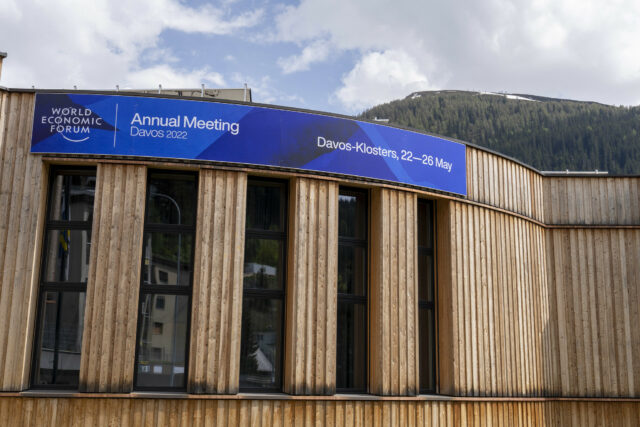
DAVOS, Switzerland — Cryptocurrency firms, many of which lined the main street in Davos this week, were told they will need to clean up their act before gaining complete acceptance from the World Economic Forum’s old guard.
“The future of crypto, I’m sorry to say, looks regulated to me,” said Nela Richardson, senior vice president and chief economist for human resources software provider ADP. She said she thinks central banks will step in to provide oversight.
Blockchain and crypto firms blitzed Davos with parties, briefings and panels on the sidelines of the main conference, with the hope of gaining credibility and inking deals with companies ranging from Tyson Foods Inc. to Salesforce.com Inc also perched on the main street.
Some of the events outside the security cordon of the main event featured speakers from traditional financial institutions, including Perella Weinberg Partners and State Street.
But, inside the gates, there was a cry for regulation and concerns about risks from the sector, including about it being used illegally by sanctioned Russians.
“Crypto currencies have received a big push from (Russian) sanctions,” Saudi finance minister Mohammed al-Jadaan said. “And I’m worried because it could be used for illicit activities.”
David Rubenstein, co-founder and co-chairman of US buyout firm Carlyle, shared his concerns.
“A lot of wealthy people who want to hide their assets after the Russian situation will say I will put 5% to 10% in some basket of cryptocurrencies,” he said.
“The government won’t know what I have, they can’t get it and I can always get access to it.”
CRASHING INTO THE FUTURE
The roles of regulators, authenticators and custodians have come into sharp focus in Davos, which began after a crypto crash that saw digital assets lose some $800 billion in market value and one of the top ten digital coins become worthless.
“It’s still early days (for crypto) in terms of an investment class,” Ling Hai, co-president for international markets at Mastercard, told the Reuters Global Markets Forum (GMF). “It needs to be sanctioned and regulated by the central bank and government. It has monetary implications. Value needs to be stable.”
However, crypto and financial executives on the sidelines said the rout would strengthen the industry because strong technology and coins would survive it.
“There’s been a lot of volatility but the reality is it’s here to stay,” said Justin Fogerty, managing director and founder at financial consultancy Pivotas AG. “I think what’s happened with the volatility, (it) has actually taken a lot of speculators and gamblers out of the market.”
Cryptocurrency firms have also attracted new interest at Davos, especially from locations looking for investment.
Vit Jedlick, the President of Liberland, a micronation claiming disputed land between Serbia and Croatia, attended an event for Polkadot in the hope of starting a stronger partnership with the blockchain technology.
The Indian delegation to Davos, which included six state governments, was housed in pavilions surrounded by blockchain and crypto houses, and has been meeting many of them to attract investment, particularly in education and training.
“When you map out where the next generations of developers are and where is the talent and where actually should we go, India pops up very, very high on the map,” Marieke Flament, CEO at NEAR Foundation, which backs blockchain projects, told GMF.
Miami Mayor Francis Suarez, in the spotlight over the crash of the city’s MiamiCoin, said he was working with the operators to fix glitches.
“I still am taking my salary in bitcoin,” Mr. Suarez told a WEF panel. “I will note for the record it’s not my only salary.” — Reuters
The National Telecommunications Commission (NTC) announced on Friday that it recently approved Starlink Internet Services Philippines, Inc.’s registration as a value-added service (VAS) provider, allowing it to directly access satellite systems, build and operate broadband facilities to offer internet services in the country.
Starlink, a satellite internet constellation operated by billionaire Elon Musk’s Space Exploration Technologies Corp. (SpaceX), will offer “high speed low latency satellite internet service with download speed between 100Mbps to 200Mbps” to Filipinos, the NTC said in a statement.
The NTC approved Starlink Internet Services Philippines’ VAS registration on May 26, according to a copy of the certificate of registration provided by the agency.
The company’s certificate of registration is valid until April 14, 2023.
“We would like to thank the NTC for issuing Starlink’s VAS license 30 minutes after we submitted our application with complete requirements. This shows the government’s seriousness in addressing the connectivity needs of our countrymen in unserved and underserved areas. This will also prepare us in the event of natural disasters and calamities,” Bien Marquez of Quisumbing Torres, SpaceX’s counsel, was quoted as saying in the NTC’s news release.
NTC Commissioner Gamaliel A. Cordoba said the agency is “steadfast in helping ensure that roll-out of Starlink’s internet access services will be done expeditiously and professionally.”
According to the agency, the Philippines will be the first country in Southeast Asia to offer Starlink services.
“Starlink is expected to cover villages in urban and suburban areas and rural areas that remain unserved or underserved with internet access services. The service is expected to bring cost effective internet access in these areas,” it said. — Arjay L. Balinbin
More foreign capital entered the country in April reflecting improved economic conditions as pandemic restrictions further eased.
Data from the Bangko Sentral ng Pilipinas (BSP) showed foreign portfolio investments (FPI) or “hot money,” yielded a net inflow of $1.36 billion in April, a reversal from the $373.95 million net outflow seen in April 2021.
This was also a turnaround from the $305.08 million in net outflow recorded in March.
The net inflow of foreign portfolio investments reflected improving pandemic conditions and pandemic management relative to other economies, Asian Institute of Management economist John Paolo R. Rivera said in a Viber message.
In the first three months of the year, the Philippine economy expanded by a better-than-expected 8.3% growth, surpassing the pre-pandemic output level amid the easing of coronavirus disease 2019 (COVID-19) curbs.
Metro Manila and other parts of the country were put under tighter restrictions in January to contain an Omicron-driven surge in COVID-19 infections. This was downgraded to the most lenient alert level in March that allowed businesses to operate at full capacity.
Mr. Rivera also mentioned that the response of the Philippine economy to stimulus from abroad such as the US Federal Reserve’s policy direction in the country affected investor confidence.
“Market sentiment also supported by generally better local economic data recently as bright spots for the economy,” said Rizal Commercial Banking Corp. Chief Economist Michael L. Ricafort in an e-mail.
BSP data showed gross inflows of hot money climbed by 70.1% to $2.18 billion from the $651.16 million a year prior.
The top five investor countries during the month included Singapore, the United Kingdom, the United States, Hong Kong, and Luxembourg which accounted for 94.3% of foreign portfolio investment inflow.
Majority of investments went to securities of electricity, energy, power and water; banks; holding firms; property; and transportation services. The rest were invested in peso government securities.
Meanwhile, gross outflows for the month decreased to $823 million from $1.025 billion a year ago.
In the first four months of the year, the BSP-registered FPIs yielded net inflows rose to $1.34 billion, a reversal from the $857.44 million net outflows in the same period last year.
For the coming months, foreign investments are expected to come in as the next government assembles its economic team, Mr. Rivera said.
“So far, the incoming Marcos administration is getting this right,” he added.
International developments will likely continue to cause worry among foreign investors, Mr. Ricafort said.
“More aggressive Fed rate hikes, lingering Russia-Ukraine conflict for more than three months already, some lockdowns in China could be external headwinds to the recovery in the local economy and financial markets,” he added.
The central bank expects hot money to yield a net inflow of $4 billion in 2022. — Keisha B. Ta-asan
The National Government’s (NG) budget gap swung to a surplus in April as revenue collection grew by double digits, while spending inched up by single digits, the Bureau of Treasury (BTr) reported on Friday.
Data from the BTr showed the Philippines’ budget recorded a surplus of P4.9 billion in April. This was a reversal from the P44.4 billion deficit posted a year earlier.
The last time the government recorded a budget surplus was in June 2020, with P1.8 billion.
Month on month, the fiscal balance reversed from the P187.67 billion deficit in March.
State revenue collections for the month hit P348 billion, climbing by 19.19% year on year from P56 billion, as the BTR reported that all government collecting agencies saw positive results.
Tax revenues grew by 12.95% to P306.9 billion, while nontax revenues soared by 103.12% from a year ago.
The Bureau of Internal Revenue (BIR) collected P239.6 billion, inching up by 9.39% year on year, which takes into account P413 million in tax refunds.
The deadline for filing for income tax returns was on April 18.
The Bureau of Customs (BoC) collected P65.7 billion, an increase of over 26%. BTr attributed this to “improved valuation, intensified enforcement against illegal operations, and the improved compliance by traders to customs laws.”
The BTr saw revenues surge by 184.14% to P25.7 billion from P9 billion from the previous year, more than doubling the amount. Higher collections were due to higher dividend remittances, income from its Bond Sinking Fund investments, and the NG’s share from the Philippine Amusement and Gaming Corp.’s income.
Meanwhile, government spending inched up by 1.98% year on year to P343 billion.
Primary expenditures, or spending net of interest payments, declined by 2.18% year on year to P305.7 billion from P312.5 billion. However, last year’s primary expenditures excludes a one-time financial assistance by the NG provided to local government units (LGUs) that were under enhanced community and the timing of subsidy releases given to government-owned and controlled corporations.
Lastly, interest payments jumped by 56.61% to P37.3 billion.
Year to date, the government still rests at a budget deficit of P311.9 billion, narrowing by 14.75% from the P365.9 billion gap seen from the same period last year.
The period of January to April saw revenues improve by 14.56% year on year to P1.13 trillion from P988.4 billion.
Broken down, tax collections in this period saw an increase of 12.14%, with the BIR and BoC collections rising by 7.79% and 26.50% to P742.4 billion and P254.2 billion respectively.
Non-tax revenues also saw a growth of P37.94%, to P128.2 billion, as BTr collections surged by 53.85% to P74.4 billion, while revenues from other offices made up the remainder.
Rizal Commercial Banking Corp. Chief Economist Michael L. Ricafort said in a Viber message that the surplus in April was a seasonal increase due to the government’s revenue collections for that month, a “consistent pattern seen in recent years.”
“Furthermore, the 45-day election ban on some public works [and] other government spending since March 25, 2022, could have also led to the unusual reduction in government expenditures that partly contributed to the budget surplus in April 2022,” he added.
ING Bank N.V. Manila Senior Economist Nicholas Antonio T. Mapa likewise attributed the surplus to the ban on public works during the election period.
“We expect the budget to revert to deficits in the near term as spending is allowed to resume,” Mr. Mapa said in an e-mail. “In the coming months, revenue collection will be key to ensuring deficits are contained in an effort to limit the impact on the overall debt levels.”
UnionBank of the Philippines, Inc. Chief Economist Ruben Carlo O. Asuncion said in an e-mail that the surplus was good news for the incoming administration, which is inheriting record-high debt.
“Anything positive that may contribute to its plans of fiscal consolidation is most certainly appreciated,” he said.
The government has set a budget deficit ceiling of P1.65 trillion for 2022 equivalent to 7.7% of gross domestic product. — Tobias Jared Tomas
DAVOS, Switzerland — World leaders, financiers and chief executives said they were leaving this week’s World Economic Forum (WEF) with an urgent sense of the need to reboot and redefine “globalization.”
The framework of open markets that has shaped the last three decades of commerce and geopolitics looks increasingly wobbly as trade spats fan economic nationalism, a pandemic exposes the fragility of global supply networks, and a war in Europe could reshape the geopolitical landscape.
Worry over signs of this breaking down were palpable at this week’s reboot of the WEF, an annual gathering of the world’s well-heeled, most of whom have championed globalization.
International Monetary Fund Managing Director Kristalina Georgieva summed up the mood of the event.
Ms. Georgieva said she fears the risk of a world recession less than “the risk that we are going to walk into a world with more fragmentation, with trade blocs and currency blocs, separating what was up to now still an integrated world economy.”
“The trend of fragmentation is strong,” she added.
Corporate executives in Davos were among the loudest in decrying signs of a world reverting to blocs defined by political alliance rather than by economic cooperation.
“We cannot let globalization reverse,” said Jim Hagemann Snabe, chairman of German industrial powerhouse Siemens AG . “I will not leave Davos with that thought. I will leave with the thought that we will need more collaboration.”
Volkswagen (VW) CEO Herbert Diess said he was concerned by the discussions of new bloc building as the German carmaker ramps up production in the United States.
“Europe and Germany depend on open markets. We would always try to keep the world open,” he said at a briefing on the sidelines of summit.
Officials clutched at new euphemisms for describing a new style of globalization, with “multilateralism” a favorite among buzzwords including “reshoring,” “friendshoring”, “self-sufficiency,” and “resilience.”
“Multilateralism works!” said German Chancellor Olaf Scholz: “It is also a prerequisite for stopping the deglobalization that we are experiencing.”
PARTY’S OVER?
Not all are unhappy with how globalization has frayed since the last time officials and executives gathered in January 2020, just before the coronavirus pandemic took off.
“Brazil’s out of sync with the rest of the world,” Brazil Economy Minister Paulo Guedes said. “We stayed out of the party. There was a 30-year party of globalization. Everyone took advantage. Everyone integrated the value chain. We were cursed because we were out of this thing. Now, we’re blessed.”
Global trade accelerated from the 1990s onward as governments struck regional pacts that lowered tariffs and then as China emerged as the dominant low-cost goods producer.
Together they enabled wide-spread adoption of just-in-time supply networks that helped speed the delivery of goods and hold down costs, contributing to the low-inflation environment that prevailed in the years before the pandemic.
It also fueled a loss of manufacturing jobs in developed economies like the United States and Europe, a trend Guedes derided as a “global labor arbitrage” he sees coming to an end.
Even before coronavirus disease 2019 (COVID-19) upended those supply networks, the system had come under fire from economic nationalist policies like those championed under former US President Donald Trump. The war in Ukraine has only fanned talk of a breakdown.
Yet for all the chatter about “deglobalization,” there is little evidence so far of countries distancing themselves from one another through trade, with the notable exception of Russia after a host of sanctions and trade restrictions.
A global index of world trade volumes from the CPB Netherlands Bureau for Economic Policy Analysis declined by 0.2% in March but is off by only 1% from its record high in December. It remains 2.5% higher than a year earlier and 11% above its pre-pandemic level.
Still, it could emerge in the near future as companies shift some production closer to target markets to guard against single-source dependency in their supply chain.
SELF SUFFICIENCY
VW’s Mr. Diess said that the shift to self-sufficiency because of global supply chain disruptions should be tempered by concern for keeping markets open — even for his own company.
“This way now of nations or big blocs becoming too self-sufficient there really is a big risk of an ever closing world. And less competitiveness. So we are really looking and hoping for open markets, which are just much better for the world.”
Global supply chain dependencies may be seen as a problem now, but they also “help people talk to each other,” he said.
Siemens’ Mr. Snabe said it was relatively easy for many companies to withdraw from Russia after its invasion of Ukraine because for most their exposure was relatively small.
“Well, what if this was China? Completely different situation, completely different dependency,” Mr. Snabe said.
“In many ways the situation in Russia and in Ukraine for me is a wake-up call … and hopefully it’s a wake-up call to collaborate more.” — Reuters
Notice is hereby given that the Annual Stockholders Meeting will be held on Thursday, June 30, 2022 at 8:30 in the morning.
The agenda for the said meeting shall be as follows:
Call to Order
Secretary’s Proof of Due Notice of the Meeting and Determination of Quorum
Approval of the Minutes of the Stockholders’ Meeting held on June 30, 2021
Management’s Report
Ratification of Acts of the Board of Directors and Management During the Previous Year
Election of Directors (including Independent Directors)
Appointment of External Auditor
Approval of the Amendment of the Company’s Articles of Incorporation
Other Matters
Adjournment
A brief explanation of the agenda item which requires stockholders’ approval is provided herein. The Information Statement, Management Report, SEC Form 17A will be uploaded to the Company’s Website at https://www.centurypacific.com.ph/ and PSE EDGE under Century Pacific Food, Inc. Company Disclosures.
In light of current conditions and in support of the efforts to contain the outbreak of COVID-19, stockholders may attend the meeting and vote via remote communication only.
Stockholders should pre-register at this link:
https://www.centurypacific.com.ph/investor/register from May 31, 2022 to June 05, 2022.
Upon registration, Stockholders shall be asked to provide the information and upload the documents listed below (the file size should be no larger than 5MB):
A. For individual Stockholders:
Email address
First and Last Name
Birthdate
Address
Mobile Number
Phone Number
Stock Certificate Number and number of stocks held
Current photograph of the Stockholder, with the face fully visible
Valid government-issued ID
For Stockholders with joint accounts: A scanned copy of an authorization letter signed by all Stockholders, identifying who among them is authorized to cast the vote for the account, as well as valid government-issued ID of the authorizing stockholders
B. For corporate/organizational Stockholders:
Email address
First and Last Name of stockholder
Address
Mobile Number
Phone Number
Current photograph of the individual authorized to cast the vote for the account (the “Authorized Voter”)
Valid government-issued ID of the Authorized Voter
A scanned copy of the Secretary’s Certificate or other valid authorization in favor of the Authorized Voter
All registrations shall be validated by the Corporate Secretary in coordination with the Stock Agent. Successful registrants will receive an electronic invitation via email with a complete guide on how to join the meeting and how to cast votes.
Only stockholders of record as of the close of business on May 16, 2022 are entitled to notice and to vote at the meeting.
MANUEL GONZALEZ Corporate Secretary
Spotlight is BusinessWorld’s sponsored section that allows advertisers to amplify their brand and connect with BusinessWorld’s audience by enabling them to publish their stories directly on the BusinessWorld Web site. For more information, send an email to online@bworldonline.com.
BANGKO SENTRAL NG PILIPINAS GOVERNOR BENJAMIN E. DIOKNO — PHILIPPINE STAR/ GEREMY PINTOLO
Central bank Governor Benjamin E. Diokno talks during an economic briefing in Pasay City, April 5. — PHILIPPINE STAR/ GEREMY PINTOLO
PRESIDENT-ELECT Ferdinand “Bongbong” R. Marcos, Jr. on Thursday announced he is tapping Bangko Sentral ng Pilipinas (BSP) Governor Benjamin E. Diokno to be his Finance secretary when he assumes office on July 1.
In a televised briefing, Mr. Marcos said Mr. Diokno will be replaced by Monetary Board member Felipe M. Medalla as governor of the BSP. Mr. Medalla will serve the rest of Mr. Diokno’s unexpired term that is scheduled to end in July 2023.
“The first priority is always going to be the economy. That’s why we have been very careful in choosing the economic team. It’s still down to jobs, the increasing prices of commodities, some relief for the business community. We have to streamline the operations of government,” Mr. Marcos said.
Mr. Diokno, who served as Budget secretary from 2016 to 2019, on Thursday said he will continue the macro and fiscal policies that have helped the Philippine economy recover from the pandemic.
“As Finance Secretary, I will strive to continue prudently and carefully balancing the need to support economic growth, on one hand, and to maintain fiscal discipline, on the other,” he said.
Mr. Diokno and Mr. Medalla were both part of President Joseph E. Estrada’s Cabinet. Mr. Diokno was also Budget secretary, while Mr. Medalla was the Socioeconomic Planning secretary and National Economic and Development Authority director-general.
They join incoming Socioeconomic Planning chief Arsenio M. Balisacan in the Marcos administration’s economic team.
Mr. Marcos also named former University of the Philippines President Alfredo E. Pascual as the head of the Department of Trade and Industry (DTI), and SMC Tollways President and Chief Executive Officer Manuel M. Bonoan as the head of the Department of Public Works and Highways (DPWH).
“He has spent almost his entire professional life in the DPWH,” the president-elect said. “I know him very well so I think he will do a good job.”
Mr. Bonoan served as DPWH undersecretary for operations in the Visayas and Mindanao in 1998.
Mr. Marcos has vowed to continue President Rodrigo R. Duterte’s aggressive infrastructure program to drive economic growth.
VOTE OF CONFIDENCE Mr. Marcos’ move to appoint familiar names to his Cabinet was largely welcomed by the markets, business groups and economists. The Philippine Stock Exchange index (PSEi) closed 0.72% up.
Philippine Chamber of Commerce and Industry President George T. Barcelon said the appointment of these “seasoned and competent economic leaders” would boost the confidence of local and foreign businesses.
“We believe they would do good in managing our fiscal affairs. As you know, we are faced with critical issues such as the huge debt deficit, and the need for post pandemic reforms and programs to sustain recovery, among others,” Mr. Barcelon said in a statement.
Rizal Commercial Banking Corp. Chief Economist Michael L. Ricafort in a Viber message said the appointees’ “wealth of experience” would be an advantage for the incoming administration’s economic team.
“The appointments will help ensure greater stability, order, and predictability on the local economy and financial markets. These appointments also help provide a more conducive environment for business and investment activities,” he said.
In an e-mail, Pantheon Chief Emerging Asia Economist Miguel Chanco said it may be “a bit of gamble” to move Mr. Diokno from the BSP at a time of rising inflation and policy normalization.
“(Mr. Diokno will) definitely bring some welcome credibility in the post of Finance Secretary, which is much-needed given the Philippines’ huge budget blowout over the past two years and the urgency to consolidate the country’s finances as soon as possible,” he said.
The BSP earlier this month raised interest rates for the first time since 2018, as it sought to curb intensifying inflationary pressure. Inflation surged to a three-year high of 4.9% in April due to the spike in oil and food prices.
The appointments signal a continuity in economic policy, Leonardo A. Lanzona, who teaches economics at the Ateneo de Manila University said in a Messenger chat.
“What we need to do is to address the structural weaknesses that were exposed by the pandemic. What we will see may mostly be a combination of monetary and fiscal policies intended to pay debts and minimize inflation. This will not be enough to produce growth,” he said.
ING Bank N.V. Manila Senior Economist Nicholas Antonio T. Mapa said Messrs. Diokno and Medalla are “well aware of the challenges that the country faces, including high debt levels, accelerating inflation and rising borrowing costs.”
“Next question is who will replace Medalla next year as BSP governor for a full six-year term,” he said via e-mail.
TAX RELIEF Meanwhile, Mr. Marcos said an economic recovery plan should be put in place before considering the fiscal consolidation plan of the outgoing Finance Secretary Carlos G. Dominguez III.
“We have to have an economic recovery plan (first) and fiscal policy will follow,” he said.
The Finance department on Wednesday presented a fiscal consolidation plan for the next administration, which includes imposing new taxes and deferring personal income tax reductions in order to generate more revenues to pay off the country’s ballooning debt. As of end-March, National Government debt stood at a record P12.68 trillion.
Mr. Marcos said they are considering tax relief for sectors most affected by the pandemic such as micro, small and medium enterprises (MSME) and the agriculture sector.
“For MSMEs, we can reduce (tax), give tax holiday, tax amnesty, we’re studying it right now, microfinancing. We want them to come back… We want to reduce as much of the tax collections from those who are suffering from the pandemic, MSMEs, agri sector, transport,” he said.
Mr. Marcos was also cool to the proposal to immediately suspend the excise tax on fuel products, as the government would need funds for its projects. Instead, he said he is considering subsidy programs for the transport sector.
“In terms of oil excise tax, I think we still have to look at that very well. We can support those areas hit by rising oil prices — number one there was transport,” he said.
President Rodrigo R. Duterte’s administration rejected calls to suspend the excise tax on fuel, saying it could reduce government revenues by billions. Instead, cash subsidies were given to the transport and agriculture sector. — Kyle Aristophere T. Atienzawith inputs fromTobias Jared Tomas
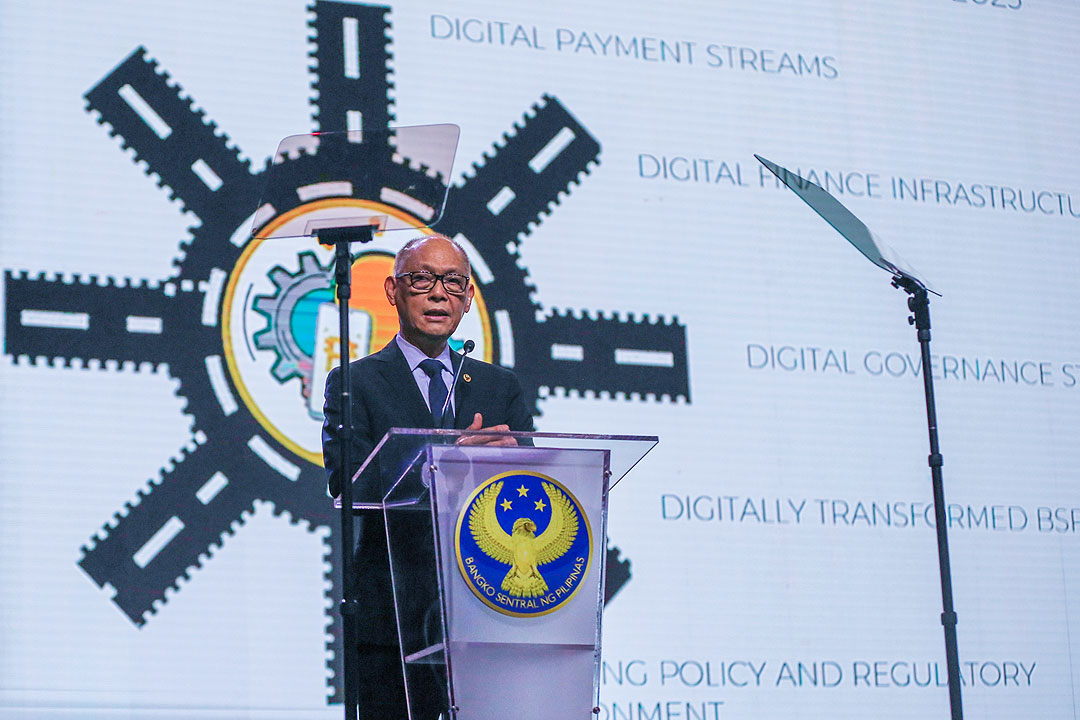
BANGKO SENTRAL ng Pilipinas (BSP) Governor Benjamin E. Diokno on Thursday said he will prioritize debt management when he assumes his new post as Finance secretary in July.
“Maybe the first item in the agenda will be the sustainability of our public debt,” Mr. Diokno said at a briefing on Thursday afternoon, hours after President-elect Ferdinand R. Marcos, Jr. announced his appointment.
The National Government’s debt stood at a record P12.68 trillion as of end-March, equivalent to 63.5% of gross domestic product (GDP). The debt-to-GDP ratio exceeds the 60% threshold considered manageable by multilateral lenders for developing economies.
“Our debt-to-GDP ratio is slightly above the 60% limit. I don’t think that is really a cause for concern because as long as we continue to grow at around 6-7% on a sustainable basis, we can easily outgrow our debt,” Mr. Diokno said.
However, it is equally important to look at the sustainability of the debt, he added.
“This is, of course, to assure everybody, the domestic audience and our international credit watchers that we are serious about consolidating our fiscal resources so that we are able to reduce our debt and deficit-to-GDP ratio over time,” Mr. Diokno said.
In a recently published discussion paper by the Philippine Institute for Development Studies, the debt-to-GDP ratio is estimated to peak at 66.8% until 2024.
Also, Mr. Diokno said they will look at the fiscal consolidation plan proposed by outgoing Finance Secretary Carlos G. Dominguez III.
“This government has done a lot of reforms. The tax system that we are leaving to the next government, which I’m going to receive for the incoming government, is much much better than the tax system that we inherited from the previous administration. I’m not saying it’s a perfect tax system. There can be some improvements,” he said.
The Department of Finance (DoF) proposed three tax reform packages that it described as “fair, efficient and corrective,” which will be implemented from 2023 to 2025. This includes imposition of new taxes on digital services, luxury goods and single-use plastic; deferment of personal income tax reductions for three years; and a repeal of some tax exemptions.
The Bureau of the Treasury has estimated the government needs to raise P249 billion every year in revenues to avoid resorting to borrowings to pay the P3.2-trillion additional debt incurred during the pandemic.
Mr. Dominguez also warned the government should not cover existing debt by borrowing more or reducing spending. — Keisha B. Ta-asan
THE NATIONAL Government plans to borrow P250 billion from the domestic market in June, the Bureau of the Treasury (BTr) said on Wednesday.
Next month’s borrowing plan is 25% higher than the P200-billion program for May. However, the government raised just P141.31 billion from domestic borrowings this month.
The BTr will hold auctions for Treasury bills (T-bills) every week, which is projected to raise P75 billion.
The auctions for Treasury bonds (T-bonds) are projected to generate P175 billion.
According to the BTr, P5 billion worth of 91-day, 182-day, and 364-day T-bills will be offered on May 30, June 6, 13, 20, and 27.
For the long-term tenors, BTr is looking to raise P35 billion in three-year T-bonds on May 31; P35 billion in five-year debt papers on June 7; P35 billion in seven-year instruments on June 14; P35 billion in 10-year securities on June 21; and in seven-year papers again on June 27.
National Treasurer Rosalia V. de Leon said in a Viber message to reporters that the “volume has been calibrated based on domestic requirement and past rejections.”
The government spent heavily on its coronavrius disease 2019 (COVID-19) pandemic response, putting more pressure on revenue generation.
A trader said in an e-mailed message that he does not expect the Treasury to scale down its scheduled borrowings in the coming months.
“Not much has changed in the borrowing program of the BTr versus this month’s schedule,” the trader said. “[The] only (difference) is the added week for June, but weekly auctions are still the play.”
The trader said that markets were concerned with bond supply as the BTr has not “tightened the spigot.”
“With this, and this month’s CPI (consumer price index) focus for June, [the] market will continue to be defensive moving forward.”
Rizal Commercial Banking Corp. Chief Economist Michael L. Ricafort said that the higher borrowing plan reflects the need to finance the widening budget deficit as the government continues to spend for infrastructure projects and pandemic response programs.
The National Government recorded a P187.7-budget deficit as of end-March. Its total debt surged to a record-high P12.68 trillion as of end-March.
“(Government security) maturities and issuances tend to be less shortly before the elections and tend to increase again after the elections, a pattern consistently seen in recent years,” Mr. Ricafort said.
The government borrows from local and external sources to help fund a budget deficit capped at 7.7% of gross domestic product this year.
The National Government has a gross domestic borrowing program of P1.91 trillion this year. Of this amount, T-bills are expected to bring in P52 billion, while the fixed-rate T-bonds are seen to raise P1.86 trillion. — Tobias Jared Tomas
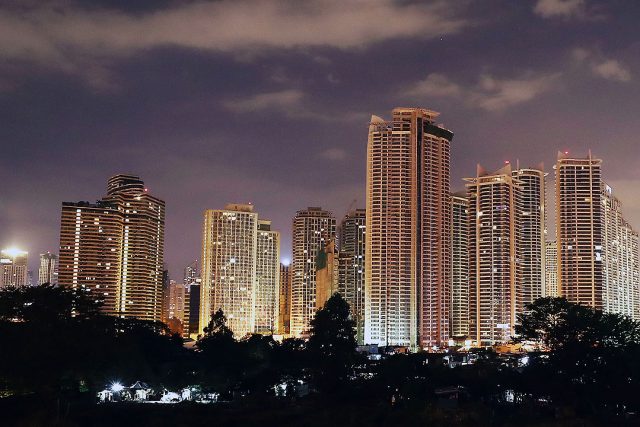
The Makati skyline is seen from Skyway Stage 3, July 8, 2021. — PHILIPPINE STAR/ MICHAEL VARCAS
THE PHILIPPINE central bank is likely to raise its key interest rate by another 25 basis points (bps) at its next policy meeting in June.
“We are probably inclined to have another 25-basis-point adjustment on our next Monetary Board meeting which is on June 23,” Bangko Sentral ng Pilipinas (BSP) Governor Benjamin E. Diokno said at a briefing on Thursday.
The BSP delivered its first interest rate hike since November 2018 when it raised its benchmark interest rates by 25 bps on May 19 as it tries to temper rising inflationary pressures.
The BSP upwardly revised its average inflation forecast for 2022 to 4.6% from the previous forecast of 4.3%, exceeding the 2-4% target band. For 2023, the BSP’s inflation forecast was hiked to 3.9% from 3.6% previously.
The Development Budget Coordination Committee (DBCC) adjusted the average inflation rate assumption to 3.7-4.7% this year, from 2-4% previously, reflecting the impact of soaring oil and food prices caused by the ongoing Russia-Ukraine war and supply chain disruptions.
Inflation climbed to 4.9% in April, the highest in more than three years.
“The economy is strong enough to weather any further hike in local policy rates,” Rizal Commercial Banking Corp. Chief Economist Michael L. Ricafort said in a Viber message.
“Furthermore, policy rate hike/s in the coming months could also be needed to address risk of second-round inflation effects after the approved minimum wage hikes and possible hike in transport fares, all of which would lead to higher prices of other affected goods and services in the economy,” Mr. Ricafort added. — Keisha B. Ta-asan
PRESIDENT Rodrigo R. Duterte has approved a 2022 strategic investment plan that lists activities eligible for tax incentives under the Corporate Recovery and Tax Incentives for Enterprises (CREATE) Act.
The 2022 Strategic Investment Priority Plan was approved through a memorandum circular signed by Executive Secretary Salvador C. Medialdea on May 24.
The plan included all activities listed in the 2020 Investment Priorities Plan’s Tier 1, such as those related to the containment of coronavirus disease 2019 (COVID-19) pandemic and production and manufacture of export products, services exports, and activities designed to support exporters.
Items in the 2020 plan, considered as the Tier I, include healthcare and disaster risk reduction management services like the establishment of hospitals, drug rehabilitation and evacuation centers; mass housing; infrastructure and logistics including public-private partnerships implemented by local governments; innovation drivers like research and development activities and clinical trials; inclusive business models like the activities of medium and large enterprises in agribusiness and tourism sectors that provide opportunities to micro and small enterprises as part of their value chains; environment or climate change-related projects and energy projects.
Activities under the Tier II of the 2022 plan aim to promote a competitive economy and boost the Philippines’ industrial value chains.
These include those related to green ecosystems such as electric vehicle (EV) assembly, manufacture of EV parts, components and systems, establishment and operation of EV infrastructure; manufacture of energy efficient maritime vessels and equipment; and energy efficiency and conservation projects.
Tier III, meanwhile, includes technology and research and development investments, such as those related to robotics, data analytics, artificial intelligence,
It includes highly technical manufacturing and production of innovative products and services like manufacture of equipment, parts and services, commercialization of intellectual property and research and development products and services; aerospace, medical devices, internet of things devices and systems, full-scale water fabrication and advanced materials; and establishment of innovation support families like research and development hubs and science and technology parks.
The order directs all agencies to issue the necessary regulations to ensure the implementation of the plan.
It mandates investment promotion agencies to facilitate and expedite the setting up and conduct of registered projects or activities through a one-stop action center. — Kyle Aristophere T. Atienza