ONE might think that as long as everybody gets home without crashing their car, everybody can pat themselves on the back for drinking moderately and responsibly. But this is not so.
A talk by SimplyNature, a company that makes health supplements, titled “Drinking Moderately: How far can you go?” discussed what it meant to really drink moderately, and the bad effects of alcohol besides the occasional hangover.
“There is no upper safety limit for drinking alcohol. The safe range for drinking is zero,” said Dr. Jansen Calalan, who spoke at the webinar streamed on Facebook late last month.
He reframed the conversation into calling the low consumption of alcohol to “low-risk drinking.” For men, that’s two drinks and for women, that’s one drink within the day.
He noted the discrepancy between the recommended units of alcohol for men and women: “Women have a higher body fat percentage than men. Alcohol is stored in the fat,” said Mr. Calalan.
He pulled up a chart from the American College of Lifestyle Medicine, which detailed what exactly constitutes one drink: that’s 12 fluid ounces of beer (about a can). As the spirit gets stronger, the amount gets smaller. A drink by those measurements means five fluid ounces of wine (about a glass), eight to nine fluid ounces of malt liquor, or a 1.5 fluid ounces (about a shot) of 80-proof spirits like gin, vodka, and whisky.
Drinking just the recommended amount per day may be fine, but doing it every day won’t lower the risk of disease. These diseases are usually caused by liver damage. You get fatty liver.
“Alcohol is one of the high-calorie drinks that we have. And it gets stored in fats. It makes our liver create more fat,” he said.
From this, one can progress to liver cirrhosis (the hardening of the liver), and several types of cancer (including that of the liver). Liver damage may also eventually lead to failures of the heart and kidney.
Mr. Calalan also debunked the myth that at least red wine can be good for the heart. “It’s the grapes,” he said.
More common side effects of alcohol would include the compromission of the immune system, due to alcohol’s antiseptic qualities getting rid of good gut bacteria, as well as damaging the lining of the stomach and the intestines. Messing up with one’s sleep is a more common side effect of alcohol: “Your brain would be so active that you can’t be able to go into deep sleep,” he said, despite the misconception that alcohol knocks one out. “It’s not a great feeling.”
“As long as you don’t get to the liver cirrhosis stage, there’s still hope for you,” he said. “Just do the right thing. Live healthily, stop hurting your liver, take the proper supplements, then it can easily regenerate.” —JL Garcia
METRO Retail Stores Group, Inc. said its first quarter net income grew to P33.34 million for the first three months of 2022, an improvement from its P126.47-million net loss in the similar period a year before.
The company said it is continuing to “gear up for recovery with stronger optimism,” as foot traffic picks up with improving consumer spending following loosened health protocol restrictions.
Earnings before interest, taxes, depreciation, and amortization (EBITDA) for the first quarter grew by 63.2% to P386.38 million from P236.74 million.
“Our positive financial outcome attests to our continuous efforts in increasing efficiency, improving merchandise assortment and sourcing, and expanding omnichannel strategy,” Metro Retail President Manuel C. Alberto said.
Net sales jumped by 23% to P8.51 billion from P6.92 billion for the same period last year, driven by the rise in store sales and the contribution of four new stores that opened last year.
Both its food retail and general merchandise businesses also grew by 21.2% and 29.8%, respectively.
“As we head on to our recovery and growth, Metro Retail Stores will keep its thrust on putting customers at the center of its business. We will continue to offer a great shopping experience to our existing and future customers and pursue multifaceted initiatives to be positioned for progressive growth,” Mr. Alberto added.
The company recently opened two new stores, the Metro Paseo Supermarket in Cebu City and the Metro Hilongos Supermarket in Leyte, bringing its current store network to 63.
“While the company remains resolute in expanding its brick-and-mortar network, Metro Retail also acknowledges the growing significance of online shopping and the integral role of having an omnichannel presence beyond the pandemic,” the firm added.
Apart from its web application, shopmetro.ph, the company said it is continuing to upgrade its e-commerce platform by adding participating stores in key cities in Luzon and Visayas, and partnering with other online channels and logistics providers.
On Wednesday, Metro Retail shares climbed by 1.45% or two centavos to P1.40 at the stock exchange. — Luisa Maria Jacinta C. Jocson
JOHANN CHUA and US 9-ball champion Carlo Biado finish 1-2 in the Men’s 9-Ball Singles of Billiards in the 31st SEA Games. — PHILIPPINE STAR/ JUN MENDOZA
JOHANN CHUA and US 9-ball champion Carlo Biado finish 1-2 in the Men’s 9-Ball Singles of Billiards in the 31st SEA Games. — PHILIPPINE STAR/ JUN MENDOZA
HANOI — Johann Chua pounced on two stunning miscues by reigning US Open champion Carlo Biado en route to a 9-6 victory and crowned himself the new 9-ball billiards champion on Wednesday in the 31st Southeast Asian (SEA) Games.
The 9-ball gold was the second for Pinoy cue artists, with Rubilen Amit winning the women’s side of the event last Tuesday, beating Jessica Chan of Singapore 7-2.
Mr. Biado was favored to rule the all-Filipino finals but missed what seemed as makeable shots in the 12th and 15th racks, to the horror of the big crowd at the Hadong District Sporting Hall.
Trailing 5-6 in the 12th, Mr. Biado, 39, failed to pocket the 9-ball, smiling after his miscue. He also failed to sink the 8-ball three racks later, with Mr. Chua gamely taking over both times to win his first SEA Games gold.
Mr. Biado, who failed in his bid to reclaim the title he won in the 2017 Games, raised the hand of the 29-year-old Mr. Chua after the match, gamely accepting his defeat for the silver medal.
Mr. Biado reached the finals after beating Singapore’s top player, Aloysius Yapp, 9-7 in the semifinals.
Mr. Chua settled for a pair of bronze medals in the past two editions of the biennial meet.
CHINA’S main bond trading platform for foreign investors has quietly stopped providing data on their transactions, a move that may heighten concerns about transparency in the nation’s $20- trillion debt market after record outflows.
Daily trades by overseas investors were last provided for May 11 by the China Foreign Exchange Trade System (CFETS), according to people familiar with the matter, who asked not to be identified discussing private information. The data showed sizable net foreign outflows that day, with some selling also seen for most days in April, the people said.
It’s unclear why CFETS stopped publishing the figures, which are typically updated one day later, the people said. There was also no indication of whether the move was temporary or related to the lockdown of Shanghai, the nation’s onshore financial capital. A spokesperson for CFETS — which is affiliated with China’s central bank and compiles data on the so-called interbank market — didn’t respond to a request for comment.
The missing data add to the uncertainty over capital flows into and out of China, as Covid lockdowns and questions over concrete policy support spur market volatility. Global funds sold record amounts of Chinese sovereign debt in February and March as their yield premium over Treasuries collapsed and money managers fretted about a supply surge.
APRIL DELAY Transactions by domestic investors on CFETS are still getting published, the people said. The debt traded on its platform include sovereign, provincial, policy banks and credit.
Other than the interbank market, the biggest in the nation, bonds are traded on exchanges.
Aside from the CFETS figures, investors had been also awaiting the delayed release of an April report on bond trading by clearing house Chinabond. The information, which is typically published by around the 10th of every month, is a summary of custodial bonds and includes the balance of domestic debt held by overseas institutions.
Data from Chinabond released late on Tuesday showed foreign investors offloaded 42 billion yuan ($6.2 billion) of Chinese government bonds in April. While the outflows narrowed from March, it marked a third straight month of selling by overseas funds. That was the longest string of monthly sell-off since 2015.
YUAN PLUNGES While outflows probably slowed overall in April, the sudden decline of the yuan during the month likely stoked selling again, according to Becky Liu, head of China macro strategy at Standard Chartered Bank Plc. The Chinese currency had sank 4% against the dollar last month.
Analysts at Barclays Bank Plc and Natixis SA have said that overseas investors may continue to trim Chinese bond holdings as the nation’s Covid lockdowns weigh on growth and a stronger dollar saps demand for emerging-market debt.
Some money managers, including Neeraj Seth at BlackRock Inc., are still bullish on selected Chinese bonds. Officials shifting to a more supportive stance on monetary policy will be an important milestone that will stabilize the yuan, he said.
“The size of China’s bond market and structure gives you a reasonable case for the debt to have space in the portfolio and that’s a trend we don’t expect to change,” said Seth, the Singapore-based head of Asia credit. Hot money flows into the country have been “interrupted by geopolitics and volatility in the exchange rate, but the longer-term money is still there,” he added.
Based on banks’ settlement and payments data released by the State Administration of Foreign Exchange, there was $23 billion of cross-border outflows under the securities account in April, the smallest amount in a three-month period. — Bloomberg
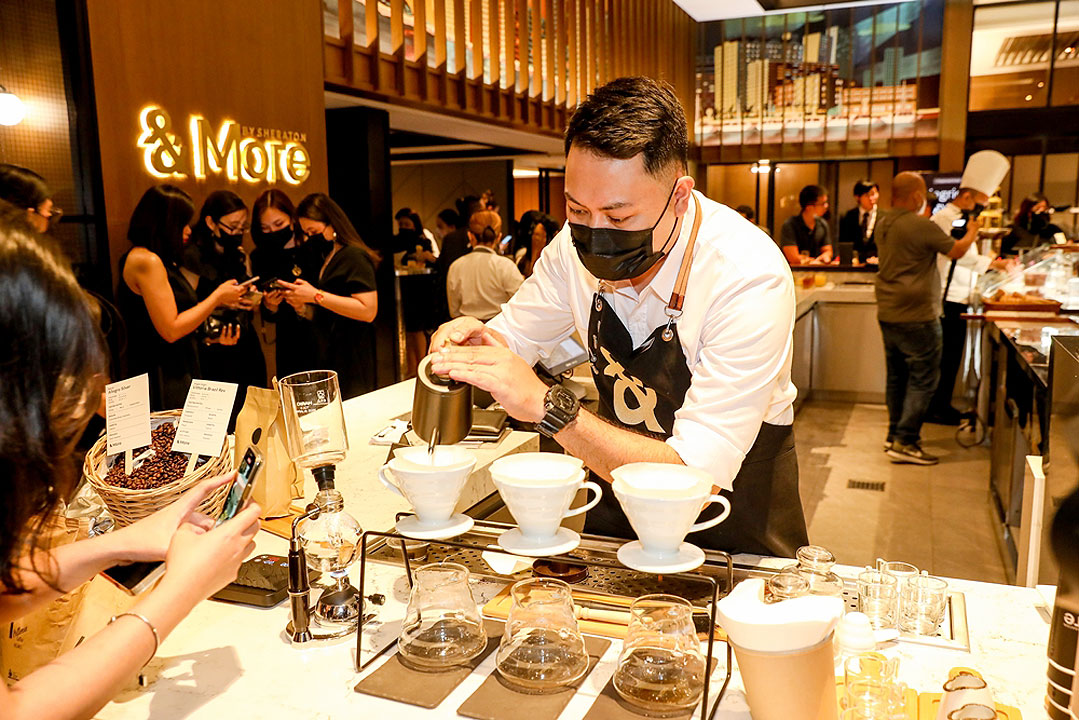
&More Coffee Experience in action with Ronnie Sararana
ELLO/UNSPLASH
Sheraton Manila Bay unveils new bar
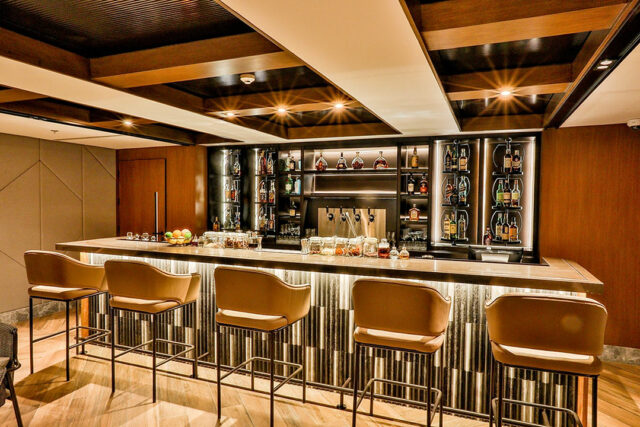
SHERATON Manila Bay has unveiled the first &More by Sheraton outlet in the Philippines at the hotel’s newly renovated main lobby. &More by Sheraton is part bar, part coffee shop, and part market. It is a central pillar of the Sheraton brand’s vision of gathering people, transitioning guests and diners seamlessly from day to night with food and beverage options that are locally sourced, easy to consume while working, and customizable to accommodate all tastes and schedules. The &More by Sheraton boasts of a contemporary, upscale interior that features a bar, market display, extensive pastry counter, and energy zone with a basketball ring, private booths with electrical socket and comfortable seating for maximum productivity, a community table, and a private meeting room. &More by Sheraton also aims to showcase local culture and heritage by featuring local artists and talents. &More by Sheraton is located at the Main Lobby, Sheraton Manila Bay, M. Adriatico cor. Gen Malvar Sts. Malate, Manila.
McDo launches Caramel Popcorn drinks
MCDONALD’S has released all-new, limited-edition Caramel Popcorn drinks. For iced coffee enthusiasts, there is Iced Coffee with Caramel Popcorn Syrup and Iced Latte with Caramel Popcorn Syrup. There is also the Coffee Float with Caramel Popcorn Syrup and Coke Float with Caramel Popcorn Syrup. Customers who redeem their Caramel Popcorn drinks with the McDonald’s app will get up to P21 off. From May 18 to June 20, customers can get two Caramel Popcorn Iced Coffees for P99; and two Caramel Popcorn Coffee Floats for P129. The Iced Coffee with Caramel Popcorn Syrup, Coffee Float with Caramel Popcorn Syrup, and Coke Float with Caramel Popcorn Syrup are now available at McDonald’s branches for Dine-In, Take-Out, and McDelivery, and at Desserts Kiosks too. Meanwhile, the Iced Latte with Caramel Popcorn Syrup is available for Dine-In, Take-Out, and McDelivery at McDonald’s branches with McCafé outlets.
Jollibee’s Peach Mango Pie gets bigger
JOLLIBEE is introducing the new Large Peach Mango Pie. “With the introduction of the Large Peach Mango Pie, we found an opportunity in which we could make one of our most popular menu items, the Peach Mango Pie, into something that retains its iconic goodness and crispiness, but giving customers a bigger flavor experience,” said Bea Bediones, Jollibee Marketing’s Brand Manager for Pies. The Large Peach Mango Pie is available in all stores nationwide for P 45 Solo, and P132 for 3 Pies To-Go. They are available for delivery via the Jollibee Delivery App, JollibeeDelivery.com, or #87000, and are also available in Drive-Through and Take Out.
Solane offers tips for new parents
COOKING gas brand Solane is offering to help new parents dealing with the trial-and-error nature of raising a tiny human by offering tips on how parents can eat well with minimum fuss and avoid fast food deliveries. Here are nutritious meals first-time parents can easily prepare: Wraps — to make a basic wrap, heat up a tortilla wrap, put the savory filling (as simple as reheated beef, pork, or chicken or canned tuna), then add some greens and vegetables; One-Pot meals — get your fill of grains, vegetables and protein in one go with rice bowls, pasta or casserole dishes; Heat-and-Eat meals — cook your favorite ulam on a weekend, divide them into several portions good for one meal, store them in the fridge, then simply pop in the microwave when it is time to eat. Solane suggests checking out these sites for meal ideas: https://www.tasteofhome.com/collection/sandwich-wrap-recipes/, https://www.budgetbytes.com/category/recipes/one-pot/, and https://www.budgetbytes.com/meal-prep-101-a-beginners-guide/ . To order Verified Solane LPG, customers may call the Hatid Bahay Hotline — (02) 8887-5555, send a message to 0918-887-5555 (Smart) / 0917 8977555 (Globe) or the Solane Facebook page, or place their orders through the Solane app. Customers may also place an order through the Web Ordering Platform.
CTS Global Equity Group, Inc. reported that its first quarter net income ended lower by 29.9% to P20.1 million from P28.69 million due to lower trading gains amid poor global equity market conditions.
“For the first quarter of 2022, the main markets of CTS Global Equity experienced high market volatility,” the company said in a disclosure.
Revenues likewise dropped by 56.7% to P38.39 million from P88.7 million.
“Breaking down the company’s revenues into the markets which it operates in shows majority of revenues coming from the Philippine market at 57.2%, while global trading revenues contributed 42.8% of total revenues,” it added.
Cost of services also decreased by 66.8% to P14.52 million from P43.75 due to the decrease in commission expenses, personnel costs, and transaction costs for completing proprietary trading transactions. Operating expenses also fell by 21% to P5.96 million year on year.
Meanwhile, CTS Global reported that its net margins improved to 52.4% during the quarter from 32.3% for the same period in 2021.
Asset base increased by 15.4% to P1.1 billion and the company’s cash position improved by 14.5% to P508.7 million.
The company’s business segments include proprietary trading, brokerage services, and investment income.
Under proprietary trading, CTS Global has over 30 traders with exposure in global markets including the United States, China, Hong Kong, Japan, and the Philippines. For brokerage services, the company renders stock brokerage and dealership services at a fee for high-net-worth clients.
At the stock market on Wednesday, CTS Global remained unchanged at P0.87 per share. — Luisa Maria Jacinta C. Jocson
PIA Bidaure, Abby Bidaure and Phoebe Amistoso of Team Philippines won the gold for the women’s recurve-team during the 31st SEA Games held in Hanoi, Vietnam. — PSC/NONILON REYES
HANOI — Archery contributed its first gold to the Philippine campaign in the 31st Southeast Asian (SEA) Games on Wednesday, nipping top seed Vietnam 26-25 in a thrilling shoot-off for the women’s team recurve title at the Hanoi National Training Center.
Abby Bidaure, 20, emerged as the heroine for Team Philippines, hitting the bullseye in the final arrow of the shoot-off for a 10 with just 10 seconds left on the clock, eliciting loud cheers from other members of the team who gingerly watched the thrilling showdown from behind.
The winning team, which included Ms. Bidaure’s sister, Pia, and Phoebe Amistoso, battled back with a 57-49 win in the fourth frame after trailing 1-2 in the first three, forcing a shoot-off that came down to Abby’s winning shot.
Pia, who won her first SEA Games gold in her third try, expected Abby to hit the bullseye and make the difference in the tightly-fought contest.
The archery squad gets a chance to shoot for its second gold on Thursday when it battles Malaysia in the finals of the compound bow mixed team event.
Shooting a perfect last end, the team of Paul dela Cruz and Jennifer Jing Chan came from behind to edge Thailand 155-154 in the semis last Tuesday while the Malaysians beat Vietnam 154-152.
Johnny Depp and Amber Heard in a scene from the 2011 film The Rum Diary. — IMDB.COM
LOS ANGELES — Johnny Depp’s attorney grilled the actor’s ex-wife Amber Heard on Tuesday, producing affectionate notes she wrote during their short-lived marriage to challenge her accounts of frequent violence and bolster the Pirates of the Caribbean star’s case for defamation.
Mr. Depp, 58, is suing Ms. Heard for $50 million, saying she defamed him when she claimed she was a victim of domestic abuse. He has testified that he never hit Heard and argued that she was the abuser in their relationship.
During her cross-examination, Depp lawyer Camille Vasquez showed jurors a knife Ms. Heard bought Mr. Depp as a gift in 2012. Ms. Heard, best known for her role in Aquaman, said Mr. Depp had already turned violent by then and often lashed out at her when he was drunk or using drugs.
“This is the knife you gave to the man who would get drunk and violent toward you?” Ms. Vasquez said to Ms. Heard, who responded that she did not think he would stab her with it.
Ms. Heard, 36, has countersued Mr. Depp for $100 million, arguing that Mr. Depp smeared her by calling her a liar. She said she only hit Mr. Depp to defend herself or her sister.
On Tuesday, Depp’s attorney read entries from a journal that Ms. Heard said the couple kept to share love notes.
“True love isn’t about just the madness of passion or instead picking the safety of peace. No, it’s about both,” Ms. Heard wrote in May 2015, two months after an argument in which the top of Mr. Depp’s right middle finger was cut off.
“I still, perhaps more than ever, want to rip you apart, devour you and savor the taste,” she added.
Mr. Depp has said Ms. Heard threw a vodka bottle that injured his finger, while Ms. Heard said it was likely Mr. Depp harmed himself when he smashed a phone into “smithereens.”
In another journal excerpt, after their July 2015 honeymoon aboard the Orient Express, Ms. Heard said she “couldn’t imagine a more gorgeous honeymoon,” and added, “I love you more and more every passing day.”
Ms. Heard had told jurors on Monday that Mr. Depp assaulted her and wrapped a T-shirt around her neck during the trip.
Asked about entries, Ms. Heard said she tried to “nurture as much peace” as possible, and that “when things were good they were really good.”
Ms. Vasquez also showed jurors a proposed schedule for her wedding to Mr. Depp. The agenda included time for a “dance party and drugs and music” after the rehearsal dinner.
“You planned to have drugs at your wedding to someone you characterize as a drug addict?” Ms. Vasquez asked.
Ms. Heard said the schedule was a draft that underwent changes.
The actors wed in February 2015 and their divorce was finalized about two years later.
The legal case centers on a December 2018 opinion piece by Heard that appeared in the Washington Post. The article never mentioned Depp by name, but his lawyer told jurors it was clear that Heard was referencing him.
Mr. Depp, once among Hollywood’s biggest stars, said Ms. Heard’s allegations cost him “everything.” A new Pirates of the Caribbean movie was put on hold, and Mr. Depp was replaced in the Fantastic Beasts film franchise, a Harry Potter spinoff.
Ms. Heard’s attorneys have argued that she told the truth and that her opinion was protected free speech under the US Constitution’s First Amendment.
Less than two years ago, Mr. Depp lost a libel case against the Sun, a British tabloid that labeled him a “wife beater.” A London High Court judge ruled that he had repeatedly assaulted Mr. Heard.
Mr. Depp’s lawyers filed the case in Fairfax County, Virginia, because the Washington Post is printed there. The newspaper is not a defendant. — Reuters
ALLIANZ SE agreed to pay more than $6 billion, among the largest settlements in corporate history, over the collapse of investment funds during the coronavirus disease 2019 pandemic. — BW FILE PHOTO
NEW YORK/MUNICH — Germany’s Allianz SE agreed to pay more than $6 billion and its US asset management unit pleaded guilty to criminal securities fraud over the collapse of a group of investment funds early in the coronavirus disease 2019 (COVID-19) pandemic.
Allianz’s settlements with the US Department of Justice and US Securities and Exchange Commission are among the largest in corporate history, and dwarf earlier settlements obtained under President Joe Biden’s administration.
Gregoire Tournant, the former chief investment officer who created and oversaw the now-defunct Structured Alpha funds, was also indicted for fraud, conspiracy and obstruction, while two other former portfolio managers entered related guilty pleas.
Once with more than $11 billion of assets under management, the Structured Alpha funds lost more than $7 billion as COVID-19 roiled markets in February and March 2020.
Allianz Global Investors US LLC was accused of misleading pension funds for teachers, bus drivers, engineers, religious groups and others by understating the funds’ risks, and having “significant gaps” in its oversight.
Investors were told the funds employed options that included hedges to protect against market crashes, but prosecutors said the fund managers repeatedly failed to buy those hedges.
Prosecutors said the managers also inflated fund results to boost their pay through performance fees, with Mr. Tournant, 55, collecting $13 million in 2019 and becoming his unit’s highest or second-highest-paid employee from 2015 to 2019.
Investigators said the misrepresentations began in 2014, and helped Allianz generate more than $400 million of net profit.
At a news conference, US Attorney Damian Williams in Manhattan said more than 100,000 investors were harmed, and that while American prosecutors rarely bring criminal charges against companies it was “the right thing to do.”
Investors “were promised a relatively safe investment with strict risk controls designed to weather a sudden storm, like a massive collapse in the stock market,” he said. “Those promises were lies…. Today is the day for accountability.”
BLAMING COVID Also known for its insurance operations, Allianz is among Germany’s most recognizable brands and an Olympic sponsor.
Its namesake arena near its Munich headquarters, meanwhile, houses Bayern Munich, one of world’s best-known soccer teams.
The settlement calls for Allianz to pay a $2.33-billion criminal fine, make $3.24 billion of restitution and forfeit $463 million, court papers show.
Williams said the fine was significantly reduced because of Allianz’s compensation to investors.
Even so, the payout is close to twice the $3.3 billion in corporate penalties that the Justice Department collected for all of 2021.
An Allianz lawyer entered the guilty plea at a hearing before US District Judge Loretta Preska in Manhattan.
Allianz also accepted a $675-million civil fine from by the SEC, one of that regulator’s largest penalties since Enron Corp. and WorldCom, Inc. imploded two decades ago.
Shares of Allianz closed up 1.7% in Germany, with the payout broadly matching reserves that the company previously set aside.
Tournant, of Basalt, Colorado, surrendered to authorities on Tuesday morning.
The US-French citizen appeared briefly in Denver federal court, and was released after agreeing to post a $20-million bond. An arraignment was set for June 2 in New York.
Mr. Tournant’s lawyers, Seth Levine and Daniel Alonso, said the investor losses were “regrettable” but did not result from a crime.
“Greg Tournant has been unfairly targeted [in a] meritless and ill-considered attempt by the government to criminalize the impact of the unprecedented, COVID-induced market dislocation,” the lawyers said in a joint statement.
The other two portfolio managers — Stephen Bond-Nelson, 51, of Berkeley Heights, New Jersey; and Trevor Taylor, 49, of Miami — agreed to plead guilty to fraud and conspiracy, and cooperate with prosecutors. Their lawyers declined immediate comment.
VOYA PARTNERSHIP Allianz’s guilty plea carries a 10-year ban on Allianz Global Investors’ providing advisory services to US-registered investment funds.
As a result, Allianz plans to move about $120 billion of investor assets to Voya Financial Inc. in exchange for a stake of up to 24% in Voya’s investment management unit. It expects a final agreement in the coming weeks.
Regulators said the misconduct included when Mr. Tournant and Bond-Nelson altered more than 75 risk reports before sending them to investors.
The SEC said projected losses in one market crash scenario were changed to 4.15% from the actual 42.15%, simply by removing the “2.”
Allianz’s alleged oversight lapses included a failure to ensure Mr. Tournant was hedging, though prosecutors said only people in his group knew of the misconduct before March 2020.
“No compliance system is perfect, but the controls at AGI didn’t even stand a chance,” Williams said.
Bond-Nelson, at Mr. Tournant’s direction, also lied to Allianz’s in-house lawyers after the company learned about the altered reports and the SEC probe, prosecutors added.
“Unfortunately, we’ve seen a recent string of cases in which derivatives and complex products have harmed investors across market sectors,” SEC Chair Gary Gensler said in a statement.
Investors have also filed more than two dozen lawsuits against Allianz over the Structured Alpha funds. — Reuters
CONVERGE ICT Solutions, Inc. announced on Wednesday that it will enjoy tax incentives from the government for deploying fiber internet services in unserved and underserved areas.
The company has “secured the approval of the Fiscal Incentives Review Board (FIRB) to avail of tax incentives for its multi-phased establishment of connectivity facilities for high-speed broadband services targeting undeveloped and underdeveloped areas nationwide until 2026,” Converge said in an e-mailed statement.
“Under the approved incentives, Converge will receive four years of income tax holiday followed by five years of enhanced deductions or special corporate income tax as laid out in the CREATE Law (Corporate Recovery and Tax Incentives for Enterprises law), as well as 11 years of duty- free importation of capital equipment, raw materials, spare parts or accessories starting from the Registration Date,” it added.
The company believes the FIRB approval was a recognition of the “missionary nature” of its project, which is expected to “bring connectivity to marginalized areas of the Philippines.”
“Broadband connectivity is one of the priority sectors that have a direct impact on AmBisyon Natin 2040, the government’s long-term vision for the nation,” it said.
Converge, which saw its attributable net income increase by 27% to P1.97 billion in first quarter, targets to roll out fiber-to-the-home infrastructure to cover more than 1,200 unserved and underserved towns nationwide.
“The digital infrastructure will make use of the latest technologies that allow higher capacity and faster data transmission,” it said.
The first phase of the company’s nationwide fiber internet rollout started in November last year.
Citing 2021 data from the Media Partners Asia, Converge said the fiber penetration in the country is only 17% of households, lagging far behind some Southeast Asian countries whose penetration rates have breached 40% and even reached 80% in Vietnam.
“The target of the Broadband Commission for Sustainable Development is for middle income countries including the Philippines to reach 65% broadband internet penetration by 2025,” it added.
The company’s revenues increased by 40% to P7.75 billion from P5.55 billion in the same period in 2021, its first-quarter report showed.
Revenues from the company’s residential business increased by 42% to P6.81 billion during the period from P4.80 billion previously, driven by a 52.5% year-on-year growth in its subscriber base. It ended the quarter with 1,802,202 residential subscribers.
Enterprise revenues increased by 25% to P935 million in the first three months of the year from P750 million in the same period in 2021. The increase was fueled by robust growth in the small and medium enterprise (SME) segment. Its SME customers surged by 200%, reaching 25,810 as of March 31.
Converge ICT shares closed 0.54% lower at P28 apiece on Wednesday. — Arjay L. Balinbin
GLOBAL smart device brand OPPO is set to introduce the Find X5 Pro in the Philippines on Thursday, it said in a statement.
The flagship OPPO Find X5 Pro, released abroad in March, is equipped high-end camera technology to allow users to take sharp and high-quality photos and videos.
“To empower your every moment, especially those at night, the flagship device integrates OPPO’s self-developed imaging Neural Processing Unit (NPU), known as MariSilicon X, a breakthrough in night videography. It enables users to capture bright and high-quality videos at night,” OPPO said.
“This powerful feature is reinforced as the OPPO Find X5 Pro leverages the Hasselblad Camera for Mobile, which delivers accurate and natural colors to your life’s every moment,” it added.
Based on OPPO’s website, the Find X5 Pro is powered by a Snapdragon 8 Gen 1 processor and has a 6.7-inch OLED screen with a 120Hz refresh rate. The phone runs on Android 12 with ColorOS 12.
The flagship device has a 5,000mAh battery that supports fast and wireless charging.
It has a triple rear camera setup: a 50-megapixel (MP) main camera, a 13-MP telephoto lens, and a 50-MP ultrawide lens. The phone also has a 32-MP front camera.
The Find X5 Pro’s cameras can shoot videos in 4K and also support Ultra HDR and feature optical image stabilization.
The phone comes in Ceramic Black, Ceramic White and Blue. It is offered in 8GB and 12GB RAM with storage options at 256GB and 512GB. — BVR
HOA BINH — Jermyn Prado leads the women’s team and Jan Paul Morales heads the men’s squad as the Philippines targets its first gold medal in cycling in the criterium event of the 31st Southeast Asian (SEA) Games on Thursday morning.
Joining Ms. Prado — individual time trial gold and road silver medalist in 2019 in Tagaytay City — are 2019 SEA Games cross-country mountain bike bronze medalist Avegail Rombaon and 2021 national trials road winner Kate Yasmine Velasco.
With Mr. Morales in the race set over a 1.48-km circuit in the heart of this rustic city some 90 kilometers southeast of the capital Hanoi are fellow sprinters Dominic Perez and Aidan James Mendoza.
“It will be a solid sprinting and endurance race all the way,” said cycling head coach Ednalyn Hualda, who thanked the Philippine Olympic Committee and Philippine Sports Commission for fully supporting the team’s SEA Games campaign.
“Because this is a race to the finish, there will be no relaxing for the cyclists,” added Mr. Hualda.
The starters for the other countries remained pending until Wednesday afternoon’s team managers meeting although a maximum of 33 riders are expected to see action in the three-to-ride per team event.
The women’s race is set for 10 a.m. (Manila time) consists of 20 laps for a total of 29.60 kms and the men’s race up at 11:30 a.m. 30 laps for 44.40 kms.
Format is race to finish — meaning the top three riders are awarded the gold, silver and bronze medals.
Cycling delivered three bronze medals in mountain bike courtesy of John Derrick Farr and Naomi Gardoce in downhill and Jericho Rivera in downhill.
The Philippines clinched three golds — Ms. Prado, Mr. Farr, and Lea Denis Belgira in downhill — four silvers and four bronzes in the 2019 Games.