Home Blog Page 6017

Judgment Day for Pulse Asia
PHILIPPINE STAR/ RUSSELL PALMA

After every election I write in this space that the results bear out the forecasts of the two major pollsters — Social Weather Stations (SWS) and Pulse Asia (PA). In 2016, not only did I note that the results of the 2016 presidential election validated the two pollsters’ projections, I also wrote that the rankings of all the presidential and vice-presidential candidates in the two polls jibed with how they placed in the actual elections.

I defend election polling when detractors question the integrity of surveys. In 2010, presidential candidates Gilbert Teodoro and Richard Gordon asked how 2,000 respondents in a survey can represent the sentiments of an electorate made up of 50 million voters. Teodoro’s campaign manager said that Teodoro ranked No. 1 in all the universities in which the candidate spoke and that the students who said they will vote for him numbered in the tens of thousands. The late Senator Miriam Defensor Santiago raised the same issue when she ran for president in 2016. Like Teodoro, she ranked first in a survey of university students.

In reaction I wrote that it can also be asked how 10, 20, or even 30,000 university students can reflect the sentiments of 50 million voters or how students from the middle to upper income classes of the national capital region can possibly represent the entire electorate. University students belong to the middle to upper income groups, are 18-22 years old, mostly single, highly educated, well-informed by mass media, and highly politicized. Their choice of candidate differs from the voting preference of the electorate taken as a whole.

This trust in election polling stems from my having worked for Robot Statistics, the first public opinion pollster/market research firm in the country. In fact, it was my first job right after college. It was the Philippine affiliate of Gallup Polls when I was with the firm. I had also earned enough credits in Statistics — as an AB-Commerce student, then as a graduate student of Psychology, and subsequently as an MBA student — to have a good understanding of random sampling, margin of error, and confidence level. (Robot enrolled me in Ateneo’s Graduate School of Psychology as it was then planning to go into motivation research.)

But when the results of the survey conducted by Pulse Asia from Jan. 19 to 24 showed Bongbong Marcos as the preferred presidential candidate of 60% of the respondents and Leni the choice of only 16%, doubts lurked in my mind. In the three elections where Bongbong ran for national office, he got no more than 35% of the votes of the electorate.

When Bongbong first ran for senator in 1995, he got 8,168,788 votes, or 31.7% of the votes cast that year, short of the number of votes needed to land one of the 12 Senate seats to be filled up. He ran again in 2010. He garnered 13,169,634 votes or 34.5%, good enough to win him a Senate seat. When he ran for vice-president in 2016, he got 14,155,314 or 34.5%. But Leni Robredo bested him with her 14,418,817 votes or 35.1%.

Bongbong had not done anything from the elections of 2016 to 2021 to have raised his political stock or gained the admiration, gratitude, or goodwill of the electorate. I asked how he could be preferred by 60% of the respondents when he is running for president against the same person who beat him for the vice-presidency, who is now preferred by only 16%?

Leni as vice-president had not done a bad job for people who voted her vice-president to diminish in number by half. In fact, she did a lot for the people, especially the marginalized, in spite of the fact that President Rodrigo Duterte hindered her efforts to serve the people. In contrast, Bongbong was preoccupied with his electoral protest during the same period.

Some political pundits say Bongbong’s message of “Babangon muli” (“Rise again”) instills nostalgia of the “Golden Age” during his father’s presidency. Bongbong’s army of trolls had flooded social media with narratives of a robust economy, grandiose infrastructure, and lasting peace and order that his father’s reign was. As the youth did not experience life under Martial Law, they believe what they read in social media.

But netizens saturated social media with factual evidence that belie the claim that Ferdinand Marcos’ 20-year rule was the “Golden Age” of Philippine history. Their posts show that his reign was marked by massive corruption, unbridled human rights abuses, and an economy ever on the verge of collapse.

Also, the Catholic Bishops Conference of the Philippines (CBCP) issued a pastoral letter on Feb. 25 that spoke of “blatant and subtle distortion” of history, the trivialization of the People Power Revolution, and the seeding of false information to influence the opinion of the people and to malign and blackmail people. The pastoral letter called attention to “troll farms which sow the virus of lies.”

Detractors of Bongbong have said that even if the narrative of a “Golden Age” were true, it does not necessarily follow that the son can duplicate what his father had achieved. He doesn’t have the brilliant mind, the zeal for work, and the doggedness to finish what he had set out to accomplish — qualities that his father had. He has shown during the campaign that he lacks the oratorical skills or the persuasive power to be able to lead people.

He has been branded a coward for not participating in the Comelec-sponsored debates and for refusing to be interviewed by respected local broadcast journalists and foreign correspondents.

All that bashing seems to have had little effect on his rating in Pulse Asia surveys. In the March 17 to 21 survey, Bongbong’s score was 56%, down by 4% from his 60% in January. That is still 21% higher than the 35% he got in actual elections. The April 16 to 21 survey didn’t reflect any change in the attitudes of people towards him. Fifty-six percent still preferred him over the other candidates.

This almost constant high rating of Bongbong in Pulse Asia’s surveys has been met with skepticism if not criticism, not from politicians who fare badly in election polls, but from respected professional statisticians. Dr. Romulo Virola, former secretary-general of the National Statistical Coordination Board and a professor of Statistics in UP, Diliman, found numerous “flaws” in Pulse Asia’s current election surveys. He pointed out overrepresentation and underrepresentation of certain demographic groups. Such over and under representation of sub-groups could have corrupted the survey results.

Arvin Boller, lecturer at the Ateneo School of Social Science, says not one presidentiable since 1986 has won the votes of the majority of Filipinos. The Pulse Asia surveys show Bongbong could potentially pull it off. He sees three possible reasons for the 56% rating: 1. Bongbong’s campaign is extremely effective; 2. there is a methodical flaw in the conduct of the survey; 3. there is a conspiracy behind the survey results.

Well, we will know today the results of yesterday’s elections. If the Pulse Asia numbers for Bongbong Marcos and Leni Robredo match or approximate closely the results of the elections, then Pulse Asia will be affirmed as a credible forecaster of election outcomes. If the results show a Leni Robredo victory, Pulse Asia will crumble, bringing down with it the entire polling industry.


Oscar P. Lagman, Jr. is a retired corporate executive, business consultant, and management professor. He has been a politicized citizen since his college days in the late 1950s.
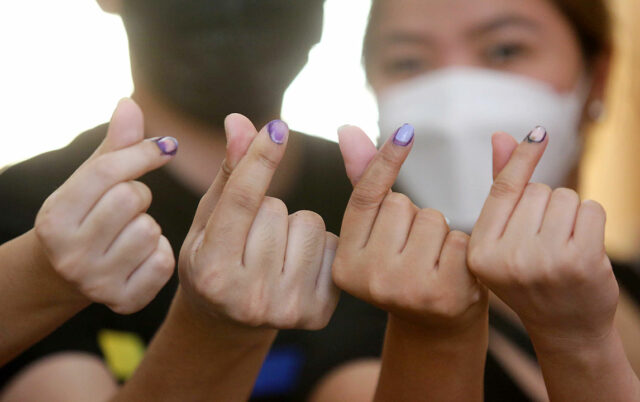
After the elections

PHILIPPINE STAR/ RUSSELL PALMA

By the time you read this, it would be the day after E-day. The voters would have fulfilled their duty and chosen their candidates. Between now as I write this and then, exactly a week would have lapsed. The mitings de avance haven’t taken place yet. The last-minute frenzied campaigning in “must win” areas are ongoing. So far, it’s been a peaceful campaign, except in cyberspace where fake news, calumny, and uncivil behavior abound. I hope and pray that the overzealous don’t spill blood before, during, and after E-day.

The worrisome time is after the counting. There’s been so much talk about violence, that the losing candidate/s will cry foul and rampage. That’s because the political environment is so poisoned and corrupted that nothing is believable. We steadily slid to reach this abysmal point. Everything’s under suspicion: the vetting process, the candidates, the surveys, the news, the printed ballot, the distribution of ballots, the voting, and the count. Worse, speculating over a violent outcome is enough to place investments on hold and shift capital to safe havens.

Who will emerge victorious? The surveys have consistently shown that presidential candidate Ferdinand Marcos, Jr. and his vice-presidential running mate Sara Duterte are the clear leaders. A distant second is the incumbent Vice-President Leni Robredo and her running mate former Senator Kiko Pangilinan. But lately, there has been a counterpoint to the local surveys — Google Trends (GT) — which is touted to be an accurate predictor of political outcomes in various parts of the world since 2004. GT points to a Robredo-Pangilinan vote outcome. Who to believe?

In our obviously polarized, color- and meme-dominated political environment, the partisans of these top two pairs of contenders are being watched closely. Whichever way the needle points, the persistent belief is that supporters of the losing side won’t have it; that violent protests would erupt. Additionally, if the violence gets out of hand, proponents of “RevGov” — basically the rabid supporters of the incumbent administration — would step in with the AFP and PNP (Armed Forces of the Philippines and Philippine National Police) in tow, restore order, and extend their stay indefinitely. Maybe, maybe not.

The Filipino people wield ultimate power exercised through the Executive, Legislative, and Judicial branches of government. It’s in that context that I scrutinized the personal character and record, vision, priorities, capabilities, personality, preparedness, readiness, and potential for greatness. It’s borne out of duty and responsibility to choose the best one who can be relied upon to uphold and advance our national interests. After six months of observation and assessment, it turned out that the best man was a woman. So, may the best woman win!

In any case, here’s the painful truth and harsh reality: whoever wins the top posts of the land will inherit all the rising external risks, internal crises, and accumulated burdens of the country. Selecting the right mix of Cabinet and Sub-Cabinet team members based on merit, instead of political payback, is essential to their success. They must hit the ground running as soon as they’re declared winners of the 2022 elections. The transition period will be crucial in ensuring a proper handover of the records or paper trail for seamless continuity of public governance.

The rising external risks are: inflation, food and energy supply contraction due to the pandemic, extreme weather, supply chain disruptions, and recessionary pressures amid great power competition in strategic areas of the world. Internal crises could be political instability, the resurgence of violent armed groups, organized crime in the private and public sectors, and rising street crime. The country’s accumulated burdens or inter-generational problems begging for attention and resolution are poverty, injustice, corruption, exclusion, and division.

There’s this viewpoint though that the outcome of our elections is being keenly watched by the great and middle powers in the region, particularly ASEAN, the USA, China, Japan, South Korea, and Australia. The Philippines is strategically located. So, the belief is that whoever is most influential will have the upper hand in projecting power throughout the Indo-Pacific region. All eyes are on the USA and China, with imaginations running wild as to who would have the better “inside track” on our electoral system to obtain a favorable result. Who knows?

This much I know — there’s much to do in the years ahead just to survive. The quality of our governance and citizenship must be our main agenda. I foresee big trouble requiring us all to unite and focus on a common purpose to protect our national interest, and to look after each other. Perhaps the coming storm will be compelling enough to move us from division to unity, apathy to empathy, self-interest to the common good, pettiness to worthiness. Just like young soldiers in their teens who are thrust into battle and emerge from it as men and women.

Whoever takes over must be risk and crisis management conscious, and organize the teams accordingly to address inherited problems, deal with emerging risks and crises, and pursue its vision and mission. The new administration will need to form multi-disciplinary teams to apply diverse solutions aimed at lifting the nation from its knees. Enough of incompetent political “solutions” for every business, technological, technical, cultural, and social issues confronting us. Enough of that silly posturing as if we’re on top of the situation and know what we’re doing. No mas! (No more!)

The new administration will need an army of implementors backed by a Legislature that will remove, amend, or pass new laws to facilitate the implementation of the Executive’s initiatives to clean house, reorganize, deliver services, and transform mindsets. The years ahead won’t just be about the incoming administration. It will be about us — our preparedness and readiness to face any risk and survive any crisis coming our way in these perilous times, to perform selflessly and emerge from it transformed for the better. We must, for the sake of future generations.

That’s my hope and prayer from this day forward.

This article reflects the personal opinion of the author and does not reflect the official stand of the Management Association of the Philippines or MAP.


Rafael “Raffy” M. Alunan III is a former governor of the MAP. He is the chair of the Philippine Council for Foreign Relations, vice-chair of Pepsi-Cola Products Philippines, Inc., and sits on the boards of other companies as an independent director.

map@map.org.ph

rmalunan@gmail.com

Post-election economic issues to prepare for

By the time this column is printed and posted online, the elections would have ended and counting should have started. I want to share some things related to the campaign rallies, then some post-election economic scenarios.

THE LENI-KIKO MITING DE AVANCE
I attended the last campaign sortie of the Leni Robredo-Kiko Pangilinan tandem on Ayala Ave., Makati City on Saturday, May 7. I was there for about 10 hours — afternoon to midnight — and here are some of my observations.

1. It was a huge crowd — estimates range from 700,000 to one million people. Ayala is long, eight-lanes wide, with wide sidewalks, and several wide perpendicular streets, which were all filled with people.

2. There were lots of freebies — from many private volunteer groups giving free medical assistance to free ice cream, taho (street food of tofu, syrup, and sago pearls), bread, cookies, and candies, to plastic fans and even free condoms. But there were no free T-shirts and caps from the candidates — people had to buy these from ambulant shops in the area.

3. They were civilized citizens — no pushing or shoving by people when they moved in an already dense area. After the event ended, there were many groups of volunteer sweepers and cleaners. One group I saw were rich-looking Filipino-Chinese who were awkwardly sweeping, suggesting that they are not used to doing it and have helpers at home who sweep the floor for them.

4. Security was decentralized — everyone has a mobile phone so any attempt at sowing disorder will likely be recorded and perpetrators likely be apprehended. But there were a few reports of petty stealing, like lost cell phones and wallets, or perhaps people dropped them somewhere.

5. High police visibility — most were unarmed, they just held a baton. After the concert ended and shortly before midnight, I looked for the PNP (Philippine National Police) head in the rally. I was guided to Police Lt. Col. Randy Moratalla, Deputy Chief for Administration of Makati PNP. He was the highest PNP official at the time when I came. I introduced myself as a BusinessWorld columnist and wanted to congratulate them on a peaceful rally. He quickly accommodated me and said that the PNP National Capital Region Police Office (NCRPO) plus Makati police had deployed around 700 police officers that day. The high visibility of uniformed cops not carrying guns helped preserve order and trust. Good job, PNP.

6. High visibility of Ayala security — to remind people that it is not a public park and there are private properties that can be damaged if there are unruly people, like the center-island flowers and glass buildings. Thanks for the nice wide venue, Ayala Corp.

ISSUES TO PREPARE FOR
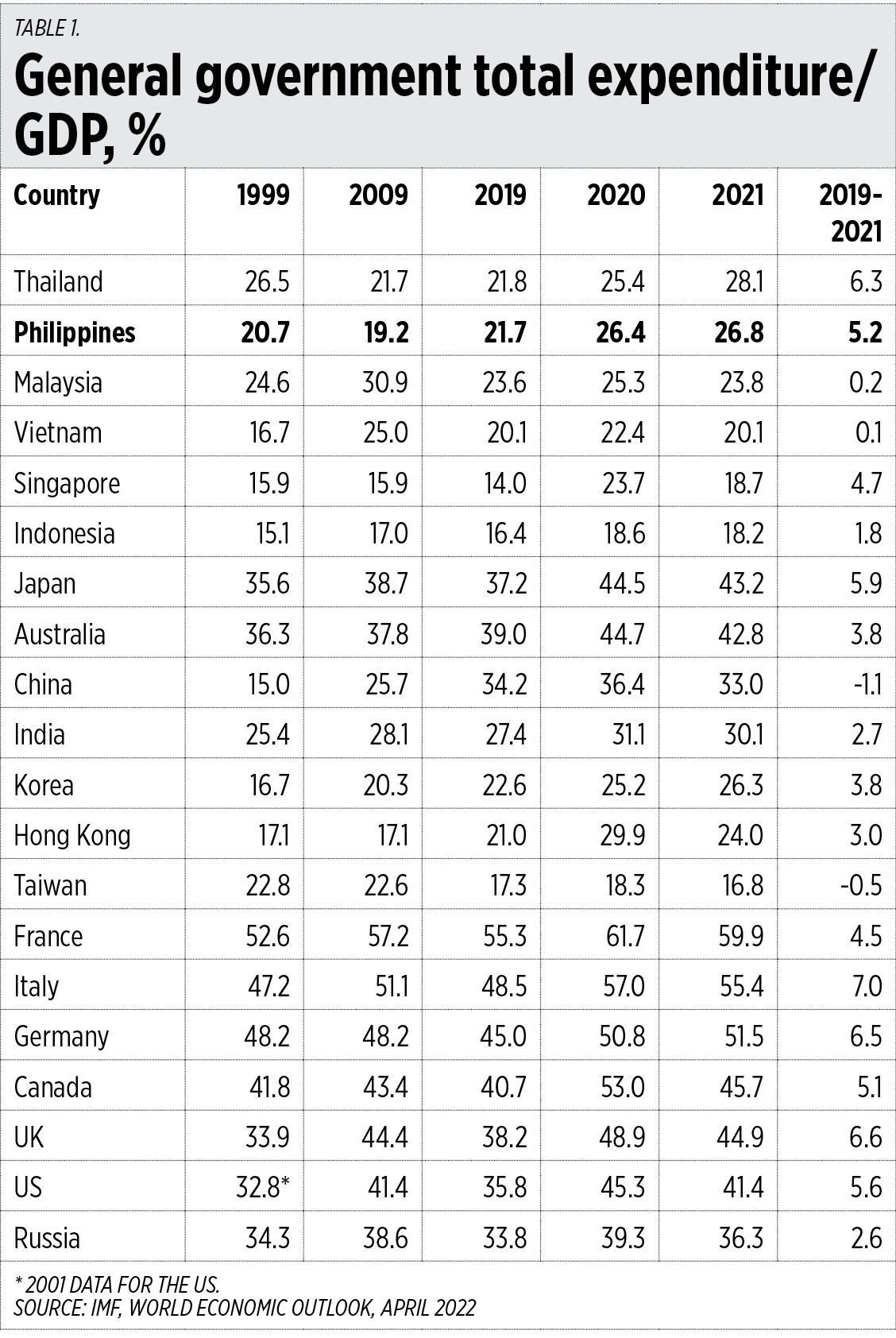
When the next administration comes in, among the high-profile economic issues they will face will be the high government spending that will require high borrowing and high taxes. The Philippines’ government spending share to GDP (G/GDP) ratio was 21.7% in 2019, and it rose to 26.8% in 2021 or a 5.2 percentage point increase in just two years. This is the second highest increase in the ASEAN-6.

Take note that this is only general or national government spending and does not include spending by local governments. If local government spending is included, we would likely be in the 32-35% of GDP level or nearly twice that of Singapore which has no local governments. Socialist Vietnam has a low G/GDP ratio of only 20%. Very likely excluded in their numbers are the spending of state-owned enterprises and banks, and local governments (Table 1).

The Philippine bureaucracy and political class, from national down to barangay level, kept receiving their salaries, allowances, and bonuses even when many people in the private sector lost their businesses, jobs, and income during the lockdowns of 2020-2021. Really unfair.

The pandemic per se cannot be blamed for this anomaly because the same virus affected Asia and the rest of the world, which had different economic outcomes because different governments have different responses. In 2020, while the Philippines had a GDP contraction of 9.6%, Vietnam grew by 2.9% and Taiwan had growth of 3.4%.

Rising government spending even if revenues are declining means increased borrowing.

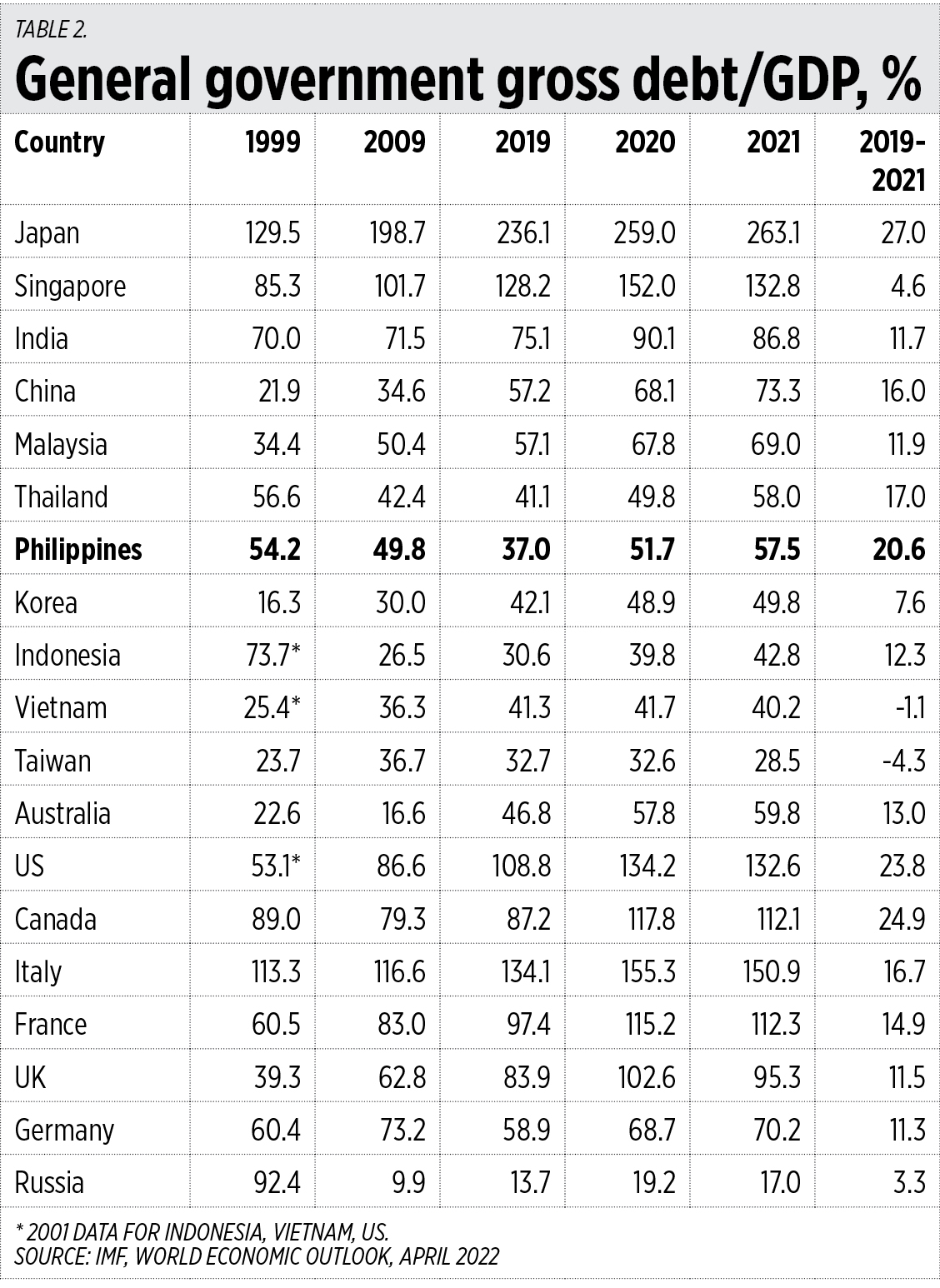
The Philippines’ gross debt/GDP ratio of 37% in 2019 rose to 57.5% in 2021 or 20.6 percentage points increase in just two years. It is the highest increase in the ASEAN-6.

Note also the huge increase in public debt of G7 countries including Japan. Only Germany in the G7 has not reached the 100% debt/GDP ratio in 2020-2021. This means those huge governments will keep borrowing huge amounts to pay old debts and push global interest rates even higher, which is not good (Table 2).

Overall, we will have more bad news than good news on the economic front. As US-EU economic sanctions against Russia expand, more commodities — from oil-gas-coal to minerals to agriculture and livestock — will be affected, supply restricted, and prices, and national and global inflation rates will further rise. Then global interest rates will further rise, and the taxes needed to pay high spending and borrowings will rise too.

There are many other economic issues to prepare for but suffice it to say that the next administration should make serious cuts in spending, cuts in borrowings, in order to limit tax hikes. Campaign promises to expand subsidies and spending should be relegated to one side as much as possible.

If spending cuts cannot be done, another option is to have large-scale privatization of government assets and enterprises, from wide lands to non-essential “services” like operating casinos and lotteries. Use privatization proceeds to retire some public debt to reduce principal and interest expenses.


Bienvenido S. Oplas, Jr. is the president of Minimal Government Thinkers.

minimalgovernment@gmail.com

Reflections on the Philippine presidential race

PHILIPPINE STAR/ MIGUEL DE GUZMAN

The race for the presidency in the 2022 Philippine elections may be the most highly divisive and contested referendum for the highest public office in the country. It is a high-stakes and high-risk contest with intense pressures to win from both the top contenders for the office and those who support them. Focusing on the top two contenders, it is a race between stopping one seeking a path back to power and electing one seeking a great reset of powers in the government.

Instead of focusing on what challenges await the next President and the country, we focus on what we can learn from the race for the presidency.

1. Elections are not just about voting candidates into or out of office. These are not merely about the change of names and faces. Elections are about the transfer and legitimation of power. Should we take a step forward to usher in a new (or reformed) governance system or take two steps back to restore an old, tarnished, and contested rule?

2. Elections should not be about those who run for office. It is about the people who should be served — their needs, rights, interests, and demands. Don’t we all deserve a new government that helps more (or mostly) the vulnerable and the marginalized while seeking to protect all regardless of any markers of differences?

3. People cannot be restrained or constrained. Filipinos are resilient. True. But when it’s their future and their loved ones’ future at high stake, they mobilize and organize. Doesn’t the spirit of volunteerism we all witnessed renew and give new meaning to the Filipino’s “bayanihan,” from that of communal cooperation to collective action and accountability?

4. Conventional politics must end. Political parties cannot effectively steer the public space until genuine political party reforms are made. Shouldn’t we sustain the “people’s movements” seeking to expand the political space available and bring in the concerns of everyday life that are silenced by dominant powers operating in the society?

5. No issues are either politically or morally compelling. Politically contentious or not, all issues are and should always be both politically and morally compelling. Shouldn’t we stand up for the oppressed and unjustly persecuted and the basic sectors who are really in need? Shouldn’t we stand against the politically and morally corrupt?

6. Public service is the name but public accountability is the rule of the game. Article XI, Section 1 of the 1987 Philippine Constitution states that “Public office is a public trust … officers and employees must at all times, be accountable to the people…” Why is it so difficult to execute? Shouldn’t all those who run audit themselves first even before running?

Instead of focusing on what opportunities await the next President, we focus on the salient issues and tasks for the next President to act on. These issues and tasks echo those of the Ateneo de Manila University’s Department of Political Science published in a working paper series related to the 2022 presidential and vice-presidential elections and accessible via admupol.org.

1. Pass a Security of Tenure (SOT) law that will protect workers against abusive contractualization. The next President must certify the SOT bill as urgent and mobilize support from both the House of Representatives and the Senate. Review overseas employment and prioritize the creation of jobs locally and the organization of a task force on reintegration while sustaining protection mechanisms. Forge bilateral agreements to safeguard Filipinos abroad and create migration resource centers outside of the NCR (National Capital Region) and urban areas to assist families back home.

2. Stop the misogyny and privileging of men over women that still envelope Philippine governance and politics. Socio-economic targets should not be gender-blind. They should be specific and implicit in achieving gender equality and underscore bringing people together instead of polarizing the polity as well as framed and executed with an ethic of care.

3. Declare and address a crisis in education aggravated by the COVID-19 pandemic. Provide higher funding for education where the Philippines’ current 3% budget is lower than what is required by UN standards. The next President must be able to resolve issues concerning the mismatch of the skills and talents of graduates that our education system produces and the needs of our society as well as demands of industries.

4. Develop a strong public healthcare system with strong public health infrastructure throughout the country that are able to respond to any pandemics like COVID-19, non-communicable diseases, and other-health related concerns. Toward this end, the next President must ensure the effective and efficient implementation of the Universal Health Care law, the provision of free and accessible healthcare through the National Health Insurance Program and Health Care Provider Network in provinces and cities.

5. Synergize the imperatives of the security sector and justice sector reforms with Sustainable Development Goal 16 which includes the promotion of peaceful and inclusive societies for sustainable development, the provision of access to justice for all, and building effective, accountable institutions at all levels. There is a need to shift from a militaristic, anti-insurgency approach toward human security and a whole-of-government approach to addressing the root causes of rebellion.

6. Put inclusivity, transparency and accountability at the core of the government. Don’t we all deserve public officials who do not only demonstrate excellence in public service but also maintain a culture of excellence? Under the leadership of the next President, can all agencies and instrumentalities of the government aim for a culture of excellence by meeting International Public Sector Accounting Standards and earn the Commission on Audit’s seal of approval? Can the next President direct all government agencies to an audit of its management system to meet the international standard for quality management systems? To start the process, will the next President boldly order a full disclosure policy that can promote greater transparency in public service, and hence, start combating problems of corruption and patronage politics?

In light of these salient lessons and tasks, will the next President of the Philippines draft a new history with a renewed faith in democracy? Or will the next President thrust the country and its people back to a history that will forever remain tarnished, mired, and highly contested?


Diana J. Mendoza, PhD is faculty and former chair (2017-2021) of the Department of Political Science, Ateneo de Manila University.

Japan to take time phasing out Russian oil imports — PM Kishida

WIRESTOCK-FREEPIK

TOKYO — Japan will take time to phase out Russian oil imports after agreeing on a ban with other Group of Seven (G7) nations to counter Moscow’s invasion of Ukraine, Prime Minister Fumio Kishida said on Monday. 

The G7 nations committed to the move “in a timely and orderly fashion” at an online meeting on Sunday to put further pressure on President Vladimir Putin, although members such as resource-poor Japan depend heavily on Russian fuel. 

“For a country heavily dependent on energy imports, it’s a very difficult decision. But G7 coordination is most important at a time like now,” Mr. Kishida told reporters, repeating comments he made at the G7 meeting. 

“As for the timing of the reduction or stoppage of (Russian) oil imports, we will consider it while gauging the actual situation,” he said. “We will take our time to take steps towards a phase-out.” He did not elaborate. 

There have been no ships loading Russian oil for Japan since mid-April, according to Refinitiv data. About 1.9 million barrels were exported from Russia to Japan in April, 33% down from the same month a year ago. 

The Ukraine crisis has highlighted Japan’s energy dependence on Russia even as Tokyo has acted swiftly and in tandem with the G7 in instituting sanctions. 

The latest ban underlines a turn in Japan’s policy. Japan has said it would be difficult to immediately cut off Russian oil imports, which accounted for about 33 million barrels of Japan’s overall oil imports, or 4%, for 2021. 

It has already said it will ban Russian coal imports in stages, leaving just liquefied natural gas (LNG). Japan is in a particularly tough spot since it shut down the bulk of its nuclear reactors following the 2011 Fukushima nuclear disaster. 

Russia was Japan’s fifth-biggest supplier of crude oil and LNG last year. 

The Japanese government and companies own stakes in oil and LNG projects in Russia, including two on Sakhalin Island from which partners Exxon Mobil Corp and Shell PLC have announced they will exit. 

Still, Japan’s biggest oil refiner, Eneos Holdings Inc., has already stopped buying Russian crude, saying it would get supplies from the Middle East. 

On Friday, trading firm Marubeni Corp said it wanted to withdraw from the Sakhalin-1 oil project but was keeping its stake in line with government policy. 

Mr. Kishida said on Monday there was no change to the government’s policy of keeping business interests in the various Russian energy assets. — Reuters

South Korea hunts tungsten treasure in race for rare minerals

Sangdong Mine in South Korea. —Younghyun.ju/CC BY-SA

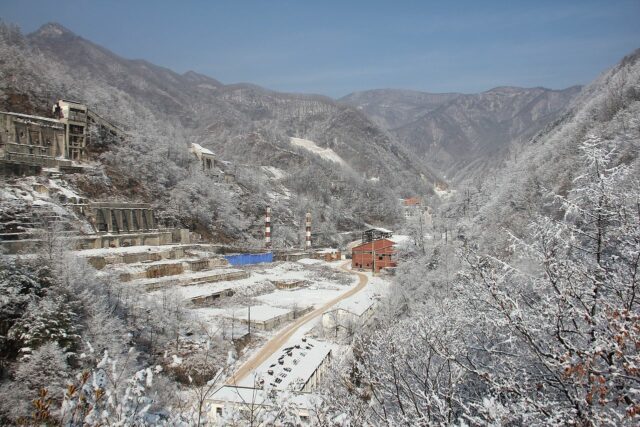
SANGDONG, South Korea — Blue tungsten winking from the walls of abandoned mine shafts, in a town that’s seen better days, could be a catalyst for South Korea’s bid to break China’s dominance of critical minerals and stake its claim to the raw materials of the future. 

The mine in Sangdong, 180 km southeast of Seoul, is being brought back from the dead to extract the rare metal that’s found fresh value in the digital age in technologies ranging from phones and chips to electric vehicles and missiles. 

“Why reopen it now after 30 years? Because it means sovereignty over natural resources,” said Lee Dong-seob, vice president of mine owner Almonty Korea Tungsten Corp. 

“Resources have become weapons and strategic assets.” 

Sangdong is one of at least 30 critical mineral mines or processing plants globally that have been launched or reopened outside China over the last four years, according to a Reuters review of projects announced by governments and companies. These include projects developing lithium in Australia, rare earths in the United States and tungsten in Britain. 

The scale of the plans illustrates the pressure felt by countries across the world to secure supplies of critical minerals regarded as essential for the green energy transition, from lithium in EV batteries to magnesium in laptops and neodymium found in wind turbines. 

Overall demand for such rare minerals is expected to increase four-fold by 2040, the International Energy Agency said last year. For those used in electric vehicles and battery storage, demand is projected to grow 30-fold, it added. 

Many countries view their minerals drive as a matter of national security because China controls the mining, processing or refining of many of these resources. 

The Asian powerhouse is the largest supplier of critical minerals to the United States and Europe, according to a study by the China Geological Survey in 2019. Of the 35 minerals the United States has classified as critical, China is the largest supplier of 13, including rare earth elements essential for clean-energy technologies, the study found. China is the largest source of 21 key minerals for the European Union, such as antimony used in batteries, it said. 

“In the critical raw material restaurant, China is sitting eating its dessert, and the rest of the world is in the taxi reading the menu,” said Julian Kettle, senior vice president for metals and mining at consultancy Wood MacKenzie. 

‘HAVE TO HAVE A PLAN B’
The stakes are particularly high for South Korea, home of major chipmakers like Samsung Electronics. The country is the world’s largest consumer of tungsten per capita and relies on China for 95% of its imports of the metal, which is prized for its unrivaled strength and its resistance to heat. 

China controls over 80% of global tungsten supplies, according to CRU Group, London-based commodity analysts. 

The mine at Sangdong, a once bustling town of 30,000 residents that’s now home to just 1,000, holds one of the world’s largest tungsten deposits and could produce 10% of global supply when it opens next year, according to its owner. 

Lewis Black, CEO of Almonty Korea’s Canadian-based parent Almonty Industries, told Reuters that it planned to offer about half of the operation’s processed output to the domestic market in South Korea as an alternative to Chinese supply. 

“It’s easy to buy from China and China is the largest trading partner of South Korea but they know they’re over-dependent,” Black said. “You have to have a plan B right now.” 

Sangdong’s tungsten, discovered in 1916 during the Japanese colonial era, was once a backbone of the South Korean economy, accounting for 70% of the country’s export earnings in the 1960s when it was largely used in metal-cutting tools. 

The mine was closed in 1994 due to cheaper supply of the mineral from China, which made it commercially unviable, but now Almonty is betting that demand, and prices will continue to rise driven by the digital and green revolutions as well as a growing desire by countries to diversify their supply sources. 

European prices of 88.5% minimum paratungstate — the key raw material ingredient in tungsten products — are trading around $346 per tonne, up more than 25% from a year ago and close to their highest levels in five years, according to pricing agency Asian Metal. 

The Sangdong mine is being modernized, with vast tunnels being dug underground, while work has also started on a tungsten crushing and grinding plant. 

“We should keep running this kind of mine so that new technologies can be handed over to the next generations,” said Kang Dong-hoon, a manager in Sangdong, where a “Pride of Korea” sign is displayed on a wall of the mine office. 

“We have been lost in the mining industry for 30 years. If we lose this chance, then there will be no more.” 

Almonty Industries has signed a 15-year deal to sell tungsten to Pennsylvania-based Global Tungsten & Powders, a supplier to the U.S. military, which variously uses the metal in artillery shell tips, rockets and satellite antennae. 

Yet there are no guarantees of long-term success for the mining group, which is investing about $100 million in the Sangdong project. Such ventures may still struggle to compete with China and there are concerns among some industry experts that developed countries will not follow through on commitments to diversify supply chains for critical minerals. 

SUPPLY-CHAIN DIPLOMACY
Seoul set up an Economic Security Key Items Taskforce after a supply crisis last November when Beijing tightened exports of urea solution, which many South Korean diesel vehicles are required by law to use to cut emissions. Nearly 97% of South Korea’s urea came from China at the time and shortages prompted panic-buying at filling stations across the country. 

The Korean Mine Rehabilitation and Resources Corporation (KOMIR), a government agency responsible for national resource security, told Reuters it had committed to subsidize about 37% of Sangdong’s tunneling costs and would consider further support to mitigate any potential environmental damage. 

Incoming President Yoon Seok-yeol pledged in January to reduce mineral dependence on “a certain country,” and last month announced a new resource strategy that will allow the government to share stockpiling information with the private sector. 

South Korea is not alone. 

The United States, European Union and Japan have all launched or updated national critical mineral supply strategies over the last two years, laying out broad plans to invest in more diversified supply lines to reduce their reliance on China. 

Mineral supply chains have also become a feature of diplomatic missions. 

Last year, Canada and the European Union launched a strategic partnership on raw materials to reduce dependence on China, while South Korea recently signed collaboration deals with Australia and Indonesia on mineral supply chains. 

“Supply-chain diplomacy will be prioritized by many governments in the coming years as accessing critical raw materials for the green and digital transition has become a top priority,” said Henning Gloystein, director of energy and climate resources at the Eurasia Group consultancy. 

In November, China’s top economic planner said it would step up exploration of strategic mineral resources including rare earths, tungsten and copper. 

ENVIRONMENTAL OPPOSITION
Investment globally of $200 billion in additional mining and smelter capacity is needed to meet critical mineral supply demand by 2030, 10 times what is being committed currently, Kettle said. 

Yet projects have faced resistance from communities who don’t want a mine or smelter near their homes. 

In January, for example, pressure from environmentalists prompted Serbia to revoke Rio Tinto’s lithium exploration license while U.S. President Joseph R. Biden, Jr.’s administration canceled two leases for Antofagasta’s copper and nickel mines in Minnesota. 

In Sangdong, some residents are doubtful that the mine will improve their lives. 

“Many of us in this town didn’t believe the mine would really come back,” said Kim Kwang-gil, 75, who for decades lived off the tungsten he panned from a stream flowing down from the mine when it operated. 

“The mine doesn’t need as many people as before, because everything is done by machines.” — Ju-min Park and Joe Brock/Reuters

[B-SIDE Podcast] Russia, Ukraine, and the Philippines (Part 2)

Follow us on Spotify BusinessWorld B-Side

In this B-Side episode, Collin Koh, a research fellow at the S. Rajaratnam School of International Studies of Nanyang Technological University in Singapore, elaborates on the lessons the Philippines and the region should take away from the ongoing Russia-Ukraine war.

“It is important for countries to seek diplomacy, but also to seek readiness to respond to contingency — in this case, a credible military for both big and small states alike,” Mr. Koh tells BusinessWorld reporter Luz Wendy T. Noble.

TAKEAWAYS

Countries must define their national interest.

The Asia-Pacific region has to perform a “precarious” balancing act as it faces post-pandemic concerns like mounting debt, public health and social security issues, and inadequate defense strategies in a world where global order is a concern.

Most Southeast Asian countries spend about 1% of their gross domestic product for military strategies, which is “not sustainable,” said Mr. Koh, given the cost of defense equipment.

Military strategies should, upfront, be rooted in national interest. Establishing this will allow policymakers to gauge the corresponding steps and how it could delegate tasks given available resources and institutions.

The next Commander-in-Chief of the Philippines, he added, will have to weigh the defense of territorial sovereignty against internal security. 

In recent years, the Armed Forces of the Philippines (AFP) has had to address insurgencies following the Marawi Siege, and the emergence of ISIS-related groups on the local front; and, on the external front, the maritime dispute with China in the West Philippine Sea.

“Would it be possible for the AFP to relegate some of these roles to other agencies to focus on its traditional role of external defense? … Will this change the country’s posture in the West Philippine Sea?” Mr. Koh said.

Neutrality does not equate to being principled.

Countries in the Asia-Pacific had varying stances on the Russia-Ukraine war. But for smaller sovereigns like the Philippines, upholding and standing by international law is a “final frontier” that the world order should be ruled by “right instead of might,” Mr. Koh said.

“If any of us smaller countries what facing Ukraine now, we would expect the international community to come to our aid,” he said.

Mr. Koh said a Ukraine victory would be a win for smaller states also facing aggression from bigger powers as this would prove that the international system works.

As the war stretches on, the next administration will likely keep a “buoyant” China relationship and keep its strong alliance with the US.

Mr. Koh said the next president will likely keep China in the picture given it is a market for exports and how it has been deeply linked with the region through investments and funding. 

In the same way, he said the next leader will keep its alliance with the US, noting how President Rodrigo R. Duterte administration had a “roller coaster ride” with Washington but has, in the end, retained its strong ties with the world’s biggest economy. He also sees opportunities for stronger relationships to flourish with other powers in the region like India, Australia, and Japan, given how the war has brought to light security concerns.

Recorded remotely on April 28, 2022. Produced by Earl R. Lagundino and Sam L. Marcelo.

Follow us on Spotify BusinessWorld B-Side

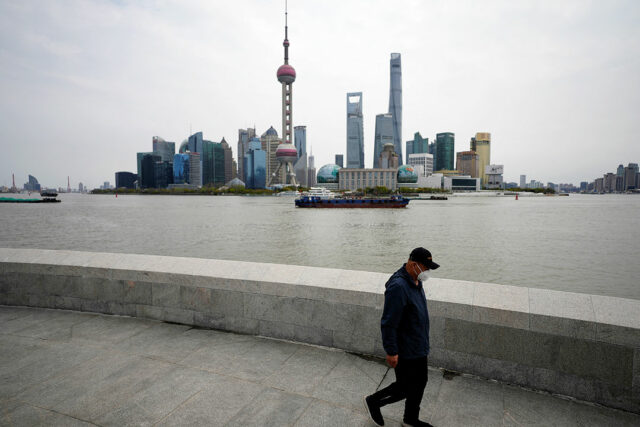
Shanghai COVID crisis puts political spotlight on key Xi ally

REUTERS

BEIJING — If Shanghai Communist Party chief Li Qiang has been politically bruised by the city’s struggle to tame a coronavirus disease 2019 (COVID-19) outbreak that has infuriated residents and caused severe economic damage, there is little sign of it.

A close ally of President Xi Jinping for decades, Mr. Li has long been seen as destined for the powerful Politburo Standing Committee this year, tracking a well-worn path from Shanghai’s top spot that many analysts say appears safe despite the city’s COVID crisis.
Outbreaks have derailed the careers of some local Chinese officials. But they did not share Mr. Li’s stature or history with Mr. Xi, under whom the boss of China’s most populous city has risen steadily through the party ranks.

And while Mr. Xi may be China’s most powerful leader since Mao Zedong, he needs a core of staunch loyalists on the seven-member Standing Committee.

To be sure, the opacity of Chinese politics and Mr. Xi’s willingness to break with precedent — he scrapped presidential term limits — make predictions difficult for the once-in-five-years Communist Party congress this autumn that will determine Mr. Xi’s next leadership lineup.

Mr. Li, 62, has not been directly associated in public with the “slice-and-grid” approach to fighting COVID, in which Shanghai authorities sought to isolate the coronavirus in specific neighborhoods to allow the city as a whole to avoid a disruptive lockdown.

That strategy failed. A spike in infections prompted an about-turn, a more-than five-week lockdown of the city of 25 million.

Now Shanghai is tightening its lockdown in a fresh push to eliminate infections outside quarantined areas by late this month, people familiar with the matter told Reuters.


USEFUL ‘CHESS PIECE’

Social media users have directed some of their ire at Mr. Li, with posts on the popular Weibo site such as “Shanghai party secretary should just acknowledge his mistake and resign,” and “Shameless politician destroyed Shanghai”.

Mr. Li and the Communist Party’s Organization Department, which is in charge of personnel, did not respond to requests for comment.

The party bosses in Wuhan, where COVID was first detected, and surrounding Hubei province, were replaced in 2020. At least 31 officials in the northwestern city of Xian were punished this year after an outbreak that led to lockdown.

Shanghai has punished at least 25 officials during its outbreak.

But none of those Shanghai officials were above the district level and the most senior Xian official punished was the health chief.

“The people who will be blamed for the debacle in Shanghai will be those who are politically dispensable,” said Charles Parton, a former British diplomat and senior associate fellow at the Royal United Services Institute think tank.

Alfred Wu, associate professor at the Lee Kuan Yew School of Public Policy in Singapore, said officials elsewhere “would’ve been gone by now”.

“But because of Li’s closeness with Xi, his potential usefulness to Xi as a chess piece in the new leadership lineup, and because the Shanghai party boss is of a much higher rank than the party bosses of most other cities in China, Li is going to be safe.”


‘STEADFASTLY PERSIST’

Mr. Li has repeatedly appeared on state media visiting residential compounds and hospitals, wearing an N95 mask, black jacket and pants — the de facto uniform for party leaders in the field.

At every appearance, he reiterates the message: “We must resolutely implement the spirit of the important instructions by Party Secretary Xi Jinping and steadfastly persist in the dynamic-zero approach.”

Although the city still reports thousands of COVID cases daily, the Standing Committee said on Thursday it believes the party can “surely win the battle of Shanghai”, powered by Mr. Xi’s COVID policy.

“If Shanghai’s COVID fight were to be billed as a success, then why should Li, steadfastly implementing Xi’s approach leading to this success, be punished?” said Chen Daoyin, former associate professor at Shanghai University of Political Science and Law, now a commentator based in Chile.

No senior officials have publicly questioned Mr. Xi’s zero-COVID policy, which has been increasingly strained by the infectiousness of the Omicron variant and further isolated China as the rest of the world learns to live with the coronavirus.

Despite the headwinds, China is widely expected to stick with its hard-line approach at least until the party congress, where Mr. Xi is poised to secure a third leadership term. He has claimed China’s fight against COVID as a major political achievement that shows the superiority of its socialist model to the West.

Ultimately, Mr. Li answers to one boss.

A native of Zhejiang province, Mr. Li was Mr. Xi’s chief secretary — a role for the most trusted confidants — from 2004 to 2007 when Mr. Xi was party boss in the eastern coastal province. Mr. Li was promoted to governor of the economic powerhouse province in 2013, the year Mr. Xi became president.

When Mr. Xi removed several officials in neighboring Jiangsu province as part of a corruption crackdown and needed someone trustworthy to fill the political vacuum, he sent in Mr. Li in 2016, elevating him to provincial party chief.

The next year, Mr. Xi promoted Mr. Li to Shanghai party boss.

All but one Shanghai party chief since the late 1980s, including Mr. Xi, has ultimately been promoted to the Standing Committee. — Yew Lun Tian/Reuters

Russian attacks on rail system fail to paralyze ‘lifeline of Ukraine’

Army soldier figurines are displayed in front of the Ukrainian and Russian flag colors background in this illustration taken, Feb. 13, 2022. — REUTERS/DADO RUVIC/ILLUSTRATION

FASTIV, Ukraine — A salvo of missiles brought the Kremlin’s war on Ukraine to Fastiv, a quiet town abounding with flowering cherry trees and set in sweeping farmland hundreds of kilometers from the front lines. 

The strike on April 28, which injured two people, hit an electrical substation that feeds power to a confluence of railway lines that forms a key hub of networks linking central Europe, Russia, and Asia. 

The damage quickly was repaired, said Ukrainian officials, and a Reuters visit last week revealed no lingering impact. Trains plied between Kyiv and the southern port of Odesa, disgorging passengers into the station at Fastiv, a town of 45,000 people 75 km (45 miles) south of the capital. 

Officials said the attack was part of an escalating Russian assault on infrastructure, aimed in part at paralyzing rail deliveries of Western-supplied arms and also reinforcements sustaining Ukrainian forces fighting in the east and south. 

So far, Moscow’s effort has failed, making state-owned Ukrainian Railways a leading symbol of the country’s resilience. 

“The longest delay we’ve had has been less than an hour,” said Oleksandr Kamyshin, 37, a former investment banker who keeps the trains running as the CEO of the railways, Ukraine’s largest employer. 

“They haven’t hit a single military train.” 

The Russian defense ministry has said Ukrainian facilities powering the railways have been targeted by missile strikes because trains are used to deliver foreign arms to Ukrainian forces. 

The rail system is being hit not just because it is critical to military supplies, Ukrainian officials said. 

Moscow’s “goal is to destroy critical infrastructure as much as possible for military, economic and social reasons,” Deputy Infrastructure Minister Yuri Vaskov said in an interview. 

With Russian warships blockading Black Sea ports, downed bridges and checkpoints obstructing roadways, and a fuel crunch snarling trucking, Ukraine’s 22,000 km (14,000 miles) of track are the main lifeline of the struggling economy and a passage to the outside world. 

Trains have evacuated millions of civilians fleeing to safer parts of the country or abroad. 

They have begun running small grain shipments to neighboring counties to circumvent Russia’s maritime blockade. Ukraine was the world’s fourth largest grain exporter in the 2020/21 season and exports disrupted by the war have interrupted global food chains and helped fuel worldwide inflation. 

Internally, trains are distributing humanitarian aid and other cargoes. They enabled the restart of the AcelorMittal steel plant, in Kryvyi Rih, by bringing workers in and product out, said Kamyshin. They carry civilian casualties in hospital cars staffed by Doctors Without Borders. Since Russia invaded on Feb. 24, he said, trains have distributed more than 140,000 tonnes of food and will have carried some 1 million kilos of mail for the state postal service by mid-May. 

Russian attacks on some of the 1,000 stations have killed scores of civilians, including dozens killed in an attack in April in the station in the eastern city of Kramatorsk. 

That has not deterred passengers. 

Daily ridership has reached as many as 200,000 passengers, Kamyshin said in an interview on Saturday as he rode a train across a bridge that had been repaired after being badly damaged during Russia’s failed advance on Kyiv from the suburb of Irpin. 

Nor have the railway’s 230,000 personnel stayed home even though 122 have been killed and 155 others wounded on the job and in their houses, said Kamyshin. 

Moscow denies striking civilian targets in what it calls a “special military operation” to disarm Ukraine and rid it of what it calls anti-Russian nationalism fomented by the West. Ukraine and the West say Russia launched an unprovoked war of aggression. 

Reuters was not able to independently verify the assertions of Kamyshin and other Ukrainian officials about their successes keeping the railways going in wartime. 

UKRAINE’S ‘LIFELINE’ 

Helena Muskrivska, 56, the Irpin station master, said she worked for the first four days of the Russian assault, helping evacuate some 1,000 people and relaying local developments by landline to Kyiv. She took documents and equipment home when it became too dangerous. 

“I was here when the Russians came into the station. I didn’t want to see them face to face,” said Ms. Muskrivska. 

A group of current and former US and European railway executives formed the International Support Ukraine Rail Task Force in March to raise money for protective gear, first aid kits and financial aid for railway staff. 

“There’s a lot of fundraising efforts everywhere for Ukraine, but none of it goes to the railroad,” said Jolene Molitoris, a former US Federal Railroad Administration chief who chairs the group. “It is the lifeline of the country.” 

The group also aims to fund purchases of heavy machinery, rails and other equipment sought by the railways. 

Mr. Kamyshin said he is racing against the Russian attacks, deploying teams of workers and dispatchers around the clock to fix tracks and reroute trains. “It’s all about hours, not about days.” 

He and top aides constantly move, taking trains to inspect damage and repairs around Ukraine, he said, adding: “Once they break it, we fix it”. 

Mr. Kamyshin said his top priority is redirecting grain exports from Ukraine’s southern ports to Poland, Romania, and the Baltic states to help revive the economy. He said Russia would remain a threat even after what he called its inevitable defeat. “This crazy neighbor will stay with us,” he said. “No one knows when they will come again.” — Jonathan Landay/Reuters

What’s at stake in the Philippines election?

PHILIPPINE STAR/MIGUEL DE GUZMAN

The Philippines holds an election on Monday for a new president, pitting incumbent Vice President Maria Leonor “Leni” G. Robredo  against Ferdinand “Bongbong” R. Marcos, Jr., the son of a notorious dictator whose 20-year rule ended in a 1986 uprising. 

Here are some of the issues at play: 

HOW WOULD EACH CANDIDATE RULE? 

Mr. Marcos is unlikely to rule like his authoritarian father, although strongman-style leadership could be expected. 

This approach proved popular under incumbent Rodrigo R. Duterte, who cultivated an image as a ruthless, no-nonsense leader who got things done. 

If elected, Mr. Marcos would probably use his family’s influence to consolidate power through transfers, appointments and connections in the bureaucracy, judiciary and other key bodies, replacing potential obstacles with members of his extensive political network. 

He could expect a more favorable congress and senate than Mr. Robredo. 

A Robredo victory would bring a more liberal approach and focus on education, healthcare, poverty and gender equality, while strengthening institutions and oversight and boosting market competition. 

She has pledged to improve social welfare, such as unemployment benefits and family support. 

However, a Robredo presidency would probably run into turbulence. She has already been a prime target for hate and disinformation campaigns as a vice president who dared to challenge Mr. Duterte. 

WHAT ABOUT THE ECONOMY? 

Neither candidate will advocate a significant economic restructuring, though both have promised to prioritize pandemic recovery and could target investment reforms, such as cutting red tape. 

Ms. Robredo has pledged to increase investment to tackle climate change, level the playing field for business and promote public-private partnerships. 

Mr. Marcos has revealed very little about policy and has steered clear of presidential debates and tricky media interviews, focusing on a simple but ambiguous message of unity. Continuity with Mr. Duterte is expected, for example on key infrastructure projects. 

Some economic risk consultants have seen a higher chance of corruption and nepotism under a Marcos presidency, however, and the scope for score-settling and retaliation against businesses linked to the family’s opponents. 

WHAT WOULD FOREIGN POLICY LOOK LIKE? 

The Philippines’ longstanding ties to former colonial power the United States are unlikely to be threatened by either candidate, having been steady through Mr. Duterte’s years of very public hostility towards Washington. 

The defense alliance is crucial for internal security and military capability, and preserving it is vital for a Philippine president’s relationship with the armed forces. 

Mr. Marcos is seen as the candidate closer to China and could benefit from its business interests. He favors a two-way approach that better suits Beijing but will frustrate advocates of the multilateral approach Ms. Robredo is likely to pursue. 

Mr. Marcos has been pragmatic in recognizing the Philippines is no match militarily, so a tough stance should not be expected. Ms. Robredo would oppose Chinese provocations, and remind Beijing that an international arbitral court ruling in 2016 invalidated most of its South China Sea claims. 

WHAT HAS BEEN DUTERTE’S ROLE? 

Mr. Duterte has had a testy relationship with Ms. Robredo but has been characteristically mercurial over Mr. Marcos, having both praised him and questioned his suitability to lead. 

Mr. Duterte has not endorsed Mr. Marcos, or any other candidate, but crucially he has not sought to move against him or hurt his reputation. 

A big win for Mr. Marcos was securing the president’s daughter, Sara Duterte-Carpio, as his vice presidential running mate, helping him to absorb some of the incumbent’s cult-like following, particularly on social media, and draw new voters. 

The dynamic of the two families has spurred speculation of a quid pro quo that helped secure the presidency for Mr. Duterte, who in turn smoothed the way for Mr. Marcos. 

Notable was Mr. Duterte publicly thanking politician and Mr. Marcos’s sister, Imee, for funding his campaign — which she later dismissed as a joke. He also occasionally praised the late dictator and controversially allowed his body to be moved to a “heroes” cemetery in Manila, after years of failed attempts by the family. 

HOW IMPORTANT IS SUCCESSION FOR DUTERTE? 

Political vendettas are common in the Philippines and former presidents often face legal action or are even jailed. Mr. Duterte has made a few enemies. 

Though they left no dent on his popularity, Mr. Duterte’s presidency was fraught with scandals involving allies or appointees, some of which could re-emerge later. 

Activists and lawyer groups blame Mr. Duterte for thousands of alleged executions of drug pushers and users during his war on drugs and could launch legal action when he leaves office, or lobby the International Criminal Court to resume investigation. 

Ms. Robredo has been a staunch critic of the president’s lethal methods of fighting drugs and crime and would be more likely to enable investigations into Mr. Duterte. But with his daughter as vice president and Mr. Marcos in charge, he would be well insulated. — Martin Petty/Reuters

Marcos, Robredo lead field in presidential vote

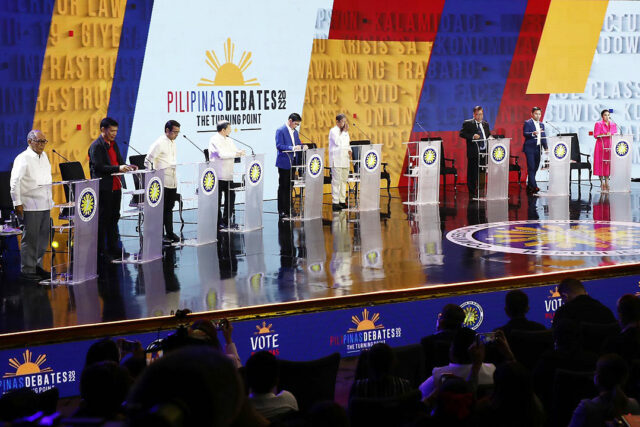
THE SECOND round of the Comelec-sanctioned presidential debates for the 2022 elections held April 3 was attended by nine of 10 candidates. The only one absent was Ferdinand “Bongbong” R. Marcos, Jr., who also skipped the first round. — PHILIPPINE STAR/ MIGUEL DE GUZMAN

Voting started in the Philippines on Monday in a presidential election that has shaped into a two-way race between the clear favorite Ferdinand “Bongbong” R. Marcos, Jr., and his main rival Maria Leonor “Leni” G. Robredo.

Here are details on the candidates, starting with the current leader in opinion polls:

FERDINAND “BONGBONG” R. MARCOS, JR.

The namesake son of the late dictator, Mr. Marcos, 64, is a former governor, congressman and senator who has emerged as frontrunner with 56% support in the most recent opinion poll.

Since returning to the Philippines in 1991 from exile after the dictator’s removal, the Marcos family has sought to rebuild an image tainted by his often brutal rule and the plunder of billions of dollars from state coffers.

Mr. picked Sara Duterte-Carpio, the daughter of current President Rodrigo R. Duterte, as his candidate for vice president, a move analysts say has helped enhance his popularity.

But the vice president is elected separately.

Popular with many younger people born after his father’s rule, Mr. Marcos says he offers a “unifying brand” of leadership.

Observers say his strong presence on social media has contributed to his lead in polls. Critics say Marcos is attempting to rewrite the family’s controversial history for a youthful electorate.

Mr. Marcos, who recently called his late father a “political genius”, has denied claims of spreading misinformation. 

Last week, Ms. Robredo challenged Mr. Marcos to a debate, but he declined, saying he preferred to speak directly to the public.

MARIA LEONOR ‘LENI’ G. ROBREDO 

Vice President Robredo, 57, is the leader of the opposition and the only female candidate.

She and Mr. Marcos have a longstanding rivalry, with Ms. Robredo’s affiliation firmly with the movement that ousted Mr. Marcos’s father after years of authoritarian rule and martial law.

The former human rights lawyer narrowly defeated Mr. Marcos in the contest to be vice president in 2016. She quit the role of Mr. Duterte’s housing minister after being excluded from cabinet meetings to become one of his staunchest critics.

After condemning what she called “senseless killings” in Mr. Duterte’s war on drugs, she was appointed his “drugs tsar”, but he sacked her after just 18 days.

Ms. Robredo is pressing for public sector transparency and has vowed to lead a government that cares for the people and to bolster the medical system.

A win for Ms. Robredo would make her her the third woman to lead the Philippines after democracy champion Corazon Aquino in 1986 and Gloria Macapagal-Arroyo in 2001.

She is running with Francis “Kiko” N. Pangilinan, a lawyer and senator, and the latest survey put her in second place, with support of 23%.

EMMANUEL ‘MANNY’ D. PACQUIAO

Retired boxing superstar Mr. Pacquiao, 43, has vowed to jail corrupt officials and has criticized Mr. Duterte’s close relationship with China.

He has pledged to improve the healthcare system, eradicate corruption, spur economic growth and provide housing for the poor.

He is third in the polls on support of 7%, running with Jose Atienza, a congressman and former environment minister.

FRANCISCO ‘ISKO’ M. DOMAGOSO 

The mayor of the capital, Manila, and a former movie heart-throb, has promised zero tolerance of Chinese maritime aggression in the South China Sea and his economic agenda centers on housing, labor, health and infrastructure.

Mr. Domagoso, 47, who is lagging in the polls on 4% support, is running alongside Willie T. Ong, a doctor who has 16 million followers on Facebook looking for free medical advice.

PANFILO M. LACSON

Mr. Lacson, 73, is a senator and former national police chief who made an unsuccessful presidential bid in 2004 and is also trailing in the latest poll on 2% support. — Reuters

A guide to the Philippine election

(MAY 8, 2022) Parish Pastoral Council for Responsible Voting (PPCRV) national chairperson Myla Villanueva and Comelec chairman Saidamen Pangarungan lead the official launching and blessing of the PPCRV command center inside the University of Santo Tomas in Manila on Sunday. (PHOTO BY MIGUEL DE GUZMAN)

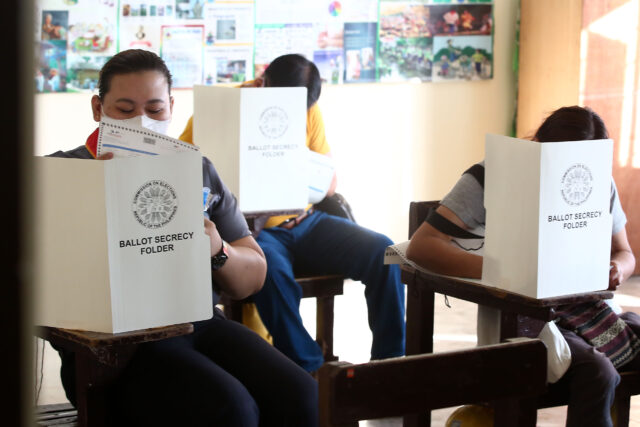
Voting started in the Philippines on Monday to decide thousands of positions across the archipelago, including who will take over from Rodrigo R. Duterte and become its president for the next six years. 

Below is a rundown of what to expect. 

WHAT’S BEING DECIDED? 

The election will choose a president, vice president, 12 senators, 300 lower house legislators, and about 18,000 officials across 7,600 islands, including mayors, governors and their deputies. 

About 67.5 million of the Southeast Asian nation’s 110 million population are eligible voters and most ballots will be cast on election day, with polls open from 6 a.m. to 7 p.m. 

Each voter must select one candidate for each post, from president, vice president and senate, all the way down to their local district councilors. Winners serve three-year terms, except for the president, vice president and senators, who serve six years. 

WHO ARE THE PRESIDENTIAL CONTENDERS? 

Ferdinand “Bongbong” R. Marcos, Jr., 64, the son and namesake of the dictator overthrown in a 1986 “people power” uprising, has been the clear leader in all opinion polls this year. 

A former governor, congressman and senator, Mr. Marcos is a political heavyweight from a family with deep pockets and powerful connections. Critics say him winning the presidency is the Mr. Marcos family’s endgame in whitewashing its past and changing narratives of authoritarianism, plunder and opulent living. 

Mr. Marcos’s campaign message is unity and during recent interviews has been unabashed in praising his late father for his “genius” and leadership. 

His closest rival is Maria Leonor “Leni” G. Robredo, 57, who beat Mr. Marcos in the 2016 vice presidential election. Ms. Robredo is a former human rights lawyer and staunch liberal who as vice president has led campaigns against poverty and gender inequality. She entered politics in 2013 after the death in a plane crash of her husband, a former interior minister. 

Other candidates include Manila mayor Francisco “Isko Moreno” Domagoso, retired boxing champion Emmanuel “Manny” D. Pacquiao and  Panfilo M. Lacson, Sr., a former police chief, although they have consistently trailed in polls. 

ARE PHILIPPINE ELECTIONS CREDIBLE? 

Although vote-buying, political violence and occasional glitches with electronic voting machines have been problems in the Philippines, fraud on the level that would cast doubt on the credibility of polls or their outcome is very unlikely. 

Independent poll monitor the Asian Network for Free Elections concluded that each of the most recent Philippines elections were generally free and fair, with turnout remaining high at about 80%. 

HOW IMPORTANT IS THE OVERSEAS BALLOT? 

Millions of Filipinos have either settled or taken jobs overseas. They collectively remit tens of billions of dollars each year, helping sustain families and drive the Philippine economy. 

As breadwinners, the 1.7 million registered overseas voters — and many more Filipinos holding other nationalities — can be key in influencing the voting choices of their families back home or their communities abroad. 

WHEN WILL WINNERS BE KNOWN? 

Vote-counting starts after polls close and there can be a strong indication of who will be the new president within a few hours via a live, unofficial vote count. 

The election commission is aiming to announce most of the winners by the end of May and those will soon after be confirmed by a proclamation of the current legislature. 

The president-elect has seven weeks before being sworn in, during which time their transition team will work out policy plans and sound out potential cabinet members. 

DOES THE VICE PRESIDENCY MATTER? 

The vice president has no real power unless the president vacates office, but as election running mates, they can be crucial allies in rallying supporters behind presidential candidates. 

Marcos has teamed up with current President Duterte’s daughter, Sara Duterte-Carpio. Her support in the south — historically a weak spot for the Marcos family — could be a game-changer. While her father has not endorsed Mr. Marcos, or any other candidate, he is almost certain to absorb some of the outgoing president’s support. 

The vice president is elected in a separate contest and may not be an ally of whoever becomes president. 

WHAT ABOUT PARTIES? 

In the Philippines, political parties tend to be secondary to personalities, with loyalties shifting easily. 

Family names and endorsements from celebrities, social media influencers and politicians carry enormous weight — far more than party affiliation. 

Widespread defections are anticipated and lawmakers will often ally themselves with whoever becomes president, although rivalries and ideological differences will ensure a political opposition exists. — Reuters