Home Blog Page 599

Chipmakers see some export growth upside

A worker operates the die attach machine at a semiconductor manufacturing plant in Manila, Dec. 10, 2008. — REUTERS

By Justine Irish D. Tabile, Reporter

THE Semiconductor and Electronics Industries in the Philippines Foundation, Inc. (SEIPI) said it is maintaining its forecast of flat to modest growth for exports this year, with increasing demand possibly offsetting the impact of US tariffs.

SEIPI President Danilo C. Lachica said exports of semiconductors and electronics are being driven by artificial intelligence (AI) and data centers.

“It’s just a matter of navigating the economic and geopolitical considerations, specifically for semiconductors, the US tariff,” he told reporters on Tuesday.

“In fact, while we projected flat growth this year, we’re not predicting doom and gloom, so we’re still maintaining our forecast. And maybe, optimistically, some modest growth, notwithstanding the US tariffs,” he added.

He said that if export growth for the first seven months is annualized, exports could top $42 billion.

“Then again, a lot of things can happen with all the geopolitical uncertainty; it would be prudent to just say exports will be flat with some optimism for modest growth,” he added.

The Philippine Statistics Authority (PSA) reported that exports of electronic products totaled $25.61 billion at the end of July, up 7.2%.

Ines Lam, associate director for Asia economics at HSBC, said the sector-specific tariffs that are yet to be imposed by the US remain a worry, especially for Asian economies.

“Tariffs on semiconductors and pharmaceuticals have not been announced yet. They are in a different basket, and pretty soon, I think Trump will announce what final tariffs he will put on these industries,” she said.

“For Asia, it’s especially important, and that’s because a lot of Asian economies export quite a lot of semiconductors, electronics, and pharmaceutical products to the US. And for the Philippines, electronics are more than half of its exports to the US. The impact of that will be significant,” she added.

She said electronics have been doing well mainly because they are still exempt from tariffs, because of frontloading of exports before the tariffs came into force, and because of AI.

“Exports so far are doing okay, but I’m afraid that we may not be able to say the same in the next few months, when the tariff effects really kick in,” she added.

Mr. Lachica said that even if tariffs are imposed, the demand for electronics and semiconductors will continue to be there.

“The price points will decrease, somebody has to shoulder the higher cost, but the demand will still be there,” he said.

“I don’t think it’ll happen this year. So, we’ll just continue doing what we do, producing the chips based on demand,” he added.

He said it usually takes three to six months before any impact is felt in the Philippines.

“We’re just going by the conditions today and it is business as usual … From a business perspective, you shouldn’t be skittish and act like a scaredy-cat. You just respond to what you know today and not have to fret about what could happen,” he added.

He said that the electronics industry is looking at diversifying markets, particularly in the European Union (EU) and the Association of Southeast Asian Nations.

“But we’re still holding on to maintaining our (share), if not growing the share of the Philippines. Because the semiconductors in the Philippines (account for) about 5% of global demand. And we haven’t really seen a drop,” he said.

“Of course, manufacturers will go to countries or sites where there’s lower cost. But I think we’ll maintain our US share and hopefully increase it and grow the demand from Europe,” he added, noting the need for more export promotion to the EU.


Runway extensions planned for Siargao, Busuanga airports

CAAP.GOV.PH

THE Civil Aviation Authority of the Philippines (CAAP) said Siargao and Busuanga airports will be first in line for runway extensions to allow those destinations to accommodate larger aircraft.

CAAP Director General Raul L. del Rosario said:

“The design and feasibility studies for Siargao and Busuanga are ongoing.”

He was speaking to reporters on the sidelines of Asia Pacific Aviation Safety Seminar 2025 on Wednesday. 

The detailed engineering design and feasibility studies for these expansions are ongoing, Mr. Del Rosario said.

CAAP said right-of-way challenges are among the obstacles being encountered in further pursuing these runway extensions, but environmental considerations are also at play.

“In Siargao, there are mangroves that will be affected,” Mr. Del Rosario said, noting that the CAAP is addressing these problems with the Department of Environment and Natural Resources.

Mr. Del Rosario said CAAP is working on workarounds to move plans forward to allow takeoffs and landings by aircraft like the Airbus A320, one of the most widely used single-aisle jets in global airline fleets.

“If we can use larger jets, then we can carry more passengers and help lower airfares,” he said, noting that domestic airfares tend to be more expensive when routes are serviced by smaller turboprop planes.

“For Busuanga, there is just not enough space if you follow the original runway orientation. It needs to be reoriented. This will cause some delays but we want to prioritize it because of expected tourist arrivals,” he said.

Busuanga Airport, also known as the Francisco B. Reyes airport, is the gateway to Coron, Palawan.

The Department of Transportation has allotted P308.62 million for the extension and improvement of the Busuanga Airport runway. — Ashley Erika O. Jose

Building code updates, AI rules top DICT legislative priorities

STOCK PHOTO | Image from Freepik

THE Department of Information and Communications Technology (DICT) said updates to the building code and artificial intelligence (AI) regulation top its list of priority measures for Congress to consider.

At a House Committee on Information and Communications Technology hearing, Undersecretary Sarah Maria Q. Sison said the National Building Code must require all buildings to be fiber-ready.

“Outdated policies in the Philippines continue to treat telecom as an optional service and not as an essential utility,” Ms. Sison said. “This mindset has created a ripple effect leading to poor service coverage, slow development of modern fiber networks, and the persistent digital divide.”

She noted that many structures are currently built without internal cabling, risers, and other features that support fiber networks.

“We need to close the gap through a more aggressive approach to infrastructure development, she said.

Ms. Sison also called for the approval of the proposed Artificial Intelligence Development and Regulation Act.

The DICT also supports a measure that will make government cybersecurity jobs more attractive.

Ms. Sison noted that the Philippines struggles to retain its cybersecurity experts, with many opting to pursue opportunities overseas.

“Government cybersecurity positions offer an average of around P50,000 monthly, a figure that is dwarfed by the private sector, where experts earn up to P200,000 per month,” Ms. Sison said. “This makes it very difficult for the government to attract and retain top talent to secure our critical national infrastructure.” — Beatriz Marie D. Cruz

Climate Change Commission calls for nature-based flood-control solutions

THE Climate Change Commission (CCC) said it is advocating for flood control projects that better consider rainy-season conditions to boost climate resilience.

Undersecretary for Integrated Environmental Science Carlos P. David told the Senate there are alternatives to the Department of Public Works and Highways’ (DPWH) reliance on so-called “gray infrastructure.”

“If infrastructure is improperly placed, not only does it exacerbate flooding; often it actually intensifies flooding downstream,” Mr. David said.

Mr. David said the need to construct projects during the dry season often means they are not properly placed to handle flows encountered during the rainy season.

He also backed water-impoundment projects that facilitate irrigation, hydropower, ecotourism, and aquaculture.

CCC Executive Director Robert E.A. Borje, citing the Climate Tracker Asia Study, said the rate of sea level rise in the Philippines was 2.8 millimeters (mm) per year in 1993 but 3.6 mm in 2010, twice the global average.

Between 2011 and 2021, typhoons caused around P673 billion in damage, he added.

By 2030, the CCC project infrastructure losses of P83 billion and lost productivity of P466 billion. The last El Niño caused P15 billion in losses to agriculture.

The CCC is tasked with raising public awareness of climate change and its impact on energy, agriculture, industry, transport, and health systems. — Andre Christopher H. Alampay

Chemical manufacturer registered after taking over Batangas ecozone company

COCOCHEM AGRO INDUSTRIAL PARK FACEBOOK PAGE

THE Philippine Economic Zone Authority (PEZA) said it registered a chemical manufacturer in connection with its takeover of a locator at the Cocochem Agro-Industrial Park Special Economic Zone in Batangas.

In a social media post on Wednesday, PEZA said it registered Masurf, Inc., which will operate a P620-million manufacturing facility in the municipality of San Pascual.

“At a time when trade realignments are reshaping the global economy, the Philippines is poised to benefit as companies are seeking reliable partners in Asia,” PEZA Director General Tereso O. Panga said.

“With Masurf, Inc. choosing Batangas as its base, we are strengthening our position as a key supplier to the world,” he added.

The facility manufactures ingredients for household products like fabric softeners including esterquat, quaternaries, and tertiary amine derivatives.

“The company takes over operations previously held by Stepan Philippines Quaternaries, Inc., ensuring continuity of high-value manufacturing and reinforcing the Philippines’ stronghold in the global chemicals export market,” PEZA said.

“Ventures like Masurf, Inc. signal a promising trajectory for the national economy, empowering local communities,” it added.

The company is expected to begin commercial operations at the Batangas plant in November, with a commitment to export 70% of its output. — Justine Irish D. Tabile

DA’s Laurel meets with Cambodian counterpart

PIXABAY

AGRICULTURE Secretary Francisco P. Tiu Laurel, Jr. met with Cambodian Minister of Agriculture, Forestry and Fisheries Dith Tina to discuss agricultural trade, food security, and market access, the Department of Agriculture (DA) said.

Mr. Laurel noted that the Philippines is open to receiving Cambodian rice, fish, meat, and vegetables.

Mr. Dith said he has observed growing demand for Cambodian aromatic rice in the Philippines.

The two countries have an active Memorandum of Understanding on Agricultural and Agribusiness Cooperation, involving prospective investments in Cambodian agriculture. — Andre Christopher H. Alampay

Side jobs helping consumers cope, study finds

PHILIPPINE STAR/MIGUEL DE GUZMAN

ABOUT three-fourths of Filipino consumers are resorting to side jobs for extra income, up 2 percentage points from a year earlier, according to the Shopperscope 2025 study of Worldpanel by Numerator.

“More Filipinos are managing not because things suddenly got better for them,” Laurice P. Obana, Shopper Insights director at Worldpanel by Numerator, said at a briefing.

“There’s an active road that they pave and that they really hustle in order for them to manage,” she added.

The 2025 Shopperscope report is based on interviews conducted on 2,000 adults. The respondents were divided into three categories: comfortable, managing, and struggling.

Out of the 75% “managing shoppers,” 28% reported that their financial situation improved over the past 12 months.

The report added that 54% of shoppers in this group are “managing OK” regarding their finances, up from 29% previously. Those in the “just making ends meet” category declined to 40% from 54%.

The “comfortable” category improved six percentage points from a year earlier to 14%, it said.

This group consists of consumers reporting improved finances due to better career opportunities, who reported the capacity to easily cover most of their needs, while still saving money each month.

The “struggling” group accounted for 11% of the survey population, eight percentage points lower from a year earlier. This category was defined as those consumers barely getting by each month and admitted to the need to cut down on spending in the face of the high cost of living.

Ms. Obana added that the top concerns of those surveyed included rising grocery and fuel prices, and their future financial security.

“You can’t really blame them…The news nowadays is not really filled with positive things,” she said.

It projects the Fast Moving Consumer Goods (FMCG) industry to grow 4-5% this year, with cooking oil, bottled/packaged water, and soft drinks the top spend drivers.

As of June, Ms. Obana said that FMCG growth is tracking the company’s forecast at 4.5%.

“It’s going to be interesting to see how we will end up this year,” she said. “Hopefully, we were able to continue, if not even increase, the trajectory of growth that we were expecting for packaged goods.” — Almira Louise S. Martinez

But wait, there’s more for exporters under CREATE MORE

Export-oriented enterprises (EEs) are vital contributors to the economy, driving industrial growth, attracting foreign investment, and generating employment across various sectors. To support these businesses, the government has historically offered tax incentives, including Value-Added Tax (VAT) zero-rating and exemptions on purchases and importations.

Under previous rules, VAT zero-rating and exemptions were limited to Registered Business Enterprises (RBEs) during their designated incentive period. Once this period ends, these benefits can no longer be availed of.

Republic Act No. 12066, also known as the CREATE MORE Act, not only retained these incentives, but also expanded their coverage. Under Sections 6, 7 and 8 of CREATE MORE, EEs may continue to avail of VAT zero-rating on local purchases and VAT exemptions on imports even after the lapse of their incentive periods, the cancellation of their Investment Promotion Agency (IPA) registration. Even if they were never registered with an IPA, they could be eligible provided they meet certain conditions and obtain certification from the Department of Trade and Industry’s Export Marketing Bureau (EMB). Clearly, this shift makes fiscal incentives more inclusive and performance-based, rather than being strictly tied to IPA registration status. Under CREATE MORE, once the incentive period ends, EEs do not automatically lose access to VAT-related benefits.

To implement these provisions, the Bureau of Internal Revenue (BIR) issued Revenue Memorandum Circular No. 32-2025. To be eligible for VAT zero-rating and exemptions under CREATE MORE, EEs must meet two primary conditions. First, a minimum of 70% of the EE’s total annual production from the preceding taxable year must be export sales. Second, the goods and services for which VAT incentives are claimed must be “directly attributable” to export activities, including not only production inputs but also support services such as janitorial, security, financial, consultancy, marketing, as well as administrative services like HR, legal, and accounting. These services need to be incidental to or reasonably necessary for the export activity of an EE. Thus, for EEs engaged in both export and domestic sales, it would appear that the corresponding purchases would need to be allocated between the two, unless the expense is clearly in relation to the export sales.

An indispensable requirement in order for EEs to avail of the VAT zero-rating is the EMB Certification. This certification confirms that the enterprise meets both the 70% export sales threshold and the directly attributable requirements.

The certification must be secured prior to any transaction, whether for local purchases or imports. For local transactions, a copy must be provided to local suppliers to validate VAT zero-rating eligibility. In the case of imports, the certification should be submitted to the Bureau of Customs (BoC) before the goods arrive.

To apply for the certification, EEs must submit supporting documents such as Audited Financial Statements, export documents and bank certifications of inward remittances.

While initial submissions may be made via e-mail, the EMB may require hard copies should they find it necessary. The EMB is tasked with processing complete applications within 20 working days. Certifications remain valid until the end of the EE’s taxable year, whether calendar or fiscal, unless revoked earlier.

Renewal applications must be filed no earlier than 45 working days before the close of the taxable year. Applicants may file any time within the 45-working-day window but are advised not to wait until the last minute to avoid delays and ensure continuity of VAT-related benefits through timely EMB review.

Upon issuance, the EMB certification is subject to a post-issuance audit. If it is determined that export sales of the export-oriented enterprise are less than 70% of the total annual production of the preceding taxable year, the Certification will be revoked. After revocation of the EMB Certification, the export-oriented enterprise will be subject to VAT on its imports for such taxable year covered by the revoked EMB Certification and will be allowed to refund the excess input tax after verification.

If an audit or validation reveals that an EE fails to meet the 70% export sales threshold, its EMB certification may be revoked. Moreover, any violations of the provisions outlined in the CREATE MORE Act, as enforced by RMC No. 32-2025, may lead to administrative, civil, or criminal charges. Such violations include, for example, submitting false or misleading documents during the certification process or applying VAT zero-rating to purchases not directly attributable to export activities.

It is worth clarifying that the EMB Certification is distinct from the VAT zero-rating certification issued by the IPAs. EEs which are currently registered and availing of incentives should only obtain the VAT-zero rating certification from the IPA in order to avail of the VAT incentives. Conversely, if an EE is no longer covered by an IPA incentive period, has had its IPA registration canceled, or was never registered with an IPA, it must obtain certification from EMB to qualify for VAT incentives on its purchases under CREATE MORE.

By preserving the VAT zero-rating on qualified purchases, the new rules ease the EE’s future burden of applying for input VAT refunds in relation to their export sales. This makes securing the EMB Certification ahead of procurement activities especially critical for businesses with frequent or time-sensitive procurement. Taxpayers must remain vigilant about timelines, while I hope that the government prioritizes the streamlining of the certification process. The DTI’s planned digital platform may offer a much-needed boost and pave the way for a smoother implementation.

The views or opinions expressed in this article are solely those of the author and do not necessarily represent those of Isla Lipana & Co. The content is for general information purposes only, and should not be used as a substitute for specific advice.


Anika Mae Fierro is a senior associate at the Tax Services department of Isla Lipana & Co., the Philippine member firm of the PwC network.

+63 (2) 8845-2728

anika.mae.fierro@pwc.com

US ‘crucial’ to Indo-Pacific security amid growing SCS threat — Marcos

PRESIDENT Ferdinand R. Marcos, Jr. delivered his keynote address at the inaugural Manila Strategy Forum, hosted by the Center for Strategic and International Studies, at the Grand Ballroom of Solaire Hotel in Parañaque City on Wednesday. — PHILIPPINE STAR/RYAN BALDEMOR

By Kenneth Christiane L. Basilio, Reporter

PHILIPPINE President Ferdinand R. Marcos, Jr. on Wednesday underscored the need for the US to keep its security focus in the Indo-Pacific region, describing Washington as a vital partner amid increasing Chinese assertiveness in the South China Sea (SCS).

He said his government is “closely watching” the situation unfolding in Ukraine and other flashpoints, pointing out that a deteriorating security condition in those regions may take the US’ attention away in the disputed waterway and undermine regional stability.

“We are aware that the United States has much on its plate, both geopolitically and economically,” he told a security forum in Manila.

Manila and Washington are close allies, with their security ties anchored on a 1950s Mutual Defense Treaty that obligates both nations to come into the aid of each other in case of an armed attack in the Pacific region, including the contested South China Sea.

“It will be crucial to the free and open nature of our region that your vigor, inventiveness and resilience… continue to play a leading role in nurturing a strong and peaceful Indo-Pacific,” said Mr. Marcos.

He said he sees the importance in keeping Manila’s ties with Washington, as the alliance gains greater significance amid shifting geopolitical dynamics and emerging threats in the region.

“Today, the most significant threat to the peace and stability we strive for is right here in our own neighborhood,” he said, alluding to China. “This is not just an opinion. It is a fact.”

“I continue to believe that the Pacific remains the most consequential region for the world, and we, the Philippines, are at the forefront of it all,” he added.

The South China Sea has become a regional flashpoint as Beijing continues to assert sovereignty over almost the entire sea, a vital global trade route that is believed to be rich in undersea and oil deposits.

The Philippines and China have repeatedly locked horns over maritime features that both nations claim in the disputed waters, leading to confrontations that involve the use of water cannons and repeated sideswipes by Chinese vessels against Philippine ships.

“These times are immensely challenging,” Mr. Marcos said.

“Our government vessels and fisherfolk continue to be harassed in our own waters, and we remain on the receiving end of illegal, coercive, aggressive and dangerous actions in the South China Sea,” he added.

A United Nations-backed tribunal voided China’s expansive claims in 2016. Beijing, however, has rejected the ruling and continues to assert presence in disputed regions, like the Spratly Islands and Scarborough Shoal.

Mr. Marcos said Philippine-US ties have also reached a “necessary and natural progression” towards diversifying towards multilateral engagements to better address security challenges.

“Today’s challenges are not bound by borders. Because of that, cooperation is absolutely essential,” he said.

The Philippines has increasingly leaned on multinational cooperation to shore up its maritime defenses. It has increasingly participated in joint patrols and multilateral naval exercises in the South China Sea, often alongside US forces and other regional partners.

‘GEOPOLITICAL IMPORTANCE’
The Philippines’ strategic location at the heart of the disputed waters gives it “geopolitical importance” among its allies, said Chester B. Cabalza, founding president of Manila-based think tank International Development and Security Cooperation.

“We have major geospatial importance in the region,” he said on the sidelines of the security forum after Mr. Marcos’ keynote.

Mr. Cabalza said the government should intensify efforts to become self-reliant in defense, arguing that such a posture would enhance its credibility, strengthen deterrence and send a clear warning to potential adversaries.

“If we are so dependent on the US, then the opponents will see that we are weak,” he said.

Around 7 million beneficiaries may lose cash aid amid DSWD 2026 budget cut

PHILIPPINE STAR/ MICHAEL VARCAS

AROUND 7 million Filipino families risk losing financial aid due to the proposed 2026 budget cut for the Assistance to Individuals in Crisis Situations (AICS) program and the zero allocation for the Ayuda sa Kapos ang Kita Program (AKAP), the Department of Social Welfare and Development (DSWD) said on Wednesday.

“We hope our chamber reconsiders the department’s dilemma, which could affect more than seven million Filipino families who may not receive assistance,” DSWD Secretary Rexlon “Rex” T. Gatchalian told the House Committee on Appropriations in Filipino during its budget hearing.

Mr. Gatchalian said that for AICS alone, around 2.98 million beneficiaries could go underserved in 2026 as the program’s funding was cut nearly in half to P27 billion from P44.4 billion in the National Expenditure Program, while the zero allocation to AKAP in 2026 from P26 billion in 2025 could affect 4 million beneficiaries losing assistance.

AICS provides financial assistance to individuals in crisis, including medical, burial, transportation, and educational assistance, whereas AKAP, first introduced in 2023, provides financial aid to low-income or near-poor families.

To offset the potential loss of beneficiaries, Mr. Gatchalian requested an additional P42 billion to P50 billion for AICS to cover the combined shortfall from AICS and AKAP.

His proposal was supported by Cagayan de Oro Rep. Rufus B. Rodriguez, vice-chairperson of the House Committee on Appropriations, noting that it is feasible given that the P275-billion budget originally intended for flood control can now be used for other sectors like social welfare.

“We hope this can be restored to its original level. If AKAP is no longer considered because there is no line item for it as earlier discussed, consolidating it with AICS will not be a problem,” Mr. Gatchalian said, addressing Mr. Rodriquez.

According to the Department of Budget and Management (DBM) last month, AKAP’s budget was reduced to zero due to its remaining funds from 2025 and the government’s limited fiscal space.

The program had earlier faced criticisms from several senators and experts, who argued that it resembled AICS and received a last-minute P26-billion insertion in the 2025 final budget.

DSWD proposed a total of P223 billion for 2026 during the budget hearing, with the Pantawid Pamilyang Pilipino Program (4Ps) receiving nearly half of the allocation at P113 billion. — Edg Adrian A. Eva

OP gets swift Senate panel approval for P27.36-B budget

PHILIPPINE STAR/NOEL B PABALATE

THE SENATE Committee on Finance on Wednesday swiftly ended deliberations on the Office of the President’s (OP) proposed P27.36-billion budget for 2026, without any objections from senators.

Senator Sherwin T. Gatchalian, who heads the Finance committee, approved the proposed budget of the OP and the Presidential Management Staff’s (PMS) in a hearing that lasted about 40 minutes.

“There being no objections the budget of the Office of the President and the Presidential Management Staff are now deemed submitted for the plenary’s consideration, subject to the discussions and the submission of documents requested by senators,” Mr. Gatchalian said.

The budget was swiftly passed in line with the long-standing parliamentary courtesy extended to the sitting president.

It also breezed through the House Appropriations committee in a hearing on Monday, despite some lawmakers’ push to have the OP explain its P4.5-billion allocation to confidential and intelligence funds.

The issue was not raised in the Senate, with senators focusing on security preparations and concerns for the upcoming Association of Southeast Asian Nations (ASEAN) summit.

The OP sought a 72% increase for budget allocation for 2026, citing the Philippines’ hosting of the ASEAN Summit next year; while the PMS proposed an P882-million budget for next year.

“The increase is attributed to the higher requirements of the Philippines’ hosting of the ASEAN Summit and other meetings,” Palace Assistant Secretary Marvin P. Cañero told senators.

Executive Secretary Lucas P. Bersamin said that the summit hosting took up about 64.3% of the OP’s proposed budget.

“We are confident that the Philippine chairship of the ASEAN 2026 will further improve our standing as a founding member of the ASEAN,” Mr. Bersamin added

He said that the remaining funds would be earmarked for other programs and activities.

The Philippines is set to host the regional bloc’s annual summit next year where the country will formally assume the ASEAN chairship, a year earlier than scheduled after Myanmar skipped its turn due to political unrest.

Among the anticipated priorities of the summit will be the draft Code of Conduct (CoC) in the South China Sea. ASEAN members are expected to finalize the text of the legally binding agreement, even as Beijing continues to assert its claims over the disputed waters.

On the sidelines, Mr. Bersamin said that the country remains “very stable” despite allegations of corruption within government agencies and anomalies in the 2026 budget.

“Very, very stable because you know that’s just internal dynamics, that’s normal for us,” he told reporters. “There were eras or periods in our history that were supposedly perceived to be destabilizing. But I don’t see any threats.”

The Philippine government is currently under scrutiny due to the revelation of funding misuse and anomalous projects under the Marcos administration.

Congress is currently conducting separate investigations into these anomalies, where lawmakers and government officials were allegedly involved. — Adrian H. Halili

No Filipinos hurt in Israeli strike

OFFICIALGAZETTE.GOV.PH

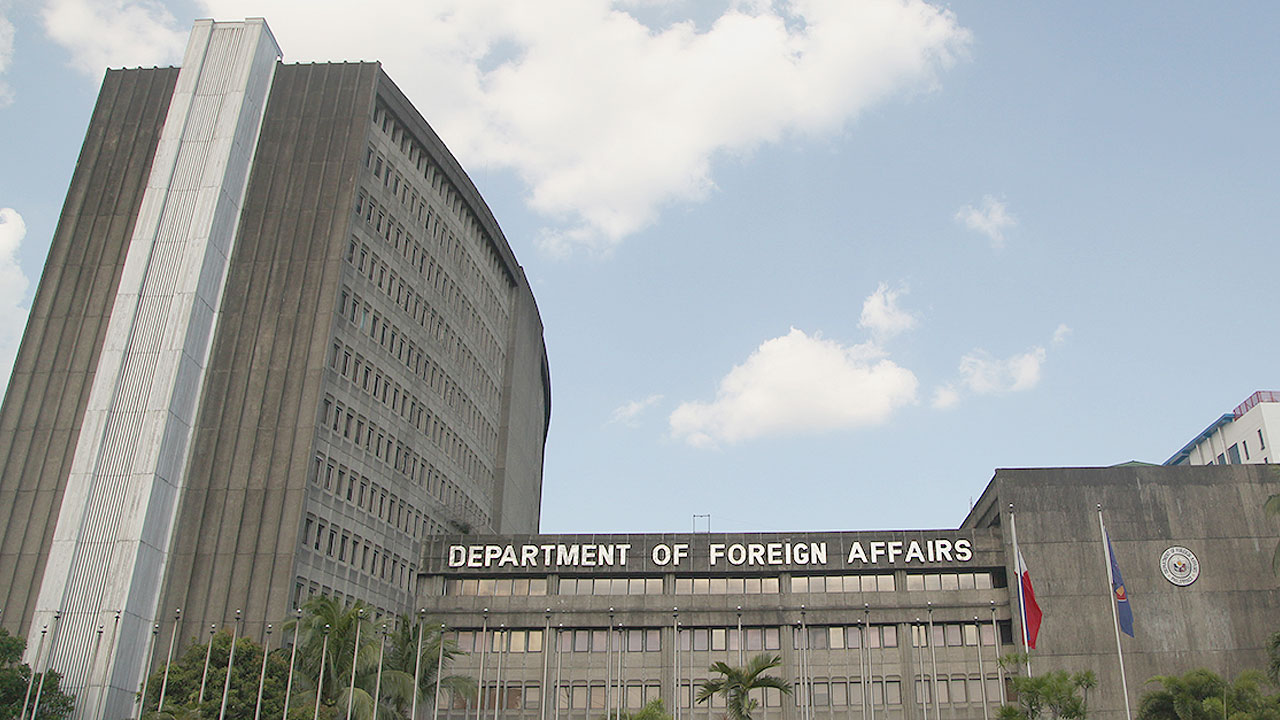
THE Department of Foreign Affairs (DFA) on Wednesday confirmed that there were no Filipinos affected after a recent Israeli strike in Doha, Qatar.

“No Filipino has been directly affected by the strike, the Embassy continues to check on our kababayans (countrymen),” the DFA said in a statement, citing reports from the Philippine embassy in Doha.

The agency had also called on Filipinos to remain indoors and avoid public spaces, unless necessary.

“In view of recent developments in Doha, the embassy urges all Filipino nationals to remain calm, monitor news from credible sources, and heed the advice of local authorities,” it said.

In a separate statement, the Philippine Embassy in Qatar said that it will continue operations following advice from local authorities that the current situation in Doha is safe and that a full investigation is underway.

“Nonetheless, the embassy encourages nationals who need urgent assistance to get in touch immediately,” it added.

It had also advised the Philippine nationals to be ready to encounter potential road and heightened security due to the embassy’s proximity to the explosion site.

“All Filipinos are urged to continue exercising prudence and vigilance in going about their activities in the city,” the embassy added.

Earlier, Qatar’s Ministry of Foreign Affairs reported that Israel targeted residential buildings which held Hamas members. Qatari officials had condemned Israel’s actions calling it “cowardly” and a “blatant violation of all international laws and norms.”

“While the State of Qatar strongly condemns this assault, it confirms that it will not tolerate this reckless Israeli behavior and the ongoing disruption of regional security, nor any act that targets its security and sovereignty,” Qatari Foreign Minister Mohammed bin Abdulrahman Al Thani said in a X post.

“Investigations are underway at the highest level, and further details will be announced as soon as they are available,” he added.

Israel has been in a nearly two-year conflict with Hamas, after it led an attack on southern Israel on Oct. 7, 2023. It was the culmination of the decades-long conflict between Israel and Palestine that has seen repeated bouts of violence, mass displacement, and failed peace efforts that continue to destabilize the region. — Adrian H. Halili