Home Blog Page 596

Yankees blast 3 homers, overwhelm Nationals

BEN RICE, Jazz Chisholm Jr. and Jasson Dominguez each homered on Monday night while Cam Schlittler fired six scoreless innings as the New York Yankees defeated the visiting Washington Nationals 10-5.

Schlittler (2-2) allowed four hits and walked three while striking out eight in a 96-pitch effort. Two relievers finished up as New York took a one-game lead on Seattle for the American League’s second wild-card spot, pending the outcome of the Mariners’ game with San Diego.

Brad Lord (4-7) absorbed the loss after yielding eight hits and seven runs — six earned — in 4 1/3 innings with two walks and five punchouts. Lord kept his team close until the Yankees blew it open with a five-run fifth inning. — Reuters

Historic triumph

Under the bright lights of the Grandstand at Flushing Meadows, Alexandra Eala broke through a barrier no Filipino had ever breached in the Open Era: she won a main-draw singles match in a major tournament. Her three-set triumph over 14th seed Clara Tauson in the first round of the US Open was neither neat nor easy, but it was unmistakably hers — gritty, nerve-racking, and shaped by trademark resilience. Down 1–5 in the final set, she fought back point by point, stretching the contest past two and a half hours until it became a veritable test of will. And when the final point in the tiebreak went her way, she had beaten an established name and, as a result, expanded the possibilities for Filipino athletes.

What made the moment linger was not simply the culmination of her efforts. It was how Eala reacted en route, when the stakes threatened to engulf her. At a critical juncture, she let slip an expletive in the local vernacular, instinctive and unvarnished, carrying both frustration and release. The phrase, familiar to any Filipino who has ever felt pushed past the edge, resonated instantly back home. It wasn’t so much vulgarity as authenticity, a raw glimpse of how deeply every point was being lived. In that two-word exhale, her fellow countrymen close to 14,000 kilometers away found themselves rooting, hoping, and, yes, cursing alongside her.

The result quickly reverberated beyond the tennis world. For a country often cast in the global sports periphery, the sight of a 20-year-old from Manila standing tall at a Grand Slam tournament was both improbable and inevitable — and not just because of Eala’s years of quiet work at the Rafa Nadal Academy. It was also timely, a reminder that inspiration can, and do, come from improbable outcomes. Her breakthrough offered proof that talent backed by discipline can further raise already heightened expectations.

Eala’s immediate path looks less daunting, though another win could lead to higher walls in Elise Mertens or even Aryna Sabalenka. In any case, she has forced herself into the conversation. She may or may not get to extend her run, but there can be no discounting the significance of her breakthrough. She has shifted perception, and however far she goes from here on, history has already been made.


Anthony L. Cuaycong has been writing Courtside since BusinessWorld introduced a Sports section in 1994. He is a consultant on strategic planning, operations and human resources management, corporate communications, and business development.

South Korea’s Lee dodges ‘Zelensky moment’ at high-stakes Trump summit

SOUTH KOREA’S President Lee Jae-myung delivers a speech after taking his oath during his inauguration ceremony at the National Assembly in Seoul on June 4, 2025. — REUTERS

SEOUL — South Korea’s Lee Jae Myung narrowly avoided what he called a “Zelensky moment” after US President Donald J. Trump welcomed him to Washington with right-wing conspiracy theories but then pulled off a high-stakes summit without unwanted drama.

Monday’s summit, the first between the two leaders, was largely what South Korea had hoped for, despite its inauspicious start, officials and analysts said.

Most importantly, the South Koreans dodged their biggest fear: an Oval Office ambush similar to the testy exchange in February when Mr. Trump berated Ukraine’s Volodymyr Zelensky over US aid and the war with Russia.

“President Lee’s Oval Office press availability appeared to go better than expected,” said Leif-Eric Easley, professor of international studies at Ewha Womans University in Seoul, noting Mr. Trump expressing support for Mr. Lee’s approach toward North Korea and enthusiasm for engaging Kim Jong Un.

Major questions remain over how much exactly South Korea will agree to pay toward the basing of 28,500 American troops, and many details are still being worked out in the hastily negotiated tariff agreement, which has yet to be put in writing.

But Mr. Lee avoided any explosive clash that some observers feared could publicly fracture the long-term alliance at a time when North Korea is leaping forward with nuclear weapons and ballistic missile development, and deepening ties with Russia.

Mr. Lee and Mr. Trump displayed a chummy and mutually flattering vibe while glossing over the prickly trade and defense issues and defusing a potential conflict related to South Korea’s political crisis in December.

Just a few hours before the pair was due to meet at the White House on Monday, Mr. Trump penned a social media post saying “WHAT IS GOING ON IN SOUTH KOREA? Seems like a Purge or Revolution,” and saying he would raise the issue with Mr. Lee.

“Before I met with President Trump today, he posted on Truth Social a very threatening post,” Mr. Lee said with a laugh at an event at the Center for Strategic and International Studies after the summit.

“My staff was worried that we might face a Zelensky moment,” Mr. Lee said. “But I already knew that I would not face that kind of a situation. That’s because I had read President Trump’s book, The Art of the Deal.”

Mr. Trump eased his tone and described his earlier comments as a potential “misunderstanding” and “rumor” after Mr. Lee explained that investigators conducted a raid confined to the Korean side of a base operated jointly with US in connection to the political crisis. Mr. Lee’s office said he didn’t really raise it again in their private discussions.

Instead of a dramatic clash, flattery and warm words dominated the conversation in the Oval Office where the two sat down and talked about Mr. Trump’s “good relationship” with North Korean leader Kim Jong Un.

“The summit ended without drama,” said Cheong Seong-chang, vice-president at Seoul-based Sejong Institute.

But keeping things vague means South Korea had policy goals of its own that went unaddressed, including requests for US approval for nuclear fuel reprocessing and revising American laws on shipbuilding, Mr. Cheong noted.

“Trump didn’t embarrass Lee and both sides seemed to try to avoid sensitive issues, such as South Korea’s political position in the tensions between China and Taiwan,” said Jun Kwang-woo, chairman at Institute for Global Economics. “Trump is probably not in a situation now to create tensions with Lee while he’s already under pressure with frictions with other countries.”

Yang Uk, of Seoul’s Asan Institute for Policy Studies, said Mr. Trump’s pressure on South Korea was a sign that he understands how much he can potentially gain from the country.

“(Trump’s) basic formula of first shaking the other person as much as possible, then getting what you want, was applied,” Mr. Yang said.

Mr. Lee said he had observed in negotiations with other countries that Mr. Trump would often present difficult conditions, but at the final stage would come to a reasonable conclusion.

“And because of the importance of the Korea-US alliance, I was confident that he would not inflict a wound to our alliance,” Mr. Lee said. “Everybody gave me the advice to have patience.” — Reuters

Trump fires Fed governor Cook over improprieties in getting mortgage loans allegations

A sign for the Federal Reserve Board of Governors is seen at the entrance to the William McChesney Martin Jr. building in Washington, D.C. — REUTERS

NEW YORK/WASHINGTON — US President Donald J. Trump on Monday said he was firing US Federal Reserve Governor Lisa Cook over alleged improprieties in obtaining mortgage loans, an unprecedented step that could test the boundaries of presidential power over the independent monetary policy body should it be challenged in court.

Mr. Trump said in a letter to Ms. Cook, the first African-American woman to serve on the US Federal Reserve’s governing body, that he had “sufficient cause to remove you from your position” because in 2021 Ms. Cook indicated on documents for separate mortgage loans on properties in Michigan and Georgia that both were a primary residence where she intended to live.

Ms. Cook responded several hours later in a statement e-mailed to reporters through the law office of lawyer Abbe Lowell, saying of Mr. Trump that “no causes exists under the law, and he has no authority” to remove her from the job she was appointed to by former US President Joseph R. Biden in 2022. “I will continue to carry out my duties to help the American economy.”

Mr. Lowell said that Mr. Trump’s “demands lack any proper process, basis or legal authority. We will take whatever actions are needed to prevent this attempted legal action.”

Questions about Ms. Cook’s mortgages were first raised last week by US Federal Housing Finance Agency director William Pulte, who referred the matter to Attorney General Pamela Bondi for investigation.

Though the terms of Fed governors are structured so they outlast the term of a given president, with Ms. Cook’s term lasting until 2038, the Federal Reserve Act does allow removal of a sitting governor “for cause.”

That has never been tested by presidents who, particularly since the 1970s, largely have taken a hands-off approach to Fed matters as a way to ensure confidence in US monetary policy.

Legal scholars and historians said the thicket of issues that could be raised in a legal challenge would span questions around executive power, the Fed’s unique quasi-private nature and history, as well as whether anything Ms. Cook did amounted to cause for removal.

Peter Conti-Brown, a scholar of the Fed’s history at the University of Pennsylvania, noted that the mortgage transactions preceded her appointment to the Fed, and were in the public record when she was vetted and confirmed by the Senate.

“These officials have been vetted by our President and our Senate, that means that all things that they had done during their times as a private citizen were already vetted,” Mr. Conti-Brown said.

“So the idea that you can then reach back, turn the clock backward and say, you know, all these things that have happened before now constitute fireable offenses from your official position is to me incongruous with the entire concept of ‘for cause’ removal.”

Mr. Trump in the letter accused Ms. Cook of having “deceitful and criminal conduct in a financial matter” and said he did not have confidence in her “integrity.”

“At a minimum, the conduct at issue exhibits the sort of negligence in financial transactions that calls into question your competence and trustworthiness as a financial regulator,” he said, claiming authority to fire Ms. Cook under Article 2 of the US Constitution and the Federal Reserve Act of 1913.

It is unclear how the matter might play out from here, with Mr. Trump saying the firing was “effective immediately,” and the Fed set to hold a policy meeting on Sept. 16-17.

Mr. Trump’s move was greeted with a steepening US Treasury yield curve as yields on 2-year notes — sensitive to near-term Fed policy expectations — quickly fell while yields on longer-dated 10-year notes — sensitive to inflation risks — rose briskly.

The reaction reflects expectations that the Fed policy rate may drop but at the expense of its commitment to thwart inflation.

Academic research has consistently found that policymakers allowed to manage inflation independent of political influence generally achieve better outcomes, a principle that may now be tested at the world’s most influential central bank.

“It speaks to the determination of this administration to remake the Federal Reserve and serves as a warning to the other Biden appointees. The Fed as an institution escaped harm in the first Trump Administration, and will not be so fortunate this time around,” said SGH Macro Advisors’ Tim Duy.

“It’s another reason to believe… that rates will be lower than would otherwise be the case.”

PRESSURE CAMPAIGN
Mr. Trump has repeatedly berated Fed chair Jerome Powell over not lowering interest rates, though has halted threats to fire him from a term that ends in a little under 9 months anyway.

His focus last week turned to Ms. Cook, whose departure would allow Mr. Trump to select his fourth pick to the Fed’s 7-member board, including Governor Christopher Waller and Vice-Chair for Supervision named in his first term, and the pending nomination of Council of Economic Advisers chief Stephen Miran to a currently open seat.

Ms. Cook took out the mortgages in question in 2021 when she was an academic. An official financial disclosure form for 2024 lists three mortgages held by Ms. Cook, with two listed as personal residences. Loans for primary residences can carry lower rates than mortgages on investment properties, which are considered riskier by banks.

The claims against Ms. Cook coincide with a broad effort by the Trump administration against diversity, equity and inclusion programs in the US government, a process that has led to the departure of some prominent women and minorities.

The Trump administration has also targeted other political opponents, including US Senator Adam Schiff, with similar accusations of mortgage fraud. — Reuters

Sri Lanka rolls the dice on casinos to power post-crisis tourism boom

STOCK PHOTO | Image by Aidan Howe from Unsplash

COLOMBO — Tourists have long flocked to Sri Lanka for its pristine beaches, wildlife safaris and ancient Buddhist sites. Now, its first Marxist president is betting on casinos to attract high-rollers from India and China and usher in the next wave of foreign inflows.

The success of the casino strategy is crucial for President Anura Kumara Dissanayake, who completes one year in office next month and has vowed to improve the lives of ordinary Sri Lankans after the devastating economic collapse of 2022 and 2023.

Sri Lanka had a handful of small casinos but earlier this month, Mr. Dissanayake inaugurated a $1.2-billion City of Dreams casino complex in Colombo, a joint venture between John Keells Holdings and Macau-based Melco Resorts & Entertainment.

The launch of South Asia’s first integrated resort was headlined by Bollywood heartthrob Hrithik Roshan, who danced to hit Hindi songs in front of a packed house.

Mr. Dissanayake has also got legislation passed in parliament to regulate gambling including in casinos, reflecting the importance he is placing on the industry.

The push is part of Sri Lanka’s aim to raise tourist arrivals by 50% to 3 million this year, potentially lifting revenues from the industry to $5 billion from $3.7 billion last year, the deputy tourism minister, Ruwan Ranasinghe, told Reuters.

“Tourism plays a very significant role for us to get out of these economic issues that we have,” he said.

“So these couple of years we are working more on short-term targets and getting traffic, but in the long run, our plan is to go for quality, more sustainable, and high-end tourism and casinos and gambling will be a segment of that.”

Tourism accounted for about 4% of gross domestic product last year and the government hopes it will eventually hit 10%, backed partly by high-end gaming, he said. Tourism is the third biggest dollar earner after remittances and apparel exports.

The central bank this month forecast full-year economic growth of about 4.5%, partly on the back of strong tourism numbers, sharply higher than the World Bank’s April projection of 3.5%.

The $99-billion economy returned to growth only last year after two years of big contractions that forced the country to seek a $2.9-billion bailout from the International Monetary Fund.

Sri Lanka must resume repaying its creditors from 2028 after defaulting on its foreign debt in 2022.

‘VERY EXCITING’
City of Dreams, located on Colombo’s beachfront, features 800 rooms, a luxury mall, and conference facilities that investors anticipate will attract affluent visitors.

“It is a total greenfield market. It is similar to how we developed other markets in the past — in Manila, Macau and also in Cyprus,” Melco Chairman and Chief Executive Officer Lawrence Ho told Reuters.

“I think we are barely scratching the surface in terms of the tourism potential and also the integrated resort gaming potential of this country.”

Minister Ranasinghe expects Indians to be the main arrivals for the next decade. India, the world’s most populous country, permits casinos only in a few designated locations, while China restricts all legal casino operations to Macau.

Indians made up nearly a quarter of the 2 million tourist arrivals in Sri Lanka last year, while Chinese visitors accounted for 7%. Sri Lanka maintains close economic ties with both New Delhi and Beijing, and citizens of both countries benefit from visa-free entry.

To boost revenue collection and encourage responsible gambling, Sri Lanka’s parliament last week approved legislation to create a Gambling Regulatory Authority.

The legislation, however, has drawn criticism from experts for granting extensive powers to the finance minister, excluding state-run lotteries from oversight, omitting tourism industry representation in the authority and imposing low penalties for violations.

The government defends the legislation as vital to reduce social harm and raise employment, while it works to promote the industry.

“There has been gambling in Sri Lanka and in Colombo but not that significant,” Mr. Ranasinghe said. “With the arrival of City of Dreams — clientele from all over the world, I’m sure they will also come to Sri Lanka.” — Reuters

‘Powerful optics’: China’s Xi to welcome Putin, Modi in grand show of solidarity

SCREENSHOT VIA APEC

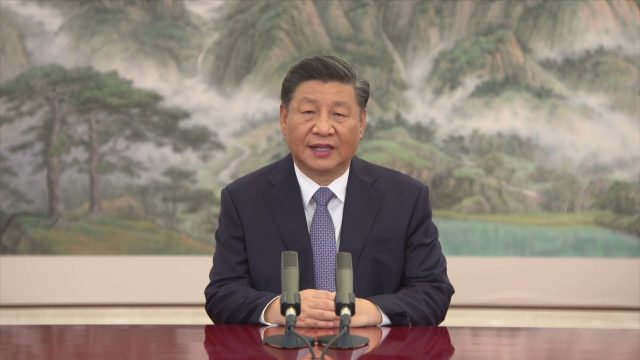
BEIJING — President Xi Jinping will gather more than 20 world leaders at a regional security forum in China next week in a powerful show of Global South solidarity in the age of Donald J. Trump while also helping sanctions-hit Russia pull off another a diplomatic coup.

Aside from Russian President Vladimir Putin, leaders from Central Asia, the Middle East, South Asia and Southeast Asia have been invited to the Shanghai Cooperation Organisation (SCO) summit, to be held in the northern port city of Tianjin from Aug. 31 to Sept. 1.

The summit will feature Indian Prime Minister Narendra Modi’s first visit to China in more than seven years as the two neighbors work on further defusing tensions roiled by deadly border clashes in 2020.

Mr. Modi last shared the same stage with Mr. Xi and Mr. Putin at last year’s BRICS summit in Kazan, Russia, even as Western leaders turned their backs on the Russian leader amid the war in Ukraine. Russian embassy officials in New Delhi last week said Moscow hopes trilateral talks with China and India will take place soon.

“Xi will want to use the summit as an opportunity to showcase what a post-American-led international order begins to look like and that all White House efforts since January to counter China, Iran, Russia, and now India have not had the intended effect,” said Eric Olander, editor-in-chief of The China-Global South Project, a research agency.

“Just look at how much BRICS has rattled (US President) Donald Trump, which is precisely what these groups are designed to do.”

This year’s summit will be the largest since the SCO was founded in 2001, a Chinese foreign ministry official said last week, calling the bloc an “important force in building a new type of international relations.”

The security-focused bloc, which began as a group of six Eurasian nations, has expanded to 10 permanent members and 16 dialogue and observer countries in recent years. Its remit has also enlarged from security and counter-terrorism to economic and military cooperation.

‘FUZZY’ IMPLEMENTATION
Analysts say expansion is high on the agenda for many countries attending, but agree the bloc has not delivered substantial cooperation outcomes over the years and that China values the optics of Global South solidarity against the United States at a time of erratic policymaking and geopolitical flux.

“What is the precise vision that the SCO represents and its practical implementation are rather fuzzy. It is a platform that has increasing convening power, which helps in narrative projection,” said Manoj Kewalramani, chairperson of the Indo-Pacific Research Programme at the Takshashila Institution thinktank in Bangalore.

“But the SCO’s effectiveness in addressing substantial security issues remains very limited.”

Frictions remain between core members India and Pakistan. The June SCO defense ministers’ meeting was unable to adopt a joint statement after India raised objections, saying it omitted reference to the deadly April 22 attack on Hindu tourists in Indian Kashmir which led to the worst fighting in decades between India and Pakistan.

New Delhi also refused to join the SCO’s condemnation of Israeli attacks on Iran, a member state, earlier in June.

But the recent détente between India and China after five years of heightened border frictions, as well as renewed tariff pressure on New Delhi from the Trump administration, are driving expectations for a positive meeting between Mr. Xi and Mr. Modi on the sidelines of the summit.

“It’s likely (New Delhi) will swallow their pride and put this year’s SCO problems behind them in a bid to maintain momentum in the détente with China, which is a key Modi priority right now,” said Mr. Olander.

Analysts expect both sides to announce further incremental border measures such as troop withdrawals, the easing of trade and visa restrictions, cooperation in new fields including climate, and broader government and people-to-people engagement.

Despite the lack of substantive policy announcements expected at the summit, experts warn that the bloc’s appeal to Global South countries should not be underestimated.

“This summit is about optics, really powerful optics,” added Mr. Olander.

Mr. Modi is expected to depart from China after the summit, while Mr. Putin will stay on for a World War II military parade in Beijing later in the week for an unusually long spell outside of Russia. — Reuters

Mapuá and other universities offer Study Now, Pay Later program for students through GCash

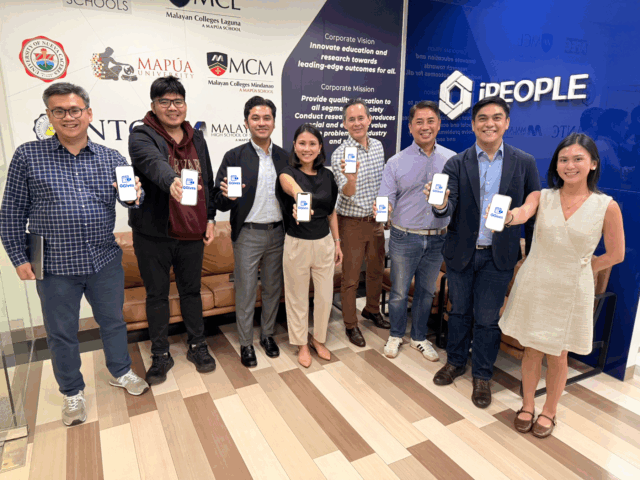
Ceremonial handshake of iPeople, Inc., and Fuse Financing, Inc., the lending arm of GCash, for the Study Now, Pay Later program, to empower more students to pursue higher education. (L-R) Oscar Pobre, Head of Data Solutions of New Businesses, GCash; Mark Abalos, Vice-President and Head, Dual Transformation, Strategy Management, and Business Development, iPeople, Inc.; Winsley Bangit, Vice-President and Group Head of New Businesses, GCash; Jenny Chua, Vice-President for Marketing and Sales, Mapua Malayan Digital College; Alfredo Ayala, President and Chief Operating Officer, iPeople, Inc.; Anthony Isidro, President and Chief Executive Officer, Fuse Financing, Inc.; Paul Xavier Villa, Consumer Lending Head, Fuse Financing, Inc.; and Ana Cua, Segment Development Manager, Fuse Financing, Inc.

Higher educational institutions have teamed up with GCash, the Philippines’ leading finance superapp and largest cashless ecosystem, to launch a Study Now, Pay Later program. It is an installment-based tuition payment solution powered by Fuse Financing, Inc., the lending arm of GCash, designed to help more Filipino students pursue and complete their college education by reducing the burden of upfront school fees.

With its first partner school Mapúa Malayan Digital College (MMDC), the pilot program began on July 7, 2025. MMDC, a digital-first college, offers flexible, high quality education for both full-time and working students, making it an ideal partner.

The program has since expanded to include Mapúa University, Mapúa Malayan Colleges Mindanao, Malayan Colleges Laguna, and National Teachers College, all of which officially launched the initiative on July 9, 2025.

The tertiary education participation rate in the Philippines stands at 34.89%, falling short of the ASEAN regional average of 41.10%, according to a recent report by the Second Congressional Commission on Education[1]. Many students who do enter college struggle to finish their degrees, with high dropout rates often tied to the rising cost of education[2]. To support their studies, students choose to juggle school with work, with more than half of them hustling to gain financial freedom[3].

Tuition fees and other school expenses remain a heavy financial burden for many families, leading students to delay enrollment or settle for less-than-ideal school and program options. This is where GCash comes in, extending inclusive and fair lending products to those who need financial assistance to achieve their goal of graduating.

With the Study Now, Pay Later program, interested students or parents can pay for tuition fees and other school-related expenses in installments of up to 15 months, with no down payment or processing fees and with affordable interest rates. Customers who are not yet eligible for GGives may still apply and avail themselves of this program via the QR codes found within the vicinity of the respective partner schools.  Payments shall all be made through GGives, the installment payment feature of GCash, allowing students and parents to manage the costs conveniently and securely within the app’s ecosystem.

“Far too many students in the Philippines are forced to put their dreams on hold, mainly because of financial limitations. With our Study Now, Pay Later program, we aim to ease that burden and help more students unlock the opportunity of a college education. This is another step toward our commitment to fair and inclusive lending, one that empowers the next generation,” said Tony Isidro, President and Chief Executive Officer (CEO) of Fuse.

“We believe that no student should have to give up their education because of financial struggles. Through this partnership with GCash and Fuse, we’re providing our students with a practical and affordable way to continue their studies, reflecting our shared commitment to making quality education more accessible to every Filipino,” iPeople, Inc. President Alfredo Ayala added.

iPeople, a holding company under House of Investments, Inc., operates several schools, including Malayan Education System, Inc., Malayan Colleges Laguna, Malayan Colleges Mindanao, Malayan High School of Science, National Teachers College and University of Nueva Caceres.

The initiative is part of a broader push by GCash to drive meaningful impact through financial solutions that are accessible, inclusive, and responsive to the real needs of Filipinos. By offering students and parents the flexibility to manage school-related costs, the Study Now, Pay Later program seeks to help expand young Filipinos’ access to higher education, pursue their dreams, and build a better future.

For more information, please visit www.gcash.com.


Spotlight is BusinessWorld’s sponsored section that allows advertisers to amplify their brand and connect with BusinessWorld’s audience by publishing their stories on the BusinessWorld Web site. For more information, send an email to online@bworldonline.com.

Join us on Viber at https://bit.ly/3hv6bLA to get more updates and subscribe to BusinessWorld’s titles and get exclusive content through www.bworld-x.com.

The sweetest expo of the year: The 1st International Ice Cream and Gelato Expo arrives in the Philippines this October 2025

The frozen dessert industry is about to take center stage as Haliburton International Events Corp. proudly presents the 1st International Ice Cream and Gelato Expo (ICEGEX), happening on Oct. 24-26, 2025 at the World Trade Center Metro Manila. As the official Event Organizer, Haliburton is bringing together global and local leaders, innovators, and enthusiasts of ice cream, gelato, and frozen desserts in this first-of-its-kind showcase. Supporting this groundbreaking initiative is Cut Unlimited, Inc., serving as the Exhibition Manager, ensuring a dynamic and well-curated experience for both exhibitors and visitors.

ICEGEX 2025 promises to be a premier platform where businesses, artisans, and consumers can discover the latest trends, technologies, and flavors shaping the frozen dessert industry.

This milestone event is set to gather key players, innovators, enthusiasts, and entrepreneurs from across the country for a three-day celebration of ice cream, gelato, and everything in between.

Co-presented by Sterling Pacific Ventures Corp., this expo marks a pivotal moment — placing the Philippines on the map as a serious player in the world of ice cream and gelato.

With the global frozen dessert market projected to hit over $135 billion by 2030, and the Philippines seeing a surge in both consumer demand and artisanal dessert businesses, 2025 is the perfect time to spotlight the country’s growing influence in the industry.

The Philippine food and beverage sector is experiencing unprecedented growth, driven by consumer demand for premium, innovative, and healthier dessert options. As more Filipino entrepreneurs venture into the frozen dessert space and global brands eye Southeast Asia for expansion, the local market has seen a boom in small-batch producers, plant-based alternatives, and trend-forward brands.

More than anything, ICEGEX 2025 is a deep dive into the frozen dessert industry. The expo will showcase exhibitors in ice cream and gelato manufacturing, wholesale ingredients, packaging and labelling, equipment, as well as frozen dessert artisans who are gamechangers in their field.

The expo will also serve as a launchpad for industry dialogue, B2B networking, and knowledge-sharing — providing an ideal space for start-ups, established brands, suppliers, food innovators, and distributors to connect and collaborate.

This August, ICEGEX also welcomed on board Easy Brand, Selecta, Ceres Summit Corp., Dong Xiao, and Metro Container as sponsors of the inaugural event. These top industry players represent the entire frozen dessert ecosystem — from ingredients and production to packaging and retail:

  • Easy Brand — A go-to name for dessert ingredients and flavor bases, Easy Brand supports entrepreneurs in streamlining their operations with versatile, cost-effective solutions.
  • Selecta — As one of the Philippines’ most iconic ice cream brands, Selecta brings insight into large-scale production, consumer trends, and retail strategies.
  • Ceres Summit Corp. — A key player in providing commercial equipment and supplies for frozen dessert manufacturing, offering solutions to scale and automate production.
  • Dong Xiao — Specializing in food-safe and innovative packaging solutions, Dong Xiao is helping dessert brands elevate their presentation and quality of preservation.
  • Metro Container — Experts in refrigeration and cold chain infrastructure, crucial for maintaining product integrity from kitchen to consumer.

Their collective presence ensures that the expo delivers a holistic view of the industry — providing attendees with actionable insights and resources to build, improve, or scale their own frozen dessert businesses.

ICEGEX 2025 is also supported by industry associations and government agencies such as the Department of Trade & Industry — Export Marketing Bureau (DTI-EMB); the Department of Agriculture – National Dairy Authority (DA-NDA); the Philippine Food Processors & Exporters, Inc. (PHILFOODEX); the Council of Hotel and Restaurant Educators of the Philippines (COHREP); the Food Caterers Association of the Philippines (FCAP); the Hotel and Restaurant Chefs’ Association of the Philippines (HRCAP); the Hotel and Restaurant Association of the Philippines (HRAP); the Association of Local Artisan Food and Other Producers of the Philippines (ALAFOP); and the Philippine Association of Food Technologists, Inc. (PAFT).

With ICEGEX backed by immense support from the industry, attendees can look forward to an exciting, well-rounded lineup:

  1. Live Product Demos from Sebastian’s Ice Cream; Marcelo’s Microcreamery featuring Chef Nouel Catis; Chef Myke “Tatung” Sarthou;  Easy Brand PH featuring Chef Bam Piencenaves and Chef Boy Logro; Chef Emily Peralta; Blu Coffee Distributors Corporation; Sysu International, Inc. featuring Chef Sonny Mariano; Barista Queen; and Asiatrends Import and Export Corp.
  2. Business Talks and Industry Seminars by Chef Nouel Catis, Sebastian’s Ice Cream, Chimney Cone, Sterling Pacific Ventures Corp., the Department of Trade and Industry-Export Marketing Bureau (DTI-EMB), Chef Vincent Odejar, Chef Sonny Mariano, the Department of Agriculture — National Dairy Authority (DA-NDA), Daniel Baker PH, and Go Negosyo.
  3. B2B Networking — Connect with suppliers, manufacturers, distributors, and investors.
  4. Interactive Exhibition — Explore cutting-edge equipment, ingredients, packaging, ready-to-market products, and of course, lots of dessert tasting.
  5. SORBESTES Ice Cream Competition & SWIRLFEST Soft-Serve Competition — Watch the best in the industry go head to head in the Philippines’ first ever frozen dessert competitions. These competitions will have both public voting and judges’ deliberation segments, with notable culinary judges on board such as Chef Nouel Catis, Chef Sonny Mariano, Chef Via Angelica Dalida, Chef Manuel De Leon, Chef Vincent Odejar, and more.

Whether you’re crafting your first scoop or scaling your production, this expo offers education, inspiration, and opportunity. ICEGEX 2025 is a milestone event you wouldn’t want to miss!

ICEGEX 2025 would like to thank its media partners: Philippine Daily Inquirer, Inquirer.net, POP!, F&B Report, Chinese Commercial News, The Philippine Star, BusinessWorld, Business Mirror, Pilipino Mirror, Philippines Graphic Magazine, Cook Magazine, Asia Food Journal, Discover MNL, Daily Tribune, Exhibits Today, News Watch Plus, Earthlingorgeous, Foodamn Philippines, Iconic MNL, Tsinoy Foodies, Take Off Philippines, The Beat Asia, The Manila Times, WhenInManila.com, as well as our Official Radio Partner, Monster RX 93.1, and our Official Messaging Partner, Rakuten Viber.

ICEGEX 2025 would also like to thank Pinkerton Ice Cream and Everest Appliances.

Mark your calendars and be part of the 1st International Ice Cream and Gelato Expo in the Philippines! For inquiries contact Exhibition Manager, Cut Unlimited, Inc.

📅 Date: Oct. 24-26, 2025

🕒 Time: 10:00 a.m. – 6:00 p.m.

📍 Venue: World Trade Center Manila, Pasay City

📧 For inquiries & registration: info@eventsbycut.com

📱 Follow @icegexph on Facebook & Instagram for updates


Spotlight is BusinessWorld’s sponsored section that allows advertisers to amplify their brand and connect with BusinessWorld’s audience by publishing their stories on the BusinessWorld Web site. For more information, send an email to online@bworldonline.com.

Join us on Viber at https://bit.ly/3hv6bLA to get more updates and subscribe to BusinessWorld’s titles and get exclusive content through www.bworld-x.com.

How sunscreen can damage marine life

According to a sustainable brand, humans unconsciously damage coral reefs and marine life because of their sunscreens.

“One drop in a 6.5 Olympic-sized pool already has a toxic impact on corals,” Czarina Carbonel, chief executive officer and co-founder of Mag-wayen, told BusinessWorld in an interview.

Interview by Almira Martinez
Video editing by Jason Mariñas‌

China calls on state-owned firms to boost industrial aid to Tibet

STOCK PHOTO | Image by 尘 J from Pixabay

 – Chinese state-owned enterprises should deepen industrial aid to Tibet, including increasing infrastructure investment and development, China’s state assets regulator said in a statement on Tuesday.

The commission overseeing state-owned assets emphasized more targeted measures, including developing advantageous industries that suit local conditions in Tibet, a region shaped by mountains and arid weather in China’s southwest that borders India, Nepal, Bhutan and Myanmar.

It urged more projects such as what will be the world’s largest hydropower project located in the lower reaches of the Yarlung Zangbo River and a railway connecting Tibet to Sichuan, and encouraged state-owned firms to step up funds to improve local livelihoods.

The instructions came days after President Xi Jinping visited Tibet to mark the 60th anniversary of Beijing founding the autonomous region last week in a celebration featuring songs, dances and placards floating through a parade in the capital Lhasa that told all to heed the Communist Party’s leadership.

The regulator also underscored employment assistance including for university graduates, and further enhancing national unity in Tibet.

“Through project construction, industrial cooperation and cultural exchange, we should better contribute to border stability and security,” the statement added. – Reuters

In protein-deficient India, McDonald’s, Bollywood and cricket fuel wellness craze

REUTERS

 – At McDonald’s outlets in South India, a 30-cent burger topping has been selling out fast. It’s not extra cheese or a fancy salsa dip, but a vegetarian protein slice developed with Indian government food scientists — the brand’s first such offering globally.

McDonald’s has joined India’s biggest dairy Amul, a slew of startups and a company backed by Bollywood superstar Ranveer Singh to unleash a marketing blitz with celebrity chefs and cricketers promoting protein as a daily nutrition need for young and old, not just a gym fad.

Ordering kiosks at the Golden Arches do not mention calories but lure consumers by flashing the high protein in burgers, tapping into a sudden craze in a nation with the world’s highest number of vegetarians and low meat consumption.

“The protein addition makes this easier to eat without much guilt,” said 53-year-old Baiju C.T., as he added the five-gram protein slice to his $3 Chicken Maharaja — described as India’s answer to McDonald’s signature beef burger Big Mac.

The nutrition push is not only about $50 whey powder packs. Protein has been infused into cottage cheese – a vegetarian favorite – as well as ice creams, water, chips and 60-cent tiny bottles of blueberry milkshakes. Indian flatbreads are next.

U.S. and other markets have seen similar protein booms, but in India it is being driven by the country’s distinct cereal-heavy dietary profile. Nearly 30% of India’s 1.4 billion people are vegetarian and the government estimates 73% of the population is protein-deficient.

Religious sensitivities mean beef is banned in most states, and while chicken is popular, it remains costly for many low-income households. Meat supplies in India stood at a mere 6.6 kg (14 pounds) per person a year – among the lowest globally, compared with 123 kg in the United States, and 70.5 kg in China, U.N. data from 2022 showed.

In July, McDonald’s sold 32,000 pieces of its soy- and pea-protein slice within 24 hours of launch. Most of its over 400 stores ran out of stock quickly and were replenished a month later, according to Westlife Foodworld, its sole franchisee for south and west India.

The slice is “inspired by consumer insights showing growing interest in protein,” Westlife CEO Akshay Jatia told Reuters.


‘SAVE OUR POPULATION’

India’s high-protein dairy market grew 9.4% over a year to touch $1.5 billion in 2024. This year, it’s likely to grow by another 12%, Euromonitor estimates.

Google Trends data from India shows the terms “protein chips” and “protein bar” recorded their highest interest in five years in June and August, with the highest search interest from New Delhi, an urban hotspot.

Rural India is plagued by low protein consumption. A research survey published in February found 80% of 785 households in semi-arid tropics consumed less protein than needed, even though they had access to protein-rich foods.

Aashitosh Inamdar, a chief scientist at the government’s Central Food Technological Research Institute, said it took them six months to refine McDonald’s protein slice in their labs as earlier prototypes received from the brand were “too chewy” and “powdery” for Indian tastes.

The government lab last year partnered with billionaire Mukesh Ambani’s Reliance to develop protein-enriched cookies. It is currently also developing local sweets and spices to make their taste appeal to more Indians, though much like McDonald’s, protein products largely remain an urban phenomenon.

“To save our population, we need to put it (protein) into something which is more edible,” said Inamdar.


BOLLYWOOD & CRICKET

Movie star Singh and co-founder Nikunj Biyani’s startup, SuperYou, has sold more than 10 million protein wafers since November, with sales hitting a record monthly high in July.

Singh has 47 million Instagram followers and is promoting the brand himself. In one reel, he touted that SuperYou baked chips contain 10 grams of protein, while mocking regular “guilty potato” chips.

But they are pricey. SuperYou chips cost 100 rupees ($1.14) per 100 grams, more than double Pepsi’s PEP.O popular Lay’s potato chips.

SuperYou plans to launch biscuits and cereals and target smaller towns, said Biyani, who calls protein a “knight in shining armor.”

Cricketers are also endorsing the protein craze.

In April, Amul sponsored several teams in the world’s richest cricket league, the IPL, and used the partnership to make Instagram reels featuring dancing Indian and international cricketers to promote its protein offerings. Some reels generated millions of views.

The country’s biggest milk and cheese producer is trying to expand the protein category by encashing on the three million liters of byproduct whey it ends up with each day, managing director Jayen Mehta said in an interview.

With its online-sales-focused strategy, Amul is attempting to lure consumers with high-protein variants of its regular offerings, such as buttermilk, ice cream and flatbreads.

“It’s a very huge market opportunity,” Mehta said. – Reuters

Warming seas worsen Japan’s price shock with $120 urchin rice bowls

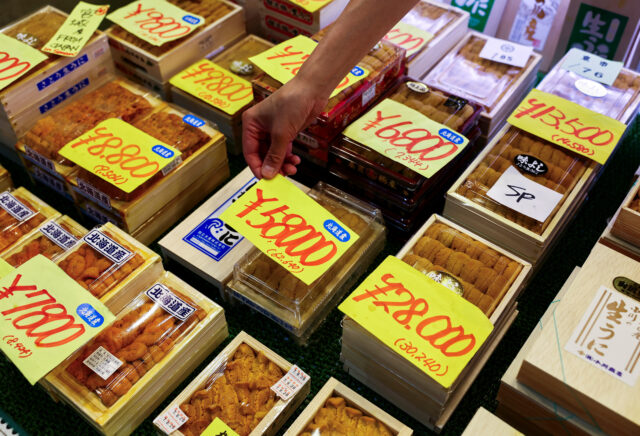
An employee at a wholesaler puts a price tag on a package of sea urchins from Hokkaido at Tsukiji Outer Market in Tokyo, Japan Aug. 22, 2025. REUTERS/Issei Kato

 – As Japan faces its hottest summer in history, a sharp decline in the catch of sea urchin in the country’s north has made the spiny delicacy further out of reach for many consumers already strained by high food costs.

On Hokkaido’s Rishiri Island, restaurants offer a rice bowl with 100 grams of bafun sea urchin – renowned for its rich sweetness – at a record 15,000–18,000 yen ($100-$120), roughly double what it was several years ago.

“Everyone is shocked when they see the price,” said Kimiko Sato, owner of the Sato Shokudo restaurant across from Rishiri’s Oshidomari ferry terminal, which her family has run for more than 50 years.

“A group of customers would share just one sea urchin bowl, and everyone would order ramen for themselves.”

While sea urchin is traditionally considered a luxury item, the prohibitive price has made it off-limits even for special occasions for many households in Japan, where soaring food costs have become an urgent issue for authorities in Tokyo.

Rising food prices mean an average Japanese household’s spending on food is now at nearly 30%, the highest in 43 years.

Policymakers have mostly blamed the sharp rise in food prices on the weak yen’s upward pressure on import costs – but the effects of global warming now also loom as a risk.

In Rishiri, the catch of sea urchins has halved from last year, according to Tatsuaki Yamakami, executive director at the Rishiri Fisheries Cooperative, continuing a trend he has observed for a few years.

“The prices are soaring due to low catches,” said Yamakami, a 40-year industry veteran. “I think the rising sea temperatures are to blame…it’s a worrying situation.”

According to Yamakami, the top price of 10 kilograms of Rishiri’s bafun sea urchin, which thrives in cold waters, has surged to 90,000 yen—more than double roughly 40,000 yen two years ago.


WARMING WATERS

In recent years, water temperatures around Japan have risen about 5C, said Shigeho Kakehi, a senior research scientist at the Japan Fisheries Research and Education Agency.

The Tohoku region, north of Tokyo, is no longer a major salmon-producing area, a situation further worsened by the northward shift of the warm ocean current.

Volumes of popular cold-water species such as salmon, squid, and saury have dropped sharply over the last 20 years, while their price per kilogram has jumped nearly fivefold, according to Kakehi.

Fish and seafood make up a relatively modest portion of the food basket, or less than 10%, and their contribution to headline inflation is only around 0.1 percentage point.

All the same, it shows the economic effects of climate change are no longer just theoretical, said Stefan Angrick, head of Japan and Frontier Market Economics at Moody’s Analytics.

“Extreme weather events and increased average global temperatures are among the reasons we expect inflation to be structurally higher in the future than in the past,” he said.

Food prices in Japan rose 7.6% in July, year-on-year, speeding up from 7.2% in June, according to government data released last week. Rice, which has also been hit by warmer weather, remains the top contributor to food inflation.

Fresh food, which the Bank of Japan (BOJ) usually excludes from its measurement due to its volatility – rose 3.3% last month from 1.6% in June. Fish and seafood inflation has moderated somewhat recently, to 2.5% from 3.9%.

Research firm Teikoku Databank said in a note on Monday Tokyo’s heatwave hit household spending on seafood, hurt by price hikes as rising temperatures reduced catch volumes.

“We came to Tsukiji to eat our way through the city, but uni donburi and seafood donburi are just too expensive for us,” said Momoko Asami, a 35-year-old tourist visiting the popular Tsukiji seafood market in Tokyo. “So we’re sticking to street foods like monja-croquettes and tamagoyaki.”

While the weak yen, caused by the still large gap between interest rates in Japan and elsewhere, is the main driver of food inflation, climate change is also on the central bank’s radar.

Naoki Tamura, a BOJ board member, in June said the rate of increase in fresh food prices, including seafood, has risen much faster than overall prices since early 2022.

While labour shortages and rising utility and other costs were key, Tamura pointed to the effects of “irregular weather due to climate change,” adding that prices of fresh food and other food have a negative impact on households.

“Japanese inflation remains modest compared to elsewhere, but it is enough to hurt people’s pocketbooks, mainly because salaries have not kept up,” said David Boling, director at Eurasia Group consultancy. “The shift has been difficult, especially for the elderly on fixed incomes.”

Japan aims to raise its overall food self-sufficiency ratio to 69% on a production-value basis by fiscal 2030, up from around 60% now—a target that Kakehi says may be complicated by climate pressure.

“Even if we try very hard (by cutting emissions with renewable energy), the temperature will still rise by about 1–1.5 degrees Celsius by 2100,” he said, noting that the quantity and timing of fishing for spawning fish and newborn fish should be regulated.

“Sardines have been on the rise over the past 7–8 years, we should try to eat more sardines.” – Reuters