Home Blog Page 5926

G20 chair Indonesia to push for peace with Ukraine, Russia visits

REUTERS

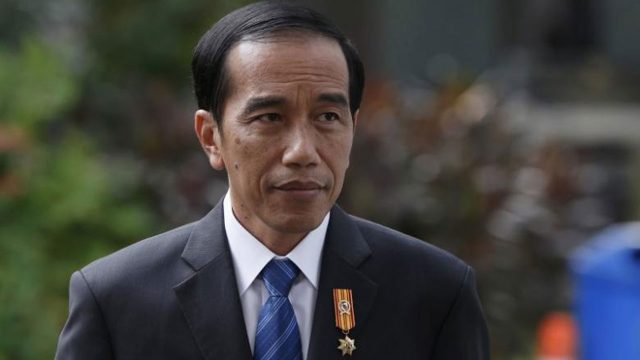
JAKARTA — Indonesian President and G20 chairman Joko Widodo will visit counterparts in Ukraine and Russia next week and press for a peaceful resolution to their conflict, his foreign minister said on Wednesday, the first such trip by an Asian leader.

The Ukraine war has overshadowed meetings of the Group of 20 (G20) major economies this year, with Indonesia struggling to unify its members while resisting pressure from Western states threatening to boycott a November leaders’ summit and pushing for Russia’s exclusion.

Foreign Minister Retno Marsudi said the visits by Jokowi, as the Indonesian president is known, to both Kyiv and Moscow would be conducted in a “not normal” situation.

“The president is showing compassion on the humanitarian crisis, will try to contribute to the food crisis caused by the war, and the impact felt on all countries, especially the developing and low-income ones,” she told a news conference. “And he’ll keep pushing for the spirit of peace.”

The months-long fighting in the region began in February with Russia’s invasion of Ukraine, which Moscow calls a “special military operation”.

The conflict has caused major disruption to supply chains, stoking a food and energy crisis that has seen inflation soar in many countries, some of which have imposed export curbs to ensure domestic supplies.

Jokowi will meet Ukrainian President Volodymyr Zelensky and his Russian counterpart Vladimir Putin, having previously invited both to attend the G20 summit on the island of Bali.

Ms. Retno did not elaborate on what Jokowi would raise at the talks, which would follow the G7 Summit in Germany and bilateral meetings with leaders of those countries and others.

Jokowi’s office did not immediately respond to a request for further details.

The president would discuss food security issues at those meetings in Germany, noting the global importance of Russia and Ukraine in terms of natural gas, oil, wheat and barley, Ms. Retno said.

“The situation is very complex right now. The continued war will have an impact on humanity including food, energy, and financial crises,” she said, adding as G20 chairman Jokowi had spoken to leaders of the United Nations, Germany, Turkey recently.

“We’ve decided not to use a ‘megaphone diplomacy’ so that big benefits for the world can be achieved,” she added. — Reuters

Crucial three weeks for DoH

PATRICK ASSALE AND FUSION MEDICAL ANIMATION-UNSPLASH

The recent rise in the number of COVID cases is a not-so-gentle reminder that the pandemic is far from over. While it may seem that almost everything is back to the way they were pre-pandemic, the fact of the matter is, COVID-19 continues to put people in hospitals and in graves. Along with the case count, the death count is also on the uptick.

OCTA Research forecasts COVID-19 cases to reach 1,000 per day by the end of this June or early July, noting that Metro Manila might hit the peak in infections in the first two weeks of next month. OCTA’s Guido David told media that those numbers would put the capital at “moderate risk,” up from its present low-risk category.

The Department of Health (DoH) said the country was seeing the start of another peak in COVID-19 cases, with infections almost doubling to a daily average of 436 cases last week from just 240 the previous week. But the healthcare utilization rate has not gone up significantly in the same period. Other than Metro Manila, infections are also on the rise in the Ilocos region, Cagayan Valley, Calabarzon, Mimaropa, Western Visayas, and Northern Mindanao.

More transmissible Omicron subvariants, increased mobility, and waning vaccine immunity are the main drivers of the surge, according to the DoH. The recent rise in the number of cases is the “start of the peak,” said Health Undersecretary Maria Rosario Vergeire, noting the “rapid and sharp increase” in infections. “This might be the start that cases will continuously rise in the next couple of weeks,” she told media.

The next three weeks will thus be crucial for the DoH. Other than what appears to be the start of another COVID surge, it is also within this period that transition will occur. Health Secretary Francisco Duque, along with several other senior Health officials, are expected to step down on June 30 as President-elect Ferdinand Marcos, Jr. and his Cabinet assume office. And this will occur with the DoH not enjoying the benefit of a longer transition.

To date, the President-elect is still to name his Health Secretary. While the Republic will not collapse because of this, public health in general would have been better served by an early transition at the Health department. Mr. Marcos had said he would complete his Cabinet before his inauguration on June 30. Meantime, he has also opted to serve as interim Agriculture Secretary.

“The shortlist is getting shorter, let me put it that way. If we started with 10 names, a dozen names, we are down to maybe three or two in each of those departments,” Mr. Marcos told the media when asked about his picks for other agencies such as the DoH and the Department of Foreign Affairs.

“We took it really department by department, and of course Health, not to say that the DoH is unimportant, but we’re coming around to that,” he added. “I wouldn’t be surprised if we have an appointee or a nominee within the next week or so. I really want to get as many of those done before the inauguration.”

As I wrote previously, by July 1, it will be the Marcos II Administration’s responsibility to keep track of COVID-19 and other pandemics that may affect the country. Sadly, the delay in the nomination or designation of a new Health Secretary also put off the planning of new ways, methods, approaches, and interventions to further improve and future-proof our pandemic management.

As I had noted, the transition period between administrations is a crucial period, more so for a country like the Philippines that is experiencing a public health crisis. And while Mr. Marcos, I am sure, considers the DoH a priority, his delayed action on the matter appears to indicate otherwise. In my opinion, there is real urgency in the appointment of a new Health Secretary.

Too many things will be left hanging by next week, including the existence of ad hoc groups like the National Task Force Against COVID-19 (NTF) and the National Vaccination Operations Center (NVOC). This is a matter of grave concern given that the DoH points to the slow uptake in booster shots as one of the drivers of the present COVID surge.

Up until a new DoH secretary is in place, and the final set of senior Health officials are in office, things will most likely move slowly at the Health department. I doubt very much if the new team can hit the ground running. Everybody will probably wait for direction and personnel changes before pushing any new initiative. Meantime, many things will be on autopilot, or on a holding pattern.

The saving grace is that the bureaucracy remains intact. Work will continue, with or without a new secretary. However, the opportunity was obviously lost to plan ahead had a new secretary been named and given more time to meet with outgoing officials prior to the June 30 handover. COVID is not a thing of the past, and more pandemics — perhaps even worse ones — may still come.

As we have seen previously, the COVID case count can go from bad to worse in just a matter of days. At this point, waiting until the last minute to name a new DoH chief may no longer make a big difference. It is just that I hate to think that as government restarts on July 1, then the same goes for pandemic management. Can we expect positive results from new people rethinking the problem right in the middle of a surge?


Marvin Tort is a former managing editor of BusinessWorld, and a former chairman of the Philippine Press Council

matort@yahoo.com

The fertility crisis started in Japan, but it won’t stay there

ALEXANDER KRIVITSKIY-UNSPLASH

THE WORLD has an obsession with Japan’s shrinking population. Each year, news that the country is a little bit smaller can reliably be called upon for column inches, which tend to examine it as a Japanese mystery — one of those inherently Oriental concepts that foreigners could not possibly penetrate, like wabi-sabi or the bushido code of samurai warriors.

The New York Times asked in 2012, “Without babies, can Japan survive?” The Atlantic wrote about “the mystery of why Japanese people are having so few babies.” To be fair, Japan talks about the population crisis as much as anyone, with one paper recently calling for the declaration of a “declining birth-rate state of emergency.”

The proposal has echoes of the “climate emergency” legislation passed by governments such as the UK to heighten awareness of global warming. But Japan is to the fertility crisis what low-lying Pacific Islands are to the environmental crisis: just an early signal of the same problems that are coming for everywhere else.

Japan first took serious notice of its declining births in 1989, in an event known as the “1.57 Shock” — the total fertility rate (TFR) that was recorded that year, less even than the 1.58 of 1966*, when couples avoided having kids due to superstition over an inauspicious event in the Chinese Zodiac.

Despite three decades of task forces, government support programs, and ministers in charge of the issue, little has changed. While the decline in the birth rate has been arrested, Japan has been able to do almost nothing to significantly raise it. A record low of 1.26 was recorded in 2005, which has risen to 1.3 in 2021 — and while that’s impacted by the pandemic, it hasn’t been above 1.5 in more than three decades.

Japan is often convinced that its economic malaise since the 1980s is the root of its ills, but that link seems less than clear. Births dropped all through the 1970s and ’80s, with the “1.57 Shock” coming at the peak of its economic might. If anything, there seems to be an inverse relationship between wealth and fertility: Okinawa, the country’s poorest region, consistently has the highest rate, with wealthy Tokyo the lowest. The experience of other countries also indicates differently, with rich Singapore at an even lower rate than Japan. Almost every country in Europe lies below the 2.1 level needed to maintain the population, with countries including Croatia, Portugal, and Greece all set to lose similar levels to Japan over the next three decades.

“Economic conditions are not so helpful in explaining persistent trends,” explains Mikko Myrskyla, director of the Rostock, Germany-based Max Planck Institute for Demographic Research. “Scientists are somewhat helpless in explaining what then drives the long-term change.”

It’s a variation on the Anna Karenina principle: All fertile societies are alike; each infertile society is infertile in its own way.

While Western media once tended to obsess over how little sex the Japanese might be having, the same phenomenon is now being observed across the globe. Are there other unique social conditions, perhaps? Seen through a western lens, some of Japan’s problems might seem obvious: A notorious culture of overtime work or waiting lists for kindergartens.

Yet many of these issues are no longer as chronic as they once were — and alleviating them has had little impact on fertility. Average overtime hours have halved in less than 10 years, according to one report. The number of kids on waiting lists for kindergartens has plunged, down nearly 80% in 2021 from 2017, even as the female labor participation rate has risen.

What about Japan’s low gender equality? If anything, women’s increasing role outside the home in recent decades is one factor contributing to the decline, enabling women to delay marriage or not marry at all, according to one report. Nearby Taiwan touts itself as the most gender-equal society in Asia, but has a TFR rate of just 1.08 — the worst in the world, according to one estimate.

“Japan may have its own idiosyncrasies, but given the very large number of countries with persistent low fertility, each reaching low fertility its own way, it would be difficult to single out something specific,” said Myrskyla. He points to European countries such as Italy, Germany, Finland, and Hungary, where gender norms and public support for working mothers vary wildly, but the TFR is consistently low.

Myrskyla suggests “adaptation” is a likely better policy response than Japan’s 30 years of trying to increase births — investing in education, keeping people in jobs for longer, and integrating women and immigrants to top up the workforce. In recent years, Japan’s policy mix has also gradually come to focus not on changing people’s minds about marriage or kids, but helping those who lack opportunities — holding events for rural communities to meet potential partners, or the recent addition to health insurance coverage of expensive IVF treatments.

Perhaps the one thing that unites countries with low TFR is that they tend to be wealthy, even if wealthy countries don’t necessarily have below-replacement levels. Although Japan frets about how rich it truly is, it’s still a very wealthy nation in per-capita GDP terms. Many are surprised to learn that the US has a persistently low fertility rate of just 1.66. A Japanese saying describes a problem that is someone else’s issue as a “fire on the other side of the river.” When it comes to population, Japan’s struggles are anything but.

*Worryingly, the next such year, known as hinoe-uma, will occur in 2026.

BLOOMBERG OPINION

Questions on sports ethics

MICK DE PAOLA-UNSPLASH

Several days ago, the controversial Saudi Public Investment Fund-financed LIV Golf Invitational Series crowned its first winner, 37-year-old South African Charl Schwartzel. Not (yet exactly) a prominent member of golf’s who’s who, Schwartzel however has one major title — the US 2011 Masters — under his belt. He was one of 17 players who were immediately suspended by the PGA Tour for participating in the unsanctioned tournament. Among the others were Sergio Garcia, Dustin Johnson, Graeme McDowell, Phil Mickelson, Ian Poulter, and Lee Westwood.

Why the suspensions? Why is the involvement of the Saudi Arabia sovereign wealth fund controversial? These questions should be viewed from various perspectives: the sport or the game itself, the players, the fans, the partners and sponsors, and ethical and moral issues.

The answer to the first question is found in the letter of PGA Tour Commissioner Jay Monahan, quoted by senior writer Dylan Dethier of Golf.com, a professional golf news network: “A release from (Monahan) came through as the pros were on their second holes on Thursday and Monahan didn’t mince words: The tour players in the LIV (pronounced like ‘give’) field were immediately suspended from participating in any PGA Tour events. The duration of their suspensions was not immediately clear, ‘These players have made their own choice for their own financial-based reasons. A list of suspended pros followed at the bottom of the letter.’”

The PGA Tour is the organizer of the main men’s professional golf tour in the United States and North America. The nonprofit organization was spun off in 1968 from the Professional Golfers Association of America which is comprised of club professionals (professional golfers based in certain clubs as golf directors or teaching pros). The PGA Tour recognizes wins and records from back to April 1916 when the Professional Golfers Association of America was formed. It organizes an almost weekly series of tournaments known as the PGA Tour, as well championships such as PGA Tour champions (for players ages 50 years and above) and the Korn Ferry Tour (a developmental tournament for professionals who have not yet qualified to play in the PGA Tour). It also organizes tours in Canada, Latin America, and interestingly, China, whose own human rights records will later be compared with Saudi Arabia, the backer of the LIV Invitational Series.

LIV was embroiled in controversy the moment it was announced that the Saudis would bankroll the $280-million world series with eye-popping prize money and appearance fees. It billed itself, according to writers Tarig Panja and Andrew Das, as “an opportunity to reinvigorate golf” through rich paydays, star players, and slick marketing. “Golf but louder” goes one of its slogans. For the generally genteel, and, at times, staid world of professional golf, the remarks were almost immediately met with some raised eyebrows, especially from the golf establishment. LIV is the Roman numeral for 54, the number of holes played in all LIV events and the score over 18 holes if one birdies every hole in a par 72 course.

LIV hopes to position itself as a “player-power focused alternative” to the PGA Tour, which has been the highest level of pro golf for nearly a century, according to Pamja and Das. One wonders however what “player-power focused alternative” means when all sports leagues and tournaments have that as their main objective and move heaven and earth to promote it — and actually do it — whether it is golf, basketball, volleyball, formula car racing, horse racing, track and field, swimming, or rugby. One thing is sure, however, the Saudis and other Gulf countries have found sport and tourism to be tools to show the rest of the world that one can live “normally” in these places despite strict dress codes, rules on public displays of affection, and other restrictions, and most specially their — as Phil Mickelson himself called it — “horrible human rights records.”

Some people have called it an attempt to “sportswash,” using sport to divert peoples’ attention from cases like the murder of journalist Adnan Khashoggi in 2018. In the case of Qatar, human rights and labor groups have decried abusive labor practices, especially in the construction of facilities for and related to the 2022 FIFA World Cup. So, we have Gulf countries now reaching out to the more mature, older and more established professionals by sponsoring and financing events like formula car racing, and golf events and series like LIV.

The LIV has not attracted the crème de la crème of golf at this time. Critics say that LIV is just a plain money grab. Tiger Woods, despite tempting offers that reportedly approximate a billion US dollars, has refused to take the bait and reminded everyone that he owes his success to the PGA Tour and will not forget that. That’s an exemplary act of gratitude.

Rory McIlroy has shunned the offers too.

The reason why only 17 out of LIV’s 48-man inaugural field were suspended from the PGA Tour was that only 17 LIV players are qualified for the PGA Tour in the first place. That 48-man field which teed off in shotgun fashion (players tee off simultaneously from different holes and tour the course in normal sequential fashion for the rest of the game) at Club Centurion included a 15-year-old Thai golfer.

No doubt the LIV is the richest tournament in golf history — the total purse in the June 9 event amounted to $25 million (P1.25 billion), with $20 million for the individual event and $5 million more to split in the team competition. The winner’s share is $4 million and the last place finished at each event is guaranteed $120,000 (P6 million). And there are appearance fees paid for simply being present. In comparison, Scottie Scheffler, winner of the 2022 US Masters Open of the United States Golf Association, won $2.7 million.

This early, one can say that LIV has a strong potential to create some kind of disorder and chaos in a sport which has been constantly creating innovations in rules, equipment, and which has aligned itself with development goals of sustainability and protecting the ecosystem. But coming close to its heels is the issue of sports fan ethics.

Per writer Joseh Sens: “Stick to sports! So goes the mantra of irritated fans who say they’d rather have their entertainment stripped of all the rest. The desire is understandable. And unrealistic. Sports have never been played out in isolation. Not the ancient-day Olympics. Not in the modern-day NFL.”

In an effort to give some clarity in what writer Sean Zak has called a chaotic week with LIV golf leaving professional golf in disarray, Zak calls on Don Helder, professor of social ethics at the University of Santa Clara in California and chief executive of the school’s Markkula Center for Applied Ethics to get Helder’s insights on sports-fan “rights” and “wrongs,” specifically with reference to LIV Golf and its Saudi financial backing. Asked about whether fans should mix sports with politics, Helder states, among other things, “…. as citizens we all have an ethical obligation to our community and to the world. Nothing is ‘only.’

“Sports is connected to power and politics, and we should be aware of these connections and their consequences. So, if you are a golf fan who is uneasy with LIV Golf’s funding, should you not watch? It depends, says Helder, on how seriously you take your ethical obligations. I do think that fans can vote with their eyeballs by not going to tournaments and not watching them, it’s a way to have a voice, of saying, ‘I can’t in good conscience support an event or a league that is sponsored by a regime that conducts itself in ways that are a violation of what I believe.’”

On the other hand, the PGA Tour has hosted events in China. Is there a meaningful ethical difference, Sens asks? And certainly there are many others asking.


Philip Ella Juico’s areas of interest include the protection and promotion of democracy, free markets, sustainable development, social responsibility and sports as a tool for social development. He obtained his doctorate in business at De La Salle University. Dr. Juico served as secretary of Agrarian Reform during the Corazon C. Aquino administration.


Get the picture?

FILTERGRADE-UNSPLASH

WITH THE RISE of social media and blogs as now the primary source of information and news (over 65%) for the public, photos have taken a significant amount of space. Who really wants to read text and long analysis (like this piece)? Even a 30-second TikTok, sometimes an elaborate joke with a punch line, has to be engaging enough not to be swiped left too soon.

Photographs, increasingly digital and internet-bound, are accepted as the best record that an event has taken place. This assumption drives the need to set up photo opportunities to publicize such mundane events like starting of the construction of a new condo with personalities in hard hats, with beribboned shovels at hand in the pretend act of digging the foundations of a 50-story edifice, or that ubiquitous “armpit shot” of winners, hands raised by declarers and declarees of an election contest.

These prearranged settings and body placements, as well as attire, are staged using cinematic art directing for, say, high-priced weddings. The old “firing squad” photos of a wedding couple with their entourage of parents and godparents are giving way to depictions of unrestrained revelry. Gravity-defying jumps and gawky arm flexing are immortalized. Even through the pandemic, quiet weddings with few guests tried to dress up the couple and pick such exotic locations as a volcanic eruption in the background. Photos are posted on social media before the ashfall.

Photo opportunities are not limited to people. Fancy homes of non-celebrities (somewhere in Makati) are posted by interior decorators to show off their stuff. These shots of colorful sofas and paintings hung against white walls are unadorned by people. Still, they provide a cache for the classier set.

The photo revolution has reached out to the ordinary folks. Jejune occasions like eating out with the family comes complete with photos of dishes before they are eaten (yes, even tempura); foreign trips with the Eiffel Tower in the background are sent to Viber groups (Just bonding with the family in Paris now that the restrictions have been lifted); declarations of a “special relationship” announced by celebrities with a photo of cuddling on a hammock fully clothed, eyes locked on each other — you got a booger up your nose, Dear.

By the time it comes out, a photo release (pictures with explanatory words sometimes unrelated to them) can announce an event that had taken place weeks before, and already widely known by the cognoscenti.

The photo op has now become a political tool that takes advantage of the short attention span (some say five seconds to get engagement) that has been induced by social media and its unlimited and varied offerings.

Is it any wonder that the candidate averse to interviews and debates during the campaign, and now the winner of that contest making it clear that those supposedly revealing encounters have been rendered irrelevant, has now continued to rely on art-directed photos to communicate his policies and priorities? (His wardrobe has been upgraded.)

Meetings with cabinet appointees and foreign dignitaries are photographed to show the leader at work already. Glitches (errata) with the wrong designations (No, he is no longer budget secretary) and even names are instantly corrected by the new designate for the communications office — please ignore the previous release.

There are some benefits for this brand of “photojournalism,” especially for a timid subject.

There is no need to answer any questions or explain the details of a meeting or even what was discussed. The photo of adult males around a table, curiously without any pieces of paper for notetaking in front of anyone, is enough to suggest men hard at work. They were surely asked to dress up for the occasion. And there will be several photos to choose from, before the drinks and pork rinds are served.

No questions need to be answered afterwards by any of the “participants.” Isn’t the photo enough to show the start of economic recovery?

Photos are also used by job applicants, showing proximity to the new leader, celebrating the victory party, with a bottle at hand. Is he going to be designated chief of GSIS? This release is by the applicant himself.

A picture is said to be worth a thousand words. But it’s the caption that defines a leader who accepts exposure… but not its risks.


Tony Samson is chairman and CEO of TOUCH xda

ar.samson@yahoo.com

Human interaction trumps technology in customer support

UNSPLASH

Filipino consumers still prefer human support even if automation is on the rise. According to a February 2022 Forrester Consulting study, human touchpoints in hybrid experiences are pivotal in improving customer experience (CX). 

The study, commissioned by omnichannel communications company Infobip, suggested a strong correlation in the value of human agent interactions when addressing highly emotional or complex cases.  

The top three customer service touchpoints preferred by Filipino consumers are human agents over the phone (42%), online live chat (33%), and social media (31%).  

Across all the markets surveyed, phone calls were also the top preferred interaction touchpoint in all support scenarios: from pre-sales to post-sales support, and all the way to feedback and complaints.  

Self-service touchpoints were deemed sufficient for less complex requests like delivery tracking.  

In terms of CX score, the Philippines at 3.9 sits between China (4.0) and Malaysia (3.8). Improving CX scores, the study found, correlates to an improvement in advocacy (82%), retention (80%), and spending (77%) for brands.  

“To cater to the unique demands in customer experience, business leaders need to find the right balance in combining the deployment of both digital and human touchpoints to improve the customer experience journey,” said Charist Montenegro, country manager of Infobip Philippines, in a press statement. “The right technologies are also needed to complement this hybrid strategy to be able to take full advantage of the benefits that excellent CX can bring to the business.”  

Forrester Consulting also found four personas among Filipino consumers that brands must tailor their CX strategies to: affluent hybrid shoppers (45%) who use digital and human channels interchangeably; reserved high-touch seekers (26%) who are inclined to human touchpoints; neutrals (17%) who remain hesitant to switch among touchpoints; and low-touch digital natives (12%) who opt for digital CX.   

The different interaction preferences across personas necessitates mapping customer journeys to determine where automation and human support are best placed.  

According to the study, self-serve experiences such as automated chatbot support are suited to low-touch digital natives. Affluent hybrid shoppers, meanwhile, require an omnichannel experience between human-assisted and digital touchpoints. — Patricia B. Mirasol


Redefining Human and Automated Engagement – How APAC Consumers Have Impacted The CX Agenda” is a custom study of 1,210 consumers across mainland China, Hong Kong, Indonesia, Japan, Malaysia, Philippines, Singapore, South Korea, Thailand, Taiwan, and Vietnam, to highlight the strategic components needed to build a hybrid CX. The study discovered the majority of those surveyed interacted with a financial service, retail, or telco service provider in the past 6 months for purchase and/or customer service and support.

US Senate advances first significant gun legislation in decades

Photo by Marc Nozell/Flickr/CC BY 2.0

WASHINGTON — The US Senate took an initial step towards passing the country’s first major gun-control legislation in decades on Tuesday, galvanized by two mass shootings in a nation that has long struggled to curb chronic gun violence. Senators voted to speed passage of a bipartisan package of measures to toughen federal gun laws. The Senate is expected to vote on the 80-page bill this week before a two-week recess. 

The bill unveiled on Tuesday does not go as far as Democrats, including President Joseph R. Biden, Jr., had sought. Still, if passed, it would be the most significant action to combat gun violence to emerge from Congress in years. 

The legislation includes provisions that would help states keep guns out of the hands of those deemed to be a danger to themselves or others and close the so-called boyfriend loophole by blocking gun sales to those convicted of abusing unmarried intimate partners. 

After mass shootings at a New York grocery store and a Texas elementary school that authorities said were committed by teenagers, the legislation would allow states to provide juvenile records to the national background check system for gun purchases. 

The bill stops short of raising the age limit from 18 to 21 on purchases of automatic assault weapons. The shooters in both Texas and New York were 18-year-olds who used assault rifles they bought themselves. 

Senate Majority Leader Chuck Schumer said he expected the bill to pass this week, while Senator Chris Murphy, the lead Democrat in talks to craft a legislative deal with Republicans, called it “the most significant piece of anti-gun-violence legislation Congress will have passed in 30 years.” 

“This is a breakthrough,” Mr. Murphy said on the Senate floor ahead of the bill’s release. “And more importantly, it is a bipartisan breakthrough.” 

The Republican leader in the Senate, Mitch McConnell, called the legislation “a commonsense package” and pledged his support. 

With the 100-seat Senate split evenly between the two parties, the legislation will need support from at least 10 Republicans to pass a procedural hurdle. Fourteen Republicans, including Mr. McConnell, joined all 50 Democrats to move toward voting on the legislation. 

The biggest gun lobby in the country, the National Rifle Association, said on Twitter that it opposed the legislation because it could be abused to restrict lawful gun purchases. The politically powerful group’s statement could affect how many Republicans vote on the measure. 

Senator John Cornyn, the lead Republican negotiator in the bipartisan talks, held out hope the legislation would succeed. 

“We know there’s no such thing as a perfect piece of legislation. We are imperfect human beings. But we have to try, and I believe this bill is a step in the right direction,” Mr. Cornyn said on the Senate floor. 

The bipartisan group has been working on a deal to curb gun violence since a gunman killed 19 children and two teachers at an elementary school in Uvalde, Texas, less than two weeks after 10 people were killed in a racist shooting at a supermarket in Buffalo, New York. 

Lawmakers reached agreement on a provision to encourage states to adopt “red flag” laws, in which guns can be temporarily taken away from people who are deemed dangerous. It also provides funding for states that use other forms of intervention to accomplish the same outcome. 

The bill also aims to close the “boyfriend loophole” by allowing authorities to block gun purchases by those convicted of misdemeanor domestic abuse against partners to whom they are not married. — David Morgan and Moira Warburton/Reuters

South Korea reports first confirmed monkeypox case, steps up monitoring

AN ELECTRON MICROSCOPIC image shows mature, oval-shaped monkeypox virus particles as well as crescents and spherical particles of immature virions, obtained from a clinical human skin sample associated with the 2003 prairie dog outbreak in this undated image obtained by Reuters on May 18, 2022. — CYNTHIA S. GOLDSMITH, RUSSELL REGNERY/CDC/HANDOUT VIA REUTERS

 – South Korea on Wednesday confirmed its first case of monkeypox virus and pledged to strengthen monitoring and response systems as it raised the alert level to “caution” for the infectious disease.

A Korean citizen, who is receiving treatment at the Incheon Medical Center after showing symptoms while entering the country from Germany on Tuesday afternoon, has tested positive, the Korea Disease Control and Prevention Agency (KDCA) said. It did not provide details of the individual.

The agency raised the alert level for the infectious disease to “caution”, the second of the country’s four levels, upon confirmation of the virus case.

It said it will step up monitoring by designating areas that require strengthened quarantine management, mainly among people from countries where monkeypox occurs frequently.

“The KDCA has been pushing for utilizing secured (monkeypox) vaccines and treatments … and additional introduction of those, while the agency is continuously expanding its diagnostic testing capabilities,” KDCA Commissioner Peck Kyong-ran said.

“Among those who have been exposed (to monkeypox virus) through physical contact with confirmed patients, those with medium or high risks will receive vaccination under their consent,” Peck said.

The country, however, is not currently reviewing ring vaccination for monkeypox, she added.

Earlier on Wednesday, KDCA reported two suspected cases of monkeypox virus, but the other case, a foreign national who entered the country on Monday after showing symptoms of blisters and sore throat, tested negative. The agency said this patient was diagnosed with another disease without giving details.

Separately on Wednesday, President Yoon Suk-yeol ordered health authority to “step up quarantine management of foreign entrants at airports … and to be fully prepared to distribute vaccines and treatments to the medical field.”

Yoon also ordered to swiftly complete the introduction of third-generation vaccines and antiviral drugs for monkeypox.

Earlier in June, South Korea designated monkeypox as a second-degree infectious disease, according to its four-tier system, with 22 contagious diseases including COVID-19, cholera and chickenpox being included in the same category. – Reuters

Inside the hangar at the center of the $1-billion Airbus-Qatar jet dispute

UNSPLASH

DOHA — Two high-tech Airbus A350 jets sit idle with their windows taped and engines covered in a floodlit hangar in the Gulf, hobbled by an international legal dispute between European industrial giant Airbus AIR.PA and Qatar’s national carrier.

From a distance, the planes might seem like any other long-haul jetliners crowding the busy Doha hub. But a rare on-site visit by Reuters journalists showed what appeared to be evidence of damage to the surface of wingtips, tail and hull.

The two planes, worth around $300 million combined according to analysts, are among 23 grounded A350s at the center of a $1-billion London court battle over whether the damage represents a potential safety risk, something Airbus strongly denies.

The planes were grounded by Qatar’s regulator after premature paint erosion exposed damage to a metallic sub-layer that provides protection to the fuselage from lightning strikes.

Other airlines continue to fly the A350 after European regulators declared the aircraft safe.

Reuters journalists were granted rare first-hand access after requesting the visit on the sidelines of an airline industry meeting in the Qatari capital, Doha, this week.

Sporadic surface flaws on the A350s viewed by Reuters included an elongated stretch of blistered and cracked or missing paint along the roof or crown of the jets.

In some areas, the protective lightning mesh that sits between the hull and the paint appeared exposed and corroded.

In other parts it appeared to be missing, leaving areas of the composite hull of the aircraft exposed to the environments.

The paint on the tail of one of the A350s emblazoned with Qatar Airways’ maroon Arabian Oryx emblem was pockmarked by cracked and missing paint that exposed the layer beneath.

Airbus and Qatar Airways had no immediate comment on Reuters’ findings.

EROSION
Airbus acknowledges quality flaws to the A350s, but denies they pose any safety risk because of the amount of backup systems and tolerance built into design.

Qatar Airways has argued this can’t be known until further analysis, and is refusing to take more of the planes.

Airbus has argued that some paint erosion is a feature of the carbon-composite technology used to build all modern long-haul jets — a necessary trade-off for weight savings.

It says the cracks are caused by the way paint, anti-lightning material called ECF and the composite structure interact. The tail does not all contain the ECF foil, prompting a technical debate over whether the damage there is caused by the same problem.

Amid hundreds of pages of conflicting technical court filings presented by both sides, Reuters has not been able to verify independently the cause of the damage.

Qatar Airways’ Chief Executive Akbar Al Baker and Airbus Chief Executive Guillaume Faury had the opportunity to mingle during the three-day industry gathering in Qatar this week.

Asked whether the relationship had improved after the event, which included the two men seated next to each other over dinner, Al Baker suggested the two sides remain far apart.

“On a personal level I am friends with everyone but when it comes to an issue with my company, then it’s a different story. If things were settled, we would not be still waiting for a trial to happen next year,” he told a news conference.

Faury said this week he was in discussion with the airline and reported “progress in the sense that we are communicating”.

One of the airline industry’s most senior officials voiced concerns after the Doha meeting that the dispute could have a toxic effect on contractual ties across the industry.

“It would be much better if we were dealing with friends that than dealing in the courts,” Willie Walsh, director general of the International Air Transport Association, told reporters. — Reuters

Biden expected to call on Wednesday for suspending the federal gas tax, source says

REUTERS

 – US President Joe Biden is expected on Wednesday to call for temporarily suspending the 18.4-cents a gallon federal tax on gasoline, a source briefed on the plan told Reuters on Tuesday.

Mr. Biden said Monday he was considering whether to call for a pause in the tax, as the United States struggles to tackle soaring gasoline prices and inflation. A gas tax holiday faces significant opposition in Congress, including among many Democrats. The plan was reported earlier by Punchbowl News.

The White House, which said Mr. Biden will deliver remarks on gas prices at 2 p.m. EDT Wednesday, declined to comment.

High gasoline prices pose a significant political problem for Biden and congressional Democrats as they struggle to maintain their slim control of Congress in November’s midterm elections.

Michigan Governor Gretchen Whitmer, a Democrat, on Tuesday called on Biden to support suspending the gas tax saying “getting this done will offer real, immediate relief without compromising the federal government’s ability to make infrastructure investments.”

House Transportation and Infrastructure Committee chair Peter DeFazio, a Democrat, said “suspending the federal gas tax will not provide meaningful relief at the pump for American families, but it will blow a multi-billion-dollar hole in the highway trust fund.”

Republicans are widely opposed to the gas tax suspension. In February, Senate Republican Leader Mitch McConnell ridiculed a suspension backed by some Democrats, saying “they’ve spent an entire year waging a holy war on affordable American energy.”

Mr. Biden has pulled on numerous levers to try to lower prices, including a record release of barrels from U.S. strategic reserves, waivers on rules for producing summer gasoline, and leaning on major OPEC countries to boost output.

Fuel prices have been surging around the world due to a combination of rebounding demand, sanctions on oil producer Russia after its invasion of Ukraine and a squeeze on refining capacity. Russia calls its actions in Ukraine a “special operation”.

On June 11, the price of U.S. gasoline averaged more than $5 a gallon for the first time, data from AAA showed. It was $4.97 on Tuesday.

Adjusting for inflation, the U.S. gasoline average was still below June 2008 highs of around $5.41 a gallon, according to U.S. Energy Department figures. – Reuters

BusinessWorld Insights: Fintech Space as the Thriving Ground for Upgrading Financial Services

Amid the pandemic-driven acceleration of digital transactions, several players have entered the Philippine fintech space to offer various financial services. Among these companies, those in the lending, payment, and e-wallet sectors currently take the top shares in the fintech space, as noted in the latest Philippines Fintech Report of Fintech News Philippines and FinTech Alliance.PH. These sectors, along with other areas like cryptocurrency, are set to shape not only the country’s fintech industry but also the overall delivery of financial services to Filipinos.

This June 22 (Wednesday) at 11 a.m., join the first session of the two-part BusinessWorld Insights series themed “Fintech PH: Making Financial Services More Accessible and Inclusive” LIVE and FREE together with high-caliber speakers and experts in an intelligent online discussion about today’s most relevant issues to help the country accelerate the push for a more financially inclusive and resilient economy through our thriving fintech industry.

This session of #BUSINESSWORLDINSIGHTS is sponsored by Maya and supported by the British Chamber of Commerce Philippines, European Chamber of Commerce of the Philippines, Makati Business Club, Management Association of the Philippines, Philippine Chamber of Commerce and Industry, and The Philippine STAR.

Taiwan scrambles jets to warn away Chinese planes in its air defense zone

XANDREASWORK-UNSPLASH

TAIPEI — Taiwan scrambled jets on Tuesday to warn away 29 Chinese aircraft in its air defense zone, including bombers that flew south of the island and into the Pacific, in the latest uptick in tensions and largest incursion since late May.

Taiwan, which China claims as its own territory, has complained in recent years of repeated missions by the Chinese air force near the democratically governed island, often in the southwestern part of its air defense identification zone, or ADIZ, close to the Taiwan-controlled Pratas Islands.

Taiwan calls China’s repeated nearby military activities “grey zone” warfare, designed to both wear out Taiwanese forces by making them repeatedly scramble, and also to test Taiwanese responses.

The latest Chinese mission included 17 fighters and six H-6 bombers, as well as electronic warfare, early warning, antisubmarine and aerial refuelling aircraft, Taiwan’s defense ministry said.

Some of the aircraft flew northeast of the Pratas, according to a map the ministry provided.

However, the bombers, accompanied by an electronic warfare and an intelligence gathering aircraft, flew into the Bashi Channel, which separates Taiwan from the Philippines and into the Pacific, before turning back to China on the same route.

Taiwan sent combat aircraft to warn away the Chinese aircraft, while missile systems monitored them, the ministry said, using standard wording for its response.

It was the largest incursion since Taiwan reported 30 Chinese aircraft in its ADIZ on May 30. The largest to date this year occurred on Jan. 23, involving 39 aircraft.

There was no immediate comment from China, which has in the past said that such moves were drills aimed at protecting the country’s sovereignty.

Taiwan Foreign Minister Joseph Wu said on Wednesday the large-scale exercise by the Chinese military showed China’s military threat is “more serious than ever”.

“But there’s no way #Taiwan will cave in & surrender its sovereignty & democracy to the big bully. Not a chance!,” Wu said on Twitter.

A U.S. State Department spokesperson told Reuters in an email that Beijing should “cease its military, diplomatic, and economic pressure and intimidation against Taiwan”.

China launched its third aircraft carrier on Friday, the Fujian, named after the province opposite Taiwan.

China’s military said last month it had conducted an exercise around Taiwan as a “solemn warning” against its “collusion” with the United States.

That came after U.S. President Joe Biden angered China by appearing to signal a change in a U.S. policy of “strategic ambiguity” on Taiwan by saying the United States would get involved militarily if China were to attack the island.

China has stepped up pressure on Taiwan to accept its sovereignty claims. The Taipei government says it wants peace but will defend itself if attacked.

No shots have been fired and the Chinese aircraft have not been flying in Taiwan’s air space, but in its ADIZ, a broader area Taiwan monitors and patrols that acts to give it more time to respond to any threats. — Reuters