Home Blog Page 5923

Jimmy Butler (knee) ruled out for remainder of G3

MIAMI Heat star Jimmy Butler was ruled out for the second half of Game 3 of the Eastern Conference finals against the Boston Celtics due to right knee inflammation.

Butler scored eight points in 20 first-half minutes but Victor Oladipo started in his place in the third quarter. The Heat subsequently announced Butler was done for the night.

Just 63 seconds into the third quarter, Boston Celtics guard Marcus Smart was helped off the court after sustaining a sprained right ankle.

Smart was injured while competing for a rebound with Miami’s Kyle Lowry. Smart’s ankle rolled on the floor and Lowry landed on it. Smart grabbed for the ankle and screamed loudly.

Smart had seven points, three assists and two rebounds before heading back for treatment. He returned to the bench area with 7:01 left in the third quarter and reentered the contest nine seconds later.

Boston forward Jayson Tatum sustained an apparent right shoulder injury with 5:33 left in the fourth quarter. Tatum went to the locker room for evaluation.

Tatum was injured while Oladipo was stealing the ball. He remained on the court as play continued and the Celtics eventually called timeout with 5:18 left. He ended up returning to the game.

Miami led 62-47 at the break. The best-of-seven series is tied at one game apiece. — Reuters

Shooting treys

It doesn’t take a genius to know when exactly the Mavericks turned victory to defeat in Game Two of the Western Conference finals. Even as they still led by two points heading into the payoff period, they gave up all the momentum they hitherto built with erratic play after the half time break. Given their predisposition to run up the score, their inability to put up no more than 13 markers in the third quarter effectively set up the loss. It wasn’t simply that they failed to attack the paint; as was their wont, they took twice as many shots from beyond the arc as from within. It was that they failed to make the shots count, going just two of 13 from three-point range after making 15 of 27 such attempts in the first half.

Significantly, Mavericks head coach Jason Kidd made a big to-do over the shot selection in the penultimate canto. “If you make threes, that’s great. But you just have to understand, if you miss four in a row, you can’t take the fifth. [Because then,] you’ve got to make it,” he argued. “That just puts too much stress on yourself and on your team because, if you’re not getting stops on the other end, it turns into a blowout.” And he’s right. He’s in the Naismith Hall of Fame for a reason, and he clearly lamented his charges’ lack of feel for the need of the moment.

Perhaps Kidd brought some of the problem on the Mavericks. After all, he did keep encouraging the taking of treys throughout Game One, and en route to an atrocious 11-of-48 clip that largely contributed to a blowout defeat. And when the Warriors were making a run in the third quarter of Game Two, he made the tactical decision not to call a time out to stem the bleeding. Granted, it reflected the level of trust he had in top dog Luka Dončić and company. That said, his subsequent criticism, while not without merit, seemed out of place.

In any case, it’s clear even to casual observers that the Mavericks need to keep doing what has precisely enabled them to go deep in the playoffs — which is to say they need to keep taking threes within the flow of the offense. As postseason revelation Jalen Brunson noted, “We we’re getting great looks… So I think as long as we’re open and shooting the correct shots, making the extra pass, doing the things that we do, we have confidence in everybody, I have confidence in everybody to knock it down.”

Truth to tell, there’s enough cause to contend that the Mavericks lost on the other end of the floor. For the most part, they were like a sieve in the second half of Game Two. And, nope, they cannot engage in a shootout; the Warriors simply have too many weapons, beginning with two-time Most Valuable Player awardee Stephen Curry, to be given opportunities to fire away without any semblance of coverage.  Kidd tied it to the capacity of the blue and white to stay engaged when shots are falling. “We play defense when we play offense, and we play no defense when we can’t score.”


Anthony L. Cuaycong has been writing Courtside since BusinessWorld introduced a Sports section in 1994. He is a consultant on strategic planning, operations and Human Resources management, corporate communications, and business development.

PEZA warns BIR on-site work inspections could alarm investors

THE PLAN to inspect economic zone locators for compliance with the government’s on-site work order could inject an element of uncertainty among investors in the Information Technology-Business Process Management (IT-BPM) industry, the Philippine Economic Zone Authority (PEZA) said.

“The Bureau of Internal Revenue (BIR) is now performing surprise inspections of IT-BPMs which again created uncertainty (and) frustration, especially that we’re still awaiting the response of the Fiscal Incentives Review Board (FIRB) on PEZA’s appeal for a status quo on the work-from-home (WFH) arrangements,” PEZA Director-General Charito B. Plaza told BusinessWorld in a mobile phone message.

The government has directed IT-BPMs to resume working onsite if they are Registered Business Enterprises (RBEs) based in economic zones. The industry had been allowed to adopt work-from-home arrangements as a safety measure during the pandemic, but the recent decline in coronavirus cases has caused economic managers to shift their priorities to reopening the economy, in order to support businesses like transportation, restaurants, and retail which depend on worker foot traffic.

Under tax law, RBEs are required to perform their work in economic zones if they are to continue to enjoy tax incentives. FIRB Chairman and Finance Secretary Carlos G. Dominguez III has said that RBEs have the option to continue with work-from-home arrangements, but must surrender their incentives.  

“What is needed and are being asked by our investors now, is our government’s sensitivity, empathy, understanding, assistance and support while they’re still struggling for survival,” Ms. Plaza added.

The BIR said it has formed a task force to ensure that RBEs in the industry are complying with the on-site  work rules.

BIR Deputy Commissioner Arnel SD. Guballa said mission orders have been issued for site inspections.

The rule making tax incentives dependent on working in economic zones is contained in Republic Act No. 11534 or the Corporate Recovery and Tax Incentives for Enterprises (CREATE) Act. 

According to Ms. Plaza, PEZA is authorized to grant work-from-home requests and its regular policy is to allow 30% of the IT-BPM workforce to work remotely.

“Now that the FIRB wants everybody to go back on-site work, PEZA is simply going back also to our regular policy of 30% WFH and see to it that RBEs also meet the 70% export sales allowance to continue enjoying PEZAs incentives,” Ms. Plaza said.

“Besides, the IT-BPMs are earning (more) revenue and have increased their employment under the WFH arrangement so, the government is not losing but gaining under the hybrid scheme,” she added.  

In April, PEZA announced that it is allowing 30% WFH and 70% on-site work for until Sept. 12, which is when the state of calamity expires after it was declared to help contain the pandemic.

RBEs and registered IT-BPM firms can avail of this arrangement by requesting a letter of authority (LoA) from PEZA.

The FIRB previously allowed up to 90% WFH for registered IT-BPM companies while still enjoying tax incentives under FIRB Resolution 19-21. However, the resolution expired on April 1.

The Information Technology and Business Process Association of the Philippines (IBPAP) has taken the position that the LoAs issued by PEZA is valid.

“The IBPAP stands by the validity of the LoAs issued by PEZA to our member companies, as well as the member companies of our six partner associations… We continue to count on their support to uphold the validity of the LoAs in order to achieve our jobs and revenue targets,” IBPAP President Jack Madrid said. 

Mr. Madrid said the LoA is a legal measure that allows IT-BPMs to transition and set up their offices after two years of WFH arrangements.

“The LoA provides necessary relief to address the cost and competitiveness pressures that the IT-BPM industry has been under since the pandemic began. Moreover, it gives affected organizations more flexibility and runway time to transition and set up their offices for returning employees as they strengthen their immediate-term strategies amid continuing global shifts,” Mr. Madrid said.

Alliance of Call Center Workers Co-Convenor Emman D. David told BusinessWorld via messenger chat that the BIR inspections run counter to previous FIRB pronouncements.

“The move of the BIR to enforce the FIRB return-to-office order by conducting inspections of BPM (Business Process Management) worksites is in contradiction to the pronouncement of FIRB co-chair Ramon M. Lopez that 30% off-site work is allowed for PEZA-registered companies,” Mr. David said.

“We also assert that based on the Special Economic Zone Act of 1995 implementing rules and regulations (IRR) Part I Rule I Section 2.f.2, 100% work from home is actually allowed under existing laws. Nevertheless, we urge the next Congress to explicitly codify this into law,” he added. — Revin Mikhael D. Ochave 

BSP pledges to balance growth, inflation concerns

REUTERS

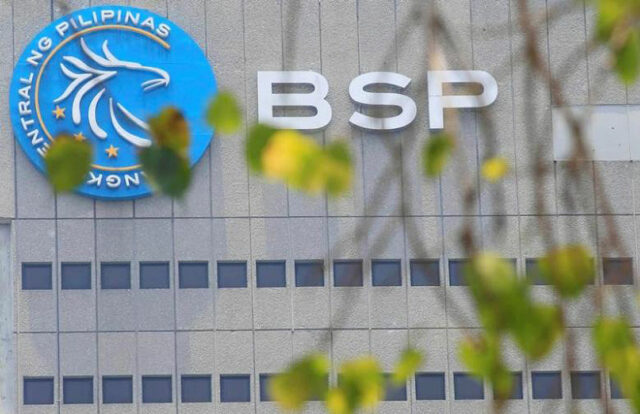
THE central bank will ensure that its exit from an accommodative policy, taken to support the economy during the pandemic, will be balanced in order to address both inflation risks and the need to shore up growth, Bangko Sentral ng Pilipinas (BSP) Governor Benjamin E. Diokno said.

“In deciding on its exit strategy, the BSP will continue to aim for a balance between providing adequate stimulus to fuel the momentum of the economic recovery while preventing the buildup of inflationary pressures and risk to the soundness of the financial system,” Mr. Diokno said in a virtual Asian Development Bank Institute forum on Friday.

The Monetary Board decided to raise policy rates by 25 basis points (bps) to 2.25%.

At the same time, the BSP revised upward its average inflation forecast for 2022 to 4.6% from the previous 4.3%, exceeding the 2%-4% target band. For 2023, the central bank’s inflation forecast inched up to 3.9% from 3.6% previously.

The start of the BSP’s tightening cycle came a week after the release of data showing gross domestic product (GDP) expanded by a better-than-expected 8.3% in the first quarter.

The BSP will ensure that its exit strategy will be gradual, well-communicated, and outcome-based, Mr. Diokno said.

“The BSP will commit to exit when it begins to see evidence of sustainable recovery and/or increasing risks to inflation. And we have started our exit as of yesterday,” he added.

Analysts said that the BSP could have raised rates earlier.

Former BSP Deputy Governor Diwa C. Guinigundo, while welcoming the rate hike, said an earlier move could have produced a more gradual normalization of monetary policy.

“After all, even (with a) 50 bps ‘tightening’ it is still in an accommodative mode. That would have brought the policy rate to only 3.0% while their new inflation forecasts are now 4.6% this year and 3.9% next year,” Mr. Guinigundo said in a Viber message.

“These numbers are simply saying we either failed to arrest it on time, or the inflation pressures beyond our control were just too great,” he added.

Mr. Guinigundo also said that manifestations of second-round effects coming from high oil prices could have encouraged the central bank to take an early action.

UnionBank of the Philippines, Inc. Chief Economist Ruben Carlo O. Asuncion said the rate hike is already late from the perspective of market participants.

“References rates for the benchmark 10-year security have already risen… more than 150 bps since the beginning of 2022. This number is indicative of what the market thinks where rates should already be,” Mr. Asuncion said in an e-mail.

However, Mr. Asuncion noted that the central bank had to ensure its accommodative policy gained solid traction before making its decision.

“The BSP is a careful central bank and it will always be guided by data and corresponding consequences on future inflation,” Mr. Guinigundo said. 

“But there is such a thing as economically logical inference of how recent readings of key variables could (influence) inflation and the output gap,” he added.

Security Bank Corp. Chief Economist Robert Dan J. Roces said the policy move signals how inflation is becoming more threatening,.

“I think the action is timely; second-round effects including higher-than-expected wage hikes and transport fare increase petitions provide upsides to the inflation view, and therefore the policy move is expected to strike a balance between supporting the growth recovery and shielding consumption from the threat of inflation,” Mr. Roces said in a Viber message.

Mr. Guinigundo said the new monetary stance may continue until there is a turnaround in the inflation forecast.

 “How much more aggressive or tempered, will be driven by both inflation and output’s leading indicators and actual monthly inflation as well as the second quarter GDP,” Mr. Guinigundo said.

“On top of that, the market will have to be convinced the monetary authorities are serious in preventing a price surge which unfortunately we seem to have been seeing in the last few months,” he added.

PROVISIONAL DIRECT ADVANCES
Separately, the National Government settled the P300-billion zero-interest loan it had obtained from the BSP on Friday.

The provisional direct advances were originally set to mature on June 11.

Provisional advances are permitted under the law and were “deemed to be an extraordinary measure for extraordinary times,” Mr. Asuncion said.

But according to Mr. Guinigundo, prolonging these provisional direct advances to the National Government could “affect the perception of BSP’s independence.”

He said central banks which are perceived to be more independent have been found to be more effective in inflation management.

“The BSP’s reputation took years to build; it might be worthwhile to preserve it if only to ensure its success in delivering on its key mandate of promoting price and financial stability consistent with sustainable economic growth,” he added.

The BSP’s next policy review is on June 23. — Keisha B. Ta-asan

South Cotabato lifting of open-pit ban still at risk of governor’s veto

SHIBANG/PIXABAY

THE re-elected governor of South Cotabato, the province which hosts the stalled Tampakan copper-gold project, could still veto provincial council legislation lifting a 12-year ban on open-pit mining, after he formed a panel to study the matter.

Governor Reynaldo S. Tamayo, Jr., who just won a second three-year term, told a group of protestors last week that he will “study” and “talk” to all sides before acting on the provincial council ordinance.

In March, Mr. Tamayo approved a resolution of the Provincial Development Council that supported a continued ban.

Last week, the provincial council approved changes to the province’s Environment Code, among them an end to the ban on open-pit mining.

A final copy of the council resolution has yet to be submitted to Mr. Tamayo for approval or veto. It will automatically lapse into law 15 days after the official transmission to the governor’s office.

“I will study everything that could be studied and talk to everyone to be sure that your governor’s decision will be in line with what is right and proper (for the people and the environment),” he told the crowd, which included residents, religious leaders, and nongovernment groups.

Among those present was the Davao-based advocacy group Interfacing Development Interventions for Sustainability (IDIS), which warned against the potential impact of the Tampakan project on various watersheds and the Davao Gulf.

In a statement, IDIS said the open-pit mining project will affect multiple watersheds in South Cotabato, as well as the nearby provinces of Sultan Kudarat, Maguindanao, and Davao del Sur.

“Watersheds are geographical ecological units, and what happens in one part of the watershed will influence the whole watershed from forests, agricultural, urban, and coastal to estuarine ecosystems,” it said. 

IDIS also pointed out that the project will use extensive groundwater resources and transport highly toxic wastewater through a 150-kilometer pipe that will drain into the Davao Gulf.

“There is a treatment process presented. However, the risks of overland flow, flooding disasters, or possible collapse of tailings ponds will inevitably impair marine and aquatic biodiversity, fish stocks, and aquaculture in the coastal areas.”

“We call on the people of the Davao Region, particularly Davao del Sur, to participate in this issue, as we will also be affected by the impacts of this project,” it said.

Officials of the Department of Environment and Natural Resources and its mining-related agencies have assured that they will closely monitor the project’s operators to ensure compliance with regulations.

Tampakan developer Sagittarius Mines, Inc. has also said that it will have responsible mineral extraction safeguards.

The site is estimated to hold some 15 million tons of copper and 17.6 million ounces of gold. — Maya M. Padillo

PHL Q1 auto output loses ground within ASEAN

PHILIPPINE STAR/ MICHAEL VARCAS

THE PHILIPPINES’ car and motorcycle output declined 7.5% year on year to 18,137 units in the first quarter, according to the ASEAN Automotive Federation (AAF).

The decline contrasts with growing output in the rest of the region. Indonesian production was up 41.8% at 364,372 units; Malaysia, up 4.8% at 154,160 units; Myanmar, up 73.9% at 1,624 units; Thailand, up 7% at 498,271 units; and Vietnam, up 36.4% at 65,416 units.

Overall ASEAN motor vehicle production in the quarter rose 17.4% year on year to 1.10 million, it said.

In March, Philippine output fell 18.2% year on year to 6,789 units. Joining it in posting a decline for the month was Malaysia, with a 3.7% fall to 59,908 units.

Vietnam posted a 75.1% year-on-year increase in March at 33,226 units, while Indonesia grew 29.1% to 132,872 units, Myanmar output rose 100% to 590 units, and Thai output rose 10.1% to 178,928 units.  

In March, AAF said the region produced 412,313 motor vehicles, up 16.2% year on year. — Revin Mikhael D. Ochave

Success of inflation fight seen depending on developing domestic resources

PHILIPPINE STAR/ MICHAEL VARCAS

THE BATTLE to contain inflation will depend in part on successfully developing domestic resources like energy, minerals, and agriculture, a senior legislator said.

“It’s increasingly looking like this decade will be a decade of elevated inflation,” Albay Rep. and House Ways and Means Chairman Jose Ma. Clemente S. Salceda said in a statement.

“The only way to balance that out is to increase our output of commodities, so our farmers and the domestic commodities sector benefit from high prices. That’s why expanding current output in agriculture and mining, as well as generating new output from oil and gas resources, will be crucial both for the next administration and the one after that,” he added.

Although the Philippines has not been as badly hurt by inflation compared with some other countries, the damage will be far-reaching with inflation over the decade expected to average about 5%, well above the 3% average over the past 10 years.

Mr. Salceda, citing estimates from Jake Mining Corp., said untapped mineral deposits in the Philippines have been valued at around $1 trillion. Meanwhile, the agricultural potential of the Philippines is around $112.8 billion in value-added every year, he added.

“Right now, actual agricultural value added is just at $35.6 billion or just 31.5% of our viable agricultural potential,” he said. “And mind you, my estimate is very conservative, using just 80% of our agricultural land.”

He proposed harmonizing the tax and production sharing agreements on oil, gas and mining. A Natural Resource Trust Fund should also be set up to invest the proceeds of resource extraction.

“Extractives are non-renewable sources, so the global best practice is really to continue benefiting from them by investing revenue from these sectors,” he said, noting that this is being done in Norway, whose oil fund is the world’s largest pension fund.

Mr. Salceda advised the apparent next President, Ferdinand R. Marcos, Jr. “not to use all of these revenues as current budget support, but to set some aside for when the prices inevitably fall in the future.” — Alyssa Nicole O. Tan

Redefining growth with humans at the core

Companies measure growth by the numbers such as profits, margins, returns, and share prices. They compete and try to win against all odds to meet shareholder expectations with impressive quarterly figures. It is the growth pressure that drives companies and brands to exert tremendous effort to gather data from consumers as they navigate the challenging highways of the digital economy, perhaps oblivious of having regarded the consumers as mere commodities rather than people. All this will have to change if brands are to take the pulse of future consumers who demand more from companies that use digital technology and processes to drive short-term revenue growth.

Consumers now expect more and better from the companies they do business with. They are empowered consumers who are not satisfied with brands that only pay lip service to sustainability and purpose-led growth while conveniently sliding back to quarterly earnings as their barometer for success.

In the latest EY Future Consumer Index survey, 68% of surveyed consumers think a brand’s behavior is as important as what it sells, while 69% say brands must behave ethically and according to community expectations. Yet only 38% think the positive actions brands are taking are good enough.

Companies that have taken heed of the call for sustainability and the new growth strategy talk about long-term value that seeks to assess performance beyond financials to include governance, people, planet and prosperity. This redefinition of growth will need to: drive the innovation of environmentally friendly products and services; redesign customer experience; and build an operating model with humans at its core.

GREEN INNOVATION
In the EY Future Consumer Index survey, 68% of respondents think brands have a responsibility to invest in the sustainable production of goods and services. In addition, 70% say that brands must be transparent about the social and environmental impact of producing their goods and services.

This clearly establishes a sense of urgency on fusing planet with profit and rejects the notion that sustainability in product and service innovation can be merely aspirational. Organizations will be better off with commercial, environmental and social sustainability embedded into their purpose, design thinking, prototyping and scaling of products and services.

It begins with a little more effort to thoroughly understand a problem before coming up with a solution. Rapid problem-solving often impedes the company’s ability to solve the underlying issue. Staying in the problem longer than one feels comfortable with is a wise step towards driving sustainable innovation that is both planet and profit friendly.

FUTURE OF CUSTOMER EXPERIENCE
In shaping the future of the customer experience, it helps to look at the rapid changes in technology. In the last decade alone, technological advancements have challenged companies to rethink the customer experience, and this will be the case over and over again. There is one thing that will be constant though — the human factor that rises above any technology.

The EY Global Consumer Privacy Survey shows how customers want to believe in and trust the organizations they do business with. Marketing campaigns alone will not do the job though. For brands to win customer trust, they will need to align to customer values and beliefs and demonstrate that in their actions. This trust is built by knowing and engaging with customers, not as statistics but as individual living, breathing human beings.

Engaging with the full spectrum of human needs increases the likelihood of collecting data ethically, and this should result in more trust from customers. This, in turn, enables brands to better anticipate and improve the products and services they deliver to customers, which leads to purposeful growth and the creation of long-term value.

With customer centricity embedded throughout the enterprise, customer interactions are much more likely to be consistent. Familiarity and understanding of customer wants and desires will be spread across the different functions in the organization.

There are a few ways to fast-track an organization’s way into this future customer experience while delivering on purpose and driving profit at the same time. One is talking to customers regularly and listening to what they say. Marketing chiefs can sometimes assume they already understand customers based on past interactions, and this deprives them of perspective that can be gained from an ongoing dialogue.

Interactions with customers that trust the organization can uncover more data, allowing for the organization to combine quantitative information with qualitative perspectives.

Marketing chiefs need to shift the mindset of the organization to focus on the desired and organizationally aligned outcome, such as how team members contribute to giving the customer a positive experience, rather than how many gadgets they developed, manufactured and sold.

REINVENTING THE OPERATING MODEL
Organizations should rethink their business and operating models to truly sustain healthy customer relationships. This is called for mainly because most large organizations were designed according to 20th century principles and founded on rigid structures to organize people only — without considering the impact of technology. This created functional silos that result in disconnects that do not help create a positive customer experience.

Based on our EY global organization’s track record in helping clients transform their operating models for customer-centricity, a few key actions have been identified that marketing chiefs can take in partnership with leadership. One of these is creating pod teams that align to the customer lifecycle. A pod is a cross-functional team or a group of individuals with complementary skills working toward a common purpose or to accomplish tasks that form part of a larger project. It transcends existing divisions within an organization. A pod, for instance, may be dedicated to delivering a great welcome experience to all new customers in the first six months, regardless of the product or service purchased. Performance measures will then have to be tweaked to focus on the best possible customer outcome.

This cross-functional team needs to be empowered to make decisions for them to be truly effective in delivering the best customer outcome. They are front-facing and therefore capable of seeing how a product or service is performing. Ideally, they should also have the leeway to make data-driven decisions to pivot or shift the direction of a product or service.

Redefining growth requires a shift in mindset — a change in the way the organization looks at things to deliver new results. It requires specific steps that go beyond little tweaks here and there. Purpose-washing, or representing the brand as if it is committed to a larger purpose, does not work. Instead, companies need to reexamine their current definition of growth and redefine it in the context of authenticity of purpose and long-term value.

This article is for general information only and is not a substitute for professional advice where the facts and circumstances warrant. The views and opinions expressed above are those of the author and do not necessarily represent the views of SGV & Co.


Marie Stephanie C. Tan-Hamed is a Strategy and Transactions Partner of SGV & Co.

Analysts cite threats to freedom of information under Marcos

PHILIPPINE STAR/KRIZ JOHN ROSALES

By Kyle Aristophere T. Atienza, Reporter

JOURNALISTS and civil society groups should work together to counter threats to freedom of information, analysts said on Sunday, as they flagged increasing efforts to erode public trust in legacy media.

“Journalism cannot function when it is under attack, much less when it is absent,” said Danilo A. Arao, who teaches journalism at the University of the Philippines.

“Since press freedom is a cornerstone of democracy, and some would argue that it is democracy itself, the struggle should be multi-sectoral in character,” he said in a Facebook Messenger chat.

The international community and local groups have warned that efforts to erode trust in traditional media and disinformation campaigns could become more widespread in the coming years.

They cited how presumptive President Ferdinand “Bongbong” R. Marcos, Jr. avoided tough questions from journalists during the campaign period.

His contempt for media could pose serious risks for democracy in the Philippines, Human Rights Watch said in a recent report.

“Ignoring critical publications is bad enough, but Marcos, Jr. will have tools at his disposal to muzzle the media in a manner that the elder Marcos, no supporter of press freedom, could only dream of,” it said.

“Real vigilance is needed from donor countries and rights-respecting governments. They, along with journalist associations in the Philippines and around the globe, need to be prepared to push back against Marcos administration inroads against media freedom and critical reporting.”

Marcos spokesman Victor D. Rodriguez did not immediately reply to a Viber message seeking comment.

Mr. Arao noted how the civil society played a key role in demanding accountability for the deaths of more than 30 Filipino journalists in Maguindanao province in southern Philippines in 2009, and how various groups expressed solidarity with ABS-CBN Corp. after President Rodrigo R. Duterte’s allies in Congress rejected its bid to have its franchise renewed.

“We expect nothing less in the near future as a Marcos presidency looms.”

“Media and civil society should collaborate to fight disinformation and push back against possible threats to press freedom and perceived opacity of government,” said Zyza Nadine Suzara, executive director of the Institute for Leadership, Empowerment and Democracy.

“This should be seen in the broader fight for transparency and accountability, which are hallmarks of democratic governance,” she said in a Messenger chat.

In its report, Human Rights Watch noted how Victor D. Rodriguez, Mr. Marcos’ spokesman and soon to be executive secretary, repeatedly ignored questions from a journalist about a contempt order in the US against the incoming Philippine president.

This was not the first time the Marcos camp had mistreated the reporter from news website Rappler, Inc., noting that the same person had been shoved aside and blocked by the frontrunner’s bodyguards during a campaign rally.

HRW said a correspondent of BBC had received death threats online after he tweeted a video of him asking Mr. Marcos about his refusal to participate in presidential debates.

Mr. Rodriguez has said they would allow vloggers to cover the presidential palace once Mr. Marcos becomes president.

Watchdogs earlier criticized the Marcos camp for restricting journalists during the campaign trail, while giving online influencers special treatment.

“The media plays an important role in ensuring that the climate for the exercise of meaningful participation of the people and civil society is realized and expanded for dynamic public engagement,”  the Council for People’s Development and Governance said in a Messenger chat.

It said nongovernment groups would always ensure that press freedom, access to information and the work of journalists and other media workers are protected and upheld at all times.

“In these trying times, we need the highest level of unity based on the common stand to defend whatever is left of our democracy,” Mr. Arao said. “We cannot accept the normalization of disinformation and corruption.”

Journalists play a key role in reporting on potential corruption in government infrastructure projects, said Terry L. Ridon, convenor of think tank InfraWatch. Mr. Marcos is expected to continue President Rodrigo R. Duterte’s Build, Build, Build program.

“A free press is not a luxury,” the World Bank said in a report. “It is at the core of equitable development.”

Media can keep a check on public policy by throwing a spotlight on government action, it said. “They let people voice diverse opinions on governance and reform, and help build public consensus to bring about change. Such media help markets work better.“

Analysts: Political reforms unlikely under Senate dominated by dynasties

BW FILE PHOTO

By Alyssa Nicole O. Tan, Reporter

AN age-old proposal to ban political dynasties in the Philippines is unlikely to prosper, with the new Senate dominated by political families, analysts said at the weekend.

“With the incoming Senate, we see that perspectives are limited to a certain group of individuals, within families,” Jan Robert R. Go, an assistant political science professor from the University of the Philippines, (UP) said in an e-mail.

“I see the danger here of national policy-making reduced as a family affair, especially since the Senate has important tasks aside from lawmaking such as ratifying treaties and serving as an impeachment court,” he added.

Incoming Senators Mark A. Villar and Alan Peter S. Cayetano will join their mother and sister, respectively in the 24-member Senate.

Half-brothers Joseph Victor G. Ejercito and Jose “Jinggoy” Estrada, son of former President Joseph E. Estrada, were also elected senators on May 9.

More than half of the 24 senators have relatives who are also in politics.

Mr. Go said that this is a concern since the Senate should have a wider perspective on key issues compared with the House of Representatives.

“More senators related to each other  means that dynastic interests have more defenders now and political reform initiatives are not likely to prosper,” Herman Joseph S. Kraft, who heads the UP Department of Political Science, said in a Viber message.

“We seem to more regularly point to the weakness of our institutions as a problem and a threat to our democracy,” he said. “However, it won’t resolve itself if our electoral process will only continue to see these dynasties remain in power.”

“One argument supporting dynasties is that positions are not technically inherited,” Mr. Go said. “Politicians from the same families are still elected and the undue influence of the incumbent cannot be discounted in the political game.”

“What happens is that local governments become a family enterprise,” he added. “This is not healthy for a democracy.”

Senator Aquilino “Koko” L. Pimentel III, whose late father and namesake was himself a senator, has said the law does not ban political families in the Senate. “As long as the result of the election is accurate, then that’s the will of the people,” he said earlier.

Senator Juan Edgardo “Sonny” M. Angara expects “some degree of independence” in the Senate since members have diverse backgrounds. “They are members of different parties and they carry their own views, ideologies and advocacies,” he said in a statement.

“The good news is that our economic policies don’t really change,” he added, noting that in the past three administrations, complex fiscal reforms were introduced to strengthen the economy.

“Those fiscal reforms set the basis for the investments that the government had to make over the last two decades — investments in education, health and infrastructure. I have seen how things have improved,” Mr. Angara said.

Senate President Vicente C. Sotto III noted that as long as the Senate remains independent as a whole, there should be no issues.

Meanwhile, the Senate was set to transmit ballot boxes containing certificates of canvass and election returns for president and vice-president to the House of Representatives starting on Sunday night, it said in a statement.

As of Thursday evening, 90% or 156 of 173 certificates had been delivered to the Senate. The latest local transmission was from Sulu, while overseas absentee certificates came from the US, Australia, Denmark, Saudi Arabia, Switzerland and Brunei.

The Senate and House will soon convene in a joint session on May 24 to canvass the votes for the top two positions.

Marcos Jr. likely to continue Duterte’s war on drugs

PHILIPPINE STAR/ JOHN UNSON

PRESUMPTIVE President Ferdinand “Bongbong” R. Marcos, Jr. is likely to continue his predecessor’s deadly war on drugs, according to political analysts.

“We can speculate, given that he does not have clear plans about the issue, that Marcos Jr. will likely consider the continuation of the war on drugs,” Arjan P. Aguirre, who teaches political science at the Ateneo de Manila University, said in a Facebook Messenger Chat.

Mr. Marcos in January said he would expand the country’s drug rehabilitation facilities to the provinces if he is elected president. He also said he would go after big-time drug dealers.

Mr. Duterte’s anti-illegal drug policies echoed the regime of the former senator’s father, the late dictator Ferdinand E. Marcos, said Hansley A. Juliano, a former political science professor studying at Nagoya University’s Graduate School of International Development in Japan.

“Much of the tactics that the police have used against illegal drug traders were pioneered during the Marcos dictatorship,” he said in a Facebook Messenger Chat. “We should remember that Lim Seng was subject to a firing squad by Marcos, Sr. in 1973.”

In 1973, Chinese drug lord Lim Seng, who was found to be in possession of heroin worth P3 million, was publicly executed by firing squad as ordered by the martial law president.

Mr. Marcos fled into exile in Hawaii with his family in February 1986 after a “people power” street uprising that ended his father’s autocratic 20-year rule. He has served as a congressman and senator since his return to the Philippines in 1991.  

“There’s a direct continuity and relationship between Marcos’ extralegal attempts at curbing crime in tandem with martial law up to Duterte’s war on drugs policy,” Mr. Juliann added. “Just from that, I expect Marcos to do more of the same, especially if allied interests with him benefit from that.”

Mr. Marcos is set to clinch a remarkable comeback for his family, and he will be the first candidate to win a majority in a Philippine presidential election in recent history.

The Commission on Human Rights in a report last week said internal investigations of anti-illegal drug operations that led to deaths have been inaccessible and nontransparent.

The International Coalition for Human Rights said in March it would sanction the architects of Mr. Duterte’s war on drugs. — John Victor D. Ordoñez

Marcos campaign spokesman chosen as next executive secretary  

PHILSTAR FILE PHOTO

PRESUMPTIVE Philippine president Ferdinand “Bongbong” R. Marcos, Jr. will appoint his longtime chief of staff and campaign spokesperson as the next executive secretary, his camp said on Sunday.  

In a press statement, the Marcos camp said Victor D. Rodriguez has relinquished his post as spokesperson of Marcos to prepare for his new assignment,the highest in his career so far.  

Mr. Rodriguez was described in the media release as fiercely loyalto Mr. Marcos, who has been reportedly eyeing to include several people who were part of his campaign in his administration.   

Who can say no to President-elect Bongbong Marcos? It is an honor working with him, whom I have known for a very long time and I believe will serve the country efficiently and with unquestioned devotion,Mr. Rodriguez said. It is very flattering to work alongside the best person Ive known.”  

Unofficial vote count showed a landslide victory for Mr. Marcos, but Congress, which serves as the National Board of Canvassers, is yet to convene to officially announce his win.   

If appointed, Mr. Rodriguez will directly assist the president in managing government affairs and direct the operations of his office. 

The Office of the Executive Secretary is tasked to perform various other duties upon the discretion of the President or as stated by law,according to the government’s official gazette.  

Mr. Rodriguez is currently a managing lawyer at Rodriguez & Partners Law Firm and president of a lawyers league that is based near the capital Manila. He had served as deputy general counsel of the Integrated Bar of the Philippines. Kyle Aristophere T. Atienza