Home Blog Page 5920

Marcos asks court to reject suit vs presidential win

PRESIDENT FERDINAND R. MARCOS, JR. FACEBOOK PAGE

PRESIDENT-ELECT Ferdinand R. Marcos, Jr. has asked the Supreme Court to reject a lawsuit seeking to void his landslide win and protect the vote of 31 million Filipinos.

In a 45-page petition, the son and namesake of the late dictator said the Presidential Electoral Tribunal, not the High Court, has the power to pass on his eligibility to run for president.

“The petition must be dismissed for lack of jurisdiction,” he said through lawyer Estelito P. Mendoza. “At this point, it is only the Presidential Electoral Tribunal (PET) which may inquire into [my] eligibility”.

A group of taxpayers on May 16 asked the high tribunal to stop the count and void Mr. Marcos’ candidacy since he is allegedly unfit to become president after he was convicted of tax evasion in the 1990s.

The plaintiffs seek to overturn a Commission on Elections (Comelec) ruling allowing Mr. Marcos, better known as Bongbong, to run for president on May 9, accusing him of lying about his qualifications.

They said the election body had gravely abused its authority by failing to disqualify Mr. Marcos despite his conviction.

They also argued that Comelec should have barred his candidacy because criminals are perpetually disqualified from running for public office.

Congress proclaimed Mr. Marcos the winner of the presidential race on May 25 in the absence of a restraining order from the High Court.

The tribunal earlier ordered him, the Senate, House of Representatives and Comelec to comment on the lawsuit.

In his pleading, Mr. Marcos argued that the 1987 Constitution only requires the president to be a natural-born Filipino citizen, a registered voter, can read and write, at least 40 years old and has lived in the Philippines for at least 10 years.

The plaintiffs have accused Mr. Marcos of lying about his qualifications for president, adding that his conviction for tax evasion involved moral turpitude.

Martial Law victims of Mr. Marcos’ father, the late dictator Ferdinand E. Marcos, have filed a similar lawsuit.

The Comelec full court earlier affirmed a Second Division ruling that said Mr. Marcos did not mislead the public when he said in his certificate of candidacy that he was eligible to run for president. It also threw out several appeals that sought to disqualify the leading presidential bet due to his conviction.

“In view of respondent Marcos Jr.’s material misrepresentations in his certificate of candidacy (CoC), this court must cancel or deny due course to his CoC, declaring the same void ab initio,” the plaintiffs said earlier.

“Respondent Marcos Jr. must be deemed to have never been a candidate from the very beginning, his candidacy invalidated, and the votes attributed to him considered stray,” they added.

The en banc earlier affirmed a ruling by Commissioner Aimee P. Ferolino, who in February said there is no law punishing one’s failure to file income tax returns.

Retired Election Commissioner Maria Rowena V. Guanzon had accused her of delaying the case so her vote for disqualification would not count. She also said a senator from Davao was meddling in the case.

Mr. Marcos won the May 9 election by a landslide to clinch a remarkable comeback for his family, which is still facing court cases involving ill-gotten wealth and unpaid taxes.

He is the first candidate to win a majority in a Philippine presidential election since his father’s two-decade rule.

Mr. Marcos fled into exile in Hawaii with his family during a February 1986 “people power” street uprising that ended his father’s autocratic 20-year rule. He served as a congressman and senator after his return to the Philippines in 1991.

Political analysts earlier said the possibility of incoming Vice-President Sara Duterte-Carpio copying the path of a nine-year presidency forged by ex-President Gloria Macapagal Arroyo would be hard to ignore.

Ms. Arroyo as vice-president succeeded then President Joseph E. Estrada after his ouster by a popular street uprising in January 2001, three years short of the single six-year term of a Philippine president. She served six more years as president after winning in 2004 amid allegations of cheating. — Kyle Aristophere T. Atienza


DILG asks Meta to delete FB pages on online cockfighting

PHILSTAR FILE PHOTO

THE DEPARTMENT of the Interior and Local Government (DILG) on Wednesday asked Meta Platforms, Inc., Facebook’s parent company, to delete or suspend pages that promote online cockfighting after it shut down seven illegal online cockfighting websites last week.

“We wish to remind Meta Platforms, Inc. that as a business entity operating in the Philippines, they are subject to Philippine laws, rules and regulations and must comply with them at all times, “Interior Undersecretary Jonathan E. Malaya said in a statement.

He said they have submitted a list of Facebook pages, groups and accounts that promote the multibillion cockfighting industry, but Meta had yet to respond.

The agency shut down seven websites amid a state crackdown on the practice. It said police and the Department of Information and Communications Technology have been closely watching cyber-space for illegal gambling operations.

The police’s Anti-CyberCrime Group was monitoring 12 other websites and eight social media platforms that were operating illegally.

“Their continued inaction on the request of this department, the Philippine National Police and other government agencies to take down pages, accounts, and other links encouraging people to patronize these operations is tantamount to tolerating illegal activity,” Mr. Malaya said of Meta.

This was also a violation of its own community standards, he added.

Six of 10 Filipinos wanted online cockfighting operations to be outlawed, DILG said, citing a poll.

President Rodrigo R. Duterte has ordered the closure of online cockfighting operations in the country, citing the ill effects of gambling.

Experts have said that Mr. Duterte’s decision to stop these operations might force operators to go underground.

The Philippine Amusement and Gaming Corp. estimated revenues from online cockfighting averaged P400 million monthly last year and P640 million a month since January.

“We also ask the public to support the ban on all forms of these operations on social media so that we can finally put a stop to this social menace that has destroyed the lives of so many of our countrymen,” Mr. Malaya said.

Online cockfighting gained popularity during the coronavirus pandemic, as Filipinos only needed to place bets using their mobile phones.

The Senate earlier launched an investigation for the suspension of the operations after reports of the disappearance of 30 people allegedly involved in online cockfighting. — John Victor D. Ordoñez

Lawmakers bypass Duterte appointees for lack of quorum

SCREENSHOT FROM YOUTUBE/ COMMISSION ON APPOINTMENTS

LAWMAKERS on Wednesday bypassed five officials appointed by President Rodrigo R. Duterte for lack of quorum.

Only five members of the Commission on Appointments physically attended the confirmation hearing, while three were online.

“There being no quorum, the meeting of the committee on constitutional commissions and offices is hereby adjourned,” said Senator Cynthia A. Villar, who headed the session.

The body was supposed to hear the appointments of Election Chairman Saidamen B. Pangarungan, Election Commissioners George Erwin M. Garcia and Aimee S. Torrefranca-Neri, Commission on Audit (CoA) Chairman Rizalina Noval Justol and Civil Service Commission Chairman Karlo Alexei B. Nograles. 

Congress is set to adjourn on June 3, which means incoming President Ferdinand R. Marcos, Jr. will have to appoint a new set of officials.

“We cannot please everybody,” Senator Juan Miguel “Migz” F. Zubiri said in a statement. “This is a political body. We know there is a request from the new administration to give that courtesy.”

Senator Christopher Lawrence T. Go, a known Duterte ally, said he would have voted for the appointees.

“The independence of these constitutional commissions is one of the major pillars of our robust democracy,” he said. “It is necessary that we safeguard such independence at all times.”

Senator Ana Theresia “Risa” N. Hontiveros-Baraquel said senators agree that the next government should be the one to appoint these officials.

“There is a proper time that can be set aside to sift through the appointments on the part of Congress,” she told a news briefing. “There is no need to hurry.”

Mr. Zubiri on Tuesday said the Commission on Appointments should wait for Mr. Marcos’ own appointments instead of confirming the heads of the several independent bodies.

He noted that once they approve their appointments, Mr. Marcos could no longer appoint his own set of officials because they have a seven-year term.

“I’m just comforted by the fact that the four commissioners left behind are capable individuals,” Election Commissioner George Erwin M. Garcia, one of those who got bypassed, told a separate news briefing.

Meanwhile, a public think tank urged Mr. Marcos to declare a vacancy in more than 1,000 last-minute appointments made by his predecessor.

In a statement, InfraWatch PH said commissioners with fixed terms and civil service officers appointed close to the appointment ban during the election period “effectively ties the hand of the new administration from determining its policy agenda in various departments and commissions.”

“With the new government rejecting tax proposals from the outgoing economic team, it is clear that the new president seeks to undertake a clean sweep of current policy,” convenor Terry L. Ridon, a former congressman, said in a statement. “This requires a clean sweep of existing high-level personnel in various government agencies.”

The think tank noted that in March Mr. Duterte appointed more than 1,000 people to various executive agencies and government corporations.

These include appointments to constitutional offices, commissions with fixed terms and permanent appointments of civil service officials, it said.

InfraWatch PH said the new government should also look into the appointment of new civil service officials who joined the government during Mr. Duterte’s rule, which might have violated appointment rules. — Alyssa Nicole O. Tan and Kyle Aristophere T. Atienza

Marcos discusses legislative agenda with lawmakers 

BONGBONG MARCOS FB PAGE

PRESIDENT-elect Ferdinand “Bongbong” R. Marcos, Jr. on Tuesday met with top lawmakers including two who are vying for Senate President and House Speaker to discuss his legislative agenda. 

Senator Juan Miguel “Migz” F. Zubiri and House Majority leader Martin G. Romualdez, who are aiming to become the next Senate President and House Speaker, were among those who attended the meeting, Mr. Marcos’ camp said in a statement on Wednesday. 

Mr. Zubiri earlier said the incoming president “wants to shape up the legislative agenda immediately.”  

Mr. Zubiri and Mr. Romualdez have been told to sit down and discuss the possible legislative agenda at Mr. Marcos’ first state of the nation address. 

“Zubiri, who is rumored to be vying for the top Senate post, led the senators in discussing legislative plans for the next six years of the Marcos administration, while Romualdez who is poised to become the next Speaker, presented programs on the part of the House,” according to the statement. 

Mr. Zubiri was accompanied by Senators Maria Lourdes “Nancy” S. Binay-Angeles, Joseph Victor “JV” G. Ejercito, Jose “Jinggoy” P. Ejercito Jr., Lorna Regina “Loren” B. Legarda, Rafael T. Tulfo, Manuel “Lito” M. Lapid, Ralph G. Recto and Ramon “Bong” B. Revilla Jr. 

Mr. Romualdez, whose speakership bid has been endorsed by Speaker Lord Allan Q. Velasco and Pampanga Rep. Gloria Macapagal Arroyo, was joined by Iloilo Rep. Janet L. Garin and Isabela Rep. Antonio T. Albano. 

Mr. Marcos earlier said a new stimulus measure would become part of his priority legislation for the incoming Congress. 

His inauguration is set for June 30. — Kyle Aristophere T. Atienza 

Balisacan seeks to balance infra with social spending

Arsenio M. Balisacan — Courtesy of Philippine Competition Commission

INCOMING SOCIOECONOMIC Planning Secretary Arsenio M. Balisacan said on Wednesday that he will seek a review of “Build, Build, Build” infrastructure spending and seek to strike a balance between erecting public works and alleviating poverty.

“We need to balance the infrastructure side on the one hand and social protection, health, and education,” Mr. Balisacan said in an ANC interview on Wednesday. “What do you do with world-class infrastructure when your people (and) their children are ranked poor, the poorest in the region?”  

“That is the dilemma. If you want to push for world-class infrastructure, but health is in crisis, education is in crisis, we need to go back and reflect on what is really fundamental.”

“Development should be shared by all, especially the poor. I would like to see that. The growth that we put in place (will be) highly inclusive.”

He also wants more attention to be paid to social protection, adding that the expansion of the conditional cash transfer program is a possible avenue for doing so.

Mr. Balisacan said however that putting a stop to the ongoing Build, Build, Build projects is not on the table, calling the cancellation of such pending works a “bad practice.”

“We are not going to stop anything that is ongoing and it is clear that we have to continue what’s there,” he said. “If it’s obviously wrong, you have to do something about that.”

In April, Public Works officials said that 12 out of 119 flagship infrastructure projects have been completed.

Of this number, seven were completed in 2020, and five in 2021. Another seven are expected to be completed by June 30, before President Rodrigo R. Duterte steps down. And another 12 are due to be finished by the end of the year.

Mr. Balisacan will be meeting with current National Economic and  Development Authority  leadership before the inauguration of President-elect Ferdinand R. Marcos, Jr. — Tobias Jared Tomas

Fisheries output declines in first quarter

BW FILE PHOTO

FISHERIES PRODUCTION in the first quarter declined by 0.2% year on year to 971.50 thousand metric tons (MT) following weak performances by the commercial and marine municipal fisheries, the Philippine Statistics Authority said.

The commercial fisheries sub-sector produced 177.17 thousand MT in the first quarter, down by 8.0% from a year earlier. The subsector’s output accounted for 18.2% of overall fisheries production.

Marine municipal fisheries, which comprised 22.5% of overall output, reported a drop in production of 0.9% to 218.73 thousand MT.

Posting production increases were inland municipal fisheries (4.7%) and aquaculture (2.6%).

Inland municipal fisheries yielded 39.05 thousand MT and accounted for 4.0% of overall production.

The aquaculture harvest was 536.55 thousand MT, accounting for 55.2% of overall production.

Of the 20 major commercial species, production declines were recorded in mud crab or alimango (24.8%), skipjack or gulyasan (20.2%), and fimbriated sardines or tunsoy (13.5%).

Growth was recorded in threadfin bream or bisugo (34.1%), squid (12.7%), and bigeye tuna (10.9%). — Luisa Maria Jacinta C. Jocson

Senior legislator to take up fuel excise freeze in next Congress

PHILSTAR FILE PHOTO

A SENIOR LEGISLATOR who could be in line for a leadership post in the next Congress said he wants to suspend the collection of fuel excise taxes when the new administration takes over.

Representative Rufus B. Rodriguez, the current deputy Speaker, said he plans to refile a bill shelving the collection of fuel taxes for four years — the period he estimates is needed to recover from the coronavirus disease 2019 (COVID-19) pandemic and the effects of the Ukraine-Russia war.

“Enacting the bill will cut pump prices by P6 per liter for diesel, P3 per kilogram for liquefied petroleum gas, P5 for kerosene, and P5.65 per liter for gasoline,” he said in a statement on Wednesday. The proposal addresses the tax increase on fuel imposed under the Tax Reform for Acceleration and Inclusion (TRAIN) Law.

“The suspension will bring immediate relief to our people,” he added.

Oil prices are expected to rise further after the European Union’s (EU) decision to ban oil imports from Russia by the end of the year, equivalent to 90% of the current shipments. Russia currently supplies 27% of the EU’s imported oil and 40% of its gas. Similarly, the UK has also said that it will phase out Russian oil, which accounts for 8% of its oil demand, by year’s end.

Some international price benchmarks for crude oil rose past $110 per barrel following the EU’s decision, Mr. Rodriguez said.

Mr. Rodriguez expects the bill to benefit those hardest hit by the pandemic — including the tourism and aviation industries. The cost of goods is also expected to drop.

The proposed law will also cover bunker fuel oil, he added, which is used for generating electricity and whose tax under the TRAIN Law is P6 per liter.

Mr. Rodriguez also opposed a proposal by the Finance department to impose new taxes to pay down the P12.7-trillion national debt, saying, “Let’s not add to our people’s financial burden.” — Alyssa Nicole O. Tan

Economic reopening seen bolstering growth into Q2 — FMIC, UA&P

PHILIPPINE STAR/ MICHAEL VARCAS

THE second quarter is expected to reflect continued recovery momentum on the back of higher employment and domestic demand, First Metro Investment Corp. (FMIC) and the University of Asia and the Pacific (UA&P) said.

In their market call report on Wednesday, FMIC and UA&P said the growth will continue despite the constraints on government resources and the impact of inflation. However, growth is expected  to slow compared with the first quarter.

According to the report, the 8.3% gross domestic product (GDP) growth seen in the first quarter was largely due to the 3.4 million jobs created between the fourth quarter of 2021 and the first quarter of 2022, which is also expected to flow onto the second-quarter growth result.

“As the best performer in ASEAN and East Asia, the Philippine economy’s impressive 8.3% Q1 GDP growth has brought the economy to pre-pandemic levels (Q1 of both 2019 and 2021) and has likely kindled greater optimism among firms,” it added.

“To be sure, a good part of the gains may be attributed to pre-election spending, but it will likely spill over into (the second quarter), since the present administration still has much cash to spare,” the report said.

However, FMIC and UA&P said the government’s limited fiscal space is expected to start reflecting in the results for the second half.

Whether or not growth will continue into the second half “will likely hinge on the quality of technocrats that the new President will bring into his economic team,” the report said.

The report said industries like mining, manufacturing, and construction are expected to post gains and lead growth for the second half.

FMIC and UA&P forecast inflation to average 5% for the remainder of the year, naming it the most significant headwind to growth. This is expected to hold true unless the Ukraine-Russia war comes to a swift conclusion and crude oil prices drop significantly.

“The war remains unpredictable, but the second-round effects of unusually elevated crude oil prices have affected other commodities,” the report said.

Crude oil prices stayed above $100 a barrel, including benchmarks West Texas Intermediate and Brent, which averaged $101.78 and $104.58 a barrel respectively in April.

The Philippine Statistics Authority will release May inflation data on June 7.

The report also warned that early tightening by the Bangko Sentral ng Pilipinas (BSP) will result in “too tight” of a monetary situation.

The BSP said it is likely to raise key interest rates by another 25 basis points at its next policy review this month.

“We are probably inclined to have another 25-basis-point adjustment on our next Monetary Board meeting which is on June 23,” BSP Governor Benjamin E. Diokno said. — Tobias Jared Tomas

Wholesale price growth accelerates to 8.3% in April

PHILIPPINE STAR/ MICHAEL VARCAS

PRICE GROWTH of wholesale general goods for April was 8.3%, the highest level in almost 11 years amid robust demand and election spending, according to preliminary data from the Philippine Statistics Authority (PSA).

The rise in the general wholesale price index (GWPI) was stronger than the previous month’s gain of 7.6% and the year-earlier rise of 2.7%.

The April indicator was the highest reading in nearly 11 years since the 9.1% growth posted in September 2011.

General Wholesale Price Index in the Philippines

In the four months to April, the GWPI averaged 6.6%, against 2.5% a year earlier.

The GWPI is used to monitor the wholesale trade sector and serves as a basis for price adjustments in business contracts and projects.

“Across the country, the faster growth pace in bulk prices was evident. This, I would attribute to the continued reopening of the economy, pent-up demand and, to a certain extent, election spending. It is fitting to note that higher prices of oil may have contributed as well to April GWPI rise,” Union Bank of the Philippines Chief Economist Ruben Carlo O. Asuncion said in an e-mail. 

April was the second month in a row that the relatively permissive Alert Level 1 quarantine setting was in force over Metro Manila and other areas.

Less restrictive quarantine conditions allowed more economic activity. Similarly, national election preparations ramped up during the month before voters cast their ballots on May 9.

Candidates have yet to file their elections expenditure reports. Under election law and a Supreme Court ruling, candidates are required to file their Statement of Contributions and Expenditures. This year’s deadline is June 8. National candidates are allowed to spend up to P10 per registered voter. 

The PSA said the acceleration in bulk prices during the month was led by food (9% in April from 8.2% in March), beverages and tobacco (6.5% from 4.0%), mineral fuels, lubricants and related materials (53.3% from 45.3%), manufactured goods classified chiefly by materials (7.8% from 7.3%), and miscellaneous manufactured articles (1.7% from 1.5%).

Mr. Asuncion also noted significant growth were seen in commodities in April, as mirrored in the S&P Global Philippines Manufacturing Purchasing Managers’ Index (PMI) reading that month.

The April manufacturing PMI of 54.3 was the highest in more than four years, or since the 54.8 in November 2018. A reading above 50 denotes an expansion; below 50 signals a contraction. The PMI is considered a leading indicator of future manufacturing activity because they reflect the extent to which manufacturers are ordering raw materials for processing.

Meanwhile, growth eased for crude materials, inedible except fuels (29.1% in April from 29.2% in March), chemicals including animal and vegetable oils and fats (8.4% from 8.5%), and machinery and transport equipment (1.7% from 2.4%). 

Luzon’s GWPI rose by 8.8%, accelerating from 8.2% in March and the 2.8% posted a year earlier. Luzon price growth was the highest in 126 months or since the 9.3% growth posted in October 2011. 

In the Visayas, the bulk prices rose by 4.3% from 4.1% the previous month, and higher than the 0.7% in April 2021. Price acceleration was the strongest since the 4.9% also seen in August 2011.

Mindanao’s GWPI grew by 3.3% in April from 3.0% in March. However, this was slower than the year-earlier 4.6%. The April reading was the highest since the 4.2% logged in January.

Mr. Asuncion sees the impact of pent-up demand and election spending to be temporary. He also expects “softer growth” for wholesale prices of general goods in the coming months. — Ana Olivia A. Tirona

Incoming Trade Secretary Pascual focused on expanding MSME markets

PHILIPPINE STAR/EDD GUMBAN

TRADE DEPARTMENT nominee Alfredo E. Pascual plans to focus on expanding markets for micro, small, and medium enterprises (MSMEs) that were affected by the coronavirus disease 2019 (COVID-19) pandemic.

“We need to focus on MSMEs. Those small businesses that closed due to the pandemic and find a way for them to start their businesses again,” Mr. Pascual, the incoming Trade Secretary, said in a television interview on Wednesday.

“We will (also) help them have the capability to participate in the bigger market through e-commerce. So, we also need the capability for digital transactions, accounting and record keeping, which can be helped by digital technology,” he added.

Mr. Pascual said he plans to focus on improving the mix of job skills available to better serve the information technology and business process outsourcing (IT-BPO) industry.

He added that the industry is one of the country’s top earners, but its stands to improve to fulfill its potential.

“I’d plan to coordinate with our counterparts in the education sector on how to address the job skills mix. That has been an issue for a long time,” Mr. Pascual said.

“The graduates of our schools must be job-ready. They should be ready right away. The turnover rate (in IT-BPOs) is 30%, sometimes 50% per year. The companies are pirating among themselves for (skilled employees) because it is difficult to acquire new skills. If we are to support the growth of this industry, we need to produce skilled people who can do the work,” he added.

Mr. Pascual has said he will also focus on promoting digital transformation and encourage technology investment.

On May 26, President-elect Ferdinand R. Marcos, Jr. announced that Mr. Pascual has been tapped as the successor of Trade Secretary Ramon M. Lopez. — Revin Mikhael D. Ochave

Diokno touts ‘promising economy’ to investors

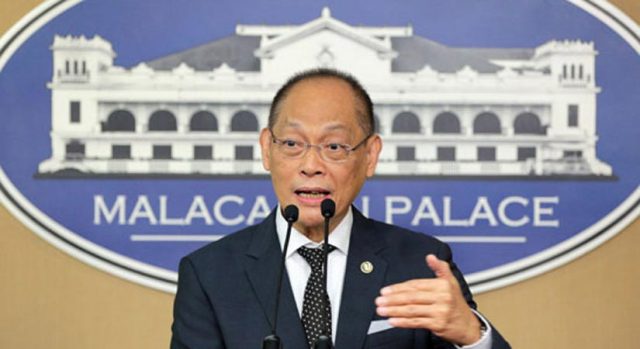
BANGKO SENTRAL ng Pilipinas (BSP) Governor Benjamin E. Diokno, who will be the next government’s Finance Secretary, said the Philippine economy is “promising” and has much to offer potential investors.

“We thank our partners in Spain who have played significant roles in the Philippine economic narrative,” Mr. Diokno said during his presentation to the BBVA Investor Roundtable Discussion in Spain, “Over the years, Spain has been an important ally, contributing to our trade growth.”

“And for those who have yet to do business with the Philippines, we urge you to take a look at our promising economy as we soar to new heights.”

Mr. Diokno said the Philippines is currently in a demographic sweet spot, with a young cohort entering or currently in the work force.

“The country has a younger population compared with the rest of the world. It has a rich talent pool, having an annual average of 750,000 graduates across disciplines, forming a deep manpower pool of 45 million (who are) well-educated and hard-working. In an ageing world, having a population with a median age of 25.7 is an asset,” Mr. Diokno said.

“Moreover, the Philippines’ location is favorable for key markets as it is situated at the heart of major trading routes,” Mr. Diokno said.

“At the height of the pandemic, as I said earlier, we didn’t sit idly by and wait for the virus to recede. Instead, we pushed for game-changing reforms. We continued to invest in physical infrastructure and human capital. All these are meant to improve the Philippines’ competitiveness, boost its productive capacity, and make the Philippines an even more attractive investment destination.”

Mr. Diokno highlighted how the country “successfully managed” the coronavirus disease 2019 (COVID-19) health crisis through structural reforms and macroeconomic management.

“After the pandemic-driven recession in 2020, the economy grew by 5.7% last year and 8.3% in the first quarter this year. We attribute this to much-relaxed mobility and activity restrictions as the country was able to manage the spread of COVID-19,” Mr. Diokno said.

HSBC VIEW ON GROWTH
Separately, the Philippines was identified as a strong market for future growth, HSBC Ltd. said, citing the results of a survey.

“Known for its competitive price of labor, the Philippines is expected to attract investment in the years ahead, with US companies playing a leading role. The survey shows that 1 in 5 companies (21%) planned to expand in the country in the next two years, making the Philippines a close second as the most preferred destination for investment in the region,” HSBC said in a statement on Wednesday.

The survey noted that in the absence of a downturn arising from geopolitics or a COVID-19 resurgence, the future is bright for the Philippine market.

“From demographics to digitization to pure dynamism, so much is going in favour of the Philippines as part of Southeast Asia,” HSBC Philippines Head of Wholesesale Banking Mimi Concha said.

“The country is home to a large young population that is digitally native, increasingly affluent and educated, and with growing purchasing power. Their enterprising nature has produced a startup scene that rivals any other in the world. We are indeed brimming with potential,” she added. — Keisha B. Ta-asan

Convenience vs tax savings: Weighing individual tax rate options

As prices rise in response to the Ukraine-Russia crisis, Filipinos may be on the lookout for alternative sources of income, which would be an opportunity to engage their entrepreneurial side. Entrepreneurship is in fact abundant in our society — according to the 2020 Micro, Small and Medium Enterprises (MSME) Statistics from the Department of Trade and Industry, some 88.77% of establishments in the Philippines are micro enterprises.

Individuals, whether self-employed or employed by others, are taxed at graduated rates of 0-35% based on net taxable income. Additionally, self-employed individuals (which include professionals) are also subject to business taxes on gross sales/receipts (namely, value-added tax [VAT] or percentage tax).

The TRAIN Law, which we welcomed in 2018, offered an alternative taxation regime for self-employed individuals or mixed-income earners (or those who earn both a salary from employment and income from business or practice of a profession). This alternative is the 8% income tax on gross sales or receipts (otherwise known as gross income tax or GIT) from business or practice of a profession, in excess of P250,000.

For the business income to qualify for the 8% GIT, the individual should meet the following conditions as laid down by Revenue Memorandum Order (RMO) No. 23-2018:

• Gross sales/receipts and other non-operating income should not exceed the VAT threshold of P3,000,000 during the taxable year;

• The taxpayer should be registered as a non-VAT taxpayer; and

• The taxpayer must have signified the intention to elect the 8% GIT upon initial registration or upon filing their quarterly income tax return (ITR) for the first quarter of the taxable year. Such election will be irrevocable for that year.

The 8% GIT is in lieu of the regular income tax and percentage tax. Thus, taxpayers opting for this special rate only need to pay one tax instead of paying income tax and percentage tax separately every quarter. Thus, they only need to file the Quarterly ITR, unless exempted by any revenue issuances and the Annual ITR (Financial Statements are not required to be attached).

In contrast, self-employed individuals who have not opted for the 8% GIT, are generally subject to the 3% percentage tax or 12% VAT. The 3% percentage tax rate is temporarily reduced to 1% until June 30, 2023 under the CREATE Law and reverts to 3% subsequently.

Effectively, opting for the 8% GIT saves a taxpayer from the inconvenience of filing two returns and paying two types of taxes quarterly. As a quick review, ITRs are filed every May 15 (Q1), August 15 (Q2), November 15 (Q3), and April 15 of the following year for the annual return. On the other hand, percentage tax returns are filed 25 days after the close of each taxable quarter.

But what is the cost of this convenience? When is it beneficial to avail of the 8% GIT? Looking at tax costs alone, let’s do the math.

Taking as an example a self-employed individual with no deductible operating expenses, at P3,000,000 gross sales, the taxpayer must pay only P220,000 under the 8% GIT. It is computed by multiplying 8% to P3,000,000 less the P250,000 exempt income.

For the taxpayer to be indifferent about availing of this option, the gross profit rate (or GP rate) given the applicable percentage tax is 1%, should be 33.33% of the gross sales/receipts. It is at this GP rate (8% GIT breakeven point) that tax due under 8% GIT and graduated rates are the same at P220,000. If the GP rate is more than 33.33%, the taxpayer will be better off availing of the 8% GIT. Conversely, if its GP rate is less than 33.33%, it will be worse off applying the 8% GIT. At 40% operating expenses, the 8% GIT breakeven point is a 55.56% GP rate.

From this calculation, we can infer that those individuals with margins greater than the breakeven point are more likely to benefit from the 8% GIT. For individuals with relatively stable and high GP rates and lower operating expenses, 8% GIT may be a good option. It will mean tax savings and less administrative costs on filing returns. However, for those with a low GP rate and who have a significant level of operating expenses, 8% GIT may not be the best option — taxwise. The taxpayer will lose the benefit of deducting his expenses.

Either way, availing of the 8% GIT may save the individual precious time which can be devoted to running the business. Since the irrevocable option is signified during the first quarter, the downside is that there is no turning back. Like all other aspects of the business, careful study is required. By conducting a diligent cost-benefit analysis, taxpayers can evaluate the most efficient tax rates to apply in order to maximize the sought-after returns.

The views or opinions presented in this article are solely those of the author and do not necessarily represent those of Isla Lipana & Co. The content is for general information purposes only, and should not be used as a substitute for specific advice.


Erika Mae D. Buenaventura is an assistant manager at the Tax Services Department of Isla Lipana & Co., the Philippine member firm of PwC network.

erika.mae.buenaventura@pwc.com