Home Blog Page 5917

President Biden says Fed targeting inflation, China tariffs under review
REUTERS

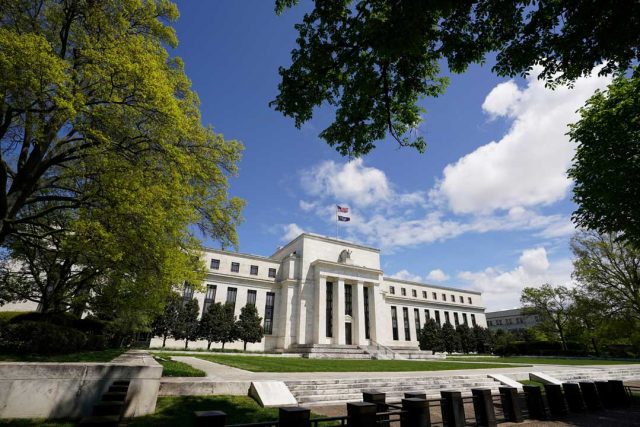
WASHINGTON — United States President Joseph R. Biden, under pressure to tame high inflation, told Americans on Tuesday that he understands their plight and that he and the US Federal Reserve are working to solve what he called his administration’s top domestic priority.

“They’re frustrated,” Mr. Biden said of Americans paying more for goods and services across the board. “I don’t blame them.”

As inflation pushes annual consumer prices more than 8% higher than a year ago, the president highlighted his release of oil from strategic petroleum reserves and his pressure on companies with record-high profits to lower prices.

“I want every American to know that I am taking inflation very seriously and it is my top domestic priority,” Mr. Biden told reporters.

Fewer than half of US adults — 42% — approve of Mr. Biden’s handling of the presidency and they rate the economy as the country’s most important problem, according to a Reuters/Ipsos poll this week.

Mr. Biden said the COVID-19 pandemic, coupled with supply chain issues and Russia’s war on Ukraine, were to blame for the inflation spike.

Mr. Biden and fellow Democrats rushed trillions in new COVID aid and infrastructure spending into the economy last year, fueling a record rebound last year. Republicans and some economists have said the spending also fueled inflation.

A March study from the Federal Reserve bank of San Francisco estimated US fiscal stimulus added 3 percentage points to current inflation data, but said without the spending the economy might have tipped into deflation, which would have been more difficult to manage.

“We’re in power,” Mr. Biden said when asked whether he deserved the blame for high prices. “We control all three branches of government. Well, we don’t really,” he added, lamenting his fellow Democrats’ inability to get other spending bills passed because of their narrow control of Congress.

Mr. Biden said the Federal Reserve should and will do its job to control it. The central bank raised interest rates by half a percentage point last week and is expected to roll out additional hikes this year.

The president did not announce new policy measures in the speech ahead of new consumer price data on Wednesday expected to show inflation remained elevated through April.

But he said he was considering eliminating Trump-era tariffs on China as a way to lower prices for goods in the United States. “No decision has been made on it,” he said.

White House press secretary Jen Psaki told reporters later there could be more on tariffs in “coming weeks.”

AIMING AT REPUBLICANS
Mr. Biden and top officials said multiple times as prices rose in 2021 that they expected inflation to be temporary, but it has persisted.

On Tuesday, he sought to deflect blame to Republicans, who he said have less of a plan than he does and have thwarted his policies to fight it. Democrats are defending narrow majorities in the Nov. 8 congressional elections that will determine who controls the Senate and House of Representatives.

Republicans have promoted loosening regulations on oil and gas producers as well as cutting some taxes and government spending, but have not endorsed any policy document on inflation.

Mr. Biden took aim at a “Rescue America” proposal from Republican Rick Scott, the US senator from Florida, that includes a federal minimum income tax which the White House says would cost middle-class families $1,500 a year.

“The Republican plan is to increase taxes on middle class families,” he said.

Scott, speaking to reporters on Capitol Hill, shot back: “He just wants to blame everybody.” — Reuters


New Zealand to open int’l borders fully to visitors by end-July

Image via Anup Shah/Flickr/CC BY-SA 2.0

WELLINGTON — New Zealand Prime Minister Jacinda Ardern said on Wednesday the country will fully reopen its international borders from 11:59 p.m. on July 31, with cruise ships also welcome back to local ports on the same day.

The end-July opening of the border is two months earlier than the government’s previous time frame and will mean visitors who need visas will now be able to come to New Zealand.

Ms. Ardern said in a speech to a Business NZ lunch in Auckland that opening the borders would help to relieve urgent skills shortages, open up tourism and put immigration settings on a more secure footing.

“We are building on our proven plan to secure New Zealand’s economic future,” Ms. Ardern said. — Reuters

International news aggregator SQUID launches app in the Philippines 

SQUID App (Njuice AB), a news aggregator for publications across 60 countries, will launch its app on the Apple Store within the week. It already launched its Android app in the Philippines on May 11. 

SQUID offers users a personalized news feed based on smart algorithms from over 100 news categories and 20,000 sources worldwide.  

Theirs is a news service that targets millennials in Europe, Asia Pacific, and Latin America, said country manager Flora Mae Y. Torres.  

“Our belief is that free media is of utmost importance in a democracy, and [that] the better-informed citizens are, the better decisions they can make for the future,” she told BusinessWorld in an e-mail.  

“We want to help younger generations rediscover news reading as a fun, valuable and engaging daily activity — in the language they prefer,” said Johan Othelius, CEO and founder of SQUID App, in a press statement.  

The app drives traffic to websites in order to help its publishing partners gain additional revenue. By clicking either the headline or image of a story, users are directed to publishers’ web pages, Ms. Torres said.  

“SQUID doesn’t reproduce the publication articles,” she said in the e-mail. “It will embed your entire publication within your app so that your reader will read it in the context on your site header. Users will also see the publications’ ads featured on their sites.”  

Among the publications found in the app are BBC Minute, Al Jazeera, Politico, Sky News, Channel News Asia, The Philippine Daily Inquirer, Brigada News, and Remate Online. 

SQUID would be happy to discuss syndication with publishers, Ms. Torres added. 

Given Filipinos’ inclination for social media, the app has moreover created its own Facebook page to raise awareness of its brand.  

The Stockholm-headquartered company was founded in 2015. It was named SQUID to represent the marine animal’s many arms grasping for interesting stories.  

“Believe it or not, squids are really smart animals. They are able to count, solve problems, recognize patterns, and communicate,” said Ms. Torres. “Communication is the core of our business.” — Patricia Mirasol

Enterprise tech, financial services most vulnerable to cyberattacks — Secuna 

PIXABAY

Around 494 vulnerabilities across 21 private local firms — mostly enterprise technology and financial services companies — were detected last year in a 2022 study by Philippine cybersecurity testing platform provider Secuna.  

Of the cyber weaknesses detected, 58.89% came from the enterprise technology sector in which 30 were classified as critical-risk, 56 as high-risk, and 152 as medium-risk. Meanwhile, about 20% of the vulnerabilities came from the financial services sector. 

The top three critical weaknesses found by Secuna were “remote code execution (RCE) flaws, SQL (structured query language) injection flaws, andexposed .git repositories,” it said in its report.  

RCE can be used to remotely control a target server, retrieve the source code, access the database, and even delete the server’s filesystem. SQL injection vulnerabilities can allow full access to a database and massive data breaches. Exposed .git repositories can be exploited to retrieve the source code of a target app, Secuna explained. 

In 2021, the Bankers Association of the Philippines (BAP) revealed that unauthorized withdrawals and transfers reached more than P1 billion for that year, amid a rise in cybercrime along with the rise in digital transactions due to the pandemic.  

“We encourage companies to review their assets for these security gaps and take measures to eliminate known vulnerabilities,” said AJ Dumanhug,Secuna’s chief executive officer and co-founder, in a statement.

He added that every valid bug submitted by their ethical hackers and researchers merit a reward depending on the severity of the cyber weakness discovered. Along with the report, Secuna announced that its bug bounty payouts have increased to $24,045.  

The cybersecurity platform also has a bug bounty program (BBP) service that allows its clients compliant with the Bangko Sentral ng Pilipinas and National Privacy Commission to work with security researchers around the world to identify security threats.  

“Cybercriminals are already testing your app to find potential loopholes that will allow them to compromise your application or server. Having no BBP will leave you clueless about potential vulnerabilities in your application. BBP solves this problem by allowing good hackers to report those potential vulnerabilities,” said Mr. Dumanhug.  

In March, he said that Secuna is looking into a partnership with the Philippine government for a free cyberattack simulation, in order to improve the country’s capacity to defend against cybercrime. — Bronte H. Lacsamana

Russia downed satellite internet in Ukraine -Western officials

 – Russia was behind a massive cyberattack against a satellite internet network that took tens of thousands of modems offline at the onset of RussiaUkraine war, the United States, Britain, Canada, Estonia and the European Union said on Tuesday.

The digital assault against Viasat’s VSAT.O KA-SAT network in late February took place just as Russian armor pushed into Ukraine. U.S. Secretary of State Antony Blinken said the cyberattack was intended “to disrupt Ukrainian command and control during the invasion, and those actions had spillover impacts into other European countries”.

British Foreign Secretary Liz Truss called the satellite internet hack “deliberate and malicious” and the Council of the EU said it caused “indiscriminate communication outages” in Ukraine and several EU member states.

The Viasat outage remains the most publicly visible cyberattack carried out since Russia‘s invasion of Ukraine, in part because the hack had immediate knock-on consequences for satellite internet users across Europe and because the crippled modems often had to be replaced manually.

“After those modems were knocked offline it wasn’t like you unplug them and plug them back in and reboot and they come back,” the U.S. National Security Agency’s Director of Cybersecurity Rob Joyce told Reuters on the sidelines of a cybersecurity conference on Tuesday.

“They were down and down hard; they had to go back to the factory to be swapped out.”

The precise consequences of the hack on the Ukrainian battlefield have not been made public, but government contracts reviewed by Reuters show that KA-SAT has provided internet connectivity to Ukrainian military and police units. Read full story

The satellite modem sabotage caused a “huge loss in communications in the very beginning of war”, Ukrainian cybersecurity official Victor Zhora said in March. Read full story

In a statement, Ukraine‘s State Service of Special Communications and Information Protection said that Russia “is an aggressor country attacking Ukraine not only on our land, but in cyberspace too”.

The Russian Embassy in Washington did not immediately return a message seeking comment. Russia routinely denies it carries out offensive cyber operations.

Viasat said in a statement that it “recognized” the announcement and would continue to work with government officials to investigate the hack. The company did not provide an update on a Viasat official’s comments to Reuters in late March that the hackers were still trying to interfere with the company’s operations, albeit to limited effect. L2N2VW2XC

The satellite modem-wrecking cyberattack remains the most visible hack of the war, but many others have taken place since and not all of them have been made public. Read full story

“That was the biggest single event,” said Joyce. “It certainly had new and novel tradecraft, but there have been multiple attacks.”

SpaceX billionaire Elon Musk said his company’s Starlink satellite broadband service, which is available in Ukraine, had resisted Russian cyberwar jamming and hacking attempts, though adding in a post on Twitter: “They’re ramping up their efforts”. – Reuters

As property market cools, New Zealand’s recent home buyers tighten belts

STOCK PHOTO | Image by Bernd Hildebrandt from Pixabay

 – When Aarti and Gaurav Kathuria were saving for their first home, a three-bedroom townhouse in Auckland, they cut back on eating out and other expenses so they could put together the hefty deposit.

Now, only months after paying NZ$875,000 ($560,000) for a home in one of the world’s most unaffordable cities, they’re faced with a new challenge: property prices are falling, while mortgage rates and living costs are going up.

The declining property values are a product of policies designed to knock some of the heat out New Zealand’s red-hot housing market. But for people like the Kathurias, the hit to household wealth has meant a tightening of the purse strings.

“All you can do is cut back on things,” Aarti Kathuria said.

House prices in New Zealand, which were already elevated before the COVID-19 pandemic, jumped 43% in the two years to December 2021, according to the Real Estate Institute of New Zealand said. They’ve fallen around 1% since December.


“Over the past 12 months people who have entered in that very heightened house buying frenzy will be challenged,” Reserve Bank of New Zealand Governor Adrian Orr said last week, noting most households remain in a strong equity position.

The Kathurias are also trying to save 30% of their income to provide a financial buffer for future costs. With petrol costs and food prices rising, they’re catching the train to work, walking to the supermarket rather than driving and renting out a spare bedroom.

Housing affordability has plummeted over the past two years as home prices and debt levels surged, driven by record low interest rates, massive fiscal relief and an inability to spend on overseas travel.

Analysts at Australian financial firm Barrenjoey said nearly 40% of loans in New Zealand were to borrowers with debt more than six times their income.


UNSUSTAINABLE

The RBNZ, which has to consider house prices in its policy deliberations, began raising the cash rate in October last year, at the time describing house prices as “unsustainable”.

It has so far increased the cash rate by 1.25 percentage points and forecast further significant increases.

Last week, Orr told a parliamentary committee that house prices still needed to drop as much as 20% more before they were at sustainable levels. Read full story

Some economists now see house prices falling about 10% this year.

While lower house prices would help the government’s affordability objectives, the combination of weaker asset values, soaring inflation and higher debt burdens could reduce consumer spending.

This would make it harder for recent homebuyers to repay their loans as interest rates rise.

“A sharp correction remains a plausible outcome that would have broad economic implications,” the RBNZ said last week. Read full story

The central bank expects that around 50% of those who bought a property in the past 12 months will need to “belt tighten” if mortgage rates hit 7%. Currently major banks are offering a floating mortgage rate of around 5.5%.

Miles Workman, senior economist at ANZ Bank, said recent buyers who borrowed heavily were most at risk of falling into negative equity as prices come down.

“That is going to hurt from a psychological perspective,” he said. “Hopefully those first-home buyers can just grit their teeth and get through it because the labour market is very tight.”

Economists expect a hit to consumption as the mix of higher loan repayments and rising prices make households cautious about spending.

Westpac’s acting chief economist for New Zealand, Michael Gordon, said all of these factors could squeeze the broader economy.

“The Reserve Bank is facing a very difficult balancing act – probably the hardest that they faced in the inflation targeting era,” he said. – Reuters

China says military warned US warship as it transited Taiwan Strait

https://bit.ly/3M35ndK

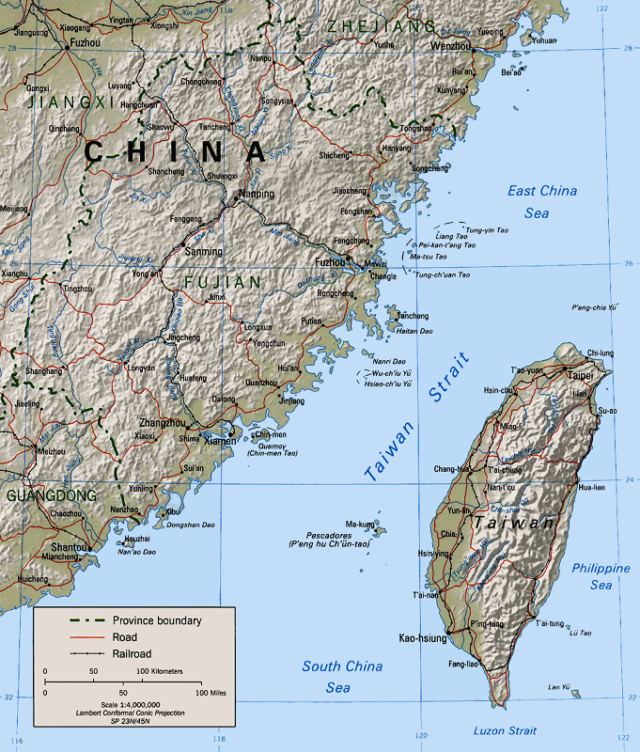
 – China‘s military said on Wednesday that it had monitored and warned a US warship that had sailed through the sensitive Taiwan Strait, a mission that happened shortly after China carried out drills near the island.

The US Navy’s 7th Fleet said the guided-missile cruiser USS Port Royal conducted a “routine” Taiwan Strait transit through international waters “in accordance with international law” on Tuesday, the second such mission in two weeks.

The United States has been carrying out such voyages about once a month, angering China, which views them as a sign of support for Taiwan, the democratically governed island that Beijing views as Chinese territory.

The People’s Liberation Army’s Eastern Theatre Command said in a statement that its forces had monitored the ship throughout and “warned” it.

“The United States frequently stages such dramas and provokes trouble, sending wrong signals to Taiwan independence forces, and deliberately intensifying tensions across the Taiwan Strait,” it added.

“Theatre troops maintain high alert at all times, resolutely counteract all threats and provocations, and resolutely defend national sovereignty and territorial integrity.”

The US Navy said the ship “transited through a corridor in the Strait that is beyond the territorial sea of any coastal State”.

“Port Royal’s transit through the Taiwan Strait demonstrates the United States’ commitment to a free and open Indo-Pacific. The United States military flies, sails, and operates anywhere international law allows.”

Taiwan‘s Defence Ministry said the U.S. ship sailed north through the strait, and that the situation in the waterway was “as normal”.

Late on Tuesday, the ministry said a single Chinese WZ-10 attack helicopter had briefly crossed the strait‘s unofficial mid line, which combat aircraft from both sides normally avoid passing through, though China‘s air force does on occasion do so.

It also reported that two Chinese KA-28 anti-submarine helicopters were spotted in an area roughly halfway between Taiwan‘s southwestern coast and the Taiwan-controlled Pratas Islands at the top part of the South China Sea.

China‘s armed forces carried out another round of exercises near Taiwan last week to improve joint combat operations, the People’s Liberation Army said on Monday, after the Chinese-claimed island reported a spike in activity. Read full story

The guided-missile destroyer USS Sampson sailed through the Taiwan Strait on April 27, which China condemned, saying such missions “deliberately” harm peace and stability. Read full story

The United State, like most countries, has no formal diplomatic ties with Taiwan but is its most important international supporter and arms supplier, making it a constant source of tension between Beijing and Washington. – Reuters

WHO chief says China’s zero-COVID policy not ‘sustainable’

 – The head of the World Health Organization said on Tuesday China’s zero-tolerance COVID-19 policy is not sustainable given what is now known of the virus, in rare public comments by the U.N. agency on a government’s handling of the pandemic.

“We don’t think that it is sustainable considering the behaviour of the virus and what we now anticipate in the future,” WHO Director-General Tedros Adhanom Ghebreyesus told a media briefing.

“We have discussed this issue with Chinese experts. And we indicated that the approach will not be sustainable… I think a shift would be very important.”

He said increased knowledge about the virus and better tools to combat it also suggested it was time for a change of strategy.

The comments come after China’s leaders have repeated their resolve to battle the virus with tough measures and threatened action against critics at home even as strict and prolonged lockdowns exact a heavy toll on the world’s second-largest economy. Read full storyRead full story

Speaking after Tedros, WHO emergencies director Mike Ryan said the impact of a “zeroCOVID policy on human rights also needs to be taken into consideration.

“We have always said as WHO that we need to balance the control measures against the impact they have on society, the impact they have on the economy, and that’s not always an easy calibration,” said Ryan.

He also noted that China has registered 15,000 deaths since the virus first emerged in the city of Wuhan in late 2019 – a relatively low number compared with nearly 1 million in the United States, more than 664,000 in Brazil and over 524,000 in India. Read full storyRead full story

With that in mind, it is understandable, Ryan said, that the world’s most populous country would want to take tough measures to curb coronavirus contagion.

Still, China’s zeroCOVID policy has drawn criticism ranging from scientists to its own citizens, leading to a cycle of lockdowns of many millions of people, anguish and anger. Most other nations that shared its approach initially have now at least begun a transition to strategies to live with the virus.

The continued outbreaks also underscore how difficult it is to stop the spread of the highly transmissible Omicron variant. Read full story

Under zeroCOVID, authorities lock down large population areas to stamp out viral spread in response to any coronavirus outbreak, even if just a small number of people test positive.

Shanghai’s measures have been particularly strict, with residents allowed out of compounds only for exceptional reasons, such as a medical emergency. Many are not even allowed out of their front doors to mingle with neighbours.

Its quarantine policy has also been criticised for separating children from parents and putting asymptomatic cases among those with symptoms.

Highlighting the far-reaching impact of prolonged lockdowns on global manufacturing and supplies of critical goods, General Electric’s GE.N healthcare unit outlined on Tuesday the drastic measures it has taken to deal with shortages of dye used for medical scans and tests in the United States caused by the suspension of its Shanghai factory. Read full storyReuters

Why are food prices going up? Key questions answered

Global food prices started to rise in mid-2020 when businesses shut down due to the COVID-19 pandemic, straining supply chains. Farmers dumped out milk and let fruits and vegetables rot due to a lack of available truckers to transport goods to supermarkets, where prices spiked as consumers stockpiled food. A shortage of migrant labor as lockdowns restricted movement impacted crops worldwide.

Since then, there have been problems with key crops in many parts of the world. Brazil, the world’s top soybean exporter, suffered from severe drought in 2021. China’s wheat crop has been among the worst ever this year. Concerns about food security, heightened during the pandemic, have led some countries to hoard staples to ward off future shortages, limiting supplies on the global market.

Russia’s invasion of Ukraine in late February dramatically worsened the outlook for food prices. The U.N. food agency said prices hit an all-time record in February and again in March. Russia and Ukraine account for nearly a third of global wheat and barley, and two-thirds of the world’s export of sunflower oil used for cooking. Ukraine is the world’s No. 4 corn exporter. The conflict has damaged Ukraine’s ports and agricultural infrastructure and that is likely to limit the country’s agricultural production for years.

Some buyers are avoiding buying grains from Russia due to Western sanctions.

Indonesia banned most exports of palm oil in late April to ensure domestic supplies of cooking oil, cutting off supplies from the world’s largest producer of the edible oil used in everything from cakes to margarine. Read full story


What food prices are rising the most?

Throughout the pandemic, high vegetable oil prices have helped drive up broader food costs. Cereal prices also hit a record in March, a result of limited shipments of corn and wheat during the Ukraine war. Read full story

Dairy and meat prices reached a record in April, according to the U.N. food agency, reflecting continually increasing global demand for protein and high prices for animal feed – mainly corn and soybeans. In addition, bird flu in Europe and North America impacted egg and poultry pricesRead full story

In U.S. inflation data for March, the index for meats, poultry, fish and eggs increased 14% from a year ago while beef rose 16%.


When will food prices come down?

It is hard to say, given that agricultural production depends on hard-to-predict factors like weather. U.N. Secretary-General Antonio Guterres said in early May the problem of global food security could not be solved without restoring Ukrainian agricultural production and Russian food and fertilizer output to the world market. Read full story

The World Bank forecasts wheat prices could rise more than 40% in 2022. The Bank expects agricultural prices to fall in 2023 versus 2022. But that depends on increased crop supplies from Argentina, Brazil and the United States – by no means guaranteed.

The sharp rise in fertilizer prices, as countries avoid buying from major producers Russia and its ally Belarus, could discourage farmers from applying adequate crop nutrients to their fields. That could bring down yields and result in lower production, prolonging the crisis. As the climate warms, extreme weather is becoming more common – posing another risk to crop production. Read full story


Who is most affected?

Food prices in March accounted for the greatest share of U.S. inflation since 1981, according to Fitch Ratings, while shop prices in Britain surged in April at the fastest rate in more than a decade. But the people most impacted by higher food prices live in the developing world, where a larger percentage of incomes is spent on food.

The Global Network Against Food Crises, set up by the United Nations and the European Union, said in an annual report that Russia’s invasion of Ukraine poses serious risks to global food security, especially in countries facing a food crisis including Afghanistan, Ethiopia, Haiti, Somalia, South Sudan, Syria and Yemen. Read full storyReuters

How Bongbong Marcos and Sara Duterte will rule Philippines after election

Ferdinand "Bongbong" R. Marcos Jr.
Presidential candidate Ferdinand "Bongbong" R. Marcos Jr. talks during a rally in Binan, Laguna, April 21. -- Photo by KJ ROSALES, The Philippine Star

Ahead of his landslide election win on Monday, Ferdinand Marcos Jr. gave few specifics on how he’d govern the Philippines. But a private dinner he attended soon after entering the race last October may provide clues on his priorities — and to whom he’s beholden.

Joined by Sara Duterte, the president’s daughter who would later become his running mate, Marcos Jr. sat down with the powerful family that controls most key positions in the tourist hotspot of Cebu, which has more voters than any of the nation’s 81 provinces outside the capital. Sharing laughs over wine, Governor Gwen Garcia — known as the “Iron Woman of Cebu” — came away impressed with the only son of former dictator Ferdinand Marcos.

For Garcia, 66, endorsing the man known as Bongbong wasn’t an easy decision. Her father was an opposition lawyer who stood up against his father’s regime before it ended abruptly in 1986. The clan didn’t back Marcos Jr., 64, when he ran for vice president six years ago — a decision that cost him the election.

But this time around Garcia saw Marcos Jr. as the candidate most likely to deliver two benefits in particular that were more valuable than settling old scores: More money for infrastructure projects, and greater autonomy from the political class in Manila. And on Monday, Cebu was among the places that helped Marcos Jr. win the presidency with the biggest share of the vote since his father won a boycotted election in 1981.

“He will certainly be helping us insofar as tourism infrastructure is concerned,” Garcia said in an interview days before the election at her office in Cebu City, when asked what she expected from Marcos Jr. “But I would really be very, very appreciative if we could finally get ahead on federalism,” she added. “We would wish for that kind of autonomy.”

Marcos Jr.’s resounding victory shows just how powerful family dynasties like the Garcias remain in a nation with a front-row seat to tensions between the U.S. and China. The former American colony has had a mutual defense treaty with the U.S. since the 1950s and sits on the doorstep to Taiwan, making it a crucial player in any potential conflict with China.

Yet most elections in the Philippines are decided by local fiefdoms with narrow interests. Although runner-up Leni Robredo, 57, drew historic crowds in the final weeks of a campaign focused on fighting corruption, ultimately it proved no match Marcos Jr.’s patchwork of alliances with local leaders in the Southeast Asian nation of 110 million people.

The question now is how much Marcos Jr. will give back to the clans that supported him. While the Philippines is forecast to be among Southeast Asia’s best-growing economies this year, one of Asia’s fastest inflation rates threatens to further hurt households that saw incomes decline with the pandemic. A quarter of the population lives in poverty, and the World Bank warned that number could jump as food prices rise.

Running on a broad slogan of “unity,” Marcos Jr. has said he’ll keep most of President Rodrigo Duterte’s economic policies, which for the most part were left to technocrats to design and implement. The Philippines maintained the investment-grade credit rating it won in 2013 even as Duterte announced a “Build! Build! Build!” program that more than doubled infrastructure spending to upwards of $20 billion per year.

The problem for the next administration, however, is finding more revenue to keep the program growing without blowing out the budget, according to Christian de Guzman, senior vice president of the Sovereign Risk Group at Moody’s Investors Service.

“I’m not sure if there’s any low-hanging fruit just because of the situation that we find ourselves in,” he said. “There is indeed a need to narrow the fiscal deficits and stabilize the debt.”

Marcos Jr.’s attention has been primarily focused on building the political alliances he needed to pull off Monday’s victory. After sealing a deal with the Dutertes, who remain the most popular political figures in the Philippines, Marcos Jr. also secured endorsements from parties affiliated with other former presidents, including Gloria Macapagal-Arroyo and Joseph Estrada — both of whom faced plunder charges after leaving office.

Marcos Jr. can also thank his dad for some help. The elder Marcos appointed the father of Victor Remulla, governor of vote-rich Cavite province south of Manila, back in 1979 — and the family is still loyal to this day.

Speaking by phone, Remulla said he became convinced Marcos Jr. had a firm grasp on policy and economic management during conversations between the pair that lasted up to 90 minutes. The 54-year-old politician also defended the country’s dynastic politics, saying it ultimately comes down to delivering for voters.

“Fat dynasties are hindered by the complacency of leadership,” he said. “But it’s really up to the people, and up to the people who serve to make things better for their constituents.”

Following street protests that ousted Marcos Sr. in 1986, the Philippines introduced congressional term limits and a constitutional provision banning political dynasties from government.

But clans have become even more entrenched since then: a 2019 study found that dynasties held four in five governor posts after mid-term elections that year, compared with 57% in 2004. They also controlled two-thirds of seats in congress, up from just under half during the same period, a phenomenon scholars blame for contributing to one of Asia’s highest income inequality rates.

Marcos Jr. opponents see his victory as the culmination of a disinformation campaign on social media that had followers believing his father’s dictatorship was a golden age for the Philippines. And they fear he’ll use his power to sort out his own legal troubles, including ending the official search for some $10 billion allegedly siphoned during his father’s two-decade rule, clearing up a $4 billion estate-tax dispute and keeping Imelda Marcos, his 92-year-old mother, from serving jail time.

Down in Cebu, Garcia is hopeful that Marcos Jr. will give her family and others more power, even as leaders around the world often back away from such promises when entering office. She expressed disappointment in Rodrigo Duterte, who dropped proposals to implement a U.S.-style federal structure where regions can impose taxes and make decisions on things like movement restrictions during the pandemic. Marcos Jr. has so far remained non-committal on the topic.

“Choose some bright spots, start with three or four that have already shown their capability in handling affairs on their own,” Garcia said, adding that Cebu was ready to be a federal state. “Suggestions are welcome, but we know the situation on the ground.”

In a small Cebu fishing village, Marcos Jr. supporter Rene Casqueso has much more modest expectations: The construction of community hospitals and more doctors in small towns. The 43-year-old carpenter has struggled to maintain work during the pandemic, and his family has largely subsisted on whatever they catch.

“I’m not sure if he understands the plight of the poor, but what I saw was he would meet with the laborers,” Casqueso said about Marcos Jr., as he perched in shallow coastal waters near his home. “I think he has a new way for the Philippines to recover and rise again.” — Bloomberg

Manufacturing growth climbs to 7-month high in March

Factory growth output in March jumped to its highest pace in seven months, preliminary results from the Philippine Statistics Authority (PSA) showed this morning.

A report from the PSA of the Monthly Integrated Survey of Selected Industries (MISSI) showed manufacturing, as measured by the volume of production index (VoPI), grew more than four times or 336.3% year-on-year in March.

This was faster than February’s revised 75.5% growth and a turnaround from the 73.3% contraction recorded in March 2021.

March marked the 12th straight month that the manufacturing output was in the positive territory. It was also the highest year-on-year growth in seven months or since the 521% surge in August last year.

Manufacturing growth averaged 80.9% in the three months to March.

Fifteen of 22 industry divisions posted VoPI growth in March, led by manufacture of coke and refined petroleum products, which grew almost 23x annually, still faster than the revised 482.1% growth in February. This was followed by manufacture of machinery and equipment except electrical, which grew by 43.2%; and manufacture of textiles, which was up by 24.2%.

Meanwhile, declines were recorded for the manufacture of electrical equipment (-36.5% in March from -27.4% in February), printing and reproduction of recorded media (-10.9% from -10.7%), manufacture of leather and related products, including footwear (-5.9% from 31.4%), manufacture of other non-metallic mineral products (-5.4% from 22.6%), manufacture of transport equipment (-4.6% from 6.2%), manufacture of basic pharmaceutical products and pharmaceutical preparations (-0.6% from 7.2%) and manufacture of food products (-0.1% from 20.3%).

In comparison, S&P Global’s Philippines Manufacturing Purchasing Managers’ Index improved to its second month to an over three-year high of 53.2 in March, signifying an expansion in manufacturing condition the previous month.

The 50-mark separates manufacturing expansion and contraction.

The capacity utilization — the extent to which industry resources are used in producing goods — averaged 70.4% in March, faster from the revised 69.7% the previous month. Of the 22 sectors, 21 reached an average capacity utilization rate of at least 50%. — Ana Olivia A. Tirona

Investors await Marcos Cabinet picks

Supporters celebrate in front of former Senator Ferdinand R. Marcos Jr.’s campaign headquarters along EDSA in Mandaluyong City, May 9. — PHILIPPINE STAR/ MIGUEL DE GUZMAN

By Tobias Jared Tomas

ALL EYES are now on Ferdinand R. Marcos, Jr.’s Cabinet picks, particularly his economic team, after the former senator appeared to secure a landslide victory in Monday’s presidential election.

Mr. Marcos, the son and namesake of the former dictator, garnered over 30 million votes, according to an unofficial tally by the poll body. He is poised to return to Malacañan Palace 36 years after his father was ousted during the People Power Revolution in 1986. (Related story)

Investors are awaiting Mr. Marcos’s announcement of his economic team that will oversee the Philippines’ recovery from the pandemic.

Uncertainty over the lack of details of the incoming president’s economic policies may have spilled over to the stock market, where the Philippine Stock Exchange index (PSEi) dropped by as much as 3.1% on Tuesday morning. It closed 0.57% lower at 6,720.93.

“It’s too early to tell, because unfortunately, Mr. Marcos Jr. did not present much of a platform during the campaign,” BPI Lead Economist Emilio S. Neri, Jr. said in a Viber message. “Hopefully he appoints the best economic managers to guide him in a more market-friendly direction and allows them to run their respective offices effectively.”

Rizal Commercial Banking Corp. Chief Economist Michael L. Ricafort said in an e-mail that the next administration would need a “credible” and “competent” economic team that will implement policies promoting environment, social, and governance (ESG) to attract investments.

In an interview with Bloomberg TV, PSE President and Chief Executive Officer Ramon S. Monzon said foreign investors are waiting to see who the members of Mr. Marcos’s economic team will be.

“The new economic team has a lot of things, a lot of hard work in front of them. Basically, I think they really need to look at finding a new revenue stream. We can’t be sustaining this economy with what we have now,” he said, noting the increase in foreign debt during the pandemic.

National Government debt stood at a record P12.68 trillion as of end-March, with external debt rising 25.8% year on year to P3.81 trillion.

“I think for the foreign investors, there will be a short wait-and-see (period) to see who the economic team will be,” he said. “I think the ingredients are there, it’s a question if the new team will have the dynamism the country needs,” Mr. Monzon added.

The government is targeting 7-9% gross domestic product (GDP) growth this year, although the ongoing pandemic, Russia-Ukraine war and high inflation has clouded the outlook.

‘POWERFUL POSITION’
In a note on Tuesday, Capital Economics Emerging Asia economist Alex Holmes said Mr. Marcos’s landslide win put him in a “powerful position.”

“Given his family background and his checkered political career to date, there are concerns among investors that his election will fuel corruption, nepotism and poor governance,” Mr. Holmes said. 

“Similar worries also greeted Duterte’s election victory in 2016 and corruption does appear to have worsened — the Philippines has fallen 16 places in the Transparency International Corruption Perceptions Index since the last election. Despite this, there was no major drop in the performance of the economy.”

He noted Mr. Marcos gave few policy details on the campaign trail, but is widely expected to follow outgoing President Rodrigo R. Duterte’s lead, particularly the “Build, Build, Build” infrastructure program and closer ties with China.

“Extra spending on infrastructure would probably increase government debt… A bigger concern is the impact of the policy on the current account and the peso,” Mr. Holmes said.

Mr. Holmes noted that closer ties with China may involve a trade-off in the Philippines’ relationship with its traditional ally, the United States.

“There seems little economic rationale for turning away from a country that accounts for a greater share of export demand than China, has invested heavily in the large business process outsourcing sector and is a huge source of remittances,” he said.

Victor A. Abola, an economist at the University of Asia and the Pacific (UA&P), said some degree of economic continuity is likely under the Marcos administration.

“I think there is going to be very little change in the policies… For one, infrastructure spending will continue. Because that’s a really urgent need, but that’s the one that has created jobs,” he said in an ANC interview.

However, Mr. Abola said Mr. Marcos will not inherit an economy with a healthy fiscal position this time, unlike the Duterte administration in 2016.

“Then you have high inflation and then you have debt, fiscal space is getting a bit narrower, but I don’t think that these are big enough to undo the gains that we have achieved in the past decade… As long as interest rates are relatively low, we should be okay. There is still a lot of room, because the budget is quite huge,” he added. 

Headline inflation soared to 4.9% in April, the highest in over three years, fueled by the spike in oil and commodity prices due to the Russia-Ukraine war.