Home Blog Page 5910

Chivas turns red, gets new bottle


THE SILVER box of Chivas Regal 12, a familiar sight on liquor cabinets, is no more. Long live the new red box.

“The emperor has changed clothes. But it’s still the emperor,” declared Tony Atayde, Marketing Head for Pernod Ricard Philippines to BusinessWorld during an event earlier this month.

Despite the outfit change, he assured us that the blended scotch, founded in 1786, will remain the same. “The liquid does not change.”

The company achieved prominence in 1843 when it was awarded a Royal Warrant to supply whisky to Queen Victoria. The last of the family died in 1893, after which control went to a board of trustees. It has changed hands multiple times since, until being acquired by Pernod Ricard in 2001.

THE BOTTLE
The bottle, whose design has not changed in 200 years according to Mr. Atayde, is also changing.

“It’s always been a historic brand. At the same time, it now has a historic following,” he noted. Hunter S. Thompson reportedly like it, and so did the priests in The Exorcist.

“What we’ve now decided is that the consumer is changing. For us to access that consumer, of what is a redefined luxury, we needed to change the way it looked.”

The bottle is now taller, and the ornate insignias have been removed.

“Now, it will appeal to a much younger audience. For us, it was redefining luxury for that generation.”

The redesigned bottle arrives with a more conscious production that is emblematic of these times. Chivas 12 now uses 100% recyclable and environmentally friendly packaging materials as the brand accelerates toward its 2025 target of 100% recyclable, reusable, compostable or bio-based packaging, which will save 92 tons of plastic per year. The reduced weight of the new Chivas 12 bottle saves more than 1,000 tons of glass each year, with its completely plastic-free packaging saving 2.3 million plastic bottles. Lastly, all-new delivery boxes lessen the energy needed in the recycling process.

K-POP CONNECTION
Along with the redesign of the bottle comes a partnership with K-Pop star Lisa of Blackpink, as well as the “I Rise, We Rise” campaign.

“We recognize that the new bottle appeals to a younger generation, and that younger generation is about self-success, and success as a group,” said Mr. Atayde.

In a statement, Lisa said, “After being on such a huge personal journey and hustling over the past few years, I want to inspire people to elevate themselves. It was a no-brainer to partner with Chivas, as their values are so closely aligned with my own, plus I’ve always been a whisky fan!”

Discussing the reputation of whisky as an older person’s drink, Mr. Atayde urged us to take a look at the party brewing at the event, with dispensers filling up glasses of whisky highballs. “It’s much younger, it’s much more vibrant. It’s very maximalist versus how it used to be: in a cigar room, or people in suits and ties and things like that.”

Mr. Atayde looked to the future with Pernod Ricard’s entry into e-commerce in the Philippines, a development sped up by pandemic lockdowns. “E-commerce played a big role. Before the pandemic, it (e-commerce sales) was less than 1% of our business.” Today, he places the figure at 4%-5% of their sales. “Which is a huge growth.” They do this with partnerships with online liquor retailers such as Boozy.ph, The Booze Shop, Thirst.ph, and Clink.ph.

“It took the pandemic for them to really make an impact, and we’re going to continue to partner with them.

“We don’t plan on taking our foot off the gas.” — Joseph L. Garcia

Yields on term deposits climb as market anticipates BSP hike

BW FILE PHOTO
THE central bank’s term deposits fetched higher yields on Wednesday as investors expect a rate hike. — BW FILE PHOTO

YIELDS on the term deposits of the Bangko Sentral ng Pilipinas (BSP) inched higher on Wednesday as investors expect the regulator to start increasing benchmark rates due to inflation risks.

Total demand for the term deposit facility (TDF) of the central bank amounted to P327.962 billion on Wednesday, going beyond the P260-billion offering. This also surpassed the P312.547 billion in bids recorded a week ago.

Broken down, the seven-day papers fetched bids amounting to P146.17 billion, higher than the P120-billion offer but failing to beat the P150.945 billion in tenders last week.

Banks asked for yields ranging from 1.9% to 2.125%, wider than the 1.92% to 1.9827% band seen in the previous week’s auction. This caused the average rate of the one-week paper to increase by 2.24 basis points (bps) to 1.9823% from 1.9599% previously.

Meanwhile, bids for the 14-day term deposits amounted to P181.792 billion, going beyond the P140 billion auctioned off by the BSP as well as the P161.602 billion in tenders seen on May 11.

Accepted rates ranged from 1.95% to 2.2%, barely moving from the 1.9% to 2.25% margin seen a week ago. With this, the average rate of the two-week deposit rose by 6.45 bps to 2.0932% from 2.0287% in the prior auction.

The BSP has not offered 28-day term deposits for more than a year to give way to its weekly auctions of securities with the same tenor.

Both the TDF and 28-day bills are used by the central bank to gather excess liquidity in the financial system and to better guide market rates.

Average TDF yields were higher due to mounting expectations of a BSP rate hike this week amid growing inflation risks, Rizal Commercial Banking Corp. Chief Economist Michael L. Ricafort said in a Viber message.

BSP Governor Benjamin E. Diokno said at an online briefing on Wednesday that “[the] space for maintaining an accommodative policy stance has considerably narrowed” as inflation continues to notch multi-year highs.

Inflation surged to an annual 4.9% in April, the highest in more than three years as soaring food and energy prices continued to hurt consumers.

Consumer prices rose to a 40-month high of 4.9% annually, from 4% in March and 4.1% in April a year ago, preliminary data from the Philippine Statistics Authority showed.

It was the quickest pace since the 5.2% print in December 2018.

The headline figure also breached the central bank’s 2-4% target for the year and is near the upper bound of its 4.2-5% forecast for April.

Inflation averaged 3.7% in the four months to April, lower than the 4.1% seen in the same period last year. However, it was still lower than the central bank’s 4.3% forecast for the year.

Some market players are pricing in a rate hike at the BSP’s meeting on Thursday as faster-than-expected economic growth in the first quarter is seen to put upward pressure on inflation.

A BusinessWorld poll of 17 analysts conducted last week showed they are divided on the BSP’s next move, with nine betting rates will remain unchanged, while eight are expecting a 25-bp hike.

Benchmark rates have been at record lows since November 2020, when the BSP cut rates by 25 bps.

Economic growth in the first quarter accelerated by a higher-than-expected 8.3% annually on strong household spending as lockdowns were eased, the Philippine Statistics Authority reported last week.

It was a reversal from the 3.8% decline in the same period last year and faster than the 7.8% gross domestic product (GDP) growth logged in the final three months of 2021.

The first quarter’s GDP growth figure was the highest since the 12.1% recorded in the second quarter last year. The latest print is also within the 7-9% target of the government.

Meanwhile, the Department of Labor and Employment on Saturday approved a P33 increase for the daily minimum wage in Metro Manila and by P55 to P110 for the Western Visayas region. Wage and fare hikes are among the conditions the central bank said it will monitor for possible second round inflation effects.

Mr. Ricafort added that the increase in TDF rates tracked rising US yields.

Reuters reported that the yield on the 10-year Treasuries rose 10.7 bps to 2.986%. This was following upbeat retail sales data which strengthens the case for continued economic growth in the US. — L.W.T Noble with Reuters

SEC flags ‘fraudulent’ scheme of Astrazion group

THE Securities and Exchange Commission (SEC) has directed Astrazion entities to immediately cease and desist from engaging in the unlawful and unauthorized solicitation, offer and sale of securities, calling the scheme “fraudulent.”

In an order dated May 12, the commission en banc ordered the group to stop offering their digital currency through an “illegal multi-level marketing platform.”

The group is composed of Astrazion Noble Task Community Foundation, Astrazion Global Holdings Philippines, Inc., and Astrazion International.

The companies and their directors have likewise been prohibited from transacting any business involving funds in its depository banks, and from transferring, disposing, or conveying any related assets to ensure the preservation of the assets of the investors, according to the regulator.

The cease-and-desist order was issued after the commission found that the Astrazion group has been operating an online multi-level marketing platform where it actively promotes the sale of its digital currency called “AZNT Token” for 10 cents per token.

“The Astrazion Group enticed the public to invest by assuring members that the AZNT Tokens will be registered and listed as a cryptocurrency at Coin Market Cap, and will be traded in the digital currency trading platform Binance. The AZNT token’s value could allegedly rise to $10 each from its current price of 10 cents,” the SEC said.

Aside from this, the group also promised investors a residual income and direct referral income distribution.

According to the SEC, this scheme involves the sale and offer of securities to the public in the form of investment contracts, whereby a person invests his money in a common enterprise and is led to expect profits primarily from the efforts of others.

“[T]he commission agrees with the finding, and so holds that the Astrazion Group is engaged in the sale and/or offer of securities in the form of investment contracts… because it has no license to carry out the same,” the order read.

Based on the SEC’s investigation, Astrazion Global and Astrazion Foundation are duly registered corporations with the commission. However, both firms have never secured a secondary license as an issuer of securities or broker dealer.

Meanwhile, Astrazion International is not registered as a corporation, partnership, or one-person corporation.

In February, the SEC had issued an advisory against the Astrazion group to warn the public from investing in them and similar entities.

“[T]he commission finds that the Astrazion Group is willfully defrauding the investing public in its act of selling and offering AZNT Token and in promising a guaranteed return of 3% daily,” the commission said.

The Astrazion group’s, operators, directors, officers, representatives, salesmen, agents, uplines, influencers, and enablers have also been ordered to cease their internet presence related to their unauthorized investment scheme. — Luisa Maria Jacinta C. Jocson

Russians line up for final Big Mac ahead of McDonald’s

PHOTO FROM MCDONALDS.COM

RUSSIANS lined up in a Moscow train station on Tuesday for what may be their last Big Mac from one of the few McDonald’s restaurants still open in the country.

The world’s largest burger chain is rolling down the shutters in Russia after more than 30 years, becoming one of the biggest global brands to leave following Moscow’s actions in Ukraine.

McDonald’s exit ends a chapter in the US company’s history that began when it started serving its burgers in Russia as a symbol of American capitalism.

The company had already decided to temporarily close its restaurants in the country in March. They included the iconic Pushkin Square location in central Moscow, which broke global records when opening on Jan. 31, 1990, as more than 30,000 people queued around the block for Big Macs costing 3 roubles.

“McDonald’s operates in few places now,” said 32-year-old Irina, who was queuing at the branch in Moscow’s Leningradsky Station, from where trains head north to St. Petersburg. “I miss McDonald’s, so when I go to St. Petersburg, I drop by and treat myself to a Big Mac.”

QUALITY CONTROL
McDonald’s plans to sell 84% of its nearly 850 restaurants in Russia to a local buyer. The future of the remaining restaurants, operated by franchisees, is unclear.

The new owners will not be allowed to use McDonald’s name, logo, branding, and menu. That left some Russians worried that the quality will suffer.

“I read yesterday that McDonald’s was closing soon and opening under a new name, so I rushed here today to buy my favorite cheeseburger, milkshake and chips,” said Alla, 21. “What if the quality gets worse after the rebranding?”

The franchised restaurants remain open and have seen a pick up in business since McDonald’s closed its outlets.

“In accessible locations in the center of Moscow and St. Petersburg we are seeing elevated demand,” franchisee Rosinter Restaurants said on Tuesday.

McDonald’s will retain its trademark in Russia, which analysts said left the door open for a return. In the meantime, restaurants will start reopening under new ownership and branding in June, a source close to the company said.

DRIVING 250KM FOR MCDONALD’S
In southern Russia and Siberia, some franchised outlets are still trading.

One man from southern Russia drove for two and a half hours to find an open restaurant, he said in an online review posted on Yandex on April 21.

“I came to this McDonald’s especially from Samara, only 250km,” the user wrote. “I remembered the atmosphere and happily dived into it.

“The food and burgers are just as tasty and flavorful,” he said. “Thank you for being relatively close by.”

The burger chain came to symbolize a thawing of Cold War tensions and was a way for millions of Soviet citizens to sample Western food and culture, even though the cost of a burger was several times bigger than the daily budgets of many city dwellers.

In the past few years, McDonald’s has became one of the most affordable, and quick, lunch options in Russia. Based on The Economist magazine’s Big Mac index, which shows purchasing power parity, the rouble was the most undervalued currency in early February 2022.

“Standing in a queue for a while is nothing to be afraid of, if one remembers how long we stood in the ’90s,” said Ivan Tumanov, 45, who was also waiting in line at Leningradsky Station. “Let’s remind ourselves today of a taste of the West.” — Reuters

Central bank, PPMI to launch 3 e-payment facilities

THE BANGKO SENTRAL ng Pilipinas (BSP) and the Philippine Payments Management, Inc. (PPMI) will launch three e-payment streams amid the regulators push to increase the use of online platforms for transactions.

BSP Governor Benjamin E. Diokno said during a recent Eastern Communications E-Huddle webinar that the central bank and PPMI are set to launch Bills Pay, Request to Pay, and Direct Debit facilities, the BSP said in a statement on Wednesday.

Bills Pay allows retail customers to pay their electricity, water, and telephone bills even if the accounts of the customer and the biller are with different banks or other financial institutions.

Meanwhile, Request to Pay will let payees initiate collections by sending a request to the payor without having to provide account details or the amount. The payor will only need to approve the collection instruction.

Lastly, Direct Debit will let clients manage recurring payments like monthly rentals, amortizations or insurance by authorizing billers to automatically pull funds from the customer’s account.

The BSP wants 50% of retail payments done online and 70% of Filipino adults to have transaction accounts with financial institutions by 2023.

Digital payments made up 20.1% of all transactions in terms of volume in 2020, up from the 10% seen in 2018, based on BSP data, while some 53% of adult Filipinos had deposit or an e-money accounts as of the first quarter of 2021. — KBT

Megaworld: BIR records show no unpaid taxes

MEGAWORLD Corp. on Wednesday said that it has no unpaid taxes with the Bureau of Internal Revenue (BIR), after clarifying that it had not received any closure order from the agency.

“Records with the BIR will confirm that Megaworld has no outstanding or unpaid past tax liabilities needing any enforcement action,” the company said in a statement.

On Tuesday, the BIR released an advisory regarding the issuance of a closure order against the company.

On the same day, the bureau also announced that the closure order would be held in abeyance until further notice, noting that representatives from Megaworld manifested their “full cooperation” with all requirements from the agency.

“Megaworld has not received any closure order duly approved by the commissioner of internal revenue,” the property developer added.

The company said that it is being regularly audited by the large taxpayers service of the BIR head office and all its tax returns up to taxable year 2020 have been examined. It also said that all previous deficiency assessments had been paid by the company and duly cleared by the BIR head office.

“There was an initial disagreement with the BIR Regional Office 8-B after we raised some issues with regard to their jurisdiction on conducting tax audits of some of our properties, but the matter has been clarified and resolved yesterday (Tuesday),” Megaworld added.

For any pending tax audits, the company said it would continue to maintain its stance of full cooperation with tax authorities.

At the stock exchange on Wednesday, Megaworld shares remained unchanged at P2.80 apiece. — Luisa Maria Jacinta C. Jocson

Gilas Women defeat Thailand, 97-81, for its second win in row

GILAS’ Afril Bernardino sandwiched by two Thai players. — PSC/JEROME ASCANO

HANOI — Heroines came in abandon as the Philippine women’s squad whipped rival Thailand 97-81, on Wednesday for its second straight win in women’s basketball of the 31st Southeast Asian (SEA) Games at the Thanh Tri Gymnasium.

Afril Bernardino showed the way with 20 points and 16 rebounds as the Gilas women’s squad took the lead in the round-robin tournament where the top placer wins the gold.

Four consecutive threes from Fil-Am rookie Stefanie Berberabe, Chack Cabinbin, Janine Pontejos, and Gabi Bade, another US-based player making her SEA Games debut, sparked a big charge that turned a 27-25 lead into a 39-27 bubble in the second period.

“I’m just so happy again. They really worked hard and competed at the start,” said coach Pat Aquino.

Ms. Berberabe, a product of Westmont College in the National Association of Intercollegiate Athletics (NAIA), had 10 points, five rebounds, three assists and two steals while Katrina Guytingco chipped in 10 points. Ms. Cabinbin, Clare Castro and Ms. Bade each had nine markers.

The Philippines tries to stay unbeaten when it battles Vietnam Thursday at 5 p.m. (6 p.m. Philippine time).

Lagi nating sinasabi na take one game at a time. We are going to be ready with Vietnam tomorrow. We will prepare harder. I know it’s going to be difficult against the host country. But we will do our very best,” said Mr. Aquino.

The Thais, who dominated women’s basketball for decades until they were unseated by Gilas in the 2019 SEA Games, pulled within two points in the second quarter. But that was the closest they got as Gilas stepped on the gas en route to victory.

The scores:

Philippines 97 – Bernardino 20, Berberabe 10, Guytingco 10, Bade 9, Cabinbin 9, Castro 9, Castillo 7, Pontejos 7, Tongco 7, Fajardo 6, Surada 3, Clarin 0.

Thailand 81 – Thunchanok 14, Thidaporn 13, Sriharaksa 13, Warunee 12, Juthamas 11, Rattiyakorn 8, Amphawa 5, Rujiwan 2, Pimchosita 2, Penphan 1, Atchara 0, Kanokwan 0.

Quarterscores: 22-16; 57-40; 80-59; 97-81.

Just one drink is one drink too many

KELLY VISEL/UNSPLASH

ONE might think that as long as everybody gets home without crashing their car, everybody can pat themselves on the back for drinking moderately and responsibly. But this is not so.

A talk by SimplyNature, a company that makes health supplements, titled “Drinking Moderately: How far can you go?” discussed what it meant to really drink moderately, and the bad effects of alcohol besides the occasional hangover.

“There is no upper safety limit for drinking alcohol. The safe range for drinking is zero,” said Dr. Jansen Calalan, who spoke at the webinar streamed on Facebook late last month.

He reframed the conversation into calling the low consumption of alcohol to “low-risk drinking.” For men, that’s two drinks and for women, that’s one drink within the day.

He noted the discrepancy between the recommended units of alcohol for men and women: “Women have a higher body fat percentage than men. Alcohol is stored in the fat,” said Mr. Calalan.

He pulled up a chart from the American College of Lifestyle Medicine, which detailed what exactly constitutes one drink: that’s 12 fluid ounces of beer (about a can). As the spirit gets stronger, the amount gets smaller. A drink by those measurements means five fluid ounces of wine (about a glass), eight to nine fluid ounces of malt liquor, or a 1.5 fluid ounces (about a shot) of 80-proof spirits like gin, vodka, and whisky.

Drinking just the recommended amount per day may be fine, but doing it every day won’t lower the risk of disease. These diseases are usually caused by liver damage. You get fatty liver.

“Alcohol is one of the high-calorie drinks that we have. And it gets stored in fats. It makes our liver create more fat,” he said.

From this, one can progress to liver cirrhosis (the hardening of the liver), and several types of cancer (including that of the liver). Liver damage may also eventually lead to failures of the heart and kidney.

Mr. Calalan also debunked the myth that at least red wine can be good for the heart. “It’s the grapes,” he said.

More common side effects of alcohol would include the compromission of the immune system, due to alcohol’s antiseptic qualities getting rid of good gut bacteria, as well as damaging the lining of the stomach and the intestines. Messing up with one’s sleep is a more common side effect of alcohol: “Your brain would be so active that you can’t be able to go into deep sleep,” he said, despite the misconception that alcohol knocks one out. “It’s not a great feeling.”

“As long as you don’t get to the liver cirrhosis stage, there’s still hope for you,” he said. “Just do the right thing. Live healthily, stop hurting your liver, take the proper supplements, then it can easily regenerate.” —  JL Garcia

Metro Retail rebounds on consumer spending

METRO Retail Stores Group, Inc. said its first quarter net income grew to P33.34 million for the first three months of 2022, an improvement from its P126.47-million net loss in the similar period a year before.

The company said it is continuing to “gear up for recovery with stronger optimism,” as foot traffic picks up with improving consumer spending following loosened health protocol restrictions.

Earnings before interest, taxes, depreciation, and amortization (EBITDA) for the first quarter grew by 63.2% to P386.38 million from P236.74 million.

“Our positive financial outcome attests to our continuous efforts in increasing efficiency, improving merchandise assortment and sourcing, and expanding omnichannel strategy,” Metro Retail President Manuel C. Alberto said.

Net sales jumped by 23% to P8.51 billion from P6.92 billion for the same period last year, driven by the rise in store sales and the contribution of four new stores that opened last year.

Both its food retail and general merchandise businesses also grew by 21.2% and 29.8%, respectively.

“As we head on to our recovery and growth, Metro Retail Stores will keep its thrust on putting customers at the center of its business. We will continue to offer a great shopping experience to our existing and future customers and pursue multifaceted initiatives to be positioned for progressive growth,” Mr. Alberto added.

The company recently opened two new stores, the Metro Paseo Supermarket in Cebu City and the Metro Hilongos Supermarket in Leyte, bringing its current store network to 63.

“While the company remains resolute in expanding its brick-and-mortar network, Metro Retail also acknowledges the growing significance of online shopping and the integral role of having an omnichannel presence beyond the pandemic,” the firm added.

Apart from its web application, shopmetro.ph, the company said it is continuing to upgrade its e-commerce platform by adding participating stores in key cities in Luzon and Visayas, and partnering with other online channels and logistics providers.

On Wednesday, Metro Retail shares climbed by 1.45% or two centavos to P1.40 at the stock exchange. — Luisa Maria Jacinta C. Jocson

Johann Chua stuns Biado in all-Filipino 9-ball finals

JOHANN CHUA and US 9-ball champion Carlo Biado finish 1-2 in the Men’s 9-Ball Singles of Billiards in the 31st SEA Games. — PHILIPPINE STAR/ JUN MENDOZA

HANOI — Johann Chua pounced on two stunning miscues by reigning US Open champion Carlo Biado en route to a 9-6 victory and crowned himself the new 9-ball billiards champion on Wednesday in the 31st Southeast Asian (SEA) Games.

The 9-ball gold was the second for Pinoy cue artists, with Rubilen Amit winning the women’s side of the event last Tuesday, beating Jessica Chan of Singapore 7-2.

Mr. Biado was favored to rule the all-Filipino finals but missed what seemed as makeable shots in the 12th and 15th racks, to the horror of the big crowd at the Hadong District Sporting Hall.

Trailing 5-6 in the 12th, Mr. Biado, 39, failed to pocket the 9-ball, smiling after his miscue. He also failed to sink the 8-ball three racks later, with Mr. Chua gamely taking over both times to win his first SEA Games gold.

Mr. Biado, who failed in his bid to reclaim the title he won in the 2017 Games, raised the hand of the 29-year-old Mr. Chua after the match, gamely accepting his defeat for the silver medal.

Mr. Biado reached the finals after beating Singapore’s top player, Aloysius Yapp, 9-7 in the semifinals.

Mr. Chua settled for a pair of bronze medals in the past two editions of the biennial meet.

China’s bond platform stops reporting trades by foreigners

FREEPIK

CHINA’S main bond trading platform for foreign investors has quietly stopped providing data on their transactions, a move that may heighten concerns about transparency in the nation’s $20- trillion debt market after record outflows.

Daily trades by overseas investors were last provided for May 11 by the China Foreign Exchange Trade System (CFETS), according to people familiar with the matter, who asked not to be identified discussing private information. The data showed sizable net foreign outflows that day, with some selling also seen for most days in April, the people said.

It’s unclear why CFETS stopped publishing the figures, which are typically updated one day later, the people said. There was also no indication of whether the move was temporary or related to the lockdown of Shanghai, the nation’s onshore financial capital. A spokesperson for CFETS — which is affiliated with China’s central bank and compiles data on the so-called interbank market — didn’t respond to a request for comment.

The missing data add to the uncertainty over capital flows into and out of China, as Covid lockdowns and questions over concrete policy support spur market volatility. Global funds sold record amounts of Chinese sovereign debt in February and March as their yield premium over Treasuries collapsed and money managers fretted about a supply surge.

APRIL DELAY
Transactions by domestic investors on CFETS are still getting published, the people said. The debt traded on its platform include sovereign, provincial, policy banks and credit.

Other than the interbank market, the biggest in the nation, bonds are traded on exchanges.

Aside from the CFETS figures, investors had been also awaiting the delayed release of an April report on bond trading by clearing house Chinabond. The information, which is typically published by around the 10th of every month, is a summary of custodial bonds and includes the balance of domestic debt held by overseas institutions.

Data from Chinabond released late on Tuesday showed foreign investors offloaded 42 billion yuan ($6.2 billion) of Chinese government bonds in April. While the outflows narrowed from March, it marked a third straight month of selling by overseas funds. That was the longest string of monthly sell-off since 2015.

YUAN PLUNGES
While outflows probably slowed overall in April, the sudden decline of the yuan during the month likely stoked selling again, according to Becky Liu, head of China macro strategy at Standard Chartered Bank Plc. The Chinese currency had sank 4% against the dollar last month.

Analysts at Barclays Bank Plc and Natixis SA have said that overseas investors may continue to trim Chinese bond holdings as the nation’s Covid lockdowns weigh on growth and a stronger dollar saps demand for emerging-market debt.

Some money managers, including Neeraj Seth at BlackRock Inc., are still bullish on selected Chinese bonds. Officials shifting to a more supportive stance on monetary policy will be an important milestone that will stabilize the yuan, he said.

“The size of China’s bond market and structure gives you a reasonable case for the debt to have space in the portfolio and that’s a trend we don’t expect to change,” said Seth, the Singapore-based head of Asia credit. Hot money flows into the country have been “interrupted by geopolitics and volatility in the exchange rate, but the longer-term money is still there,” he added.

Based on banks’ settlement and payments data released by the State Administration of Foreign Exchange, there was $23 billion of cross-border outflows under the securities account in April, the smallest amount in a three-month period. — Bloomberg

Dining In/Out (05/19/22)

&More by Sheraton

Sheraton Manila Bay unveils new bar

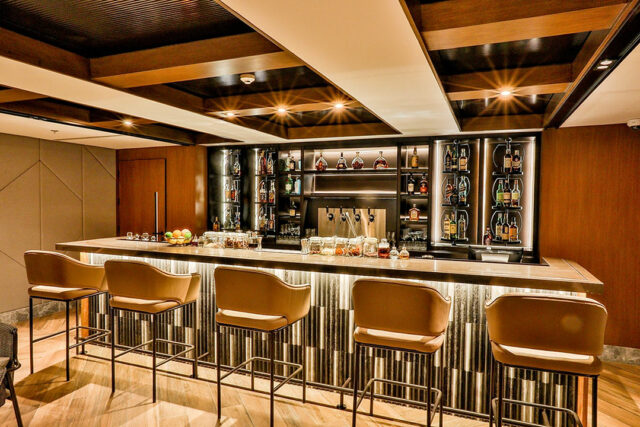
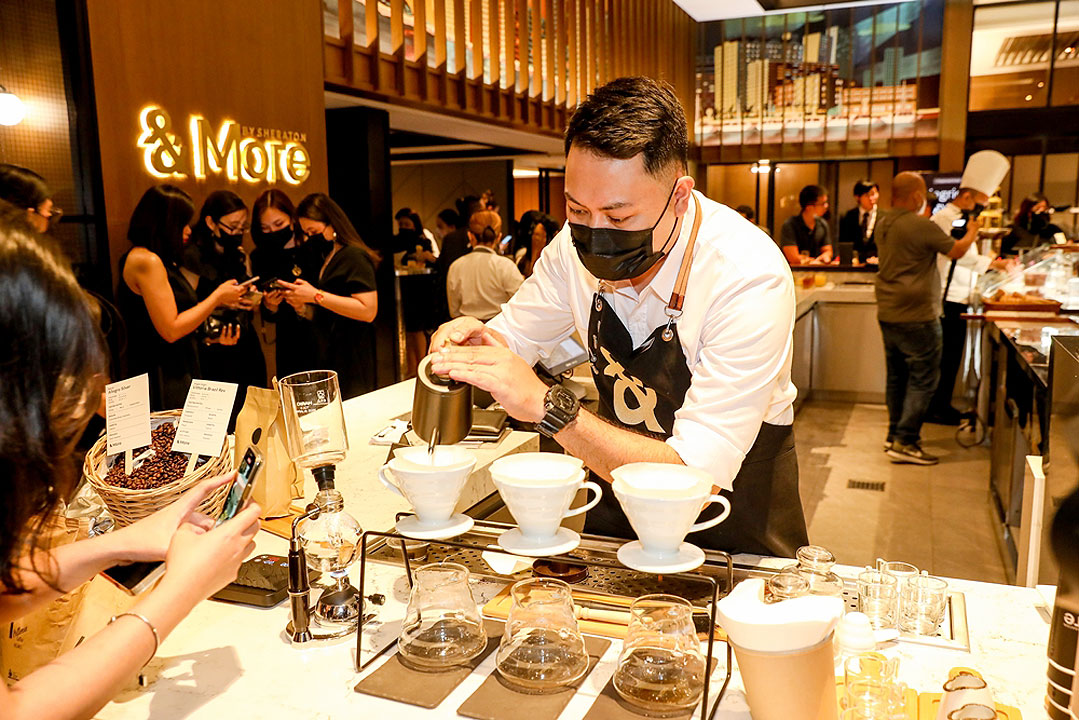
SHERATON Manila Bay has unveiled the first &More by Sheraton outlet in the Philippines at the hotel’s newly renovated main lobby. &More by Sheraton is part bar, part coffee shop, and part market. It is a central pillar of the Sheraton brand’s vision of gathering people, transitioning guests and diners seamlessly from day to night with food and beverage options that are locally sourced, easy to consume while working, and customizable to accommodate all tastes and schedules. The &More by Sheraton boasts of a contemporary, upscale interior that features a bar, market display, extensive pastry counter, and energy zone with a basketball ring, private booths with electrical socket and comfortable seating for maximum productivity, a community table, and a private meeting room. &More by Sheraton also aims to showcase local culture and heritage by featuring local artists and talents. &More by Sheraton is located at the Main Lobby, Sheraton Manila Bay, M. Adriatico cor. Gen Malvar Sts. Malate, Manila.

McDo launches Caramel Popcorn drinks

MCDONALD’S has released all-new, limited-edition Caramel Popcorn drinks. For iced coffee enthusiasts, there is Iced Coffee with Caramel Popcorn Syrup and Iced Latte with Caramel Popcorn Syrup. There is also the Coffee Float with Caramel Popcorn Syrup and Coke Float with Caramel Popcorn Syrup. Customers who redeem their Caramel Popcorn drinks with the McDonald’s app will get up to P21 off. From May 18 to June 20, customers can get two Caramel Popcorn Iced Coffees for P99; and two Caramel Popcorn Coffee Floats for P129. The Iced Coffee with Caramel Popcorn Syrup, Coffee Float with Caramel Popcorn Syrup, and Coke Float with Caramel Popcorn Syrup are now available at McDonald’s branches for Dine-In, Take-Out, and McDelivery, and at Desserts Kiosks too. Meanwhile, the Iced Latte with Caramel Popcorn Syrup is available for Dine-In, Take-Out, and McDelivery at McDonald’s branches with McCafé outlets.

Jollibee’s Peach Mango Pie gets bigger

JOLLIBEE is introducing the new Large Peach Mango Pie. “With the introduction of the Large Peach Mango Pie, we found an opportunity in which we could make one of our most popular menu items, the Peach Mango Pie, into something that retains its iconic goodness and crispiness, but giving customers a bigger flavor experience,” said Bea Bediones, Jollibee Marketing’s Brand Manager for Pies. The Large Peach Mango Pie is available in all stores nationwide for P 45 Solo, and P132 for 3 Pies To-Go. They are available for delivery via the Jollibee Delivery App, JollibeeDelivery.com, or #87000, and are also available in Drive-Through and Take Out.

Solane offers tips for new parents

COOKING gas brand Solane is offering to help new parents dealing with the trial-and-error nature of raising a tiny human by offering tips on how parents can eat well with minimum fuss and avoid fast food deliveries. Here are nutritious meals first-time parents can easily prepare: Wraps — to make a basic wrap, heat up a tortilla wrap, put the savory filling (as simple as reheated beef, pork, or chicken or canned tuna), then add some greens and vegetables; One-Pot meals — get your fill of grains, vegetables and protein in one go with rice bowls, pasta or casserole dishes; Heat-and-Eat meals — cook your favorite ulam on a weekend, divide them into several portions good for one meal, store them in the fridge, then simply pop in the microwave when it is time to eat. Solane suggests checking out these sites for meal ideas: https://www.tasteofhome.com/collection/sandwich-wrap-recipes/, https://www.budgetbytes.com/category/recipes/one-pot/, and https://www.budgetbytes.com/meal-prep-101-a-beginners-guide/ . To order Verified Solane LPG, customers may call the Hatid Bahay Hotline — (02) 8887-5555, send a message to 0918-887-5555 (Smart) / 0917 8977555 (Globe) or the Solane Facebook page, or place their orders through the Solane app. Customers may also place an order through the Web Ordering Platform.