Home Blog Page 590

BCDA, PSC to jointly develop sports facilities in Clark, Baguio

BCDA.GOV.PH

THE Bases Conversion and Development Authority (BCDA) said it and the Philippine Sports Commission (PSC) will jointly develop training and sports facilities in BCDA properties.

BCDA President and Chief Executive Officer Joshua M. Bingcang said that the partnership will be a “force multiplier.”

“Together we are laying the groundwork for future champions and promoting a healthier, more active Filipino nation,” he added.

The BCDA and PSC will jointly identify and assess BCDA properties that are developable into sports facilities.

Among the priority locations are New Clark City, the possible future site of a national training center, and Baguio City, a candidate location for a high-performance facility, the BCDA said.

“The initiative will also explore innovative funding models like public-private partnerships, implement advanced design and construction methods, and establish professional management to ensure the creation of world-class, sustainable, and self-sufficient sports infrastructure,” the BCDA said.

“The President’s directive is clear: build from the grassroots. We are building regional training centers across the country to speed up the national sports development agenda,” PSC Chairman John Patrick Gregorio said.

“These are investments that combine youth empowerment with economic progress. I am happy the BCDA and PSC are equally committed to creating opportunities for regional development through sports,” he added.

New Clark City is currently the site of a World Athletics-certified track and field stadium, a World Aquatics-approved pool, and a 525-unit Athletes’ Village. It is also expected to house the National Academy of Sports. — Justine Irish D. Tabile

BoC, CHEd budget use deemed ‘unsatisfactory’

BW FILE PHOTO

THE Bureau of Customs (BoC) and the Commission on Higher Education (CHEd) topped a list of agencies that were rated “unsatisfactory” in the use of their budgets, the Department of Budget and Management (DBM) said on Wednesday.

Also landing in the unsatisfactory category were the departments of Finance and Tourism, it said.

The DBM said the main reason behind the poor budget execution was procurement snags, but gave no specific details about which aspects of these agencies’ performance led to the unsatisfactory ratings.

The agencies’ performance ratings were announced at the launch of the DBM’s  Budget ng Bayan Monitor.

The DBM has been pressuring agencies to use their funding more efficiently and in a timely manner because slowdowns in government spending can derail economic growth.

Agencies that fail to spend adequately at the start of the year, when the bulk of the national budget is released, are often asked to submit “catch-up plans” to bring their spending back in line with expectations.

Budget Undersecretary Rolando U. Toledo said during the event: “The majority of agencies demonstrated commendable efforts in fulfilling their mandates, with several achieving outstanding ratings.”

Among the outstanding agencies were the Civil Service Commission, the Mines and Geo-Sciences Bureau, the Foreign Service Institute, the Public Attorney’s Office, and the National Wages and Productivity Commission.

Rated “very satisfactory” were the Office of the President, the Office of the Vice President, and the Department of Education.

Asked what the DBM plans for such agencies, Budget Secretary Amenah F. Pangandaman said the DBM will help them come up with recovery plans, but also raised the prospect of reduced funding if performance does not improve.

“Maybe we can first sit down with them and then ask for their catch-up plan,” Ms. Pangandaman said. “If it really can’t be improved, maybe we should just remove those projects.”

Mr. Toledo added: “While many agencies have shown commendable progress, the report also identifies areas for improvement, particularly in procurement efficiency, report submission, and strategic planning… “The findings serve as a valuable tool for guiding future reforms and enhancing public service delivery.” — Katherine K. Chan

Vietnam warned Philippines may seek other rice suppliers

FRANCISCO P. TIU LAUREL, JR. — PHILIPPINE STAR/JESSE BUSTOS

AGRICULTURE Secretary Francisco P. Tiu Laurel, Jr. said the Philippines is prepared to turn to other rice suppliers if Vietnam challenges the government’s plan to suspend rice imports for 60 days.

Speaking before the House committee on agriculture, Mr. Laurel said: “I would like to openly warn Vietnam: Please do not try to do this to the Philippines. If they insist on that, we will find ways. We won’t buy from Vietnam.”

The Vietnam Food Association asked its trade ministry to challenge the Philippine import suspension which starts in September, citing the harm to Vietnam’s rice industry, Reuters reported last week.

Mr. Laurel said the suspension is designed to provide relief to rice farmers during a record harvest, with farmgate prices sometimes falling to levels well below their production costs.

The Philippines is Vietnam’s top rice export market, shipping about 2.44 million metric tons (MMT) in the first seven months of 2025.

Asked which suppliers could step in if the Philippines seeks alternatives to Vietnam, Mr. Laurel told reporters: “I just came from India (which wants) to take a big share of the Vietnamese market. Myanmar is just starting to export to the Philippines and their production is also huge. Cambodia also.”

Mr. Laurel said President Ferdinand R. Marcos, Jr. is open to extending the 60-day import freeze if more is needed to “protect farmers.”

“The 60-day import halt might be extended to 90 days to allow for full recovery,” he said.

The Philippine Statistics Authority (PSA) reported that in the first six months, output of palay (unmilled rice) hit 9.08 MMT, up 6.41%.

The average farmgate price of palay fell 33.5% year on year in July to average P16.40 per kilo, according to the PSA.

“(The President is) also considering raising the tariff, but no decision has been made yet,” Mr. Laurel said.

The 60-day suspension is an opportunity to assess rice tariff levels, he said. “At least we have two months to decide while there are no imports.”

Mr. Marcos last year signed an executive order that lowered rice import tariffs to 15% from 35% to tame inflation. It took effect in July 2024, and is subject to review every four months until 2028.

Mr. Laurel recommended that the government gradually hike the tariff rates to prevent disrupting the market. “We have declared our official position (in favor of adjusting) the tariff from 15% to 25% first, and then 35% maybe months later.”

It is unlikely the Philippines will face consequences from the World Trade Organization (WTO) if a challenge is filed there, Mr. Laurel said.

“Even if the stoppage lasts two months, or even three, by the time anyone files a complaint, (the WTO) will not have made a decision as it has no adjudication body,” he said.

“We have to protect our farmers, and we will do what is needed,” he added. “National interest (outweighs) WTO rules, per its rule.” — Kenneth Christiane L. Basilio

Sustainability of PHL tuna seen at risk after SC ruling

BW FILE PHOTO

By Kyle Aristophere T. Atienza, Reporter

PHILIPPINE tuna could struggle to obtain sustainability certificates following a Supreme Court (SC) ruling that allowed commercial vessels to operate within municipal waters, tuna industry groups said on Tuesday.

“Allowing commercial vessels in municipal waters raises serious questions about stock management and environmental enforcement,” according to Veronica Rabano of Jarla Trading, a member of the Philippine Association of Tuna Processors Inc., (PATPI).

She said the ruling could jeopardize the industry’s access to crucial export markets which require traceability and sustainability of fish products.

The Bureau of Fisheries and Aquatic Resources (BFAR) estimates that about 70% of tuna caught in municipal waters is harvested by small-scale fisherfolk.

Bernard Mayo, who chairs the Municipal Fisheries and Aquatic Resources Management Council in Mamburao, Mindoro, said in a statement that municipal fisherfolk who supply tuna to processors have been affected by dwindling catches.

“We catch less tuna these days. We used to catch around 100 kilograms per trip. Now, we catch less than 50, if anything,” he said.

“The area designated for municipal fishing is already small, and (commercial operators) want to encroach on that too,” he added.

Ms. Rabano said the Supreme Court ruling, once enforced, will affect the entire tuna export supply chain.

“Maintaining our certifications is not just about brand reputation; it’s a matter of survival for our business. If we lose them, we risk losing access to our key markets,” she said.

PATPI is a member of the Philippine Tuna Handline Partnership (PTHP), which also includes the Gulf of Lagonoy Tuna Fishers Federation, Inc. (GLTFFI) and the Occidental Mindoro Federation of Tuna Fishers Associations (OMFTFA).

It took years and millions of pesos to complete the certification process for the PTHP, which became the first group to receive a Marine Stewardship Council (MSC) certification in October 2021.

The Philippines is the fourth-largest tuna exporter in the region, with its shipments hitting $500 million in 2024.

Aside from the European Union, other primary markets for Philippine tuna are the US and Japan, “all demanding proof of sustainability through third-party ecolabels, such as the Marine Stewardship Council (MSC) and Friend of the Sea (FOS) labels,” Oceana Philippines said.

“Obtaining these certifications enables exporters to enter more lucrative segments, command higher prices for certified products, and maintain access as regulatory standards evolve,” it added.

National Fiber Backbone seen completed next year

ETHERNET cable wires are connected to an internet router modem in this illustration photo taken on April 17, 2024. — JAAP ARRIENS/NURPHOTO VIA REUTERS CONNECT

THE Department of Information and Communications Technology (DICT) said it expects to complete the final phases of the National Fiber Backbone next year.

“What’s remaining of the national fiber backbone right now is Mindanao. The commitment we gave to the President is that the phases 4 and 5 will be finished before the next SONA (State of the Nation Address),” Information and Communications Technology Secretary Henry Rhoel R. Aguda said during the second general membership meeting of Philippine Chamber of Commerce and Industry on Wednesday.

Last week, the DICT announced that it has officially started building phases 4 and 5.

“Phases 1-3 have been completed — it means that we have connection between Batanes and Tacloban. The remainder, which is Mindanao will be finished ahead of schedule,” he said.

The project is expected to bring high-speed internet to more nodes in Mindanao via a 1,000-kilometer high-speed government-owned fiber network connecting Butuan, Cagayan de Oro, Bukidnon, Zamboanga, and Davao.

The DICT obtained a $287.24-million loan from the World Bank to accelerate phases 4 and 5.

The second and third phases added almost 1,800 kilometers to the fiber network, linking Regions II (Cagayan Valley), IV-A (Calabarzon), V (Bicol), VIII (Eastern Visayas), X (Northern Mindanao), and XI (Davao).

This builds on the 1,245-kilometer Phase 1 linking Ilocos Norte to Quezon City, which was completed in April last year. It brings an initial 600 gigabits per second optical spectrum capacity to at least 14 provinces and two National Government data centers

The National Fiber Backbone project aims to provide faster and reliable internet connectivity. The DICT expects around 70 million Filipinos to benefit from the project. — Ashley Erika O. Jose

PAGCOR hoping to operate as pure regulator by this year

PHILSTAR FILE PHOTO

THE Philippine Amusement and Gaming Corp. (PAGCOR) said it hopes to reorganize as a purely regulatory body by this year.

It said it is still waiting for the outcome of a review of its proposal to separate its regulatory and operational functions.

Briefing the House Committee on Appropriations on Wednesday, PAGCOR Chairman and Chief Executive Officer Alejandro H. Tengco said he hopes to hear from the Governance Commission for Government-owned or  -controlled corporations (GCG) on its restructuring proposal by the fourth quarter.

PAGCOR has long been asking to shed its role as an operator of casinos while also serving as the industry’s regulator.

“The results of the study will be presented/submitted to the GCG En Banc within the year. Once approved by the GCG En Banc, the study will be submitted to the Office of the President,” the GCG said in a statement on Wednesday.

The GCG submitted studies on the separation of PAGCOR functions to the Office of the President in 2017 and 2019.

“The GCG is currently updating its study to consider recent developments in the gaming industry. During this process, the GCG is actively coordinating with PAGCOR for relevant data and information that will aid in the finalization of the study,” it added.

“We are making a recommendation to the GCG because we can already see that there is a serious problem with Casino Filipino. Casino Filipino is projected to incur losses of more than P5 billion,” he added.

Mr. Tengco also sidestepped claims that PAGCOR failed to obtain appropriate approvals to privatize the Casino Filipino New Coast in Malate, Manila.

Kamanggagawa Party-List Rep. Elijah R. San Fernando had raised the issue of the privatization without a charter amendment.

Mr. Tengco said the decision to privatize was made by PAGCOR’s previous board, adding that it was also approved by the GCG and the  Department of Finance.

Cagayan de Oro Rep. Rufus B. Rodriguez has filed House Bill (HB) No. 10171 proposing the creation of a regulatory gaming commission to boost the competitiveness of the gaming industry.

At the same briefing, PAGCOR projected net profit of P14.94 billion this year, which would be 10.92% lower than the 2024 total. Its 2026 projection is P17.49 billion. — Aubrey Rose A. Inosante

Quotas backed for rice importers tied to their purchases of palay — Agri dep’t

PHILIPPINE STAR/MIGUEL DE GUZMAN

THE private sector needs to be set rice import quotas tied to the level of their purchases of palay (unmilled rice) from domestic farmers, Agriculture Secretary Francisco P. Tiu Laurel, Jr. told Senators on Tuesday.

The quota is among the proposals put forward by the Department of Agriculture (DA) to amend the Rice Tariffication Law of 2019, Mr. Laurel said.

The law had allowed unrestricted imports by private traders who were made to pay an initial tariff of 35% on their shipments. Private imports were meant to replace imports brought in by the National Food Authority (NFA), whose import powers were stripped from it.

He added that private importers should share the NFA’s remaining function of maintaining the national rice reserve.

“I was thinking of 50-50,” he said, noting that if the buffer stock requirement is increased to 20 days from 15 currently, the government and the private sector should each maintain stock sufficient for 10 days’ demand.

The 50-50 scheme is expected to boost palay purchases and save the government storage costs, Mr. Laurel noted.

“If possible, we only import what we need plus the buffer stock,” he said, noting that only the private sector will remain solely responsible for imports.

Earlier amendments to the Rice Tariffication Law  increased the minimum reserve requirement to 15 days’ demand from 9. Under the law, all rice held in reserve must be sourced from domestic farmers.

The DA is also seeking restoration of the National Food Authority’s regulatory duties and power to sell rice directly to the public.

Currently, the NFA is only allowed to sell rice to local government units (LGUs) and a limited number of other entities upon the declaration of a food security emergency.

Mr. Laurel noted that LGUs prefer imported rice over NFA stock due to the low price of imports.

He urged senators to back measures to modernize irrigation and logistics.

“To irrigate over a million hectares of farmland, we need more than P1 trillion. Without it, we enrich foreign farmers while our own continue to struggle,” he said, noting that “investment must match ambition if the Philippines is to achieve self-sufficiency and food security.”

He also expressed his opposition to the devolution of agricultural extension services under the Local Government Code.

Also on Wednesday, Senate Agriculture Committee Chairman Francis Pancratius N. Pangilinan sought to convene the Congressional Oversight Committee on Anti-Agricultural Economic Sabotage under Section 25 of Republic Act No. 12022 or the Anti-Agricultural Sabotage Act.

He said the government should start prosecuting rice traders under the law.

Mr. Pangilinan also urged the government to tap the nearly 25,000 graduates of agriculture courses from state universities and colleges, government schools, and other universities to fill the 2,500 vacancies at the DA. — Kyle Aristophere T. Atienza

Partnering for a flood of innovation: PPPs and disaster resilience

Disaster resilience is critical for developing nations, particularly for the Philippines, which has to endure frequent typhoons, floods, and other natural calamities due to its geographic and climatic characteristics. The potential damage to life and property and the disruption cannot be dismissed. At this point, we need all hands on deck — both the government and the private sector.

In March 2024, an opportunity for tackling disaster-related challenges emerged with the enactment of the Public-Private Partnership (PPP) Code and its Implementing Rules and Regulations. At its core, PPPs are a partnership between a public agency and a private company, coming together to finance, design, construct, operate and maintain projects that are typically government responsibilities. What makes this arrangement particularly innovative is that both parties share the risks involved, and the private partner’s investment return depends on how well it performs.

Zeroing in on disaster resilience, the Code also required PPPs dedicated to creating infrastructure projects to consider climate change adaptation and mitigation, disaster risk reduction and management, and biodiversity conservation.

A significant mandate within the PPP Code is to integrate climate resilience and development policies and programs at every stage of a PPP projects — from planning and design to implementation. Climate change safeguards have become crucial criteria for approving PPP projects at the local and national levels.

The pressing issue is assessing the current status of climate change PPPs in light of the recently enacted PPP Code. Where are we now?

THE STATUS QUO
In October, the Asia-Pacific Ministerial Conference on Disaster Risk Reduction (APMCDRR) held a conference with the goal of accelerating disaster risk reduction. The event sought to align stakeholders with the goals of the Sendai Framework for Disaster Risk Reduction 2015-2030. For reference, the framework stemmed from consultations initiated in March 2012 and inter-governmental negotiations held between July 2014 and March 2015, supported by the United Nations Office for Disaster Risk Reduction (UNDRR). During the conference, President Marcos and National Economic and Development Authority (NEDA) Secretary Arsenio M. Balisacan underscored the importance of PPPs in bolstering disaster resilience.

However, in a statement by the Presidential Communications Office, Mr. Marcos revealed that a significant portion of the flood-control budget appears to have gone to a small group. Citing a Department of Public Works and Highways (DPWH) report, Marcos noted that P545 billion was spent on flood control projects since July 2022. The initial review found that P100 billion, representing 20% of flood control projects over the past three years, was allocated to just 15 of the 2,409 contractors involved in disaster resilience, with five contractors handling projects across the country. In his fourth State of the Nation Address (SONA) on July 28, the President ordered an audit of flood control projects.

His remarks were delivered shortly after the country suffered widespread flooding in the wake of Typhoon Gorio and other tropical storms, and against a backdrop of questions raised about the budget process in Congress.

In a report by the PPP Center of the Philippines, environmental experts want PPPs to play a bigger role in combating climate change and enhancing disaster resilience, especially following the devastation of Super Typhoon Carina. At a climate change forum hosted by the Philippine Business for Environmental Stewardship (PBEST), Environment Undersecretary Annaliza Teh cited the need for government collaboration with the private sector and civil society. She stressed the importance of transparent governance to ensure accountability and effective implementation of climate initiatives. It is a critical concern, given the substantial impact of climate change which displaced 2.5 million Filipinos in 2023, and threatens to slow GDP growth by 2100.

However, despite numerous frameworks designed to involve the private sector in combating climate change and improving disaster resilience, the country continuously suffers every time there is a disaster. This could suggest a gap between plans and effective action.

WAY FORWARD
To fully harness the potential of the PPP Code in advancing disaster resilience, it is crucial for the government to solicit proposals from the private sector. Alternatively, the private sector can initiate engagement by submitting unsolicited proposals. This dual approach ensures that the PPP Code is effectively utilized, providing a structured framework for both types of proposals.

For solicited proposals, the process can take two forms: single-stage or two-stage. Both start with the government advertising the opportunity. The two-stage process involves pre-qualification followed by tendering, submission, and evaluation of bids. The single-stage mode skips the pre-qualification but similarly concludes with bid evaluation and contract award.

Unsolicited proposals start with the private sector submitting directly to the government, followed by thorough completeness checks. Once verified, these proposals will be endorsed to the appropriate implementing agency, and subjected to a comparative challenge before finalizing the award.

To further encourage private sector participation, the government could also explore establishing additional incentives for developers working on disaster resilience projects, akin to the incentives available to renewable energy developers under Republic Act No. 9513 or the Renewable Energy Act.

Strengthening disaster resilience in the Philippines hinges on transformative cooperation, innovative financing mechanisms, and strategic planning — all of which PPPs can address effectively. As the Philippines deals with fiscal constraints and climate uncertainty, PPPs offer a promising path to fortify communities, enhance livelihood security, and fuel sustainable development. This collaborative effort can play a vital role in safeguarding the future.

The views or opinions expressed in this article are solely those of the author and do not necessarily represent those of Isla Lipana & Co. The content is for general information purposes only, and should not be used as a substitute for specific advice.


Joelle Garcia is a manager specializing in infrastructure & capital projects at Cabrera & Co., a Philippine member firm of the PwC network.

+63 (2) 8845-2728

joelle.mae.garcia@pwc.com

Marcos freezes P80-billion infra funds, vows charges against ‘ghost’ projects

PRESIDENT Ferdinand R. Marcos, Jr. inspected an unfinished P55-million flood control project in Baliwag City, Bulacan province that government records had listed as completed. — PPA POOL/NOEL PABALATE

By Chloe Mari A. Hufana, Reporter

PRESIDENT Ferdinand R. Marcos, Jr. has ordered a freeze on P60 billion to P80 billion worth of infrastructure funds in the 2025 national budget, citing inconsistencies with the government’s Philippine Development Plan (PDP).

Palace Press Officer Clarissa A. Castro on Wednesday said the funds cover mostly Department of Public Works and Highways (DPWH) projects that were inserted during congressional deliberations. She declined to disclose details but said these allocations would not be released until further review.

“According to the Department of Budget and Management (DBM), most of these are DPWH infrastructure projects, and the majority were inserted by Congress,” she told reporters. “That is all the information provided to us by the DBM.”

The freeze marks one of the biggest budgetary actions under the Marcos administration, signaling a tougher stance against questionable infrastructure spending, particularly amid growing concerns about corruption in flood control and road projects.

Finance Secretary Ralph G. Recto earlier this week noted that while Congress redirected P375 billion from programmed budget items into “unprogrammed funds,” whose release depends on tax revenues and special laws, the President had opted to veto only P26 billion outright.

He noted that even budget items that appear approved could be blocked if they include duplicate entries or lack alignment with development priorities.

Such “congressional insertions” often draw criticism for undermining coherence with broader economic and infrastructure goals.

Deliberations on the 2026 national budget are continuing in the House of Representatives, with Mr. Marcos expected to sign the spending plan by year-end.

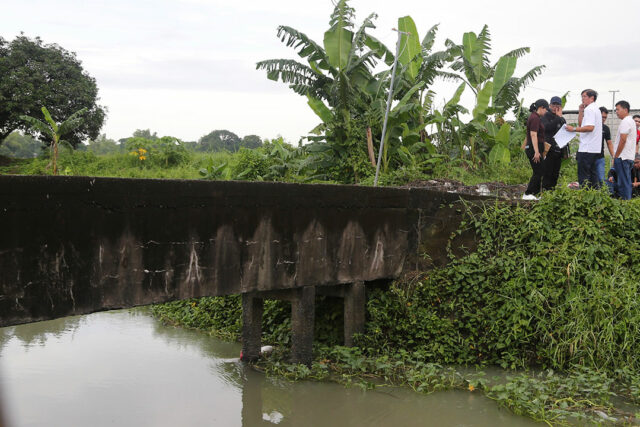
The announcement of the freeze came hours after Mr. Marcos personally inspected an unfinished P55-million flood control project in Baliwag City, Bulacan province that government records had listed as completed.

The “ghost” project, described in documents as a 220-meter reinforced concrete river wall, showed no visible work on the ground, which the President called a “very clear case of falsification.”

“It’s very clear that it’s not completed,” Mr. Marcos told reporters in Filipino, based on a transcript sent by his office. “So immediately, that’s falsification. That’s already a very big violation.”

“And for the big ones, I’m really thinking hard… We will charge them with economic sabotage because economic sabotage is very clear,” he added.

The President said the contractor responsible for the Baliwag project would be blacklisted from government dealings, and its other projects placed under review.

A subsequent Facebook post from Mr. Marcos clarified that charges under the Anti-Graft and Corrupt Practices Act and malversation of public funds through falsification of public documents would also be filed.

Mr. Marcos revealed that similar anomalies have been observed in other Bulacan towns. He cited substandard cement work in Calumpit and defective asphalt overlays in nearby projects, describing them as part of a recurring pattern of fraudulent infrastructure practices.

Last week, the President flagged 6,021 flood control projects since 2022 that lacked basic technical details. He said about 50 separate projects curiously carried the same contract price of P150 million each, raising suspicion of collusion.

“Where did the money go?” he asked. “We will run after it, and we will file cases against them. In the meantime, we still actually have to build the flood control project.”

The President said the Commission on Audit (CoA) has launched a fraud audit of infrastructure works in Bulacan. He added that a legal team is now studying whether cases could be filed nationwide depending on audit findings.

HIGH STAKES
To strengthen oversight, the palace urged citizens to report irregularities. Ms. Castro said the administration’s reporting platform sumbongsapangulo.ph, launched earlier this month to monitor flood control projects, had received more than 2,000 reports since Aug. 11.

Mr. Marcos encouraged the public to submit photos and videos of questionable projects, which engineers would then verify on the ground.

The crackdown comes after the President’s State of the Nation Address in July, when he pledged to hold erring contractors accountable after weeks of devastating floods triggered by the Southwest Monsoon and typhoons.

Political analysts noted that the handling of corruption in infrastructure projects could become a defining issue for the administration as it heads into the final stretch of Mr. Marcos’ term.

Ederson DT. Tapia, a political science professor at the University of Makati, said the stakes are high.

“If these corruption reports are pursued with genuine prosecution and systemic reform, the narrative becomes one of raising the bar, where 2028 aspirants will be compelled to present themselves as equally uncompromising on integrity,” he said in a Facebook Messenger chat.

“But if the effort fades into half-measures or political theater, it will instead furnish ammunition for critics who will argue that the rhetoric of transparency never pierced the armor of entrenched interests,” he added.

The freeze on billions in infrastructure spending reflects a balancing act between delivering much-needed public works and protecting government coffers from misuse.

The DPWH accounts for one of the largest slices of the national budget, making it both central to development goals and vulnerable to political patronage and corruption.

For now, the administration has yet to disclose how the frozen funds will be realigned. Ms. Castro said she would consult with the Budget department on the next steps.

In the meantime, Mr. Marcos said the government’s focus remains on accountability and ensuring that infrastructure projects deliver their intended benefits.


PAGCOR projects P117-B revenue in 2025 amid online gambling surge

BW FILE PHOTO

THE Philippine Amusement and Gaming Corp. (PAGCOR) expects to generate P116.65 billion in revenue this year, propelled by the rapid growth of online gambling and intensified government action against illegal platforms.

About P62 billion to P65 billion of the total will come from the online gaming sector, representing 60% of the agency’s total projected collections, PAGCOR Chairman Alejandro H. Tengco told congressmen at a budget hearing on Wednesday.

The regulator collected about P37 billion from digital betting platforms in the first seven months of the year. Last month, it said it generated P59 billion in the first half.

“Revenue from online gaming has steadily increased since 2021 and grew exponentially in 2024,” he told a House of Representatives committee on appropriations hearing in Filipino.

He also noted that cumulative collections from licensed online gambling firms since 2021 have reached P155 billion, with annual contributions rising from P6 billion in 2021 to P49 billion in 2024, and a projected minimum of P60 billion for 2025.

Despite this growth, PAGCOR continues to confront illegal operators. Mr. Tengco said 60% of online gaming firms accessible in the Philippines are unlicensed, often based overseas in countries such as Russia, Dubai and Cambodia.

There are about 70 legal operators, up from just 30 in the early 2020s. To better regulate the industry, PAGCOR implemented a pause on issuing new licenses in March 2024.

Authorities have also been taking aggressive steps to curb illegal activity. Almost 8,000 unlicensed digital gaming platforms have been shut down, according to PAGCOR.

The Philippine central bank has also ordered e-wallet providers such as GCash and Maya to remove links to gambling sites, cutting online gaming transactions by as much as 50%.

E-wallets had integrated gambling services directly into their apps, facilitating easy access for users and contributing to the sector’s surge.

While these regulatory measures have slowed transactions in licensed platforms, research by The Fourth Wall indicates that users often migrate to unregulated sites when access to legal platforms is restricted.

The study, which surveyed 1,250 online gamblers nationwide, suggests that unregulated platforms are expanding as players shift away from licensed options. This underscores a potential challenge for authorities trying to curb illegal online gambling.

Mr. Tengco also said PAGCOR is considering imposing minimum bet and deposit requirements on digital platforms to discourage excessive gambling. The agency continues to study the potential impact of these measures on both the industry and public welfare.

The rise of online gambling in the Philippines has created both economic opportunities and social concerns. While the sector has become a major revenue source for the government, issues such as gambling addiction and illegal operations remain pressing.

About 18 to 20 million Filipinos are registered on online gambling platforms, with 8 to 10 million actively participating. The government continues to focus on regulating the industry while minimizing risks to players and communities.

Mr. Tengco said PAGCOR is committed to adapting its policies to manage the exponential growth of online gaming.

“We are trying our best to make certain adjustments that are needed so that we could cope better with the exponential growth of online gaming,” he said. — Kenneth Christiane L. Basilio

Palace hits VP’s criticism of education, cites her tenure as DepEd chief

Students answer test questions at a state high school in Manila. — REUTERS

MALACAÑANG on Wednesday pushed back against Vice-President (VP) Sara Duterte-Carpio’s remarks that the Philippines is lagging behind other countries in education, saying her criticisms mirror her own shortcomings as former secretary of the Department of Education (DepEd).

“She was given the chance and the trust of the President for two years to serve as Education secretary,” Palace Press Officer Clarissa A. Castro told a news briefing in mixed English and Filipino. “Whatever her complaints are now, they only reflect her failure during her tenure.”

Ms. Duterte, who led DepEd from 2022 to 2024, said during a recent trip to Kuwait that Filipino students remain “stuck with paper and pencil,” citing the country’s outdated learning system.

She stepped down last year, citing “genuine concern” for teachers and youth. Her resignation was followed by allegations of public fund misuse, which led to her impeachment trial that the Supreme Court has since declared void.

Ms. Castro assured students and teachers that Education Secretary Juan Edgardo M. Angara is tackling the sector’s long-standing problems.

She cited the recent distribution of 1.5 million laptops, tablets and other learning tools that had remained idle since 2020 but were released to schools only this year under Mr. Angara.

The Philippines continues to face what experts call a deep learning crisis. International assessments, including the Programme for International Student Assessment (PISA), have consistently ranked Filipino learners among the lowest globally in reading, mathematics and science.

Studies also show that nine out of 10 Filipino 10-year-olds can’t read simple texts with comprehension, a benchmark measure of learning poverty.

Weak teacher support, resource shortages and fragmented governance have compounded these challenges despite significant state investments in education reforms.

Analysts have warned that the crisis threatens to widen inequality and leave much of the country’s workforce ill-prepared for the demands of a rapidly changing economy.

Ms. Castro said the Marcos government is trying to address systemic gaps, adding that Mr. Angara’s leadership aims to modernize teaching and learning systems while maximizing available resources. — Chloe Mari A. Hufana

PAL opens Siargao flights via Clark, Cebu

BW FILE PHOTO

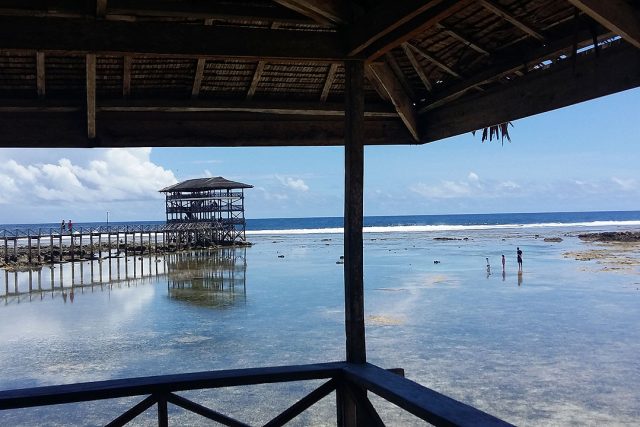
PHILIPPINE AIRLINES (pal) is expanding its domestic network with additional flights to Siargao Island in Surigao del Norte via Clark and Cebu, the flag carrier said on Wednesday.

“Granting Siargao alternative air connections via Clark and Cebu addresses the appeal for air access and encourages local tourism and economic activity,” PAL Express President Rabbi Vincent L. Ang said in a statement.

The expansion leverages the attractiveness of Clark International Airport, which PAL said is conveniently located and accessible for most travelers.

“This route provides a suitable alternative for accessing the island, giving visitors more options to meet their travel needs,” the airline added.

PAL will continue its direct Manila-Siargao flights while offering the new Clark-Siargao service three times a week, complementing its Clark flights to Cebu four times weekly and Boracay three times weekly.

The carrier launched Clark-Siargao flights on Dec. 3 as part of its domestic growth strategy, which also maintains daily flights to Siargao from Manila and Cebu.

The move aims to boost connectivity, tourism, and economic activity on Siargao Island by giving travelers more convenient access to the island. — Ashley Erika O. Jose