Home Blog Page 5849

Ukraine says referendum voting under Russian-backed security

KYIV — Voting in referendums in Ukraine aimed at annexing territory to Russia entered a fourth day on Monday, after the United States warned of “catastrophic consequences” if Moscow used nuclear weapons to protect any annexed regions.

The votes in four eastern Ukrainian regions, which Kyiv and the West regard as a sham, saw Russian-backed officials carry ballot boxes from door to door, accompanied by security officials, said Luhansk’s regional governor.

Serhiy Gaidai said residents’ names were taken down if they failed to vote correctly or refused to cast a ballot.

“A woman walks down the street with what looks like a karaoke microphone telling everyone to take part in the referendum,” the governor added in an interview posted online.

“Representatives of the occupation forces are going from apartment to apartment with ballot boxes. This is a secret ballot, right?”

Russian forces control territory in the four regions that represents about 15% of Ukraine, or roughly the size of Portugal. It would add to Crimea, an area nearly the size of Belgium, that Russia claims to have annexed in 2014.

Russia’s parliament could move to formalize the annexations within days.

By incorporating the areas of Luhansk, Donetsk, Kherson and Zaporizhzhia into Russia, Moscow could portray efforts to retake them as attacks on Russia itself, a warning to Kyiv and its Western allies.

US National Security Adviser Jake Sullivan said the United States would respond to any Russian use of nuclear weapons against Ukraine and had spelled out to Moscow the “catastrophic consequences” it would face.

“If Russia crosses this line, there will be catastrophic consequences for Russia,” Mr. Sullivan told NBC’s Meet the Press television program on Sunday.

“The United States will respond decisively.”

The latest US warning followed Wednesday’s thinly veiled nuclear threat by President Vladimir Putin, who said Russia would use any weapons to defend its territory.

Foreign Minister Sergei Lavrov made the point more directly at a news conference on Saturday.

He was speaking after a speech to the UN General Assembly in New York, in which he repeated Moscow’s false claims to justify the invasion that the elected government in Kyiv was illegitimately installed and filled with neo-Nazis.

Asked if Russia would have grounds for using nuclear weapons to defend annexed regions, Mr. Lavrov said Russian territory, including that “further enshrined” in Russia’s constitution in the future, was under the “full protection of the state.”

In an interview broadcast on Sunday, British Prime Minister Liz Truss told CNN, “We should not be listening to his (Putin’s) saber-rattling and his bogus threats.

“Instead, what we need to do is continue to put sanctions on Russia and continue to support the Ukrainians.”

FIGHTING
Heavy fighting saw more than 40 towns hit by Russian shelling, Ukraine officials said on Monday.

In the 24 hours to Monday morning, Russian forces launched five missile and 12 air strikes, as well as more than 83 attacks from multiple rocket-propelled grenades, the general staff of Ukraine’s armed forces said.

More than 40 settlements in all were affected by enemy fire, mostly in southern and southeast Ukraine.

Two drones launched by Russian forces into Ukraine’s Odesa region hit military objects, causing a fire and setting off ammunition, Ukraine’s southern command said on Monday.

“As a result of a large-scale fire and the detonation of ammunition, the evacuation of the civilian population was organized,” it said on messaging app Telegram.

“Preliminarily, there have been no casualties.”

Countering Russian attacks, Ukraine’s air forces launched 33 strikes, hitting 25 “enemy” areas, the general staff added.

Reuters could not independently verify the accounts.

PROTESTS IN RUSSIA OVER DRAFT
On Wednesday, Mr. Putin ordered Russia’s first military mobilization since World War II, unleashing protests across Russia and sending many men of military age fleeing.

On Sunday, two of Russia’s most senior lawmakers tackled a string of mobilization complaints, ordering regional officials to swiftly solve “excesses” that stoked public anger.

More than 2,000 people have been detained across Russia for protests at the draft, says independent monitoring group OVD-Info. With criticism of the conflict banned, the demonstrations were among the first signs of discontent since the war began.

In Russia’s Muslim-majority southern region of Dagestan, police clashed with protesters, leading to the detention of at least 100 people.

Ukrainian President Volodymyr Zelensky acknowledged the Russian protests in a Sunday video address.

“Keep on fighting so that your children will not be sent to their deaths — all those that can be drafted by this criminal Russian mobilization,” he said.

“Because if you come to take away the lives of our children — and I am saying this as a father — we will not let you get away alive.” — Reuters

GCash mobilizes #GCashForGood drive for communities affected by Typhoon Karding

The Filipino spirit of giving remains in full force as people prepare for Typhoon Karding which is moving towards the Philippine Area of Responsibility. Signal no. 3 is forecasted for selected areas in Luzon.

In this light, GCash mobilizes its #GCashForGood donation drive to help raise funds for the relief and recovery operations in areas that will need it the most after the typhoon.

“In times of crisis, it’s vital for us to come together and extend help to those affected by Typhoon Karding. Gcash is one with government agencies and various organizations in heightening relief efforts to ensure that we can lend assistance to as many of our kababayans as possible,” said Winsley Bangit, Chief Customer officer of GCash.

#GCashForGood is now accepting donations starting September 25, 2022 via its #GCashGivesBack Pay Bill wallet and Quick Response Code (QR Code). To send funds for the typhoon victims, GCash users can click “Pay Bills” on the GCash app, tap “Others”, click the “#GCashGivesBack and type your information and click “Confirm”. The donations collected through these channels will be equally disbursed to the partner Non-Governmental Organizations (NGOs) delivering immediate relief assistance to the affected communities.

GCash partners include Caritas Manila, United Nations Children’s Fund (UNICEF), Philippine Red Cross, ABS-CBN Lingkod Kapamilya, Ayala Foundation, GMA Kapuso Foundation, Save the Children and World Vision.

All these efforts form part of GCash’s One With the Nation Corporate Social Responsibility program which highlights the important role of private and public sector cooperation in providing aid to areas that have been affected by natural calamities.

GCash can be downloaded for free on the Google Play or App Store.


Spotlight is BusinessWorld’s sponsored section that allows advertisers to amplify their brand and connect with BusinessWorld’s audience by enabling them to publish their stories directly on the BusinessWorld Web site. For more information, send an email to online@bworldonline.com.

Join us on Viber to get more updates from BusinessWorld: https://bit.ly/3hv6bLA.

US warns of catastrophic consequences if Russia uses nuclear weapons in Ukraine

REUTERS

KYIV — The United States warned on Sunday of “catastrophic consequences” if Moscow uses nuclear weapons in Ukraine, after Russia’s foreign minister said regions holding widely-criticized referendums would get full protection if annexed by Moscow.  

Votes were staged for a third day in four eastern Ukrainian regions, aimed at annexing territory Russia has taken by force. The Russian parliament could move to formalize the annexation within days.  

By incorporating the areas of Luhansk, Donetsk, Kherson, and Zaporizhzhia into Russia, Moscow could portray efforts to retake them as attacks on Russia itself, a warning to Kyiv and its Western allies. 

US National Security Adviser Jake Sullivan said the United States would respond to any Russian use of nuclear weapons against Ukraine and had spelled out to Moscow the “catastrophic consequences” it would face. 

“If Russia crosses this line, there will be catastrophic consequences for Russia,” Mr. Sullivan told NBC’s “Meet the Press” television program. “The United States will respond decisively.”  

The latest US warning followed a thinly veiled nuclear threat made on Wednesday by President Vladimir Putin, who said Russia would use any weapons to defend its territory.  

Foreign Minister Sergei Lavrov made the point more directly at a news conference on Saturday after a speech to the UN General Assembly in New York in which he repeated Moscow’s false claims to justify the invasion that the elected government in Kyiv was illegitimately installed and filled with neo-Nazis.  

Asked if Russia would have grounds for using nuclear weapons to defend annexed regions, Mr. Lavrov said Russian territory, including territory “further enshrined” in Russia’s constitution in the future, was under the “full protection of the state.” 

British Prime Minister Liz Truss said Britain and its allies should not heed threats from Putin, who had made what she called a strategic mistake as he had not anticipated the strength of reaction from the West.  

“We should not be listening to his saber-rattling and his bogus threats,” Ms. Truss told CNN in an interview broadcast on Sunday. “Instead, what we need to do is continue to put sanctions on Russia and continue to support the Ukrainians.”  

‘BOGUS THREATS’
Ukraine and its allies have dismissed the referendums as a sham designed to justify an escalation of the war and a mobilization drive by Moscow after recent battlefield losses. 

Russian news agencies quoted unidentified sources as saying the Russian parliament could debate bills to incorporate the new territories as soon as Thursday. State-run RIA Novosti said Putin could address parliament on Friday.  

Russia says the referendums, hastily organized after Ukraine recaptured territory in a counteroffensive this month, enable people in those regions to express their view.  

Luhansk’s regional governor said Russian-backed officials were going door to door with ballot boxes and if residents failed to vote correctly their names were taken down.  

“A woman walks down the street with what looks like a karaoke microphone telling everyone to take part in the referendum,” Luhansk governor Serhiy Gaidai said in an interview posted online.  

“Representatives of the occupation forces are going from apartment to apartment with ballot boxes. This is a secret ballot, right?”  

The territory controlled by Russian forces in the four regions represents about 15% of Ukraine, of roughly the size of Portugal. It would add to Crimea, an area nearly the size of Belgium that Russia claims to have annexed in 2014.  

Ukrainian forces still control some territory in each region, including about 40% of Donetsk and Zaporizhzhia’s provincial capital. Heavy fighting continued along the entire front, especially in northern Donetsk and in Kherson. 

President Volodymyr Zelenskyy, who insists that Ukraine will regain all its territory, said on Sunday some of the clashes had yielded “positive results” for Kyiv.  

“This is the Donetsk region, this is our Kharkiv region. This is the Kherson region, and also the Mykolaiv and Zaporizhzhia regions,” he said in nightly video remarks.  

In a statement on Facebook, the general staff of the Ukrainian armed forces said Russia had launched four missile and seven air strikes and 24 instances of shelling on targets in Ukraine in the past 24 hours, hitting dozens of towns, including some in and around the Donetsk and Kherson regions.  

Reuters could not independently verify the accounts.  

PROTESTS IN RUSSIA OVER DRAFT
On Wednesday, Mr. Putin ordered Russia’s first military mobilization since World War Two. The move triggered protests across Russia and sent many men of military age fleeing.  

Two of Russia’s most senior lawmakers tackled on Sunday a string of mobilization complaints, ordering regional officials to swiftly solve “excesses” stoking public anger. 

More than 2,000 people have been detained across Russia for draft protests, says independent monitoring group OVD-Info. In Russia, where criticism of the conflict is banned, the demonstrations are among the first signs of discontent since the war began.  

In the Muslim-majority southern Russian region of Dagestan, police clashed with protesters, with at least 100 people detained. 

Mr. Zelenskyy acknowledged the protests in his video address. 

“Keep on fighting so that your children will not be sent to their deaths – all those that can be drafted by this criminal Russian mobilization,” he said. “Because if you come to take away the lives of our children — and I am saying this as a father — we will not let you get away alive.” — Reuters

S. Korea’s Yoon says ‘untrue’ media reports damage alliance amid hot mic controversy

South Korean President Yoon Suk-yeol. — REUTERS

SEOUL — South Korean President Yoon Suk-yeol said on Monday “untrue” media reports over his remarks threatened to damage relations with the United States after he was caught cursing on a hot mic during his visit to New York last week. 

A series of gaffes and controversies overshadowed Mr. Yoon’s first major overseas tour which also included Britain and Canada, sending his ratings plunging and inviting scathing criticism from some lawmakers even within his own party. 

In the highest profile controversy, Mr. Yoon was caught cursing on a hot mic as he left an event in New York on Wednesday after a brief chat with US President Joseph R. Biden, Jr. 

Opposition lawmakers accused Mr. Yoon of insulting Mr. Biden and disgracing South Korea as local media initially reported Mr. Yoon was saying Mr. Biden would be embarrassed if the US Congress did not pass a bill relating to funding of a global initiative. 

“What an embarrassment … if these bastards refuse to approve it in parliament,” Mr. Yoon told Foreign Minister Park Jin in a video aired by South Korean broadcasters, which went viral on social media. 

Reuters could not independently verify Mr. Yoon’s full comments. 

His press secretary, Kim Eun-hye, dismissed the allegations, saying Mr. Yoon was referring to the South Korean parliament without mentioning Mr. Biden. 

“Well, rather than a controversy, I will say this: Except for one or two or three superpowers in the world, no country can fully protect the lives and safety of its people with its own capabilities,” Mr. Yoon told reporters when asked about the hot mic incident on Monday. 

“I’d like to say that damaging the alliance with reports that are different from the facts puts the people at great risk,” he added, calling for efforts to establish facts. 

The main opposition Democratic Party has been urging Mr. Yoon to apologize for the controversy and sack his national security advisor, his deputy and the foreign minister. 

The opposition floor leader said it would propose a resolution for their dismissal to parliament if Mr. Yoon does not take action on Monday. 

Mr. Yoon’s office declined to comment. — Reuters

Pound plunges to all-time low in scathing appraisal of fiscal plan

STOCK PHOTO | Image by Stefan Schweihofer from Pixabay

TOKYO — The British pound tumbled nearly 5% to an all-time low on Monday as investors ran for the exits after the new government’s fiscal plan threatened to stretch Britain’s finances to their limits.  

The currency dived as much as 4.85% to an unprecedented $1.0327, extending a 3.61% dive from Friday, when finance minister Kwasi Kwarteng unleashed historic tax cuts, and the biggest increase in borrowing since 1972 to pay for them.  

Economists and investors said Prime Minister Liz Truss’s government, in power for less than three weeks, was losing financial credibility in unveiling such a plan just a day after the Bank of England (BOE) hiked interest rates to contain surging inflation.  

The pound was last down 2.7% at $1.0560.  

Marc Chandler, chief market strategist at Bannockburn Global Forex, called the currency’s record plunge “incredible.”  

“The weekend press tarred and feathered sterling with assertions of its emerging-market status,” he said. “I don’t buy that schadenfreude. Still, there is now bound to be speculation of an emergency BOE meeting and rate hike.”  

Mr. Kwarteng’s announcement marked a step change in British financial policy, harking back to the Thatcherite and Reaganomics doctrines of the 1980s that critics have derided as a return to “trickle down” economics.  

The so-called mini budget is designed to snap the economy out of a period of double-digit inflation driven by surging energy prices and a 15-year run of stagnant real wage growth.  

In total, the plans will require an extra 72 billion pounds of government borrowing over the next six months alone.  

British government bond yields surged by the most in a day in more than three decades on Friday, with yields on the five-year gilt — one of the most sensitive to any near-term shift in interest rate or borrowing expectations — up by half a percentage point.  

“When we see those gilt markets open a little later on, we’re probably going to see a pretty sharp spike,” said Chris Weston, head of research at Melbourne-based brokerage Pepperstone.  

“In this environment, you either need to see much higher growth — which isn’t happening at the moment — or you need to see significantly higher bond yields to incentivize capital inflows. To get bond yields up to those levels, you need to see the Bank of England coming out and doing an emergency hike.” — Reuters

[B-SIDE Podcast] The promise of power: Nuclear energy in the Philippines


Follow us on Spotify BusinessWorld B-Side

Nuclear energy has a bad reputation in the Philippines. That the Bataan Nuclear Power Plant is unfit and unsafe is what Carlo A. Arcilla, director of the Philippine Nuclear Research Institute (PNRI), calls “the greatest piece of fake news in the history of the Philippines.”

In this B-Side episode, Dr. Arcilla tells BusinessWorld reporter Brontë H. Lacsamana that nuclear technology is a “mature and old technology” contrary to Hollywood’s dire depictions. “A jet plane is more complicated than a nuclear power plant,” he said.

Aside from elaborating on its advantages, Dr. Arcilla explains the state of nuclear power in the Philippines — from its rocky history in the 1970s to its potential role in helping safeguard the country’s energy security in light of the depletion of the Malampaya gas field and the threat to coal exports because of the Russia-Ukraine war.

Recorded at PNRI in August 2022. Produced by Joseph Emmanuel L. Garcia, Earl R. Lagundino, and Sam L. Marcelo.

Follow us on Spotify BusinessWorld B-Side

Here to stay? China’s cityscapes transformed by thousands of COVID test booths

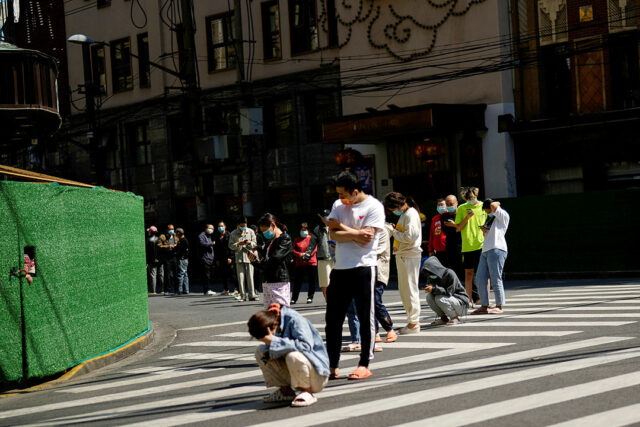
RESIDENTS line up for nucleic acid tests during a lockdown in Shanghai, China, April 17. — REUTERS

BEIJING — A thousand days since the World Health Organization (WHO) was told of a “viral pneumonia” in central China, many countries have returned to pre-COVID-19 (coronavirus disease 2019) life. Not so China itself — in cities big or small, routine PCR testing is the new normal.

On Dec. 31, 2019, the WHO’s office in China was informed of cases of pneumonia of an unknown cause in the city of Wuhan, in Hubei province. Since then, the virus that is now known as SARS-CoV-2 has evolved into the less virulent Omicron variant, and most of the world has moved on.

After Shanghai was locked down in April and May to contain the highly transmissible Omicron strain, regular testing for the virus has become a fact of everyday life to ensure fast detection and quarantine of the infected and close contacts. It’s a policy that has been controversial and also a drain on public finances.

Tens of thousands of curbside sampling booths where people can be tested day and night have become a permanent feature of Chinese cityscapes. Proof of a negative PCR test once every few days is required to guarantee access to public venues, places of work and mass transit — even when there is no outbreak.

Testing booths, typically container-like structures erected in the middle of a pavement, are staffed by a few health workers in hazmat suits ready to take quick throat swabs. Some booths operate 24 hours a day.

As of the end of May, about 15,000 booths had been set up in Shanghai, according to local media. Beijing had about 10,000, while Shenzhen had more than 7,000.

“Doing a PCR test every two days, I really feel it’s a pure waste of resources,” posted one user of Weibo, a popular Twitter-like microblog in China. — Reuters

Marcos orders aid for typhoon-struck areas, five reported dead

Bongbong Marcos/Facebook | https://bit.ly/3LMG6VF

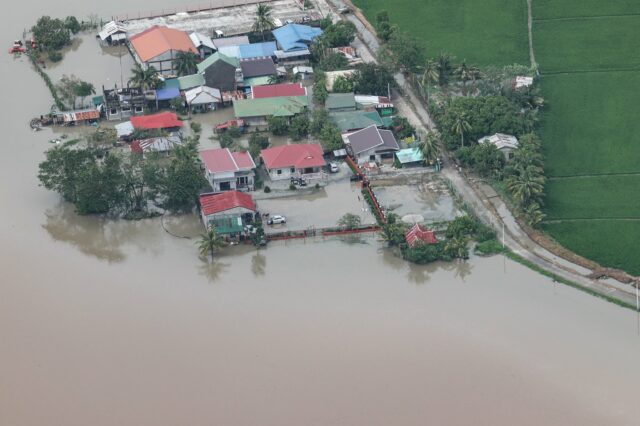
BULACAN — Philippine authorities rushed on Monday to distribute aid to thousands of evacuees after Typhoon Noru made landfall in the capital and northern provinces, leaving at least five dead and many areas flooded.

Sustained winds of 185 kilometers per hour hit the main island of Luzon at the weekend, prompting authorities to shut schools, government offices and the stock market through Monday.

President Ferdinand R. Marcos, Jr., ordered supplies be airlifted and clean-up equipment be provided to most-affected communities.

“The point at which we can stand down is when the majority of evacuees are already back home,” Mr. Marcos said at a news conference with disaster management officials on Monday, referring to the 74,000 people who were forced into evacuation centers by the storm.

Luzon, which accounts for more than two-thirds of the economy and roughly half of the country’s 110 million population, started clean-up operations as floods in the capital region had started subsiding, officials said.

Five rescue workers were killed in Bulacan province, Governor Daniel Fernando told DZMM radio station, where residents were seen wading through waist-deep waters while some were stranded on rooftops.

“Many homes were destroyed but all roads are passable and there were no landslides,” Quezon province Governor Helen Tan told DZRH radio station. The local government had started clearing fallen trees and other debris, she said.

Mr. Marcos conducted an aerial inspection on Monday and ordered officials to provide emergency power supply to two provinces north of the capital, Aurora and Nueva Ecija, which were left without electricity.

Noru made landfall as a category 3 typhoon but weakened as it traversed land on Sunday night. The storm was headed out over the South China Sea and toward Vietnam, according to the state weather agency.

The Philippines, an archipelago of more than 7,600 islands, sees an average of 20 tropical storms yearly. In 2013, Typhoon Haiyan, one of the most powerful tropical cyclones ever recorded, killed 6,300 people. — Reuters

BSP may continue rate hikes this year

PHILIPPINE STAR/ WALTER BOLLOZOS

By Keisha B. Ta-asan

THE PHILIPPINE central bank would probably increase key rates further this year to protect the peso amid a hawkish US Federal Reserve, analysts said at the weekend.

The local currency would continue its free fall against the dollar if the Bangko Sentral ng Pilipinas (BSP) “lags too much” behind the Fed’s aggressive policy tightening, First Metro Investment Corp. and University of Asia and the Pacific (UA&P) said in a joint report.

“We expect another 25-basis-point (bp) [increase] before the end of the year if inflation remains above 6.5%,” they said.

The BSP raised key interest rates on Thursday for a fifth time this year to tame inflation amid a struggling peso. It increased its overnight borrowing rate by 50 bps to 4.25% effective Friday, and its corresponding lending rate to 4.75%, as predicted by 11 of 15 analysts in a BusinessWorld poll two weeks ago.

The move followed the Fed’s 75-bp hike and signals of larger increases to come that caused the peso and Philippine stocks to tumble.

The central bank has raised key rates by 225 bps since May versus the Fed’s 300 bps since March.  

The peso closed at P58.50 a dollar on Friday from P58.49 a day earlier, based on Bankers Association of the Philippines data. It has weakened by 14.7% or P7.50 this year from its P51-a-dollar close last year. 

“Federal Open Market Committee (FOMC) projections reveal that the Fed may bring it up further by another 100-125 bps to 4%-4.5% by yearend to ensure a more drastic inflation slowdown, even if some ‘pain’ sets,” First Metro and UA&P said in their report.

“With the Fed firmly bent on beating down inflation to its 2% long-term target, it may even bring the rate all the way to 5% by end-2023.”  

The Philippine central bank might raise policy rates by a total of 50 bps more at its November and December meetings, ANZ Research Chief Economist Sanjay Mathur and economist Debalika Sarkar said in a separate note last week.

“The central bank does not view current monetary conditions to be restrictive,” they said. “Rather, it believes that growth will remain ‘respectable’ and the economy is capable of absorbing additional rate hikes.”

“We forecast hikes of 25 bps each in the November and December policy meetings. However, the evolution of inflation, balance of payments and extent of further tightening by the US Fed may reshape our assessment,” ANZ added.  

The BSP on Thursday raised its average inflation forecast for this year to 5.6% from 5.4%, exceeding its 2%-4% target for the year.

It also raised its forecast for next year to 4.1% from 4%. It expects inflation to average at 3% in 2024.

Makoto Tsuchiya, an assistant economist at Oxford Economics raised his inflation forecast last week to 5.6% this year from 5.4%.  

He also expects inflation to ease to 4.1% next year, still above the central bank’s 2-4% target.

“Against a backdrop of ongoing elevated inflation and at least further 75-bp US rate hikes this year, we expect the BSP to raise rates by another 25 bps at its November meeting, bringing the policy rate to 4.5% at yearend,” he added.  

Inflation climbed to 6.3% year on year in August from the nearly four-year high of 6.4% a month earlier and 4.4% a year ago. It was the fifth straight month that it exceeded the BSP’s 2-4% target this year. 

“We expect an extended pause over 2023 as priorities shift back towards supporting growth amid a weak external environment,” Mr. Tsuchiya said.

Philippine economic output grew by 7.4% in the second quarter, bringing first-half growth to 7.8%, according to data from the local statistics agency.

The Development Budget Coordination Committee (DBCC) targets 6.5-7.5% growth this year. 

The central bank will hold two more policy meetings on Nov. 17 and Dec. 15.

The peso will probably continue to weaken against the dollar this week as the market expects a more aggressive policy tightening by the US Federal Reserve until yearend.

PESO TRADE
The currency closed at P58.50 a dollar on Friday from  P58.49 a day earlier, P1.07 weaker than a week ago, based on Bankers Association of the Philippines data. 

The peso opened Friday’s session at P58.35 a dollar, declined to as much as P58.50 and rose to as much as P58.25.

Dollars exchanged dropped to $985 million from $1.51 billion on Thursday.

Expectations of more Fed rate increases caused the peso to sink further on Friday, said Michael L. Ricafort, chief economist at Rizal Commercial Banking Corp.

The federal fund rate projected for end-2022 implies a 125-bp increase in the Fed’s two remaining policy meetings this year. Markets are pricing in another 75-bp rate hike at its November meeting.

“Clearly the Fed’s policies have affected our choices,” BSP Governor Felipe M. Medalla told Bloomberg Television on Friday. “We don’t want to match the Fed, at the same time we have to respond.”

“We clearly are intervening in the forex market,” he said. “One approach is to intervene more strongly because the volatility is actually now much higher.”

The other approach is to reduce local currency liquidity by borrowing more from the central bank’s weekly auctions so there will be less peso to chase dollars, he added.

Ruben Carlo O. Asuncion, chief economist at UnionBank of the Philippines, Inc. expects the dollar to continue strengthening unless the Fed drastically changes its tone.

He said the peso depreciates by about a peso for every 75-bp rate hike by the US central bank.

The BSP would probably limit its intervention in the foreign exchange market to avoid a sharp decline in dollar reserves, Mr. Asuncion said.

The gross international reserves hit $98.98 billion at the end of August, slipping by 0.85% from a month earlier and by 8.3% from a year earlier, according to BSP data. It was the sixth consecutive month of decline. 

This week, Mr. Ricafort expects the peso to trade at P58.15 to P58.55 against the dollar, while Mr. Asuncion expects it to move within P58.20 to P58.70.

Economists expect less optimistic macroeconomic goals

STOCK PHOTO | Image Dmitry Berdnyk from Unsplash

ECONOMISTS expect less upbeat macroeconomic targets when Philippine government economic managers meet to revisit the goals in December, citing the battered peso and persistently high inflation.

“I don’t think that the targets will be as upbeat as before,” Leonardo A. Lanzona, who teaches economics at the Ateneo de Manila University, said in an e-mail last week.

The peso’s depreciation against the dollar and rising interest rates would probably reduce investments and consumption, he added.

“Revisions are warranted especially on debt servicing and transactions involving foreign currency because these are costing us more,” John Paolo R. Rivera, an economist at the Asian Institute of Management, said in a text message.

Economists from First Metro Investment Corp. (FMIC) and University of Asia and the Pacific (UA&P) on Saturday said they expect the Philippine economy to grow by 6.5% this year, which is at the lower end of the government’s 6.5-7.5% target.

On Friday, Socioeconomic Planning Undersecretary Rosemarie G. Edillon said the Development Budget Coordination Committee (DBCC) might revisit macroeconomic assumptions in December.

“It really has to do with the actions of the Federal Reserve, and we’re hoping that is very temporary,” she told a forum.

Increased remittances from Filipinos overseas during the Christmas holidays could boost the peso, she pointed out.

“There are active inflows to our international reserves. We have very strong sources of those reserves, like remittances [and] business process outsourcing,” she said. The recovery in the tourism industry is also a source of foreign currency.

“The seasonal increase in overseas Filipino workers’ remittances and export sales in the fourth quarter could provide some support for the peso exchange rate especially toward the end of the year,” Mr. Ricafort said.

But the US Federal Reserve’s continued policy tightening to quell elevated inflation is a major factor, he said in a Viber message.

Mr. Rivera and Mr. Lanzona said dollar remittances might not be enough to offset the Fed’s hawkish stance.

“This may be significant but not necessarily enough given the aggressiveness of the Fed and given the pressures on inflation to increase due to demand pull and the persistent cost push inflation,” Mr. Rivera said.

“Even today, remittances are being received and yet the depreciation is at its highest levels,” Mr. Lanzona said.

The peso closed at an all-time low of P58.50 a dollar on Friday, a centavo weaker than its close a day earlier, according to data from the Bankers Association of the Philippines.

It has depreciated by 14.71% or P7.50 this year.

“A weaker peso would lead to higher inflation and interest rates — both a drag on economic growth and government spending,” Mr. Ricafort said. A weaker peso would also cut foreign borrowings by the government, he added.

BPI Lead Economist Emilio S. Neri, Jr. expects the peso to breach P60 a dollar by the fourth quarter or early next year if the Philippine central bank “continues to hike too gradually.”

“At P60, it will give us even less space for ‘Build, Build, Build,’” he said in a Viber message. “Expenditures for human capital development such as health and education could remain in the backseat as debt service takes a greater share of the budget pie unless we really see a massive growth in private sector investments.”

First Metro and UA&P economist expect consumer spending to pick up after 800,000 new jobs were added in July and as 70% of the population benefits from a weak peso.

“While inflation above 6% may cut into consumer spending, the significant peso depreciation puts more money in the hands of overseas Filipino workers’ families, business process outsourcing workers, and [exporters] and their suppliers,” they said.

These could offset the negative impact of inflation and help the economy expand by 6.5% in the last quarter, they added.

In July, the DBCC set its inflation assumptions at 2.5-4.5% for next year and 2-4% for 2024.

“In 2023, it will already be lower, but we realize that there are still challenges, especially with respect to external pressures like fuel prices,” Ms. Edillon said. “For our part, it’s really about addressing food security, especially for the most vulnerable.”

Socioeconomic Planning Assistant Secretary Sarah Lynne Daway-Ducanes told the same forum crude oil prices are expected to go down in the latter part of the year, which could help stabilize inflation.

First Metro and UA&P said the government has some legroom for spending since the budget deficit narrowed by 9.1% to P761 billion in the seven months to July.

“The National Government has a leeway of nearly P900 billion from total budgeted deficit for 2022, although we think the administration won’t use all that to retain some fiscal space for this and the coming years,” they said, citing slower spending growth and a 22.2% growth in taxes.

Headline inflation eased to 6.3% in August from a near four-year high of 6.4% in July, bringing the eight-month average to 4.9%. — Diego Gabriel C. Robles

Senators vow swift passage of 2023 appropriations bill

BW FILE PHOTO

By Alyssa Nicole O. Tan, Reporter

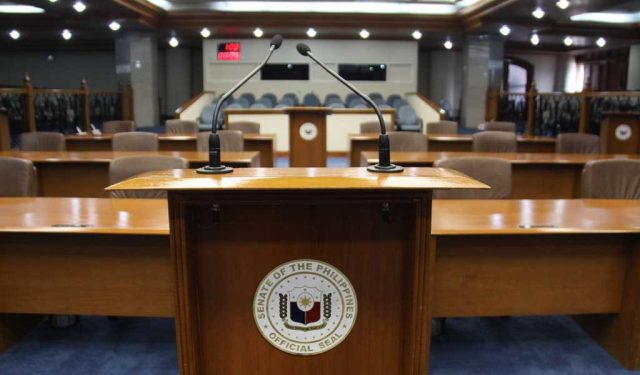
SENATORS at the weekend ruled out the possibility of a reenacted budget, vowing to swiftly pass the proposed P5.268-trillion national budget for next year.

“The passage is as guaranteed as Christmas happening on Dec. 25,” Senator Francis Joseph “Chiz” G. Escudero said in a Viber message. “The era of the reenacted budget is over. There is only one important deadline here: that the President signs it before the end of the year.”

“There has always been only one main hurdle in budgeting and that is the limitation imposed by funds,” he added. “No matter how you slice and dice the budget, you come up with the same conclusion — you need a bigger cake but you don’t have the ingredients to bake a bigger one.”

Next year’s budget is 4.9% higher than this year and is equivalent to 22.2% of the gross domestic product.

The Senate expects to approve the 2023 budget bill by mid-December, according to Senator Juan Edgardo M. Angara, who heads the Finance Committee.

“The Senate is on track with its budget calendar and we will work hard to finish on time without getting in the way of senators’ and the public’s right to be heard in the budget debates,” Senator Ana Theresia “Risa” N. Hontiveros-Baraquel said in a Viber message.

“We do not want to have a reenacted budget because it will cause more harm than good,” she added. “Based on our recent experience, it stifles economic activities, denies people needed funds for social programs and enables vast power to the administration to realign the budget.”

The government had to operate in the first few days of 2020 using funds from 2019 after the budget bill was delayed.

The government also operated on a reenacted budget in 2019, which economists blamed for slower growth of 5.5% in the second quarter from 6.2% a year earlier.

Ms. Hontiveros said rising food, fuel, feed and fertilizer prices have affected the local farms, transport operations and poor households.

“Consider the possibility of rising hunger as household budgets are squeezed,” she said. “The National Economic and Development Authority does not even have a 2022 baseline on hunger incidence and has not set up a monitoring system even in the face of unprecedented national and global food inflation,” she added.

 “I hope I’m wrong, but there can be surprises in this area that might require a major reconsideration of short-term budget priorities,” the senator said.

Ms. Hontiveros also said it is difficult to spot appropriations that could be potential sources of corruption and abuse such as intelligence and confidential funds.

“Does the soliciting office really need it and should it be that large? Such budgets should be thoroughly scrutinized,” she said.

“Another challenge is proposing processes that would get things done faster and better such as local collaborations to fill in the backlogs in classrooms, housing, etc.”

The biggest challenge will be “ensuring that the national budget is responsive to the needs of the Filipino people,” Senator Emmanuel Joel J. Villanueva said in a Viber message.

He said the government should prioritize measures to address spiraling commodity prices, expensive medical treatment and lack of funding for social protection programs.

“I do not see any significant roadblocks that will derail the passage of the budget,” he said.

Senator Joseph Victor G. Ejercito expects minor delays in budget hearings as some resource speakers fall ill amid a coronavirus pandemic.

“There were instances where our resource persons could attend the hearings because they were coronavirus-positive,” he said in a Viber message. “We still need to follow health protocols in our hearings and deliberations. There are limits in the number of people who can enter the Senate and those who will attend the hearings in person,” he added.

“Though it is possible to participate in hearings online, it still makes a lot of difference when all our resource persons are physically present.”

Mr. Angara earlier said senators expect to finish committee hearings by mid-October and plenary debates by mid-November, leading up to the passage of the budget bill by late November.

Senators and congressmen are then expected to tackle disagreeing provisions, after which the ratified version will be signed by President Ferdinand R. Marcos, Jr. by mid-December.

The House of Representatives has finished budget hearings and started plenary debates on Sept. 20. It expects to pass its version of the bill by Oct. 1.

Milan Fashion Week: Dolce & Gabbana teams up with Kim Kardashian; Versace’s ‘goddess gone grunge’; Gucci’s twin-themed show

MILAN — Dolce & Gabbana teamed up with US reality TV star Kim Kardashian at Milan Fashion Week on Saturday as the Italian luxury label presented its latest collection for women’s wardrobes. (Watch the show here: https://www.dolcegabbana.com/en/ ).

To the backdrop of a giant screen showing a black and white video of Kardashian eating spaghetti, models wore embellished corset dresses, crop tops with high-waisted tight trousers, and shimmering or see-through frocks. Skirts were long and slim while jeans were torn or embellished.

Some models wore large chokers reading “KIM” or “LOVE.”

The color palette consisted of mainly black, white, shiny silver, with added touches of leopard print.

The label, headed by designer duo Domenico Dolce and Stefano Gabbana, had teased the #CiaoKim collaboration ahead of the show with short videos of Ms. Kardashian being photographed by paparazzi.

Ms. Kardashian, dressed in a sparkly black dress, closed the event by greeting the audience followed by designers Dolce and Gabbana.

VERSACE
Italian luxury label Versace mixed tiaras and studs for its latest womenswear creations at Milan Fashion Week, offering a collection it called “a goddess gone grunge” for next spring. (See the show here: Versace Spring-Summer 2023 Women’s | Fashion Show | Versace ).

Designer Donatella Versace opened the show late on Friday with all black looks, including tight-fitting dresses slashed at different angles. Black biker jackets and leather trousers had fringes or metal studs.

Pink and purple designs followed, including long dresses with deep cowl necklines, flared trousers and long zebra print chiffon shirts.

“I have always loved a rebel. A woman who is confident, smart and a little bit of a diva,” Donatella Versace said in a statement.

“She wears leather, studs and frayed denim and she has enough attitude to mix them with chiffon, jersey, and a tiara! She is a strong liberated woman; she is gorgeous; she knows it. She is the Goddess of Freedom.”

The last looks included short and long lace-trimmed dresses in purple, pink and lime, accessorized with veils in the same color.

US reality television star Paris Hilton closed the show in a short pink crystal mesh bridal dress with lace trims, accessorized with a pink veil and tiara.

GUCCI
Fashionistas saw double at Gucci’s Milan Fashion Week show on Friday, with the Italian luxury label surprising audiences by sending identically dressed twins down the catwalk. (See show here: www.gucci.com/us/en/st/gucci-twinsburg-fashion-show#video-1 ).

Creative director Alessandro Michele paid homage to twins and their bond for the show, called Gucci Twinsburg, a nod to the Ohio town which holds a yearly festival for twins.

The presentation began with single models walking down the catwalk, before a wall was lifted to show their brothers or sisters on the other side in the exact same outfits. The siblings held hands as they walked together in a striking finale.

“I am a son of two mothers: mum Eralda and mum Giuliana. Two extraordinary women who made their twinship the ultimate seal of their existence,” Mr. Michele said in show notes. “They lived in the same body. They dressed and combed their hair in the same way. They were magically mirrored. One multiplied the other. That was my world, perfectly double and doubled.”

Mr. Michele’s designs began with a black blazer jacket teamed with suspender-like trouser legs, followed by a bright red belted dress. Biker jackets were paired with skirts bearing cutouts, shimmering silver jackets were cropped and had large shoulders, while prints on colorful dresses depicted spanners and bolts.

Models also wore floor-length trench coats, floral kimono-inspired designs, and ruffled silk dresses, among an eclectic mix of looks. Accessories included long beaded jewelry and sunglasses, leopard print tights, and snakeskin boots.

EMPORIO ARMANI
Emporio Armani sought to bring a touch of “freedom and openness” to women’s wardrobes for next spring, with the Italian designer brand presenting a light travel-inspired collection at its latest catwalk show at Milan Fashion Week.

Veteran designer Giorgio Armani opened the presentation for his second label with lightly-colored looks made up of fluid jackets and loose trousers accessorized with black berets and bags. (View the show here: https://www.armani.com/en-us/experience/emporio-armani/fashion-show-spring-summer-women).

Models wore long shirts over trousers, sarong-like skirts and loose tops — all with flat shoes — at the show, held on Thursday afternoon.

“This collection expresses an idea of freedom and openness,” Mr. Armani said in a statement, adding that he wanted to give everyday wear the lightness of holiday looks.

Designs came in shades of blue, green, turquoise and mauve. For the evening, there were beaded tops, shimmering and embroidered sheer dresses in pastel hues.

Armani will present the latest collection for his main line, Giorgio Armani, on Sunday, the penultimate day of Milan Fashion Week.

PRADA
Simplicity and contrasts were the main themes at the Prada catwalk show in Milan on Thursday, with the Italian luxury label stripping off “unnecessary complication” in its latest womenswear collection. (View the show here https://www.prada.com/ww/en/pradasphere/fashion-shows/2023/ss-womenswear.html).

Designers Miuccia Prada and Raf Simons opened the Spring/Summer 2023 show with sharp grey looks including pointy-collared shirts, slim-fit trousers and a jumpsuit.

Reinforcing the idea of simplicity were sleeveless dresses made with a paper base fabric. The frocks bore slits at the front, creases and folds.

“The clothes are about simplicity, with no unnecessary complication,” Miuccia Prada said in a statement. “There is no complicated structure, nothing unnecessary. No nonsense — the rawness, the crudeness represents absolute simplicity. We wanted to do something with the most simple, modest material — with paper. Then we used this system of reduction and simplicity as a means of making beauty.”

Outerwear consisted of light opera coats and black leather jackets. Some coats had large bows at the back.

Last season’s sheer looks continued at Thursday’s show, with models wearing transparent tops and skirts.

The designers, who worked with film director Nicolas Winding Refn for the show, stuck to a minimalist color palette of grey, white, black with bursts of bright lime, orange, and red occasionally appearing on tops, handbags or shoes. — Reuters

ADVERTISEMENT
ADVERTISEMENT