Home Blog Page 5812

Rory McIlroy

Rory McIlroy should be pleased with his body of work this season. After all, he was able to move from 13th at the start to his current standing of third in world rankings on the strength of his consistency; Top 25 finishes, including two victories, in 11 of 13 events underscore his capacity to crowd the leaderboard every time he tees off. And, yes, his competitiveness extends to the major championships; not for nothing did he post aggregate scores among the five highest in three of four Grand Slam stops. In other words, he has a lot to be thankful for at 33.

That said, McIlroy isn’t just any other golfer. He’s the most popular personality outside of Tiger Woods for a reason, and his singular skill set has long set him up to compete for the hardware in the sport’s holy grails. Which is why, viewed from critical lenses, his myriad accomplishments since he last brought home a major title indicate an alarming inability to get the job done. In the 31 Slams since he emerged triumphant at the 2014 PGA Championship, he managed to lump himself with the best 10 a whopping 17 times, and the best five in nine of those occasions. And yet, for all the work he did to stay in contention, not once did he go all the way.

Take the just-concluded British Open, in which McIlroy began the final round with the provisional lead. By the time he knocked in his eighth straight par on the back nine, he had no choice but to settle for third, two strokes off the pace set by World Number 23 Cameron Smith off a blazing finish. Disappointment was etched in his face as he met members of the media, left to rue the outcome as he fended off queries on What Ifs and Could Have Beens. Not that he gave the Claret Jug away on the 150th Anniversary of the tournament in the birthplace of golf; he had no bogeys, and every single drive he blasted found the fairway. And he certainly gave himself chances; he hit 12 of 16 greens in regulation. Bottom line, however, his short stick left much to be desired.

At any other time, McIlroy’s two-under 70 may have been enough to net him the crown. Not on Sunday, though — not when conditions were benign and red marks filled the leaderboard. It’s telling that, outside of playing partner Viktor Hovland, his final-round total was the worst of the top 17 on the list. But, hey, that’s golf. And if there’s anything he has learned from his travails, it’s to ignore all the negativity around him. The sport’s hard enough to conquer without armchair naysayers and so-called experts making the horizon even more murky. So while he may be downcast until the Masters rolls around seven months from now, he would also do well to remember that a glass half empty also happens to be half full.


Anthony L. Cuaycong has been writing Courtside since BusinessWorld introduced a Sports section in 1994. He is a consultant on strategic planning, operations and Human Resources management, corporate communications, and business development.

The 2.5 seconds that sealed Shinzo Abe’s fate

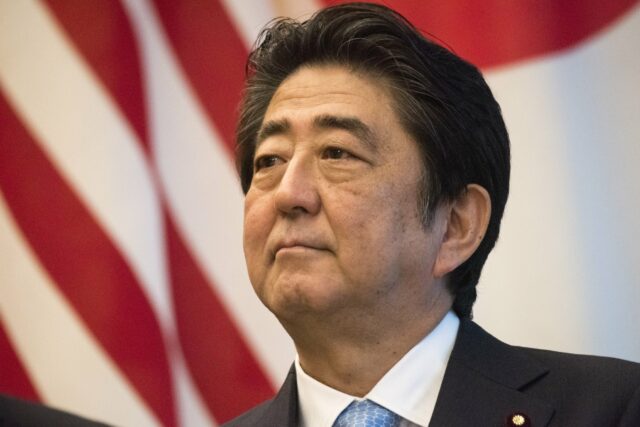
Former Prime Minister Shinzo Abe. Image via Chairman of the Joint Chiefs of Staff/Flickr/CC BY 2.0

NARA, Japan — Bodyguards could have saved Shinzo Abe if they shielded him or removed him from the line of fire in the 2.5 seconds between a missed first shot and a second round of gunfire that fatally wounded him, according to eight security experts who reviewed footage of the former Japanese leader’s assassination.

The failure to protect Mr. Abe from the second shot followed what appeared to be a series of security lapses in the lead-up to the assassination of Japan’s longest-serving prime minister on July 8, the Japanese and international experts said.

Mr. Abe’s killing in the western city of Nara by a man using a homemade weapon shocked a nation where gun violence is rare and politicians campaign up close to the public with light security.

Japanese authorities — including Prime Minister Fumio Kishida — have acknowledged security lapses, and police say they are investigating.

In addition to the security experts, Reuters spoke to six witnesses at the scene and examined multiple videos available online, taken from different angles, to piece together a detailed account of security measures ahead of his shooting.

After leaving 67-year-old Mr. Abe exposed from behind as he spoke on a traffic island on a public road, his security detail allowed the shooter — identified by police as Tetsuya Yamagami, 41 — to come within meters of Mr. Abe unchecked, carrying a weapon, the footage showed.

“They should have seen the attacker very deliberately walking towards the rear of the prime minister and intervened,” said Kenneth Bombace, head of Global Threat Solutions, which provided security to Joseph R. Biden when he was a presidential candidate.

Mr. Yamagami came within around 7 meters (23 feet) of Abe before firing his first shot, which missed, the Yomiuri newspaper said, citing investigative sources. He fired the second shot, which hit, at around 5 meters away, it said.

Mr. Abe’s bodyguards did not appear to have “concentric rings of security” around him, said John Soltys, a former Navy SEAL and CIA officer now a vice president at security firm Prosegur. “They didn’t have any kind of surveillance in the crowd.”

Asked about the experts’ analysis, the Nara Prefectural Police, in charge of security for Mr. Abe’s campaign stop, told Reuters in a statement the department was “committed to thoroughly identifying the security problems” with Mr. Abe’s protection, declining to comment further.

The video footage showed that, after the first shot, Mr. Abe turns and looks over his left shoulder. Two bodyguards scramble to get between him and the shooter, one hoisting a slim black bag. Two others head toward the shooter, who moves closer through the smoke.

Although Mr. Abe’s security tackled the assailant moments later and arrested him, it was the “wrong response” for some of the security to go after the shooter instead of moving to protect Mr. Abe, said Mitsuru Fukuda, a Nihon University professor specializing in crisis management and terrorism.

There was enough security, “but no sense of danger,” said Yasuhiro Sasaki, a retired police officer in Saitama prefecture near Tokyo who handled security for VIPs. “Everyone was startled and no one went to where [Mr.] Abe was.”

The Tokyo police, in charge of VIP politicians’ bodyguards, referred questions to the Nara police.

The National Police Agency, which oversees local police forces, said Mr. Abe’s killing was the result of the police failing to fulfill their responsibility and said it had set up a team to review security and protection measures and to consider concrete steps to prevent such a serious incident from recurring.

“We recognize that there were problems not only in the on-site response, such as the security and protection setup, deployment of personnel and fundamental security procedures, but also in the way the National Police Agency was involved,” it said in response to Reuters questions.

Reuters could not reach Mr. Yamagami, who remains in police custody, for comment and could not determine whether he had a lawyer.

‘COULD HAVE BEEN AVOIDED’
Footage shows four bodyguards inside the guardrails as Mr. Abe spoke, according to Koichi Ito, a former sergeant at the Tokyo Metropolitan Police Department’s special assault team, now a security consultant. Their number was corroborated by local politician Masahiro Okuni, who was at the scene.

When the former prime minister stepped up to speak, Mr. Yamagami could be seen in video footage in the background, clapping.

As Mr. Yamagami walked up behind Mr. Abe, security did not appear to take action, the footage showed.

Mr. Abe should have had a dedicated close protection bodyguard to get him away, said a member of the US Diplomatic Security Service, which protects senior diplomats and foreign dignitaries.

“We would grab him by the belt and collar, shield him with our body and move away,” the agent said.

Katsuhiko Ikeda, former superintendent general of the Tokyo police who ran security for Japan’s Group of Eight summits in 2000 and 2008, said the situation would have developed very differently if Mr. Abe’s security detail had been close enough to reach him in a second or two.

Mr. Ito, the former police sergeant, said security could have stopped the first shot had they been vigilant and communicating.

“Even if they missed that, there was a more than two-second window before the second shot, so they definitely could have prevented that,” he said. “If Abe had been protected properly, it could have been avoided.” — Reuters

Britain braces for record temperatures as heatwave ripples across Europe

Britain-Flag
The British union flag flutters on the Victoria Tower at the Houses of Parliamen, in London, Britain Dec. 30, 2020. — REUTERS/TOBY MELVILLE

MADRID/LISBON — Britain was heading for its highest temperatures on record and firefighters battled blazes across southern Europe as a heatwave sent people hunting for shade and compounded fears about climate change.

In Spain, a wildfire raced across a field and engulfed a excavator near the northern town of Tabara, forcing the driver to run for his life as flames burned the clothes off his back.

In Portugal, half the municipality of Murca was on fire and the bodies of an elderly couple trying to flee had been found inside a “completely charred vehicle,” the mayor told local broadcaster SIC. 

In southern Europe there were some signs conditions were starting to ease after days of blistering highs that have caused hundreds of deaths and left the countryside dangerously dry, authorities said.

But the heatwave was moving north.

Belgium and Germany are expecting the heatwave to hit them in coming days, while temperatures nudged 38 C (100 Fahrenheit) in southern England on Monday and are forecast to hit a record-breaking 40 C (104 F) on Tuesday, according to Britain’s Meteorological Office.

British train companies cancelled services and some schools closed while officials urged the public to stay home and the government triggered a “national emergency” alert.

Flights were suspended at Luton airport after staff identified a “runway defect.” The hot weather had melted the runway at the Royal Air Force’s Brize Norton air base, Sky News reported.

Sales of electric fans, hoses, air conditioning units and sprinklers are soaring, retailers said.

“We hoped we wouldn’t get to this situation but for the first time ever we are forecasting greater than 40 C in the UK,” said climate attribution scientist at the Met Office, Dr. Nikos Christidis.

“Climate change has already influenced the likelihood of temperature extremes in the UK. The chances of seeing 40 C days in the UK could be as much as 10 times more likely in the current climate than under a natural climate unaffected by human influence,” he said.

‘WE HAVE NOTHING’
Wildfires raged across Portugal, Spain and France and authorities warned there was a risk of more as tinder-dry conditions persisted.

Spain was facing the last day of a more than week-long heatwave, which has caused more than 510 heat-related deaths, according to estimates from the Carlos III Health Institute.

In Tabara, locals said the driver of the excavator -— a man they identified as Angel Martin Arjona — had been trying to dig a trench between the fire and buildings.

But orange flames surrounded the vehicle. TV footage showed him emerging from the blaze, tripping, then scrambling to his feet as people shouted out to him and a firefighter ran up to help.

The driver was airlifted to hospital with burns, witnesses said, though there were no detailed reports on his condition.

In El Pont de Vilomara in Catalonia, evacuees gathered outside a civic center, among them retiree Onofre Muñoz, 69, who said that his home and van had been completely destroyed.

“We bought the van when I retired and now it’s totally scorched. We have nothing,” he said.

EU SENDS SUPPORT
In Portugal, temperatures dropped over the weekend, but the risk of wildfires remained very high, the Portuguese Institute of Meteorology said.

Around 1,000 firefighters, backed by 284 vehicles and 18 aircraft, were battling 10 wildfires, mainly in northern regions, authorities said.

The EU sent a firefighting plane to Slovenia over the weekend, adding to recent deployments to France and Portugal.

“We continue of course to monitor the situation during this unprecedented heatwave and will continue to mobilize support as needed,” spokesperson Balazs Ujvari told a briefing.

The bloc is in talks with manufacturers to buy more firefighting planes, the EU head of crisis management told Reuters.

In the Gironde region in southwestern France, fires had destroyed 14,800 hectares (37,000 acres), local authorities said on Monday. More than 14,000 people have been evacuated from the area. France has issued red alerts, the highest possible, for several regions, with residents urged “to be extremely vigilant.”

In Italy, where smaller fires have blazed, forecasters expect temperatures above 40o C in several regions in coming days.

Switzerland also suffered the effects of the heatwave. Axpo, the operator of the Beznau nuclear plant, said on Monday it was forced to reduce output so that it does not overheat the Aare river from which it draws its cooling water. — Reuters

Scientists find an exotic black hole deemed a ‘needle in a haystack’

WASHINGTON — Astronomers have spotted in a galaxy adjacent to our Milky Way what they are calling a cosmic “needle in a haystack” — a black hole that not only is classified as dormant but appears to have been born without the explosion of a dying star.

Researchers said on Monday this one differs from all other known black holes in that it is “X-ray quiet” — not emitting powerful X-ray radiation indicative of gobbling up nearby material with its strong gravitational pull — and that it was not born in a stellar blast called a supernova.

Black holes are extraordinarily dense objects with gravity so intense not even light can escape.

This one, with a mass at least nine times greater than our sun, was detected in the Tarantula Nebula region of the Large Magellanic Cloud galaxy and is located about 160,000 light years from Earth. A light year is the distance light travels in a year, 5.9 trillion miles (9.5 trillion km).

An extremely luminous and hot blue star with a mass about 25 times that of the sun orbits with this black hole in a stellar marriage. This so-called binary system is named VFTS 243. The researchers believe the companion star eventually also will become a black hole and could merge with the other one.

Dormant black holes, thought to be relatively common, are hard to detect because they interact very little with their surroundings. Numerous prior proposed candidates have been debunked with further study, including by members of the team that uncovered this one.

“The challenge is finding those objects,” said Tomer Shenar, a research fellow in astronomy at Amsterdam University, lead author of the study published in the journal Nature Astronomy. “We identified a needle in a haystack.”

“It’s the first object of its kind discovered after astronomers have been searching for decades,” said astronomer and study co-author Kareem El-Badry of the Harvard & Smithsonian Center for Astrophysics.

The researchers used six years of observations from the European Southern Observatory’s Chile-based Very Large Telescope.

There are different categories of black holes. The smallest, like the newly detected one, are so-called stellar-mass black holes formed by the collapse of massive individual stars at the ends of their life cycles. There also are intermediate-mass black holes as well as the enormous supermassive black holes residing at the center of most galaxies.

“Black holes are intrinsically dark objects. They do not emit any light. Therefore, in order to detect a black hole, we usually look at binary systems in which we see one luminous star moving around a second, not-detected object,” said study co-author Julia Bodensteiner, a postdoctoral research fellow at the European Southern Observatory in Munich.

It is typically assumed that the collapse of massive stars into black holes is associated with a powerful supernova explosion. In this case, a star perhaps 20 times our sun’s mass blew some of its material into space in its death throes, then collapsed in on itself without an explosion.

The shape of its orbit with its companion offers evidence for the lack of an explosion.

“The orbit of the system is almost perfectly circular,” Mr. Shenar said.

Had a supernova occurred, the blast’s force would have kicked the newly formed black hole in a random direction and yielded an elliptical rather than circular orbit, Mr. Shenar added.

Black holes can be mercilessly ravenous, guzzling any material – gas, dust and stars – wandering within their gravitational pull.

“Black holes can only be mercilessly ravenous if there is something close enough to them that they can devour. Usually, we detect them if they are receiving material from a companion star, a process we call accretion,” Ms. Bodensteiner said.

Shenar added, “In so-called dormant black hole systems, the companion is far enough away that the material does not accumulate around the black hole to heat up and emit X-rays. Instead, it is immediately swallowed by the black hole.” — Reuters

Pasay City lauds P57-B loan grant for Harbor City Project

The city government of Pasay has lauded the approval of the P57-billion syndicated loan agreement to fund a gigantic project that will be put through in the city.

It congratulates its venture partner Pasay City Harbor City Corp. (PHCC) for closing the P57-Billion Syndicated Loan Agreement to build the 265-hectare Harbor City Reclamation Project.

With this development, funding for the enormous project will be secured until its completion.

‘The Project is part of the Pasay Eco City Grand Vision to build a sustainable, eco-friendly, and world-class metropolis,’ the city government said on its website.

And that their goal is ‘consistent with its mission to promote the quality of life of its people,’ it added.

With that, the city government recognizes the PHCC leadership through its Chairman Carlos S. Gonzalez, President Manuel S. Gonzalez, Atty. Roan Libarios of Libra Law and Atty. Santiago Gabionza of VGD Law for forging the partnership.

‘This investment is a much-needed boost to the economy still reeling from the COVID-19 pandemic creating jobs and economic multipliers and positioning Pasay as the next investment and tourism hub,’ the LGU pointed out.

The city government also thanked PNB Capital and the same goes to the officers of BDO, Metrobank, Landbank, and DBP for approving the project funding.

To date, the project has already reclaimed 117 hectares of submerged lands above water, a testament to the capabilities of PHCC and its EPC contractor Netherlands-based Royal Boskalis Westminster N.V. as one of the world’s top dredging companies.

The project is set to be completed with horizontal development in 2028 including roads, bridges, drainage, water, power, sewerage, communications, and other primary utilities and facilities.


Spotlight is BusinessWorld’s sponsored section that allows advertisers to amplify their brand and connect with BusinessWorld’s audience by enabling them to publish their stories directly on the BusinessWorld Web site. For more information, send an email to online@bworldonline.com.

Join us on Viber to get more updates from BusinessWorld: https://bit.ly/3hv6bLA.

How China became ground zero for the auto chip shortage

 – From his small office in Singapore, Kelvin Pang is ready to wager a $23 million payday that the worst of the chip shortage is not over for automakers – at least in China.

Pang has bought 62,000 microcontrollers, chips that help control a range of functions from car engines and transmissions to electric vehicle power systems and charging, which cost the original buyer $23.80 each in Germany.

He’s now looking to sell them to auto suppliers in the Chinese tech hub of Shenzhen for $375 apiece. He says he has turned down offers for $100 each, or $6.2 million for the whole bundle, which is small enough to fit in the back seat of a car and is packed for now in a warehouse in Hong Kong.

“The automakers have to eat,” Pang told Reuters. “We can afford to wait.”

The 58-year-old, who declined to say what he himself had paid for the microcontrollers (MCUs), makes a living trading excess electronics inventory that would otherwise be scrapped, connecting buyers in China with sellers abroad.

The global chip shortage over the past two years – caused by pandemic supply chaos combined with booming demand – has transformed what had been a high-volume, low-margin trade into one with the potential for wealth-spinning deals, he says.

Automotive chip order times remain long around the world, but brokers like Pang and thousands like him are focusing on China, which has become ground zero for a crunch that the rest of the industry is gradually moving beyond.

Globally, new orders are backed up by an average of about a year, according to a Reuters survey of 100 automotive chips produced by the five leading manufacturers.

To counter the supply squeeze, global automakers like General Motors Co GM.N, Ford Motor Co F.N and Nissan Motor Co 7201.T have moved to secure better access through a playbook that has included negotiating directly with chipmakers, paying more per part and accepting more inventory.

For China though, the outlook is bleaker, according to interviews with more than 20 people involved in the trade from automakers, suppliers and brokers to experts at China‘s government-affiliated auto research institute CATARC.

Despite being the world’s largest producer of cars, and leader in electric vehicles (EVs), China relies almost entirely on chips imported from Europe, the United States and Taiwan. Supply strains have been compounded by a zero-COVID lockdown in auto hub Shanghai that ended last month.

As a result, the shortage is more acute than elsewhere and threatens to curb the nation’s EV momentum, according to CATARC, the China Automotive Technology and Research Center. A fledgling domestic chipmaking industry is unlikely to be in a position to cope with demand within the next two to three years, it says.

Pang, for his part, sees China‘s shortage continuing through 2023 and deems it dangerous to hold inventory after that. The one risk to that view, he says: a sharper economic slowdown that could depress demand earlier.


FORECASTS ‘HARDLY POSSIBLE’

Computer chips, or semiconductors, are used in the thousands in every conventional and electric vehicle. They help control everything from deploying airbags and automating emergency braking to entertainment systems and navigation.

The Reuters survey conducted in June took a sample of chips, produced by Infineon, Texas Instruments, NXP, STMicroelectronics and Renesas, which perform a diverse range of functions in cars.

New orders via distributors are on hold for an average lead time of 49 weeks – deep into 2023, according to the analysis, which provides a snapshot of the global shortage though not a regional breakdown. Lead times range from 6 to 198 weeks, with an average of 52 weeks.

German chipmaker Infineon IFXGn.DE told Reuters it is “rigorously investing and expanding manufacturing capacities worldwide” but said shortages may last until 2023 for chips outsourced to foundries.

“Since the geopolitical and macroeconomic situation has deteriorated in recent months, reliable assessments regarding the end of the present shortages are hardly possible right now,” Infineon said in a statement.

Taiwan chipmaker United Microelectronics Corp 2303.TW told Reuters it has been able to reallocate some capacity to auto chips due to weaker demand in other segments. “On the whole, it is still challenging for us to meet the aggregate demand from customers,” the company said.

TrendForce analyst Galen Tseng told Reuters that if auto suppliers needed 100 PMIC chips – which regulate voltage from the battery to more than 100 applications in an average car – they were currently only getting around 80.


URGENTLY SEEKING CHIPS

The tight supply conditions in China contrast with the improved supply outlook for global automakers. Volkswagen, for example, said in late June it expected chip shortages to ease in the second half of the year. Read full story

The chairman of Chinese EV maker Nio, William Li, said last month it was hard to predict which chips would be in short supply. Nio regularly updates its “risky chip list” to avoid shortages of any of the more than 1,000 chips needed to run production.

In late May, Chinese EV maker Xpeng Motors 9868.HK pleaded for chips with an online video featuring a Pokemon toy that had also sold out in China. The bobbing duck-like character waves two signs: “urgently seeking” and “chips.”

“As the car supply chain gradually recovers, this video captures our supply-chain team’s current condition,” Xpeng CEO He Xiaopeng posted on Weibo, saying his company was struggling to secure “cheap chips” needed to build cars.


ALL ROADS LEAD TO SHENZHEN

The scramble for workarounds has led automakers and suppliers to China‘s main chip trading hub of Shenzhen and the “gray market”, brokered supplies legally sold but not authorized by the original manufacturer, according to two people familiar with the trade at a Chinese EV maker and an auto supplier.

The gray market carries risks because chips are sometimes recycled, improperly labeled, or stored in conditions that leave them damaged.

“Brokers are very dangerous,” said Masatsune Yamaji, research director at Gartner, adding that their prices were 10 to 20 times higher. “But in the current situation, many chip buyers need to depend on the brokers because the authorized supply chain cannot support the customers, especially the small customers in automotive or industrial electronics.”

Pang said many Shenzhen brokers were newcomers drawn by the spike in prices but unfamiliar with the technology they were buying and selling. “They only know the part number. I ask them: Do you know what this does in the car? They have no idea.”

While the volume held by brokers is hard to quantify, analysts say it is far from enough to meet demand.

“It’s not like all the chips are somewhere hidden and you just need to bring them to the market,” said Ondrej Burkacky, senior partner at McKinsey.

When supply normalizes, there may be an asset bubble in the inventories of unsold chips sitting in Shenzhen, analysts and brokers cautioned.

“We can’t hold on for too long, but the automakers can’t hold on either,” Pang said.


CHINESE SELF-SUFFICIENCY

China, where advanced chip design and manufacturing still lag overseas rivals, is investing to decrease its reliance on foreign chips. But that will not be easy, especially given the stringent requirements for auto-grade chips.

MCUs make up about 30% of the total chip costs in a car, but they are also the hardest category for China to achieve self-sufficiency in, said Li Xudong, senior manager at CATARC, adding that domestic players had only entered the lower end of the market with chips used in air conditioning and seating controls.

“I don’t think the problem can be solved in two to three years,” CATARC chief engineer Huang Yonghe said in May. “We are relying on other countries, with 95% of the wafers imported.”

Chinese EV maker BYD, which has started to design and manufacture IGBT transistor chips, is emerging as a domestic alternative, CATARC’s Li said.

“For a long time, China has seen its inability to be totally independent on chip production as a major security weakness,” said Victor Shih, professor of political science at the University of California, San Diego.

With time, China could build a strong domestic industry as it did when it identified battery production as a national priority, Shih added.

“It led to a lot of waste, a lot of failures, but then it also led to two or three giants that now dominate the global market.” – Reuters


Russia strikes cities across Ukraine, gas supplies in focus

Army soldier figurines are displayed in front of the Ukrainian and Russian flag colors background in this illustration taken, Feb. 13, 2022. — REUTERS/DADO RUVIC/ILLUSTRATION

 – Russian forces kept up their bombardment of cities across Ukraine, with intense shelling of Sumy in the north, cluster bombs targeting Mykolaiv and a missile strike in Odesa in the south, authorities said on Tuesday.

After failing to capture the capital Kyiv at the outset of the invasion on Feb 24, Russia has shifted to a campaign of devastating bombardments to cement and extend its control of Ukraine‘s south and east.

Ukraine says Russian forces have intensified long-distance strikes on targets far from the front, killing large numbers of civilians. Moscow says it is hitting military targets.

Ukrainian President Volodymyr Zelenskiy says Russia had fired more than 3,000 cruise missiles and uncountable artillery shells during the five-month conflict.

Over the weekend, Zelenskiy suspended the country’s security chief and top prosecutor, saying they failed to purge Russian spies from their organizations. Read full story

Despite his disclosure of Russian penetration of the SBU, U.S. officials on Monday said Washington would continue sharing intelligence that U.S. officials have said Kyiv uses to respond to Moscow’s attacks. Read full story

This week could be pivotal for European countries concerned about the impact of war and sanctions on gas supplies.

Russia is due to reopen its main natural gas pipeline to Germany, Nord Stream 1, in coming days after regular maintenance, but Europeans are worried Moscow could keep it closed.

Russia‘s Gazprom, which operates the pipeline, has told customers in Europe it cannot guarantee gas supplies because of “extraordinary” circumstances, according to a letter seen by Reuters, upping the ante in an economic tit-for-tat with the West. Read full story


HEAVY BOMBARDMENT

In Odesa, a Russian missile strike injured at least four people, burned houses to the ground and set other homes on fire, Oleksii Matsulevych, a spokesman for the regional administration, said on his Telegram channel.

Russian forces targeted Mykolaiv with cluster shells Monday, injuring at least two people and damaging windows and roofs of private houses, the Ukrainian city’s mayor Oleksandr Senkevich said in a social media post.

More than 150 mines and shells had been fired on the Sumy region, Dmytro Zhyvytskyi, the head of the Sumy regional military administration, said on Telegram.

“They fired mortars, barrel and rocket artillery. The Russians also opened fire using machine guns and grenade launchers,” he said.

Kyiv hopes the war is at a turning point, with Moscow having exhausted its offensive capabilities in seizing a few small cities in the east, while Ukraine now fields long-range Western weapons that can strike behind Russian lines.

Kyiv cites a string of successful strikes on 30 Russian logistics and ammunition hubs, which it says are crippling Russia‘s artillery-dominated forces that need to transport thousands of shells to the front each day.

In a Facebook post on Monday, Ukraine‘s top military commander, General Valery Zaluzhny, credited U.S.-supplied advanced long-range rocket systems known as HIMARS with helping to “stabilize the situation” through “major strikes at enemy command points, ammunition and fuel storage warehouses.”

Russia said on Monday that Defense Minister Sergei Shoigu had ordered the military to concentrate on destroying Ukraine‘s Western-supplied rockets and artillery.

European Union foreign ministers on Monday agreed to provide Ukraine with another 500 million euros ($504 million) in EU funds for arms, raising the bloc’s support to 2.5 billion euros since Moscow invaded on Feb. 24. Read full story

In the south, Ukraine is preparing a counterattack to recapture the biggest swath of territory taken since the invasion. Ukraine reported destroying Russian missile systems, communications, radar, ammunition depots and armoured vehicles in strikes in the southern Kherson region.

In the east, Ukrainian forces withdrew at the start of July from Luhansk, one of two provinces Russia claims on behalf of its separatist proxies.

Kyiv says Moscow is planning another assault to capture the last Ukrainian-held pocket of neighboring Donetsk province.

President Vladimir Putin says his assault on Ukraine is a “special military operation” to demilitarize Russia‘s neighbor and root out dangerous nationalists. Kyiv and the West call it an attempt to reconquer a country that broke free of Moscow’s rule in 1991. – Reuters

US advisers say no need for Disinformation Governance Board

STOCK PHOTO | Image by Ally Thomas from Pixabay

 – Advisers to the US Homeland Security Department said there was no need for the Disinformation Governance Board created by President Joe Biden’s administration earlier this year.

The recommendation from a Homeland Security Advisory Council subcommittee comes two months after Nina Jankowicz, the head of Biden’s disinformation-fighting advisory group, resigned. Read full story

The board‘s creation provoked criticism from right-wing critics of Biden and skepticism from some experts, who felt a government agency should not be responsible for tackling disinformation since the government itself is often accused of wrongdoing.

The White House did not immediately respond to a request for comment late on Monday.

The Department of Homeland Security (DHS) said at the time that the board was being “grossly and intentionally mischaracterized” and that it was not about censorship or policing speech.

DHS said the board was intended to advise the government on how to fight lies spread by, for example, foreign countries such as Russia or China, or human traffickers.

DHS said in May it was pausing the board‘s activity pending a “thorough review.” – Reuters

Russia’s Gazprom tells European buyers gas supply halt beyond its control

 – Russia’s Gazprom has told customers in Europe it cannot guarantee gas supplies because of “extraordinary” circumstances, according to a letter seen by Reuters, upping the ante in an economic tit-for-tat with the West over Moscow’s invasion of Ukraine.

The Russian state gas monopoly said in a letter dated July 14 that it was retroactively declaring force majeure on supplies from June 14. The news comes as Nord Stream 1, the key pipeline delivering Russian gas to Germany and beyond, is undergoing 10 days of annual maintenance scheduled to conclude on Thursday. Read full story

The letter added to fears in Europe that Moscow may not restart the pipeline at the end of the maintenance period in retaliation for sanctions imposed on Russia over the war in Ukraine, heightening an energy crisis that risks tipping the region into recession.

Known as an “act of God” clause, force majeure is standard in business contracts and defines extreme circumstances that release a party from their legal obligations. The declaration does not necessarily mean that Gazprom will stop deliveries, rather that it should not be held responsible if it fails to meet contract terms.

Gazprom did not respond to a request for comment.

Russian gas supplies have been declining via major routes for some months, including via Ukraine and Belarus as well as through the Nord Stream 1 pipeline under the Baltic Sea.

A trading source, asking not to be identified because of the sensitivity of the issue, said the force majeure concerned supplies through Nord Stream 1.

“This sounds like a first hint that the gas supplies via NS1 will possibly not resume after the 10-day maintenance has ended,” said Hans van Cleef, senior energy economist at ABN Amro.

“Depending on what ‘extraordinary’ circumstances have in mind in order to declare the force majeure, and whether these issues are technical or more political, it could mean the next step in escalation between Russia and Europe/Germany,” he added.

Uniper, Germany’s biggest importer of Russian gas, was among the customers that said it had received a letter, and that it had formally rejected the claim as unjustified. Read full story

RWE, Germany’s largest power producer and another importer of Russian gas, also said it has received a force majeure notice.

“Please understand that we cannot comment on its details or our legal opinion,” the company said.


TURBINE DELAY

Gazprom cut Nord Stream 1 capacity to 40% on June 14, the date that Gazprom said in the letter to buyers would be the start of the force majeure.

Gazprom blamed sanctions for that reduction, citing the delay in the return of a gas turbine from maintenance in Canada by equipment supplier Siemens Energy ENR1n.DE.

Canada sent the turbine for the pipeline to Germany by plane on July 17 after repair work had been completed, Kommersant newspaper reported on Monday, citing people familiar with the situation.

It will take another five to seven days for the turbine to reach Russia, the report said, provided there are no problems with logistics and customs. Germany’s economy ministry said on Monday it could not provide details of the turbine’s whereabouts.

But a spokesperson for the ministry said it was a replacement part that was meant to be used only from September, meaning its absence could not be the real reason for the fall-off in gas flows prior to the maintenance.

Austrian oil and gas group OMV, however, said on Monday it expected gas deliveries from Russia through the Nord Stream 1 pipeline to resume as planned after the outage. Read full story

Gazprom‘s motivations are uncertain, but the declaration will not have a material impact on the current landscape,” said Zongqiang Luo, gas analyst at consultancy Rystad Energy.

The European Union, which has imposed sanctions on Moscow, aims to stop using Russian fossil fuels by 2027 but wants supplies to continue for now as it develops alternative sources.

“Russia continues to use natural gas as a political and economic weapon,” said White House spokesperson Karine Jean-Pierre, adding that the Biden administration continues to work to reduce Europe’s dependence on Russian fossil fuels. “Russia’s energy coercion has put pressure on energy markets, raised prices for consumers and threatened global energy security.”

For Moscow and for Gazprom, the energy flows are a vital revenue stream as Western sanctions over Russia’s invasion of Ukraine, which the Kremlin terms a “special military operation,” have strained Russian finances.

According to the Russian Finance Ministry, the federal budget received 6.4 trillion roubles ($114.29 billion) from oil and gas sales in the first half of the year. This compares with a planned 9.5 trillion roubles for the whole of 2022.

The grace period for payments on two of Gazprom‘s international bonds expires on July 19, and if foreign creditors are not paid by then the company will be technically in default. – Reuters

US Senate Democrats urge Biden to declare climate emergency

 – Two US Senate Democrats urged President Joe Biden on Monday to declare a climate emergency and use the Defense Production Act to ramp up production of a wide range of renewable energy products and systems including solar panels.

Senators Sheldon Whitehouse and Jeff Merkley, speaking days after an effort to advance climate legislation failed in the Senate, also called on Mr. Biden to use the White House “bully pulpit” to draw attention to climate-related crises in the United States. Read full story

“It is time for the Biden administration to pivot to a very aggressive climate strategy,” Mr. Merkley said.

Mr. Biden said last week that he would take unspecified steps to reduce climate emissions after Democratic Senator Joe Manchin withdrew support for climate legislation that Democrats had hoped to pass before Congress leaves Washington for its August recess. In the evenly divided Senate, Mr. Manchin’s support was critical for passage of the legislation, which lacked any Republican backing.

Mr. Manchin and Senate Democratic Leader Chuck Schumer had been in talks about $300 billion in tax credits for industries including solar and wind power, carbon capture from power plants, and nuclear power, which generates virtually emissions-free electricity.

Mr. Whitehouse said he spoke to the White House about the need to move forward with aggressive executive action, but shared no details. “I’ve talked to the White House about going on offense and being aggressive and doing all the things that it is within the executive powers to do that have not so far been done,” he said.

Mr. Whitehouse said the conversation tracked his public call for initiatives ranging from tighter carbon regulations for vehicles and power plants to carbon border tariffs and potential federal litigation against the fossil fuel industry.

It was not clear, however, how far the White House could go, after the Supreme Court last month effectively restricted the Environmental Protection Agency from issuing emissions rules involving matters of major “economic and political significance.” – Reuters

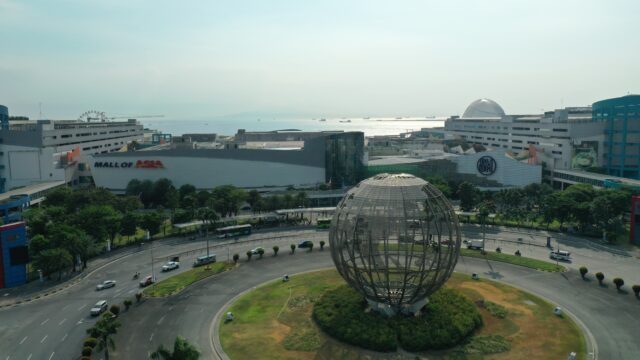
Mall of Asia (MOA) Complex: A sterling landmark of disaster resilience

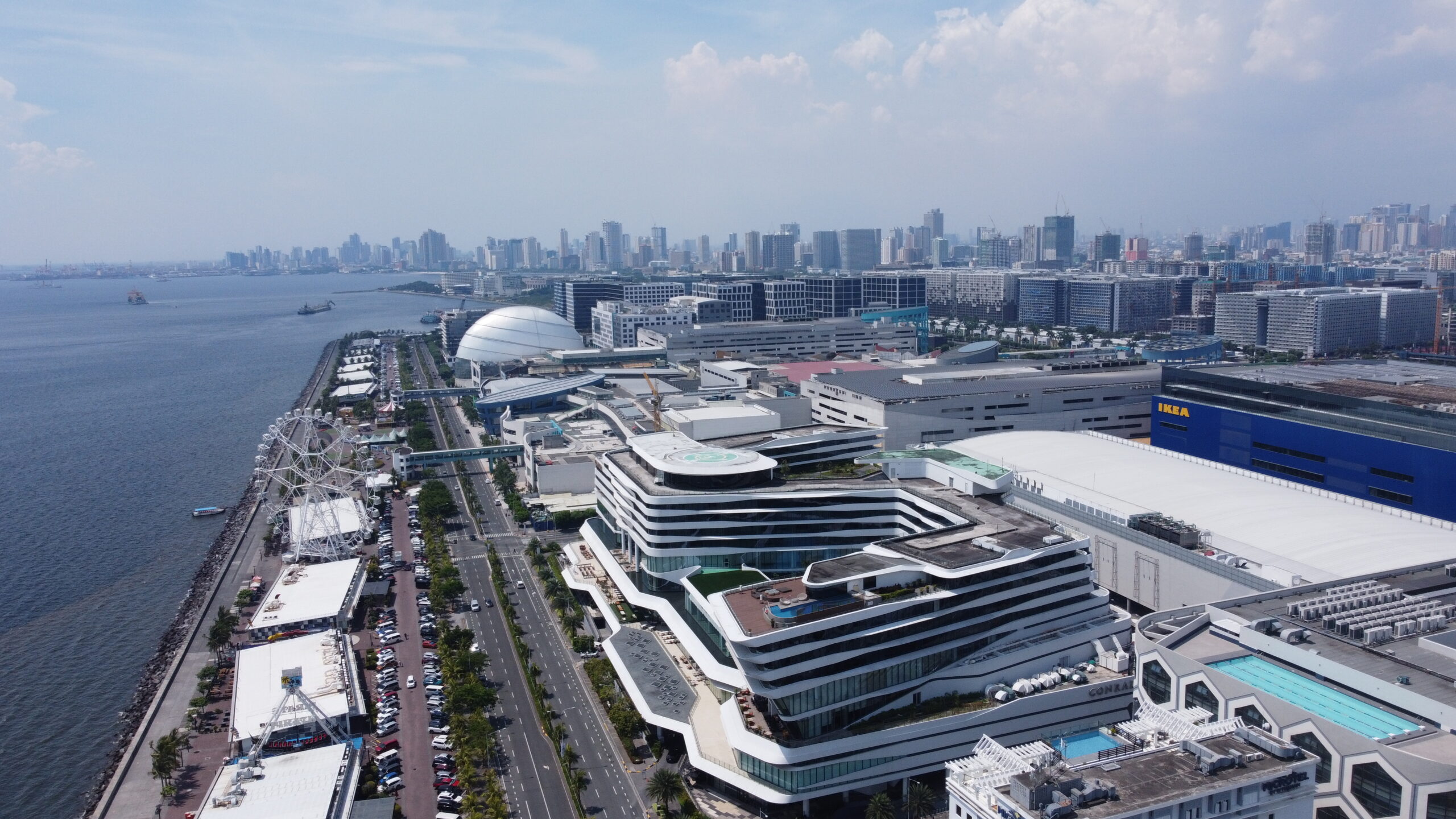
We all know that the SM Mall of Asia (MOA) is a popular destination for unforgettable gastronomic and recreational experiences, but did you know that the 67-hectare Mall of Asia Complex where MOA stands is engineered to withstand disasters caused by natural hazards?

The foundation of the Mall of Asia Complex was built to be safe and secure because SM Prime Holdings, Inc., one of Southeast Asia’s largest integrated property developers incorporates disaster resiliency measures in every project, with the MOA Complex as one of its biggest investments.

SM Prime collaborated with a team of local and international experts to ensure the feasibility of both water and land before the MOA complex was built and once finalized, Belgium’s renowned coastal development construction company, Jan de Nul, developed it from the ground up.

The reputable Jan de Nul made sure the terrain was stable and the complex’s roads were made resistant to earthquakes and erosion, in accordance with the National Structural Code of the Philippines and approved by both the Philippine Reclamation Authority and the National Government.

Three important disaster resiliency features were used in protecting the Complex and the coastal community of Pasay from tides and waves: One, a three-kilometer seawall built to stand against liquefaction; two, a meter-high inverted wave return to serve as defense against high waves; and three, a drainage channel to prevent floods during storm surges. This was put to test when Typhoon Pedring hit in 2011, and the Mall of Asia Complex was spared from destructive waves and flooding that submerged many other surrounding establishments.

As an added feature, both the Complex’s main road and all its structures are elevated 4 meters above the parameters set by the National Building Code. Pilings strengthened its foundation and greatly improved its soil bearing capacity.

Family fun, leisure and entertainment are the objectives behind the awe-inspiring grandeur of SM Mall of Asia, but this vision is founded on a commitment to safety and a secure foundation throughout the Complex. This is a firm philosophy of SM Prime Chairman of the Executive Committee Mr. Hans T. Sy, a champion for disaster resilience, who continuously invests in DRR and in allocating 10% of the company’s expenditure for DRR in all of SM’s infrastructures throughout the country.

“Today, disasters have become more frequent and severe. The government and the private sector must work together to find solutions for greater resiliency.  SM prime as a responsible property developer places Disaster Risk Reduction as one of its core strategies. It simply makes good business sense,” emphasizes Mr Hans Sy. He believes that not only is DRR an effective way to grow the business but it protects the communities where SM is located amid the increasing risks of climate change.

Today, the MOA Complex is a bustling realization of Mr. Henry Sy Sr.’s grand vision for it to become both a premiere integrated leisure destination with a complimentary business and lifestyle district – one of the country’s truly revolutionary mixed-use developments, and a thriving example of disaster risk reduction at work.

The next time you visit the MOA Complex – whether it is to visit the world’s largest IKEA, or to view the sunset from the top of the MOA Eye, or to simply shop and dine with your loved ones – it will be good to know that SM Prime has ensured your safety and security from the time the development was conceptualized and opened in 2006.. to today and tomorrow.


Spotlight is BusinessWorld’s sponsored section that allows advertisers to amplify their brand and connect with BusinessWorld’s audience by enabling them to publish their stories directly on the BusinessWorld Web site. For more information, send an email to online@bworldonline.com.

Join us on Viber to get more updates from BusinessWorld: https://bit.ly/3hv6bLA.

Study: Is the ‘Great Resignation’ affecting SMEs, too?

As the world economy recovers from the pandemic, businesses now face another challenge — the ‘Great Resignation,’ a phrase coined in 2021 to describe the trend of millions of employees worldwide leaving their jobs.

In the Philippines, for instance, resignation was the top reason for unemployment in 2021. In its Mission: Rebooting Economic Activities through Community Engagement (RACE) program survey, the Department of Labor and Employment (DoLE) said that 85,045 of the over 2.39 million unemployed workers resigned from their work last year.

Meanwhile, in Metro Manila, the country’s capital, the labor turnover rate, which refers to the difference between hiring (accession) and the rate of job termination or resignation (separation), has implied negative growth in employment in the first half of 2021.

The Labor Turnover Survey released by the Philippine Statistics Authority (PSA) reported a labor turnover rate of -3.1% in the first quarter of last year. It continued to weaken during the second quarter at -1.2%. These numbers translate to reductions of 31 workers in the first quarter while 12 workers in the second quarter for every 1,000 persons employed in establishments.

How is this trend affecting SMEs?

According to a study released by SAP SE, the Great Resignation is real and impacting small and medium-sized enterprises (SMEs) in the Asia Pacific and Japan (APJ) region today.

The study, “Transformational Talent: The impact of the Great Resignation on Digital Transformation in APJ’s SMEs,” surveyed 1,363 SME owners and decision-makers across eight countries in the region, including Australia, India, Indonesia, Japan, Korea, New Zealand, Singapore, Thailand.

Nine in 10 (91%) SME respondents in APJ say workforce volatility, including the Great Resignation, has directly impacted their digital transformation plans. These plans are critical since 69% of SME respondents say that digital transformation is significant to their organization’s survival over the next year.

Meanwhile, four in 10 (40%) respondents agreed that more employees are resigning now than just 12 months ago, while almost two-thirds (64%) of SME respondents said they are not finding it easy to cope with the impact of the Great Resignation.

The talent crunch is impacting organizations’ ability to transform their businesses digitally. According to the study, the lack of skilled talents also ranks as the top challenge to achieving successful transformation for SMEs across APJ. It topped traditional obstacles, such as cyber security, lack of budget, and lack of understanding of available digital solutions.

“This study shows how the ‘Great Resignation’ can be an existential challenge to organizations. At SAP, we believe that having the right people is important to ensuring digital transformation success. As part of retention efforts, SMEs must invest in talent as much as they invest in innovation to thrive amid these uncertain times,” said Rudy Abrahams, vice-president, head of SAP SuccessFactors, South East Asia and interim managing director SAP Philippines.

How are SMEs mitigating the effects of the Great Resignation?

To alleviate the Great Resignation’s effects and boost their organizations’ ability to deliver digital transformation, SMEs across APJ are investing in their workforce.

Survey respondents said they are improving their financial incentives (43%) and introducing flexible working arrangements (43%) to ensure talent retention over the next 12 months. Meanwhile, four in ten (40%) SME respondents said they would provide upskilling opportunities to retain key talents.

SMEs in the region also focus on training, with more than two-thirds (68%) of the respondents noting that upskilling to support digital transformation is urgent, leading to 72% of SMEs who will focus on digital training throughout this year.

Despite these challenges, SMEs in the region remain optimistic. Having managed significant challenges over the past two years, they are looking beyond a focus on resilience. Almost half (49%) of the respondents say that their organization is highly or fully resilient in weathering the pandemic’s impact. On the other hand, 4% believe they are not resilient.

The confidence in their ability has also resulted in optimism about their growth prospects. A total of 81% of the respondents said they are moderately, very, or extremely confident in their growth over the next 12 months.

“The small and medium-sized enterprise (SME) sector accounts for over 97% of all businesses and employs over 50% of the workforce in the region according to Asia Pacific Economic Cooperation. By harnessing their growth potentials and optimism and combining it with innovations that help foster talents and a strong partner ecosystem, we can help ensure their success in the years to come,” said Mr. Abrahams.