Home Blog Page 5771

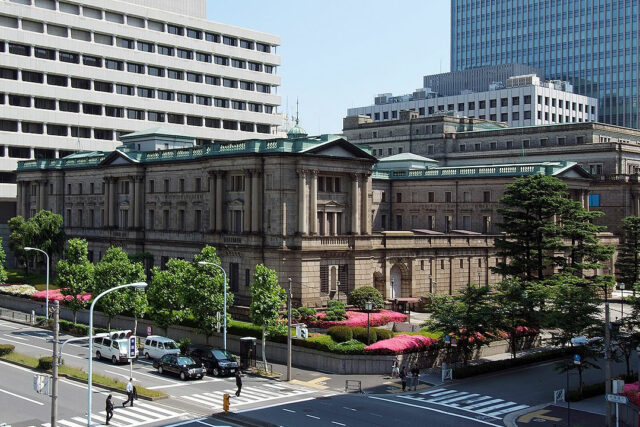
Council calls higher interest rates, oil prices key risks to financial stability 

THE Financial Stability Coordination Council (FSCC) said rising interest rates and oil prices are the key external risks to financial stability and to the economic recovery.

However, the Bangko Sentral ng Pilipinas (BSP) expressed confidence that the economy is in a strong position to endure the headwinds.

“At a time when COVID-19 is no longer dominating the daily headlines, renewed market pressure is being driven by high inflation, rising interest rates, and sharp increases in the prices of commodities. Financial stability risks are then elevated, with macro financial prospects subject to heightened volatilities and broader uncertainties,” BSP Governor and FSCC Chairman Benjamin E. Diokno said.

“The FSCC also identified repricing risks and developments in the oil market as the two key external challenges. According to the Council, these risks have far reaching consequences because they may affect leverage, liquidity, the macroeconomy, and the country’s climate change initiatives,” the BSP said in a statement.

Rising inflation in advanced and emerging economies has led their central banks to raise policy rates to temper economic activity.

In the Philippines, inflation rose to 5.4% in May, the highest in three and a half years, and well past the BSP’s 2-4% target range, driven by food and fuel prices.

This may lead the BSP to keep adjusting policy rates until inflation is brought into line with the central bank’s target.

The BSP last month raised its average inflation estimate to 4.6% this year from 4.3%.

Rising interest rates benefit savers and investors in financial instruments, but this will also mean higher costs for borrowers, households, businesses, and the government. Holders of marketable assets may also experience losses when their assets are revalued.

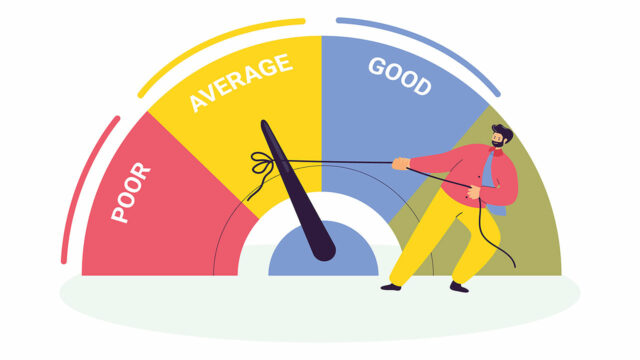
“Given the headwinds that we see right now, the primary challenge has to do with valuation in financial assets. So we would grade that as a red box in the schematic that we have, and the rising global interest rates will then change the pricing of risk and will revalue financial assets as well,” Senior Assistant Governor and FSCC Technical Secretariat Head Johnny Noe E. Ravalo said.

However, in the FSCC’s Statement on the State of Financial Stability, Mr. Diokno reiterated that the Philippine situation is significantly different from the rest of the world.

“The Q1 2022 year-on-year GDP growth of 8.3% reflects a trajectory that is markedly different from the prognosis (of multilateral agencies) for 2022 global growth,” Mr. Diokno said.

He added that growth is driven by consumer purchasing power and by economic investments for the future.

“We expect spillovers from the Advanced Economies to Emerging Market Economies through cost-push pressures and higher risk premiums. These are not independent shocks but are interconnected at many levels, creating complex, non-stationary and interlinked cause-and-effect relationships,” the outgoing governor, who becomes Finance Secretary next month, said.

Mr. Diokno also cited the Council’s Systemic Risk Crisis Management (SRCM) Framework, which indicates how the FSCC continuously manages systemic risk. The SRCM was released earlier this month.

Mr. Diokno said the Council is committed to engaging the public so they can make well-informed decisions.

The FSCC is composed of the BSP, the Department of Finance, the Insurance Commission, the Philippine Deposit Insurance Corp., and the Securities and Exchange Commission. — Keisha B. Ta-asan

IPAs on notice from FIRB to file complete data on locators

FINANCE SECRETARY CARLOS G. DOMINGUEZ III

THE Fiscal Incentives Review Board (FIRB) said it has sent letters to the investment promotion agencies (IPAs) holding incomplete information on their locators, in a bid to bring them into compliance with reporting rules set by the Corporate Recovery and Tax Incentives for Enterprises (CREATE) law.

Finance Assistant Secretary Juvy C. Danofrata, who heads the FIRB Secretariat, said in a statement: “The Secretariat has already sent a follow-up letter signed by the Chairman of the FIRB and Finance Secretary, Carlos G. Dominguez III, to each of these IPAs that had incomplete and missing submissions… All IPAs should understand that these reports we require are important for the FIRB to fulfill its oversight functions on the administration and grant of tax incentives.”

Last week, the Department of Finance, which chairs the FIRB, announced that only four IPAs are compliant with the reporting requirements — the Bases Conversion and Development Authority, John Hay Management Corp., Poro Point Management Corp., and the PHIVIDEC Industrial Authority.

IPAs holding incomplete information on locators were identified as the Philippine Economic Zone Authority (PEZA), Tourism Infrastructure and Enterprise Zone Authority (TIEZA), Authority of the Freeport Area of Bataan, Aurora Economic Zone and Freeport Authority, Board of Investments (BoI), Cagayan Economic Zone Authority, Clark Development Corp., Regional Board of Investments-Bangsamoro Autonomous Region in Muslim Mindanao, the Subic Bay Metropolitan Authority, and the Zamboanga City Special Economic Zone Authority.

The information required of IPAs includes the lists of their registered business enterprises, the tax incentives they are entitled to, IPA-approved projects involving investment capital of P1 billion or less, and registered Information Technology and Business Process Management companies that have work-from-home arrangements.

The FIRB Secretariat also said that both PEZA and TIEZA have yet to submit reports on their locators’ actual invested capital, a requirement of the pre-CREATE rules, which was due last August 2021.

CREATE reduced corporate income tax to 20% for micro-, small-, and medium-sized enterprises, and 25% for all other firms.

The DoF said that PEZA has other pending submissions, including its cost-benefit analyses for its investments, tax incentives granted, and a report on technology transferred by its locators, which it also failed to submit last year.

PEZA Director General Charito B. Plaza said in a statement on Tuesday that the reporting shortcomings are “minor” and called for a halt to statements that might unduly alarm investors.

“If there are data still being awaited from our side, (they are) minor and can be clarified without (generating) negative news about compliance,” she said. “We must not rock the boat and create negative signals.”

PEZA was singled out last week for incomplete data, to which Ms. Plaza replied that the FIRB’s statement was “erroneous, misleading and intend(ed) to embarrass PEZA as an IPA.”

Trade Secretary Ramon M. Lopez, who chairs the BoI, said in a Viber message that the compliance issue was “minor.”

“There were submissions made, but (a) new template and info (was) requested. New deadline. So (it is) ongoing, not an issue.”

Asked about the new deadline for compliance, Mr. Lopez said in a Viber message, “Another month, I was told.”

Mr. Dominguez, who also chairs the FIRB, promised to implement stricter measures if noncompliance continues. — Tobias Jared Tomas

PHL current account seen under pressure from inflation

PHILIPPINE STAR/ MICHAEL VARCAS

THE DEFICIT in the Philippine current account will take up a larger share of gross domestic product (GDP) as inflation makes commodity imports more expensive, Nomura Global Markets Research and ANZ Research said.

The two research houses released notes after the Bangko Sentral ng Pilipinas (BSP) raised its current account deficit forecast for the year last week.

In response, Nomura Global Markets raised its 2022 current account deficit forecast to 3.5% of GDP from 2.8% previously.

The projections were contained in a report, “Philippines: The current account deficit reached a record high in Q1,” prepared by Nomura Chief ASEAN (Association of Southeast Asian Nations) Economist Euben Paracuelles and analyst Rangga Cipta.

“We believe there is a risk that the full-year 2022 (current account deficit) will be significantly wider than our forecast, which we just raised to 3.5% of GDP from 2.8% previously (Consensus: 3.0%). Still, the drivers of the widening are the same,” Nomura Global Markets said.

“High energy prices will likely continue to lead to a terms-of-trade deterioration, but the Philippines is also among the most vulnerable to surging global food prices.”

Philippine inflation was 5.4% in May, the highest in three and a half years, exceeding the BSP’s 2-4% target range, which is expected to trigger rate hikes until inflation is brought back in line with government targets.

The BSP last month raised its average inflation estimate to 4.6% this year from 4.3%.

“Moreover, as we flagged before, the new government will likely still prioritize infrastructure implementation, which should boost imports of capital goods and raw materials further,” Nomura Global Markets said.

ANZ Research said it forecasts a current account deficit equivalent to 3.8% of GDP in 2022, which would be the highest  since the Asian Financial Crisis.

ANZ Research said in a quarterly report that the “divergence between prices of non-discretionary items and headline inflation is evident in almost all economies and is particularly pronounced in the Philippines and Thailand.”

It said the peso will likely weaken further as a result.

“A strong recovery in domestic demand at a time when the trade deficit is at a record high and inflation running above target mean more downward pressure on the peso if the Bangko Sentral ng Pilipinas (BSP) does not tighten aggressively to rein in demand,” ANZ Research said.

“The Philippines’ current account deficit is forecast to widen to levels last seen in 2000, which is consistent with a much weaker currency.”

The BSP said on Monday that it will likely raise interest rates by 25 basis points (bps) on Thursday, despite market expectations of more aggressive tightening.

A BusinessWorld poll last week showed that 15 out of 16 analysts expect a rate hike at the June 23 meeting. Nine analysts expect the Monetary Board to raise rates by 25 bps, while six see an increase of 50 bps.

Felipe M. Medalla, current Monetary Board member and incoming BSP governor, said he expects two more rate hikes this year and possibly more if elevated inflation persists.

After June 23, the Monetary Board has four more policy meetings scheduled this year — Aug. 18, Sept. 22, Nov. 11, and Dec. 15. — Keisha B. Ta-asan

Daily COVID-19 cases in Metro may rise to 1,000

PHILIPPINE STAR/ WALTER BOLLOZOS

DAILY coronavirus infections in Manila, the capital and nearby cities could hit as many as 1,000 by end-June, putting it under a moderate risk classification, according to a local research group.

Cases are unlikely to decline significantly anytime soon, OCTA Research Group fellow Fredegusto P. David told a televised news briefing on Tuesday.

“At that point, we can say that our cases are slightly higher,” he said. “That is possible to happen by the end of June or first week of July based on our projections.”

The new infection peak could happen in the first or second week of July, he added. The average daily attack rate in Metro Manila might increase to 1.7 from 1.6.

Metro Manila, an economic powerhouse that is home to more than 13 million people, is under the first level in a five-tier alert system, which is being updated every 15 days.

Despite increasing infections, the hospital use rate in Metro Manila remained low, Mr. David said, adding that health authorities were unlikely to raise the alert to Level 2.

Mr. David separately tweeted that the seven-day daily average in Metro Manila had risen to 225 from June 14 to 20 from 131. The one-week growth rate in the region slightly increased to 72% from 71%, he added.

Mr. David said the positivity rate in Metro Manila was 4%, while the region’s hospital  occupancy rate remained low at 22%.

“Forecasts show hospital bed occupancy will remain manageable and no escalation of alert levels at this time.”

Health Undersecretary Maria Rosario S. Vergeire on Monday noted that only the National Capital Region (NCR) had experienced a significant rise in infections.

The average daily infections in the capital region had risen to 255 from about 100, while the positivity rate increased to 4.4%, she told One News Channel.

“Here in NCR, [the increase is] already significant,” she said. “This morning, I had an interview and I only reported about 130 average daily cases in the NCR,” she told the Monday evening interview.  “When we received the reports this afternoon, when we analyzed them, we saw that the average daily cases in NCR reached 255.”

The positivity rate in the region increased to 4.4% from 2.9%, Ms. Vergeire said. This means that Metro Manila’s positivity rate is now close to the 5% benchmark set by the World Health Organization.

The Philippines posted 3,051 infections from June 13 to 19, 82% higher than a week earlier, health authorities said on Monday. Of the total, fewer than 1% or 15 were critical. 

The Health department said 385 or 14.6% of the country’s intensive care unit (ICU) beds had been used as of June 19, while 4,033 or 18.2% of non-ICU beds were occupied.

It added that 554 severe and critical coronavirus patients or 10.2% of total admissions were staying in hospitals.

President-elect Ferdinand R. Marcos, Jr. has yet to lay down his actual plan to bail the country out of the pandemic.

He has also yet to name his Health chief, who will play key roles in the country’s pandemic response.

About 70 million Filipinos had been fully vaccinated against the coronavirus as of June 19, while 14.85 million people have received booster shots. — Kyle Aristophere T. Atienza

DFA: Philippines and Australia to boost defense ties

PHOTO FROM PHILIPPINE COAST GUARD

THE PHILIPPINES and Australia are seeking to boost sea domain awareness, defense and marine science under a stronger maritime cooperation, the Department of Foreign Affairs (DFA) said on Monday.

In a statement, DFA also said the two nations would enhance their fishery partnership and protection of the marine environment.

Philippine and Australian officials during a dialogue earlier this month in Canberra discussed strategic trends in the Indo-Pacific region.

They also gave updates on engagements with partners including the Association of Southeast Asian Nations, United States and European countries during the second meeting, DFA said.

Both nations affirmed the United Nations Convention on the Law of the Sea and the 2016 ruling by a United Nations-backed tribunal invalidating China’s claim to more than 80% of the South China Sea.

The Hague-based international court favored the Philippines in the sea dispute — a decision that China has ignored.

The South China Sea, a key global shipping route, is subject to overlapping territorial claims by China, Brunei, Malaysia, the Philippines, Taiwan and Vietnam.

Representatives from both sides included members of security, fisheries, defense and law enforcement agencies.

The Philippines will host the third maritime dialogue in Manila next year. — Alyssa Nicole O. Tan

People who don’t wear face masks may be arrested

PHILIPPINE STAR/ MICHAEL VARCAS

THE GOVERNMENT would not hesitate to charge people, including those in Cebu province, who violate health protocols amid a coronavirus pandemic, according to the Department of Interior and Local Government (DILG).

Violators were being monitored, including those in Cebu where the governor has made wearing face masks outdoors optional, Interior Undersecretary Martin B. Diño told a televised news briefing on Tuesday.

He said they would wait for orders from the presidential palace about how to deal with Cebu Governor Gwendolyn F. Garcia.

“If this is what Cebu Governor Gwendolyn F. Garcia wants to do then let us just see what the law says and what the advice of Malacañang will be on this ordinance,” he added.

“Let us see what the new president, Ferdinand “Bongbong” R. Marcos, Jr.’s  policy will be on this issue, but we will continue the current policies on wearing face masks,” he added.

DILG earlier said it would consider asking Ms. Garcia, a Marcos ally, to explain her policy of making face masks optional outdoors, which goes against the health protocols of the country’s pandemic task force.

Mr. Diño said Interior Secretary Eduardo M. Año had ordered him to continue implementing minimum public health protocols in 42,046 villages nationwide.

“Up to this date, the country is still in a state of public health emergency and we should continue complying with the inter-agency task force’s guidelines in all local government units,” he added.

On Friday, Ms. Garcia told a press briefing she would stand by her order.

Mr. Año earlier said police would arrest people who violate health rules approved by President Rodrigo R. Duterte.

Ms. Garcia last week said there was no legal basis to arrest people who did not wear face masks outdoors. 

The governor said the country’s pandemic task force should respect the autonomy of local governments, adding that forcing people to wear face masks outside is unimplementable.

Justice Secretary Menardo I. Guevarra earlier said guidelines and resolutions approved by Mr. Duterte should prevail.

Under the 1987 Constitution, the president exercises general supervision over local government units.

The Department of Health on Monday reported an 82% increase in coronavirus infections in the Philippines. — John Victor D. Ordoñez

182 proposed laws up for President’s signature   

PCOO.GOV.PH

SENATE PRESIDENT Vicente C. Sotto III on Tuesday said close to 200 bills approved by Congress are awaiting the signature of outgoing President Rodrigo R. Duterte, whose term ends by noon of June 30.   

He told reporters in a news briefing that pending in the Office of the President are 182 bills passed by both houses of Congress.” 

During the 18th Congress, 197 bills were signed into law, including five relating to tax reforms.   

This number does not include local bills, which may put the total of signed legislation to over 500, according to Mr. Sotto.Were only talking about the bills of national importance.” 

One was vetoed, the proposed SIM Card Registration Act. 

The outgoing Senate leader said among the urgentbills that are up for the Presidents approval are:  

Separate Facility for Heinous Crimes Inmates Act;  

National Transportation Board;  

Special Protection Against Online Sexual Abuse and Exploitation of Children; Vaporized Nicotine Products Regulation Act;  

Expanded Anti-Trafficking in Persons Act;  

Permanent Validity of Live Birth, Death and Marriage Act;  

Act strengthening the Office of the Corporate Council; and  

Agriculture, Fisheries and Rural Development Financing Enhancement Act. 

Other pending bills include adopted resolutions concurring with the ratification of treaties, international agreements and conventions.   

Mr. Sotto cited the ascension to the Convention on Temporary Admission, the ascension to the 1961 Convention on the Reduction of Statelessness, and ratification of the Arms Trade Treaty.  

For the Regional Comprehensive Economic Partnership (RCEP), which the Senate failed to give its concurrence to before it adjourned sine die despite repeated appeals from economic managers and business groups, Mr. Sotto said he believes it will be ratified in the next Congress.   

With the incoming president as secretary of agriculture, we might be ready for RCEP.”  

The RCEP, which entered into force on Jan. 1, is a trade agreement involving Australia, China, Japan, South Korea, New Zealand and the 10 members of the Association of Southeast Asian Nations (ASEAN).  

The Philippines is one of three countries that have not ratified the RCEP, along with Indonesia and Myanmar. Alyssa Nicole O. Tan 

EDSA southbound Timog flyover to be closed for a month starting June 25 

MMDA

THE SOUTHBOUND lanes of the Timog flyover along EDSA will be closed for a month for repairs starting June 25, the Metropolitan Manila Development Authority (MMDA) announced on Tuesday.   

Total closure of the bridge has to be implemented considering that the construction works have to be done without any vibration movement,MMDA Chairman Romando S. Artes said in a statement.   

Repairs will be done manually without heavy equipment, said Mr. Artes.  

The full closure of the flyover will start at 6 a.m. on Saturday.   

The repairs, covering a 30-meter segment, include the reconstruction of the damaged bridge diaphragm and the construction of a new bridge deck slab of the flyover.     

Around 140,000 vehicles passing through the flyover daily will be affected by the closure, according to MMDA.   

Mr. Artes said they have been clearing alternate routes of illegally parked vehicles to ease the expected traffic congestion.  

July groundbreaking targeted for Samal-Davao bridge project  

PHOTO FROM AMBASSADOR HUANG XILIAN FACEBOOK PAGE

GROUNDBREAKING for a P19-billion China-funded bridge that will connect Samal Island to Davao City is targeted by July, according to Chinese Consul General Li Lin.  

We are working hard in this direction. Im expecting it to take place next month,the Davao City-based envoy said in an interview on Tuesday.  

I think the embassy, consulate general, and Chinese companies would come together with the Philippine partners to start our groundbreaking at an early date,he said.   

Chinese Ambassador to the Philippines Huang Xilian and Finance Secretary Carlos Dominguez recently signed a $350-million loan agreement for the bridge, which is included in the outgoing Duterte administrations priority infrastructure projects. 

In January last year, the Department of Public Works and Highways signed a P19.32-billion contract with a Chinese firm for the design and construction of the bridge. 

The 3.86-kilometer, four-lane bridge is seen to boost Samals tourism sector and overall economic development.  

Samal Mayor Al David T. Uy, during his inauguration ceremony for a third term on June 16, vowed to set up environmental protection measures to address risks from an expected rapid pace of development with improved access provided by the bridge.   

Hopefully, we will balance economic development and environmental protection, especially when we have the bridge,he said. We have a lot of opportunities ahead of us, but with those opportunities come challenges, especially with the upcoming bridge that would really test Samal Island.”  

Access to and from Samal has been through boats and roll-on, roll-off vessels.   

Vice President-elect Sara Z. Duterte-Carpio, the outgoing mayor of Davao, said the bridge will also open economic opportunities for the city.     

Hopefully, in the next three to four years, well see that bridge will greatly benefit the Island Garden City of Samal and open Davao City as well to those interested to visit our areas because it will be very convenient for them if there is a bridge,she said in mixed English and Filipino in an interview with the media on Monday. Maya M. Padillo 

DILG orders barangays to implement registration for domestic workers 

CESBOARD.GOV.PH

THE DEPARTMENT of the Interior and Local Government (DILG) on Tuesday directed barangays to implement the registration of domestic workers, which is intended to provide them with access to social services and protection from exploitation.   

Interior Secretary Eduardo M. Año said only 8% or 3,359 out of the 42,046 barangays nationwide have rolled out a registration program, with the Bicol region having the most registrations under 627 barangays.  

“We direct our barangay heads to be more proactive in instituting a registration system for our helpers as it is critical to ensure that they are accorded the full protection of the law, Mr. Año said in a statement.   

Under the Domestic Workers Act, heads of barangays, the smallest political unit in the Philippines, are responsible for the registry of domestic workers within their jurisdiction. 

“Our barangay officials are integral in realizing the full effect of Batas Kasambahay or the Domestic Worker’s Act in the communities,” Mr. Año said.  

A survey conducted in 2019 by the Department of Labor and Employment and the Philippine Statistics Authority showed that 83% of the 1.4 million domestic workers in the country are not covered by social security benefits.  

This despite the Philippines being the only country in Asia and the Pacific that ratified the Domestic Worker’s Convention in 2011, according to the International Labor Organization (ILO).

The Domestic Worker’s Act, signed in January 2013, set a minimum wage, benefits, and improved terms of employment for domestic workers.  

Globally, only about 6% of domestic workers have access to comprehensive protections covering medical care, sickness, and unemployment, the ILO said, citing a study it conducted this year. John Victor D. Ordoñez 

Global women’s group rallies behind PHL rights groups 

A GLOBAL organization for women’s rights urged Philippine courts to drop perjury charges against officers of local human rights group Karapatan, Rural Missionaries of the Philippines (RMP), and Gabriela National Alliance of Women.  

In a statement dated June 20 and sent to reporters on Tuesday, Asia Pacific Forum on Women, Law and Development (APWLD) said the government should stop any act of intimidation and harassment against women human rights defenders and political activists.  

“These charges against Karapatan national officers, RMP, and Gabriela are part of ongoing systemic attacks against WHRDs (women human rights defenders) in the Philippines,” it said, noting that Karapatan Secretary General Cristina E. Palabay was scheduled to testify before a Quezon City court this week.  

Karapatan and RMP earlier filed complaints with the Commission on Human Rights against the government’s anti-communist task force for continuously labeling activists and groups as communists or terrorists. 

The country’s national security adviser had filed perjury charges against the rights group officers, citing that they committed the offense when they said in a separate petition that RMP was “duly registered as a non-stock, non-profit corporation under Philippine laws.”   

United Nations Special Rapporteur on Human Rights Defenders Mary Lawlor on Saturday also called on authorities to drop the perjury charges.  

“I urge the authorities in the Philippines to stop the targeting of human rights defenders, and instead promote and protect their work,” she said in a statement dated June 18.    

Justice Secretary Menardo I. Guevarra said last week that the country’s anti-communist task force, of which he is a member, should file complaints rather than simply tagging people as communists.  

Lorraine Marie T. Badoy, the task force’s spokesperson, said they did not agree with the Justice chief’s statement, citing the need to identify members of communist groups and their armed and political wings. John Victor D. Ordoñez 

Legarda says creative innovation can start at the local government level 

SENATOR LOREN LEGARDA FACEBOOK PAGE

A SENATOR on Tuesday said the government, specially at the local level, should focus on promoting creative innovation to strengthen Philippine competitiveness and recovery. 

It will be innovation, research and development, and the knowledge economy that will empower each and every Filipino, as we recover from the challenges of the last few years, Senator-elect Lorna Regina LorenB. Legarda said during the Innovations in Public Engagement Conference on Tuesday.  

She said innovation will not only improve livelihoods but also help address the climate crisis.  

Tackling the climate emergency will require innovation in many areas: design, finance, partnerships, philanthropy, and international cooperation, to name a few,she said.  

Innovation will also enhance approaches to production, allowing farmers, fisherfolk and indigenous people to implement science-based solutions, she said.  

The country can begin at the local level where the simple adaptation of measures will spell a bigger difference, the lawmaker said.   

They are the ones who know most about their landscape, their situation, and needs. This kind of knowledge, integrated appropriately into decision making, helps ensure that public policy decisions are optimal for the community and best fit current conditions and needs.Alyssa Nicole O. Tan